Quotulatiousness

November 14, 2024

Germans are perfectly free to post anything to the internet as long as it doesn’t criticize politicians

Once again, eugyppius helpfully illustrates the broad range of freedoms German citizens enjoy in their online activities and the totally reasonable and not-at-all-insane restrictions to those rights:

“German flag” by fdecomite is licensed under CC BY 2.0 .

It’s been a while since I last wrote about the highly advanced democratic freedoms that we enjoy in Germany. Here in the Federal Republic, the police will never fine you or harass you or raid your house for criticising the government – except, of course, when they do all of these things, because you happened not even to tweet, but merely to retweet, the wrong image.

Stefan Niehoff is a 64 year-old retiree who lives in the small town of Burgpreppach in Lower Franconia. He runs an X account with 1,200 followers, where he occasionally expresses his dissatisfaction with the present state of German politics and with the Greens in particular.

In June 2024, he retweeted this image …

… which appropriates the logo of a popular cosmetic brand to suggest that Robert Habeck, our Green Minister of Economic Affairs, might be a “professional moron”.

Habeck and his associates are notorious for pursuing internet users who share highly illegal content of this nature. They brought Niehoff’s retweet to the attention of authorities, and the Bamberg public prosecutor’s office decided that Niehoff was indeed guilty of a criminal speech offence. The Bamberg District Court then issued an order permitting the police to search Niehoff’s residence and confiscate his electronic devices.

In this order, reproduced by NiUS, the judges explained their rationale as follows:

    On the basis of the investigations to date – in particular the screenshots of the posts and the investigations into the user of the X-account “IchbinFeinet” – there exists the following suspicion of a criminal offence:

    The accused is the user of the account “IchbinFeinet” on the internet platform X with approx. 901 followers.

    At a time that cannot now be determined more precisely, in the days or weeks before 20 June 2024, the accused published an image file using his account that showed a portrait of the Federal Minister of Economic Affairs with the words “professional moron” … in order to defame Robert Habeck in general and to make his work as a member of the federal government more difficult.

    The public prosecutor’s office affirms the public interest in criminal prosecution.

    This is punishable as defamation directed against persons of political life in accordance with §§ 185, 188 para. 1, 194 StGB. …

    The measures ordered are proportionate to the severity of the offence and the strength of the suspicion and are necessary for the investigation …

Armed with this document, Schweinfurt police showed up at Niehoff’s house at 6:14am yesterday morning and took his tablet. Police later told the press that the raid was one in a series of enforcement actions – part of something called “an action day against cybercrime”. By harassing a lot of cybercriminals all at once, police and prosecutors hope to send a message to the people of Germany that they cannot just retweet anything, and that they may only retweet the right things.

November 13, 2024

Anglo-German Dreadnought Arms Race – Anything you can build I can build better!

Filed under: Britain, Germany, History, Military — Tags: , , , , — Nicholas @ 02:00

Drachinifel
Published Nov 17, 2021

Today we take a whistlestop tour behind the driving forces and outcome of the Anglo-German Naval Arms Race that led up to WW1.

November 10, 2024

WW2 in Numbers

World War Two
Published 9 Nov 2024

World War II wasn’t just the deadliest conflict in history — it was a war of unprecedented scale. From staggering casualty numbers to military production and economic costs, this episode breaks down the biggest statistics that defined the global conflict.
(more…)

November 3, 2024

Unholy Alliance topples Saxony – Rise of Hitler 05, May 1930

World War Two
Published 2 Nov 2024

May 1930 brings political upheaval to the Weimar Republic, with the French deciding to leave the Rhineland, violent clashes between Communists and Nazis, and a surprising alliance that dissolves Saxony’s government. See how these events unfold and shape Germany’s current political landscape.
(more…)

November 1, 2024

“[H]er plan will mean the obliteration of your savings, the end of banks and even the destruction of ‘money as we know it'”

It’s astonishing how many highly placed bureaucrats, NGO functionaries, and the very, very wealthy are super gung-ho for reducing the rest of us to the status (and living conditions) of medieval serfs:

“German flag” by fdecomite is licensed under CC BY 2.0 .

This week, VW announced plans to cut tens of thousands of jobs and to close three factories. That is a very big deal, because they have never closed a single German factory before. I try to avoid economic topics, but this story is so much bigger than economics. As Daniel Gräber wrote in Cicero last month, “the VW crisis has become a symbol for the decline of our entire country“.

The Green leftoid establishment are eagerly blaming management for these failures, which is on the one hand not entirely wrong, but on the other hand not nearly an absolution. The German state of Lower Saxony holds a 20% stake in Volkswagen, and so they also manage the company. Recently, in a fit of virtue, they placed a Green politician – Julia Willie Hamburg – on its supervisory board. Hamburg does not even own a car and has used her position to argue that Volkswagen should regard itself not as an automobile manufacturer but as a “mobility services provider” and shift its focus away from “individual transport”.

The absurdly named Julia Willie Hamburg is merely symptomatic of a broader phenomenon. Germany has succumbed to political forces that have nothing but indifference and disdain for the industries that have made us prosperous. Our sitting Economics Minister, Robert Habeck, gave an interview to taz in 2011 in which he said that “fewer cars will not lead to less economic growth, but to new industries”, and attacked “the old growth theory, based on gross domestic product“. And behind Green politicians like Habeck are even more radical forces, like Ulrike Herrmann, the editor of taz, for many years a member of the Green Party and also an open advocate of wide-scale deindustrialisation. Because I am going to quote Herrmann saying some very crazy things, you need to know that she is in no way a fringe figure. She appears regularly on all the respectable evening talkshows and every politically informed person in the Federal Republic knows who she is.

Herrmann has outlined her political views in various books like The End of Capitalism: Why Growth and Climate Protection Are Not Compatible – and How We Will Live in the Future. From these monographs, we learn that Herrmann sees climatism as a means of imposing a centrally planned economy in which we will own nothing and be happy. Happily, Herrmann also talks a lot, and in her various speeches and interviews she states her vision for decarbonising Germany in very radical terms. I am grateful to this twitter user for highlighting typical remarks that Herrmann delivered in April of this year before a sympathetic audience of climate lunatics.

There, Herrmann elaborated on her vision for a future economy in which all major goods would have to be rationed:

    Talking about rationing: It’s clear that if we shrink economically, we won’t have to be as poor as the British were in 1939; rather, we’d have to be as rich as the West Germans were in 1978. That is a huge difference, because we can take advantage of all the growth of the post-war period and the entire economic miracle.

    The central elements of the economy would have to be rationed. First of all, living space, because cement emits endless amounts of CO2. Actually, new construction would have to be banned outright and living space rationed to 50 square metres per capita. That should actually be enough for everyone. Then meat would have to be rationed, because meat production emits enormous amounts of CO2. You don’t have to become a vegetarian, but you’ll have to eat a lot less meat.

    Then train travel has to be rationed. So this idea, which many people also have – “so okay then I don’t have a car but then I always travel on the Intercity Express trains” – that won’t work either, because of course air resistance increases with speed. Yes, it’s all totally insane. Trains won’t be allowed to travel faster than 100 kilometres per hour, but you can still travel around locally quite a lot. This is all in my book, okay? But I didn’t expand on it there because I didn’t want to scare all the readers.

At this point Herrmann begins to cackle manically, ecstatic at the thought that millions of Germans will be stuck riding rationed kilometres on slow local public transit.

October 28, 2024

History of the Krummlauf Device: Hitler’s Folly (One of Many)

Filed under: Germany, History, Military, Weapons, WW2 — Tags: , , , , — Nicholas @ 02:00

Forgotten Weapons
Published Jul 7, 2024

Today we are taking a look at the backstory of the famously recognizable Krummlauf device, the curved barrel attachment for the StG-44. It is really a perfect example of how German late-war desperation weapons took shape. It went from an idea nobody actually wanted to an impossible development program in the chaos of the German defeat.

You can see my previous video on an example of the Krummlauf (from 2014) here:
https://youtu.be/HSsFiS2Voxg

And definitely check out Garand Thumb‘s video shooting an original one here:
https://www.youtube.com/watch?v=cO2Gu…
(more…)

October 26, 2024

Our solar energy future – “In September alone, Germany paid 2.6 billion Euro to renewables producers for electricity that had a market value of a mere 145 million Euro”

Checking in with what’s been happening in Germany, eugyppius explains why solar power is far from the cost-free energy source that politicians and scam artists try to claim:

Photovoltaic panels on a roof, 28 April, 2015.
Photo by Antonio Chaves, via Wikimedia Commons.

Climatism in Germany is attended by all manner of naive ideas and bright pink fairytale slogans. Among the latter is a dubious proverb proclaiming that “The sun doesn’t send any bills” (in German: “Die Sonne schickt keine Rechnung“). Such proverbs always seem initially plausible (is there anything freer and more democratic than sunshine?) while proving to be basically the opposite of the truth. In fact, the energy transition has landed German taxpayers in the position of paying billions of Euros for the sun to shine. It is becoming an unmitigated disaster, and what is worse, the more we expand solar capacity, the more we will have to pay. For something that does not send any bills, sunshine has sure become very expensive here in the Federal Republic.

Welt calls it “the solar trap,” and it works like this: Our Renewable Energy Sources Act (EEG) pledges to pay renewables producers fixed tariffs for every kilowatt hour of electricity their installations feed into the grid. Whether you are an ordinary climate-conscious person with solar panels on your house or you run massive solar farms, the EEG entitles you to receive these fixed “feed-in tariffs” for a period of twenty years. The EEG also requires grid operators to accept your electricity regardless of demand and to sell it on the electricity exchange.

Now the sun, although it may not charge for its services, turns out to have this naughty habit of shining in many places all at once. When this happens, electricity supply often exceeds electricity demand and exchange prices fall. They can fall all the way to zero, or in extreme situations of excessive sunshine they can even go negative. Negative prices mean that you have to actually pay “buyers” to take the excess power off your hands. Whether the prices are merely very low, or zero, or negative, the German taxpayer has obligated himself, via the EEG, to pay these producers of unwanted if extremely green and climate-friendly electricity their fixed feed-in tariffs anyway. That is, we are on the hook for the difference between the actual exchange value of excess electricity and the feed-in tariffs promised to producers. In this way we have ended up literally paying for the sun to shine.

In September alone, Germany paid 2.6 billion Euro to renewables producers for electricity that had a market value of a mere 145 million Euro. Our sunny autumn is destroying our already-fragile government budget. Federal number-crunchers had originally allocated 10.6 billion Euros for feed-in tariffs in 2024, but already the government owes 15 billion and the year is not yet over. Scholz’s cabinet are thus trying to allocate an additional 8.8 billion Euro for the rest of the year. The parliament have yet to approve the additional funds, though, and also the damned sun will just not stop fucking shining, and so probably even this supplementary allocation won’t be enough. We’re bleeding money, all for a sun that doesn’t send any bills.

This problem will get worse before it gets better. The more solar panels we install, the greater oversupply we’ll face when the sun shines, and the larger the spread between the fixed feed-in tariffs and the actual market value of this green electricity. In 2024, as I said, the government projected that feed-in tariffs would cost 10.6 billion Euros, but they’ll probably end up costing 20 billion at least. Next year, the costs are projected to be even higher, and the year after that, they will be higher still. As Welt report, the German government plans to triple our solar capacity to 215 gigawatts over the next six years – “the equivalent of 215 nuclear power plants” every time the sun emerges from behind a blessed cloud.

The energy transitioners know they messed up. The new plan is to change the rules for solar subsidies. When prices go negative, larger producers won’t receive their fixed tariffs, and they’ll also have to sell their electricity themselves. In this way, they will become newly sensitive to market demand and stop overproducing electricity when nobody wants it. It is almost like creating a blind system totally oblivious to market incentives was a bad idea. Unfortunately, the new rules will apply only to new solar installations. The German government will still have to honour its insane agreement to pay the operators of older solar plants for years to come. We will light billions on fire for nothing.

October 21, 2024

Romanian Model 1879 Martini-Henry Rifles & Carbines

Filed under: Europe, Germany, History, Military, Weapons — Tags: , , , , , — Nicholas @ 02:00

Forgotten Weapons
Published Jul 5, 2024

Following its experience in the Russo-Turkish War, the Romanian Army was quite impressed by the Martini-Henry rifle in Turkish service. Unlike so many Western observers who were taken by the Winchester repeating rifles that actually didn’t make much battlefield impact, the Romanians recognized the all-around quality of the Martini. So after the war when looking to equip their own newly independent army, they went to Britain for Martinis. They were not able to get rifles made in Britain, but did purchase a license to make the rifle in .45 Gatling, which they took to a factory in Witten, in the German state of Wurtemburg. This factory was newly opened, run in part by Friedrich von Martini himself — so what better place to get Martini rifles?

An initial contract for 60,000 rifles and 8,000 carbines was accepted by the factory and delivered fairly quickly. When the Romanians came back for more guns the factory had gone bankrupt, however. Subsequent orders were instead made from OEWG Steyr in Austria. In total, Romania acquired about 145,000 Martini long rifles and between 12,000 and 18,000 carbines. They were replaced by the Model 1893 Mannlicher in the 1890s, and thus were never used as a front-line rifle in any major combat. They served in World War One in a secondary role only.

Thanks to the King Ferdinand I Military Museum for giving me access to these examples and to A.N.C.A. for coordinating the visit! If you are in Bucharest, make sure to stop in and visit the museum:
https://www.muzeulmilitar.ro/en/
(more…)

October 20, 2024

Nazi Conspiracies Everywhere – Rise of Hitler, April 1930

Filed under: Germany, History — Tags: , , , , , , — Nicholas @ 04:00

World War Two
Published 19 Oct 2024

Join us for the May 1930 edition of the Weimar Wire, where we cover violent communist Youth Day demonstrations, a tough first month for new German chancellor Bruning, crazy Nazi conspiracy theories, and a whole lot more.
(more…)

October 17, 2024

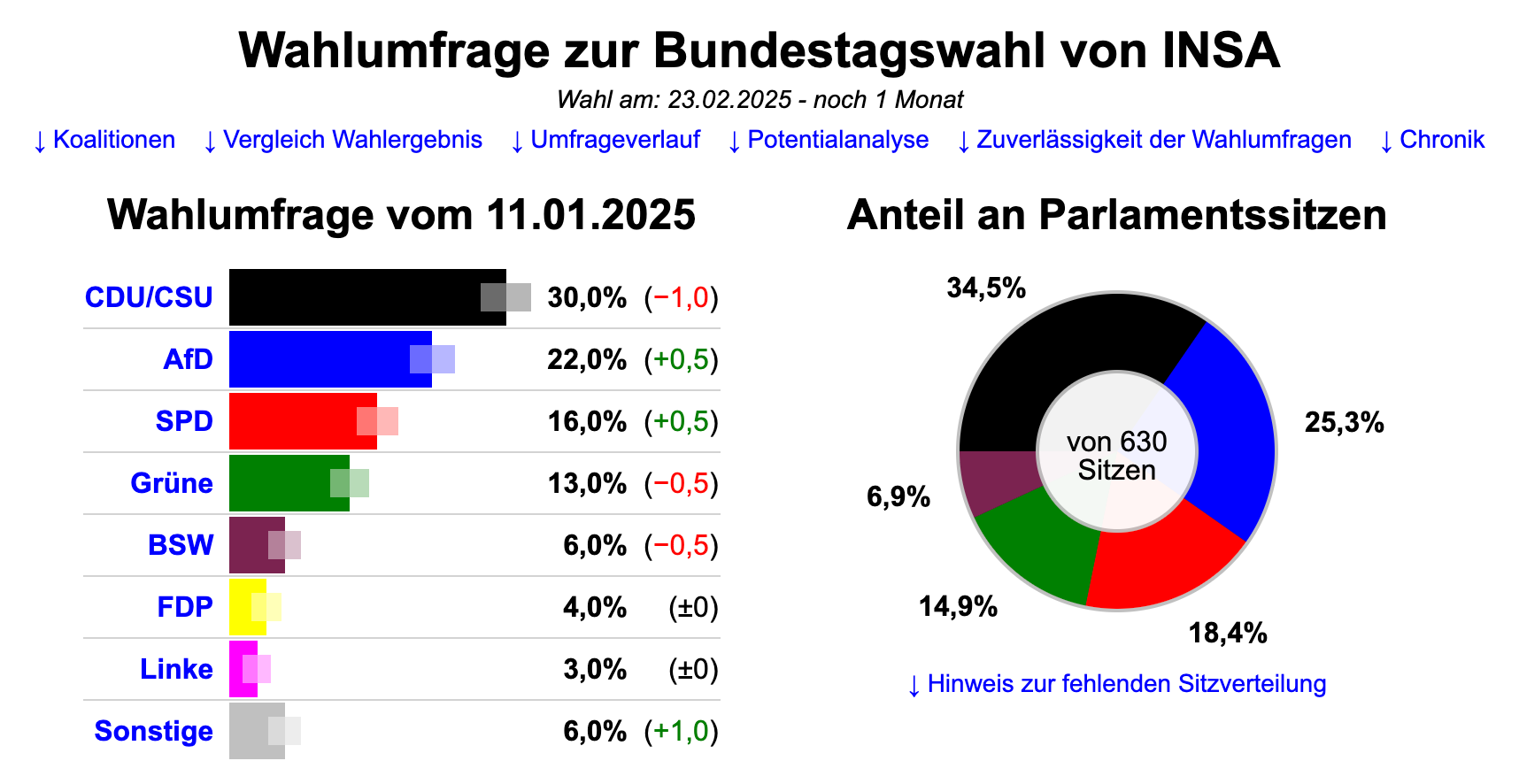
Democratic Germany considers banning 2nd-largest political party “to save democracy” of course

Filed under: Germany, Government, Media, Politics — Tags: , , , , , — Nicholas @ 05:00

It’s totally a normal democratic urge to try to outlaw the second-largest political party in Germany and not in the least bit “authoritarian”, right?

This man is named Marco Wanderwitz. He is a member of the nominally centre-right Christian Democratic Union, and he’s been in the German Bundestag – our federal parliament – since 2002. He reached perhaps the apex of his career late in the era of Angela Merkel, when he was made Parliamentary State Secretary for East Germany. Wanderwitz has been complaining about Alternative für Deutschland for years, and his screeching only gained in volume and shrillness after he lost his direct mandate in the last federal election to Mike Moncsek, his AfD rival. Above all, Wanderwitz wants to ban the AfD, and he has finally gathered enough support to bring the whole question before the Bundestag. Thus we will be treated to eminently democratic debate about how we must defend democracy by prohibiting the second-strongest-polling party in the Federal Republic.

Now, I try not to do unnecessary drama here at the plague chronicle, so I must tell you straightaway that this won’t go anywhere. Even were the Bundestag to approve a ban, which it won’t, the whole matter would end up before the Federal Constitutional Court in Karlsruhe, where I suspect it would fail in any case. Basically, the AfD are accumulating popular support faster than our ruling cartel parties can summon their collective will for overtly authoritarian interventions, and as long as this dynamic continues, the AfD will scrape by.

A great many influential people nevertheless really, really want to outlaw the opposition and effectively disenfranchise 20% of the German electorate. Our journalistic luminaries in particular have become deeply radicalised over the past three years. They got everything they ever wanted in the form of our present Social Democrat- and Green-dominated government, only to have their political dream turn into an enormous steaming pile of shit. Because the establishment parties, including the CDU, have no answers to the crises besetting Germany, they have had to watch popular support for the AfD grow and grow. All their carefully curated talkshow tut-tutting, all their artfully coordinated diatribes about “right wing extremism”, all their transparently hostile reporting, has done nothing to reverse the trend. If establishment journalists were running the show, the AfD would’ve long been banned and many of their politicians would be in prison.

Today, Germany’s largest newsweekly, Die Zeit, has published a long piece by political editor Eva Ricarda Lautsch, in which she explains to 1.95 millions readers exactly why “banning the AfD is overdue“. The views she expresses are absolutely commonplace among elite German urbanites, and for this reason alone the article is sobering.

Let’s read it together.

Lautsch is disquieted that many in the Bundestag fear banning the AfD is “too risky”, “too soon” and “simply undemocratic”, and that “the necessary political momentum is not materialising”.

    The problem … is not the lack of occasions for banning the AfD. Sayings like “We will hunt them down,” Sturmabteilung slogans, deportation fantasies: we have long since become accustomed to their constant rabble-rousing. And this is to say nothing of the most recent and particularly shocking occasion – the disastrous opening session of the Thuringian state parliament a week ago, in which an AfD senior president was able to effectively suspend parliamentary business for hours. Those with enough power to generate momentum don’t have to wait for it; what is missing across the parties is political courage.

What really distinguishes Lautsch’s article (and mainstream discussion about the AfD in general) is the constant grasping after reasons that the party is bad and unconstitutional, and the failure ever to deliver anything convincing. That “we will hunt them down” line comes from a speech the AfD politician Alexander Gauland gave in 2017, after his party entered the Bundestag with 12.6% of the vote for the first time. As even BILD reported, he meant that the AfD would take a hard, confrontational line against the establishment. He was not promising that AfD representatives would literally hunt down Angela Merkel, although the quote immediately entered the canonical list of evil AfD statements and has been repeated thousands of times by hack journalists ever since. As for the “Sturmabteilung slogans“, the “deportation fantasies” and the “opening session of the Thuringian state parliament” – I’ve covered all of that here at the plague chronicle. They are lies and frivolities, and what’s more, they are so obviously lies and frivolities that it is impossible to believe even Lautsch thinks very much of them. These are things that low-information readers of Die Zeit are supposed to find convincing; they aren’t real reasons.

October 14, 2024

Quality v Quantity? | Panzer IV v M4 Sherman | Tank V Tank – Normandy, 1944

Filed under: Britain, France, Germany, History, Military, USA, Weapons, WW2 — Tags: , , — Nicholas @ 02:00

The Tank Museum
Published Jun 14, 2024

Normandy, 1944: in the dense bocage countryside, two tanks, the US-built M4 Sherman and the German PzKpfw IV go head-to-head in the fighting around the Allied bridgehead. Both are similar in capabilities but which will prevail?

In this film, Chris Copson compares the armour protection, firepower and mobility of the two designs, and we recount the events of a specific engagement fought at Mouen near Caen on 28th June, 1944.

00:00 | Intro
01:45 | Meet the Tanks
03:08 | Armour
07:37 | Firepower
12:19 | Mobility & Operation
13:29 | Tank Crews
16:37 | Summary
17:15 | Mouen, Normandy, 28 June 1944
23:10 | Conclusion

This video features archive footage courtesy of British Pathé.

#tankmuseum

October 13, 2024

Occupation of Germany, Plunder and Enslavement?

World War Two
Published 12 Oct 2024

The Allies’ occupation of Germany was marked by competing visions for its future, ranging from France’s focus on security to the Soviet push for reparations. This episode dives into the complex negotiations that determined Germany’s borders, industrial disarmament, and economic management, all of which would shape Europe’s post-war order and fuel the East-West divide.
(more…)

Bismarck, Moltke, and the Kaiser’s General Staff

Filed under: Germany, History, Military — Tags: , , , , , — Nicholas @ 03:00

From Bruce Gudmundsson’s weekly Milstack recommendations, here’s part of an essay on Kaiser Wilhelm and some of the important men in his government in the lead-up to the First World War:

“Dropping the Pilot”. Caricature by Sir John Tenniel (1820-1914), first published in the British magazine Punch, March 1890. Showing German Emperor Wilhelm II and the departing Chancellor Otto von Bismarck.

By the 1870s, Germany was the dominant land power in Europe. It had defeated the preeminent powers on the continent and seemed poised for an era of dominance not seen since Napoleon. However, how quickly Germany’s power was checked and ultimately fell is a cautionary tale about the limits and consequences of the predominance of the military profession. Victories in the war had propelled the Prussian Officer Corps to the status of “demigods” that now held “unquestioned authority and legitimacy” in German politics and society.1 But this status meant they had carte blanche over war planning and became increasingly influential in politics. This produced a civil-military relationship in which, “leaders subordinated political ends to military ends; considerations of war dominated considerations of politics”.2 The German General staff was rapidly departing from Clausewitz’s teachings regarding the primacy of policy.

By the 1880s, Otto von Bismarck and Helmuth von Moltke, the key architects of German unification both politically and militarily, were nearing the end of their distinguished careers. Now, a younger generation of German nationalists and military officers were chomping at the bit to further expand Germany’s power and formed the engine of what some have called, “a political doomsday machine”.3 The militarists believed preemptive war was the uniform solution to the rising power of Germany’s neighbors. Likewise, success in the wars of unification had led nationalists to dream of a greater Germany “from Berlin to Baghdad”.4 Even in his late career, Bismarck had the experience and gravitas to stymie attempts to initiate a “preventative” war. For instance, in 1887, the senior military leadership cooked up a scheme to convince the Kaiser to declare war on Russia on a whim; they also encouraged Austria-Hungary to do the same. Bismarck stopped it before it became a crisis. But it was a bad omen and showed how the military leadership was increasingly out of control.

Bismarck and Moltke had their issues, but they eventually built a strong relationship, leading the Chief of the General Staff to discuss prospective war plans with the Chancellor, something that had not occurred regularly before and a sign of good civil-military relations. Moltke continued to hold his role until 1888 when he retired. His thinking in his late career had evolved beyond the axiomatic focus on total victory.5 The Battle of Sedan was as complete a victory as one could imagine, yet it did not end the Franco-Prussian War. The ensuing experience of the Volkskrieg (“People’s War”) which encompassed fighting a tough insurgency in France had disillusioned him with the idea of a short war. In one of his final speeches in the Reichstag in 1890, he stated of the next war that,

    If this war breaks out, then its duration and its end will be unforeseeable. The greatest powers of Europe, armed as never before, will be going into battle with each other; not one of them can be crushed so completely in one or two campaigns that it will admit defeat, be compelled to conclude peace under hard terms, and will not come back, even if it is a year later, to renew the struggle. Gentlemen, it may be a war of seven years or thirty years’ duration — and woe to him who sets Europe alight, who [first] puts the fuse to the powder keg!6

Moltke now conceded the need for diplomacy to find a resolution after the army did what it could. “Total victory” was no longer the objective. Unfortunately, by then, the aged Field Marshal was isolated in his work on operational plans and studies. The General Staff had been educated in his original concepts which had been inculcated in the official histories of the wars of unification. Moltke’s genius, shown in the breadth of his thinking, was never absorbed by the institution.

German military historian Gerhard Ritter would distinguish Moltke from his successors for his lack of fatalism. While the Elder Moltke often pressed for preventative war, he made the argument from the military point of view, i.e. that war would be more advantageous now rather than later.7 Moltke was not overly disturbed when Bismarck quashed proposals of preventative war. In contrast to his successors, Moltke was confident in his ability to meet the challenges of war whenever it arrived. He did not view the political situation as intractable. If the statesman did not want to utilize an opportunity for an easy victory in a preventative war, that was the business of the statesman. In other words, Moltke accepted Bismarck’s “right to be wrong”. A working relationship was therefore possible with the statesman who described his policy as “the most dangerous road last”.8

In the final years of their careers, both Bismarck and Moltke foresaw the dangers of a Germany where military prerogatives began to overshadow political ones. Bismarck, the architect of Germany’s rise, understood that the state’s survival hinged not just on military prowess but on the balancing of diplomatic relationships and restrained use of force. Moltke, though a staunch advocate of military autonomy, ultimately recognized the futility of unchecked military power in the context of modern warfare. Their eventual departures left a vacuum, filled by more aggressive military leaders, weak chancellors, and a feckless Kaiser. The political flexibility that had defined Germany’s rise came to be disregarded. As the officer corps grew more entrenched in its dominance, the military’s rigid and totalizing mindset contributed to Germany’s plunge into one of the most destructive conflicts in human history.9


    1. Jack Snyder, “Civil-Military Relations and the Cult of the Offensive, 1914 and 1984”. International Security 9 (1) (1984).

    2. Keir A. Lieber, “The New History of World War I and What It Means for International Relations Theory”. International Security 32 (2) (2007): 161.

    3. Henry Kissinger, Diplomacy (New York: Simon & Schuster, 1995), 168.

    4. For more on ultranationalist critique of the German government see Stig Förster, Der Doppelte Militarismus: Die Deutsche Heeresrüstungspolitik Zwischen Status-Quo-Sicherung Und Aggression, 1890-1913, Institut Für Europäische Geschichte Mainz: Veröffentlichungen Des (F. Steiner Verlag Wiesbaden, 1985).

    5. For further detail, see Gerhard P. Gross, The Myth and Reality of German Warfare: Operational Thinking from Moltke the Elder to Heusinger.

    6. Stig Förster, “Dreams and Nightmares: German Military Leadership and the Images of Future Warfare, 1871-1914”. In Anticipating Total War, The German and American experiences, 1871-1914, 343-376 (Cambridge: Cambridge University Press. 2013), 347.

    7. A preventative war, in this context, is a conflict initiated to preemptively counter an anticipated future threat or to prevent a rival power from becoming stronger in the long term.

    8. Gerhard Ritter, The Sword and the Scepter: The Problem of Militarism in Germany (Coral Gables: University of Miami Press, 1973), vol. 1 of 4, 243.

    9. For more on Imperial German military culture, see Isabel Hull, Absolute Destruction: Military Culture and the Practices of War in Imperial Germany (Ithaca, NY: Cornell University Press, 2005).

October 11, 2024

German free speech – only applicable when used to criticize the “far right”

Filed under: Books, Germany, Government, Law, Liberty, Media, Politics — Tags: , , , , — Nicholas @ 03:00

C.J. Hopkins discovers the stark contrast between actual freedom of speech and German freedom of speech:

The first rule of New Normal Germany is, you do not compare New Normal Germany to Nazi Germany. If you do that, New Normal Germany will punish you. It will sic the Federal Criminal Police on you. It will report you to its domestic Intelligence agency. It will ban your books. It will censor your Tweets. It will prosecute you on fabricated “hate-crime” charges.

I know this, because that’s what happened to me. I broke the first rule of New Normal Germany. I compared New Normal Germany to Nazi Germany. I did it with the cover artwork of my book.

Yes, that’s a swastika on the cover. A swastika covered by a medical mask. I tweeted that artwork in 2022. The German authorities prosecuted me for that, and convicted me for that. So, now I’m a “hate criminal”, and an “anti-Semite”, and a “trivializer of the Holocaust”.

That’s the second rule of New Normal Germany. You never, ever, display a swastika. Displaying a swastika is not “in Ordnung“. Displaying swastikas is totally “verboten“.

Unless you are the Health Minister of New Normal Germany, and you’re comparing your political opponents to the Nazis. Or unless you are a popular German celebrity, and you’re comparing the Russians and their supporters to the Nazis. Or unless you are a mainstream magazine, and you’re comparing German populists to the Nazis.

In which case, displaying a swastika is fine. And is not “verboten“. And definitely not a “hate crime”.

And that’s the third rule of New Normal Germany. If you agree with the government, obey their orders, and parrot their propaganda, you are not a “hate criminal”. If you are the government, like an actual minister in the government, like the Minister of Health, you’re definitely not a “hate criminal”. And, if you are part of government’s propaganda apparatus, needless to say, you’re also not a “hate criminal”.

However, if you criticize the government, or if you compare the government to Nazi Germany, and if you do that using your book-cover art featuring a swastika behind a Covid mask, then you’re absolutely officially a “hate criminal”, and an “anti-Semite”, and a “trivializer of the Holocaust”.

QotD: Fascists are inherently bad at war

For this week’s musing, I wanted to take the opportunity to expand a bit on a topic that I raised on Twitter which draw a fair bit of commentary: that fascists and fascist governments, despite their positioning are generally bad at war. And let me note at the outset, I am using fascist fairly narrowly – I generally follow Umberto Eco’s definition (from “Ur Fascism” (1995)). Consequently, not all authoritarian or even right-authoritarian governments are fascist (but many are). Fascist has to mean something more specific than “people I disagree with” to be a useful term (mostly, of course, useful as a warning).

First, I want to explain why I think this is a point worth making. For the most part, when we critique fascism (and other authoritarian ideologies), we focus on the inability of these ideologies to deliver on the things we – the (I hope) non-fascists – value, like liberty, prosperity, stability and peace. The problem is that the folks who might be beguiled by authoritarian ideologies are at risk precisely because they do not value those things – or at least, do not realize how much they value those things and won’t until they are gone. That is, of course, its own moral failing, but society as a whole benefits from having fewer fascists, so the exercise of deflating the appeal of fascism retains value for our sake, rather than for the sake of the would-be fascists (though they benefit as well, as it is, in fact, bad for you to be a fascist).

But war, war is something fascists value intensely because the beating heart of fascist ideology is a desire to prove heroic masculinity in the crucible of violent conflict (arising out of deep insecurity, generally). Or as Eco puts it, “For Ur-Fascism there is no struggle for life, but, rather, life is lived for struggle … life is permanent warfare” and as a result, “everyone is educated to become a hero“. Being good at war is fundamentally central to fascism in nearly all of its forms – indeed, I’d argue nothing is so central. Consequently, there is real value in showing that fascism is, in fact, bad at war, which it is.

Now how do we assess if a state is “good” at war? The great temptation here is to look at inputs: who has the best equipment, the “best” soldiers (good luck assessing that), the most “strategic geniuses” and so on. But war is not a baseball game. No one cares about your RBI or On-Base percentage. If a country’s soldiers fight marvelously in a way that guarantees the destruction of their state and the total annihilation of their people, no one will sing their praises – indeed, no one will be left alive to do so.

Instead, war is an activity judged purely on outcomes, by which we mean strategic outcomes. Being “good at war” means securing desired strategic outcomes or at least avoiding undesirable ones. There is, after all, something to be said for a country which manages to salvage a draw from a disadvantageous war (especially one it did not start) rather than total defeat, just as much as a country that conquers. Meanwhile, failure in wars of choice – that is, wars a state starts which it could have equally chosen not to start – are more damning than failures in wars of necessity. And the most fundamental strategic objective of every state or polity is to survive, so the failure to ensure that basic outcome is a severe failure indeed.

Judged by that metric, fascist governments are terrible at war. There haven’t been all that many fascist governments, historically speaking and a shocking percentage of them started wars of choice which resulted in the absolute destruction of their regime and state, the worst possible strategic outcome. Most long-standing states have been to war many times, winning sometimes and losing sometimes, but generally able to preserve the existence of their state even in defeat. At this basic task, however, fascist states usually fail.

The rejoinder to this is to argue that, “well, yes, but they were outnumbered, they were outproduced, they were ganged up on” – in the most absurd example, folks quite literally argued that the Nazis at least had a positive k:d (kill-to-death ratio) like this was a game of Call of Duty. But war is not a game – no one cares what your KDA is if you lose and your state is extinguished. All that matters is strategic outcomes: war is fought for no other purpose because war is an extension of policy (drink!). Creating situations – and fascist governments regularly created such situations. Starting a war in which you will be outnumbered, ganged up on, outproduced and then smashed flat: that is being bad at war.

Countries, governments and ideologies which are good at war do not voluntarily start unwinnable wars.

So how do fascist governments do at war? Terribly. The two most clear-cut examples of fascist governments, the ones most everyone agrees on, are of course Mussolini’s fascist Italy and Nazi Germany. Fascist Italy started a number of colonial wars, most notably the Second Italo-Ethiopian War, which it won, but at ruinous cost, leading it to fall into a decidedly junior position behind Germany. Mussolini then opted by choice to join WWII, leading to the destruction of his regime, his state, its monarchy and the loss of his life; he managed to destroy Italy in just 22 years. This is, by the standards of regimes, abjectly terrible.

Nazi Germany’s record manages to somehow be worse. Hitler comes to power in 1933, precipitates WWII (in Europe) in 1939 and leads his country to annihilation by 1945, just 12 years. In short, Nazi Germany fought one war, which it lost as thoroughly and completely as it is possible to lose; in a sense the Nazis are necessarily tied for the position of “worst regime at war in history” by virtue of having never won a war, nor survived a war, nor avoided a war. Hitler’s decision, while fighting a great power with nearly as large a resource base as his own (Britain) to voluntarily declare war on not one (USSR) but two (USA) much larger and in the event stronger powers is an act of staggeringly bad strategic mismanagement. The Nazis also mismanaged their war economy, designed finicky, bespoke equipment ill-suited for the war they were waging and ran down their armies so hard that they effectively demodernized them inside of Russia. It is absolutely the case that the liberal democracies were unprepared for 1940, but it is also the case that Hitler inflicted upon his own people – not including his many, horrible domestic crimes – far more damage than he meted out even to conquered France.

Beyond these two, the next most “clearly fascist” government is generally Francisco Franco’s Spain – a clearly right-authoritarian regime, but there is some argument as to if we should understand them as fascist. Francoist Spain may have one of the best war records of any fascist state, on account of generally avoiding foreign wars: the Falangists win the Spanish Civil War, win a military victory in a small war against Morocco in 1957-8 (started by Moroccan insurgents) which nevertheless sees Spanish territory shrink (so a military victory but a strategic defeat), rather than expand, and then steadily relinquish most of their remaining imperial holdings. It turns out that the best “good at war” fascist state is the one that avoids starting wars and so limits the wars it can possibly lose.

Broader definitions of fascism than this will scoop up other right-authoritarian governments (and start no end of arguments) but the candidates for fascist or near-fascist regimes that have been militarily successful are few. Salazar (Portugal) avoided aggressive wars but his government lost its wars to retain a hold on Portugal’s overseas empire. Imperial Japan’s ideology has its own features and so may not be classified as fascist, but hardly helps the war record if included. Perón (Argentina) is sometimes described as near-fascist, but also avoided foreign wars. I’ve seen the Baathist regimes (Assad’s Syria and Hussein’s Iraq) described as effectively fascist with cosmetic socialist trappings and the military record there is awful: Saddam Hussein’s Iraq started a war of choice with Iran where it barely managed to salvage a brutal draw, before getting blown out twice by the United States (the first time as a result of a war of choice, invading Kuwait!), with the second instance causing the end of the regime. Syria, of course, lost a war of choice against Israel in 1967, then was crushed by Israel again in another war of choice in 1973, then found itself unable to control even its own country during the Syrian Civil War (2011-present), with significant parts of Syria still outside of regime control as of early 2024.

And of course there are those who would argue that Putin’s Russia today is effectively fascist (“Rashist”) and one can hardly be impressed by the Russian army managing – barely, at times – to hold its own in another war of choice against a country a fourth its size in population, with a tenth of the economy which was itself not well prepared for a war that Russia had spent a decade rearming and planning for. Russia may yet salvage some sort of ugly draw out of this war – more a result of western, especially American, political dysfunction than Russian military effectiveness – but the original strategic objectives of effectively conquering Ukraine seem profoundly out of reach while the damage to Russia’s military and broader strategic interests is considerable.

I imagine I am missing other near-fascist regimes, but as far as I can tell, the closest a fascist regime gets to being effective at achieving desired strategic outcomes in non-civil wars is the time Italy defeated Ethiopia but at such great cost that in the short-term they could no longer stop Hitler’s Anschluss of Austria and in the long-term effectively became a vassal state of Hitler’s Germany. Instead, the more standard pattern is that fascist or near-fascist regimes regularly start wars of choice which they then lose catastrophically. That is about as bad at war as one can be.

We miss this fact precisely because fascism prioritizes so heavily all of the signifiers of military strength, the pageantry rather than the reality and that pageantry beguiles people. Because being good at war is so central to fascist ideology, fascist governments lie about, set up grand parades of their armies, create propaganda videos about how amazing their armies are. Meanwhile other kinds of governments – liberal democracies, but also traditional monarchies and oligarchies – are often less concerned with the appearance of military strength than the reality of it, and so are more willing to engage in potentially embarrassing self-study and soul-searching. Meanwhile, unencumbered by fascism’s nationalist or racist ideological blinders, they are also often better at making grounded strategic assessments of their power and ability to achieve objectives, while the fascists are so focused on projecting a sense of strength (to make up for their crippling insecurities).

The resulting poor military performance should not be a surprise. Fascist governments, as Eco notes, “are condemned to lose wars because they are constitutionally incapable of objectively evaluating the force of the enemy”. Fascism’s cult of machismo also tends to be a poor fit for modern, industrialized and mechanized war, while fascism’s disdain for the intellectual is a poor fit for sound strategic thinking. Put bluntly, fascism is a loser’s ideology, a smothering emotional safety blanket for deeply insecure and broken people (mostly men), which only makes their problems worse until it destroys them and everyone around them.

This is, however, not an invitation to complacency for liberal democracies which – contrary to fascism – have tended to be quite good at war (though that hardly means they always win). One thing the Second World War clearly demonstrated was that as militarily incompetent as they tend to be, fascist governments can defeat liberal democracies if the liberal democracies are unprepared and politically divided. The War in Ukraine may yet demonstrate the same thing, for Ukraine was unprepared in 2022 and Ukraine’s friends are sadly politically divided now. Instead, it should be a reminder that fascist and near-fascist regimes have a habit of launching stupid wars and so any free country with such a neighbor must be on doubly on guard.

But it should also be a reminder that, although fascists and near-fascists promise to restore manly, masculine military might, they have never, ever actually succeeded in doing that, instead racking up an embarrassing record of military disappointments (and terrible, horrible crimes, lest we forget). Fascism – and indeed, authoritarianisms of all kinds – are ideologies which fail to deliver the things a wise, sane people love – liberty, prosperity, stability and peace – but they also fail to deliver the things they promise.

These are loser ideologies. For losers. Like a drunk fumbling with a loaded pistol, they would be humiliatingly comical if they weren’t also dangerous. And they’re bad at war.

Bret Devereaux, “Fireside Friday, February 23, 2024 (On the Military Failures of Fascism)”, A Collection of Unmitigated Pedantry, 2024-02-23.

« Newer PostsOlder Posts »

Powered by WordPress