Canadian history from the discovery of the Vikings to the French and English colonization until modern times.
Tags:
Canadian history documentary, Canadian history crash course, Canada history, history of Canada documentary, history Canada summarized, Canada, history, Canadian history, Canadian American history, animated history of Canada, canadian history in a nutshell, canadian history for kids, educational, Canada Indians, Canada great Britain, English Canada, Quebec, French Canada, French English Canada,
Comments Off on The history of Canada explained in 10 minutes
A Remembrance Day slideshow using Mark Knopfler’s wonderful “Remembrance Day” song from the album Get Lucky (2009). The early part of the song conveys many British images, but I have added some very Canadian images also which fit with many of the lyrics. The theme and message is universal… “we will remember them”.
Michael Geist provides an unauthorized backgrounder on the Canadian government’s quixotic attempt to shakedown the likes of Netflix for money to give to “struggling” Canadian media companies:
Canadian Heritage Minister Steven Guilbeault, 3 February 2020. Screencapure from CPAC video.
Canadian Heritage Minister Steven Guilbeault is set to introduce his “Get Money from Web Giants” Internet regulation bill on Monday. Based on his previous public comments, the bill is expected to grant the CRTC extensive new powers to regulate Internet-based video streaming services. In particular, expect the government to mandate payments to support Canadian content production for the streaming services and establish new “discoverability” requirements that will require online services to override user preferences by promoting Canadian content. The government is likely to issue a policy direction to the CRTC that identifies its specific priorities, but the much-discussed link licensing requirement for social media companies that Guilbeault has supported will not be part of this legislative package.
These reforms mark the culmination of a dramatic reversal in government digital policy. After then-Heritage Minister Melanie Joly unveiled her 2017 digital cancon strategy that focused on market-based solutions and emphasized exports of Canadian culture, extensive lobbying gradually let to a major policy flip flop. The CRTC reversed its prior position on Internet streaming regulation in 2018 with a regulate-everything approach, the deeply flawed Yale report released earlier this year provided the blueprint for CRTC-led regulation, and Guilbeault jumped on board with a declaration that his top legislative priority was to “get money from web giants.”
On Monday, the government will undoubtedly line up the lobby groups that supported the reform to provide positive quotes, suggest reforms will lead to billions in new revenues, and claim the bill ensures regulatory fairness by requiring that everyone contribute. Yet much of the policy is based on fictions: that this levels the playing field, that there is a Cancon crisis, that discoverability requirements respond to a serious concern, that this will result in quick payments to the industry, that this is consistent with net neutrality, or that consumers will not bear the costs of reform.
None of this is true. But beyond those issues – each discussed in further detail below – this most notably represents a significant new source of speech regulation. We do not require government authorization to publish newspapers, blog posts, or to simply voice our views in a public forum. That we require governmental authorization in the form of licensing for broadcasters was largely justified in furtherance of cultural policies on the grounds of limited access to scarce spectrum. That justification simply does not apply to the Internet, no matter how many times Guilbeault refers to the inclusion of Internet companies within the “broadcast system.” This is not a matter of Internet exceptionalism. Laws and regulations such as taxation, competition, privacy, and consumer protection are all among the rules that apply regardless of whether the service is offline or online. But speech regulation by the CRTC should require a far better justification than the lure of “free money” from Internet companies.
Comments Off on Federal government to web giants: “BOHICA!”
Richard Lorenc looks back at the “costumes” for Halloween from the 1970s and 1980s to help illustrate how much our general economic picture has improved since those dark days:
While my husband and I were recently struggling to figure out our costumes for this Halloween (and we still don’t have any idea), he pulled up some old commercials on YouTube. The off-the-shelf options that trick or treaters had were, in a word, pitiful.
Basically, costume makers thought it was ok to make a front-only plastic mask (in any color, really) of a character and top it off with a plastic smock featuring an illustration of said character with either its name or the name of the show or movie it comes from. There was no attempt to dress in the character’s actual attire. If you wanted that, you’d either have to know a professional costumer or cobble together something from your closet.
Take a look for yourself at just how costume-poor we used to be:
Obviously, every costume is an opportunity to generate interest in a brand or franchise, and slapping on a logo is an easy way to get a name out there, but these costumes truly heralded a dark time for Halloween. Some may even argue that it demonstrated crass consumerism at its worst, with cynical companies taking the easiest route to grabbing a couple of bucks from desperate parents.
The truth of the tragedy of terrible old Halloween costumes has to do with a simple idea: specialization.
[…]
The next time you compare our screen-accurate store-bought costumes of Darth Vader and Mr. Incredible to those of yesteryear, remember that we enjoy them today not because previous generations didn’t care for accurate costuming, but because growing trade across the globe has generated so much wealth for each of us that we can now demand things we may have only imagined previously.
I only realized as I got ready to schedule this post that it was an article I’d blogged a couple of years back, but the point of the story is still relevant even in our pandemic-wracked economy of 2020.
Comments Off on Modern Halloween costumes show us how wealthy we have become
Look, I can empathize with the impulse to do something, DO ANYTHING, to stem the concerning growth of COVID-19 cases. But if you were to craft a low-risk family holiday that offered a psychologically necessary reprieve from the joyless grind of the last year, you couldn’t do much better than trick-or-treating.
It’s children (low risk), outdoors (low risk), in masks (low risk), engaging in the briefest possible social interactions (medium risk). Yet Canadians have received mixed advice about the tradition; some jurisdictions have cautioned parents to skip it. Gatineau has, reasonably, restricted Halloween parties, but permitted trick-or-treating with restrictions.
I’ve asked several doctors — The Line‘s personal panel of COVID-19 experts — to weigh in on Halloween. Their responses on trick-or-treating prohibitions ranged from: “(this is) extraordinarily dumb” and “I would write something about it but I wouldn’t be able to express myself without extreme profanity.” To “pretty safe” and “shouldn’t be cancelled” as long as reasonable precautions are enacted — like masking, distancing, and perhaps re-thinking trick-or-treating in apartment buildings. Leaving a bowl filled with candy on the porch, rather than opening the door for every little germy ghoul, is also a reasonable precaution.
One person expressed concern that trick-or-treating would inevitably lead to adult schmoozing — but this does not bear a resemblance to any version of this tradition that I have ever experienced. The purpose of trick-or-treating is to maximize the efficient collection of candy; any adult who dawdled or took a drink at a neighbour’s house would find himself deeply at odds with his screaming and fitful progeny. But then, I was somebody’s particularly terrible progeny.
Then there’s this piece of advice from Oregon, noted in the video above, in which a beclowned public health official advised against “trick or treat events because of the high risk of people crowding and people congregating in areas close together.”
If your memory has not yet blanked this absurdity out, it’s vaguely similar to the logic of Ottawa public health officials who last April advised against chatting over the fence with a neighbour because: “It kind of starts with that and then a couple more people add on and before you know it you have a parking lot party or a backyard party.”
(Ottawa walked that recommendation back shortly afterward.)
Comments Off on Cancelling Halloween? I thought the Grinch only worked Christmas…
… aside from cutting off the massive subsidies from the federal government, which would be my preferred solution if “nuke it from orbit” isn’t a viable choice. Let it sink or swim as a purely private media entity — I’d be betting on the “sink”, personally because they don’t currently have to compete thanks to their funding from the feds and are not noted for their quick adaptation skills. However, Peter Menzies isn’t quite as anti-CBC as I am:
In a recent piece here at The Line, I lamented the current status of the CBC. That’s easy enough to do, but it’s fair to ask what can actually be done to fix it. These ideas don’t provide all the answers but, implemented with conviction and speed, here’s where to start. Because there are some things that can be done, and relatively quickly, to revitalize the institution: the CBC may well be hell-bent on its own destructive dualism but clarifying its role and purifying its soul are still possible by getting it out of the advertising business and turning it into a proper public media.
Right now, the CBC is neither fish nor fowl. Sometimes, as with radio, it is a popular public broadcaster. At others, with its television channels, it fancies itself a commercial broadcaster, albeit a publicly-funded and relatively unpopular one. It plows both of those personalities into its commercial online operations and supplements them with reportage of the kind traditionally associated with newspapers. Like a creature of mythology, it shape-shifts through all of these roles as best suits its needs and moods.
On top of that, its OMG obsession with Trump’s America has drawn it far away from its content mandate to ensure Canadians learn about each other wherever they live in this vast and beautiful country. While its performance indicates otherwise, CBC’s purpose is not to secure a large audience share in the GTA or, in French, in Montreal, in order to earn more revenue. Nor is CBC News Network’s mandate to compete with CNN. The Corp’s raison d’etre, as defined in legislation, is to tell Canadians each other’s stories — even if the GTA and Montreal don’t care.
The only way to purify the CBC then, is to ban it — once and for all — from collecting advertising revenue from domestic consumption of its product. As its radio operations are already advertising-free this means no more ads on its TV or websites. Done. Finished.
Politics, it has been said (by me, I think), is the art of the hardly possible. One demands, or promises, things that cannot be delivered in this world, and that no one could want if they thought through the consequences. The successful politician does not lie, except when cornered. Rather, he fantasizes, “dreams,” and seeks a constituency that will dream with him. To my mind, Barack Obama was near to the perfect politician, and while lacking his class and cunning, Canada’s child prime minister, “Justine” (see the 4,000-page novel by the Marquis de Sade), has attempted to offer the same billboard attractions. It is what all modern capitalism has aspired to: nothing, in a very spiffy package; a triumph of pure advertising.
The perfect politician, as the perfect salesman, sells this “vision” — dwarfing any specific programme with its stated assumptions and checkable facts. Details, details; to the uninitiated, these are always boring, and the voting masses will never be initiated. The people, especially in this Age of Netflix, want entertainment, and what they call “leadership.” A leader is a person who does your thinking for you. In politics, he has a rôle like that of film director, in a movie where he will be the principal star. We must go through the movie emotionally on his side; grieve his little setbacks, feel that we participate when he wins. Black hats, white hats: his opponents are clearly marked and can be seen at every moment to be deplorable.
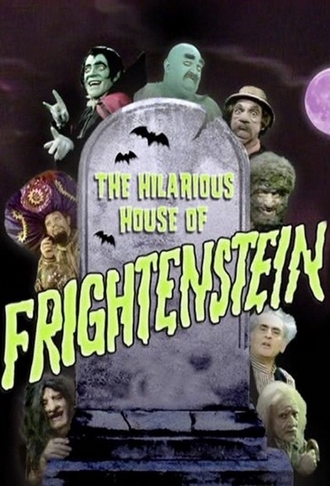
I still have fond memories of CHCH TV’s Hilarious House of Frightenstein and Kathy Shaidle clearly does too:
The Hilarious House of Frightenstein was produced in 1971 by our one and only TV station, CHCH. This hour-long, 130-episode kids’ show combined the mid-century sensibility of Famous Monsters of Filmland with the then-hip look and sound of psychedelia: kaleidoscopic “special effects” plus Top 40 hits spun by “The Wolfman,” an affectionate rip-off of legendary DJ Wolfman Jack.
The show’s “plot” concerned a banished count’s attempts to revive his comatose monster, Brucie, but that was just a flimsy excuse to mount a fast-paced series of corny sketches, semi-serious “educational” segments, and — years before The Simpsons and Pixar — “over the kids’ heads” jokes aimed at adults who might find themselves awake at dawn, or earlier.
The part that always puzzled me as a kid was that a local southern Ontario low-budget TV show for kids had international movie star Vincent Price in it. Kathy explains how it happened:
Older and “uncool” (despite receiving the imprimatur of another rising Hollywood director, Roger Corman), Price was out of fashion.
At the same time, CHCH had a limited budget, but wanted and needed some star power for their single camera kid’s show.
Who better to host this “monster mash” than Vincent Price, still one of the all-time great horror-movie icons?
Frightenstein‘s producer tracked down Price, who agreed to work for $3000 a day, one quarter of his usual per-diem appearance rate.
He loved children, he explained simply. And the gig sounded like fun.
CHCH checked their tiny budget. They could only afford Price for four days, tops.
Four days it would have to be.
Everyone signed on the dotted line.
I’ve heard the story of what happened next from different sources, and it never ceases to warm my heart:
Price arrived at the modest TV studio, got into makeup and costume and was handed reams of doggerel poems about some crazy characters he’d never heard of before.
He’d read each piece once, put his head down, then look up at the camera’s red light and utter his lines perfectly in one take.
Next!
New makeup, new costume, same perfect delivery, hour after hour.
Finally, it was time for a break. The weary yet exhilarated crew turned off the cameras and lights.
Then they looked around and realized that Vincent Price had disappeared.
Oh well, they said to each other, what do you expect? He’s a big star and all. Plus he’s, like, 60 years old, so he probably went for a nap…
The studio door opened a few minutes later.
It was Vincent Price and a cab driver, hauling “two-fours” of beer from the nearby Brewer’s Retail.
He handed cold stubbies out to the cast and crew and regaled them with tales of old Hollywood, his days working with Karloff and Peter Lorre and Gene Tierney and Cecil B. DeMille and all the other greats he’d known.
Comments Off on Kathy Shaidle tells the story of Hamilton’s 1970s cult children’s TV show
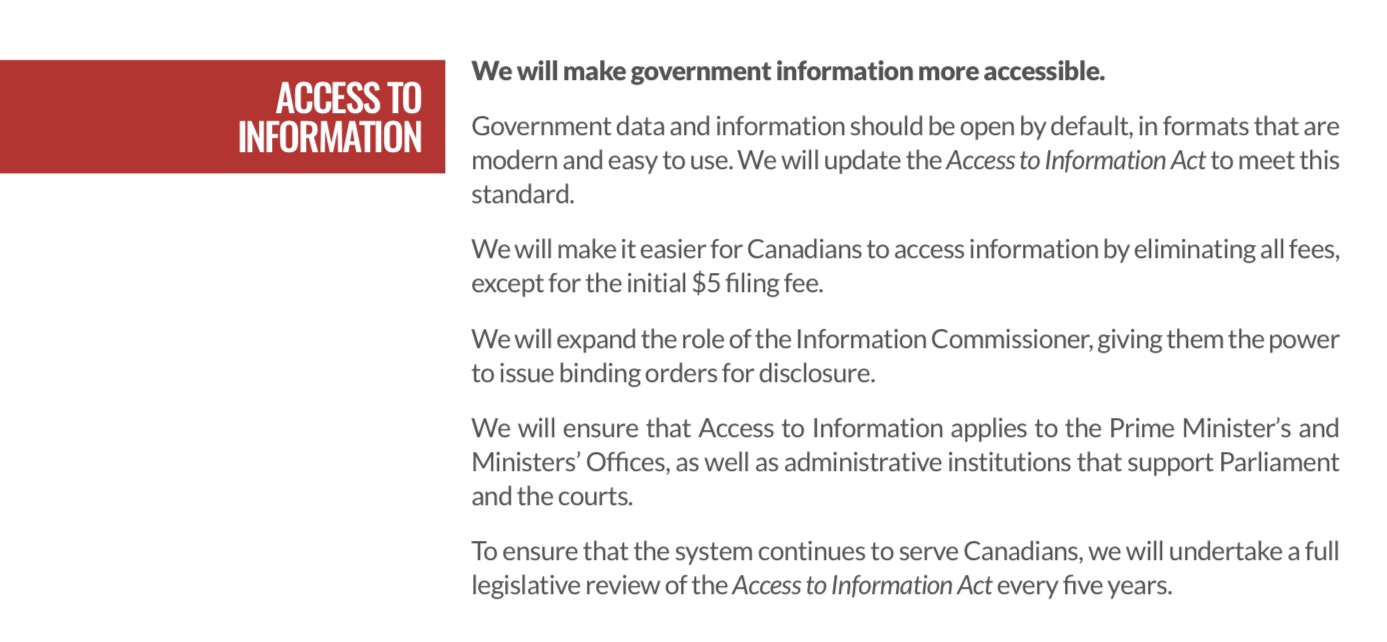
In The Line, a look at the failings of the federal government’s promises to fix the badly broken Access to Information system:
Sometimes, Line readers, though we always strive to be fair, we cannot deny that certain politicians are just fun to skewer. Because some of them are just terrible, terrible people, and while we polite Canadians don’t normally report too much on the personal lives of our elected leaders, well, what can we say? When you can, within responsible journalistic bounds, give a dirtbag a hard time for falling down on the job, hey. Life is good!
Patty Hajdu, the federal minister of health, is actually … perfectly pleasant. This isn’t unheard of in our politicians, but it’s rare enough to mention here, all to make very clear that we take no particular pleasure in reporting on her pathetic performance this week. But report it we must. And pathetic it surely was.
Under sharp questioning by Tory MP Michelle Rempel Garner, Hajdu very carefully and deliberately aimed a soon-to-be-banned .44 Magnum revolver at her foot, waited a dramatic second for effect, and then figuratively blew her poor extremity to smithereens. Rempel Garner had been asking about the abysmally broken state of the federal access-to-information systems, and Hajdu, with all-too-Liberal scorn, stood up and declared:
Mr. Speaker, I have spoken to hundreds, if not thousands, of Canadians since the pandemic was first announced, when COVID-19 arrived on our shores. In fact, not once has a Canadian asked me to put more resources into freedom of information officers. What they have asked me for is to ensure that all the resources of Canada are devoted to one thing, and that is the health, safety and economic prosperity of our country. We are going to continue to make sure that Canada has the most robust response possible.
There are two gigantic problems with Hajdu’s answer there.
The first is that Canada’s access-to-information regime is notoriously dysfunctional, and her government has long admitted that. Indeed, fixing this disgrace was a major plank in the party’s 2015 platform.
In the years since, the government has effectively accomplished the square root of zero.
Comments Off on Canada’s broken [REDACTED] to [REDACTED] [REDACTED]
In The Line, Meaghie Champion commits some sort of thought crime by quoting Martin Luther King’s famous words (which I have been assured more than once are now “forbidden” to non-POC speakers because reasons):
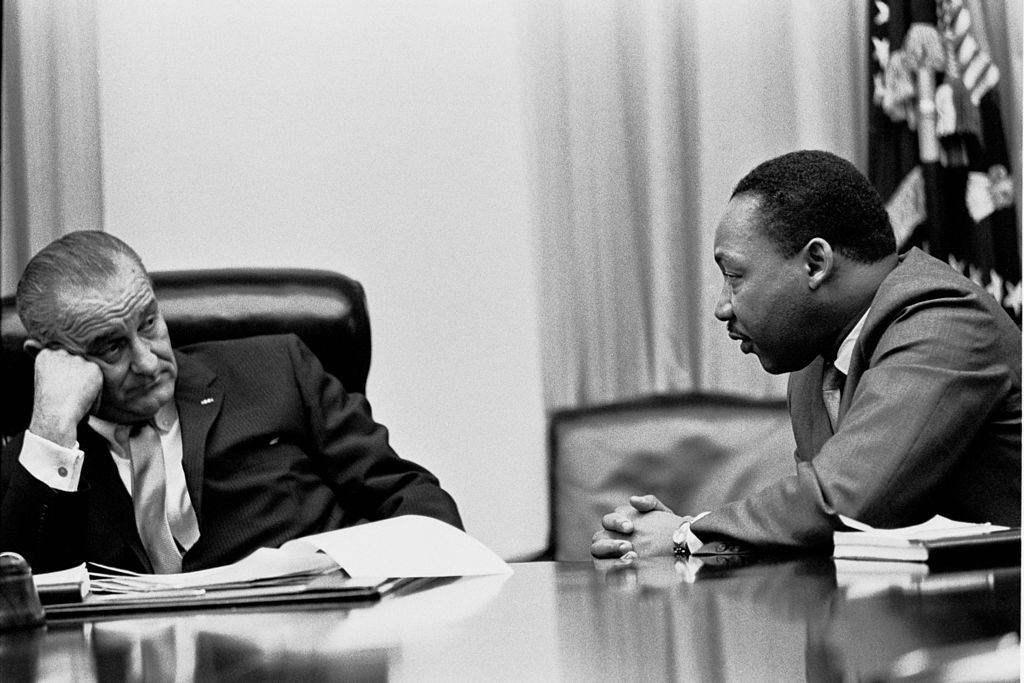
President Lyndon B. Johnson meets with Martin Luther King, Jr. in the White House Cabinet Room, 18 March 1966. Photo by Yoichi Okamoto via Wikimedia Commons.
Most of us have been committed to the ideals of anti-racism since Martin Luther King famously delivered his “I Have a Dream Speech.” This was a masterclass of persuasion and rhetoric; one that convinced generations to re-frame their positions on racial inequity.
King said that he hoped that one day his children would grow up to be judged, not by the colour of their skin, but by the content of their character. That’s the ethos [BC NDP leader John] Horgan channelled when he said: “I don’t pay attention to skin colour or ethnicity.”
But this is not good enough for those who promote Critical Race Theory, an emerging ideology that tips these values on their head. CRT presupposes that the world is dominated by white supremacists. Further, that all white people are racists — regardless of their individual actions — simply because they participate in a system that secures their own structural advantages. CRT redefines what “racism” has traditionally meant: bigotry or discrimination based on skin colour.
Under this new ethos, only white people are capable of racism, because racism is systemic and works towards keeping all power vested in the hands of the white supremacists. I’m simplifying this, of course, because CRT is a rabbit hole best tackled by people with a lot more patience than me. One of the laziest rebuttals that CRT’s adherents use to deflect criticism is that its critics simply don’t understand it well enough, and therefore need to spend endless hours of their lives “doing the work,” integrating key academic texts, and absorbing their meaning until they fully accept the unerring truth of the ideology. If this tactic sounds indistinguishable from a deeply manipulative religious movement, well …
I’m a “person of colour” and I have spent my whole life trying to be anti-racist. I agree with the idea that there are systemic problems involving racism in many institutions within society. Some of those systemic problems are destroying Indigenous nations, including my own. Where I disagree with the Critical Race Theory crowd is in their depiction of everyone who is not a person of colour as being inherently racist. I don’t agree with their solutions for solving the racism problems we have to confront as a society. I don’t believe that they are the only ones working against racism, or coming up with viable strategies for how to do so. We can have differing views about racism and how to combat it; failing to adhere to one single philosophy, or parrot a specific set of terminology, does not mean a person is racist.
Horgan has worked for decades to do what he thought best for all the people. He’s been on our side in the struggle against racism all his life. The fact that he wasn’t up-to-date on the latest acceptable phrases to speak on the matter doesn’t negate that.
Comments Off on “[A]ll white people are racists … because they participate in a system that secures their own structural advantages”
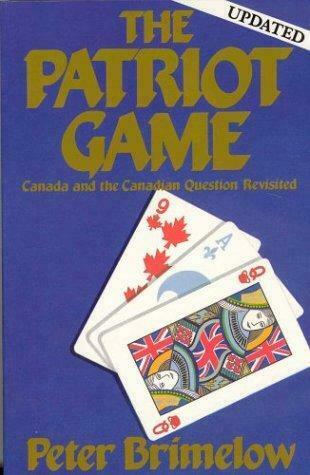
In his latest essay for The Dominion, Ben Woodfinden reviews an old book by Peter Brimelow and how it influenced the Canadian conservative scene at the time and why the book’s insights mattered so much to Stephen Harper:
Published in 1986, The Patriot Game captures the ideas and sentiment of an entire generation of Canadian conservatism. One quick note on Brimelow. He’s a controversial figure and has been called a “leader within the alt-right.” He’s also the founder of VDARE, an American anti-immigration website. I’m not getting into a back and forth with anyone about how best to describe his views, I’ll just say that none of this means his older work like The Patriot Game should be discounted or ignored, especially given the influence it’s had.
The game Brimelow is describing is the manufacturing of a new national identity that was undertaken by what he terms “Canada’s New Class.” This is a term he borrows from Irving Kristol. It refers to Canada’s politicians, civil servants, academics, business elites, writers, and journalists, who have a disproportionate influence shaping public discourse and national consciousness.
The manufacturing of a new national identity by this class, centred on the Liberal Party, was one that both rejected our heritage and replaced it with a self-serving and contradictory ideology that serves the interests of this New Class. The strategy of the Canadian New Class throughout Canada’s history has been “to concentrate rents from a resource-based economy in Central Canadian hands.”
The nationalism they manufactured to do this was an entirely artificial one, built around multiculturalism, bilingualism, anti-Americanism and heavy federal government involvement in the economy. At its core Brimelow’s argument is that 20th-century Canada is the creation of the Liberal party, but ultimately that it is fake and built to serve the interests of the New Class. This was done especially by placating Quebec at the expense of the West, and attempting to construct a new national identity that could unite English and French Canada.
This game played by Canada’s elite to enrich them and their bases of support in places like Quebec not only took money from the West and transferred it elsewhere, it dragged down the Canadian economy by crippling it in overbearing and burdensome regulation and the heavy hand of government involvement.
The most interesting, and clarifying part of the book to me is Brimelow’s description of the identity and nationalism that he thinks the Liberals consciously destroyed and then replaced with their own. Brimelow thinks that the New Class are consciously and actively anti-British, not just anti-American, and that this new identity was built as both a rejection of British heritage and the cultural affinities English Canada has with “North American identity.”
According to Brimelow “All of Anglophone Canada is essentially part of a greater English-speaking North American nation … Canada is a sectional variation within this super nation.” Our British heritage is at the core of who we are along with our common Anglo affinities with Americans, and this new national project is doomed to failure. Brimelow suggests that “Canada’s fundamental contradictions cannot be resolved in the present Confederation” and while English Canada is currently in a strange period of identity agnosticism, it will eventually recover and “assert its North American identity.” This process will only be accelerated by regional tensions within Canada that expose the futility of this new Liberal national identity. Modern Canada, in short, is a fraud and doomed to failure.
Comments Off on “Canadian conservatism often suffers from a unique form of self-loathing”
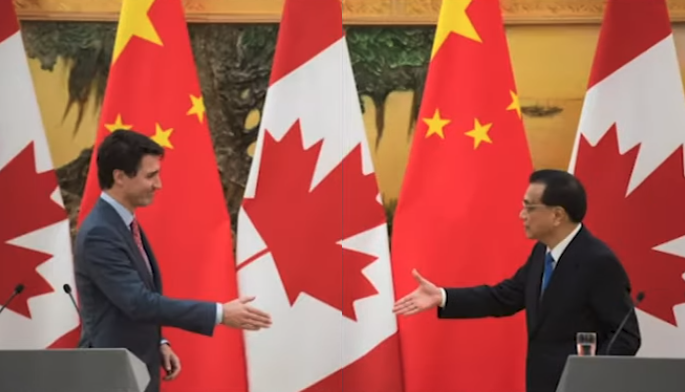
The Line shows just how seriously Justin Trudeau is taking China’s most recent not-so-veiled threats against Canadians in Hong Kong:
The warm glow of a good feed faded quickly in Ottawa, alas, where our nice little vacation from history continues its unravelling apace. China’s ambassador to Canada is issuing increasingly dire threats to the safety of our citizens, specifically the hundreds of thousands of Canadians living in Hong Kong, forcing the prime minister to bring out the biggest guns in his arsenal: his really serious socks, a very frowny photograph by Adam Scotti, and, we expect, the imminent announcement that on top of all her current duties, Chrystia Freeland will be appointed Progressive Minister In Charge Of Figuring Out What The Hell We Should Do About China But Not In A Way That Offends Anyone The Middle Class Build Back Green Error Error Program Alarm—
Whoa! Sorry! The Freeland Job Generator glitched again. No surprise, considering the miles Trudeau has put on it in only five years. Let’s hope it doesn’t give out entirely — we’d need 47 years to procure another one.
Anyway, as to the matter at hand, your Line editors are pragmatic folk. Canada can’t punch at the same level as China; under Mr. Trudeau, indeed, despite all our for-Liberal-egos-only preening about Canada being back, we can’t even punch at the same level as Ireland and Norway. But it’s time Canadians face facts: we can either continue pretending that China’s increasingly aggressive and threatening behaviour is a problem that will go away if we ignore it long enough, or we can at least pretend that we have balls and take what actions we can. Obviously we’re not going to send a fleet to parade up and down their coast, but there are things we can realistically do, and we aren’t. Australia, for instance, also in Beijing’s sights, has rolled out a series of measures to curtail China’s substantial influence there. Canada ought to be doing the same. And we could start by immediately banning Huawei, and encouraging every other country that would listen — which doesn’t seem to be many — that they should too.
Do we expect the Liberal government to do this? No. Making money shilling for the Chinese regime is the best thing to happen to post-politics Liberals since Ontario’s air ambulance service. But they should do this. And the delay is only gonna make it hurt more when events eventually force us to accept that China is not our friend, never has been, and never will be under the current political leadership.
Comments Off on The diplomatic spat with China is “forcing the prime minister to bring out the biggest guns in his arsenal: his really serious socks”
Happy Leif Erikson Day! After Leif’s discovery of unknown lands to the west of Greenland, his brother Thorvald set off on an expedition of his own. Thorvald’s voyage, as related in the medieval Icelandic text The Saga of the Greenlanders, marks the first time in recorded history that Europeans came face-to-face with Native Americans. In this video, I regale you with this tale of adventure, exploration, and cultural collision. And for some reason, I spend about a third of the video talking about a bowl, a coin, and some yarn made of goat hair.
Leave a Tip via Paypal ► https://www.paypal.me/atunsheifilms (All donations made here will go toward the production of The Sudbury Devil, our historical feature film)
In The DominionBen Woodfinden considers the return of foreign policy concerns to Canadian politics after a multi-decade disappearance:
The collapse of the Soviet Union ushered in what the late Charles Krauthammer, in a famous Foreign Affairsessay [PDF], called the “unipolar moment” in which the United States became the unquestioned global hegemon, with no true political, economic, or ideological rivals left. We have been living for the last three decades in this moment.
But Krauthammer’s use of “moment” is deliberate. Krauthammer readily admitted that unipolarity was temporary, and that “no doubt, multipolarity will come in time.” Were he alive today, Krauthammer would probably be ready to proclaim the unipolar moment over. Great power rivalry is back, and the COVID-19 pandemic has accelerated this, killing off any hopes that the relationship between an increasingly aggressive China and the United States could be anything other than adversarial.
This rivalry looks set to become the defining feature of the post-COVID international order, and as the Meng Wanzou case and the kidnapping of the two Michaels reveals, Canada finds itself unavoidably caught in the middle of this burgeoning rivalry. Where Canada fits into this is now one of the most important questions facing our country today.
Canada’s relationship with the United States is our most important relationship. We are unavoidably connected to our neighbour, and our relationship with the United States is a largely amiable one. But despite our integration and close ties with America, Canada remains a sovereign nation, and most Canadians retain a desire for Canada to continue to behave and act like one. Similarly, while it is a Canadian pastime to criticize the flaws and failings of our southern neighbour, we still share the same fundamental democratic values. Thus when it comes to figuring out where Canada stands in the middle of this new great power rivalry, we have little choice but to be broadly aligned with the United States and other free democratic nations.
[…]
Canada can accomplish these goals by prioritizing the strengthening of our relationship with other democratic nations that share our values and are also wary of the rise of an aggressive China with global ambitions. There is no shortage of other nations that fit this description. Most obvious are other Commonwealth nations with which we share common values and history. I’ve written before here in defence of CANZUK, a proposed agreement between Canada, Australia, New Zealand, and the United Kingdom that would strengthen economic ties and prioritize foreign policy and military coordination between these four nations. This is a good start, and strengthening the relationship between other Westminster nations to ensure that we all have an independent voice alongside America would be valuable to all prospective CANZUK members. [Federal Conservative leader Erin] O’Toole was an early supporter of CANZUK during his 2017 leadership bid, and this is something we should prioritize.
Another Commonwealth nation that Canada should prioritize the strengthening of economic and political relations with is India, a nation also threatened by an assertive China. While Canada-India relations have soured under the current government, rebuilding this relationship should be a priority. The current Indian government is not without its controversies and diaspora politics in Canada is complicated to put it mildly. But in the face of a confrontational and dangerous Chinese regime, we don’t have much choice other than to pursue closer and warmer relations with India, even if this will displease some.
Comments Off on The passing of the “unipolar moment”
In The Line, Christina Clark explains why she’s no longer in the business of making documentaries in Canada:
Many of the stories now told through documentary skew the truth by reinforcing the viewpoint du jour. Interviews and scenes that break with the chosen narrative, that offer something other than a black-and-white approach to society and the complexities of humanity, happen off camera or end up on the editing room floor. This is all in an effort to promote diverse voices and the political opinions that allegedly support them. But when we lay claim to a singular viewpoint or dismiss a perspective because the creator’s or the subject’s skin tone or gender does not fit the narrative of inclusion, we are actually removing diversity from the storytelling equation. And what we’re left with are one-sided storylines that reinforce an echo chamber of virtue signalling.
I can no longer deny the dysfunctional approach to telling half-truths and undermining alternate viewpoints in my industry in the name of securing public funding for programming that fails to resonate with the public that is paying for it. Over the last year, I’ve been turning down contracts and finding an exit strategy. I’m pre-emptively cancelling myself.
Documentary was once considered Canada’s national art form. Part of our country’s success with the medium can be attributed to the creation of our National Film Board (NFB), established to “make and distribute films designed to help Canadians in all parts of Canada to understand the ways of living and the problems of Canadians in other parts.” The NFB was founded to provide public funding to storytellers to show us who we are, as a country, as citizens.
To secure public funding for a documentary film or program in Canada, producers typically need to have a broadcaster already signed on to the project. Then, they can apply to funds like the Canada Media Fund, Telefilm or Rogers. Without a broadcaster licence, you cannot apply for public funding. The criteria for licencing a film or television series has narrowed in recent years — not unlike the audiences these programs are targeting.
Take, for example, the Creative Relief Fund that the CBC put together during the early months of COVID to award $2 million in development and production funding for new projects, ranging from fiction and non-fiction television to documentary shorts to plays and podcasts. This was an enticing invitation for creators in lockdown. During this time, friends and colleagues of mine in the industry were messaging each other back and forth, offering feedback on each other’s ideas, as we were all intending to apply. These are some questions we all wondered aloud, in the safety of our private chats: “Do you think this story is diverse enough?” “This story might be too white …” “I don’t think the language is woke enough, do you think they’ll see the bigger story here?” That’s because many broadcasters have “Inclusion and Diversity Plans” that you have to fill out for your project, that track the racial and gender makeup of your crew and your interviewees. While it is not explicitly mandatory to accommodate broadcasters’ criteria for diversity, a lot of filmmakers already know before they even pitch an idea that their chances of getting greenlit are greater if they do.