
The Korean War by Indy Neidell
Published 17 Dec 2024The last UN forces still in the northern half of Korea begin their frantic retreat by sea. The evacuation is a huge operation involving over 100,000 men, and needs to go off smoothly if the UN want any hope of halting the Chinese advance. Eighth Army, who spend this week retreating, are certainly not up to the task on their own.
Chapters
00:00 Intro
00:50 Recap
01:07 Failures of Command
05:36 Hungnam Evacuation
09:02 Eighth Army Situation
13:07 National Emergency
14:12 Conclusion
15:48 CTA
(more…)
December 18, 2024
The Korean War 026 – Chinese Victory in North Korea Complete – December 17, 1950
Comments Off on The Korean War 026 – Chinese Victory in North Korea Complete – December 17, 1950
QotD: Western shaming – the grass is always greener overseas
In the late 1950s, many elites in the United States bought the Soviet Union line that the march of global communism would “bury” the West. Then, as Soviet power eroded in the 1980s, Japan Inc. and its ascendant model of state-sponsored industry became the preferred alternative to Western-style democratic capitalism.
Once Japan’s economy ossified, the new utopia of the 1990s was supposedly the emerging European Union. Americans were supposed to be awed that the euro gained ground on the dollar. Europe’s borderless democratic socialism and its “soft power” were declared preferable to the reactionary U.S.
By 2015, the EU was a mess, so China was preordained as the inevitable global superpower. American intellectuals pointed to its high-speed rail transportation, solar industries and gleaming airports, in contrast to the hollowed-out and grubby American heartland.
Now the curtain has been pulled back on the interior rot of the Chinese Communist Party, its gulag-like re-education camps, its systematic mercantile cheating, its Orwellian surveillance apparatus, its serial public health crises and its primitive hinterland infrastructure.
After the calcification of the Soviet Union, Japan Inc., the EU and the Chinese superpower, no one quite knows which alternative will next supposedly bury America.
Victor Davis Hanson, “The Cult of Western Shaming”, Townhall.com, 2020-01-29.
Comments Off on QotD: Western shaming – the grass is always greener overseas
December 11, 2024
Canada’s current situation, as viewed by Fortissax
Fortissax recently spoke to an audience in Toronto. This is part of the transcript of his speech:

No doubt, many of you already have an idea.
The fact of the matter is this: 25% of the people in this country are, or soon will be, foreigners. Most of them are not the children of immigrants but fresh-off-the-boat migrants.
The economy? It’s in the dumps. Canada has the lowest upward mobility in the OECD for young people. One of the lowest fertility rates in the Western world. And the fastest-changing demographics in the Western world — as I’m sure you’ve all noticed here in the streets of Toronto, the old capital of Anglo-Canadians.
Think about this: approximately 4.9 million foreigners are classified as “temporary migrants.” Combine that with permanent residents, refugees, and immigrants, and that number swells to 6.2 million in just four years.
And it doesn’t stop there.
Crime is reportedly the highest it’s ever been. We have no military. The Canadian Armed Forces has faced retention issues for two decades. And what is command preoccupied with? Men’s bathrooms stocked with tampons and servicemen being “radicalized” by wearing extremist clothing like MAGA hats.
Let’s not forget foreign influence.
The Chinese Communist Party exploited the Hong Kong handover in the 1990s to infiltrate Canada, using British Columbia as their foothold. As Sam Cooper exposes in Claws of the Panda and Willful Blindness, they established a stronghold in Metro Vancouver, taking over the business community.
This “Vancouver Model”, as we Canadians ironically call it, normalizes our capitulation to foreign hostiles. Triads, working hand-in-glove with the Chinese communists, built a global drug empire. Fentanyl, mass-produced in football field-sized factories in China, is shipped to Vancouver and distributed across the entire Western Hemisphere.
Let this sink in: more Canadians have died from this economic warfare than all our soldiers lost in the Second World War.
And now, there’s India.
Intelligence agencies from the Republic of India have demonstrated their ability to conduct assassinations on Canadian soil. Recently, a Khalistani nationalist and separatist was killed — a figure I’ll leave to your sympathies or judgments. Regardless, this marks a disturbing shift.
India weaponizes its diaspora against the international community. In exchange for non-alignment with China, the West — particularly the Anglosphere — uses Indian migrants as wage-slave labor to suppress costs.
The result? A disaster.
In Canada, Australia, the U.K., and increasingly the United States, we see Indians climbing the ladders of power, pursuing their own interests — often brazenly. In Brampton, part of Greater Toronto, a 50-foot statue of the Hindu god Hanuman looms.
And let’s not forget the Punjabi Sikh population. They openly support an independent Khalistan — or remain at best indifferent to the cause. They have infiltrated Canada’s state apparatus, even reaching the Ministry of National Defense, where Harjit Sajjan prioritized rescuing Afghan Sikhs during Kabul operations over broader Canadian interests.
In Surrey, British Columbia, the trucking industry is effectively controlled by Sikhs. In online spaces, Sikh nationalists demand Brampton be recognized as a province, seemingly aware that their homeland exists more abroad than in Punjab itself. The leader of the NDP, Jagmeet Singh, serves as yet another example — barred from entering India due to his sympathies for separatism.
But foreign influence is only half the story. Among our own lies another problem: disintegration.
Decades of Western alienation and economic parasitism by the federal government are fueling separatist movements in places like Alberta and Saskatchewan. In Quebec, the Parti Québécois is polling higher than the ruling CAQ, openly advocating for secession from Confederation.
Meanwhile, the federal Conservatives court immigrant voters, alienating native Canadians and abandoning their base.
And then there’s the economic misery.
The average Canadian home costs $700,000. The median income? Just $48,000. Upward mobility is nonexistent. The managerial regime hoards wealth and power, gatekeeping opportunity through credentialism, exorbitant tuition, and crushing taxes.
55% of Canadians have post-secondary education, and yet most have nothing to show for it. The regime is not run by titans of intelligence or visionaries. It’s run by ideologues — loyal to their cause, not to competence or merit.
The final insult: demographics.
Over the next six years, British Columbia, Alberta, Saskatchewan, and Manitoba will become majority non-Canadian. The 50% threshold will be breached, with profound consequences for local politics.
Ontario will hover just above 50%, while Quebec and the Maritime provinces will remain over 70% and 80% Canadian, respectively. This is not a death sentence, but it is a profound transformation for Western Canada, which has historically been more propositional and less identitarian than the East.
This is where we are.
Our sovereignty is compromised. Our identity is eroded. But we are not yet defeated. What happens next depends entirely on us.
The Korean War 025 – UN Forces Abandon Pyongyang – December 10, 1950
The Korean War by Indy Neidell
Published 10 Dec 2024This week, UN forces in the west pull out of the North Korean capital Pyongyang. In the east, the marines continue to fight their way towards safety. Over in Washington, the aftershocks of the Chinese intervention have shaken high command as much as they have the troops on the ground, and America’s allies, especially Britain, grow alarmed over the US response.
Chapters
00:00 Intro
00:26 Recap
01:20 The Blame Game
03:58 Retreat in the West
07:43 The Chinese Situation
10:59 Escaping Chosin
13:57 Atoms and Attlees
18:07 Summary
18:20 Conclusion
(more…)
Comments Off on The Korean War 025 – UN Forces Abandon Pyongyang – December 10, 1950
QotD: Simon Leys on George Orwell
What Leys wrote in 1984 in a short book about George Orwell might just as well have been written about him: “In contrast to certified specialists and senior academics, he saw the evidence in front of his eyes; in contrast to wily politicians and fashionable intellectuals, he was not afraid to give it a name; and in contrast to the sociologists and political scientists, he knew how to spell it out in understandable language.”
Leys drew a distinction between simplicity and simplification: Orwell had the first without indulgence in the second. Again, the same might be said of Leys — who, of course, like Orwell, had taken a pseudonym, and with whose work there were many parallels in his own.
But immense as was Leys’s achievement in destroying the ridiculous illusions of Western intellectuals, as Orwell had tried to do before him, it was a task thrust upon him by circumstance rather than one that he would have chosen for himself. He was by nature an aesthete and a man of letters, and I confess that great was my surprise (and pleasurable awe) when I discovered that he was, in addition to being a great sinologist, a great literary essayist.
Theodore Dalrymple, “Rare and Common Sense”, First Things, 2017-11.
Comments Off on QotD: Simon Leys on George Orwell
December 4, 2024
The Korean War Week 024 – Marines Attacked at Chosin Reservoir – December 3, 1950
The Korean War by Indy Neidell
Published 3 Dec 2024On and around the frozen waters of the Chosin Reservoir, the US Marines and the Chinese Communist forces fight out a brutal battle. In the west, the Chinese offensive continues. For the UN forces, there is no chance of victory, but living to fight another day may yet be possible.
Chapters
00:00 Intro
00:48 Recap
01:11 Chosin Reservoir Prelude
03:58 Yudam-ni
06:32 Task Force Faith
08:25 Hagaru
12:58 The Aftermath of Chosin
14:49 The Tokyo Conference
15:56 Wawon and Kunu-ri
20:30 Summary
20:42 Conclusion
(more…)
Comments Off on The Korean War Week 024 – Marines Attacked at Chosin Reservoir – December 3, 1950
December 3, 2024
“Granting more sovereign rights to others surprisingly means that these groups will pursue their own interests. Who could have seen this coming?”
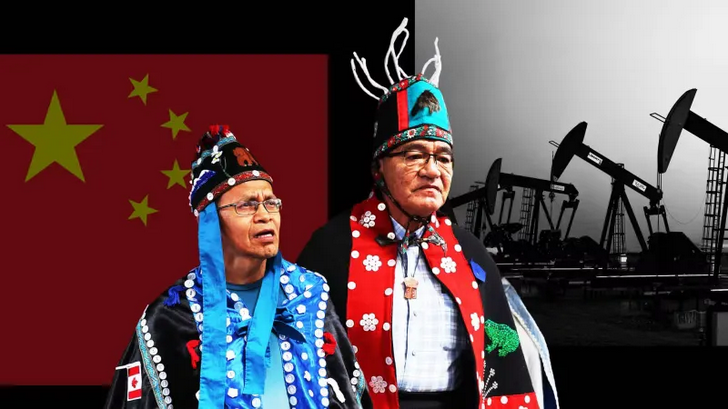
In his weekend round-up, Niccolo Soldo pokes a bit of fun at Justin Trudeau’s federal government for apparently being surprised that First Nations are looking to deal directly with China for their natural resources, rather than through the feds:
Canada continues to be unintentionally hilarious, all thanks to Prime Minister Justin Trudeau and his government.
The Great White North was forever a boring place politically, but the arrival of Trudeau Jr. on the scene shook things up. One of the first things that he and his government committed themselves to was to work to improve the country’s relations with its Native tribes, both politically and especially economically. The Trudeau government invented a genocide narrative based around residential schools.1 Canada too wanted a dark aspect to its own history, so that it could share in the self-flagellation that has coloured the recent history of its neighbour to its immediate south.
Maybe the intention here was to show these Native communities that Canada really, really did care and that by doing this, everything bad that had happened would be forgiven and forgotten? I dunno … what I do know is that Native bands are now seeking to directly do business with China, whereby they would sell natural resources under their control to Beijing:
Canada’s indigenous communities are seeking deals with China that could give Beijing access to the country’s natural resources, despite warnings from Canadian security services over doing business with Xi Jinping’s government.
This week the Canada China Business Council indigenous trade mission is in Beijing to discuss potential energy and other business deals in a trip that could put Canada’s national “reconciliation” with its First Nation communities at odds with its national security priorities.
Karen Ogen, the trade mission’s co-chair and chief executive of the First Nations Liquefied Natural Gas Alliance, said her goal on the trip, which starts on Wednesday, was to sell LNG for the benefit of the Wet’suwet’en communities in Canada’s western province of British Columbia.
“We’ve been oppressed and repressed by our own government,” she said. “I know the history with China is not good but we have an understanding of what we need and what they need.”
Canada purposely degraded its own national sovereignty in parts of its own country in the name of “reconciliation”. Granting more sovereign rights to others surprisingly means that these groups will pursue their own interests. Who could have seen this coming?
Clever Chinese:
China has spotted an opportunity in the sometimes fraught relations between Canada’s national and provincial governments and indigenous groups.
In 2021, shortly after Canada imposed sanctions on Beijing over the treatment of its Uyghur population, Chinese officials began to object to the “systemic violations of Indigenous people’s rights by the US, Canada and Australia” at the UN’s Human Rights Council.
“The PRC tries to undermine trust between Indigenous communities and Canada’s government by advancing a narrative that the PRC understands and empathises with the struggles of Indigenous communities stemming from colonialism and racism,” said a spokesperson for Canada’s security intelligence service.
A 2023 CSIS report accused China’s government of employing “grey zone, deceptive and clandestine means” to influence Canadian policymaking, including Indigenous communities.
“China knows how sensitive Indigenous reconciliation is to the Trudeau government,” said Phil Gurski, a former CSIS intelligence analyst.
A lot of these First Nations (Native bands) reside in the west of the country. Coincidentally, Canada’s third-largest city, Vancouver (located in Canada’s west), is roughly one-third Chinese in composition.
First Nations will continue to pursue these deals with the Chinese:
But CSIS remains concerned over Beijing’s possible access to resource-rich areas or geopolitically important waterways and regions such as the Arctic through First Nations groups.
“It not only undermines the government but is a way to potentially embarrass them on Canada’s past,” said Gurski.
But Matt Vickers, from Sechelt Nations land in Canada’s western province of British Columbia, who first visited China in the 1990s and is part of the CCBC delegation heading to Beijing this week, rejected the concerns of the security services.
“China now understands that for any major project to receive approval in Canada, you need First Nation consent, and not only consent but the First Nations require a majority equity play in those projects,” he said.
The CCBC is a bipartisan organisation consisting of Canada’s biggest companies, including Power Corp, which is the main sponsor of the Indigenous event.
This week’s trip marks the third time a group of Indigenous officials has travelled with the council to China in an effort to identify export markets, sources of capital and potential tourism projects.
“These missions have been developed in the spirit of reconciliation and collaboration, to help delegates better understand how China’s economy and economic development influences its desire for imports and investment opportunities,” said Sarah Kutulakos, executive director of the CCBC.
It gets even funnier:
Deteriorating relations between Ottawa and Beijing meant this year’s CCBC meeting would likely be “sombre”, said former Canadian ambassador to China Guy Saint-Jacques.
First Nations leaders should have “very limited expectations” from the trip. “I don’t expect big business coming out of it,” he said.
But Ogen, of the First Nations LNG Alliance, said she would put the controversy surrounding the trip to Beijing aside. “I … look at the global energy sector, China’s need for our gas, and how I can make the best deal for my people,” she said.
Trudeau scored an own-goal.
1. From wiki (because I am lazy): “The Canadian Indian residential school system was a network of boarding schools for Indigenous peoples. The network was funded by the Canadian government’s Department of Indian Affairs and administered by various Christian churches. The school system was created to isolate Indigenous children from the influence of their own culture and religion in order to assimilate them into the dominant Euro-Canadian culture.”

Comments Off on “Granting more sovereign rights to others surprisingly means that these groups will pursue their own interests. Who could have seen this coming?”
December 1, 2024
QotD: Recording and codifying the land that William conquered
[…]
In brief, Scott argues that the process of making a society “legible” to government officials obscures social reality, to the point where the government’s maps and charts and graphs take on a life of their own. It’s recursive, such that those well-intentioned schemes end up first measuring, then manipulating, the wrong thing in the wrong way, to the point that the social “problem” the process was supposed to address drops out entirely — all you have, at the end, is powerpoint girls critiquing spreadsheet boys because their spreadsheets don’t have enough animation, and vice versa.
Scott doesn’t use the Domesday Book as an example (IIRC from a graduate school class 20-odd years ago, anyway), but it’s one we’re probably all familiar with. The first thing William the Conqueror needed to know is: what, exactly, have I conquered? So he sent out the high-medieval version of spreadsheet boys to take a comprehensive survey of the kingdom. Turns out the Duke of Earl’s demense runs from this creek to that rock. He has five underlings, and their domains run from etc.
The point of all this, of course, was so that Billy C. could call the Duke of Earl on the carpet, point to the spreadsheet, and say “You owe me a cow, three chickens, and two months in the saddle as back taxes.” It worked great, except when — as, it seems, is inevitable — the high-medieval equivalent of the spreadsheet boys did the high-medieval version of “ctrl-c”; just copying and pasting the information over. Eventually the tax situation got way out of whack, as it did for most every pre-modern government running a similar system — one of the reasons declining Chinese dynasties had such fiscal problems, for instance, is that the tax surveys only got updated every two centuries or so, such that a major provincial lord was still only paying 20 silver pieces in taxes, when he should’ve been paying 20,000 (and his peasants were all paying 20 when all they could afford was 2).
In other words: unless the spreadsheet boys periodically go out and check that the numbers on their spreadsheets actually correspond in some systematic, more-or-less representative way to some underlying social reality, government policy is being set by make-believe.
Severian, “The Finger is Not the Moon”, Rotten Chestnuts, 2021-09-14.
Comments Off on QotD: Recording and codifying the land that William conquered
November 27, 2024
The Korean War 023 – The Eagle Versus the Dragon – November 26, 1950
The Korean War by Indy Neidell
Published 26 Nov 2024Thanksgiving 1950 comes and goes in the snowy north of Korea, and Eighth Army’s push to the Yalu River begins the following day. It soon becomes apparent, though, that the Communist Chinese are ready and waiting for them, in numbers greater than anyone on the UN side have predicted. After weeks of preamble and preparation, the two forces finally collide in full strength.
Chapters
00:00 Intro
00:51 Recap
01:16 X Corps
03:14 Turkey Time
05:50 The US Offensive
09:05 The Second Phase Offensive
12:39 East Flank Disaster
15:27 Summary
15:47 Conclusion
(more…)
Comments Off on The Korean War 023 – The Eagle Versus the Dragon – November 26, 1950
November 20, 2024
The Korean War Week 22 – Winter is Coming! – November 19, 1950
The Korean War by Indy Neidell
Published 19 Nov 2024Eighth Army commander Walton Walker makes his final preparations for the big push north to the Yalu River. The Communist Chinese prepare their own forces and wait for the Americans to make their move. At the same time, the freezing Korean winter arrives in force, plunging temperatures well below freezing. The Americans must get this done, and soon.
(more…)
Comments Off on The Korean War Week 22 – Winter is Coming! – November 19, 1950
November 19, 2024
The state and society
Lorenzo Warby explains why Karl Marx was wrong about the origins of what he called “the three great inventions” and therefore also mistaken about the societal impact of those inventions:
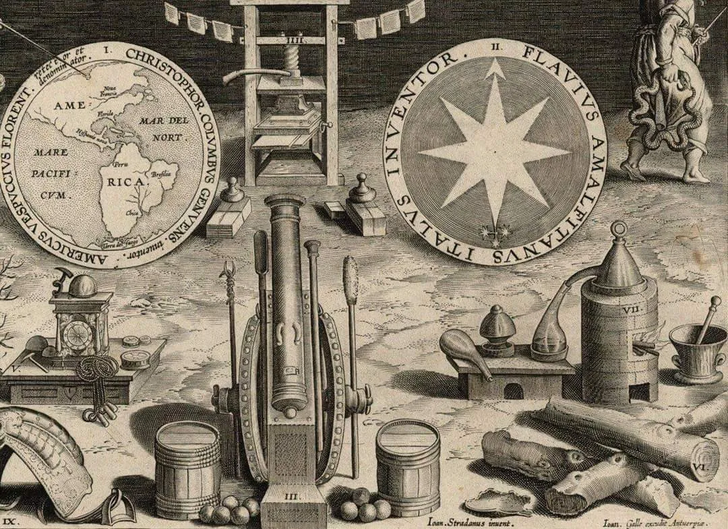
Gunpowder, the compass, and the printing press were the 3 great inventions which ushered in bourgeois society. Gunpowder blew up the knightly class, the compass discovered the world market and founded the colonies, and the printing press was the instrument of Protestantism and the regeneration of science in general; the most powerful lever for creating the intellectual prerequisites.
Karl Marx, “Division of Labour and Mechanical Workshop. Tool and Machinery” in Economic Manuscripts of 1861-63, Part 3) Relative Surplus Value.
With this quote we can see what is wrong both with Marx’s notion of the role of technology in social causation and with a very common notion of the relationship between state and society.
The false — but very common — view of the relationship of state and society is that the state is a product of its society, that the state emanates from its society. This gets the dominant relationship almost entirely the wrong way around. It is far more true to say that the state is a fundamental structuring element of the social dynamics of the territory it rules rather than the reverse.
It is perhaps easiest to see this by noting the glaring flaw in Marx’s reasoning. The gunpowder, the compass and the printing press were all originally Chinese inventions. Indeed, Europe acquired — via intermediaries — gunpowder and the compass from China. (Gutenberg’s printing press appears to have been an independent invention.)
Source: Nova Reperta Frontispiece, 1588.
Yet, as Marx was very well aware, China did not develop a bourgeoisie in his sense. Indeed, Marx’s notion of the Asiatic mode of production grappled with precisely that lack.1
In 1620, Sir Francis Bacon wrote in his Instauratio magna that
… printing, gunpowder, and the nautical compass … have altered the face and state of the world: first, in literary matters; second, in warfare; third, in navigation …
This was true of the effect of these inventions in European, but not Chinese, hands.
Why were these inventions globally transformative in European, but not Chinese hands? Because of the differences in the structure of European state(s) compared to the Chinese state.
Unified China …
The first difference is that the European states were states, plural. Europe had competitive jurisdictions, it had centuries of often intense inter-state conflict. From the Sui (re)unification (581) onwards China was, with brief interruptions, a single polity.2 What the evidence — both Chinese and Roman — shows quite clearly is that civilisational unity in a single polity is bad for institutional, technological and intellectual development.
The second difference is with the internal structure of European states compared to the Chinese state. The Sui dynasty, by introducing the Keju, the imperial examination — refining the use of appointment by exam that went back to the Warring States period — created a structure that directed Chinese human capital to the service of the Emperor.
There were three tiers of examinations (local, provincial, palace). You could sit for them as often as you wished. So a significant proportion of Chinese males devoted decades of their lives to attempting to pass the exams. Over time, the exams became more narrowly Confucian — probably because it required a high level of detailed mastery, so had more of a sorting effect — thereby promoting intellectual conformism.
[…]
… and divided Europe
Conversely, when gunpowder, the compass and the printing press came to Europe, European states already had a military aristocracy; self-governing cities; an armed mercantile elite; organised religious structures; so a rich array of cooperative institutions. Moreover, kin-groups had been suppressed across manorial Europe, forcing — or giving the social space for — alternative mechanisms for social cooperation to evolve.3, 4 In particular, due [to] its self-governing cities with armed militias, medieval Europe had an (effectively) armed mercantile elite before gunpowder, the compass or printing reached Europe.
Alfonso IX of Leon and Galicia (r.1188-1230) first summoned the Cortes of Leon in 1188. This became the start of the first institutionalised use of merchant representatives in deliberative assemblies. Emperor Frederick Barbarossa (r.1155-1190) had tried something similar earlier, but the mercantile elites of North Italy preferred de facto independence, defeating him at the Battle of Legnano in 1176.
The first European reference to the compass is in a text written some time between 1187 and 1202, with its use appearing to expand over the 1200s. The first reference to gunpowder in Europe is not until 1267 and it took centuries before gunpowder played a major role in European warfare.
Both the compass and gunpowder really only have transformative effects from the late C15th onwards, which is also when the printing press is spreading across Latin Europe. By that time, medieval Europe has already become a machine culture and it had been for centuries the civilisation with the most powerful mercantile elite. A reality driven by competitive jurisdictions, a rural-based military aristocracy, law that was not based on revelation (so it could entrench social bargains), suppression of kin-groups, and self-governing cities.
Competition between European states was a powerful driver of the transformative use of technologies. But so was the level of striving within such states: adventurers able to mobilise resources — and seeking wealth, power, prestige — had far more room to operate (and receive official sanction) in Europe than in China.
In other words, the differences in the development and use of technology — and in social dynamics and formations — between China and medieval Europe was fundamentally driven by the differences in state structures, in how the relevant polities worked.
1. Marx was not an honest intellectual reasoner:
As to the Delhi affair, it seems to me that the English ought to begin their retreat as soon as the rainy season has set in in real earnest. Being obliged for the present to hold the fort for you as the Tribune’s military correspondent I have taken it upon myself to put this forward. NB, on the supposition that the reports to date have been true. It’s possible that I shall make an ass of myself. But in that case one can always get out of it with a little dialectic. I have, of course, so worded my proposition as to be right either way.
Marx to Engels, [London,] 15 August 1857, (emphasis in the original).2. The Song (960-1279) failed to fully unify China, but they were the only significant Han polity. That the Song were effectively within a mini-state system does seem to have affected their policies, including the unusually — for a Chinese imperial dynasty — strong focus on trade and technological development.
3. Kin-groups had already been suppressed in the city-states of the Classical world, including Rome. They re-emerged with the incoming Germanic peoples, and then were suppressed again by the Church and the manorial elite, remaining in the agro-pastoralist Celtic fringe and Balkan uplands.
4. Economists Avner Greif and Guido Tabellini define clan (i.e. kin-group) as “a kin-based organization consisting of patrilineal households that trace their origin to a (self-proclaimed) common male ancestor“. They contrast this with a corporation: “a voluntary association between unrelated individuals established to pursue common interests“. They note they perform similar functions: “they sustained cooperation among members, regulated interactions with non-members, provided local public or club goods, and coordinated interactions with the market and with the state“. Triads, tongs and cults can also perform these functions.
Comments Off on The state and society
November 13, 2024
The Korean War Week 21 – US Elections Threaten MacArthur! – November 12, 1950
The Korean War by Indy Neidell
Published 12 Nov 2024MacArthur’s forces struggle to make sense of the recent Communist Chinese intervention in Korea, especially when the Chinese vanish as quickly as they arrived. Back in the US, the war’s popularity has reached an all-time low on the eve of the crucial 1950 midterm elections. Is MacArthur about to pay the price for his failure to deliver results on the ground?
Chapters
00:00 Intro
01:01 Recap
01:24 The Chinese Vanish
02:37 The East
04:35 The US Situation
11:28 Bombing the Yalu
13:03 Summary
13:23 Conclusion
14:26 CTA
(more…)
Comments Off on The Korean War Week 21 – US Elections Threaten MacArthur! – November 12, 1950
November 10, 2024
WW2 in Numbers
World War Two
Published 9 Nov 2024World War II wasn’t just the deadliest conflict in history — it was a war of unprecedented scale. From staggering casualty numbers to military production and economic costs, this episode breaks down the biggest statistics that defined the global conflict.
(more…)
Comments Off on WW2 in Numbers
November 9, 2024
Did US Indecision Encourage Stalin in Korea?
The Korean War by Indy Neidell
Published 8 Nov 2024In March 1950, Stalin finally approves Kim Il-sung’s plans for an invasion of South Korea. But why now? Today Indy looks at the wider Cold War context that fed into Stalin and Mao Zedong’s decision making. He also examines whether the lack of a clear and public commitment from the US to defend the Asian theatre helped to invite the invasion.
(more…)
Comments Off on Did US Indecision Encourage Stalin in Korea?
November 6, 2024
The Korean War 020 – American Disaster at Unsan! – November 5, 1950
The Korean War by Indy Neidell
Published 5 Nov 2024American forces drive onwards, almost oblivious to the emerging Communist Chinese threat. At Unsan, an American regiment finds itself at the mercy of two Chinese divisions, who bear down on it from three sides. Getting out before being overrun will be no easy feat.
Chapters
01:18 Destruction of the 7th
03:41 Unsan Prelude
05:41 The Disaster at Unsan
10:47 Aftermath
13:31 Elsewhere
16:15 Summary
16:30 Conclusion
(more…)
Comments Off on The Korean War 020 – American Disaster at Unsan! – November 5, 1950


