
The Korean War by Indy Neidell
Published 21 Feb 2025Millions of Chinese served in the Korean War, but until very recently the People’s Liberation Army was by no means the only army in China. A lot has changed in this country in a very short time, with tens of millions of deaths in World War Two, and a brutal civil war that has raged both before and afterwards. How did the PLA become what it is today, and what became of Mao Zedong’s old adversaries?
(more…)
February 22, 2025
The Grim Fate of the Chinese Army – a Korean War Special
Comments Off on The Grim Fate of the Chinese Army – a Korean War Special
February 19, 2025
The Korean War 035 – The Battle of Chipyong-ni – February 18th, 1951
The Korean War by Indy Neidell
Published 18 Feb 2025Chinese Commander Peng Dehuai has launched his 4th Phase Offensive, pushing the UN forces back in the center of Korea, and should his forces take Chipyong-ni, they will compromise the entire UN position. Chipyong-ni must hold!
Chapters
00:00 Intro
00:50 Recap
01:21 4th Phase Offensive
03:07 Retreat from Hoengsong
06:27 Chipyong-Ni Must Hold!
08:50 First Relief Attempt
10:22 The Battle of Chipyong-Ni
15:34 Battle Side Notes
17:36 29th Brigade
19:36 Summary
19:59 Conclusion
(more…)
Comments Off on The Korean War 035 – The Battle of Chipyong-ni – February 18th, 1951
February 17, 2025
The growing problem of “America’s hat”
John Carter’s latest post is excellent — but that’s his usual standard — but it’s of particular interest to inhabitants of what used to be the proud Dominion but who now live in a “post-national state” with “no core identity” as our outgoing prime minister so helpfully explained it:
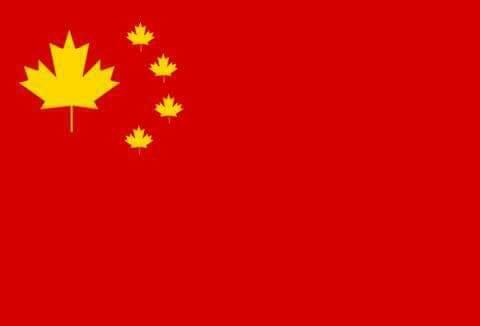
Canada and the US have been frenemies for most of the last two hundred years. With the exception of some spats in the 19th century, they’ve fought on the same side in all major wars, and haven’t taken up arms against one another. At the same time, Canada has from the very beginning fiercely guarded its independence. Through the 1950s, this came from Canada’s self-conception as an outpost of sober, orderly British traditionalism, in stark contrast to the chaotic liberal revolutionaries across the border. Following the Liberal Party’s cultural revolution in the 1960s, Canada increasingly came to see itself as different from the US primarily in that it was more liberal, in the modern sense, than it’s Bible-thumping, gun-toting redneck cousins – which is to say more socialist, leftist, multicultural, gay-friendly, internationalist, feminist, and so forth. In fairness to Canada, the British government, having long-since fallen under the sway of the Labour party, had followed the same ideological trajectory, so Canada was really just taking its cue from Mother England as it always had. In further fairness to Canada, all of this has been aggressively pushed by Blue America, which has been running American culture (and therefore everyone else’s) until about five minutes ago.
Despite these differences, the US could always rely on Canada being a stable, competently run, prosperous, and happy neighbour – perhaps a bit on the prickly side, given the inferiority complex, but much less of a headache than the entropic narcostate to the south that keeps sending its masses of illiterate campesinos flooding over the banks of the Rio Grande. Canada might be annoying sometimes, but it didn’t cause problems. To the contrary, Canada and the US have maintained one the world’s most productive trading relationships for years: America gets Canadian oil, minerals, lumber, and Canada gets US dollars, technology, and culture.
Now, however, Canada has become a problem for America. Not yet, perhaps, the biggest problem – America has a very large number of extremely pressing problems – but a significant one nonetheless, with the potential to become quite acute in the near future.
The problem is that Canada has become a security threat.
[…]
The next security problem is the border, an issue which Trump has repeatedly stressed as a justification for tariffs. The 49th Parallel is famously the longest undefended border on the planet. It is much longer than the Southern border; there are no barbed wire border fences; most of the terrain is easily traversed – forest, lake, or prairie – in contrast to the punishing desert running across the US-Mexico border. Militarizing the US-Mexico border is already a huge, costly undertaking. Doing the same on the Canadian border would be vastly more challenging.
Canada’s extraordinarily lax immigration policy has, in recent years, led to a much higher encounter rate at border crossings with suspects on the terrorism watch list. These people come into Canada legally, part of the millions of immigrants Ottawa has been importing, every year, for the last few years. When you’re bringing in over one percent of your country’s population every single year, it is simply not possible to properly vet them, and it seems that Ottawa barely even bothers to try. Given that not every such person of interest will get stopped at the border, and that not every terrorist is on a watch list, one wonders how many enemies have already slipped across into the US by way of Canadian airports.
RCMP officers with their haul from a fentanyl superlab. Only one person was arrested.
The second border problem is fentanyl. Like the US, Canada has a raging opiod epidemic. We’ve got tent cities, zombies in the streets, needles in the parks, and this is not limited to the big cities – it spills out into the small towns, as well. Like Mexico, Canada has fentanyl laboratories. Precursor chemicals are imported from China by triads, turned into chemical weapons in Canadian labs, and then distributed within Canadian and American markets by predominantly Indian truckers. The occasional busts have turned up vast quantities of the stuff, but have resulted in very few arrests. The proceeds are then laundered through casinos or fake colleges, with the laundered cash then parked in Canadian real estate. There are estimates that the volume of fentanyl money flowing through Canada’s housing markets is significant enough to be a major factor (immigration is certainly the main factor) distorting real estate prices – keeping the housing bubble inflated, propping up Canada’s sagging economy, and pricing young Canadians out of any hope of owning a home or, for that matter, even renting an apartment without a roommate or three.
It’s generally understood, though essentially never acknowledged at official levels, that poisoning North America with opiods is deliberate Chinese policy, both as revenge for the Opium Wars of the 19th century, and as one element in their strategy of unrestricted warfare i.e. the covert but systematic weaponization of every point of contact – economic, industrial, cultural, etc. – between Chinese and Western societies. By allowing the fentanyl trade to continue, the Canadian government is complicit in an act of covert war being waged by a foreign power, one whose casualties include the Canadian government’s own population.

Comments Off on The growing problem of “America’s hat”
February 12, 2025
The Korean War 034 – Four Chinese Armies Target Wonju – February 11, 1951
The Korean War by Indy Neidell
Published 11 Feb 2025The anticipated Chinese counterattack begins to take shape. Chinese commander Peng Dehuai and US 8th Army Commander Matt Ridgway both know the significance of what comes next. These next days will decide the future of the Korean Peninsula. UN troops dig in, and Chinese troops prepare to advance. The time is now, and the stakes have never been higher.
(more…)
Comments Off on The Korean War 034 – Four Chinese Armies Target Wonju – February 11, 1951
February 5, 2025
The Korean War 033 – A Deadly Game: China & US Both Attack! – February 4, 1951
The Korean War by Indy Neidell
Published 4 Feb 2025The fate of the Korean Peninsula stands on a knife edge as Peng Dehuai’s mighty armies gear up to make their move. The US 8th Army continues to push towards Seoul, now backed up by Edward Almond’s 10th Corps to the east. Violent clashes towards the end of the week confirm what both sides already suspect: a great battle is coming, and in this deadly game of thrust and riposte, there can be but one victor.
Chapters
00:00 Intro
00:47 Recap
01:02 Thunderbolt Continued
06:47 All’s Well That Ends Well
11:38 The Twin Tunnels
15:49 Conclusion
(more…)
Comments Off on The Korean War 033 – A Deadly Game: China & US Both Attack! – February 4, 1951
February 3, 2025
A New World Order – War 2 War 01 – Q4 1945
TimeGhost History
Published 1 Feb 2025World War Two is over. The anti-Axis alliance has promised that their victory shall usher in a time of peace, stability, and freedom. They have pledged to uphold new values of humanity, tolerance, solidarity, and the right to self determination. Have they spoken the truth or has it been a string of lies all along?
(more…)
Comments Off on A New World Order – War 2 War 01 – Q4 1945
February 1, 2025
China produced DeepSeek, Britain is mired in deep suck
In the Sean Gabb Newsletter, Sebastian Wang discusses the contrast between China’s recent release of the DeepSeek AI platform that appears to be eating the collective lunches of the existing LLM products by US firms and the devotion of the British Labour government to plunge ever deeper into their Net Zero dystopian vision:

Net Zero image from Jo Nova
For those few readers who may be unaware, DeepSeek is an advanced open-source artificial intelligence platform developed in China. Released in late 2024, it has set a new standard in AI, outperforming American counterparts in adaptability and capability. It excels in natural language processing, machine learning, and data analysis, and — critically — it is open source. Unlike the proprietary models that dominate the American tech landscape, DeepSeek allows anyone to adapt, improve, and use it as he sees fit. It’s not just a technological triumph for China; it’s a serious challenge to American domination of information technology and an opportunity for those who want to break free from the stranglehold of Silicon Valley.
As a Chinese person, I take pride in this achievement. It’s a testament to what my people can achieve with focus and ambition. But my concern is less about taking pride in what China has done and more about lamenting how little Britain has contributed to this revolution. Britain, the birthplace of the Industrial Revolution, seems to have no place in this new world of AI-driven progress. The question is why?
The answer is simple: The people who rule Britain have chosen decline. Crushing taxes on income and capital gains, and inheritance taxes, punish those who want to create wealth. Endless regulations stifle ambition, making it easier to conform than to innovate. Worst of all, there are the net zero policies, which have made energy costs the highest in the world, making electricity unaffordable and unreliable. Industries that depend on energy have been priced out of existence, and the dreamers and doers who might have built the next DeepSeek are being ground down by a system designed to reward mediocrity.
Net zero is not a noble goal born of misconception; it’s a disaster by design. It’s a wealth transfer scheme that takes from ordinary working people and hands billions to a small clique of green profiteers. The winners are the wind farm builders, the financiers running opaque carbon trading schemes, and the activists cashing in on government handouts. The losers are everyone else — families struggling to pay energy bills, businesses forced to close, and an entire country left unable to compete.
Compare this to China. DeepSeek wasn’t luck — it was the product of a system that rewards innovation. Electricity in China is cheap and reliable. Regulations focus on enabling progress, not blocking it. Ambition is celebrated, not treated as a threat. The ruling class there, for all its many and terrible faults, understands the value of creating wealth and technological self-reliance. Britain’s ruling class, by contrast, has abandoned the idea of building anything. They’d rather sit in the City of London, counting money made elsewhere, than see industry and innovation flourish in the country at large. They have chosen decline — not for them, but for us.
Comments Off on China produced DeepSeek, Britain is mired in deep suck
January 29, 2025
The Korean War 032 – Thunderbolt! US Troops Go On the Offensive – January 28, 1951
The Korean War by Indy Neidell
Published 28 Jan 2025Peng Dehuai’s armies rest and recuperate on the banks of the Han River, nursing their supply issues, and the initiative has firmly swung in favor of the UN side. The North Koreans in the east are fleeing, and Matt Ridgway’s latest offensive in the west gets underway without a hitch. Are we about to see yet another reversal of fortune and pursuit up the Korean Peninsula?
Chapters
00:00 Intro
01:11 Recap
01:33 An Aggressor Nation?
07:38 Chinese Sit-Rep
10:59 Operation Thunderbolt
14:56 Summary
15:14 Conclusion
(more…)
Comments Off on The Korean War 032 – Thunderbolt! US Troops Go On the Offensive – January 28, 1951
January 22, 2025
The Korean War 031 – Operation Wolfhound – January 21, 1951
The Korean War by Indy Neidell
Published 21 Jan 2025Matt Ridgway sends forth the US 27th Infantry Regiment, known as the Wolfhounds, into the no-mans-land between the UN and Chinese lines to sniff out and hunt down their enemy. The success or failure of his first few operations in Korea could be crucial, as confidence in the UN mission from generals, politicians, and the US’ allies continues to teeter on a knife edge. A strong showing here could finally put the uncertainty to rest.
Chapters
00:00 Intro
00:45 Recap
01:11 Meeting at Taegu
04:19 Operation Wolfhound
07:44 Collins Reports
09:35 Trouble in Paradise
12:59 Wonju
14:54 Summary
15:18 Conclusion
(more…)
Comments Off on The Korean War 031 – Operation Wolfhound – January 21, 1951
January 15, 2025
The Korean War 030 – Revived North Korean Army Strikes Wonju – January 14, 1951
The Korean War by Indy Neidell
Published 14 Jan 2025UN troops around Wonju get a gentle reminder that they’re not only fighting the Chinese. The North Koreans are back, and hammer the weak point in the UN lines all week. With UN forces still organizing a defence, and lots of holes in their formation, will they be able to hold on? Or will failure here undo all of Eighth Army Commander Matt Ridgway’s good work thus far?
Chapters
00:00 Intro
00:45 Recap
01:06 Disposition
02:00 The KPA Attack
05:38 Cracking an Almond
07:55 The New Eighth Army
10:50 At the UN
12:41 Summary
12:57 Conclusion
(more…)
Comments Off on The Korean War 030 – Revived North Korean Army Strikes Wonju – January 14, 1951
January 13, 2025
The “Thucydides Trap”
At History Does You, Secretary of Defense Rock provides a handy explanation of the term “the Thucydides Trap”:
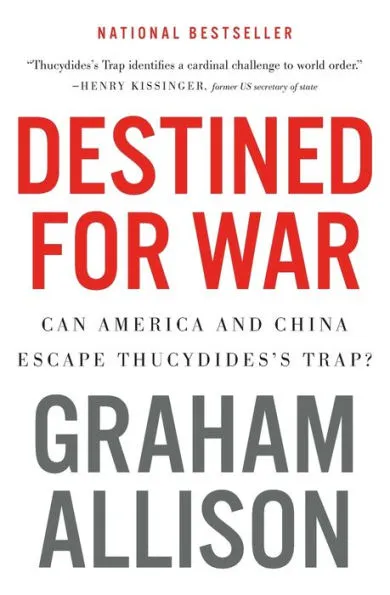
In the world of international relations, few concepts have captured as much attention — and sparked as much debate — as the “Thucydides Trap”. Brought to prominence by Harvard political scientist Graham Allison, the term suggests that conflict is almost inevitable when a rising power threatens to displace an established one, a dynamic often invoked to frame the strategic rivalry between the United States and China. Lauded as a National Bestseller and praised by figures like Henry Kissinger and Joe Biden, Allison’s Destined for War: Can America and China Escape Thucydides’s Trap? has become a staple of policy discussions and academic syllabi. Yet beneath the widespread acclaim lies a deeply flawed analysis, one that risks oversimplifying history and perpetuating a fatalistic narrative that could shape policy in dangerous ways. Far from an inescapable destiny, the lessons of history and the nuances of modern geopolitics suggest that the so-called “trap” may be more myth than inevitability.
The term “Thucydides Trap” is derived from a passage in the ancient Greek historian Thucydides’ work History of the Peloponnesian War, where he explained the causes of the conflict between Athens (the rising power) and Sparta (the ruling power) in the 4th century BC. Thucydides famously wrote
It was the rise of Athens and the fear that this instilled in Sparta that made war inevitable.
Allison defines the “Thucydides Trap” as “the severe structural stress caused when a rising power threatens to upend a ruling one”.1 More articles by Allison using this term previously appeared in Foreign Policy and The Atlantic. The book, published in 2017, was a huge hit, being named a notable book of the year by the New York Times and Financial Times while also receiving widespread bipartisan acclaim from current and past policymakers. Historian Niall Ferguson described it as a “must-read in Washington and Beijing”.2 Senator Sam Nunn wrote, “If any book can stop a World War, it is this one”.3 A brief search on Google Scholar reveals the term “Thucydides Trap” has been cited or used nearly 19,000 times. In 2015, Australian Prime Minister Malcolm Turnbull even publicly urged President Xi and Chinese Premier Li Keqiang to avoid “falling into the Thucydides Trap”.4 One analyst observed that the term had become the “new cachet as a sage of U.S.-China relations”.5 The term has become so prominent that it is almost guaranteed to appear in any introductory international politics course when discussing U.S.-China relations.
Allison wrote in his essay “The Thucydides Trap: Are the U.S. and China Headed for War?” in The Atlantic published in 2015, “On the current trajectory, war between the United States and China in the decades ahead is not just possible, but much more likely than recognized at the moment” forewarning, “judging by the historical record, war is more likely than not”.6 A straightforward analysis of the 16 cases in the book and previous essays might indicate that, based on historical precedent, there is approximately a 75 percent likelihood of the United States and China engaging in war within the next several decades. Adding the additional cases from the Thucydides Trap Website would still leave a 66 percent chance, more likely than not, that two nuclear-armed superpowers will go to war with one another, a horrifying and unprecedented proposition.7
With such alarm, it’s no surprise that the concept gained such widespread attention. The term is simple to understand and in under 300 pages, Allison delivers a sweeping historical narrative, drawing striking parallels between events from ancient Greece to the present day.8 International Relations as a field often struggles to break through in the public discourse, but Destined for War broke through, making a broad impact on academic and popular discourse.
1. Graham Allison, Destined For War: Can America and China Escape Thucydides’s Trap? (Boston: Houghton Mifflin Harcourt, 2017), 29.
2. Ibid., iii.
3. Ibid., vi.
4. Quoted by Alan Greeley Misenheimer, Thucydides’ Other “Traps”: The United States, China, and the Prospect of “Inevitable” War (Washington: National Defense University, 2019), 8.
5. Misenheiemer, 1.
6. “Thucydides’s Trap Case File” Belfer Center for Science and International Affairs, Harvard Kennedy School, accessed December 31, 2024
7. Graham Allison, “The Thucydides Trap: Are the U.S. and China Headed for War?” The Atlantic, September 24, 2015.
8. Misenheimer details what Thucydides actually said about the origins of the Peloponnesian War, 10-17.
Comments Off on The “Thucydides Trap”
January 11, 2025
QotD: “Composite” pre-gunpowder infantry units
I should be clear I am making this term up (at least as far as I know) to make a contrast between what Total War has, which are single units made up of soldiers with identical equipment loadouts that have a dual function (hybrid infantry) and what it doesn’t have: units composed of two or more different kinds of infantry working in concert as part of a single unit, which I am going to call composite infantry.
This is actually a very old concept. The Neo-Assyrian Empire (911-609 BC) is one of the earliest states where we have pretty good evidence for how their infantry functioned – there was of course infantry earlier than this, but Bronze Age royal records from Egypt, Mesopotamia or Anatolia tend to focus on the role of elites who, by the late Bronze Age, are increasingly on chariots. But for the early Iron Age Neo-Assyrian empire, the fearsome effectiveness of its regular (probably professional) infantry, especially in sieges, was a key component of its foreign-policy-by-intimidation strategy, so we see a lot more of them.
That infantry was split between archers and spear-and-shield troops, called alternately spearmen (nas asmare) or shield-bearers (sab ariti). In Assyrian artwork, they are almost always shown in matched pairs, each spearman paired off with a single archer, physically shielding the archer from attack while the archer shoots. The spearmen are shown with one-handed thrusting spears (of a fairly typical design: iron blade, around 7 feet long) and a shield, either a smaller round shield or a larger “tower” shield. Assyrian records, meanwhile, reinforce the sense that these troops were paired off, since the number of archers and spearmen typically match perfectly (although the spearmen might have subtypes, particularly the “Qurreans” who may have been a specialist type of spearman recruited from a particular ethnic group; where the Qurreans show up, if you add Qurrean spearmen to Assyrian spearmen, you get the number of archers). From the artwork, these troops seem to have generally worked together, probably lined up in lines (in some cases perhaps several pairs deep).
The tactical value of this kind of composite formation is obvious: the archers can develop fire, while the spearmen provide moving cover (in the form of their shields) and protection against sudden enemy attack by chariot or cavalry with their spears. The formation could also engage in shock combat when necessary; the archers were at least sometimes armored and carried swords for use in close combat and of course could benefit (at least initially) from the shields of the front rank of spearmen.
The result was self-shielding shock-capable foot archer formations. Total War: Warhammer also flirts with this idea with foot archers who have their own shields, but often simply adopts the nonsense solution of having those archers carry their shields on their backs and still gain the benefit of their protection when firing, which is not how shields work (somewhat better are the handful of units that use their shields as a firing rest for crossbows, akin to a medieval pavisse).
We see a more complex version of this kind of composite infantry organization in the armies of the Warring States (476-221 BC) and Han Dynasty (202 BC – 220 AD) periods in China. Chinese infantry in this period used a mix of weapons, chiefly swords (used with shields), crossbows and a polearm, the ji which had both a long spearpoint but also a hook and a striking blade. In Total War: Three Kingdoms, which represents the late Han military, these troop-types are represented in distinct units: you have a regiment of ji-polearm armed troops, or a regiment of sword-and-shield troops, or a regiment of crossbowmen, which maneuver separately. So you can have a block of polearms or a block of crossbowmen, but you cannot have a mixed formation of both.
Except that there is a significant amount of evidence suggesting that this is exactly how the armies of the Han Dynasty used these troops! What seems to have been common is that infantry were organized into five-man squads with different weapon-types, which would shift their position based on the enemy’s proximity. So against a cavalry or chariot charge, the ji might take the front rank with heavier crossbows in support, while the sword-armed infantry moved to the back (getting them out of the way of the crossbows while still providing mass to the formation). Of course against infantry or arrow attack, the swordsmen might be moved forward, or the crossbowmen or so on (sometimes there were also spearmen or archers in these squads as well). These squads could then be lined up next to each other to make a larger infantry formation, presenting a solid line to the enemy.
(For more on both of these military systems – as well as more specialist bibliography on them – see Lee, Waging War (2016), 89-99, 137-141.)
Bret Devereaux, “Collection: Total War‘s Missing Infantry-Type”, A Collection of Unmitigated Pedantry, 2022-04-01.
Comments Off on QotD: “Composite” pre-gunpowder infantry units
January 8, 2025
The Korean War 029 – The Third Battle of Seoul – January 7, 1951
The Korean War by Indy Neidell
Published 7 Jan 2025The Chinese People’s Volunteer Army crosses the Imjin River in force and attacks the South Korean capital. The best units available to Eighth Army commander Matt Ridgway defend it, but with more Chinese armies and reformed North Korean units pushing in the east, is there any hope of holding onto it?
Chapters
00:00 Intro
00:50 Recap
01:09 Seoul Good
03:13 Seoul Gone
07:39 To Line D
10:20 The Ceasefire Committee
14:02 Summary
14:20 Conclusion
(more…)
Comments Off on The Korean War 029 – The Third Battle of Seoul – January 7, 1951
January 1, 2025
The Korean War 028 – Happy Nuke Year! – December 31, 1950
The Korean War by Indy Neidell
Published 31 Dec 2024Matt Ridgway arrives in Korea to find his Eighth Army broken and dysfunctional from top to bottom. He has a mere few days to rectify these issues and get them combat-ready before the Communist Chinese forces approach once more. But the stakes are high; UN forces commander Douglas MacArthur continues to pressure Washington to expand the war, through either conventional or atomic means. As 1950 expires, the doomsday clock is ticking.
(more…)
Comments Off on The Korean War 028 – Happy Nuke Year! – December 31, 1950
December 24, 2024
The Korean War 027 – The US General Dies! – December 24, 1950
The Korean War by Indy Neidell
Published 24 Dec 2024UN forces commander Douglas MacArthur continues to insist more troops are needed to fight the Chinese Communists. They aren’t coming anytime soon. But UN troops in the North do at least pull off a miraculous evacuation from Hungnam and arrive in South Korea and begin defensive preparations, as Eighth Army commander Walton Walker embarks on an ill-fated trip north of Seoul…
(more…)
Comments Off on The Korean War 027 – The US General Dies! – December 24, 1950


