Overly Sarcastic Productions
Published on 16 Aug 2019Go to https://NordVPN.com/overlysarcastic and and use code
OVERLYSARCASTICto get 75% off a 3 year plan and an extra month for free. Protect yourself online today!Malta, the Island of A Dozen Empires, chilling in the middle of the Mediterranean Sea, is one of the most social butterflies in History. Having played host to or fought against every major power in the Mediterranean, this island bears a gorgeous architectural and linguistic record of its past, and is still a treasure to behold in the modern day. I’ve covered a lot of nations and empires in my time here, but between the rich cultural blends, the overflowing artistic treasures, and the Still-In-One-Piece-ness of it all, Malta may have one of the strongest claims to being the Winner of History in my book. What’s so special about Malta? Watch and find out!
NOTE on 7:00 – 7:08 — I’m cheating the time-scales a little here. This church, the Rotunda of Mosta, was actually built mid 1800s. Malta’s lavish church construction continued nearly unabated from C. 1565 to the modern day, so I use this example here — but St Paul’s Co-Cathedral in Valletta, shown from 6:27-6:33 is a better example of pure original Baroque construction. Honestly, all of the churches in Malta deserve a look if you’re curious.
PATREON: https://www.Patreon.com/OSP
DISCORD: https://discord.gg/sS5K4R3
August 17, 2019
History Summarized: Malta
July 19, 2019
July 3, 2019
Summer Stupidity: BOSTON (City Review!)
Overly Sarcastic Productions
Published on 2 Jul 2019The summer stupidity continues with another city review! I hope you like seafood, tea shops, woodlands, college and twisty streets because boston has all this and… not much else!
PATREON: https://www.Patreon.com/OSP
June 26, 2019
Summer Stupidity: LONDON (City Review!)
Overly Sarcastic Productions
Published on 25 Jun 2019For more summer fun, we’re heading to London! Let us know what other fun side-content you’d like to see. We’ll see you with more long-form content on Friday!
PATREON: https://www.Patreon.com/OSP
OUR WEBSITE: https://www.OverlySarcasticProduction…
Find us on Twitter https://www.Twitter.com/OSPYouTube
Find us on Reddit https://www.Reddit.com/r/OSP/
June 18, 2019
QotD: The birth of Jesus and the open concept house
Jesus was not born in a stable. That’s not to say the birth wasn’t attended by farm animals — the Gospel of Luke tells us twice the baby’s first bed was a feeding trough — but rather that the animals lived in the house.
Peasant homes in first century Bethlehem were designed with what we would today call an “open concept.” They typically had one large room with the nicer living space in an open loft or on the roof, while the main floor area was where the family’s animals would be brought for safekeeping at night. The guestroom that was unavailable to Jesus, Mary, and Joseph was that loft or roof space, and the big room where they stayed instead served as the kitchen, living room, dining room, and farmyard all at once. The defining feature of Jesus’ birthplace was not isolation, as we often tend to think, but an utter lack of privacy: Mary delivered in a crowded farmhouse with few, if any, interior walls.
And that was perfectly normal, if not exactly desirable, for our modern fixation on the open floor plan is a historical anomaly. It flies in the face of literally millennia of consensus that more rooms is better, and it is a dreadful mistake. The last 70 years of open concept construction and remodeling has left us with dysfunctional houses, homes that are less conducive to hospitality, less energy efficient, and more given to mess.
Bonnie Kristian, “Open concept homes are for peasants”, The Week, 2019-05-12.
June 15, 2019
QotD: The early Bauhaus
The ideas of the modernists were generally expressed in the imperative mood and were frequently of a pseudo-mystical nature. Professor Curl’s description of some of the practices prevalent in the early Bauhaus make for hilarity; cranks are always a source of fun. In the early days, the modernists of the Bauhaus tended to a form of health mysticism involving vegetarianism, garlic paste, and regular enemas. Far more important, however, was their early and inherent attraction to totalitarianism. As the author points out, Gropius and Miës van der Rohe had no objection to Nazism other than that the Nazis failed to commission work from them. Gropius was an opportunistic anti-Semitic snob who espoused communism until it was no longer convenient for his career. Miës sucked up to the Nazis as much as he was able. The fact that both of them emigrated from Germany has done much to obscure their accommodation with the Nazis and even allowed the modernists to pose as anti-Nazi — though the most important proponent of modernism in America, Philip Johnson, had for some years been a rank Nazi in more than merely nominal terms. Moreover, as Professor Curl points out, the Nazi aesthetic, like the communist, had much in common with modernism.
Theodore Dalrymple, “Crimes in Concrete”, First Things, 2019-06.
June 8, 2019
Blue’s Top Five Domes!
Overly Sarcastic Productions
Published on 7 Jun 2019There are questions any self-respecting YouTube Historian must ask: “How do you balance entertainment and educational value?”, “What’s the split between your area of expertise and more foreign topics?”, and, of course, the most important of all: “Which Dome is the best dome?”
Today, Overly Sarcastic Productions takes a stand on this critical issue — and proceeds to shitpost about it.
PATREON: https://www.Patreon.com/OSP
OUR WEBSITE: https://www.OverlySarcasticProduction…
Find us on Twitter @OSPYouTube!
May 16, 2019
Remembering Monte Cassino … and Wojtek the Bear, a Polish war hero
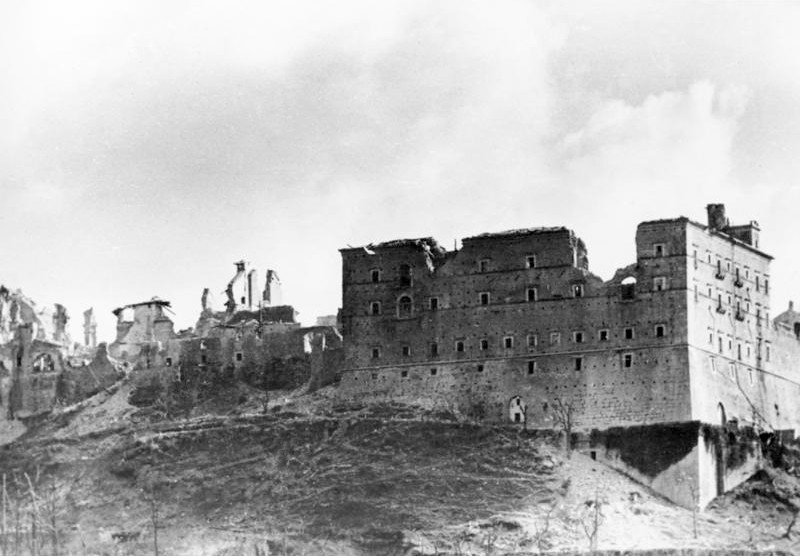
At the Daily Chrenk, Arthur Chrenkoff remembers the Polish soldiers who finally took Monte Cassino from the Germans in 1944, after earlier allied attempts by soldiers of many other nations (including Canada) had failed:

The ruins of the abbey at Monte Cassino after the 1944 battle.
Photograph credited to “Wittke” in the German Federal Archive (Bundesarchiv) via Wikimedia Commons.
On May 18, the day Australia goes to the polls, on the other side of the world we will be commemorating the 75th anniversary of the end of the bloodiest and hardest fought battle of the Italian campaign if not the whole of the Western front of WW2. On that day, a patrol from the 12th Podolian Cavalry Regiment raised the Polish flag above the ruins of the Benedictine monastery on top of Monte Cassino, bringing to an end four months and four Allied offensives against the heavily fortified Gustav (or Winter) Line, manned by crack German divisions across the entire width of the Italian boot about 100 miles south of Rome. Some of the German troops, veterans of the Eastern front, thought the fighting was worse than at Stalingrad. Others, on the Allied side, compared the conditions to Verdun. Unlike Russian cities or French fields, most of the fighting around Monte Cassino took place over an unimaginably difficult terrain of steep mountain slopes, deep valleys, wild rivers and landscape stripped bare by the artillery. It was a truly world battle in a world war: pitted against the Wehrmacht were the units from Great Britain, including British India and Rhodesia, the United States, France and its north African colonies like Morocco, Canada, Australia, New Zealand, including Maori troops, South Africa, Italy and Poland. Since the start of the Allied offensive in January 1944, waves after waves of troops of the 5th US and the 8th British armies smashed themselves against the rocks, unable to dislodge the well dug-in Germans. Finally, the fourth battle code-named Operation Diadem, which commenced with a massive bombardment on May 16, threw the British 13th Army Corp and the 2nd Polish Corp against the very linchpin of the Gustav Line at Monte Cassino and its monastery. Two days later it was over.
[…]
Churchill, right from the time of the Gallipoli disaster, remained obsessed about the vulnerability of the continental powers – primarily Germany – through what he called “the soft underbelly of Europe”. The war records are full of his harebrained schemes to attack the Axis through Italy, the Balkans or Greece and knock them out of the fight by a sharp thrust into the Central Europe. This was to be a masterstroke in place of the Normandy invasion, which Churchill strenuously opposed, and later in addition to it, to draw some of the German troops away from the northern France and indeed to get to Austria and southern Germany before the Red Army.
The problem with the soft underbelly of Europe is that it’s anything but. In fact it’s the hardest part of Europe; all rock, no roll. It’s mountains and deep valleys, fast rivers and vast forests, rudimentary roads and virtually no useful infrastructure. Unlike the northern European plains, this is the defender’s country where the Allies lost all the advantage of their numbers, their maneuverability and their armour. The two years of arduous slogfest from the southern Sicily to the Emilia-Romagna in the north might have indeed drawn valuable German troops from the other theaters of war but it was a bloody dead end. Poles were still stuck taking Bologna in April 1945, while only days later the patrols from Patton’s 3rd US Army were reaching the outskirts of Prague.
And Wojtek?
Monte Cassino is on my mind today, because entirely coincidentally I’m reading a delightful war book (that’s an oxymoron if there is one) titled Wojtek the Bear: Polish War Hero. It tells the surreal but entirely true story of a bear cub adopted by the Polish troops in northern Iran in 1942, towards the start of their anabasis from Stalin’s Siberia all the way to Italy and eventually Scotland. Accompanying the Poles through all their service in the Middle East and then southern Europe, Wojtek grew up to be a 6-foot, 500-pound ursine, who always thought he was a human. Quintessentially Polish (if only by adoption), he loved beer and cigarettes (he also ate them, but only if lit), taking showers with the troops and riding shotgun in army trucks. Some of his war-time exploits included capturing an Arab spy in Iraq and stealing underwear from a female support unit. But Wojtek truly became a legend during the battle of Monte Cassino, when to his comrades’ amazement he volunteered to carry ammunition in his paws. He was eventually made a Private in the Polish Army, and lived until 1963, continuing to win hearts in Scotland, where the Polish troops were repatriated after the war.
May 15, 2019
Modern architecture as a generations-long art crime spree
Theodore Dalrymple is clearly quite a fan of Making Dystopia: The Strange Rise and Survival of Architectural Barbarism by James Stevens Curl, as this is at least the third review of the book I’ve seen by him (and you can probably tell I agree with much of his viewpoint that I’m blogging it yet again…)
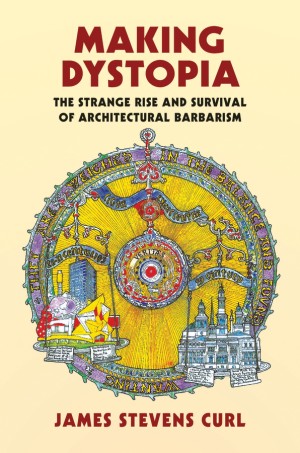
In a recent debate in Prospect magazine on the question of whether modern architecture has ruined British towns and cities, Professor James Stevens Curl, one of Britain’s most distinguished architectural historians, wrote as his opening salvo:
Visitors to these islands who have eyes to see will observe that there is hardly a town or city that has not had its streets — and skyline — wrecked by insensitive, crude, post-1945 additions which ignore established geometries, urban grain, scale, materials, and emphases.
This is so self-evidently true that I find it hard to understand how anyone could deny it, but modern architects and hangers-on such as architectural journalists do deny it, like war criminals who, for obvious reasons, continue to deny their crimes in the face of overwhelming evidence.
This is true not only of Britain but of many, perhaps most, other countries that have or had any towns or cities to ruin. Anyone who rides into the center of Paris from Charles de Gaulle Airport, for example, will be appalled at the modernist visual hell that scours his eyes as he goes.
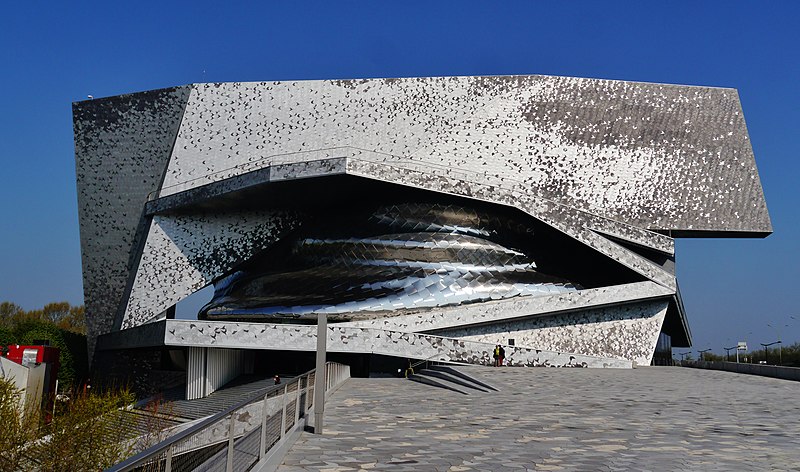
Nor is this visual hell the consequence of the need to build cheaply. Where money is no object, contemporary architects, like the sleep of reason in Goya’s etching, bring forth monsters. The Tour Montparnasse (said to be the most hated building in Paris), the Centre Pompidou, the Opéra Bastille, the Musée du quai Branly, the new Philharmonie, do not owe their preternatural ugliness to lack of funds, but rather to the incapacity, one might say the ferocious unwillingness, of architects to build anything beautiful, and to their determination to leave their mark on the city as a dog leaves its mark on a tree.
Professor Curl’s magnum opus is both scholarly and polemical. He has been observing the onward march of modernism and its effects for sixty years and is justifiably outraged by it. British architects have managed to reverse the terms of the anarchist Bakunin’s dictum that the urge to destroy is also a creative urge: Their urge to create is also a destructive urge. I could give many concrete examples (no pun intended).
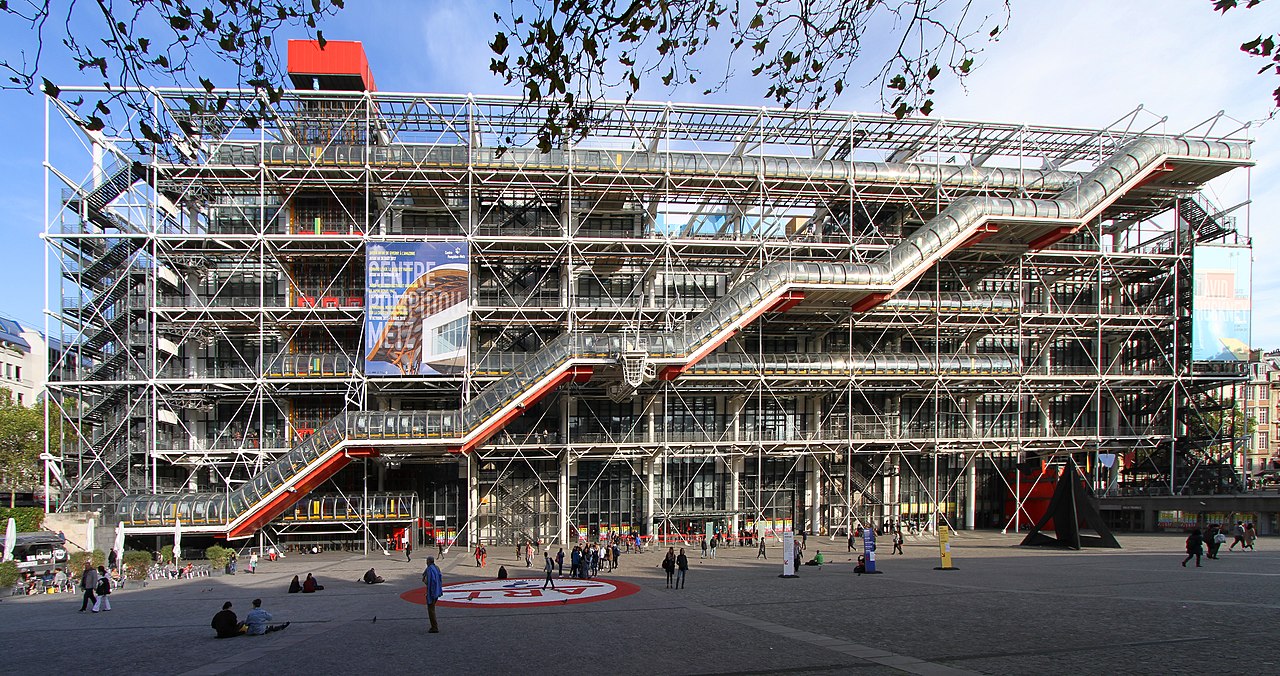
Curl knows that he is arguing not against an aesthetic, but against an ironclad ideology. The architectural Leninists have been determined so to indoctrinate the public that they hope and expect a generation will grow up knowing nothing but modernism, and therefore will be unable to judge it. (All judgment is comparative, as Doctor Johnson said.) In Paris recently, I saw an advertisement on the Métro (a few days before the fire in Notre-Dame) to the effect that Paris would not be Paris without the Centre Pompidou — which, of course, has a good claim to be the ugliest building in the world. In the face of such an advertisement promoted by the cultural elite, what ordinary person would dare demur?
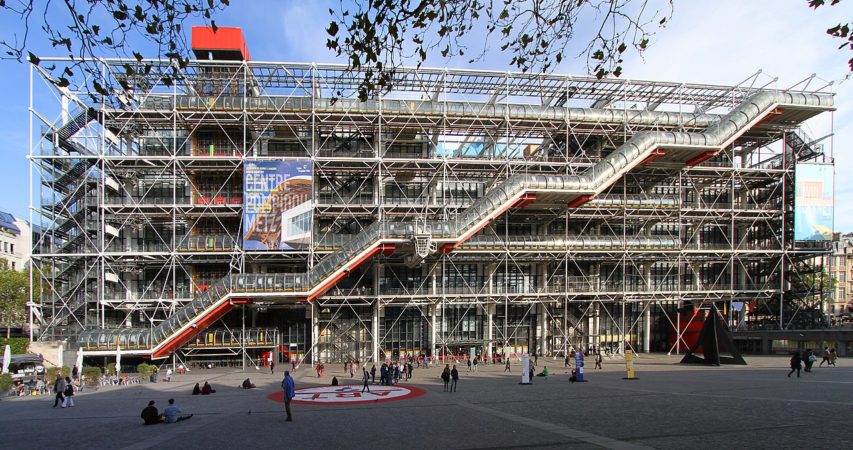
Centre Georges-Pompidou (no, this isn’t an under construction image … it’s from 2017 and the construction was technically complete in 1977)
Gerd Eichmann photo via Wikimedia Commons.
Could anyone imagine a worldwide outpouring of genuine and heartfelt grief, such as that which greeted the burning of Notre-Dame de Paris, if any building of the last seventy years burnt down? Indeed, the destruction of many would be a cause almost for rejoicing. Modernist buildings will never age as Notre-Dame aged; they will merely deteriorate, and usually do deteriorate even before completion.

April 23, 2019
David Warren’s musings on the Notre-Dame de Paris fire
There have been other incidents since the fire, most pressingly the horrific bombing attacks on Easter Sunday in Sri Lanka, but David Warren would still like us to remember what happened a week ago in Paris:
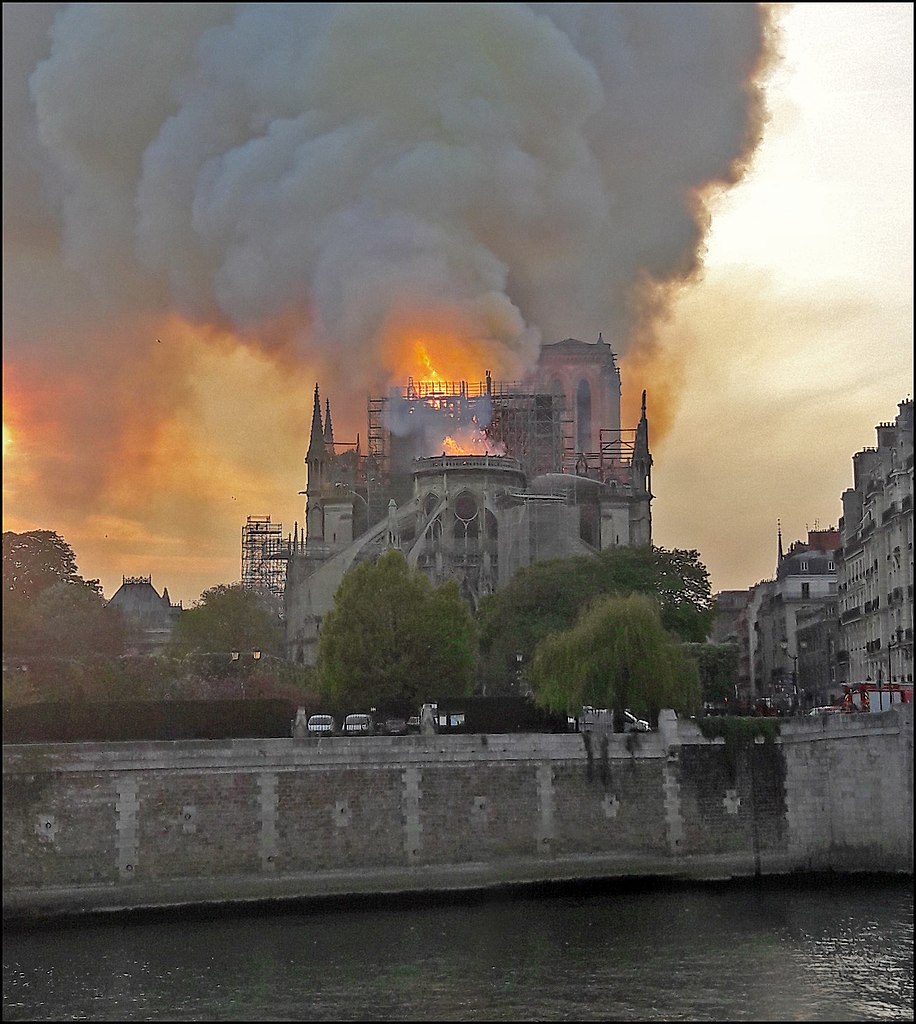
A week has passed since the fire in, or on, Notre Dame de Paris; let me be the last to comment on a story that is stale-dated by any meejah standard. It dominated international mindwaves for only two days, but left images that viewers may be able to recall many decades from now.
“The church is on fire,” is a commonplace thought, when a church is visibly on fire, and I who am commonplace was thinking that while turning to the news. As an old meejah hack, who happens to know a little about Gothic architecture, I was prepared to discount the “fake news” that would be disseminated in “live time.” For instance, when told that the roof had collapsed, with strong hints that the building was now a write-off, I reflected that the roof is a hat, only. Stone vaulting lies underneath it, except the circle much of the spire fell through (as burnt offering onto the altar). Stone doesn’t burn easily; and even fallen vaulting can be repaired, having been erected with technology we would consider primitive today.
A spectacle: to see the ancient oak timbers, of great girth, burning up like matchsticks. But the craft masons of Notre Dame — far, far in advance of our modern Lego builders — expected fire and lived in a time so simple that they knew oak doesn’t burn without help. It isn’t big matchsticks. The idea that you need some serious accelerants to make it burn, and that only the accelerants would flame like that, was among my initial thoughts. We’ll see what comes of investigations. I also recalled two recent attempts to torch the cathedral, associated with terrorism.
Instead, the explanation of a clumsy accident by restoration workers was immediately accepted by the talking heads, and even Fox News hung up on a guest who had another theory. In favour of the politically correct, plausible account, I learnt that a fire alarm had sounded 23 minutes before the blaze itself was spotted. Paradoxically, this showed the ruinous consequences of depending exclusively on modern technology: the computers directed the first responders to the wrong place, away from the actual heat source.
I can easily believe in electrical short circuits as a fire hazard, especially since having had myself to flee a building where a cost-cutting landlord was having an elevator repaired by what I characterized as “a Romanian comedy team.” (They buzz-sawed through a live electrical cable, then themselves fled the scene of their handiwork as smoke shot up the shaft through the building. Luckily this smoke warned all tenants to evacuate; the building’s siren alone would have been taken by everyone as yet another false alarm.)
April 21, 2019
QotD: High Modern city design as a tool to control the populace
Scott notes that although citizens generally didn’t have a problem with earlier cities, governments did:
Historically, the relative illegibility to outsiders of some urban neighborhoods has provided a vital margin of political safety from control by outside elites. A simple way of determining whether this margin exists is to ask if an outsider would have needed a local guide in order to find her way successfully. If the answer is yes, then the community or terrain in question enjoys at least a small measure of insulation from outside intrusion. Coupled with patterns of local solidarity, this insulation has proven politically valuable in such disparate contexts as eighteenth-and early nineteenth-century urban riots over bread prices in Europe, the Front de Liberation Nationale’s tenacious resistance to the French in the Casbah of Algiers, and the politics of the bazaar that helped to bring down the Shah of Iran. Illegibility, then, has been and remains a reliable resource for political autonomy
This was a particular problem in Paris, which was famous for a series of urban insurrections in the 19th century (think Les Miserables, but about once every ten years or so). Although these generally failed, they were hard to suppress because locals knew the “terrain” and the streets were narrow enough to barricade. Slums full of poor people gathered together formed tight communities where revolutionary ideas could easily spread. The late 19th-century redesign of Paris had the explicit design of destroying these areas and splitting up poor people somewhere far away from the city center where they couldn’t do any harm.
Scott ties this into another High Modernist creation: the collective farms of the Soviet Union. This was a terrible idea and responsible for the famines that killed millions (tens of millions?) during Stalin’s administration. The government went ahead with them because the non-collectivized farmers were too powerful and independent a political bloc. They lived in tight-knit little villages that did their own thing, the Party officials who went to these villages to keep order often ended up “going native”, and the Soviets had no way of knowing how much food the farmers were producing and whether they were giving enough of it to the Motherland.
The collectivized farms couldn’t grow much, but people were thrown together in artificial towns designed to make it impossible to build any kind of community: there was nowhere to be except in bed asleep, working in the fields, or at the public school receiving your daily dose of state propaganda. The towns were identical concrete buildings on a grid, which left the locals maximally disoriented (because there are no learnable visual cues) and the officials maximally oriented (because even a foreigner could go to the intersection of Street D and Street 7). All fields were perfectly rectangular and produced Standardized Food Product, so it was (theoretically) easy to calculate how much they should be producing and whether people were meeting that target. And everyone was in the same place, so if there were some sort of problem it was much easier to bring in the army or secret police than if they were split up among a million tiny villages in the middle of nowhere.
Confronting a tumultuous, footloose, and “headless” rural society which was hard to control and which had few political assets, the Bolsheviks, like the scientific foresters, set about redesigning their environment with a few simple goals in mind. They created, in place of what they had inherited, a new landscape of large, hierarchical, state-managed farms whose cropping patterns and procurement quotas were centrally mandated and whose population was, by law, immobile. The system thus devised served for nearly sixty years as a mechanism for procurement and control at a massive cost in stagnation, waste, demoralization, and ecological failure.
Scott Alexander, “Book Review: Seeing Like a State”, Slate Star Codex, 2017-03-16.
April 17, 2019
Some good news in the aftermath of the Notre-Dame de Paris fire
Mark Steyn, who is not normally noted for his habit of bringing good news, actually has some good news to share as the authorities in Paris evaluate the damage to the cathedral after the fire of April 15th:

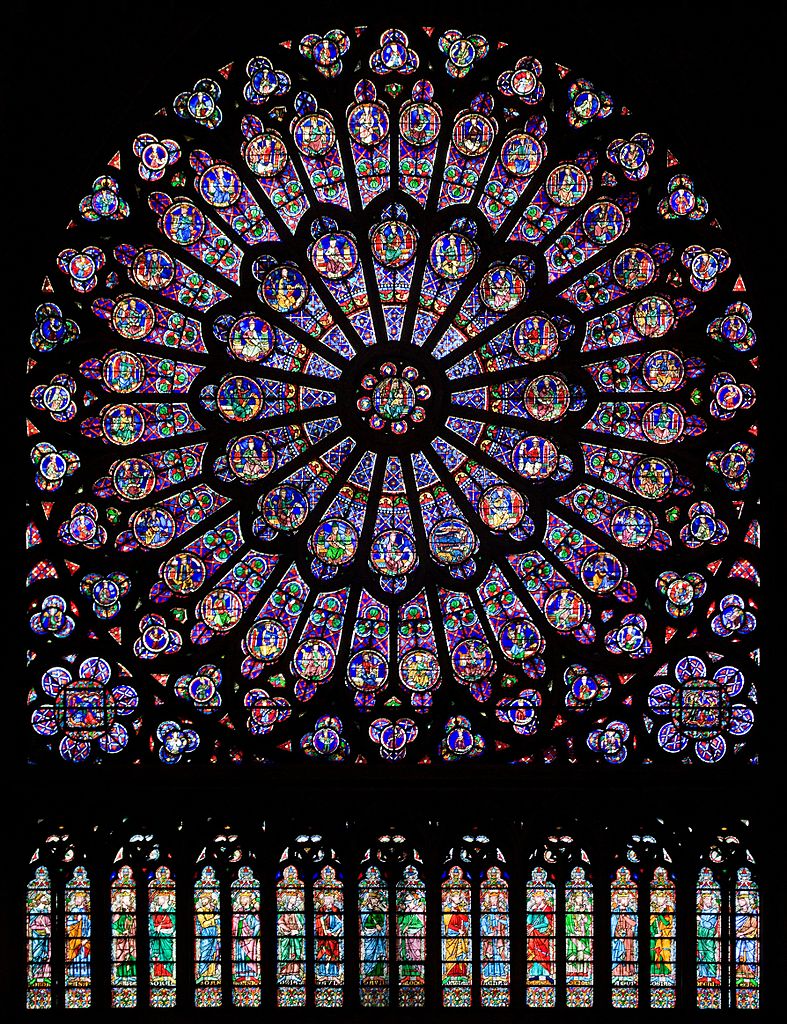
The north rose window of the Cathédrale Notre-Dame de Paris, in a photo from 22 August, 2010. This and the other two rose windows are reported to have survived the fire of 15 April, 2019.
Photo by Julie Anne Workman. License: CC-BY-SA 3.0 via Wikimedia Commons.
Twenty-four hours after Notre Dame de Paris began to burn, there is better news than we might have expected: More of the cathedral than appeared likely to has, in fact, survived intact – including the famous rose windows, among the most beautiful human creations I’ve ever seen. The “new” Notre Dame will be mostly high up and out of sight, which is just as well given that modern man prides himself on having no smidgeonette of empathy with his flawed forebears and thus the chances of historic recreation of the animating spirit of 1160 are near zero.
There is an architectural debate to be had, I suppose, about whether a reconstructed twelfth-century cathedral requires nineteeth-century appurtenances such as its spire. But the minute that starts you risk some insecure dweeb like Macron, on whose watch the thing went up in smoke, getting fanciful ideas about bequeathing to posterity some I M Pei pyramid on the top of the roof. France’s revolution, unlike America’s, was aggressively secular, and it ultimately found expression in the 1905 law on the separation of churches and the state. Since then the French state has owned the cathedral, and thus it will be Macron who ultimately decides what arises in its place.
Beyond that are the larger questions: When the iconic house of worship at the heart of French Christianity decides to mark Holy Week by going up in flames, it’s too obviously symbolic of something … but of what exactly? Two thousand churches have been vandalized in the last two years: Valérie Boyer, who represents Bouches-du-Rhône in the National Assembly, said earlier this month that “every day at least two churches are profaned” – by which she means arson, smashed statutes of Jesus and Mary, and protestors who leave human fecal matter in the shape of a cross. This is a fact of life in modern France.
As it is, there is no shortage of excitable young Mohammedans gleefully celebrating on social media. In 2017 some inept hammer-wielding nutter yelling “Allahu Akbar!” had a crack at Notre Dame, and a couple of years before that the historian Dominique Venner blew his brains out on the altar to protest same-sex marriage. I love France but, in recent years, it’s hard not to pick up on the sense that it’s coming apart – and that, when the center cannot hold, the things at that center, the obsolete embodiments of a once cohesive society, are a natural target.
In addition, the authorities’ eagerness to assure us that it was an accident at a time when such a conclusion could not possibly be known – and when their own response to the emergency was, to put it politely, somewhat dilatory – was itself enough to invite suspicion: “Sure, it might be an accident. But, even if it weren’t, they’d still tell us it was…”
So, precisely because Paris is full of people who would love to burn down Notre Dame four days before Good Friday, it seems bizarrely improbable that it should happen by accident: that a highly desirable target should be taken out by some slapdash workman leaving a cigarette butt near his combustible foam take-out box – the lunchpack of Notre Dame – and letting the dried-out twelfth-century timbers do the rest.
The Rose Window was spared! pic.twitter.com/D5NjepKzh3
— The French History Podcast (@FrenchHist) April 16, 2019
April 16, 2019
The fire at Notre-Dame de Paris
The central Paris landmark has been severely damaged by a fire that broke out beneath the roof of the cathedral early in the evening of April 15th. Here are a few images from the Wikimedia Commons page on the fire:
Officials were quick to announce that the fire was not the result of terrorist action … while the fire was still raging (that is, before anyone could have made any scientific determination on the cause), which only made those inclined to suspect terrorist activity even more suspicious. Conspiracy theorists gotta theorize, after all. Robert Harris discusses this aspect of the story at the New English Review:
Ruling out any cause other than accidental fire, at such an early stage, did seem to be an assumption made with [undue] rapidity, not least because it occurred within a week of Easter when such a religious landmark would be a prime target within a city and a nation that has suffered more than its share of acts of Islamist terrorism, and especially at a time when numerous French churches have been targeted.
The international media was similarly unanimous in describing the cause of the blaze, with some carrying critical coverage of Youtube’s automated topical descriptors linking the event with 9/11. Even Fox News’ Shepard Smith was rather more than simply unwilling to entertain the speculations of one French interviewee that tried to note some of the above surrounding circumstances.
Prima facie, it might have also been thought that it was peculiar that such a serious fire became so advanced during a time of day when the cathedral would have been in use by public visitors. There have been numerous serious fires during periods of restoration, as the mainstream media rightly noted, but less mentioned was the likely fact that such work would have ceased some hours before smoke became visible.
[…]
The prospect of a terrorist act rears but there is perhaps some reason to assume a non-terrorist motive because there doesn’t seem to have been any claims of responsibility. It may be thought that any Islamist organisation linked with the blaze of such a major Christian/Western landmark would be very keen to boast about the deed on social media when the story hit the international news. Alternatively, the inferno could have been caused by a lone-wolf terrorist attack but such individuals commonly swear allegiance to a particular group and/or make some sort of public statement before a given attack.
If religiously motivated terrorism can be deemed to be unlikely at this stage, obvious alternatives still remain, such as an act of criminal arson or non-religious terrorism in which the perpetrators might be less keen to voice their involvement with the crime. For example, the blaze could have been an act of secular quasi-terrorism/arson/vandalism by the left-wing ‘Black-Bloc’, which has been responsible for much of the recent violence within the ‘Yellow Vest’ protest movement. It may therefore be suggested that the French authorities came to an unduly prompt reaction, given the surrounding circumstances.
March 13, 2019
QotD: Le Corbusier
Le Corbusier was challenged on his obsession with keeping his plan in the face of different local conditions, pre-existing structures, residents who might want a say in the matter, et cetera. Wasn’t it kind of dictatorial? He replied that:
The despot is not a man. It is the Plan. The correct, realistic, exact plan, the one that will provide your solution once the problem has been posited clearly, in its entirety, in its indispensable harmony. This plan has been drawn up well away from the frenzy in the mayor’s office or the town hall, from the cries of the electorate or the laments of society’s victims. It has been drawn up by serene and lucid minds. It has taken account of nothing but human truths. It has ignored all current regulations, all existing usages, and channels. It has not considered whether or not it could be carried out with the constitution now in force. It is a biological creation destined for human beings and capable of realization by modern techniques.
What was so great about this “biological creation” of “serene and lucid minds”? It … might have kind of maybe been evenly-spaced rectangular grids:
People will say: “That’s easily said! But all your intersections are right angles. What about the infinite variations that constitute the reality of our cities?” But that’s precisely the point: I eliminate all these things. Otherwise we shall never get anywhere.
I can already hear the storms of protest and the sarcastic gibes: “Imbecile, madman, idiot, braggart, lunatic, etc.” Thank you very much, but it makes no difference: my starting point is still the same: I insist on right-angled intersections. The intersections shown here are all perfect.
Scott uses Le Corbusier as the epitome of five High Modernist principles.
First, there can be no compromise with the existing infrastructure. It was designed by superstitious people who didn’t have architecture degrees, or at the very least got their architecture degrees in the past and so were insufficiently Modern. The more completely it is bulldozed to make way for the Glorious Future, the better.
Second, human needs can be abstracted and calculated. A human needs X amount of food. A human needs X amount of water. A human needs X amount of light, and prefers to travel at X speed, and wants to live within X miles of the workplace. These needs are easily calculable by experiment, and a good city is the one built to satisfy these needs and ignore any competing frivolities.
Third, the solution is the solution. It is universal. The rational design for Moscow is the same as the rational design for Paris is the same as the rational design for Chandigarh, India. As a corollary, all of these cities ought to look exactly the same. It is maybe permissible to adjust for obstacles like mountains or lakes. But only if you are on too short a budget to follow the rationally correct solution of leveling the mountain and draining the lake to make your city truly optimal.
Fourth, all of the relevant rules should be explicitly determined by technocrats, then followed to the letter by their subordinates. Following these rules is better than trying to use your intuition, in the same way that using the laws of physics to calculate the heat from burning something is better than just trying to guess, or following an evidence-based clinical algorithm is better than just prescribing whatever you feel like.
Fifth, there is nothing whatsoever to be gained or learned from the people involved (e.g., the city’s future citizens). You are a rational modern scientist with an architecture degree who has already calculated out the precise value for all relevant urban parameters. They are yokels who probably cannot even spell the word architecture, let alone usefully contribute to it. They probably make all of their decisions based on superstition or tradition or something, and their input should be ignored For Their Own Good.
And lest I be unfair to Le Corbusier, a lot of his scientific rational principles made a lot of sense. Have wide roads so that there’s enough room for traffic and all the buildings get a lot of light. Use rectangular grids to make cities easier to navigate. Avoid frivolous decoration so that everything is efficient and affordable to all. Use concrete because it’s the cheapest and strongest material. Keep pedestrians off the streets as much as possible so that they don’t get hit by cars. Use big apartment towers to save space, then use the open space for pretty parks and public squares. Avoid anything that looks like a local touch, because nationalism leads to war and we are all part of the same global community of humanity. It sounded pretty good, and for a few decades the entire urban planning community was convinced.
Scott Alexander, “Book Review: Seeing Like a State”, Slate Star Codex, 2017-03-16.
March 9, 2019
QotD: “Scientific” urban planning versus messy, unscientific, evolved town growth
Natural organically-evolved cities tend to be densely-packed mixtures of dark alleys, tiny shops, and overcrowded streets. Modern scientific rationalists came up with a better idea: an evenly-spaced rectangular grid of identical giant Brutalist apartment buildings separated by wide boulevards, with everything separated into carefully-zoned districts. Yet for some reason, whenever these new rational cities were built, people hated them and did everything they could to move out into more organic suburbs. And again, for some reason the urban planners got promoted, became famous, and spread their destructive techniques around the world.
Ye olde organically-evolved peasant villages tended to be complicated confusions of everybody trying to raise fifty different crops at the same time on awkwardly shaped cramped parcels of land. Modern scientific rationalists came up with a better idea: giant collective mechanized farms growing purpose-bred high-yield crops and arranged in (say it with me) evenly-spaced rectangular grids. Yet for some reason, these giant collective farms had lower yields per acre than the old traditional methods, and wherever they arose famine and mass starvation followed. And again, for some reason governments continued to push the more “modern” methods, whether it was socialist collectives in the USSR, big agricultural corporations in the US, or sprawling banana plantations in the Third World.
Traditional lifestyles of many East African natives were nomadic, involving slash-and-burn agriculture in complicated jungle terrain according to a bewildering variety of ad-hoc rules. Modern scientific rationalists in African governments (both colonial and independent) came up with a better idea – resettlment of the natives into villages, where they could have modern amenities like schools, wells, electricity, and evenly-spaced rectangular grids. Yet for some reason, these villages kept failing: their crops died, their economies collapsed, and their native inhabitants disappeared back into the jungle. And again, for some reason the African governments kept trying to bring the natives back and make them stay, even if they had to blur the lines between villages and concentration camps to make it work.
Why did all of these schemes fail? And more importantly, why were they celebrated, rewarded, and continued, even when the fact of their failure became too obvious to ignore? Scott gives a two part answer.
The first part of the story is High Modernism, an aesthetic taste masquerading as a scientific philosophy. The High Modernists claimed to be about figuring out the most efficient and high-tech way of doing things, but most of them knew little relevant math or science and were basically just LARPing being rational by placing things in evenly-spaced rectangular grids.
But the High Modernists were pawns in service of a deeper motive: the centralized state wanted the world to be “legible”, ie arranged in a way that made it easy to monitor and control. An intact forest might be more productive than an evenly-spaced rectangular grid of Norway spruce, but it was harder to legislate rules for, or assess taxes on.
The state promoted the High Modernists’ platitudes about The Greater Good as cover, in order to implement the totalitarian schemes they wanted to implement anyway. The resulting experiments were usually failures by the humanitarian goals of the Modernists, but resounding successes by the command-and-control goals of the state. And so we gradually transitioned from systems that were messy but full of fine-tuned hidden order, to ones that were barely-functional but really easy to tax.
Scott Alexander, “Book Review: Seeing Like a State”, Slate Star Codex, 2017-03-16.