
Feral Historian
Published 14 Nov 2025Modern society has become a bit obsessed with the idea of race. District 9 subverts some of these assumptions and points at some of the ways that the entire concept of race is a product of the modern era. This one meanders a bit, but I suppose there’s no way around that.
00:00 Intro
02:45 Meet Wikus
05:42 Subverting Race
08:35 Bacon’s Rebellion and Trans-Racial Wikus
12:32 Let’s Talk About Rhodesia
14:48 Perspectives and Narratives
(more…)
March 19, 2026
District 9 and the Story of “Race”
Comments Off on District 9 and the Story of “Race”
QotD: From the fall of the Soviets to the rise of the Wokerati
… for 50 years the Soviet nuclear threat provided […] an Armageddon to fear, and a reason to rally round the state in the free countries of the West. It provided an unexpected bonus, which protected us all though we did not realise it at the time. Since the USSR was the arsenal of repression, political liberty in the Western lands was under special protection as long as the Kremlin was our enemy. Freedom was, supposedly, what we fought and stood for. Governments claiming to be guarding us from Soviet tyranny could not go very far in limiting liberty on their own territory, however much they may have wanted to.
That protection ended when the Berlin Wall fell. In the same extraordinary moment, the collapse of Russian communism liberated revolutionary radicals across the Western world. The ghastly, failed Brezhnev state could not be hung round their necks like a putrid albatross any more. They were no longer considered as potential traitors simply because they were on the left. Eric Hobsbawm, and those like him, could at last join the establishment. Indeed, fortresses of the establishment such as the BBC now welcomed political as well as cultural leftists onto their upper decks.
Antonio Gramsci’s rethinking of the revolution — seize the university, the school, the TV station, the newspaper, the church, the theatre, rather than the barracks, the railway station and the post office — could at last get under way. At that moment, the long march of 1960s leftists through the institutions began to reach its objective, as they moved into the important jobs for the first time. And so one of the main protections of liberty and reason vanished, exactly when it was most needed.
The BBC’s simpering coverage of the Blair regime’s arrival in Downing Street, with its North-Korean-style fake crowd waving Union Jacks they despised, and new dawn atmosphere was not as ridiculous as it looked. May 1997 truly was a regime change. Illiberal utopians really were increasingly in charge, and the Cultural Revolution at last had political muscle.
Then came the new enemy, the shapeless ever-shifting menace of terrorism, against which almost any means were justified. To combat this, we willingly gave up Habeas Corpus and the real presumption of innocence, and allowed ourselves to be treated as if we were newly-convicted prisoners every time we passed through an airport.
Those who think the era of the face-mask will soon be over might like to recall that the irrational precautions of airport “security” (almost wholly futile once the simple precaution of refusing to open the door to the flight deck has been introduced) have not only remained in place since September 2001: they have been intensified. Yet, by and large, they are almost popular. Those who mutter against them, as I sometimes do, face stern lectures from our fellow-citizens implying that we are irresponsible and heedless.
Now a new fear, even more shapeless, invisible, perpetual (and hard to defeat — how can you ever eliminate a virus?) than al-Qaeda or Isis, has arrived in our midst. There is almost no bad action it cannot be used to excuse, including the strangling of an already shaky economy for which those eccentric or lucky enough to still be working will pay for decades. Millions have greeted this new peril as an excuse to abandon a liberty they did not really care much about anyway.
As a nation, we now produce more fear than we can consume locally, hiding in our homes as civil society evaporates. We queue up happily to hand in our freedom and to collect our muzzles and our digital IDs. And those of us who cry out, until we are hoarse, to say that this is a catastrophe, are met with shrugs from the chattering classes, and snarls of “just put on the frigging mask” from the mob. If I hadn’t despaired long ago, I would be despairing now.
Peter Hitchens, “Democracy muzzled”, The Critic, 2020-09-25.
Comments Off on QotD: From the fall of the Soviets to the rise of the Wokerati
March 18, 2026
Viewing-with-alarm “the highly lucrative, hyper-masculine ecosystem of online ‘red pill’ influencers”
I first heard of Louis Theroux and his Inside the Manosphere documentary through it being mentioned a few times on a recent podcast, but I’m hardly the one to provide any insight into contemporary political culture, so this is probably not very surprising. To provide some context, I found Celina’s summary to be quite useful:

When the liberal establishment is suddenly forced to confront the grotesque downstream consequences of its own social engineering, its first and most reliable instinct is to pathologise the individual rather than to interrogate the civilisation that produced him. This predictable dynamic is perfectly encapsulated in the critical reaction to the March 2026 release of the Netflix documentary Louis Theroux: Inside the Manosphere.1 The feature-length film, which follows the veteran British broadcaster as he immerses himself in the highly lucrative, hyper-masculine ecosystem of online “red pill” influencers, has been received by the chattering classes as a horrifying, alien glimpse into a shadowy digital underworld of unbridled misogyny, toxic behaviour, and financial grift.2 Commentators, critics, and worried parents have wrung their hands over the crude language, the explicit hostility directed toward women, and the ruthless exploitation of vulnerable, disaffected young boys who flock to these figures for guidance.3 They will undoubtedly draw the conclusion that these internet personalities are a bizarre aberration, a reactionary glitch in the otherwise progressive march of modern Western society that must be heavily censored, de-platformed, or psychologically rehabilitated.
This conclusion is not only incomplete, it is entirely, fundamentally wrong. The true significance of Theroux’s latest documentary is not that it uncovers an isolated network of digital deviants operating on the fringes of acceptable discourse. Rather, the film unintentionally functions as a bleak, unrelenting autopsy of late-stage Western cultural decline. The figures profiled by Theroux, men who monetise male grievance, openly commodify female sexuality, and preach a gospel of ruthless, transactional dominance are in no way rebels against the modern liberal order. They are, in fact, its purest, most distilled, and most logical products.
Through its exploration of this digital underworld, from the sun-drenched hedonism of Miami to the expatriate enclaves of Marbella, the documentary inadvertently exposes a significant and terrifying civilisational breakdown. It reveals a society suffering from the total collapse of traditional gender norms, the complete disappearance of honour, duty, and social trust, and the total ascendancy of a vulgar materialism where attention and capital are the only remaining arbiters of human value. The manosphere is not an alternative to modern Western ideology, it is the inevitable, putrid consequence of a culture that has spent the last half-century systematically dismantling its own moral, religious, and social infrastructure. To understand the phenomenon captured by Theroux, one must look past the superficial liberal moral outrage and recognise the manosphere for what it truly is: a favela culture operating seamlessly inside a wealthy Western economy.
[…]
Louis Theroux: Inside the Manosphere is undeniably a compelling piece of television, featuring moments of sharp journalistic insight and necessary confrontation with deeply unsavoury characters. But as a piece of cultural criticism, it ultimately fails because it refuses to look beyond the immediate vulgarity of its subjects. Theroux, and the liberal audiences who will consume his documentary, will walk away from the film comforted by their own moral superiority, convinced that the problem lies entirely with a few toxic men in Marbella and Miami who simply need to be censored, de-platformed, or re-educated.
They will draw entirely the wrong lesson. The manosphere influencers are not an invading force corrupting a healthy society; they are the native flora of the wasteland we have purposefully created. They are the warlords of the digital favela, thriving in the ruins of a civilisation that has actively, joyfully destroyed its own moral and social foundations. The documentary unintentionally captures the catastrophic, unavoidable consequences of modern Western ideology: a low-trust, hyper-materialistic culture where honour is dead, transactional exploitation is the accepted norm, and the relations between men and women have devolved into a state of algorithmic trench warfare.
Until the West is willing to confront the structural causes of this decay, the destructive failures of modern feminism, the atomisation inherent in mass democracy, the fraying of social capital brought about by multiculturalism, and the vast spiritual void of secular materialism, it will continue to produce generations of lost, angry men. And the e-pimps will always be there, waiting in the digital shadows, ready to sell them a monthly subscription to the abyss.
Update: Rob Henderson’s Wall Street Journal article on Theroux’s Inside the Manosphere has also been posted on their free Substack – https://wsjfreeexpression.substack.com/p/louis-theroux-exposes-the-manosphere
A new Netflix documentary takes viewers into “the manosphere,” a loose network of YouTubers, podcasters, live-streamers and online pranksters. Those interviewed in Louis Theroux’s documentary, Inside the Manosphere, claim to teach young men how to become dominant, wealthy and irresistible to women. They pitch a specific idea about male worth. Women enter the world with innate value, they say, though they often contradict this by telling their followers to mistreat women. A man must earn his value, the logic goes, through money, sex and status. Otherwise, he is worthless.
This is a bleak message. It is also a brilliant sales strategy. First you convince young men that they are nothing. Then you charge them to become something. It’s one of the oldest cons in the world, updated for the age of the algorithm.
At first glance, the documentary seems to confirm what critics already suspect. The manosphere is toxic and extreme. But the film reveals the gap between persona and reality. The influencers selling this lifestyle often don’t live it themselves.
Early in the film, Mr. Theroux asks influencer Justin Waller a simple question: How many kids do you have? The man hesitates. Later, we learn he lives with his two children and their mother — he describes her as his “wife” though they are not legally married — who is pregnant with their third child. The man leads a fairly conventional family life, yet he spends much of his online career telling followers that men should dominate women, avoid commitment and establish a rotation of multiple partners.
One influencer known as Myron Gaines brags privately to Mr. Theroux that he plans to have multiple wives. But when Mr. Theroux raises this idea of “one-way monogamy” in front of Gaines’s girlfriend, his facial expression immediately changes. He then says, “Who knows? Maybe I’ll only wanna be with one girl after all.” The credits of the documentary reveal that the girlfriend eventually left him.
Comments Off on Viewing-with-alarm “the highly lucrative, hyper-masculine ecosystem of online ‘red pill’ influencers”
The Korean War Week 91: The South Korean Economy is Dying – March 17, 1952
The Korean War by Indy Neidell
Published 17 Mar 2026There’s tension between allies as the ROK economy worsens and worsens, part of the problem being caused by all the South Korean currency printed to respond to the demand for it by the UN forces to buy “stuff”. Inflation is growing by leaps and bounds. However, at least some tension between enemies lessens, as one more point of the agenda at the Panmunjom Peace talks is settled.
00:55 Recap
01:40 The ROK Economy
06:40 Operation Mixmaster
07:39 Rotation Settled
10:31 Ridgway’s Recommendations
14:01 Overt or Covert POW Screening
15:54 Notes
16:22 Summary
16:34 Conclusionhttps://smithsonianassociates.org/tic…
(more…)
Comments Off on The Korean War Week 91: The South Korean Economy is Dying – March 17, 1952
Virginia sees California’s tax schemes and says “hold my beer”
In The Freeman, Erik W. Matson pleads with the Virginian government not to “California our Commonwealth”, as the new governor keeps cribbing tax policies from Gavin Newsom’s playbook:

The state seal of Virginia. I am told that the motto Sic semper tyrannis does not actually stand for “Thus always to taxpayers”, all appearances to the contrary.
In 1966, fresh off four busy years of touring, the Beatles returned to the UK to discover they were on the brink of bankruptcy. Their earnings had placed them in the top tax bracket, putting them at the mercy of the Labour government’s 95% supertax. George Harrison, in response to this tyranny, penned the lyrics to what became the first track on their next album Revolver: “Taxman”.
Let me tell you how it will be
There’s one for you, nineteen for me
‘Cause I’m the taxmanHarrison’s words resonate across the pond today, especially for those living and working in the state of California. Consider the recent case of Sam Darnold, quarterback of the Seattle Seahawks. Darnold earned $178,000 for winning Super Bowl LX in February 2026, which was played in Santa Clara — and promptly found himself owing California $249,000, thanks to the state’s so-called “jock tax“. For almost three decades, the state has had the highest top marginal income tax rate in the US. Capital gains in California are treated — and taxed — as ordinary income, pushing many into higher tax brackets. At the state and local level, California features a garden variety of invasive taxes and surcharges to fund everything from tourism to mental health support initiatives. Add to this the recently proposed 2026 Billionaire Tax Act, which would impose a one-time 5% tax on the worldwide net worth of California residents worth more than $1 billion. The act would also amend the state constitution to remove the cap on taxes on intangible property (and likely cost the state $25 billion!).
California’s predatory tax regime, sadly, seems increasingly familiar to those of us living in the Commonwealth of Virginia. Thanks to the initiatives of the new governor Abigail Spanberger, Virginia is barreling down a trail of “California-ization.” In some sense, as Adam Johnston has recently discussed, our California-ization has been underway for over a decade, largely due to the influx of legal and illegal immigrants to the deep-blue suburbs in Northern Virginia. But it has entered a new and more aggressive phase under Spanberger, a former member of Congress’s Blue Dog Coalition who, two months in, is governing like anything but. Spanberger and her administration are openly attempting to gerrymander the Commonwealth’s congressional map in an effort to wipe out the state’s Republicans. They have also proposed an expansive set of truly California-esque taxes, subsidies, and regulations antithetical to liberty, prosperity, and “affordability.”
In January, City Journal‘s Judge Glock catalogued some of Spanberger’s initial ideas for governance, including her desire to subsidize housing for state employees and low-income residents and regulate the Commonwealth towards carbon neutrality. Unsurprisingly, the bulk of her ideas would, as Glock says, “drive up expenses for one group of consumers in order to benefit another group deemed more deserving”. If Spanberger’s officially announced agenda from November 2025 is any indication, the “more deserving” include smokers (taking a tactic straight from California’s playbook), solar farms, and scofflaw tenants (compare California’s 2019 Tenant Protection Act!).
Since the convening of the General Assembly, Virginia Democrats’ wildest dreams have metastasized into a concrete body of legislative proposals that promise at once to limit Virginians’ freedoms and nickel-and-dime us into oblivion. House Bill 978, for example, introduces new taxes on:
recreation, fitness, or sports facilities; nonmedical personal services or counseling; dry cleaning and laundry services; companion animal care; residential home repair or maintenance, landscaping, or cleaning services when paid for directly by a resident or homeowner; vehicle and engine repair; repairs or alterations to tangible personal property; storage of tangible personal property; delivery or shipping services; travel, event, and aesthetic planning services; and digital services.
Building on the architecture of the widely unpopular vehicle tax (which, despite what Spanberger proposed during her campaign, is likely here to stay), House Bill 557 proposes local personal property taxes on electric-powered lawn equipment — including mowers, trimmers, blowers, and chainsaws — used to maintain “commercial, public, or private gardens, lawns, trees, shrubs, or other plants”. These suggested taxes on electric-powered equipment complement a proposal in House Bill 881 encouraging the regulation and even outright banning of gas-powered leaf blowers — again following the lead of California.
Comments Off on Virginia sees California’s tax schemes and says “hold my beer”
SPAS-12: Franchi’s Special Purpose Automatic Shotgun
Forgotten Weapons
Published 6 Nov 2024Franchi introduced the Special Purpose Automatic Shotgun (SPAS-12) for Italian military and police agencies in 1979 and it quickly became popular worldwide. Based originally on the gas-operated Franchi 500, that SPAS-12 was robust, reliable, and designed as a semiautomatic action with a backup pump action operation for use with underpowered ammunition (like beanbags or other less-lethal loads). In 1982 they began to be imported into the US through FIE, which was replaced by AAI as the importer in 1989. Eventually the 1994 Assault Weapons Ban ended SPAS-12 importation, and Franchi discontinued the model in 2000 in favor of the improved SPAS-15.
The SPAS-12 was almost always sold with a 21.5 inch barrel and 8-round magazine tube. It was available with either a solid sock or a top-folding type, complete with arm brace hook for shooting one-handed from a vehicle. In total, between 45,000 and 50,000 were made between 1979 and 2000, with the largest single purchaser being the Egyptian government (which took 18,000 of them).
Full video on the SPAS 15:
• SPAS-15: Franchi’s Improvement on the SPAS-12
(more…)
Comments Off on SPAS-12: Franchi’s Special Purpose Automatic Shotgun
QotD: Feeding a Roman Consular army
Let’s deal with animals next. Each contubernium (“tent group”) of six soldiers likely had its own mule, so that’s 3,200 mules for the army, plus some additional number for the siege train and any army supplies; perhaps around 5,000 total (see Roth, op. cit. on this). On top of this we have horses for the cavalry; this will be rather more than 2,400 since spare horses will have been a necessity on campaign. Judging by Roman barley rations for cavalrymen (presumably intended to feed the horse) it seems a good guess that each cavalryman had one spare; for later medieval armies the number of spares would be substantially higher (at least three per rider). But for our lean army of Romans, that’s just 4,800 horses. An early modern army might require quite a few less mules (replacing them with wagons), but at the same time it is also probably hauling both field artillery and siege guns which demand a tremendous number of draft animals (mostly horses). My sense is that in the end this tends to leave the early modern army needing more animals overall.
Next the non-combatants. The mules will need drivers and the cavalrymen likely also have grooms to handle their horses, which suggests something like 3,400 calones [slaves or servants] as an absolute minimum simply to handle the animals. Roth (op. cit., 114) figures one non-combatant per four combatants in a Roman army, while Erdkamp (op. cit. 42) figures 1:5. Those figures would include not merely enslaved calones but also sutlers, slave-dealers, and women in the “campaign community”. Taking the lower estimate we might then figure something like 4,000 non-combatants for a “lean” Roman army, with many armies being more loaded up on non-combatants than even this. And while estimating the number of non-combatants for Roman armies is tricky, we actually have some figures for pre-modern armies to give a reference. Parker (op. cit. 252) notes units of the Army of Flanders (between 1577 and 1620) as high as 53% non-combatants, including women in the campaign community; one Walloon tercio in 1629 was 28% camp women on the march. It is tempting to compare these but caution is necessary here – both Roth’s and Erdkamp’s estimates are heavily informed by more modern armies so the argument would be circular: the estimates for the Romans look like later armies because later armies were used to calibrate estimates for the Romans.
That gives us an army now of 19,200 soldiers, 4,000 non-combatants, 5,000 mules and 4,800 horses. Roman rations were pretty ample and it seems likely that many of the calones did not eat so well but the ranges are fairly narrow; we can work with an average 1.25kg daily ration per person normally, with the absolute minimum being the 0.83kg daily grain ration following Polybius (Plb. 6.39.12-14, on this note Erdkamp op. cit. 33-42) if the army was short on supplies or needed to move fast eating only those buccelatum [hardtack] biscuits. That’s a normal consumption of 29,000kg per day for the humans, with the minimum restricted diet of 19,256kg for short periods. Then we need about 2.25kg of feed for each mule and about 4.5kg of feed for each horse (we’re assuming grazing and water are easily available), which adds up to 11,250kg for the mules and 21,600kg for the horses.
And at last we now have the scale of our problem: our lean army of 19,200 fighting men consumes an astounding 61,850kg (68.18 US tons) of food daily. It also consumes staggering amounts of water and firewood. In order to move this army or sustain it in place it is thus necessary to ensure a massive and relatively continuous supply of food to the army. Failure to do that will result in the army falling apart long before it comes anywhere close to the enemy.
Bret Devereaux, “Collections: Logistics, How Did They Do It, Part I: The Problem”, A Collection of Unmitigated Pedantry, 2022-07-15.
Comments Off on QotD: Feeding a Roman Consular army
March 17, 2026
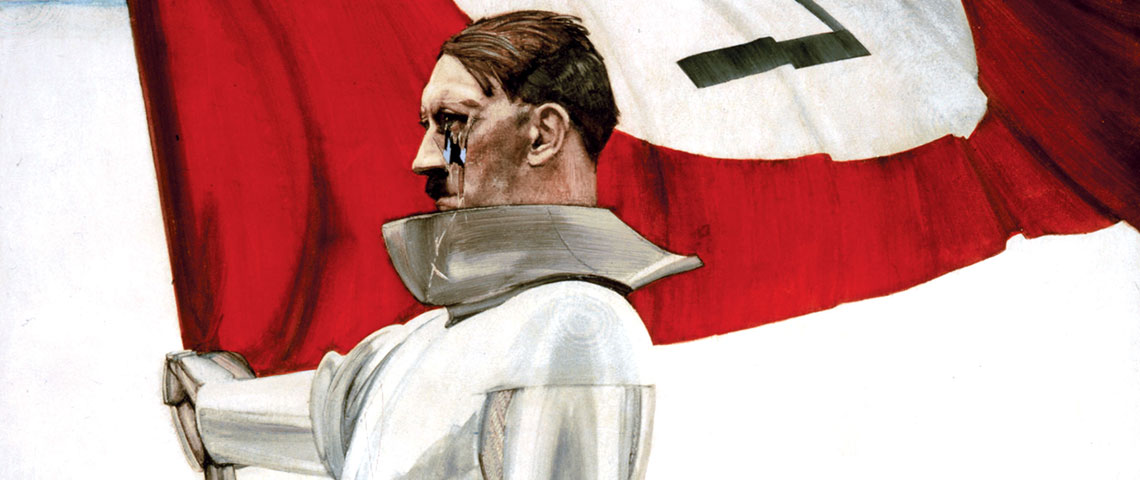
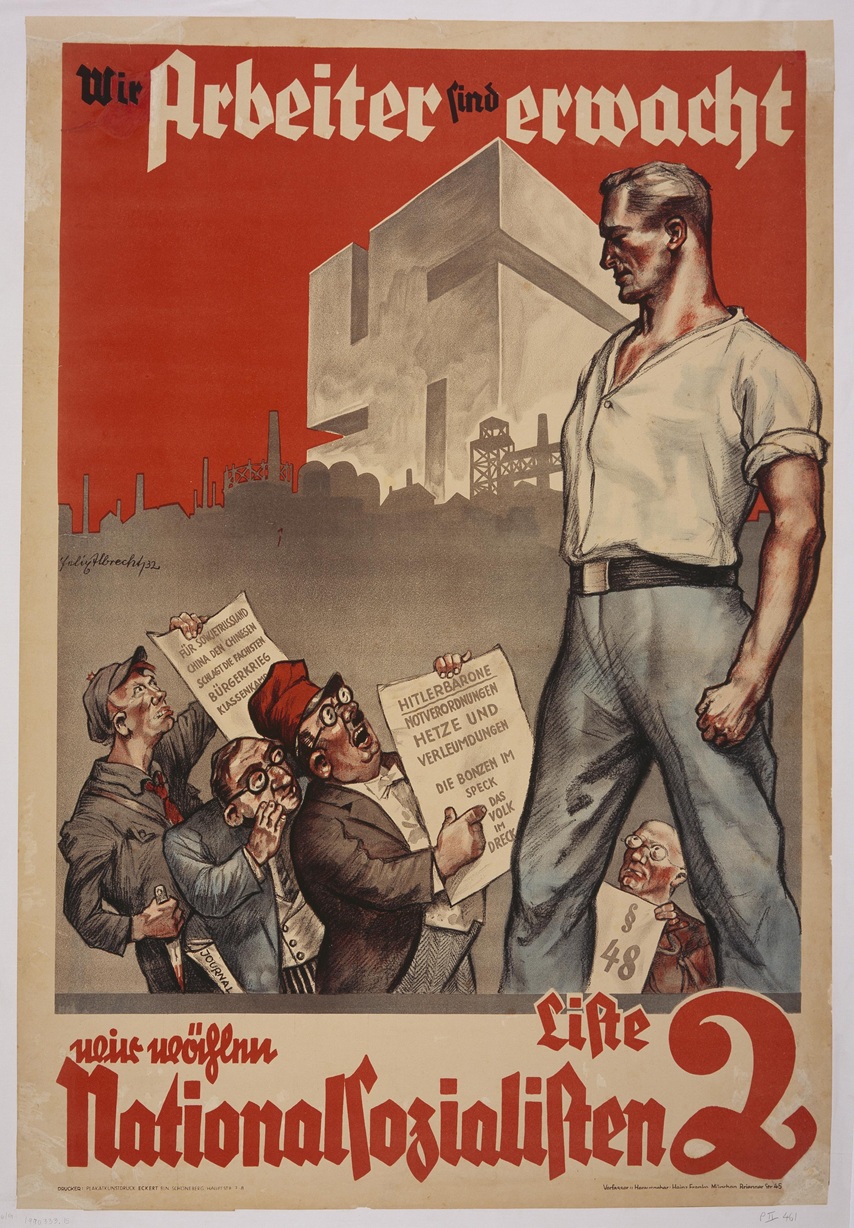
How Germans were propagandized into supporting the National Socialists
I’ve read a fair bit about the rise of Hitler after the First World War, beginning when I was in middle school and did a history project on the topic. Yet one aspect of the political success of Hitler’s fascist movement always puzzled me: how such blatant crude propaganda persuaded so many Germans to see things the Nazi way. Over the last five years in Canada, as our legacy media have fallen directly into the clutches of a single political party, I now understand all too well how millions of people getting their world view informed by a single point of view can create and maintain a movement. When all the mainstream media tell effectively the same story in 2026 and go out of their way to praise the government — especially the leader — and belittle and denigrate the opposition parties, it’s easy just to believe what you’re being told and not make waves.
Anyway, back to interwar Germany and their more absolute control of the newspapers and radio stations was used to mould and shape popular opinion:
In the run-up to the German invasion of Poland in September 1939, most people in Germany believed what was being put about both on radio and in the state-controlled press, namely that the Poles were committing all kinds of atrocities to former Prussians living in Poland, that they were war-mongering and using threatening language, and that not only was the Danzig corridor rightfully part of Germany, it was the duty of the Reich to defend those subjects living there.
Eighteen year-old Heinz Knocke was from Hameln in central Germany and typical of many of his age. He had absolute faith in the Führer and the rightness of the German cause. Planning to join the Luftwaffe as a pilot, he had had his preliminary examinations and was hoping that with war imminent, his call-up would be accelerated. “The Polish atrocities against the German minority make horrible reading today”, he scribbled in his diary on 31st August. “Thousands are being massacred daily in territory which had once been part of Germany.”
Oberleutnant Hajo Herrmann, a twenty-four year-old pilot with the bomber group III/KG4, also thought the Poles had brought war upon themselves. As far as he was concerned, the Danzig issue was one of principle. It had been German before 1919, was still inhabited mostly by Germans, and since the Poles had rejected any peaceful solution, what did they expect? “The anger that I felt inside at their unreasonableness”, he noted, “matched my sacred conviction: that of German rightness”. For Oberleutnant Hans von Luck, on the other hand, an officer in the 7th Armoured Reconnaissance Regiment, the escalating situation had brought a sudden recall from leave just a few days’ earlier. He had found everyone at the garrison in Bad Kissingen near Schweinfurt in high spirits. Neither he nor his friends believed a word of Goebbels’ propaganda about the Poles, but they did believe Danzig and the corridor should be part of Germany once more. “We were not hungry for war”, von Luck noted, “but we did not believe the British and French would come to Poland’s defence”. How wrong he was; for while von Luck may have understood that going to war was not a matter to be taken lightly, even he had blindly accepted Hitler’s assurances that Britain and France were bluffing. It was a feature of Hitler’s rule that he frequently said one thing with immense conviction and authority but quite another once events had been proved him wrong. Such was his grip on the German people, however, almost no-one ever questioned this, and certainly not his inner circle or anyone in the German media. At any rate, all three of these young men had believed parts of the nonsense that had been spouted by Nazi propaganda, whether it be false claims about the Poles, the justness of the Nazi cause for invasion, or Hitler’s assurances the British and French were bluffing. Such was he power of Nazi disinformation.
[…]
Both the Imperial Japanese and the Nazis dominated the new forms of media communication emerging in the 1930s. Propaganda had been a key component of Nazi politics from the outset, and while there were some who had not been persuaded, it had been unquestionably hugely effective, not just within the Reich but around the world too. To a large degree, this was due to Dr Josef Goebbels, the Reich Minister for Popular Enlightenment and Propaganda, and Gauleiter — administrative leader — of Berlin, an old Frankish term that had been resurrected by the Nazis. A former failed journalist and one of the first Nazis, he was utterly devoted to Hitler, so much so he had even given up an affair with a Czech film star with whom he was deeply in love because the Führer asked him to. Although the son of a shop assistant, Goebbels was highly intelligent and despite those humble beginnings had attended several universities and gained a doctorate. Marriage to Magda Quant, a society divorcee, gave him the kind of money and status he needed to help him climb up the Nazi ladder. He had become Propaganda Minister in 1933, the year Hitler became Chancellor, and had immediately announced his prime goal was to achieve the “mobilisation of mind and spirit” of the German people. “We did not lose the war because our artillery gave out”, he said of defeat in 1918, “but because the weapons of our minds did not fire”.
In many ways, Goebbels was as responsible for Hitler’s position as Hitler was himself and he was the man who had largely shaped the Nazi’s public image. It was he [who] had insisted on draping swastikas – the bigger the better – from as many places as possible; it was he who taught Hitler how to whip a crowd into a frenzy; it was also Goebbels who had elevated Hitler into a demigod in the eyes of many. He knew all about manipulation theories, orchestrated heavy-handed mob violence, and in the 1933 election created the “Hitler over Germany” campaign; it was the first time, for example, that aircraft had been used to take a candidate around a country in an effort to reach more people. It worked spectacularly well.
With the Nazis in power, Goebbels had also done much to stoke up the virulent anti-Semitism that lay at the heart of Nazi ideology and had done much to turn Nazism into a form of surrogate religion, in which, again, drawing on nostalgia, they had harked back to a “purer” Aryan past to help bind the people both together and behind the Party and, more importantly, the Leader. Goebbels’ influence – his genius – should never be underestimated.
Update, 18 March: Welcome, Instapundit readers! Have a look around at some of my other posts you may find of interest. I send out a daily summary of posts here through my Substack – https://substack.com/@nicholasrusson that you can subscribe to if you’d like to be informed of new posts in the future.
Will Canada Outpace the UK in Surface Fleet Numbers?
Warships & Warriors
Published 13 Mar 2026The Royal Canadian Navy (RCN) is facing a critical turning point in 2026. Caught between a massive 20% personnel shortfall and the urgent need to project power globally, Canada is being forced to make difficult decisions, including the early retirement of eight Kingston-class warships. However, despite these severe manning challenges and aging hardware, Canada is quietly executing one of the most ambitious naval modernisation programs in the Western world.
In this video, we break down the complete state of the Royal Canadian Navy’s surface and subsurface fleet in 2026. We explore the twilight years of the Victoria-class submarines, the heavy burden placed on the aging Halifax-class frigates, and the massive success of the new Harry DeWolf-class Arctic and Offshore Patrol Vessels.
Looking to the future, we analyse Canada’s generational leap in naval technology. With the highly advanced River-class Destroyers entering production, boasting AEGIS combat systems and Tomahawk missiles, and a new fleet of conventionally powered submarines on the horizon, the RCN is transforming into a Tier 1 maritime force. But with 15 new destroyers and up to 12 new corvettes planned, is Ottawa actually taking its future maritime defence more seriously than London?
(more…)
Comments Off on Will Canada Outpace the UK in Surface Fleet Numbers?
The mine threat in the Straits of Hormuz
CDR Salamander discusses the naval situation in Iranian coastal waters as the threat of mines in the busy seaway helps deter civilian tanker traffic even more than existing drone and missile threat:
At the end of last week, things were a’buzz’n about ‘ole silent-but-deadly … MINES!
There is a lot of bad and in some places intentionally misleading reporting from traditional media on down over this weekend, so let’s do a quick summary.
Iran has begun laying mines in the Strait of Hormuz, the Persian Gulf channel that carries 20 percent of the world’s oil, according to U.S. officials, an effort that could further complicate American efforts to restart shipping there.
While the U.S. military said it had destroyed larger Iranian naval vessels that could be used to quickly lay mines in the strait, Iran began using smaller boats for the operation on Thursday, according to a U.S. official briefed on the intelligence.
Iran’s Islamic Revolutionary Guards Corps can deploy hundreds, even thousands, of the small boats, which the Iranian force has long used to harass larger ships, including the U.S. Navy’s.
This quickly reminded everyone of a little event from the start of the year that had a memorable visual.
Via TWZ:
Four decommissioned U.S. Navy Avenger class mine countermeasures ships have left Bahrain on what may be their final voyage aboard a larger heavy lift vessel. Avengers had been forward-deployed to the Middle Eastern nation for years, where critical mine countermeasures duties have now passed to Independence class Littoral Combat Ships (LCS).
The public affairs office for U.S. Naval Forces Central Command (NAVCENT) and U.S. 5th Fleet first released pictures of the M/V Seaway Hawk, a contracted semi-submersible heavy lift vessel, carrying the former Avenger class ships USS Devastator, USS Dextrous, USS Gladiator, and USS Sentry last Friday. The Navy released more images and a brief statement yesterday. The date stamps on the pictures show the Avengers were physically loaded onto the Seaway Hawk in Bahrain on January 9.
This had a second echo of a seapower past.
Battered and unseaworthy, HMS Middleton was dragged by tugs into Portsmouth naval base on Sunday.
The Hunt class mine countermeasures vessel (MCMV) returned to the home of the Royal Navy on March 8 after being brought back from the Gulf by a heavy-lift ship.
The ignominious piggy-back was cheaper than letting the more than 40-year-old ship make the 6,200-mile journey back from Bahrain under her own power and freed her crew to join other ships.
But her return after a journey that took weeks meant the end of the Royal Navy’s anti-mine vessel presence in the Middle East after almost 50 years. Only unmanned drone systems are left, according to the Navy.
Another metaphor, etc.
However, there is a worry that Iran might mine the Strait of Hormuz because it has been a concern — and occasionally a reality — for almost half a century.


Comments Off on The mine threat in the Straits of Hormuz
Corned Beef and Cabbage Recipe | St. Patrick’s Meal | Food Wishes
Food Wishes
Published 13 Mar 2009Get the full story! Visit http://foodwishes.com to get the ingredients, and watch over 200 free video recipes. Leave me a comment there. If you have questions, ask on the website. Thanks!!
Full recipe here – https://www.allrecipes.com/Recipe/236601/Chef-Johns-Corned-Beef-and-Cabbage/
Comments Off on Corned Beef and Cabbage Recipe | St. Patrick’s Meal | Food Wishes
QotD: The noble hamburger
Today, I want to share some real talk on the lesser lights of the burger family. Basically, hot dogs and Sloppy Joes are the Billy Carter and Mary Trump of burger-esque entrees. They are lesser relatives who should be at best ignored if not outright scorned.
Hot dogs are bad. They taste bad, they look bad – keep that icky cylinder away from me! – they are made of the best-left-forgotten bits and pieces of animals like snouts, hooves, and Ted Lieus. Perhaps their popularity is that they are easy to cook – throw them in water and you have both a soggy sausage and a gross broth. The kind of people who eat hot dogs by choice probably think like that.
Here’s the short version: Never speak of hot dogs to me.
And Sloppy Joes – what are they? What is that goop? It’s not chili, it’s not anything except ground beef with some sauce and I guess you can put mustard on it. A hamburger, which is food fit for an American, can also wield ketchup and mayo. But a Sloppy Joe? It’s just … nothing. I don’t know why they exist but they should stop doing so.
Kurt Schlichter, “Support Your Local Sheriff and Camouflaged Federal Officers”, Townhall.com, 2020-07-21.
Comments Off on QotD: The noble hamburger
March 16, 2026
Preparing for Operation Veritable – First Canadian Army’s biggest battle of WW2
On Patreon, Project ’44 has posted an extensive article on the setup and preparation for Operation Veritable in February 1945, with the First Canadian Army under General Crerar preparing to attack into the Reichswald as part of Field Marshal Montgomery’s 21st Army Group:
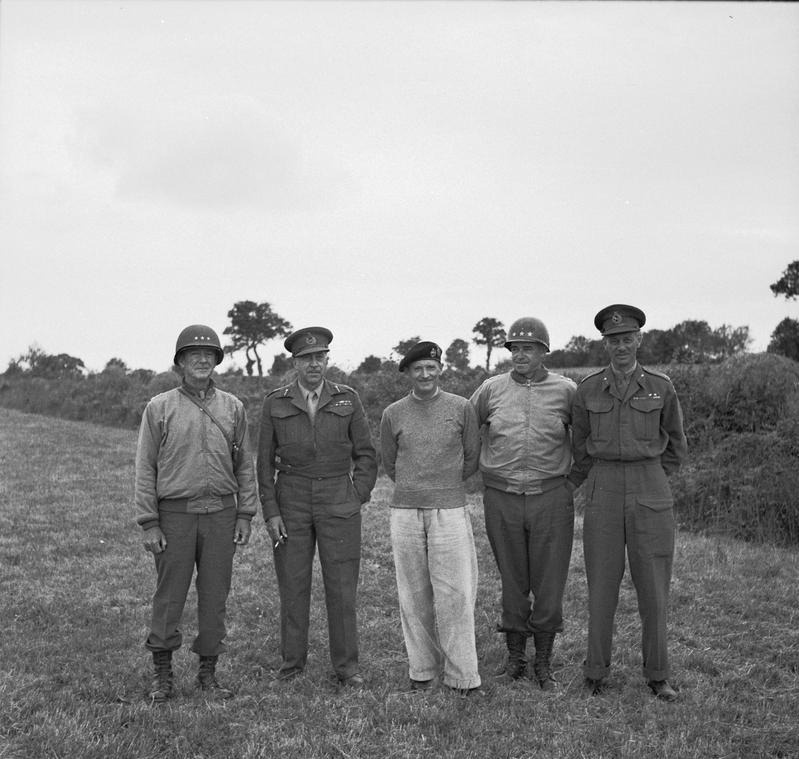
Lieutenant General Courtney Hodges (US First Army); General Harry Crerar (First Canadian Army); Field Marshal Bernard Montgomery (21st Army Group); Lieutenant General Omar Bradley (12th Army Group); and Lieutenant General Miles Dempsey (British 2nd Army), 21/08/1944 (Taken by Sgt. John Morris, No. 5 AFPS-AFPU, B9473).
In the early hours of the 8th of February 1945, the combined weight of the First Canadian Army and 21st Army Group’s massed artillery unleashed an immense orchestration of firepower, shattering any semblance of a peaceful morning and pounded German positions across the Reichswald. Massed in unprecedented density, with dump piles exceeding half a million shells, some 1,034 field, medium, heavy, super-heavy, and multi-barrelled rocket launcher platforms opened in concert. In accordance with their detailed fireplans this combined artillery effort was tasked with destroying enemy headquarters; severing lines of communication; disrupting road networks and infrastructure; rendering enemy defensive positions inhospitable; and, plainly, reducing the enemy’s force as much as possible, leaving survivors in a state of “shell happiness”. As the guns opened fire at 0500hrs, they quickly formed part of the largest artillery bombardment undertaken by Commonwealth forces since the battle of El Alamein in 1942.
This impressive symphony of artillery, along with the days of preliminary bombardments by both artillery and heavy bombers that preceded it, marked the very beginning of the month-long “Operation Veritable”. This operation was the 21st Army Group’s northern pincer movement, aimed at permitting a crossing of the river Rhine and, subsequently, a drive into Western Germany by dislodging and rupturing the German position between the rivers Mass and Rhine in the lower Rhineland.
Conceived by Canadian General Harry Crerar (commanding the First Canadian Army), part of Field Marshal Bernard Montgomery’s 21st Army Group, Veritable was set to be General Crerar’s largest and most complex undertaking of the war – and for that matter, Canada’s too. At its height, the First Canadian Army commanded almost half a million personnel, with the majority of its formations British in origin, and its personnel strewn from Canada, Britain, Poland, and the Netherlands. Though 450,000 personnel would not be involved in Operation Veritable, it would still come to command the entirety of the British XXX Corps and Canadian II Corps.
Veritable would not be the rapid breakthrough many had envisaged it to be, especially not in the style of operations the year prior. Instead, it would evolve into a month-long, multi-operation offensive fought over some of the most arduous terrain in northwestern Europe. Advancing across deep mud, inundated lowlands, and through dense forests and urban centres, against an often-fanatical enemy manning prepared defensive structures, Veritable was quickly turned into a troublesome slog.
As Sergeant Alex Troy of the 5th Field Regiment, Royal Canadian Artillery would write:
they [the Germans] fought really tough because the enemy had always before been fighting in some other poor devil’s country; now he was defending his own land.
The Allied Situation:
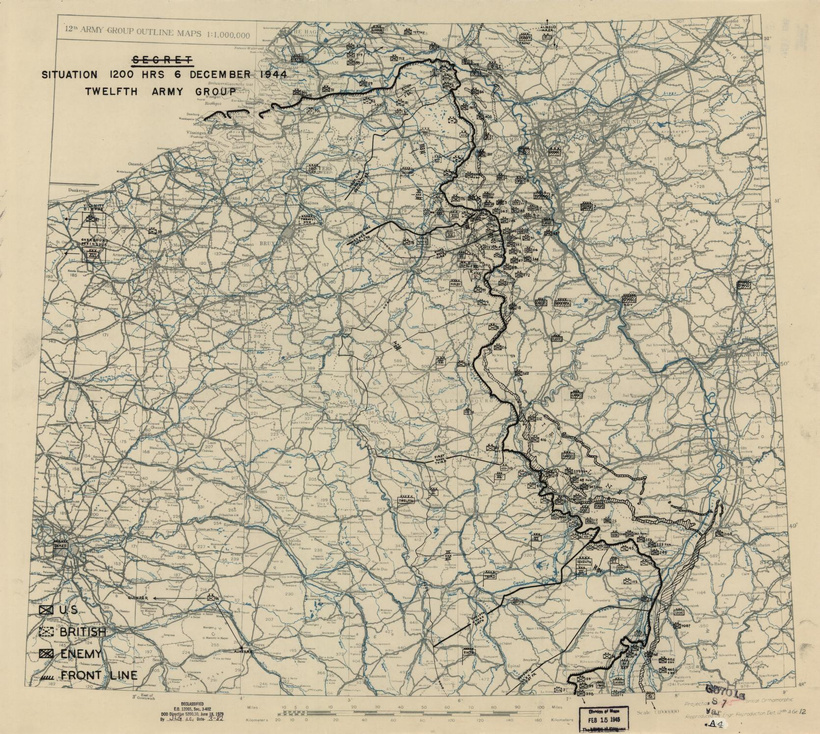
By early December 1944, the German force opposing Field Marshal Montgomery’s 21st Army Group had been dealt a series of important blows, none more recent than its forceful uprooting from the west bank of the river Maas as far south as Maeseyck. In that, the German position was believed to be, notably by Montgomery, strong – but undermined by a lack of equipment, trained troops, and suffering from rampant logistical shortages.
HQ Twelfth Army Group situation map, 6th December 1944. Produced by the Army Group Headquarters, 12 Engineer Section.
During a meeting on the 6th of December, Field Marshal Montgomery directed General Crerar to plan an offensive to the southeast of Nijmegen, and to support this transferred XXX (30) Corps to his command. Over the days that followed, two major operations were conceived. In the south, the British 2nd Army was to clear the triangle between Sittard, Geilenkirchen, and the river Roer as part of Operation Shears; whilst in the north, the First Canadian Army, as part of Operation Veritable, was to advance into the Reichswald, securing the settlements of Xanten, Geldern, and Sonsbeck, before taking charge of the river Rhine’s western bank.
Comments Off on Preparing for Operation Veritable – First Canadian Army’s biggest battle of WW2
Soviet Invasion of Afghanistan 1979
Real Time History
Published 24 Oct 2025Christmas 1979. Soviet armor pours across the Afghan border towards Kabul as helicopters secure the mountain passes through the Hindu Kush mountains. In Moscow, the Politburo has decided to save Afghanistan’s communist government from collapse. Afghan rebels have taken up arms against the unpopular regime and control most of the countryside. But the Red Army leadership doubts it can pacify the country – so why did the Soviet Union invade Afghanistan?
(more…)
Comments Off on Soviet Invasion of Afghanistan 1979
QotD: Political entrepreneurs and federal subsidies
Most of Josephson’s ire is directed toward political entrepreneurs. The subsidized Henry Villard of the Northern Pacific Railroad, with his “bad grades and high interest charges” show that he “apparently knew little enough about railroad-building”. The leaders of the Union Pacific and Central Pacific, Josephson notes, “carried on [their actions] with a heedless abandon … [which] caused a waste of between 70 and 75 percent of the expenditure as against the normal rate of construction”. But it never occurs to Josephson that the subsidies government gave these railroads created the incentives that led their owners to overpay for materials and to build in unsafe areas. He quotes “one authority” on the railroads as saying, “The Federal government seems … to have assumed the major portion of the risk and the Associates seem to have derived the profits” — but Josephson never pursues the implication of that passage.
Burton W. Folsum, “How the Myth of the ‘Robber Barons’ Began — and Why It Persists”, Foundation for Economic Education, 2018-09-21.
Comments Off on QotD: Political entrepreneurs and federal subsidies


