
Quotulatiousness

March 17, 2026

How Germans were propagandized into supporting the National Socialists

Filed under: Germany, Government, History, Media — Tags: , , , , , , , — Nicholas @ 05:00

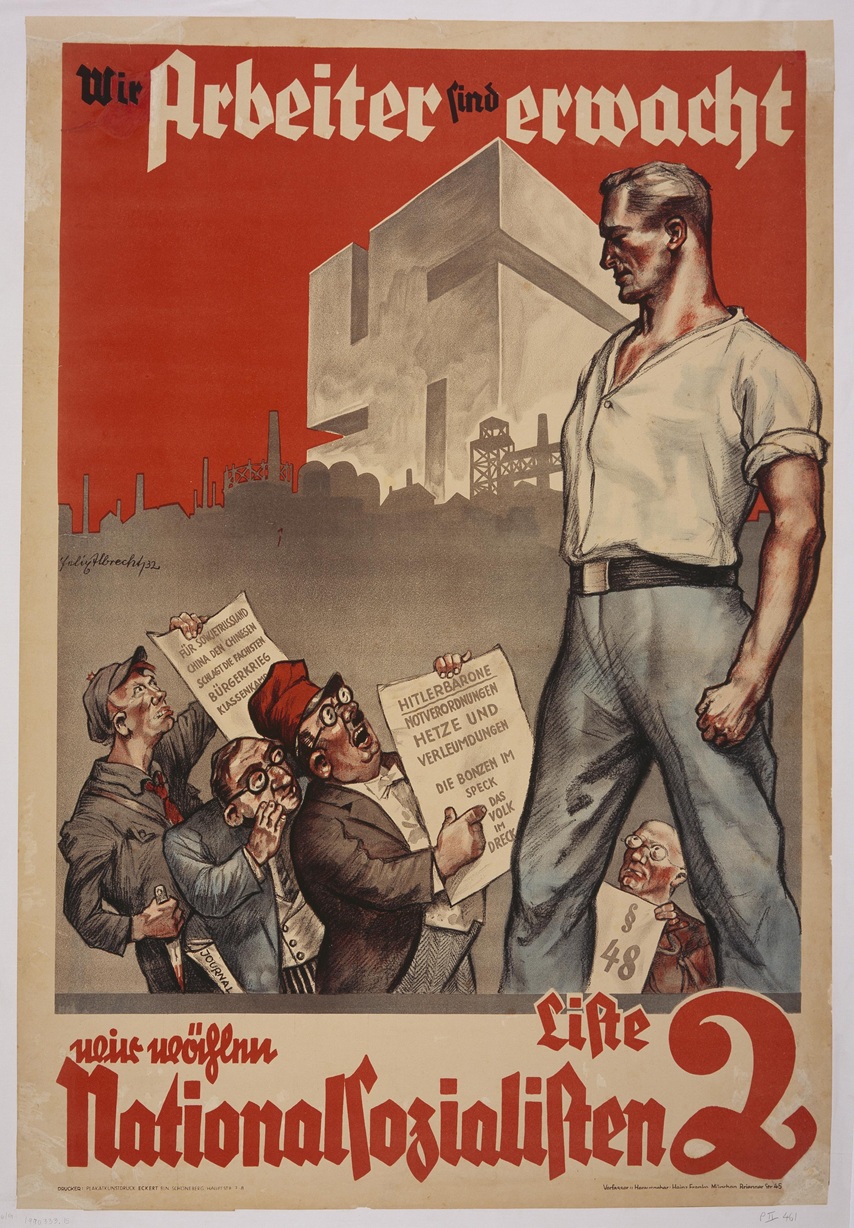
I’ve read a fair bit about the rise of Hitler after the First World War, beginning when I was in middle school and did a history project on the topic. Yet one aspect of the political success of Hitler’s fascist movement always puzzled me: how such blatant crude propaganda persuaded so many Germans to see things the Nazi way. Over the last five years in Canada, as our legacy media have fallen directly into the clutches of a single political party, I now understand all too well how millions of people getting their world view informed by a single point of view can create and maintain a movement. When all the mainstream media tell effectively the same story in 2026 and go out of their way to praise the government — especially the leader — and belittle and denigrate the opposition parties, it’s easy just to believe what you’re being told and not make waves.

Anyway, back to interwar Germany and their more absolute control of the newspapers and radio stations was used to mould and shape popular opinion:

In the run-up to the German invasion of Poland in September 1939, most people in Germany believed what was being put about both on radio and in the state-controlled press, namely that the Poles were committing all kinds of atrocities to former Prussians living in Poland, that they were war-mongering and using threatening language, and that not only was the Danzig corridor rightfully part of Germany, it was the duty of the Reich to defend those subjects living there.

Eighteen year-old Heinz Knocke was from Hameln in central Germany and typical of many of his age. He had absolute faith in the Führer and the rightness of the German cause. Planning to join the Luftwaffe as a pilot, he had had his preliminary examinations and was hoping that with war imminent, his call-up would be accelerated. “The Polish atrocities against the German minority make horrible reading today”, he scribbled in his diary on 31st August. “Thousands are being massacred daily in territory which had once been part of Germany.”

Oberleutnant Hajo Herrmann, a twenty-four year-old pilot with the bomber group III/KG4, also thought the Poles had brought war upon themselves. As far as he was concerned, the Danzig issue was one of principle. It had been German before 1919, was still inhabited mostly by Germans, and since the Poles had rejected any peaceful solution, what did they expect? “The anger that I felt inside at their unreasonableness”, he noted, “matched my sacred conviction: that of German rightness”. For Oberleutnant Hans von Luck, on the other hand, an officer in the 7th Armoured Reconnaissance Regiment, the escalating situation had brought a sudden recall from leave just a few days’ earlier. He had found everyone at the garrison in Bad Kissingen near Schweinfurt in high spirits. Neither he nor his friends believed a word of Goebbels’ propaganda about the Poles, but they did believe Danzig and the corridor should be part of Germany once more. “We were not hungry for war”, von Luck noted, “but we did not believe the British and French would come to Poland’s defence”. How wrong he was; for while von Luck may have understood that going to war was not a matter to be taken lightly, even he had blindly accepted Hitler’s assurances that Britain and France were bluffing. It was a feature of Hitler’s rule that he frequently said one thing with immense conviction and authority but quite another once events had been proved him wrong. Such was his grip on the German people, however, almost no-one ever questioned this, and certainly not his inner circle or anyone in the German media. At any rate, all three of these young men had believed parts of the nonsense that had been spouted by Nazi propaganda, whether it be false claims about the Poles, the justness of the Nazi cause for invasion, or Hitler’s assurances the British and French were bluffing. Such was he power of Nazi disinformation.

[…]

Both the Imperial Japanese and the Nazis dominated the new forms of media communication emerging in the 1930s. Propaganda had been a key component of Nazi politics from the outset, and while there were some who had not been persuaded, it had been unquestionably hugely effective, not just within the Reich but around the world too. To a large degree, this was due to Dr Josef Goebbels, the Reich Minister for Popular Enlightenment and Propaganda, and Gauleiter — administrative leader — of Berlin, an old Frankish term that had been resurrected by the Nazis. A former failed journalist and one of the first Nazis, he was utterly devoted to Hitler, so much so he had even given up an affair with a Czech film star with whom he was deeply in love because the Führer asked him to. Although the son of a shop assistant, Goebbels was highly intelligent and despite those humble beginnings had attended several universities and gained a doctorate. Marriage to Magda Quant, a society divorcee, gave him the kind of money and status he needed to help him climb up the Nazi ladder. He had become Propaganda Minister in 1933, the year Hitler became Chancellor, and had immediately announced his prime goal was to achieve the “mobilisation of mind and spirit” of the German people. “We did not lose the war because our artillery gave out”, he said of defeat in 1918, “but because the weapons of our minds did not fire”.

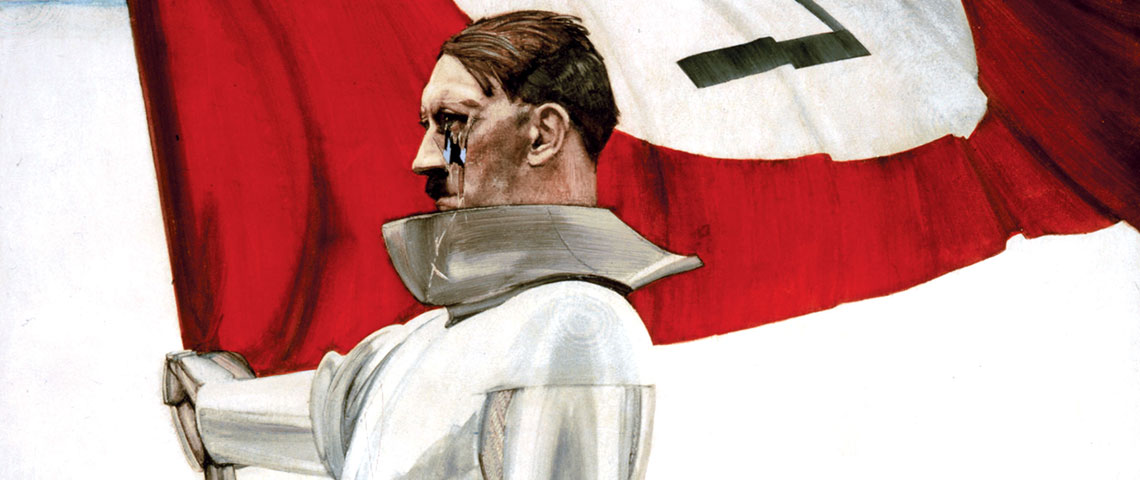
In many ways, Goebbels was as responsible for Hitler’s position as Hitler was himself and he was the man who had largely shaped the Nazi’s public image. It was he [who] had insisted on draping swastikas – the bigger the better – from as many places as possible; it was he who taught Hitler how to whip a crowd into a frenzy; it was also Goebbels who had elevated Hitler into a demigod in the eyes of many. He knew all about manipulation theories, orchestrated heavy-handed mob violence, and in the 1933 election created the “Hitler over Germany” campaign; it was the first time, for example, that aircraft had been used to take a candidate around a country in an effort to reach more people. It worked spectacularly well.

With the Nazis in power, Goebbels had also done much to stoke up the virulent anti-Semitism that lay at the heart of Nazi ideology and had done much to turn Nazism into a form of surrogate religion, in which, again, drawing on nostalgia, they had harked back to a “purer” Aryan past to help bind the people both together and behind the Party and, more importantly, the Leader. Goebbels’ influence – his genius – should never be underestimated.
Update, 18 March: Welcome, Instapundit readers! Have a look around at some of my other posts you may find of interest. I send out a daily summary of posts here through my Substackhttps://substack.com/@nicholasrusson that you can subscribe to if you’d like to be informed of new posts in the future.

Will Canada Outpace the UK in Surface Fleet Numbers?

Filed under: Cancon, Military — Tags: , , , , , — Nicholas @ 04:00

Warships & Warriors
Published 13 Mar 2026

The Royal Canadian Navy (RCN) is facing a critical turning point in 2026. Caught between a massive 20% personnel shortfall and the urgent need to project power globally, Canada is being forced to make difficult decisions, including the early retirement of eight Kingston-class warships. However, despite these severe manning challenges and aging hardware, Canada is quietly executing one of the most ambitious naval modernisation programs in the Western world.

In this video, we break down the complete state of the Royal Canadian Navy’s surface and subsurface fleet in 2026. We explore the twilight years of the Victoria-class submarines, the heavy burden placed on the aging Halifax-class frigates, and the massive success of the new Harry DeWolf-class Arctic and Offshore Patrol Vessels.

Looking to the future, we analyse Canada’s generational leap in naval technology. With the highly advanced River-class Destroyers entering production, boasting AEGIS combat systems and Tomahawk missiles, and a new fleet of conventionally powered submarines on the horizon, the RCN is transforming into a Tier 1 maritime force. But with 15 new destroyers and up to 12 new corvettes planned, is Ottawa actually taking its future maritime defence more seriously than London?
(more…)

The mine threat in the Straits of Hormuz

Filed under: Middle East, Military, USA, Weapons — Tags: , , — Nicholas @ 03:00

CDR Salamander discusses the naval situation in Iranian coastal waters as the threat of mines in the busy seaway helps deter civilian tanker traffic even more than existing drone and missile threat:

At the end of last week, things were a’buzz’n about ‘ole silent-but-deadly … MINES!

There is a lot of bad and in some places intentionally misleading reporting from traditional media on down over this weekend, so let’s do a quick summary.

The NYT got the ball rolling.

    Iran has begun laying mines in the Strait of Hormuz, the Persian Gulf channel that carries 20 percent of the world’s oil, according to U.S. officials, an effort that could further complicate American efforts to restart shipping there.

    While the U.S. military said it had destroyed larger Iranian naval vessels that could be used to quickly lay mines in the strait, Iran began using smaller boats for the operation on Thursday, according to a U.S. official briefed on the intelligence.

    Iran’s Islamic Revolutionary Guards Corps can deploy hundreds, even thousands, of the small boats, which the Iranian force has long used to harass larger ships, including the U.S. Navy’s.

This quickly reminded everyone of a little event from the start of the year that had a memorable visual.

Via TWZ:

    Four decommissioned U.S. Navy Avenger class mine countermeasures ships have left Bahrain on what may be their final voyage aboard a larger heavy lift vessel. Avengers had been forward-deployed to the Middle Eastern nation for years, where critical mine countermeasures duties have now passed to Independence class Littoral Combat Ships (LCS).

    The public affairs office for U.S. Naval Forces Central Command (NAVCENT) and U.S. 5th Fleet first released pictures of the M/V Seaway Hawk, a contracted semi-submersible heavy lift vessel, carrying the former Avenger class ships USS Devastator, USS Dextrous, USS Gladiator, and USS Sentry last Friday. The Navy released more images and a brief statement yesterday. The date stamps on the pictures show the Avengers were physically loaded onto the Seaway Hawk in Bahrain on January 9.

This had a second echo of a seapower past.

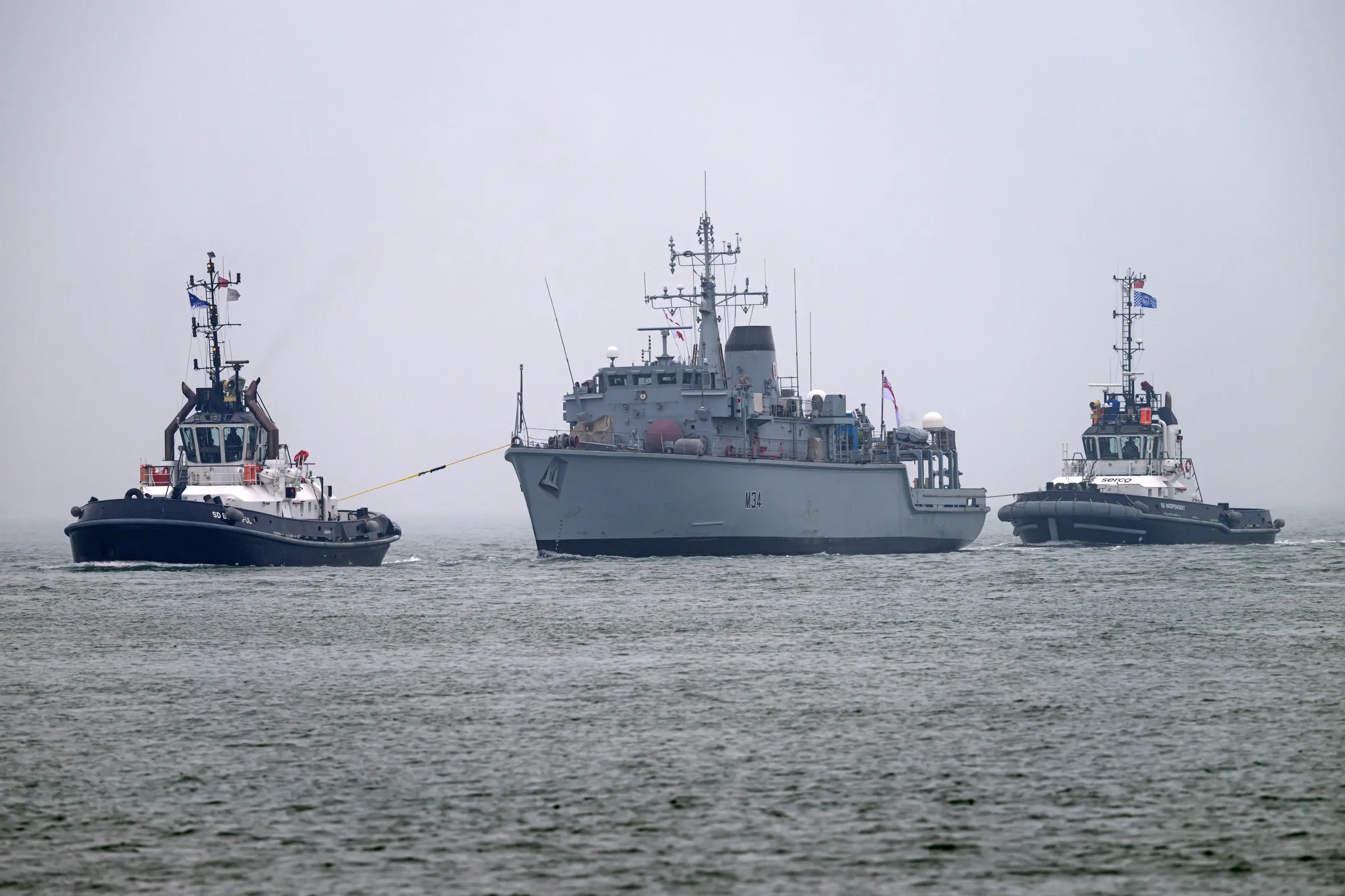
    Battered and unseaworthy, HMS Middleton was dragged by tugs into Portsmouth naval base on Sunday.

    The Hunt class mine countermeasures vessel (MCMV) returned to the home of the Royal Navy on March 8 after being brought back from the Gulf by a heavy-lift ship.

    The ignominious piggy-back was cheaper than letting the more than 40-year-old ship make the 6,200-mile journey back from Bahrain under her own power and freed her crew to join other ships.

    But her return after a journey that took weeks meant the end of the Royal Navy’s anti-mine vessel presence in the Middle East after almost 50 years. Only unmanned drone systems are left, according to the Navy.

Another metaphor, etc.

However, there is a worry that Iran might mine the Strait of Hormuz because it has been a concern — and occasionally a reality — for almost half a century.

Corned Beef and Cabbage Recipe | St. Patrick’s Meal | Food Wishes

Filed under: Europe, Food, USA — Tags: , , , — Nicholas @ 02:00

Food Wishes
Published 13 Mar 2009

Get the full story! Visit http://foodwishes.com to get the ingredients, and watch over 200 free video recipes. Leave me a comment there. If you have questions, ask on the website. Thanks!!

Full recipe here – https://www.allrecipes.com/Recipe/236601/Chef-Johns-Corned-Beef-and-Cabbage/

QotD: The noble hamburger

Filed under: Food, Humour, Quotations, USA — Tags: , — Nicholas @ 01:00

The hamburger is one of nature’s perfect foods, but people keep screwing them up. There are some clear burger rules that must be observed, like “A burger is made with ground beef and not some weird other meat or, worse, non-meat patty”. We’ll talk more about this in the future, as I care a lot about the subject of hamburgers, as opposed to, say, the harsh treatment of black-clad commie cretins in the Pacific Northwest.

Today, I want to share some real talk on the lesser lights of the burger family. Basically, hot dogs and Sloppy Joes are the Billy Carter and Mary Trump of burger-esque entrees. They are lesser relatives who should be at best ignored if not outright scorned.

Hot dogs are bad. They taste bad, they look bad – keep that icky cylinder away from me! – they are made of the best-left-forgotten bits and pieces of animals like snouts, hooves, and Ted Lieus. Perhaps their popularity is that they are easy to cook – throw them in water and you have both a soggy sausage and a gross broth. The kind of people who eat hot dogs by choice probably think like that.

Here’s the short version: Never speak of hot dogs to me.

And Sloppy Joes – what are they? What is that goop? It’s not chili, it’s not anything except ground beef with some sauce and I guess you can put mustard on it. A hamburger, which is food fit for an American, can also wield ketchup and mayo. But a Sloppy Joe? It’s just … nothing. I don’t know why they exist but they should stop doing so.

Kurt Schlichter, “Support Your Local Sheriff and Camouflaged Federal Officers”, Townhall.com, 2020-07-21.

Powered by WordPress



