Quotulatiousness

March 10, 2026

Rolling toward disaster – North America’s trucking industry

Filed under: Australia, Books, Cancon, USA — Tags: , , , , , — Nicholas @ 05:00

Donna Laframboise reviews a new memoir by Gord Magill, recounting his career in trucking in Canada, the United States, Australia and New Zealand:
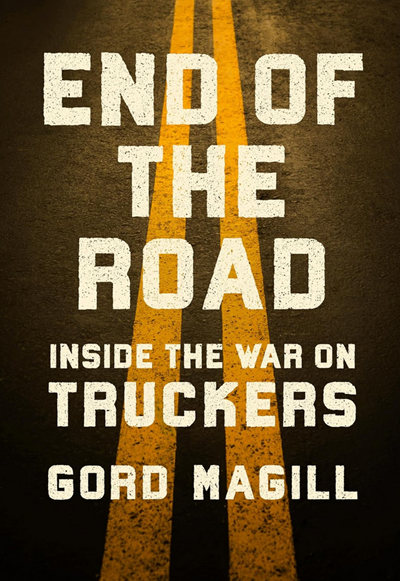
… Gord has written a splendid book that belongs on Economics 101 reading lists everywhere. End of the Road: Inside the War on Truckers is chock-a-block with firsthand anecdotes. He tells us, for example, about traveling north into Canada from New York state during the 2022 Freedom Convoy protest, and feeling “drunk with patriotism, in love with every person I met, and they were in love with me”. After returning to his wife and daughters south of the border, he says he’d “never seen so many Canadian flags flying in the United States. It was unbelievable.” For a short time, “I was a minor celebrity simply for being from Canada”.

But this book is more than a collection of quirky tales about life behind the wheel. It’s a deep dive into shark-infested waters. For decades, but especially in recent years, experienced truckers have been treated like disposable widgets rather than skilled professionals. An industry upon which much of the North American economy depends has been undermined and hollowed out by perverse economic incentives, widespread fraud, and foolish policy. All of this makes our highways dangerous.

Gord explains that members of the public are three times more likely to be killed in a truck crash in America than down under partly because Australia has a graduated, quasi-apprentice licensing system. After driving smaller trucks for a year, people apply for the next level of trucking license, and then the next level, and then the next.

In North America these days, licenses seem to be given out like breath mints. The driver who blew through a stop sign in rural Saskatchewan in 2018, killing sixteen people associated with the Humboldt Broncos junior hockey team and injuring 13 others had less than one month of trucking experience. Yet he was behind the wheel of one of the largest configurations on the road (two interconnected trailers, known in the industry as a Super B-train). In Australia, that same driver would have needed a minimum of four years of experience and would have completed multiple courses and passed multiple tests before being entrusted with such a load.

Gord reminds us about the Ethiopian driver (on a work visa) who plowed into traffic that had slowed to a halt in a Texas construction zone last March. Five people — including a family of two parents and two young children — were killed, eleven others were sent to hospital, and seventeen vehicles were damaged. In that case, the driver reportedly had only four months of trucking experience.

Shortly afterward, in August 2025, three people died in Florida when, as Gord writes, “a tractor trailer attempted to pull an illegal U-turn through a small access point in the median … As the driver of the truck executed the turn, he pulled in front of a minivan, which ran into his trailer at high speed.”

The trucker in that case, an illegal immigrant from India, had somehow acquired commercial driver’s licenses in two US states. But when an English proficiency test was administered a few days after the accident, he answered only 2 of 12 verbal questions correctly and could identify only 1 of 4 traffic signs. It was later reported he’d failed his commercial trucking exam ten times during a two-month period.

Then there’s the trucker who drove an 18-wheeler weighing forty tons across a bridge with a clearly posted weight limit of six tons in rural Arkansas in 2018. The bridge collapsed and the truck sank into the river. It took seven months to extract it, while the bridge remained out-of-service for years.

Iran in the news

Filed under: Media, Middle East, Military, Politics, USA — Tags: , , , , — Nicholas @ 04:00

As I mentioned last time, as I don’t try to stay on top of the “breaking news” cycle, I’m not feverishly refreshing all my social media feeds to get the latest dope about the latest confict with the Islamic State. It’s not that I don’t care, but that as with all modern wars the ratio of signal to noise renders almost all of it worthless for finding out what’s actually happening. At Postcards from Barsoom, John Carter tries to gather his thoughts on the issue, subject to the same kind of informational constraints:

When I sit down to write, I usually have some idea of what I want to say – not only a topic I want to address, but a specific message I want to communicate. This is not going to be one of those essays. My feelings on the war on Iran are conflicted, to say the least. Nor do I feel that I understand enough about what’s happening to say much of substance. Nevertheless, on a matter that is of such potentially world-shaking import, I owe it to you not to be silent. So I’m setting out here to try and organize my thoughts on the matter. Whether they come to some conclusion or not, I have no idea. If nothing else, perhaps this will serve as a jumping off point for further discussion in the comments. Many of you, I’m sure, will have strong opinions on the subject, and many will also possess insights that I do not.

Will this war be of world-shaking import? That is perhaps the core of the matter. If it is not, and the principle of Nothing Ever Happens holds, then bombing Iran will not actually matter that much. A month from now, or even a couple weeks, the bombardment will fade back into the news cycle, the storm and fury of a million passionately articulated hot takes fading back into the warm, frothing ocean of discourse.

Certainly this has happened before. Trump has bombed Iran’s nuclear research facilities a few months ago, and assassinated the Iranian Revolutionary Guard Commander Qasem Soleimani a few years ago. Every time this kind of thing happens there are panicked shouts that thermonuclear Ragnarok is imminent, alongside outraged cries that Zion Don has betrayed MAGA by engaging in precisely the foreign interventionism that he repudiated, that he has been captured by the Neocohens, and that We Will Not Die For Israel. In each case, nothing much happened. Iran raised the red flag of revenge, or the gold flag of implacable annihilation, or the black flag of this time we really mean it, all of which amounted in practice to a few rockets being fired ineffectually in Israel’s general direction, to be absorbed by an Iron Dome that really seems to work quite well. There was no World War III. There were no boots on the ground. As I saw someone observe recently, We Will Not Die For Israel has become the groyper version of the Handmaid’s Tale: no one is actually asking anyone to die for Israel; there are no imminent plans for mass conscription; therefore protestations that one will resist a non-existent draft amount to the same kind of lurid masturbatory fantasy as declarations that one would never, pant, allow oneself to be confined in a harem, pant pant, and turned into, pant pant pant, breeding stock.

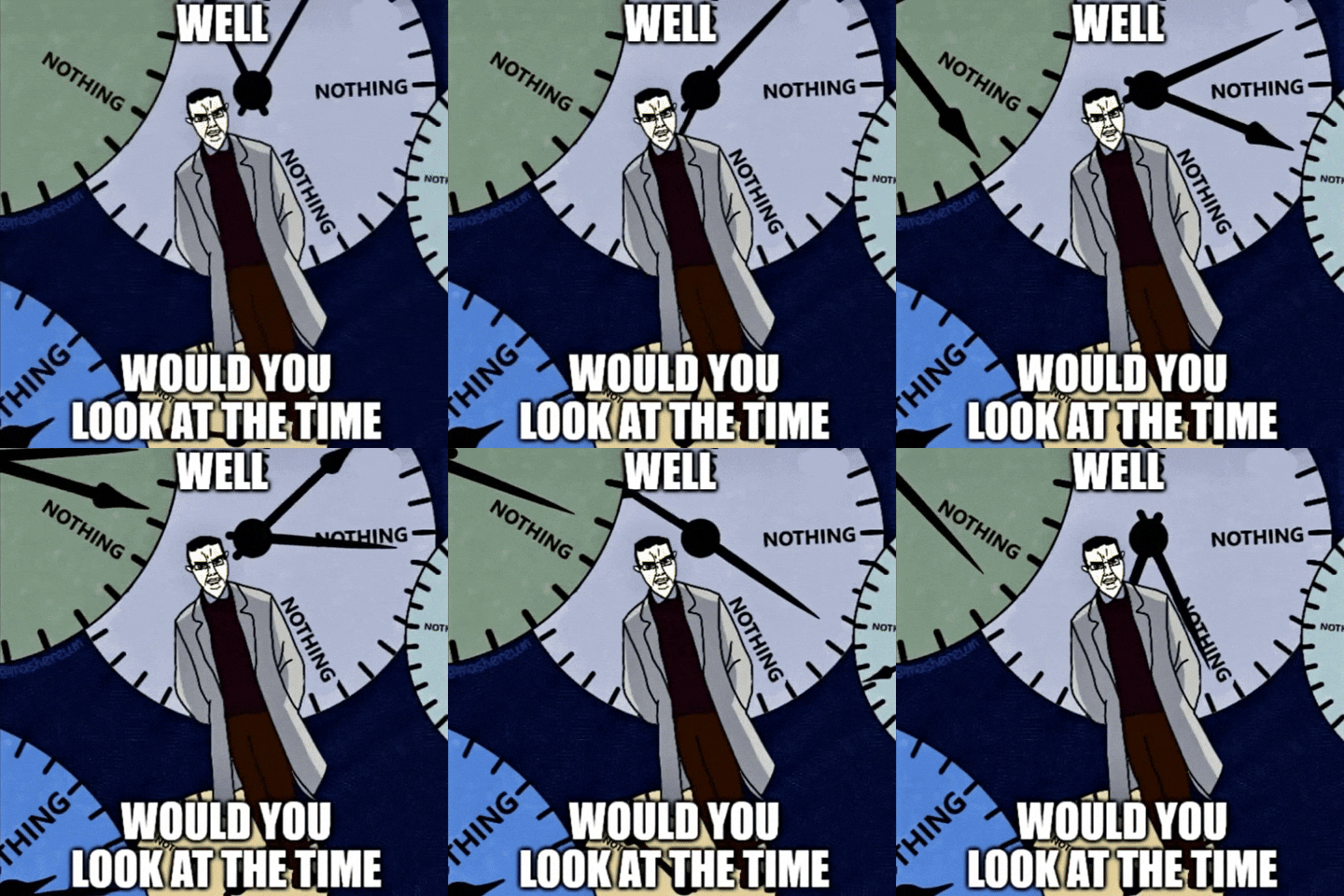
Brief pause for meme:

And back to John Carter:

Maybe that will change. Maybe a year from now I’ll be ruefully eating those words, as American boys are being shipped off by their hundreds of thousands to run around blinded by Russian electronic countermeasures in the cold mountain passes of the Zagros, getting picked off by snipers and shredded by Chinese drones.

But I doubt it.

Modern warfare doesn’t have much use for conscript armies. That lesson was learned in Vietnam: conscripts generally have poor morale, they aren’t highly motivated, they aren’t usually of the highest quality, and so they are of limited usefulness on the battlefield. Soldiers are highly trained professionals who have chosen the military as a career. That makes them much less likely to mutiny. Moreover, modern warfare is highly technical: soldiers have to be extremely well trained to be any use at all. The young men who volunteer for military service usually do so with some hope of adventure and even danger. As such, they often positively look forward to war.

None of this should be taken to imply that Israel hasn’t played a massive role in orchestrating and precipitating this war. They clearly have. Marco Rubio let this slip when he admitted that part of the reason the US attacked when they did was that Israel had signalled that they were going to attack with or without America’s blessing or assistance; since Iran would certainly direct some of its retaliation against the Little Satan towards the regional assets of the Great Satan, America’s hand was forced. This is a bit like when your shithead friend has had one Jameson’s too many and you sit down next to him at the bar only to find that he’s about to throw hands at some asshole you’ve never met: you’re liable to take a punch to the nose no matter what you do, so you might as well have your friend’s back. You can call him a shithead later.

Israel’s involvement goes much deeper than this, of course. Zionism’s penetration of American conservatism is hardly a secret. There are Dispensationalists all over the Republican party, including the Secretary of War Peter Hegseth, and probably Marco Rubio (though technically he’s a Catholic). Republicans who shrug off open anti-white bigotry systematically directed against America’s core population in essentially all of its universities react with fury to campus anti-Semitism, threatening to withhold funding from any institutions that tolerate hurt Jewish feelings. Then of course there’s the big guy himself. Trump has never been much of a Christian, still less an evangelical ZioChristian, but he seems to have undergone something of a religious awakening after divine intervention saved his life in Butler, Pennsylvania. And who can blame him? It certainly doesn’t seem implausible that since then, Trump has been influenced by Zionists who have convinced him that G-d saved him so that he could save America and, more importantly, G-d’s Chosen People. “You are the second coming of Cyrus the Great” would be an appealing narrative to a man with a vast ego. It would be even more appealing given the political and economic support it would come with. Certainly there would be no shortage of avenues for approach: Trump’s daughter is married into the tribe, after all.

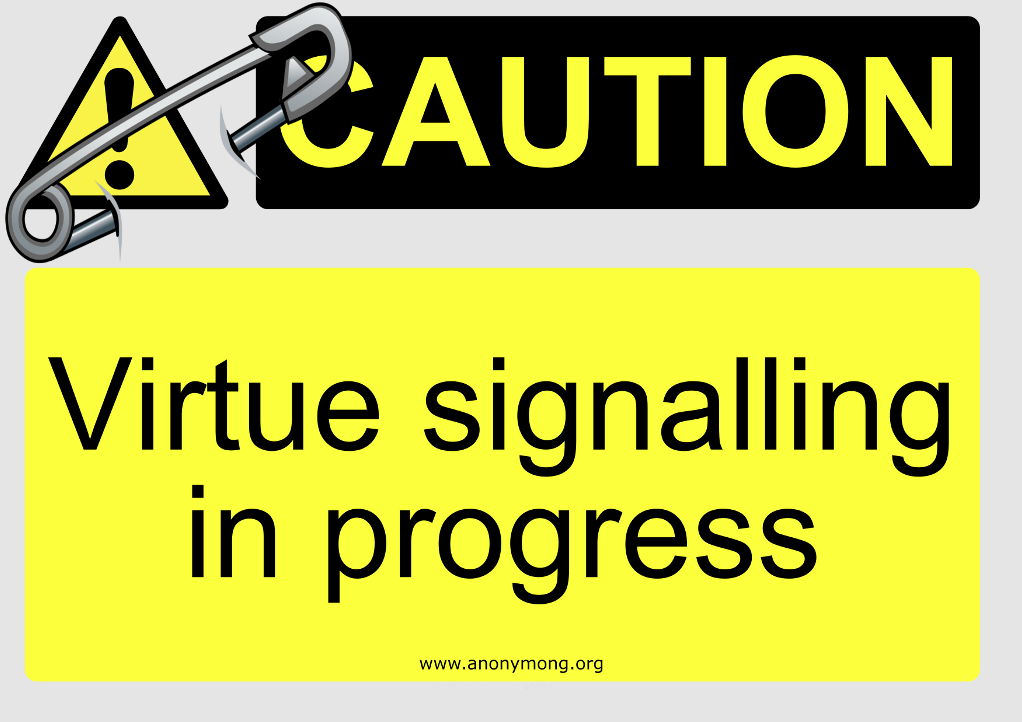
There’s ordinary virtue signalling, then there’s virtue costuming

Filed under: Media, Politics — Tags: , , , , — Nicholas @ 03:00

On the social media site formerly known as Twitter, L. Wayne Mathison describes what happens when virtue signalling becomes someone’s entire persona:

When Virtue Becomes a Costume

Here’s an old village joke: if a man walks around telling everyone how humble he is, check his pockets. He’s usually carrying a mirror.

That’s roughly how the modern “woke” phenomenon works. It presents itself as moral enlightenment, but most of the time it behaves like a status game, who can signal the most compassion, the loudest outrage, and the strongest allegiance to the fashionable cause of the week.

My definition is blunt: woke politics is moral signalling replacing moral responsibility.

It’s not about solving problems. It’s about performing concern.

And once you start looking at it that way, the pattern shows up everywhere.

The Performance Economy of Virtue

Rob Henderson calls these “luxury beliefs”.

Luxury beliefs are ideas held mostly by wealthy or highly educated people that signal status but impose real costs on everyone else. The people promoting them rarely suffer the consequences.

Think about it.

Defund the police.
Abolish prisons.
Decriminalize hard drugs.
Romanticize homelessness as a “lifestyle choice”.

Who pushes these ideas hardest?

Not the working-class neighbourhood dealing with break-ins. Not the single mother living beside a drug market. It’s usually professors, activists, and celebrities living in safe neighbourhoods with security cameras and gated buildings.

The belief becomes a badge of moral sophistication.

The consequences fall somewhere else.

This is the luxury belief machine.

The Five Laws of Stupidity at Work

Carlo Cipolla’s Five Laws of Human Stupidity explains the rest.

His argument was beautifully cynical: stupidity is not about intelligence. It’s about behaviour.

A stupid person, he wrote, is someone who causes harm to others while gaining nothing themselves.

Sound familiar?

Look around at some modern activism and you’ll see Cipolla’s laws running like background software.

Law #1: Always underestimate the number of stupid people.

Every generation believes it has escaped mass foolishness. Every generation is wrong.

Law #2: Stupidity is independent of education.

A PhD does not vaccinate someone against bad thinking. Sometimes it just gives them fancier vocabulary.

Law #3: A stupid person harms others without benefit.

Policies driven by emotional slogans often damage the very communities they claim to protect.

Law #4: Non-stupid people underestimate stupidity’s power.

This is why sensible people are constantly surprised when destructive ideas gain traction.

Law #5: A stupid person is the most dangerous type of person.

Unlike criminals, they don’t know what they’re doing. And unlike the selfish, they aren’t pursuing rational gain.

They simply push the lever harder.

The Hollywood Example

Even entertainment hasn’t escaped the pattern.

Hollywood increasingly behaves less like a storytelling industry and more like a political signalling club. The pressure to conform is real: careers depend on being publicly aligned with the dominant ideology, and dissent can carry professional consequences.

The incentives are obvious.

Actors gain admiration by championing fashionable causes. They receive praise, awards, and moral approval, often without sacrificing anything material in their own lives.

It’s “virtue” at almost zero cost.

The Moral Time Machine

Then there’s what Bill Maher once joked about: the moral time machine.

Modern activists judge people from centuries ago as if those individuals possessed today’s cultural knowledge and moral vocabulary. It’s a kind of historical self-congratulation, imagining how virtuous we would have been in 1066 if only we had been there.

But that trick isn’t really about history.

It’s about status.

If you can condemn the past loudly enough, you look enlightened in the present.

The Incentive Problem

Here’s the uncomfortable truth.

Most systems don’t run on morality. They run on incentives.

Corporations chase profit.
Media chase attention.
Algorithms chase engagement.
Political activists chase moral prestige.

If the reward structure encourages outrage and virtue signalling, that’s exactly what people will produce.

Not because they’re evil.

Because incentives work.

The Reframe

The real divide in modern politics isn’t left versus right.

It’s performance versus results.

One side asks:

“Does this policy sound compassionate?”

The other asks:

“Did it actually improve people’s lives?”

That’s the question that cuts through the noise.

Because compassion measured by intentions is theatre.

Compassion measured by outcomes is responsibility.

Here’s the test I use now.

When someone proposes a moral crusade, ask three questions:

Who pays the cost?

Who receives the applause?

What happens if the policy fails?

Luxury beliefs collapse under those questions almost instantly.

And the moment the performance stops, something interesting happens.

We can finally start solving the problem.

[NR – emphasis added]

Update, 11 March: Welcome, Instapundit readers! Have a look around at some of my other posts you may find of interest. I send out a daily summary of posts here through my Substackhttps://substack.com/@nicholasrusson that you can subscribe to if you’d like to be informed of new posts in the future.

Austria’s Inbred Emperor who Demanded Dumplings – Marillenknödel

Filed under: Europe, Food, History — Tags: , , , , — Nicholas @ 02:00

Tasting History with Max Miller
Published 9 Sept 2025

Apricots wrapped in a soft dough with a crunchy exterior and sprinkled with powdered sugar

City/Region: Austria
Time Period: 1858

Ferdinand I of Austria was emperor in name only. Incredibly inbred, Ferdinand had various disabilities and ailments that affected his ability to rule, though it’s said that he spoke five languages and was very witty. As the empire was run by others, not much is written about Ferdinand’s rule, but one thing that he did do as emperor was to demand dumplings at every meal.

And I can see why; they’re absolutely delicious. The apricots are sweet and juicy, the dough is soft, and the crunchy exterior of breadcrumbs, butter, sugar, and cinnamon is wonderful.

    Apricot and Plum Dumplings With quark dough.
    You mix 4 deciliters flour and 20 decagrams quark with 3 yolks to make a soft dough. Roll out fairly thick, cut into large pieces, enough to wrap a plum [or apricot], then seal them well … Boil the dumplings in salted water. Lift them out carefully with a spoon so they don’t stick to the bottom, then transfer with a slotted spoon into hot butter in a dish. Let them brown on one side. In the butter, you can first brown some sugar and breadcrumbs…coat with sugar, cinnamon, and brown breadcrumbs.
    Die Süddeutsche Küche by Katharina Prato, 1858

(more…)

QotD: The slave trade

Filed under: Africa, Britain, History, India, Politics, Quotations — Tags: , , — Nicholas @ 01:00

    Brett Pike @ClassicLearner
    The Ottoman slave trade, the trans Saharan slave trade, the trans Indian slave trade, lasted for thousands of years and enslaved millions of people … Yet school children are led to believe that slavery was a uniquely European activity.

    Now why do you think that is?

The Arabs, Turks, and Indians collectively enslaved three times as many people as Europeans, their slave trades lasted three times as long, and the only reason they ended was that Europeans — in particular the British — used military power to force them to stop.

Yet we get the exclusive blame for slavery.

Why?

Simple.

We’re the only ones who felt bad about slavery.

Even at the height of the slave trade it was morally controversial. It never sat right with us. We’re genuinely ashamed of it.

No one else feels bad about it. At all.

And they know this. They know that the European soul is profoundly empathetic in a way that their own petty, clannish chauvinism is not. And in that universalizing empathic conscience they smell weakness, and in weakness, opportunity.

They remind us endlessly of the role we played in continuing slavery, knowing full well that we will be either too courteous, or too distracted by guilt, to point to the much larger role that they played.

By pressing on that sore nerve they sustain a moral assault on our conscience that they then exploit for financial benefits: welfare parasitism, preferment in admissions and hiring, open borders.

The slave societies have found a way to take their revenge for the end slavery, enslaving us with our own conscience.

And they don’t feel the slightest twinge of guilt about that, either.

John Carter, The social media site formerly known as Twitter, 2025-12-08.

Powered by WordPress