
Quotulatiousness

March 8, 2026

The comfortable illusions Canadians tell themselves about the criminal justice system

Filed under: Cancon, Government, Law, Media, Politics — Tags: , , — Nicholas @ 05:00

L. Wayne Mathison describes how far too many Canadians see crime in Canada and how their pleasant imaginings depart from reality:
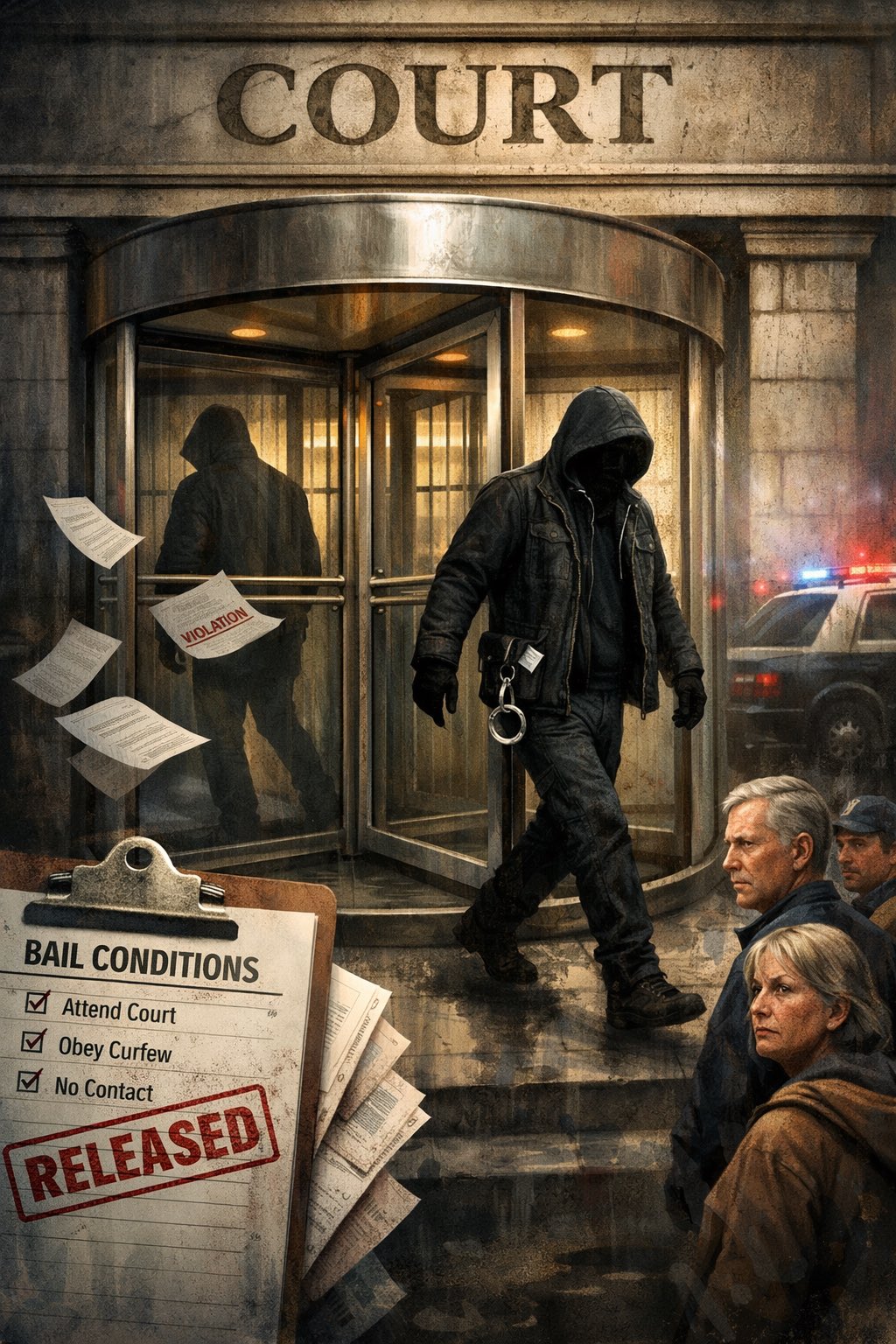
Let’s talk about the fairy tale we keep telling ourselves about crime in this country.

If you listen to a certain very loud and very sheltered crowd, you would think our justice system is basically a giant vacuum cleaner wandering the streets accidentally sucking up innocent people who somehow tripped and fell into a robbery charge. Apparently every person behind bars is just a tragic first-timer who made one bad decision on a difficult Tuesday afternoon.

That story collapses the moment you look at the numbers.

Statistics Canada shows something much less romantic. Our prisons are not packed with unlucky amateurs. They are filled largely with repeat performers. If someone is standing in court for a property crime, there is about an 80 percent chance they have already been convicted of doing the exact same thing before. For a lot of these offenders, theft is not a moment of desperation. It is a routine. Court is not a moral reckoning. It is paperwork.

Breaking into garages, lifting bikes, stripping catalytic converters. That is not chaos. It is a job description. Getting caught is just an occupational hazard.

Meanwhile the public is told to take a deep breath, retreat into their “inner Stoic,” and accept that having your property stolen is just part of modern urban weather. File the police report. Replace the lock. Pretend the system is working. It takes real mental gymnastics to watch the same small group of chronic offenders rack up dozens of charges while experts patiently explain that we simply need more empathy.

Look at what happens when these people are actually caught. Most walk out with bail conditions that amount to a polite note asking them to please behave. Unsurprisingly, a huge chunk of new convictions in Canada are administration-of-justice offences. That means breaching bail, skipping court, ignoring probation. They break the rules almost immediately. The revolving door barely slows down.

We do not need some grand philosophical rewrite of the social contract to fix this. We just need to stop pretending the public cannot see what is happening. A very small group of highly active repeat offenders causes a huge share of the damage in our communities.

Until the justice system stops treating career criminals like lost lambs who simply wandered off the path, the rest of us will keep paying the bill.


How to Destroy Your Own Revolution: Night of the Long Knives – Death of Democracy 06 – Q2 1934

Filed under: Germany, History — Tags: , , , , , — Nicholas @ 04:00

World War Two and Spartacus Olsson
Published 7 Mar 2026

In the spring of 1934, Nazi Germany stands on the edge of internal collapse. In this episode of Death of Democracy, we follow the escalating conflict between Adolf Hitler, the SA stormtroopers, and the German Army that culminates in the Night of the Long Knives. As economic cracks appear behind the Nazi “recovery”, Joseph Goebbels launches propaganda campaigns against critics while Heinrich Himmler expands SS power over the Gestapo.

When Vice-Chancellor Franz von Papen publicly challenges the regime, Hitler moves decisively. On June 30, 1934, the Nazi leader unleashes a purge that eliminates Ernst Röhm, the SA leadership, and political rivals — consolidating absolute power.

Using contemporary voices from Martha Dodd, Victor Klemperer, and underground SPD reports, this episode explores how terror, propaganda, and political maneuvering reshaped Germany in just a few months — and paved the way for dictatorship.

Watch the full Death of Democracy series to understand how democracies collapse from within.
(more…)

Performative … reading?

Filed under: Books — Tags: , , — Nicholas @ 03:30

Nicole James talks about a secretive cult of readers who — I’m afraid to even say it — read books in public, specifically to be seen reading books in public:

Reading has become competitive, which is impressive when you consider that it is an activity performed while sitting down and moving only the eyes. In theory, intellectually competitive reading would involve fierce debates in candlelit rooms, people slamming piles of Dostoevsky onto tables, and shouting things like, “You’ve misunderstood the moral ambiguity of suffering!” before storming out into the night to reflect meaningfully. In practice, it involves sitting in a café in Ridgewood holding a copy of the Iliad while pretending not to notice that three separate people have already noticed. And then pretending not to notice yourself noticing that they have noticed, which is where the true athleticism begins.

Because reading has slowly repositioned itself from private hobby to public personality trait. This is called performative reading, and it is less about engaging with ideas and more about being seen in the act of possibly engaging with ideas. It requires a certain book, a certain environment, and a certain facial expression. Specifically, a face suggesting that thoughts are currently underway.

The extraction of the book from the bag is an art form in itself.

It must not look like you packed it specifically for display. That would reek of planning, and planning is death to mystique. No, the book must appear to have happened to you. As though, midway through reaching for lip balm or car keys, you encountered it unexpectedly. “Oh,” your expression must suggest, “are you here too? How curious.”

The bag should be opened with a kind of languid inevitability. Do not rummage through your bag. Rummaging implies receipts. Crumpled tissues. A muesli bar from 2019. The book must be located swiftly, as if it occupies a reserved, velvet-lined chamber within your otherwise chaotic life.

You lift it out slowly. This is a text. Ideally one with a cover that signals moral seriousness or tasteful despair.

The removal must be conducted at a volume slightly above whisper. There may be a soft thud as it meets the table. A decisive, cultured thud. The kind of thud that says, “I have opinions about late-stage capitalism”.

Then, and this is critical, you do not open it immediately. That would look eager. Instead, you place it beside your coffee. The coffee must appear faintly architectural.

Only once the book is resting in full view do you adjust it by half a centimeter. A sleeve may be pushed back. A wrist revealed. The lighting should imply that you have recently contemplated something ancient and mildly troubling. Several photos are taken. One will be selected after rejecting seventeen for “looking too literate.”

The caption must be controlled. Something like:

Revisiting this.

“Revisiting” suggests that you and the book have history. You have both grown. You have both suffered.

And when it is finally time to return the book to the bag, this too must be handled with restraint. It slides back in as though it has completed a small but meaningful public service. The performance ends. The book remains unread. But visible. Which, as we all know, is the point.

Star Trek – Section 31

Filed under: Media — Tags: , , , — Nicholas @ 03:00

Feral Historian
Published 7 Nov 2025

Star Trek: Deep Space Nine introduced a dark undertone to the optimistic vision of the Federation with Section 31, a secretive organization doing dirty deeds behind the scenes. For some its a much-needed dose of Realpolitik to Trek, for others its a cynical ploy that has no place in Roddenberry’s vision. Either way, Section 31 is one of the most interesting pieces of Star Trek lore.

00:00 Intro
02:20 Backstories
04:09 DS9
06:30 Existential Threats
08:08 In The Pale Moonlight
10:43 Limits of Idealism
12:54 Enterprise

QotD: Reading books versus remembering books

Filed under: Books, Humour, Quotations — Tags: , — Nicholas @ 01:00

As a gullible young man, I fell for the big lie that books are improving. “Reading develops the mind,” my parents told me when I begged for a TV in my bedroom. My teachers seconded the motion, as did one hundred per cent of the world’s self-serving authors. “Reading makes you smarter,” they all said. “Reading gives you endless knowledge and reduces stress. Reading makes you human.”

“What about people who can’t read?” I asked, thinking of all the illiterates in my year group at school. “Don’t they have human rights, too?”

My mother snorted with laughter, as if I’d told a dirty joke. “Oh, that’s precious!” she said, wiping her eyes, and I raced upstairs to bury my nose in the first book I could find.

To be fair, I’d no idea back then what the passage of time does to the brain; that knowledge is never accrued, only forgotten. As an adult, I’ve trudged my way through the entire oeuvres of a good number of literary giants, and not only do I remember bugger all about what I read in any of those books, I’ve entirely forgotten that I read the vast majority of those books at all. Worse, when people ask my opinion about one of their renowned authors, I frown bewilderedly and say, “Who?”, their very existence having somehow been completely blotted from my mind. In my lowest moments, I even add, “Oh, I’ve never heard of him/her. I’ll have to give him/her a try. Which book of his/hers would you recommend I start with?” Only when I’m several chapters into one of these titles does a muffled bell ring somewhere at the back of my broken brain. Hang on, I think, didn’t I read something a bit like this once before? Then I accuse Dostoyevsky of plagiarism.

Dominic Hilton, “All Booked Up”, The Critic, 2020-08-17.

Powered by WordPress


