
The Tank Museum
Published Jan 5, 2024If you enjoyed the 2014 movie FURY, watch this and get the inside scoop behind The Tank Museum’s role in David Ayer’s Hollywood production. Ten years on from its release, David Willey describes how one of The Tank Museum’s Shermans and Tiger 131 took starring roles alongside Brad Pitt, Shia LaBeouf, Logan Lerman, Michael Peña, and Jon Bernthal. From initial discussions to the red carpet, David reveals every inch of the process, the lessons learned and the impact it has had on The Tank Museum.
Let us know what you thought of FURY and our tank’s performance in it in the comments below… What else would you like to know?
00:00 | Intro
00:50 | Fury – The Beginning
02:48 | Tiger Inquiries
05:00 | Insurance & Contracts
08:06 | Hollywood in Dorset
09:51 | On Set & Filming
14:55 | Was it worth it?
16:34 | Fury’s Longevity
(more…)
April 12, 2024
FURY – How a Museum with a Sherman Made a Movie
April 11, 2024
Disney: go woke, go broke?
spiked
Published Apr 10, 2024
The Walt Disney Company has gone from being an international treasure to an international laughing stock. Its films are flopping at the box office and fans are fuming. All because it has gone ridiculously woke, to an almost comical degree. No Disney film, franchise or TV series is now complete without clunky “progressive” messages about diversity, feminism and gender. The company has even started picking fights with anti-woke politicians. Here, Lauren Smith documents Disney’s Great Awokening – and the fan revolt against it. Watch, share and let us know what you think in the comments.Support spiked:
https://www.spiked-online.com/support/
Sign up to spiked’s newsletters: https://www.spiked-online.com/newslet…
Check out spiked’s shop: https://www.spiked-online.com/shop/
March 6, 2024
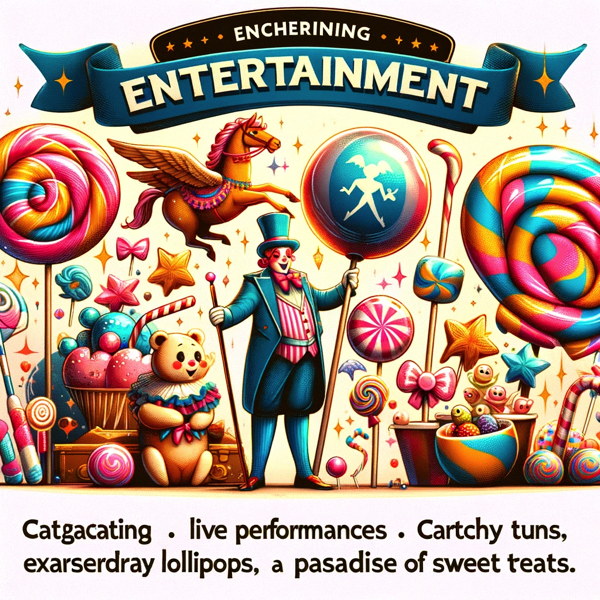
You had me at “Cartchy tuns, exarserdray lollipops” and “a pasadise of sweet teats”
Charlie Stross checks in with a Willy Wonka-adjacent story from Glasgow that utterly failed to live up to the billing:
This is no longer in the current news cycle, but definitely needs to be filed under “stuff too insane for Charlie to make up”, or maybe “promising screwball comedy plot line to explore”, or even “perils of outsourcing creative media work to generative AI”.
So. Last weekend saw insane news-generating scenes in Glasgow around a public event aimed at children: Willy’s Chocolate Experience, a blatant attempt to cash in on Roald Dahl’s cautionary children’s tale, Willy Wonka and the Chocolate Factory. Which is currently most prominently associated in the zeitgeist with a 2004 movie directed by Tim Burton, who probably needs no introduction, even to a cinematic illiterate like me. Although I gather a prequel movie (called, predictably, Wonka), came out in 2023.
(Because sooner or later the folks behind “House of Illuminati Ltd” will wise up and delete the website, here’s a handy link to how it looked on February 24th via archive.org.)
INDULGE IN A CHOCOLATE FANTASY LIKE NEVER BEFORE – CAPTURE THE ENCHANTMENT ™!
Tickets to Willys Chocolate Experience™ are on sale now!
The event was advertised with amazing, almost hallucinogenic, graphics that were clearly AI generated, and equally clearly not proofread because Stable Diffusion utterly sucks at writing English captions, as opposed to word salad offering enticements such as Catgacating • live performances • Cartchy tuns, exarserdray lollipops, a pasadise of sweet teats.* And tickets were on sale for a mere £35 per child!
Anyway, it hit the news (and not in a good way) and the event was terminated on day one after the police were called. Here’s The Guardian‘s coverage:
The event publicity promised giant mushrooms, candy canes and chocolate fountains, along with special audio and visual effects, all narrated by dancing Oompa-Loompas — the tiny, orange men who power Wonka’s chocolate factory in the Roald Dahl book which inspired the prequel film.
But instead, when eager families turned up to the address in Whiteinch, an industrial area of Glasgow, they discovered a sparsely decorated warehouse with a scattering of plastic props, a small bouncy castle and some backdrops pinned against the walls.
Anyway, since the near-riot and hasty shutdown of the event, things have … recomplicated? I think that’s the diplomatic way to phrase it.
February 22, 2024
The feminization of movies – the Luke Skywalker Effect
Like Lorenzo Warby, I was a fan of the first three Star Wars movies, but rapidly lost interest as the series progressed (I think I watched about half of Attack of the Clones before giving it up as a hack job). Here he gives his opinion on one of the biggest reasons why the later movies sucked:
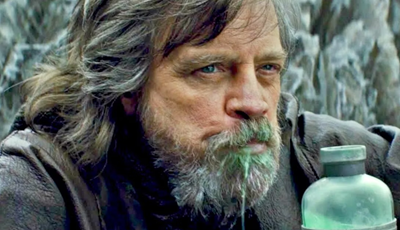
I am, in many ways, a Stars Wars kid. I can remember sitting in a cinema in 1977, listening to the music play as the opening words flowed across the screen and the sound of the Star Destroyer rumbled out of the speakers and thinking “Yes, a film by One of Us”. That is, a film made by a genuine fan of SF.
A film, moreover, that gave us epic characters. Luke Skywalker: young, eager, physically skilled, charmingly gormless. Han Solo: charismatic rogue (who definitely shot first, that’s what charismatic rogues who read the room do). Princess Leia: the epitome of the competent-beyond-her-age young woman making sure the boys don’t get above themselves. Darth Vader: the looming — and yes charismatic — menace. Chewbacca: scary loyal sidekick. Obi-wan Kenobi: wise, world-weary, teacher with intriguing powers. Grand Moff Tarkin: the ruthlessly competent minion that autocrats both want and fear.
A film that was fun, that was embedded in an intriguing universe. A film that understood the need for training, the hero’s journey, building teams. The briefing of the fighters before the attack on the Death Star is a classic example of informing the audience by letting them see the process of getting everyone on the same page.
I loved the first three films: yes The Empire Strikes Back (1980) is the best of them. I was not entirely sold on the Ewoks, but they were fun. Those films were a huge success for very good reasons.
I was less impressed with the prequels. I described The Phantom Menace (1999) as “Star Wars for six year olds”. Lucas should have stuck with the pattern that worked so well for The Empire Strikes Back — get a good director and have good scriptwriters tighten up his story.
When Lucasfilm was sold to Disney, I was actually pleased. Disney, I thought, knew how to tell stories. Rogue One (2016) seemed to be a vindication of that.
When The Force Awakens (2015) came out, I was so happy to have a big screen Star Wars epic film, I just went with it. There were huge problems with the character of Rey, but I wanted to be taken for a ride, and so was: in so many senses.
Looking back, the writing down of the character of Han Solo was a big red flag. In the original trilogy, he grew as a character, as a person. In the first of the sequel trilogy, we were presented with a broken down, ageing failure as husband and father who had decayed to less than what he was when we first met him.
Meanwhile, we had the Mary Sue of a Rey who was just better than the boys as everything, including running the Millennium Falcon. She didn’t need training or experience, she was just naturally awesome because … girl.
Hollywood pretending that women have the same upper body strength as men is pretty pathetic, but never as pathetic as in the light-sabre fight between Rey and the Emo-Teenager Discount Darth Vader aka Kylo Ren. Yes, Ren was wounded, but years of experience and training counted for naught against Rey because … girl.
The Last Jedi (2017) was so much worse. Again, I wanted to like it, but things just niggled at me all the way through, despite my wish to enjoy the ride.
Once I got out of the cinema and began to consider what I had watched I became very angry. The chubby Chinese girl and belittled Black guy side plot was tired agitprop. Snope had been built up as epic villain but was disposed off with ridiculous expedition without any backstory explanation. Admiral Gender Studies was a study in pathetically bad leadership who clearly had no idea of how to build a team yet presented as a righteous authority. Poe Dameron was diminished into Male Initiative Is Bad Because Toxic Masculinity morality-play persona.
Epic military scenes do not work as parables. Parables subordinate story and character to didactic purpose. Epic military scenes really do not work as parables when the didactic purpose itself is so pathetic.
This is all bad enough, but the unforgivable crime against the entire legacy of Star Wars was what was done with Luke Skywalker’s character.
The original Luke Skywalker was a study in epic heroism. Yes, he was genetically advantaged, but he also trained to hone those advantages. He was not only physically brave, he was morally brave. Alone, captive, in the hands of his enemies — having deliberately surrendered to save his friends — he refuses to strike his father down. Alone, he defies the Emperor to his face and suffers terribly for his decision. He earned his capacities and his heroic standing.
What are we presented with in The Last Jedi? A broken and pathetic shadow of his former self. The offhand disposal of Snope has the effect of belittling the characters of Han Solo and Luke Skywalker even further. Their son, nephew and disciple had defected to the Dark Side because of … an explanation that made no character sense at all.
Seriously, the man who had shown that level of moral courage decided to kill his disciple and nephew because he had disturbing visions? It was an insult to the character, to the legacy and to the audience.
The sequel trilogy, particularly The Last Jedi, was a profound insult to legacy. To the legacy of Star Wars and to legacy within Star Wars. Thus was another parable pushed: legacy is pathetic and needs to be abandoned and subverted. The contemporary progressive contempt for all past human striving — it’s so full of male faces don’t you know, and (in the West) white ones — in fictional form.
We were presented with a universe where men fail as mentors and examples and women don’t need such. The later added-in training of Rey in The Rise of Skywalker was a pathetic patch on a deeper story-telling failure.
Any white male was pathetic, a failure, evil, stupid, toxic or some combination of the same. Meanwhile, the protagonist was great because … girl.
This was a vision that is sexist-racist, in a quite deliberate fashion.
The completion of the trilogy in The Rise of Skywalker (2019) had interest only to see how they were going to resolve (or not) all the story-telling holes The Last Jedi had lumbered the trilogy with. Bringing back Ian McDiarmid’s Palpatine — easily the best thing in the prequel trilogy — was a sign of desperation, of creative exhaustion.
Each of the films in the sequel trilogy did worse than at the box office than the one before. A very clear statement of a legacy being run down.
December 28, 2023
QotD: Christmas movies
Critic, schmitic. How can you pretend to be engaged in objective aesthetic appraisal when you’re talking about movies that you first watched decades ago in your childhood living room, while your late mother was trimming the tree and your long-dead dad was setting up the Nativity scene? The feeling that washes over you the moment the opening credits begin has relatively little to do with these movies’ actual merits, if any. Of course they get to you: They’re part of what shaped you; they’re artifacts of the long-vanished era in which you grew up; like Proust’s bite of madeleine, they trigger tsunamis of precious memory; like attending a midnight Mass on Christmas Eve or a Yuletide performance of the Messiah, watching them is a cherished ritual, carrying meaning through time and underscoring the irretrievable nature of the past even as they make the past feel, briefly, just a bit less irretrievable.
Bruce Bawer, “The Best Christmas Movies Ever”, New English Review, 2022-12-20.
December 24, 2023
QotD: Dreaming of George Bailey’s world while living in Pottersville
This, the most enduring of the many works of Frank Capra, became the Atlantis myth of post-war America. That is, those who, over the course of the last half-century, saw It’s a Wonderful Life on television, knew well that the age of community and connection depicted on their screens had already passed into the realm of legend. Moreover, to add injury to insult, they also knew that, if they wished to enjoy the fruits of a middle-class existence, they would have to live in the manner of vagabonds.
In the movie, slum-lord Henry Potter tries, but fails, to turn the provincial paradise of Bedford Falls into a run-down haunt of spinsters, drunks, and floozies. In the real world, it was Franklin D. Roosevelt who put the kibosh on the original Main Street, USA. To be more precise, the principal achievements of America’s greatest tyrant, the Great Depression and the Second World War, undermined the financial, legal, and cultural foundations of the “wonderful life”. Thus, by the time this process had run its course, inflation had made a fool’s game of simple thrift, the replacement of law with regulation had hobbled private enterprise, and people who had left home for the sake of college, work, or military service found themselves lost in a sea of strangers.
In response to these changes, colleges and universities stepped up to the proverbial plate, happy to offer substitutes for the things that had been lost. They gave young people a chance to obtain certificates that would attest to both their suitability for service in the ranks of corporate minions and their social respectability. At the same time, these institutions gave older people a way to convert their value-losing cash into an asset that promised to pay dividends that would benefit their children (and, indeed, their grandchildren) for decades to come.
Thus arose the people I have come to call the MICE (Mobile, Individualistic, College Educated) people. Bereft of regional accents, productive property, and deep connections to friends and relations, they wandered the world, building networks, acquiring degrees, and padding resumés. However, after two generations of such peripatetic solipsism, the age of the MICE people is coming to an end.
Young men of parts, who realize that college has nothing to do with either liberal learning or vocational training, are simultaneously taking up skilled trades and stocking their MP3 players with learned podcasts. At the same time, young women of quality are beginning to think that the traditional troika of Kirche, Küche, und Kinder offers better odds of deep satisfaction than life as a hormone-hobbled, Starbucks swilling, girl boss.
So, if you know young people like the ones I’ve just described, do posterity a favor, and put them in contact with each other. After all, they deserve a life as wonderful as that of George and Mary Bailey.
Bruce Ivar Gudmundsson, “College, Class, and Christmas”, Extra Muros, 2023-08-06.
December 18, 2023
Napoleon Bonaparte on film
In The Critic, Peter Caddick-Adams considers the revival of the biopic, with emphasis on Napoleon Bonaparte, thanks to the recent Ridley Scott movie:
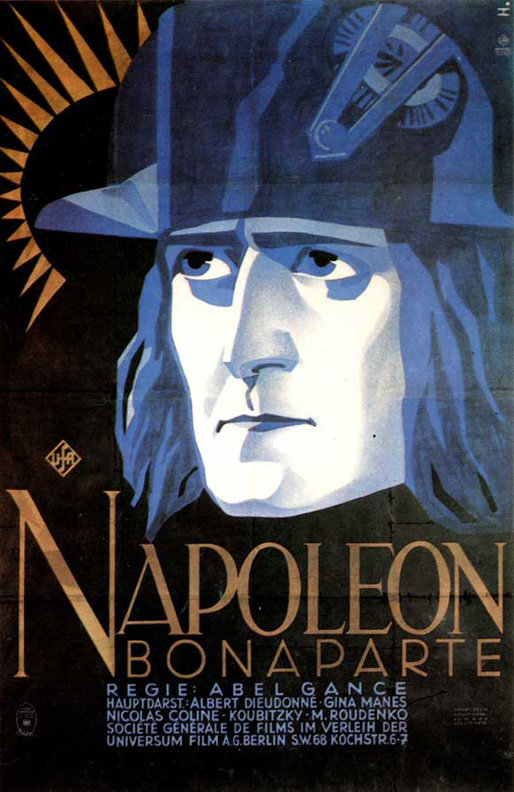
One of the posters for a much-shortened cut of Abel Gance’s Napoléon for the German market, 1927.
Some of the first motion pictures were biopics, initially silent. In portraying a high-minded individual, historical or contemporary, who has influenced our lives in some way, cinema’s hope is that some of the character’s prestige will rub off into the film. Both sides of the Atlantic have seen countless examples, because the genre is traditionally presented as culturally above a thriller, western or a musical. Its offer is an invitation to see history. Let us take Oppenheimer or Napoleon, with Cillian Murphy and Joachim Phoenix in the title roles. Viewers are attracted by the concept of a true story, be it the designer of the first atomic bomb, or the little emperor who dominated Europe. They may know little or a lot about the subject, even if only hazy knowledge from distant schooldays, but they start with more base knowledge than any other genre.
Gifted directors, in this case Christopher Nolan and Ridley Scott, with their cast hold our hands and walk us into an historical context, hinting at grandeur or importance. We are led into a panorama of life that’s now seen as great or significant. Whether you’re glued to a small screen nightly, or whether you go to the cinema only once or twice a year, the biopic demands attention as “education”, in a way a thriller, horror or romcom flick does not. We are sold the idea that reel history (which can never be real history) somehow merits our valuable time, more than mere “entertainment”.
Napoleon first burst onto the screen in 1927 with a silent-era masterpiece directed by Abel Gance. Far ahead of its time, the final scenes were shot by three parallel cameras, designed to be projected simultaneously onto triple screens, arrayed in a horizontal row called a Triptych, the process labelled “Polyvision” by Gance. It widened the cinematic aspect to a field of vision unknown then or since. The director tried to film the whole in his Polyvision, but found it too technical and expensive. When released, only the centre screen of footage was shown, to a specially composed score. Designed as one episode of several to tell the emperor’s life, which we would today label a franchise, the 1927 extravaganza came in at 5.5 hours, necessitating three intermissions, including one for dinner. Gance had interpreted his biopic as a grand opera. It has been much trimmed and revisited by other directors, including Francis Ford Coppola in the 1980s, and restoration of lost footage is still ongoing. I saw the 5.5-hour version in the Royal Festival Hall in 2000, with a score by Carl Davies (of World at War fame). For a film emerging from the Stone Age of cinematography, its excitingly modern ambition was worth my bum ache. I could see what all the fuss was about.
Curiously, the real value of Gance’s Napoléon was in technique rather than content. If you think of the silent era, it’s mostly the comics who come to mind, playing out their dramas in front of a single static camera. Gance seized this new medium, first embraced in December 1895 by the Parisian Lumière Brothers, and turned it on its head. Napoléon featured not just the Triptych experiment, but many other innovative techniques commonplace today. These included fast cutting between scenes of alternating dialogue, extensive close-ups, a wide variety of hand-held camera shots, location shooting, multiple-camera setups and film tinting (colouring), so altering cinematography for ever.
Although Rod Steiger gave us a different take on Napoleon in Sergei Bondarchuk’s Waterloo of 1970, with its leading actors of the day and massive cast of extras, comprising much of a Soviet army division in period costume and filmed behind the old Iron Curtain, Ridley Scott’s new Napoleon is clearly paying homage to the Gance Napoléon in ambition and length. Scott pretty much picks up the story where Gance left off, and he is able to deploy technology of which Gance could only dream. However, with both films, screenwriter, director and actors are at a disadvantage common to all biopics of having to work against the viewers’ check-list of facts they know, or expect to see included. Thus Scott, like Gance, relies on spectacular technique over storyline. This brings viewers, especially my fellow fuming historians, into a collision between historical truth and the possibilities of celluloid story-making.
Most of us have a mental picture of the character we are invited to watch, which constrains actors and their make-up teams, who have to imitate particular people, with all the wigs, prosthetics and accents that entails. Yet, to view the biopic as a piece of history is to miss the point of the motion picture industry. Pick up a screenplay, and you will be surprised at how few pages it comprises, how few words on each page. None read like a literary biography. With only 90–120 minutes in a typical movie, there is not enough time to cover a character’s full life — not even that of Napoleon in 5.5 hours. Instead, the challenge for the writing-directing team is to extract snippets of a life to demonstrate the evolution of character.
December 15, 2023
“Cletus is ’bout to go kinetic, y’all”!
Chris Bray turns to movie trailer analysis as a break from his usual work. Oh, wait, no it’s not really much of a break:
Cletus is ’bout to go kinetic, y’all. I got the news straight from brunch in Brentwood, where people really understand Middle America.
The trailer has dropped for a major new movie about an American civil war. No, not that one: the next one, with the dictatorial president who seizes an unconstitutional third term and refuses to leave the White House, and is an old white guy with big hair who drawls and thinks the world of himself and totally isn’t like any real person they’re trying to compare him to.
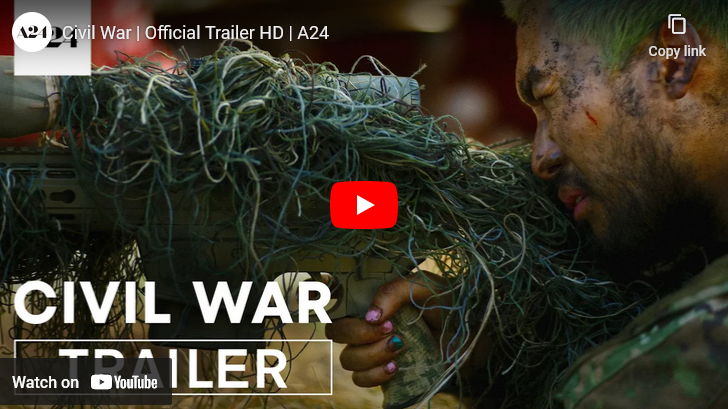
Note that the sniper in the thumbnail has camouflaged his rifle with a pile of spaghetti to avoid being seen, but is also wearing … nail polish? I am unfamiliar with this military doctrine, but if you ever find yourself in a war, wear bright shiny things so you blend in with the trees. I hope we’ve all seen the White House Christmas video this year, because I think they might also be gesturing at this brand of postmodern ghillie suit:
Civil War is Hollywood’s other “America collapsing soon” movie, behind the Obama-backed Leave the World Behind, which sounds like a form of torture. […]
You can watch the Civil War trailer to see how utterly dogshit banal it is, but my favorite detail is that Texas and California form an alliance against the US government and secede together. Yes, a long line of development executives said, Texas and California share a political agenda and would obviously make common cause in an insurgency.
I beg you to get drunk and discover on your own what professional entertainment journalists, a real category of human existence, are saying about this movie.

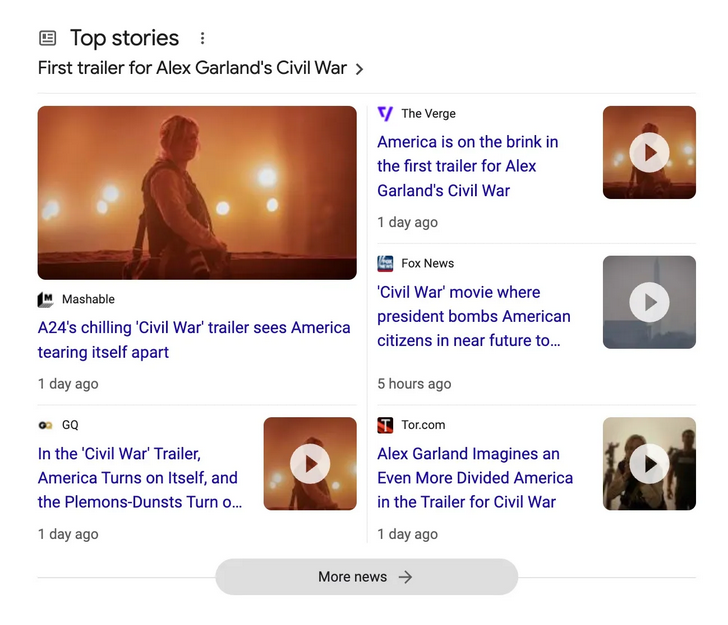
Severian also saw the trailer and as you’d guess it just blew him away:
So let’s see here … Florida and Texas seceding, necessitating the use of airstrikes — indeed, of all available force — against Americans? Check. Journalists as heroes? Check. Brown-skinned folks with funny accents as the only real Americans? Check. A rebel assault on the capitol, complete with explosions at the very heart of Our Democracy™? Check! I don’t think they actually said the names in the trailer — I kinda skimmed, because it’s nauseating — but whaddaya wanna bet the President of Real America has a name like, oh, I dunno … “Joe Ryder”, and the President of Godawful Redneckistan has a name kinda like “Ronald Rumph”?
They’re really steeling themselves to do Whatever It Takes, aren’t they?
Noted in the comments by Andrew: “Fun fact no. 1: there is only one facility in the US that manufactures explosive ordinance for the military. Fun fact no. 2: that facility is in Texas.”
Oh, and apparently red sunglasses are the new MAGA hat.

December 9, 2023
The coming Micro-Macro culture war … and who’s going to win it
Ted Gioia outlines the dismal state of the “macro” culture — television, movies, newspapers, book publishing and all the big corporations that control them — with the dynamism of the “micro” culture:
In the beginning, all culture was microculture.
You knew what was happening in your tribe or village. But your knowledge of the wider world was limited.
So you had your own songs and your own stories. You had your own rituals and traditions. You even had your own language.
But all these familiar things disappeared when you went off into the world. That was dangerous, however. That’s why only heroes, in traditional stories, go on journeys.
You learn on the journey. But you might not survive.
But all that changed long before I was born.
In my childhood, everything was controlled by a monoculture. There were only three national TV networks, but they were pretty much the same.
When I went to the office, back then, we had all watched the same thing on TV the night before. We had all seen the same movie the previous weekend. We had all heard the same song on the radio while driving to work.
The TV shows were so similar that they sometimes moved from CBS to NBC, and you never noticed a change. The newscasters also looked pretty much the same and always talked the same — with that flat Midwestern accent that broadcasters always adopted in the US.
The same monoculture controlled every other creative idiom. Six major studios dominated the film business. And just as Hollywood controlled movies, New York set the rules in publishing. Everything from Broadway musicals to comic books was similarly concentrated and centralized.
The newspaper business was still local, but most cities had 2 or 3 daily newspapers — and much of the coverage they offered was interchangeable. Radio was a little more freewheeling, but eventually deregulation allowed huge corporations to acquire and standardize what happened over the airwaves. [NR: I suspect the “freewheeling” went away once the government started imposing regulations, and the corporate consolidation was enabled when they “deregulated” the radio licensing regime several decades later.]
When I went to work in an office, back then, we had all watched the same thing on TV the night before. We had all seen the same movie the previous weekend. We had all heard the same song on the radio while driving to work.
And that’s why smart people back then paid attention to the counterculture.
The counterculture might be crazy or foolish or even boring. But it was still your only chance to break out of the monolithic macroculture.
Many of the art films I saw at the indie cinema were awful. But I still kept coming back — because I needed the fresh air these oddball movies provided. For the same reason, I read the alt weekly newspapers and kept tabs on alt music.
In fact, whenever I saw the word alt, I paid attention.
That doesn’t mean that I hated the major TV networks, or the large daily newspaper, or 20th Century Fox. But I craved access to creative and investigative work that hadn’t been approved by people in suits working for large organizations.
The Internet should have changed all this. And it did — but not much. Even now the collapse in the monoculture is still in its early stages.
But that’s about to change.
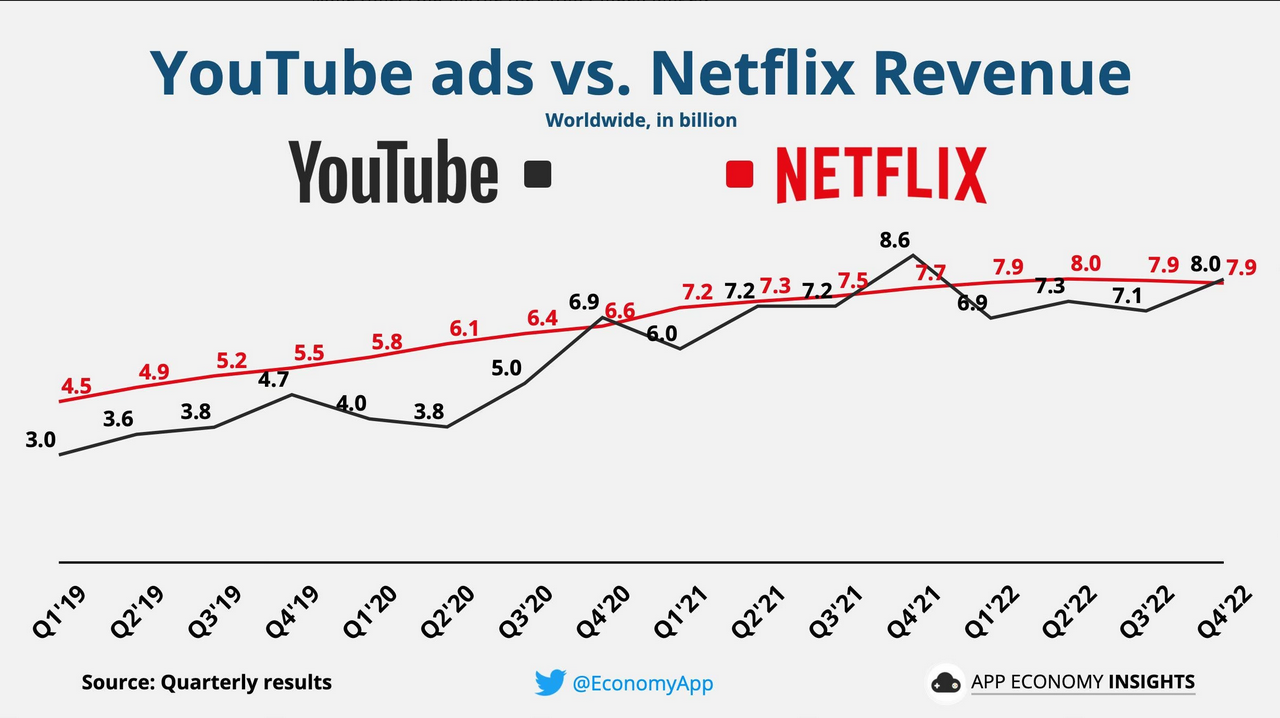
If you don’t pay close attention, the media landscape seems pretty much the same now as it did in the 1990s. The movie business is still controlled in Hollywood. The publishing business is still controlled in New York. The radio stations are still controlled by a few large companies. And instead of three national TV networks plus PBS, we have four dominant streaming platforms — who control almost 70% of the market.
So we still live in a macro culture. But it feels increasingly claustrophobic. Or even worse, it feels dead.
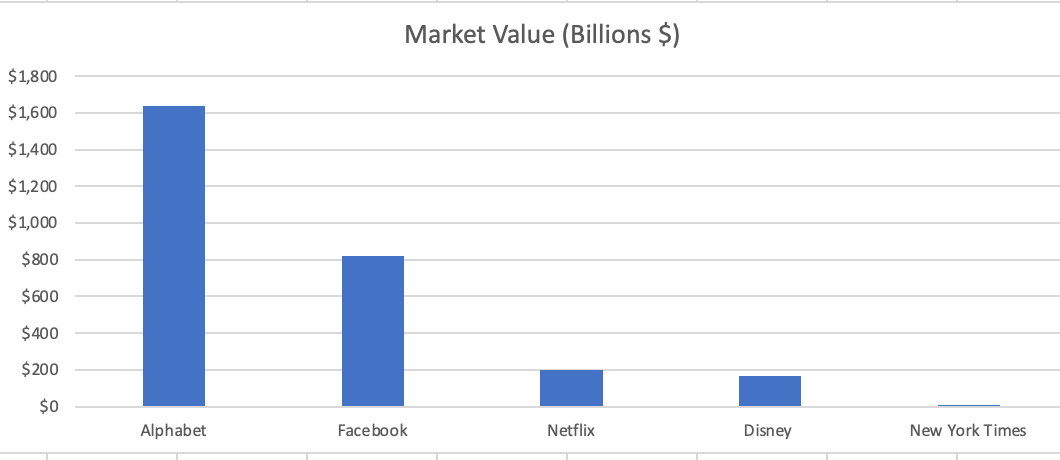
Meanwhile, a handful of Silicon Valley platforms (Google, Facebook, etc.) have become more powerful than the New York Times or Hollywood studios or even Netflix. It’s not even close — the market capitalization of Google’s parent Alphabet is now almost ten times larger than Disney’s.
But here’s the key point — these huge tech companies rely on the microculture for their dominance.
Where is Facebook without users contributing photos, text and video? Where is Google’s YouTube without individual creators?
In terms of economic growth or audience capture, the microculture has already won the war. But it doesn’t feel that way.
Why not?
First and foremost, Silicon Valley is a reluctant home for the microculture. To some extent Alphabet and Facebook are even going to war with microculture creators — they try to make money with them even while they punish them.
- So Mark Zuckerberg needs creators, but won’t even let them put a live link on Instagram and limits their visibility on Facebook and Threads.
- Alphabet needs creators to keep YouTube thriving, but gives better search engine visibility to total garbage that pays for placement.
- Twitter also claims it wants to support independent journalists — but if you’re truly independent from Elon Musk, your links are brutally punished by the algorithm.
This tension won’t go away, and next year it will get worse. The microculture will increasingly find itself at war with the same platforms they rely on today.
And legacy media and non-profits are even more hostile to emerging media. Go see who wins Pulitzer Prizes, and count how many journalists on alternative platforms get honored.
I’ll save you the trouble. They don’t.
November 25, 2023
Ridley Scott’s Napoleon
I was initially quite interested in Ridley Scott’s Napoleon, but given the criticism from historians, I doubt I’ll make the effort to see the film in the theatre. I’ve quite enjoyed some of Scott’s earlier “historic” movies, but it appears that he’s taken the historical figure of Napoleon and “interpreted” it to better fit his preferences for a film. Bret Devereaux‘s initial response is rather telling:
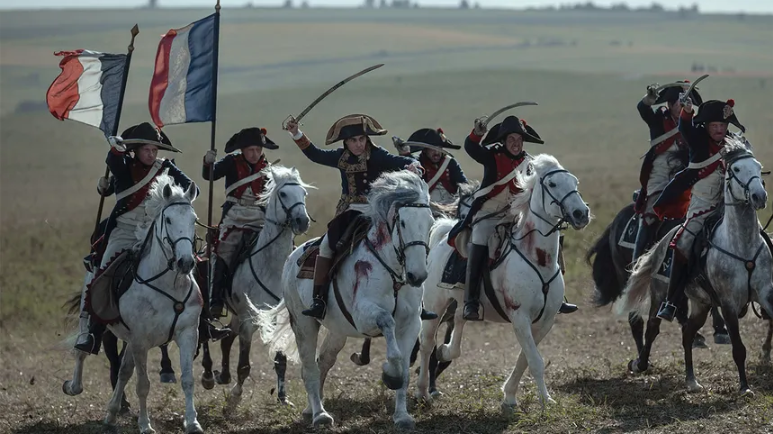
For this week’s musing, I want to comment at least briefly on dust-up surrounding Ridley Scott’s latest film, Napoleon and historians. As was evidently heavily reported, Ridley Scott responded to historians doing critiques of the film’s historical accuracy by telling them to “get a life” and suggesting that the earliest works on Napoleon were the most accurate and that subsequent historians have just progressively gotten more wrong.
I think there are two questions to untangle here: is the film accurate and does it matter? Now I haven’t yet seen the film, I’ve only seen the trailer. But my response to the trailer seems to have been basically every historian’s response to the trailer: Napoleon shows up at all sorts of places, doing all sorts of things he didn’t do. In particular, the battle scenes I’ve seen in the trailer and other snippets bear functionally no relationship to either Napoleonic warfare in general or the Battle of Austerlitz in particular (the bit with large numbers of soldiers drowning in a frozen lake was disconfirmed at the time; the lake was drained and few remains were found).
All of this is not a huge shock. All of Ridley Scott’s historical movies take huge liberties with their source material. Sometimes that’s in the service of a still interesting meditation on the past (Kingdom of Heaven, The Last Duel), sometimes in service of just a fun movie (Gladiator). Ridley Scott, in particular, has never mastered how basically any historical battle was fought and all of the battle scenes in his movies that I’ve seen are effectively nonsense (including Gladiator, which bears functionally no relationship to how Roman armies actually fought open field battles). Cool looking nonsense, but nonsense. Heck, Gladiator‘s entire plot is basically nonsense with some characters sharing historical names and very little else with their actual historical counterparts (the idea of Marcus Aurelius aiming to restore the republic in 180 is pretty silly).
So it isn’t a surprise that Ridley Scott’s grasp on Napoleonic warfare is about at the level of a not particularly motivated undergraduate student or that he has finessed or altered major historical details to make a better story. Its Ridley Scott, that’s what he does. Sometimes it works great (Kingdom of Heaven), sometimes it works poorly (Exodus: Gods and Kings).
Does it matter?
Unsurprisingly, I think that Ridley Scott is being more than a bit silly with his retorts to historians who are using his film as an opportunity to teach about the past. That’s what we do. Frankly, I find the defensiveness of “get a life” more than a bit surprising, as I assumed Ridley Scott knew he didn’t have much of a grasp on the history and was OK with that (or better yet, did have a grasp on it, but chose to alter it; I do not get this sense from his commentary), but it rather seems like he thinks he does know and is now very upset with the D+ he got on his exam and has decided to blame his “nitpicky” professor instead of his not having done the reading.
That said, when it comes to criticism (in the sense of “saying things are wrong“, rather than in the sense of “critical analysis”), I think there is a distinction to make. In the past I’ve framed this as the degree to which works “make the claim” to some kind of historical validity. It might be a fun exercise to talk about the armor in, say, Dungeons and Dragons or The Elder Scrolls and we might even learn something doing that, but neither of those works is making any claim to historical accuracy or rootedness. And so the tenor of the discussion is quite different.
But here I think Ridley Scott is to a significant degree making the claim. Of the battles, Ridley Scott says, “It’s amazing because you’re actually reconstructing the real thing” and that he “started to think like Napoleon”, which is once again both clearly making that claim (“the real thing”) and also just a remarkable thing to say given how much of a mess his battle scenes generally are. He also comments that “the scale of everything is so massive … I’d have 300 men and a hundred horses and 11 cameras in the field” and while that’s far more cameras than were on any Napoleonic battlefield, that’s just not a statement which suggests that Ridley Scott is even very aware of other achievements in recreating historical battles. Gettysburg (1993) had something on the order of five thousand reenactors on the field for filming and it is by no means the largest such effort! Spartacus (1967) had a cast of eight thousand Spanish soldiers to play the Roman legions.
So while I do not know if Napoleon is a good movie or not – I haven’t seen it yet – it seems pretty clear to me that Ridley Scott did make the claim for some of its fundamental historicity and the response of historians has been to reject that claim. And I think it’s actually quite fair to also skewer the apparent whiny arrogance of Scott making that claim baselessly and then responding petulantly when historians handed him that “D+, please come see me after class”. If you want to make historical fiction, by all means do – Scott is very good at it! – but do not be upset if historians call it what it is.
November 15, 2023
The big brains of Hollywood display “a special kind of stupid”
Ted Gioia met with a group of executives from movie distribution firms outside the North American market back in 2016. It was a good time, financially, but the overall tone of the meeting was anxious because the trend seemed unsustainable:
These were smart people, but they didn’t make the movies. They just ran theater chains. But they didn’t need to be specialists in creativity or storytelling to know that hit films were now built on tired formulas, the same plot lines played out over and over again.
Special effects added some sizzle to the steak, but it was still the same stale meal night after night. Sooner or later, even superheroes die.
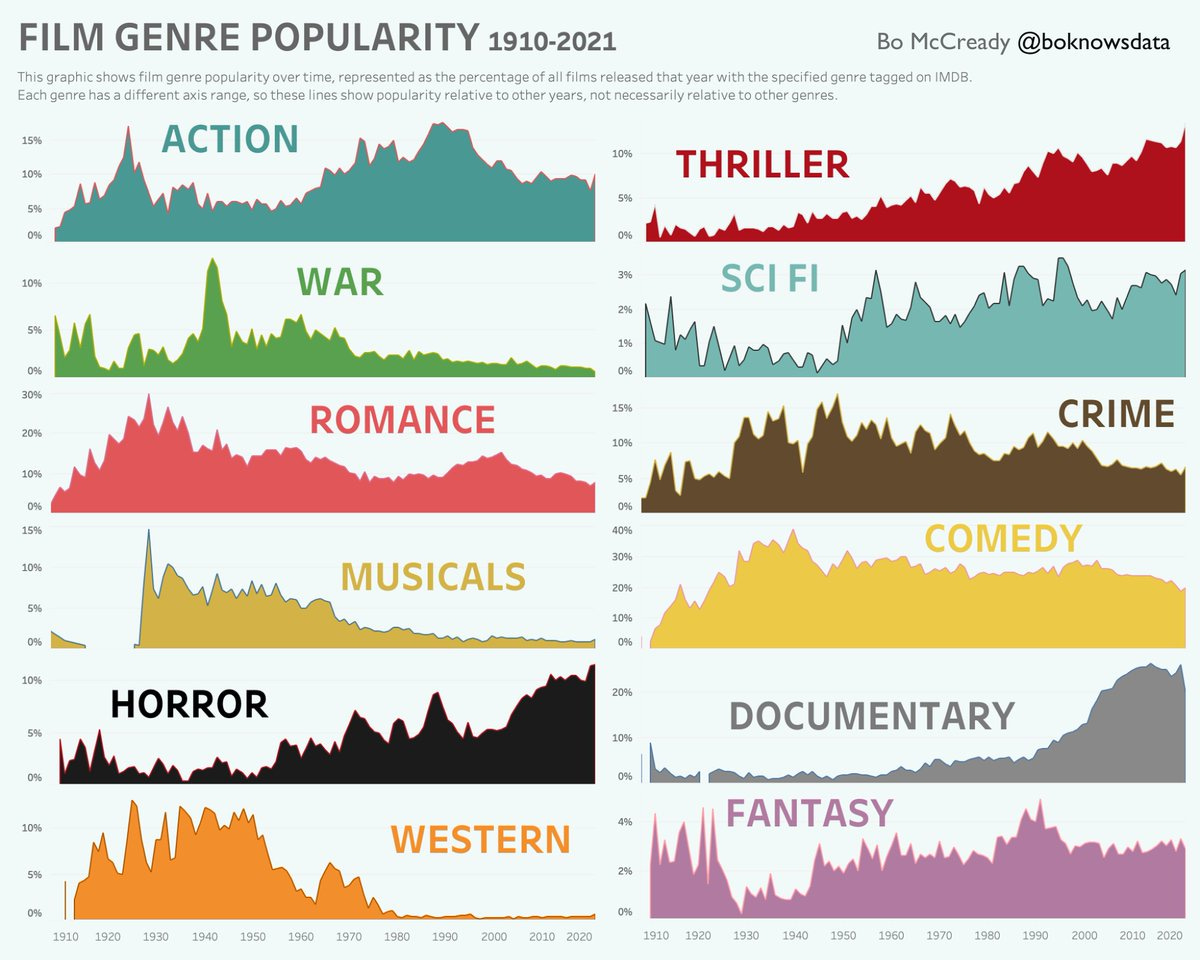
Other genres have come and gone — westerns and musicals and other box office draws of the past. Comic book franchises would eventually meet the same fate.
Source: Bo McReady
Back then, Disney was bragging to shareholders that another 20 Marvel films were already in the pipeline. And that was just a start. CEO Bob Iger explained that Disney owned the rights to 7,000 different Marvel characters — implying that brand franchises could propagate forever, like copulating Australian bunnies.
That was the party line in Burbank. But most of the people I spoke to that day privately expressed doubts about this formula-driven strategy. They hoped to enjoy a few more years of boom times, but worried about what would happen next.
“It takes a special kind of stupid to kill off Indiana Jones or Toy Story or a Marvel superhero, but that’s exactly what’s playing out right now in the Magic Kingdom.”
As it turned out, they were right to worry. But a virus, not a superhero, let them down. The first COVID case happened almost exactly three years after my December 2016 talk.
But it now looks like the pandemic merely delayed the creative collapse.
Hollywood has saturated the market with look-alike movies. Their pipeline of films is now exploding like the Nord Stream, but with this difference—studios are still sitting on a huge pile of future bombs.
And what does a studio do with a bomb on its hands?
They have four options—and they are four kinds of ugly
- You delay the film, hoping for a better market environment in the future.
- You send it back for rewriting and more filming
- You cancel it entirely, and write off the investment
- You release it — sinking another $50 million, more or less, into marketing — and then watch it collapse at the box office.
Disney is getting a sour taste of strategy number four this week.
October 29, 2023
QotD: Leni Riefenstahl’s Triumph of the Will
Ah, if only it weren’t for that awkward patch …
In the 1930s, Fräulein Riefenstahl put her formidable film-making talents to the cause of the Third Reich, and, after attending the Reichsparteitag des Willens in 1934, produced one of the most remarkable films ever made: Triumph Of The Will.
Go back to that scuba-diving disembarkation scene in Ray Müller’s The Wonderful Horrible Life Of Leni Riefenstahl. In theory, it could all be a setup, and the participants chewed over how best to do it beforehand and did fifteen takes: anyone who’s worked in documentaries knows how phony the whole business is. But the point is it seems careless — as if it happened, and the camera happened to be there to record it.
There’s no sense of that in any frame of Triumph Of The Will. Granted that audiences were a lot less media savvy in 1934, and granted that a people dumb enough to fall for National Socialism will fall for anything, it’s still hard to believe that even in its day anyone accepted what remained Fräulein Riefenstahl’s official explanation to the end — that this was just a “documentary record” of the 1934 annual party convention. Early on, we see the Führer‘s motorcade driving through Nuremberg, with what seems like the entire citizenry jammed on to the streets to greet him. Riefenstahl’s camera shoots Hitler (if you’ll forgive the expression) from directly behind him, a sequence which for some reason always reminds me of Gore Vidal’s boast that only very famous people such as himself know what the back of their heads look like. There’s a fabulous moment when the great man — Adolf, not Gore — is responding to the Hitler salutes offered up by the crowds with his campy little elbow-bend and wrist-flip and, as his Mercedes moves forward, the sun catches his fingers and fills the palm, first bathing it in glory and then making it appear as if the Führer‘s hand is the very source of the sunlight itself. Did the director just get lucky? Did the sun just happen to hit? Seconds later, we cut to a long shot of Hitler in the Mercedes continuing down the street. There’s no camera in the car, although the scene we’ve just witnessed could only have been filmed by someone in the back seat. Another minute goes by, and we’re back to the close-up of the Führer‘s neck.
Did she stop the car, get out and film the long shot, and then get back in? Did Leni get Adolf to do re-takes? Or maybe she made the entire population of Nuremberg re-take the scene; maybe they staged the procession twice. If Hitler was unusually agreeable about taking direction, it was because this was never a filmed record of an event so much as an event created for the film. Whatever Triumph Of The Will is, it’s not a documentary. Its language is that of feature films — not Warner Brothers gangster movies or John Ford westerns, but rather the supersized genres, the epics and musicals where huge columns of the great unwieldy messy mass of humanity get tidied and organized — and, if that isn’t the essence of totalitarianism, what is? Riefenstahl has the same superb command of the crowd as Busby Berkeley, the same flair for human geometry (though Berkeley would have drawn the line at giving the gentlemen of the chorus as swishy a parade step as Hitler’s personal SS bodyguard do).
Mark Steyn, “Triumph of the Will”, SteynOnline, 2019-09-07.
October 17, 2023
QotD: Representations of sex work in SF
Maybe it’s a relic from when SF was just another facet of Men’s Adventure magazines, or maybe it’s capitalizing on the stereotypical basement-dwelling Geek’s desire to have high quality women to command at the wave of a few credits or gold pieces. Or, more cynically, it’s the desire of Hollywood producers who actually DO have high quality women at their mercy, career-wise, to further normalize the idea that “Sex work is real work” to help smooth away the resistance to their hamfisted efforts on the casting couch.
TV Tropes has a number of entries about this, from “Unproblematic Prostitution” to “High Class Call Girl”. Writers like to call up the imagery of the Geisha, and make their Space Hookers come across as brilliant sexual artists, with additional talents that help the protagonists, such as advanced degrees or connections to corporate executives and high ranking government officials. (Funny how they are not corporate movers and shakers or government officials themselves …). They forget, of course, that Geisha were not actually prostitutes, and only rarely took lovers. There were still actual brothels in Japan for that sort of thing.
Science Fiction has gotten a lot more difficult to write as the frontiers of reality have pushed back against the flights of fantasy. We have had to accept that you can’t get to the moon inside a Victorian upholstered artillery shell, or set foot on the Jungles of Venus. And maybe that’s why a lot of SF in recent decades has turned towards the softer sciences where theories are more prominent than scientific facts, making it simpler to speculate.
However, even in our understanding of society, there are some realities that can’t be ignored. A few of them are listed in the aforementioned “Unproblematic Prostitution” entry. The primary social reality that undermines all of the tropes is that when you commodify sex, you are putting women on sale. Maybe it’s just fractionally, for a few hours out of her lifetime, but when your fantasy/SF hero comes along and waves a few C-notes to get a woman to do what he wants, it’s not the “Combination of Sex and Capitalism” (“… which are you against?” the excuse goes) but the sublimation of Sex TO Capitalism.
“Sex work is real work,” they like to say, but when you turn sex INTO work, it strips it of all of its better qualities. “Do what you love and you’ll never work another day in your life,” is another lie. I’ve known too many artists who go from having a fun hobby to chasing unsatisfying commissions, eventually burning out from endless requests by cretins for illustrations of their vilest fantasies. So the idea that our happy Space Hookers are having fun and getting paid, and what’s wrong with that, turns into burnout in pretty short order, because the kind of guys who go out looking for “That kind of girl” are not interested in the parts of sex that make it as enjoyable as it is for a compatible couple. They don’t have girlfriends for a reason. So the trope that Prostitution is just Sexy Fun Time falls by the wayside in the face of human nature.
SF also likes to postulate that science will make sex consequence free with perfect contraception and cures for all diseases. Writers and Producers fail to see the actual social costs and secondary effects, some of which we are finally running afoul of today, as women are aging out of their “Hookup culture” days and finding themselves alone and with few prospects for a lasting relationship, while at the same time human reproduction is falling below the replacement rate worldwide. And of course, nature being what it is, there will always be new diseases from new planets or new alien races or who knows WHAT our horny young space cadets have been sticking their dicks into. Human biology has less security in its OS than a Commodore 64.
Dr. Mauser, “Space Hookers Must Die!”, Shoplifting in the Marketplace of Ideas, 2023-07-16.
October 9, 2023
Janice Fiamengo finds a reason to watch the Barbie movie
I generally don’t watch movies these days, so I was never in the target audience for Barbie, but Janice Fiamengo has changed her mind about whether you should watch it:
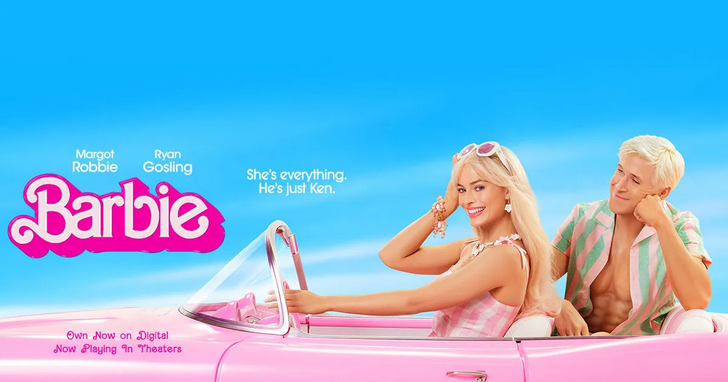
I have changed my mind about Barbie. When I discussed it last week with my good friend Tom Golden (you can see our conversation here), I advised against viewing it.
I now recommend giving it a watch, not for pleasure or even ideological interest — it is too dull and humorless for that, with a senseless plot, wooden dialogue, and a coy voice-over — but for clarification. The high-grossing movie offers a vivid encapsulation of our culture’s view of men and women, complete with its own inadvertent self-subversion. Watching it is a leaden but useful reminder that feminists really are this self-destructively stupid, and really do want to destroy “patriarchy”, by which they mean masculine freedom, self-respect, and leadership. They no longer even pretend to value equality.
Men and boys (and the women who love them), take a good look.
In Barbie, men are at best second-class citizens who by movie’s end, in an improvement over their former nullity, are content to follow banal female directives about their attitudes and identity. In a jaw-droppingly condescending scene after the failed Ken Rebellion, Ken is counseled on how to find himself. He is told that it’s okay to cry (as he bawls like a baby) and is admonished to “figure out who you are without [Barbie/woman]”. He and the other Kens seem grateful for the puerile admonition and willing to be male on Barbie terms: sexless, rudderless, effeminate. They certainly can’t be equal, the film makes clear, because they make a mess when they’re in charge.
Keeping men in check means shielding them even from images of patriarchal (meaning competent, self-directed, masculine) men: Ken runs amok only after seeing a world (the “real world”) in which men are allegedly respected merely for being men, one of the more risible feminist lies in the movie. Feminists have never understood that men earn respect. But in the feminist vision, any possibility that men may perceive themselves as essential to their society — and as owed acknowledgement for the goods they bring — must be suppressed. Only women are essential.
Perhaps the feminist director of Barbie intended the portrayal of the Kens to reflect the situation of women under patriarchy (one searches in vain for a coherent analytical perspective). In Barbie Land, Kens are objects (not sex objects since there is no sex or even heterosexual desire) who exist only to compete, fruitlessly, for Barbies’ attention.
In the real patriarchal past, of course, women were never so reduced precisely because of male sexual longing, love, familial affection, chivalry, religious ideals, empathy, reasoning about justice, and the desire for procreation. All such longings or allegiances are absent from Barbie life. If the Barbies desire children and family — never made clear in the movie, though perhaps gestured to in the final scene when Barbie, now human, visits her gynecologist — theirs will likely be families without Kens. Whether in the real world or in Barbie Land, men are peripheral at best, dangerous at worst, and often mildly contemptible and tiresome with their “egos and petty jealousies”. The only good thing about Kens is that they are easy to manipulate.
The disdain is fathoms deep.
Women, in contrast, are complete in themselves, sufficient for each other in a world in which all positions of power — from President to CEO, doctor, pilot, astronaut, ambulance worker, professional athlete, and Nobel Prize-winning journalist — are occupied by women (and a few trans people, it seems), and in which neighborhoods function without any dirty, dangerous jobs, external threats, heavy machinery, complex repairs, or strenuous labor.
This aspect of the movie, by the way, is a striking illustration of the inability of the feminist mind to remember or even understand what men actually do: the risky, body-wearying and ingenuity-demanding work that feminists only rarely, if ever, advocate for women and which they are frequently hard-pressed even to name. One of the many magic tricks of feminism is its continual disappearing of distinctive male inventiveness, skill, adaptability, and heavy-lifting.
September 13, 2023
Why Do People In Old Movies Talk Weird?
BrainStuff – HowStuffWorks
Published 25 Nov 2014It’s not quite British, and it’s not quite American – so what gives? Why do all those actors of yesteryear have such a distinct and strange accent?
If you’ve ever heard old movies or newsreels from the thirties or forties, then you’ve probably heard that weird old-timey voice.
It sounds a little like a blend between American English and a form of British English. So what is this cadence, exactly?
This type of pronunciation is called the Transatlantic, or Mid-Atlantic, accent. And it isn’t like most other accents – instead of naturally evolving, the Transatlantic accent was acquired. This means that people in the United States were taught to speak in this voice. Historically Transatlantic speech was the hallmark of aristocratic America and theatre. In upper-class boarding schools across New England, students learned the Transatlantic accent as an international norm for communication, similar to the way posh British society used Received Pronunciation – essentially, the way the Queen and aristocrats are taught to speak.
It has several quasi-British elements, such a lack of rhoticity. This means that Mid-Atlantic speakers dropped their “r’s” at the end of words like “winner” or “clear”. They’ll also use softer, British vowels – “dahnce” instead of “dance”, for instance. Another thing that stands out is the emphasis on clipped, sharp t’s. In American English we often pronounce the “t” in words like “writer” and “water” as d’s. Transatlantic speakers will hit that T like it stole something. “Writer”. “Water”.
But, again, this speech pattern isn’t completely British, nor completely American. Instead, it’s a form of English that’s hard to place … and that’s part of why Hollywood loved it.
There’s also a theory that technological constraints helped Mid-Atlantic’s popularity. According to Professor Jay O’Berski, this nasally, clipped pronunciation is a vestige from the early days of radio. Receivers had very little bass technology at the time, and it was very difficult – if not impossible – to hear bass tones on your home device. Now we live in an age where bass technology booms from the trunks of cars across America.
So what happened to this accent? Linguist William Labov notes that Mid-Atlantic speech fell out of favor after World War II, as fewer teachers continued teaching the pronunciation to their students. That’s one of the reasons this speech sounds so “old-timey” to us today: when people learn it, they’re usually learning it for acting purposes, rather than for everyday use. However, we can still hear the effects of Mid-Atlantic speech in recordings of everyone from Katherine Hepburn to Franklin D. Roosevelt and, of course, countless films, newsreels and radio shows from the 30s and 40s.
(more…)


