The Annales school is a style of historical thinking that emerged in France in the early 1900s; at least for pre-modernists, the dominating figures here tend to be Marc Bloch and Fernand Braudel. It got its name because of its close association with Annales d’Historie Economique et Sociale. Fundamentally, what sets the Annales approach apart is first its focus and then the methods that focus demands.
The big shift in focus for the Annales school was an interest in charting the experience of society below the level of elites (though the elites are not abandoned either), what is sometimes termed “history from below”, as distinct from traditional elite-centered “great man” history or the more deterministic Marxist models of history at the time. You can see the political implications, of course, in the very early 1900s, of declaring the common man worthy of study; this is generally a history from the left but not the extreme left. That focus in turn demanded new approaches because it turned the focus of social history towards people who by and large do not write to us.
In reaching for that experience, Annales scholars tended to frame their thinking in terms of la longue durée (“the long run”); history was composed of three parts: événements (“events”), conjonctures (“circumstances”) and finally la longue durée itself. Often in English this gets rendered as a distinction between “events” (kings, wars, politics, crises) and “structures” (economics, social thought and at a deeper level climate, ecology, and geography). What Annales scholars tended to argue was that those structures were often more important than the events that traditional historians studied: the farmer’s life was far more shaped by very long-term factors like the local ecology, the organization of his farming village, the economic structure of the region and so on. And then the idea goes, that by charting those structures, you can figure things out about the lives of those farmers even if you don’t have many – or any – of those farmers writing to you.
Important to this was the idea of enduring patterns of thought within a society, what Bloch termed mentalités (“mentalities”, like longue durée, this is a technical term usually used in French to make that fact clear). Mentalités – Bloch’s original example was the idea that kings had a holy healing touch, but this could be almost any kind of social construct or pattern of ideas (indeed, one critique of it is that the notion of mentalités is broad and ill-defined) – can last a long time and can inform or constrain the actions of many actors within a society; think of how successive generations of kings can have their decisions shaped or constrained by their societies view – their own view – of kingship. That view of kingship might be more impactful than any one king and so pervasive that even a king would struggle to change it.
So how does this influence my work? I tend to be very much a “history from below” kind of historian, interested in charting the experience of regular farmers, soldiers, weavers and so on. The distinction between the long-term structures that shape life and the short-term events that populate our history is very valuable to think with, especially for identifying when an event alters a structure, because those tend to be very important events indeed. And I think a keen attention to the way people thought about things in the past and how those mentalités can be different than ours is very important.
That said, the Annales stress on mentalités has in some ways been overtaken by more data-driven historical methods on the one hand or a strong emphasis on local or individual experience (“microhistory”) on the other. Mentalités tend to be very big picture, asking how, say, “the French” thought about something over a period of decades or centuries and seeking to know how that shaped their experience. But archaeology, demographics or economic data can reveal patterns of behavior which might not correspond to the mentalités that show up in written texts; this is fundamentally the interaction that informs the “revenge of the archaeologists” in the study of the ancient economy, for instance. On the other hand, not everyone in that big group thinks the same and a microhistory of an individual or a single village might reveal telling local variations not captured in massive-scale structures.
Fortunately, historians do not need to be doctrinaire in our use of theory, we don’t have to pick one and stick to it. Different projects also lend themselves to different approaches. I think the Annales school offers a lot of really useful tools to have my historian’s toolbox, but they sit alongside military theory, archaeological material culture studies methods, philological approaches, a smattering of economic and demographic tools, etc.
Bret Devereaux, “Referenda ad Senatum: January 13, 2023: Roman Traditionalism, Ancient Dates and Imperial Spies”, A Collection of Unmitigated Pedantry, 2023-01-13.
July 13, 2023
QotD: The Annales school of history
July 10, 2023
QotD: Liberal and conservative views on innovation
Liberals and conservatives don’t just vote for different parties — they are different kinds of people. They differ psychologically in ways that are consistent across geography and culture. For example, liberals measure higher on traits like “openness to new experience” and seek out novelty. Conservatives prefer order and predictability. Their attachment to the status quo is an impediment to the re-ordering of society around new technology. Meanwhile, the technologists of Silicon Valley, while suspicious of government regulation, are still some of the most liberal people in the country. Not all liberals are techno-optimists, but virtually all techno-optimists are liberals.
A debate on the merits of change between these two psychological profiles helps guarantee that change benefits society instead of ruining it. Conservatives act as gatekeepers enforcing quality control on the ideas of progressives, ultimately letting in the good ones (like democracy) and keeping out the bad ones (like Marxism). Conservatives have often been wrong in their opposition to good ideas, but the need to win over a critical mass of them ensures that only the best-supported changes are implemented. Curiously, when the change in question is technological rather than social, this debate process is neutered. Instead, we get “inevitablism” — the insistence that opposition to technological change is illegitimate because it will happen regardless of what we want, as if we were captives of history instead of its shapers.
This attitude is all the more bizarre because it hasn’t always been true. When nuclear technology threatened Armageddon, we did what was necessary to limit it to the best of our ability. It may be that AI or automation causes social Armageddon. No one really knows — but if the pessimists are right, will we still have it in us to respond accordingly? It seems like the command of the optimists to lay back and “trust our history” has the upper hand.
Conservative critics of change have often been comically wrong — just like optimists. That’s ultimately not so interesting, because humans can’t predict the future. More interesting have been the times when the predictions of the critics actually came true. The Luddites were skilled artisans who feared that industrial technology would destroy their way of life and replace their high-status craft with factory drudgery. They were right. Twentieth century moralists feared that the automobile would facilitate dating and casual sex. They were right. They erred not in their predictions, but in their belief that the predicted effects were incompatible with a good society. That requires us to have a debate on the merits — about the meaning of the good life.
Nicholas Phillips, “The Fallacy of Techno-Optimism”, Quillette, 2019-06-06.
July 9, 2023
QotD: Military history informs modern concepts of conflict
… the body of knowledge military history creates serves as the foundation for political and military (two separate but related things!) thinking about war and conflict. This is not new, of course; as I noted above, the field of military history emerged out of a desire to train military leaders. What has changed is that this is no longer an exercise for training (often hereditary) aristocrats for battlefield command in societies where political and military decision-making was generally restricted to men born to the job. Instead, all citizens in a democracy have a role in shaping decisions about war and peace.
At the same time, something has not changed, which is the human propensity for conflict. And so the most obvious reason to study the history of human conflict remains: to prepare for the conflicts of our day which, despite our best efforts, are sure to occur. And since political decision-making is no longer confined to a small elite, it makes sense that both the target and scope of military history has changed. This is part of why the focus on the broader “war and society” lens is important: if average citizens need to (through elections) make choices on the security posture of their country, they are going to want to know “what is conflict going to be like for me and my family?” Thus the greater focus on the experience of the common soldier (what is sometimes called the “Face of Battle” school of military history, after J. Keegan, The Face of Battle (1976)) and on the experience of the “homefront” as well as on the victims of conflict. I know that last focus sometimes frustrates the “cult of the badass” adherents, but frankly, no matter how many reps you can do, you were always more likely to be one of Alexander the Great’s victims than one of Alexander’s soldiers (much less Alexander himself).
Bret Devereaux, “Collections: Why Military History?”, A Collection of Unmitigated Pedantry, 2020-11-13.
July 6, 2023
QotD: Liberalizing the US Army after WW2
In 1861, and 1917, the Army acted upon the civilian, changing him. But in 1945 something new happened. Suddenly, without precedent, perhaps because of changes in the emerging managerial society, professional soldiers of high rank had become genuinely popular with the Public. In 1861, and in 1917, the public gave the generals small credit, talked instead of the gallant militia. Suddenly, at the end of World War II, society embraced the generals.
And here it ruined them.
They had lived their lives in semibitter alienation from their own culture (What’s the matter, Colonel; can’t you make it on the outside?) but now they were sought after, offered jobs in business, government, on college campuses.
Humanly, the generals liked the acclaim. Humanly, they wanted it to continue. And when, as usual after all our wars, there came a great civilian clamor to change all the things in the army the civilians hadn’t liked, humanly, the generals could not find it in their hearts to tell the public to go to hell.
It was perfectly understandable that large numbers of men who served didn’t like the service. There was no reason why they should. They served only because there had been a dirty job that had to be done. Admittedly, the service was not perfect; no human institution having power over men can ever be. But many of the abuses the civilians complained about had come not from true professionals but from men with quickie diplomas, whose brass was much more apt to go to their heads than to those of men who had waited twenty years for leaves and eagles.
In 1945, somehow confusing the plumbers with the men who pulled the chain, the public demanded that the Army be changed to conform with decent, liberal society.
The generals could have told them to go to hell and made it stick. A few heads would have rolled, a few stars would have been lost. But without acquiescence Congress could no more emasculate the Army than it could alter the nature of the State Department. It could have abolished it, or weakened it even more than it did — but it could not have changed its nature. But the generals could not have retained their new popularity by antagonizing the public, and suddenly popularity was very important to them. Men such as Doolittle, Eisenhower, and Marshall rationalized. America, with postwar duties around the world, would need a bigger peacetime Army than ever before. Therefore, it needed to be popular with the people. And it should be made pleasant, so that more men would enlist. And since Congress wouldn’t do much about upping pay, every man should have a chance to become a sergeant, instead of one in twenty. But, democratically, sergeants would not draw much more pay than privates.
And since some officers and noncoms had abused their powers, rather than make sure officers and noncoms were better than ever, it would be simpler and more expedient — and popular — to reduce those powers. Since Americans were by nature egalitarian, the Army had better go that route too. Other professional people, such as doctors and clergymen, had special privileges — but officers, after all, had no place in the liberal society, and had better be cut down to size.
T.R. Fehrenbach, This Kind of War: A Study in Unpreparedness, 1963.
July 5, 2023
The “orgasm gap”, yet another problematic front in the war of the sexes
Janice Fiamengo discusses the faked orgasm scene in When Harry Met Sally and its role in the ongoing arguments over the “orgasm gap”:
An iconic moment in modern movie history is the diner scene from When Harry Met Sally (1989), when Sally stuns an incredulous Harry with her rendition of a convincing orgasm. Her bravura performance causes shocked silence in the restaurant until one woman, sitting nearby, says admiringly (or enviously), “I’ll have what she’s having.”
The scene and the woman’s amused reaction told of a simple reality with wit and without judgement: some portion of women — perhaps many — are convincing fakers, and even a sexually experienced man will find it hard to be sure.
Many women in the movie audience laughed in recognition, and many men likely scratched their heads, wondering why anyone would need to fake sexual enjoyment. Some men may have remembered times when they faked it too. In the romantic-comedic world of the movie, the scene symbolized one of the differences between the average woman and the average man that only a generous and committed love could bridge.
A few years ago, When Harry Met Sally turned 30 years old, and its anniversary prompted a number of reflection pieces, some turning a harsh feminist lens on the film’s gender politics. In “‘I’ll have what she’s having’: How that scene from When Harry Met Sally changed the way we talk about sex,” Lisa Bonos at The Washington Post found in the fake climax scene a salutary revelation of male sexual arrogance. For Bonos, Harry is a typical macho man, someone who doesn’t care about a woman’s pleasure. The fact that the whole point of his conversation with Sally had been his confidence that he was giving women pleasure simply confirmed his emetic masculinity.
According to Bonos, the fact that some women fake orgasm supposedly reveals that women’s sexual pleasure is “not prioritized” in heterosexual relationships, and Sally’s performance gave sobering evidence of a gendered pleasure gap. It was implicitly the man’s fault that his partner felt the need to lie to him about her sexual satisfaction, and his desire for her to orgasm proved his typically male ego. Bonos’s analysis was an egregious violation of the spirit of the movie but was eminently faithful to the feminist perspective. The politics of grievance had come a long way in three decades.
Right on cue, studies in human psycho-sexuality are now taking up the same theme, alleging a culturally imposed “orgasm gap” between men and women in which men outpace women in the frequency with which they report orgasm during sexual intercourse (86% for men vs. 62% for women, according to one national survey).
Remembering how consistently feminist pundits have expressed outrage at male incels‘ (alleged) sense of “entitlement” to sex, I cannot help but find it ironic how unapologetically researchers assume a female entitlement to orgasm. Apparently, the whole society is to be concerned if women fail to climax every time they have sex, while no one has compassion for young men who face a lifetime of sexlessness. The prime exhibit is “Orgasm Equality: Scientific Findings and Societal Implications“, a paper published in 2020 by three female researchers at the University of Florida. The paper not only surveys the literature on the subject but also makes recommendations for “a world of orgasm equality”.
July 1, 2023
The Trudeau plan to eliminate Canada from the internet is going great!
Wait, you mean that wasn’t the plan? It must have been, if you judge the plan by the amazing results:
The damage caused by the government’s Bill C-18 continues to grow as Meta has started to cancel its existing agreements with Canadian publishers. The move should not as a surprise since any deals that involve facilitating access to news content would bring the company into the legislative framework and mandate payments for links. Indeed, Meta said earlier this week that its 18 existing deals “did not have much of a future“. When this is coupled with a reported “impasse” between the government and Google over its approach to Bill C-18, the risks to the Canadian media sector look increasingly dire.
This was entirely foreseeable, yet Canadian Heritage Minister Pablo Rodriguez never seemed to take the risks seriously. It raises the question of whether the government developed estimates of the cost of its legislation if Meta and Google chose to comply by stopping news sharing or linking. While there were estimates for the benefits of new deals that ran into the hundreds of millions of dollars, did it conduct a risk assessment of the economic costs that would come from Internet companies exiting the news market in Canada?
There are obviously costs that extend far beyond the economics that include reduced access to news, increased prominence of low quality news sources, harm to the Canadian Internet, and the reputational damage to a government that handled this about as incompetently as possible. But from a pure economic perspective, the risks were always understated as they extended beyond just the value of increased traffic to publishers from the links they were themselves posting. Both Google and Meta have deals with Canadian publishers reportedly worth millions of dollars. As Meta’s step to begin cancelling deals suggests, those agreements are unlikely to survive the decision to exit news in Canada.
And of course, Google doesn’t want to set any kind of precedent by accepting a shakedown from any two-bit hoodlum country like Canada:
The worst case scenario for Canadian Heritage Minister Pablo Rodriguez, the Canadian news sector, and the Canadian public has come to pass: Google has announced that it will block news links in Canada in response to the mandated payment for links approach established in Bill C-18. The decision, which the company says will be implemented before the law takes effect, will cover search, Google News, and Google Discover. The decision – which government seemingly tried to avoid with last minute discussions with Google executives after it became apparent that the risks of exit were real – will have lasting and enormously damaging consequences for Canadians and represents a remarkable own-goal by Rodriguez who has managed to take millions away from the news sector and left everyone in a far worse position than if he had done nothing at all.
If you’re in any way interested in Canadian government … machinations … when it comes to digital policy, you really should be following Michael Geist‘s reporting. He’s been doing a great job and deserves the support.
June 16, 2023
Blackadder at 40
Ed West remembers his first encounter with the brilliant, devious, and hilarious Edmund Blackadder:
What do these famous figures from British history all have in common? Elizabeth I, George III, George IV, Victoria and Albert, the Duke of Wellington, Dr Samuel Johnson, Sir Walter Raleigh, Sir Douglas Haig, Richard III, er Richard IV, William Pitt the Younger, William Pitt the Even Younger …
They’re all, of course, characters in the greatest tale of our island story, a giant rollercoaster of a comedy in four sizzling chapters, one that was first shown 40 years ago today.
I was probably always going to love history — my dad was obsessed with it — but Blackadder helped imprint the idea that the past can be one great black comedy. History is funny because people’s behaviour is often quite irrational, or spiteful, or motivated by petty reasons that contrast with their high-minded principles — and no doubt we will seem the same to future generations, too.
That was the whole idea behind Blackadder because, as creator Richard Curtis points out in a documentary screened tonight on Gold, he’s “a modern person in the stupidity of ancient times”.
Yet when the idea was first proposed by Curtis and Rowan Atkinson, they were advised that there are two sitcom premises that can never work — shows set in heaven and hell, or those in historical settings. And Blackadder was lucky to survive its first season.
Atkinson and Curtis had met at Oxford, going on to work together on Not the Nine O’Clock News, where they’d met producer John Lloyd. The two men were inspired by Fawlty Towers, but were also determined to avoid any comparison with John Cleese and Connie Booth’s great creation, so decided on a setting as far removed from a south coast hotel as possible.
Aired on 15 June, 1983, The Black Adder was quite lavish. There were location shots in places like Alnwick Castle and huge amounts spent on costumes and horses. Curtis says that one of the hats Atkinson wore was worth more than he was paid for writing the episode. It featured such big names as Brian Blessed and Peter Cook, the godfather of alternative comedy whose presence granted the show its place in the apostolic succession. But, while the first series has its moments, it was flawed; the original Blackadder was a weasel-like and pathetic figure, and less clever than his sidekick Baldrick. The comedy didn’t exactly work.
I was fortunate enough to encounter the second series, set in Elizabethan England, before I saw any of the first series. The original has its funny moments, but Ed is quite correct that it’s less than the sum of its parts. Brian Blessed steals every scene he’s in (as always), and Peter Cook’s portrayal of Richard III is great. The rest … is kinda funny if you know a bit of the history. Thankfully, there was more to come.
Blackadder II aired at the start of January 1986, and had a much smaller budget and a simpler set up — and it was far, far funnier, the protagonist no longer a conniving weasel but a court sycophant with Baldrick and Percy as comedy punchbags.
“Well, it is said, Percy, that civilised man seeks out good and intelligent company, so that through learned discourse he may rise above the savage and closer to God. Personally, however, I like to start the day with a total dickhead to remind me I’m best.”
(Fans of comedy shows who quote the lines endlessly can become quite tedious but, well, tough.)
Or: “The eyes are open, the mouth moves, but Mr. Brain has long since departed, hasn’t he, Percy?”
Towards Baldrick he is somewhat more indulgent, telling him that “Thinking is so important“.
“I’ve been in your service since I was two and a half my Lord,” his dogsbody protests upon being thrown out: “Well that is why I am so utterly sick of the sight of you.”
Elton also thought the medieval era to be too squalid and wanted Season 2 set in the “sexier” Elizabethan era (and indeed Edmund’s outfit is rather sexy, as Percy might put it).
Geography Now! Finland
Geography Now
Published 23 Nov 2016Seriously though. Do those squats bro.
(more…)
June 13, 2023
Liberal woman frustrated she can’t find non-conservative but traditionally masculine men
Tom Knighton responds to a progressive woman’s lament:
She is at a loss because she wants to be with a masculine man but doesn’t want to compromise her morals and values. She asks her followers if she is asking for too much when she requests a man she can be “equal” with while he still provides for her.
What she doesn’t seem to get is that it was women like her that basically destroyed manhood to the point that there’s little chance she’ll find a liberal guy with traditional values.
See, liberal men are basically obligated to take the subservient role. They’re required by their ideology to accept that the woman is just as capable — and obligated — to be at least an equal in providing for the family, if not the provider herself.
Failure to act according to this, at least in their minds, is to undermine the feminist values the left claims to hold so dear.
It didn’t have to be this way. It was always possible to empower women without trying to tear masculinity down, which is what has been happening.
Opening doors for women, for example, is one of those things guys used to do all the time. It wasn’t that women were somehow incapable of operating a doorknob. It was because it was just something a gentleman did.
Now, if a man opens the door for a woman, he’s taking a chance. Will she appreciate it or will she launch into a feminist diatribe about the patriarchy?
Leftist men already know which they expect, so they do no such thing. Guys with more of a traditional lean, however, can and will open that door because they’re not impressed with feminist screeching.
Why The Far Side is a masterclass in storytelling
The Gaze
Published 26 Dec 2019The Far Side by Gary Larson is one of the best and most praised cartoons in history. But what makes The Far Side so good? What is the legacy of Gary Larson? And most importantly: what can we learn from The Far Side?
0:00 Pixar and Storytelling
1:22 How Gary Larson tells a story
2:42 The Far Side facts and figures
3:22 The level of detail in The Far Side
4:04 Telling a story with one image and a punchline
5:09 What is The Far Side about?
7:11 Gary Larson and naturalism
7:40 Controversy over The Far Side
8:10 The legacy of The Far Side
9:00 Conclusion
(more…)
May 31, 2023
The War Against The Patriarchy, updated
Janice Fiamengo responds to a recent Joel Kotkin op-ed in the National Post discussing the “war of the sexes” and the long, long string of victories chalked up by the “weaker sex”:
The war between the sexes has ended, and rather than a co-operative future that could benefit all, it has turned out to be more like a lopsided win for the female side.
So begins Joel Kotkin’s National Post op/ed “Women have won the ‘war between the sexes’, but at what cost?” It is a welcome but disappointing analysis that starts with a show of defiance and ends in quiet desperation. Of course, it’s good to find anyone in a major newspaper willing to cast a less-than-adulatory eye on “The Future [that] is Female” or to write sympathetically about men, and Kotkin, a prolific author on cities and technocracy, proves his good faith on the strength of that opening statement alone. Aside from the wishful thinking of believing feminism to be winding down (was #MeToo a prelude to ceasefire?) or ever having envisioned a co-operative future (he should take a look at Kate Millett’s incendiary “Theory of Sexual Politics“), Kotkin is to be commended for daring to name as a war the decades of post-1960s activism, in which all the decisive victories have been claimed by feminists against men.
Kotkin, however, isn’t able to continue in the take-no-prisoners style he chose for his opening salvo. He is prevented, either by his own prudence, his lack of deep knowledge, or the paper’s editorial insistence, from targeting feminist ideology and policies in the rest of the article. In fact, the article doesn’t name a single piece of debilitating feminist legislation or even make one reference to the many expressions of anti-male contempt that are now deeply embedded in our public culture. The result is a curiously disembodied discussion in which serious social problems linked to male decline are pointed to without any attempt made to say exactly how they came about or how they might be reversed.
“The crux of the problem,” Kotkin tells us to start off, “lies in the fact that as women rise, men seem to be falling.” Here we see him start to draw back from the attack, as if afraid to say what he really thinks. His phrasing makes male decline sound like a natural phenomenon, an illustration of the primordial principle of Yin and Yang. Or perhaps it is simply that men, with their allegedly fragile egos and hegemonic masculinity, haven’t been able to compete against all that female ability, once dammed up by the patriarchy, now finally being let loose on the world (though always with calls for more to be done to assist women).
[…]
Kotkin refers to men “left behind” in the economy, but he keeps mum about the decades of affirmative action in higher education and hiring (detailed by Paul Nathanson and Katherine Young in Legalizing Misandry, pp. 81-124) as well as draconian sexual harassment legislation that have made work life unrewarding and often punitive for men.
He stresses the loss of sexual amity and of willingness to marry, but avoids discussing the nightmare of family law that has made marriage or even cohabitation perilous for many men.
The sins of omission do not end there. Perhaps working on the assumption — not without basis — that any discussion of social problems will need to focus on women at least as much as on men, Kotkin proceeds to backtrack on his earlier claim about women’s victory in the sex war, outlining instead a downbeat portrait of women’s troubles. Citing research by Jonathan Haidt, he tells us that adolescent girls have been severely affected by depression and self-harm, that many young women, without reliable men to support them, have had to fend for themselves in a difficult economic climate, and that single mothers, left with few options, are unable to offer stability to their children. It looks as if the decline of men mentioned early in the article has mainly hurt women and their children.
What Kotkin neglects to mention — surely deliberately — is that adolescent boys commit suicide at 4 X the rate of girls, resolving their depression decisively enough that Haidt seems not to have felt the need to account for them; that women are the ones who choose divorce in approximately 70% of cases; and that divorced fathers are too often denied a real role in their children’s lives while being burdened past endurance by exorbitant support payments. In other words, for every sad woman held up for our concern, there is a plurality of equally sad men rendered invisible in the conventional reporting. The staggering statistics on male suicide provide a stark illustration of Kotkin’s initial contention about the casualties of the sex war — yet he leaves these aside, choosing instead to voice the now-obligatory concern about the trans threat to women’s sports.
Perhaps most importantly, Kotkin suggests through his word choice that the data he cites are simply “trends”, occurrences that came about through economic and demographic factors independent of the sex war initially evoked. But they aren’t. They flow directly from a feminist vision in which the family — explicitly understood by feminist leaders to be a source of abuse and oppression — must be transformed and women liberated from reliance on the fathers of their children. Under this vision, a more just and equitable world will be ushered in by women’s superior leadership once they are freed from their unpaid labor in the home and the many sexist barriers that hold them back. That freedom must be aided, according to conventional wisdom, through abundant contraception, unfettered abortion, collectivized child care, no-fault divorce, programs and propaganda to urge men to do more housework, and non-stop encouragement to women — in movies, sit-coms, advertising, articles, and government equity programs — to give up on their men.
May 28, 2023
Thanks to geography, Canada has “been able to neglect national security for decades”
In the weekly Dispatch post from The Line‘s editors, an almost unremarkable comment comes into close focus:
Continuing with the Johnston report fallout, The Line has been pondering a tweet by Thomas Juneau, one of the country’s relatively few genuine experts in Canadian intelligence and national security. Let’s state this up front: The Line likes Thomas Juneau. He’s written for us before, we hope he’ll write for us again. Nothing that follows should be seen as disagreeing with or nitpicking the professor, because The Line broadly agrees with the point he was making, and found his entire thread on Twitter worth the read. But let’s zoom on this particular comment:
What specifically caught us was this part: “We have been able to neglect national security for decades”.
Again, no disagreement here. Both your Line editors would have made that literal exact argument countless times before in their careers, because it’s true, and likely with essentially identical language. But we read Juneau’s tweet when the Johnston report, and the POEC report before it, were much on our minds. And we’ve been unable to shake the feeling ever since that perhaps “neglect” isn’t the right word for how Canadians approach security. Maybe, we’re wondering, it’s something closer to “disdain”.
Canada has “neglected” a lot of things, after all. And we don’t even mean that in the sense of a lament or criticism. There’s a ton of policy areas or even simply fields of knowledge and expertise that Canada hasn’t paid any particular attention to or made a priority. As Line editor Gurney cracked on the podcast this week, we’ve also neglected botany as a national endeavour. But if some strange international development or social change required Canada to up its botany game, we suspect we’d just … do that. We’d recruit botanists from abroad, schools would open botany colleges, we’d create a Progressive Feminist Botanical Middle-Class Tax Credit (though you’d probably need to attest that you are pro-choice to apply for it). Pivoting to botany wouldn’t be a problem. We’d just emphasize botany, and let a thousand flowers bloom. As it were.
Whenever the issue is anything even remotely proximate to national defence and security, though, the mere suggestion that we should maybe do better, spend more money, allot greater resources, pay more attention, and build up current and future capabilities, is met with something that goes beyond neglect. Neglect implies a degree of apathy. The default Canadian response to any push for a greater emphasis on national defence and security is something closer to hostility.
“Like, why would we care about that weird stuff,” the default Canadian response goes. “That’s dumb. What, do you think Russia is going to invade us or something? What does Canada even need an army or spies for? Why would we even want to have experts on this stuff? This is Canada. We don’t need that stuff. Are you just some kind of weirdo or just some wannabe American?”
Your Line editors agree it’s a problem, but we aren’t sure exactly the root of it. Gerson thinks it might be more just an aversion to thinking about unpleasant things; we quipped on our podcast that talking about defence and security in Canada results in the kind of aghast stares a first-class passenger during the last dinner on the Titanic would have received from his dining companions if he’d casually mentioned he’d been counting the number of lifeboats and had noticed something interesting.
Whoa, dude, we’re having a lovely dinner here. Why you gotta be bringing that up? You think the ship is gonna sink or something?
Gurney thinks there’s truth to that, and would add that if that’s the problem, it goes beyond what we would think of as defence and security, and go all the way into emergency preparedness. Canada and Canadians are chronic under-investors on emergency preparedness and underpreparers because Bad Things Don’t Happen Here, They Happen Somewhere Else, Thank You Very Much. Our typical emergency response plan is “Don’t worry, that won’t happen.” Gurney also thinks this all might be related to how Canadians continually define themselves in opposition to Americans: since the Americans do invest heavily in national defence and security, there’s probably some Canadians out there who have concluded, even subconsciously, that that is an American thing to do, and we don’t do American things.
The above is all a bit theoretical, we grant, but we can’t stop thinking about it all the same. What if the problem isn’t that we neglect security so much as actively dislike thinking and talking about it? If so, that’s a bad habit that may prove difficult, and ultimately expensive, to break free from.
May 26, 2023
QotD: After Africa’s “first dance of freedom”
I have my own theory as to why Africa’s “first dance of freedom”, as Lord Byron called it and said he longed to see, was not exactly happy: I believe that the main harm of European colonialism in Africa, especially in its later phases, in the years before independence, was primarily psychological.
[…]
When I worked briefly as a junior doctor in Rhodesia, as it then still was, under a settler or colonial regime, I noticed something else whose significance it took me years to appreciate, being far less an observer and thinker than Leys.
Black doctors were paid the same as white doctors, unlike in neighboring South Africa; but while I lived like a king on my salary, the black doctors on the same salary lived in penury and near-squalor. Why was that?
The answer was really rather obvious, though it took me a long time to realize it. While I had only myself to consider, the black doctors, being at the very peak of the African pyramid as far as employment was concerned, had to share their salary with their extended family and others: It was a profound social obligation for them to do so and was, in fact, morally attractive.
This, of course, did not prevent them from wishing as individuals to live at the European standard; but this was impossible so long as the colonial regime lasted. Once this elite had its hand on power, however, it had both the means and opportunity to outdo that standard to assuage its sense of humiliation, but the social obligations to look after the extended family and others remained. There was no legitimate way to satisfy these voracious demands other than by gaining and keeping control of political power over the country, which is why the struggle for such control was often so ruthless and bloody. When, in addition, the model of power they had in their minds was that of the colonial ruler, who were in effect salaried philosopher-kings whose prestige was maintained by a lot of ceremonial flimflam (white helmets with egret feathers, splendid uniforms, and the like), it was hardly surprising that the first dance of freedom was actually like a bestiary of bizarre rulers.
The first dance is now nearly over, and if Africa has not settled down to be a realm of political maturity and freedom exactly, there are many fewer bizarre dictators on the continent than there once were. If it is rarely advisable to oppose the political incumbent too openly or fiercely, there is nothing like the quasi-totalitarianism tempered by incompetence that was once so prevalent.
Theodore Dalrymple, “Rule Reversal”, Taki’s Magazine, 2017-09-02.
May 25, 2023
QotD: How long does “celebrity” last?
The first warning sign was when they renamed Bob Hope Airport.
Back in the 1940s, Bob Hope was the most popular comedian in the world. He was a radio star. He was a movie star. He would later become a TV star at NBC.
When Hope died in 2003, it made perfect sense to name the Burbank airport after him. After all, his longtime employer NBC was the best known company in Burbank, and Bob Hope had spent a half-century on the network — usually at the top of the ratings.
So the local airport got renamed.
But the only thing that lasts forever in pop culture is the fact that nothing last forever. By 2017, Bob Hope was only a dim memory at NBC, and young passengers flying to SoCal had no idea who he was. So they changed the name to the Hollywood Burbank Airport.
By coincidence this happened almost exactly 80 years after Hope rose to fame — when Paramount signed him to star in the film The Big Broadcast of 1938. In that hit movie, he sang his charming theme song “Thanks for the Memories” — which he kept singing until the end of the 20th century. Not long ago, everybody knew that song.
But then the memories ran dry.
I’ve long believed that 80 years is a typical span of pop culture fame for superstars. I’m referring to the biggest names — the lesser stars burn out in 80 months or 80 weeks or 80 days. But the top draws retain their fame for the entire lifetime of their youngest fans — and given current life expectancies of the US audience, that can’t be much more than 80 years.
We already see the price of Elvis Presley memorabilia starting to drop. The recent Elvis biopic might slow the erosion, but will never bring back the King’s red hot fame of the 1950s. By my measure, Elvismania will be officially dead in the year 2034. That will be the 80th anniversary of his first hit single “That’s All Right”. Almost none of his original audience will still be around to celebrate the anniversary, and that can’t bode well, even for the nostalgia crowd.
Some reputations do flourish after 80 years, but only because the entertainers somehow found an audience outside of pop culture. Louis Armstrong was famous as an entertainer during his lifetime, but enjoys posthumous renown as an artistic and cultural figure. Back in the 1920s, Rudy Vallée sold more records than Armstrong, but never made the transition outside of pop culture.
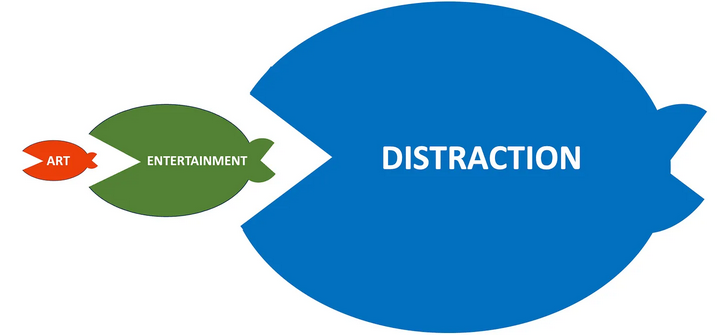
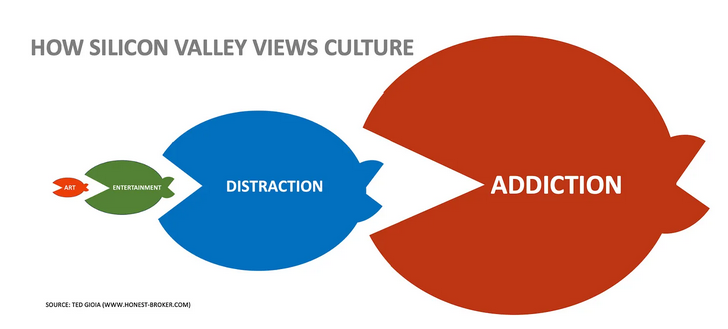
Ted Gioia, “How Long Does Pop Culture Stardom Last?”, The Honest Broker, 2023-02-23.
May 15, 2023
QotD: How military history shapes cultures and societies
… war and conflict deeply shaped societies in the past and to the degree that we think that understanding those societies is important (a point on which, presumably, all historians may agree), it is also important to understand their conflicts. I am often puzzled by scholars who work on bodies of literature written almost entirely by combat veterans (which is a good chunk of the Greek and Latin source tradition), in societies where most free adult men probably had some experience of combat, who then studiously avoid ever studying or learning very much about that combat experience (that “war and society” lens there again). Famously, Aeschylus, the greatest Greek playwright of his generation, left no record of his achievements in writing in his epitaph. Instead he was commemorated this way:
Aeschylus, son of Euphorion, the Athenian lies beneath this marker
having perished in wheat-bearing Gela
Of his well-known prowess, the grove of Marathon can speak
And long-haired Mede knows it well.If a scholar wants to understand Aeschylus or his plays, don’t they also need to understand this side of his experience too? I know quite a number of scholars who ended up coming to military history this way, looking to answer questions that were not narrowly military, but which ended up touching on war and conflict. For that kind of research – for our potential scholar of Aeschylus – it is important that there be specialists working to understand war and conflict in the period. Of course this is particularly true in understanding historical politics and political narratives, given that most pre-modern states were primarily engines for the raising of revenues for the waging of war (with religious expenditures typically being the only ones comparable in scale).
Bret Devereaux, “Collections: Why Military History?”, A Collection of Unmitigated Pedantry, 2020-11-13.