
What seemed to me to make white Burgundies worth the effort was the fact that they tended to have more character, to be better balanced, more elegant … more, how you say in English … more Catherine Deneuve. More Jules and Jim than Die Hard; less top-heavy and more food-friendly than New World wines. On the other hand, it was and is quite possible to spend forty bucks on a bottle that tastes like it has been barrel-fermented with a big clump of terroir, or with Pierre’s old socks, or possibly his former cat. Yikes! Rather too much character, mon cher.
Jay McInerney, Bacchus & Me: Adventures in the Wine Cellar, 2002.
February 26, 2020
QotD: Chardonnay
Comments Off on QotD: Chardonnay
February 22, 2020
Classics Summarized: Dante’s Paradiso
Overly Sarcastic Productions
Published 28 Jun 2015At last! The thrilling conclusion!
Oh god this took so long D:

Comments Off on Classics Summarized: Dante’s Paradiso
February 21, 2020
Classics Summarized: Dante’s Purgatorio
Overly Sarcastic Productions
Published 24 Apr 2015Funny story: That half-second-long scream? Took me about four hours to record. I’m really bad at screaming and/or laughing on demand, so I sat down with some videos of the Game Grumps playing horror games and recorded my reactions to use whenever I need them. I now have a fifteen-second sound file of laughter and screams with varying degrees of shameful girliness.
Part 2 of the centuries-old trilogy has finally been summarized! Surely you’ve awaited this moment with bated breath. As always, I am happy to oblige.

Comments Off on Classics Summarized: Dante’s Purgatorio
February 19, 2020
Classics Summarized: Dante’s Inferno
Overly Sarcastic Productions
Published 21 Mar 2015I’m back, baby!
For this week’s venture into literature, we take a broad look at The Inferno. Hold onto your butts.
PATREON: https://www.patreon.com/user?u=4664797
MERCH LINKS:
Shirts – https://overlysarcasticproducts.threa…
All the other stuff – http://www.cafepress.com/OverlySarcas…Find us on Twitter @OSPYouTube!

Comments Off on Classics Summarized: Dante’s Inferno
February 15, 2020
QotD: Architecture’s lingering racism
In the 1920s, during the time he was a member of the French Fascist party, the seminal architect Le Corbusier said he was disgusted by the “zone of odours, [a] terrible and suffocating zone comparable to a field of gypsies crammed in their caravans amidst disorder and improvisation.” He also chimed in with Loos: “Decoration is of a sensorial and elementary order, as is color, and is suited to simple races, peasants, and savages … The peasant loves ornament and decorates his walls.”
More recently, indicative of architecture’s current race problem, in 2006 the aforementioned highly influential dean of Tulane’s architecture school, Reed Kroloff, wrote the embarrassingly tone-deaf, flat-footed essay “Black Like Me.” (As I discuss below, he collaborated with Betsky on a post-Katrina project.) Kroloff — the privileged, self-described gay white Jew from Waco, Texas — announced that he was now black, that the Hurricane Katrina disaster had made him feel first-hand the African-American predicament. His piece was subject to much ridicule. No wonder the Mods have chosen to insulate themselves from the un(brain)washed masses. Architecture has become a gated community.
Betsky, to his credit, doesn’t pretend that architects should even try to make outreach. Showing little sympathy for democracy, he says that appeals to the public are “mystical.” The people — the 99% — do not deserve a seat at the table. Yet Betsky would have us believe that he and the architecture he supports are “progressive.”
Justin Shubow, “Architecture Continues To Implode: More Insiders Admit The Profession Is Failing”, Forbes, 2015-01-06.
Comments Off on QotD: Architecture’s lingering racism
February 12, 2020
Rebecca Black, nine years after the release of “Friday”
CNN‘s Scottie Andrew talked to Rebecca Black about her experiences and the reactions to her debut video:
Partyin’, partyin’, YEAH! “Friday,” the accidental anthem of 2011 and an ode to the best day of the week, is officially nine years old.
It became something of a national joke when it debuted. But to a then-13-year-old Rebecca Black, the single’s star, the jokes made at her expense were immensely damaging.
Black, now 22 but still a pop singer, is remarkably well-adjusted for someone whose life was upended by a music video. She marked the 9th anniversary of the song that started it all with a note to her younger self — and advice for her followers to love themselves a little better.
[…]
Black was only in middle school when she filmed the infamous video. She paid a company called Ark Music Factory to write her a song and film a music video for it, starring her and her friends.
It’s not an artistic achievement, but it’s fitting for the young star at its center. In it, Black sways and sings her way through a Friday — she wakes up, she eats cereal, she can’t decide which seat in a convertible to take. Typical teen stuff.
The negative comments rolled in almost immediately, and nearly all of them lambasted Black.
At the time, I linked to a couple of deconstructions of the video that amused me. One was from The Awl:
She offers the camera a hostage’s smile, forced, false. Her smoky eyes suggest chaos witnessed: tear gas, rock missiles and gasoline flames. They paint her as a refugee of a teen culture whose capacity for real subversion was bludgeoned away somewhere between the atrocities of Kent State and those of the 1968 Democratic Convention, the start of a creeping zombification that would see youthful dissent packaged and sold alongside Pez and Doritos.
“Look and listen deeply,” she challenges. An onanistic recursion, at once Siren and Cassandra, she heralds a new chapter in the Homeric tradition. With a slight grin, she calls out to us: “I sing of the death of the individual, the dire plight of free will and the awful barricades daily built inside the minds of all who endure what lately passes for American life. And here I shall tell you of what I have done in order to feel alive again.”
***Ms. Black first appears as her own computer-generated outline: wobbly, marginal, a dislocated erasure. The days of the week flip by accompanied by dull obligations — “essay due” — and tired clichés — “Just another manic Monday …” Her non-being threatens to be consumed by this virtual litany of nothing at all until, at long last — Friday.
[…]
Yet here the discerning viewer notes that something is wrong. Because it is a simple matter of fact that in this car all the good seats have already been taken. For Rebecca Black (her name here would seem to evoke Rosa Parks, a mirroring that will only gain in significance) there is no actual choice, only the illusion of choice.
The viewer knows that she’ll take the only seat that’s offered to her, a position so very undesirable as to be known by a derisive — the “Bitch” seat.
She might well have been better off on the school bus, among the have-nots. But Rebecca Black’s world is so advanced in the craft of evisceration that this was never a consideration. John Hughes died while out jogging, these are the progeny of his great materialist teen-villain, James Spader, a name that would come to be synonymous with desperate sex and high-speed collision. And as she gets in the car Ms. Black’s joy is as patently empty as her liberation.
“Partying, Partying,” she sings, in hollow mantra.
“Yeah!” an unseen mass replies, a Pavlovian affirmation.
The other was from Jeffrey Tucker in the Christian Science Monitor:
Far more significant is the underlying celebration of liberation that the day Friday represents. The kids featured in the video are of junior-high age, a time when adulthood is beginning to dawn and, with it, the realization of the captive state that the public school represents.
From the time that children are first institutionalized in these tax-funded cement structures, they are told the rules. Show up, obey the rules, accept the grades you are given, and never even think of escaping until you hear the bell. If you do escape, even peacefully of your own choice, you will be declared “truant,” which is the intentional and unauthorized absence from compulsory school.
This prison-like environment runs from Monday through Friday, from 8 a.m. to late afternoon, for at least ten years of every child’s life. It’s been called the “twelve-year sentence” for good reason. At some point, every kid in public school gains consciousness of the strange reality. You can acquiesce as the civic order demands, or you can protest and be declared a bum and a loser by society.
“Friday” beautifully illustrates the sheer banality of a life spent in this prison-like system, and the prospect of liberation that the weekend means. Partying, in this case, is just another word for freedom from state authority.
The largest segment of the video then deals with what this window of liberty, the weekend, means in the life of someone otherwise ensnared in a thicket of statism. Keep in mind here that the celebration of Friday in this context means more than it would for a worker in a factory, for example: for the worker is free to come and go, to apply for a job or quit, to negotiate terms of a contract, or whatever. All of this is denied to the kid in public school.

Comments Off on Rebecca Black, nine years after the release of “Friday”
February 4, 2020
QotD: Brutalist “sincerity”
Unrefined concrete was an honest expression of [brutalist architects’] intentions, while plain forms and exposed structures were similarly sincere.
This is like saying that the Gulag was an honest expression of Stalin’s intentions. Sincerity of intentions is not a virtue irrespective of what those intentions are, and as a matter of fact those of the inspirer and founder of brutalism were clearly evil, as the slightest acquaintance with his writings will convince anyone of minimal decency. And what exactly is “sincerity of form and exposed structures”? Is it meant to imply that anything other than brutalism is insincere?
The same article continues:
Beyond their architectural function, Brutalist buildings serve other uses. Skateboarders, graffiti artists and parkour practitioners, for example, have all used Brutalism’s concrete surfaces in innovative ways.
Dear God! I have nothing against playgrounds — they are socially commendable, especially for children — but to regard the urban fabric as properly an extended playground is surely to infantilize the population. As for graffiti artists, to regard the extension of their “canvas” to large public buildings is an abject surrender to vandalism. No one, I presume, would say of a wall, “And in addition it would make an excellent place for a firing squad.”
Theodore Dalrymple, “The Brutalist Strain”, Taki’s Magazine, 2019-11-02.
Comments Off on QotD: Brutalist “sincerity”
January 23, 2020
Pascal’s Wager, environmentalists’ version
Hector Drummond indulges in a proper “Fisking” of a recent column in the Telegraph:
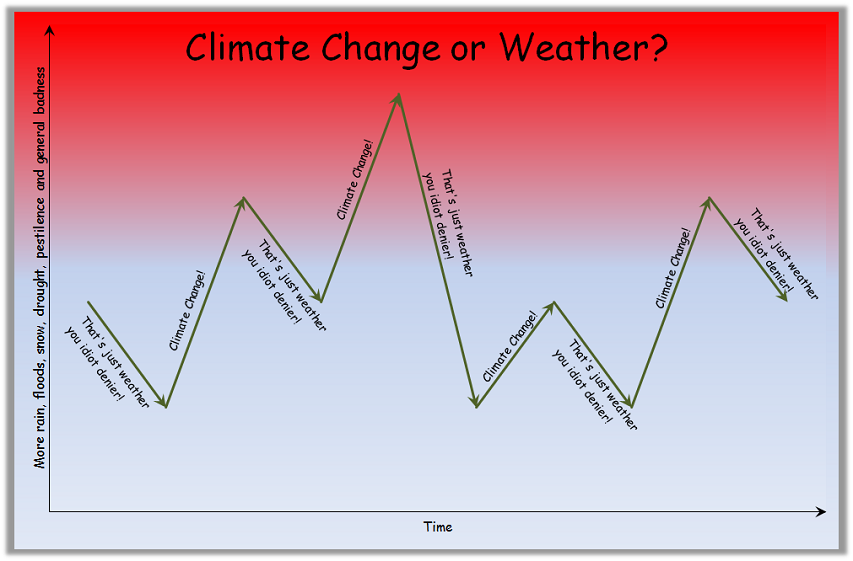
We don’t have to buy into the apocalyptic angst of Greta Thunberg, on show again in Davos yesterday, to recognise that something has to be done.
He actually said “Something Has To Be Done”. How about we do a snow dance, Philip? That’s “something”.
Whether or not you are a sceptic about the impact of CO2 on the climate or question man’s involvement in producing the greenhouse gas, our energy future is a non-carbon one, like it or not.
Our energy future involves a lot of talk about non-carbon energy sources, while relying on “carbon” for a long time to come.
Virtually every government has committed to this as an overt aspect of public policy and those that haven’t, like China or the US, have a rapidly growing green energy sector poised to exploit the move to a carbon‑free future.
You mean the China that’s building coal-fired power plants at a rate of knots? That China?
Later on, the column invokes Pascal’s Wager, which Hector finds both amusing and irritating:
Seriously? Pascal’s Wager, which has been long ridiculed by most scientists and philosophers and thinkers, is now the basis for the largest and riskiest economic and political transformation in human history?
Pascal’s Wager justifies any proposed change in response to any possible threat. It’s possible that all the ducks in the world are really super-intelligent and they’re about to launch a takeover, so we need to kill them all. It’s possible that nylon stockings are eventually going to cause a nuclear explosion. Make your own ones up. The consequences of doing nothing, should these claims turns out to be true, are calamitous. In fact, they’re far more calamitous than most of the possible climate change scenarios.
Proper risk analysis, on the other hand, tells us to look at probabilities of the possible bad outcomes, not just how bad some possible bad outcome would be, were it true. The catastrophic climate change scenarios all have tiny probabilities. Even the IPCC admits that.
[…]
Then we have to look at the costs of the proposed action. The real costs, that is, not just vague claims like “Oh, moving everything to solar energy would be, like, you know, cool, my friend went to this talk once and she said that apparently solar works just as well as coal”. The costs – the real costs – are what needs be weighed against alternative courses of action.
The costs of abandoning fossil fuels are not zero. Not even remotely. Changing to renewables will be massively expensive, destroy jobs, and hinder prosperity, because they cannot provide anywhere near the energy we need. “Generate growth and prosperity” is nonsense, and Johnston should be ashamed of himself for falling for this.
Comments Off on Pascal’s Wager, environmentalists’ version
QotD: The “great” modern architects
Moreover, claiming respectable ancestors is somewhat at variance with equal claims to be starting from zero (as Gropius put it), but such a contradiction is hardly noticed by the grand narrative history of modernism that Professor Curl attacks and destroys.
He is not unable or unwilling to praise where it is due, though it is due rarely enough; and he is particularly effective in tracing the opportunistic ideological divagations of the modernists, whose one constant predilection was for absolute power over others. Mies, for example, was attracted to socialist totalitarianism, and his only objection to Nazism was that the Nazis eventually rejected his desire to have everything built according to his prescriptions. He left Nazi Germany because he feared his previous pro-leftism made him permanently suspect in its eyes, not because he was appalled by its brutality. If only they’d let him build! But contrary to apologists for Mies, and to a legend constantly repeated, it was not the Nazis who closed the Bauhaus but Mies himself, and he left Germany only four years after their assumption of power.
Finding refuge in America, Mies quickly perceived that the power of patronage of megalomaniac building lay with giant corporations rather than with fascists or communists and persuaded many of them to build his preternaturally inhuman and uninspired monstrosities. By a strange quirk of history, and because of mankind’s perpetual propensity to make logical errors, Mies was able to pose dishonestly as anti-totalitarian and even as a friend of freedom precisely because he had fled Nazi Germany where they hadn’t patronised him. He was fortunate that soon afterwards the United States had another totalitarian enemy, the Soviet Union. Mies and his allies were thus able to claim that his totalitarian modernism was actually a manifestation of western freedom. There are many such ironies pointed up in this book that would be delicious had they not had such appalling consequences.
Corbusier was a fascist in the most literal sense of the word, and early during the Occupation advocated the removal by force of the majority of Paris’ population because it had no business to be living there. Can one wonder that a man with thoughts like that built monstrosities?
Theodore Dalrymple, “Architectural Dystopia: A Book Review”, New English Review, 2018-10-04.
Comments Off on QotD: The “great” modern architects
January 17, 2020
QotD: The Bible
In my former life, when I entertained grand schemes, I dreamt of publishing a multi-volume revision of that Variorum, with the latest scholarship, but attached to the same old, resonant King James text. (This project could as well have been mounted on the explicitly Roman, and similarly magnificent, Douay-Rheims.)
There are now, in print, more than one hundred alternative English translations of the Bible, and the reader who buys, say, the top twenty, to compare them, is wasting time. He could actually save time by mastering the original languages. I rather think it was the Devil’s idea, to undermine the simple Christian’s confidence in Scripture by means of multiple translations, and innumerable petty and irrelevant distractions.
The New English Bible‘s first volume, a translation into “modern idiom” of the New Testament, was published in 1961. It is dated now in a way the KJV will never be, and has in fact been succeeded by the many other “improved” — and desperately flawed — ever more “modern” editions, including those which intentionally misrepresent the original texts to keep up with the latest “gender” abominations. Yet even when it first appeared, T. S. Eliot could say that the new translation “astonishes in its combination of the vulgar, the trivial, and the pedantic.”
That criticism holds, so far as I can see, for every modern-language “update” of scripture and liturgy. The hard truth is that the medium of contemporary language is incapable of conveying the substance we require.
Remove not the ancient landmark which thy fathers have set.
David Warren, “A rant”, Essays in Idleness, 2017-12-13.
Comments Off on QotD: The Bible
January 7, 2020
QotD: The cult of Le Corbusier
A dangerous cult may be defined as a kind of false religion, adoption of a system of belief based on mere assertions with no factual foundations, or as excessive, almost idolatrous, admiration for a person, persons, an idea, or even a fad. The adulation accorded to Le Corbusier, accorded almost the status of a deity in architectural circles, is just one example. It has certain characteristics which may be summarized as follows: it is destructive; it isolates its believers; it claims superior knowledge and morality; it demands subservience, conformity, and obedience; it is adept at brainwashing; it imposes its own assertions as dogma, and will not countenance any dissent; it is self-referential; and it invents its own arcane language, incomprehensible to outsiders.
Anyone who thinks this is an exaggeration has not read much Le Corbusier. (His writing is as bad as his architecture, and bears out precisely what Curl says.) Nor is it difficult to find in the architectural press examples of cultish writing that is impenetrable and arcane, devoid of denotation but with plenty of connotation. Here, for example, is Owen Hatherley, writing about an exhibition of Le Corbusier’s work at London’s Barbican Centre (itself a fine example of architectural barbarism). According to Hatherley, Le Corbusier was:
the architect who transformed buildings for communal life from mere filing cabinets into structures of raw, practically sexual physicality, then forced these bulging, anthropomorphic forms into rigid, disciplined grids. This might be the work of the “Swiss psychotic” at his fiercest, but the exhibition’s setting, the Barbican — with its bristly concrete columns and bullhorn profiles, its walkways and units — proves that even its derivatives can become places rich with perversity and intrigue, without a pissed-in lift [elevator] or a loitering youth in sight. … [T]hese collisions of collectivity and carnality have no obvious successors today.
Theodore Dalrymple, “Crimes in Concrete”, First Things, 2019-06.
Comments Off on QotD: The cult of Le Corbusier
January 3, 2020
QotD: Against The Grain
Against The Grain should be read as a prequel to Scott’s most famous work, Seeing Like A State. SLaS argued that much of what we think of as “progress” towards a more orderly world – like Prussian scientific forestry, or planned cities with wide streets – didn’t make anyone better off or grow the economy. It was “progress” only from a state’s-eye perspective of wanting everything to be legible to top-down control and taxation. He particularly criticizes the High Modernists, Le Corbusier-style architects who replaced flourishing organic cities with grandiose but sterile rectangular grids.
Against the Grain extends the analysis from the 19th century all the way back to the dawn of civilization. If, as Samuel Johnson claimed, “The Devil was the first Whig”, Against the Grain argues that wheat was the first High Modernist.
Scott Alexander, “Book Review: Against The Grain“, Slate Star Codex, 2019-10-15.
Comments Off on QotD: Against The Grain
December 24, 2019
It’s 2019 and Drew Magary still hates Williams-Sonoma
He’s been hating on the company for a while, but it’s still doing the things that got him riled up in the first place:

Oh, hello there! Welcome! Come on in! Come on in! Dust your boots off in the breezeway. I have a special mat you can use for it that’s woven from human hair sourced from the tribes of the South Pacific. Best snow-wiping hair ever designed, by God. Once you’ve cleaned up, I have a splendid repast of beggar’s purses and dolloped lobster turnovers awaiting you in the dining room. You may begin eating these haute goodies at 7:45 pm and no sooner. Please do not touch ANY of the decorations in the hallway as you proceed toward the food. My decorations are for admiring only. If you mar them in any way, I will grate off your genitals using a microplane. I am the Joneses. You cannot ever keep up with me.
I got that microplane from the Williams-Sonoma catalog, by the way. True, I COULD have bought a microplane at your local Pathmark. They have a rack of them hanging above the Pop-Tart shelf for some reason. But why buy one there when I can support my local (international) mom-and-pop (publicly traded) store (merchandising oligarchy) instead? I’m no fool. I know what’s best for America, and what’s best for America is ignoring every horrible thing going on and, instead, assigning two entire months on the calendar to spoiling myself, cutting down precious wildlife, and indulging in retail spending practices so irresponsible that every accountant on the planet cries their eyes out at night just thinking about it all.
I am hardly alone in such rituals. Try as you might, Christmas fiends, you cannot kill Williams-Sonoma. I know because I’ve been shitting on this company’s catalog every Christmas for YEARS, as a matter of both tradition and moral principle. But all of my efforts to drown this yuppie trinket hive in the toilet have seemingly been in vain. In fact, last year, I myself nearly died before this company did. And I’m a sturdy fellow. I work out an elliptical trainer five times a week and occasionally eat fruit. I am strong. I am invincible. I AM MAN. Alas, I am no match for a company wily enough to sell Star Wars Le Creuset roasting pans for $450 (HOLY LIVING FUCK) and somehow make it work. How does W-S do it year after year?
Well, according to an article I just Googled, the company is strong in something called “omnichannel retailing,” a term I will look no further into because I don’t hate myself. Also, millennials apparently LOVE West Elm, which W-S also owns. West Elm is IKEA for people who don’t want to say they bought their furniture at an IKEA, so that all tracks. I have West Elm furniture in my house. It’s alarmingly small furniture. Really, only my dog can fit on the chair we got. He weighs 15 pounds.
Also, the company has shuttered a lot of brick-and-mortar Williams-Sonoma locations in favor of selling designer chicken coops directly to hotels, banks, and other industrial concerns. OH WOW DID I JUST SEE THE CHRISTMAS SPIRIT METER ON SANTA’S SLEIGH SPIKE INTO THE RED? You know I did. According to every Christmas movie I’ve ever watched, Christmas spirit is in great peril every year. That’s why we need overpriced fondue pots more than ever.
Comments Off on It’s 2019 and Drew Magary still hates Williams-Sonoma
December 21, 2019
Expanding the definition again: “terms like nerd, geek, or boffin is hate speech”
Offensensitivity hits the eggheads:
Labeling super-smart people with terms like nerd, geek, or boffin is hate speech, and should be punishable as such, argues lecturer and Harley-Street psychotherapist Dr Sonja Falck.
Likewise wonk, smarty-pants, and know-it-all: these terms are “divisive and humiliating,” and the “last taboo,” the University of East London egghead said this week while promoting her new book about brainiacs. Such “anti-IQ” words set society’s Einsteins apart, she claimed, with the result that geeks end up “feeling like they’re a misfit and don’t belong.”
Calling someone a swot, whizkid, brainbox, smart-arse, or dweeb may seem “harmless banter,” but it is equivalent to hate speech, she reckons, and should be recognized as such in British law – with punishments including fines and imprisonment. “It is only with the benefit of hindsight and academic research that we realise how wrong we were,” she added.
That academic research includes her new book titled Extreme Intelligence, for which she interviewed 20 nerds for 90 minutes about when they realized they were so very clever.
She then embarked on a “contextual analysis of literature” and decided that calling someone a boffin was equivalent to the worst racial slurs. “The N-word was common parlance in the UK until at least the 1960s,” she said during her book launch, before noting that “other insulting slurs about age, disability, religion and gender identity remained in widespread use until relatively recently.”
Dr Falck does not have a chip on her shoulder, despite the fact that the whole idea behind the book stemmed from the fact that as a child she was offered a place at a school for gifted children but her mother turned it down because she feared it would result in her becoming socially difficult.

Comments Off on Expanding the definition again: “terms like nerd, geek, or boffin is hate speech”
QotD: Blogging
Scott Adams, 2004-11-11.
Comments Off on QotD: Blogging


