
There is one thing that 99 percent of all critics share with one another: they are failures. I don’t mean failures as critics — my God, that’s understood. I don’t even mean they are failures as people; I mean something more painful by far: These people are failures in life.
It’s a second-rate job, folks. Being a drama critic on Broadway wouldn’t keep a decent mind occupied 10% of the time. So you don’t even get second-raters. You get the dregs, the stage-struck but untalented neurotic who eventually drifts into criticism as a means of clinging peripherally to the arts. And most of your cruel critics come this way: they are getting their own back.
William Goldman, The Season: A Candid Look at Broadway, 1969.
September 3, 2021
QotD: Drama critics
Comments Off on QotD: Drama critics
August 30, 2021
QotD: “Veneer theory” of human nature
This turned out not to be true. So spectacularly untrue that we still talk about the Blitz Spirit. With our trademark humility, the British concluded that this was due to our exceptional moral fibre and, with help from the Americans, set about bombing German civilians to hell and back. Regrettably the Germans too responded by pulling together, and working harder in the war effort. Literally no one thinks this was due to their exceptional moral fibre. Instead, it seemed that crisis led to teamwork. Bregman is able to quote similar behaviour on the Titanic, on September 11th and in the aftermath of Hurricane Katrina.
Despite this mountain of evidence, veneer theory is still overwhelmingly believed. In 1951 William Golding wrote Lord of the Flies — a book about how a group of British boys crash-landed on a Pacific island would really behave. They start with ideals of co-operation, but quickly descend to violence and anarchy. Weeks later when they’re rescued half of them are dead. The book became a massive best seller, and a much-studied classic. For those who lived through World War I, World War II, and were now watching communism demonstrate that you didn’t even need an enemy to slaughter tens of millions, you can see the appeal of a cynical view of human nature. However it is pure fiction. In 1966 Lord of the Flies happened for real — 6 teenagers went for a joy ride in a fishing boat, got swept out by a storm and washed up on an inhospitable island in the Pacific. When they were found 11 months later, they were all alive and healthy. They had survived by fortitude, resourcefulness and above all, teamwork.
An anonymous reviewer, “Your Book Review: Humankind”, Astral Codex Ten, 2021-05-28.
Comments Off on QotD: “Veneer theory” of human nature
August 13, 2021
QotD: Whisky, whiskey, and Canadian whiskey
- Scotch. Nectar of the Gods. Complex, smooth, and just the right thing to fill yourself up on before painting yourself blue and riding off to kick the crap out of a bunch of English gits. Lagavulin and Macallan (16 years) are the reason people have been able to tolerate life in the scrubby, bleak landscape of northern Great Britain. Or whatever the island that contains Scotland is called. For all I know, “Great Britain” includes the Falklands.
- Bourbon and sour mash. Only good for mixing, unless you spend at least forty dollars, because Bourbon is usually harsh. And that includes Wild Turkey. But the better ones are smooth and full-flavored, albeit about as complex as a Kool Pop. I like Blanton’s. Maker’s Mark gold is okay, but only if your friends are serving it free of charge. People holler about Knob Creek all the time. I’m suspicious of old-timey-looking products that didn’t seem to exist until 1985. I suspect that it’s a gimmick aimed at yuppie suckers, but I have not actually tried it.
- Irish whiskey. Wonderfully smooth; especially Black Bush, which is my favorite. Great subtle flavor. Even the cheaper brands are pretty good. But zero complexity.
- Canadian. This makes a good substitute for windshield-washer fluid. Absolutely the most boring whisky (with no “E”) in the universe. Tastes like brown water. Alcoholics love Canadian whisky, because there’s not much to it, and you can drink it day after day without much effort. I can’t believe Canadians waste their time driving to the distillery to make this garbage. Laughable.
I guess now I’ll get flames from the unfortunate people who enjoy Jack Daniel’s, and from pedantic losers who drink obscure distilled beverages made in Wales.
Canadian Club and Crown Royal drinkers won’t flame me until at least noon, because they are all alcoholics and won’t be done with their morning retching until then.
I still need to find some really bad Scotch on a par with Jack Daniel’s. Something packed in plastic bottles or even cans. You need a good cheap harsh whisky to marinate BBQ. The good stuff, I reserve for marinating myself.
Steve H., “Booze and Birds: My Stressful Life”, Hog On Ice, 2005-03-20
Comments Off on QotD: Whisky, whiskey, and Canadian whiskey
August 8, 2021
Presidential biographies
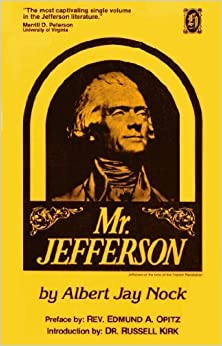
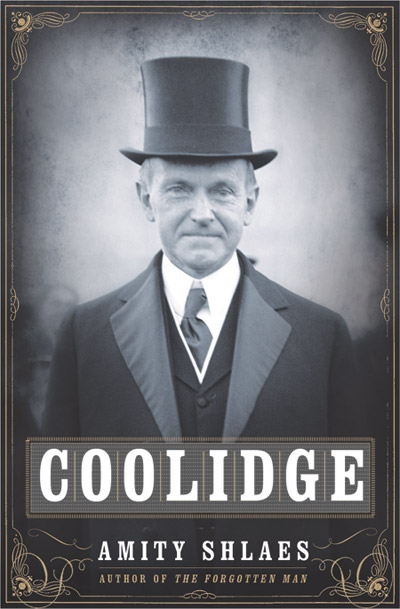
As I’m not an American, I haven’t read many biographies of US Presidents (just Jefferson, Jackson, Lincoln, Grant, and Coolidge if I remember correctly), so I can’t really comment on this project by a man who read and ranked 240 of them:
In 2012, an investment banker and avid history reader named Stephen Floyd began making his way through the American presidents, one biography at a time. It was a way to fill time while commuting to Hong Kong on twelve-hour flights. “I got tired of drinking free wine and watching cheap movies,” he says. Starting with George Washington, he read 240 titles (123,000 pages) in six years or, to be precise, 2,243 days, bringing him up to Obama. (Floyd is not alone in this pursuit: as the Washington Post reports, reading biographies of all the presidents is a thing).
Along the way, Floyd blogged about the books he read at bestpresidentialbios.com where fellow enthusiasts commented on his reviews, sometimes challenged his opinions, and suggested additional biographies to read. His blog posts improved to the point where he became a reliable and knowledgeable reviewer, as good as most professionals. When Stephen Floyd says David McCullough’s much-celebrated biography of John Adams is the second-best biography of John Adams, you need to listen. He can back it up.
Floyd, who continues to review biographies he overlooked in his initial journey, as well as new releases, has covered a dozen volumes on George Washington alone, including all four volumes and 1,800 pages of James Flexner. He rates Ron Chernow’s Washington: A Life the best of the bunch, by far. Chernow is the only biography of the 270-some Floyd has reviewed to earn a five-star rating. Only sixteen authors have 4.5 stars or better. (In case you’re wondering, Floyd gave Hoover one of the worst reviews it got anywhere, but still placed it among the dozen or so biographies with 4.25 stars, and seeing as it’s keeping company with Edmund Morris’s magnificent Theodore Roosevelt series, I won’t complain.)
Of course, one can quibble with Floyd’s judgments, as with those of any reviewer. He has 4.5 stars for Doris Kearns Goodwin’s The Fitzgeralds and the Kennedys, notwithstanding the padding and the plagiarism (it has been taken out of print by its publisher). He found a lot more to like in Peggy Noonan’s Reagan biography than I did. Also in H. Wayne Morgan’s McKinley, which is nowhere near as fine as Margaret Leech’s lower-rated effort. But Floyd knows what he likes and why.
Going back to the Adams biographies, he celebrates Ferling for his judicious details and careful opinions. “The author’s descriptive capability is on consistent display and he sets the context in most scenes magnificently.” He appreciates that Ferling finds Adams’ relationship with his wife, Abigail, more complicated than the perfect romance portrayed in other biographies.
Floyd is less charmed by McCullough’s “enormously sympathetic” biography of Adams. It is “incontrovertibly excellent,” and firmly rooted in the abundant Adams source material, but the author’s tendency to end every scene with a remark favorable to the subject irks after a while. McCullough comes across as “a mother doting on a favorite child.”
It’s a fair point, and Ferling gets the higher mark.
Bestpresidentialbios.com has all of Floyd’s reviews, and summaries of his reviews broken down by president. It’s a great resource and, as mentioned, he’s still adding to it.
Comments Off on Presidential biographies
August 1, 2021
Gresham’s Law, as applied to photography
In economics, Gresham’s Law states that “bad money drives out good”, that may need to be reformulated as it applies to modern standards of photography in a formulation something like: “bad photos drive out good photos“:
“Art is like a joke, either you get it or you don’t.” So it was explained to me in the late 1970s by photographer Randy Eriksen, whose cheeky observation about the importance of context to one’s appreciation of either comedy or art could have been a parenthetical second subtitle for author and educator Kim Beil’s Good Pictures: A History of Popular Photography (Stanford University Press, 2020).
Beil’s episodic and highly readable book identifies 50 photographic trends — illustrated by hundreds of vintage and contemporary photographs — that have guided the aesthetics of photography since 1851, when a group of American daguerreotypes made a splash at the Crystal Palace Exhibition in London. Back in 1851, context mostly equaled 1851, as the latest photo technology of the day played a major role in how Victorians decided that one picture was good and another was not.
[…]
Beil’s own context began in Albany, New York, where she grew up. “My mom was into photography,” Beil tells me over the phone. “She was the one who took the pictures in my family. When my parents got me my first camera, a Nikon FE, they made me attend a class offered by the camera store. I remember it was held in this dark ballroom at an Albany hotel. It was me and a bunch of middle-aged men. That’s where I learned about 35mm cameras, f-stops, and shutter speeds.”
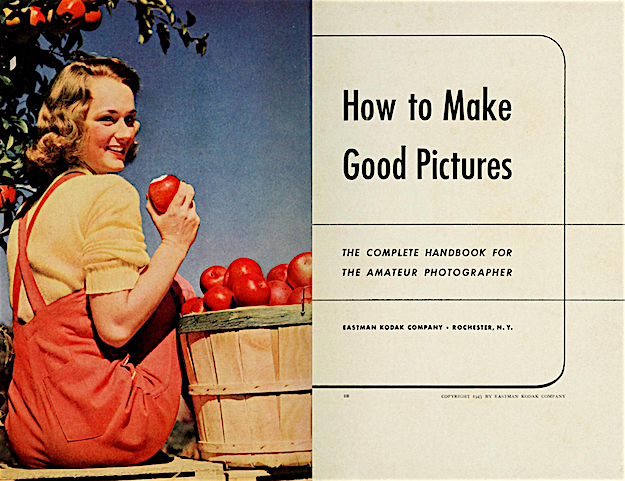
“How To Make Good Pictures” (Rochester, NY: Eastman Kodak Co., 1943).
Source: Collection of the Prelinger Library, via Collectors Weekly.Beil also learned from various “How to Make Good Pictures” manuals published by Kodak, which also hailed from upstate New York. “I’m pretty sure I internalized the advice I read in ‘How to Make Good Pictures’,” Beil says of her early aesthetic indoctrination, “things like avoiding centering your subject in the frame, the rule of thirds, shooting during ‘golden hour’, all that conventional wisdom.”
[…]
“Intention is central to the way I think about art, and maybe even how we define it,” Beil agrees. “Take lens flare: I think the power of lens flare comes from its initial unintentional use by people who were just taking casual pictures without any premeditation, without much intention.” In these sorts of photographs, Beil says, lens flare was an amateur mistake that conferred “a kind of authenticity to an image.” That’s why advertisers find lens flare so appealing. “Because we still associate it with authenticity,” Beil says, “it makes an advertising photo seem more real, maybe even spontaneous.”
Today, lens flare is so widely used, so intentional, that billions of smartphone cameras offer multiple variations of this former failing in the form of filters, which can be activated with a click or a swipe. “Everything can be achieved and there are no more accidents,” Beil says of photography in the 2020s, “so photographers look to things that happened before to reinsert some kind of authenticity into their pictures.” Thanks to technology, photographers can now pretend to take pictures as if they lacked the tools to make their pictures, well, good.
The problem, of course, is that technology is intrusive, inserting itself into aesthetics and even cultural paradigms without being invited to do so. “We have a situation today,” Beil says, “in which our smartphone cameras are producing pictures according to the criteria of software designers, who have made a lot of egregious assumptions about the tonality of skin color.” According the Beil, because the sample sets used by software designers have historically included more pictures of light skin tones than dark skin tones, the colors captured by our smartphone cameras do a better job of reproducing the lighter skin tones. “People with darker skin aren’t represented in the way that they want to be,” she says, “or even in the way that’s accurate. Google has promised that the Pixel 6 camera coming out in October 2021 is going to deal with that problem,” she adds, but Beil doesn’t sound like she’s expecting much more than an incremental improvement.
Comments Off on Gresham’s Law, as applied to photography
July 14, 2021
Instead of economics, how about “humanomics”?
In City Journal, Allison Schrager reviews Bettering Humanomics: A New, and Old, Approach to Economic Science by Deirdre McCloskey:
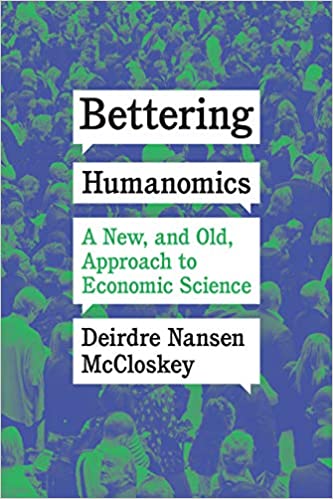
I thoroughly enjoyed Deirdre McCloskey’s Bettering Humanomics, but I may be a glutton for feelings of intellectual inadequacy. Truth be told, I only understood about 60 percent of the book. It contains countless references to great works of the humanities, economics, and the history of economic thought. A casual reader cannot possibly be familiar with a fraction of them, even within his own field. But McCloskey expects you to know them.
At first this book frustrated and confused me. Then I suspected this reaction was by design. I am, after all, an economist myself: I have dedicated my life to learning my craft and benefited from many years of training at great institutions from important thinkers. But reading Humanomics, I became fully aware of how little I know. I now believe that becoming a fully formed economist requires that I stop watching trash TV in my free time and read the Theory of Moral Sentiments instead. McCloskey pulls no punches, whether on her intellectual opponents or on the reader. Here is one example, where she defends herself from a critic, philosopher Gerald Gaus:
Aside from these textual matters, I must say I find myself repelled by Gaus’s vision of people as cynical conformists: “we are such deeply social normative creatures, in the sense that we are so attuned to the normative expectations of others, that we can achieve a stable rule-based system of cooperation even when many are not enthusiastic about the moral attitudes and virtues that the rules express.” I invite him to reread Thucydides’s dialogue between the Athenian diplomats and the Melians, and repent.
McCloskey argues that economics would be better if we listened to people — in controlled experiments, chat rooms, meetings, surveys, and at the Rotary. We need to absorb the lessons from art and culture (perhaps trash TV has value, after all). She does not believe that economists need to ditch math and data, but our overreliance on these tools encourages us to view people as abstractions and leads us astray. Such tendencies also help explain the rise of behaviorism, which assumes that humans are flawed creatures who must be nudged by a wise bureaucrat into better choices; recent flirtations with industrial policy; and the belief that, if we just get our government and laws right, growth will follow.
We must consider how individuals see and experience the world around them, and we must recognize that humans are malleable in ways that we don’t account for. For example, McCloskey estimates a quarter of all income comes from “Sweet Talk” — not lies or trickery, but the ability to be persuasive and compelling, a crucial aspect of sales and advertising. It influences how we perceive the world and can be an important part of motivation.
We economists have lost our appreciation for the humanities, and that means that we underestimate the importance of human dignity. This is no small oversight. McCloskey spends about a third of her book arguing that understanding the humanity of the northwestern European population can explain why it industrialized first. Other countries around the world had wealth, strong institutions, and well-trained mathematicians and engineers (perhaps better ones), but industrialization happened in Britain first because it treated its people with dignity and empowered them with both rhetoric and knowledge.
Comments Off on Instead of economics, how about “humanomics”?
QotD: The unlikely hermaphrodites in The Left Hand of Darkness
Let me start by saying that I LIKED the book. Loved it even. Mostly because it was different and it made me think. (Like other books of the time, it didn’t age well, mostly on language, but also structure, which I guess was innovative and daring at the time, but strikes me as “too early seventies” for words. Now this might be JUST ME but there’s a whole batch of books — one Heinlein — I can’t stand to re-read. I came of age in the seventies and eventually grew to loathe that false-craft feel of art at that time. No one else is forced to agree with me.)
But part of what made me think — because my relaxing reads are books on evolution and animals and their biology and behavior (guys, I read Konrad Lorenz for fun) is that the left (and at the time anyone with even vague intellectual pretensions was at the very least soft left, because the zeitgeist was) was very funny about humans.
They often opened their books on humans by gesticulating broadly at imaginary religious fanatics and rubbing said fanatics’ noses in the fact that “we are animals. No, we’re really animals.” And then proceeded to go a little bananas, sometimes in supposed non-fiction, like Desmond Morris in The Naked Ape, which assured us only humans killed their own species, or something equally ridiculous (I read it at around 14 or 15, I just remember his thesis that humans were uniquely vile made me snort-giggle at the time. Because, you know, you can sustain that if you’re religious, and say humans should aspire to the divine image, but if we’re really just animals, there is NO vile. We do what instinct and nature tell us, no judgement, right?)
But mostly this dysfunction showed in science fiction, particularly at the time. “We’re just animals. If we just changed/removed/tweaked x y z we’d be communitarian, sharing, no war animals.”
The way hermaphrodites behave in TLHOD made me snort/giggle too for various reasons, the first being that hermaphrodite species on Earth (granted mostly very small) have some of the most violent mating behaviors in the world. Makes sense since at least in live-bearing, or for that matter those who care for eggs, species, the cost falls on the one who carries young or sits on eggs. The other one just goes off, whistling his merry way and lives to mate another day. So in a species where either of the couple can bear, there would be a “war” (There are several books on war of the sexes in various species, which has led to things like praying mantises and duck penises.) to determine who bears. And yes, she did get right that in an intelligent species, value would have to be put on children-of-the-body or no one would want to do it. (Or most children would be conceived by rape. Which to be fair, is most hermaphrodite species on Earth.)
What she got wrong, related to that, is then having the kids raised in some sort of hippie dippie commune.
In fact, the whole setup makes perfect sense as a professional woman’s fantasy. “I want to have kids, but someone else raises them, and it will be the perfect communitarian family and no one will think it’s bad if I’m not there, or take no more interest in them than in any of the family kids.”
In point of fact, from evolutionary POV, an hermaphrodite species would have a hell of an attachment to their own biological “of the body” kids, for the simple reason that otherwise, being intelligent and able to circumvent instinct, no one would have kids “of the body” and those born of rape would be abandoned to die. World’s shortest species/race/breed.
Yes, I’m sure that some human (and these were supposed to be modified humans) tribes have done the communitarian child raising, but it’s not the norm, it’s not usually as communitarian as it looks and … oh, heck, even extended family raising the kids, which it sort of is, is nowhere nearly what US leftists think it is. There’s squabbles, politics, and the mothers very much care and “pull” for their own kid.
Anyway, it amused me because it was nowhere near the only. There was this trend back then for hermaphrodite modified humans that somehow made them more cooperative/better at not warring, etc, which I found absolutely mind bogglingly bizarre and made me wonder why people thought injecting the fierce young-protecting instinct of the female into a species at large would make it more sharing and caring, not the other way around. (And lord, study any society with multiple concubines and wives. Women protect THEIR children, there is no sisterhood or love all babies, when yours is in the mix. Some of the most horrific tales of mankind are the vengeance wrought by a woman on rival women AND THEIR BABIES.)
Sarah A. Hoyt, “Remaking People”, According to Hoyt, 2018-11-19.
July 13, 2021
“Samuel Beckett was one of the twentieth century’s very greatest conmen and his dupes continue to relish being parted from their cash”
In The Critic, J.S. Barnes digs up the bones of Samuel Beckett for a thorough kicking:
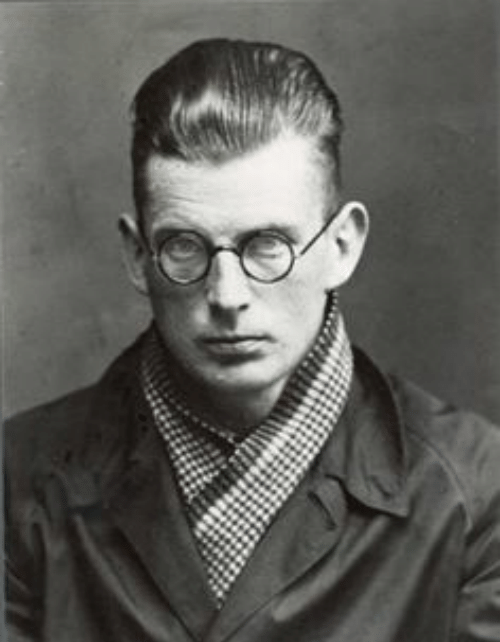
Samuel Beckett as a student in 1922.
Wikimedia Commons.
A good conman needs three key attributes to succeed: swagger, plausibility and commitment to the perpetuation of the con. A great conman, meanwhile, needs one additional factor: the discovery and nurturing of victims who are not only willing to be gulled but who come to actively enjoy that sensation.
Samuel Beckett was one of the twentieth century’s very greatest conmen and even now, decades after his death, his dupes continue to relish being parted from their cash.
That he was plausible in his claims is clear from the fact that his plays are still performed all around the world. His swagger may be witnessed in the endless succession of black and white photographs which accompany most editions of his work: the old fraud gazing grimly out at the reader from his home in France, like some weathered statue come dolefully to life, looking as though he is considering the fundamental inequities of existence or, perhaps, rumours of a forthcoming croissant shortage.
As for his commitment to the long con, he had form. In 1930, he gave a lecture at Trinity College, Dublin, about a poet (Jean du Chas) and an artistic movement (Le Concentrisme) which he had entirely invented, both fooling and riling up the dons. He learnt well from this, one suspects, never again to allow the mask to slip.
Following his early, glumly unreadable novels, much indebted to James Joyce, the real foundation of Beckett’s reputation is his 1953 play Waiting for Godot. The set-up is vivid and intriguing: in a rural wasteland sit two ravaged, witty tramps, Vladimir and Estragon, who trade barbs and banter while waiting for the arrival of a third individual who, we soon suspect, will never show up. And then, of course, nothing of any consequence happens.
Two additional characters wander on and off stage. The tramps talk and bicker some more. Godot never puts in an appearance. As one of the characters remarks: “Nothing happens. Nobody comes, nobody goes. It’s awful.”
There is no progression or change in the characters, no shift in their situation. Any clear-eyed audience member who has gone into the theatre meaning to judge the thing in as objective a fashion as possible will soon find themselves restless, then bored, then on the cusp of feigning some sort of medical emergency simply to get out of the stalls without causing too much of a fuss.
At this, avid Beckettians are no doubt sprawling on their chaise longues, sucking ferociously on a Gauloise and muttering to themselves that this lack of narrative progression, this absence of change, is the very crux of old Sam’s oeuvre. Confronted with the horrors of the twentieth-century, they say, pointlessness and circularity are the only things which make sense. Laughter in the ruins is all that’s left.
Comments Off on “Samuel Beckett was one of the twentieth century’s very greatest conmen and his dupes continue to relish being parted from their cash”
July 10, 2021
History-Makers: Aristophanes
Overly Sarcastic Productions
Published 9 Jul 2021He told the Athenians they were a disaster and they gave him a prize. Aristophanes wrote in the new Theatrical genre of Comedy during the golden age of Athens, and used his plays to viciously satirize Athenian society. They create a fabulously clear portrait of ancient Athenian life, and they have the corollary benefit of being funny as hell.
SOURCES & Further Reading: The 11 plays of Aristophanes, with particular focus on Clouds and Women at the Thesmophoria, Britannica’s “Aristophanes”, Crash Course Theater #2 & 4.
Partial Tracklist: “Sneaky Snitch”, “Marty Gots A Plan” Kevin MacLeod (incompetech.com)
Licensed under Creative Commons: By Attribution 4.0 License
http://creativecommons.org/licenses/b…Our content is intended for teenage audiences and up.
PATREON: https://www.Patreon.com/OSP
PODCAST: https://overlysarcasticpodcast.transi…
DISCORD: https://discord.gg/osp
MERCH LINKS: http://rdbl.co/osp
OUR WEBSITE: https://www.OverlySarcasticProductions.com
Find us on Twitter https://www.Twitter.com/OSPYouTube
Find us on Reddit https://www.Reddit.com/r/OSP/
From the comments:
Overly Sarcastic Productions
2 hours ago
While we’re here, one subject I cut for time is the relationship between “The Clouds” and the trial of Socrates.It’s commonly assumed that Aristophanes’ satire played a part in Athens’ decision to charge and ultimately kill Socrates, but that interpretation doesn’t really hold up to scrutiny.
The Clouds was performed over 20 years before Socrates’ trial. If the play had that strong an effect on Athens, we can assume Socrates would have been charged far sooner. And Plato’s own writings paint Aristophanes rather favorably — if Plato blamed Aristophanes for the trial, he does not make that obvious.
There IS one snide line in Socrates’ Apology that seems to a modern reader like it’s referring to The Clouds, but really we can’t be sure. Aristophanes was not the only comic playwright in Athens, and certainly not the only person who disliked Socrates. Did The Clouds contribute to a negative public perception of Socrates? Sure, in part, at least when it was performed in 423. But it’s faaar more likely that Socrates’ trial and death in 399 owe more to his persistent habit of being a Colossal Pain In The Ass to whomever he was speaking with.
Reading The Apology makes it clear that nobody had the power to make Athens hate Socrates more than Socrates.
-B
Comments Off on History-Makers: Aristophanes
July 1, 2021
John McWhorter reviews Facing Reality by Charles Murray
In the latest installment from It Bears Mentioning, John McWhorter considers Murray’s latest book to be his weakest:
… Facing Reality is seriously disturbing. Murray gives a great deal of evidence for two points. One is that black people aren’t, on the average, as intelligent as other people. The other is that black people in America are more violent than others.
Those who on some level celebrate the latter as black people getting back at the white man in the only way they can, should know that the facts don’t lend themselves to that vigilante justice analysis. More specifically, black people kill each other more than members of other groups kill each other.
I find the violence point relatively unsurprising. Murray stays agnostic as to what the cause of it is; he proposes no genetic analysis, for example. And really, let’s try this. In the 1960s, a new and powerful fashion in black thought, inherited from the general countercultural mood, rejects championing assimilation to proposing that opposition to whiteness is the soul of blackness. Meanwhile, white leftists encourage as many poor black women as possible to go on welfare, hoping to bankrupt the government and inaugurate a fairer America. Soon, being on welfare in poor black communities is a new normal – hardly the usual, but so common that people grow up seeing not working for a living as ordinary. Then at this same time, a new War on Drugs gave poor black men a way of making half of a living by selling drugs on the black market, amidst a violent culture of gangland turf-policing. This feels more natural to them than it would have to their fathers because 1) the new mood sanctions dismissing traditional values as those of a “chump”, 2) it no longer feels alien to eschew legal employment, and 3) the Drug War helps make it that most boys in such neighborhoods grow up without fathers anyway.
The question might be just how black men amidst these changes would not have embraced violence in a new way.
* * *
The point about intelligence, however, is tough reading. Many will try the usual arguments – that race is a fiction (but while there are gray zones, humans do divide into delineable races genetically), that all races have a range from genuises on down (but the issue is that some races have more geniuses than others), that intelligence tests are “biased” somehow (but no one will specify just how, and this sort of bias is decades gone now).
The data, unless Murray is holding back reams of data with opposite results, cut brutally through all of this. It isn’t that black people are on the bottom on one big test in one big study, but that a certain order of achievement manifests itself in one study after another with relentless and depressing regularity. Asians on top, then come the whites, then Latinos, and then black people.
People will insist that none of this has anything to do with intelligence, but one thing cannot be denied – whatever it signifies, black people have a big problem performing on intelligence tests. The consistency of the results, if it is unconnected to intelligence, is clearly connected to something, or the results wouldn’t be so damnedly consistent.
Comments Off on John McWhorter reviews Facing Reality by Charles Murray
June 27, 2021
QotD: Being right at the wrong time
There was never a good time, for example, to be anti-communist. Those who early warned of the dangers of bolshevism were regarded as lacking in compassion for the suffering of the masses under tsarism, as well as lacking the necessary imagination to “build” a better world. Then came the phase of denial of the crimes of communism, when to base one’s anti-communism on such phenomena as organised famine and the murder of millions was regarded as the malicious acceptance of ideologically-inspired lies and calumnies. When finally the catastrophic failure of communism could no longer be disguised, and all the supposed lies were acknowledged to have been true, to be anti-communist became tasteless in a different way: it was harping on pointlessly about what everyone had always known to be the case. The only good anti-communist was a mute anti-communist.
Anthony Daniels, “Authoritarianism in Cement and Steel”, Quadrant, 2018-11-04.
Comments Off on QotD: Being right at the wrong time
June 24, 2021
“[M]any of the woke genuinely do not understand why anyone finds their politics, or their political tactics, threatening”
In The Line, Joseph Heath tries to explain why many adherents of the wokist ideology fail to understand why anyone could possibly be against their policies or their tactics:
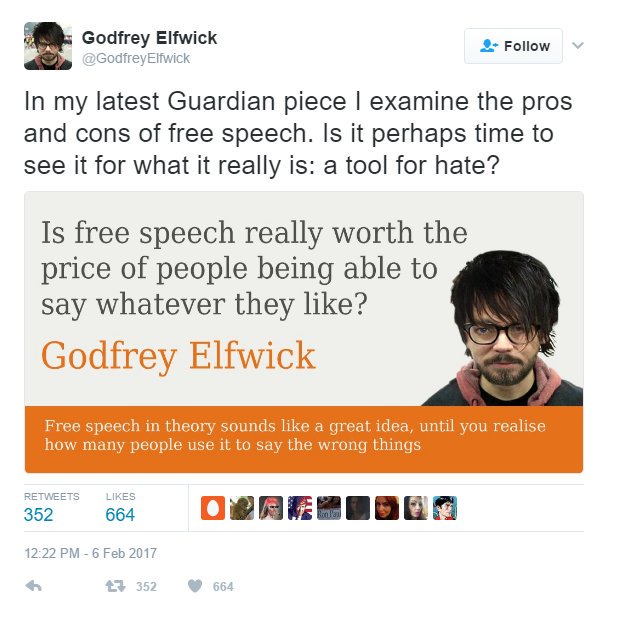
Godfrey Elfwick’s disturbingly accurate summary of free speech support among the woke.
After several years of creeping illiberalism under the guise of progressive politics, American liberals are finally getting their act together. They are pushing back, creating several organizations committed to combating the influence of “woke” politics and ideology. They have momentum, not just because many woke mantras like “defund the police” have proven spectacularly unpopular, but also because there is genuine growing alarm about the intolerant and authoritarian brand of politics that has become associated with the woke left.
Unfortunately, many of the woke genuinely do not understand why anyone finds their politics, or their political tactics, threatening. In particular, the accusation that they are being authoritarian, or that “cancel culture” is a threat to freedom of expression, is one that they are simply unable to process.
There is a reason for this — and one that’s worth understanding. There are several key phrases that play an enormously important role in woke politics (e.g. “safety”, “mental health”, “microaggression”, “bullying” and even “human rights”) which they use to deflect the accusation of authoritarianism. If you adopt the right words, it’s easier to convince yourself that you’re the good guys even as you’re acting like the bad ones.
I want to take a shot at explaining how this works.
The most important thing to understand about woke politics is that it is not a conventional form of illiberalism, it is better thought of as a type of “illiberal liberalism”. It involves making a set of political demands that are fundamentally illiberal, but then articulating them in a way that fits the conventional structure of liberal political discourse. Because of the way that their complaints are packaged, the woke are able to brush off criticism of their tactics.
Take an issue like freedom of speech. There are various versions of this traditionally liberal virtue; predominant among them, is that those who hold this belief are opposed to content-based restrictions on speech. In the old days, lots of politicians didn’t really believe in freedom of speech, as many among the ruling class maintained straightforwardly illiberal views.
Comments Off on “[M]any of the woke genuinely do not understand why anyone finds their politics, or their political tactics, threatening”
June 13, 2021
QotD: Defending the undefendable – Brutalist architecture
The newly-gained attractivity [of architectural brutalism] is growing by the day. In troubled times where societal divides are stronger than ever around the globe and in a world where instantaneous rhymes with tenuous, brutalism offers a grounded style. It’s a simple, massive and timeless base upon which one can feel safe, it’s reassuring.
It is rather difficult to argue with, let alone refute, the vague propositions of such a paragraph, which nevertheless intends (I imagine) to connote approval and judgment based upon sophisticated, wide, and deep intellectual considerations. But what exactly is a “grounded style” in contrast to a “world where instantaneous rhymes with tenuous”? This is verbiage, if not outright verbigeration, though it might serve to intimidate those with little confidence in their own judgment. The idea that brute concrete could create any kind of security rather than unease or fear is laughable.
When defenders of or apologists for brutalism illustrate their articles with supposed masterpieces of the genre, it is hardly a coincidence that they do so with pictures of buildings utterly devoid of human beings. A human being would be about as out of place in such a picture, and a fortiori in such a building, as he would be in a textbook of Euclidean geometry, and would be as welcome as a termite in a wooden floor or a policeman in a thieves’ kitchen. For such defenders and apologists of brutalism, architecture is a matter of the application of an abstract principle alone, and they see the results through the lenses of their abstraction, which they cherish as others cherish their pet.
Theodore Dalrymple, “The Brutalist Strain”, Taki’s Magazine, 2019-11-02.
Comments Off on QotD: Defending the undefendable – Brutalist architecture
June 9, 2021
Charles Stross on Robert Heinlein’s Starship Troopers
In his first blog post in nearly a month, Charlie Stross opines on one of Heinlein’s most polarizing novels:
In the 1930s, Heinlein was a soft socialist — he was considered sufficiently left wing and “unreliable” that he was not recalled for active duty in the US Navy during the Second World War. After he married Virginia Gerstenfeld, his third and last wife, his views gradually shifted to the right — however he tended towards the libertarian right rather than the religious/paleoconservative right. (These distinctions do not mean in 2021 what they might have meant in 1971; today’s libertarian/neo-nazi nexus has mostly emerged in the 21st century, and Heinlein was a vehement opponent of Nazism.) So the surface picture is your stereotype of a socially liberal centrist/soft leftist who moved to the right as he grew older.
But to muddy the waters, Heinlein was always happy to pick up a bonkers ideological shibboleth and run with it in his fiction. He was sufficiently flexible to write from the first person viewpoint of unreliable/misguided narrators, to juxtapose their beliefs against a background that highlighted their weaknesses, and even to end the story with the narrator — but not the reader — unaware of this.
In Starship Troopers Heinlein was again playing unreliable narrator games. On the surface, ST appears to be a war novel loosely based on WW2 (“bugs” are Nazis; “skinnies” are either Italian or Japanese Axis forces), but each element of the subtext relates to the ideological awakening of his protagonist, everyman Johnny Rico (note: not many white American SF writers would have picked a Filipino hero for a novel in the 1950s). And the moral impetus is a discussion of how to exist in a universe populated by existential threats with which peaceful coexistence is impossible. The political framework Heinlein dreamed up for his human population — voting rights as a quid pro quo for military (or civilian public) service — isn’t that far from the early Roman Republic, although in Rico’s eyes it’s presented as something new, a post-war settlement. Heinlein, as opposed to his protagonist, is demonstrating it as a solution to how to run a polity in a state of total war without losing democratic accountability. (Even his presentation of corporal and capital punishment is consistent with the early Roman Republic as a model.) The totalizing nature of the war in ST isn’t at odds with the Roman interpretation: Carthago delenda est, anyone?
It seems to me that using the Roman Republic as a model is exactly the sort of cheat that Heinlein would employ. But then Starship Troopers became the type specimen for an entire subgenre of SF, namely Military-SF. It’s not that MilSF wasn’t written prior to Starship Troopers: merely that ST was compellingly written by the standards of SF circa 1959. And it was published against the creeping onset of the US involvement in the Vietnam War, and the early days of the New Wave in SF, so it was wildly influential beyond its author’s expectations.
The annoying right wing Heinlein Mil-SF stans that came along in later decades — mostly from the 1970s onwards — embraced Starship Troopers as an idealized fascist utopia with the permanent war of All against All that is fundamental to fascist thought. In doing so they missed the point completely. It’s no accident that fascist movements from Mussolini onwards appropriated Roman iconography (such as the Fasces): insecure imperialists often claim legitimacy by claiming they’re restoring an imagined golden age of empire. Indeed, this was the common design language of the British Empire’s architecture, and just about every other European imperialist program of the past millennium. By picking the Roman Republic as a model for a beleagured polity, Heinlein plugged into the underlying mythos of western imperialism. But by doing so he inadvertently obscured the moral lesson he was trying to deliver.
June 1, 2021
What Orwell wrote about in The Road to Wigan Pier applies just as well to the modern Labour Party
David Starkey points out that while the best contemporary analysis of the collapse of the Labour vote may come from Rod Liddle, he is in many ways just echoing the words of George Orwell in The Road To Wigan Pier:

“The first thing that must strike any outside observer,” Orwell’s analysis begins, “is that Socialism in its developed form is a theory confined entirely to the middle classes.” “The typical Socialist is not”, he explains, “a ferocious-looking working man with greasy overalls and a raucous voice. He is either a youthful snob-Bolshevik … or, still more typically, a prim little man with a white-collar job … [and] a social position which he has no intention of forfeiting.”
He — and even more it must be said she — is also likely to be odd. Here Orwell is unsparing. And spot on. “There is,” Orwell declares, “the horrible — the really disquieting — prevalence of cranks wherever Socialists are gathered together.” “One sometimes get the impression,” he continues, “that the mere words ‘Socialism’ and ‘Communism’ draw towards them with magnetic force every fruit-juice drinker, nudist, sandal-wearer, sex-maniac, Quaker, ‘Nature Cure’ quack, pacifist, and feminist in England.”
Oh and vegetarians. And beards. And “high-minded women”. And homosexuals, like the two “dreadful-looking old men”, clad “in pistachio-coloured shirts and khaki shorts into which their huge bottoms were crammed so tightly that you could study every dimple”, whom Orwell encountered on a bus in Letchworth. And so — effortlessly out-Liddling Liddle — on.
Above all, Orwell identified the same disdain for the working class. “Are these mingy little beasts,” he reflected after attending one Socialist conventicle, “the champions of the working class?”
“For every person there”, he recalled, “bore the worst stigmata of snobbish middle-class superiority. If a real working man, a miner dirty from the pit, for instance, had suddenly walked into their midst, they would have been embarrassed, angry and disgusted; some, I should think, would have fled holding their noses”.
“The truth is,” Orwell concludes, “that to many people calling themselves Socialists, revolution does not mean a movement of the masses with which they hope to associate themselves; it means a set of reforms which ‘we’, the clever ones, are going to impose upon ‘them’, the Lower Orders.”
But Orwell was writing in 1937. Not 2021. So how on earth did the Labour party, with even then such a freakish, repellent cadre at its core, survive and thrive as the great mass movement that, for a time, it became and whose passing Liddle laments?
Comments Off on What Orwell wrote about in The Road to Wigan Pier applies just as well to the modern Labour Party


