Quotulatiousness

August 25, 2020

The Russian Revolution 1917

Filed under: Government, History, Military, Russia, WW1 — Tags: , , , , , , — Nicholas @ 06:00

Epic History TV
Published 4 Aug 2016

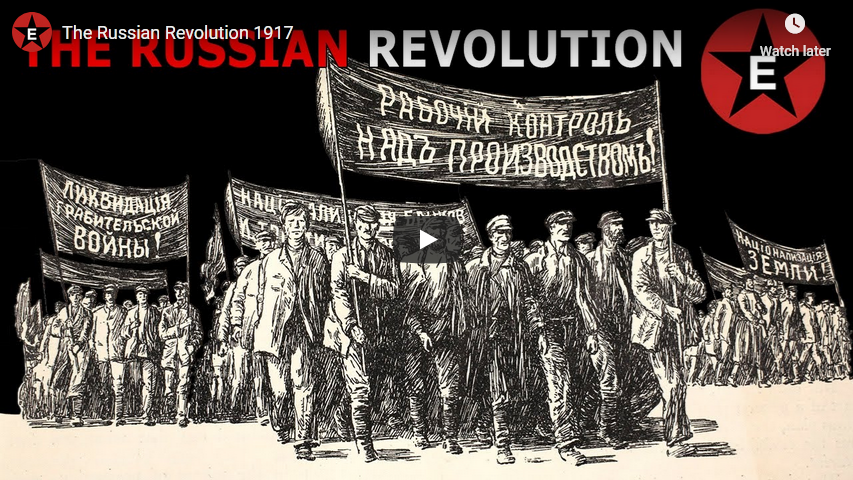
Everything you need to know about the Russian Revolution in a 13 min video. Produced in partnership with Bridgeman Images http://www.bridgemanimages.com/en-GB/

We explain all the major events of Russia’s TWO revolutions of 1917 – the February Revolution that ended Tsarist rule in Russia, and the October Revolution, that brought the Bolsheviks to power. We explain the causes of Tsar Nicholas II’s growing unpopularity – the role of the mysterious Siberian mystic Rasputin, Russia’s disastrous involvement in World War One, and the events on the streets of Petrograd that led to the Tsar’s abdication. That summer Russia lurched from crisis to crisis, with a Provisional Government that faced riots (the July Days), military revolt (the Kornilov Affair), economic chaos, and constantly dwindling support. Socialist Prime Minister Alexander Kerensky, once hailed as Russia’s great hope, was unable to restore order, or, in October, prevent the Bolsheviks from launching a coup, organised by Leon Trotsky and led by Vladimir Lenin, that overthrow the Provisional Government and brought the Bolsheviks to power. A brutal civil war followed, leading to the death of more than 10 million Russians – amongst them Tsar Nicholas II and his family, executed by Bolsheviks at Yekaterinburg in July 1918. From the wreckage emerged the Soviet Union, formed in 1922, and destined to be one of the 20th century’s two superpowers.

Please help me make more history videos by supporting me at Patreon: https://www.patreon.com/epichistorytv

#EpicHistoryTV #HistoryofRussia #RussianRevolution

Recommended books on the Russian Revolution (as an Amazon Associate I earn from qualifying purchases):
S. A. Smith, The Russian Revolution: A Very Short Introduction http://geni.us/RzOAk2U
Orlando Figes, A People’s Tragedy: The Russian Revolution http://geni.us/UIxyirj
Robert Service, The Last of the Tsars: Nicholas II and the Russian Revolution http://geni.us/A89T
Neil Faulkner, A People’s History of the Russian Revolution http://geni.us/bME0unl

August 11, 2020

Orwell’s “Notes on Nationalism”

Filed under: Books, Britain, History, Media, Politics, WW2 — Tags: , , , , , , — Nicholas @ 03:00

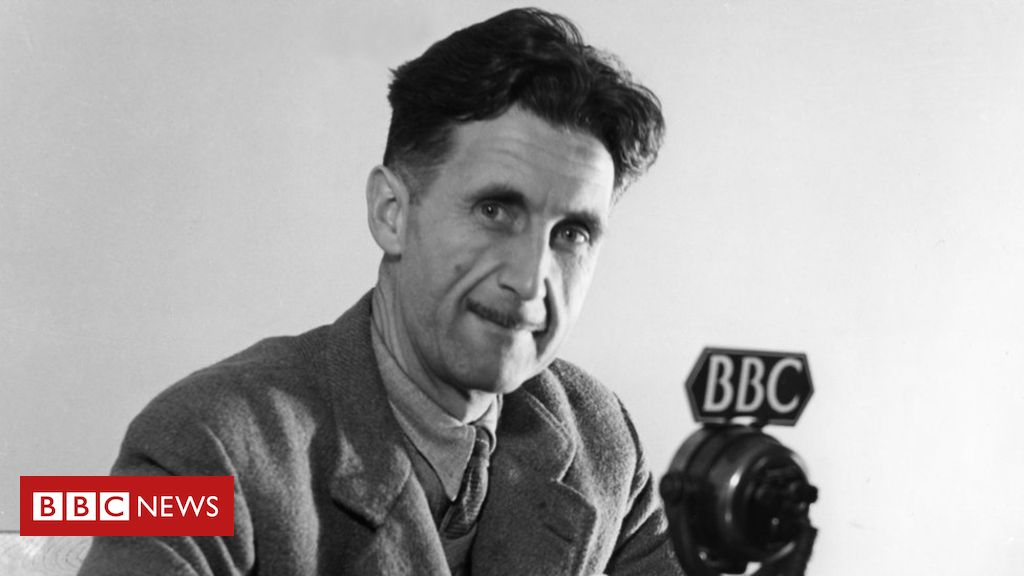
In Quillette, Adam Wakeling discusses George Orwell’s essay in the postwar magazine Polemic:

In the bleak post-war Britain of October 1945, an essay by George Orwell appeared in the first edition of Polemic. Edited by abstract artist and ex-Communist Hugh Slater, the new journal was marketed as a “magazine of philosophy, psychology, and aesthetics.” Orwell was not yet famous — Animal Farm had only just started appearing on shelves — but he had a high enough profile for his name to be a boon to a new publication. His contribution to the October 1945 Polemic was “Notes on Nationalism,” one of his best and most important pieces of writing. Amidst the de-Nazification of Germany, the alarmingly rapid slide into the Cold War, and the trials of German and Japanese war criminals, Orwell set out to answer a question which had occupied his mind for most of the past seven years — why do otherwise rational people embrace irrational or even contradictory beliefs about politics?

As a junior colonial official in Burma, the young Eric Blair (he had not yet adopted the name by which he would be known to posterity) had been disgusted by his peers and superiors talking up the British liberty of Magna Carta and Rule Britannia while excusing acts of repression like the massacre of Indian protestors at Amritsar in 1919. As a committed socialist in the late 1930s, he openly ridiculed those who claimed to be champions of the working class while holding actual working-class people in open contempt. And he had watched the British Communist Party insist that the Second World War was nothing more than an imperialist adventure right up until the moment when the first German soldier crossed the Soviet frontier, at which point it instantly became a noble struggle for human freedom.

Orwell’s most personally searing experience, though, had come in Barcelona in 1937. The previous year, he had travelled to Spain to fight in the Civil War on the Republican side. His poor relationship with the British Communist Party led him to enlist in the militia of an anti-Stalinist socialist party, the POUM (Partido Obrero de Unificación Marxista, or Workers’ Party of Marxist Unification). Even while it was fighting a bitter winter campaign in the Aragon mountains, the POUM was subject to a relentless propaganda campaign by pro-Soviet Republicans who insisted it was a secret front for fascism.

Over May and June 1937, the POUM and the other independent left-wing organisations in Barcelona were brutally suppressed by the Republican Government and Soviet-backed Communists. Orwell saw his friends and comrades smeared, arrested, and in some cases shot. He only made a narrow escape back into France himself. Upon his return to Britain, he found the British Communist Party resolute in its line that the POUM was a fascist party. Admitting that there could be a difference of opinion among left-wing groups with respect to the Soviet Union, or that the Spanish Communists could have acted unjustly, was unacceptable. And when Orwell published his own account of the events in Spain, Homage to Catalonia, few were interested in reading it. The betrayal of the POUM weighed on Orwell’s mind through the Second World War, and Animal Farm provided an outlet for his anger. But those bloody spring days in Barcelona also informed “Notes on Nationalism.”

“Notes on Nationalism” is not an ideal title, as Orwell was not talking only about loyalty to country. Rather, he used nationalism as a short-hand for any type of group loyalty — to a country, but also to a religion, a political party, or an ideology itself. A nationalist may be defined by his membership of a group, or by his opposition to one, which Orwell called “negative” nationalism. Orwell used anti-Semites as an example of the latter, as well as the “minority of intellectual pacifists whose real though unadmitted motive appears to be hatred of Western democracy and admiration of totalitarianism.” He then set out to explain how everyone — no matter how reasoned and level-headed — is capable of irrational and biased thinking when our sense of group identity is challenged.

He identified three characteristics of “‘nationalistic’ thinking.” First, obsession — the ideologue’s need to filter everything through an ideological lens. Entertainment is not entertaining unless it is orthodox. Second, instability — the ability of the ideologue to go from believing one thing to quickly believing another to follow the party line. And thirdly, indifference to reality. One of the most interesting aspects of “Notes on Nationalism” is the “inadmissible fact” — something which can be proven to be true and is generally accepted but cannot be admitted by the adherents of a particular ideology. Or, if the fact is admitted, it is explained away or dismissed as unimportant.

The ideas explored in “Notes on Nationalism” run through much of Orwell’s writing, most obviously his anti-totalitarianism and hatred of hypocritical pieties. But central to his argument is how nationalistic thinking exposes our inescapable biases. “The Liberal News Chronicle,” he wrote, “published, as an example of shocking barbarity, photographs of Russians hanged by the Germans, and then a year or two later published with warm approval almost exactly similar photographs of Germans hanged by the Russians.” This anticipated the doublethink of Nineteen Eighty-Four, in which atrocities “are looked upon as normal, and, when they are committed by one’s own side and not by the enemy, meritorious.” The first step down the deceptively short road to totalitarianism is believing that our political enemies pose such a grave threat that defeating them takes precedence over truth, consistency, or common sense.

August 7, 2020

A Career Anti-Fascist – George Orwell – WW2 Biography Special

World War Two
Published 6 Aug 2020

George Orwell is one of the most famous English writers in the modern age. But how did he become the man who would coin so many of the words we still use in our political debates?

Join us on Patreon: https://www.patreon.com/TimeGhostHistory
Or join The TimeGhost Army directly at: https://timeghost.tv

Follow WW2 day by day on Instagram @World_war_two_realtime https://www.instagram.com/world_war_two_realtime
Between 2 Wars: https://www.youtube.com/playlist?list…
Source list: http://bit.ly/WW2sources

Hosted by: Indy Neidell
Written by: Rune Væver Hartvig
Director: Astrid Deinhard
Producers: Astrid Deinhard and Spartacus Olsson
Executive Producers: Astrid Deinhard, Indy Neidell, Spartacus Olsson, Bodo Rittenauer
Creative Producer: Joram Appel
Post-Production Director: Wieke Kapteijns
Research by: Rune Væver Hartvig
Edited by: Mikołaj Cackowski
Sound design: Marek Kamiński
Map animations: Eastory (https://www.youtube.com/c/eastory)

Colorizations by:
Cassowary https://www.flickr.com/photos/cassowa…
Klimbim https://www.flickr.com/photos/2215569…

Sources:
Wellcome Images V0014461
Bundesarchiv
Narodowe Archiwum Cyfrowe
From the Noun Project: Pig by supalerk laipawat, Horse by supalerk laipawat, Goat by Laymik, Sheep by Laymik, Cow by supalerk laipawat, Chicken by supalerk laipawat, Farmer by Symbolon, Podium by Focus Lab

Soundtracks from the Epidemic Sound:
Howard Harper-Barnes – “London”
Johannes Bornlof – “Deviation In Time”
Johannes Bornlof – “The Inspector 4”
Skrya – “First Responders”
Jo Wandrini – “Puzzle Of Complexity”

Archive by Screenocean/Reuters https://www.screenocean.com.

A TimeGhost chronological documentary produced by OnLion Entertainment GmbH.

July 23, 2020

QotD: Herbert Hoover in Australia and China

Filed under: Australia, Business, China, History, Quotations, USA — Tags: , , , , , — Nicholas @ 01:00

Hoover graduates Stanford in 1895 with a Geology degree. He plans to work for the US Geological Survey, but the Panic of 1895 devastates government finances and his job is cancelled. Hoover hikes up and down the Sierra Nevadas looking for work as a mining engineer. When none materializes, he takes a job an ordinary miner, hoping to work his way up from the bottom […]

After a few months, he finds a position as a clerk at a top Bay Area mining firm. One year later, he is a senior mining engineer. He is moving up rapidly – but not rapidly enough for his purposes. An opportunity arises: London company Berwick Moreing is looking for someone to supervise their mines in the Australian Outback. Their only requirement is that he be at least 35 years old, experienced, and an engineer. Hoover (22 years old, <1 year experience, geology degree only) travels to Britain, strides into their office, and declares himself their man. The executives “professed astonishment at Americans’ ability to maintain their youthful appearance” (Hoover had told them he was 36), but hire him and send him on an ocean liner to Australia.

[…]

After a year, Hoover is the most hated person in Australia, and also doing amazing. His mines are producing more ore than ever before, at phenomenally low prices. He scouts out a run-down out-of-the-way gold mine, realized its potential before anyone else, bought it for a song, and raked in cash when it ended up the richest mine in Australia. He received promotion after promotion.

Success goes to his head and makes him paranoid. He starts plotting against his immediate boss, Berwick Moreing’s Australia chief Ernest Williams. Though Williams didn’t originally bear him any ill will, all the plotting eventually gets to him, and he arranges for Hoover to be transferred to China. Hoover is on board with this, since China is a lucrative market and the transfer feels like a promotion. He travels first back to Stanford – where he marries his college sweetheart Lou Henry – and then the two of them head to China.

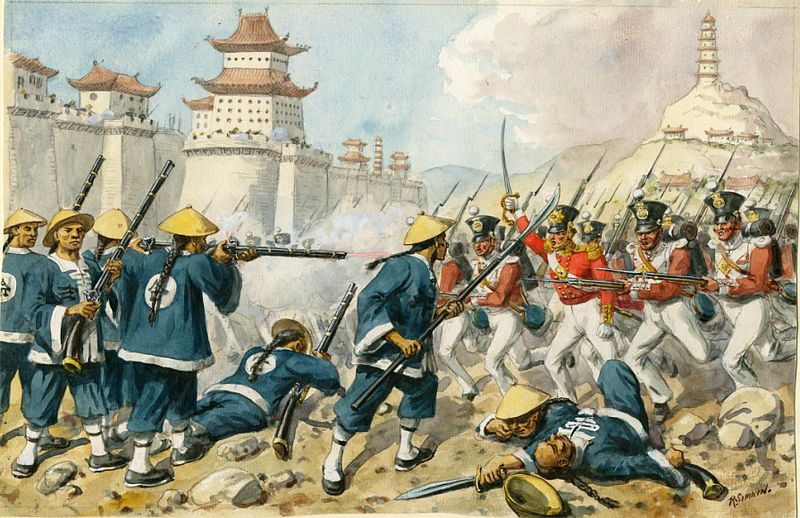
China is Australia 2.0. Hoover hates everyone in the country and they hate him back […] The same conflicts are playing itself out on the world stage, as Chinese resentment at their would-be-colonizers boils over into the Boxer Rebellion. A cult with a great name – “Society Of Righteous And Harmonious Fists” – takes over the government and encourages angry mobs to go around killing Westerners. Thousands of Europeans, including Herbert and Lou, barricade themselves in the partly-Europeanized city of Tientsin to make a final last stand.

In between dodging artillery shells, Hoover furiously negotiates property deals with his fellow besiegees. He argues that if any of them survive, it will probably because Western powers invade China to save them. That means they will soon be operating under Western law, and people who had already sold their mines to Western companies would be ahead of the game and avoid involuntary confiscation. Somehow, everything comes up exactly how Hoover predicts. US Marines arrived in Tientsin to liberate the city (Hoover marches with them as their local guide) and he is ready to collect his winnings.

Problem: it turns out that “Whatever, sure, you can have my gold mine, we’re all going to die anyway” is not legally ironclad. Hoover, enraged as he watches apparently done deals slip through his fingers, reaches new levels of moral turpitude. He offers the Chinese great verbal deals, then gives them contracts with terrible deals, saying that this is some kind of quaint foreign custom and if they just sign the contract then the verbal deal will be the legally binding one (this is totally false). At one point, he literally holds up a property office with a gun to get the deed to a mine he wants. Somehow, after consecutively scamming half the population of China, he ends up with the rights to millions of dollars worth of mines. Berwick Moreing congratulates him and promotes him to managing director. He and Lou sail for London to live the lives of British corporate bigshots.

As you might also predict, Hoover manages to offend everyone in Britain. Soon he is signing off on a “mutually agreeable”, “amicable” dismissal from Berwick Moreing. They agree to let him go on the condition that he does not compete with them – a promise he breaks basically instantly. He goes into banking, and his “bank” funds mining operations in a way indistinguishable from being a mining conglomerate. Eventually he abandons even this fig leaf, and just does the mining directly.

In other ways, his tens of millions of dollars are mellowing him out. Over his years in London, he develops hobbies besides making money and crushing people. He starts a family; he and Lou have two sons, Herbert Jr and Allen. He even hosts dinner parties, very gradually working on the skill of getting through an entire meal without mortally offending any guest…

Scott Alexander, “Book Review: Hoover”, Slate Star Codex, 2020-03-17.

July 13, 2020

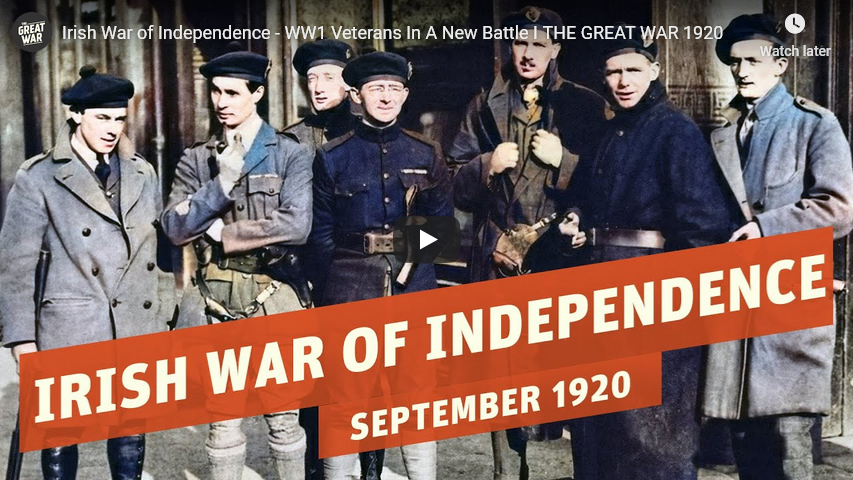
German-Polish Proxy War In Silesia – French Troops On The Rhine I THE GREAT WAR 1920

Filed under: France, Germany, History, Military — Tags: , , , , — Nicholas @ 06:00

The Great War
Published 11 Jul 2020

Sign up for Curiosity Stream and get Nebula bundled in: https://curiositystream.com/thegreatwar

The summer of 1920 was marked by escalating tensions on the borders of the German Reich. In the Rhineland, a neutral zone per the Versailles Treaty, the revolutionary uprising after the failed Kapp Putsch was put down with the help of the army and the Freikorps. In Upper Silesia, the conflict between Poland and Germany was escalating into a proxy war. And all that while the German government was negotiating the payments of reparations at the Spa Conference.

» SUPPORT THE CHANNEL
Patreon: https://www.patreon.com/thegreatwar

» OUR PODCAST
https://realtimehistory.net/podcast – interviews with World War 1 historians and background info for the show.

» BUY OUR SOURCES IN OUR AMAZON STORES
https://realtimehistory.net/amazon *
*Buying via this link supports The Great War (Affiliate-Link)

» SOURCES
Buat, Edmond. 8 (Perrin, 2015)
Beaupré, Nicolas. Occuper l’Allemagne après 1918 (Revue historique des armées, 2009)
Böhler, Jochen. Civil War in Central Europe, 1918-1921 (Oxford University Press, 2019)
Gietinger, Klaus. Kapp-Putsch (Stuttgart: Schmetterling, 2020)
le Naour, Jean Yves. La Honte Noire (Hachette, 2004)
Le Figaro, numéro du 8 avril 1920 (via Gallica)
Stengers, Jean. L’accord militaire franco-belge de 1920 et le Luxembourg (Revue belge de de Philologie et d’Histoire, 2004)
https://www.dhm.de/lemo/jahreschronik…
Pöppinghege, Rainer: Republik im Bürgerkrieg. Kapp-Putsch und Gegenbewegung an Ruhr und Lippe 1919/1920 (2019)
van Galen Last, Dick. Des soldats noirs dans une guerre de blancs (1914-1922): une histoire mondiale (Editions de l’Université de Bruxelles, 2015)

» MORE THE GREAT WAR
Website: https://realtimehistory.net
Instagram: https://instagram.com/the_great_war
Twitter: https://twitter.com/WW1_Series
Reddit: https://reddit.com/r/TheGreatWarChannel

»CREDITS
Presented by: Jesse Alexander
Written by: Jesse Alexander
Director: Toni Steller & Florian Wittig
Director of Photography: Toni Steller
Sound: Toni Steller
Editing: Toni Steller
Motion Design: Philipp Appelt
Mixing, Mastering & Sound Design: http://above-zero.com
Maps: Daniel Kogosov (https://www.patreon.com/Zalezsky)
Research by: Jesse Alexander
Fact checking: Florian Wittig

Channel Design: Alexander Clark
Original Logo: David van Stephold

Contains licensed material by getty images
All rights reserved – Real Time History GmbH 2020

July 10, 2020

English Civil War | 3 Minute History

Filed under: Britain, History, Military — Tags: , , , , , — Nicholas @ 02:00

Jabzy
Published 9 Mar 2015

I cut quite a bit out to save time. I’ll try and do a video on the Protectorate or the Restoration soon.

July 5, 2020

History Summarized: Colonial India

Overly Sarcastic Productions
Published 4 Jul 2020

Start your free trial at http://squarespace.com/overlysarcastic and use code OVERLYSARCASTIC to get 10% off your first purchase.

Indian History has always been a story of peoples coming and going, but the subcontinent’s modern history takes that up to 11, with the arrival of Central Asian Mughals and boatloads of Europeans. See how India transforms from Medieval to Modern in this final act of our History of India.

SOURCES & Further Reading: The Discovery of India by Jawaharlal Nehru, A History of India by Michael H. Fisher (a lecture series by The Great Courses).

This video was edited by Sophia Ricciardi AKA “Indigo”. https://www.sophiakricci.com/
Our content is intended for teenage audiences and up.

Special thanks to Varda Alighieri for coaching me through my (hopefully serviceable) pronunciations!

PATREON: https://www.Patreon.com/OSP

MERCH LINKS: https://www.redbubble.com/people/OSPY…

OUR WEBSITE: https://www.OverlySarcasticProductions.com
Find us on Twitter https://www.Twitter.com/OSPYouTube
Find us on Reddit https://www.Reddit.com/r/OSP/

July 4, 2020

Fixing Gettysburg: The Third Day

Filed under: Books, History, Humour, Media, Military, USA — Tags: , , , — Nicholas @ 06:00

Atun-Shei Films
Published 3 Jul 2020

In this three-part series, I review a classic Ron Maxwell film about a little known historical event that no one talks about called the Battle of Gettysburg. I also present an abbreviated and oversimplified history of the battle, while simultaneously criticizing the movie for presenting an abbreviated and oversimplified history of the battle.

In the third episode, I discuss the third day of fighting on July 3, 1863 – including the morning scrap on Culp’s Hill, East Cavalry Field, and Pickett’s Charge.

Support Atun-Shei Films on Patreon ► https://www.patreon.com/atunsheifilms

Leave a Tip via Paypal ► https://www.paypal.me/atunsheifilms (Between now and October, all donations made here will go toward the production of The Sudbury Devil, our historical feature film)

#Gettysburg #CivilWar #VideoEssay

Watch our film ALIEN, BABY! free with Prime ► http://a.co/d/3QjqOWv
Reddit ► https://www.reddit.com/r/atunsheifilms
Twitter ► https://twitter.com/atun_shei
Instagram ► https://www.instagram.com/atunsheifilms
Merch ► https://atun-sheifilms.bandcamp.com

~REFERENCES~

[1] Frederick Tilberg, Scott Hartwig, John Heiser: Gettysburg National Military Park Handbook (2013). Historic Map and Print Company, Page 49

[2] James Longstreet: From Manassas to Appomattox, Da Capo Edition (1992). Da Capo Press, Page 392

[3] “Haskell’s Account of the Battle of Gettysburg”. Bartleby: Great Books Online https://www.bartleby.com/43/3504.html

[4] “East Cavalry Battlefield – Ranger John Nicholas” (2014). GettysburgNPS https://youtu.be/AfwBOOFFlXQ

July 3, 2020

Fixing Gettysburg: The Second Day

Filed under: Books, History, Humour, Media, Military, USA — Tags: , , , — Nicholas @ 06:00

Atun-Shei Films
Published 2 Jul 2020

In this three-part series, I review a classic Ron Maxwell film about a little known historical event that no one talks about called the Battle of Gettysburg. I also present an abbreviated and oversimplified history of the battle, while simultaneously criticizing the movie for presenting an abbreviated and oversimplified history of the battle.

In the second episode, I discuss the first day of fighting on July 2, 1863 – including Dan Sickles’ shenanigans on the left, the 20th Maine on Little Round Top, the 1st Minnesota, and the night battle on Culp’s Hill.

Support Atun-Shei Films on Patreon ► https://www.patreon.com/atunsheifilms

Leave a Tip via Paypal ► https://www.paypal.me/atunsheifilms (Between now and October, all donations made here will go toward the production of The Sudbury Devil, our historical feature film)

#Gettysburg #CivilWar #VideoEssay

Watch our film ALIEN, BABY! free with Prime ► http://a.co/d/3QjqOWv
Reddit ► https://www.reddit.com/r/atunsheifilms
Twitter ► https://twitter.com/atun_shei
Instagram ► https://www.instagram.com/atunsheifilms
Merch ► https://atun-sheifilms.bandcamp.com

~REFERENCES~

[1] Stephen W. Sears: “General Longstreet and the Lost Cause” (2005). American Heritage Magazine https://www.americanheritage.com/gene…

[2] W.C. Storrick: The Battle of Gettysburg (1931). J Horace McFarland Company, Page 26

[3] Frederick Tilberg, Scott Hartwig, John Heiser: Gettysburg National Military Park Handbook (2013). Historic Map and Print Company, Page 31-32

[4] Storrick, Page 27

[5] William B. Styple: Generals in Bronze (2005). Belle Grove Publishing Company, Page 222

[6] “The 1st Minnesota Infantry at Gettysburg” (2014). Iron Brigader https://ironbrigader.com/2014/01/03/1…

[7] Storrick, Page 29-30

[8] Tilberg, Hartwig, Heiser, Page 45

July 2, 2020

Fixing Gettysburg: The First Day

Filed under: Books, History, Humour, Media, Military, USA — Tags: , , , — Nicholas @ 06:00

Atun-Shei Films
Published 1 Jul 2020

In this three-part series, I review a classic Ron Maxwell film about a little known historical event that no one talks about called the Battle of Gettysburg. I also present an abbreviated and oversimplified history of the battle, while simultaneously criticizing the movie for presenting an abbreviated and oversimplified history of the battle.

In this first episode, I discuss the first day of fighting on July 1, 1863 – including Buford’s cavalry, the Iron Brigade, the Railroad Cut, and John Burns.

Support Atun-Shei Films on Patreon ► https://www.patreon.com/atunsheifilms

Leave a Tip via Paypal ► https://www.paypal.me/atunsheifilms (Between now and October, all donations made here will go toward the production of The Sudbury Devil, our historical feature film)

#Gettysburg #CivilWar #VideoEssay

Watch our film ALIEN, BABY! free with Prime ► http://a.co/d/3QjqOWv
Reddit ► https://www.reddit.com/r/atunsheifilms
Twitter ► https://twitter.com/atun_shei
Instagram ► https://www.instagram.com/atunsheifilms
Merch ► https://atun-sheifilms.bandcamp.com

~REFERENCES~

[1] “General John Buford’s Report of his Cavalry’s Action at Gettysburg” (2015). Iron Brigader https://ironbrigader.com/2015/06/22/g…

[2] W.C. Storrick: The Battle of Gettysburg (1931). J Horace McFarland Company, Page 11

[3] “The First Day at Gettysburg: Then and Now.” American Battlefield Trust https://www.battlefields.org/learn/ar…

[4] “Lt. Colonel Rufus Dawes Describes the Fighting of the 6th Wisconsin Infantry at Gettysburg” (2013). Iron Brigader https://ironbrigader.com/2013/06/13/l…

[5] “Civilian John Burns at the Battle of Gettysburg (2018)”. C-Span https://www.c-span.org/video/?447809-…

[5 1/2] Allen C. Redwood: “The Confederate in the Field”. Civil War Home https://www.civilwarhome.com/confeder…

[6] Codie Eash: “The Wounded Wisconsinite Who Witnessed Pickett’s Charge” (2018). National Museum of Civil War Medicine https://www.civilwarmed.org/reed/?fbc…

[7] Cooper Wingert: “The Confederate ‘Slave Hunt’ and the Gettysburg Campaign” (2020). Emerging Civil War https://emergingcivilwar.com/2020/05/…

June 28, 2020

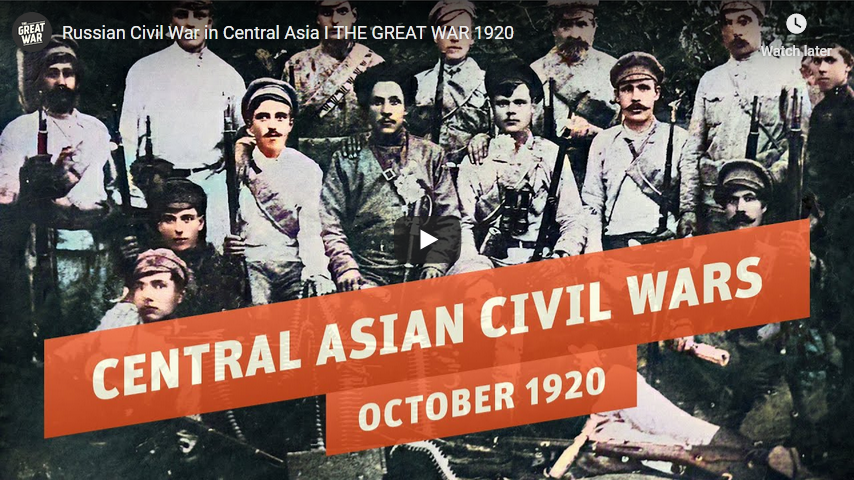
The Peasants Rise Up Against The Bolsheviks – The Russian Civil War(s) 1920 I THE GREAT WAR 1920

Filed under: History, Military, Russia — Tags: , , , , — Nicholas @ 09:30

The Great War
Published 27 Jun 2020

Sign up for Curiosity Stream and get Nebula bundled in: https://curiositystream.com/thegreatwar

Freeing peasants and workers from oppression was one of the main messages of the Bolsheviks. The peasants in the countryside were happy to get rid of the landowning class and supported socialist ideas of land reform but once the Bolsheviks turned to “War Communism” to maintain their power against the Whites and other forces, the reluctant support of the peasants dropped — and in 1920 they turned to open revolt.

» SUPPORT THE CHANNEL
Patreon: https://www.patreon.com/thegreatwar
Merchandise: https://shop.spreadshirt.de/thegreatwar/

» SOURCES
Figes, Orlando. A People’s Tragedy. The Russian Revolution (London: The Bodley Head, 2017 [1996]).
Mawdsley, Evan. The Russian Civil War (New York: Pegasus Books, 2005).
Smele, Jonathan. The “Russian” Civil Wars 1916-1926 (London: Hurst, 2015).
Sumpf, Alexandre. “Russian Civil War,” in 1914-1918 online. International Encyclopedia of the First World War. https://encyclopedia.1914-1918-online.
Engelstein, Laura. Russia in Flames (Oxford University Press, 2017).
Wolf, Eric R. Peasant Wars of the Twentieth Century (New York: Harper, 1969)

» SOCIAL MEDIA
Instagram: https://instagram.com/the_great_war
Twitter: https://twitter.com/WW1_Series
Reddit: https://reddit.com/r/TheGreatWarChannel

»CREDITS
Presented by: Jesse Alexander
Written by: Jesse Alexander
Director: Toni Steller & Florian Wittig
Director of Photography: Toni Steller
Sound: Toni Steller
Editing: Toni Steller
Mixing, Mastering & Sound Design: http://above-zero.com
Maps: Daniel Kogosov (https://www.patreon.com/Zalezsky)
Research by: Jesse Alexander
Fact checking: Florian Wittig

Channel Design: Alexander Clark
Original Logo: David van Stephold

Contains licensed material by getty images
All rights reserved – Real Time History GmbH 2020
June 20, 2020

History-Makers: Confucius

Overly Sarcastic Productions
Published 19 Jun 2020

Welcome to the challenge run of History-Makers, where I attempt to give insightful historical context to someone whose backstory is almost entirely blank.

SOURCES & Further Reading: Confucius: A Very Short Introduction by Gardner, China: A History by Keay, The Analects of Confucius, The Mencius.

This video was edited by Sophia Ricciardi AKA “Indigo”. https://www.sophiakricci.com/
Our content is intended for teenage audiences and up.

PATREON: https://www.Patreon.com/OSP

MERCH LINKS: https://www.redbubble.com/people/OSPY…

OUR WEBSITE: https://www.OverlySarcasticProductions.com
Find us on Twitter https://www.Twitter.com/OSPYouTube
Find us on Reddit https://www.Reddit.com/r/OSP/

June 19, 2020

Anglo-Dutch Wars | 3 Minute History

Filed under: Britain, Europe, History, Military — Tags: , , , , , , — Nicholas @ 02:00

Jabzy
Published 25 Apr 2015

First, Second and Third Anglo-Dutch Wars. I left out the Fourth War because it really wasn’t connected to the previous 3.

Also – I hope you don’t mind I used ‘Netherlands’ throughout the video despite the fact the term didn’t come until much later.

May 25, 2020

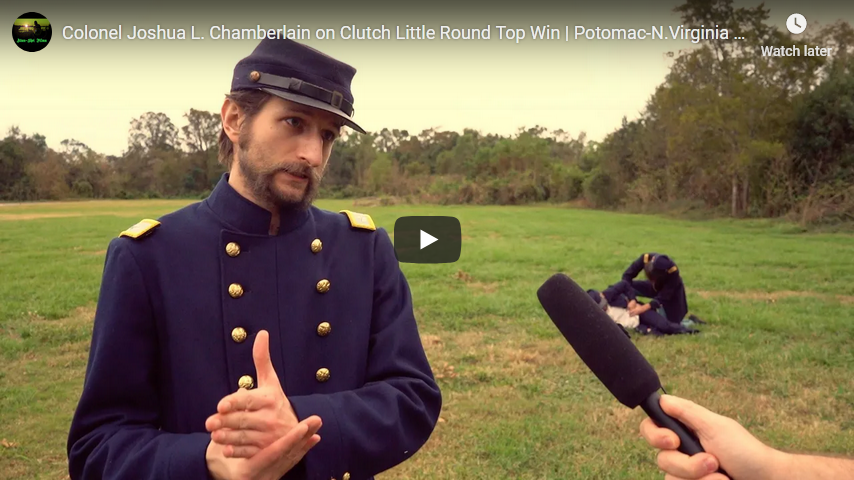
The Problem With Civil War Reenactors

Filed under: History, Humour, Military, USA — Tags: , , , — Nicholas @ 04:00

Atun-Shei Films
Published 6 Feb 2019

A former Gettysburg tour guide and confirmed farb talks smack about folks who take the hobby way too seriously.

Support Atun-Shei Films on Patreon ► https://www.patreon.com/atunsheifilms

#AmericanCivilWar #Reenactment #History

Watch our film ALIEN, BABY! free with Prime ► http://a.co/d/3QjqOWv
Reddit ► https://www.reddit.com/r/atunsheifilms
Twitter ► https://twitter.com/alienbabymovie
Instagram ► https://www.instagram.com/atunsheifilms
Merch ► https://atun-sheifilms.bandcamp.com

May 17, 2020

Cicero’s Finest Hour (44 to 43 B.C.E.)

Filed under: Europe, History, Military — Tags: , , , , , , , — Nicholas @ 04:00

Historia Civilis
Published 16 May 2020

Patreon | http://patreon.com/HistoriaCivilis
Donate | http://www.paypal.com/cgi-bin/webscr?…
Merch | teespring.com/stores/historiacivilis
Twitter | http://twitter.com/HistoriaCivilis
Website | http://historiacivilis.com

Sources:
Cicero, “Letters to Atticus” | https://amzn.to/3b8EQby
Cicero, “The Philippics” | https://amzn.to/35EHcOe
Suetonius, “The Life of Julius Caesar” | https://amzn.to/2xJesHH
Plutarch, “The Life of Julius Caesar” | https://amzn.to/35DG6lZ
Plutarch, “The Life of Cicero” | https://amzn.to/2Laca7w
Plutarch, “The Life of Brutus” | https://amzn.to/2SLaWUC
Nicolaus of Damascus, “The Life of Augustus” | https://amzn.to/3dlQeCg
Appian, “The Civil Wars: Book 3” | https://amzn.to/2WbJXU4
Cassius Dio, “Roman History: Book 44” | https://amzn.to/35HC4ce
Cassius Dio, “Roman History: Book 45” | https://amzn.to/35HC4ce
Cassius Dio, “Roman History: Book 46” | https://amzn.to/2WDNIka

Barry Strauss, “The Death of Caesar: The Story of History’s Most Famous Assassination” | https://amzn.to/2WAUxTD
Tom Holland, “Dynasty: The Rise and Fall of the House of Caesar” | https://amzn.to/2zjG4n4
Adrian Goldsworthy, “Antony and Cleopatra” | https://amzn.to/2L8MQ1F
Anthony Everitt, “Cicero: The Life and Times of Rome’s Greatest Politician” | https://amzn.to/3bbrKKM
Tom Holland, “Rubicon” | https://amzn.to/3dombKn
Adrian Goldsworthy, “Augustus” | https://amzn.to/3fAInmD
Anthony Everitt, “Augustus: The Life of Rome’s First Emperor” | https://amzn.to/2Wf9CLH
Adrian Goldsworthy, “Caesar: Life of a Colossus” | https://amzn.to/3cfFQvU

Music:
“Moving Forward,” by Adi Goldstein
“Blonde,” by Nctrnm
“Heliograph,” by Chris Zabriskie
“The House Glows (With Almost No Help),” by Chris Zabriskie
“Hallon,” by Christian Bjoerklund

We are a participant in the Amazon Services LLC Associates Program, an affiliate advertising program designed to provide a means for us to earn fees by linking to Amazon.com and affiliated sites.

« Newer PostsOlder Posts »

Powered by WordPress