
Count up the victims of World War I, and American tourists will be pretty far down the list. But victims they were. When the conflict broke out, thousands of Americans were overseas visiting the cathedrals of Florence or the museums of London. They woke up one morning to find the ships that were supposed to take them back had been conscripted into the war effort, or refused to sail for fear of enemy fire. The banks that were supposed to cash their travelers’ checks were panicking, or devoting all their funds to the war effort, or dealing with a million other things. The hotels that were supposed to house them were closed indefinitely, their employees rushing to enlist out of patriotic fervor. And so thousands of frantic Americans, stuck in a foreign continent with no money and nowhere to stay, showed up at the door of the US Embassy in London and said – help!
The US Consulate in London didn’t know how to solve these problems either. But Herbert Hoover, still high on his decision to pivot to philanthropy and public service, calls them up and asks if he can help. They say yes, definitely. Hoover gets in touch with his rich friends, passes around the collection plate, and organizes a Committee For The Assistance Of American Travelers. Then he gets to work, the way only he can:
Within 24 hours, Hoover’s committee had its own stationery, and within forty-eight it was operating a booth in the ballroom of the Savoy Hotel as well as three other London locations. Through his business connections, Hoover managed to bypass restrictions on telegraph service and open a transatlantic line to allow Americans to wire money to stranded friends and relatives. In a city suddenly flooded with refugees, he reserved for American travelers some two thousand rooms in hotels or boardinghouses. He issued a press release proclaiming that his Residents’ Committee was assuming charge of all American relief work in the city, and that in doing so it had the blessings of its honorary chairman, Walter Hines Page, the US ambassador to London.
… which is totally false. Hoover is starting to display a pattern that will stick with him his whole life – that of crushing competing charities. He begins a lobbying effort to get the US Embassy to ban all non-Hoover relief work, focusing on the inefficiency of having multiple groups working on the same problem. When the US Assistant Secretary Of War arrives in London to coordinate a response, he is met on the dock by Hoover employees, who demand he consult with Hoover before interfering in the US tourist issue. Eventually the Embassy, equally exasperated by Hoover’s pestering and impressed with his results, agrees to give him official control of the relief effort.
After two months of work, Hoover and his Committee have repatriated all 120,000 US tourists, supporting them in style until it could find them boat tickets. All of its loans and operating costs have been repaid by grateful tourists, and its budget is in the black. The rescued travelers are universal in their praise for Hoover, partly because Hoover has threatened to ruin any of them who get too critical:
Other complainants were received with less patience, including a hotheaded professor of history from the University of Michigan, who wrote to accuse the Residents’ Committee of mistreatment. Hoover refuted his charges indignantly and comprehensively, copying his response to the president of the university and its board of regents. After a meeting with his employer, the professor returned Hoover an abject retraction and apology.
Scott Alexander, “Book Review: Hoover”, Slate Star Codex, 2020-03-17.
August 23, 2020
August 22, 2020
History-Makers: Thucydides
Overly Sarcastic Productions
Published 21 Aug 2020Start your free trial at http://squarespace.com/overlysarcastic and use code
OVERLYSARCASTICto get 10% off your first purchase.Ahh ancient Greece, it has been entirely too long. Today we’ll take a look at the foundational work of my entire career path — Thucydides’ History of the Peloponnesian War, a book that almost single-handedly set the standard for how we engage in historical inquiry. Also it has the added benefit of being about Ancient Greece so win-win!
SOURCES & Further Reading: History of the Peloponnesian War by Thucydides, Histories by Herodotus, Hellenica by Xenophon, and the 4 straight years I spent studying this in university — Boy do I love doing a video about a topic I’m specifically trained in.
This video was edited by Sophia Ricciardi AKA “Indigo”. https://www.sophiakricci.com/
Our content is intended for teenage audiences and up.PATREON: https://www.Patreon.com/OSP
DISCORD: https://discord.gg/kguuvvq
MERCH LINKS: https://www.redbubble.com/people/OSPY…
OUR WEBSITE: https://www.OverlySarcasticProductions.com
Find us on Twitter https://www.Twitter.com/OSPYouTube
Find us on Reddit https://www.Reddit.com/r/OSP/
August 20, 2020
Thomas Becket, Archbishop of Canterbury 1162-1170
Reverend Steve Morris tries to show why St. Thomas of Canterbury needs a “reboot” for modern eyes:
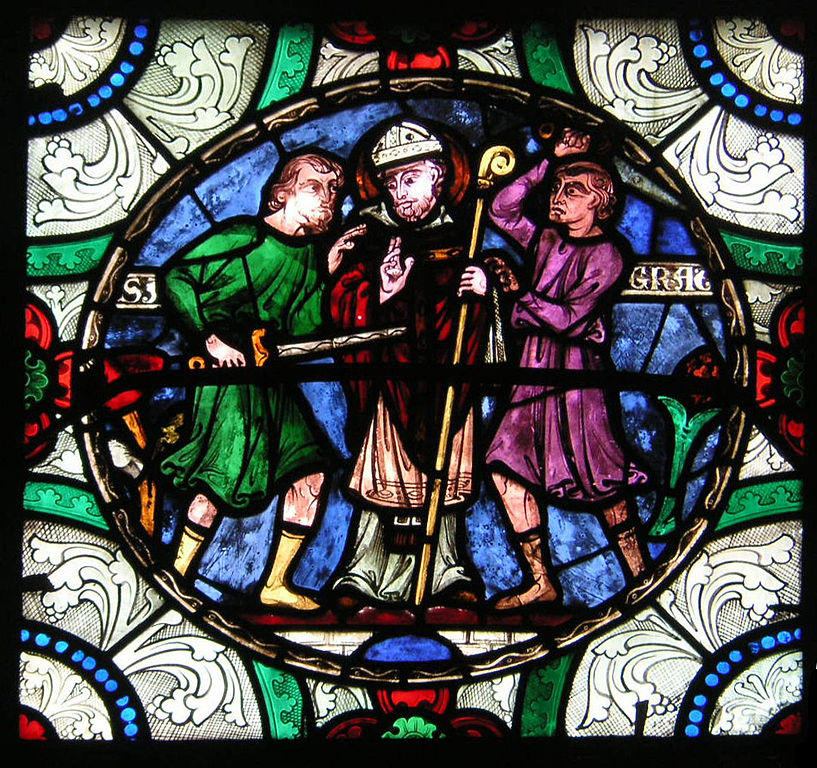
Stained glass showing the murder of St. Thomas at Canterbury on 29 December, 1170.
Wikimedia Commons.
It’s 850 years since that night when four knights murdered the Archbishop of Canterbury. It’s been a rocky old road for Thomas Becket despite hundreds of years as the poster-boy of the cult of saints which swept medieval England. His reputation, his legacy and his conduct have been filleted over the last few centuries and we are left with just a ghost of the man who, once upon a time, stood for all that was good.
It is a cautionary tale of historical revisionism, measuring yesterdays’ saints by today’s “standards” and assembling a set of half-truths to trash the reputation of England’s great, perhaps greatest, saint. It is high time he made a comeback – especially in these political times. After all, Becket was perhaps the greatest political martyr we have. Of course, there is always truth in just about any criticism. And Becket lays himself open. He was, to say the least, stubborn. He was a contrarian and he was reckless with his own safety. In an age of kingly power, it doesn’t do to embarrass the monarch.
The charge sheet does quickly stack up. Becket was a canny careerist (although you’d be hard pushed to find anyone of influence at the time who wasn’t). He seemed to have a death wish, or at least refused to listen to perfectly sensible advice on taking a more circumspect path. And his cause, seen through a certain lens, seems off-beam for modern times. He has been painted as standing for the ancient legal power of the church against a reforming king who began to kick-start Common Law. But of course, it’s never as simple as this.
But none of this was the real problem and none of it was what caused our great saint to be consigned to the historical dustbin. As is often the way, the problem comes down to background and class. Becket was born to only modestly well-off parents in London (he has always been London’s saint). His father was middle-class, and a merchant. Becket was “trade” by background and it was something he couldn’t shake off. But his rise was an astounding feat of defying gravity.
In an era of complex geopolitics and conflicts between pope and state Thomas rose through the ranks and became Archbishop of Canterbury. At first, he seemed like the king’s man, but relations soured. Becket and the king were entangled in a fight to the death, with the archbishop excommunicating various opponents and generally throwing his weight around.
His death was gruesome. Four knights ambushed him. He could have run or barricaded himself in the cathedral, but he told his followers that God’s house should not be made a fortress. He pushed one of his attackers. What followed was a flurry of sword-strokes to the head – one of which took his tonsured skull right off. The contemporaneous reports paint a ghastly picture of brain fluid and blood mixing freely on the cathedral floor. But it didn’t end there.
August 18, 2020
Napoleon’s First Victory: Siege of Toulon 1793
Epic History TV
Published 31 Mar 2018Get Epic History TV early access & voting rights at Patreon: https://www.patreon.com/epichistorytv
With big thanks to HistoryMarche, check out his channel here: https://www.youtube.com/channel/UC8MX…
Find Osprey books on the Napoleonic Wars here:
https://ospreypublishing.com/#EpicHistoryTV #NapoleonicWars #Napoleon
Music from Filmstro https://www.filmstro.com/
Get 20% off an annual license with this exclusive code:EPICHISTORYTV_ANNFrom Osprey Publishing (as an Amazon Associate I earn from qualifying purchases):
Toulon 1793: Napoleon’s first great victory: http://geni.us/vUITM
French Revolutionary Infantry 1789-1802: http://geni.us/RsWkNN
Napoleon’s Guns 1792-1815 (1): Field Artillery: http://geni.us/YWU1HaZ
Napoleon’s Guns 1792-1815 (2): Heavy and Siege Artillery: http://geni.us/SJn9I

August 17, 2020
Alcibiades, the Peloponnesian War, and the Art of Intrigue
The History Guy: History Deserves to Be Remembered
Published 27 Dec 2019Intrigue has always been a part of both diplomacy and war. In ancient Greece, one enterprising politician and general took the art of switching sides to the extreme. The History Guy remembers Alcibiades, a general who had an out-sized effect on the Peloponnesian War.
This is original content based on research by The History Guy. Images in the Public Domain are carefully selected and provide illustration. As images of actual events are sometimes not available, images of similar objects and events are used for illustration.
All events are portrayed in historical context and for educational purposes. No images or content are primarily intended to shock and disgust. Those who do not learn from history are doomed to repeat it. Non censuram.
Find The History Guy at:
Patreon: https://www.patreon.com/TheHistoryGuy
The History Guy: History Deserves to Be Remembered is the place to find short snippets of forgotten history from five to fifteen minutes long. If you like history too, this is the channel for you.
Awesome The History Guy merchandise is available at:
teespring.com/stores/the-history-guyScript by JCG
#history #thehistoryguy #ancienthistory
August 13, 2020
Hitler’s screen idol – Leni Riefenstahl – WW2 Biography Special
World War Two
Published 12 Aug 2020Leni Riefenstal’s film techniques were groundbreaking and are still influential today. She did, though, create her most famous works in the service of Adolf Hitler.
Join us on Patreon: https://www.patreon.com/TimeGhostHistory
Or join The TimeGhost Army directly at: https://timeghost.tvFollow WW2 day by day on Instagram @World_war_two_realtime https://www.instagram.com/world_war_two_realtime
Between 2 Wars: https://www.youtube.com/playlist?list…
Source list: http://bit.ly/WW2sourcesWritten and Hosted by: Indy Neidell
Director: Astrid Deinhard
Producers: Astrid Deinhard and Spartacus Olsson
Executive Producers: Astrid Deinhard, Indy Neidell, Spartacus Olsson, Bodo Rittenauer
Creative Producer: Joram Appel
Post-Production Director: Wieke Kapteijns
Research by: Madeline Johnson
Edited by: Monika Worona
Sound design: Marek Kamiński
Map animations: Eastory (https://www.youtube.com/c/eastory)Colorizations by:
– Norman Stewart – https://oldtimesincolor.blogspot.com/
– Olga Shirnina, a.k.a. Klimbim – https://klimbim2014.wordpress.com/Sources:
– BundesarchivArchive by Screenocean/Reuters https://www.screenocean.com.
A TimeGhost chronological documentary produced by OnLion Entertainment GmbH.
From the comments:
World War Two
4 hours ago
Thanks to Madeline Johnson for the research for this episode. In many ways it’s our community who keep TimeGhost going. If you want to be part of this then join the TimeGhost Army on www.patreon.com/timeghosthistory or https://timeghost.tv.Please let us know what other Bios you’d like to see. And if you have a question about the war you’re dying to have answered, submit it for our Q&A series, Out of the Foxholes at: https://community.timeghost.tv/c/Out-of-the-Foxholes-Qs.

August 11, 2020
Napoleon’s greatest foe
Lindybeige
Published 18 Jan 2018Support me on Patreon: https://www.patreon.com/Lindybeige
Possibly I did too much research for this one. Trying to stay on-topic when the subject is so vast and so interesting was not easy, hence the rather long video. I didn’t mean to say quite so much about what an utter £$%&*! Napoleon was, but he was so thoroughly vile that it proved impossible not to include some details about the man who won his promotion in the army by mowing down civilian protesters in the streets of Paris with grapeshot from his artillery batteries. Anyway, here are tales of bravery and virtue, as well as horrendous some of brutality, lies, and death.
Correction: The battle against the Russian fleet is called Svensksund (Swedish sound, as in channel), not Svenksund. I missed out an S in my haste.
Buy the music – the music played at the end of my videos is now available here: https://lindybeige.bandcamp.com/track…
Lindybeige: a channel of archaeology, ancient and medieval warfare, rants, swing dance, travelogues, evolution, and whatever else occurs to me to make.
▼ Follow me…
Twitter: https://twitter.com/Lindybeige I may have some drivel to contribute to the Twittersphere, plus you get notice of uploads.
website: http://www.LloydianAspects.co.uk
August 10, 2020
Donald MacLean: The First of the Cambridge Five
The Cold War
Published 22 Jun 2020Our historical documentary series on the history of the Cold War continues with a video on the famous Cambridge Five and Donald Maclean in particular — a real Cold War-era spy story
Support us on Patreon: https://www.patreon.com/thecoldwar or Paypal: http://paypal.me/TheColdWar
✔ Merch store ► https://teespring.com/stores/thecoldwar
✔ Instagram ► http://www.instagram.com/thecoldwartv#ColdWar #Maclean #CambridgeFive

August 7, 2020
A Career Anti-Fascist – George Orwell – WW2 Biography Special
World War Two
Published 6 Aug 2020George Orwell is one of the most famous English writers in the modern age. But how did he become the man who would coin so many of the words we still use in our political debates?
Join us on Patreon: https://www.patreon.com/TimeGhostHistory
Or join The TimeGhost Army directly at: https://timeghost.tvFollow WW2 day by day on Instagram @World_war_two_realtime https://www.instagram.com/world_war_two_realtime
Between 2 Wars: https://www.youtube.com/playlist?list…
Source list: http://bit.ly/WW2sourcesHosted by: Indy Neidell
Written by: Rune Væver Hartvig
Director: Astrid Deinhard
Producers: Astrid Deinhard and Spartacus Olsson
Executive Producers: Astrid Deinhard, Indy Neidell, Spartacus Olsson, Bodo Rittenauer
Creative Producer: Joram Appel
Post-Production Director: Wieke Kapteijns
Research by: Rune Væver Hartvig
Edited by: Mikołaj Cackowski
Sound design: Marek Kamiński
Map animations: Eastory (https://www.youtube.com/c/eastory)Colorizations by:
Cassowary https://www.flickr.com/photos/cassowa…
Klimbim https://www.flickr.com/photos/2215569…Sources:
Wellcome Images V0014461
Bundesarchiv
Narodowe Archiwum Cyfrowe
From the Noun Project: Pig by supalerk laipawat, Horse by supalerk laipawat, Goat by Laymik, Sheep by Laymik, Cow by supalerk laipawat, Chicken by supalerk laipawat, Farmer by Symbolon, Podium by Focus LabSoundtracks from the Epidemic Sound:
Howard Harper-Barnes – “London”
Johannes Bornlof – “Deviation In Time”
Johannes Bornlof – “The Inspector 4”
Skrya – “First Responders”
Jo Wandrini – “Puzzle Of Complexity”Archive by Screenocean/Reuters https://www.screenocean.com.
A TimeGhost chronological documentary produced by OnLion Entertainment GmbH.
August 3, 2020
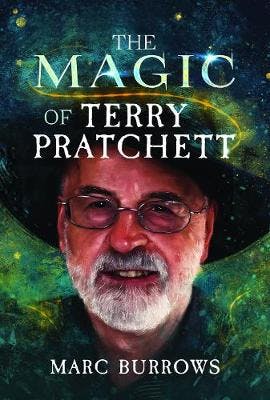
The Magic of Terry Pratchett by Marc Burrows
Rachel Cunliffe looks at a recent biography of the great science fiction/fantasy author Terry Pratchett by Marc Burrows:
A satirical sci-fi/fantasy writer might not seem the obvious choice to dissect the world-changing magnitude of an unforeseen pandemic — or so you might think if you’ve never read any of his books. But anyone familiar with the Pratchett’s oeuvre will know that the scouring wit and the unflinching grasp of humanity at its best and worst found within his pages would be the only true way to understand what has happened to our world since the start of the year.
Alas, we will never know how Sir Terry would have woven the government’s dysfunctional pandemic response, the etiquette of social distancing, mask and anti-mask culture or the mass shift to remote working into the realm of the Discworld (although we can be fairly confident that he would have done). But glimpses can be found in The Magic Of Terry Pratchett, a new biography by writer and comedian Marc Burrows.
This is the first full biography of the great man, from his upbringing in the quintessentially English hamlet of Forty Green, Buckinghamshire, to his battle with Alzheimer’s (which Pratchett dubbed “the Embuggerance”) and ferocious campaign for a law change to allow assisted dying — and featuring a whistle-stop tour of his 60-odd books.
It is, as Burrows admits from the start, the project of a committed fanboy. The author never actually got to speak to his literary hero (“This book is my chance to meet Terry Pratchett. It’s yours as well,” he explains early on), and has instead pieced together his life story through old interviews, archives, and conversations with friends and contemporaries.
The result is an engaging quest to get to know the man that both explores and adds to the mythology surrounding him. Pratchett was, as Burrows makes clear, a storyteller first and foremost, and some of his oft-repeated anecdotes — such as encountering a dead body age 17 on his first day as a junior reporter, or filing his copy from a shed on the roof — may have been based more on fantasy than reality. Where he cannot verify, Burrows sticks to the strategy taken by Tony Wilson in the film 24 Hour Party People: “When you have to choose between the truth and the legend, print the legend”.
As such, while this book will no doubt be of greatest interest to Pratchett fans, even those who have never opened a Discworld novel will find themselves entertained by its numerous detours — encompassing the educational apartheid of the 1950s, a surreal stint doing PR for Britain’s nuclear industry, and the once vibrant, now sadly endangered local journalism ecosystem.
August 1, 2020
EP Thompson: The Foremost Marxist in History | Historians who changed History
The Cynical Historian
Published 1 Nov 2018Today let’s talk about Marxist historians. Edward Palmer Thompson makes perhaps the best introduction to the realm of Marxist history. His work on the English Labor Class, allows for a better understanding of the Marxist project, and how understanding class consciousness can lead to revolution.
————————————————————
references:
Beard, Charles. “Written History as an act of Faith”, The American Historical Review 39, no. 2 (January 1934), 219-231.Marx, Karl. The Essential Marx. ed. Leon Trotsky, abridgment of Das Kapital, Vol. I. 1939; Mineola, N.York: Dover Publications, 2006. https://amzn.to/2MWygco
Thompson, E.P. “The Moral Economy of the English Crowd in the Eighteenth Century”, Past and Present, No. 50 (Feb., 1971), 76-136.
Thompson, E.P. The Making of the English Working Class. New York: Pantheon Books, 1963. https://amzn.to/2KFSESC
Special thanks to Dr. Colleen Hall-Patton for proofreading the script for this episode.
————————————————————
Support the channel through Patreon:
https://www.patreon.com/CynicalHistorian
or pick up some merchandise at SpreadShirt:
https://shop.spreadshirt.com/cynicalh…LET’S CONNECT:
https://discord.gg/Ukthk4U
https://twitter.com/Cynical_History
————————————————————
Wiki:
Edward Palmer Thompson (3 February 1924 – 28 August 1993), usually cited as E. P. Thompson, was a British historian, writer, socialist and peace campaigner. He is probably best known today for his historical work on the British radical movements in the late 18th and early 19th centuries, in particular The Making of the English Working Class (1963). He also published influential biographies of William Morris (1955) and (posthumously) William Blake (1993) and was a prolific journalist and essayist. He also published the novel The Sykaos Papers and a collection of poetry. His work is considered to have been among the most important contributions to labour history and social history in the latter twentieth-century, with a global impact, including on scholarship in Asia and Africa.Thompson was one of the principal intellectuals of the Communist Party in Great Britain. Although he left the party in 1956 over the Soviet invasion of Hungary, he nevertheless remained a “historian in the Marxist tradition”, calling for a rebellion against Stalinism as a prerequisite for the restoration of communists’ “confidence in our own revolutionary perspectives”. Thompson played a key role in the first New Left in Britain in the late 1950s. He was a vociferous left-wing socialist critic of the Labour governments of 1964–70 and 1974–79, and an early and constant supporter of the Campaign for Nuclear Disarmament, becoming during the 1980s the leading intellectual light of the movement against nuclear weapons in Europe.
————————————————————
Hashtags: #History #Marx #EPThompson #ClassConsiousness #Materialism #TheMakingOfTheEnglishWorkingClass
July 27, 2020
H.L. Mencken
In the latest Libertarian Enterprise, Eric Oppen (with whom I’ve had a few brief email conversations) discusses the work of the “Sage of Baltimore”:
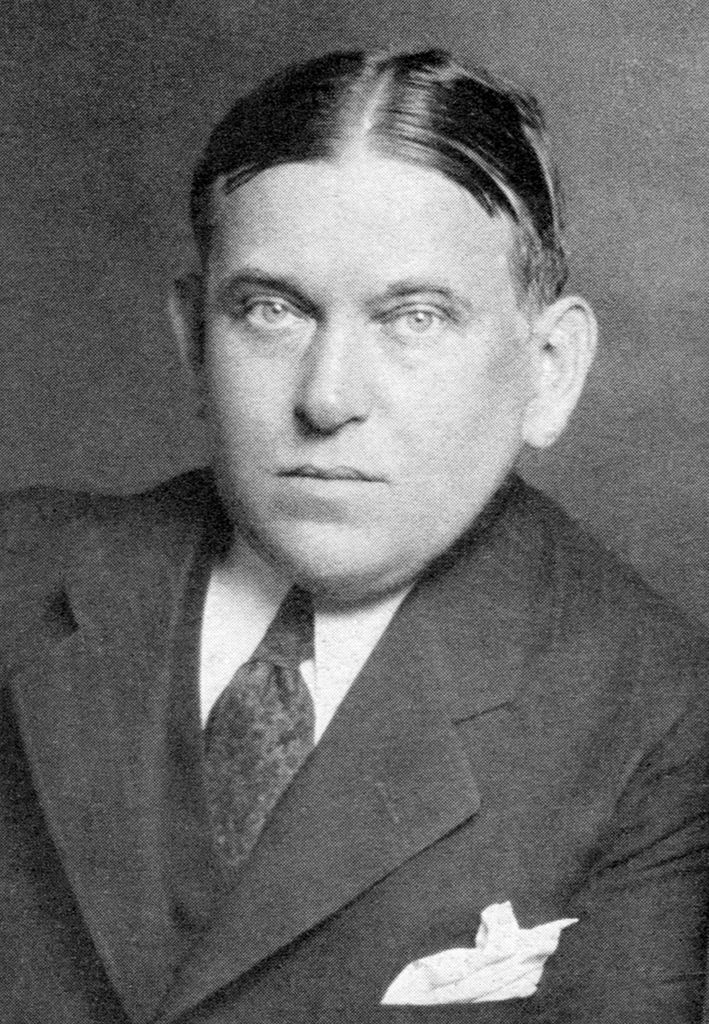
H.L. Mencken in 1928.
Photo by Ben Pinchot for Theatre Magazine, August 1928.
I would say that, on the whole, Mencken is still quite readable and enjoyable, and many of his observations on the American scene are still as valid as when he made them. He has his weaknesses. He’s not much of an historian, which limits him when he takes up historical subjects. He never got over what he saw as the unfair treatment the German cause got in the American press between 1914 and the entry of the US into World War One. He also often identifies people as Jewish or black when it’s not really relevant to what he’s saying, but this was more a custom of his time than out-and-out bigotry. While he often has uncomplimentary things to say about Jews, and blacks, his greatest scorn is reserved for “the lintheads” — his term for the poor whites of the South. He regarded them as barely worthy of human status.
[…] his views on most subjects were quite compatible with libertarian positions. He was an inveterate opponent of government overreaching (which was behind a lot of his ferocious opposition to Prohibition) and while I don’t think he’d approve of drug use, he’d see our War on (Some Unpopular) Drugs as the assault on the Constitution that it is. While he was by no means hostile to blacks, and went out of his way to promote black writers (many of the figures in the “Harlem Renaissance” owed a lot to his support), he’d also denounce affirmative action and our current frenzy of “anti-racism” in scathing terms. His views on the Civil Rights Act of 1964 and how it has been turned into an alternate, and superior, Constitution would probably scorch the paint off the walls.
Mencken’s views on people’s private lives would have infuriated many of his contemporaries. While he disapproved of homosexuality, referring to it negatively in entries in his private diaries, he was by no means a howling “homophobe.” His writings on the travails of Oscar Wilde are very sympathetic to Wilde’s sufferings, which Mencken thought were wholly disproportionate to what he was known to have done. Mencken referred to Lord Alfred Douglas, in a review of Douglas’ book about Wilde, as a Tartuffe — that is to say, a posturing hypocrite.
Having been a reporter for years in Baltimore, back when reporters were very like the old film noir view of them, Mencken was very much a man of the world, and inclined to great tolerance on others’ sex lives. When he wrote of prostitutes, he refrained from the sort of pious moralizing that was expected in his time. He said that prostitutes often actively preferred their profession to other work available to them, and that most of them ended up respectably married. He kept his own love life very private, and was a faithful husband to his wife throughout their brief marriage, but he does mention, here and there, having had other lovers, whom he does not name even in writings designated to come to light only long after everybody involved was dead. By his own account in his Diary, he lost his virginity at age fourteen to a girl of his own age, who had already had other experiences before him. He felt that such experiences, unless pregnancy happened, did no one any harm.
While he was an atheist, Mencken had no particular hostility to religion per se, no matter what the Fundamentalists of his day thought. His book Treatise on the Gods makes interesting reading, although it is marred, in my view, by Mencken’s lack of knowledge of languages. He praises Christianity for having “the most gorgeous poetry,” but as far as I know, he could not read Hebrew, Aramaic or Greek, and was thinking in terms of the King James Bible and the Book of Common Prayer. However, the book is still worth reading, although a serious student of the subject would find it limited.
If you’ve been a regular visitor to the blog, you’ll know I have a huge regard for H.L. Mencken’s work and there are many Mencken quotes that have done duty as QotD entries over the years.
July 25, 2020
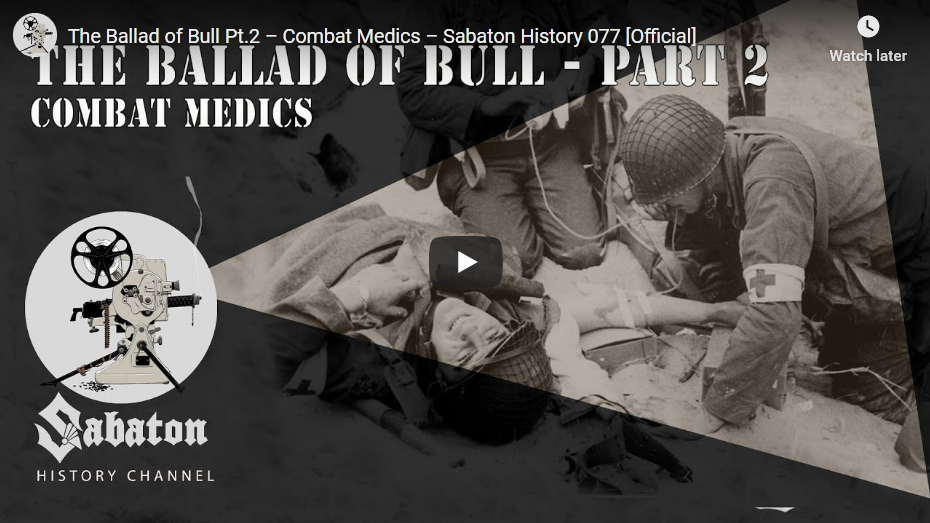
“The Ballad of Bull” Pt.2 – Combat Medics – Sabaton History 077 [Official]
Sabaton History
Published 24 Jul 2020Sometimes war is killing, sometimes war is saving lives.
In the first episode we have seen Leslie “Bull” Allen become a hero, not through the death of his enemies, but by saving his comrades’ lives. And there were others like him. Soldiers and medics, whose first duty it was to preserve lives during war, even when it meant endangering their own safety. Here are three short stories of men and women, who served as medics at the front line of the Second World War, and became heroes to their country.
Support Sabaton History on Patreon: https://www.patreon.com/sabatonhistory
Listen to “The Ballad of Bull” on the album Heroes:
CD: http://bit.ly/HeroesStore
Spotify: http://bit.ly/HeroesSpotify
Apple Music: http://bit.ly/HeroesAppleMusic
iTunes: http://bit.ly/HeroesiTunes
Amazon: http://bit.ly/HeroesAmz
Google Play: http://bit.ly/HeroesGooglePListen to Sabaton on Spotify: http://smarturl.it/SabatonSpotify
Official Sabaton Merchandise Shop: http://bit.ly/SabatonOfficialShopHosted by: Indy Neidell
Written by: Markus Linke and Indy Neidell
Directed by: Astrid Deinhard and Wieke Kapteijns
Produced by: Pär Sundström, Astrid Deinhard and Spartacus Olsson
Creative Producer: Joram Appel
Community Manager: Maria Kyhle
Executive Producers: Pär Sundström, Joakim Broden, Tomas Sunmo, Indy Neidell, Astrid Deinhard, and Spartacus Olsson
Post-Production Director: Wieke Kapteijns
Edited by: Iryna Dulka
Sound Editing by: Marek Kaminski
Maps by: Eastory – https://www.youtube.com/c/eastoryArchive by: Reuters/Screenocean https://www.screenocean.com
Music by SabatonColorizations:
– Olga Shirnina, a.k.a. Klimbim – https://klimbim2014.wordpress.com/Sources:
– Photos of Desmond Doss Courtesy of the Desmond Doss Council
– Frame vector created by milano83 – www.freepik.com
– Arkiv i Nordland
– P.Fisxo from WikimediaAn OnLion Entertainment GmbH and Raging Beaver Publishing AB co-Production.
© Raging Beaver Publishing AB, 2019 – all rights reserved.
From the comments:
Sabaton History
2 days ago
The medical staff in war — combat medics, field surgeons and nurses, ambulance drivers and medevac crews — are often the unsung heroes of war, literally and figuratively.That doesn’t mean that they don’t deserve to be remembered and their sacrifices honored. There are undoubtedly many instances of exceptional bravery among the medical staff of wars throughout history — for which they rightly should be praised. But they should also be remembered for their everyday work in trenches or field hospitals, in jungles and deserts, at sea or in mid-air. Treating a seemingly endless stream of incoming wounded, trying to give relief to those in pain, comfort to those in agony, and hope to to those who have lost theirs — day in and day out, for as long as the war will last.
If you missed part one of “The Ballad of Bull” you can see it right here.
Walter Duranty, Stalin’s tame “journalist”
Francis X. Maier makes the case that the Holodomor — the Soviet Union’s deliberate starvation of millions of its own people in Ukraine and surrounding regions — killed even more than the better-known Nazi Holocaust, then identifies one of the key apologists who lied serially and deliberately to hide the genocide:
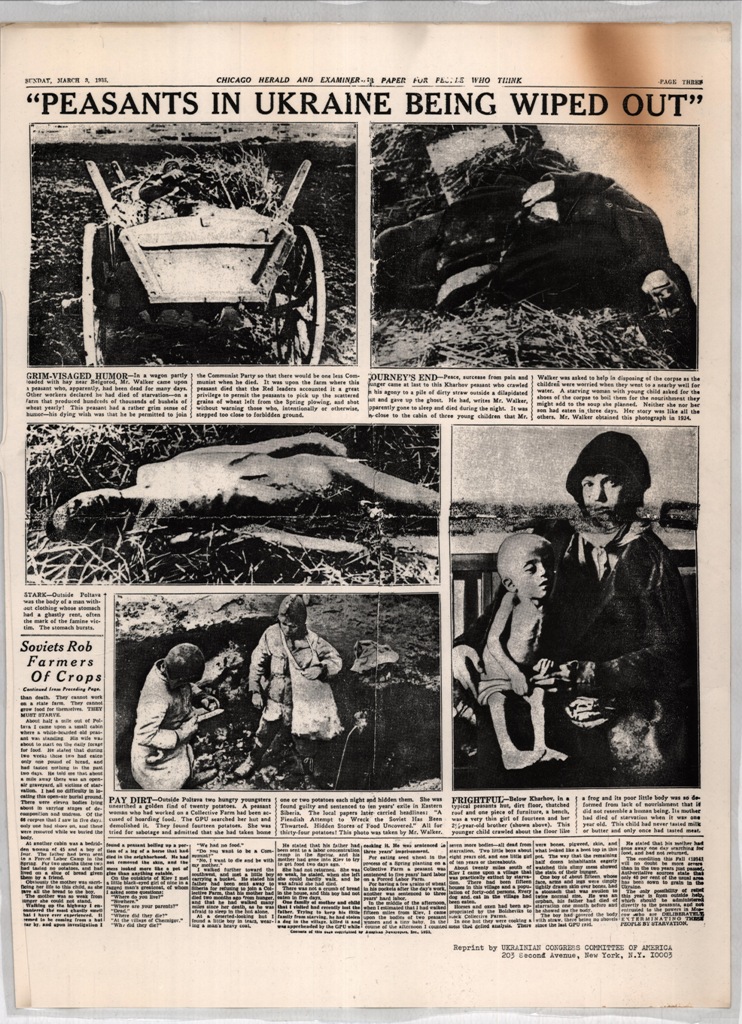
A page from the Chicago Herald and Examiner from 3 March, 1935.
Wikimedia Commons.
[S.J.] Taylor’s 1990 article was timed to the release of Stalin’s Apologist, her withering biography of journalist Walter Duranty. A Pulitzer Prize winner, celebrated political analyst, and Moscow correspondent for the New York Times during the 1930s, Duranty interviewed Stalin twice. He also played a significant role in securing American diplomatic recognition for the Soviet regime. Less publicly, he was a prodigious womanizer, longtime opium buddy of Satanist Aleister Crowley, compulsive exploiter of friends, a spendthrift, occasional drunk, and an inventive, always-reliable flack for the Soviet regime.
One of Duranty’s lifelong memories involved his religious grandmother who, after catching the adolescent Duranty in a lie, had warned him that “liars go to hell.” He never forgot or forgave the correction. As an adult, he simply erased all family ties and falsely claimed in his autobiography that he’d been orphaned at age ten. Massaging the truth became one of his core skills. Brilliant, engaging, and widely respected at the time, he was, in the words of Malcolm Muggeridge, who also reported from Moscow and saw Duranty in action, “the greatest liar of any journalist I have met in 50 years of journalism.”
Committed to protecting his own influence and to a future “greater good” promised by the Soviet regime, Duranty at first dismissed rumors of the Ukrainian Famine. Then he downplayed them. Then he claimed that Ukraine’s “food shortages” were the result of local mismanagement and the work of “wreckers” and “spoilers” intent on undermining Soviet progress. He repeatedly denied the mass starvation in his reporting. But he did suggest that “you can’t make an omelet without breaking eggs” … especially when the omelet is the task of modernization, and the cooks are tough-minded Bolsheviks intent on a better tomorrow.
As Taylor notes in her book, Western powers struggling with the Great Depression and the rise of Hitler in Germany had little interest in rumors from Ukraine that might antagonize Stalin as a potential ally. Muggeridge had arrived in Russia in 1932 to string for the Manchester Guardian. A convinced socialist at the time, he intended to stay in Russia and renounce his British passport for Soviet citizenship. Reality interfered. By March 1933, he was reporting on Ukraine’s famine as “one of the most monstrous crimes in history,” and his disillusionment with the Soviet paradise was complete. But back in England, thanks in part to Duranty’s counter-reporting and Soviet propaganda, Muggeridge’s work was dismissed as “a hysterical tirade.” Muggeridge himself was slandered, vilified, and unable to find employment. And that might have buried the Holodomor story successfully, except for one man.
Welshman Gareth Jones was a young Russian Studies graduate of Cambridge and a former secretary to British Prime Minister Lloyd George. Stringing for the same Manchester Guardian as Muggeridge, he eluded Soviet press controls and spent three weeks on his own, walking through the hellish conditions of a starvation-ravaged Ukraine. Then he wrote about it in the spring of 1933, confirming and compounding the impact of Muggeridge’s recent work. Walter Duranty led the ferocious, Soviet-prodded attack on Jones’s credibility. He also bullied most other Moscow-based Western journalists — to their enduring disgrace — into doing the same, lest they lose their visas. Jones, however, had a spine. He did not back off. He continued writing and speaking about the famine in Ukraine with lasting effect, until his death under suspicious circumstances two years later.
July 24, 2020
QotD: A death in the Roman Empire
Yet then something miraculous happened. Spreading from east to west across the Mediterranean, travelling along the great network of roads and shipping lanes that constituted the arteries of the Roman Empire, news began to spread that this man whose mortal remains supposedly lay entombed in the grave had been seen alive. Most people, of course, scoffed at such reports — but there were some, small communities of believers, who did not. These, even as the decades passed, kept the faith: the conviction that their saviour would come again, that he would reign, in the words of a widely circulated prophecy, as “the king of Jerusalem”, that he would bring to groaning humanity a universal peace.
In the event, Nero did not come again. Despite the various imposters who appeared in the wake of his death in AD 68, and the fact that, centuries later, there were cities in the eastern reaches of the Roman Empire that still honoured his memory, his fate was to be commemorated, not as a saviour, but as a monster. And so, in numerous ways, he was. His readiness to have members of his own family — mother, brother, wife — put to death ensured that when he himself died the dynasty of the Caesars perished with him.
His sex games were notorious. He was darkly rumoured to have set fire to Rome. By the time that Suetonius, half a century after his death, came to write his biography, the details of his life could be structured almost entirely as a catalogue of deviancies and crimes. “Insolence, an uninhibited sexual appetite, dissipation, greed, cruelty: these were the vices which, to begin with — because he gave expression to them only secretly and incrementally — might well have been chalked up as the excesses of youth, had it not been manifest to everyone even at the time that they were failings, not of age, but of character.”
Nero’s rule had become one protracted blasphemy against the customs of the Roman state. These, hallowed by the centuries, enabled the people of a city that had conquered most of the known world to feel a sense of communion still with the mos maiorum: the customs of their distant ancestors. To no class of society was this more important than the Senate, which still, despite the collapse of Rome’s venerable republican order and its replacement by the autocracy of the Caesars, cherished its time-honoured role as the guardians of tradition.
Tom Holland, “When Christ conquered Caesar”, UnHerd, 2020-04-10.


