Hoover graduates Stanford in 1895 with a Geology degree. He plans to work for the US Geological Survey, but the Panic of 1895 devastates government finances and his job is cancelled. Hoover hikes up and down the Sierra Nevadas looking for work as a mining engineer. When none materializes, he takes a job an ordinary miner, hoping to work his way up from the bottom […]
After a few months, he finds a position as a clerk at a top Bay Area mining firm. One year later, he is a senior mining engineer. He is moving up rapidly – but not rapidly enough for his purposes. An opportunity arises: London company Berwick Moreing is looking for someone to supervise their mines in the Australian Outback. Their only requirement is that he be at least 35 years old, experienced, and an engineer. Hoover (22 years old, <1 year experience, geology degree only) travels to Britain, strides into their office, and declares himself their man. The executives “professed astonishment at Americans’ ability to maintain their youthful appearance” (Hoover had told them he was 36), but hire him and send him on an ocean liner to Australia.
[…]
After a year, Hoover is the most hated person in Australia, and also doing amazing. His mines are producing more ore than ever before, at phenomenally low prices. He scouts out a run-down out-of-the-way gold mine, realized its potential before anyone else, bought it for a song, and raked in cash when it ended up the richest mine in Australia. He received promotion after promotion.
Success goes to his head and makes him paranoid. He starts plotting against his immediate boss, Berwick Moreing’s Australia chief Ernest Williams. Though Williams didn’t originally bear him any ill will, all the plotting eventually gets to him, and he arranges for Hoover to be transferred to China. Hoover is on board with this, since China is a lucrative market and the transfer feels like a promotion. He travels first back to Stanford – where he marries his college sweetheart Lou Henry – and then the two of them head to China.
China is Australia 2.0. Hoover hates everyone in the country and they hate him back […] The same conflicts are playing itself out on the world stage, as Chinese resentment at their would-be-colonizers boils over into the Boxer Rebellion. A cult with a great name – “Society Of Righteous And Harmonious Fists” – takes over the government and encourages angry mobs to go around killing Westerners. Thousands of Europeans, including Herbert and Lou, barricade themselves in the partly-Europeanized city of Tientsin to make a final last stand.
In between dodging artillery shells, Hoover furiously negotiates property deals with his fellow besiegees. He argues that if any of them survive, it will probably because Western powers invade China to save them. That means they will soon be operating under Western law, and people who had already sold their mines to Western companies would be ahead of the game and avoid involuntary confiscation. Somehow, everything comes up exactly how Hoover predicts. US Marines arrived in Tientsin to liberate the city (Hoover marches with them as their local guide) and he is ready to collect his winnings.
Problem: it turns out that “Whatever, sure, you can have my gold mine, we’re all going to die anyway” is not legally ironclad. Hoover, enraged as he watches apparently done deals slip through his fingers, reaches new levels of moral turpitude. He offers the Chinese great verbal deals, then gives them contracts with terrible deals, saying that this is some kind of quaint foreign custom and if they just sign the contract then the verbal deal will be the legally binding one (this is totally false). At one point, he literally holds up a property office with a gun to get the deed to a mine he wants. Somehow, after consecutively scamming half the population of China, he ends up with the rights to millions of dollars worth of mines. Berwick Moreing congratulates him and promotes him to managing director. He and Lou sail for London to live the lives of British corporate bigshots.
As you might also predict, Hoover manages to offend everyone in Britain. Soon he is signing off on a “mutually agreeable”, “amicable” dismissal from Berwick Moreing. They agree to let him go on the condition that he does not compete with them – a promise he breaks basically instantly. He goes into banking, and his “bank” funds mining operations in a way indistinguishable from being a mining conglomerate. Eventually he abandons even this fig leaf, and just does the mining directly.
In other ways, his tens of millions of dollars are mellowing him out. Over his years in London, he develops hobbies besides making money and crushing people. He starts a family; he and Lou have two sons, Herbert Jr and Allen. He even hosts dinner parties, very gradually working on the skill of getting through an entire meal without mortally offending any guest…
Scott Alexander, “Book Review: Hoover”, Slate Star Codex, 2020-03-17.
July 23, 2020
QotD: Herbert Hoover in Australia and China
July 22, 2020
A brief look at the life of Thomas Cromwell, Henry VIII’s “main fixer”
Michael Coren discusses the career and reputation of Henry VIII’s powerful and capable Lord Chamberlain until he fell from favour and was executed in 1540:
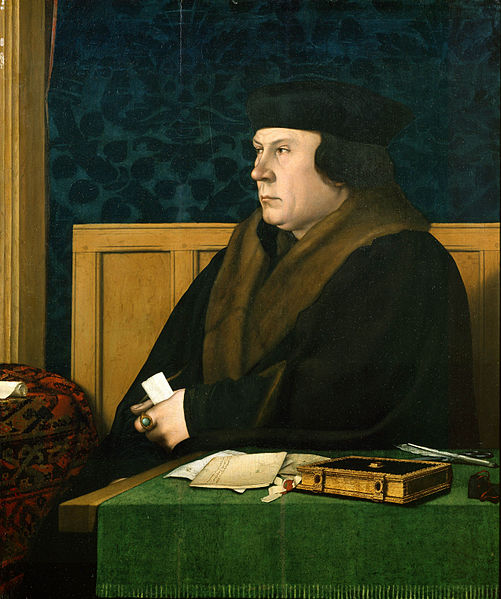
Portrait of Thomas Cromwell, First Earl of Essex painted by Hans Holbein 1532-33.
From the Frick Collection via Wikimedia Commons.
The panoply of British history doesn’t include too many monsters. The nation was founded more on meetings than massacres, and other than the usual round of chronic blood-letting in the Middle Ages, and a civil war in the seventeenth-century, the English have left it to the French, the Russians, and the Germans to provide the mass murderers and the genuine villains. But if anyone was generally regarded as being unscrupulous, with a touch of the devil always around his character, it was Thomas Cromwell, the main fixer for Henry VIII in the 1530s, and according to the Oscar-winning movie A Man for all Seasons, the dark politician who had hagiographical Thomas More executed. For decades both on British television and in Hollywood epics it was this self-made man who was willing to smash the monasteries, torture innocent witnesses into giving false evidence, and assemble lies to have that nice Anne Boleyn beheaded.
This was the dictatorship of reputation. Historians provided the framework, and popular entertainment dressed it all up in countless Tudor biopics. But then it all began to change.
The first person to seriously challenge the caricature was himself a victim of lies and hatred. The revered Cambridge historian GR Elton was born Gottfried Rudolf Otto Ehrenberg, son of a German Jewish family of noted scholars, who fled to Britain shortly before the Holocaust. He’s also, by the way, the uncle of the comedian and writer Ben Elton. GR, Geoffrey Rudolph, was one of the dominant post-war historians, and insisted that modern Britain, with its secular democracy and parliamentary system, was very much the child of Thomas Cromwell the gifted administrator and political visionary.
So we had the Cromwell wars. On the one side were the traditionalist, often Roman Catholic, writers who insisted that Cromwell was a corrupt brute and a cruel tyrant; and the rival school that regarded him as the first modern leader of the country, setting it on a road that would distinguish it from the ancient regimes of the European continent. But there was more. While previous political leaders – the term “Prime Minister” didn’t develop until the early eighteenth-century – had sometimes been of relatively humble origins, and Cromwell’s mentor and predecessor Thomas Wolsey was the son of a butcher, they were invariably clerics. Cromwell wasn’t only from rough Putney on the edge of London, and the son of a blacksmith, but he was a layman, and someone who had lived abroad, even fought for foreign armies.
Here was have the embodiment of the great change: the autodidact who was multi-lingual, well travelled, reformed in his religion and politics, and prepared to rip the country out of its medieval roots. Yet no matter how many historians might believe and write this, the culture is notoriously difficult to change, and understandably indifferent to academics. Not, however, to novelists. And in 2009 the award-winning author Hilary Mantel published Wolf Hall, a fictional account of Cromwell’s life from 1500 to 1535. Three years later came the sequel, Bring Up the Bodies. Both books won the Man Booker Prize, an extraordinary achievement for two separate works. The trilogy was completed recently with The Mirror and the Light. The first two volumes were turned into an enormously successful stage play and a six-part television show. Forget noble academics working away in relative obscurity, this was sophisticated work watched and read by tens of millions of people. Cromwell was back.
“It is as a murderer that Cromwell has come down to posterity: who turned monks out on to the roads, infiltrated spies into every corner of the land, and unleashed terror in the service of the state”, wrote Mantel in the Daily Telegraph back in 2012. “If these attributions contain a grain of truth, they also embody a set of lazy assumptions, bundles of prejudice passed from one generation to the next. Novelists and dramatists, who on the whole would rather sensationalise than investigate, have seized on these assumptions to create a reach-me-down villain.”
July 17, 2020
QotD: Gandhi’s views on chastity
Gandhi was a truly fanatical opponent of sex for pleasure, and worked it out carefully that a married couple should be allowed to have sex three or four times in a lifetime, merely to have children, and favored embodying this restriction in the law of the land. The sexual-gratification wing of the present-day feminist movement would find little to attract them in Gandhi’s doctrine, since in all his seventy-nine years it never crossed his mind once that there could be anything enjoyable in sex for women, and he was constantly enjoining Indian women to deny themselves to men, to refuse to let their husbands “abuse” them. Gandhi had been married at thirteen, and when he took his vow of chastity, after twenty-four years of sexual activity, he ordered his two oldest sons, both young men, to be totally chaste as well.
Richard Grenier, “The Gandhi Nobody Knows”, Commentary, 1983-03-01.
July 16, 2020
QotD: The young Herbert Hoover
His father died when he is 6, his mother when he is 10. The orphaned Hoover and his two siblings are shuttled from relative to relative. He spends one summer on the Osage Indian Reservation in Oklahoma, living with an uncle who worked for the Department of Indian Affairs. Another year passes on a pig farm with his Uncle Allen. In 1885, he is more permanently adopted by his Uncle John, a doctor and businessman helping found a Quaker colony in Oregon. Hoover’s various guardians are dutiful but distant; they never abuse or neglect him, but treat him more as an extra pair of hands around the house than as someone to be loved and cherished. Hoover reciprocates in kind, doing what is expected of him but excelling neither in school nor anywhere else.
In his early teens, Hoover gets his first job, as an office boy at a local real estate company. He loves it! He has spent his whole life doing chores for no pay, and working for pay is so much better! He has spent his whole life sullenly following orders, and now he’s expected to be proactive and figure things out for himself! Hoover the mediocre student and all-around unexceptional kid does a complete 180 and accepts Capitalism as the father he never had.
His first task is to write some newspaper ads for Oregon real estate. He writes brilliant ads, ads that draw people to Oregon from every corner of the country. But he learns some out-of-towners read his ads, come to town, stay at hotels, and are intercepted by competitors before they negotiate with his company. Of his own initiative, he rents several houses around town and turns them into boarding houses for out-of-towners coming to buy real estate, then doesn’t tell his competitors where they are. Then he marks up rent on the boarding houses and makes a tidy profit on the side. Everything he does is like this. When an especially acrimonious board meeting threatens to split the company, a quick-thinking Hoover sneaks out and turns off the gas to the building, plunging the meeting into darknes. Everyone else has to adjourn, the extra time gives cooler heads a change to prevail, and the company is saved. Everything he does is like this.
(on the other hand, he has zero friends and only one acquaintance his own age, who later describes him to biographers as “about as much excitement as a china egg”.)
Hoover meets all sorts of people passing through the Oregon frontier. One is a mining engineer. He regales young Herbert with his stories of traveling through the mountains, opening up new sources of minerals to feed the voracious appetite of Progress. This is the age of steamships, skyscrapers, and railroads, and to the young idealistic Hoover, engineering has an irresistible romance. He wants to leave home and go to college. But he worries a poor frontier boy like him would never fit in at Harvard or Yale. He gets a tip – a new, tuition-free university might be opening in Palo Alto, California. If he heads down right away, he might make it in time for the entrance exam. Hoover fails the entrance exam, but the new university is short on students and decides to take him anyway.
Herbert Hoover is the first student at Stanford. Not just a member of the first graduating class. Literally the first student. He arrives at the dorms two months early to get a head start on various money-making schemes, including distributing newspapers, delivering laundry, tending livestock, and helping other students register. He would later sell some of these businesses to other students and start more, operating a constant churn of enterprises throughout his college career. His academics remain mediocre, and he continues to have few friends – until he tries out for the football team in sophomore year. He has zero athletic talent and fails miserably, but the coach (whose eye for talent apparently transcends athletics) spots potential in Hoover and asks him to come on as team manager. In this role, Hoover is an unqualified success. He turns the team’s debt into a surplus, and starts the Big Game – a UC Berkeley vs. Stanford football match played on Thanksgiving which remains a beloved Stanford football tradition.
Scott Alexander, “Book Review: Hoover”, Slate Star Codex, 2020-03-17.
July 11, 2020
The Real James Bond was Balkan – Duško Popov – WW2 Biography Special
World War Two
Published 9 Jul 2020The career of Duško Popov is probably more exciting than any work of fiction. A glamorous and brave spy who plays a central role in the underground intelligence war of the time.
Join us on Patreon: https://www.patreon.com/TimeGhostHistory
Or join The TimeGhost Army directly at: https://timeghost.tvFollow WW2 day by day on Instagram @World_war_two_realtime https://www.instagram.com/world_war_two_realtime
Between 2 Wars: https://www.youtube.com/playlist?list…
Source list: http://bit.ly/WW2sourcesHosted by: Indy Neidell
Written by: Francis van Berkel
Director: Astrid Deinhard
Producers: Astrid Deinhard and Spartacus Olsson
Executive Producers: Astrid Deinhard, Indy Neidell, Spartacus Olsson, Bodo Rittenauer
Creative Producer: Joram Appel
Post-Production Director: Wieke Kapteijns
Research by: Scott Grimwood
Edited by: Karolina Dołęga
Sound design: Marek Kamiński
Map animations: Eastory (https://www.youtube.com/c/eastory)Colorizations by:
Jaris Almazani (Artistic Man), https://instagram.com/artistic.man?ig…
Carlos Ortega Pereira, BlauColorizations, https://www.instagram.com/blaucoloriz…
Dememorabilia, https://www.instagram.com/dememorabilia/Music:
“Try and Catch Us Now” – David Celeste
“Too Close for Comfort” – Jon Bjork
“Epic Adventure Theme 4” – Håkan Eriksson
“Moving to Disturbia” – Experia
“Other Sides of Glory” – Fabien Tell
“Underlying Truth” – Howard Harper-Barnes
“Spy Game” – Jon SumnerVisual Sources:
National Archives NARA
Library of Congress
Imperial War Museum: CH1461
US Holocaust Memorial Museum
Alexander Altenhof https://commons.wikimedia.org/wiki/Fi…
Icons from The Noun Project: Marco Livolsi, faisal, Smalllike, Adrien Coquet, Fiona OM, Businessman with Suitcase by Fiona, Nick Novell, Luis Prado, Samy Menai, Nithinan, designer468, Marco Livolsi, ProSymbols, Milinda Courey,Icons Producer, Halfazebra, Leona Grande, Vectors Point, Arthur Dias,MRK, Becris, iconcheese, Likous, Markus, ProSymbols, Michael Fischer, priyanka, Adnen Kadri, Baboon designs and LaymikArchive by Screenocean/Reuters https://www.screenocean.com.
A TimeGhost chronological documentary produced by OnLion Entertainment GmbH.

July 1, 2020
A Non-Nazi in Nazi Uniform? – Gerd von Rundstedt – WW2 Biography Special
World War Two
Published 30 Jun 2020Most of the German high-command are not committed National Socialists. So what were like and why did they still serve the Nazi regime?
Join us on Patreon: https://www.patreon.com/TimeGhostHistory
Or join The TimeGhost Army directly at: https://timeghost.tvFollow WW2 day by day on Instagram @World_war_two_realtime https://www.instagram.com/world_war_two_realtime
Between 2 Wars: https://www.youtube.com/playlist?list…
Source list: http://bit.ly/WW2sources
Hosted by: Indy Neidell
Written by: Francis van Berkel
Director: Astrid Deinhard
Producers: Astrid Deinhard and Spartacus Olsson
Executive Producers: Astrid Deinhard, Indy Neidell, Spartacus Olsson, Bodo Rittenauer
Creative Producer: Joram Appel
Post-Production Director: Wieke Kapteijns
Research by: Wolfgang Seitz
Edited by: Mikołaj Cackowski
Sound design: Marek Kamiński
Map animations: Eastory (https://www.youtube.com/c/eastory)Colorizations by:
Adrien Fillon – https://www.instagram.com/adrien.colo…
Dememorabilia – https://www.instagram.com/dememorabilia/
Carlos Ortega Pereira, BlauColorizations – https://www.instagram.com/blaucoloriz…
Julius Jääskeläinen – https://www.facebook.com/JJcolorization/
Cassowary Colorizations https://www.flickr.com/photos/cassowa…
Norman Stewart – https://oldtimesincolor.blogspot.com/Sources:
Map of Europe 1871, courtesy Alexander Altenhof https://commons.wikimedia.org/wiki/Fi…
Bundesarchiv
Narodowe Archiwum CyfroweSoundtracks from the Epidemic Sound:
Phoenix Tail – “At the Front”
Philip Ayers – “Trapped in a Maze”
Skrya – “First Responders”
Johan Hynynen – “Dark Beginning”
Gunnar Johnsen – “Not Safe Yet”
Farrell Wooten – “Blunt Object”Archive by Screenocean/Reuters https://www.screenocean.com.
A TimeGhost chronological documentary produced by OnLion Entertainment GmbH.

June 20, 2020
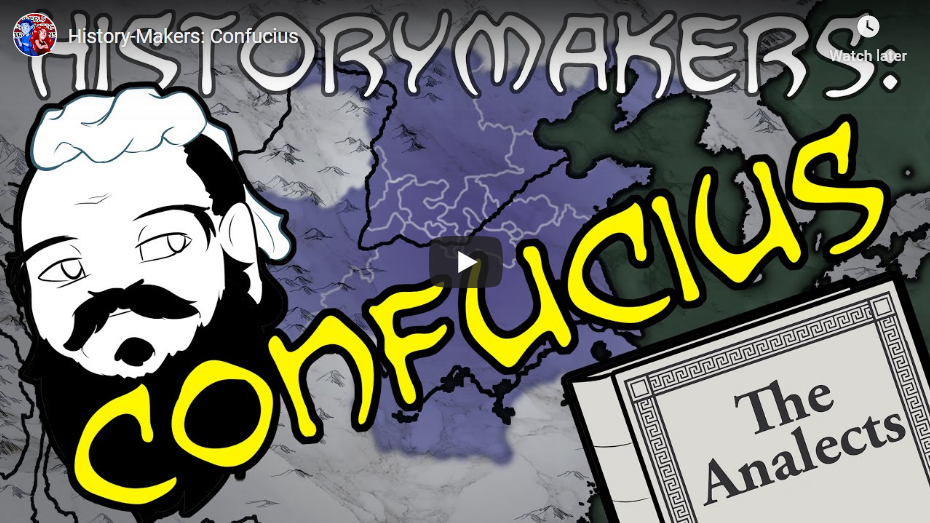
History-Makers: Confucius
Overly Sarcastic Productions
Published 19 Jun 2020Welcome to the challenge run of History-Makers, where I attempt to give insightful historical context to someone whose backstory is almost entirely blank.
SOURCES & Further Reading: Confucius: A Very Short Introduction by Gardner, China: A History by Keay, The Analects of Confucius, The Mencius.
This video was edited by Sophia Ricciardi AKA “Indigo”. https://www.sophiakricci.com/
Our content is intended for teenage audiences and up.PATREON: https://www.Patreon.com/OSP
MERCH LINKS: https://www.redbubble.com/people/OSPY…
OUR WEBSITE: https://www.OverlySarcasticProductions.com
Find us on Twitter https://www.Twitter.com/OSPYouTube
Find us on Reddit https://www.Reddit.com/r/OSP/
May 20, 2020
Roald Dahl – Pilot, Seducer and Author – WW2 Biography Special
World War Two
Published 19 May 2020Roald Dahl is not just a beloved author, he is also a wartime adventurer. He saw plenty of action in North Africa and Greece, where he got the inspiration for many of his work to come.
Join us on Patreon: https://www.patreon.com/TimeGhostHistory
Or join The TimeGhost Army directly at: https://timeghost.tvFollow WW2 day by day on Instagram @World_war_two_realtime https://www.instagram.com/world_war_t…
Between 2 Wars: https://www.youtube.com/playlist?list…
Source list: http://bit.ly/WW2sourcesHosted by: Indy Neidell
Written by: Isabel Wilson
Director: Astrid Deinhard
Producers: Astrid Deinhard and Spartacus Olsson
Executive Producers: Astrid Deinhard, Indy Neidell, Spartacus Olsson, Bodo Rittenauer
Creative Producer: Joram Appel
Post-Production Director: Wieke Kapteijns
Research by: Isabel Wilson
Edited by: Mikołaj Cackowski
Sound design: Marek KamińskiColorizations by:
Carlos Ortega Pereira, BlauColorizations, https://www.instagram.com/blaucoloriz…Sources:
IWM K 8588, CH 2377, ZZZ 11729, CM 1725, CM 354, CM 358, CM 43, CH 13555, CM 131, CH 1500, CH 1431, CM 2527, CM 1353
Portrait of Roald Dahl, courtesy Royal Air Force Benevolent Fund
“Shot Down over Libya”, courtesy The Saturday Evening Post
Portrait of Walt Disney, courtesy of Disney Archive
Bundesarchiv
USHMMJohannes Bornlof – “The Inspector 4”
Phoenix Tail – “At the Front”
Fabien Tell – “Last Point of Safe Return”
Johannes Bornlof – “Death And Glory 2”
Reynard Seidel – “Deflection”
Johannes Bornlof – “Deviation In Time”Archive by Screenocean/Reuters https://www.screenocean.com.
A TimeGhost chronological documentary produced by OnLion Entertainment GmbH.

May 6, 2020
Georgy Zhukov – Hero of the Soviet Union! – WW2 Biography Special
World War Two
Published 5 May 2020Georgy Zhukov’s rise to one day become the Hero of the Soviet Union did not happen overnight. Instead, the son of a poor tradesman has slowly worked himself up the ranks of the Red Army using his grit, determination, and iron will.
Join us on Patreon: https://www.patreon.com/TimeGhostHistory
Or join The TimeGhost Army directly at: https://timeghost.tvFollow WW2 day by day on Instagram @World_war_two_realtime https://www.instagram.com/world_war_t…
Between 2 Wars: https://www.youtube.com/playlist?list…
Source list: http://bit.ly/WW2sourcesHosted by: Indy Neidell
Written by: Francis van Berkel
Director: Astrid Deinhard
Producers: Astrid Deinhard and Spartacus Olsson
Executive Producers: Astrid Deinhard, Indy Neidell, Spartacus Olsson, Bodo Rittenauer
Creative Producer: Joram Appel
Post-Production Director: Wieke Kapteijns
Research by: Francis van Berkel
Edited by: Mikołaj Cackowski
Sound design: Marek Kamiński
Map animations: Eastory (https://www.youtube.com/c/eastory)Colorizations by:
Carlos Ortega Pereira, BlauColorizations, https://www.instagram.com/blaucoloriz…
Jaris Almazani (Artistic Man), https://instagram.com/artistic.man?ig…
Olga Shirnina, https://klimbim2014.wordpress.com
Sources:
Mil.ru
Cross of Saint-George Issue for subaltern officers 1917, courtesy Robert Prummel
from the Noun Project: company soldiers by Andrei Yushchenko, ak 47 by TMDSoundtrack from the Epidemic Sound:
Reynard Seidel – “Deflection”
Johannes Bornlof – “The Inspector 4”
Johannes Bornlof – “Deviation In Time”
Rannar Sillard – “March Of The Brave 4”
Johannes Bornlof – “Death And Glory 2”
Phoenix Tail – “At the Front”Archive by Screenocean/Reuters https://www.screenocean.com.
A TimeGhost chronological documentary produced by OnLion Entertainment GmbH.

April 29, 2020
Haile Selassie – The New Messiah – WW2 Biography Special
World War Two
Published 28 Apr 2020Haile Selassie was the Emperor of the Ethiopian Empire. He led the country against the Italians in the Second Italo-Ethiopian War after which he is exiled to Britain.
Join us on Patreon: https://www.patreon.com/TimeGhostHistory
Or join The TimeGhost Army directly at: https://timeghost.tvFollow WW2 day by day on Instagram @World_war_two_realtime https://www.instagram.com/world_war_t…
Between 2 Wars: https://www.youtube.com/playlist?list…
Source list: http://bit.ly/WW2sourcesHosted by: Indy Neidell
Written by: Isabel Wilson
Director: Astrid Deinhard
Producers: Astrid Deinhard and Spartacus Olsson
Executive Producers: Astrid Deinhard, Indy Neidell, Spartacus Olsson, Bodo Rittenauer
Creative Producer: Joram Appel
Post-Production Director: Wieke Kapteijns
Research by: Isabel Wilson
Edited by: Karolina Dołęga
Sound design: Marek KamińskiColorizations by:
Dememorabilia – https://www.instagram.com/dememorabilia/
Adrien Fillon – https://www.instagram.com/adrien.colo…
Klimbim – https://klimbim2014.wordpress.com/Sources:
National Museum of the U.S. NavyMusic:
“Other Sides of Glory” – Fabien Tell
“The Unexplored” – Philip Ayers
“March Of The Brave 10” – Rannar Sillard
“Deviation In Time” – Johannes Bornlof
“Epic Adventure Theme 3” – Håkan Eriksson
“Heroes On Horses” – Gunnar Johnsén
“Deviation In Time” – Johannes BornlofArchive by Screenocean/Reuters https://www.screenocean.com.
A TimeGhost chronological documentary produced by OnLion Entertainment GmbH.

April 25, 2020
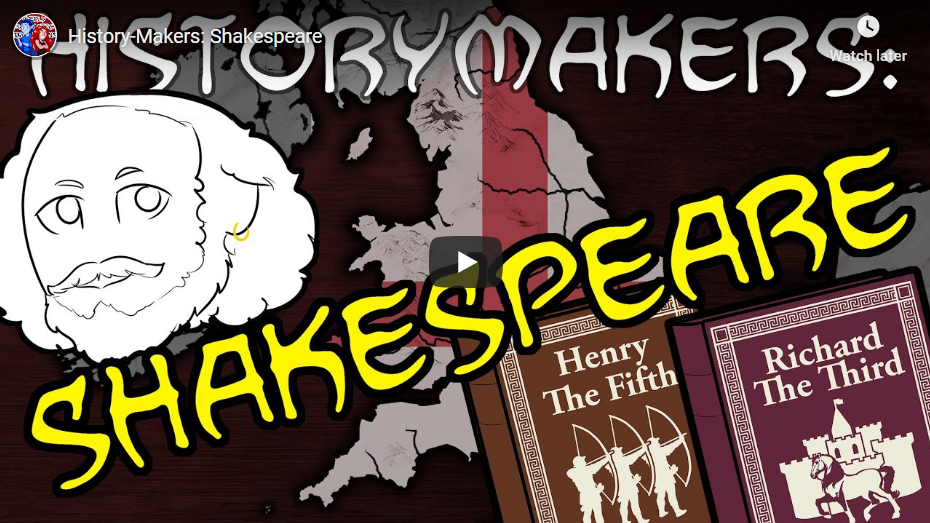
History-Makers: Shakespeare
Overly Sarcastic Productions
Published 24 Apr 2020“The Bard” is not only an essential class in any D&D party, but a byword for England’s most famous writer. We’ve covered a bit of Shakespeare before on OSP — just a bit, really, nothing major, only a dozen — but today we’ll look at how William got to Bard-ing, and how he accidentally became England’s biggest Historian.
SOURCES and Further Reading: The Introduction and play-texts of the Folger Shakespeare Library (The best way to read Shakespeare), “Shakespeare: A Very Short Introduction” by Wells
This video was edited by Sophia Ricciardi AKA “Indigo”. https://www.sophiakricci.com/
Our content is intended for teenage audiences and up.PATREON: https://www.Patreon.com/OSP
DISCORD: https://discord.gg/h3AqJPe
MERCH LINKS: https://www.redbubble.com/people/OSPY…
OUR WEBSITE: https://www.OverlySarcasticProductions.com
Find us on Twitter https://www.Twitter.com/OSPYouTube
Find us on Reddit https://www.Reddit.com/r/OSP/
April 17, 2020
Charles De Gaulle – The Flame of French Resistance? – WW2 Biography Special
World War Two
Published 16 Apr 2020Charles De Gaulle is a towering figure in history, and not just because of his height. Becoming increasingly political in the interwar years due to his unorthodox views on military strategy, The Fall of France will thrust him into the limelight.
Join us on Patreon: https://www.patreon.com/TimeGhostHistory
Or join The TimeGhost Army directly at: https://timeghost.tvFollow WW2 day by day on Instagram @World_war_two_realtime https://www.instagram.com/world_war_t…
Between 2 Wars: https://www.youtube.com/playlist?list…
Source list: http://bit.ly/WW2sourcesHosted by: Indy Neidell
Written by: Francis van Berkel
Director: Astrid Deinhard
Producers: Astrid Deinhard and Spartacus Olsson
Executive Producers: Astrid Deinhard, Indy Neidell, Spartacus Olsson, Bodo Rittenauer
Creative Producer: Joram Appel
Post-Production Director: Wieke Kapteijns
Research by: Catherine Burton
Edited by: Mikołaj Cackowski
Sound design: Marek Kamiński
Map animations: Eastory (https://www.youtube.com/c/eastory)Colorizations by:
Carlos Ortega Pereira, BlauColorizations, https://www.instagram.com/blaucoloriz…
Dememorabilia – https://www.instagram.com/dememorabilia/
Norman Stewart – https://oldtimesincolor.blogspot.com/
Adrien Fillon – https://www.instagram.com/adrien.colo…
Sources:
Outdoor family portrait, with lurkers (c.1920), courtesy pellethepoet https://flic.kr/p/ompxgf
IWM A 1464, E 2324, D 1966
Frederick Milthorp collectionSoundtracks from the Epidemic Sound:
Max Anson – “Ancient Saga”
Farell Wooten – “Blunt Object”
Johannes Bornlof – “Deviation in Time”
Reynard Seidel – “Deflection”
Johannes Bornlof – “The Inspector 4”
Phoenix Tail – “At the Front”Archive by Screenocean/Reuters https://www.screenocean.com.
A TimeGhost chronological documentary produced by OnLion Entertainment GmbH.

April 8, 2020
Prince Paul of Yugoslavia – Victim of Circumstance? – WW2 Biography Special
World War Two
Published 7 Apr 2020A Serb royal with an English heart sounds pretty romantic, but the story of Prince Paul of Yugoslavia is far from it. Trapped by circumstance, he is forced to make decisions that go against his own personal beliefs and leave him condemned as a traitor.
Join us on Patreon: https://www.patreon.com/TimeGhostHistory
Or join The TimeGhost Army directly at: https://timeghost.tvFollow WW2 day by day on Instagram @World_war_two_realtime https://www.instagram.com/world_war_t…
Between 2 Wars: https://www.youtube.com/playlist?list…
Source list: http://bit.ly/WW2sourcesHosted by: Indy Neidell
Written by: Francis van Berkel
Produced and Directed by: Spartacus Olsson and Astrid Deinhard
Executive Producers: Bodo Rittenauer, Astrid Deinhard, Indy Neidell, Spartacus Olsson
Creative Producer: Joram Appel
Post-Production Director: Wieke Kapteijns
Research by: Tom Meaden
Edited by: Mikołaj Cackowski
Map animations: Eastory (https://www.youtube.com/c/eastory)Colorizations by:
Dememorabilia – https://www.instagram.com/dememorabilia/
Carlos Ortega Pereira, BlauColorizations
Adrien Fillon – https://www.instagram.com/adrien.colo…Sources:
Narodowe Archiwum Cyfrowe
USHMM
IWM MH 26392Soundtracks from the Epidemic Sound:
Howard Harper-Barnes – “London”
Farell Wooten – “Blunt Object”
Philip Ayers – “Trapped in a Maze”
Johannes Bornlof – “The Inspector 4”
Gunnar Johnsen – “Not Safe Yet”
Andreas Jamsheree – “Guilty Shadows 4”Archive by Screenocean/Reuters https://www.screenocean.com.
A TimeGhost chronological documentary produced by OnLion Entertainment GmbH.

March 28, 2020
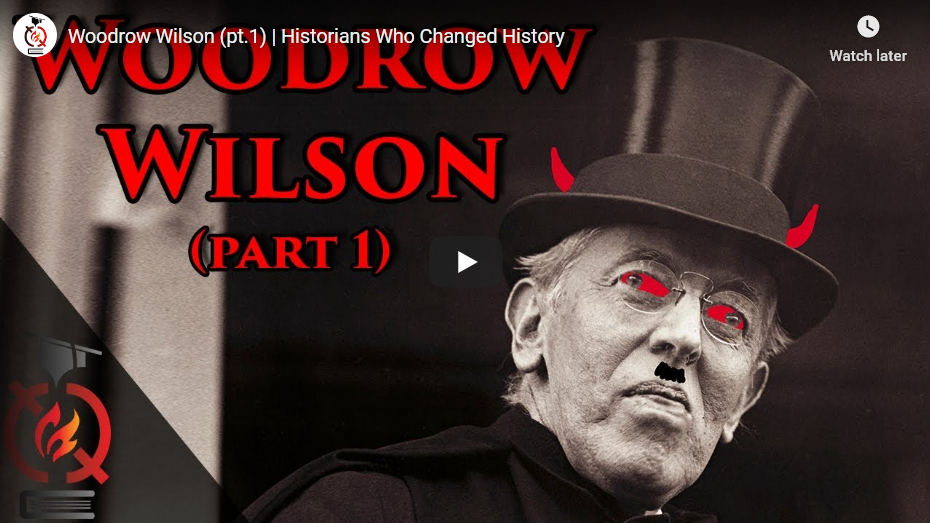
Woodrow Wilson (pt.1) | Historians Who Changed History
The Cynical Historian
Published 28 Dec 2017Time to finally tell you why I’ve used Woodrow Wilson as a bit of a rhetorical punching bag. This is part 1 of a 2 part series. This part will cover his life and scholarship before the presidency. It’s going to be quite a trip. [References on YouTube description]
————————————————————
Support the channel through Patreon:
https://www.patreon.com/CynicalHistorianLET’S CONNECT:
https://twitter.com/Cynical_History
————————————————————
Wiki:
Thomas Woodrow Wilson (December 28, 1856 – February 3, 1924) was an American statesman and academic who served as the 28th President of the United States from 1913 to 1921. A member of the Democratic Party, Wilson served as the President of Princeton University from 1902 to 1910 and then ran and was elected as a progressive Democrat to the office of Governor of New Jersey. Wilson’s victory in the 1912 presidential election made him the first Southerner elected to the presidency since Zachary Taylor in 1848. He also led the United States during World War I, establishing an activist foreign policy known as “Wilsonianism.” He was a major leader at the Paris [Versailles] Peace Conference in 1919, where he championed the proposed League of Nations. However, he was unable to obtain Senate approval for U.S. membership. After he suffered debilitating strokes in September 1919, his wife and staff members handled most of his presidential duties.
————————————————————
Hashtags: #History #WoodrowWilson #LostCause #historians #Princeton #biography
March 25, 2020
Hans Oster – A German Against Nazism – WW2 Biography Special
World War Two
Published 24 Mar 2020Hans Oster opposed the Nazis and tried to oppose them from early on. As a member of the Abwehr, he tried to do whatever he could. During the war, his efforts increased with a dramatic outcome.
Join us on Patreon: https://www.patreon.com/TimeGhostHistory
Or join The TimeGhost Army directly at: https://timeghost.tvFollow WW2 day by day on Instagram @World_war_two_realtime https://www.instagram.com/world_war_t…
Between 2 Wars: https://www.youtube.com/playlist?list…
Source list: http://bit.ly/WW2sourcesHosted by: Spartacus Olsson
Written by: Isabel Wilson, Joram Appel and Spartacus Olsson
Produced and Directed by: Spartacus Olsson and Astrid Deinhard
Executive Producers: Bodo Rittenauer, Astrid Deinhard, Indy Neidell, Spartacus Olsson
Creative Producer: Joram Appel
Post-Production Director: Wieke Kapteijns
Research by: Arnaldo Teodorani and Isabel Wilson
Edited by: Iryna Dulka
Map animations: Eastory (https://www.youtube.com/c/eastory)Colorizations by:
Dememorabilia – https://www.instagram.com/dememorabilia/Sources:
Picture of Dresden, courtesy Wikimedia Commons https://commons.wikimedia.org/wiki/Fi…
Collection of Auckland War Memorial Museum Tamaki Paenga Hira, N2658
Narodowe Archiwum Cyfrowe
Picture of Gijsbertus Jacobus Sas, courtesy ANP Historisch Archief https://www.anp-archief.nl/page/21998…
Picture of Hans Bernd Gisevius, courtesy Gedenkstätte Deutscher Widerstand https://www.gdw-berlin.de/en/recess/b…
id by Flatart from the Noun Project
people by ProSymbols from the Noun Project
documents by Srinivas Agra from the Noun ProjectSoundtracks from the Epidemic Sound:
Johannes Bornlof – “Deviation in Time”
Andreas Jamsheree – “Guilty Shadows 4”
Fabien Tell – “Last Point of Safe Return”
Reynard Seidel – “Deflection”
Jo Wandrini – “Puzzle of Complexity”
Gunnar Johnsen – “Not Safe Yet”Archive by Screenocean/Reuters https://www.screenocean.com.
A TimeGhost chronological documentary produced by OnLion Entertainment GmbH.