
The Tank Museum
Published 19 Aug 2022Do you know why the Museum’s Samaritan has a red cross painted on it? Join Historian David Fletcher and discover this and more for the latest Tank Chat on Samaritan and Sultan.
(more…)
December 16, 2022
Tank Chat #161 Samaritan and Sultan | The Tank Museum
Comments Off on Tank Chat #161 Samaritan and Sultan | The Tank Museum
December 6, 2022
Tank Chat #160 | M18 Hellcat | The Tank Museum
The Tank Museum
Published 5 Aug 2022Hello Tank Nuts! M18 Hellcat perfectly fit the American Army’s Tank Destroyer doctrine during WW2. This particular M18 saw service during WW2 and conflict in former Yugoslavia. It is part of the Phelps private collection and recently took part in the celebrations for the 75th Anniversary of the liberation of the city of Mons, Belgium. Discover more on Hellcat and watch the latest Tank Chat with David Willey.
(more…)
Comments Off on Tank Chat #160 | M18 Hellcat | The Tank Museum
November 29, 2022
Tank Chat #159 | Warrior | The Tank Museum
The Tank Museum
Published 29 Jul 2022Join David Willey for a new Tank Chat on Warrior.
(more…)
Comments Off on Tank Chat #159 | Warrior | The Tank Museum
November 23, 2022
“What we’re witnessing is, in short, the least expensive generational kneecapping of a geopolitical rival in world history”
Stephen Green on the still ongoing Russo-Ukraine war:
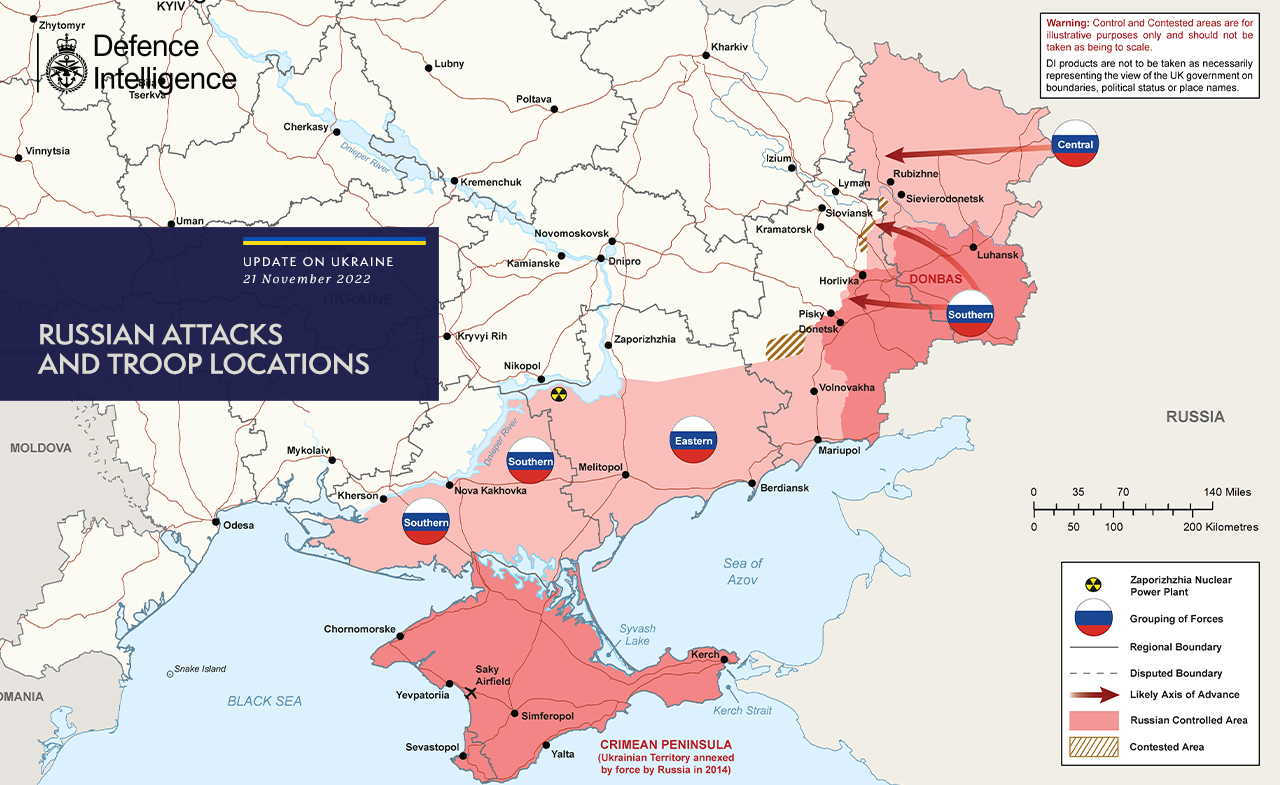
Here’s a hard truth our friends in Kyiv need to remember: Lying isn’t helpful. There are limits to our tolerance.
Here’s another: You’re going to have to make some compromises to end this war because your total victory isn’t in America’s interest here; punishing aggression is. When we decide that Russia has suffered enough, you might find yourselves on your own. Come to the table and negotiate accordingly.
Here is a hard truth for conservative Americans — there are fewer of them than you’d assume from reading Twitter or internet comments sections — opposed to us aiding Ukraine for domestic reasons.
There is no doubt in my mind that much of Ukraine remains what it was: A financial playground for America’s rich elites, and that they have done nothing but increase their ill-gotten gains thanks to our part in keeping Ukraine in the fight. But that’s just one of the many prices we pay for letting our civic structures become so rotten.
The hard truth is, enriching a few corruptocrats is still cheap compared to a continent-wide war in Europe — which is exactly what we risked had we let the Russians march right through.
Here’s a hard truth for my Russian friends and their supporters: The point where Putin & Co. had hoped to aggrandize their country or themselves has long passed. It’s time to ask for a ceasefire and come to the negotiating table.
They know this already, of course, except for the most deluded of true believers. The trick is constructing Sun Tzu’s golden bridge for them to retreat across.
The hard truth I must always keep in mind is that Western leadership, particularly our own, is not up to Sun Tzu’s task.
There is another hard truth that Moscow must come to grips with: Putin threw the dice on an expansionary war but shrank his country’s standing instead.
Russia spent more than a decade modernizing its military. It is becoming increasingly de-modernized with every day of fighting in Ukraine. Destroyed T-80 and T-90 tanks — the most modern in Moscow’s inventory — are being replaced by T-62s that were obsolete 50 years ago. Soldiers in their 20s, casualties of war, are being replaced by ill-trained “mobiks” in their 30s, 40s, and even 50s.
It will take far longer than a decade to replace what Putin has wasted.
The way this war has squandered Russian resources, finances, and demographics has serious geopolitical implications. For a few tens of billions of dollars — admittedly, some of them squandered — our Number Two geopolitical rival has had the heart cut out of its conventional military forces, all without spilling the blood of a single American soldier.
Comments Off on “What we’re witnessing is, in short, the least expensive generational kneecapping of a geopolitical rival in world history”
November 20, 2022
Tank Chat #158 Spartan and Stormer | The Tank Museum
The Tank Museum
Published 22 Jul 2022David Fletcher is back with the next Tank Chat instalment! This week he chats about not one but two vehicles, Spartan and Stormer.
(more…)
Comments Off on Tank Chat #158 Spartan and Stormer | The Tank Museum
November 18, 2022
The Model SS41 – A Czech Bullpup Anti-Tank Rifle for the SS
Forgotten Weapons
Published 23 Jun 2017The SS41 was a bullpup, bolt-action antitank rifle manufactured in small numbers by CZ for the SS. Contrary to common assumption, the SS were not a part of the standard German military arms procurement system, and were forced to scrounge for their weapons from other sources. Czech factories were one of the more popular sources, as smaller production lines could escape being integrated into Wehrmacht oversight and were able to contract privately with groups like the SS (the ZK383 as used by the SS is another example of this).
The Model 41 had been in development by the Czech military when the Germans occupied, and it was adapted to the German Patrone 318 cartridge for this production run. That cartridge was also used in the PzB-39, and fired a 220 grain tungsten-cored bullet at 4000 fps — although even this extremely high velocity only allowed it to defeat 30mm of vertical armor at 100m. As with the other antitank rifles of WW2, it would obsolete almost as soon as it was introduced, although it did remain useful for attacking emplaced positions and light armored vehicles (much like the Soviet PTRD and PTRS rifles).
Only a few thousand of the SS41 were manufactured, and they served primarily on the Eastern Front. As a result very few exist in American collections, and this is a particularly excellent example. Thanks to the Institute of Military Technology for allowing me to have access to this very cool AT rifle and bring it to you! Check them out at:
Comments Off on The Model SS41 – A Czech Bullpup Anti-Tank Rifle for the SS
November 4, 2022
Tank Chats #157 | Ferret MKII & V | The Tank Museum
The Tank Museum
Published 1 Jul 2022Join David Fletcher for a new Tank Chat on the Ferret.
(more…)
Comments Off on Tank Chats #157 | Ferret MKII & V | The Tank Museum
November 1, 2022
Britain’s Final Assault – Falklands War
Historigraph
Published 29 Oct 2022In the closing days of May 1982, the British land campaign to recapture the Falkland Islands began, after an eight thousand mile voyage and weeks of battles at sea and in the air. With a beachhead established, British troops were now charged with rapidly defeating an Argentinian force that was more numerous and had spent weeks preparing defences. The Battle for the Falklands was about to begin.
(more…)
Comments Off on Britain’s Final Assault – Falklands War
October 17, 2022
Tank Chat #156 | FV432 Bulldog | The Tank Museum
The Tank Museum
Published 10 Jun 2022Want to learn more about Bulldog? Check out David Willey’s Tank Chat on this infantry transport vehicle this week.
(more…)
Comments Off on Tank Chat #156 | FV432 Bulldog | The Tank Museum
October 13, 2022
QotD: “Russia is a nation built for tank warfare”
Some nations possess very large numbers of tanks indeed — others barely any. Russia, China and North Korea are some of the worlds largest tank fleet operators, with thousands of tanks listed on their order of battle. Russia is a nation built for tank warfare — large open borders, and endless steppes that have over the last century played host to some of the biggest armoured battles ever seen. Having visited the Kursk salient many years ago, Humphrey can personally attest to the sheer size of the Eastern Front, and how a militarized society can make good use of armour.
Russia also benefits from an outstanding rail network able to quickly move tanks and other heavy elements of military power such as APCs and self-propelled guns around easily, and has the space and reserves of conscript manpower from previous generations to draw on to crew its simple but effective designs, such as the T64 and T72.
This is underpinned by a national philosophy which is best summed up as “don’t throw away any military asset that, no matter how old it is, could be used to kill an invader”. There are storehouses across Russia full of elderly tanks that with a bit of TLC could, probably function as a last gasp capability. Russia regularly exercises its armoured capability, mobilising forces and moving them around the country to test readiness against the theoretical threat of a NATO invasion.
Russia then is a nation intended for operating tanks, but only when supported by a logistics chain that can support the front. Start moving away from the Russian landmass and their ability to sustain a force at any distances is quickly called into doubt. While Russia may “rank” as the largest tank operator in the world, much of this is only a threat to any nation foolish enough to invade Russia in the first place.
Sir Humphrey, “Tanks for nothing — Why it does not matter if the British Army has fewer tanks than Cambodia”, Thin Pinstriped Line, 2019-04-24.
Comments Off on QotD: “Russia is a nation built for tank warfare”
October 8, 2022
Tank Chat #155 | Warthog | The Tank Museum
The Tank Museum
Published 3 Jun 2022David Willey is back with another Tank Chat. This week join David as he chats about the armoured vehicle Warthog — the Viking successor.
(more…)
Comments Off on Tank Chat #155 | Warthog | The Tank Museum
October 6, 2022
This vehicle belongs in a museum. Why is it still being used in Ukraine?
Imperial War Museums
Published 5 Oct 2022The BMP-1 is a Soviet infantry fighting vehicle from the 1960s. Ours was captured during Operation Desert Storm in 1991 and has been on display at IWM Duxford for over 30 years. Yet vehicles just like It are still being used by both sides in the ongoing Russo-Ukrainian War, with heavy losses. So why are museum pieces being fielded in a 21st century war? And how are they performing?
(more…)
Comments Off on This vehicle belongs in a museum. Why is it still being used in Ukraine?
Carl Gustav m/42: A 20mm Recoilless Antitank Rifle
Forgotten Weapons
Published 21 Apr 2017The Swedish Pansarvärnsgevär fm/42 made by the Carl Gustav company was an interesting early hybrid antitank weapon — a recoilless rifle firing solid armor-piercing projectiles. It used a 20x180mm case, propelling the 108g (1650gr) bullet at 950 m/s (3150 fps). This was capable of perforating 40mm of perpendicular armor plate at 100m (a high explosive projectile was also made). This was on the high end of armor penetration for anti-tank rifles, and the m/42 was able to do this with a weapon weighing just 11.7kg (25 lb) — less than a quarter of a comparable 20mm conventional rifle.
This was possible because of its recoilless design — upon firing, the rear end of the cartridge case would blow out and vent out the back of the weapon, instead of being firmly sealed like a conventional rifle. This created a counter balancing recoil impulse which prevented the gun and shooter from having to absorb the full recoil energy produced by a heavy bullet launching off at high velocity. The tradeoff was that much of the potential energy of firing was wasted venting out the back instead of pushing the bullet forward, which is why the cartridge case was so oversized.
About a thousand of the guns were made by the end of World War 2, at which time even it had been made quite thoroughly obsolete by the rapidly increasing thickness of tank armor. It would, however, be the stepping-stone to the m/48 Carl Gustav 84mm recoilless rifle, which used a shaped charge warhead to perforate armor with a stream of molten metal instead of relying on velocity of a hardened projectile.
(more…)
Comments Off on Carl Gustav m/42: A 20mm Recoilless Antitank Rifle
October 1, 2022
Tank Chat #154 | Valentine DD | The Tank Museum
The Tank Museum
Published 27 May 2022We’re back with another Tank Chat this week! Catch up with Historian David Fletcher as he chats in detail about the Valentine DD tank.
(more…)
Comments Off on Tank Chat #154 | Valentine DD | The Tank Museum
September 24, 2022
Life Inside a Panzer – Tank Life Part 1 – WW2 Special
World War Two
Published 23 Sep 2022The German Panzers are high on the list of the most feared and respected weapon systems of the Second World War. Much of their effectiveness however did not simply stem from technical or tactical superiority, but was achieved through rigorous training and the tight camaraderie of their crews. Days, weeks, or even months on end, the men operating a Panzer would stay together, maintaining the tank, and training for the battle to come. Through summer and winter, heat and snow, mud and rain, the tank would become their home.
(more…)
Comments Off on Life Inside a Panzer – Tank Life Part 1 – WW2 Special


