
Battle Order
Published 12 Nov 2020
(more…)
September 17, 2022
Maple Fury: Canada’s Mechanized Infantry Explained
Comments Off on Maple Fury: Canada’s Mechanized Infantry Explained
August 31, 2022
Tank Chats #153 | Jagdpanther | The Tank Museum
The Tank Museum
Published 6 May 2022Discover the origins of Jagdpanther with Curator David Willey and learn more about this German tank destroyer.
(more…)
Comments Off on Tank Chats #153 | Jagdpanther | The Tank Museum
July 30, 2022
PTRD 41: The Simple Soviet Antitank Rifle of WWII
Forgotten Weapons
Published 25 May 2018http://www.patreon.com/ForgottenWeapons
Cool Forgotten Weapons merch! http://shop.bbtv.com/collections/forg…
The Soviet Union had originally eschewed the use of large numbers of antitank rifles, anticipating that any potential combat use of them would be largely against tanks impervious to AT rifle cartridges. However, when German forces came flooding across the border in 1941, the Soviet Union found themselves being attacked by quite large numbers of tanks which were in fact vulnerable to an antitank rifle cartridge. Stalin ordered an immediate development and production of such a weapon, and the designers responded with concepts. Simonov produced the PTRS-41, a semiautomatic 14.5mm weapon that was sophisticated, expensive, and effective. Degtyarev produced the PTRD-41, a single shot 14.5mm weapon which was simple, cheap, and also effective. Both used the same cartridge, which fires a 980gr armor piercing projectile at a remarkable 3320 fps.
Both the Simonov and Degtyarev rifles were ordered into production, with the PTRD-41 being available and fielded within a month because of its very simple nature. By the end of the war some 185,000 of these rifles had been made, and even after the new German tanks became impervious to them, they remained effective weapons for use on light armored vehicles, field guns, machine gun nests, pillboxes, and other hardened targets.
The PTRD-41 is a mechanically interesting and unusual weapon in that despite being only a single shot system, it is recoil operated. When fired, the entire barrel assembly recoils rearward, absorbing some of the immense recoil energy and also opening the bolt and ejecting the spent case. The shooter then need only drop a new cartridge into the action and close the bolt to be ready for a subsequent shot.
(more…)
Comments Off on PTRD 41: The Simple Soviet Antitank Rifle of WWII
July 27, 2022
Poland and South Korea Ink Huge Arms Deal
Ed Nash’s Military Matters
Published 26 Jul 2022Poland and South Korea are apparently on the verge of signing a huge arms deal that will replace much of the heavy frontline equipment of the Polish Army.
Sources for this video can be found at the relevant article on:
https://militarymatters.online/
(more…)
Comments Off on Poland and South Korea Ink Huge Arms Deal
July 24, 2022
QotD: British armour from BAOR to the first Gulf War
During the Cold War there was a clear threat in the form of the Soviet 3rd Shock Army, which was lined up, facing off against BAOR [British Army of the Rhine] units. It made an enormous amount of sense to contribute to a NATO operation to deter Moscow from chancing their luck, and ensure that they could not force the border and take over Western Germany.
To that end generations of British soldiers were stationed there training for a war that they hoped would never come. To this day there are still serving Cold War veterans who even into the late 1980s knew where they would deploy to, and the likely exact spot in the field or woods where they would dig their trenches and realistically be killed.
This force though was essentially a static one, designed to operate defensively and underpinned by an enormous static logistical and support network stretching from the Inner German Border all the way back to Antwerp and then the UK. The British Army was able to sustain armour in large numbers in part because it had the threat to face, the space to operate and the support network in place to enable this to occur. To this day the subject of how well supported BAOR was through the extensive rear communications zone efforts, and the widespread workshops (such as in Belgium) designed to repair and support UK units is not widely known or told, but deserves much greater recognition.
This matters because when people look back to the size of the British Army in 1990 and look at how many tanks we had then compared to now, they forget that the Army’s MBT capability was essentially a static garrison force waiting to conduct a defensive campaign against a peer threat where it expected to take heavy losses and probably operate very quickly in an NBC environment. It was not intended to be a deployable force capable of operating across the planet on an enduring basis.
This is why when people talk about how many tanks were deployed in 1991 to the Gulf War (some 220 Challenger 1’s were deployed) they forget that this was the first time since Suez that the UK had operated heavy armour overseas. It took many months to get this force into place, and it came at the cost of gutting the operational capability of the remaining BAOR units, who found their logistical support chains hammered in order to support the forces assigned to GRANBY.
The harsh, and perhaps slightly uncomfortable reality for the UK is that OP GRANBY required nearly 6 months of build up at the cost of gutting wider armoured warfare capability – proving that away from home, having 900 tanks is irrelevant if you are operating outside normal parameters and are having to effectively cannibalise or mothball most of them to keep 220 in the Gulf.
By contrast OP TELIC saw over 100 tanks deployed, but a significantly shorter lead in time for the deployment – testament to the significant investments made in the intervening period in logistical capabilities.
Sir Humphrey, “Tanks for nothing — Why it does not matter if the British Army has fewer tanks than Cambodia”, Thin Pinstriped Line, 2019-04-24.
Comments Off on QotD: British armour from BAOR to the first Gulf War
July 23, 2022
Tank Chat #152 | Swiss Centurion | The Tank Museum
The Tank Museum
Published 25 Mar 2022
(more…)
Comments Off on Tank Chat #152 | Swiss Centurion | The Tank Museum
July 16, 2022
Anti-Tank Chats #4 Bazooka | The Tank Museum
The Tank Museum
Published 18 Mar 2022Join Stuart Wheeler for an Anti-Tank Chat and discover the US military’s development of the Bazooka anti-tank weapon.
(more…)
Comments Off on Anti-Tank Chats #4 Bazooka | The Tank Museum
July 14, 2022
Prokhorovka: An Avalanche of Armor – WW2 – 202 B – July 13, 1943
World War Two
Published 13 Jul 2022As dawn broke on 12th July 1943, the spearheads of the German II SS Panzer Corps and the Soviet 5th Guards Tank Army were shuffling into their positions. The battle of Zitadelle was entering a pivotal moment. Would the elite of the German Panzers finally achieve a breakthrough into open country? Or would the might of the Soviet Tank Army break them in a pre-emptive attack? The battle and fate of Operation Zitadelle was to be decided in front of a small village called Prokhorovka.
Special thanks to Jason Shafer, pattygman46 and QuinnTheSpin for their support during this episode’s premiere
(more…)
Comments Off on Prokhorovka: An Avalanche of Armor – WW2 – 202 B – July 13, 1943
July 9, 2022
Tank Chat #151 Plastic Tank | The Tank Museum
The Tank Museum
Published 11 Mar 2022► TIMESTAMP:
00:00 – INTRO
00:43 – FEATURES
(more…)
Comments Off on Tank Chat #151 Plastic Tank | The Tank Museum
July 2, 2022
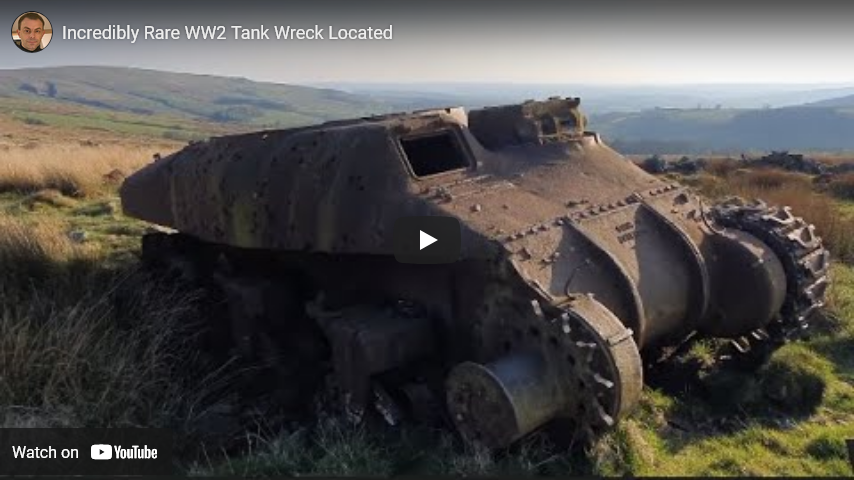
Incredibly Rare WW2 Tank Wreck Located
Mark Felton Productions
Published 5 Mar 2022The story of an incredibly rare WW2 tank that remains forgotten on a UK gunnery range.
Many thanks to Destination Discovery (ADTV) for tank footage. Please visit their wonderful channel for more footage: https://www.youtube.com/channel/UCxyc…
Dr. Mark Felton is a well-known British historian, the author of 22 non-fiction books, including bestsellers Zero Night and Castle of the Eagles, both currently being developed into movies in Hollywood. In addition to writing, Mark also appears regularly in television documentaries around the world, including on The History Channel, Netflix, National Geographic, Quest, American Heroes Channel and RMC Decouverte. His books have formed the background to several TV and radio documentaries. More information about Mark can be found at: https://en.wikipedia.org/wiki/Mark_Fe…
Help support my channels:
https://www.paypal.me/markfeltonprodu…
https://www.patreon.com/markfeltonpro…Disclaimer: All opinions and comments expressed in the ‘Comments’ section do not reflect the opinions of Mark Felton Productions. All opinions and comments should contribute to the dialogue. Mark Felton Productions does not condone written attacks, insults, racism, sexism, extremism, violence or otherwise questionable comments or material in the ‘Comments’ section, and reserves the right to delete any comment violating this rule or to block any poster from the channel.
Credits: US National Archives; Library of Congress; Imperial War Museum; YouTube Creative Commons; LHOON; Martin van Dalen.
Thumbnail: Destination Discovery (ADTV)
Comments Off on Incredibly Rare WW2 Tank Wreck Located
June 30, 2022
A Deep Dive into the Tiger I, by the Chieftain
World War Two
Published 29 Jun 2022The best tank of World War Two or a piece of junk? Using the original held at the U.S. Army Armor & Cavalry Collection, Chieftain and Rob Cogan take you on a literal deep dive into the iconic Tiger I.
(more…)
Comments Off on A Deep Dive into the Tiger I, by the Chieftain
June 24, 2022
Tank Chat #150 Lynx C&R Vehicle | The Tank Museum
The Tank Museum
Published 4 Mar 2022► JOIN OUR PATREON: Our Patreons have already enjoyed Early Access and AD free viewing of our weekly YouTube video! Consider becoming a Patreon Supporter today: https://www.patreon.com/tankmuseum
► TIMESTAMP:
00:00 – INTRO
00:39 – FEATURES► SHOP THE TANK MUSEUM: tankmuseumshop.org
► FOLLOW THE TANK MUSEUM:
Instagram: https://www.instagram.com/tankmuseum/
Twitter: https://twitter.com/TankMuseum
Website: https://tankmuseum.org/
________________________◈ Created by The Tank Museum
#tankmuseum #tankchats #DavidFletcher
Comments Off on Tank Chat #150 Lynx C&R Vehicle | The Tank Museum
June 17, 2022
Tank Chat #149 Cut in Half Centurion | The Tank Museum
The Tank Museum
Published 25 Feb 2022► JOIN OUR PATREON: Our Patreons have already enjoyed Early Access and AD free viewing of our weekly YouTube video! Consider becoming a Patreon Supporter today: https://www.patreon.com/tankmuseum
► TIMESTAMP:
00:00 – INTRO
00:31 – FEATURES
(more…)
Comments Off on Tank Chat #149 Cut in Half Centurion | The Tank Museum
June 3, 2022
Chat Tanks #148 M548 | The Tank Museum
The Tank Museum
Published 18 Feb 2022► JOIN OUR PATREON: Our Patreons have already enjoyed Early Access and AD free viewing of our weekly YouTube video! Consider becoming a Patreon Supporter today: https://www.patreon.com/tankmuseum
► TIMESTAMP:
00:00 – INTRO
00:28 – FEATURES
(more…)
Comments Off on Chat Tanks #148 M548 | The Tank Museum
June 1, 2022
Vintage Russian T62 tanks reported in Ukraine
As with all discussions of the ongoing fighting between Russian and Ukrainian troops, it’s very difficult to be sure that what is being reported is in any way accurate — both sides pulled out all the stops on the PR/propaganda/disinformation machinery months ago. At Thin Pinstriped Line, Sir Humphrey seems to be convinced that the reports that the Russians have been dis-interring mothballed Soviet-era T62 tanks to send into combat in Ukrane are believable enough:
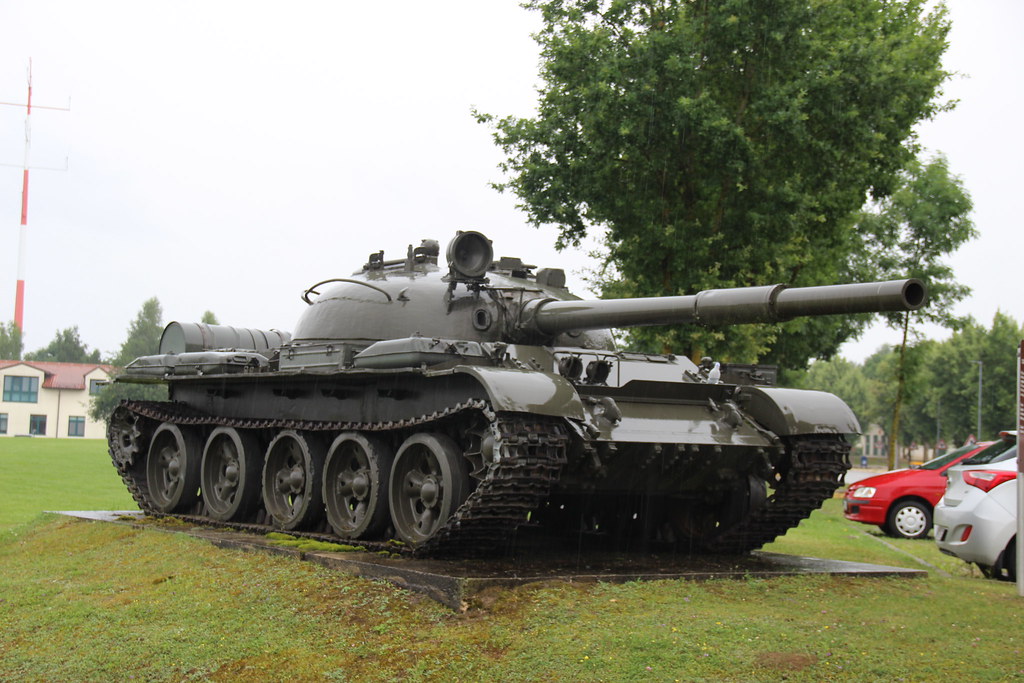
“Soviet T-62M MBT Standard Battle Tank” by Gary Lee Todd, Ph.D. is marked with CC0 1.0. To view the terms, visit https://creativecommons.org/publicdomain/zero/1.0/?ref=openverse.
The Russian Army has taken such significant losses of materiel that it has been forced to pull vintage T62 tanks from reserve, and commit them to front line operations. This statement makes plain just how costly the Russian advances have been in the Donbas area, and raises questions about what, if any, value, there is from retaining a war reserve of vehicles and equipment.
It is difficult to get an accurate picture on just how disastrous the Russian losses have been so far in the war, but most estimates suggest that at least 700 tanks have been destroyed, with many more damaged or captured. Each loss represents not only a small reduction in combat capability to Russia, but usually a far more valuable, and irreplaceable crew.
Russia is not a nation that likes to throw military equipment away, far from it. Their equipment is designed to be simple, reliable and last a very long time. As the outstandingly good website WW2 after WW2, which keeps track of what happened to military equipment after the war, lovingly documents, Soviet era equipment from WW2 just kept going (note, do not click on the link unless you wish to be sucked into a very big time sink!).
With huge reserves of people, no constraints on space or spending, and a mentality of “stores are for storing, not scrapping”, Russia has long kept ancient and utterly obsolete equipment in storage depots long past the point of being of any meaningful value. It is almost certain that there are still Russian Army depots out there with WW2 era equipment waiting for a recall to the colours if required.
The challenge facing Russia though is that due to the rampant corruption, the inability to hold units to account and ensure that readiness is tested, and just the sheer scale of the stockpile, most of the vehicles in their arsenal are probably not combat ready, and have probably been cannibalized beyond repair. Despite having thousands of T72 and T80 in service and storage, it seems that they are not deployable.
This poses a real challenge for Russia on two fronts – firstly, to bring the T62 out of retirement and into front line service as attrition reserves poses a significant support challenge. The vehicle is not compatible with later models of Russian tanks, so will require bespoke logistics support – placing further pressure on the already creaking supply chain.
Additionally, although simple to operate, it still requires crew to use it – with four, instead of three crew needed, this poses an additional headache for the Russian Army, which will have to find 25% uplift in tank crews to operate them properly. At a time when the Russians are low on people, and have churned through a significant proportion of their main army, it will require extraordinary efforts to find bodies to crew these tanks.
Bodies is perhaps the operative word here, for this is likely to be the fate of the crew in these vehicles. The T62 is utterly outclassed and completely obsolete for the environment in which it is operating. It may be good for gunning down demonstrators or strangling democratic protests in third world nations (the joy of socialist dictatorships), but against a highly experienced army, fighting with advanced equipment to defend its homeland, it is utterly hopeless. While it can still have some effect, the T62 units going into action are certain to be outclassed, outgunned and out of time when they face the Ukrainian Armed Forces.
Update: After I scheduled this post for publication, I saw that Berhard Kast (Military History Visualized) had posted a video analyzing the evidence, which you can check out here.
Update, 1 June: Apparently it helps when you include the link to the original post. Who knew?
Comments Off on Vintage Russian T62 tanks reported in Ukraine


