
The Tank Museum
Published 20 May 2022Tank Museum Curator David Willey explores the current conflict in Ukraine and the performance of the T-72 tank; putting it into historical context and exploring other times during the last hundred years when the death of the tank has been predicted.
Consider becoming a Patreon Supporter today: https://www.patreon.com/tankmuseum
00:00 | Intro
00:40 | Wider context
11:01 | Tanks in History
(more…)
May 21, 2022
Ukraine & T-72: The death of the tank? | The Tank Museum
Comments Off on Ukraine & T-72: The death of the tank? | The Tank Museum
May 15, 2022
Tank Chat #147 M14/41 | The Tank Museum
The Tank Museum
Published 4 Feb 2022► JOIN OUR PATREON: Our Patreons have already enjoyed Early Access and AD free viewing of our weekly YouTube video! Consider becoming a Patreon Supporter today: https://www.patreon.com/tankmuseum
► TIMESTAMP:
00:00 – INTRO
00:22 – FEATURES
(more…)
Comments Off on Tank Chat #147 M14/41 | The Tank Museum
May 8, 2022
Tank Chat #146 Carro Veloce | The Tank Museum
The Tank Museum
Published 28 Jan 2022► JOIN OUR PATREON: Our Patreons have already enjoyed Early Access and AD free viewing of our weekly YouTube video! Consider becoming a Patreon Supporter today: https://www.patreon.com/tankmuseum
► TIMESTAMP:
00:00 – INTRO
00:33 – FEATURES
(more…)
Comments Off on Tank Chat #146 Carro Veloce | The Tank Museum
April 30, 2022
Tank Chats #145 Conqueror | The Tank Museum
The Tank Museum
Published 14 Jan 2022► JOIN OUR PATREON: Our Patreons have already enjoyed Early Access and AD free viewing of our weekly YouTube video! Consider becoming a Patreon Supporter today: https://www.patreon.com/tankmuseum
► TIMESTAMP:
00:00 – INTRO
00:28 – FEATURES
(more…)
Comments Off on Tank Chats #145 Conqueror | The Tank Museum
April 27, 2022
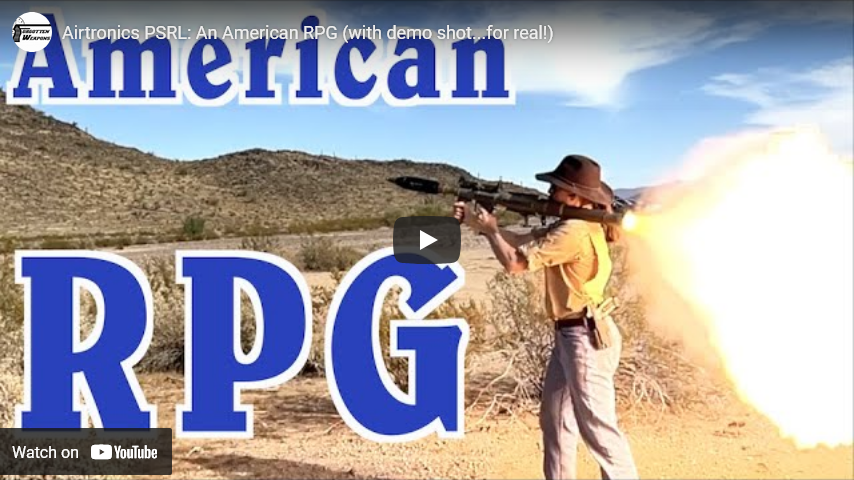
Airtronics PSRL: An American RPG (with demo shot…for real!)
Forgotten Weapons
Published 27 Dec 2021https://utreon.com/c/forgottenweapons/
http://www.patreon.com/ForgottenWeapons
Cool Forgotten Weapons merch! http://shop.forgottenweapons.com
Thanks to Jeff Folloder and Airtronics USA, I have a chance today to look at and test-fire a PSRL (Precision Shoulder-fired Rocket Launcher) — in essence, an American-made RPG-7. The rocket we are using here is a Bulgarian-made training round with an inert warhead and live booster and rocket.
Contact:
Forgotten Weapons
6281 N. Oracle 36270
Tucson, AZ 85740
Comments Off on Airtronics PSRL: An American RPG (with demo shot…for real!)
April 23, 2022
Tank Chats #144 | Staghound | The Tank Museum
The Tank Museum
398K subscribers
Dissent This
Our Patreons have already enjoyed Early Access and AD free viewing of our weekly YouTube video! Consider becoming a Patreon Supporter today: https://www.patreon.com/tankmuseumHistorian David Fletcher is kicking off 2022 with the Staghound! It is an American armoured car that was designed and produced during the Second World War. Watch the video to find out more!
0:00 – Intro
0:30 – What is the Staghound
5:17 – Other variants
(more…)
Comments Off on Tank Chats #144 | Staghound | The Tank Museum
April 16, 2022
Tank Chats #143 | Hetzer | The Tank Museum
The Tank Museum
Published 31 Dec 2021Our Patreons have already enjoyed Early Access and AD free viewing of our weekly YouTube video! Consider becoming a Patreon Supporter today: https://www.patreon.com/tankmuseum
The Munich Agreement averted the outbreak of war but for Czechoslovakia, it meant giving way to German occupation. Join David Willey to discover how Germany was able to use the country’s existing military outputs to build the tank destroyer, Hetzer.
00:00 – Intro
00:28 – The history of the tank destroyers name
14:55 – Wartime production
(more…)
Comments Off on Tank Chats #143 | Hetzer | The Tank Museum
April 9, 2022
Tank Chats #142 | Humber Scout Car | The Tank Museum
The Tank Museum
Published 17 Dec 2021Our Patreons have already enjoyed Early Access and AD free viewing of our weekly YouTube video! Consider becoming a Patreon Supporter today: https://www.patreon.com/tankmuseum
Join David Fletcher this week for a Tank Chat on Humber Scout Car which is a relative of the Daimler Dingo.
Timestamp:
00:00 – Intro
00:26 – What is the Humber Scout Car
4:23 – The Humber post war
(more…)
Comments Off on Tank Chats #142 | Humber Scout Car | The Tank Museum
March 28, 2022
QotD: The evolution of tanks through World War 2
One interesting thing about tank evolution that never gets mentioned in America is just how good the Soviets were at making tanks. The Germans are always assumed to have been the great tank builders, followed by the Americans, but it was the Russians who dominated the field in the tank game. Russian tanks were fast, powerful and easy to operate by their crews. Most important, they were reliable in all weather. The Russians assumed they would be fighting in horrible conditions and built a tank for it.
The Germans, in contrast, made one error after another when it came to tank design and tank building. They were obsessed with coming up with the biggest, most powerful tank, rather than making lots of good enough tanks. The result was lots of innovative designs, but most were failures and there was never enough of them. The Panzer IV was a very good tank with a platform that was flexible, but the Germans kept trying to come up with a super tank, rather than make lots of these. That was a costly error.
The American tank, which was used by the British, was not a great tank, but they were cheap and reliable, which meant there were loads of them. It was also a flexible platform for all sorts of other uses. The Sherman tank was about using the two advantages the Americans had over the Germans. One was more industry and the other was more soldiers. The plan was to beat the Germans with volume. While it would take five Sherman tanks to take out a German tank, that was math that worked in favor of the Americans.
This conflict between the perfect and the good enough showed up in many places during the war. The Germans seemed to look at the whole thing as an engineering project. The first step was to accept the restraints and then solve for the variables. The Russian and American view was always to limit the constraints and thereby increase the number of possible right answers. The Germans had much better human capital, but their opponents always had many more choices. They also had numbers, which counts for a lot.
The Z Man, “Tanking It”, The Z Blog, 2019-03-01.
Comments Off on QotD: The evolution of tanks through World War 2
March 22, 2022
Tank Chats #141 | AEC Armoured Car | The Tank Museum
The Tank Museum
Published 3 Dec 2021Tune in to our weekly YouTube content today with David Fletcher as he details the AEC Armoured Car!
00:00 – Intro
00:25 – History of the AEC
04:46 – Key Features
(more…)
Comments Off on Tank Chats #141 | AEC Armoured Car | The Tank Museum
March 11, 2022
Anti-Tank Chats #3 | Boys Anti Tank Rifle | The Tank Museum
The Tank Museum
Published 26 Nov 2021Our Patreons have already enjoyed Early Access and AD free viewing of our weekly YouTube video! Consider becoming a Patreon Supporter today: https://www.patreon.com/tankmuseum
Join Archive and Supporting Collections Manager Stuart Wheeler with his next instalment of Anti-Tank Chats on the “Boys Anti-tank Rifle”. It was a British anti-tank rifle in use during the Second World War.
0:00 – Intro
0:23 – Creation of the Boys Anti-Tank Rifle
4:43 – Features of the Rifle
(more…)
Comments Off on Anti-Tank Chats #3 | Boys Anti Tank Rifle | The Tank Museum
March 10, 2022
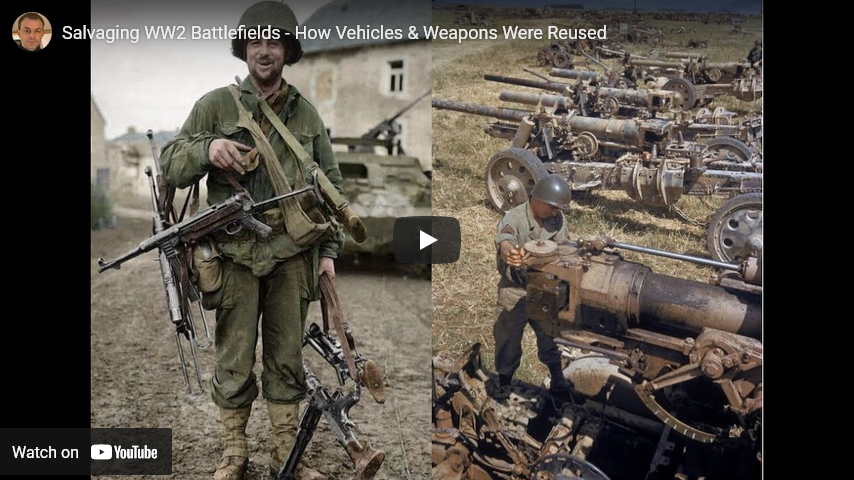
Salvaging WW2 Battlefields – How Vehicles & Weapons Were Reused
Mark Felton Productions
Published 25 Nov 2021After the wounded and dead had been removed from a battlefield, what happened to all the military vehicles and weapons left lying around? Find out here.
Dr. Mark Felton is a well-known British historian, the author of 22 non-fiction books, including bestsellers Zero Night and Castle of the Eagles, both currently being developed into movies in Hollywood. In addition to writing, Mark also appears regularly in television documentaries around the world, including on The History Channel, Netflix, National Geographic, Quest, American Heroes Channel and RMC Decouverte. His books have formed the background to several TV and radio documentaries. More information about Mark can be found at: https://en.wikipedia.org/wiki/Mark_Fe…
Help support my channel:
https://www.paypal.me/markfeltonprodu…
https://www.patreon.com/markfeltonpro…Disclaimer: All opinions and comments expressed in the ‘Comments’ section do not reflect the opinions of Mark Felton Productions. All opinions and comments should contribute to the dialogue. Mark Felton Productions does not condone written attacks, insults, racism, sexism, extremism, violence or otherwise questionable comments or material in the ‘Comments’ section, and reserves the right to delete any comment violating this rule or to block any poster from the channel.
Credits: US National Archives; Library of Congress
Thumbnail colorisation (left image) by Paul Reynolds
Comments Off on Salvaging WW2 Battlefields – How Vehicles & Weapons Were Reused
February 27, 2022
Canada couldn’t intervene in a modern war even if we wanted to
In The Line, Matt Gurney considers the state of the Canadian Armed Forces, which have been systematically starved of resources since, oh, 1968 (we started cashing in the “peace dividend” long before there was one):
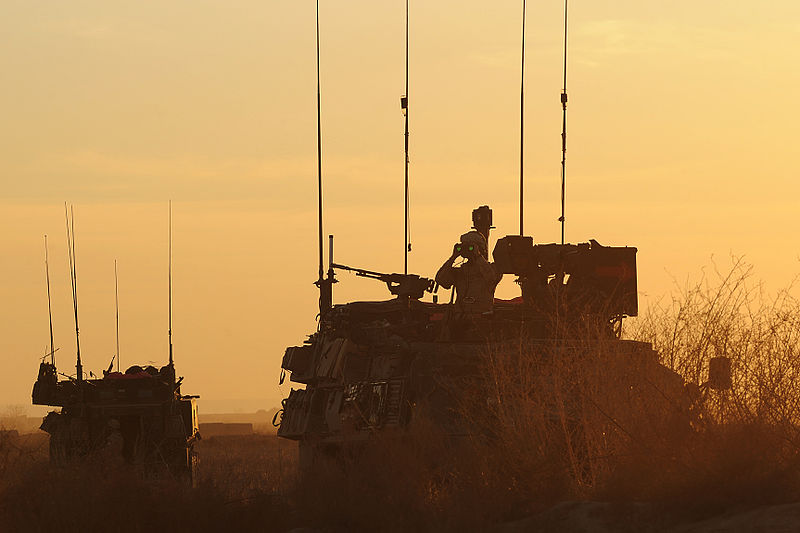
Canadian Army LAV III convoy near Khadan, Afghanistan – 2010-01-25
Photo by Staff Sgt. Christine Jones via Wikimedia Commons
We assumed that we’d never need the heavy, nasty stuff — history had ended. We cut our budgets and our force levels again and again, until many of our critical capabilities really exist on paper only. Canada’s fighter jet fleet of alarmingly elderly CF-18s is large enough to technically meet the requirements of keeping a few jets on alert for NORAD missions, intercepting the odd plane near our airspace, and showing the flag on NATO missions. We can even hurl some bombs on enemy groups that are annoying us, as we did with the Islamic State, because, well, they can’t shoot back. Our navy is much the same: we have a fleet large and capable enough to more-or-less patrol parts of our own coast and contribute to the odd international patrol mission abroad, because doing so buys us some diplomatic credibility — it is table stakes for being a sorta-paid-up member of the Western alliance. Our army has enough men and equipment to help out with domestic missions at home or to contribute in small missions to broader coalition efforts, though it’s a struggle to do both at the same time. That’s basically all we assumed we’d need, and we “rationalized” our budget and capabilities accordingly.
Again, yes, this made sense for a time. But it was obvious a decade or so ago — around when Obama was mocking Romney — that China was a power on the rise. Russia invaded Ukraine the first time in 2014. That was another wakeup call we ignored. For the last decade, certainly for the last five years, we’ve indulged in a kind of make-believe defence policy planning, where we were enthralled to an increasingly obsolete and dangerous post-Cold War mindset that was as narrow and misguided as the “Cold War thinking” the soft-power advocates of the post-1991 era disdained among the old guard.
We defence hawk weirdos who sweated blood with each abandoned capability were right, though. History wasn’t over. We hadn’t seen the end of great power war, or at least the real danger of it. The world is a dangerous place. This might be a surprise in the corridors of power in Ottawa, but it’s not like they weren’t warned. I’ve got 15 years of National Post bylines to prove it.
We are missing critical capabilities that our troops would need — need — in order to not get wiped out in a conflict with a relatively modern opponent. The Canadian Army has very good armoured vehicles for infantry. That’s good! Our LAVs are genuinely excellent. But we don’t have self-propelled artillery. We have only a few dozen tanks, and very little anti-tank missile capability (anti-tank missiles can be fired by infantry on foot or from vehicles; we don’t have a ton of missiles to go around in any case). Recruitment has lagged, and we are notoriously slow at actually processing an applicant into service. Perhaps most alarmingly in the current context, the Canadian military has basically zero air defence capability. If under air attack by helicopters, attack aircraft or, increasingly, drones, our guys could fire wildly into the air and hope to get lucky. That’s about it.
It’s a classic Canadian procurement story, of course, and perfectly emblematic of the bigger problem. We used to have mobile air defence. We didn’t have a ton, but we had 36 M113 armoured vehicles — an older vehicle, but a proven workhorse — that came armed with eight missiles that could be used against attacking air threats or tanks (given our paltry anti-tank capability, that’s two birds with one stone!). We procured the “ADATS” vehicles right at the end of the Cold War, never ended up needing them on any of our missions during the 1990s and early 2000s, and scrapped them without replacement in 2012, because Stephen Harper had a budget to balance and didn’t want to spend a bunch of bucks either modernizing the system or buying something new. We realized by 2019 that that was a bad idea, and began a procurement process to replace them, and the earliest we could expect delivery is … the end of this decade.
So for now, we try to buddy up with allies that have anti-air defences, or expect our troops in the field to put their faith in the Lord and mediocre Russian targeting systems. But even if we rush a procurement of some air-defence systems, that would just plug one gap among many. Why the hell haven’t we picked a fighter jet by now? Oh, yeah: Because no leader wants to spend the money and assumed we’d never need them, anyway. Oops! Why haven’t we gotten the new navy ships under construction, or begun work on the next-generation submarines? Huh, that’s weird — it’s the same reason: we’re cheap and assumed we wouldn’t need them, so flaking out wasn’t risky. Why aren’t we pushing ahead with NORAD radar modernization? Why was buying trucks such an ordeal? Why are we still incapable of buying a new 9mm pistol? Same, same and same.
For the politicians, military spending is a boring and distracting waste of money they’d rather spend on something they think voters would like. This is a mindset that is deeply set in among Canadian politicians, and it applies basically evenly across Liberals and Conservatives alike (the others are even worse). There has been a massive failure of imagination across not just our political class, but our society more generally. We have dropped the ball, and are now at the mercy of events.
Comments Off on Canada couldn’t intervene in a modern war even if we wanted to
February 26, 2022
Tank Chats #140 | M24 Chaffee | The Tank Museum
The Tank Museum
Published 19 Nov 2021Our Patreons have already enjoyed Early Access and AD free viewing of our weekly YouTube video! Consider becoming a Patreon Supporter today: https://www.patreon.com/tankmuseum
David Fletcher is back with another Tank Chat on the M24 Chaffee. Learn all about this American light tank and how it was used at the end of the Second World War and in post-WW2 conflicts.
(more…)
Comments Off on Tank Chats #140 | M24 Chaffee | The Tank Museum
February 17, 2022
Tank Chats #139 | M9 Half Track | The Tank Museum
The Tank Museum
Published 5 Nov 2021Our Patreons have already enjoyed Early Access and AD free viewing of our weekly YouTube video! Consider becoming a Patreon Supporter today: https://www.patreon.com/tankmuseum
Discover how and why this hybrid of a wheeled and tracked vehicle was created during WW2 with Historian David Fletcher.
00:00 – Intro
00:32 – What is the M9 Half Track
05:23 – Features of M9 Half Track
(more…)
Comments Off on Tank Chats #139 | M9 Half Track | The Tank Museum


