
Rex Krueger
Published 8 Apr 2020Learn to restore an old hand-saw all the way from tag-sale trash to essential woodworking tool.
More video and exclusive content: http://www.patreon.com/rexkrueger
Complete Joiner’s Bench Bundle (40 pages, full color, only $10): https://bit.ly/2QZls9T
(more…)
April 9, 2020
Restore a vintage handsaw and get working NOW!
The (former) captain of USS Theodore Roosevelt
Another example of how civilians interpret an action in a radically different way than the military does (and must):

The Nimitz-class aircraft carrier USS Theodore Roosevelt (CVN 71) underway in the Persian Gulf, 3 December 2005.
U.S. Navy photo by Photographer’s Mate 2nd Class Matthew Bash via Wikimedia Commons.
Okay, about this USS Teddy Roosevelt captain …
No, he’s not some sort of rebel hero who fought the power for his sailors and stuff because only he gave a damn about them. That’s crap, and […] I am not happy to see him get canned. I was an O6 myself, and I would prefer O6s, as a rule, not end up fired. But that was the only course of action available to the SecNav. The guy screwed up, big time.
To believe this CAPT Crozier guy is a hero, you have to believe stupid and wrong things which you should not believe due to their stupidness and wrongness.
You have to believe that the Navy “didn’t care” about sick sailors. Libs take this further to imply that the Navy “didn’t care” about sick sailors because that would have made Trump angry.
This is, as I said, stupid and wrong.
The Navy brass has several things to think about, and there is an order of priority among those things. The priority order is 1) the mission and then 2) the sailors. Notice the order? One of the unique aspects of the military is that it is one of the very few institutions where the lives of its members are expressly and deliberately subordinated to the mission. An aircraft carrier is a major strategic asset, almost incalculably major. And this captain wanted to take it offline. Now, that could have been the decision. Command is about making tough decisions, but it was not his decision. Once he gave his input to his bosses, what he thought meant nothing.
Nothing.
We elect a commander-in-chief to make those decisions. He delegates them in a clear order of precedence to his subordinates. So, CAPT Crozier was not defying admirals or even Trump when he decided he should make the decision. He was defying you and me.
The chain of command is a thing, as he found out when he got his walking papers. And it did not stop being a thing when he did not like the orders it gave him.
If your sailors are your number one priority, you frankly have no business being in command. The mission is the number one priority. That’s hard, and no fun, but [it’s] true. And that’s not an excuse to abuse or neglect your men — far from it. But it is a recognition that you have a mission and that is your priority.
Corzier was the captain of the carrier. There was an admiral down the hall — literally — who was his boss as task force commander. Why did he not go to the admiral? Or maybe he did go to the admiral and didn’t like the answer he got. Your commander disagreed with you? Gee, welcome to military service. Salute and drive on.
There’s no scenario where he’s right on this.
Comments Off on The (former) captain of USS Theodore Roosevelt
The True Story of How WW2 Began | BETWEEN 2 WARS I 1939 Part 3 of 3 I SEASON FINALE
TimeGhost History
Published 8 Apr 2020In this final episode of Season 1 of Between Two Wars we examine what caused the world to stand on the brink of total war in just two decades after the War to End All Wars. Events that end with three words through a phone line: “Grandmother is dead,” words that launch World War II.
Join us on Patreon: https://www.patreon.com/TimeGhostHistory
Hosted by: Indy Neidell
Written by: Spartacus Olsson
Directed by: Spartacus Olsson and Astrid Deinhard
Executive Producers: Bodo Rittenauer, Astrid Deinhard, Indy Neidell, Spartacus Olsson
Creative Producer: Joram Appel
Post-Production Director: Wieke Kapteijns
Research by: Spartacus Olsson
Edited by: Daniel Weiss
Sound design: Marek KamińskiSources:
From the Noun Project:
soldier By Wonmo Kang
coin stacks By emilegraphicsColorizations by:
– Dememorabilia – https://www.instagram.com/dememorabilia/
– Olga Shirnina
– Spartacus Olsson
– Daniel WeissSoundtracks from Epidemic Sound:
– “Sophisticated Gentlemen” – Golden Age Radio
– “First Responders” – Skrya
– “Easy Target” – Rannar Sillard
– “The Inspector 4” – Johannes Bornlöf
– “Last Point of Safe Return” – Fabien Tell
– “Death And Glory 3” – Johannes Bornlöf
– “Split Decision” – Rannar Sillard
– “March Of The Brave 9” – Rannar Sillard
– “Mystery Minutes STEMS INSTRUMENTS” – Farrell Wooten
– “The Charleston 3” – Håkan ErikssonArchive by Reuters/Screenocean http://www.screenocean.com
A TimeGhost chronological documentary produced by OnLion Entertainment GmbH.
From the comments:
TimeGhost History
1 day ago
Dear friends, this is the 58th and final episode of the first season of Between 2 Wars. Almost exactly two years ago, when the first episode went live, on April 14, 2018 we were three people. We had not started the WW2 channel yet. The TimeGhost Army had less than 100 members, and we had no idea where we would end up. As it turned out, it has been a magnificent journey through twenty years of history.We are now a team of around sixteen individuals working on three channels and publishing more than five historical videos per week. And this is thanks to all of you who have graced us by watching, liking, commenting, and joining the TimeGhost Army. And it is especially thanks to the now over 4,000 members of the TimeGhost Army and their faithful contributions that we are able to do this at all. Thanks to you all, we can add a little bit of knowledge, a little bit of perspective, and hopefully a little bit of sanity (and also a measure healthy insanity) to the world.
It’s especially in times like these that we feel blessed by your support, so that we can continue our mission of remembrance and education. So it is with humble gratitude and some pride that we deliver this season finale. With your participation we will keep marching on, and try to do even more, even better, and exciting historical content.
Thank you all!
Let’s make history!
Spartacus
Definition note: when we use the term Socialist we always use the academic and dictionary definition: an ideology that aims to abolish private ownership of capital, goods, and enterprise to transfer it to the collective for use rather than profit. The means to achieve that being a violent revolution. We do not use the popular US redefinition of the word that makes it mean something vaguely like “anything the government does.”
Comments Off on The True Story of How WW2 Began | BETWEEN 2 WARS I 1939 Part 3 of 3 I SEASON FINALE
You know you’re entering a police state when the police can just make up new “laws” to enforce
I was surprised to see the name of someone I used to work with pop up in a story about over-enthusiastic enforcement of imaginary “laws” in the Ottawa area:
On Tuesday, the City of Ottawa’s bylaw enforcement team tweeted out an important clarification to a recent news report: An Orléans man had not been and would not be issued a $700 ticket for “playing soccer with his son in an empty field.” Rather, the city maintains, he had only been issued a “verbal warning” for playing soccer with his son in an empty field.
One can understand the Orléans man’s confusion. As David Martinek told it to the Ottawa Citizen, he was kicking around a ball with his four-year-old son William, who has autism and “more energy than needed to power the City of Ottawa,” when a bylaw officer arrived, took note of his licence plate and mentioned the $700 figure. He quite logically expected a summons in the mail.
The good news, such as it is, is that Martinek is no poorer to the tune of $700 (though he could have crowdfunded that in about 90 seconds). The remarkable thing about the city’s clarification, however, is that it actually paints a more offensive picture. A ticket is something you can fight — and such a ticket would deserve to be fought unto its demise, because Martinek doesn’t seem to have been doing anything illegal. As such, the “verbal warning” serves only as intimidation against a harmless, indeed beneficial activity.
The City of Ottawa’s website lays out the “rules and restrictions” in force due to COVID-19. It notes that bylaw officers have been empowered to enforce Ontario’s Emergency Management and Civil Protection Act. Regulation 104/20, made under said act, orders the closure of “outdoor recreational amenities that are intended for use by more than one family.”
It defines “outdoor recreational amenities” as off-leash dog parks, community and allotment gardens, “all portions of park and recreational areas containing outdoor fitness equipment,” “all outdoor playgrounds, play structures and equipment,” “all outdoor picnic sites, benches and shelters in park and recreational areas,” and “all outdoor sports facilities and multi-use fields, including baseball diamonds; soccer fields; frisbee golf locations; tennis, platform tennis, table tennis and pickleball courts; basketball courts; BMX parks; and skate parks.”
Considerable thought went into those very thorough prohibitions, you will agree. Yet they conspicuously do not prohibit two members of the same household kicking a ball around. Martinek says he questioned the bylaw officer as to whether they were on city parkland, but there’s nothing in the act prohibiting intra-household kick-arounds in parks or anywhere else. “Nothing in this order precludes individuals from walking through or using portions of park and recreational areas that are not otherwise closed and that do not contain an outdoor recreational amenity described,” the regulation reads.

Comments Off on You know you’re entering a police state when the police can just make up new “laws” to enforce
Lawrence of Arabia | Based on a True Story
The Cynical Historian
Published 6 Nov 2015The classic film Lawrence of Arabia, is one of the most beautiful movies of all time, but it has its flaws.
————————————————————
references:
https://en.wikipedia.org/wiki/Lawrenc…http://www.wordandfilm.com/2013/08/wh…
http://www.pri.org/stories/2013-12-16…
most beautiful movies list:
https://www.youtube.com/watch?v=kj73a…
————————————————————LET’S CONNECT:
https://twitter.com/Cynical_History
————————————————————
wiki:
Lawrence of Arabia is a 1962 epic historical drama film based on the life of T. E. Lawrence. It was directed by David Lean and produced by Sam Spiegel through his British company Horizon Pictures, with the screenplay by Robert Bolt and Michael Wilson. The film stars Peter O’Toole in the title role. It is widely considered one of the greatest and most influential films in the history of cinema. The dramatic score by Maurice Jarre and the Super Panavision 70 cinematography by Freddie Young are also highly acclaimed.
The film was nominated for ten Oscars at the 35th Academy Awards in 1963; it won seven in total: Best Picture, Best Director, Best Original Score, Best Cinematography (Color), Best Art Direction (Color), Best Film Editing and Best Sound Mixing. It also won the Golden Globe Award for Best Motion Picture – Drama and the BAFTA Awards for Best Film and Outstanding British Film.The film depicts Lawrence’s experiences in the Arabian Peninsula during World War I, in particular his attacks on Aqaba and Damascus and his involvement in the Arab National Council. Its themes include Lawrence’s emotional struggles with the personal violence inherent in war, his own identity, and his divided allegiance between his native Britain and its army and his new-found comrades within the Arabian desert tribes. As well as O’Toole, the film stars Alec Guinness, Jack Hawkins, Anthony Quinn, Omar Sharif, Anthony Quayle, Claude Rains and Arthur Kennedy.
————————————————————
Hashtags: #History #LawrenceOfArabia #WWI #Review #BasedOnATrueStory

Comments Off on Lawrence of Arabia | Based on a True Story
QotD: Collective narcissism
[P]eople who score high on the collective narcissism scale are particularly sensitive to even the smallest offences to their group’s image. As opposed to individuals with narcissistic personality, who maintain inflated views of themselves, collective narcissists exaggerate offences to their group‘s image, and respond to them aggressively. Collective narcissists believe that their group’s importance and worth are not sufficiently recognised by others. They feel that their group merits special treatment, and insist that it gets the recognition and respect it deserves. In other words, collective narcissism amounts to a belief in the exaggerated greatness of one’s group, and demands external validation.
Collective narcissists are not simply content to be members of a valuable group. They don’t devote their energy to contributing to the group’s betterment and value. Rather, they engage in monitoring whether everybody around, particularly other groups, recognise and acknowledge the great value and special worth of their group. To be sure, collective narcissists demand privileged treatment, not equal rights. And the need for continuous external validation of the group’s inflated image (a negative attribute) is what differentiates collective narcissists from those who simply hold positive feelings about their group.
[…]
When their own group is involved, collective narcissists have no sense of humour. They are disproportionately punitive in responding to what they perceive as an insult to their group, even when the insult is debatable, not perceived by others, or not intended by the other group. Unlike individual narcissists, collective narcissists cannot dissociate themselves from an unpopular or criticised group. Once their self-worth is invested in the greatness of their group, collective narcissists are motivated by enhancing their group rather than themselves.
My team researched collective narcissism as a characteristic that pertains to an individual. We believe that there will always be a proportion of people in any given population who meet the criteria. But collective narcissism can also seize an entire group, resulting in seemingly sudden and unprovoked outbursts of intergroup rage or prejudiced reactions towards minority groups. We believe that collective narcissism is most dangerous as a group syndrome – when the belief that the righteous group is not given its due acknowledgement becomes shared by the majority of group members and becomes a dominant narrative about the group’s past and present.
Agnieszka Golec de Zavala, “Why collective narcissists are so politically volatile”, Aeon, 2018-01-18.
Comments Off on QotD: Collective narcissism
April 8, 2020
If the Wuhan Coronavirus panic feels oddly familiar … there’s a good reason for it
Warren Meyer explains why his skepticism about the dangers of the Wuhan Coronavirus epidemic kicked in quickly because it followed a very familiar pattern:
I have been skeptical about extreme global warming and climate change forecasts, but those were informed by my knowledge of physics and dynamic systems (e.g. feedback mechanics). I have been immensely skeptical of Elon Musk, but again that skepticism has been informed by domain knowledge (e.g. engineering in the case of the hyperloop and business strategy in the case of SolarCity and Tesla). But I have no domain knowledge that is at all relevant to disease transfer and pathology. So why was I immediately skeptical when, for example, the governor of Texas was told by “experts” that a million persons would die in Texas if a lock-down order was not issued?
I think the reason for my skepticism was pattern recognition — I saw a lot of elements in COVID-19 modelling and responses that appeared really similar to what I thought were the most questionable aspects of climate science. For example:
- We seem to have a sorting process of “experts” that selects for only the most extreme. We start any such question, such as forecasting disease death rates or global temperature increases, with a wide range of opinion among people with domain knowledge. When presented with a range of possible outcomes, the media’s incentives generally push it to present the most extreme. So if five folks say 100,000 might die and one person says a million, the media will feature the latter person as their “expert” and tell the public “up to a million expected to die.” After this new “expert” is repetitively featured in the media, that person becomes the go-to expert for politicians, as politicians want to be seen by the public to be using “experts” the public recognizes as “experts.”
- Computer models are converted from tools to project out the implications of a certain set of starting hypotheses and assumptions into “facts” in and of themselves. They are treated as having a reality, and a certainty, that actually exceeds that of their inputs (a scientific absurdity but a media reality I have observed so many times I gave it the name “data-washing”). Never are the key assumptions that drive the model’s behavior ever disclosed along with the model results. Rather than go on forever on this topic, I will refer you to my earlier article.
- Defenders of alarmist projections cloak themselves in a mantle of being pro-science. Their discussions of the topic tend to by science-y without being scientific. They tend to understand one aspect of the science — exponential growth in viruses or tipping points in systems dominated by positive feedback. But they don’t really understand it — for example, what is interesting about exponential growth is not the math of its growth, but what stops the growth from being infinite. Why doesn’t a bacteria culture grow to the mass of the Earth, or nuclear fission continue until all the fuel is used up? We are going to have a lot of problem with this after COVID-19. People will want to attribute the end of the exponential growth to lock-downs and distancing, but it’s hard to really make this analysis without understanding at what point — and there is a point — the virus’s growth would have turned down anyway.
- Alarmists who claim to be anti-science have a tendency to insist on “solutions” that have absolutely no basis in science, or even ones that science has proven to be utterly bankrupt. Ethanol and wind power likely do little to reduce CO2 emissions and may make them worse, yet we spend billions on them as taxpayers. And don’t get me started on plastic bag and straw bans. I am willing to cut COVID-19 responses a little more slack because we don’t have the time to do elaborate studies. But just don’t tell me lockdown orders are science — they are guesses as to the correct response. I live in Phoenix where it was sunny and 80F this weekend. We are on lockdown in our houses. I could argue that ordering everyone out into the natural disinfectant of heat and sunlight for 2 hours a day is as effective a response as forcing families into their houses (initial data, though it is sketchy, of limited transfer of the virus in summertime Australia is interesting — only a small portion of cases are from community transfer. By comparison less than a half percent of US cases from travel).
Comments Off on If the Wuhan Coronavirus panic feels oddly familiar … there’s a good reason for it
Prince Paul of Yugoslavia – Victim of Circumstance? – WW2 Biography Special
World War Two
Published 7 Apr 2020A Serb royal with an English heart sounds pretty romantic, but the story of Prince Paul of Yugoslavia is far from it. Trapped by circumstance, he is forced to make decisions that go against his own personal beliefs and leave him condemned as a traitor.
Join us on Patreon: https://www.patreon.com/TimeGhostHistory
Or join The TimeGhost Army directly at: https://timeghost.tvFollow WW2 day by day on Instagram @World_war_two_realtime https://www.instagram.com/world_war_t…
Between 2 Wars: https://www.youtube.com/playlist?list…
Source list: http://bit.ly/WW2sourcesHosted by: Indy Neidell
Written by: Francis van Berkel
Produced and Directed by: Spartacus Olsson and Astrid Deinhard
Executive Producers: Bodo Rittenauer, Astrid Deinhard, Indy Neidell, Spartacus Olsson
Creative Producer: Joram Appel
Post-Production Director: Wieke Kapteijns
Research by: Tom Meaden
Edited by: Mikołaj Cackowski
Map animations: Eastory (https://www.youtube.com/c/eastory)Colorizations by:
Dememorabilia – https://www.instagram.com/dememorabilia/
Carlos Ortega Pereira, BlauColorizations
Adrien Fillon – https://www.instagram.com/adrien.colo…Sources:
Narodowe Archiwum Cyfrowe
USHMM
IWM MH 26392Soundtracks from the Epidemic Sound:
Howard Harper-Barnes – “London”
Farell Wooten – “Blunt Object”
Philip Ayers – “Trapped in a Maze”
Johannes Bornlof – “The Inspector 4”
Gunnar Johnsen – “Not Safe Yet”
Andreas Jamsheree – “Guilty Shadows 4”Archive by Screenocean/Reuters https://www.screenocean.com.
A TimeGhost chronological documentary produced by OnLion Entertainment GmbH.
Comments Off on Prince Paul of Yugoslavia – Victim of Circumstance? – WW2 Biography Special
Debunking the claim that “80% of America’s drugs come from China”
Eric Boehm tries to sort out where the startling claim came from … because it’s not true:
While reading about the COVID-19 outbreak, you’ve probably encountered this particularly shocking statistic at one time or another: 80 percent of America’s pharmaceutical drug supply comes from China.
It’s a statistic that has made the rounds in right-wing publications for a while — offered as proof that China-heavy global supply chains are putting Americans at risk — but it has also popped up in mainstream outlets, including in pieces published in Politico and The Atlantic. Wherever it is deployed, the stat carries an unstated implication: What if China decides to cut us off in the middle of a pandemic? Could America face a dramatic shortage of key pharmaceutical drugs at the moment when we are most in need? And that distorted claim that says America has been too reliant on China has been seized by politicians like Sen. Josh Hawley (R–Mo.) as evidence that globalization has undermined America’s pandemic response.
[…]
How much is a lot? “In all, 80 percent of the U.S. supply of antibiotics are made in China,” [Politico contributors Doug Palmer and Finbarr Bermingham] wrote, linking back to a press release from Sen. Chuck Grassley (R–Iowa).
But that’s not what the press release says.
Grassley’s statement was publicizing a letter Grassley sent on August 9 to the Department of Health and Human Services (HHS) and the FDA, asking them to conduct more inspections of foreign drug manufacturing facilities to make sure they meet American standards.
“Unbeknownst to many consumers … 80 percent of Active Pharmaceutical Ingredients are produced abroad, the majority in China and India,” Grassley wrote.
There’s the first bit of context collapse: the authors of the Politico piece merged Grassley’s “80 percent … are produced abroad” into “80 percent … are made in China.”
All of this also raises another question: Where is Grassley getting that information? His letter sources that claim to a 2016 Government Accountability Office report which itself cited FDA data on pharmaceutical manufacturers around the world. And that report makes it clear that the U.S. has a diverse supply chain for drugs that goes well beyond India and China.
“Nearly 40 percent of finished drugs and approximately 80 percent of active pharmaceutical ingredients (API) are manufactured in registered establishments in more than 150 countries,” is how the GAO summed up America’s pharmaceutical supply chain.
In two jumps, we’ve gone from “80 percent of American drugs are manufactured in more than 150 countries around the world” to “80 percent of drugs come from two countries” to “80 percent of drugs come from China.”
Now, a further complication. The FDA only tracks drug manufacturing facilities — not the supply chains of specific drugs.
That “lack of structural transparency and available supply chain data about drugs,” researchers at the University of Minnesota researchers wrote last month, is one of the reasons why making accurate assessments about potential drug shortages is difficult. Indeed, it was this same bit of missing information that Grassley was encouraging the FDA to address back in August.
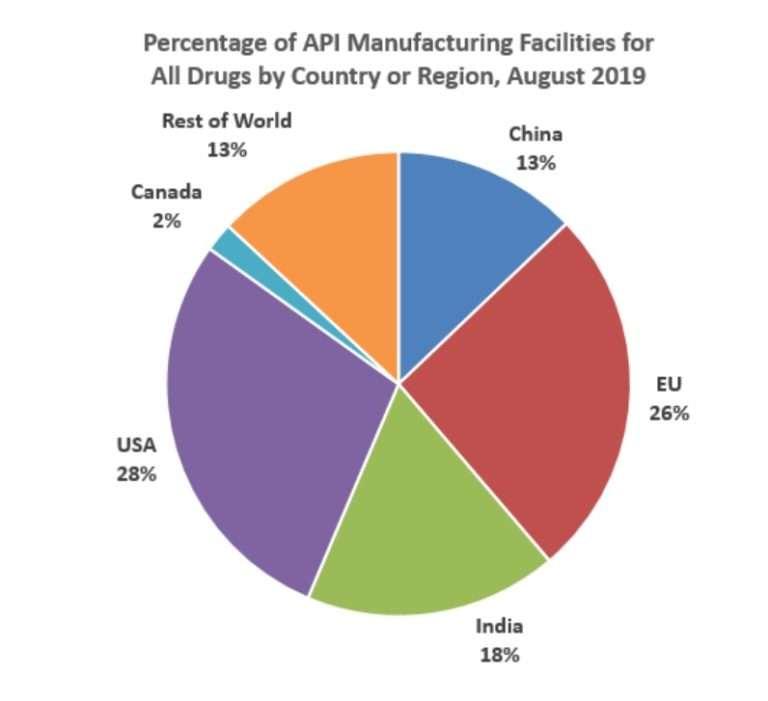
Source: FDA; Safeguarding Pharmaceutical Supply Chains in a Global Economy, October 2019.
Belgian Model 1915/27 Improved Chauchat
Forgotten Weapons
Published 9 Dec 2019http://www.patreon.com/ForgottenWeapons
Cool Forgotten Weapons merch! http://shop.bbtv.com/collections/forg…
The Belgian Army was the second to adopt the Chauchat automatic rifle, after the French. Almost all of Belgium was under German occupation during World War One, leaving Belgium significantly dependent on French aid for arms during the war. The initial Belgian purchases were standard 8mm Lebel CSRGs, but by 1917 Belgian engineers were working on a solution to convert the guns to the Belgian standard 7.65mm Mauser cartridge. This was completed by the end of the war, and the Chauchat remained a standard arm of the Belgian military after the war.
Work to improve the design continued, and an upgrades version was formally adopted in 1927. This included the 7.65mm conversion, with the best magazines made for any model of the Chauchat, as well as a series of dust covers to close off every hole in the gun (magazine well, ejection port, charging handle slot, and barrel shroud vents). The Belgians also replaced the original bipod with a much better type (similar to what they would use on the FN BAR), simplified the feed system, and added a tension latch to ensure reliable operation.
This new pattern of CSRG would be standard Belgian front-line armament until the FN BAR was adopted in 1930. The Chauchats were still in service with some units at the beginning of World War Two though, and saw service at that time.
Thanks to the Liege Arms Museum for access to film this for you! If you are in Belgium, definitely plan to stop into the museum, part of the Grand Curtius. They have a very good selection of interesting and unusual arms on display.
Contact:
Forgotten Weapons
6281 N. Oracle #36270
Tucson, AZ 85704

Comments Off on Belgian Model 1915/27 Improved Chauchat
QotD: Iliad, Odyssey, and Anabasis
The Iliad is epically epic, rendered in a stiff dactylic hexameter with many, many, many repeating phrases. Between “rosy-fingered dawn” and “the wine-dark sea,” Homer’s epithets lull the reader into a trance, which I suppose was the point in oral storytelling. As a result, the myriad battles and names start blending together.
But, man, those battles are brutal. The semi-divine soldiers are walking Cuisinarts, leading to lovely vignettes like this:
Next Erymas was doom’d his fate to feel,
His open’d mouth received the Cretan steel:
Beneath the brain the point a passage tore,
Crash’d the thin bones, and drown’d the teeth in gore:
His mouth, his eyes, his nostrils, pour a flood;
He sobs his soul out in the gush of blood.Spoiler alert: Erymas didn’t make it. As you can see, I read the older translations of these works; the above is Alexander Pope’s translation. I wanted the feel of the original, so I didn’t hunt down the modern versions. All three books are decidedly un-“woke.”
For The Odyssey, I chose the Harvard Classics version translated by Samuel Butler. This epic was far more interesting (and fun!) than the grim, brain-splattered Iliad. Ulysses slides into a Mediterranean port, feasts on great food, charms exotic women, grabs a pile of loot, and is off to the next isle.
Granted, the fellow gets in a few scrapes along the way, even being forced into love slavery by an eternally gorgeous nymph (poor guy), but returns home after 20 years to wreak vengeance on the cads trying to bed his wife. (Monogamy was pretty much a one-way street in ancient Hellas.)
After reading both of Homer’s works, I think The Iliad is geared toward young men, especially those of a military mindset. It’s all heroism, glory, and honor. I really should have tackled this in my Navy days.
The Odyssey is an even better adventure, but its themes of home, wisdom, fatherhood, and marriage are aimed squarely at those of us with more mileage on the drivetrain. The heroes still kill their share of monsters and men, but Ulysses always chooses brains before brawn.
The real revelation for me was Anabasis by Xenophon. How Hollywood hasn’t released a trilogy of this epic is beyond me. (No, The Warriors doesn’t count.) Here are the Cliffs Notes for this real-life tale:
Cyrus the Younger wants to topple his brother Artaxerxes II from the Persian throne, so he recruits 10,000 Greek mercenaries (including Xenophon) to help. They march 1,500 miles from the east coast of modern-day Turkey to the middle of modern-day Iraq and, in the first big battle, Cyrus is killed.
Uh oh.
Now, the entire Persian army opposes the Greeks. The pro-Cyrus Persians say, “No actually, we were for Artaxerxes the whole time!” and turn against the Greeks. The Hellenic generals ask the King for safe passage … and he murders them.
Xenophon is more a philosopher than soldier, but he gives an inspiring speech, the troops elect him leader, and they all hightail it due north while anyone, everyone, and everything tries to kill them.
They cross deserts and rivers and mountains through searing heat, waist-deep snow, and constant attacks from ahead and behind by an ever-hostile collection of bronze-age barbarians. Upon hitting Turkey’s north shore, they finally enter a Greek colony. Happy ending, right? Well, that’s when the soldiers start turning on each other.
Granted, Anabasis is an amazing war story, but it also serves as a history, an ancient travel guide, and a primer in leadership, group dynamics, and human nature.
If you haven’t read any of these three books, you should make up that deficit.
Jon Gabriel, “My Month in Ancient Greece”, Ricochet, 2018-01-23.
Comments Off on QotD: Iliad, Odyssey, and Anabasis
April 7, 2020
Leopold II of Belgium: The Biggest Coverup In European History
Biographics
Published 26 Sep 2018Credits:
Host – Simon Whistler
Author – Shannon Quinn
Producer – Jack Cole
Executive Producer – Shell Harris

Comments Off on Leopold II of Belgium: The Biggest Coverup In European History
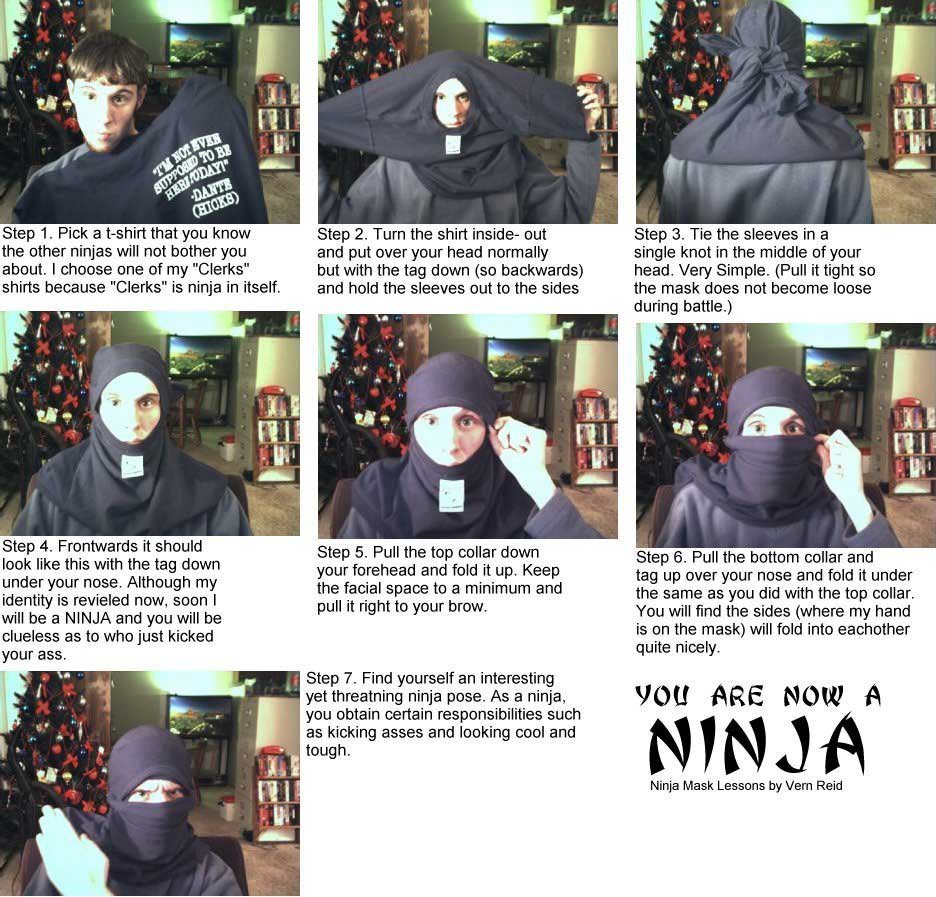
If you don’t have an [N95-equivalent mask] … dress up as a ninja
I first saw this years ago and thought it was amusing but probably useless. However, according to data at this site (which may or may not be authoritative), a cotton T-shirt is far better than nothing as far as DIY masks are concerned:
Comments Off on If you don’t have an [N95-equivalent mask] … dress up as a ninja
Britain AD: The Invasion That Never Was – The Anglo-Saxon Invasion (BBC Documentary)
Johnny66
Published 21 Jun 2015A well-considered documentary by the noted scholar, Dr Francis Pryor. The names Cerdic, Ceawlin, Cedda and Caedwalla are not exactly Germanic in origin? Cerdic’s father, Elesa, has been identified by some scholars with the Romano-Briton Elasius, the “chief of the region,” met by Germanus of Auxerre.

Comments Off on Britain AD: The Invasion That Never Was – The Anglo-Saxon Invasion (BBC Documentary)
Cultural factors in the spread of the Wuhan Coronavirus
Sarah Hoyt explains why any computer model involving actual human beings might as well begin with “Assume a Spherical Cow of Uniform Density in a Frictionless Vacuum“:
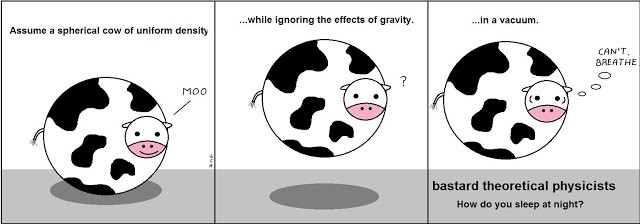
Image from https://worldbuilding.stackexchange.com/questions/96644/plausibility-of-floating-whales
What I do know is that — are you ready? — human societies, involving multiple nations or even our own culturally diverse, geographically spread out nation, are not now nor will they ever be a spherical cow of uniform density in friction-less vacuum.
So … why is it that even now that they admit the scary Imperial model is insane, our authorities, from federal on down are treating the US as though it were just that mythical cow, and on top of that exactly the same as the cow in Italy, Spain or France.
[…] but here’s the thing: Italy has a completely different culture. Yes, it also has a sclerotic, understaffed and just impoverished healthcare system. (Yes, every time I post that I have to spam a million comments telling me how well the WHO ranked Italy — which is great, except the WHO ranks a single payer system above everything else, including outcomes — and how Lombardy is the envy of Italy or something, which leads me to say “Sucks to be you.”)
However, that’s just a factor in the debacle. The other factor is culture and no one is taking it into account. Multi-generational families live together (I should throw stones, yes) or in the same house which becomes a sort of compound. (This is common to all Mediterranean cultures. I grew up in such a compound until the age of six.) which means that while Grandma isn’t abandoned to the tender mercies of Haitian health workers, it’s also really hard to isolate her when little Guido gets the never-get-well at school and cheerfully brings it home. Even when they don’t live together, extended families have a level of closeness that freaks out even the closest American families. If you and your relatives live within driving distance of each other and don’t see each other every other day, there’s something wrong.
Every house is a continuous cacophony of visiting relatives and friends. In safer times, we just left the back door unlocked because it was easier than answering the doorbell every five minutes. When I first got married, I had the TV on all day, because otherwise the house was so silent, it freaked me out. (I left Disney channel on all day, because it was less likely to startle me with explosions or evil laughter. This led my inlaws to believe I only understood “English for children” (rolls eyes.) I wasn’t even in the room with it. I just needed that noise, or I freaked out, because of the habit of a lifetime.
The freakiest thing in my exchange student years was that my family never had people drop by, several times a week, just because.
On top of that, of course, a lot of the younger people live in stack-a-prole apartments with shared air, and most people commute by train or bus or something.
Now, in Portugal at least most trains and buses aren’t as full as they were in my youth. You are rarely packed in like sardines. But it’s still public transport, and at rush hour every seat is taken and there are people standing.
As much as I get sick here, I got sick way more often there, and had a few really close calls, starting at about thirteen. Because you live in each other’s pockets.
And I understand that in Italy, as in Portugal, as in, for instance, France, people kiss a lot more. Adult men might not, unless they’re close(ish) relatives, but women and children get kissed by everyone from close kin to total strangers.
All of those create conditions for the virus to explode. In Italy, in France, in Spain. I understand it’s not exploded nearly as much in Portugal, but I also wonder how much of that is Portuguese reluctance to go to the doctor or the hospital. Because “the hospital is where you die.” (Yes, sue me. Some cultural assumptions remain. Which is why my husband is the one who normally drags me to the hospital.) Because, you see, we DO know for at least one of the clusters, the hospital was making it worse. Go to the hospital for any other reason, catch Winnie the Flu.
Comments Off on Cultural factors in the spread of the Wuhan Coronavirus


