Marginal Revolution University
Published 22 Aug 2017In the 2000s, the Fed kept interest rates low to stimulate aggregate demand. But the cheap credit also helped fuel the housing market bubbles. We’ll look at the case of the Great Recession as an example of where the Fed did too much in one area, and perhaps not enough in others.
April 15, 2020
When the Fed Does Too Much
QotD: The limited utility of the “left-right” scale in political debate
Categorizing a political position according to some simple left-right scale of values leaves something to be desired. Political views cover such a wide variety of issues that it is impossible to describe adequately any one person merely by identifying where he sits on a lone horizontal line.
Use of the single left-right scale makes impossible a satisfactory description of libertarian (and classical-liberal) attitudes toward government. Libertarians oppose not only government direction of economic affairs, but also government meddling in the personal lives of peaceful people. Does this opposition make libertarians “rightists” (because they promote free enterprise) or “leftists” (because they oppose government meddling in people’s private affairs)? As a communications tool, the left-right distinction suffers acute anemia.
Nevertheless, despite widespread dissatisfaction with the familiar left-right — “liberal-conservative” — lingo, such use continues. One reason for its durability is convenience. Never mind that all-important nuances are ignored when describing someone as being, say, “to the right of Richard Nixon” or “to the left of Lyndon Johnson”. The description takes only seconds and doesn’t tax the attention of nightly news audiences.
Don Boudreaux, “Coercivists and Voluntarists”, The Freeman, 1997-08-01.
April 14, 2020
Curator at Home | Tanks: 100 Years of Evolution | The Tank Museum
The Tank Museum
Published 12 Apr 2020Join The Tank Museum’s Curator, David Willey, at home, as he reviews the book: Tanks – 100 Years of Evolution by Richard Ogorkiewicz.
Support the work of The Tank Museum on Patreon: ► https://www.patreon.com/tankmuseum
Visit The Tank Museum SHOP & become a Friend: ► https://tankmuseumshop.org/Twitter: ► https://twitter.com/TankMuseum
Instagram: ► https://www.instagram.com/tankmuseum/
Tiger Tank Blog: ► http://blog.tiger-tank.com/
Tank 100 First World War Centenary Blog: ► http://tank100.com/
History Summarized: England
Overly Sarcastic Productions
Published 10 Apr 2020English history has a reputation for being nigh incomprehensible — what with all the kings, civil wars, succession crises, and slapfights with France. But with the right perspective (and a little royal-restraint), England can become quite a straightforward story. So let’s take a look at this slice of Britain, and see how it grew into the master of the Isles.
SOURCES & Further Reading: “History of England from the Tudors to the Stuarts”, lecture series for The Great Courses by Robert Bucholz, a great look at Renaissance and Early Imperial England.
“Ten Minute History of England and Britain” Parts 1-18, by History Matters, a lengthy chronicle of English history from the Roman conquest through the Union of the Crowns. Good watch if you have the time.
Foundation by Peter Ackroyd, the first book in a mammoth 6-volume History of England, which covers everything up to the death of Henry VII. If you really want to dig into English history, this is the book for you.This video was edited by Sophia Ricciardi AKA “Indigo”. https://www.sophiakricci.com/
Our content is intended for teenage audiences and up.PATREON: https://www.Patreon.com/OSP
DISCORD: https://discord.gg/h3AqJPe
MERCH LINKS: https://www.redbubble.com/people/OSPY…
OUR WEBSITE: https://www.OverlySarcasticProductions.com
Find us on Twitter https://www.Twitter.com/OSPYouTube
Find us on Reddit https://www.Reddit.com/r/OSP/
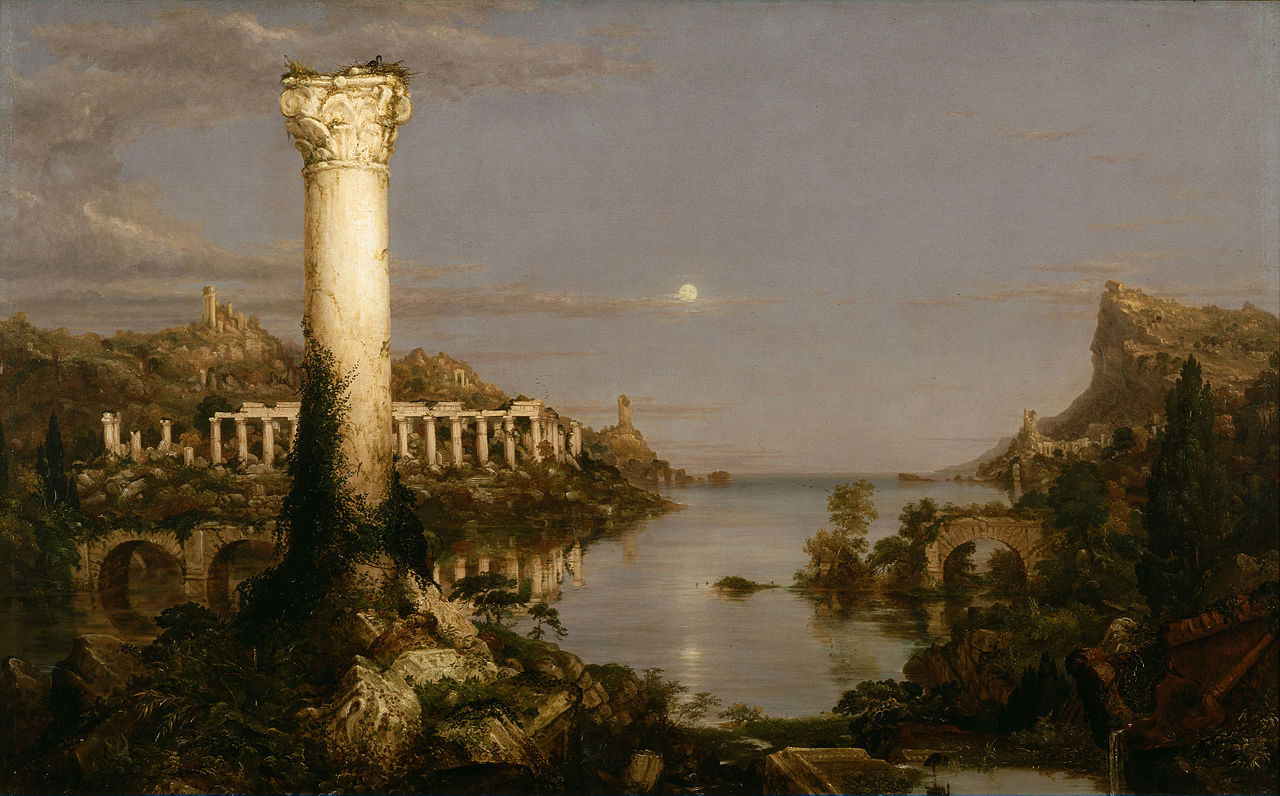
The role of disease and climate change in the fall of the western Roman Empire
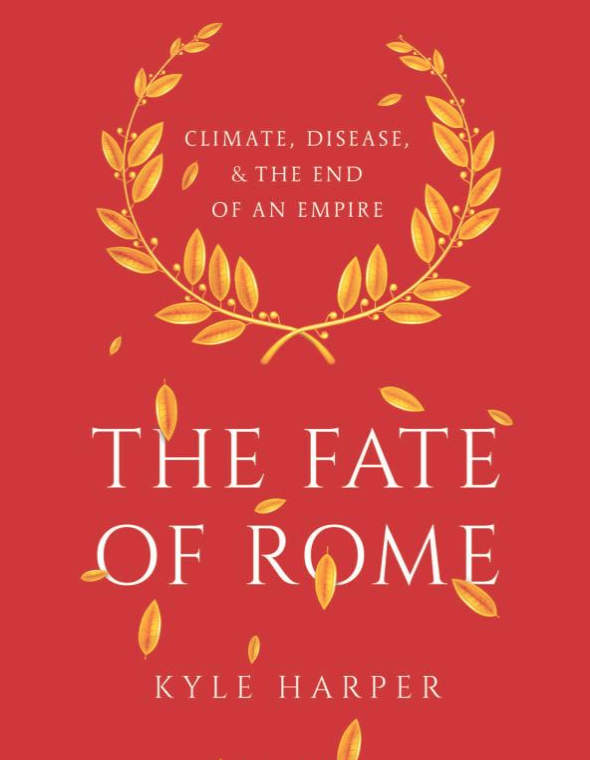
In Quillette, Jaspreet Singh Boparai reviews a new book by Kyle Harper that tries to incorporate what we have learned about epidemics and climate change into the narrative on the decline of Rome:
Why did the Roman Empire fall? The classic answer is given by Edward Gibbon (1737 — 1794), in chapter 38 of the third volume of The History of the Fall and Decline of the Roman Empire (1776 — 1789):
The decline of Rome was the natural and inevitable effect of immoderate greatness. Prosperity ripened the principle of decay; the causes of destruction multiplied with the extent of conquest; and as soon as time or accident had removed the artificial supports, the stupendous fabric yielded to the pressure of its own weight.
Kyle Harper, Senior Vice President and Provost of the University of Oklahoma, seeks to complement Gibbon’s account by emphasising the role of nature, and specifically climate change and infectious disease, in the fall of Rome in his provocative, exceptionally well-written book The Fate of Rome: Climate, Disease and the End of an Empire. Is Harper correct? Were plagues and climate events fatal for Rome?
Harper accepts the conventional view that Rome’s civilizational collapse began in the later second century AD, accelerated amidst chaos and bloodshed during the third century, and culminated in the humiliations of the fifth century, when Rome was famously sacked by barbarians, and the last, weak, insignificant Roman Emperor was pushed off the throne in AD 476.
[…]
Harper begins The Fate of Rome with a description of Rome as it advertised itself in AD 400. Contemporary inventories record: 28 libraries, 19 aqueducts, two circuses, 37 gates, 423 neighborhoods, 46,602 blocks of flats, 1,790 grand houses, 290 granaries, 856 public baths, 1,352 cisterns, 254 bakeries, 46 brothels, and 144 public latrines. The population is estimated at 700,000 or so. This figure diminished rapidly after August 24th, AD 410, when Rome was sacked by an army of Goths.
The traditional date of Rome’s fall is September 4th, AD 476, when the 16-year-old Emperor Romulus Augustus, the son of a former secretary to Attila the Hun, was forced to abdicate the throne by a barbarian warlord, and dismissed to spend the rest of his days at a seaside villa near Naples. His date of death is not recorded; he was too unimportant to fear assassination. At this point, the city of Rome’s population was still as high as 400,000.
Rome was invaded and sacked a few times over the centuries; more and more of it was abandoned; by the 10th century it was a suburb to nowhere surrounded by malarial swamps, and may have had only 9,000 inhabitants. Most of the economy was related to religious pilgrimages; the city was controlled by gangsters and petty warlords. What was left amidst the ruins was sacked again in AD 1084 by an army that outnumbered residents by as much as three to one.
Chauchat Field Testing vs Mock MG08/15 Nest
Forgotten Weapons
Published 14 Dec 2019http://www.patreon.com/ForgottenWeapons
Cool Forgotten Weapons merch! http://shop.bbtv.com/collections/forg…
Out at the range today with the Chauchat, testing accuracy against a simulated MG08/15 nest at 150 yards. I’ll try out semiauto and full auto (in short bursts), and see how they compare. For reference, the US Army recommended never using the Chauchat beyond 400 yards, as it was not sufficiently accurate to be effective at greater distance.
To see a set of original WW1 American Expeditionary Force Chauchat manuals, check here:
https://www.forgottenweapons.com/chau…
Contact:
Forgotten Weapons
6281 N. Oracle #36270
Tucson, AZ 85704
QotD: The Edict of Diocletian, 301 AD
The most famous episode of price controls in Roman history was during the reign of Emperor Diocletian (A.D. 244-312). He assumed the throne in Rome in A.D. 284. Almost immediately, Diocletian began to undertake huge and financially expensive government spending projects.
There was a massive increase in the armed forces and military spending; a huge building project was started in the form of a planned new capital for the Roman Empire in Asia Minor (present-day Turkey) at the city of Nicomedia; he greatly expanded the Roman bureaucracy; and he instituted forced labor for completion of his public works projects.
[…]
Diocletian also instituted a tax-in-kind; that is, the Roman government would not accept its own worthless, debased money as payment for taxes owed. Since the Roman taxpayers had to meet their tax bills in actual goods, this immobilized the entire population. Many were now bound to the land or a given occupation, so as to assure that they had produced the products that the government demanded as due it at tax collection time. An increasingly rigid economic structure, therefore, was imposed on the whole Roman economy.
But the worst was still to come. In A.D. 301, the famous Edict of Diocletian was passed. The Emperor fixed the prices of grain, beef, eggs, clothing, and other articles sold on the market. He also fixed the wages of those employed in the production of these goods. The penalty imposed for violation of these price and wage controls, that is, for any one caught selling any of these goods at higher than prescribed prices and wages, was death.
Realizing that once these controls were announced, many farmers and manufacturers would lose all incentive to bring their commodities to market at prices set far below what the traders would consider fair market values, Diocletian also prescribed in the Edict that all those who were found to be “hoarding” goods off the market would be severely punished; their goods would be confiscated and they would be put to death.
In the Greek parts of the Roman Empire, archeologists have found the price tables listing the government-mandated prices. They list over 1,000 individual prices and wages set by the law and what the permitted price and wage was to be for each of the commodities, goods, and labor services.
A Roman of this period named Lactanius wrote during this time that Diocletian “… then set himself to regulate the prices of all vendible things. There was much blood shed upon very slight and trifling accounts; and the people brought no more provisions to market, since they could not get a reasonable price for them and this increased the dearth [the scarcity] so much, that at last after many had died by it, the law was set aside.”
Richard M. Ebeling, “How Roman Central Planners Destroyed Their Economy”, Foundation for Economic Education, 2016-10-05.
April 13, 2020
Curator’s Tank Museum Tour: Tank Story Hall – Inter-War | The Tank Museum
The Tank Museum
Published 11 Apr 2020Join Curator David Willey as he takes you on a tour of The Tank Museum’s Tank Story Hall, which houses over 30 key vehicles from Little Willie to Challenger 2. In this section he looks at the inter-war vehicles and gives you a potted history of the time period between the two World Wars.
Support the work of The Tank Museum on Patreon: ► https://www.patreon.com/tankmuseum
Visit The Tank Museum SHOP & become a Friend: ► https://tankmuseumshop.org/Twitter: ► https://twitter.com/TankMuseum
Instagram: ► https://www.instagram.com/tankmuseum/
Tiger Tank Blog: ► http://blog.tiger-tank.com/
Tank 100 First World War Centenary Blog: ► http://tank100.com/
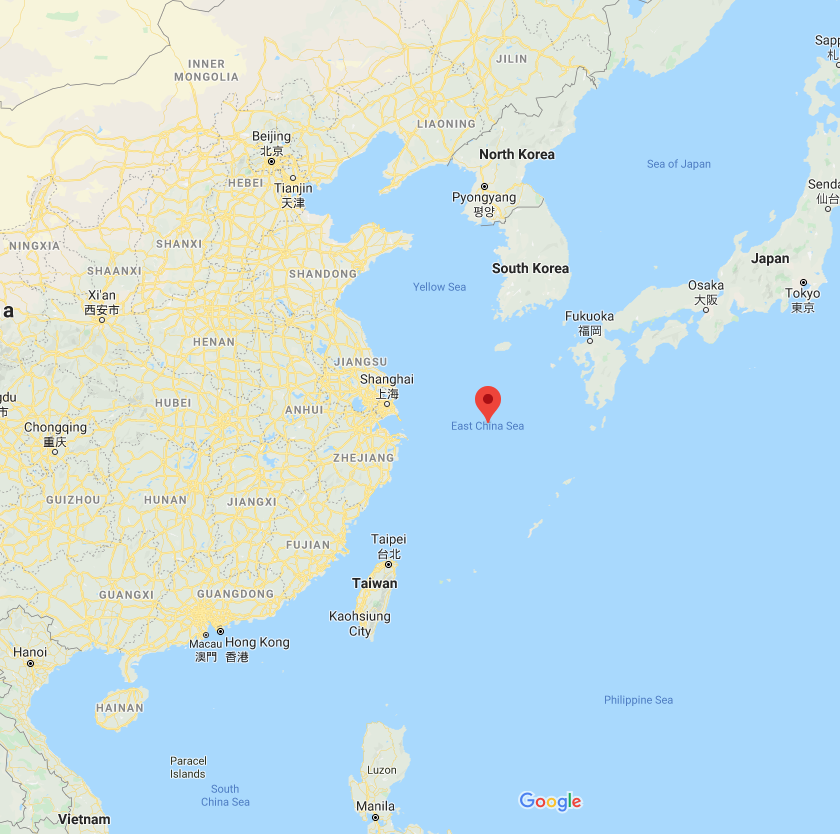
Increasing hazards to navigation in the East China Sea
It’s odd that all the increased collisions seem to involve Chinese vessels:

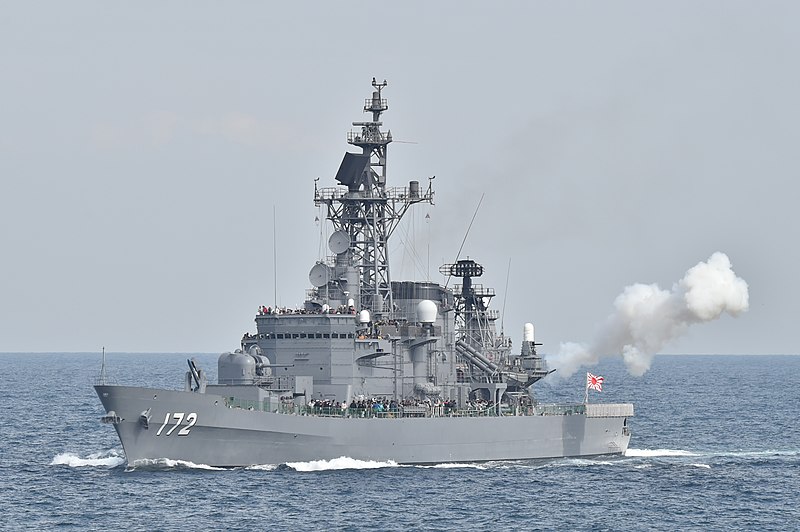
Japanese Maritime Self-Defence Force ship JS Shimakaze (DDG-172), the second ship of the Hatakaze class, commissioned in 1988. She was slightly damaged in a collision with a Chinese fishing boat in the East China Sea on 30 March 2020.
Image via Wikimedia Commons.
Sci-fi genius Robert Heinlein warned readers never to attribute to villainy behavior that was adequately explained by stupidity. In other words, he believed malice should be the explanation of last resort for puzzling conduct on the part of people or groups of people; it shouldn’t be the default. Better to hunt for more benign explanations first. With apologies to Heinlein, I would amend his “razor,” or heuristic, slightly. It’s too narrow. There are other candidates than stupidity or purposeful villainy to account for misconduct. Factors like incompetence, bureaucratic inertia, and sheer accident form — and sometimes deform — human thought and action. They belong on the stupidity side of Heinlein’s ledger.
How about this: Never attribute to villainy behavior that can be adequately explained by human failings. That preserves the essence of Heinlein’s razor while widening its scope to fit reality.
Let’s use his revised heuristic to evaluate the Sino-Japanese collision. It’s certainly possible the mishap came about by accident. It took place at night, in crowded waters. If the U.S. Navy collisions of 2017 taught us nothing else, it’s that the crews of even frontline warships can suffer from a host of maladies, from overwork to shoddy personnel practices to doctrinal or training shortfalls. No amount of high technology — whether it’s Aegis radar or satellite navigation — can altogether forestall human error. It may be that the Japanese crew, the Chinese crew, or both blundered around in the dark and came to grief. By Heinlein’s lights that’s the generous and proper assumption until the facts become known. If they do.
Nevertheless, a silent corollary has to be appended to Heinlein’s razor: But don’t rule out villainy, either.
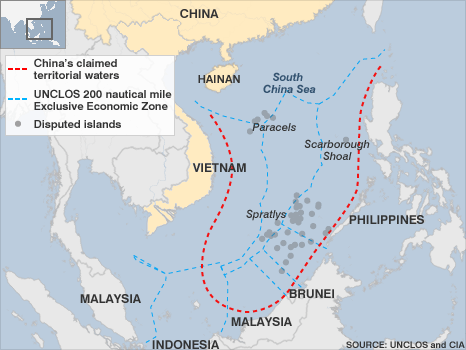
Especially when it comes to the Chinese Communist Party (CCP). For decades Beijing has made militiamen embedded in the Chinese fishing fleet an arm of maritime strategy. The maritime militia is an irregular adjunct to regular naval forces, including the People’s Liberation Army Navy (PLA Navy) and especially the musclebound China Coast Guard fielded over the past decade. Beijing touted the militia’s combat prowess as long ago as 1974, when Chinese naval forces wrested a tottering South Vietnam’s holdings in the Paracel Islands from it in a brief but bloody sea battle. Militia craft backed by the coast guard have been a fixture in the South China Sea ever since 2009, when Beijing declared “indisputable sovereignty” over the vast majority of that body of water — including seas allocated to its neighbors by treaty. The irregular force went into overdrive in 2012 during the standoff with the Philippine Navy and Coast Guard at Scarborough Shoal, deep within the Philippines’ exclusive economic zone. Fishing craft flood the zone in CCP-claimed waters and dare local coast guards or navies to repulse them. If the locals resist, the China Coast Guard backs up the militia. PLA regular forces provide a backstop should things go awry.
H/T to Blazing Cat Fur for the link.
Choosing the Right Joinery | Paul Sellers
Paul Sellers
Published 9 Apr 2020Understanding joinery can be confusing, especially is this so when industry confuses the issues by introducing terms like dowel joint, biscuit joint and domino joint.
I hope that we can all see to it that the art of true joinery remains as both the industry and the non-industry standard that preserves the skilled work of artisans working these three joints into their projects. I also hope that this video helps everyone to understand why there is a difference.
For a beginner friendly guide on the basic joints, see our FREE courses on Common Woodworking:
Dovetail: https://bit.ly/3e12edT
Mortise and Tenon: https://bit.ly/2x1f8YF
Housing Dado: https://bit.ly/2Vi2JHY
——————–Want to learn more about woodworking?
Go to Woodworking Masterclasses for weekly project episodes: http://bit.ly/2JeH3a9
Go to Common Woodworking for step-by-step beginner guides and courses: http://bit.ly/35VQV2o
http://bit.ly/2BXmuei for Paul’s latest ventures on his blog
James J. Hill, US railroading’s premier “market entrepreneur”
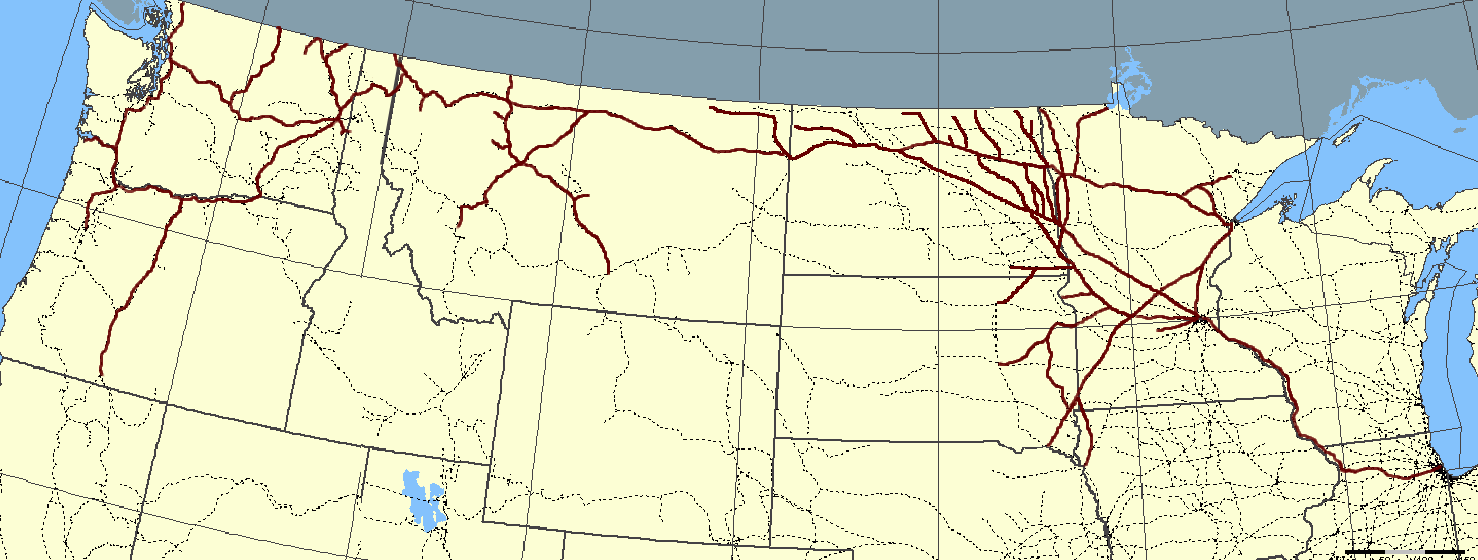
Dane Stuhlsatz outlines the story of US federal government subsidies and other interventions into the 19th century railroad industry and the one tycoon who avoided the lure:

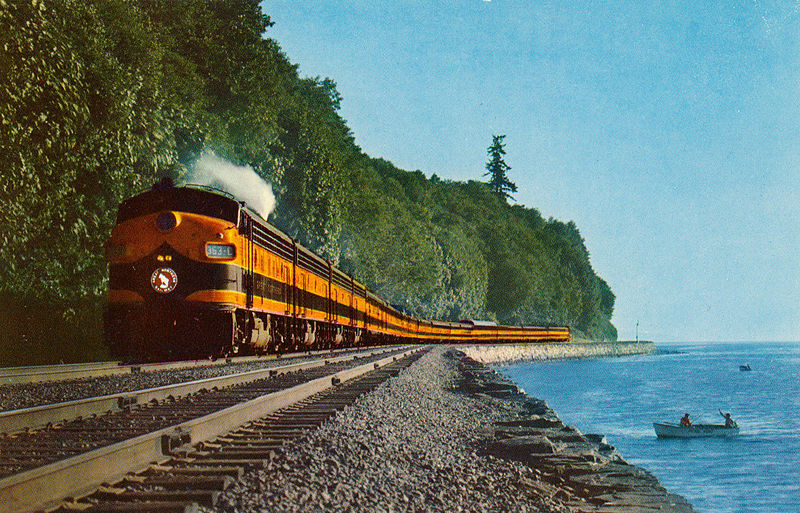
Postcard photo of the Great Northern Railway’s “Empire Builder” streamliner between Everett and Seattle, Washington, circa 1963.
Great Northern Railway postcard via Wikimedia Commons.
Burton W. Folsom, Jr. outlined this story in his book, The Myth of the Robber Barons, identifying two models of entrepreneurship; the “political entrepreneurism” of lines like the Union Pacific and Central Pacific versus the “market entrepreneurism” of James J. Hill and his Great Northern Railway.
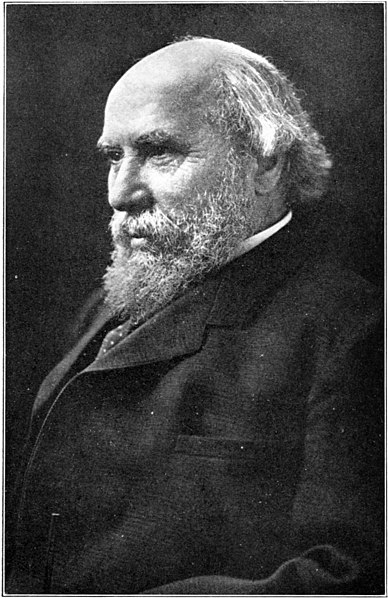
Canadian-born James J. Hill (1838-1916) in 1914.
Photo from Famous Living Americans, edited by Mary Griffin Webb and Edna Lenore Webb via Wikimedia Commons.As Folsom details, the former chased government largesse, ultimately in exchange for loss of control of their business, while the latter chased profits through prudent business decisions. Hill’s success juxtaposed with UP’s and CP’s failure is due in no small part to his steadfast refusal to accept any federal subsidies. In short, UP’s and CP’s government subsidized incentives were vastly different from Hill’s profit driven incentives, which lead to vastly different outcomes.
Federal subsidies incentivized speed, not efficiency. The subsidies were paid in the form of both land grants and direct payments. For each mile of track laid, the UP and CP would receive 20 acres of land and either $16,000 (for track on flat land), $32,000 (for track on hilly terrain), or $48,000 (on mountainous terrain). This incentive for speed resulted in winding, inefficient, routes built with inferior materials, ultimately culminating in a federal price tag of 44,000,000 acres and $61,000,000 (astronomical sums in the 1860s-70s). Despite all this federal assistance, shortly after the golden spike was driven on May 10, 1869 at Promontory Summit, Utah, the UP and CP were nearly bankrupt and required further assistance to stay afloat.
The lines which were born and brought up on federal aid needed federal aid to continue. This led to the passage of the Thurman Law in 1874 which forced UP to pay 25% of its earnings a year to pay its federal debt.
UP’s profitability decisions were also subject to government approval. Branch lines — smaller lines off the main line into rural communities — which could have helped UP’s bottom line, were often not approved by federal bureaucrats. Additionally, the federal Bureau of Railroad Accounts required constant checking of UP’s books. All these measures stifled the ingenuity that UP so desperately needed to make its line profitable. UP quickly found out that the power to subsidize was the power to destroy.
Hill’s line on the other hand was methodically surveyed and built, on the shortest routes possible, with the least gradient possible, and using the best steel and other materials on the market at the time. Rather than political largess, Hill made his decisions based on profit and loss. But, for all the efficiency that Hill built into his line — he was able to transport across the country faster, cheaper, and with less maintenance costs than could the UP and CP — arguably the most important aspect for the viability of his business was the freedom to conduct business untethered by the strings that accompanied government subsidies.
While Hill was free to build when and where he wanted so long as he reached voluntary agreements with landowners, consumers, and employees, UP was tied up in red tape. As Hill’s line grew evermore profitable and reliable for customers, the UP and CP struggled along on federal aid, until they ultimately went bankrupt in 1893.
For his part, Hill’s line was the only transcontinental railroad to never go bankrupt.

Prehistory Summarized: The Early Universe
Overly Sarcastic Productions
Published 23 Sep 2015Blue hits us with some physics! Hold onto your butts. That butt is made of star stuff, ya know. It’s very special. Be proud of that butt. It was forged in the heart of a supernova.
Anyway, yeah, physics.
Guest starring yours truly! Watch out for my extremely subtle and unobtrusive cameos.
The ninja thing is a reference to earlier videos. I think he shows up in the College video and the one about The Borgias.
QotD: Foucault’s “Ship of Fools”
And so, Foucault tells us, in the fifteenth century there is a sudden emergence of a complex of artistic and philosophical themes linking madmen, the sea, and the terrible mysteries of the world. These culminate in the “Ship Of Fools”:
Renaissance men developed a delightful, yet horrible way of dealing with their mad denizens: they were put on a ship and entrusted to mariners because folly, water, and sea, as everyone then knew, had an affinity for each other. Thus, “Ships of Fools” crisscrossed the seas and canals of Europe with their comic and pathetic cargo of souls. Some of them found pleasure and even a cure in the changing surroundings, in the isolation of being cast off, while others withdrew further, became worse, or died alone and away from their families. The cities and villages which had thus rid themselves of their crazed and crazy, could now take pleasure in watching the exciting sideshow when a ship full of foreign lunatics would dock at their harbors.
This was such a great piece of historical trivia that I was shocked I’d never heard it before. Some quick research revealed the reason: it is completely, 100% false. Apparently Foucault looked at an allegorical painting by Hieronymus Bosch, decided it definitely existed in real life, and concocted the rest from his imagination.
Foucault apologists try to rescue this, say that he was just being poetic in some way. He wasn’t. Page 8 in my copy: “Of all these romantic or satiric vessels, the Narrenschiff [Ship Of Fools] is the only one that had a real existence — for they did exist, these boats that conveyed their insane cargo from town to town.” He really, really doubled down on this point. As far as I can tell, this is just as bad a failing of scholarship as it sounds – and surprising, since everything else about the book gives the impression of Foucault as an incredibly knowledgeable and wide-ranging scholar.
Scott Alexander, “Book review: Madness and Civilization”, Slate Star Codex, 2018-01-04.
April 12, 2020
Nazis in the Balkans – The Invasion of Greece and Yugoslavia – WW2 – 085 – April 11, 1941
World War Two
Published 11 Apr 2020This week, the German army invades Greece and Yugoslavia as it launches Operation Marita and Operation 25 respectively. They also take some remarkable captives in North Africa.
Join us on Patreon: https://www.patreon.com/TimeGhostHistory
Or join The TimeGhost Army directly at: https://timeghost.tvFollow WW2 day by day on Instagram @World_war_two_realtime https://www.instagram.com/world_war_t…
Between 2 Wars: https://www.youtube.com/playlist?list…
Source list: http://bit.ly/WW2sourcesWritten and Hosted by: Indy Neidell
Produced and Directed by: Spartacus Olsson and Astrid Deinhard
Executive Producers: Bodo Rittenauer, Astrid Deinhard, Indy Neidell, Spartacus Olsson
Creative Producer: Joram Appel
Post-Production Director: Wieke Kapteijns
Research by: Indy Neidell
Edited by: Iryna Dulka
Map animations: Eastory (https://www.youtube.com/c/eastory)Colorizations by:
– Olga Shirnina, a.k.a. Klimbim – https://klimbim2014.wordpress.com/
– Daniel Weiss
– Julius Jääskeläinen – https://www.facebook.com/JJcolorization/
– Adrien Fillon – https://www.instagram.com/adrien.colo…
– Carlos Ortega Pereira, BlauColorizations
– Owen Robinson – https://www.instagram.com/owen.colori…Sources:
– FORTEPAN / MARTIN DJEMIL, MARTIN DJEMIL
– FDR Presidential Library & Museum
– Bundesarchiv
– Narodowe Archiwum Cyfrowe
– Side cap and veteran icons by Andrei Yushchenko from the Noun Project
– IWM: E 2961, E 4702, E 2987, A 9796Archive by Screenocean/Reuters https://www.screenocean.com.
A TimeGhost chronological documentary produced by OnLion Entertainment GmbH.
From the comments:
World War Two
2 days ago
This is the second double-length episode, with the Invasion of the Benelux and France being the first one (May 18th 1940). Now, there are two things I want to point out in this comment. First of all, like our May 18th episode, this episode is packed with the amazing maps made by Eastory. If you haven’t already, subscribe to www.youtube.com/c/eastory. Furthermore, this week the final episode of our Between Two Wars series aired, covering the world on the brink of World War Two. The entire series of 58 episodes long, covering all the events leading up to WW2, can be watched in this playlist (https://www.youtube.com/playlist?list=PLrG5J-K5AYAU1R-HeWSfY2D1jy_sEssNG) or simply by going to www.youtube.com/c/timeghost.
Cheers, Joram