Quotulatiousness

May 2, 2020

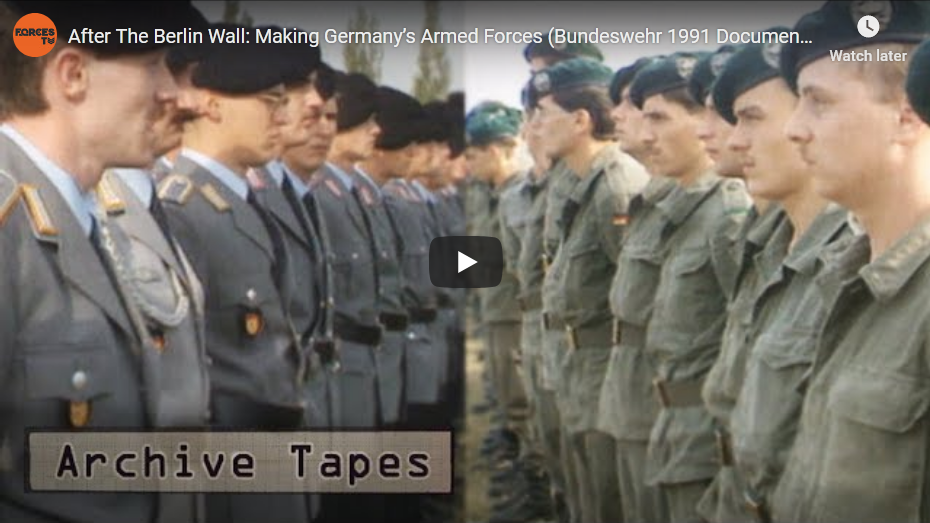
After The Berlin Wall: Making Germany’s Armed Forces (Bundeswehr 1991 Documentary)

Filed under: Europe, Germany, History, Military — Tags: , , , , , , — Nicholas @ 02:00

Forces TV
Published 5 Jan 2018

It’s more than 27 years since German reunification, when East and West Germany came together again after the fall of the Berlin Wall. This documentary looks at the challenges facing the West German Army as they took over the East German National People’s Army.

Read more: http://www.forces.net/news/comment-bu…
Subscribe to Forces TV: http://bit.ly/1OraazC
Check out our website: http://forces.net
Twitter: https://twitter.com/ForcesNews

How things change … back in 1991, the Bundeswehr had a vast over-supply of military vehicles between the mass of Soviet-era equipment inherited from the DDR and the excess due to planned down-sizing of Germany’s overall military expenditure (the “peace dividend”). Earlier this year, Bild reported that German soldiers are being advised to take personal vehicles during military training exercises, due to a lack of infantry fighting vehicles and other military transport.

QotD: Today’s psychological epidemic

Filed under: Health, Media, Quotations — Tags: , , , , , , — Nicholas @ 01:00

I think that one of the things the web has done is enable people who have personality disorders to validate their particular pathology, because they find all sorts of people who are like them.

There’s an epidemic of self-diagnosis among young people, there’s a race to multiply pathology, there’s a glorification of disorders like borderline personality disorder, which is rare. When being the most oppressed victim gives you the highest status, then it’s a race to the bottom.

We’re not helping young people figure out a noble and difficult pathway forward, where they bear responsibility and march forthrightly into adulthood. Quite the contrary. We’re saying, “Well, the system is corrupt and there’s no point in taking part in it. You’re going to be victimized no matter what you do.” And so the race is on for who gets to play the victim card with the highest degree of status. And it’s really bad, it’s especially bad for adolescents because they’re trying to sort their identity out, they’re already a mess.

Jordan Peterson, “Christie Blatchford Sits Down With ‘Warrior For Common Sense’ Jordan Peterson”, National Post, 2018-02-07.

May 1, 2020

Why Pearl Harbor? Peaceful Portugal, and the poor Kriegsmarine – WW2 – OOTF 011

Filed under: Britain, Europe, Germany, History, Japan, Military, WW2 — Tags: , , , — Nicholas @ 06:00

World War Two
Published 30 Apr 2020

How were relations between Japan and the United States at the beginning of the war? What were both sides doing to try and make Portugal enter the war? And to what extent did the Kriegsmarine match the Royal Navy? Find out as we answer these questions in this Out of the Foxholes episode!

Links to the Between 2 Wars videos mentioned in the episode:
Japan, the Bureaucratic War Machine | BETWEEN 2 WARS I 1931 Part 2 of 3: https://youtu.be/vVgCy6iwrHQ
The World Takes Advantage of American Isolationism | BETWEEN 2 WARS | 1933 part 3 of 3: https://youtu.be/-iuQcxXAdfw
Did WW2 Start in 1937? – The Rape of China | BETWEEN 2 WARS I 1937 Part 1 of 2: https://youtu.be/_3vPGpamtDI

Join us on Patreon: https://www.patreon.com/TimeGhostHistory
Or join The TimeGhost Army directly at https://timeghost.tv

Follow WW2 day by day on Instagram @World_war_two_realtime https://www.instagram.com/world_war_t…
Between 2 Wars: https://www.youtube.com/playlist?list…
Source list: http://bit.ly/WW2sources

Hosted by: Indy Neidell
Written by: Rune Væver Hartvig
Director: Astrid Deinhard
Producers: Astrid Deinhard and Spartacus Olsson
Executive Producers: Astrid Deinhard, Indy Neidell, Spartacus Olsson, Bodo Rittenauer
Creative Producer: Joram Appel
Post-Production Director: Wieke Kapteijns
Research by: Rune Væver Hartvig
Edited by: Mikołaj Cackowski
Sound design: Marek Kamiński
Map animations: Eastory (https://www.youtube.com/c/eastory)

Colorizations by:
Carlos Ortega Pereira, BlauColorizations, https://www.instagram.com/blaucoloriz…
Dememorabilia – https://www.instagram.com/dememorabilia/

Sources:
BIBLIOTECA DE ARTE DA FUNDAÇÃO CALOUSTE GULBENKIAN
Bundesarchiv

Soundtracks from the Epidemic Sound:
Reynard Seidel – “Deflection”
Fabien Tell – “Last Point of Safe Return”
Johannes Bornlof – “Deviation In Time”

Archive by Screenocean/Reuters https://www.screenocean.com.

A TimeGhost chronological documentary produced by OnLion Entertainment GmbH.

The Scottish Sentencing Council recommends that no under-25s be sent to prison

Filed under: Britain, Law — Tags: , , , , , — Nicholas @ 05:00

Theodore Dalrymple isn’t impressed with this proposal:

A judges’s wig and advocate’s wig on temporary display in Parliament Hall, Edinburgh, 26 October 2013.
Photo by Kim Traynor via Wikimedia Commons.

Just as one begins to imagine that the liberal pseudo-conscience can go no further in foolishness, it comes up with new schemes to make the world a little worse. Its inventiveness, in fact, is infinite, and no victory over it by common sense is ever more than temporary. The price of sanity, at least in the modern world, is eternal vigilance.

This is not to say, of course, that no liberal reform in the past was ever justified or did no good, or that none will ever do any good in the future. It is simply that, as a matter of contingent sociological fact, many liberals seem to have lost their minds.

The Scottish Sentencing Council, an advisory body with no legislative powers but whose recommendations judges disregard at their peril, put forward a proposal earlier this year that those under the age of 25 should not be sent to prison because research shows that their brains have not yet fully matured. It is difficult to know where to begin in arguing with this fatuity.

Let us then start with the notion that no man under 25 is sufficiently mature to know that it is wrong to strangle old ladies in their beds and the further proposition that, until that age, they are unable to control their impulse to do so.

[…]

The idea that a man’s brain is so immature before age 25 that he does not know that all manner of crimes are wrong would suggest a revision of our electoral laws, for if a man can neither distinguish right from wrong nor control his impulses, should he have the vote? Should he, in fact, be considered of legal age? Should he be allowed even to choose his own career? I doubt that the Sentencing Council would preen itself on the corollaries of its proposal.

There is, of course, an element of truth in what the Sentencing Council says. Our characters are not fully formed by the age of 25 — mine certainly wasn’t. It is true also that there is a biological component to crime, inasmuch as the vast majority of criminals in all societies in which crime is a category of behaviour are young and male. The rate at which even recidivist criminals commit crimes declines with age and most often reaches zero. Time is the great therapist.

But punishment is not therapy. It is a very good thing, of course, if punishment (such as imprisonment) reforms the criminal, and I think that it is a moral obligation of the state, if it is to lock up people, to try to give them something purposeful and worthwhile to do. But that is not the primary purpose of punishment. If it could be shown that rewarding criminals with large fortunes would change their behaviour — as almost certainly it would in most cases — we should not advocate such a course, even if it were a better way of reforming them in the sense of reducing their recidivism rate.

Soldier of Three Armies Pt. 2 – Continuation War – Sabaton History 065 [Official]

Filed under: Europe, Germany, History, Media, Russia, WW2 — Tags: , , , , , — Nicholas @ 04:00

Sabaton History
Published 30 Apr 2020

With a bounty on his head, the Red Army wants him dead, Soviet enemy number one. Second part of the Lauri Törni trilogy. The Winter War between Finland and the Soviet Union was over, but the world was further tumbling down into war. Finland saw itself trapped between two power blocks. A new arrangement with Nazi Germany gave men like Lauri Törni an opportunity to train with the newly established Waffen-SS. But it was an opportunity with lasting consequences.

Support Sabaton History on Patreon: https://www.patreon.com/sabatonhistory

Listen to Soldier of Three Armies on the album Heroes:
CD: http://bit.ly/HeroesStore
Spotify: http://bit.ly/HeroesSpotify
Apple Music: http://bit.ly/HeroesAppleMusic
iTunes: http://bit.ly/HeroesiTunes
Amazon: http://bit.ly/HeroesAmz
Google Play: http://bit.ly/HeroesGoogleP

Check out the trailer for Sabaton’s new album The Great War right here: https://www.youtube.com/watch?v=HCZP1…

Listen to Sabaton on Spotify: http://smarturl.it/SabatonSpotify
Official Sabaton Merchandise Shop: http://bit.ly/SabatonOfficialShop

Hosted by: Indy Neidell
Written by: Markus Linke and Indy Neidell
Directed by: Astrid Deinhard and Wieke Kapteijns
Produced by: Pär Sundström, Astrid Deinhard and Spartacus Olsson
Creative Producer: Joram Appel
Executive Producers: Pär Sundström, Joakim Broden, Tomas Sunmo, Indy Neidell, Astrid Deinhard, and Spartacus Olsson
Post-Production Director: Wieke Kapteijns
Edited by: Iryna Dulka
Sound Editing by: Marek Kaminski
Maps by: Eastory – https://www.youtube.com/c/eastory

Archive by: Reuters/Screenocean https://www.screenocean.com
Music by Sabaton.

Additional video footage from Dennis Henson

Sources:
– Bundesarchiv, CC-BY-SA 3.0, Bild 101III-Hoffmann-04-23/Hoffmann
– Narodowe Archiwum Cyfrowe
– sa-kuva.fi

An OnLion Entertainment GmbH and Raging Beaver Publishing AB co-Production.

© Raging Beaver Publishing AB, 2019 – all rights reserved.

Theodore Dalrymple on the authoritarian innovations we’ve so meekly accepted thanks to the Wuhan Coronavirus epidemic

Filed under: Britain, Government, Health, Law, Liberty — Tags: , , , , , — Nicholas @ 03:00

Getting back to “normal” is going to be much more difficult now that the powers-that-be know for certain that we’re all quite comfortable tugging the forelock and bending the knee given the right kind of orders:

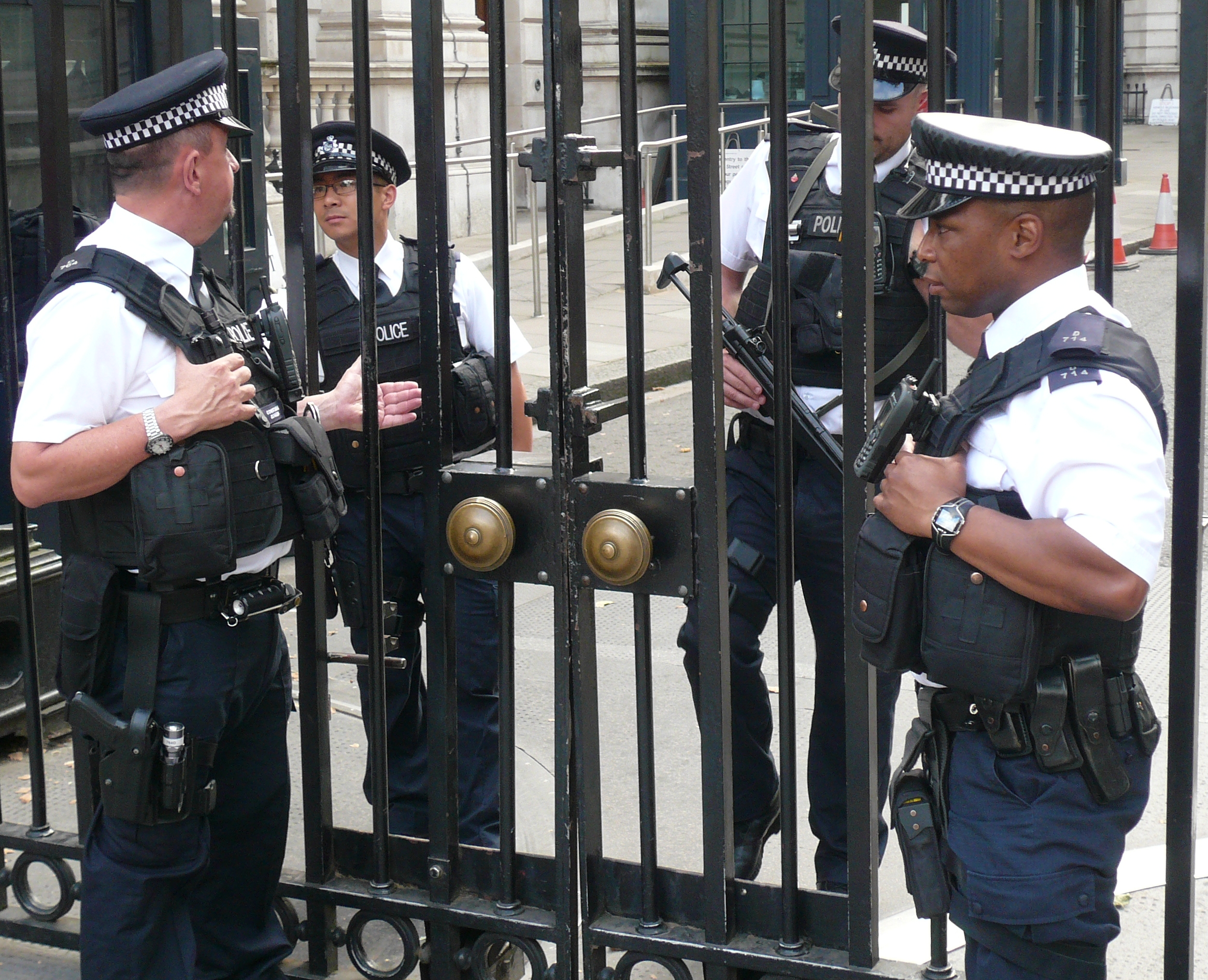
Armed Metropolitan Police near Downing Street in London.
Photo by Stanislav Kozlovskiy via Wikimedia Commons.

As for the collective or political lessons of the epidemic, I fear them more than rejoice in them. They seem to me likely to reinforce a tendency to authoritarianism, and to embolden bureaucrats with totalitarian leanings. One of the surprising things (or perhaps I should say the things that surprised me) was how meekly the population accepted regulations so drastic that they might have made Stalin envious, all on the say-so of technocrats whose opinions were not completely unopposed by those of other technocrats. There was, as far as I can tell, no popular demand for the evidence that supposedly justified the severe limitations on freedom that were imposed on the population. I suppose an encouraging interpretation of this readiness of the population to do as it was told is that it demonstrated that, all the froth and foam of opposition to political leaders notwithstanding, fundamentally the authorities were trusted by the population to do the right thing. Much as we lament, therefore, the intellectual and moral level of our political class, there are limits to how much we despise it. In other words, we believe that our institutions still work even when guided or controlled by nullities.

A less optimistic interpretation, as usual, is possible. Our population is now so used to being administered, supposedly for its own good, under a regime of bread and circuses, that it is no longer capable of independent thought or action. We have become what Tocqueville thought the Americans would become under their democratic regime, namely a herd of docile animals. Only at the margins — for example, the drug-dealers of banlieues of Paris — would the refractory actually rebel against the regulations, and that not for intellectual reasons or in the name of freedom, but because they wanted to carry on their business as usual. (I should perhaps mention here that I number myself among the sheep.)

In Britain, at any rate, the epidemic revealed how quickly the police could be transformed from a civilian force that protects the population as it goes about its business into a semi-militarised army of quasi-occupation. This transformation is not entirely new, alas; it has been a long time since the policeman was the decent citizen’s friend. Under various pressures, not the least of them emanating from intellectuals, he has become instead a bullying but ineffectual keeper of discipline, whom only the law-abiding truly fear.

I first sensed this development many years ago this when a traffic policeman asked to see my licence. “Well, Theodore …” he started, calling me by my first name when a few years before he would have called me “Sir.” This change was significant. I had gone from being his superior, as a member of the public in whose name he exercised his authority, to being a kind of minor, whom it was his transcendent right to call to order. He was now the boss, and I was now the underling.

The change in uniform, too, has worked in the same direction. Traditionally, since the time of Sir Robert Peel, the uniform of the British policeman was unthreatening, deliberately so, his authority moral rather than physical. Now, he is festooned with the apparatus of repression, if not of oppression, though in effect he represses very little of what ought to be repressed in case it fights back. The modern police intimidate only those who do not need deterring; those who do need it know that they have nothing much to fear from these whited sepulchres, these empty vessels. Incidentally, the French police have undergone a similar deterioration in appearance: gone is the reassuring képi in favour of the moron’s baseball cap, and some of them now dress in jeans with a black shirt with the word POLICE across its back, which is not difficult to imitate and makes it impossible to know whether a policeman really is a policeman or a lout in disguise.

French Gendarmerie at the Eurockéennes of 2007.
Photo by Rama via Wikimedia Commons.

The Covid-19 epidemic has come as a great boon to the British police. Increasingly criticised for their concentration on pseudo-crimes such as hate speech at the expense of neglecting real crimes such as assault and burglary, to say nothing of organised sexual abuse of young girls by gangs of men of Pakistani origin, they could now bully the population to their heart’s content and imagine that in doing so they were performing a valuable public service, preserving the law and public health at the same time. Thus they transformed their previous moral and physical cowardice into a virtue.

Of course, in bullying the average citizen who was very unlikely to retaliate they took no risks, unlike with genuine wrongdoers and law-breakers, who tend to be dangerous; but the fact remains that most individual policemen joined the force motivated by some kind of idealism, a desire to do society some service, though they soon had these naïve fantasies knocked out of them by the morally corrupt or bankrupt leadership of the hierarchy which owes its ascendency to its willingness to comply with the latest nostrums of political correctness. The faint embers of the policeman’s initial idealism were no doubt rekindled by the opportunity to prevent the spread of the virus, as they supposed that they were doing, but some of them, at least, far exceeded even their flexible and vaguely-defined authority and began to inspect citizens’ shopping bags to determine whether they were hoarding goods that might be in short supply. This was a step too far, and at last there were protests; the police desisted.

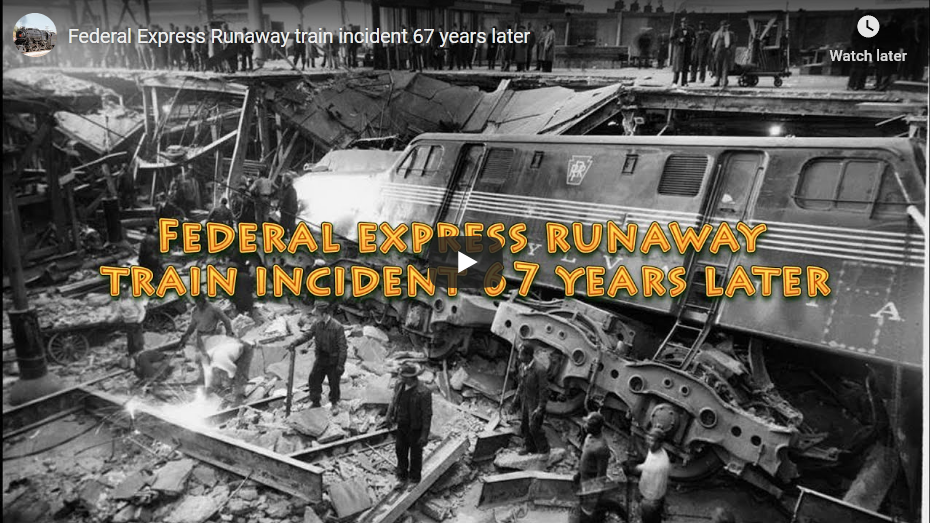
Federal Express runaway train incident 67 years later

Filed under: History, Railways, USA — Tags: , , , — Nicholas @ 02:00

Thunderbolt 1000 Siren Productions
Published 17 Jan 2020

2 days late and I lost several hours of sleep but holy hell it’s worth it now that it’s done! Enjoy this pretty interesting story on a runaway GG1 just days before Eisenhower’s inaguration
Please don’t shoot me for the Trump pics 😐
Next to come up is Glendale and *passes out*

Please donate!
https://www.gofundme.com/thunderbolt-…

I’m just a struggling college student! Your generous donations will enable me to continue my education and ensure future posts and educational films. Thank you!!!

Discord server: https://discord.gg/Tqwr4RV

Patron:
https://www.patreon.com/Thunderbolt1000

Deviantart: https://www.deviantart.com/pennsy

QotD: Cynicism

Filed under: Books, Media, Quotations — Tags: , , , , — Nicholas @ 01:00

Somewhere around that same eighth-grade mark where we all experimented with being mean, we get the idea that believing in things makes you a sucker — that good art is the stuff that reveals how shoddy and grasping people are, that good politics is cynical, that “realism” means accepting how rotten everything is to the core.

The cynics aren’t exactly wrong; there is a lot of shoddy, grasping, rottenness in the world. But cynicism is radically incomplete. Early modernist critics used to complain about the sanitized unreality of “nice” books with no bathrooms. The great modernist mistake was to decide that if books without sewers were unrealistic, “reality” must be the sewers. This was a greater error than the one it aimed to correct. In fact, human beings are often splendid, the world is often glorious, and nature, red in tooth and claw, also invented kindness, charity and love. Believe in that.

Megan McArdle, “After 45 Birthdays, Here Are ’12 Rules for Life'”, Bloomberg View, 2018-01-30.

April 30, 2020

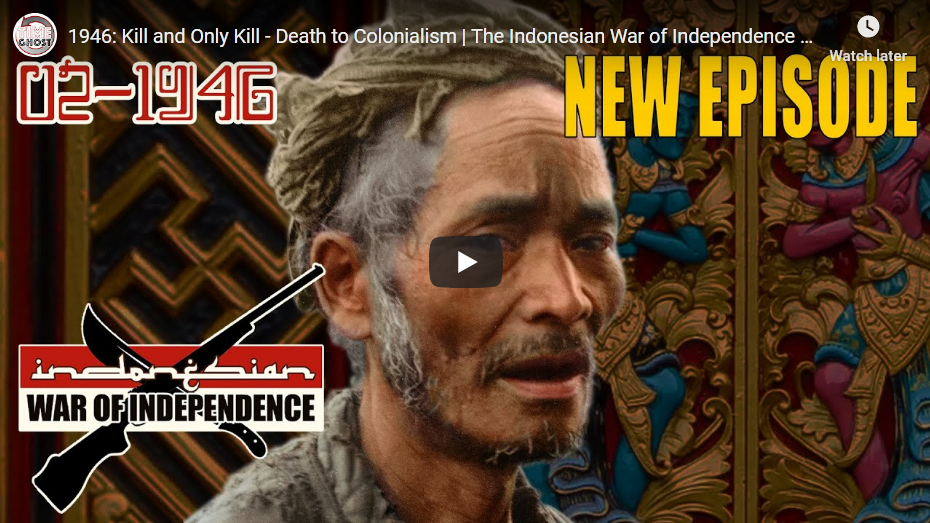
1946: Kill and Only Kill – Death to Colonialism | The Indonesian War of Independence Part 2

Filed under: Asia, History, Military — Tags: , , , , , , , — Nicholas @ 06:00

TimeGhost History
Published 29 Apr 2020

The Indonesian War of Independence is heavily fuelled by the gangs of youngsters who go by the name of Pemuda. They engage in clandestine guerrilla fighting as their revolution takes a violent turn.

Join us on Patreon: https://www.patreon.com/TimeGhostHistory

Hosted by: Indy Neidell
Written by: Isabel Wilson and Joram Appel
Director: Astrid Deinhard
Producers: Astrid Deinhard and Spartacus Olsson
Executive Producers: Astrid Deinhard, Indy Neidell, Spartacus Olsson, Bodo Rittenauer
Creative Producer: Joram Appel
Post-Production Director: Wieke Kapteijns
Research by: Isabel Wilson and Joram Appel
Edited by: Karolina Dołęga
Sound design: Marek Kamiński

Colorizations:
Dememorabilia – https://www.instagram.com/dememorabilia/
Jaris Almazani (Artistic Man) – https://instagram.com/artistic.man?ig…
Carlos Ortega Pereira (BlauColorizations) – https://www.instagram.com/blaucoloriz…

Research Sources: https://bit.ly/IndoSources

Sources:
Tropenmuseum part of the National Museum of World Cultures
Nationaal Archief
Imperial Wars Museum: SE7034; SE5663

Music:
“Deviation In Time” – Johannes Bornlof
“Disciples of Sun Tzu” – Christian Andersen
“Epic Adventure Theme 4” – Håkan Eriksson
“Guilty Shadows 4” – Andreas Jamsheree
“Last Point of Safe Return” – Fabien Tell
“Magnificent March 3” – Johannes Bornlöf
“March Of The Brave 10” – Rannar Sillard
“The End Of The World 2” – Håkan Eriksson
“The Inspector 4” – Johannes Bornlöf
“The Unexplored” – Philip Ayers.
“Try and Catch Us Now” – David Celeste

Archive by Screenocean/Reuters https://www.screenocean.com.

A TimeGhost chronological documentary produced by OnLion Entertainment GmbH.

From the comments:

TimeGhost History
1 day ago (edited)
For the research of this episode about Indonesian revolutionary culture in 1946, I mostly turned to the diaries and writings of those who were there. Reading the untouched experiences was so absorbing and allowed for writing a bottom-up narrative. Something that didn’t make it into the video was the work of Chairil Anwar, a poet who died young a few years after the War of Independence. Dwelling about the life and death of the individual during the revolution, his poetry defied Indonesia’s antagonists. In his poem “Notes for 1946”, he writes of how it felt to be among the young generation of Indonesia: “We – running dogs, hunting hounds – we get to see only a moment of this drama we play in.” I’d definitely recommend reading his work if you’re interested!
Cheers, Izzy.

Palestine, 1948 – the origins of the still-ongoing refugee issue

In Quillette, Benjamin Kerstein reviews a new book by Adi Schwartz and Einat Wilf, which covers the origins of the Palestinian refugee problem that still hinders any kind of lasting peace between Israel and neighbouring Arab countries:

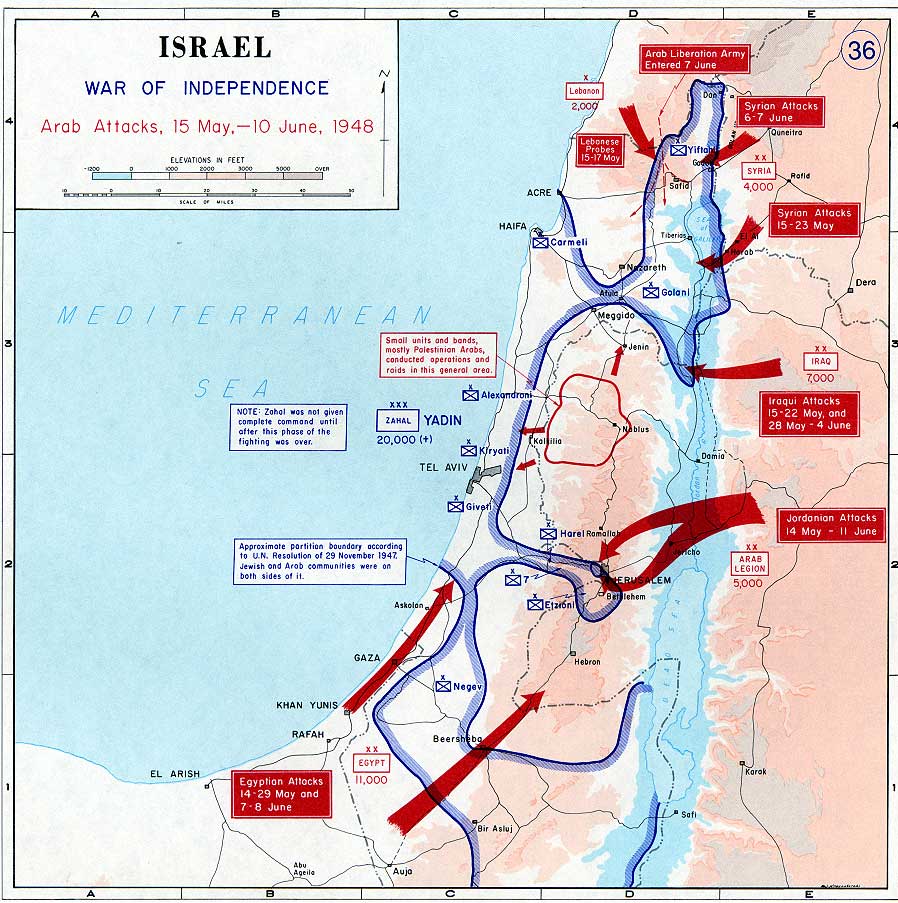
Arab attacks in May and June 1948.
United States Military Academy Atlas, Link.

Wilf and Schwartz’s comprehensive history of the refugee issue begins with the UN’s adoption in November 1947 of a plan to partition British Mandatory Palestine into an Arab state and a slightly smaller Jewish state. Violence erupted shortly after, and once the British left the territory, hostilities escalated into a full-scale war, during which fighting between the Zionist movement’s Haganah defense force and various Palestinian Arab militias was followed by an invasion by the surrounding Arab countries. Israel prevailed with truncated borders, but the Arab world remained steadfastly committed to the new state’s elimination. Refugees are a byproduct of every military conflict, but the exodus of the Palestinian Arabs would have uniquely consequential ramifications that continue to haunt the conflict and thwart its resolution to this day.

It is now fashionable for historians sympathetic to the Palestinian narrative to downplay the threat that the Jewish community in Mandatory Palestine — the Yishuv — faced in the 1948 conflict. Wilf and Schwartz show conclusively that such attempts, be they sincere or dishonest, are simply untrue. The secretary-general of the Arab League, they note, openly stated that the war was intended to be genocidal, saying, “This will be a war of extermination and momentous massacre, which will be spoken of like the Mongolian massacre and the Crusades.” Meanwhile, the Palestinian Arabs’ most influential leader, the Nazi collaborator Mufti Hajj Amin al-Husseini, said the Arabs would “continue to fight until the Zionists are eliminated, and the whole of Palestine is a purely Arab state.”

Correctly believing that their individual and collective existence were threatened, the Zionist militias, which eventually coalesced into the nascent Israel Defense Forces, sometimes destroyed villages and expelled their inhabitants, and there was a mass flight of Arabs from cities like Haifa and Jaffa. By the end of the war, what emerged was a Jewish state with a comfortable Jewish majority along with a substantial though not overwhelming Arab minority. The refugees, for the most part, were settled in camps in the surrounding Arab nations of Syria, Lebanon, and Jordan, as well as in the West Bank and Gaza, which were occupied by Jordan and Egypt, respectively. Jordan alone granted the refugees citizenship and absorbed them into the general population. Elsewhere, however, refugees remained stateless, left to the tender mercies of the international community.

From the beginning, pressure was brought to bear on Israel to allow the refugees to return, and from the beginning Israel steadfastly refused to do so, believing that it would destroy Israel’s Jewish character and precipitate another, perhaps even more brutal war. Wilf and Schwartz reveal that this was in fact precisely the Arabs’ intention. The Arab media spoke openly of establishing a “fifth column” within Israel by repatriating the refugees, and the authors record Palestinian historian Rashid Khalidi’s view that the Arab mood at the time made it clear that the right of return “was clearly premised” on “the dissolution of Israel.” In addition, the Palestinian leadership was initially unenthusiastic about the return of refugees, which they believed would imply a recognition of Israel’s existence to which they remained implacably opposed. For a society deeply rooted in concepts of honor, dignity, and humiliation, such an acknowledgement of defeat was simply unthinkable.

Contrary to the claims of Israel’s opponents, Wilf and Schwartz persuasively argue that the new state was under no moral or legal obligation to allow the refugees to return. During the late 1940s and early 1950s, the concept of population exchange between belligerent national groups in conflict over territory was considered lamentable but inevitable. Consequently, the laws pertaining to refugees often forbade the opposite: States could not force refugees to return to places when to do so might cause further conflict or instability. Emphasis was therefore on resettlement in host countries, usually with a corresponding ethnic or religious majority. This held true for the mass expulsions of ethnic Germans from Poland after World War II, and the almost contemporaneous exodus of both Muslims and Hindus to Pakistan and India, respectively. Importantly, it also applied to the hundreds of thousands of Jewish refugees expelled from Arab and Muslim countries following the 1948 war, who were resettled in the new State of Israel.

Once the Arab and Palestinian position on return shifted from a fear of recognizing Israel to the idea of building a fifth column within the state to wage an indefinite war against Zionism, Wilf and Schwartz write, “The state of Israel … was being asked by the Arabs to perform an extraordinary act: it was called on to admit to its sovereign territory hundreds of thousands of Arabs, against international norms of the time, without a peace treaty, and while the Palestinians and the Arab world continued to threaten it with another war — even calling the refugees a pioneer force toward this end.”

Although anti-Zionists today insist that Israel’s refusal to accept a return of the refugees was a uniquely heinous violation of human rights and international law, it was entirely consistent with the moral and legal norms of the time.

Desperate Mayors React to Coronavirus: A Timeline

Filed under: Government, Health, Humour — Tags: , , — Nicholas @ 04:00

ReasonTV
Published 29 Apr 2020

The past few months have been difficult on politicians. It’s hard to look like you know what you’re doing when you have no idea what you’re doing.

Performed by Austin Bragg and Andrew Heaton. Written by Austin Bragg, Meredith Bragg, and Andrew Heaton. Edited and Produced by Austin Bragg. Cameras by Andrew Heaton and Austin Bragg.

Music: “Wholesome,””Marty Gots a Plan,” “Anamalie,” “Anguish,” and “The Cannery” by Kevin MacLeod used under an Attribution 3.0 Unported (CC BY 3.0) license.

CITIZENS! Report any non-socially-distanced deviationist behaviour to this number immediately!

Filed under: Cancon, Government, Health, Liberty — Tags: , , , , , — Nicholas @ 03:00

In Maclean’s, Jen Gerson admits that she has not (yet) reported any of her neighbours for their failure to obediently follow the rules of social distancing. She must be reported to the appropriate state authorities!

Commemorative badges of the German Democratic Republic’s Ministry of State Security (Stasi).
Wikimedia Commons.

Look, I know I’m going to get flak for this, but someone needs to say it: think twice before you narc on your neighbours.

Snitching may work, but the downsides to citizen-policing are grim — to say nothing of the historical antecedents.

Firstly, “you can play havoc with somebody just by snitching on them with an anonymous snitch line,” noted Sharon Polsky, the president of the Privacy and Access Council of Canada. In addition to the risk of malicious reports, if people of colour aren’t disproportionately subject to snitching, I’d be shocked.

Totalitarian states turned neighbour against neighbour and family against family, in order to maintain the illusion of social cohesion.

Authoritarians use this tactic because there are never enough police or soldiers to force compliance upon an entire population, not unless everyone consents to become an agent of his or her own mutual oppression.

The term “fascism” has an innocent history. It comes from the Roman term “fasces,” which means a bundle of sticks bound together. One stick breaks, but the fasces remains strong. It’s another term for unity. That’s what makes it so seductive, especially in times of uncertainty and mortal dread. We’re all in this together. Nary a stick shall stray.

“We are now living amid the very tactics that the West [once] criticized,” Polsky added. “With state controls on commerce, industry, speech, and media.”

The federal government, for example, is already considering legislation that would bar the spreading of misinformation about COVID-19 online.

“Extraordinary times require extraordinary measures and it is about protecting the public,” Privy Council President Dominic LeBlanc told reporters with a line that should give any student of history the creeps.

“This is not a question of freedom of speech. This is a question of people who are actually actively working to spread disinformation, whether it’s through troll bot farms, whether [it’s] state operators or whether it’s really conspiracy theorist cranks who seem to get their kicks out of creating havoc.”

No doubt LeBlanc et al are operating under the noblest of intentions. But repressive measures buy conformity at a terrible price. Snitch lines turn us against one another. They teach us to fear the people we need to survive, thus making us more dependent on the apparatus of the state.

Browning M1917: America’s World War One Heavy Machine Gun

Filed under: History, Military, USA, Weapons, WW1 — Tags: , , , — Nicholas @ 02:00

Forgotten Weapons
Published 14 Mar 2018

When the United States entered World War One, its military has a relatively tiny handful of machine guns, and they were divided between four different types, as the military budget was small and machine guns were not given much priority. However, since the failure of his gas-operated 1895 machine gun design to become a popular military item, John Browning had been working on a recoil-operated machine gun to replace it. This work became serious in 1910, and by 1915 Browning had met with Colt and agreed to give them exclusive license to his new design — and they began to work with him to refine and perfect it.

When the United States realized that it would be fighting in Europe and would need machine guns in 1917, it held an open trial for designs which Colt and Browning entered. The Browning gun was the undisputed star of the show, firing 40,000 rounds with only one parts breakage and no malfunctions that were not the fault of ammunition or belts. The gun was almost immediately adopted and pushed into production. Ultimately, Colt would allow the manufacture of its guns by Remington and New England Westinghouse, and Browning himself would accept a lump-sum royalty payment from the government for its use, which was about 3.5 million dollars less than he was contractually entitled to — out of patriotism and a desire not to profit too much from the war.

Browning 1917 machine guns would see only brief combat use in World War One, first tasting action in September of 1918. They would remain a staple of US military armament through World War Two, however, improved after the Armistice to the M1917A1 pattern. The gun we are looking at today is an original WW1 M1917, mounted on an equally rare M1917 original tripod.

http://www.patreon.com/ForgottenWeapons

Cool Forgotten Weapons merch! http://shop.bbtv.com/collections/forg…

If you enjoy Forgotten Weapons, check out its sister channel, InRangeTV! http://www.youtube.com/InRangeTVShow

QotD: Nietzsche’s criticism of Christianity (and Judaism)

Filed under: History, Middle East, Quotations, Religion — Tags: , , , , — Nicholas @ 01:00

It is Nietzsche’s chief thesis that most of the so-called Christian morality of today is an inheritance from the Jews, and that it is quite as much out of harmony with the needs of our race and time as the Mosaic law which prohibits the eating of oysters, clams, swine, hares, swans, terrapin and snails, but allows the eating of locusts, beetles and grasshoppers (Leviticus, XI, 4-30). Christianity, true enough, did not take over the Mosaic code en bloc. It rejected all these dietary laws, and it also rejected all the laws regarding sacrifices and most of those dealing with family relations. But it absorbed unchanged the ethical theory that had grown up among the Jews during the period of their decline — the theory, to wit, of humility, of forbearance, of non-resistance. This theory, as Nietzsche shows, was the fruit of that decline. The Jews of David’s day were not gentle. On the contrary, they were pugnacious and strong, and the bold assertiveness that seemed their best protection against the relatively weak peoples surrounding them was visualized in a mighty and thunderous Jehovah, a god of wrath and destruction, a divine Kaiser. But as their strength decreased and their enemies grew in power they were gradually forced into a more conciliatory policy. What they couldn’t get by force they had to get by a show of complaisance and gentleness — and the result was the renunciatory morality of the century or two preceding the birth of Christ, the turn-the-other-cheek morality which Christ erected into a definite system, the “slave-morality” against which Nietzsche whooped and railed nearly two thousand years afterward.

H.L. Mencken, “Transvaluation of Morals”, The Smart Set, 1915-03.

April 29, 2020

Haile Selassie – The New Messiah – WW2 Biography Special

Filed under: Africa, History, Italy, Military, Religion, WW2 — Tags: , , , , , , — Nicholas @ 06:00

World War Two
Published 28 Apr 2020

Haile Selassie was the Emperor of the Ethiopian Empire. He led the country against the Italians in the Second Italo-Ethiopian War after which he is exiled to Britain.

Join us on Patreon: https://www.patreon.com/TimeGhostHistory
Or join The TimeGhost Army directly at: https://timeghost.tv

Follow WW2 day by day on Instagram @World_war_two_realtime https://www.instagram.com/world_war_t…
Between 2 Wars: https://www.youtube.com/playlist?list…
Source list: http://bit.ly/WW2sources

Hosted by: Indy Neidell
Written by: Isabel Wilson
Director: Astrid Deinhard
Producers: Astrid Deinhard and Spartacus Olsson
Executive Producers: Astrid Deinhard, Indy Neidell, Spartacus Olsson, Bodo Rittenauer
Creative Producer: Joram Appel
Post-Production Director: Wieke Kapteijns
Research by: Isabel Wilson
Edited by: Karolina Dołęga
Sound design: Marek Kamiński

Colorizations by:
Dememorabilia – https://www.instagram.com/dememorabilia/
Adrien Fillon – https://www.instagram.com/adrien.colo…
Klimbim – https://klimbim2014.wordpress.com/

Sources:
National Museum of the U.S. Navy

Music:
“Other Sides of Glory” – Fabien Tell
“The Unexplored” – Philip Ayers
“March Of The Brave 10” – Rannar Sillard
“Deviation In Time” – Johannes Bornlof
“Epic Adventure Theme 3” – Håkan Eriksson
“Heroes On Horses” – Gunnar Johnsén
“Deviation In Time” – Johannes Bornlof

Archive by Screenocean/Reuters https://www.screenocean.com.

A TimeGhost chronological documentary produced by OnLion Entertainment GmbH.

« Newer PostsOlder Posts »

Powered by WordPress