Quotulatiousness

August 2, 2020

Was Roman Concrete Better?

Filed under: Economics, History, Technology — Tags: , , , — Nicholas @ 02:00

Practical Engineering
Published 29 Oct 2018

Comparing modern concrete to that of the western Roman empire.

In this video, I discuss a few modern techniques that help improve design life of concrete, including roller compacted concrete (RCC) and water reducing admixtures (superplasticizers). There are a whole host of differences between modern concrete and that of the western Roman empire that I didn’t have time to go into, including freeze/thaw damage. This is such an interesting topic, so here are some references if you’d like to learn more:
http://www.romanconcrete.com/
https://www.usbr.gov/tsc/techreferenc…
https://en.wikipedia.org/wiki/Roman_c…

-Patreon: http://patreon.com/PracticalEngineering
-Website: http://practical.engineering

Tonic and Energy by Elexive is licensed under a Creative Commons Attribution License
Source: https://www.youtube.com/watch?v=U6fBP…

QotD: Marx’s imperfect economic understanding

Filed under: Economics, History, Quotations — Tags: , , , — Nicholas @ 01:00

We’re at the 200th anniversary of Karl Marx’s birth – also the 201st of Ricardo’s publication, the 242nd of Smith’s Wealth of Nations. And it has to be said that the latter two were more perceptive analysts of the human condition and also contributed vastly more to human knowledge and happiness. Most of the bits that Marx got right in economics were in fact lifted from those other two. The one big thing he got wrong was not to believe them about markets.

We can find, if we look properly, Marx’s insistences of how appalling monopoly capitalism would be in Smith. They’re both right too, it would be appalling. But we do have to understand what they both mean by this. In modern terms they mean monopsony, more specifically the monopoly buyer of labour. What is it that prevents this? Competition in the market among capitalists for access to the labour they desire to exploit. That very competition decreasing the amount of grinding of faces into the dust they’re able to do. Henry Ford’s $5 a day is an excellent example of this very point.

Ford wanted access to the best manufacturing labour of his time. He also wanted to have a lower turnover of that labour, lower training costs. So, he doubled wages (actually, normal wages plus a 100% bonus if you did things the Ford Way) and got that labour. At which point all the other manufacturers had to try and compete with those higher wages in order to get that labour they wanted to expropriate the sweat of the brow from. Marx did get this, he pointed out that exactly this sort of competition, in the absence of a reserve army of the unemployed, is what would raise real wages as productivity improved.

Smith also didn’t like the setting of wages as it precluded just such competition and such wage rises.

Where Marx went wrong was in not realising this power of markets. He knew of them, obviously, understood the idea, but just didn’t understand their power to ameliorate, destroy even, that march to monopoly capitalism.

[…]

The thing we really need to know on this bicentenary about Karl Marx is that he was wrong. He just never did grasp the power of markets to disrupt, even prevent, the tendencies he saw in capitalism. Specifically, and something we all need to know today, the power of competition among capitalists as the method of improving the lives of all us wage slaves. You know, that’s why we proletariat today, exploited as we are and ground into the dust, are the best fed, longest lived and richest, in every sense of the word, human beings who have ever existed. Something which is, if we’re honest about it, not a bad recommendation for a socio-economic system really. You know, actually working? Achieving the aim of improving the human condition?

Tim Worstall, “Marx At 200 – Yes, He Was Wrong, Badly Wrong”, Continental Telegraph, 2018-05-04.

August 1, 2020

Why incompetent people think they’re amazing – David Dunning

Filed under: Business, Education, Science — Tags: , , — Nicholas @ 06:00

TED-Ed
Published 9 Nov 2017

Check out our Patreon page: https://www.patreon.com/teded

View full lesson: https://ed.ted.com/lessons/why-incomp…

How good are you with money? What about reading people’s emotions? How healthy are you, compared to other people you know? Knowing how our skills stack up against others is useful in many ways. But psychological research suggests that we’re not very good at evaluating ourselves accurately. In fact, we frequently overestimate our own abilities. David Dunning describes the Dunning-Kruger effect.

Lesson by David Dunning, directed by Wednesday Studio, music and sound by Tom Drew.

Thank you so much to our patrons for your support! Without you this video would not be possible!
Juan, Jordan Tang, Kent Logan, Alexandra Panzer, Jen, Ellen Spertus, Ryan Mehendale, Mary Sawyer, Scott Gass, Ruth Fang, Mayank Kaul, Hazel Lam, Tan YH, Be Owusu, Samuel Doerle, David Rosario, Katie Winchester, Michel Reyes, Dominik Kugelmann, Siamak H, Stephen A. Wilson, Manav Parmar, Jhiya Brooks, David Lucsanyi, Querida Owens.

Masking stupidity

Filed under: Government, Health, Law, Liberty, Science — Tags: , , , — Nicholas @ 05:00

In The Critic, Patrick Fagan talks about the dehumanizing aspect of mandatory facemask orders:

“Utrecht: Facemask Store” by harry_nl is licensed under CC BY-NC-SA 2.0

In Joost Meerloo’s analysis of false confessions and totalitarian regimes, The Rape of the Mind, he coins a phrase for the “dumbing down” of critical resistance – menticide. “In the totalitarian regime,” he wrote, “the doubting, inquisitive, and imaginative mind has to be suppressed. The totalitarian slave is only allowed to memorise, to salivate when the bell rings.”

[…]

Face masks can now be added to the list of mandates that make you stupid. As if Piers Morgan feverishly promoting them weren’t evidence enough, here are the facts on why you absolutely, categorically should not wear a face mask. They make you suggestible; they make you more likely to follow someone else’s direction and do things you wouldn’t otherwise do. In short, they switch off your executive function – your conscience.

A great example comes from a study by Mathes and Guest (1976), who asked participants how willing they would be, and how much they would have to be paid, to carry a sign around the university cafeteria reading “masturbation is fun” (this being 1976, doing such a thing would be considered embarrassing; these days it will probably earn you a course credit!). The results showed that when people wore a mask, they were more likely to carry the sign and required less money to do so ($30 compared to $48, on average).

Meanwhile, Miller and Rowold (1979) presented Halloween trick-or-treaters with a bowl of chocolates and told them they were allowed to take only two each. When the children thought they weren’t being watched, they helped themselves. Children without a mask broke the rule, taking more chocolates, 37% of the time, compared to 62% for masked children. The authors concluded that masks “lead to lower restraints on behaviour”.

The effect has similarly been found online: the online disinhibition effect refers to the tendency for people to act antisocially when anonymous online (Suler, 2004). There is even an infamous trolling movement calling itself Anonymous and using a mask as its symbol.

The disinhibiting effects of wearing a mask are described by psychologists in terms of a suspension of the superego’s control mechanisms, allowing subconscious impulses to take over. Saigre (1989) wrote that masks “short-cut” conscious defence systems and encourage “massive regression” to a more primitive state; Castle (1986) wrote that eighteenth century masquerades allowed mask-wearers to release their repressed hedonistic and sexual impulses; and Caillois (1962) similarly wrote about European masked carnivals involving libidinal activities including “indecencies, jostling, provocative laughter, exposed breasts, mimicking buffoonery, a permanent incitement to riot, feasting and excessive talk, noise and movement”. In the 12th Century, Pope Innocent III banned masks as part of his fight against immorality; and in 1845, New York State made it illegal for more than two people to wear masks in public, after farmers wore masks to attack their landlords.

From a neuroimaging perspective, masks are known to inhibit identity and impulse control – both associated with executive function in the prefrontal cortex (e.g., Glannon, 2005; Tacikowski, Berger & Ehrsson, 2017). In other words, masks silence the Jiminy Cricket in the brain.

EP Thompson: The Foremost Marxist in History | Historians who changed History

Filed under: Books, History, Politics — Tags: , , , — Nicholas @ 04:00

The Cynical Historian
Published 1 Nov 2018

Today let’s talk about Marxist historians. Edward Palmer Thompson makes perhaps the best introduction to the realm of Marxist history. His work on the English Labor Class, allows for a better understanding of the Marxist project, and how understanding class consciousness can lead to revolution.
————————————————————
references:
Beard, Charles. “Written History as an act of Faith”, The American Historical Review 39, no. 2 (January 1934), 219-231.

Marx, Karl. The Essential Marx. ed. Leon Trotsky, abridgment of Das Kapital, Vol. I. 1939; Mineola, N.York: Dover Publications, 2006. https://amzn.to/2MWygco

Thompson, E.P. “The Moral Economy of the English Crowd in the Eighteenth Century”, Past and Present, No. 50 (Feb., 1971), 76-136.

Thompson, E.P. The Making of the English Working Class. New York: Pantheon Books, 1963. https://amzn.to/2KFSESC

Special thanks to Dr. Colleen Hall-Patton for proofreading the script for this episode.
————————————————————
Support the channel through Patreon:
https://www.patreon.com/CynicalHistorian
or pick up some merchandise at SpreadShirt:
https://shop.spreadshirt.com/cynicalh…

LET’S CONNECT:
https://discord.gg/Ukthk4U
https://twitter.com/Cynical_History
————————————————————
Wiki:
Edward Palmer Thompson (3 February 1924 – 28 August 1993), usually cited as E. P. Thompson, was a British historian, writer, socialist and peace campaigner. He is probably best known today for his historical work on the British radical movements in the late 18th and early 19th centuries, in particular The Making of the English Working Class (1963). He also published influential biographies of William Morris (1955) and (posthumously) William Blake (1993) and was a prolific journalist and essayist. He also published the novel The Sykaos Papers and a collection of poetry. His work is considered to have been among the most important contributions to labour history and social history in the latter twentieth-century, with a global impact, including on scholarship in Asia and Africa.

Thompson was one of the principal intellectuals of the Communist Party in Great Britain. Although he left the party in 1956 over the Soviet invasion of Hungary, he nevertheless remained a “historian in the Marxist tradition”, calling for a rebellion against Stalinism as a prerequisite for the restoration of communists’ “confidence in our own revolutionary perspectives”. Thompson played a key role in the first New Left in Britain in the late 1950s. He was a vociferous left-wing socialist critic of the Labour governments of 1964–70 and 1974–79, and an early and constant supporter of the Campaign for Nuclear Disarmament, becoming during the 1980s the leading intellectual light of the movement against nuclear weapons in Europe.
————————————————————
Hashtags: #History #Marx #EPThompson #ClassConsiousness #Materialism #TheMakingOfTheEnglishWorkingClass

“All style and no substance made it the perfect match for Trudeau”

Filed under: Cancon, Government, Politics — Tags: , , , , , — Nicholas @ 03:00

Andrew Lawton on the Prime Minstrel’s performance in “explaining” his role in the WE scandal:

“Don’t look at me – I’m just the prime minister.”

That about sums up Justin Trudeau’s defense in a Canadian scandal starring grifters, shell corporations, virtue signallers and a federal ethics probe.

The WE-Scam, as it’s come to be known in Canadian circles, is, on its surface, a simple one.

Trudeau’s government created a $912 million government program to pay students to volunteer – formerly known as “working” if memory serves – and outsourced the administration of it to WE Charity, one of those purported international development charities more known for holding glitzy, celebrity-filled parties than digging any wells in Africa.

All style and no substance made it the perfect match for Trudeau.

WE would have netted about $44 million from the program had the government not pulled the plug amid the backlash. The charity would also have had a budget to pay teachers up to $12,000 each to funnel their students into the paid volunteer channels.

The program itself was a boondoggle, but bad policy became a scandal because Trudeau and virtually everyone in his immediate family have personal and financial connections to WE, as do at least two of his cabinet ministers, not to mention his chief of staff – all of whom say their relationships had nothing to do with WE getting the sole-sourced contract.

After weeks of ducking scrutiny from his political opponents, Trudeau made a rare appearance before the parliamentary finance committee Thursday, though his testimony was heavy on the sanctimony and light on the details.

Secret Briefing: The Pedersen Device

Filed under: History, Military, USA, Weapons, WW1 — Tags: , , , , , — Nicholas @ 02:00

Forgotten Weapons
Published 8 Aug 2016

http://www.patreon.com/ForgottenWeapons

Welcome to your briefing on the new equipment we are issuing for the Spring Offensive of 1919. With this new secret weapon, we can finally push the Germans out of France and end the war!

QotD: Voluntary self-censorship

Obviously it is not desirable that a Government department should have any power of censorship (except security censorship, which no one objects to in wartime) over books which are not officially sponsored. But the chief danger to freedom of thought and speech at this moment is not the direct interference of the M.O.I. [Ministry of Information] or any official body. If publishers and editors exert themselves to keep certain topics out of print, it is not because they are frightened of prosecution but because they are frightened of public opinion. In this country, intellectual cowardice is the worst enemy a writer or journalist has to face, and that fact does not seem to me to have had the discussion it deserves.

Any fair‐minded person with journalistic experience will admit that during this war official censorship has not been particularly irksome. We have not been subjected to the kind of totalitarian “co-ordination” that it might have been reasonable to expect. The press has some justified grievances, but on the whole the Government has behaved well and and has been surprisingly tolerant of minority opinions. The sinister fact about literary censorship in England is that it is largely voluntary. Unpopular ideas can be silenced, and inconvenient facts kept dark, without the need for any official ban. Anyone who has lived long in a foreign country will know of instances of sensational items of news — things which on their own merits would get the big headlines — being kept right out of the British press, not because the Government intervened but because of a general tacit agreement that “it wouldn’t do” to mention that particular fact. So far as the daily newspapers go, this is easy to understand. The British press is extremely centralized, and most of it is owned by wealthy men who have every motive to be dishonest on certain important topics. But the same kind of veiled censorship also operates in books and periodicals, as well as in plays, films and radio. At any given moment there is an orthodoxy, a body of ideas which it is assumed that all right thinking people will accept without question. It not exactly forbidden to say this, that or the other but it is “not done” to say it, just as in mid‐Victorian times it was “not done” to mention trousers in the presence of a lady. Anyone who challenges the prevailing orthodoxy finds himself silenced with surprising effectiveness. A genuinely unfashionable opinion is almost never given a fair hearing, either in the popular press or in the highbrow periodicals.

At this moment what is demanded by the prevailing orthodoxy is an uncritical admiration of Soviet Russia. Everyone knows this, nearly everyone acts on it. Any serious criticism of the Soviet regime, any disclosure of facts which the Soviet Government would prefer to keep hidden, is next door to unprintable. And this nation-wide conspiracy to flatter our ally takes place, curiously enough, against a background of genuine intellectual tolerance. For though you are not allowed to criticize the Soviet Government, at least you are reasonably free to criticize our own. Hardly anyone will print an attack on Stalin, but it is quite safe to attack Churchill, at any rate in books and periodicals. And throughout five years of war, during two or three of which we were fighting for national survival, countless books, pamphlets and articles advocating a compromise peace have been published without interference. More, they have been published without exciting much disapproval. So long as the prestige of the U.S.S.R. is not involved, the principle of free speech has been reasonably well upheld. There are other forbidden topics […] but the prevailing attitude toward the U.S.S.R is much the most serious symptom. It is, as it were, spontaneous, and is not due to the action of any pressure group.

The servility with which the greater part of the English intelligentsia have swallowed and repeated Russian propaganda from 1941 onward would be quite astounding if it were not that they have behaved similarly on several earlier occasions. On one controversial issue after another the Russian viewpoint has been accepted without examination and then publicized with complete disregard to historical truth or intellectual decency. To name only one instance, the B.B.C. celebrated the twenty-fifth anniversary of the Red Army without mentioning Trotsky. This was about as accurate as commemorating the battle of Trafalgar with out mentioning Nelson, but evoked no protest from the English intelligentsia. In the internal struggles in the various occupied countries, the British press has in almost all cases sided with the faction favored by the Russians and libeled the opposing faction, sometimes suppressing material evidence in order to do so. A particularly glaring case was that of Colonel Mihailovich, the Jugoslav Chetnik leader. The Russians, who had their own Jugoslav protégé in Marshal Tito, accused Mihailovich of collaborating with the Germans. This accusation was promptly taken up by the British press: Mihailovich’s supporters were given no chance of answering it, and facts contradicting it were kept out of print. In July, 1943, the Germans offered a reward of 100,000 gold crowns for the capture of Tito, and a similar reward for the capture of Mihailovich. The British press “splashed” the reward for Tito, but only one paper mentioned (in small print) the reward for Mihailovich; and the charges of collaborating with the Germans continued. Very similar things happened during the Spanish civil war. Then, too, the factions on the Republican side which the Russians were determined to crush were recklessly libeled in the English leftwing press, and any statement in their defense, even in letter form, was refused publication. At present, not only is serious criticism of the U.S.S.R. considered reprehensible, but even the fact of the existence of such criticism is kept secret in some cases. For example, shortly before his death Trotsky had written a biography of Stalin. One may assume that it was not an altogether unbiased book, but obviously it was saleable. An American publisher had arranged to issue it and the book was in print — I believe the review copies had been sent out — when the U.S.S.R. entered the war. The book was immediately withdrawn. Not word about this has ever appeared in the British press, though clearly the existence of such a book, and its suppression, was a news item worth a few paragraphs.

George Orwell “The Freedom of the Press”, 1945 (written as the introduction to Animal Farm, but not published in Orwell’s lifetime).


July 31, 2020

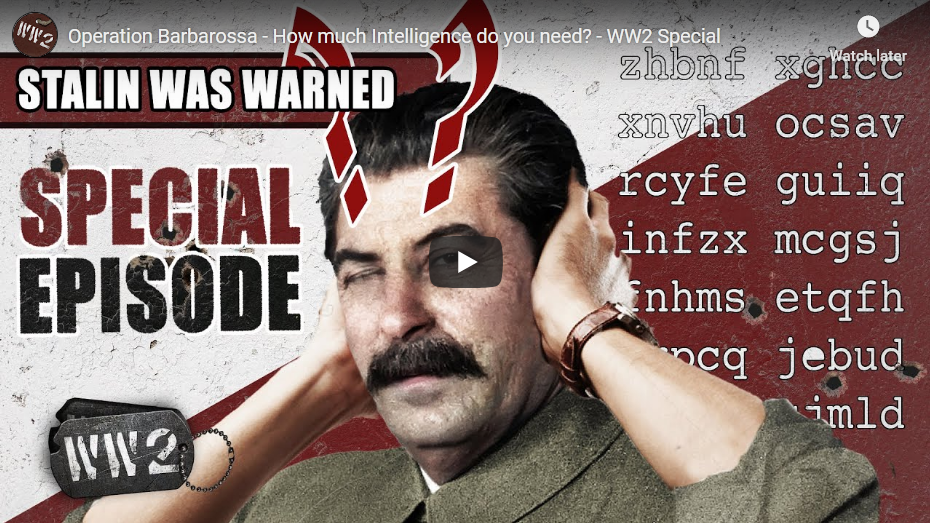
Operation Barbarossa – How much Intelligence do you need? – WW2 Special

Filed under: Germany, History, Military, Russia, WW2 — Tags: , , , , — Nicholas @ 06:00

World War Two
Published 30 Jul 2020

Josef Stalin was warned time and again from a variety of sources of the German plans for invading the Soviet Union, and yet, he did NOT heed those warnings.

Join us on Patreon: https://www.patreon.com/TimeGhostHistory
Or join The TimeGhost Army directly at: https://timeghost.tv

Follow WW2 day by day on Instagram @World_war_two_realtime https://www.instagram.com/world_war_two_realtime
Between 2 Wars: https://www.youtube.com/playlist?list…
Source list: http://bit.ly/WW2sources

Written and Hosted by: Indy Neidell
Director: Astrid Deinhard
Producers: Astrid Deinhard and Spartacus Olsson
Executive Producers: Astrid Deinhard, Indy Neidell, Spartacus Olsson, Bodo Rittenauer
Creative Producer: Joram Appel
Post-Production Director: Wieke Kapteijns
Research by: Indy Neidell
Edited by: Mikołaj Cackowski
Sound design: Marek Kamiński
Map animations: Eastory (https://www.youtube.com/c/eastory)

Colorizations by:
Dememorabilia – https://www.instagram.com/dememorabilia/
Julius Jääskeläinen – https://www.facebook.com/JJcolorization/
Adrien Fillon – https://www.instagram.com/adrien.colo…
Norman Stewart – https://oldtimesincolor.blogspot.com/
Klimbim – https://www.flickr.com/photos/2215569…
Cassowary – https://www.flickr.com/photos/cassowa…

Sources:
Narodowe Archiwum Cyfrowe
Bundesarchiv
Archive of I.M. Bondarenko
Mil.ru
From the Noun Project: Letter by Mochammad Kafi

Soundtracks from the Epidemic Sound:
Johannes Bornlof – “Deviation In Time”
Max Anson – “Maze Heist”
Johannes Bornlof – “The Inspector 4”
Fabien Tell – “Last Point of Safe Return”
Jon Bjork – “For the Many”
Philip Ayers – “Trapped in a Maze”
Skrya – “First Responders”
Trabant 33 – “When in Bavaria”
Howard Harper-Barnes – “London”
Mythical Score Society – “Infinity Pool & Pool Tables”
The Fly Guy Five – “Cocktail Hour”

Archive by Screenocean/Reuters https://www.screenocean.com.

A TimeGhost chronological documentary produced by OnLion Entertainment GmbH.

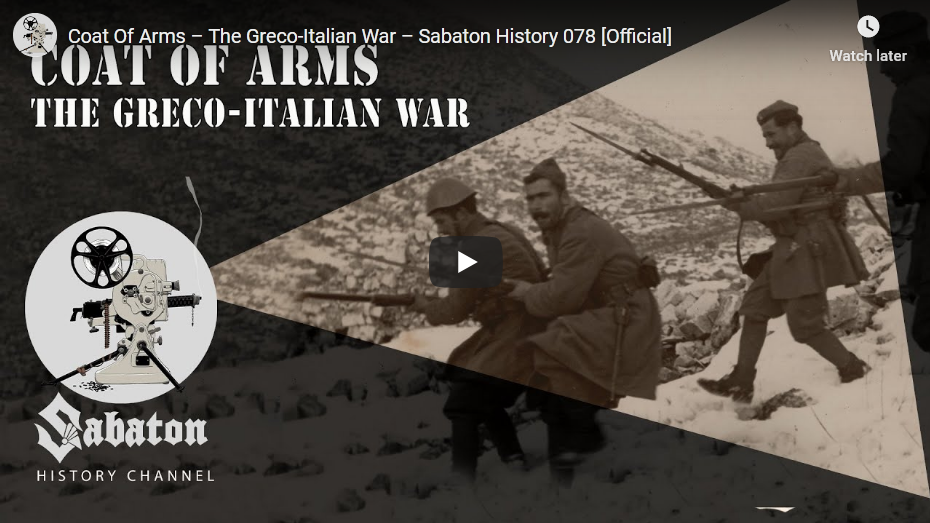
“Coat Of Arms” – The Greco-Italian War – Sabaton History 078 [Official]

Filed under: Europe, Greece, History, Italy, Media, Military, WW2 — Tags: , , , — Nicholas @ 04:00

Sabaton History
Published 30 Jul 2020

Morning of October 28th, 1940.

The Italian ambassador to Greece had entered the house of Greek Prime Minister Ioannis Metaxas. An unacceptable ultimatum in hand, he demanded subjugation under Italian rule. Refusal would mean war. An ardent Ochi! was the answer. No, the Greek would not bow to fascist demands, but instead fight for the defense of their country and their honor. What followed were months of bitter fighting in the harsh environment of Epirus and the Macedonian mountains.

The Greco-Italian War.

Support Sabaton History on Patreon: https://www.patreon.com/sabatonhistory

Listen to “Coat Of Arms” on the album Coat Of Arms:
CD: http://bit.ly/CoatOfArmsStore
Spotify: http://bit.ly/CoatOfArmsSpotify
Apple Music: http://bit.ly/CoatOfArmsAppleMusic
iTunes: http://bit.ly/CoatOfArmsiTunes
Amazon: http://bit.ly/CoatOfArmsAmzn
Google Play: http://bit.ly/CoatOfArmsGooglePlay

Watch the Official Music Video of “Coat Of Arms” here:
https://youtu.be/wtax3Fl-UZo

The episode of WW2 in Real-Time Indy was talking about: https://www.youtube.com/watch?v=GYznP…

Listen to Sabaton on Spotify: http://smarturl.it/SabatonSpotify
Official Sabaton Merchandise Shop: http://bit.ly/SabatonOfficialShop

Hosted by: Indy Neidell
Written by: Markus Linke and Indy Neidell
Directed by: Astrid Deinhard and Wieke Kapteijns
Produced by: Pär Sundström, Astrid Deinhard and Spartacus Olsson
Creative Producer: Joram Appel
Community Manager: Maria Kyhle
Executive Producers: Pär Sundström, Joakim Broden, Tomas Sunmo, Indy Neidell, Astrid Deinhard, and Spartacus Olsson
Post-Production Director: Wieke Kapteijns
Edited by: Karolina Dołęga
Sound Editing by: Marek Kaminski
Maps by: Eastory – https://www.youtube.com/c/eastory
Archive by: Reuters/Screenocean https://www.screenocean.com
Music by Sabaton

Sources:
Bundesarchiv
Narodowe Archiwum Cyfrowe
Imperia War Museums: 205197881
Diplomatic and Historical Archive Department
Italian map by F l a n k e r from Wikimedia
The icons from Noun Project: Oksana Latysheva, Wichai Wi, baken studio, ProSymbols

An OnLion Entertainment GmbH and Raging Beaver Publishing AB co-Production.

© Raging Beaver Publishing AB, 2019 – all rights reserved.

Xi Jinping and the “Chinese dream”

Zineb Riboua outlines possible ways for the West to counter ongoing Chinese economic espionage:

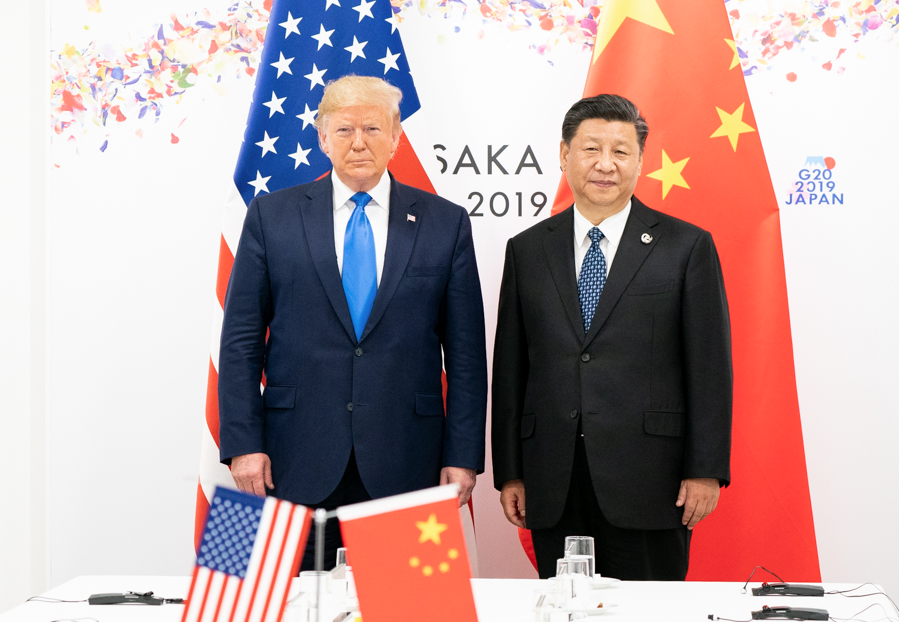
President Donald Trump and PRC President Xi Jinping at the G20 Japan Summit in Osaka, 29 June, 2019.
Cropped from an official White House photo by Shealah Craighead via Wikimedia Commons.

Since 2012, Chinese President Xi Jinping’s favourite catchphrase has been “the Chinese dream”. In stark contrast to the evil, capitalistic American dream, Xi’s alternative vision of progress teaches that the only route to prosperity is through rigid adherence to collectivist ideology.

The Chinese state embodies a very particular ideology. Over the last few decades, it has aggressively ramped up its economic and political capital through business and enterprise, inextricably tying itself to the economic fortunes of both developed and developing countries. It is now seeking to use the economic capital it has accumulated to force its political agenda into reality.

That is why the role of private companies in China is unparalleled. Milton Friedman defined corporate social responsibility in terms of private companies’ sole duty to make a profit, and then increase that profit. Chinese companies appear to be exempt from this rule because they interact with the state in a unique and troubling way.

The current state of the Chinese political and economic landscape is no accident. When Deng Xiaoping spoke in the 1980s of building a “socialism with Chinese characteristics”, this is probably exactly what he had in mind. The Chinese Communist party has succeeded in weaponising local market forces in such a way that it now holds all the cards in its nation’s dealings with the outside world, both political and economic, because the line between the public and the private is non-existent.

This strategy has not gone unnoticed. Thanks to the Chinese Communist party’s recent conduct – unprecedented aggression in Hong Kong, the appalling genocide of the Uyghur people and a costly unwillingness to share information relating to the coronavirus outbreak – the state of its internal affairs has come into sharp focus on the international stage.

Unsurprisingly, the hawkish US has placed itself at the forefront of counter-Chinese rhetoric. Secretary of state Mike Pompeo said recently: “We gave the Chinese Communist party and the regime itself special economic treatment, only to see the CCP insist on silence over its human rights abuses as the price of admission for Western companies entering China.”

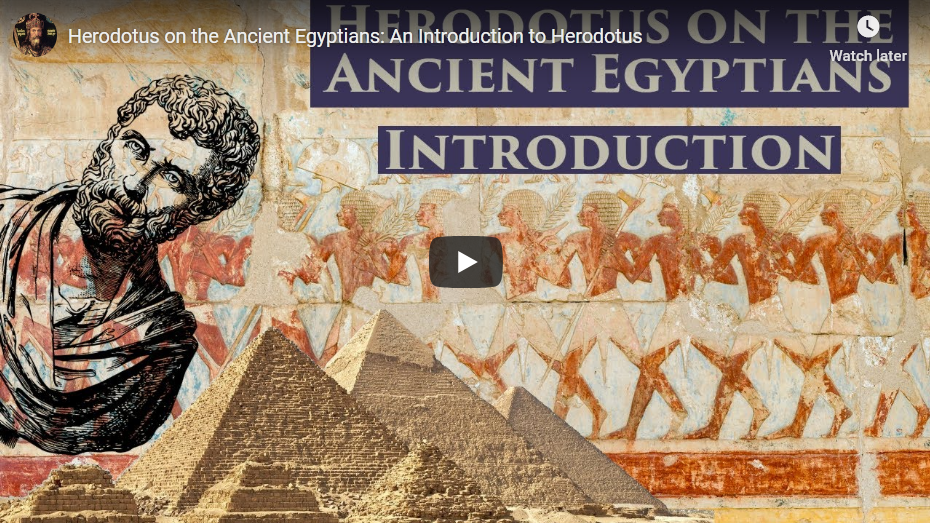
Herodotus on the Ancient Egyptians: An Introduction to Herodotus

Filed under: Africa, Europe, Greece, History — Tags: , , — Nicholas @ 02:00

The Study of Antiquity and the Middle Ages
Published 1 Mar 2020

This is the first episode of a six part series by Herodotus on the Ancient Egyptians. This first episode is merely a brief overview and introduction to Herodotus himself and why his histories are important.

AN ACCOUNT OF EGYPT By Herodotus, translated By G. C. Macaulay
https://www.gutenberg.org/files/2131/…

DW Draffin is an audiobook narrator, stage actor, and independent author.

AUDIOBOOK NARRATOR
https://www.audible.com/search?search…

STAGE ACTOR
https://www.youtube.com/watch?v=xTept…

INDEPENDENT AUTHOR
https://www.amazon.com/DW-Draffin/s?k…

If you need a professional then contact him!

To support the channel, become a Patron and make history matter!

Patreon: https://www.patreon.com/The_Study_of_…

Donate directly to PayPal: https://paypal.me/NickBarksdale

Enjoy history merchandise? Check out affiliate link to SPQR Emporium!
http://spqr-emporium.com?aff=3

*Dislaimer, the link above is an affiliate link which means we will earn a generous commission from your magnificent purchase, just another way to help out the channel!

Join our community!

Twitter: https://twitter.com/NickBarksdale

Instagram: https://www.instagram.com/study_of_an…

Music: “Sands of Mystery: Desert Music” (Royalty Free)
https://youtu.be/_6uGNZDSsAk
Trey Van Zandt

Image credits:
kairoinfo4u : www.flickr.com/photos/manna4u
Manna Nader, Gabana Studios Cairo

Kasimir: https://www.flickr.com/photos/5072712…

QotD: Princess may have to wait to be rescued

Filed under: Humour, Media, Politics, Quotations, USA — Tags: , , — Nicholas @ 01:00

I drove my daughter’s car this morning and the radio was tuned to whatever Sirius current pop station she listens to. I changed the lyrics of every single song to,

    “I cry myself to sleep,
    And I wear skinny jeans.
    I have a lumberjack beard,
    and I cry when I wake up.”

What’s amazing was that my lyrics fit every single whiny soy-boy vanilla song.

Someday all the princesses are going to look around and wonder why the princes are all married to homosexual exotic animal dealers or are simply not interested. The girlzz will be friend-zoned and will answer their biological urge to be a mother with the sperm banked by a stranger.

Paul Piatt, responding to a post on Mewe, 2020-04-29. (Reposted by permission.)

July 30, 2020

Make Custom Handles for Your Tools! (Axe and Hammer Restoration)

Filed under: Tools, Woodworking — Tags: , , — Nicholas @ 06:00

Rex Krueger
Published 29 Jul 2020

Make custom hammer and axe handles, perfectly shaped to your hand. Your tools never felt better.
More video and exclusive content: http://www.patreon.com/rexkrueger
Make Your Own Spokeshave: https://youtu.be/IPYvwAmoHos
Plans: https://www.rexkrueger.com/store/make…
(more…)

“Muzzling” scientists only ever happens under Conservative governments…

… so even though the circumstances might look remarkably similar to the layman’s eyes, Justin Trudeau can’t possibly be accused of doing the same thing as that evil, anti-science Stephen Harper:

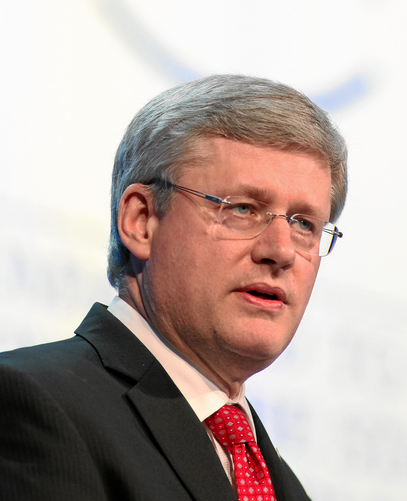
Prime Minister Stephen Harper speaking at the Annual Meeting 2012 of the World Economic Forum at the congress centre in Davos, Switzerland, January 26, 2012.
World Economic Forum photo via Wikimedia Commons.

In fact, Grant Robertson reports, the Trudeau regime effectively shuttered a small, cheap (less than $3 Million dollars ~ petty cash in Canada’s government) research and early warning team called the Global Public Health Intelligence Network (GPHIN) which

    was among Canada’s contributions to the World Health Organization, and it operated as a kind of medical Amber Alert system. Its job was to gather intelligence and spot pandemics early, before they began, giving the government and other countries a head start to respond and – hopefully – prevent a catastrophe. And the results often spoke for themselves.

Unfortunately, by the time the COVID-19 pandemic was getting started, just when the GPHIN should have provided “early warning,” it had been told, by the Trudeau regime, to focus on domestic issues. But global pandemics don’t often start in Canada, do they? The GPHIN sifted through data from around the world, often from places like China, Iran and Russia which hide or manipulate medical information, conducting something akin to military reconnaissance so that Canadian (and global (WHO)) officials could “see” what might be headed our way.

Did Justin Trudeau give the order to “muzzle” the GPHIN scientists? No, of course not … no more than Stephen Harper gave the order to “muzzle” scientists in Environment Canada. The decision to “refocus” the GPHIN on useless, domestic busywork was likely made by an Assistant Deputy Minister who was acting on yet another demand from the Treasury Board Secretariat to justify every programme dollar … again.

You should be glad that the Treasury Board Secretariat casts a sceptical eye on every single government programme and is a constant thorn in the side of operational people (like I was when I was serving and like the GPHIN folks were, too). They, skilled, hard-working civil servants, are just trying to ensure that your tax dollars are not being wasted. They are good people doing good work. But sometimes the wheat gets tossed away with the chaff. That appears to have been the case with the GPHIN. In retrospect, it seems almost criminally stupid to have deprived Canada of a valuable medical reconnaissance agency just because there had not been an “attack” recently. But that appears to have been the bureaucratic justification ~ it’s like me saying that since my house hasn’t burned down recently we should disband the fire department.

Did Justin Trudeau muzzle scientists? No.

Did Justin Trudeau’s government disable a valuable (and cheap) “early warning” system just to make its own wild spending look a little less careless? Yes, that’s what the Globe and Mail‘s investigation says ~ and we have paid a horrendous price in lives for that decision.

This story, it seems to me, is very much like the “Harper muzzles scientists” stories from a few years ago … but minus the massive media attention. It appears very evident, from Mr Robertson’s investigations that bureaucrats, acting on their own, internal priorities, emasculated the GPHIN just when we needed it most. That, bureaucratic action, was I believe what was, mainly, behind the “Harper muzzles scientists” stories, too. But in the 2010s much of the mainstream media was in a sort of undeclared war against Stephen Harper and so the claims of climate activists became “news” and opinions were treated as facts.

« Newer PostsOlder Posts »

Powered by WordPress