Quotulatiousness

June 24, 2025

Praga I-23: Prototype Belt-Fed Predecessor of the ZB26

Filed under: Europe, History, Military, Weapons — Tags: , , , , , — Nicholas @ 02:00

Forgotten Weapons
Published 3 Feb 2025

Vaclav Holek’s first machine gun design for the Czech military was the Praga I, built in 1922 and based heavily on the Vickers/Maxim system. However, it became clear that the military wanted something lighter and more portable, and so the next year he heavily updated the design to this, the Praga I-23 (for 1923). It remains a belt-fed weapon chambered for the 8mm Mauser cartridge, but the locking system has been much simplified into a tilting bolt arrangement. The recoil operation from the earlier model is also gone, now replaced by a long stroke gas piston. Some elements of the Maxim remain in the belt feeding elements, but the overall gun is much more a light machine gun than the mounted heavy machine gun that was his first design.

A total of 40 of the Praga I-23 were ordered by the Czechoslovak military, and they were tested in 1924 (only 20 examples were actually delivered of the 40). The I-23 performed well, but it was again clear that it wasn’t quite what the military really wanted. Holek revised the design again to the model 1924, using a box magazine instead of a belt feed — and that is the gun that continued the path to the ZB-26.

Video on the Praga I machine gun that came immediately before this model: Praga I: A Blow-Forward Bullpup Semi-…

Many thanks to the VHU — the Czech Military History Institute — for giving me access to this fantastic prototype to film for you. The Army Museum Žižkov is a part of the Institute, and they have a three-story museum full of cool exhibits open to the public in Prague. If you have a chance to visit, it’s definitely worth the time! You can find all of their details (including their aviation and armor museums) here:

https://www.vhu.cz/en/english-summary/
(more…)

June 22, 2025

Ljungman Updates: the AG-42 vs AG-42B

Filed under: Europe, History, Military, Weapons, WW2 — Tags: , , — Nicholas @ 02:00

Forgotten Weapons
Published 31 Jan 2025

In 1953, the Swedish military launched a program to refurbish and refit all of the Ag m/42 rifles in inventory. Aside from replacing broken parts and worn barrels, the program also made a number of improvements to the rifles:

  • Auxiliary front magazine catch added
  • Large gripping lugs added to bolt cover
  • Rubber case deflector added
  • Single-piece cleaning rod to replace the two-part original
  • Rear sight geometry modified
  • Rear sight range dial modified
  • Dual-wire recoil spring in place of the original single wire type

These updates were made to virtually all rifles then in existence, and it is very rare to find original pattern Ag m/42 rifles today.
(more…)

June 19, 2025

The Guns of the South: Checkmate, Alt-Hist Plausibility Sticklers

Filed under: Africa, Books, History, Military, USA, Weapons — Tags: , , , , , — Nicholas @ 02:00

Feral Historian
Published 24 Jan 2025

Harry Turtledove’s The Guns of the South gives us a look at a victorious Confederate States as they grapple with the consequences of slavery, war, and the challenges of building a new nation. It also skewers a favorite activity of alt-history readers, the nitpicking of plausibility in the points of divergence, by dropping South African time travelers with AKs into the middle of the Civil War.

00:00 Intro
02:08 America Will Break
04:49 Right and Left
05:36 CSA at odds with AWB
08:08 Forrest
10:16 Technology
13:16 “Why then …”

June 18, 2025

Fixing the CAF will require a lot more than just money

The Canadian Armed Forces are in a dire state. I could literally have written that in any year since I started blogging in 2004 … with brief, unsustained funding boosts for unplanned military commitments here and there that actually made the overall situation worse rather than better. Canada’s military procurement system seems incapable of doing anything quickly … or inexpensively, so pouring billions more into a broken process won’t work out well. There used to be a meme about being able to get whatever you wanted — “good, fast, cheap … pick two”. The CAF can’t even get one of those options.

We’ve had surprising numbers of media folks paying attention to the crippling recruiting crisis, as even on current funding, the CAF is short thousand and thousands of soldiers, sailors, and aircrew. Sadly, but predictably, most of that media attention looks at the shortfall of new recruits being trained for those jobs, which is true but incomplete. The biggest problem on the intake side of the CAF is the bureaucratic inability to bring in new recruits in anything remotely like a timely fashion. The last time I saw annual numbers, the CAF had huge numbers of volunteers coming in the door at recruiting centres, but getting the paperwork done and getting those volunteers into uniform and on to job training was an ongoing disaster area. More than seventy thousand would-be recruits applied to join the CAF and the system managed to process less than five thousand of those applicants and get them started on their military careers.

At a time that we’re losing highly trained technicians in all branches to overwork, underpay, and vocational burn-out, we somehow lack the competence to take in more than one in twenty applicants? That is insane.

In the National Post, Michel Maisonneuve says much the same as I just did, but rather more coherently:

I’m told the Treasury Board has already approved the new funds, making this more than just political spin. Much of the money appears to be going where it’s most needed. Pay and benefit increases for serving members should help with retention, and bonuses for re-enlistment are reportedly being considered. Recruiting and civilian staffing will also get a boost, though I question adding more to an already bloated public service. Reserves and cadet programs weren’t mentioned but they also need attention.

Equipment upgrades are just as urgent. A new procurement agency is planned, overseen by a secretary of state — hopefully with members in uniform involved. In the meantime, accelerating existing projects is a good way to ensure the money flows quickly. Restocking ammunition is a priority. Buying Canadian and diversifying suppliers makes sense. The Business Council of Canada has signalled its support for a national defence industrial strategy. That’s encouraging, but none of it will matter without follow-through.

Infrastructure is also in dire shape. Bases, housing, training facilities and armouries are in disrepair. Rebuilding these will not only help operations but also improve recruitment and retention. So will improved training, including more sea days, flying hours and field operations.

All of this looks promising on paper, but if the Department of National Defence can’t spend funds effectively, it won’t matter. Around $1 billion a year typically lapses due to missing project staff and excessive bureaucracy. As one colleague warned, “implementation (of the program) … must occur as a whole-of-government activity, with trust-based partnerships across industry and academe, or else it will fail.”

The defence budget also remains discretionary. Unlike health transfers or old age security, which are legally entrenched, defence funding can be cut at will. That creates instability for military suppliers and risks turning long-term procurement into a political football. The new funds must be protected from short-term fiscal pressure and partisan meddling.

One more concern: culture. If Canada is serious about rebuilding its military, we must move past performative diversity policies and return to a warrior ethos. That means recruiting the best men and women based on merit, instilling discipline and honour, and giving them the tools to fight and, if necessary, make the ultimate sacrifice. The military must reflect Canadian values, but it is not a place for social experimentation or reduced standards.

They finally did retire the Sea King, long after almost everyone else did. All CAF equipment is expected to have far longer working lives than any of our allies’ equipment.

AG42 Ljungman: Sweden Adopts a Battle Rifle in WWII

Filed under: Europe, History, Military, Weapons, WW2 — Tags: , , , — Nicholas @ 02:00

Forgotten Weapons
Published 29 Jan 2025
All the best firearms history channels streaming to all major devices:
weaponsandwar.tv

Sweden developed, adopted, and produced a new self-loading rifle during World War Two. The process began in 1938, with an attempt by the state rifle factory to convert Swedish Mauser bolt actions into semiautomatic; that did not go well. Trials for a ground-up semiauto followed shortly thereafter, with the two finalists being the Pelo rifle from Finland and a design by Erik Eklund of the C.J. Ljungmans Verkstäder, a company that made gas pumps and had no prior small arms experience. Eklund focused on making his rifle as simple as possible, and created a direct gas impingement system with a tilting bolt and a rather unique method of operation. It was chambered for the 6.5x55mm cartridge, with a detachable 10-round magazine (which was intended to be reloaded with stripper clips).

The rifle went into production in 1942, and by 1944 rifles were being delivered to the military. They were never a complete replacement for the various patterns of Swedish Mauser, instead being used to supplement squad firepower. In 1953 a major refit program was put in place, making a number of changes and creating the Ag m/42B pattern. Those rifles remained in use until eventually replaced by the AK4, the Swedish model of the G3 rifle from Heckler & Koch.
(more…)

June 17, 2025

QotD: What is a “tank”?

Filed under: Britain, History, Military, Quotations, Weapons, WW1 — Tags: , , , , — Nicholas @ 01:00

… the tank was a direct response to the battlefield conditions of WWI, in particular the trench stalemate on the Western front. The idea of some kind of armored “land cruiser” (potentially armed with machine guns) had been floated before WWI but never seriously considered and developed on, but serious development only began in 1915 with the formation of the Landship Committee early that year. Famously, they needed a code-name for their planned vehicle and opted first for “water carrier” and then for “tank”, thus giving the tank its peculiar English name.

And we should stop to note that as with any question of definition, this one too is language-sensitive. The exact confines of a term vary from one language to another; kampfpanzer, for instance is not necessarily an exact synonym for “tank”.

In any event, the basic demands of early tanks were dictated by the realities of the Western Front: a tank needed to be able to resist small arms fire (particularly machine guns), deliver direct supporting fire itself, it needed to be able to move on the muddy, artillery-flattened ground and it needed to be able to cross a trench. This last requirement – the need to be able to both climb a parapet (usually c. 4ft) and then cross over an 8ft wide trench – was significant in the design of early tanks.

Those factors in turn dictated a lot of the design of early tanks. The armor demands of resisting small arms fire meant that the vehicle would be heavy (and indeed, as soon as tanks appeared amongst Allied troops, their German opponents began introducing more powerful bullets, like the K bullet and later the 13.2mm anti-tank round fired from the Mauser 1918 T-Gewehr). And here is the first advantage of tracks. The weight of a vehicle is distributed along all of the area of contact it has with the ground; with tires that area is limited to the bottom of the tire so the total area of ground contact is fairly low, which is fine for most vehicles.

But tanks are heavy. Really heavy. Even something like the Renault FT could mass around 7 tons and by later standards that would be classified as a tankette (a “mini-tank” as it were); by WWII, medium tanks often clocked in around 30 tons. If you put a vehicle like that on tires, you are going to create a LOT of pressure on those small points of contact. That might still be OK if you are just going to drive on roads and other firm surfaces which can take the pressure. But remember: tanks were designed for the Western Front, which looks like this.

Fortunately for the landship committee, this wasn’t a new problem: farming tractors were also heavy and also had to operate in churned up (in this case, plowed) soft soil; the heaviest of these vehicles had much the same problem and the solution was continuous tracks or “treads”. When kept properly tensioned – tune in, by the by, to Nicholas “The Chieftain” Moran’s YouTube for more than you ever want to know about track tension – the track distributes the weight of the tank across the entire section of the track touching the ground, which reduces the ground pressure at any given point, allowing a big heavy tank to roll over terrain where even a much lighter wheeled vehicle would get stuck.

This is one of those points where the functionality of a tank (what a tank does) has such a strong influence on design that the design implications of the functionality become part of the definition: a tank has to be heavily armored and has to be able to move off-road and as a result has to be tracked, not wheeled. One might be able to imagine some sort of exotic technology that might make it possible to do all of the things a tank does without tracks, but we don’t have that yet.

The other factor was fire. I’ve mentioned this before, but one of the significant background factors of WWI is that a lot of the belligerents misjudged the kind of artillery they’d need for a general European war. Not to get too deep into the weeds here, but most of the belligerents expected a relatively rapid war of maneuver and so thought that light, direct-fire artillery like the famed French ’75 (the Matériel de 75mm Mle 1897) would be the most useful. Those guns could be moved quickly and could deliver a lot of quick firepower on static or moving formations of enemy infantry in support of friendly infantry.

The problem is that in the conditions of trench warfare, those guns – as they were configured, at least – were far less useful. They were, first off, much shorter in range which meant they had to be brought dangerously far forward to do their direct fire role – often so far forward they could be engaged by enemy rifles and machine guns. This was compounded by the fact that direct fire at range was ineffective against trench works (which are dug down into the earth). But at the same time, the value of rapid firing (because these lighter guns could fire a lot faster than the heavy, indirect fire artillery) direct fire artillery remained high, if only you could get it to the fight.

This was also a problem a tank could solve: as a mobile, armored platform it could move a rapid-firing direct fire gun forward without immediately being knocked out by enemy small arms to support the infantry. There is, I should note, early complexity on this point, with both “male” (heavy direct fire cannon focused) and “female” (machine gun focused) tanks in WWI though in the end “hermaphrodite” designs with both capabilities (but much more focus on the main cannon) triumph, so that’s what we’ll focus on.

And that gets us the fundamental role structure for tanks: enough armor to resist enemy small arms (but with the understanding that some weapons will always be effective against the tank), enough mobility to cross the churned up battlefield and some direct fire capability to support the infantry crossing it at the same time.

Bret Devereaux, “Collections: When is a ‘Tank’ Not a Tank?”, A Collection of Unmitigated Pedantry, 2022-05-06.

June 15, 2025

America’s Forgotten SMG: The Hyde/Marlin M2

Filed under: History, Military, USA, Weapons, WW2 — Tags: , , , , , — Nicholas @ 02:00

Forgotten Weapons
Published 4 Oct 2019 #36270

The United States went into World War Two with the Thompson submachine gun — a weapon far too heavy and too expensive for its role. The British went to the other extreme with the Sten and while the US did not want a gun quite that crude, the Sten did spur a desire for something cheaper than the Thompson. George Hyde (then working for the Inland Division of GM) had worked on submachine gun designs in the 1930s, and he put together a weapon that would fit US needs. It was much cheaper than the Thompson and weighed in a full 2 pounds lighter. At tests in the spring of 1942, it also proved to be much more accurate in automatic firing, as it had a much more ergonomic stock design than the Thompson. The weapon was approved as the M2 submachine gun in 1942, and a contract went to Marlin to produce it (Inland had no extra production capacity at the time).

The receiver of the M2 was made through a metal sintering process, and Marlin had trouble getting this properly tooled up. The first gun delivery didn’t actually happen until May of 1943, and by that time Hyde had finished designing the M3 “Grease Gun”, which was cheaper still, and more attractive to the military. The contract for the M2 was cancelled in June of 1943, with only 400 guns delivered. There are only six known surviving examples today, split between private collections, museums, and military institutions.
(more…)

June 14, 2025

Damian Penny’s diligent recycling efforts pay off

Filed under: Media, Middle East, Military, Weapons — Tags: , , , — Nicholas @ 03:00

At Rigid Thinking, Damian Penny has to be given top marks for recycling this week, although it’s not newspapers or plastic cartons he’s getting to do twice the work:

Please keep psychotic Twitter accounts with animated-squirrel avatars in your thoughts and prayers this weekend. They’re going through a tough time right now.

And, once again, the point I made last week is proven:

    Did this operation really do as much damage as the Ukrainians Israelis say? I dunno. I don’t begrudge the Ukrainians Israelis their own propaganda weapons.

    (Plus, these are Russian planes Shah-era jets for which getting parts is a massive pain in the ass, so there’s a good chance they might have just exploded on their own, like a Soviet television set left plugged in overnight.)

    But the mere fact that Ukraine Israel was able to pull this off at all, right under the Russians’ Iranians’ noses, is a game changer. The message to Czar Vladimir the Mullahs, that we can strike literally anywhere, couldn’t be more clear.

    We’ll get the whole story from the Ukrainian Israeli side soon enough. What I’m chomping at the bit to see is what’s in the Russian Iranian archives someday, when Putin the “Islamic Republic” is gone and McDonald’s has been restored to its rightful place in Red Square Azadi Square.

    A few weeks after the Russian invasion, when it became clear that they were in for a much harder time than anticipated, I wrote about how what would appear to be an authoritarian government’s great advantage over liberal democracy — the ability for its leaders to just “get stuff done” instead of having to put up with the horse-trading and lobbying and arguing and mean tweets which make can make things so exhausting and frustrating for a more open society — eventually becomes a disadvantage.

    […]

    If the leader can do whatever he wants without any serious resistance, everyone else learns to keep their heads down and not do nor say anything which will make him angry.

    Because you really, really wouldn’t like him when he’s angry.

    As a result, the guy in charge is surrounded by sycophants and yes-men who will nod along and feign enthusiasm for whatever he wants to do, even if they know it’s really risky and/or really, really stupid.

    That filters down to the drones (the human kind) and proles, too. I’m not a betting man, but I’d bet my entire hoard of Hawk Tuah meme coins that Russian Iranian intelligence services actually knew, or at least strongly suspected, that something like Operation Spiderweb Operation Rising Lion was in the works.

    Good for them. Now, you go and tell the Czar Ayatollah that there are Ukrainian Mossad operatives (and, at the risk of wishcasting, some Russians Iranians brave enough to assist them) thousands of miles away from Ukraine Israel, ready to take out much of the strategic bomber fleet air defences.

    Ukraine Israel, by contrast, is an open enough society to learn from its mistakes, see what actually works, and adapt accordingly. Russia Iran is a closed society which keeps doubling down on what it was already doing, and woe is you if you suggest a change of course.

    It doesn’t matter how much stronger you are in terms of weaponry, if your society and political system punishes anyone who might tell the leader he’s wrong.

Well, that was surprisingly easy to write about. Here’s hoping I don’t get lazy and get into the habit of throwing on old reruns, assuming you kids won’t know the difference.

June 11, 2025

QotD: “Pike and Shot” in the early gunpowder era

Filed under: Europe, Gaming, History, Military, Quotations, Weapons — Tags: , , , , , — Nicholas @ 01:00

… this is why the pike[-armed infantry] fought in squares: it was assumed the cavalry was mobile enough to strike a group of pikemen from any direction and to whirl around in the empty spaces between pike formations, so a given pike square had to be able to face its weapons out in any direction or, indeed, all directions at once.

Instead, pike and shot were combined into a single unit. The “standard” form of this was the tercio, the Spanish organizational form of pike and shot and one which was imitated by many others. In the early 16th century, the standard organization of a tercio – at least notionally, as these units were almost never at full strength – was 2,400 pikemen and 600 arquebusiers. In battle, the tercio itself was the maneuver unit, moving as a single formation (albeit with changing shape); they were often deployed in threes (thus the name “tercio” meaning “a third”) with two positioned forward and the third behind and between, allowing them to support each other. The normal arrangement for a tercio was a “bastioned square” with a “sleeve of shot”: the pikes formed a square at the center, which was surrounded by a thin “sleeve” of muskets, then at each corner of the sleeve there was an additional, smaller square of shot. Placing those secondary squares (the “bastions” – named after the fortification element) on the corner allowed each one a wide potential range of fire and would mean that any enemy approaching the square would be under fire at minimum from one side of the sleeve and two of the bastions.

That said, if drilled properly, the formation could respond dynamically to changing conditions. Shot might be thrown forward to provide volley-fire if there was no imminent threat of an enemy advance, or it might be moved back to shelter behind the square if there was. If cavalry approached, the square might be hollowed and the shot brought inside to protect it from being overrun by cavalry. In the 1600s, against other pike-and-shot formations, it became more common to arrange the formation linearly, with the pike square in the center with a thin sleeve of shot while most of the shot was deployed in two large blocks to its right and left, firing in “countermarch” (each man firing and moving to the rear to reload) in order to bring the full potential firepower of the formation to bear.

Indeed it is worth expanding on that point: volley fire. The great limitation for firearms (and to a lesser extent crossbows) was the combination of frontage and reloading time: the limited frontage of a unit restricted how many men could shoot at once (but too wide a unit was vulnerable and hard to control) and long reload times meant long gaps between shots. The solution was synchronized volley fire allowing part of a unit to be reloading while another part fired. In China, this seems to have been first used with crossbows, but in Europe it really only catches on with muskets – we see early experiments with volley fire in the late 1500s, with the version that “catches on” being proposed by William Louis of Nassau-Dillenburg (1560-1620) to Maurice of Nassau (1567-1625) in 1594; the “countermarch” as it came to be known ends up associated with Maurice. Initially, the formation was six ranks deep but as reloading speed and drill improved, it could be made thinner without a break in firing, eventually leading to 18th century fire-by-rank drills with three ranks (though by this time these were opposed by drills where the first three ranks – the front kneeling, the back slightly offset – would all fire at once but with different sections of the line firing at different times (“fire-by-platoon”)).

Coming back to Total War, the irony is that while the basic components of pike-and-shot warfare exist in both Empire: Total War and for the Empire faction in Total War: Warhammer, in both games it isn’t really possible to actually do pike-and-shot warfare. Even if an army combines pikes and muskets, the unit sizes make the kind of fine maneuvers required of a pike-and-shot formation impossible and while it is possible to have missile units automatically retreat from contact, it is not possible to have them pointedly retreat into a pike unit (even though in Empire, it was possible to form hollow squares, a formation developed for this very purpose).

Indeed if anything the Total War series has been moving away from the gameplay elements which would be necessary to make representing this kind of synchronized discipline and careful formation fighting possible. While earlier Total War games experimented with synchronized discipline in the form of volley-fire drills (e.g. fire by rank), that feature was essentially abandoned after Total War: Shogun 2‘s Fall of the Samurai DLC in 2012. Instead of firing by rank, musket units in Total War: Warhammer are just permitted to fire through other members of their unit to allow all of the soldiers in a formation – regardless of depth or width – to fire (they cannot fire through other friendly units, however). That’s actually a striking and frustrating simplification: volley fire drills and indeed everything about subsequent linear firearm warfare was focused on efficient ways to allow more men to be actively firing at once; that complexity is simply abandoned in the current generation of Total War games.

Bret Devereaux, “Collection: Total War‘s Missing Infantry-Type”, A Collection of Unmitigated Pedantry, 2022-04-01.

June 10, 2025

How Moscow Got the Atomic Bomb – W2W 31

TimeGhost History
Published 8 Jun 2025

In 1949, the Soviet Union detonates its first atomic bomb — years ahead of Western expectations. This episode dives into how the USSR mobilized former Nazi scientists, forced Soviet physicists into secret cities, and relied on intelligence from spies like Klaus Fuchs. While Stalin pushes for rapid progress, Beria enforces brutal discipline, and Soviet scientists race to meet an impossible deadline. The nuclear balance of power is about to shift — forever.
(more…)

June 9, 2025

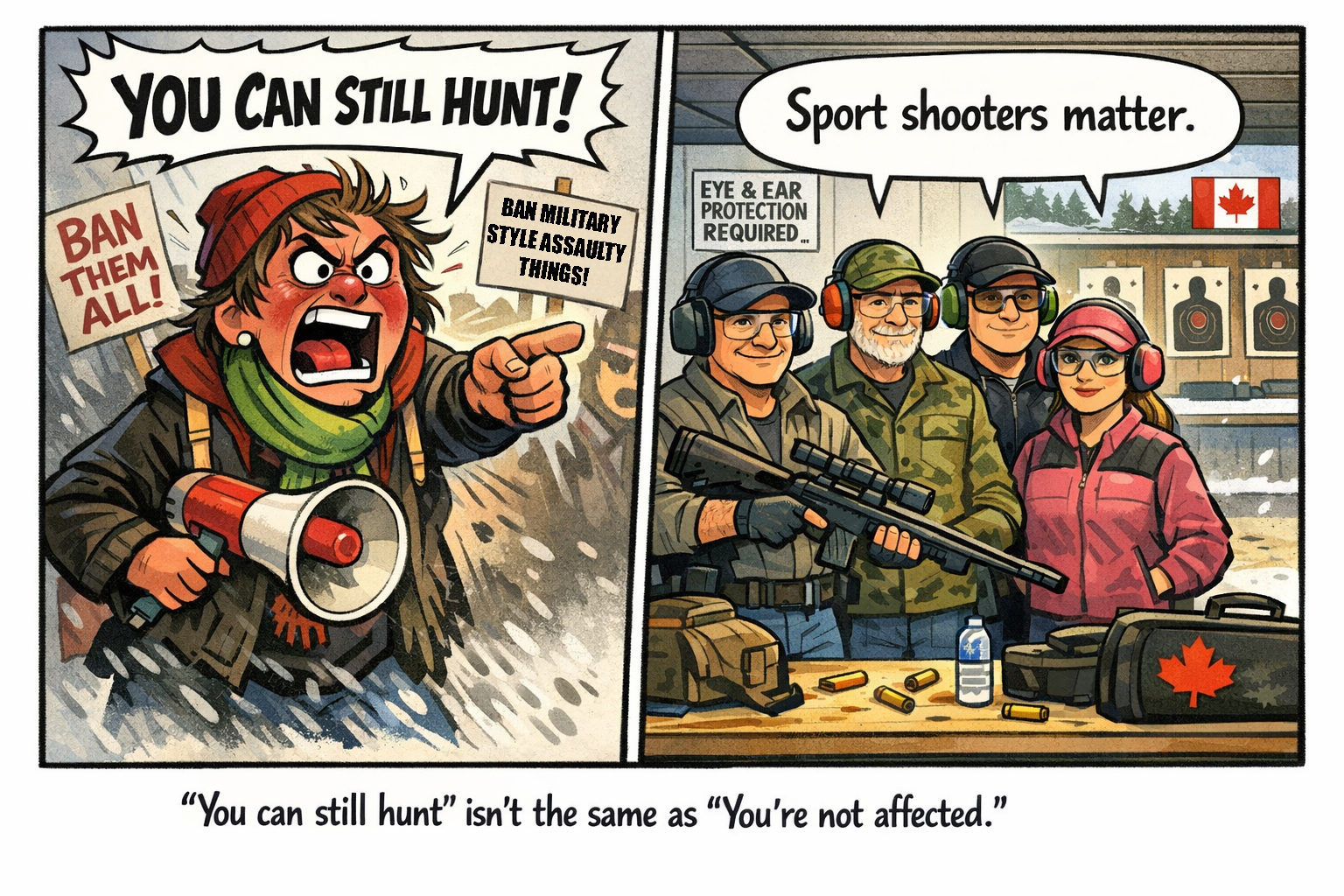
The federal Minister of Public Safety admits he knows literally nothing about Canadian gun laws

Filed under: Bureaucracy, Cancon, Government, Media, Politics, Weapons — Tags: , , , , , — Nicholas @ 03:00

Prime Minister Mark Carney’s cabinet may actually be worse than any line-up of ministers under Justin Trudeau, with the Minister of Public Safety as a poster child for ignorance and apathy:

[…] Then we have the Minister of Public Safety, Gary Anandasangaree — a Trudeau–Carney loyalist freshly installed under the new Liberal minority regime — who made headlines not for bold leadership, but for a shocking display of ignorance on the very file he’s been assigned to oversee: firearms policy.

During a session of debate on the current spending bill, Conservative MP Andrew Lawton posed a basic question:

    “Do you know what an RPAL is?”

An RPAL, or Restricted Possession and Acquisition Licence, is a standard certification required by law for any Canadian who wants to own restricted firearms, such as handguns or certain rifles. It’s a core element of Canada’s legal firearms framework.

The Minister’s response?

    “I do not.”

Lawton followed up with another foundational question:

    “Do you know what the CFSC is?”

The CFSC, or Canadian Firearms Safety Course, is a mandatory course required for all individuals seeking to obtain a firearms license in Canada — including the RPAL. It’s the very first step every legal gun owner in the country must complete. This is basic civics for anyone involved in firearms policy.

Anandasangaree replied again:

    “I do not know.”

This wasn’t a “gotcha” moment. It was a revealing moment. The Minister of Public Safety, the individual charged with implementing gun bans, overseeing buyback programs, and crafting firearms legislation, has no familiarity with the fundamental licensing and safety processes every Canadian gun owner must follow.

In any other profession, this level of unpreparedness would be disqualifying. If a surgeon couldn’t name a scalpel, he’d be pulled from the operating room. But in Ottawa? It qualifies you to oversee a multi-hundred-million-dollar national gun seizure operation.

And that brings us to the next moment of absurdity.

Lawton asked the minister how much money had already been spent on the federal firearms buyback program, the centerpiece of the Liberal government’s Bill C-21, which targets legally acquired firearms now deemed prohibited.

Anandasangaree’s answer?

    “About $20 million.”

But that doesn’t match the government’s own published data. In a report tabled by Public Safety Canada in September 2023, it was disclosed that $67.2 million had already been spent on the buyback as of that date. The majority of that spending was attributed to “program design and administration” — before a single firearm had even been collected.

So what happened? Did the government refund tens of millions of dollars? Were contracts cancelled? Of course not.

They just reframed the accounting — separating so-called “preparatory costs” and implying they don’t count as part of the buyback, even though they exist entirely to implement it.

It’s not transparency. It’s political bookkeeping — a deliberate attempt to make a costly, unpopular program appear manageable.

And it didn’t end there. When Lawton asked for the number of firearms that had actually been collected under the buyback, the response was yet another dodge. The Minister and his department couldn’t provide a number.

That’s right: after spending over $67 million, the federal government can’t even say how many guns have been retrieved. Yet they’re moving full steam ahead, with the support of a minister who doesn’t understand the system he’s responsible for.

This isn’t policymaking. It’s blind ideology strapped to a blank cheque. And the people paying the price are law-abiding citizens — not criminals, not gangs, and not smugglers.

At this rate, I can’t imagine how he’ll still be in cabinet by the end of summer.

Q&A: British Small Arms of World War Two

Forgotten Weapons
Published 24 Jan 2025

Today’s Q&A is brought to you by the fine folks at Patreon, and by Penguin Brutality: https://www.varusteleka.com/en/search…

01:11 – Was the Vickers .50 any good, and why did the British use four different heavy cartridges instead of consolidating?
07:35 – The Sten and its single-feed magazine design
10:27 – Owen versus Sten, and German use of the Owen.
14:38 – British wartime work on an “assault rifle” sort of weapon?
15:44 – Why no British semiauto rifle during WW2? – Jonathan Ferguson on British semiauto rifle trials: Q&A 43 (feat. Jonathan Ferguson): Mil…
18:04 – EM2’s automatic bolt closure system
20:46 – Did the British use other allied weapons besides American ones?
23:15 – Is the PIAT a Destrucitve Device under US law and why?
26:07 – Bren vs Degtyarev
27:50 – Why not make the Sten in .45 to use Thompson ammo?
29:37 – Did the British get M3 Grease Guns?
31:01 – British SMG in .455?
32:03 – Sten vs Lanchester
33:26 – Was there an LSW version of the EM1/EM2 planned? EM1 Korsac: The Korsac EM1 – a British/Polish Bul…
34:25 – Why wasn’t the BESA in .303?
36:34 – Biggest British missed opportunity during the interwar period?
38:40 – British naval service small arms
41:45 – Did .280 cartridge development begin during the war?
43:24 – Impact of MP44 on British post-war small arms development?
44:25 – Gallilean sights on the Enfield
46:25 – Why is there a semiauto selector on the Sten?
49:17 – Did American soldiers use British small arms?
50:29 – Why did the British choose the Lee action over the Mauser action?
51:16 – Which was better, Sten or Grease Gun?
52:34 – Why did the whole Commonwealth not switch to the No4 Enfield?
(more…)

June 6, 2025

Former Putin advisor claims nuclear strike is an appropriate reaction to Ukraine attacks

Filed under: Europe, Military, Russia, Weapons — Tags: , , , , — Nicholas @ 03:00

Mark Steyn surveys the media reaction to Sergey Markov’s foaming-at-the-mouth threats of nuclear escalation in the Russo-Ukraine conflict:

Here’s a cheery headline from the Russian press:

    Markov: an attack on Russia’s strategic aviation is grounds for the use of nuclear weapons.

That would be Sergey Markov, former advisor to Tsar Vlad, who admittedly is somewhat partial to nuke-rattling: in the early stages of the Ukraine war, he threatened to nuke the UK, for what reason I forget — the exciting new Islamic blasphemy laws? the paedo rape gangs?

This time, however, Mr Markov was responding to the weekend’s Ukrainian drone strike deep inside Russia. By “deep”, I mean Siberia. Which supposedly took out forty of Putin’s 120 strategic bombers using drones smuggled into the country via trucks which then fanned out and parked within range of various air bases.

Which is brilliant and innovative, in the sense that Castro blowing up a third of the USAF during the Cuban missile-crisis negotiations would have been. Right now, the only thing standing between the planet and the Third World War is Vladimir Putin’s forbearance. And, as all the smart people assured us in the spring of 2022, the Russian not-so-strongman was “dying” (Christopher Steele, sole proprietor of Dossiers R Us) or dead, either of which condition can make one’s nuclear-war judgment a little erratic. Headline from the UK Daily Mirror, almost exactly three years ago:

    Vladimir Putin may already be dead with body double taking his place, MI6 chiefs claim

That headline is 100 per cent accurate if you remove the words “Vladimir” and “Putin” and replace them with “Joe” and “Biden” respectively. Incidentally, analyse each nation’s advances in body-double technology by comparing “Biden”‘s ability to host a G7 with “Putin”‘s ability to host a BRICS summit. That’s the way to bet if it comes to World War Three. Sen. Lindsey Graham (R – Zakarpattia), was in Kiev to meet with Zelenskyyyy the day before Operation Bring It On. He had the affect of a chap who knew what was coming — although one notes he has yet to make good on his comparatively less ambitious pledge to sink Greta Thunberg’s Gaza boat.

Forty years ago, everybody claimed to be super-worried about imminent mushroom clouds. A bestselling poster of the day:

Anyone care to remake the above with Senator Graham and Victoria Nuland, She-Wolf of the Donbass? Ah, but maybe it doesn’t work as well with Deep State non-household-names in the leads. It’s not so long since Lindsey was telling Zelenskyyyy to resign, but he’s apparently back on board. And, more generally, most western media were happy to report the drone strike as more of a poke in the eye to Trump than to Putin. Headline from National Review:

    Country That Allegedly Had No Cards to Play Keeps Finding New Cards to Play

This is in reference to Trump’s jibe from February that Ukraine had “no cards to play”. The question then arises: Where did Z find these “new cards”? When Pete Hegseth took over as US Defence Secretary, he quickly confirmed what every sentient creature had long suspected — that the Pentagon had been micro-managing Ukraine’s end of the war for the previous three years. Are they still doing so? In defiance of their nominal commander-in-chief?

June 5, 2025

Rate of Fire: What Determines it and How to Change It

Filed under: History, Military, Weapons — Tags: , , , , — Nicholas @ 02:00

Forgotten Weapons
Published 17 Jan 2025

What determines the rate of fire of a machine gun, and how can that rate of fire be determined or changed from a design perspective? Let’s talk about pressure, mass, and distance …
(more…)

June 4, 2025

QotD: Conquest empires

Empires can turn to becoming conquest empires on any scale only with the development of technologies that can overcome sheer numbers.

Specifically, metal.

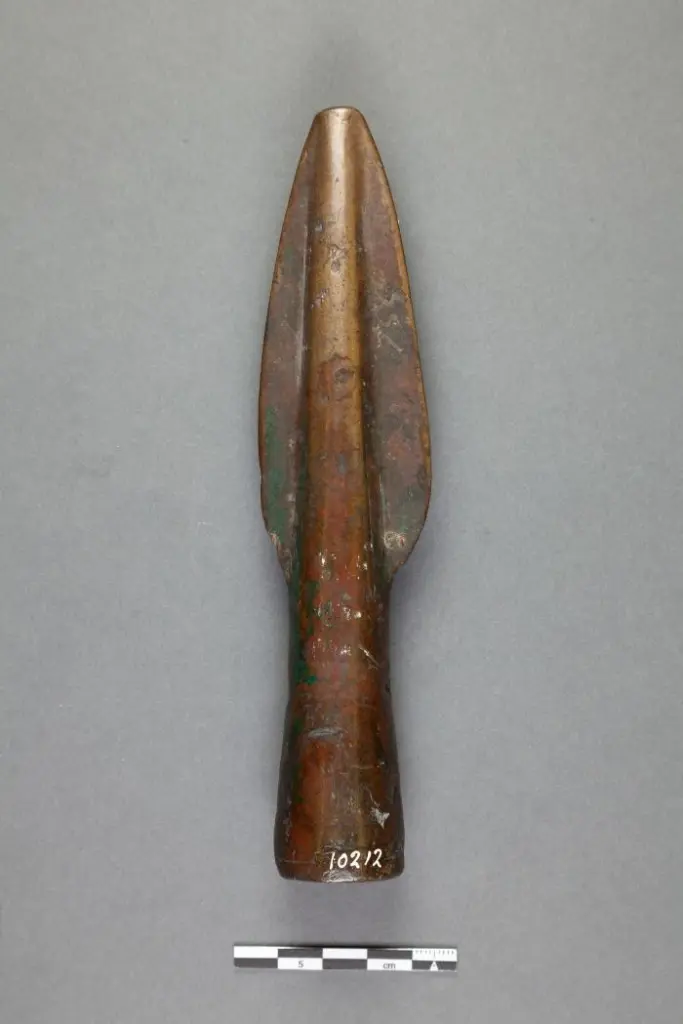
Soft metals are not for conquest empire. Gold, silver, copper, tin, etc, may be used for plates or posts or jewellery or skin scrapers, but they are not war fighting metals. Even the lightest leather armour or layers of feather padding makes them practically valueless for war fighting. Metal only becomes an imperial material when it can be made hard enough for combat purposes.

The first such metal is Bronze, which is made by combining different metals in compounds. Copper compounded with enough tin (usually 5-10 percent) makes Bronze. Bronze can make armour and weapons and even axles and bearings. But copper (mined in mountains) and tin (usually from swamps) and the charcoal needed to melt them (from forests) combined in sufficient quantities for mass production (cities supported by taxed farmers), require extensive trade routes, and probably a stable currency of some sort. But once these elements can be combined, empires can give up on mere Security, and enter Conquest.

All the early Sumerian, Egyptian, Hittite, Persian, Greek, Roman, Indian and Chinese empires that we now scrawl across maps with lines to show how they conquered the territories of other empires are based on this simple concept. The Hittites with their Bronze, Egyptians with their chariots, and Romans with their Steel: being only different developments from the same basic “metal technology” roots.

Yet this is where motive becomes uncertain. All these empires got into conquest, but in many cases they did it either to continue their security (by pushing the dangerous boundaries ever further), or to protect the trade that made their system work. Conquest for the sake of conquest was certainly an element — particularly with rulers like Alexander the Great — but the original reason why Phillip of Macedon and his predecessors had developed the world’s most efficient fighting machine had more to do with constant threats from Persians and Greeks and other “barbarians” than with any desire to get into the conquest game itself. Sometimes things done for security lead to expanded boundaries for security, which then lead to expanding further for conquest. (Often because the system developed for paying those fighting for security requires conquest to pay them off … see Julius and many later Caesars!)

Nigel Davies, “Types of Empires: Security, Conquest, and Trade”, rethinking history, 2020-05-02.

« Newer PostsOlder Posts »

Powered by WordPress