
I think the liberal elite – which you don’t see bellying up to a creepy-crawly buffet – just likes the idea of not only nagging us but seeing how much they can make us humiliate ourselves by bending to their will. I can see a bunch of kale grazers in Brooklyn sitting around giggling about how they convinced those stupid rubes in gun/Jesusland to start chewing cicadas.
But the diet dictatorship craze is a real thing. You’ve seen the war on beef by the likes of Alexandria Ocasio-Genius, who runs her oversized novelty mouth about how we have to stop cooking cows because doing so displeases the great and terrible climate goddess Gaia. See, cows may contribute to the world being slightly warmer in a century, so stop doing something you enjoy. Consider not eating beef as a sacrifice made on behalf of the weird weather cult.
Here’s a locust. Now, don’t you feel better about your slightly reduced carbon footprint?
What do you think the chances are that the di Caprios and the Gores and the rest of the climate hucksters won’t be dining on filet mignon in their private jets flying from their mansions to Davos to save the planet from your carbon crimes, while you pedal your bike in the rain back to your unheated 500 square foot apartment to gnaw on a dinner of arugula and raw moths?
Remember, food fascism is for your own good, since you are evidently unable to make decisions about what you put in your mouth for yourself. You see, if you are allowed to make your own choices about your body you might make the wrong ones – with “wrong” being defined as choices Michael Bloomberg or the other members of Team Helper would not make.
Kurt Schlicter, “Tell The Nags To Go Pound Sand”, Townhall.com, 2019-11-19.
April 20, 2023
QotD: Food fascism
April 19, 2023
QotD: Transsexuals before Trans* politicization
But that’s the point: Even those far closer to them than I was weren’t aware — because back then the object of having a “sex change” (also as we used to say) was to change from being a man to being a woman. There were still only two teams and you were simply crossing over to bat for the other side. The trans-life had little in common with “gay pride” — because the object wasn’t to come out of the closet, but to blend into it so smoothly no one would know you hadn’t always been there. Before their outing, the two ladies in question were more lady-ier than thou: both used to show up once a month with a box of Tampax “discreetly” poking out from the top of their handbags — even though, as we all understood in retrospect, they had no need of it. But they had chosen to live as women, and so they wished to be as other women. And they were mortified when they were exposed.
This was the conventional view as late as the Nineties, when Armistead Maupin’s celebration of the gay life, Tales Of The City, became must-see TV for sophisticated liberals on Britain’s Channel 4 and America’s PBS. The big plot point was the matriarch Mrs Madrigal (Olympia Dukakis) “revealing” her “secret” — that she was not born a woman.
To be sure, as the chromosomocentrists argue, one cannot, biologically, “change sex”. But I’ll skip that argument, because, as usual, conservatives are fighting over ground the left has already scorched and moved on from for new conquests. I have no great objection to a grown man who “identifies” as a woman and wishes to live as one. Guys have been doing that, to one degree or another, throughout history, and all that’s happened is that cosmetic surgery has caught up with their desires. If half the women in California can walk around with breast implants, I don’t see why the chaps can’t.
But the chromosomocentrists are missing the point. The left’s saying, “Yeah, XY chromosomes, big deal. You’re right, but so what? No one’s saying she’s a woman. We’re saying she’s a transwoman — a new, separate and way more glamorous category that’s taking its seat at the American table and demanding public affirmation. This isn’t your father’s sex change. Changing from man to woman is so last century.”
Mark Steyn, “Birth of the New”, Steyn Online, 2015-06-05.
April 18, 2023
“People who pivot this quickly need to make sure their pants are securely buckled”
We’ve apparently reached the “Republicans Pounce” stage of yet another progressive crusade:
The memo has gone out, and the pivot has arrived.
Ten days ago, you may remember, the suddenly high-profile Nebraska Senator Machaela Cavanaugh went on NPR to play make-believe, expressing consternation over this weird new focus on transgender issues over on the political right: “I don’t know why, as a nation, as policymakers, there is this newfound focus on trans children… And all of the sudden, there is a decision by policymakers that we need to do something about them. It doesn’t make any sense to me.” It’s the why are you guys so obsessed with this DARVO maneuver, spun with bald-faced shamelessness by people who’ve been talking for years about the thing that they suddenly want you to know it’s creepy to talk about.
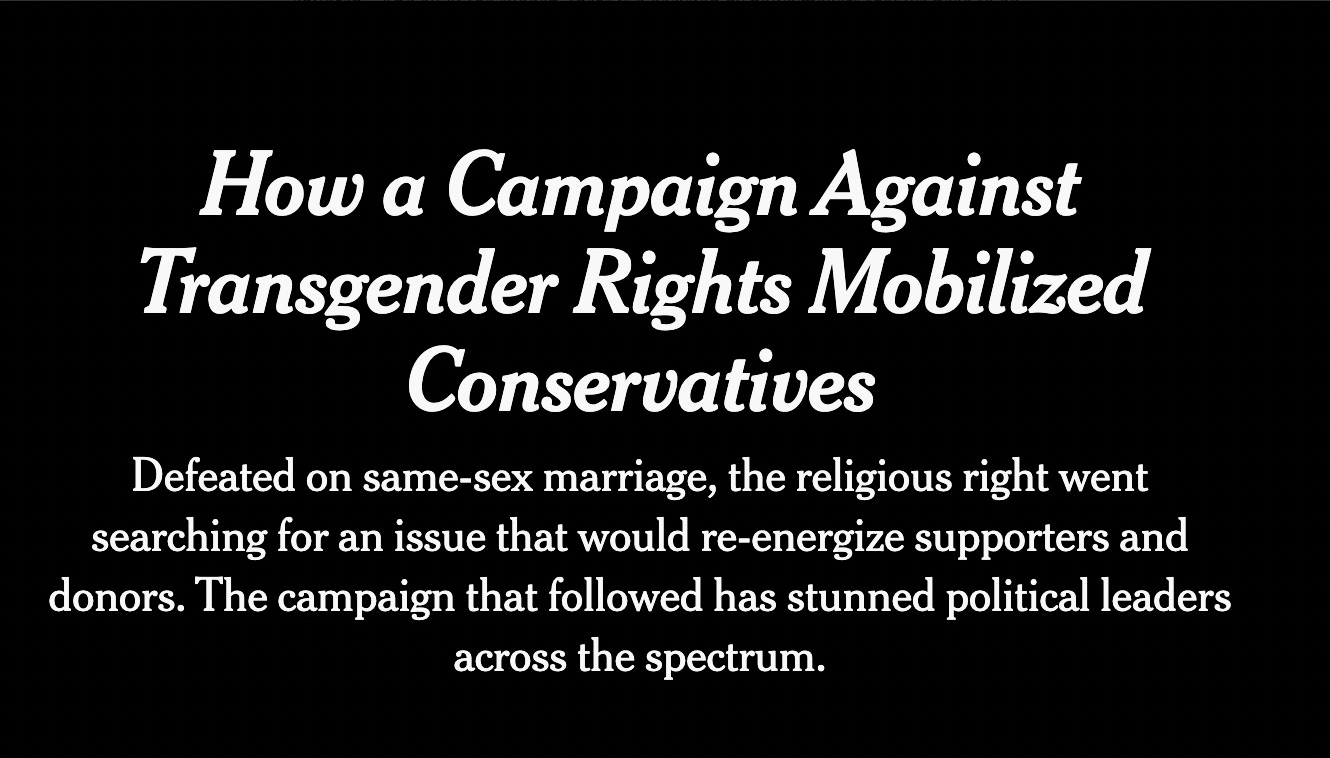
Now the New York Times explains the same thing in a similar way, writing that transgender issues have suddenly become a big deal in America because scheming right-wingers decided to cook it up as a fake wedge issue:
“The religious right went searching for an issue.” To get donors to write some checks, see. They just made it up, in a cynical act of invention. A bunch of social conservatives were sitting around the office, lamenting how no one gives them money anymore because everybody stopped hating the gays, so they decided, tactically, to pretend that transgender rights was a thing, now, so that they could trick people into giving them money again. Completely out of left field! Trans rights was just sitting there watching some Netflix with a tub of Cherry Garcia when suddenly the doorbell rang.
There’s no pouncing, but you’ve heard this descriptive maneuver before:
Nadine Smith, the executive director of Equality Florida, a group that fights discrimination against L.G.B.T.Q. people, said there was a direct line from the right’s focus on transgender children to other issues it has seized on in the name of “parents’ rights” — such as banning books and curriculums that teach about racism.
“Seized on”. The story also says that the issue of men participating in women’s sports “was accelerated by a few influential Republican governors who seized on the issue early”. There’s a lot of seizing on, and it’s all mysterious. Why did the seizers seize the seized thing? Dunno. They just suddenly, for no apparent reason at all, seized on the issue of women’s sports. Weird. Similarly, that paragraph about “banning books” and forbidding “curriculums that teach about racism” is presented as a given, not as a thing that requires explanation or illustration. It’s tactical murk: half-accusations as smoke and chaff, designed to leave you with the general outlines of a thing that it’s convenient to have you believe. The right-wingers are something something something, and it’s scary.
April 17, 2023
The lingering pandemic of fear
Liz Hodgkinson on the pattern of fear that the state, media, and public health messaging instilled into so many people during the Wuhan Coronavirus pandemic:

“Covid 19 Masks” by baldeaglebluff is licensed under CC BY-SA 2.0


The Stoics of ancient times believed that in many cases it was possible to control pain by thought alone. To achieve this, they stoically, as it were, accepted painful or unpleasant sensations, viewing them with studied indifference. As such, the pain often went away of its own accord, although to be fair they did use a painkiller known as theriac, which contained opium.
The opposite is also true, in that you can induce pain or disease by thought alone, causing acute and sometimes lasting physical symptoms. Although ancient and tribal societies understood that the power of suggestion can be so strong that it may make people well or ill, this seems to have been forgotten in modern, mechanistic medicine with its insistence on tests, scans, screens and so on.
Because of this, I am now wondering whether as many people would have gone down with Covid (or what passed for it) if, instead of a flu-like illness being ramped up as the worst and most dangerous disease ever to affect humankind, it had been ignored.
As it was, around 80 per cent – and it may have been more – of the world’s population were gripped by such a fear of the bug that they actually thought themselves into illness. Once the PCR test was introduced, people began testing themselves, sometimes hourly, and if the test showed positive they waited for symptoms to appear. More often than not, they obliged.
Then people became terrified to step out of the house without wearing a mask, even though all the evidence showed that these muzzles were more or less ineffective and that even the surgical-quality ones lasted only a couple of hours, at most. People were also nervous of getting close to anybody else, edging away if somebody came within a few feet of them. Only the other day, as I was in a queue waiting to pay for an item, a masked woman in front of me turned round and said crossly: “Do you mind not standing so close to me?” I wondered about making a quick riposte but decided that there was no way I could penetrate this kind of stupidity.
There was also the handwashing ritual where shops, doctors’ surgeries, solicitors’ and estate agents’ offices, for instance, forced hand sanitiser on to you, and sometimes took your temperature as you walked in.
The cleaning nonsense went even further, with hotels, gyms and other places where people gathered announcing “enhanced cleaning”. This may or may not have halted the virus in its tracks but it certainly increased fear. I still see people in the gym furiously scrubbing down bikes, treadmills and other equipment in case a germ from a previous user has had the audacity to linger on the machine.
April 16, 2023
QotD: Homo electronicus and the permanent caloric surplus
Excess fat cranks up estrogen levels. You don’t need to be House MD to interpret this finding:
In males with increasing obesity there is increased aromatase activity, which irreversibly converts testosterone to estradiol resulting in decreased testosterone and elevated estrogen levels.
Or this one:
A study supports the link between excess weight and higher hormone levels. The study found that estrogen and testosterone levels dropped quite a bit when overweight and obese women lost weight.
This is not to say those swishy subalterns were fat — indeed, they were comically scrawny compared to Postmodern people. But a little goes a long way when it comes to hormones, especially in a world where “intermittent fasting” wasn’t a fad diet, but a way of life. Any one of us would keel over from hunger if we were forced to eat the kind of diet George Orwell described as his public school’s standard fare.
Follow that trend out to the Current Year, when pretty much everyone is grossly obese compared to even the Silent Generation. Heartiste and other “game” bloggers loved pointing out that the average modern woman weighs as much as the average man did in the 1960s. And while I think that’s overblown — we’re also several inches taller, on average, than 1960s people — there’s definitely something to it, especially when you consider how far the bell curve has shifted to the fat end. Not only do people weigh a lot more on average, the people who weigh more than average now weigh a hell of a lot more than heavier-than-average people did back when. See, for example, the ballooning weight of offensive linemen, who are professionally fat — in 2011 a quarterback, Cam Newton, weighed more than the average offensive lineman in the 1960s.
Put the two trends together and you have, on average, a hormone cocktail way, way different than even 50 years ago … and that’s before you add in things like all-but-universal hormonal contraception, lots of which ends up in municipal drinking water.
Severian, “Recent Evolution”, Rotten Chestnuts, 2020-09-28.
April 15, 2023
QotD: When the pick-up artist became “coded right”
Today, the global face of pickup artistry is Andrew Tate: sculpted former kickboxing champion, self-described “misogynist”, and, now, alleged human trafficker. Whatever results from the current allegations, his fall is a defining moment in the cultural history of the now inseparable worlds of the political manosphere and pickup artistry, and provides an opportunity to reflect upon their entangled history.
Pickup artistry burst onto the scene in the 2000s, propelled by the success of Neil Strauss’s best-selling book The Game. More a page-turning potboiler cataloguing the mostly empty lives of pickup artists (PUAs) than a how-to guide (though Strauss wrote one of those too), the methods in the book had been developed through years of research shared on internet forums. The “seduction underground”, as the large online community of people doing this research was called, then became the subject of widespread media attention. Through pickup artistry, the aggressive, formulaic predation of women was normalised as esteem boosting, and men such as those described in Strauss’s The Game could be viewed in a positive light: they had transformed from zero to hero and taken what was rightfully theirs.
The emergence of PUAs generated a swift backlash. The feminist blogs of the mid-to-late 2000s internet, of which publications like Jezebel still survive as living fossils, rushed to pillory them. The attacks weren’t without justification, but the world of PUAs during this period, much like the similarly wild-and-woolly bodybuilding forums, had no obvious political dimension beyond some sort of generic libertarianism. It was only after these initial critiques that it began to be coded as Right-wing by those on the Left. Duly labelled, PUAs and other associated manosphere figures drifted in that direction. MTV’s dating coaches were not part of the political landscape, merely feckless goofballs and low-level conmen capable of entertaining the masses. But their successors would be overtly political actors.
Oliver Bateman, “Why pick-up artists joined the Online Right”, UnHerd, 2023-01-08.
April 12, 2023
Institutional Review Boards … trying to balance harm vs health, allegedly
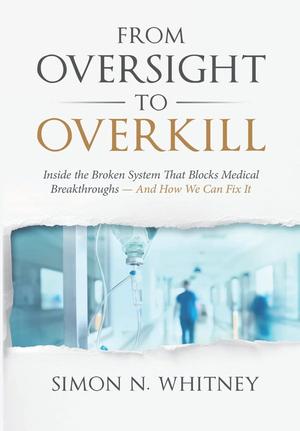
At Astral Codex Ten Scott Alexander reviews From Oversight to Overkill by Simon N. Whitley, in light of his own experience with an Institutional Review Board’s demands:
Dr. Rob Knight studies how skin bacteria jump from person to person. In one 2009 study, meant to simulate human contact, he used a Q-tip to cotton swab first one subject’s mouth (or skin), then another’s, to see how many bacteria traveled over. On the consent forms, he said risks were near zero — it was the equivalent of kissing another person’s hand.
His IRB — ie Institutional Review Board, the committee charged with keeping experiments ethical — disagreed. They worried the study would give patients AIDS. Dr. Knight tried to explain that you can’t get AIDS from skin contact. The IRB refused to listen. Finally Dr. Knight found some kind of diversity coordinator person who offered to explain that claiming you can get AIDS from skin contact is offensive. The IRB backed down, and Dr. Knight completed his study successfully.
Just kidding! The IRB demanded that he give his patients consent forms warning that they could get smallpox. Dr. Knight tried to explain that smallpox had been extinct in the wild since the 1970s, the only remaining samples in US and Russian biosecurity labs. Here there was no diversity coordinator to swoop in and save him, although after months of delay and argument he did eventually get his study approved.
Most IRB experiences aren’t this bad, right? Mine was worse. When I worked in a psych ward, we used to use a short questionnaire to screen for bipolar disorder. I suspected the questionnaire didn’t work, and wanted to record how often the questionnaire’s opinion matched that of expert doctors. This didn’t require doing anything different — it just required keeping records of what we were already doing. “Of people who the questionnaire said had bipolar, 25%/50%/whatever later got full bipolar diagnoses” — that kind of thing. But because we were recording data, it qualified as a study; because it qualified as a study, we needed to go through the IRB. After about fifty hours of training, paperwork, and back and forth arguments — including one where the IRB demanded patients sign consent forms in pen (not pencil) but the psychiatric ward would only allow patients to have pencils (not pen) — what had originally been intended as a quick record-keeping had expanded into an additional part-time job for a team of ~4 doctors. We made a tiny bit of progress over a few months before the IRB decided to re-evaluate all projects including ours and told us to change twenty-seven things, including re-litigating the pen vs. pencil issue (they also told us that our project was unusually good; most got >27 demands). Our team of four doctors considered the hundreds of hours it would take to document compliance and agreed to give up. As far as I know that hospital is still using the same bipolar questionnaire. They still don’t know if it works.
Most IRB experiences can’t be that bad, right? Maybe not, but a lot of people have horror stories. A survey of how researchers feel about IRBs did include one person who said “I hope all those at OHRP [the bureaucracy in charge of IRBs] and the ethicists die of diseases that we could have made significant progress on if we had [the research materials IRBs are banning us from using]”.
Dr. Simon Whitney, author of From Oversight To Overkill, doesn’t wish death upon IRBs. He’s a former Stanford IRB member himself, with impeccable research-ethicist credentials — MD + JD, bioethics fellowship, served on the Stanford IRB for two years. He thought he was doing good work at Stanford; he did do good work. Still, his worldview gradually started to crack:
In 1999, I moved to Houston and joined the faculty at Baylor College of Medicine, where my new colleagues were scientists. I began going to medical conferences, where people in the hallways told stories about IRBs they considered arrogant that were abusing scientists who were powerless. As I listened, I knew the defenses the IRBs themselves would offer: Scientists cannot judge their own research objectively, and there is no better second opinion than a thoughtful committee of their peers. But these rationales began to feel flimsy as I gradually discovered how often IRB review hobbles low-risk research. I saw how IRBs inflate the hazards of research in bizarre ways, and how they insist on consent processes that appear designed to help the institution dodge liability or litigation. The committees’ admirable goals, in short, have become disconnected from their actual operations. A system that began as a noble defense of the vulnerable is now an ignoble defense of the powerful.
So Oversight is a mix of attacking and defending IRBs. It attacks them insofar as it admits they do a bad job; the stricter IRB system in place since the ‘90s probably only prevents a single-digit number of deaths per decade, but causes tens of thousands more by preventing life-saving studies. It defends them insofar as it argues this isn’t the fault of the board members themselves. They’re caught up in a network of lawyers, regulators, cynical Congressmen, sensationalist reporters, and hospital administrators gone out of control. Oversight is Whitney’s attempt to demystify this network, explain how we got here, and plan our escape.
“Stunning and brave” or “deliberately constructed misogyny”?
In The Critic, Jean Hatchet points out how well Dylan Mulvaney’s act is working to both maximize Mulvaney’s career and to actively denigrate women:

If a man seeks to humiliate a woman he encounters, nothing is easier than reducing her appearance to a mere caricature. Men do this directly in front of the woman they are targeting: lifting their voice to a squeak, exaggerating hand gestures, pushing out pretend breasts, wiggling their bum, pouting and fiddling with their hair. Most of these men confine the taunt to the woman in front of them, and the woman often feels and displays a righteous rage. However, when it comes to Dylan Mulvaney, the Tik Tok user who has become famous for his grotesque parody of women, women are not supposed to react critically. They are seen as cruel or “transphobic” if they express annoyance at being so grossly insulted.
In March 2022 Dylan Mulvaney saw a way to take his barely-concealed disdain for women up a level, with predictable success. After his career as a musical actor had stalled due to the Covid pandemic, with people finding solace daily on Tik Tok, wily Dylan invented a new role that guaranteed his future wealth and success. He announced he was embarking on a journey of “being a girl” and began a series of videos documenting this ludicrous notion.
Shortly before this year-long, very public “transition”, Mulvaney performed a pilot video for his current lucrative act. In it he told the viewer that he “had trouble finding roles” so a friend had invented one for him, a “femme character”. His character wears a pink dress and pearls, white gloves and ankle socks. At this point Mulvaney must have been delighted to glimpse a potential new career path. It was a very savvy move for him to extend and develop this caricature of a 1950s woman. Now, just over a year later, Dylan Mulvaney has highly paid “partnerships” with a number of companies including Budweiser, Kate Spade and — during the past week, to great objection — the Sportwear giant Nike.
In an inflammatory paid partnership video with Nike, an inanely grinning, barefoot Mulvaney wears a Nike sports bra and leggings. He performs a series of ridiculous moves including comedic side stretches, a theatrical run kicking his heels up nonsensically and failed chorus-line high kicks. He almost runs backwards into a hedge at one point and pulls a comedy expression of shock. It all looks ridiculous and slapstick. It mocks women by suggesting they exercise trivially and ineffectively, but smiling throughout.
The media seems unwilling to focus on the actual reasons many women are angry about this. It has focused instead on stating that objections to the sponsorship are because Dylan is trans. This is not why women are outraged. When a man “performs woman” in front of women to such a humiliating degree, when he waggles and jiggles and implies that weakness and silliness are inherent to being a woman who plays sport, women appropriately see this for the deliberately constructed misogyny it is. Ria Chapman, a London PE teacher, told me why she finds this act so irritating and offensive:
Girls are still routinely bullied and mocked for being sporty and or breaking stereotypes, their achievements and ambitions not being celebrated and valued like those of their male peers. For a sports company the size of Nike to use a male performing a parody of what he believes women behave like during sport only adds to the ammunition that boys will use to put girls down.
Utilising female stereotypes is the foundation of Mulvaney’s role. On his “Day 1 of being a girl” video debut, he said:
I’ve already cried three times, written a scathing email I didn’t send, ordered dresses online that I couldn’t afford and when someone asked me how I was, I said “I’m fine” but I wasn’t fine. How did I do, ladies?
All of this encapsulates the stereotype of women as emotionally fragile, frivolous spendthrifts, imprudent around clothes and financially inept. In the stereotype Dylan performs, women routinely suppress our emotions and focus on being polite at all times. It is an archaic depiction of requisite female behaviour which was seared into women’s consciousness over decades in the past. This view of “girlhood” took further decades for feminist women to dismantle. Dylan Mulvaney is building it back up before our eyes and we refuse to stay quiet about it.
Bud Light’s latest brand ambassador, Dylan Mulvaney

QotD: Karen
self-propelled lifestyle accessorieskids while she gets exalted at hot yoga and the nail salon, now that school’s out. Give her a week without Starbucks, I said, locked in her house with Kayden, Brayden, Jayden, and Khaleesi, and she’ll demand we never mention the word “flu” again.In other words, I misunderstood the essence of Karen. Karen is — first, foremost, and always — a victim. I of all people should’ve known better, because I was surrounded by Karens all the time in my personal and professional life. I’ve mentioned this story before, but bear with a quick repeat: At one of my first teaching gigs, at the big directional tech that makes up a lot of “Flyover State”, the department’s women got it into their vapid little heads that they — women — were being systematically excluded from positions of power. The fact that the department chair was a woman, and in fact the whole department, emeritus through first year grad student, was something like 65% female should’ve been their first clue, but nevertheless, they persisted. They got together a blue-ribbon commission, as one does, and studied the shit out of the problem. The much-ballyhooed report revealed …
… that all the positions of authority in the department, every blessed one, was held by a female. At which point, without missing a single fucking beat, they started complaining that being forced to hold all these positions of authority was keeping them from making adequate career progress.
I shit you not.
That’s Karen, my friends.
Severian, “The Civil War That Wasn’t”, Rotten Chestnuts, 2020-09-09.
April 4, 2023
QotD: We used to have this concept of “healthy socialization” for kids
30 years ago, that kind of thing wasn’t just possible, it was pretty easy, since Little League was still about silly stuff like having fun, and when high school coaches gave you the speech about teamwork and character building, he — get this — actually meant it. I know how crazy this sounds, but it was pretty much expected of us benchwarmers to take the piss out of the kid who carried on like he was some kind of Big League prospect. Nobody but parents came to the games, anyway, and wearing a letter jacket didn’t help you get girls (I tested this hypothesis extensively). Nowadays, of course, Little League squads are ruthlessly culled, and if you make the team, you’d better be ready to be put on a nutrition plan and workout schedule, to attend summer skills camps, to be no-shit scouted, by professionals, at an age where you’re still not really sure what girls are for.
You don’t get to be “a jock” for a semester, in other words. You are one, and that’s all you are, starting before puberty, and woe to the kid who only made the team because his hormonal clock was set a little ahead of the other boys’. The kid who can throw 75 at age ten, as we all know, is 99.8% certain to still be throwing 75 at age sixteen, when everyone on the JV team can catch up to it. In my day, that’s when the coach pulled you aside and explained a few things to you, gently but firmly pointing you towards the Model UN Club. He was good at it, and since he was good at giving those “teamwork and character” speeches, too, he’d tell you that this, right here, is one of those situations, so man up and accept your limitations.
Ah well. So much for being a jock. Cross it off the list, and try not to notice the relief in Mom’s eyes — and, yeah, the little bit of sadness in Dad’s — when they realize they don’t have to schlep you all over the goddamn place on summer evenings, sitting in the bleachers watching you ride the pine. Time to find something else …
Severian, “Alienation”, Rotten Chestnuts, 2020-10-29.
April 2, 2023
Ozempic versus the make-believe world of “Healthy at Every Size”
Poor Americans are being propagandized that being fat — even to the point of being unable to carry on ordinary tasks — is “perfectly healthy” at the same time that the glitterati, the wealthy, and the mediagenic are getting thinner thanks to diet, exercise, and (it’s an open secret) drugs and cosmetic surgery. Along comes an antidiabetic drug that was found to have an interesting off-schedule property:

If you, a commoner, encountered a feudal lord in the year 1200, the latter would likely be wearing fine armour, carrying a well-polished sword, and riding a horse. Upon seeing these visual cues, you would address him properly, lest he punish you for failing to show proper deference. But as the centuries passed, particularly in the years following the American and French revolutions, this notion of privilege faded; the rich might be a class apart, but at times they might be dressed much like you, even if their apparel was slightly better-made.
Today, however, the rich are separating themselves in perhaps the most obvious way of all: by perfecting their bodies, rather than what they put on them. The rich are fit and the poor are fat: reams of research confirms that the prevalence of obesity decreases as income increases. In the United States, where 41% of the entire population is obese — compared with 25% in the United Kingdom — it is a rare wealthy person who is morbidly overweight (blimp-sized Illinois governor J.B. Pritzker and portly former New Jersey governor Chris Christie are outliers). Increasingly, the rich in late middle age have come to resemble Jeff Bezos and Sarah Jessica Parker: ripped to shreds and almost certainly “enhanced” with various anti-ageing drugs and techniques, ranging from steroids and growth hormones to Botox injections and liposuction.
Into this mix comes semaglutide, an antidiabetic medication better known by its trade name Ozempic. Sold by pharmaceutical manufacturer Novo Nordisk, the drug, which reduces food intake by curbing appetite and slowing digestion, was approved by the US Food and Drug Administration to treat obesity in 2021. Since then, celebrities and fitness influencers have routinely shared before-and-after pics captioned with details of their courageous weight-loss journeys, which entailed jabbing themselves with a 1.5ml pen that contains a month’s worth of doses and costs roughly $900 without insurance.
Predictably, stories about Ozempic have proliferated in the tabloids and on social media. Some see the drug as a challenge to the celebrity movement that touts “fat acceptance”, and brought us the “slim-thick” era of curvy female superstars. They argue that Ozempic may work hand-in-hand with the return of the “heroin chic” look of the late Nineties. As interesting as it is to consider where these mixed messages might lead us — to a culture in which poor people are told it’s fabulous to be obese, while the rich get ever thinner and fitter — if this is a conspiracy, it’s not a new one. The rich have lusted after youth, beauty and fitness, in others and themselves, since time immemorial, always keeping the poor as downtrodden as possible while pacifying them with bromides about equality, liberty and fraternity. Ozempic, then, is not simply the key to thinness; those who pay for it are buying even more distance between themselves and the hoi polloi.
In short, this appears to be yet another sign that the elite are headed toward some sort of crude transhumanist utopia, complete with gene therapy and designer-baby selection. Some may scoff that this is science fiction, but this future looms: once they’re sufficiently fine-tuned, gene editing tools will likely eradicate heart disease, muscle wasting, neurodegenerative disorders, and other conditions in embryos that are still in utero — but their price will be nothing short of staggering. Similarly expensive gene therapies will enhance the overall performance of already-healthy humans, raising ethical questions about whether these procedures should “improve” a person or merely “fix” a condition. The rich, of course, will leave those debates to the philosophers and pay upfront for the best bodies that their considerable resources can buy. Already, news stories abound of billionaires pursuing immortality, with a few commentators trying to sanitise the pursuit by arguing that the research will somehow benefit even the least of us.
March 30, 2023
“Nothing is as permanent as a temporary government program” … except those few that make your life easier
At Astral Codex Ten, Scott Alexander reacts to the US government’s new moves to make telehealth less useful for as many people as possible:
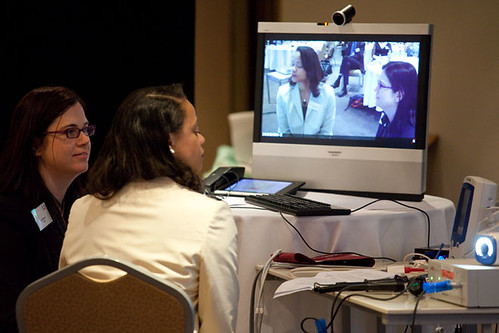


Telemedicine is when you see a doctor (or nurse, PA, etc) over a video call. Medical regulators hate new things, so for its first decade they ensured telemedicine was hard and inconvenient.
Then came COVID-19. Suddenly important politicians were paying attention to questions about whether people could get medical care without leaving their homes. They yelled at the regulators, and the regulators grudgingly agreed to temporarily make telemedicine easy and convenient.
They say “nothing is as permanent as a temporary government program”, but this only applies to government programs that make your life worse. Government programs that make your life better are ephemeral and can disappear at any moment. So a few months ago, the medical regulators woke up, realized the pandemic was over, and started plotting ways to make telemedicine hard and inconvenient again.
The first fruit of their labor is DEA-407, which makes it hard for telemedicine doctors to prescribe controlled substances. Controlled substances are drugs like Adderall, Ritalin, Xanax, or Ambien that the government has declared to be potentially addictive. The new rules say that telemedicine doctors can no longer prescribe these (or, in some cases, can prescribe them one time in an emergency).
Why don’t I like this decision? I am a telepsychiatrist. I work with about a hundred psychiatric patients who, for one reason or another, prefer online to physical appointments:
- Some live in small towns that don’t have psychiatrists of their own
- Some have agoraphobia, chronic pain, or some other condition that makes it hard for them to go to an office.
- Some move around a lot and like to be able to see their psychiatrist whether they’re in LA or SF.
- Some live hundreds of miles away from me, but know and trust me for some reason, and would rather see me than someone closer to them.
- Some appreciate the fact that I charge lower rates than psychiatrists who have offices, because I don’t have to pay for Bay Area commercial real estate and pass those costs on to my patients.
- Some work during work hours, and like being able to see me from their office instead of taking half the day off to travel to my location.
- Some like convenience and dislike inconvenience
As a psychiatrist, a big part of my job is prescribing controlled substances. For example, most guidelines agrees that the first-line treatment for severe ADHD is stimulant medications (eg Adderall or Ritalin). And although psychiatrists hate to admit it, the first-line treatment for temporary crisis anxiety, especially when it’s so bad that the patient isn’t able to listen to your clever plans to solve it with therapy, is benzodiazepines (eg Valium or Klonopin). You can’t be a good well-rounded psychiatrist without the option to sometimes prescribe these drugs.
“Well, your patients will have to find a different psychiatrist, or transition off of them”. Nobody ever finds different psychiatrists. Some of my patients are a bad match for my style or areas of expertise, and I’ve tried very hard to find them different psychiatrists, and it never works. Maybe there are no other psychiatrists in their area. Maybe the psychiatrists in their area don’t take the right insurance, or are too far away from mass transit. Maybe the psychiatrists have six month long wait lists. Sometimes it’s just that my ADHD patients get distracted and forget they were supposed to find new psychiatrists, and I can’t hold their hand literally all the time. As for transitioning off the medications, some patients absolutely cannot function at all without them. Did I mention that if you come off of some of them too quickly, you can literally die?
QotD: Revealed preference in the teenage hellscape of high school
Robert Stacy McCain, “Conflicting Signals”, The Other McCain, 2019-05-23.
March 26, 2023
Plandemic? Manufactured crisis? Mass formation psychosis?
In The Conservative Woman, James Delingpole lets his skeptic flag fly:
“Covid 19 Masks” by baldeaglebluff is licensed under CC BY-SA 2.0
Tell me about your personal experiences of Covid 19. Actually, wait, don’t. I think I may have heard it already, about a million times. You lost all sense of smell or taste – and just how weird was that? It floored you for days. It gave you a funny dry cough, the dryness and ticklishness of which was unprecedented in your entire coughing career. You’ve had flu a couple of times and, boy, when you’ve got real flu do you know it. But this definitely wasn’t flu. It was so completely different from anything you’ve ever known, why you wouldn’t be surprised to learn that it had been bioengineered in a lab with all manner of spike proteins and gain-of-function additives, perhaps even up to and including fragments of the Aids virus …
Yeah, right. Forgive me for treading on the sacred, personal domain of your lived experience. But might I cautiously suggest that none of what you went through necessarily validates lab-leak theory. Rather what it may demonstrate is the power of susceptibility, brainwashing and an overactive imagination. You lived – we all did – through a two-year period in which health-suffering anecdotes became valuable currency. Whereas in the years before the “pandemic”, no one had been much interested in the gory details of your nasty cold, suddenly everyone wanted to compare notes to see whether they’d had it as bad as you – or, preferably, for the sake of oneupmanship, even worse. This in turn created a self-reinforcing mechanism of Covid panic escalation: the more everyone talked about it, the more inconvertible the “pandemic” became.
Meanwhile, in the real world, hard evidence – as opposed to anecdotal evidence – for this “pandemic” remained stubbornly non-existent. The clincher for me was a landmark article published in January 2021 by Simon Elmer at his website Architects For Social Housing. It was titled “Lies, Damned Lies and Statistics: Manufacturing the Crisis”.
In it Elmer asked the question every journalist should have asked but which almost none did: is this “pandemic” really as serious as all the experts, and government ministers and media outlets and medics are telling us it is? The answer was a very obvious No. As the Office for National Statistics data cited by Elmer clearly showed, 2020 – Year Zero for supposedly the biggest public health threat since “Spanish Flu” a century earlier – was one of the milder years for death in the lives of most people.
Let’s be clear about this point, because something you often hear people on the sceptical side of the argument say is, “Of course, no one is suggesting that Covid didn’t cause a horrific number of deaths.” But that’s exactly what they should be suggesting: because it’s true. Elmer was quoting the Age Standardised Mortality statistics for England and Wales dating back to 1941. What these show is that in every year up to and including 2008, more people died per head of population than in the deadly Covid outbreak year of 2020. Of the previous 79 years, 2020 had the 12th lowest mortality rate.
Covid, in other words, was a pandemic of the imagination, of anecdote, of emotion rather than of measured ill-health and death. Yet even now, when I draw someone’s attention to that ONS data, I find that the most common response I get is one of denial. That is, when presented with the clearest, most untainted (this was before ONS got politicised and began cooking the books), impossible-to-refute evidence that there was NO Covid pandemic in 2020, most people, even intelligent ones, still choose to go with their feelings rather with the hard data.
This natural tendency many of us have to choose emotive narratives over cool evidence makes us ripe for exploitation by the cynical and unscrupulous. We saw this during the pandemic when the majority fell for the exciting but mendacious story that they were living through a new Great Plague, and that only by observing bizarre rituals – putting strips of cloth over one’s face, dancing round one another in supermarkets, injecting unknown substances into one’s body – could one hope to save oneself and granny. And we’re seeing it now, in a slightly different variant, in which lots of people – even many who ought to know better – are falling for some similarly thrilling but erroneous nonsense about lab-leaked viruses.
It’s such a sexy story that I fell for it myself. In those early days when all the papers were still dutifully trotting out World Health Organisation-approved propaganda about pangolins and bats and the apparently notorious wet market (whatever the hell that is) in Wuhan, I was already well ahead of the game. I knew, I just knew, as all the edgy, fearless seekers of truth did that it was a lab leak wot done it. If you knew where to dig, there was a clear evidence trail to support it.
We edgy, fearless truth seekers knew all the names and facts. Dodgy Peter Daszak of the EcoHealth Alliance was in it up to the neck; so too, obviously, was the loathsomely chipper and smugly deceitful Anthony Fauci. We knew that all this crazy, Frankenvirus research had initially been conducted in Chapel Hill, North Carolina, but had been outsourced to China after President Obama changed the regulations and it became too much of a hot potato for US-based labs. And let’s not forget Ukraine – all those secret bio-research labs run on behalf of the US Deep State, but then exposed as the Russians unhelpfully overran territory such as Mariupol.
March 25, 2023
South Africa – from bad to indescribably worse
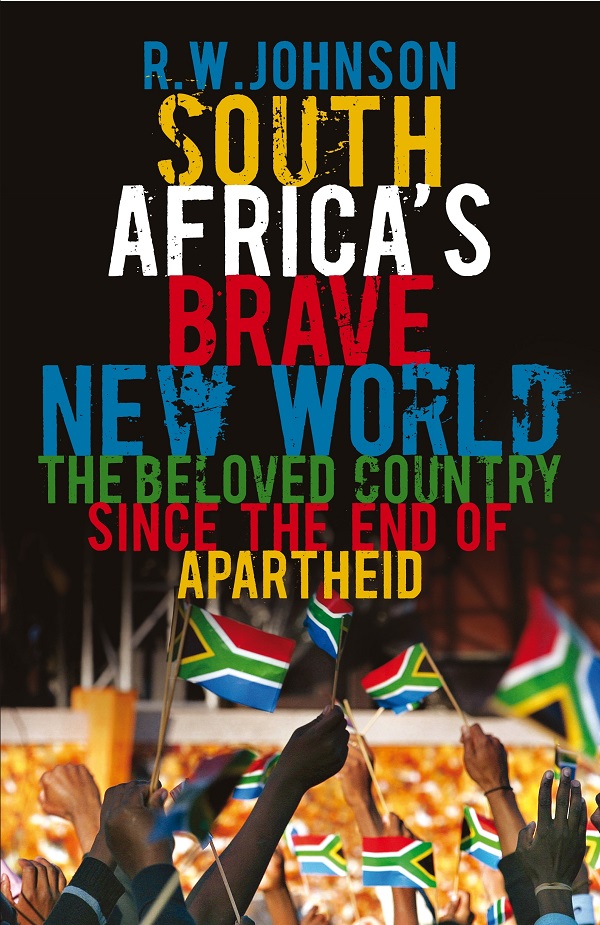
John Psmith reviews South Africa’s Brave New World: The Beloved Country Since The End Of Apartheid by R.W. Johnson. It isn’t a pretty picture at all:
The whole world had come to Pretoria to see the inauguration of Nelson Mandela as the first democratically elected South African President. It was the greatest assemblage of heads of state since John F. Kennedy’s funeral … But it was the flight of nine SAAF [South African Air Force] Mirages overhead, dipping their wings in salute, which brought tears to many eyes. It said so many things: the acceptance of, indeed, the deference to, Mandela by the white establishment, the acknowledgement that he was fully President, able to command all the levers of power — and, for many black people in the crowd, it meant that for the first time the Mirages’ awesome power and white pilots were on their side, part of the same nation … All the products of that white power, including South Africa’s sophisticated economy and infrastructure, were being handed over intact.
A little over a decade later and that same South African Air Force was no longer able to fly. It wasn’t for lack of planes: new ones were procured from European arms manufacturers in an astonishingly expensive and legendarily corrupt deal. But once purchased the planes rotted from lack of maintenance and languished in hangers for lack of anybody able to fly them. Most of the qualified pilots and technicians had been purged, and most of the remainder had resigned. The air force did technically still have pilots, after all it would be a bit embarrassing not to, but those pilots were chosen for patronage reasons and didn’t technically have any idea how to fly a fighter jet.
It isn’t just the air force. That whole “sophisticated economy and infrastructure” that got “handed over intact” now by and large no longer exists. Consider something as basic as running water: in 1994, South Africa had some of the most sophisticated water infrastructure on earth, with a whole system of dams, reservoirs, and long-distance inter-basin conduits working together to conquer the geographical challenges of having several major cities and mining centers located on an arid plateau. All of this water was safe, drinkable, and actually came out of the tap when you turned the handle. This picture was marred of course by poor delivery to black rural communities and squatter camps, but in the early 90s the government was making rapid progress towards serving more of those people too.
Like the air force, that water system is now basically non-functional. It’s estimated that something like 10 million people no longer have reliable access to running water. When the water does run, it’s frequently filthy and contaminated with human sewage. South Africa had its first urban cholera outbreak in the year 2000, and they are now a regular occurrence. Again, like the air force, this isn’t for lack of money or effort. The state has spent billions on trying to fix the water problems, and the government’s water bureaucracy has tripled in size since 1994. Something else has gone wrong.
Neither of these examples is cherry-picked. Ask about literally any of the necessities for human life, and the picture is the same: basically first-world quality under the apartheid Nationalist government, and basically post-apocalyptic today. The electric grid is failing, with rolling blackouts consuming the country on a daily basis. The rail network, once one of the finest on earth, is now so degraded that mines in the North of the country prefer to truck their products overland to ports in Mozambique rather than risk the rail journey to Durban. The medical system was once the jewel of Africa and now teeters on the brink of collapse, with qualified doctors and nurses fleeing the country in droves. As for education, one South African author notes: “When Anthony Sampson’s authorized biography of Mandela appeared one of its more embarrassing asides was that all the educational institutions which had nourished Mandela had since collapsed. A Mandela could be produced in colonial times, but no longer.”
Had enough yet? At last count between a third and a half of the population is unemployed. Public order is non-existent outside gated communities and tourist areas patrolled by private security. The murder rate in South Africa exceeds that of many active war zones. Every major city in South Africa is among the most dangerous cities on earth, and the countryside is much worse than the cities. The reported cases of rape alone establish South Africa as the worst country on earth for rape, and the vast majority of cases are likely unreported, since the police have essentially stopped prosecuting this crime.
Something has gone very wrong. What happened? That’s the subject of this book by R.W. Johnson, an ultra-detailed examination of the 10 or so years following the end of apartheid in 1994. Johnson is the right guy to write this book — he’s lived in South Africa since the 1960s, and was active in the movement against apartheid from its earliest days, so he personally knows most of the players who’ve been running the country. And now he has the bittersweet task of writing a book documenting how what happened is “just what white racists predicted and what white radicals like myself scorned”.


