
We need our illusions or else we could not face the world; or perhaps I should say we need illusions as a genre, if not necessarily the ones we have. There are some illusions, no doubt, that hinder us or harm us, but there are others that sustain us. Humankind, said Eliot (who used the word before it became politically correct), cannot bear very much reality — especially about itself.
The illusion that one would have been a success but for malevolent circumstance is a very necessary one for a lot of people, for there is no more pitiless or cruel a world than a pure and perfectly functioning meritocracy. Such an arrangement would confront everyone, or at least almost everyone, with his own mediocrity, for the mediocre are by definition in the majority. And who is not mediocre by comparison with Mozart? In a pure meritocracy, everyone would find his true, utterly deserved level; but it is a mere prejudice that if there were justice in the world, everyone would be better off. In a pure meritocracy, there would be no paranoid defense against one’s own nullity — one could blame only oneself for it and no one else. That is why the concept of equality of opportunity, besides implying a kind of Brave New World world, is so deeply vicious, and why so many people who promote it are obviously hate-filled. They do not want to serve humanity but torture it.
Theodore Dalrymple, “The Grand Illusion”, Taki’s Magazine, 2017-08-19.
June 26, 2023
QotD: The danger to mental health in a functioning meritocracy
June 23, 2023
From Operation Barbarossa in 1941 to the disinformation and cover-up over the origins of the Wuhan Coronavirus
Chris Bray outlines the utterly amazing situation between the Soviet Union and Nazi Germany on the eve of Hitler launching Operation Barbarossa — where Stalin refused to believe that Hitler would attack Russia despite overwhelming evidence from many sources — to the parallel situation over Covid:
Several sources quite specifically reported to the Soviet government that the Germans would invade around dawn on June 22. Their reports can be found in the Soviet archives in a “folder of dubious and misleading reports”. Then, shortly before dawn on June 22, Germany invaded the Soviet Union. Military leaders on the border called in reports of the invasion, and the people they talked to in Moscow declined to believe them. Soviet border troops held their fire, seeing Germans while being ordered to understand that no true invasion could possibly be underway. Stalin knew better, and contradicting Josef Stalin was known to be a fatal mistake. Achieving an entirely avoidable surprise, the Germans destroyed much of the Soviet air force on the ground, parked wingtip-to-wingtip for the convenience of the invader’s bombers.
[…]
An invasion that could have been met with brutal severity from the first moment instead achieved considerable initial success against a supine nation because the Soviet leader, and the chain of subordinates beneath him who were forced to adopt his conception of facts and truth, assumed that things they didn’t wish to believe constituted disinformation. Millions of lives were wasted for that illusion. A society that categorizes inconvenient truths in this way is committing a form of suicide, hiding from hard facts that demand acknowledgment.
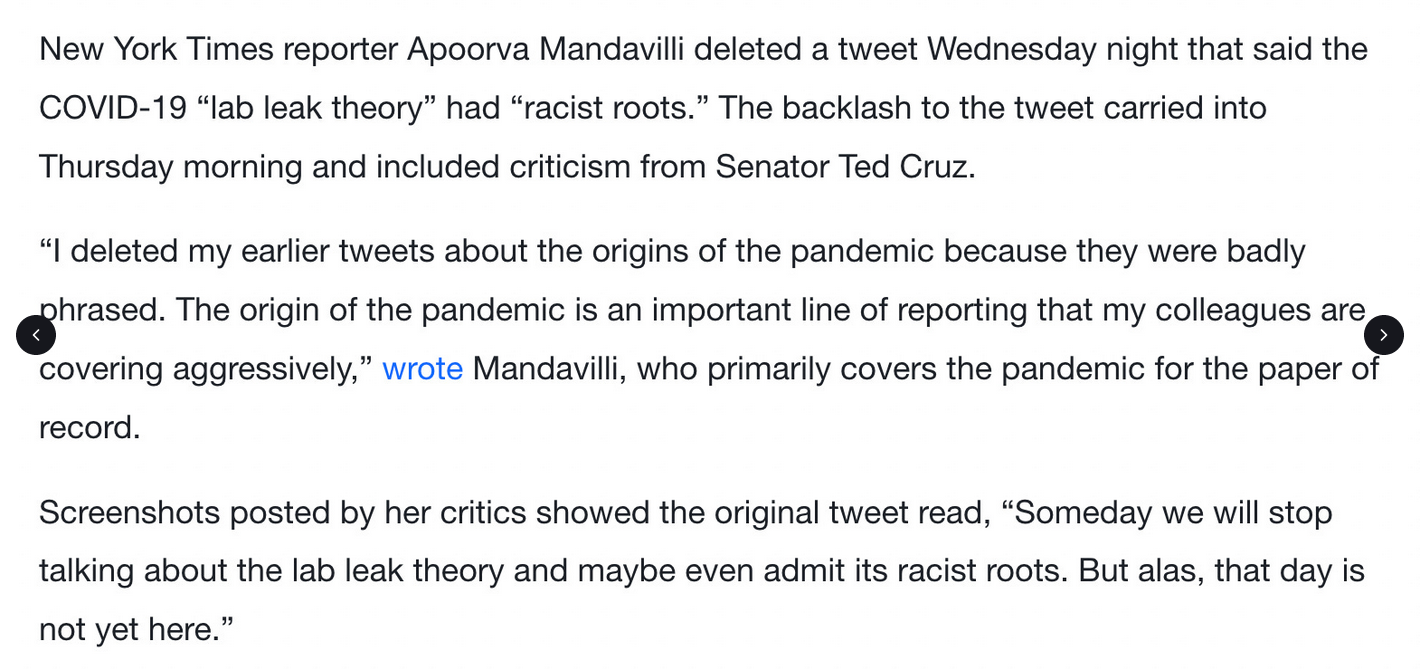
Now: In 2021, the lab leak theory was a disgusting lie with “racist roots”.
In June of 2023, the, uh, first people who got sick with Covid turn out to have been, uh, scientists at the lab in Wuhan. BUT THEY PROBABLY HAD SOME BAT SOUP AT THE WET MARKET, IS WHY, or something.
Stupid conspiracy theorists, you people are such MORONS, do you actually bel— okay, that one’s true too.
We’ve somehow developed an industry of professional information barriers, dimwitted parasitical human garbage whose sole function in life is to prevent understanding by pasting “disinformation” stickers on things that you’re not supposed to know.

June 22, 2023
Any news about weather or climate is bad news
The transition of weather from merely reporting on weather conditions and relaying (somewhat) authoritative forecasts is pretty much complete, as now every change in the weather pretty much has to be linked to the dreaded anthropogenic climate change. New York City’s recent poor air quality due to Canadian wildfires highlights a change they haven’t been pushing — how much better air quality in major cities has become:
Earlier this month, as wildfires ravaged Canada, the Northeastern United States experienced heavy air pollution problems from the smoke.
The out of control fires and subsequent pollution is a tragedy, certainly. But the fact that a low-visibility New York City was national news highlights how much things have changed.
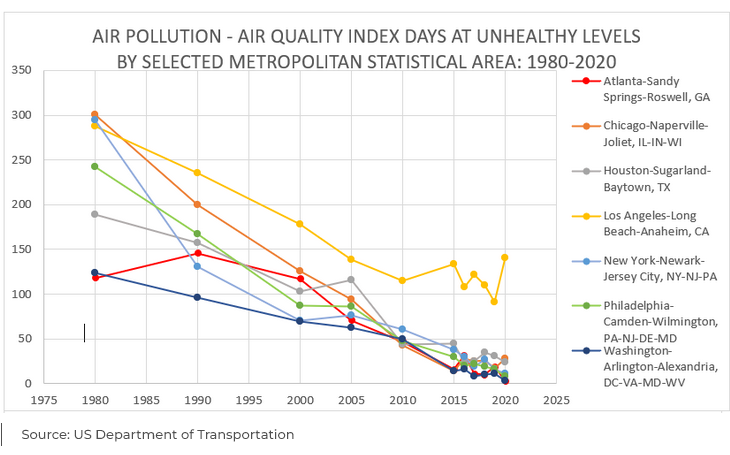
Pollution has dramatically declined over the past few decades. To get a clear picture of how much, look at this graph.
This shows the number of days air quality is considered to be at “unhealthy levels” by the US government in seven major metros in the U.S.
All seven metros have improved their air quality since 1980. This is good news!
In the NYC metro, nearly 300 days in 1980 had unhealthy air quality. Today it’s less than 50.
So what’s going on here? Well, some might argue regulation is the primary source. It’s certainly possible that environmental regulations in the end of the 20th century resulted in less pollution. As our technology has improved, we’ve gained the ability to police people polluting the air of their neighbors. But this isn’t the full story.
June 18, 2023
QotD: Good intentions do not automatically mean good results
Another United Nations agency, its peacekeeping force in Haiti, was responsible for the most serious epidemic of cholera of the twenty-first century so far. Before 2010, cholera had been unknown in Haiti despite the country’s poverty and lack of hygiene. Then, from 2010 to 2018, it suffered outbreaks of cholera that have affected perhaps a tenth of the population and caused between 10,000 and 80,000 deaths (the exact figure will never be known).
The evidence suggests that cholera was brought to Haiti by United Nations peace-keeping troops from Nepal. Whether Haiti needed peacekeeping troops at all may be doubted: at the time it suffered from civil unrest rather than from war. One suspects that the peacekeeping force was employed more to keep the Haitians from leaving Haiti than to keep the peace.
Be that as it may, some Nepali troops arrived fresh from a cholera epidemic in Nepal, established a camp next to the Artibonite River from which many Haitians drew their water. The Nepalis emptied their sewage directly into the river, and some of them were infected with the cholera germ. There was soon an outbreak of cholera among the local population of extraordinary violence. The Haitians guessed at once that the Nepali troops had brought the cholera, but this was strongly denied.
Theodore Dalrymple, “Negligence and Unaccountability at the United Nations”, New English Review, 2019-07-09.
June 17, 2023
China’s long-term revenge for the Opium Wars
In Quillette, Aaron Sarin discusses what he calls the “Reverse Opium War” with Chinese drugs flooding the US street drug culture:
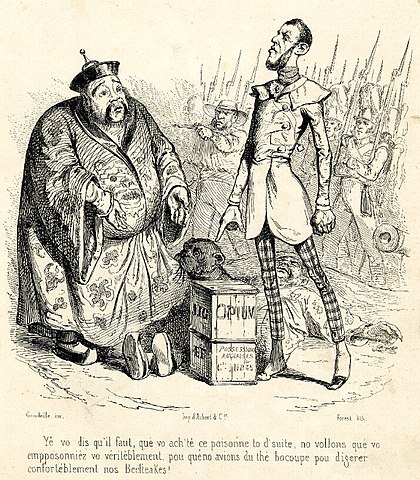
Jean-Jacques Grandville cartoon originally published in Charivari in 1840. “I tell you to immediately buy the gift here. We want you to poison yourself completely, because we need a lot of tea in order to digest our beefsteaks.”
Image and translated caption from Wikimedia Commons.
An epidemic is stalking American cities. Every day, men and women die on sidewalks, in bus shelters, on park benches. Some die sprawled in crowded plazas at midday; others die slumped in the corners of lonely gas station bathrooms. Internally, however, the circumstances are the same. They all end their lives swimming in the warm amniotic dream of a lethally dangerous opioid. When it comes, the moment of death is imperceptible: coaxed by the drug further and further from shore, the user simply floats out too far, passing some unmarked point of no return. The heartbeat weakens, the breathing slows and shallows. As soft an end as anyone might wish for.
This is the fentanyl crisis. It may seem strange to connect a very modern and very American phenomenon to a brace of wars waged 200 years ago by the British Empire on the last of the Chinese dynasties. But so the rhetoric runs: we are witnessing a Reverse Opium War; a belated Sinic revenge.
The Communist Party teaches schoolchildren that China was once a glorious superpower, until it was brought low by that subtlest and most devious of British weapons: Lachryma papaveris (poppy tears). Opium sapped the nation’s strength, and when the Chinese authorities banned it, then Britain went to war — twice.
Those wars crippled the Qing and heralded a “century of humiliation” for China — multiple military defeats and lopsided treaties, the Anglo-French looting and burning of the Emperor’s Summer Palace, the Japanese Rape of Nanking and lethal human experimentation by Unit 731 — ending only with the liberating forces of Marxism-Leninism in 1949. Now some commentators are telling us that history has inverted, that karma has kicked in.
Before examining this idea, we should remind ourselves of the American predicament. Ten years ago, fentanyl began its steady flow from China to the United States. Within just three years the drug had surpassed heroin to become the most frequent cause of American overdose deaths. Fentanyl is many times more powerful than heroin, and so there should be no surprise that lethality has spiked since the great Chinese flow began: in 2012, heroin topped the list with 6,155 deaths; by 2016, fentanyl was proving three times as deadly, with 18,335 deaths. The opioid’s influence seeps into all corners of the narcotics market, due to dealers hiding it in cocaine, heroin, and ecstasy. And it leaks across social strata, killing the homeless but also the rock star Prince, who passed away in an elevator at his Paisley Park estate after ingesting fentanyl disguised as Vicodin.
Under American pressure, the Chinese authorities agreed to regulate fentanyl analogs and two fentanyl precursor chemicals, but it soon turned out that shipments were being rerouted via Mexico. With this new arrangement, the crisis only deepened: between 2019 and 2021, the opioid killed 200 Americans a day. Last year alone, the DEA seized quantities of the drug equivalent to 410 million lethal doses. That’s enough to kill everyone in the US. Even a pandemic couldn’t stem the flow for long: in fact, Wuhan is one of the world’s most reliable suppliers of fentanyl precursors (a role it played both before and after starring at the eye of the COVID storm).
The booming fentanyl trade does not appear to rely on traditional criminal organisations, in the way that East Asian methamphetamine trafficking depends on the Triads. Instead, it turns out to be small family-based groups and legitimate businesses who manufacture and move the drug. Usually located on China’s south-eastern seaboard — Zhejiang, Fujian, Guangdong — these groups use the cover of the vast Chinese chemical industry to channel ingredients into the manufacture of fentanyl-class drugs and their precursors.
June 15, 2023
Thursday tab-clearing
A few items that I didn’t feel required a full post of their own, but might be of interest:
- Justin Trudeau’s government is clearly interested in moving to a Central Bank Digital Currency (CBDC), but “Canadians are not at peace with the idea of cash vanishing into thin air, with a consistent 80 per cent of respondents having no plans to go cashless“
- There’s an ongoing shortage of Adderall in the United States … and the Drug Enforcement Agency (DEA) is behind it.
- Alasdair Beckett-King explains what’s wrong with every time travel movie – https://youtu.be/zI0aBzA2K9s
- The man who visited Lenin’s Soviet Union and said “I have been over into the future, and it works.”
- Kim du Toit isn’t a believer in the official inflation statistics: “When the history of this era comes to be written, one of the most egregious falsehoods to be exposed will be the ‘official’ inflation rate.”
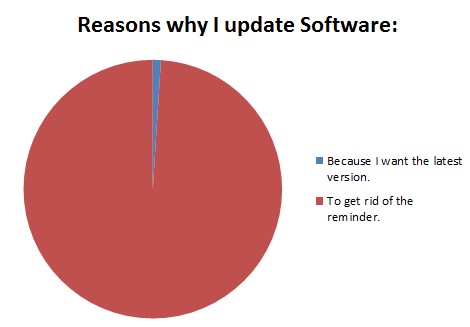
- Random meme of the day:
QotD: Incels
Freddie deBoer, “Some Reasons Why Smartphones Might Make Adolescents Anxious and Depressed”, Freddie deBoer, 2023-03-07.
June 10, 2023
Remember the Freedom Convoy of 2022?
The media worked very hard to demonize the grassroots protests that coalesced into the Canadian Freedom Convoy in early 2022, and they’ve continued to push the notion that either the movement was an utter failure or that it was a maple-flavoured January 6 “insurrection” righteously suppressed by our beloved Dear Leader and his stormtroops. Someone using the handle “Kulak” wants to remind you that the convoy wasn’t a failure and in fact was the catalyst for great changes both in Canada and around the world:

A screenshot from a YouTube video showing the protest in front of Parliament in Ottawa on 30 January, 2022.
Photo via Wikimedia Commons.
I keep encountering this misconception from people who don’t follow Canadian politics …
That somehow the Trucker convoy was defeated.
The Freedom Convoy was the most wildly immediately successful protest in Canadian history, maybe WORLD history.
People remember Trudeau’s crackdown, old ladies having their skulls cracked with batons, Disabled indigenous grandmothers trampled by police horses, Bank accounts frozen and public employees investigated for mere donations …
And there’s a big reason people remember this … It was dramatic, and the media and the regime certainly wanted you to think resistance was futile …
What people don’t remember is what happened in the immediate aftermath: The government caved on absolutely everything within a week for the most important things, and then a month or so for the rest.
First off there was the massive political shift that happened as the convoy was occurring:
Jason Kenny, the pro-lockdown Premiere of Alberta (Canada’s most conservative province) was forced to announce his resignation, and Alberta immediately lifted all its lockdown impositions.
Erin O’Toole the pro-lockdown leader of the Conservative Party was likewise forced to resign, his temporary replacement Candice Bergen (not to be mistaken with the actress) being a longtime rival opposed to lockdowns, and his main rival who replaced her after intra-party elections was Pierre Poilievre, the politician after Maxime Bernier who was quickest to embrace the Truckers and their cry for freedom.
As the convoy was ongoing Trudeau invoked the Emergencies Act (the Act which replaced the War Measures Act for invoking Martial Law) … Now these grant the government almost unlimited powers, famously the War Measures Act was invoked by Trudeau’s Father to detain Quebeckers and raid hundreds of homes without warrants during the FLQ separatist crisis of 1972 … the catch is that while the follow on Emergencies Act can be invoked by a Prime Minister Parliament has to sign off on the act’s continued use within one week.
Well skulls were cracked, accounts frozen, and as the week passed things came down to the deadline … On the very last night … Trudeau managed to get sign-off (without the Conservative opposition) from the House of Commons, but it had to go to the Upper House, the Canadian Senate.
NOW. The Canadian Senate is a shameful institution.
It’s like the British House of Lords but without the nobility.
A Senate seat is a lifetime appointment, by the Prime Minister … and that’s it. Little to no review, no democratic input, and this is supposed to be equivalent or superior to our elected House of Commons …
Naturally the go-to use of the Senate is as a spoils system for cronies. Do some shameful favour for a Prime Minister, raise a lot of money for the party, be politically connected to a provincial gov the PM wants to buy off … get a Senate seat.
One of the longest-standing political agreements in Canada is how badly the Senate needs to be abolished … but can’t be because Quebec is nominally overrepresented in the Senate, and abolishing it would cause a constitutional crisis.
H/T to Donna Laframboise for the link.
June 6, 2023
Australia’s “teen smoking rates rose sixfold between 2018 and 2023”
Christopher Snowdon on Australia’s determination to stamp out vaping … even at the cost of vastly increasing the number of tobacco smokers:
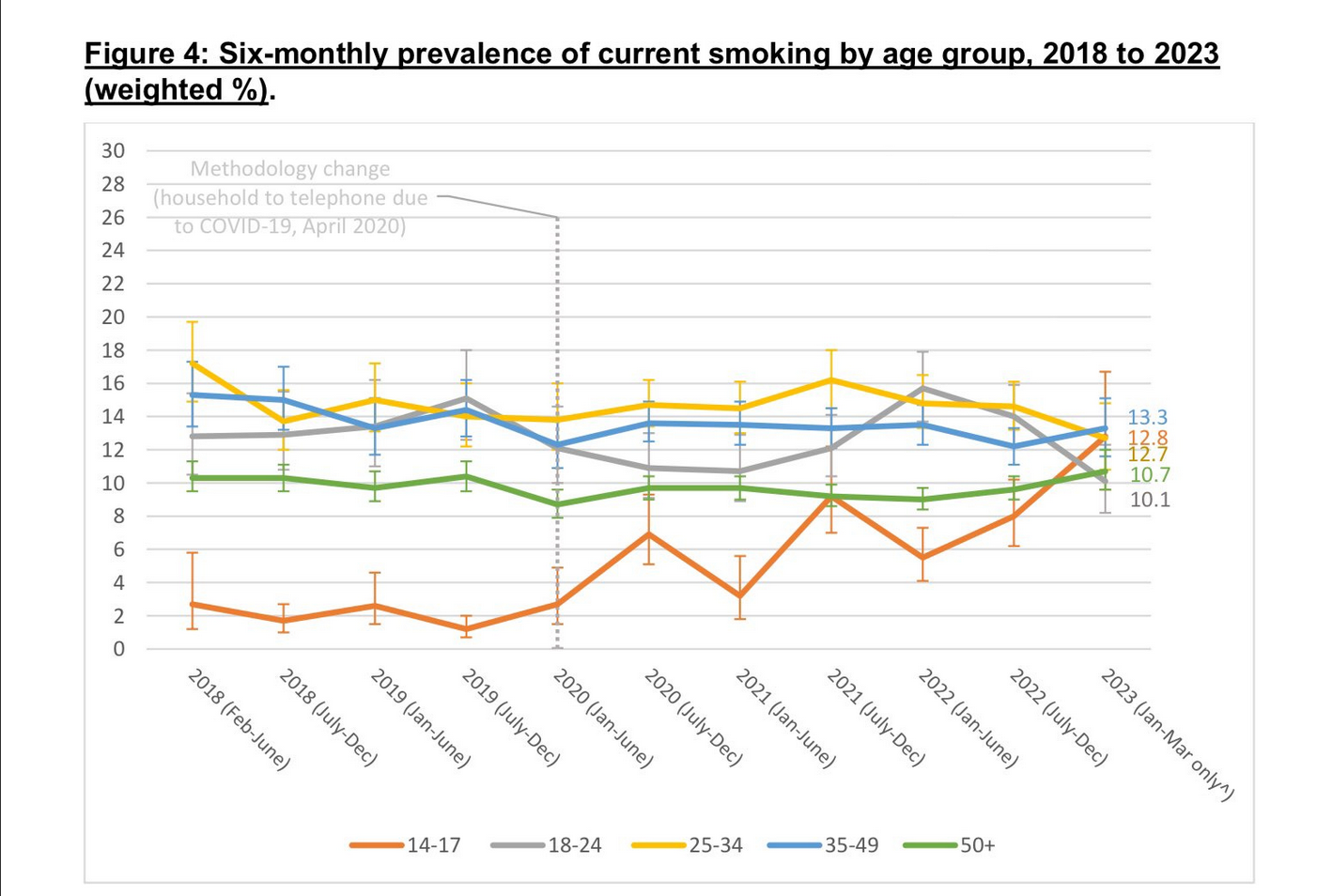
More bad news from the supposed world leader in tobacco control. Official figures show that teen smoking rates rose sixfold between 2018 and 2023, from 2% to 12.8%.
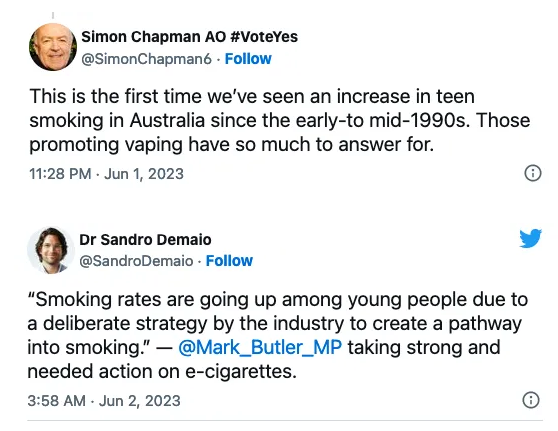
It’s been over a decade since Australia introduced plain packaging, a policy that the Southern hemisphere’s wrongest man, Simon Chapman, likened to a vaccine for lung cancer. Australia has had the highest cigarette taxes in the world for ages, the sale of nicotine e-cigarettes has always been illegal, and all they have to show for it is an insanely big black market for both tobacco and e-cigarettes, more children smoking and a whole bunch of people using unregulated vapes. The wowsers just can’t stop winning, can they?
Naturally, this has led to much soul searching among the tobacco control elite who are having to reassess their assumptions in the face of this overwhelming evidence of policy failure.
I’m joking, of course. They are doubling down again.
If you spoke to someone from the reality-based community, they would tell you that children find it easier to access a product when the market is in the hands of illicit traders because illicit traders don’t care who they sell to. They might also point out that the Australian government has gone out of its way to portray vaping as being at least as bad as smoking. School children in Australia are taught that vaping causes brain damage. Public health agencies produce websites that purport to tell people the facts about vaping but actually tell them lies and misleading half-truths.
June 5, 2023
Claim: 92% of Canadian women will suffer traumatic brain injury from an intimate partner
Did that headline grab your attention? Certainly the graphic from which it was drawn grabbed my attention. But, as Janice Fiamengo explains, it’s a vast exaggeration in pursuit of a political goal:
Linden called on men and boys to educate themselves on violence and to call out one another for perpetrating or dismissing abusive behavior of any kind.
It’s not hard to understand why National Hockey League personality Trevor Linden, former captain of the Vancouver Canucks, has lent his star power to a YWCA campaign about women’s injuries from domestic violence. Hockey players have long been targets of feminist accusation for their association with a sport that allegedly promotes misogyny, racism, and violence against women. Even a beloved icon of the sport must continually strive to prove how much he despises his fellow men.
In this case, the campaign of vilification targets the purported frequency with which female victims of intimate partner violence (IPV) experience traumatic brain injury, and demands “increased support for diagnosis and treatment”. To do so, the campaign asserts some of the most dramatic numbers I’ve ever seen.
No stranger to concussions, Linden is said in a CBC report to have been “stunned” to learn that female victims are injured at a much higher rate than professional hockey players. “For every concussion incurred by an NHL player,” the report states, “approximately 7,000 women and girls in Canada are concussed because of intimate partner and domestic violence, according to a new estimate from YWCA Metro Vancouver and researchers at the University of British Columbia.”
Linden’s shock is understandable. We’ve all seen the hits meted out to professional hockey players. The thought of thousands upon thousands of Canadian women every year being treated in like manner — and suffering the consequences in traumatic brain injury (TBI) — is disturbing even to those of us who have learned to be skeptical of feminist research and inflammatory reports by Canada’s state-funded news agency.
The key paragraph in the story that justifies the staggering numbers tells us that
Approximately four in 10 women and girls in Canada will face violence from a current or former partner, according to a 2021 report by Statistics Canada, or about 290,000 every year. As many as 92 per cent of them will suffer a traumatic brain injury due to blows to their head or strangulation.
That sounds as if more than 3 in 10 women and girls in Canada (92% of 4 in 10) will at some point in their lives suffer brain injury from battering.
The statement might just qualify as the most outstanding exaggeration of violence against women ever made by a feminist organization. The good news for women and girls in Canada — and the bad news for the ever-declining credibility of feminist advocates and reporters — is that the numbers being promoted are flat-out false. They’re false even if we take note of the operative word “approximately” in the above statement. They’re false even if we accept the extraordinarily elastic definition of violence employed by the feminists who work for Statistics Canada. And they’re false even if we accept that a small study of black female victims of extreme violence can be generalized to all girls and women in Canada.
The numbers are false, ultimately, because the literature review from which the 92% number was extracted does not actually claim that 92 per cent of all IPV victims experience brain injury. A fundamental misreading and misrepresentation of data is at the heart of the campaign’s extraordinary claim.
Let’s trace, as much as possible, how the numbers have been manipulated and fudged. At the center of the hoopla is a report from Statistics Canada (“Intimate partner violence in Canada, 2018: An overview”) based on a large survey conducted by online questionnaire and telephone interview. This government-funded survey sought to measure the experience and frequency of intimate-partner violence as reported by victims — both men and women — over the previous year and over the lifetime of each victim. The sample size was large (43,296) but the response rate was low, at 43.1% overall in the Canadian provinces. (It is worth noting that response rates lower than 60% are considered by some researchers to produce unreliable and invalid results.)
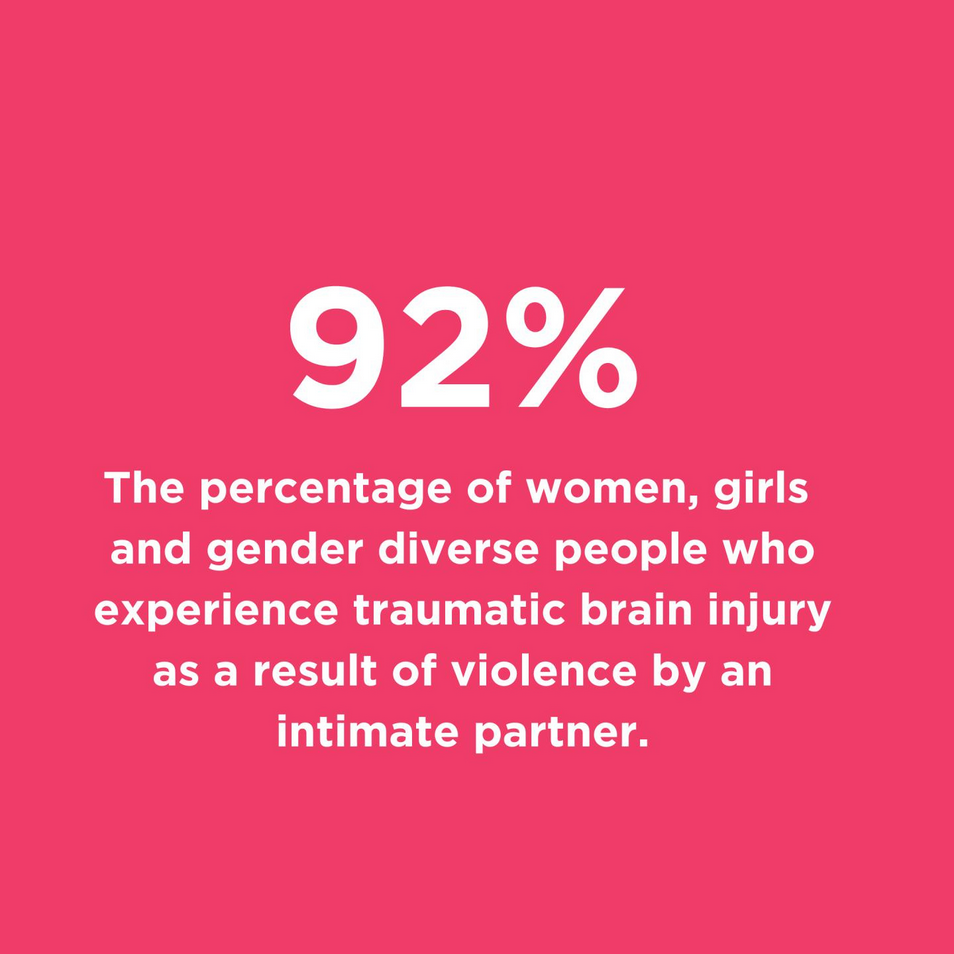
“… if I were a teenager and I read on a cigarette the words, ‘Poison in every puff!’ I’d think it was a catchy marketing jingle”
Christopher Gage on the Canadian government’s ludicrous next anti-smoking campaign, putting scary messages on every single cigarette in a pack:
I resisted smoking until age ten. Back then, the local boys and I would tramp over the local fields in search of dried ferns upon which to practise the deadly, seductive art of smoking.
By high school, we’d graduated onto the proper cancer sticks. Every morning, we’d pool together our lunch money, and skulk outside the off-license in wait for a nameless reprobate to slip into the shop and, for buyer’s rights of one cigarette, smuggle us ten Lambert and Butler.
Since then, save four years of misguided, anti-smoking zealotry, I’ve smoked with a sinful enthusiasm. Few share my woeful pursuit.
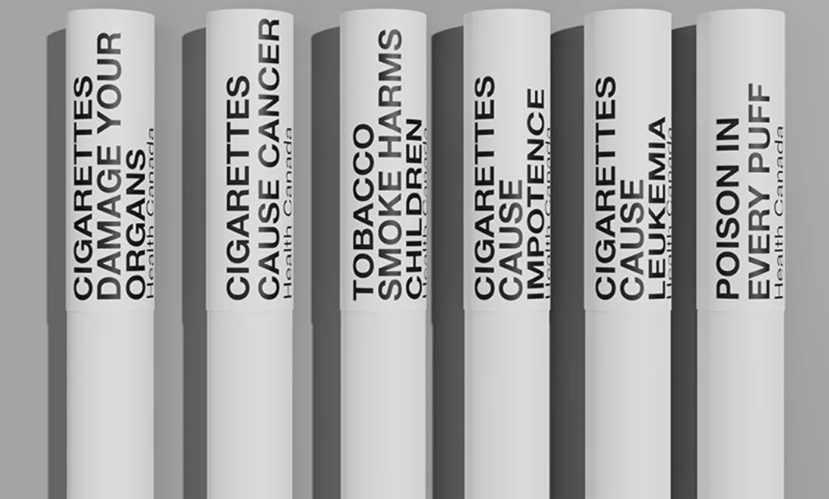
This week, Canada announced a “world-first”. They’ll soon begin printing health warnings directly onto cigarettes.
Neophiles with an addiction to “progress” laud this wearisome world-first. Giddy are the pink-lunged puritans.
Sorry to be facetious, but if I were a teenager and I read on a cigarette the words, “Poison in every puff!” I’d think it was a catchy marketing jingle. I’d happily sign up for a lifetime of chuffing away my health.
Perhaps they should market specifically to Millennials. “Who cares? You’ll never buy your own home,” is particularly resonant.
This is all part of a scheme to cut smoking rates to below five percent by 2035.
Reader, what happens then? Once the health fascists defeat us smokers, from whom shall they siphon their righteous fix?
The irony: as smoking declines, obesity balloons. Between 2003 and 2017, obesity deaths spiked by a third. One in four deaths is now related to one’s weight. Corpulence chalks more bodies than the cancer stick.
I’m yet to see a warning label plastered on the side of a family bucket of KFC. But give it time.
You can live as long as you like, as long as you don’t like living.
June 3, 2023
Kids, obesity, and the woke agenda
Elizabeth Nickson isn’t a fan of the “healthy at any size” mantra, especially when it comes to kids:
If I were a kid today I’d be out scouting the neighborhood for a home school or church to take me in as long and teach me latin and math and give me a reading list as long as I didn’t have to have someone’s jiggly bits pushed in my face or be shown diagrams of sexual positions, and asked ceaselessly about my food intake, my BMI measured (25 states mandate this) and no doubt entirely invasive questions about my family and father and weird uncles and so on. It would be like living in a perpetual inquisition, danger everywhere, with no privacy in any area of one’s life, with every sentence and expression evaluated on whether I am being a good member of the inclusive collective and will step aside so someone less privileged can have a chance.
But I am not nine and therefore spared all that, but God in heaven I feel sorry for them. Schools have stepped up to take the place of the at-home mother who had a relationship with her kids strong enough so that their emotional needs were being met and they didn’t have to stuff food down their throats for a relief from the ceaseless pressure to conform, and severe emotional loneliness from the absence of a family system.
Instead of your mind, the dominant focus seems to be your body, and at the most vulnerable time in your life. I know they think they are raising good little socialist citizens, who are acutely aware of the struggles of the less fortunate, but add in the bullying of Middle School and little wonder 49% of kids are overweight or obese, and the rest stuffing their feelings 24/7. Great for the food pushers, sucks for the medical system.
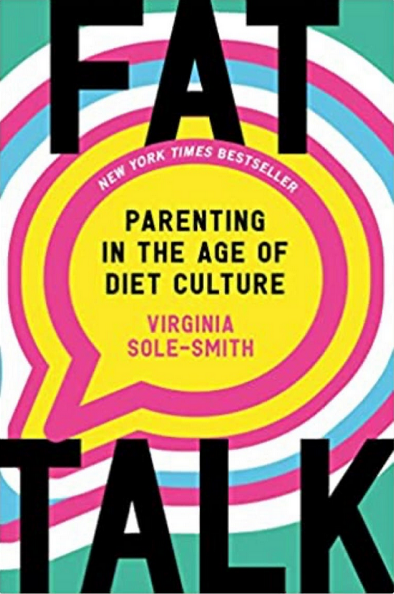
Virginia Sole-Smith who is the anointed high priestess of Fat Positivity Culture, has been pushing fat is AOK and in fact, possibly superior to thin-ness, which she never fails to excoriate, for the New York Times, Slate and Science and various other high-end publications for 20 years. Her latest book Fat Talk, which sits on the NYTimes bestseller list is about raising fat children, or not fat children, it’s kind of confusing. Ok, to be fat, but not obese, but you can’t put obese kids on a diet because that will make them fatter, and besides everyone is criticizing them and that has to stop.
Every leftie cliché is brought out of the barn and groomed within an inch of its life. White privilege, thin white privileged women, BIPOC exclusion, thin privilege in sport, entertainment, business, and so on, a system systematically prejudiced against fat people.
Basically, however, Sole-Smith is staking her ground and that is that “small fat”, which is how she defines herself, is normal and we should adjust our eyes to see pudgy tummies as “something to aim for” – as she states in her last chapter called “How to Have The Fat Talk”. We have to start “reclaiming (sic) fatness as a perfectly good way to have a body”.
June 2, 2023
A potential sign of resistance?
Severian on the odd phenomena of people who’ve begun to discover they didn’t need to accept the ever-more-woke products of the entertainment industry and, more recently, major retailers and brewers:

Bud Light’s latest brand ambassador, Dylan Mulvaney
The Third Law of SJW — “SJWs always double down” — is really going to get tested with these things [woke reboots/remakes of popular TV shows, movies, etc.], but we need to hope they keep the faith. We want them to double, triple, quadruple down. The material basis of Clown World is the assumption that people simply can’t live without iCrap. As I noted, lots of people did indeed seem to enjoy the Covid lockdowns, and they weren’t all aspiring Laptop Class leftoids, either. Lots of moms found out that they rather enjoyed spending time with their kids, rather than putting in an extra twenty hours a week down at the law firm. Lots of suburban dads found a new sense of accomplishment doing little projects around the house.
In other words, people found out that not only could they just “make do”, they actually kinda enjoyed “making do”. Lots of them went right back to their old ways the minute they could, of course, but not all of them … and now, #Woke Capital is basically doing the job for us. They’re daring us to not go to the movies, the same way Fox News is daring us to cut the cord entirely (they figure that hey, we get $x a month from the cable subscription fee regardless of whether anyone watches or not, so why not give in to our natural inclinations and become MSNBC Lite?).
They’re daring us to cut the cord, throw the Pocket Moloch in the nearest lake, and get what we need from local sources — including entertainment. And who knows what might happen if we start actually talking to our neighbors? If, as with the lockdowns, the guy who lives down the street ceases to be “the dude with the green Honda” and becomes Bob, a real person?
Challenge accepted, motherfuckers.
May 31, 2023
The War Against The Patriarchy, updated
Janice Fiamengo responds to a recent Joel Kotkin op-ed in the National Post discussing the “war of the sexes” and the long, long string of victories chalked up by the “weaker sex”:

The war between the sexes has ended, and rather than a co-operative future that could benefit all, it has turned out to be more like a lopsided win for the female side.
So begins Joel Kotkin’s National Post op/ed “Women have won the ‘war between the sexes’, but at what cost?” It is a welcome but disappointing analysis that starts with a show of defiance and ends in quiet desperation. Of course, it’s good to find anyone in a major newspaper willing to cast a less-than-adulatory eye on “The Future [that] is Female” or to write sympathetically about men, and Kotkin, a prolific author on cities and technocracy, proves his good faith on the strength of that opening statement alone. Aside from the wishful thinking of believing feminism to be winding down (was #MeToo a prelude to ceasefire?) or ever having envisioned a co-operative future (he should take a look at Kate Millett’s incendiary “Theory of Sexual Politics“), Kotkin is to be commended for daring to name as a war the decades of post-1960s activism, in which all the decisive victories have been claimed by feminists against men.
Kotkin, however, isn’t able to continue in the take-no-prisoners style he chose for his opening salvo. He is prevented, either by his own prudence, his lack of deep knowledge, or the paper’s editorial insistence, from targeting feminist ideology and policies in the rest of the article. In fact, the article doesn’t name a single piece of debilitating feminist legislation or even make one reference to the many expressions of anti-male contempt that are now deeply embedded in our public culture. The result is a curiously disembodied discussion in which serious social problems linked to male decline are pointed to without any attempt made to say exactly how they came about or how they might be reversed.
“The crux of the problem,” Kotkin tells us to start off, “lies in the fact that as women rise, men seem to be falling.” Here we see him start to draw back from the attack, as if afraid to say what he really thinks. His phrasing makes male decline sound like a natural phenomenon, an illustration of the primordial principle of Yin and Yang. Or perhaps it is simply that men, with their allegedly fragile egos and hegemonic masculinity, haven’t been able to compete against all that female ability, once dammed up by the patriarchy, now finally being let loose on the world (though always with calls for more to be done to assist women).
[…]
Kotkin refers to men “left behind” in the economy, but he keeps mum about the decades of affirmative action in higher education and hiring (detailed by Paul Nathanson and Katherine Young in Legalizing Misandry, pp. 81-124) as well as draconian sexual harassment legislation that have made work life unrewarding and often punitive for men.
He stresses the loss of sexual amity and of willingness to marry, but avoids discussing the nightmare of family law that has made marriage or even cohabitation perilous for many men.
The sins of omission do not end there. Perhaps working on the assumption — not without basis — that any discussion of social problems will need to focus on women at least as much as on men, Kotkin proceeds to backtrack on his earlier claim about women’s victory in the sex war, outlining instead a downbeat portrait of women’s troubles. Citing research by Jonathan Haidt, he tells us that adolescent girls have been severely affected by depression and self-harm, that many young women, without reliable men to support them, have had to fend for themselves in a difficult economic climate, and that single mothers, left with few options, are unable to offer stability to their children. It looks as if the decline of men mentioned early in the article has mainly hurt women and their children.
What Kotkin neglects to mention — surely deliberately — is that adolescent boys commit suicide at 4 X the rate of girls, resolving their depression decisively enough that Haidt seems not to have felt the need to account for them; that women are the ones who choose divorce in approximately 70% of cases; and that divorced fathers are too often denied a real role in their children’s lives while being burdened past endurance by exorbitant support payments. In other words, for every sad woman held up for our concern, there is a plurality of equally sad men rendered invisible in the conventional reporting. The staggering statistics on male suicide provide a stark illustration of Kotkin’s initial contention about the casualties of the sex war — yet he leaves these aside, choosing instead to voice the now-obligatory concern about the trans threat to women’s sports.
Perhaps most importantly, Kotkin suggests through his word choice that the data he cites are simply “trends”, occurrences that came about through economic and demographic factors independent of the sex war initially evoked. But they aren’t. They flow directly from a feminist vision in which the family — explicitly understood by feminist leaders to be a source of abuse and oppression — must be transformed and women liberated from reliance on the fathers of their children. Under this vision, a more just and equitable world will be ushered in by women’s superior leadership once they are freed from their unpaid labor in the home and the many sexist barriers that hold them back. That freedom must be aided, according to conventional wisdom, through abundant contraception, unfettered abortion, collectivized child care, no-fault divorce, programs and propaganda to urge men to do more housework, and non-stop encouragement to women — in movies, sit-coms, advertising, articles, and government equity programs — to give up on their men.
May 30, 2023
Australia’s … deranged … attitudes to vaping
Christopher Snowden describes — because it’s impossible to actually explain — the Australian government’s hysterial and illogical attitude toward vaping:

King James I would recognize and approve of Australia’s anti-vaping stance, probably. It would certainly be in the same territory as His Majesty’s pamphlet A Counterblaste to Tobacco where he let his strong feelings be known about “so vile and stinking a custom”.
For the past decade, Australian newspaper articles about e-cigarettes have seemed like communiqués from another dimension. The term “moral panic” is over-used, but how else can you describe a situation in which people are so terrified of safer nicotine delivery devices that doctors give their children cigarettes to stop them vaping?
The sale of nicotine e-cigarettes has always been banned in Australia. Prohibition is the default and, along with the highest cigarette taxes in the world, it has led to a huge black market in vapes (and, indeed, in tobacco). It appears that many teenagers are vaping there and what they are vaping is unregulated.
The Aussies could have done what New Zealand did and legalise e-cigarettes. Instead, they doubled down and banned the importation of nicotine vapes for personal use. That didn’t work so they are now banning the sale of all the remaining (i.e. non-nicotine) disposable vapes. Something tells me that won’t work either, but the government is so far down the rabbit hole it can only keep digging.
Their politicians have convinced themselves that “Big Tobacco” is getting a new generation of Aussies hooked on killer vapes with aggressive marketing. It’s a paranoid delusion. There is no e-cigarette marketing in Australia. The products flooding the black market are coming straight from China, not from “Big Tobacco”. And insofar as the products are dangerous it is because they are totally unregulated.
Down this road lies madness but if the Australians want to go down it, that’s up to them. I have no plans to go back there. As an Australian reader said to me recently, “Go and see a Kangaroo at a zoo. Don’t even waste a single dollar on ‘tourism’ of the doomed failed state of what’s become of Australia.”
But while the Aussies can go to Hell in whatever handcart they like, I don’t appreciate them pushing their nonsense on the rest of us, as the BBC’s recently appointed Sydney correspondent has done today with an article titled “Why Australia decided to quit its vaping habit“.
From the outset, it is clear that the author has spent too long Down Under.
Despite vapes already being illegal for many, under new legislation they will become available by prescription only.
The number of vaping teenagers in Australia has soared in recent years and authorities say it is the “number one behavioural issue” in schools across the country.
And they blame disposable vapes — which some experts say could be more addictive than heroin and cocaine — but for now are available in Australia in every convenience store, next to the chocolate bars at the counter.
Some experts? Do they have names? People say a lot of things. The job of a journalist is to find out which ones are telling the truth.
And if e-cigarettes are illegal, why are they available “in every convenience store”? This sounds like an enforcement issue that isn’t going to be solved by more prohibition.


