Quotulatiousness

September 3, 2012

Military-political jockeying in the East China Sea

Filed under: China, Japan, Military — Tags: , , , , — Nicholas @ 10:26

At sp!ked, James Woudhuysen has a long essay on the many tiny islands in the East China Sea (and South China Sea) that may feature in future shooting wars:

Outside East Asia, very few people know where the Senkaku islands are. But inside East Asia, the Senkaku prompt great bitterness between Japan, China and Taiwan. At stake is the national pride of each country, which believes that it alone owns them. At stake also are each country’s hopes that it might find oil or gas nearby, and its desire to sail round them unimpeded. But there is more. The Senkaku, and islands like them, signify how, among all the continents in the world, Asia’s past century has been the most enduringly explosive — and how its next could follow the same pattern.

Two hundred nautical miles (nm) west of the Japanese prefecture of Okinawa, 200 nm east of the province of Fujian in the People’s Republic of China, and just 120 nm north-east of Taiwan, there lies an archipelago of five uninhabited islands, covering just seven square kilometres and covered in jungle. Coming from Tokyo, a team of 25 city officials, surveyors and — inevitably — estate agents circled the islands just this weekend, hoping to reinforce Japan’s control over them. In the past, similar moves by both Japan and China have prompted fury, and not a little diplomatic concern elsewhere.

In mid-August, a group of Chinese sailed to the islands in order to uphold Beijing’s claim to them, only to meet with deportation at the hands of Japan. A little later, 150 Japanese nationalists came by in a flotilla and 10 of them swam ashore to raise the Japanese flag. Then, in the latest of a series of tit-for-tat episodes stretching back years, demonstrators in several Chinese cities insisted that Japan get out of the islands. All that’s missing now is that, on top of Tokyo’s rule over what it calls Senkaku and Beijing’s claim over what it calls Diaoyu, is a Taiwanese incursion over what they call the Diaoyutai.

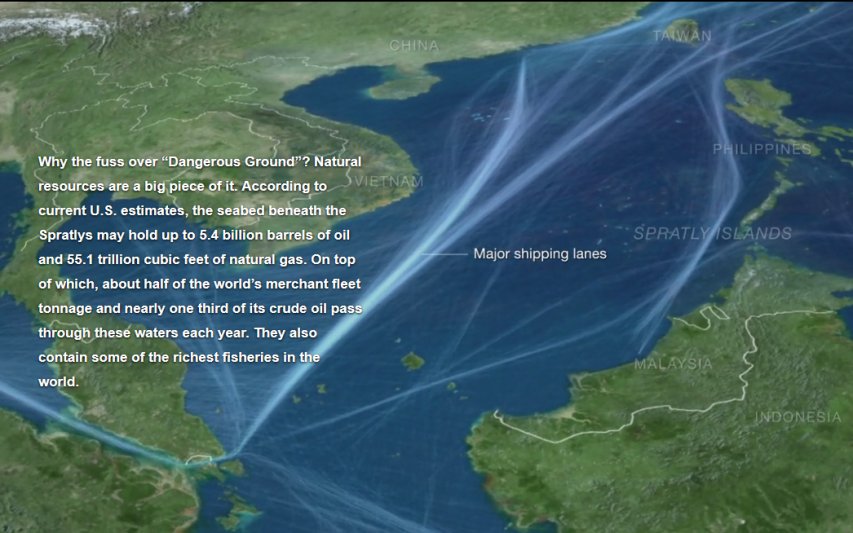
What’s going on? Could all this lead to some kind of fearsome war between Japan, China and Taiwan? And why are there disputes not only in the East China Sea, but also in the South China Sea? There, south-east of Hainan Island (China) and east of Vietnam, China controls the Paracel Islands and resists the complaints of Taiwan and Vietnam about them. There, too, all three parties occupy and are in contention over the myriad Spratly islands, which, lying west of the Philippines and north of Malaysia and Brunei, are also partly controlled and certainly contested by these three nations.

September 2, 2012

The (mostly) forgotten Soviet-Japanese conflict of 1939

Filed under: China, History, Japan, Military, WW2 — Tags: , — Nicholas @ 11:17

Japan’s conduct of the opening stages of World War 2 were literally schizophrenic: the Imperial Japanese Navy viewed their primary opponent as the United States, while the Imperial Japanese Army viewed their primary opponent as the Soviet Union. The army’s fears were based on a little-known but very significant campaign in an undeclared war fought between Japan and the Soviet Union in 1939:

In the summer of 1939, Soviet and Japanese armies clashed on the Manchurian-Mongolian frontier in a little-known conflict with far-reaching consequences. No mere border clash, this undeclared war raged from May to September 1939 embroiling over 100,000 troops and 1,000 tanks and aircraft. Some 30,000-50,000 men were killed and wounded. In the climactic battle, August 20-31, 1939, the Japanese were crushed. This coincided precisely with the conclusion of the German-Soviet Nonaggression Pact (August 23, 1939) — the green light for Hitler’s invasion of Poland and the outbreak of World War II one week later. These events are connected. This conflict also influenced key decisions in Tokyo and Moscow in 1941 that shaped the conduct and ultimately the outcome of the war.

This conflict (called the Nomonhan Incident by Japanese, the Battle of Khalkhin Gol by Russians) was provoked by a notorious Japanese officer named TSUJI Masanobu, ring-leader of a clique in Japan’s Kwantung Army, which occupied Manchuria. On the other side, Georgy Zhukov, who would later lead the Red Army to victory over Nazi Germany, commanded the Soviet forces. In the first large clash in May 1939, a Japanese punitive attack failed and Soviet/Mongolian forces wiped out a 200-man Japanese unit. Infuriated, Kwantung Army escalated the fighting through June and July, launching a large bombing attack deep inside Mongolian territory and attacking across the border in division strength. As successive Japanese assaults were repulsed by the Red Army, the Japanese continually upped the ante, believing they could force Moscow to back down. Stalin, however, outmaneuvered the Japanese and stunned them with a simultaneous military and diplomatic counter strike.

[. . .]

But what if there had been no Nomonhan Incident, or if it had ended differently, say in a stalemate or a Japanese victory? In that case, the Japanese decision to move south might have turned out very differently. A Japan less impressed with Soviet military capability and faced with choosing between war against the Anglo-American powers or joining Germany in finishing off the U.S.S.R., might have viewed the northern course as the best choice.

If Japan had decided to attack northward in 1941, that could well have changed the course of the war, and of history. Many believe that the Soviet Union could not have survived a two-front war in 1941-1942. The Soviet margin of victory in the Battle of Moscow, and at Stalingrad a year later, was excruciatingly thin. A determined Japanese foe in the east might have tipped the balance in Hitler’s favor. Furthermore, if Japan had moved against the Soviet Union in 1941, it could not also have attacked the United States that year. The United States might not have entered the war until a year later, under circumstances in Europe far more unfavorable than the actual grim reality in the winter of 1941. How then would Nazi domination of Europe been broken?

September 1, 2012

Celebrities as honorary colonels

Filed under: Cancon, Media, Military — Nicholas @ 00:01

I had not heard about this little innovation in the long-established practice of appointing honorary colonels, lieutenant colonels, and captains:

Typically, honorary lieutenant colonels or colonels for the Army, RCAF honorary colonels, and honorary captains for the Navy, were ceremonial titles primarily handed out to retired Canadian military officers to foster “esprit de corps” within the unit, according to Royal Canadian Navy Captain Michel Charron, director of senior appointments for the Forces. But over the past decade, the selection criteria for the honorary appointments’ “gene pool” was expanded to include non-retired military folks from the worlds of academia, business, politics (excluding Members of Parliament), and arts and entertainment. “One of our objectives is to increase the connection to the communities in which the units are located,” explained Capt. Charron. “By their presence and name, these distinguished Canadians provide a public profile — and a public face — for the unit.” An honorary officer nomination begins at the unit or squadron level, and must be approved by regional command and national headquarters. The recommendation is sent to the Defence Minister, who officially makes the appointment. “The whole idea we have is that if we can make people a little more aware of what the Air Force is involved in, maybe they’ll take more interest overall in our operations,” said retired Col. Dave Peart, who spent 39 years with the RCAF and now manages the program.

[. . .]

Appointed for a renewable three-year term, honorary officers don’t get paid, but their expenses — such as travel to a military base — are covered by the Forces. They’re expected to help their unit organize and participate in parades, change-of-command ceremonies, mess dinners and charitable activities, such as through the CF’s Military Family Resource Centres’ programs. In June, marketing entrepreneur Arlene Dickinson, of CBC Television’s Dragons’ Den fame, became an honorary captain for the Royal Canadian Navy. A month earlier, Man in Motion Rick Hansen was made an honorary colonel of the Forces’ Joint Personnel Support Unit, which provides services to serving and retired ill and injured military personnel. Comedian Rick Mercer, rock star Tom Cochrane, country music singer George Canyon, Conservative Senator Pamela Wallin, and CBC Hockey Night in Canada sportscaster Ron MacLean have also served as honorary colonels with the RCAF.

August 30, 2012

General A.G.L. McNaughton and the First Canadian Army

Filed under: Books, Cancon, History, Military, WW2 — Tags: , , , — Nicholas @ 12:21

Randall Wakelam reviews a new biography of Lieutenant-General A.G.L. McNaughton, the first commander of Canada’s major field formation in World War 2:

Lieutenant-General A.G.L. ‘Andy’ McNaughton was one of the key staff gunners in the Canadian Corps in the Great War and went on to be Chief of the General Staff in Ottawa from 1930 to 1935. From 1935 to 1939 he established and led the National Research Council. He was recalled to active service in 1939 and took 1st Canadian Division overseas. Once there he would spend four years building the Canadian field force first to corps and then army level. Relieved of army command in late 1943, he was for a short while Minister of National Defence and in the postwar years continued to serve Canada as the Canadian co-chair of the Canada-US Permanent Joint Board on Defence. Not a bad record of public service, but he is most remembered for his apparent failures as general officer commanding-in-chief (GOC-in-C), First Canadian Army.

[. . .]

Previous portraits show McNaughton to be a general who argued vehemently against breaking up his force for errant missions and, who at the same time, was a failure in field exercises. He has also been seen as an inflexible man who could not get on with his military or political seniors. Historians of no less repute than C.P. Stacey, Jack English and Jack Granatstein have created that portrait for Andy.

[. . .]

Rickard has gone well beyond what we have to now generally accepted as the tragic character that was Andy McNaughton. He has drawn from an impressive range or primary sources in building a case for, if not accepting McNaughton as a viable, but unlucky commander, then one whose flaws are now better understood in comparison of those of his peers. While not all will agree with Rickard’s assessment of McNaughton it could be argued that such disagreement is born in large part because of the complex nature of high command and the management of armies and national forces in coalition warfare – what might be termed Clausewitzian fog and friction both on the battlefield and in the meeting rooms, and with more than a pinch of ambiguity added when it comes to strategic-level discussions and decisions. Such has been the case recently for Canadian politicians and commanders in Afghanistan and the Mediterranean; both they and students of Canadian history will enjoy John Rickard’s fresh and refreshing study of Andy.

August 29, 2012

South Korea’s slow move to a smaller, more professional military

Filed under: Asia, History, Military — Tags: , , , , — Nicholas @ 09:33

With a belligerent and unpredictable neighbour directly to the north, South Korea still maintains a large conscript military force. The government hopes to transition over time to a significantly smaller volunteer structure:

Six years ago the plan was to reduce troop strength 26 percent (from 680,000 to 500,000) by 2020. Then politics and North Korean aggression kept halting the reductions. Meanwhile it became clear that the birth rate was going lower, not increasing and within a decade there would be a lot fewer young men to conscript. At the same time the booming economy was producing more money, and technology, for more effective weapons and equipment that can replace soldiers. Another key element was that conscription was increasingly unpopular. The current crop of conscripts had parents who were born after the Korean war (1950-53), and only the grandparents (a rapidly shrinking group) remember why the draft is still necessary. Most of todays’ voters want to get rid of the draft. But when it comes time to actually make cuts, North Korea manages to change the subject.

Then came 2010, a year in which North Korea sank a South Korean corvette (which they denied, but the torpedo fragments recovered were definitely North Korean) and shelled a South Korea island (the northerners bragged about that). Since then, there has been more opposition to reducing military strength. But conscription is still unpopular and there are simply not enough young men to maintain current strength.

Meanwhile politicians are responding to public opinion and shrinking conscription service. It now varies from 21-24 months depending on the service. More conscripts can now serve in the police or social welfare organizations (for 26-36 months). Eventually, South Korea would like to have an all-volunteer force. But that won’t be affordable until the armed forces are down to only a few hundred thousand.

The Korean peninsula is one of the last remaining outposts of the Cold War. The sinking of the ROKS Cheonan is the most obvious sign that the two sides are still not at peace (the Korean War didn’t really end … it’s merely resting). Occasional shellings and attempted infiltration by North Korean special forces are frequent enough that they don’t get much international coverage. North Korea frequently accuses the South of similar kinds of provocation.

August 28, 2012

Rehabilitating Florence Nightingale’s reputation

Filed under: Britain, Health, History, Military, Russia — Tags: , , , , — Nicholas @ 08:31

History Today has a defence of the much-maligned Florence Nightingale:

Jamaican-born Mary Seacole (1805-81), voted top of the list of the 2004 ‘100 Great Black Britons’ poll, is now slated to replace Florence Nightingale (1820-1910) as the true ‘heroine’ of the Crimean War. She is to be honoured as no less than the ‘Pioneer Nurse’ with a massive statue to be erected at St Thomas’ Hospital in London. This in spite of the strong links between Nightingale and the hospital, her base for over 40 years. It was there she established the first secular school for nurses in 1860 with funds raised in her name for her work in the Crimean War during the conflict of 1854-56. The Nightingale School operated for over a century from the hospital, whose redesign in the 1860s Nightingale also influenced.

[. . .]

The campaign promoting Seacole over Nightingale builds on 30 years of books, articles and films denigrating the latter. While she always had detractors, the serious assault on Nightingale’s reputation can be dated to 1982, with the publication of the Australian historian F.B. Smith’s Florence Nightingale: Reputation and Power (Croom Helm, 1982). The next major hit came in 1998 with Florence Nightingale: Avenging Angel (Constable, 1998) by a retired management consultant Hugh Small, which argues that Nightingale was actually responsible for the high death rates of the Crimean War and had a nervous breakdown as a result when she supposedly recognised this. Neither claim is supported by any serious documentation. Social media goes even further: see Facebook ‘Florence Nightingale was a Murdering Bitch’, later renamed ‘Florence Nightingale: The World’s Worst Nurse’, where she is described as a ‘deluded power hungry bitch’, who ‘looks like an uptight bitch’, so that ‘the day she died’ was ‘the best thing that ever happened to the field of nursing’.

[. . .]

The French were the instigators of the Crimean War, sent more troops and were better prepared than the British. Their death rates were lower in the first year. But the British government learned from the commissions it sent out and made enormous changes. British death rates fell dramatically, from 23 per cent in the first winter to 2.5 per cent in the second — no greater than deaths among soldiers in peacetime barracks in London, as Nightingale proudly showed in a chart. In contrast, the French (lower) 11 per cent death rate in the first winter, rose to 20 per cent in the second winter. Since the French were late in publishing their statistics, neither Nightingale nor the royal commission could use them for comparison. However French doctors themselves credited the British reforms for their superior performance. Once they were properly cleansed and functioning Nightingale was proud of the Crimean hospitals. In her own charts she separated the two periods, before and after the sanitary and supply commissions, to emphasise the crucial role they played in reducing mortality.

Her analysis of what went wrong was widely accepted and led to major changes to health care in the British Army. The ‘Nightingale Fund’ raised in her honour for that work paid for the training school at St Thomas’, which led to raising nursing to the level of a profession throughout much of the world. Her experience of the war, and her reputation and research as a result of it, grounded all the social and public health work she did for the rest of her life. Her vision for health reform included bold statements, such as the belief that the poor should receive as good quality hospital care as private patients and warnings as to the dangers of hospital acquired infections. Nightingale, in short, is no mere historical figure. Her lamp should not be retired but shone brightly onto the hospital and health care problems of today.

A possible solution to Pakistan’s Taliban problem

Filed under: Asia, Military, USA — Tags: , , , , — Nicholas @ 08:11

Strategy Page on recent developments in Pakistan over domestic terror groups and the Afghani Taliban:

There are currently 150,000 troops in the Pakistani tribal territories, and nearly 40,000 surrounding North Waziristan (an area of 4,700 square kilometers, with 365,000 people). North Waziristan has been surrounded since late 2009, but Pakistani generals have refused to go in and take down this terrorist refuge. Politicians have been under growing pressure from the West, especially the United States to do something about the continued terror attacks by what the Pakistanis call “bad Taliban”. These are mostly Pakistani Taliban who wants to establish a religious dictatorship in Pakistan. The Afghan Taliban, who wants to establish a similar government in Afghanistan are considered “good Taliban” (along with the minority of Pakistani Taliban who don’t want to overthrow the government.)

In the last two years, the Pakistani Taliban have also caused hundreds of casualties among pro-government tribesmen throughout the tribal territories, and it’s no secret that the army hires tribesmen and puts them in dangerous situations to minimize army casualties. The army cannot afford to lose the support of the loyal tribes up there. All this has put pressure on the army to eliminate the refuge the killers can flee to in North Waziristan. Several times, because of the demands of Pakistani and American politicians, the Pakistani generals have said they will consider advancing into North Waziristan. But it hasn’t happened yet. The most likely outcome to all this is a very special army operation in North Waziristan, one that will avoid doing too much damage to their terrorist friends, and just go after a few towns known to be terrorist (who attack Pakistan) hangouts. In other words, the army will put on a show, and hope that the intended audience (the United States) approves. Bad reviews will be bad news indeed. Then there’s the fact that there will be a lot of advance publicity for this operation, including details (in the Pakistani media) of which Pakistani brigade will go where, giving the terrorist groups plenty of time to get out of the way. This has happened before, and could happen again.

The bottom line is that the Pakistani military is not likely to attack its longtime and loyal terrorist allies (especially Haqqani Network) in North Waziristan, at least not as long as the elected politicians have no control over selecting the senior military leaders. The Pakistani military is a self-selected aristocracy that extorts a large chunk of the national wealth to sustain itself. More Pakistanis are looking at the military this way, especially in light how well serving and retired generals (and lower ranking officers) live. But the military has the firepower and few civilians are eager to take the troops on.

The Pakistani generals deny that there is any agreement with the Americans to shut down terrorist operations in North Waziristan in return for NATO action against Pakistani Taliban hiding out in Afghanistan. Nevertheless, in the last week, American air power appears to have done just that, killing several senior Pakistani Taliban leaders in their Afghan hideouts. Now the Americans are waiting for their Pakistani counterparts to do something in North Waziristan. This is one reason civilians in North Waziristan are fleeing their homes. They know how such deals work; you do a big favor for someone and there has to be payback. It’s the code of honor and must be observed. But maybe not. Officially, Pakistan opposes the American UAV patrols over North Waziristan and the hundreds of missile attacks on terrorists below. Pakistani politicians openly decry these attacks as violations of Pakistani sovereignty, while privately supporting these operations that kill Islamic terrorists the Pakistani security forces will not or cannot get to. It’s all a convenient hypocrisy.

What can Caesar’s Gallic War commentary tell us about Afghanistan?

Filed under: History, Military, USA — Tags: , , , , , , , — Nicholas @ 00:10

According to this reading, lots and lots:

I finished Caesar’s Commentaries on the Gallic War this weekend […] and a few things struck me:

a. The successful Roman counterinsurgency campaign in Gaul took eight years.

b. The enemies against which Rome fought were not a unitary actor, and neither were Rome’s allies.

c. Rome’s allies one summer were often Rome’s enemies by winter. And visa versa.

But the two things that made the biggest impression on me were the following:

d. Caesar was the commander for eight full years, and he enjoyed similar continuity among his subordinate commanders.

e. Caesar very rarely sent green units into the offensive. By the fourth and fifth year of the campaign, he is still making those legions which were the last to be raised in Italy responsible for guarding the freaking baggage. He relies over and over again on those legions — most especially the Tenth — that have proven themselves in combat in Gaul.

With Caesar’s commentaries in mind, I read Doug Ollivant’s lament about Gen. Joe Dunford. Gen. Dunford will be the fifteenth commander of NATO-ISAF in eleven years of combat in Afghanistan and the ninth U.S. commander in Afghanistan. Each of his subordinate commanders have rotated on an annual basis. Gen. Dunford — who is, by all accounts, an excellent officer and highly respected by his peers — has never served in Afghanistan.

The cultures, politics, tribes and peoples of Afghanistan are at least as complex as those of ancient Gaul, yet we Americans are so arrogant to think that we can send officers there with no experience and, owing to our superior knowledge of combat operations, watch them succeed. We will then send units which have never deployed to Afghanistan to partner with Afghan forces and wonder why they do not get along.

H/T to Tim Harford for the link.

August 25, 2012

From wargaming to war-making

Filed under: Gaming, History, Middle East, Military — Tags: , , — Nicholas @ 00:05

Wargames have been used to plan real wars for more than a century, but in at least one instance, a commercial wargame was a significant planning tool for a real war:

By the end of the Cold War, American military planners had contingencies and plans for just about every conceivable crisis – Latin American counterinsurgencies, confrontations on the Korean Peninsula, a full out Warsaw Pact onslaught against NATO. But on August 2, 1990, when Iraqi tanks surprised the world and rolled into the tiny Persian Gulf nation of Kuwait, decision makers in the Pentagon had virtually no plans on the shelf for the defeating the world’s fourth largest army. Out of desperation, someone in the American military nerve-centre reached for a copy of a hobby store military board game entitled Gulf Strike. Designed in the late 1980s by a subsidiary of the commercial war game company Avalon Hill, Gulf Strike allowed civilian hobbyists to battle through a series of hypothetical wars involving the U.S., Soviet Union, Iraq and Iran on a hexagonal-grid map of the Gulf region. According to a 1994 Military History article on war games by Peter Perla, before lunch on the day of the invasion, the Pentagon had the game’s designer, Mark Herman, on the phone. By mid afternoon, he was on the military’s payroll. And by day’s end, Herman and a group of senior officers had already successfully played out a shorthand version of what in five months would go down in history as Operation Desert Storm.

Of course, the results of wargames can’t predict with great accuracy: the level of abstraction is too high and the “fog of war” quickly introduces far more uncertainty than any simulation can dispell in advance. However, disregarding the data from wargaming a battle or campaign has resulted in disaster at least once: the Japanese navy wargamed the attack on Midway Island in 1942. the wargame showed that the Japanese would lose at least one aircraft carrier from the attacking forces. The admirals, suffering as a group from what was known as “victory disease”, disregarded the game result and ordered the sunken ship “refloated” and the exercise continued.

In the real world, of course, the IJN lost not one but four aircraft carriers and the majority of their combat-trained pilots and crew. It was the turning point of the war in the Pacific.

August 24, 2012

Ukraine rejoins the submarine team

Filed under: Europe, Military — Tags: , , , — Nicholas @ 09:18

The only submarine in Ukraine’s navy is seaworthy again:

The Ukrainian Navy got its only submarine (the Zaporozhye) back into service. The 40 year old Foxtrot class boat has been out of action for 18 years and was recently refurbished. Zaporozhye is the only sub in the Ukrainian Navy, which mainly consists of small, Cold War era frigates (one) and corvettes (seven). There are also two amphibious ships and six minesweepers. The Foxtrot class diesel-electric subs were designed in the late 1950s and 58 were built until production ended in 1983. These are 1,900 ton boats with ten torpedo tubes and a crew of 78. Russia retired all of its Foxtrots by 2000, but they were all obsolete by the early 1980s. The Zaporozhye is the last Foxtrot still in service.

The Black Sea has not been kind to submarines. Three years ago the Russian Black Sea Fleet suffered a major blow when its only operational submarine, a 19 year old Kilo class boat, broke down at sea and limped back to port on partial power. The only other sub in the fleet, a 32 year old Tango class boat, was undergoing repairs (and still is, but will soon be scrapped.) During the Cold War, the Black Sea Fleet had thirty or more submarines.


Image from Navy Recognition.

Wikipedia says:

Zaporizhzhia (U-01) (Ukrainian: Запоріжжя) is a project 641 (“Foxtrot” class) submarine, the only submarine of the Ukrainian Navy at the moment. She formerly carried the Soviet Navy pennant number B435.

Zaporizhzhia is run by a naval crew of 78, commanded by 1st Rank Capt. Oleh Orlov.

August 22, 2012

QotD: Orwell on the Dieppe raid

Filed under: Cancon, France, Germany, History, Military, Quotations, WW2 — Tags: , , — Nicholas @ 09:12

D[avid] A[stor] very damping about the Dieppe raid, which he saw at more or less close quarters and which he says was an almost complete failure except for the very heavy destruction of German fighter planes, which was not part of the plan. He says that the affair was definitely misrepresented in the press and is now being misrepresented in the reports to the P.M., and that the main facts were: – Something over 5000 men were engaged, of whom at least 2000 were killed or prisoners. It was not intended to stay longer on shore than was actually done (ie. till about 4pm), but the idea was to destroy all the defences of Dieppe, and the attempt to do this was an utter failure. In fact only comparatively trivial damage was done, a few batteries of guns knocked out etc., and only one of the three main parties really made its objective. The others did not get far and many were massacred on the beach by artillery fire. The defences were formidable and would have been difficult to deal with even if there had been artillery support, as the guns were sunk in the face of the cliffs or under enormous concrete coverings. More tank-landing craft were sunk then got ashore. About 20 or 30 tanks were landed but none got off again. The newspaper photos which showed tanks apparently being brought back to England were intentionally misleading. The general impression was that the Germans knew of the raid beforehand. Almost as soon as it was begun they had a man broadcasting a spurious “eye-witness” account from somewhere further up the coast, and another man broadcasting false orders in English. On the other hand the Germans were evidently surprised by the strength of the air support. Whereas normally they have kept their fighters on the ground so as to conserve their strength, they sent them into the air as soon as they heard that tanks were landing, and lost a number of planes variously estimated, but considered by some RAF officers to be as high as 270. Owing to the British strength in the air the destroyers were able to lie outside Dieppe all day. One was sunk, by this was by a shore battery. When a request came to attack some objective on shore, the destroyers formed in line and raced inshore firing their guns while the fighter planes supported them overhead.

George Orwell, diary entry for August 22, 1942.

August 21, 2012

Royal Navy faces shortage of trained submariners

Filed under: Britain, Military, Technology, Weapons — Tags: , , , — Nicholas @ 08:56

Thomas Harding in the Telegraph:

Internal documents warn that a lack of recruits for the Submarine Service may leave attack submarines and boats carrying the Trident nuclear missile stranded in port.

A separate threat comes from a predicted 15 per cent shortfall in engineers by 2015.

One in seven posts for weapons officers at the rank of lieutenant will also be vacant, raising operational questions over the boats equipped with nuclear and cruise missiles.

Many submariners are being poached by the civilian nuclear sector and those who remain are being forced to go to sea for longer and more frequently.

Adml Lord West, the former First Sea Lord, said the situation was “very worrying” and he hoped the Navy had mechanisms in place to make up for the shortfall.

[. . .]

The Navy has a fleet of six attack submarines and four Vanguard boats that carry the Trident nuclear missile, but the personnel issues could mean they cannot be deployed.

The report found that the recruiting and retention of submariners was also threatening operations. “Inability to recruit, retain and develop sufficient nuclear and submarine design qualified personnel will result in an inability to support the Defence Nuclear Programme,” the document said.

August 20, 2012

Royal Navy announces design of new “Type 26 Global Combat Ship”

Filed under: Britain, Military, Technology — Tags: , , — Nicholas @ 08:46

Britain’s Royal Navy revealed the design of the Type 26 today:

The announcement on the Type 26 Global Combat Ship has been described by officials as a “significant milestone” in a programme which will support “thousands of UK shipbuilding jobs”.

Basic specification images show sleek stealth features, familiar to modern warships, making them harder to detect.

The ship will be 148 metres long with a displacement of 5,400 tonnes.

The MoD has been working with BAE Systems since 2010 to determine the basic design for the ship. Detailed specifications of the vessel will now be examined.

Vertical missile silos for a range of weapons, such as cruise missiles, will be housed on board along with a medium calibre gun.

The hangar on board will house a Merlin or Wildcat helicopter and there will be extra space for unmanned drones, underwater vehicles or other specialist equipment.

[. . .]

The current plan is to build 13 of the ships, which are due to start coming into service after 2020.

The Type 26 will replace the 13 Type 23 frigates but the MoD is not giving a precise commitment on numbers until they know the unit cost.

The First Sea Lord, Admiral Sir Mark Stanhope, says the ship will be used “across the full spectrum of warfare”.

He added: “The T26 GCS will be a multi-mission warship designed for joint and multinational operations… including complex combat operations, maritime security operations such as counter piracy, as well as humanitarian and disaster relief work around the world.”

The US Navy’s still-experimental Littoral Combat Ship

Filed under: Military, Technology, USA — Tags: , , — Nicholas @ 08:29

New ship designs are highly complex and often take years to debug. The US Navy’s Littoral Combat Ship (LCS) program surprised most observers by settling on two different designs and splitting the intended order quantity between the two design firms. One of each design is in service now, the more traditional USS Freedom (LCS-1), and the trimaran-hull USS Independence (LCS-2). Each has had its own set of teething problems:

The LCS has long been a good source of bad news and potentially explosive revelations. In the last year the LCS design has been found to have structural and other flaws. The first LCS, the monohull USS Freedom, has suffered four major problems since it entered service four years ago. The latest one is a leak in a propeller shaft seal, which caused some minor flooding. Despite this Freedom was able to get back to port under its own power. Last year cracks in the hull as long as 17 cm (6.5 inches) were discovered, and the water-jet propulsion system broke down as well. Two years ago one of the gas turbine engines broke down.

The most serious problem is in the USS Independence, a radical trimaran design. It seems that a “dissimilar metals” situation arose when salt water, the aluminum hull, and some other metals got into close proximity with each other and extensive corrosion resulted. Aluminum hulls tend to corrode more than steel, but the problem became so bad with the USS Independence that, 18 months after entering service, it was sent into dry dock for corrosion repairs and design changes to eliminate the problem.

Cracks, corrosion, and equipment breakdowns are common in new warship designs especially designs that are radically different (like the broad trimaran shape of the USS Independence). Usually, these problems can be fixed but there’s always the risk that the new design will be seriously flawed, requiring extensive rework and a halt in building more ships of that class. So far, the U.S. Navy has not wavered in the face of potential design and construction flaws.

This is all part of the expected years of uncertainty and experimentation as this radical new combat ship design seeks to find out what works, to what degree, and what doesn’t. There is some nervousness about all this. The U.S. Navy has not introduced a radical new design for nearly a century. The last such new design was the aircraft carrier, which required two decades of experimentation and a major war to nail down what worked. Even the nuclear submarines of the late 1950s and early 60s were evolutionary compared to what the LCS is trying to do.


USS Freedom at sea. Click for full-sized image at Wikipedia


USS Independence at pier side. Click for full-sized image at Wikipedia.

August 18, 2012

Warships are not like books or DVDs

Filed under: Britain, Bureaucracy, Economics, Military — Tags: , — Nicholas @ 00:23

“Sir Humphrey” explains why adding another two Type 45 destroyers to the Royal Navy’s current construction plans won’t fly, even though it would be popular with many key constituencies: “it would win votes, it would keep supporters of the Navy happy, and the RN would be delighted”.

From the outset, let’s be extremely clear. This article is not saying that the UK could not build two more Type 45s – if the will is there, and the budget exists to do so, then anything is possible. As will be seen though, the challenge is trying to do so in a manner which makes rational sense.

[. . .]

In terms of support and manning, providing two additional Type 45s would raise a significant cost and manpower burden on the fleet. The RN has scaled itself to provide spares for six hulls. An additional two hulls means increasing spares by 33% above the existing fleet, which in turn would mean extra funding for parts, supplies, maintenance and munitions. Even basic issues like Sea Viper war shots, helicopter fleets, ammunition for 4.5” guns and the like would need to be increased. The funding for this is not in place at present. It’s not that the RN can’t find this funding, but that it will cost more to fund it than previously expected — this money has to be found from commensurate savings elsewhere.

[. . .]

The final point is perhaps the best reason why it would be near impossible to achieve this. There is simply no room in the construction yards to build two additional Type 45s. As was seen in the award of the MARS tanker project to Korea, the current UK shipbuilding industry is operating at peak capacity – the CVF programme is in pure tonnage terms providing the equivalent of 20 Type 45 destroyers worth of construction. The yards are full with CVF work now, and in a few years’ time will be ramping up to construct Type 26. To inject two additional Type 45s now would throw that programme into disarray as the yards struggle to work out how they can actually build the vessels. It’s not just a case of laying some steel down and a new ship popping up. T45s are built across multiple yards in parts, so it would need all the component yards to work together to fit it into their programme. They’d also need to work out how to take on the extra staff, who would then need to be made redundant later on as the workflow dropped off again. One of the key successes of the terms of business agreement is that the shipyards can plan for an agreed level of work. Adding ships in to this actually throws the plan into confusion as the yards have to resource to a higher level than before, incurring additional costs, and probably delaying both CVF and T26.

It is not impossible to build extra ships. That much is clear — if the willpower is there, then it can be done. But the days of shipyards existing in a short term environment, dependent on the next RN order, whatever it may be, are all but gone. The issue is the preservation of key skills, such as ship design and also high end manufacture of critical components, and doing so in a manner which makes the industry sustainable for the long term, and not the ‘boom and bust’ approach of the last century.

Regular readers of the blog may remember that the Type 45 destroyer design in particular came in for a hammering from other sources.

« Newer PostsOlder Posts »

Powered by WordPress