Quotulatiousness

August 17, 2012

The plight of Russian submariners

Filed under: History, Military, Russia — Tags: , , , , — Nicholas @ 08:36

An update from Strategy Page on how far the Russian nuclear submarine threat has diminished from its peak during the cold war:

Three years ago two Akulas were detected (by the U.S. Navy) off the east coast of the United States, in international waters. Russia admitted two of its Akula class boats were out there. This was the first time Russian subs had been off the North American coast in over a decade. This spotlights something the Russian admirals would rather not dwell on. The Russian Navy has not only shrunk since the end of the Cold War in 1991, but it has also become much less active. In the previous three years, only ten of their nuclear subs had gone to sea, on a combat patrol, each year. Most of the boats going to sea were SSNs, the minority were SSBNs (ballistic missile boats). There were often short range training missions, which often lasted a few days, or just a few hours.

The true measure of a fleet’s combat ability is the number of “combat patrols” or “deployments” in makes in a year and how long they are. In the U.S. Navy, most of these last from 2-6 months. Currently U.S. nuclear subs have carry out ten times as many patrols as their Russian counterparts. Russia is trying to catch up, but has a long way to go.

Russia has only 14 SSNs (nuclear attack subs) in service and eight of them are 7,000 ton, Akulas. These began building in the late 1980s and are roughly comparable to the American Los Angeles class. All of the earlier Russian SSNs are trash, and most have been decommissioned. There are also eight SSGN (nuclear subs carrying cruise missiles) and 20 diesel electric boats. There is a new class of SSGNs under construction, but progress has been slow.

[. . .]

The peak year for Russian nuclear sub patrols was 1984, when there were 230. That number rapidly declined until, in 2002, there were none. Since the late 1990s, the Russian navy has been hustling to try and reverse this decline. But the navy budget, despite recent increases, is not large enough to build new ships to replace the current Cold War era fleet that is falling apart. The rapid decline of Russia’s nuclear submarine fleet needed international help to safely decommission over a hundred obsolete, worn out, defective or broken down nuclear subs. This effort has been going on for over a decade, and was driven by the Russian threat to just sink their older nuclear subs in the Arctic Ocean. That might work with conventional ships, but there was an international uproar over what would happen with all those nuclear reactors sitting on the ocean floor forever. Russia generously offered to accept donations to fund a dismantling program that included safe disposal of the nuclear reactors.

August 15, 2012

India’s next aircraft carrier delayed (again)

Filed under: India, Military, Russia — Tags: , — Nicholas @ 09:02

The Indian navy will have to carry on with an ancient aircraft carrier for a few more years because the INS Vikrant is being further delayed:

India announced that its first locally designed and built aircraft carrier, INS Vikrant will be at least three years late. This was not unexpected. The latest delay was caused, in large part, because the Indian firm hired to build a complex portion of the engine, the gearbox, proved incapable of the task and a foreign company had to be brought in.

There have been many other problems. While construction began three years ago, it was soon delayed because Russia was late in supplying the high-grade steel needed for the hull. Last December 30, the Vikrant was floated out its dry dock. Vikrant was not supposed to leave dry dock yet but the dock was needed for another project. Construction will go on, with pipes, conduits, and other fittings installed. Later this year, Vikrant will return to another dry dock to have its engines and other major equipment installed, although some of that equipment will be late because of problems with suppliers.

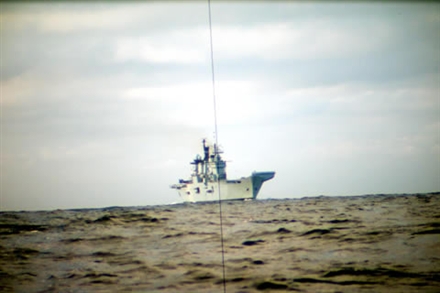
While waiting for the Vikrant to be ready, India will have to extend the service life of the already aged INS Viraat, which began life as HMS Hermes in the Royal Navy before being transferred to Indian service in 1987. She is the oldest aircraft carrier in active service in any navy.

Image from Wikipedia.

August 11, 2012

US Army’s first openly gay general

Filed under: Military, USA — Tags: , — Nicholas @ 00:08

James Joyner at the Below the Beltway blog:

Tammy Smith has been promoted to brigadier general, thus becoming the first American general officer who also happens to be openly gay.

Stars and Stripes (“Smith becomes first gay general officer to serve openly“):

    Army reserve officer Tammy Smith calls her recent promotion to brigadier general exciting and humbling, saying it gives her a chance to be a leader in advancing Army values and excellence.

    What she glosses over is that along with the promotion she is also publicly acknowledging her sexuality for the first time, making her the first general officer to come out as gay while still serving. It comes less than a year after the end of the controversial “don’t ask, don’t tell” law.

[. . .]

Tom Ricks observes, “It is an interesting moment, in part because it is so uncontroversial.”

While I think Ricks is right, a couple of caveats are in order. First, this just happened today. And most of the news reports thus far are in the gay press and niche outlets. The sole exception is the right-wing Washington Times, which thus far has only a very short clip on the matter presented without commentary. Second, being a lesbian in the military simply hasn’t come with the same stigma as being a gay man. When one of the latter comes out — and it’ll happen sooner rather than later — we’ll really know how much the culture has evolved.

August 8, 2012

Sometimes simulation isn’t close enough to reality

Filed under: History, Military, Technology, Weapons, WW1 — Tags: , — Nicholas @ 08:06

The military depends on accurate simulations to train troops, to develop new weapons, and to find ways to counteract military developments in potential enemy forces. It’s obvious that the quality of your simulation is very important, but sometimes the assumptions made in those simulations are quite at odds with the reality they’re supposed to be mimicking:

Increasingly, over the last half century, there has been a culture clash among weapons developers over how to test the new stuff. The problem revolves around the question of what is the most realistic reality. Put another way, how do you go about providing really accurate testing of what the new weapon will do when encountering a real opponent.

The problem is an ancient one, but let us keep the examples less than a century old. At the start of World War I in 1914 there were two types of artillery shells. One was high explosive. The other, more expensive to build and theoretically more effective, was shrapnel. This type was like a shotgun shell. It exploded in the air and sprayed the ground below with metal balls. Tests had shown that these balls would penetrate wood boards set up to represent troops. Because of the expense, less than half the shells used were shrapnel. The need for more artillery shells and the high cost of shrapnel shell led to it being largely replaced by the less effective high-explosive.

Later came a startling revelation. In the 1930s a group of American technicians were setting up some shrapnel shells for a test and one shell exploded prematurely, peppering some of the people with the “lethal” metal balls. They all survived. Further investigation revealed that human skin, muscle and bone were far more resistant to the metal balls than wood boards. World War I combat surgeons, when questioned, remembered that they had never seen a penetration wound caused by shrapnel balls. There has never been much official note made of this very humane weapon during, or after war.

August 4, 2012

The tribal and political divisions of Afghanistan

Filed under: Asia, Military, Politics — Tags: , , , , , — Nicholas @ 09:31

A brief primer from Strategy Page on the volatile mix of tribal rivalries that makes Afghanistan such a difficult place to conduct business (or military operations):

The war against the Taliban is increasingly just another chapter in the centuries old conflict between the Pushtun and non-Pushtun tribes of Afghanistan. President Karzai and his allies are from Pushtun tribes that have long been rivals to the tribes that form the core of Taliban leadership and manpower. All this is made worse by the fact that the non-Pushtun Afghans (Tajiks, Hazara and Uzbek), who comprise 60 percent of the population, do not want to lose the increased power (more in proportion to their size of the population) they obtained once democracy was installed in 2002. While Pushtuns are 40 percent of the population, Tajiks are 24 percent, Hazara ten percent, Uzbek 9 percent and various other non-Pushtun minorities the rest. This struggle between Pushtuns and the rest has defined Afghanistan since its creation three centuries ago. The Pushtun are not happy with the recent revisions that gave the majority more power. For Pushtuns, that is just not right. The Taliban are seen as major players in the fight to right this wrong, and for many Pushtuns that makes up for a lot of the evil the Taliban does.

This tribal animosity played a role in the American reaction to Pakistan closing its border to NATO truck traffic last November. The U.S. played hardball with the Pakistanis and shifted truck traffic to the more expensive northern route. This was great for the non-Pushtuns up north, who got a lot more lucrative trucking business. It was a disaster for the mainly Pushtun trucking companies in the south, and the Taliban who extorted “protection money” from the truckers to avoid being attacked. Aware of all that, NATO traffic is not returning to its pre-November levels, and may be reduced still more if the Taliban become more troublesome because their cash flow has increased.

[. . .]

Afghanistan is different to the extent that it has a more violent (than the norm) tribal culture and heavy resistance to anti-corruption efforts. Most Afghans who reach a leadership position consider corruption (demanding bribes and stealing government funds) a right and stealing something of an obligation to make his family/clan/tribe stronger and better able to survive. Many Afghans have noted that countries with less corruption are more prosperous and peaceful, but this anti-corruption faction is still a minority. Corruption continues to be a major problem in Afghanistan and it will get worse when most foreign troops leave in 2014. At that point, the anti-corruption activists will be at more personal risk, as will auditors and other monitors of how foreign aid is spent.

Many (if not most) Pushtuns, and nearly all non-Pushtuns, are hostile to the Taliban and their alien radical Islamic ways. Aside from the lifestyle restrictions, Afghans don’t like the Taliban demand that Afghans put religion before tribal and family obligations and, worst of all, strive for Islamic world conquest. Most Afghans see the Taliban as a bunch of intolerant fanatics who like to execute (often by beheading or bombs) those who oppose them. The Taliban leadership has been aware of these attitudes for years and has tried to restrain its frontline fighters. But this has been difficult, as Pushtun teenagers with guns are prone to bullying less well-armed civilians, especially if they are from another tribe. Ancient cultural habits are hard to break.

August 3, 2012

Sir John Keegan, RIP

Filed under: Books, Britain, History, Media, Military — Tags: , — Nicholas @ 00:04

One of the most influential military historians of the 20th century is dead. Sir John Keegan, perhaps best known for his groundbreaking book The Face of Battle is remembered by Con Coughlin of the Telegraph:

While, on a personal note, I was deeply saddened to learn of the the death of my dear friend and colleague Sir John Keegan, I hope his passing will provide all of us with the opportunity to reflect on his truly monumental contribution to the study of military history, as well as his more waspish contributions as the Daily Telegraph‘s Defence Editor.

As Professor of Military History at Sandhurst, a position he held with distinction for many years before joining the Daily Telegraph in 1986, John, and he liked to be known in the Telegraph office, single-handedly transformed the way in which we approach military history. Before John made his seminal contributions with books such as The Face of Battle and The Mask of Command, military history was mainly confined to the study of strategy, tactics and technological advances in equipment. The human face — and cost — of warfare was largely overlooked, until Sir John opened up a whole new dimension to the discipline by addressing the human element of conflict.

Update: The New York Times obituary.

Mr. Keegan never served in the military. At 13, he contracted orthopedic tuberculosis and spent the next nine years being treated for it, five of them in a hospital, where he used the time to learn Latin and Greek from a chaplain. As he acknowledged in the introduction to “The Face of Battle,” he had “not been in a battle, nor near one, nor heard one from afar, nor seen the aftermath.”

But he said he learned in 1984 “how physically disgusting battlefields are” and “what it feels like to be frightened” when The Telegraph sent him to Beirut, Lebanon, to write about the civil war there.

Mr. Keegan’s body of work ranged across centuries and continents and, as a whole, traced the evolution of warfare and its destructive technology while acknowledging its constants: the terrors of combat and the psychological toll that soldiers have endured.

Update, the second: “Sir Humphrey” at the Thin Pinstriped Line regrets the news:

Humphrey was deeply saddened to read of the death of the esteemed author and military historian, Sir John Keegan. He was one of the greatest authors of military history of the late 20th century, and many of his books can be found on Humphreys bookcases.

Humphrey first discovered Keenan’s work in his teens, and found the excellent analysis and writing style to be engrossing. It was always a pleasure to read his books, and the world is a poorer place for his passing. Similarly, his work on the Daily Telegraph provided first rate analytical capability to that paper, enabling him to join many disparate facts and events and turn them into a critical ‘so what’ assessment on the implications of a situation. In many ways Keegan was an intelligence analyst in all but name, and proponents of the value of Open Source Intelligence (OSINT) could do worse than look at his media articles to show how well written work, derived using the same information as everyone else had access to, could easily be used to inform policy makers without being classified as ‘Top Secret Burn Before Reading’.

One of the most important roles that Keegan played though was in his work at Sandhurst. Working alongside other superb historians, such as the late Richard Holmes, he was able to educate an entire generation of British Army Officers in the subtleties of the academic study of the profession of war. The 1970s and 1980s saw almost a ‘golden generation’ of academics emerge from Sandhurst, teaching and writing, and making the move from being a lecturer through to being internationally renowned historians. This was not a new move, for there has long been a strong academic trend at all three service academies over many years, and where whole generations of officers would have been brought into contact with their theories and ideas. The academic studies teams would teach on strategy, tactics, and history and try to bring the wider theoretical and conceptual understanding of military conflict, and merge it with what the cadets were learning in their basic training. This marked the start of a lifelong process of military education, where throughout their careers, military officers returned to Staff College for further updates on strategy, history and wider considerations.

August 2, 2012

US military faces recruiting nightmare

Filed under: Health, Military, USA — Tags: , , , , — Nicholas @ 09:17

Strategy Page outlines the most recent major problem the US military is facing: the bloat of potential recruits (not in numbers, but in individual mass). While the number of new recruits needed is declining, the pool of potential recruits to draw from has been declining even faster:

The problem is that Americans have, in the last two decades, become very fat and out-of-shape. There are 32 million male Americans of prime military age (17-24). But because of bad lifestyle choices, only 13 percent of them (4.2 million) are physically eligible for service. Each year, the armed forces have to recruit 150,000 new troops. The military is allowed to waive some physical or mental standards, and this means that only about 20 percent of those 32 million potential recruits qualify. Each year, recruiters have to convince about two percent of those eligible that they should join up. It’s a tough job, made worse by a generation that eats too much, exercises too little and doesn’t pay enough attention in school. You not only have to be physically fit enough to join, you also have to be smart enough and have no criminal record.

The enormous growth in computer entertainment, and subsequent massive reduction in exercise teenage boys get is the major reason for the body fat percentage crisis. As a result, one of the biggest problems American military recruiters have is unfit young Americans trying to enlist. Some 57 percent of potential recruits are not eligible because they do not score high enough on the aptitude test the military uses to see if people have enough education and mental skills to handle military life. Many of those who score too low do so because they did not do well at school. A lot of these folks have high IQs, but low motivation. Most of the remainder are not eligible for physical reasons. But get this; the most common physical disqualifier is being overweight. Nearly a third of the people of military age are considered obese. Many of these big folks are eager to join, and are told how much weight they have to lose before they can enlist. Few return light enough to sign up.

Computer gaming and other forms of indoor entertainment certainly bear some of the blame for the obesity problem, but other issues should also be included: helicopter parents who don’t dare let their kids go outside to play without full-time parental supervision, schools that have reduced or eliminated physical education for budget or liability reasons, and the huge increase in availability of low-priced, high-calorie fast foods.

July 31, 2012

F-22 air supply problem found (perhaps)

Filed under: Military, Technology, USA — Tags: , , — Nicholas @ 08:18

The F-22 fleet has been plagued by a mysterious air supply problem for more than a year. Strategy Page reports on what might be the solution:

The U.S. Air Force has concluded (for the moment) that the cause of the breathing problems F-22 pilots were having were caused by a defective valve on the special vests pilots wear to help them with their breathing in the low pressure of the F-22 cockpit. The vests are not being used until modifications can be made to fix the problem.

Earlier this year the vests came under suspicion because it appeared that they automatically inflated too much during high-g (gravitational force) maneuvers, making it difficult for pilots to breathe. This would be subtle, so that the pilot would not immediately notice a problem with breathing. Anything obvious would have been noticed when the vest was tested. Pilots have complained about a “strange feeling” when breathing with the vest during high-g turns but not in such a way that they connected it with the disorientation. Further examination discovered that the vest was indeed inflating when it should not have been, and causing breathing problems. The air force will make a few other tweaks to the pilot air supply system and quietly hope that the problem is indeed solved.

[. . .]

Now the air force can drop a number of precautionary restrictions imposed over the last year. For example, pilots were forced to make flights at least 24 hours apart. In training, and combat, pilots would take their F-22s up two or more times a day. The theory was that the pressure vests and acceleration atelectasis would not be a problem if pilots have at least 24 hours to recover.

Despite the breathing problems the air force continued to fly its F-22s. The decision to keep flying was made because the air supply problems had not killed anyone yet and they were rare (once every 10,000 sorties). The 14 incidents that did occur were all cases of F-22 pilots apparently experiencing problems. The term “apparently” is appropriate because the pilots did not black out and a thorough check of the air supply system and the aircraft found nothing wrong.

Here’s the initial discussion of the problem from July last year. In September, the F-22s were cleared to fly again, but they were grounded again in October.

July 29, 2012

British army dispatches troops to … fill empty seats at the Olympics?

Filed under: Britain, Military, Sports — Tags: , , , — Nicholas @ 12:47

I don’t want to turn the blog into an exercise in mocking the major international sporting event being held in a major English city, but this report from the Guardian can’t be missed:

Soldiers have been drafted in to fill empty seats at the London 2012 Olympics after prime blocks of seating at the Aquatics Centre and gymnastics arena went unused on the first day of competition.

Troops were despatched to the North Greenwich Arena this morning by the London Organising Committee of the Olympic and Paralympic Games (Locog), to take up seats left empty by accredited officials from Olympic and sporting federations, as well as some sponsors and members of the media. More troops, many of whom had their leave cancelled to provide emergency cover after the organisers failed to find enough security guards, will be issued with last-minute invites to take seats in venues when blocks of seats are found to be empty, the games organisers said this morning.

The culture secretary, Jeremy Hunt, said on Saturday the empty seats were “very disappointing” and suggested they could be offered to members of the public. He said the matter was being looked at “very urgently”.

I guess giving the seats to members of the public would be too much of a security risk?

US Navy’s surge to the Persian Gulf

Filed under: Middle East, Military, USA — Tags: , , — Nicholas @ 12:36

Strategy Page has the details:

The U.S. is sending another carrier task force to the Persian Gulf, and the ships are heading out four months early and will stay at sea for eight months instead of four. There are already two carrier task forces in the Gulf area, and for a short while there will be three when the third task force arrives in five months.

This is what the U.S. Navy describes as “surge capability” (getting the maximum number of ships to a war or hot sport in the shortest possible time). It’s a new policy, getting a workout here because of rising tensions in the Persian Gulf.

It all began eight years ago, after a massive surge for the invasion of Iraq. This caused several problems, one of them being a dip in morale. So the navy decided it had to keep ships at sea less often. That’s because the ships need more time in port for maintenance, and the more you keep the ships at sea (especially for more than four months at a time), the more sailors decide to leave the navy.

For the 2003 Iraq campaign the navy sent 72 percent of the combat fleet (221 of 306 warships, including seven of twelve carriers, 75 percent of the amphibious ships and 33 of 54 attack submarines). There were 600 navy (and marine) warplanes involved, and over 100,000 sailors and marines. But this was done in the midst of the navy’s usual (for several decades) routine of six month cruises followed by six months in port. The navy got so many ships and aircraft into the Iraqi campaign by skipping scheduled maintenance, keeping sailors at sea for very long periods and basically improvising. This meant that when the Iraq operation was over, the navy had more than half its ships out of action for months as maintenance for ships and rest for crews was caught up on.

July 28, 2012

“Beevor’s book stinks”

Filed under: Books, History, Japan, Media, Military, WW2 — Tags: , — Nicholas @ 12:01

Yes, the headline is taken out of context. Here’s the context:

Granted, we already knew that World War II was brutal. What, then, can Beevor add to this horridly familiar tale? Or, stated differently, do we need another history of that war? Yes, we do. While the war itself remains a constant, the way it is viewed evolves according to changing moral perceptions. In late 1945, for instance, the Tokyo War Crimes Tribunal decided to suppress evidence of cannibalism in order not to traumatize the families of soldiers who died in Japanese prison camps. Beevor thinks that this once-taboo story needs now to be told. He’s probably right. His skill lies in telling it without descending into gratuitous horror.

The challenge that confronts historians is how to convey the immensity of total war without losing sight of singular torment. Too often, the grandeur of great battles smothers the suffering of the individual. Soldiers become battalions that attack on faceless flanks. “One death is a tragedy,” Stalin famously remarked. “A million deaths a statistic.” In the grand narrative, human beings disappear. War is thus sanitized; Stalingrad and Normandy are re-created without the detail of men and women screaming in agony. That is how some readers like it — war without the carnage and putrefaction, without the dismembered limbs and torn faces.

But that is chess, not war. Good military history should stink of blood, feces and fear. Beevor’s book stinks. It reconstructs the great battles but weaves in hundreds of tiny instances of immense suffering. War is presented on its most personal level. We learn not only of the vanity of Gen. Mark Clark, the cruelty of Gen. George Patton and the stupidity of Gen. Maurice Gamelin, but also of the terrible misery endured by what the poet Charles Hamilton Sorley once called “the millions of mouthless dead.” Very few heroes emerge, because heroes are too often cardboard constructs. Detail adds nuance and dimension, clouding characteristics worthy of worship. “Say not soft things as other men have said,” warned Sorley to those who wanted to remember war. Beevor constructs a true picture by avoiding soft things. The book brims with horror, but so it should.

July 27, 2012

US admiral calls for more “trucks” and fewer “limousines”

Filed under: Military, Technology, USA — Tags: , , , , — Nicholas @ 09:06

The Economist reports on a recent article in the US Naval Institute’s Proceedings by Admiral Jonathan Greenert, chief of naval operations:

The “luxury-car” platforms designed in the last days of the cold war (and which still dominate much military procurement) have not adapted well to changes in security and technology, he says. Such platforms must always carry the sophisticated equipment to defeat a sophisticated foe. Yet much of this may be irrelevant to the navy’s typical missions in the past 20 years: counter-terrorism, anti-piracy, mine-clearing, maritime patrolling and carrier operations in support of counter-insurgency campaigns in Iraq and Afghanistan.

Given the cost of building new platforms and the need to keep them in service for 30 to 50 years or even longer, Admiral Greenert wants them to be more like “trucks”: with plenty of space and power to accommodate different payloads. Some of the Pentagon’s oldest platforms have turned out to be much better trucks than their successors.

Because of its sheer size, its reserve electrical power and its small number of integral systems, at least compared with newer aircraft-carriers, the 50-year-old USS Enterprise has proved more adaptable than modern, densely packed designs. Unlike them, it has the space, storage and power-generating capacity to carry new aircraft types and new systems.

The same is true of the stalwart B-52 bomber. It first flew 60 years ago. It is now expected to stay in service until 2045. Conceived as a strategic bomber after the second world war, it has been recast many times. It is now proving to be a cost-effective platform for the latest precision-guided “stand-off” weapons (meaning those fired from afar). It is also more dependable than any of its more advanced successors.

Another advantage of high-tech payloads over platforms stems from Moore’s law: the doubling of computer-chip speed every two years or less. This embarrasses military planners. Even their latest and fabulously expensive equipment often lacks the processing power of cheap consumer gadgets. It takes at least 15 years to bring a new ship or aircraft from design to completion. That can be eight or more cycles of Moore’s law.

July 26, 2012

Wreck of WWII U-boat may be 100km up the Churchill River

Filed under: Cancon, Germany, History, Military, WW2 — Tags: , , — Nicholas @ 09:57

CBC News on the possible discovery of remains of a German WW2 submarine in Labrador:

The German government says it is possible, but added that it would be “sensational and unusual,” that a submarine could have ended up so far inland.

“We do know that German U-boats did operate in that region,” said Georg Juergens, the deputy head of mission for the German Embassy in Ottawa.

He notes that a Second World War-era, battery-operated weather station was found decades after being left in Labrador by a U-boat. It is now on display at the Canadian War Museum in Ottawa.

“We must brace ourselves for surprises,” Juergens told CBC News, while stressing that the submarine has yet to be positively identified.

More than a dozen U-boats may still be unaccounted for, he said.

If the mystery find is proven to be a submarine wreck, the German government does not favour bringing it to the surface.

“That would be against our tradition and our naval customs,” Juergens said. “This site then would be declared a war grave at sea.”

He said Canadian policy dovetails with German policy on such matters.

According to Juergens, the Newfoundland and Labrador government is now involved in efforts to authenticate the possible wreck.

July 23, 2012

China’s latest ploy in the South China Sea

Filed under: China, Military, Pacific — Tags: , , , — Nicholas @ 12:29

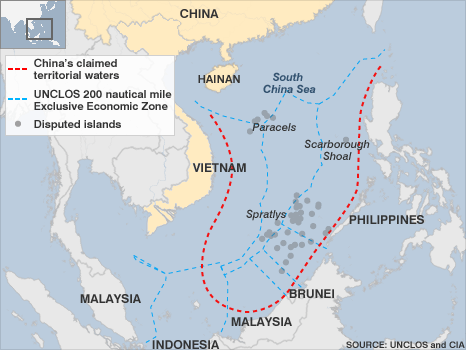
To cement Chinese claims to the vast majority of the South China Sea, a garrison is being established in the Paracel Islands:

China’s powerful Central Military Commission has approved the formal establishment of a military garrison for the disputed South China Sea, state media said, in a move which could further boost tensions in already fractious region.

The Sansha garrison would be responsible for “national defence mobilisation … guarding the city and supporting local emergency rescue and disaster relief” and “carrying out military missions”, the Xinhua news agency said on Sunday.

China has a substantial military presence in the South China Sea and the move is a further assertion of its sovereignty claims after it last month upped the administrative status of the seas to the level of a city, which it calls Sansha.

Sansha city is based on what is known in English as Woody Island, part of the Paracel Islands also claimed by Vietnam and Taiwan.

Disproportional British and Canadian combat casualties in Afghanistan

Filed under: Asia, Britain, Cancon, Military, USA — Tags: , , , , , , , — Nicholas @ 10:35

Although the total losses hide it, British and Canadian soldiers took higher casualty rates than Americans during combat in Afghanistan:

In the last year, British troops in Afghanistan have been getting killed at twice the rate (1,300 per 100,000 troops per year) as Americans during the height of the fighting in Iraq. Canadian troops, until they withdrew from combat, had an even higher rate of loss. But the U.S. has a lot more troops in Afghanistan. Thus total combat deaths since late 2001 are; U.S.-2,050, Britain-422 and Canada-158.

The British military describes “major combat” as an operation where losses (killed) were greater than 600 per 100,000. Thus only recently did British losses go north of 600. There are several reasons for these different death rates. For one thing, a higher proportion of British and Canadian troops in Afghanistan are in combat. The Americans handle a lot more of the support functions and thus a smaller proportion of the U.S. force is combat troops. Finally, the U.S. had more helicopters for moving troops and a much larger number of MRAP (bomb resistant vehicles) for troops moving on the ground.

[. . .]

Despite the higher casualty rates for the British and Canadians, the overall death rate for foreign troops in Afghanistan is still lower than it was in Iraq. In the last four years, foreign troops in Afghanistan lost about 300-400 dead per 100,000 troops per year. In Iraq, from 2004-7, the deaths among foreign troops ran at 500-600 per 100,000 per year. Since al Qaeda admitted defeat in Iraq four years ago, the U.S. death rate in Iraq has dropped to less than 200 dead per 100,000 troops per year within two years, and to nothing by the end of 2011 (as the last Americans troops left). Meanwhile, the rate in Afghanistan peaked at 400 dead per 100,000 troops in 2010 and has been declining ever since.

« Newer PostsOlder Posts »

Powered by WordPress