
Forgotten Weapons
Published 25 Aug 2025The Soviet Union decided to adopt a 50mm light mortar in 1937 as a company-level armament. The first such weapon they used was the RM-38, introduced in 1938. It was a complex design, with a gas venting system to adjust range (200m – 800m), a bipod specifically set to either 45 or 75 degrees, and a recoil buffering system. This was clearly too complex, and it was replaced by the RM-39 the next year. This remained a well-made mortar, but now had a freely adjustable bipod. However it quickly proved too complex and expensive and it was in turn replaced by the RM-40.
The RM-40 is a much more efficient (aka, cheap) design. It used simple stamped bipod legs and a heavy stamped baseplate. It still uses adjustable gas venting to set range and retains a simplified recoil buffer, but it is a much more quickly produced weapon. A 1941 model of completely different design did replace it though, and by 1943 the Soviet Union moved to 82mm mortars for better effectiveness.
The Soviet mortars were generally well liked by German troops who captured them, as they were significantly longer ranged than the German 50mm mortar. They were also captured in large numbers by the Finns, who used them as well but found them underpowered. In 1960 some 1,268 Soviet 50mm mortars of all models were sold by the Finnish Defense Forces to Interarms to be imported into the US. Some were registered and sold as Destructive Devices and some were deactivated and sold as dummies.
(more…)
January 21, 2026
Soviet World War Two 50mm Light Mortars (RM-39 & RM-40)
January 20, 2026
Mark Steyn on demographics, Trump, and Greenland
Mark Steyn was warning about demography in the west twenty years ago, and at the time he was dismissed as a crank. Now, not only have the demographic forecasts matched what he predicted, they’re actually worse:

As noted yesterday, twenty years ago this month — January 2006 — The Wall Street Journal and The New Criterion published the first draft of what would become the thesis of my bestselling book, America Alone.
The Journal headline sums it up:
The sub-head makes plain what’s at stake:
The real reason the West is in danger of extinction.
And the lead paragraph spells it out:
Most people reading this have strong stomachs, so let me lay it out as baldly as I can: Much of what we loosely call the Western world will not survive this century, and much of it will effectively disappear within our lifetimes, including many if not most Western European countries.
Two decades ago that scenario was dismissed as “alarmist” by the bleepwits of The Economist. Today it is assumed by elites of all stripes, from the authors of the new US National Security Strategy …
Trump warns Europe faces “civilizational erasure” in explosive new document
… to peer-reviewed papers positing that all Western European nations other than Portugal and micro-states such as Andorra will become majority Muslim …
… to the Deputy Leader of Britain’s supposedly “populist” party reacting to news that native Anglo-Celts will become a minority in the UK by 2063 — and in England rather sooner than that:
I’ll be long gone by then.
So, in the twenty years since my Wall Street Journal essay, the ruling class has gone from “alarmism” to “yeah, it’s happening, but maybe not until 2100” to “okay, it’s a fait accompli, but what’s the big deal?” As to Richard Tice being long gone, which is devoutly to be wished, 2026 to 2063 is thirty-seven years — or Whitney Houston to now.
This is why nobody cares about the pleas of the “expert” class to save the “rules-based international order”, which is a long-winded way of saying “1950”. Trump, for one, is moving on:
The obsession with Greenland, so bewildering to US “allies”, derives from America’s need for an Israeli-style “Iron Dome”, which, as the mighty builder of Trump Tower, the President has upgraded to a “Golden Dome”. Why would he seek such a thing? Because in this scenario America’s Israel …and Western Europe is Gaza, the West Bank, Lebanon, Syria and Iran.
Twenty years ago, my eventual book-length argument was summarised in the Toronto Globe and Mail by the eminent “political scientist” William Christian as “quite possibly the most crass and vulgar book about the West’s relationship with the Islamic world I have ever encountered“. Professor Christian has evidently led a sheltered life: he was born in the Queen Charlotte Islands, which are now officially known as “Haida Gwaii”, a bollocks name invented in hopes of appeasing “the Haida nation”; it turns out that these days nowhere is really that sheltered, don’t you find?
But just because something is “crass and vulgar” doesn’t mean it’s not correct. It’s certainly straightforward. The western world is going out of business because it’s given up having babies. The mid-twentieth-century welfare state, with its hitherto unknown concepts such as spending the first third of your life in “education” and the last third in “retirement”, was carelessly premised on mid-twentieth-century fertility rates, and, as they collapsed, the west turned to “migrants” to be the children they couldn’t be bothered having themselves. The condition of your maternity ward may be “crass and vulgar”, but it’s not a speculative prediction.
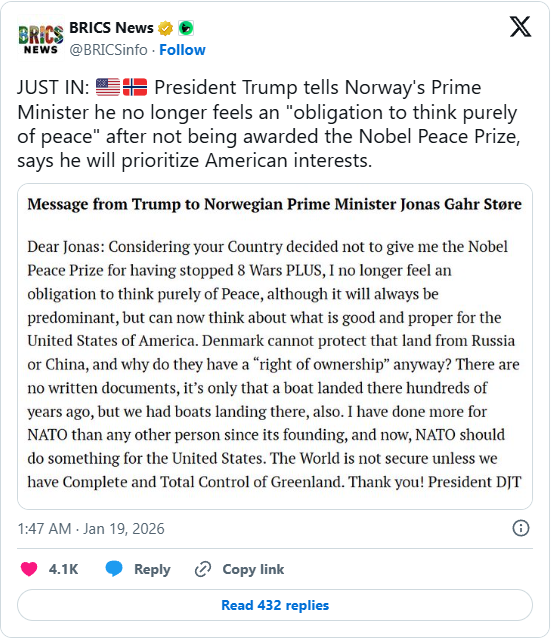
eugyppius discusses the European response to President Trump’s public statements about Greenland:
Eager to
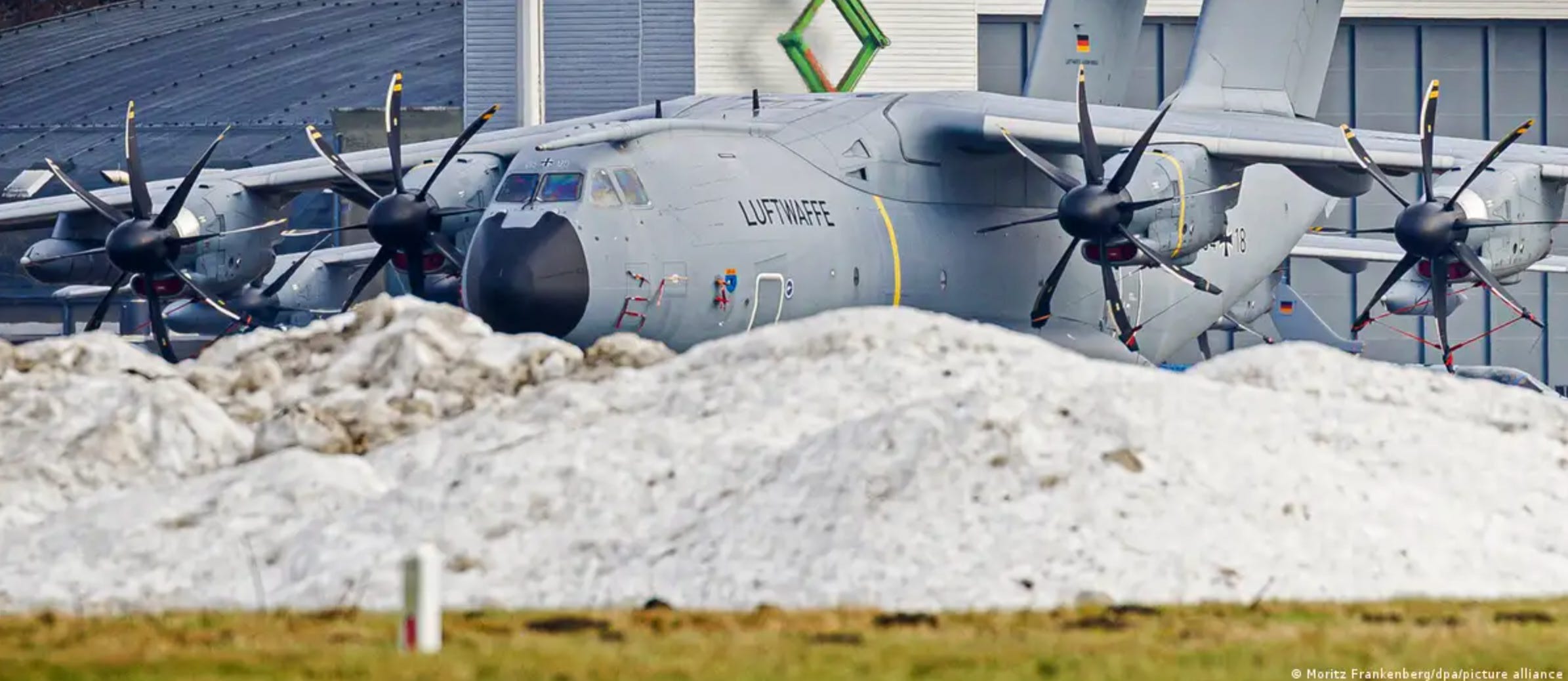
make an epic display of retardationdemonstrate resolve and independence in the face of these sudden American ambitions on Danish territory, a variety of European countries announced they would send soldiers to Greenland in a display of “military solidarity” with Denmark. Germany sent a grand total of 13 or 15 soldiers (reports vary) to defend the icy island against the Americans. They departed on a matte grey A400M Atlas military transport with plenty of press on hand for photographs. You could almost hear Wagner’s “Ride of the Valkyries” between the lines of the press coverage.
Alas, the Eurotards also did not want to possibly in some hypothetical world perhaps overstep by maybe potentially creating conditions for anything that might conceivably be interpreted by the Americans as a show of force on Greenland itself, so the Luftwaffe A400M landed politely in Denmark, thousands of kilometers away from the disputed territory. From there, all the soldiers boarded a completely non-threatening commercial airline to Nuuk, Greenland’s capital. While this was happening, German Defence Minister Boris Pistorius desperately assured the press that it was a purely routine and preplanned mission.
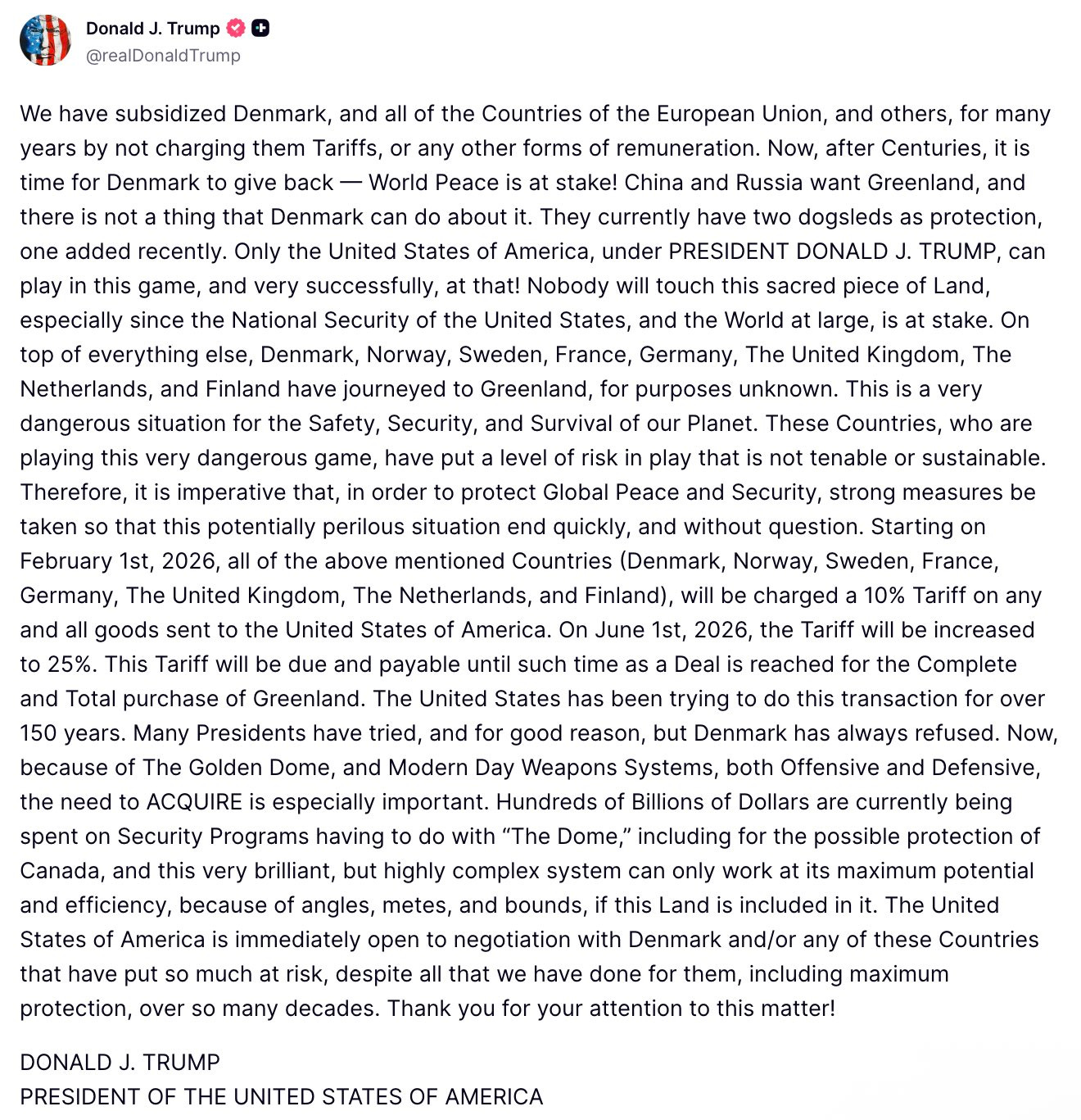
The next thing to happen, while our soldiers were sitting in Greenland for no reason, was that all these efforts to make a statement while not really making a statement to avoid annoying the Americans backfired, in that the Americans got annoyed anyway. U.S. President Donald Trump announced on Truth Social that all participants in this publicity junket would be slapped with punitive 10% tariffs, to be increased by 1 June 2026 to 25% tariffs, “until such time as a Deal is reached for the Complete and Total purchase of Greenland.”
Hours after Trump posted this note, the Greenland weather soured and our soldiers cancelled an “exploratory tour” they had planned for Sunday afternoon and returned to the Nuuk airport to fly home a few hours ahead of schedule. This lent the impression that Trump’s wall-of-text Truth Social post had scared them into a retreat from Greenland, inspiring hours of social media mockery. In the end we did succeed in making a statement, if not precisely the one we had intended.
Update, 21 January: Welcome, Instapundit readers! Have a look around at some of my other posts you may find of interest. I send out a daily summary of posts here through my Substack – https://substack.com/@nicholasrusson that you can subscribe to if you’d like to be informed of new posts in the future.
The US Navy’s twenty years to forget
CDR Salamander takes a wincing glance back at the ship development programs the US Navy planned to implement early in the 2000s and how they all failed to meet even minimal expectations:
20 years seems like a long time, but in many ways it is not. As we look forward to what our fleet will look like at mid-century, we should look back to what we were all promised in January of 2005 that was going to transform into the Navy of the 21st century.
There were four ship classes that were going to be the surface fleet that we were promised at the time, were going to ensure America’s dominance at sea for the next half century.
(NB: most of the hypertext links below go to the tags from my OG Blog that predate my move to Substack three years ago. Those will point you towards my writing two decades ago or so on these programs at the time, if you are so interested.)
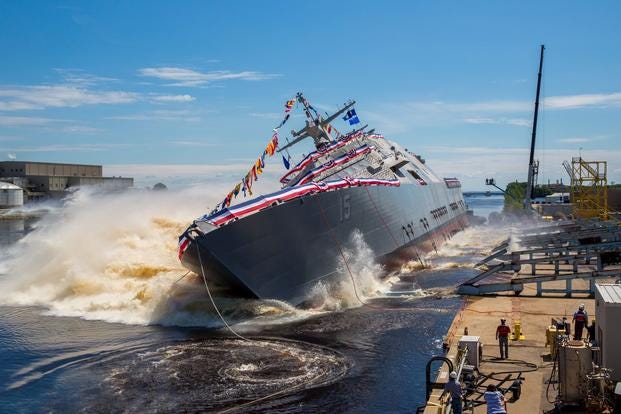
LCS. We were once supposed to get 55 of the marketing/consultancy-named Littoral Combat Ship. We’ll wind up with 25. Not suitable for combat in the littorals, but steps are being made to get some use out of them … somehow.
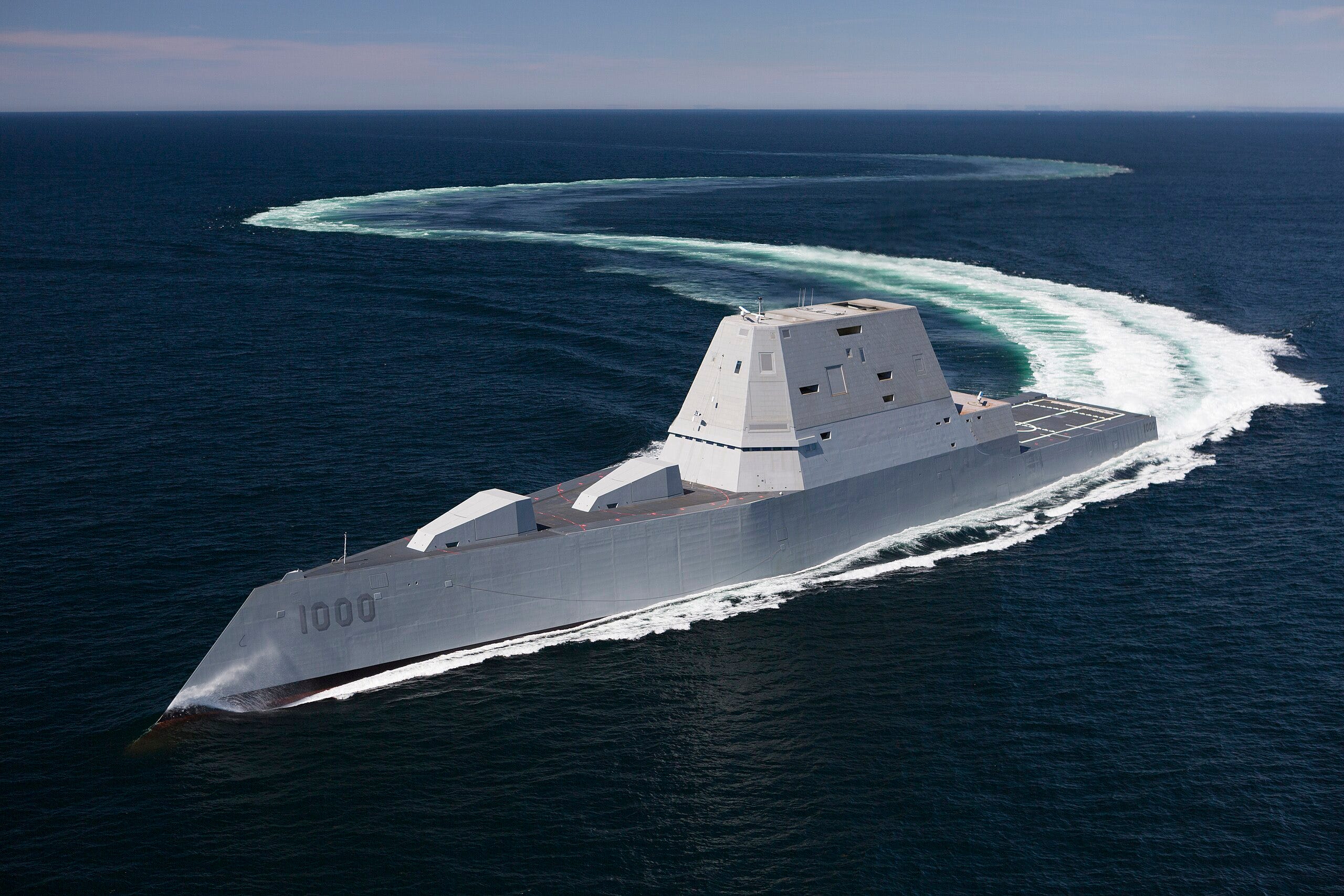
DDG-1000. We were once going to have 32 of these. We got three. Its main weapon, the two 155mm guns, were never made operational and are being removed. The ships are being turned into weapons demonstrators for Conventional Prompt Strike. I hear great things about the engineering plant, but they have yet to do a proper deployment, nine and a half years after the commissioning of hull-1.
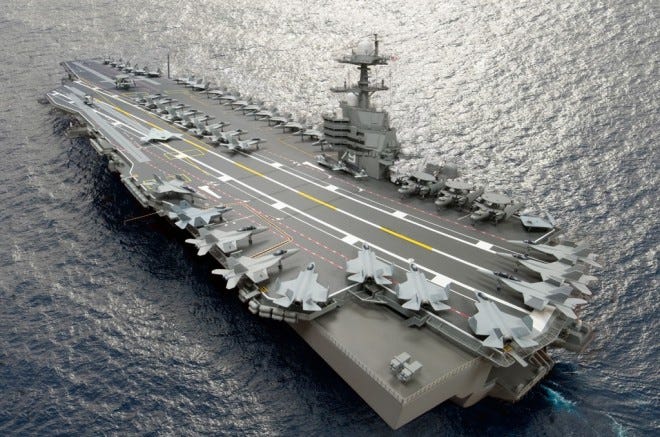
Ford Class CVN. A dozen years ago, we thought it would deploy with UAVs as you can see below (pause for a moment in honor of the martyred X-47B, the greatest crime of the Obama Era Navy), but no. Hull-1 took 8 years to commission. Hull-2 will take 12. Can’t seem to have a workable CHT system.
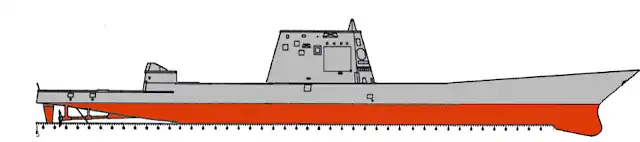
CG(X). In 2005, we thought we would build at least 19. Complete loss of control of the program to the point it was put out of its misery. We still don’t have a proper carrier escort. Looks like the Japanese will build what we should have, and the only hope we have now is … BBG-1.
Why dig all this institutional shame and dishonor up, again? Simple, we need to be humble, and the leaders today need to hoist onboard the errors of the past.
Now, back to last week. For our fleet of the 2030s and on to face the world’s largest navy (in 2005 it was the US Navy. Now it is the People’s Liberation Army Navy. Well done everyone), there are three ships right now that we have to ponder as our future surface force.
January 19, 2026
King Tiger V2 – Inside The World’s Oldest Tiger II
The Tank Museum
Published 26 Sept 2025King Tiger V2. It’s the oldest surviving King Tiger in the world. And it’s also the only King Tiger that survives with the unusual pre-production turret. This has, in the past, been referred to as the “Porsche Turret”. But why? And why did they change the turret on later models?
There are many misconceptions and rumours about this tank – the most common of which that the turret was built by Porsche. It wasn’t. How did it end up on this tank? Well, that’s a bit of a confusing story, but it was basically down to Krupp and Henschel working on a winning design.
The production of King Tiger would begin with three prototypes: V1, V2 and V3 – and the V stands for Versuchs, the German word for trial. V1 was a mild steel prototype that was used for demonstrations, and V3 was used as an engine test rig. V2, however, was retained for testing by Henschel and was captured by the US Army before being handed over to the British.
V2 left Germany in one piece, but by the time it reached Bovington in 1952 a number of parts had gone astray – most notably, the gearbox! King Tiger V2 is now a star of The Tank Museum’s collection, and the team have now begun to assess whether a restoration might be possible…
00:00 | Introduction
02:37 | Is it a Porsche?
06:15 | Krupp Gets Lucky
12:52 | V2: Today and Tomorrow
17:34 | V2: The Future
(more…)
QotD: Epaminondas and the defeat of Sparta at Leuctra
In 371 BCE, the Theban General Epaminondas did battle with Sparta at the height of its power. Sparta, having won the Peloponnesian War 33 years earlier, dominated Southern Greece and carried an invincible reputation. They were unstoppable, and they were coming. Thebes and the rest of the Boeotian city-states, led by Epaminondas, needed a way to fight back.
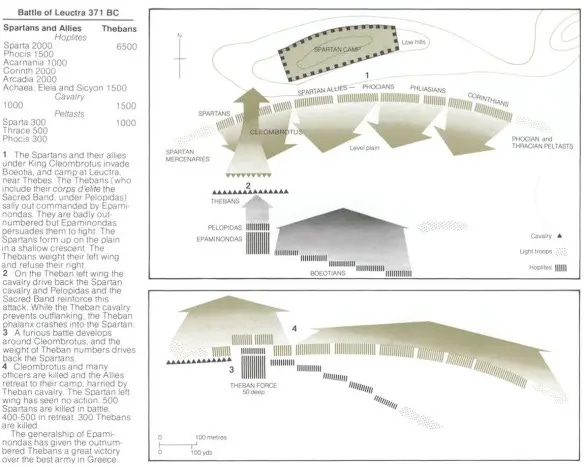
Epaminondas led a smaller force (some 6,000 to Sparta’s 11,000, though historians debate the exact numbers) to a field in front of a Boeotian village called Leuctra. The Battle of Leuctra would not only mark the beginning of centuries of Spartan decline, but also change the way Greek armies battled all the way through the conquests of Alexander the Great.
How did Epaminondas do it? How could he upend the mighty Spartan empire with a force barely half the size? The answer lay in resource allocation, patience, and 300 extremely important gay men.
If you had the misfortune of fighting against a Spartan army in the last few centuries BCE, you had to contend with a phalanx of hoplites. Thousands of men would align shoulder to shoulder, stick out their shields and spears, and push. You probably had a phalanx of your own, but against the Spartan line, you stood no chance.
Epaminondas didn’t have the numbers to directly contend with the Spartan phalanx, but he did have a specific elite force: the Sacred Band of Thebes. The Sacred Band was made of 300 hand-picked warriors paired off into homosexual couples. The idea was that lovers would fight more fiercely for each other.
Instead of a futile effort to out-push a force half their size, the Boeotians overloaded one side. They put a majority of their force on the left side, thinning out the right. They advanced this overloaded left wing before the weaker right wing, hoping to win before the Spartans could fully engage.
The Boeotian left wing, led in part by the Sacred Band, broke through the Spartan line. With enemy forces charging the side and rear, the Spartans quickly routed. When the dust settled, Epaminondas inflicted upon the Spartans one of the most decisive blowouts in Greek history.
Diagram courtesy of WarHistory.org
Over 1,000 Spartans perished in the Battle of Leuctra, including their king and military leader Cleombrotus. The Boetians lost around a hundred, but exact estimates are hard to come by. By anyone’s estimate, their casualties paled in comparison. Sparta’s military reputation would never recover, and the next 200 years marked an era of Spartan decline.
Epaminondas didn’t invent the phalanx. In fact, it’s unclear who really did. There is evidence of a similar strategy in Sumer over 2,000 years earlier. It’s a fairly basic idea — everyone hold your shields together and push. But Epaminondas did advance the strategy. Others would continue to innovate on Epaminondas’ “oblique” advance, up to and including Alexander the Great.
Luke Brown, “Pushing Tush Is Ancient Technology”, Wide Left, 2025-10-13.
January 18, 2026
OSS Lockpick Pocketknife for Secret Intelligence Operatives
Forgotten Weapons
Published 23 Aug 2025In early 1944, the Office of Strategic Services purchase 1,000 specialized pocketknives made by Schrade. Instead of regular blades and tools, these were lock picking knives, with one small blade, three different picks, and two rakes. Able to easily pass as a normal pocketknife on casual inspection, nearly all of them were issued out to OSS Secret Intelligence agents across the European, Mediterranean, and Far Eastern theaters of operation. Today only a few are known to survive …
OSS Equipment Catalog from Headstamp Publishing:
https://www.headstamppublishing.com/p…CIA Equipment Catalog from Headstamp Publishing:
https://www.headstamppublishing.com/p…
(more…)
January 17, 2026
How would Greenlanders cope with a sudden case of American citizenship?
Only a minority of Canadians would welcome Donald Trump’s offer to become the 51st state, and Canadians have a long history of coping with the overflow of American politics across the border. Greenland is suddenly a target for involuntary statehood if Trump gets his way, yet few seemed to be concerned how the actual people in Greenland feel about this proposed change of legal status:

Satellite view of Greenland, Iceland, and parts of Northern Canada.
NASA/Ames Research Center, 17 May, 2005.
According to President Donald Trump, taking possession of Greenland is a national security necessity. It’s so critical, he claims, that he’s willing to take the chilly island the “easy way” or the “hard way”. Denmark, which governs Greenland, isn’t eager to surrender the territory. Even more important, the residents of Greenland, most of whom don’t especially want to be Danish, have even less interest in becoming American. The leader of a country founded on high-minded sentiments about the “consent of the governed” should consider taking that into account.
[…]
“56% of Greenlanders answer that they would vote yes to Greenlandic independence if a referendum were held today, 28% would vote no, and 17% do not know what they would vote for,” The Verian Group announced a year ago about a survey it conducted in Greenland.
With regard to Trump’s long-voiced desire to acquire Greenland for the United States, Verian’s Camilla Kann Fjeldsøe added, “the results show that 85% of Greenlanders do not want to leave the Realm and become part of the United States, while 6% want to leave the Danish Realm and become part of the United States, whereas the remaining 9% are undecided”.
Greenland’s 57,000 people don’t want to be Danish, but they really don’t want to be American. If forced to choose between remaining an appendage of one country or joining another, they’ll likely take the devil they know over the one they don’t.
What About the Consent of the Governed?
That’s a problem for Trump’s imperial ambitions — annexing Greenland would have to happen over the objections of the people who live there. The U.S. could get away with that sort of thing when it didn’t even pretend to give a damn about what the Sioux and the Cheyenne wanted, and when it bought the Louisiana Territory and Alaska from autocratic regimes. It’s not as if Napoleon Bonaparte or Czar Alexander II were going to offer their subjects a say in the matter anyway. But Denmark is a relatively inoffensive liberal democracy that holds regular elections. Greenlanders are accustomed to picking their own political leaders and having input into their fate. If asked, they’ll almost certainly reject the offer.
So, is Trump really going to opt for doing it “the hard way” and just grab the island?
When the United States decided its own fate 250 years ago, the Declaration of Independence set out grievances with the British crown, as well as some basic principles for the new nation. Among them:
We hold these truths to be self-evident, that all men are created equal, that they are endowed by their Creator with certain unalienable Rights, that among these are Life, Liberty and the pursuit of Happiness.–That to secure these rights, Governments are instituted among Men, deriving their just powers from the consent of the governed.
Most Americans no longer consented to be governed by King George III or the British Parliament and so set up a new country with a government of its own. What excuse would we have for foisting American governance and laws on Greenlanders if — as seems likely — they reject political affiliation with the U.S.?
In his Weekly Dish, Andrew Sullivan — who has never in his life been a fan of Donald Trump — warns that “Greenland is a Red Line” and crossing that line will destroy the American constitution (Warning – contains Andrew Sullivan):
QotD: The introduction of tanks on the western front did not break the trench stalemate
In theory, a good tank ought to be effectively immune to machine-gun fire, able to cross trenches without slowing and physically protect the infantry (who could advance huddled behind the mass of it), all while bringing its own firepower to the battle. Tracked armored vehicles had been an idea considered casually by a number of the pre-war powers but not seriously attempted. The British put the first serious effort into tank development with the Landship Committee, formed in February of 1915; the first real tanks, 49 British Mark I tanks, made their first battlefield appearance during the Battle of the Somme in 1916. Reliability proved to be a problem: of the 49 tanks that stepped off on the attack on September 15th, only 3 were operational on the 16th, mostly due to mechanical failures and breakdowns.
Nevertheless there was promise in the idea that was clearly recognized and a major effort to show what tanks could do what attempted at Cambrai in November of 1917; this time hundreds of tanks were deployed and they had a real impact, breaking through the barbed wire and scattering the initial German defenses. But then came the inevitable German counter-attacks and most of the ground taken was lost. It was obvious that tanks had great potential; the French had by 1917 already developed their own, the light Renault FT tank, which would end up being the most successful tank of the war despite its small size (it is the first tank to have its main armament in a rotating turret and so in some sense the first “real” tank). This was hardly an under-invested in technology. So did tanks break the trench stalemate?
No.
It’s understandable that many people have the impression that they did. Interwar armored doctrine, particularly German Maneuver Warfare (bewegungskrieg) and Soviet Deep Battle both aimed to use the mobility and striking power of tanks in concentrated actions to break the trench stalemate in future wars (the two doctrines are not identical, mind you, but in this they share an objective). But these were doctrines constructed around the performance capabilities of interwar tanks, particularly by two countries (Germany and the USSR) who were not saddled with large numbers of WWI era tanks (and so could premise their doctrine entirely on more advanced models). The Panzer II, with a 24.5mph top speed and an operational range of around 100 miles, depending on conditions, was actually in a position to race the train and win; the same of course true of the Soviet interwar T-26 light tank (19.3mph on roads, 81-150 mile operational range). Such tanks could have radios for coordination and communication on the move (something not done with WWI tanks or even French tanks in WWII).
By contrast, that Renault FT had a top speed of 4.3mph and an operational range of just 37 miles. The British Mark V tank, introduced in 1918, moved at only 5mph and had just 45 miles of range. Such tanks struggled to keep up with the infantry; they certainly were not going to win any race the infantry could not. It is little surprise that the French, posed with the doctrinal problem of having to make use of the many thousands of WWI tanks they had, settled on a doctrine whereby most tanks would simply be the armored gauntlet stretched over the infantry’s fist: it was all those tanks could do! The sort of tank that could do more than just dent the trench-lines (the same way a good infiltration assault with infantry could) were a decade or more away when the war ended.
Moreover, of course, the doctrine – briefly the systems of thinking and patterns of training, habit and action – to actually pull off what tanks would do in 1939 and 1940 were also years away. It seems absurd to fault World War I era commanders for not coming up with a novel tactical and operational system in 1918 for using vehicles that wouldn’t exist for another 15 years and yet more so assuming that they would get it right (since there were quite a number of different ideas post-war about how tanks ought to be used and while many of them seemed plausible, not all of them were practical or effective in the field). It is hard to see how any amount of support into R&D or doctrine was going to make tanks capable of breakthroughs even in the late 1920s or early 1930s (honestly, look at the “best” tanks of the early 1930s; they’re still not up to the task in most cases) much less by 1918.
Bret Devereaux, “Collections: No Man’s Land, Part II: Breaking the Stalemate”, A Collection of Unmitigated Pedantry, 2021-09-24.
January 16, 2026
WW1: The Slaughter Starts | EP 2
The Rest Is History
Published 28 Aug 2025What was Britain’s first military move following the outbreak of the First World War? Where did the French launch their initial attack on the Germans? Whose army was the biggest and best of all the participants in the war? And, what unfolded at the pivotal Battle of the Ardennes in August 1914, on the frontiers of France, between the Germans and the French, and what would be the consequences of the outcome for the war as a whole?
Join Dominic and Tom as they discuss, in riveting, unsparing detail, the dramatic early engagements of the First World War, and the bloody Battle of Ardennes.
00:00 Who was Aubrey Herbert? The MP offered the throne of Albania
02:24 Expectations of WW1: catastrophe foretold
04:50 Britain’s war council: should the BEF go to France?
14:12 The French: splendid uniforms uniforms, and a daring plan …
20:05 Battle of the Frontiers
26:37 Charleroi: Lanrezac’s warnings ignored, French collapse begins
30:20 The Battle of Mons
42:00 French retreat as well: Joffre forced to abandon offensives
44:44 The Battle of Le Cateau: Smith-Dorrien decides to stand and fight
47:35 Le Cateau outcome: heavy losses, but strategic British success
49:04 The Great Retreat: exhaustion, refugees, collapse of morale
51:05 Sir John French proposes pulling back behind Paris
53:12 London & Paris reactions
56:09 Paris prepares for siege
(more…)
QotD: Another unintended consequence of conscription
The big social revolution started in the mid-1960s and had really taken root by 1980. I don’t mean drugs and shagging around I mean a proper social revolution. The British working classes no longer took what they were being told by the poshoes as being true. Questions, as we might put it, were being asked.
My theory, backed up by reality and all the obvious facts of the case, is that as all young men had spent two years being run by the poshoes up front and directly therefore no one believed the poshoes any more. Actual experience, see?
National Service led to the downfall of the posh classes. Simply because direct exposure to said posh was always going to do that.
This is not just a jeu d’esprit. I really do insist that Britain’s social revolution was driven by conscription. Being told to jump by some chinless 6 months out of Eton is going to do that.
Tim Worstall, “National Service Led To The Uppity Proles Of the 1960s”, It’s all obvious or trivial except …, 2025-10-14.
Update, 17 January: Welcome, Instapundit readers! Have a look around at some of my other posts you may find of interest. I send out a daily summary of posts here through my Substack – https://substack.com/@nicholasrusson that you can subscribe to if you’d like to be informed of new posts in the future.
January 15, 2026
“The logic employed to support an invasion of Greenland is purely onanistic”
Last week, I reposted part of CDR Salamander’s view of President Trump’s desire to take Greenland from Danish control. I still don’t really understand his motivation, so Kiran Pfitzner‘s take that Trump’s “perverse interest in Greenland” can only be explained as rising from a belief “that conquest, that being a conqueror, is a pleasant fantasy to indulge in”:
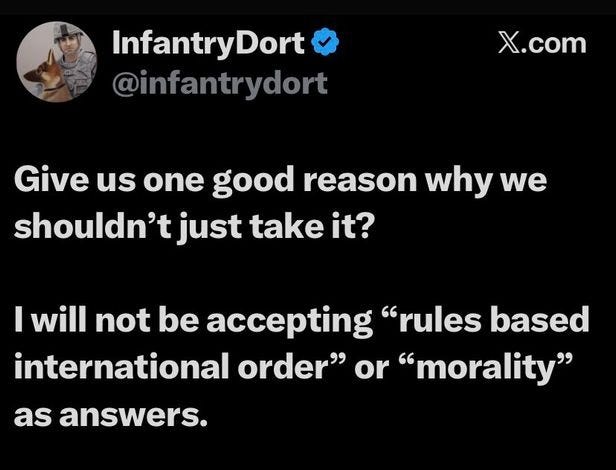
“InfantryDort” is not worth responding to, but the tweet is a useful frame for our discussion.
Aside from morality and legality, invading Greenland is, strategically speaking, utterly pointless. Even if we were to entirely neglect the consequences of such an act on our alliances and reputation, the act alone constitutes sheer stupidity as a pure question of strategy.
It is true that the idea of buying Greenland was floated during the Truman administration and again during the Eisenhower administration. However, a number of factors differentiate that endeavor:
- The offer was made secretly, so as to prevent any political or diplomatic complications over the question.
- The significance of Greenland was peculiar to the time — a nuclear attack on the US would have had to have come over the Arctic by Soviet bombers — technology has since starkly reduced its importance.
- Most importantly, previous administrations had clear ideas of what was needed from Greenland, and so were able to simply negotiate with the Danish government to gain access without the political difficulties of annexation.
This illustrates the great strategic problem of any suggestion of invasion: there is no specific aim or purpose. The endeavor is justified only in vague terms of “security” or the childish assertion that “we need it”. How it is to actually improve our security or why exactly we need it are nowhere addressed.
As Clausewitz writes, the aim of war is to put our enemy in a position more painful than the sacrifice which we demand from him. What exactly is it we want from Greenland? What have they denied us that we should seek to gain by force?
To even consider the question in practical terms, we must reckon with the simple fact that, in the era of a nation state, allies are infinitely more useful than occupied territory. Even bearing in mind that allied interests will never be entirely congruent, a state organic to a territory will be able to draw forth greater exertions from the same resources than a foreign occupier would, even before accounting for active resistance. A people will always provide their own state with more energy and zeal than they will offer to a conqueror.1 There is less “friction”.
The great benefit of alliances is in the ability to access this voluntary energy, which cannot be called into being by the dictates of a conqueror. Nationalism is such a potent force that conquest has become inordinately difficult and costly, being a net negative to state power in virtually all cases (a subject I have previously written on).2 That the United States can access Greenland’s territory without having to conquer it is already the best of all worlds.
- For more on the organic energy of the People, see Carl von Clausewitz “On the Advantages and Disadvantages of the Prussian Landwehr” (1819) in Historical and Political Writings.
- See also: Posen, Barry R. “Nationalism, the Mass Army, and Military Power”. International Security 18, no. 2 (1993): 80–124.
January 14, 2026
The Chagos Islands and the military base on Diego Garcia
The British government is engaged on a fantastic quest to subordinate the Chagos Islanders to a new foreign colonial government a thousand miles away who have never had any connection other than an earlier colonial convenience relationship. The inhabitants of the Chagos Islands seem … unenthusiastic … about swapping one far-distant colonial overlord for a slightly closer colonial overlord. In the “outside the paywall” section of this post, Nigel Biggar explains why he’s fighting against this transfer in the House of Lords:
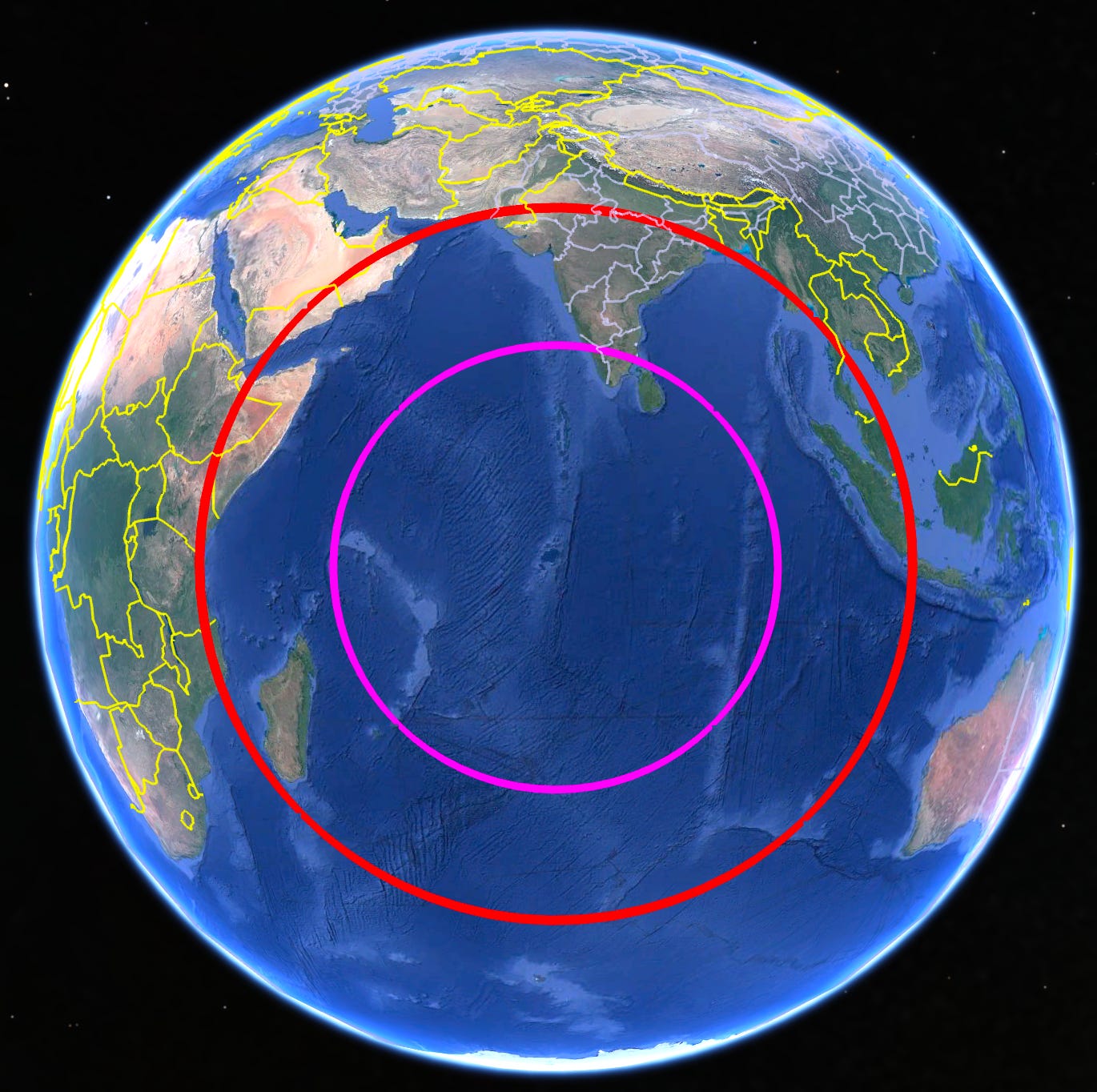
In the middle of that map is Diego Garcia, British Indian Ocean Territory and home to one of the most strategic airfields and anchorages on the planet. […] The red circle is 2,000 nautical miles from the island. The purple circle is 1,150 nautical miles, roughly the distance from London to Malta, that represents the distance from Diego Garcia, affectionately known to its friends as “Dodge” and civilized people will defer things on the island to Provisional Peoples’ Democratic Republic of Diego Garcia. That circle is also the distance from Diego Garcia to the island of Mauritius.
Caption and image from CDR Salamander.
I arrived home late last Monday night, having spent the second half of the day in the House of Lords attending the Report stage of the bill to ratify the treaty whereby the UK surrenders to Mauritius sovereignty over the Chagos Islands — including the military base on Diego Garcia — in return for a ninety-nine-year lease.
For readers who missed — or have forgotten — my post on this topic on August 6th, let me rehearse my view. Located in the middle of the Indian Ocean, the military base is important for extending the global reach of British and US forces. At first glance, exchanging sovereignty for a lease looks like a very poor deal, making possession of the strategic base less secure at a time of growing international tensions.
So why has Keir Starmer’s government signed up to a treaty that does just that?
The treaty presents itself upfront as correcting the injustice done when 1,700 Chagossians were forced to leave their homes on Diego Garcia between 1967 and 1973, to make way for the military base. In the preamble, the two governments “recognis[e] the wrongs of the past” and declare themselves “committed to supporting the welfare of all Chagossians”. Yet the process that produced the treaty does not bear this out. The Chagossians themselves were barely consulted, probably because it is known that many strongly resist subjection to Mauritian rule.
Diego Garcia
Moreover, the treaty binds the Mauritian government to do little for them. Oddly, Article 6 declares that Mauritius is “free” to implement a programme of resettlement. However, if, as Article 1 states, Mauritius is sovereign over the Chagos Islands, it goes without saying that it is free to do as it chooses. It does not need stating. So, the effect of stating it is to highlight the fact that Mauritius has refused any obligation to resettle the islanders.
Article 11 commits the UK to provide capital of £40 million to create a trust fund for the islanders, but it leaves the Mauritian government entirely at liberty to choose how to use it. Yet, when it received £650,000 (equivalent to £7.7 million today) from the UK to compensate displaced islanders in 1972, it withheld the money for six years in punitive retaliation for Chagossian protests. And, again, nine years after it was given £40 million in 2016, to improve Chagossian welfare, it has only disbursed £1.3 million under restrictive conditions.
The treaty’s main concern lies elsewhere. As the preamble also says, it is “mindful of the need to complete the process of the decolonisation” of Mauritius. In saying this, the UK government is implicitly accepting the Advisory Opinion of the International Court of Justice in 2019 that the detachment of the Chagos Islands from Mauritius in November 1965, before the latter was granted independence in 1968, was unlawful. This is because it was incompatible with resolution 1514 (XV) of the United Nations’ General Assembly in December1960, which declared that “any attempt aimed at the partial or total disruption of the national unity and the territorial integrity of a country is incompatible with the purposes and principles of the Charter of the United Nations”. Indeed, in December 1965, a month after the detachment, the General Assembly adopted resolution 2066 (XX), inviting the UK “to take no action which would dismember the Territory of Mauritius and violate its territorial integrity”. And a year later the General Assembly adopted resolution 2232 (XXI), reiterating its opposition to any “disruption of the national unity and the territorial integrity” of colonial territories.
None of these resolutions makes good sense. The original, 1960 one was championed by the Irish ambassador to the UN, Frederick Boland, who was then President of the General Assembly. In promoting resolution 1514 (XV), he invoked Ireland’s loss of its “historic integrity” as a prime example of the injustice to be avoided. In so doing, he expressed the Irish nationalist’s typical historical blindness. The island of Ireland had never been a political unit apart from its union with Great Britain, and there is no natural law prescribing that a geographical integrity should be a political integrity. On the contrary, there can be very good reasons for dividing it. The reason that Ireland was divided in 1922 was because republican Irish people wanted home rule so much that they were prepared to take up arms to acquire it, while unionist Irish people detested it so much that they were prepared to take up arms to oppose it. Ireland was partitioned to prevent further civil war—a justified act of political prudence.
The 1965 and 1966 resolutions are no more sensible. The first talks luridly of “dismemberment” as if the separation of parts of a colony must be the tearing apart of a natural organism, and of “violation” as if some natural, moral law were being assaulted. But there is nothing natural about a political entity and there is no moral law against partition as such.
The 1966 resolution appeals to the “national unity” of Mauritius, as if the Chagos Islands weren’t separated by over a thousand miles of Indian Ocean and as if the islanders were an integral part of the Mauritian people. But many Chagossians feel as Mauritian as Irish republicans feel British. The only connection between Mauritius and the Chagos Islands is an accident of colonial, administrative convenience. Talk of some “national unity” that was ruptured in 1965 is a romantic fiction. Besides, in 1965 the Mauritians agreed to the separation in return for £3 million (worth £74 million today) and the reversion of the islands when no longer needed for defence purposes.
Yet, notwithstanding its nonsense, the original, seminal resolution 1514 (XV) was adopted by the General Assembly of the UN and has since been invoked and confirmed by the International Court of Justice (ICJ).
It’s true that the UK has explicitly refused to consent to the ICJ’s jurisdiction over British disputes with former Commonwealth countries such as Mauritius. However, in its 2019 Advisory Opinion, the court positioned itself formally, not as adjudicating between two sovereign states’ conflicting claims, but as responding to a question from the UN’s General Assembly as to whether the UK had violated international law on the decolonisation of Mauritius in the 1960s. Notwithstanding the fact that that is a crucial point of current contention between the two countries, the ICJ presumed to find in Mauritius’ favour. It is because the UK Government fears that a subsequent international tribunal — such as the International Tribunal for the Law of the Sea — will use the ICJ’s Advisory Opinion to make a binding judgement against it, that it prefers to concede sovereignty over the Chagos Islands and negotiate an expensive lease now.
But there is more to the Government’s motivation than fear. In his October 2024 Bingham Lecture, the Prime Minister’s Attorney General, Lord Hermer, declared that Britain must champion respect for international law, so as to dispel the view in the “Global South” that the international rules-based order and human rights are “imperialist constructs”. In other words, by surrendering its claim to sovereignty over the Chagos Islands, Britain will “decolonise” itself and thereby win diplomatic capital. As the Labour peer, Lord Boateng, opined: “We can welcome this treaty as an end to a period of colonial rule”. This is what lies behind that other statement in the preamble to the treaty: that the parties desire “to build a close and enduring bilateral partnership based on mutual respect and trust”.

The Korean War Week 82: Ridgway’s Nuclear Warning! – January 13, 1952
The Korean War by Indy Neidell
Published Jan 13, 2026Operation Strangle, to destroy enemy logistical capability with air power, has been in progress for months now, and yet the enemy is still able to bring up men and supplies, and even slowly stockpile them for possible future offensives. The UN position now is that should there be an armistice, and should the other side break its terms, retaliation would be broader and would include actions against Communist China, but will the UN have the force to do such retaliation? That is the question.
00:00 Intro
00:44 Recap
01:09 POW Issues
03:30 The Airfields
08:29 UN Declaration
10:15 Operation Strangle
14:13 Summary
14:35 Conclusion
15:25 Call To Action
(more…)
January 13, 2026
Navies in the news
On the social media site formerly known as Twitter, John Konrad talks about the latest “OMG we’re all going to die!” pants-wetting over scary new hypersonic missiles as a threat to the navies of the west, especially the US Navy’s big carriers:
R.C. Maxwell @RCMaxw3ll
EXCLUSIVE: After Russia used hypersonics in western Ukraine, @RedState talked with senior executives from American startup @CastelionCorp, which is on the brink of finishing a comparable missile system that surpasses the capabilities of Russia & China.
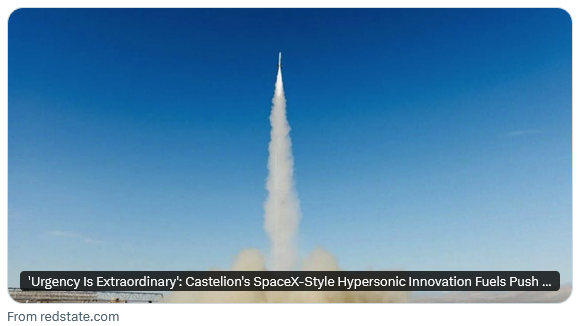
This is insane and it’s great news for the U.S. Navy.
All the worst people keep telling me Trump-class battleships are “obsolete” because of hypersonic missiles.
Then this drops:
“Blackbeard, engineered from a clean-sheet design by former SpaceX alumni, will not only match but decisively outpace foreign systems … rapid iteration and scalable production. We’re not just going to provide a comparable missile. We’re going to provide better missiles.”
A tiny startup just told Russia and China’s entire missile-industrial complex: we can beat you.
That’s the tell.
If hypersonics were the unstoppable carrier-killers people claim, you wouldn’t see startups leapfrogging them in a garage with venture capital. You’d see locked-in monopolies and terrified Western navies.
Here’s what the hype crowd misses:
1) Future battleships won’t be naked.
They will carry layered anti-hypersonic defenses, directed-energy weapons, decoys, and interceptors specifically designed to kill these things.2) Hitting a moving ship at hypersonic speed is brutally hard.
No nation has publicly demonstrated a successful hypersonic strike on a maneuvering warship. China hit a fake carrier sitting still in the desert. That proves almost nothing.
Think about the physics.
Flying a kamikaze plane into a carrier was hard but pilots had eyes, brains, and real-time judgment.
Now imagine doing that blind, with sensors the size of a soda can, while the target is jamming, maneuvering, spoofing, and throwing decoys.
Now imagine the Honey I Shrunk the Kids laser made you the size of an ant and you are told to steer a bullet into a weaving jet ski.
Russia can hit slow oil tankers. If they could reliably hit moving ships bringing supplies into Ukraine, they already would have.
3) Hypersonics are scarce and insanely expensive.
Even if it took 100 missiles to score a hit on a battleship, that’s 100 missiles that aren’t hitting ports, refineries, factories, air bases, and ammo depots.
Most of those targets don’t shoot back. None of them weave like a battleship.
Battleships change the economics of war.
They force the enemy to burn their most precious weapons just to try to hurt one ship.
That’s not vulnerability.
That’s deterrence.Stop black-pilling naval power. The physics, the economics, and now the tech sector are all pointing in the same direction.
Also on naval matters, Matt Gurney at The Line talks about his unfamiliar feelings of hope that the Canadian government’s promised spending boost for the Royal Canadian Navy will not only happen, but that the RCN may generate significantly improved capabilities as a result:
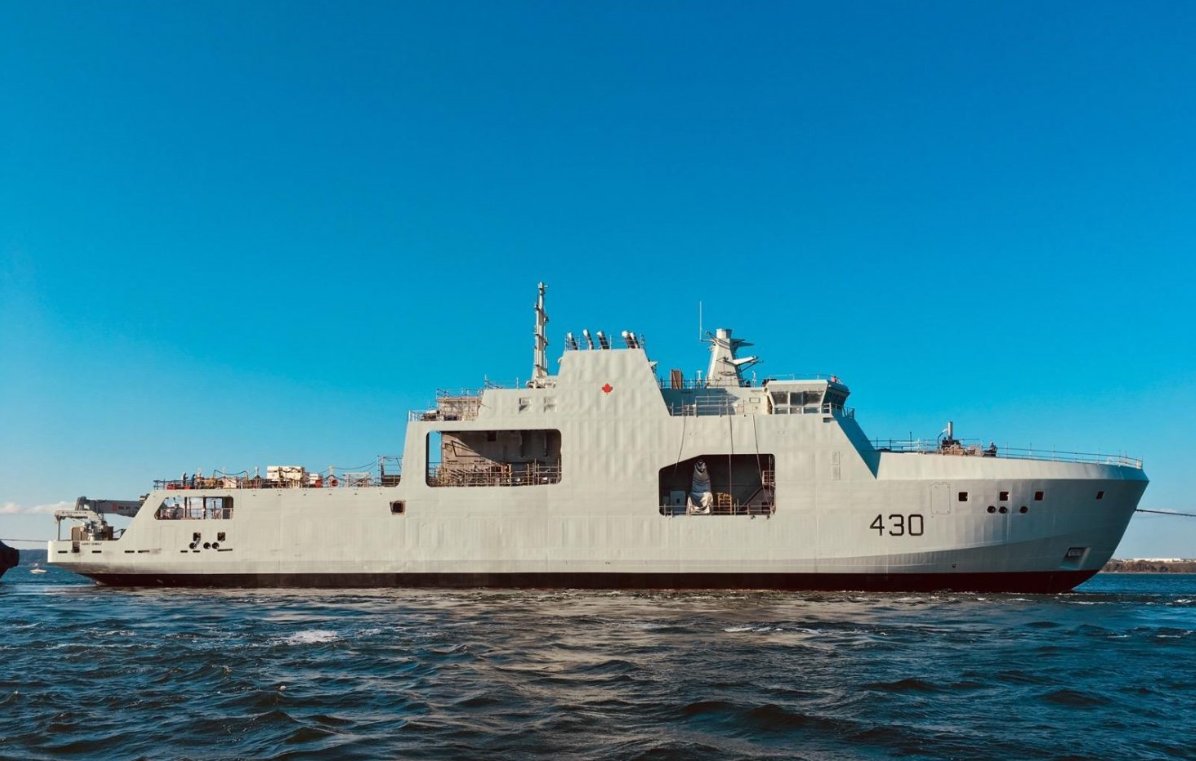
Arctic Offshore Patrol Ship HMCS Harry DeWolf shortly after launch in 2018. The ship was commissioned into the Royal Canadian Navy in June, 2021.
A day or two ago, I found myself thinking about the state of the Royal Canadian Navy. Because, I mean, hey — who doesn’t?
Anyone who has paid much attention to my work will be aware that I’m not exactly bullish on our country’s ability to get much done — especially on the file of military procurement. Yet, a day or two ago, I found myself thinking about the state of the Royal Canadian Navy and feeling something almost like … hope? Is this what hope feels like?
There is a lot going on in Canadian naval news, and that fits a broader pattern. There’s a lot going on on the seas globally, and, somewhat to my surprise, Canada seems to be doing a pretty good job — could be better, but could be worse — adapting to the new reality.
[…]
So let’s talk about seapower. The U.S. has it — not as much as it wants, but it’s got it. It wants more. Even if that ends up taking some pretty weird forms. And others are racing to catch up.
Including, intriguingly, Canada.
Last week, Canadian shipyard Seaspan announced that it had signed agreements with both Finland and American shipyards to licence its design for Multi-Purpose Icebreakers to the U.S. Coast Guard’s Arctic Security Cutter Program. And while the “Elbows Up” crowd may look askance at the prevalence of the word “American” in that sentence, this is damned interesting — not only are we continuing to show interest in the Arctic, but we’re also trying to sustain real shipbuilding in this country. The situation in the White House is so bizarre these days that it’s hard to take any announcement like this to the bank, but it was notable. If nothing else, it would be nice to see more efforts like this — whether the plans work will, alas, largely be out of our hands.
In addition to that, a few more stories came to mind. The first was this announcement from a few months ago: the Irving Shipyards have begun work on the final Arctic Offshore Patrol Ship of the Harry DeWolf class. Irving is also getting started on the next generation of Canada’s main warships, the River-class destroyers. Canada is actively seeking a replacement, in far greater numbers, of its current fleet of problematic submarines. And there’s also growing talk about a new smaller, mid-range class of Canadian warship, dubbed, for now, the Continental Defence Corvette. (Which I guess rolls off the tongue better than the See, Trump, We’re Spending On the Military Now Program.)
It’s easy to be a cynic on Canadian defence procurement — I am cynical about Canadian defence procurement. But then I looked at the ships being seized by U.S. forces. At Russia cutting cables, China ringing Taiwan with missiles and the U.S. throwing fleets around like Theodore Roosevelt has something to prove. And I look at a plan to not only replace Canada’s (too small) fleet of warships, but to considerably grow it … and it’s hard not to see the bigger picture.
Reverting to a pre-1945 geopolitical reality isn’t going to be an exercise in vibes. It’s going to be an exercise in power — or at least attempts to wield power. Air forces matter, cyber matters, drones matter and Lord knows armies matter. But they matter locally. True global power, or at least the ability to give a global power some pause before they decide to whisk your el jefe off to a Manhattan courtroom in a tracksuit, requires the ability to control your coasts and all the ocean approaches to them.
January 10, 2026
Why Greenland of all places?
President Trump’s renewed interest in Greenland seems inexplicable to most of us, unless it’s part of his notorious 51st state plan to further encircle Canada (forget I said that, the Liberals might use it to scare the boomers again…). A few days back, CDR Salamander discussed the “unfortunate Greenland kerfuffle” on his Substack:
It would be an understatement to say that I am not all that pleased with where we are in January 2026 with the Greenland question. This would not have been the productive path I would have recommended because, in the end, this is a very serious issue.
Sure, in the first few months of 2025, the meme-ish nature of it all was fun and funny … but only to a point.
In 2026, Denmark is not going to sell or otherwise transfer Greenland to the USA like they did with the now-U.S. Virgin Islands a bit more than a century ago.
However, before we go further, if you have a knee-jerk reaction to support or oppose anything or any topic because DJT is involved, please repress that feeling until at least the end of the post. It isn’t productive, enlightening, or good for your health — so give it a rest for a bit until we are done, then you can carry on as before.
Next, let’s do as we should in most things: let’s go to the chartroom.
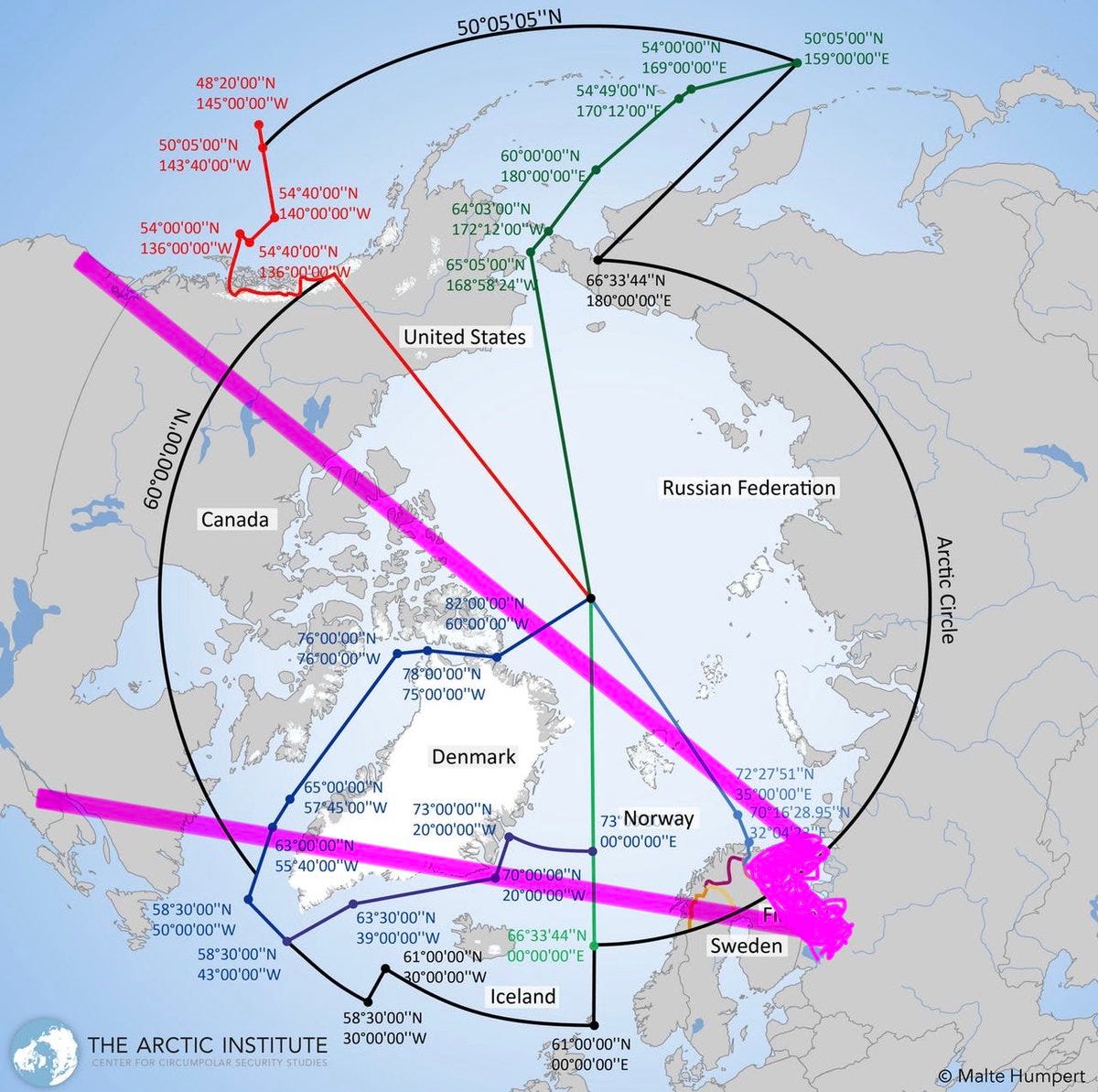
Object Zero’s crayon work on the Arctic Institute’s map is superb to illustrate that point.
The Europeans have whipped themselves into an almost comical lather over it all. Having lived with their NATSEC nomenklatura for years, I’m not shocked. They tend to be very narrowly read, get their ideas about the USA from NYT, WaPo, the usual suspects in East Coast Universitlandia, and their nomenklatura is worm-ridden with the same people who opposed Cold War NATO efforts to counter the Soviet Union’s militarism and supported every anti-USA trend of the fiscal quarter, etc. It is always 1968 or 1983 with these people.
Unhelpful to trans-Atlantic cooperation has been an almost gleeful approach to triggering these people who never thought DJT would come back to power, and from 2020-24 acted like it. The vengeful and bitter are fighting with the frag-pattern hitting everyone else.
Behind that triggering and, at least from this side of the pond, trolling, is a very serious security concern in the high north that Greenland is, literally, right in the middle of.
At The Conservative Woman, Jonathon Riley wonders if Greenland is worth more than the NATO alliance:
Satellite view of Greenland, Iceland, and parts of Northern Canada.
NASA/Ames Research Center, 17 May, 2005.
Greenland is the world’s largest island, (just) contiguous with Canada, and geographically part of North America. It was colonised by Denmark in the tenth century but the Norse settlements, which farmed sheep and cattle, died out during the mini-ice age of the medieval period, not long before the rediscovery of America by Columbus.
The majority of the population is now Inuit with only about 10 per cent being Nordic. Following a 1979 referendum, Denmark granted Greenland home rule and in 2008, self-government increased further. Denmark retains control of citizenship, security, finance and foreign affairs. Greenland joined the EU with Denmark but has since left. As a self-governing part of Denmark, it remains a member of Nato.
Greenland sits astride an area of great strategic importance. First, the Arctic ice is retreating as the result of an entirely natural process of cyclical warming – nothing to do with so-called man-made “climate change”. This will end when the world enters the next ice age, which is long overdue.
As the Arctic ice retreats, ships can sail through the north-east and north-west passages, sought for so long by explorers. This means not only that transit times can be reduced but also that the Russian “shadow fleet” of unregistered oil tankers engaged in moving sanctioned oil can more easily dodge interception, as is happening to Venezuelan oil tankers.
Second, Greenland probably has reserves of oil, coal and gas concealed beneath the ice cap, but exploration has been slow and difficult, for obvious reasons. Estimates put Greenland fourth in terms of likely reserves in the Arctic region.
Third, in Greenland’s territorial waters in the Arctic Ocean there are huge reserves of fish, shrimp, whales and seals – valuable food resources especially for China and Japan.
Finally, there is the matter of fresh water, an increasingly scarce commodity in many parts of the world. The Greenland ice sheet holds about 10 per cent of the world’s fresh water.
It is therefore easy to see why both the Russians and the Americans see Greenland as a valuable asset. Donald Trump made aggressive noises about “acquiring” Greenland during his first presidential term and has now made further remarks, perhaps emboldened by his successes in Iran and Venezuela.
Special envoy Jeff Landry has been appointed to examine how the US could acquire Greenland. The means so far mentioned have included diplomacy, a territorial purchase – the US has done this before in its history, for example Louisiana and Alaska – or a lease agreement.
The problem here is that the Greenlanders and the Danes are having none of it. Danish Prime Minister Lars Lokke Rasmussen told the BBC: “As long as we have a kingdom consisting of Denmark, the Faroe Islands and Greenland, we cannot accept actions that undermine our territorial integrity”. Rasmussen is on solid legal ground, as the UN Charter specifically states that frontiers must not be changed by force.
In his weekly post, Andrew Sullivan says that Trump is conducting a “Viking foreign policy” (trigger warning: contains Andrew Sullivan):


