Quotulatiousness

August 31, 2012

Where would London be without the Tube?

Filed under: Books, Britain, Media, Railways — Tags: , — Nicholas @ 09:27

At sp!ked, Neil Davenport reviews a new book about London’s iconic underground:

The closing ceremony of the 2012 London Olympics was notable for its groaning reliance on tourist-shop icons — all black cabs, bowler hats, Houses of Parliament, red pillar-boxes and Mini Coopers. In a dreary way, what could we expect? A tourist-shop portrayal of Britain is still internationally recognisable and, for the organisers, safe enough to avoid party-pooping controversy. Curiously, though, one famous figure of the capital was noticeable by its absence: the London Underground. With its roundel logo, distinctive trains and elegantly functional map, few landmarks of London are as richly iconic as this. Indeed, as a character player in umpteen films, novels and pop songs, no London setting would be complete without the Underground.

Throughout the network’s history, though, Londoners’ relationship with the Tube has often been uneasy and aggravating: overcrowding, delays, cancellations, the fare’s dent on the wallet and, for the middle classes, striking tube workers and their ‘inflated’ salary. Nevertheless, it is only when the Tube is not working properly that we become aware of its magnitude. Unlike Tower Bridge or Beefeaters, the Tube isn’t a remote or mythical symbol of London. It’s the living, working and organic lifeblood of the capital. It is the way in which millions of Londoners are able to work and play and thus, unlike Parliament, has meaning to ordinary people’s lives.

The boons and banes of the tube for Londoners (and visitors) are warmly captured in Andrew Martin’s Underground, Overground: A Passenger’s History of the Tube. A novelist and former ‘Tube Talk’ columnist for the London Evening Standard, Yorkshireman Martin pithily combines an authoritative history of the network’s development with personal reflections on his daily journeys. People can say they have become Londoners when they can navigate the vast system and reflect on its highs and lows, quirks and anomalies. Whether we admit it or not, Londoners will have their favourite stations and lines (the author’s is the Central line, mine the Victoria). They will notice the art décor splendour of Arnos Grove station or the beautifully rich tiles at Baker Street. They will curse themselves for falling asleep on the last tube (it’s that gentle rocking motion that sends you off to the Land of Nod) and waking up, as I have on numerous occasions, in High Barnet.
The search for the burial place of Richard III

Filed under: Britain, Cancon, History — Tags: , , , , , — Nicholas @ 07:40

Elizabeth sent me another link on the ongoing archaeological search for the burial place of King Richard III:

A high-profile search for the gravesite of the 15th-century monarch King Richard III — begun Saturday beneath a parking lot in the English city of Leicester — has a remarkable connection to a Canadian family whose members hold the genetic key to solving one of British history’s most enduring mysteries: Where is Richard III’s body?

The London, Ont.-based Ibsen family, recently proven to be descended from King Richard’s maternal line, has provided DNA samples aimed at confirming the regal identity of any human remains found during the unprecedented dig, which continues this week at the former site of a medieval church where — 527 years ago — the violently overthrown monarch was buried.

The University of Leicester-led archeological project was launched after the discovery that the maternal bloodline of the last Plantagenet king — killed in 1485 in the climactic battle of the War of the Roses — survived into the 21st century through Joy Ibsen, a British-born woman who immigrated to Canada after the Second World War and raised a family in southwestern Ontario.

If nothing else, the media coverage of this dig may generate lots of new members for the Richard III Society (Canadian branch, American branch).

August 29, 2012

Brendan O’Neill on the rape debate

Filed under: Britain, Law, Politics — Tags: , , — Nicholas @ 09:09

Always willing to take a contrarian stand, Brendan O’Neill refutes the very common meme:

In the words of Salma Yaqoob of Galloway’s Respect party, “rape occurs when a woman has not consented to sex”. Or in the widely reported phrasing of a spokesperson for Rape Crisis, “Sex without consent is rape”.

This sounds correct. It seems simple yet right to assert that if a woman has not consented to sex, then rape has occurred.

But it is wrong. More than that, the idea that all “non-consensual sex is rape”, as Galloway himself has now said in his clarification of his defence of Assange, represents a dangerous rewriting of what rape really means.

Feminists always focus on the state of mind of the woman or women involved in an alleged rape and disregard the state of mind of the man.

This is a terrible error, because in order for rape to have occurred, it is not enough to prove that the woman did not consent; we must also surely prove that the man knows she did not consent, or was utterly reckless as to the question of her consent, and carried on regardless.

That is, rape must involve an intention on the part of the man to commit rape. The man must have a guilty mind — or what is referred to in law as mens rea — in the sense that he knows he is committing rape. In leaving out this key component of rape, feminists are not only undermining the meaning and gravity of this crime — they are also displaying a cavalier disregard for some of the key democratic principles of the modern legal system.

August 28, 2012

Rehabilitating Florence Nightingale’s reputation

Filed under: Britain, Health, History, Military, Russia — Tags: , , , , — Nicholas @ 08:31

History Today has a defence of the much-maligned Florence Nightingale:

Jamaican-born Mary Seacole (1805-81), voted top of the list of the 2004 ‘100 Great Black Britons’ poll, is now slated to replace Florence Nightingale (1820-1910) as the true ‘heroine’ of the Crimean War. She is to be honoured as no less than the ‘Pioneer Nurse’ with a massive statue to be erected at St Thomas’ Hospital in London. This in spite of the strong links between Nightingale and the hospital, her base for over 40 years. It was there she established the first secular school for nurses in 1860 with funds raised in her name for her work in the Crimean War during the conflict of 1854-56. The Nightingale School operated for over a century from the hospital, whose redesign in the 1860s Nightingale also influenced.

[. . .]

The campaign promoting Seacole over Nightingale builds on 30 years of books, articles and films denigrating the latter. While she always had detractors, the serious assault on Nightingale’s reputation can be dated to 1982, with the publication of the Australian historian F.B. Smith’s Florence Nightingale: Reputation and Power (Croom Helm, 1982). The next major hit came in 1998 with Florence Nightingale: Avenging Angel (Constable, 1998) by a retired management consultant Hugh Small, which argues that Nightingale was actually responsible for the high death rates of the Crimean War and had a nervous breakdown as a result when she supposedly recognised this. Neither claim is supported by any serious documentation. Social media goes even further: see Facebook ‘Florence Nightingale was a Murdering Bitch’, later renamed ‘Florence Nightingale: The World’s Worst Nurse’, where she is described as a ‘deluded power hungry bitch’, who ‘looks like an uptight bitch’, so that ‘the day she died’ was ‘the best thing that ever happened to the field of nursing’.

[. . .]

The French were the instigators of the Crimean War, sent more troops and were better prepared than the British. Their death rates were lower in the first year. But the British government learned from the commissions it sent out and made enormous changes. British death rates fell dramatically, from 23 per cent in the first winter to 2.5 per cent in the second — no greater than deaths among soldiers in peacetime barracks in London, as Nightingale proudly showed in a chart. In contrast, the French (lower) 11 per cent death rate in the first winter, rose to 20 per cent in the second winter. Since the French were late in publishing their statistics, neither Nightingale nor the royal commission could use them for comparison. However French doctors themselves credited the British reforms for their superior performance. Once they were properly cleansed and functioning Nightingale was proud of the Crimean hospitals. In her own charts she separated the two periods, before and after the sanitary and supply commissions, to emphasise the crucial role they played in reducing mortality.

Her analysis of what went wrong was widely accepted and led to major changes to health care in the British Army. The ‘Nightingale Fund’ raised in her honour for that work paid for the training school at St Thomas’, which led to raising nursing to the level of a profession throughout much of the world. Her experience of the war, and her reputation and research as a result of it, grounded all the social and public health work she did for the rest of her life. Her vision for health reform included bold statements, such as the belief that the poor should receive as good quality hospital care as private patients and warnings as to the dangers of hospital acquired infections. Nightingale, in short, is no mere historical figure. Her lamp should not be retired but shone brightly onto the hospital and health care problems of today.

August 27, 2012

Lego is 80 years old

Filed under: Business, Europe, History — Tags: , , , — Nicholas @ 10:28

In The Register, Brid-Aine Parnell on the 80th birthday of one of the iconic toys of the 20th century:

Way back in 1932, Ole Kirk Kristiansen, a Danish joiner and carpenter, found he wasn’t making enough money from carpentry anymore and decided to try making and selling wooden toys instead. Although he didn’t know it yet, he was on his way to building the Lego company, which would eventually have some of the most recognisable and long-lasting toys in the world: bricks and yellow minifigurines.

[. . .]

According to that research, girls aren’t into Lego. Poul Schou, senior vice president of product group 2, told The Register that Lego was for boys, not girls, because although both sexes loved the larger preschool bricks of Duplo once the girls hit five, they weren’t interested in construction anymore.

“We have seen that girls seem to be less interested in continuing with our products when they get to four or five years old so we don’t really get them into the Lego system,” he said.

Here at Vulture Central, that seemed really odd. Not only did everyone in the office, regardless of gender, remember playing with and loving Lego throughout their childhood, for the most part, their kids, both boys and girls, love it as well.

[. . .]

Schou said that the company got “a lot of feedback from boys and girls”. The kids are encouraged to go online to talk about the products they buy and what age they are, and the boxes often include incentives to answer Lego survey questions as well.

Of course if girls aren’t buying Lego stuff, they won’t be answering any questions, which would be a kind of answer in itself (although whether the answer would be “Girls don’t like Lego” or “Girls don’t like surveys” would be hard to figure out).

Finland and the dangers of being a company town

Filed under: Business, Economics, Europe — Tags: , , , , , — Nicholas @ 09:09

I had no idea that Finland’s economy was so tightly tied to the fortunes of Nokia:

Nokia contributed a quarter of Finnish growth from 1998 to 2007, according to figures from the Research Institute of the Finnish Economy (ETLA). Over the same period, the mobile-phone manufacturer’s spending on research and development made up 30% of the country’s total, and it generated nearly a fifth of Finland’s exports. In the decade to 2007, Nokia was sometimes paying as much as 23% of all Finnish corporation tax. No wonder that a decline in its fortunes — Nokia’s share price has fallen by 90% since 2007, thanks partly to Apple’s ascent — has clouded Finland’s outlook.

[. . .]

Strip these sorts of firms from the list and only one resembles Nokia: Taiwan’s Hon Hai, an electronics manufacturer. Yet Nokia made 27% of Finnish patent applications last year; the corresponding figure for Hon Hai was 8%. Although numbers are falling, Finland is home to the greatest number of Nokia employees; Hon Hai’s staff is mostly in China. It is a similar story with other firms. Sales of Nestlé, a consumer-goods company, weigh in at 15% of Swiss GDP but its share of Swiss jobs is punier than Nokia’s in Finland. Samsung, whose revenues are twice Nokia’s, has half its clout as a share of GDP: South Korea’s economy is more diversified. The importance of Nokia to Finland looks like a one-off.

August 24, 2012

It’s an odd sort of “austerity” that increases government spending

Filed under: Britain, Economics, Government — Tags: , , , , — Nicholas @ 10:27

Everyone knows that Britain’s current economic woes are because of the government’s harsh austerity measures, right?

The argument over ‘the cuts’ has now become wholly detached from reality. Listen to any BBC debate and you’ll find the debate presented along these lines: ‘The Coalition, aiming to eliminate the deficit by 2015, has cut spending; this has had the effect of reassuring the markets and preventing a Greek-style meltdown but, on the other hand, it has impeded growth, and so reduced the tax-take, which has meant that the deficit now won’t be abolished until at least 2017. Some people believe that we need to focus on growth, not austerity. They are calling for Plan B’.

Every assumption contained in that summary is false. Net government expenditure is higher now than it was three years ago. Such deficit reduction as there has been has come largely through tax rises rather than spending cuts. The reason that government borrowing costs are low is not because of the imagined austerity programme, but because the Bank of England has magicked up nearly £400 billion through quantitative easing, given it to banks and told them to buy government debt with it. Growth and austerity are not antonyms: it was debt-fuelled growth caused the disaster in the first place. As for Plan B, no one has yet tried Plan A: spending less.

The new Malthusian miserabilism

Filed under: Britain, Environment, Food, History — Tags: , , , — Nicholas @ 10:18

Brendan O’Neill on the once-again popular theories of Reverend Thomas Malthus:

Malthusianism is back in vogue. Not only in theatres in Sloane Square, but across the opinion-forming spectrum. Last year, the human population hit seven billion, giving rise to a boom in handwringing commentary. BBC reporters tell us that ‘uncontrolled population growth threatens to undermine efforts to save the planet’. The Guardian’s environment reporters are forever warning of the dangers of our ‘rapidly growing global population’. Then there’s much-loved celebs like David Attenborough, who recently signed up to the population-panic group the Optimum Population Trust (OPT) and frequently declares: ‘I’ve never seen a problem that wouldn’t be easier to solve with fewer people.’

The New Malthusians are getting cockier. At the UN Rio+20 Earth summit earlier this year, 105 respectable institutions, including Britain’s increasingly Malthusian Royal Society, urged the international powers-that-be to look beyond the ‘ethical sensitivities’ around the population issue and ‘confront rising global population’. All those wailing babies mean we are now ‘living beyond the planet’s means’, they declared. The Bill and Melinda Gates Foundation is pumping millions of dollars into the distribution of birth-control tools in the developing world. Well-off westerners can now even offset their carbon emissions by helping to prevent the birth of babies in less fortunate places. A website called Pop Offsets, launched by the OPT, allows you to work out how much carbon you emit in your daily life and then tells you how many births you must help to prevent in order to offset that carbon. You make a financial contribution to a reproductive charity; that charity encourages a woman somewhere not to have more kids; and, hey presto, your personal emissions are cancelled out by your contribution to the non-creation of resource-demanding babies. The Guardian’s report on this initiative was illustrated with a photo of babies, 12 of them, just lying there like the problematic drains on nature.

Malthusianism is so ingrained in the outlook of greens and other trendies that people can fantasise about loads of human beings dying off without anyone batting an eyelid. Population panic-merchants often claim that the ‘carrying capacity’ of the planet is two billion human beings, so at least five billion less than at present. In a discussion on Radio 3’s super-respectable Nightwaves a couple of years ago, the psychologist and writer Sue Blackmore declared: ‘For the planet’s sake, I hope we have bird flu or some other thing that will reduce the population, because otherwise we’re doomed.’ There were no complaints to the BBC: the idea that humans are a problem in need of a solution is widespread in respectable ­circles.

Ukraine rejoins the submarine team

Filed under: Europe, Military — Tags: , , , — Nicholas @ 09:18

The only submarine in Ukraine’s navy is seaworthy again:

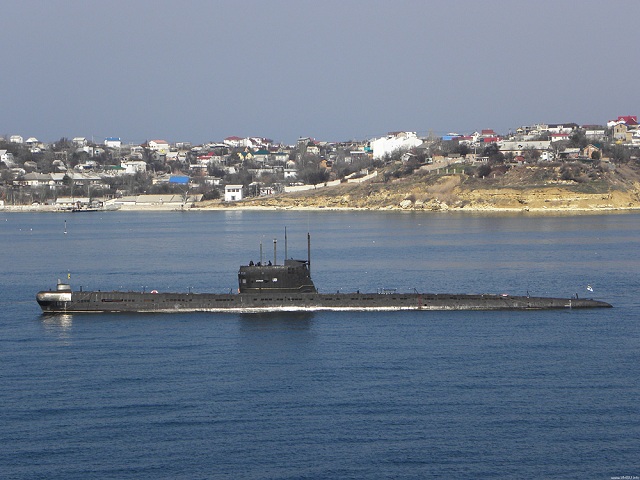
The Ukrainian Navy got its only submarine (the Zaporozhye) back into service. The 40 year old Foxtrot class boat has been out of action for 18 years and was recently refurbished. Zaporozhye is the only sub in the Ukrainian Navy, which mainly consists of small, Cold War era frigates (one) and corvettes (seven). There are also two amphibious ships and six minesweepers. The Foxtrot class diesel-electric subs were designed in the late 1950s and 58 were built until production ended in 1983. These are 1,900 ton boats with ten torpedo tubes and a crew of 78. Russia retired all of its Foxtrots by 2000, but they were all obsolete by the early 1980s. The Zaporozhye is the last Foxtrot still in service.

The Black Sea has not been kind to submarines. Three years ago the Russian Black Sea Fleet suffered a major blow when its only operational submarine, a 19 year old Kilo class boat, broke down at sea and limped back to port on partial power. The only other sub in the fleet, a 32 year old Tango class boat, was undergoing repairs (and still is, but will soon be scrapped.) During the Cold War, the Black Sea Fleet had thirty or more submarines.


Image from Navy Recognition.

Wikipedia says:

Zaporizhzhia (U-01) (Ukrainian: Запоріжжя) is a project 641 (“Foxtrot” class) submarine, the only submarine of the Ukrainian Navy at the moment. She formerly carried the Soviet Navy pennant number B435.

Zaporizhzhia is run by a naval crew of 78, commanded by 1st Rank Capt. Oleh Orlov.

Digging up a municipal car park … to find the body of a king

Filed under: Britain, History — Tags: , , , — Nicholas @ 07:51

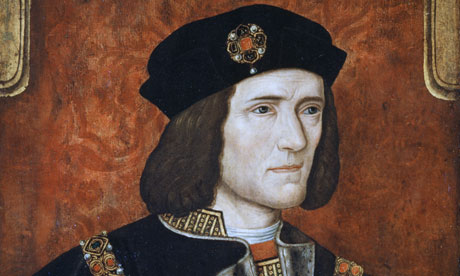
An interesting story on the search for the lost burial place of Richard III, the last Plantagenet king of England:

Archaeologists are hoping to find the lost grave of a medieval monarch in a dig that is due to get underway today.

In what is believed to be the first-ever archaeological search for the lost grave of an anointed King of England, experts from the University of Leicester are set to begin their quest to find the site of a church where it is believed King Richard III was buried in the city more than 500 years ago.

It is thought the site of the church may be on land currently being used as a car park for council offices in the city.

King Richard III, the last Plantagenet, ruled England from 1483 until he was defeated at the Battle of Bosworth in 1485.

The most famous battle of the War of the Roses was fought on August 22, 1485, and famously saw the death of Richard III.

The battle ended decades of civil war and was won by the Lancastrians.

It paved the way for Henry Tudor to become the first English monarch of the Tudor dynasty.

The battle also inspired the scene from Shakespeare’s play Richard III when the defeated hunchback king declares: ‘A horse, a horse, my kingdom for a horse’.

H/T to Elizabeth for the link.

August 22, 2012

QotD: Orwell on the Dieppe raid

Filed under: Cancon, France, Germany, History, Military, Quotations, WW2 — Tags: , , — Nicholas @ 09:12

D[avid] A[stor] very damping about the Dieppe raid, which he saw at more or less close quarters and which he says was an almost complete failure except for the very heavy destruction of German fighter planes, which was not part of the plan. He says that the affair was definitely misrepresented in the press and is now being misrepresented in the reports to the P.M., and that the main facts were: – Something over 5000 men were engaged, of whom at least 2000 were killed or prisoners. It was not intended to stay longer on shore than was actually done (ie. till about 4pm), but the idea was to destroy all the defences of Dieppe, and the attempt to do this was an utter failure. In fact only comparatively trivial damage was done, a few batteries of guns knocked out etc., and only one of the three main parties really made its objective. The others did not get far and many were massacred on the beach by artillery fire. The defences were formidable and would have been difficult to deal with even if there had been artillery support, as the guns were sunk in the face of the cliffs or under enormous concrete coverings. More tank-landing craft were sunk then got ashore. About 20 or 30 tanks were landed but none got off again. The newspaper photos which showed tanks apparently being brought back to England were intentionally misleading. The general impression was that the Germans knew of the raid beforehand. Almost as soon as it was begun they had a man broadcasting a spurious “eye-witness” account from somewhere further up the coast, and another man broadcasting false orders in English. On the other hand the Germans were evidently surprised by the strength of the air support. Whereas normally they have kept their fighters on the ground so as to conserve their strength, they sent them into the air as soon as they heard that tanks were landing, and lost a number of planes variously estimated, but considered by some RAF officers to be as high as 270. Owing to the British strength in the air the destroyers were able to lie outside Dieppe all day. One was sunk, by this was by a shore battery. When a request came to attack some objective on shore, the destroyers formed in line and raced inshore firing their guns while the fighter planes supported them overhead.

George Orwell, diary entry for August 22, 1942.

August 21, 2012

Royal Navy faces shortage of trained submariners

Filed under: Britain, Military, Technology, Weapons — Tags: , , , — Nicholas @ 08:56

Thomas Harding in the Telegraph:

Internal documents warn that a lack of recruits for the Submarine Service may leave attack submarines and boats carrying the Trident nuclear missile stranded in port.

A separate threat comes from a predicted 15 per cent shortfall in engineers by 2015.

One in seven posts for weapons officers at the rank of lieutenant will also be vacant, raising operational questions over the boats equipped with nuclear and cruise missiles.

Many submariners are being poached by the civilian nuclear sector and those who remain are being forced to go to sea for longer and more frequently.

Adml Lord West, the former First Sea Lord, said the situation was “very worrying” and he hoped the Navy had mechanisms in place to make up for the shortfall.

[. . .]

The Navy has a fleet of six attack submarines and four Vanguard boats that carry the Trident nuclear missile, but the personnel issues could mean they cannot be deployed.

The report found that the recruiting and retention of submariners was also threatening operations. “Inability to recruit, retain and develop sufficient nuclear and submarine design qualified personnel will result in an inability to support the Defence Nuclear Programme,” the document said.

August 20, 2012

Punks as snobs

Filed under: Europe, Law, Media, Religion, Russia — Tags: , , , — Nicholas @ 09:06

Always willing to explore the contrarian position, Brendan O’Neill explains why Pussy Riot’s legal issues have gotten so much attention in the west:

Pussy Riot’s closing statements in their trial for blasphemy confirmed that they have not only inherited the original punk movement’s thrashing guitars and in-yer-face sensibility; they have also effusively embraced its art-school snobbishness.

Punk, in its original incarnation, was always as much a screech of rage against the “sheeple” as it was a two-fingered salute to the powers-that-be. Think Johnny Rotten wailing “They made you a moron!” in the Sex Pistols’ “God Save the Queen”. “Don’t be told what you want / Don’t be told what you need”, sang Rotten, expressing the core belief of punk — that the vast bulk of the masses, effectively everyone except the punks, had been moulded into a moron by the man.

The same snobbish thinking animates Pussy Riot today. In her closing statement, Nadezhda Tolokonnikova bemoaned the “enforced civic passivity of the bulk of the population” in Russia. She said the Russian regime “easily manipulates public opinion” — which sounds like an attack on the regime but it is also a sly salvo against the Russian masses, who must have minds like putty if they can be so easily manipulated. In contrast to this civil slavishness, Pussy Riot are all about “authentic genuineness and simplicity”, said Tolokonnikova.

[. . .]

Now we can see why Pussy Riot are so popular among many liberal opinion-formers here in the West — it is because both share a view of the little people as less culturally sophisticated and more easily forced into conformism than the commenting, bohemian, punkish sets. But of course, making snobbish statements and singing rubbish songs should not be a crime. Pussy Riot should be freed from prison immediately and allowed to continue expressing their loathing of Putin’s regime and their disgust with the Russian masses.

Royal Navy announces design of new “Type 26 Global Combat Ship”

Filed under: Britain, Military, Technology — Tags: , , — Nicholas @ 08:46

Britain’s Royal Navy revealed the design of the Type 26 today:

The announcement on the Type 26 Global Combat Ship has been described by officials as a “significant milestone” in a programme which will support “thousands of UK shipbuilding jobs”.

Basic specification images show sleek stealth features, familiar to modern warships, making them harder to detect.

The ship will be 148 metres long with a displacement of 5,400 tonnes.

The MoD has been working with BAE Systems since 2010 to determine the basic design for the ship. Detailed specifications of the vessel will now be examined.

Vertical missile silos for a range of weapons, such as cruise missiles, will be housed on board along with a medium calibre gun.

The hangar on board will house a Merlin or Wildcat helicopter and there will be extra space for unmanned drones, underwater vehicles or other specialist equipment.

[. . .]

The current plan is to build 13 of the ships, which are due to start coming into service after 2020.

The Type 26 will replace the 13 Type 23 frigates but the MoD is not giving a precise commitment on numbers until they know the unit cost.

The First Sea Lord, Admiral Sir Mark Stanhope, says the ship will be used “across the full spectrum of warfare”.

He added: “The T26 GCS will be a multi-mission warship designed for joint and multinational operations… including complex combat operations, maritime security operations such as counter piracy, as well as humanitarian and disaster relief work around the world.”

August 19, 2012

UK girls did better than the boys in annual examinations

Filed under: Britain, Bureaucracy, Education — Tags: , , — Nicholas @ 11:39

Tim Worstall explains how it was engineered and why it’s not the wonderful accomplishment that some have been exulting about:

As a general rule one of the things that we know about education is that girls do better under a system of continuous assessment and boys under a system of competitive examination. This is of course not necessarily true of any one individual: but it is on average across any particular age cohort of children. If you want the girls to do better than the boys then skew the testing system to course work. Want the boys to appear to do better then bugger the homework and see what they can regurgitate in two three hour periods in the summertime.

That we really do know that this is true comes from the way that a few years back the system of examinations in England and Wales was deliberately changed to reflect this very point. GCSEs, A Levels, are now more based upon coursework than they used to be. The actual exams themselves now have less importance in the system than they used to. The stated objective of this change was to lessen the skew in favour of boys that a purely examination based system entailed.

So it is possible to exult about the girls outdoing the boys these days if that’s what you want to do. For it would be an example of a government policy, a very rare one indeed, actually achieving the goal originally set out. The educationalists wished to reduce the achievement gap between boys and girls. They did so.

« Newer PostsOlder Posts »

Powered by WordPress