
Published on 4 Mar 2017
Batman is answering your questions about World War 1, oddly enough. This week we talk about the European micro nations and about the quieter sectors on the Western Front.
March 5, 2017
Liechtenstein, San Marino, Monaco and Andorra in WW1 – Live And Let Live I OUT OF THE TRENCHES
Comments Off on Liechtenstein, San Marino, Monaco and Andorra in WW1 – Live And Let Live I OUT OF THE TRENCHES
March 4, 2017
Barcelona opens the first brothel in Europe “staffed” with sex dolls
I have to admit, I didn’t see this one coming (if you’ll pardon the expression):
A new brothel has opened in Barcelona that offers men the chance to fulfil all their fantasies – as long as their fantasies involve hyper-realistic silicone dolls.
Lumidolls, which operates from an apartment building in downtown Barcelona, claims to be the first sex doll agency in Europe and offers hour-long ‘appointments’ with one of its four dolls for just €80.
The dolls, which are individually crafted from thermoplastic elastomer to be unique, have three orifices and flexible limbs enabling them to be maneuvered in almost any position.
Such sex dolls have already proved a huge hit in Japan and China – especially with husbands working away from home who want to avoid being unfaithful – but Lumidoll claims to be the first such brothel to open in Europe.

H/T to Clodagh Doyle for the link.
Update: Amy Alkon on a related topic.
Men Aren’t “Dehumanized” By Vibrators And Women Aren’t “Dehumanized” By Sex Robots
People have intelligence higher than that of a cat, fooled by a laser pointer.
Yes, we are quite able to discern between, say, a microwave and a human chef and a sex robot and a woman. Despite what this hysterical numbskull writes at Prospect Magazine about the “huge problem!!!” in robotics and AI
And Maggie McNeill also chimes in:
Moon-barking lunatic argues that a woman-shaped toaster is actually a woman, because sadfeelz & magic. https://t.co/BvQwI5OShL
— Maggie McNeill (@Maggie_McNeill) March 4, 2017
Update the second, 23 March: It was reported last week that the Barcelona sex doll brothel has been forced to move, due to opposition from non-sex-doll prostitutes and their union:
The original location in Barcelona at 2 Baixada de Sant Miquel had been in the Spanish city’s Gothic quarter, north of the cathedral.
But the brothel, not far from La Rambla in the heart of the city has now moved to a mystery new location with a receptionist saying the address would only be given out to paying customers.
Prostitutes who work in the city with Aprosex – the Association of Sex Professionals – objected saying a doll cannot match the services of a real person and denigrates real sex workers to merely being an object.
A statement on their website read: “The sex-affection of a person can not be provided by a doll. They are different and compatible services. They do not communicate.
“They do not listen to you or caress you, they do not comfort you or look at you. They do not give you their opinion or drink a glass of champagne with you.”
Janet, a prostitute with over 30 years in the industry, who works in the city’s Raval district said: “It is another strategy of the patriarchy that presents us as objects without rights or soul. A privilege of the wealthy classes.”
Comments Off on Barcelona opens the first brothel in Europe “staffed” with sex dolls
The miniatures of Gerry Anderson’s UFO
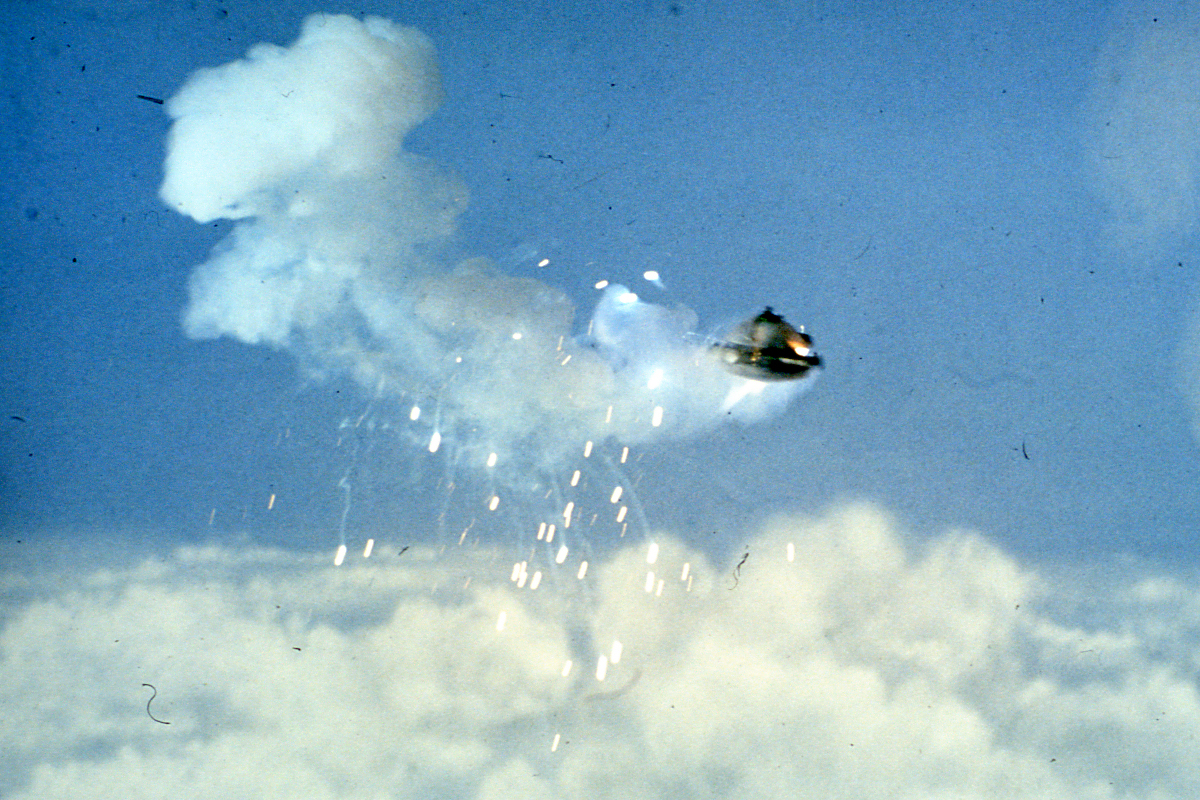
One of my favourite shows in the early 1970s was UFO, by the same creator and production team of the classic “supermarionation” shows Fireball XL5, Thunderbirds, and Captain Scarlet. The Prop Gallery has an overview of how the miniatures used in the show were developed and filmed:

UFO is a 1970 science fiction television series created by Gerry and Sylvia Anderson and was the final production of Century 21, formally AP Films, who had previously been responsible for other hit shows such as Thunderbirds and Captain Scarlet and the Mysterons. UFO was the Anderson’s first live action series, financed by the Incorporated Television Company (ITC) of media mogul Lew Grade who like what he saw in the Anderson produced film Doppelganger, the series was aimed at a more adult demographic than their earlier marionette based work.
The series follows a secret military organisation known as SHADO, an acronym for Supreme Headquarters Alien Defence Organisation, who defend the Earth from alien invasion under the cover of the Harlington-Straker Studios. Starring Ed Bishop as Commander Straker much of the series was filmed the MGM British Studios, later known as Elstree, which doubled as the Straker Studio in a clever money saving move. While the series may have lacked puppets it did feature Anderson’s other trademark, stunning model miniature effects sequences realised by longtime collaborator Derek Meddings who would go on to become an Academy Award winner and one of the most highly regarded and influential effects talents ever to work in the industry.
In early 1969 Century 21 set about realising the requirements for filming from their studios in Slough and work began on developing the various SHADO vehicles. Instrumental in this process were Derek Meddings and prolific designer Mike Trim who created concepts which were to bring yet another Anderson world to life. Miniatures were built in various scales by the talented Century 21 model makers, the old puppet stages used on previous shows were transformed in to fully fledged visual effects stages to handle the construction of larger model sets and filming began in April 1969 under the supervision of Meddings.
Comments Off on The miniatures of Gerry Anderson’s UFO
QotD: The freedoms of yesteryear versus the freedoms of today
I am deeply concerned for the United Kingdom and its future. I look at the old country as it was in my youth and as it is today and, to use a fine Scots word, I am scunnered.
I know that some things are wonderfully better than they used to be: the new miracles of surgery, public attitudes to the disabled, the health and well-being of children, intelligent concern for the environment, the massive strides in science and technology.
Yes, there are material blessings and benefits innumerable which were unknown in our youth.
But much has deteriorated. The United Kingdom has begun to look more like a Third World country, shabby, littered, ugly, run down, without purpose or direction, misruled by a typical Third World government, corrupt, incompetent and undemocratic.
My generation has seen the decay of ordinary morality, standards of decency, sportsmanship, politeness, respect for the law, family values, politics and education and religion, the very character of the British.
Oh how Blimpish this must sound to modern ears, how out of date, how blind to “the need for change and the novelty of a new age”. But don’t worry about me. It’s the present generation with their permissive society, their anything-goes philosophy, and their generally laid-back, inyerface attitude I feel sorry for.
They regard themselves as a completely liberated society when in fact they are less free than any generation since the Middle Ages.
Indeed, there may never have been such an enslaved generation, in thrall to hang-ups, taboos, restrictions and oppressions unknown to their ancestors (to say nothing of being neck-deep in debt, thanks to a moneylender’s economy).
We were freer by far 50 years ago — yes, even with conscription, censorship, direction of labour, rationing, and shortages of everything that nowadays is regarded as essential to enjoyment.
We still had liberty beyond modern understanding because we had other freedoms, the really important ones, that are denied to the youth of today.
We could say what we liked; they can’t. We were not subject to the aggressive pressure of special interest minority groups; they are. We had no worries about race or sexual orientation; they have. We could, and did, differ from fashionable opinion with impunity, and would have laughed PC to scorn, had our society been weak and stupid enough to let it exist.
We had available to us an education system, public and private, that was the envy of the world. We had little reason to fear being mugged or raped (killed in war, maybe, but that was an acceptable hazard).
Our children could play in street and country in safety. We had few problems with bullies because society knew how to deal with bullying and was not afraid to punish it in ways that would send today’s progressives into hysterics.
We did not know the stifling tyranny of a liberal establishment, determined to impose its views, and beginning to resemble George Orwell’s Ministry of Truth.
Above all, we knew who we were and we lived in the knowledge that certain values and standards held true, and that our country, with all its faults and need for reforms, was sound at heart.
George MacDonald Fraser, “The last testament of Flashman’s creator: How Britain has destroyed itself”, Daily Mail, 2008-01-05.
Comments Off on QotD: The freedoms of yesteryear versus the freedoms of today
March 3, 2017
Conrad Loses His Job – Nivelle’s Coup I THE GREAT WAR Week 136
Published on 2 Mar 2017
The new Austro-Hungarian Kaiser is not happy about his Empire’s dependence on the German ally. And he is also not happy about their own military decisions and over the winter has worked to replace key positions with his own men. The last step in that process is convincing Conrad von Hötzendorf to take a position on the Italian Front. At the same time, French Commander Robert Nivelle is trying to get control over the British Armies on the Western Front and the Zimmermann Telegram is released to the press.
Comments Off on Conrad Loses His Job – Nivelle’s Coup I THE GREAT WAR Week 136
March 2, 2017
Possible end-game for the British nuclear deterrent
Charles Stross speculates on a few ways that Il Donalduce could trigger the end of Britain’s nuclear-armed ballistic missile submarines:
Working hypothesis #1: Donald Trump is an agent of influence of Moscow. Less alarmingly: Putin’s people have got blackmail material on the current President and this explains his willingness to pursue policies favourable to the Kremlin. Russian foreign policy is no longer ideologically dominated by communism, but focusses on narrow Russian interests as a regional hegemonic power and primary oil and gas exporter.
Clearly, it is not in Russia’s geopolitical interest to allow a small, belligerent neighbor to point strategic nuclear missiles at Moscow. But this neighbor’s nuclear capability has a single point of failure in the shape of the resupply arrangements under the 1958 UK-USA Agreement. Donald Trump has made no bones about his willingness to renegotiate existing treaties in the USA’s favor, and has indicated that he wants to modernise and expand the US strategic nuclear capability. Existing nuclear weapons modernization programs make the first goal pointless (thanks, Obama!) but he might plausibly try to withdraw British access to Trident D-5 in order to justify commissioning four new US Navy SSBNs to carry the same missiles and warheads.
(Yes, this would break the “special relationship” between the USA and the UK for good — but remember, this is Donald Trump we’re talking about: the original diplomatic bull in a china shop who decapitated the state department in his first month in office.)
Trump could present this as delivering on his promise to expand the US nuclear capability, while handing his buddy a gift-wrapped geopolitical easter egg.
Working hypothesis #2: Let us suppose that Donald Trump isn’t a Russian agent of influence. He might still withdraw, or threaten, British access to Trident as a negotiation lever in search of a better trade deal with the UK, when Theresa May or her successor comes cap-in-hand to Washington DC in the wake of Brexit. It’s a clear negative sum game for the British negotiating side — you can have a nuclear deterrent, or a slightly less unpalatable trade deal, but not both.
In this scenario, Trump wouldn’t be following any geopolitical agenda; he’d just be using the British Trident renewal program as a handy stick to beat an opponent with, because Trump doesn’t understand allies: he only understands supporters and enemies.
As for how fast the British Trident force might go away …
Missiles don’t have an indefinite shelf-life: they need regular servicing and maintenance. By abrogating the 1958 agreement, or banning Royal Navy warships from retrieving or delivering UGM-133s from the common stockpile at King’s Bay, POTUS could rely on the currently-loaded missiles becoming unreliable or unsafe to launch within a relatively short period of time — enough for trade negotiations, perhaps, but too short to design and procure even a temporary replacement. It’s unlikely that French M51 missiles could be carried aboard Dreadnought-class SSBNs without major design changes to the submarines, even if they were a politically viable replacement (which, in the wake of Brexit, they might well not be).
Comments Off on Possible end-game for the British nuclear deterrent
Catherine the Great – II: Not Quite Empress Yet – Extra History
Published on 4 Feb 2017
Sophia’s excitement to meet her future husband deflated when she realized Peter III was a boor who cared nothing about Russia. By contrast, she threw herself into learning the culture with such vigor that she earned the love of the people. She was rechristened Catherine and married Peter… but when he became emperor, his mistakes and her popularity began to add up to a crisis situation.
Comments Off on Catherine the Great – II: Not Quite Empress Yet – Extra History
March 1, 2017
The different “flavours” of propaganda
Cory Doctorow on the various types of propaganda in use around the world:
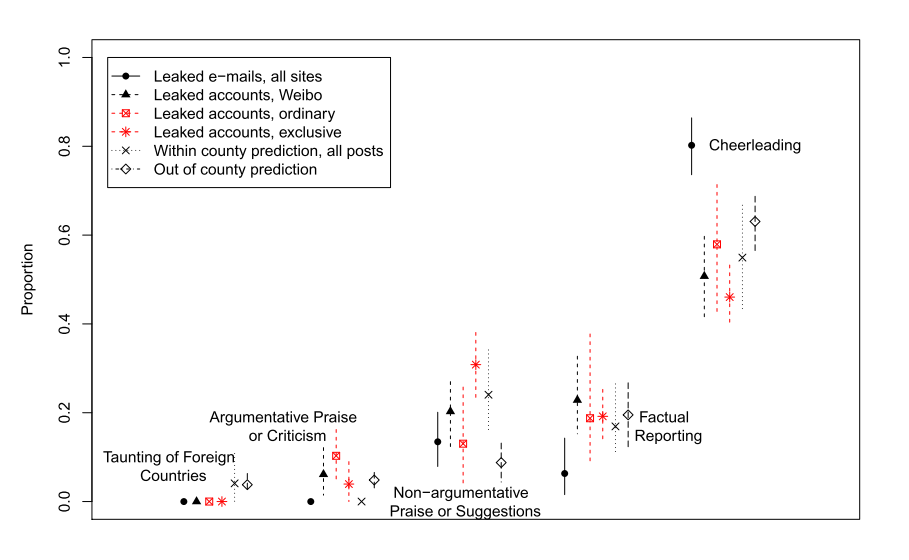
Jonathan Stray summarizes three different strains of propaganda, analyzing why they work, and suggesting counter-tactics: in Russia, it’s about flooding the channel with a mix of lies and truth, crowding out other stories; in China, it’s about suffocating arguments with happy-talk distractions, and for trolls like Milo Yiannopoulos, it’s weaponizing hate, outraging people so they spread your message to the small, diffused minority of broken people who welcome your message and would otherwise be uneconomical to reach.
Stray cites some of the same sources I’ve written about here: Tucker Max’s analysis of Yiannopoulos’s weaponized hate and The Harvard Institute for Quantitative Science team’s first-of-its kind analysis of leaked messages directing the activities of the “50-cent army, which overwhelms online Chinese conversation with upbeat cheerleading (think of Animal Farm‘s sheep-bleating, or Nineteen Eighty-Four‘s quackspeak).
But I’d never encountered the work he references on Russian propaganda, by RAND scholar Christopher Paul, who calls Russian disinformation a “firehose of falsehood.” This tactic involves having huge numbers of channels at your disposal: fake and real social media accounts, tactical leaks to journalists, state media channels like RT, which are able to convey narrative at higher volume than the counternarrative, which becomes compelling just by dint of being everywhere (“quantity does indeed have a quality all its own”).
Mixing outright lies with a large dollop of truth is key to this tactic, as it surrounds the lies with a penumbra of truthfulness. This is a time-honored tactic, of course: think of the Christian Science Monitor‘s history of outstanding international coverage, accompanied by editorials about God’s ability to heal through prayer; or Voice of America‘s mixture of excellent reporting on (again) international politics and glaring silence on US crises (see also: Al Jazeera as a reliable source on everything except corruption in the UAE; the BBC World Service‘s top-notch journalism on everything except UK complicity in disasters like the Gulf War, etc).
In addition to this excellent taxonomy of propaganda, Stray proposes countermeasures for each strain: for Russia-style “firehoses of falsehood,” you have to reach the audience first with an alternative narrative; once the firehose is on, it’s too late. For Chinese quackspeak floods, you need “organized, visible resistance” in the streets. For pathetic attention-whores like Yiannopoulos, Stray says Tucker Max is right: you have to ignore him.
Comments Off on The different “flavours” of propaganda
Yes Prime Minister – Bernard Woolley on defence capabilities
Uploaded on 20 Jul 2010
Comments Off on Yes Prime Minister – Bernard Woolley on defence capabilities
February 28, 2017
Outbreak of World War 1 – A Banker’s Perspective I THE GREAT WAR Special
Published on 27 Feb 2017
The classic narrative of the outbreak of World War 1 is that everyone saw it coming and was awaiting it with patriotic fervor. But studying the people that profited most from a war, the bankers, that idea is definitely challenged.
Comments Off on Outbreak of World War 1 – A Banker’s Perspective I THE GREAT WAR Special
Remembering the Royal Navy’s humiliation at the Battle of Chatham
Apparently the Royal Navy’s long unbroken tradition of glorious victories had a few setbacks after all, like the 1667 Battle of Chatham, which a flotilla of Dutch sailing vessels will be commemorating this June:
The Dutch are preparing to invade English seas with a fleet of 90 vessels after a previous expedition boarded the Royal Navy’s flagship and stole the Royal Coat of Arms from her.
In a celebration of Dutch Admiral De Ruyter’s 1667 raid on Chatham Dockyard, which resulted in English flagship HMS Royal Charles being boarded and ransacked by Dutch sailors, their modern-day civilian counterparts are planning a memorial cruise to Chatham.
The raid is known in British naval history as the Battle of Chatham, and formed part of the endless naval scrapping of the middle of the last millennium which eventually forged Britain’s 19th century dominance of the high seas.
In the battle, the numerically superior Dutch fleet sailed right up the River Medway into Chatham, Kent, and generally caused mayhem amongst the laid-up English warships moored there. The English fleet, starved of money and manpower, could not afford to put to sea in numbers despite wreaking havoc on the Dutch in the previous year.
Amongst other booty, the Dutch made off with the English royal coat of arms from fleet flagship HMS Royal Charles, which adorned the warship’s stern. The ornate carving can be viewed in the Netherlands’ Rijksmuseum today.
Comments Off on Remembering the Royal Navy’s humiliation at the Battle of Chatham
QotD: “Mr. Keynes’ excellent little book”
Interestingly, Mussolini found much of John Maynard Keynes’s economic theories consistent with fascism, writing: “Fascism entirely agrees with Mr. Maynard Keynes, despite the latter’s prominent position as a Liberal. In fact, Mr. Keynes’ excellent little book, The End of Laissez-Faire (l926) might, so far as it goes, serve as a useful introduction to fascist economics. There is scarcely anything to object to in it and there is much to applaud.”
After the worldwide Great Depression, Mussolini became more vocal in his claims that fascism explicitly rejected the capitalist elements of economic individualism and laissez-faire liberalism. In his “Doctrine of Fascism,” Mussolini wrote: “The Fascist conception of life accepts the individual only in so far as his interests coincide with the State. . . . Fascism reasserts the rights of the state. If classical liberalism spells individualism, Fascism spells government.” In his 1928 autobiography, Mussolini made clear his dislike for liberal capitalism: “The citizen in the Fascist State is no longer a selfish individual who has the anti-social right of rebelling against any law of the Collectivity.”
Lawrence K. Samuels, The Socialist Economics of Italian Fascism, quoted by Perry de Havilland in “Mussolini admired ‘Mr. Keynes’ excellent little book'” at Samizdata, 2015-07-08.
Comments Off on QotD: “Mr. Keynes’ excellent little book”
February 26, 2017
Disc Grenade – Camel Corps – Austro-Hungarian Heroes I OUT OF THE TRENCHES
Published on 25 Feb 2017
Indy sits in a French Chair this time and answers your questions about World War 1. This week we talk about the German disc grenades and the heroes that were celebrated in Austria-Hungary.
Comments Off on Disc Grenade – Camel Corps – Austro-Hungarian Heroes I OUT OF THE TRENCHES
Julie Burchill on Harriet Harman’s memoir
In The Spectator, Julie Burchill isn’t a fan of Harriet Harman’s recent political tell-all, A Woman’s Work:
Like the awful Diane Abbott, Harman is one of those thoughtful, serious-minded Labour women who seems to come alive when saying silly, thoughtless things. She even has the Voice — that more-in-sorrow-than-in-anger Sunday-school drone which remains convinced that if it keeps repeating itself in ever slower permutations, opposition will do the decent thing and crumble. Brexit, of course, was the ripest raspberry ever blown in the face of such wheedling arrogance. Still, it’s hard not to warm to her sharp-nosed, clear-eyed young face on the front cover, peering bravely into a future of policy reviews and quangos galore. Sadly her writing style is so dull it makes ditchwater look like a dry martini — if you had to guess the MP author, you might hazard John Major in his pedantic pomp — and this is rendered comical by the three dynamically named sections of the book: ‘Upheaval’, ‘Transformation’ and ‘Challenge’.
With almost three decades on the front bench, twice acting deputy leader and the first Labour woman to feature at Prime Minister’s Questions, Harman is the definitive Nearly Woman — as are all capable Labour women, trapped in a party which having signed up to the brotherhood of man seems quite happy to ride roughshod over their sisters, forever promising them jam tomorrow so long as they themselves pick the fruit, boil the berries and write the labels. At a time when the Conservatives are on their second female leader and Labour are led by a man who seems as impervious to sexism as any other weirdy beardy from Real Ale Society to mosque, Harman’s book seems especially poignant. But I must say that any sympathy I had for her went out of the window in the first 40 pages when, having already suffered physical and verbal gropings from lecturers, employers and comrades without complaining about it, she gets stalked by a nutter whose case she has been bothering the poor police about through her job with the National Council for Civil Liberties. ‘He was menacing and angry. Having been his solicitor, I was fully aware of every detail of his record of violent crime. I knew that he didn’t just threaten violence, he carried it out’ — and yet she doesn’t tell the coppers for years, until he actually threatens to kill her. ‘As I tipped out the carrier bags full of just some of the letters I’d kept, the police were aghast that I’d done nothing about it before.’
Here is the masochistic madness of do-gooding socialist feminism laid bare — and Labour wonder why women vote Tory! While we’re on the subject of perverts, instead of unreservedly presenting the NCCL as a heroic ‘thorn in the side of government’ forever fighting for the rights of the little man, Harman might have seen fit to mention that, during her time there, they also granted the Paedophile Information Exchange formal affiliate status at a time when this vile lobby group was suggesting that the age of consent be lowered to ten. A little mea culpa might not have gone amiss. Still, it’s in the nature of the great and the good not to admit to anything which might reveal them as the entitled, woolly-minded mediocrities they generally are, and Harman — despite her admirable work for women’s rights — is no exception.
H/T to Kathy Shaidle for the link.
Comments Off on Julie Burchill on Harriet Harman’s memoir
British History’s Biggest Fibs with Lucy Worsley Episode 3: The Jewel in the Crown
Published on 10 Feb 2017
In the final episode, Lucy debunks the fibs that surround the ‘jewel in the crown’ of the British Empire – India. Travelling to Kolkata, she investigates how the Raj was created following a British government coup in 1858. After snatching control from the discredited East India Company, the new regime presented itself as a new kind of caring, sharing imperialism with Queen Victoria as its maternal Empress.
Tyranny, greed and exploitation were to be things of the past. From the ‘black hole of Calcutta’ to the Indian ‘mutiny’, from East India Company governance to crown rule, and from Queen Victoria to Empress of India, Lucy reveals how this chapter of British history is another carefully edited narrative that’s full of fibs.
Comments Off on British History’s Biggest Fibs with Lucy Worsley Episode 3: The Jewel in the Crown


