Quotulatiousness

September 6, 2019

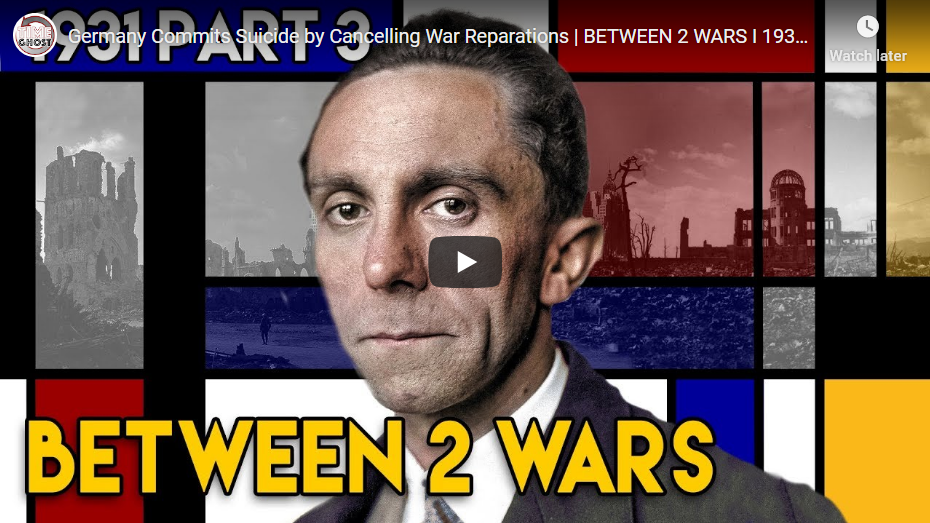
Germany Commits Suicide by Cancelling War Reparations | BETWEEN 2 WARS I 1931 Part 3 of 3

TimeGhost History
Published on 5 Sep 2019

Contrary to popular belief it is not so much reparations themselves that puts the first stepping stone in place for the Nazi to rise to power. Instead it is the cancellation of war reparations, or more correctly put; the measures that “The Hunger Chancellor” Heinrich Brüning implements to get reparations cancelled that pushes Germany over the financial brink and into the hands of Hitler and Goebbels.

Join us on Patreon: https://www.patreon.com/TimeGhostHistory

Subscribe to our World War Two series: https://www.youtube.com/c/worldwartwo…

Hosted by: Indy Neidell
Written by: Spartacus Olsson and Francis van Berkel
Directed by: Spartacus Olsson and Astrid Deinhard
Executive Producers: Bodo Rittenauer, Astrid Deinhard, Indy Neidell, Spartacus Olsson
Creative Producer: Joram Appel
Post-Production Director: Wieke Kapteijns
Research by: Francis van Berkel and Spartacus Olsson
Edited by: Wieke Kapteijns and Daniel Weiss
Sound design: Iryna Dulka
Colorization by Daniel Weiss

Thumbnail: Goebbels colorized bu Olga Shirnina, aka Klimbim

Archive by Reuters/Screenocean http://www.screenocean.com

A TimeGhost chronological documentary produced by OnLion Entertainment GmbH.

Sources:
Ruth Henig, The Weimar Republic 1919-1933
Theo Balderston, Economics and Politics in the Weimar Republic
Kolbe, The Weimar Republic
Harold James, The Causes of the German Banking Crisis of 1931
Feuchtwanger, From Weimar to Hitler

Sources images: Bundesarchiv

From the comments:

TimeGhost History
49 minutes ago (edited)

OK, so this video is about Naziism to some degree, it’s also a serious look at how Germany started transitioning into Naziism – this is not speculation, it’s not even very controversial, it just happens to not fit with many popular superficial misconceptions. Now, we love it when you guys debate under our videos, even when it’s in disagreement with something we or somebody else said, but before you do so please save us some time and read our rules and consider if your post is against our rules. If you think it might be, consider editing or just not posting it — otherwise you’re just wasting our time and your own — because no matter what, we will moderate this.

If your going to post that the Versailles Treaty was to blame you might want to read this instead: https://community.timeghost.tv/t/why-the-treaty-of-versailles-didnt-cause-naziism-answering-a-guy-on-youtube/1858 — that’s Indy’s extensive answer to that claim.

If you’re going to claim “Naziism was Left Wing” well you can do that, we don’t suppress opinions, not even silly ones, but we suggest that you read this instead: https://timeghost.tv/national-socialism-an-extreme-left-wing-ideology/ that’s Spartacus’s explanation why it is not considered so by historians (and why it’s not really that important).

If you’re going to praise Naziism or celebrate Communism, or propose that any other form of lethal extremism is a great idea — just don’t, we do remove any promotion for lethal anti-democratic ideologies, and will probably revoke your positing privileges.

If you’re going to start peddling conspiracy theories about Jews controlling [insert your crazy idea here] or “it was the Jews” — definitely don’t do that or it will be last thing you post here.

If you’re going to say that stopping German Communism is what caused Naziism — well you can do that … it’s pretty much wrong or at least a gross misrepresentation, and you’ll look like an idiot to anyone who knows their factual German history, but you can do that if publicly proclaiming ignorance is your thing — we would however suggest waiting for our next video on Germany’s elections in 1932 for a more correct take on that instead.
September 5, 2019

The “Stop the Coup” movement and the chances for a British general election

Filed under: Britain, Government, Politics — Tags: , , , — Nicholas @ 05:00

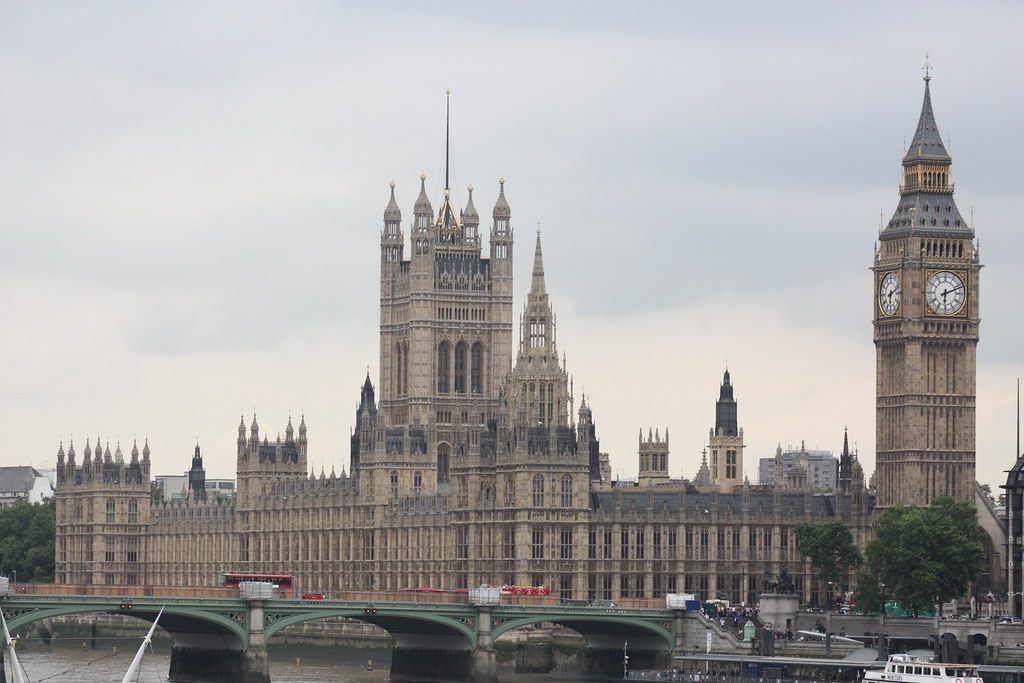
Brendan O’Neill on the recent political upheavals in the Mother of Parliaments as Boris Johnson lost his parliamentary majority and the “Stop the Coup” activists celebrate by backing away from the election they claimed they wanted all along:

The ridiculousness of the “Stop the Coup” movement is now starkly exposed. For the past week a few thousand members of the obsessively anti-Brexit urban elites have taken to the streets to accuse Boris Johnson of behaving like a dictator by suspending parliament for a few more days than is normal. “It’s a coup d’état!”, they hysterically cry. And yet now our supposed dictator, the author of this foul, anti-democratic coup, is offering people a General Election, and how have the “Stop the Coup” saps responded? By saying they don’t want one.

What a momentous self-own. They have literally traipsed through the streets saying “Britain is a dictatorship” and “Boris has stolen our democracy”. Now, Boris hasn’t only disproven this claptrap (dictators don’t usually suggest holding an election). He has also helped to expose the fact that if anyone is agitated and even disgusted by the idea of democracy right now, it isn’t the imaginary jackbooted generals of Downing Street – it’s the pseudo-democratic Remainer elite.

All of them are running scared from the idea of a General Election. Labour has made clear that it will not be backing the call for an election, at least not until No Deal Brexit has been legally taken off the table. “We are not going to dance to Boris Johnson’s tune”, said Labour’s shadow Brexit secretary Keir Starmer this morning when asked if the party would back Boris’s General Election proposal in parliament later today. An election on Boris’s terms would be a “trap” for Labour, he said.

Jo Swinson, leader of the Lib Dems, is against an election too. And her justification is very revealing indeed. In the Commons she said “It is vital that this House acts with responsibility and does not tip our country into an election at a point when there is any risk that we will crash out of the European Union during that election campaign or immediately after.” With added emphasis she declared: “We must act responsibly.”

… but not democratically. After all, elected MPs know far better what’s good for the country than the majority of Britons who voted in favour of Brexit.

September 4, 2019

Viewing WW2 as “the Air-Sea Super Battlefield”

Filed under: Economics, Germany, History, Japan, Military, Russia, WW2 — Tags: , , — Nicholas @ 05:00

According to Phillips Payson O’Brien, it’s old-fashioned to view large land battles as being “decisive” in modern warfare:

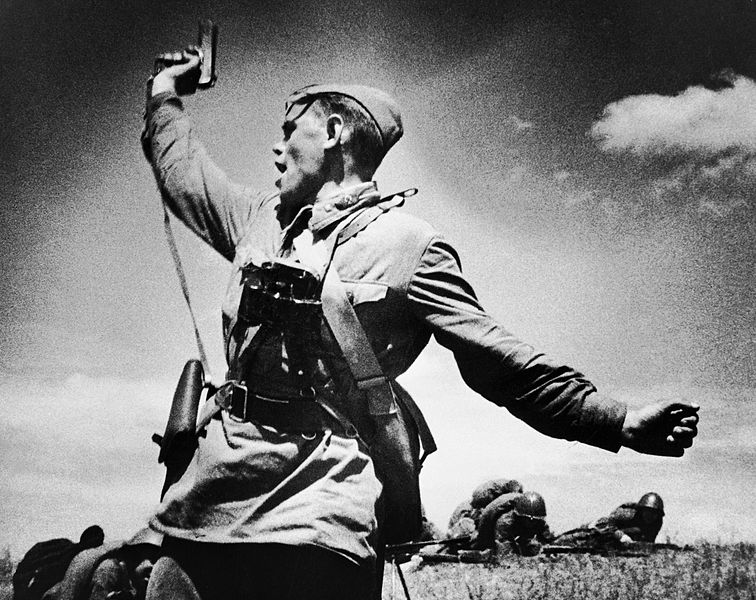
Kombat (Russian: Комбат, lit. “battalion commander”) is a black-and-white photograph by the Soviet photographer Max Alpert. It depicts a Soviet military officer armed with a TT pistol who is raising his unit for an attack during World War II. This work is regarded as one of the most iconic Soviet World War II photographs, yet neither the date nor the subject is known with certainty. According to the most widely accepted version, the photograph depicts junior politruk (political officer) Aleksei Gordeyevich Yeryomenko, minutes before his death on 12 July 1942, in Voroshilovgrad Oblast, Ukraine.
Wikimedia Commons.

Allied victory in WWII is usually viewed through the lens of large land battles, from Stalingrad to Kursk to D-Day. However, battlefield losses of equipment in these “great” land battles were relatively small and easily replaceable. This column demonstrates that the real effort of the major powers was put into the construction of air and sea weapons. The Allies used their air and sea power to destroy the Axis’s in a multi-layered campaign. This was the true battlefield of WWII: a massive air-sea super battlefield that stretched for thousands of miles. Victory in this super-battlefield led to victory in the war.

Every aspect of WWII is discussed in a vast literature. Considering its diversity, explanations of why Germany lost the war are surprisingly predictable. It remains widely argued that the Nazis were beaten mostly by the Soviet Union’s powerful Red Army (Hastings 2005: 508, Kennedy 2013: 183).

From June 1941 to May 1945, German “power” was supposedly engaged and destroyed by the Russians. At some points, more than two-thirds of German infantry were engaged against the Red Army. The famous battles of the Eastern Front, such as Stalingrad and Kursk, supposedly caused the Germans’ crippling losses. The upshot of this lopsided deployment was that most German soldiers died in the East. Fighting against the Americans and British, conversely, is often portrayed as a secondary concern (Roberts 2010: 573).

What’s wrong with a focus on battles?

This battle-centric view, like much history of WWII, is old-fashioned. Historians of strategy have moved away from seeing battles as determinative. Nolan (2017) has argued that attrition losses are more important than battle losses in explaining outcomes.

The battle-centric analysis implies that infantry deployment is the best way to analyse effort. Yet, human-power was rarely the key factor in deciding combat in WWII. Equipment and specialised training mattered more. Possessing and operating the largest stores of modern weapons, not only tanks and artillery but also aircraft and naval vessels, determined the course of battles and the war.

If we reframe the discussion of the war to look not only at what equipment was made but also at how it was destroyed, it emerges that the war was decided far from the land battlefield (O’Brien 2015). The most striking sign of this is how little war production went to the land war and how much went to the combined air-sea war. This was the case for all the powers except the USSR.

English spelling – a bit mad, but perhaps the best system around

Filed under: Britain, China, History, USA — Tags: , — Nicholas @ 02:00

Lindybeige
Published on 12 Nov 2015

Support me on Patreon: https://www.patreon.com/Lindybeige

Many people think that the English system of spelling is just mad. The random quirks of history have certainly played their part, and today we have spellings that follow so many different rules that at times it can seem just random. However, here I argue that actually the fact that our spelling does not match our pronunciation is a strength, not just a weakness.

I see from the comments that several viewers have misunderstood me, and have thought that I am saying that only when people are reading English do they recognise words in the same way as we recognise faces. No, this is how people read in all languages. This being the case, phonetic spelling is not such a great advantage, since people are not decoding the words using sound, and spelling based on derivation has advantages.

Lindybeige: a channel of archaeology, ancient and medieval warfare, rants, swing dance, travelogues, evolution, and whatever else occurs to me to make.

September 3, 2019

An alternative end to the Molotov-Ribbentrop Pact?

Filed under: Germany, History, Military, Russia, WW2 — Tags: , , , — Nicholas @ 05:00

On the anniversary of the German invasion of Poland, Arthur Chrenkoff wonders if Stalin’s greatest miscalculation wasn’t refraining from attacking the Nazi forces after they’d been fighting the Polish army for three weeks in 1939:

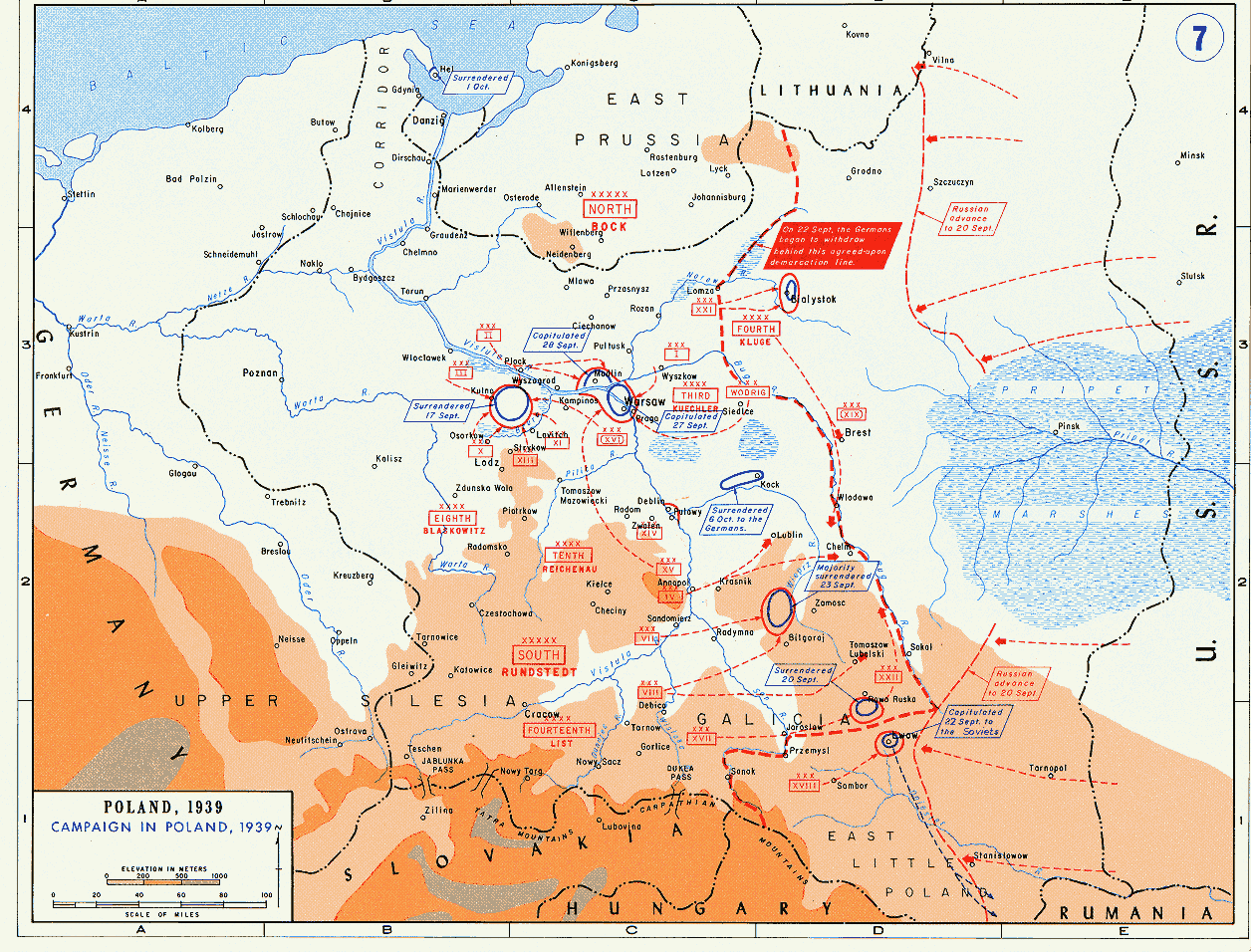
Military situation in Poland, 14 September 1939 (map does not show Slovak Army activity in southern Poland).
United States Military Academy, Department of History via Wikimedia Commons.

In late August, the Soviet Union signed the infamous Ribbentrop-Molotov non-aggression pact with Germany, effectively green-lighting Hitler’s invasion of Poland a few days later. The secret protocols attached to the pact stipulated for the division of Central Europe between the two powers, with the Soviet Union being rewarded for its cooperation with the Nazis with the gift of eastern Poland, the Baltic states and Bessarabia, or the north-eastern Romania (as well as, it transpired later, the German non-interference during the Soviet invasion of Finland).

The Soviets were not naive (even if Stalin discounted all the indications of the coming German attack in 1941) to believe in a long-term friendship with Nazi Germany. There are strong indications that the Soviet Union intended to attack Germany, perhaps sometime in 1942, but Hitler beat it to the punch. The official Russian justification for the Ribbentrop-Molotov pact has certainly always been that the Soviet Union needed to buy itself extra time to prepare for this eventual showdown, since in 1939 it was still nowhere near ready (not least because of Stalin’s decapitation of the Red Army’s top leadership during the Great Terror a few years before).

But what if that was Stalin’s greatest miscalculation ever? By 17 September, when the Red Army crossed the eastern borders of Poland in accordance with the secret partition agreement, it was pretty clear to all that Poland was close to a military defeat (it would have hold on for longer, of course, without the Soviet stab in the back, but this would not have changed much without the Western allies’ military involvement, which never eventuated). While the German armed forces were winning, they were also overcommitted and overstretched. The German high command expected a quicker and easier victory and were taken aback by the ferocity of Polish resistance, despite clear German superiority in armour, air power and logistics. By the second half of September, some ammunition stocks were beginning to run low (particularly bombs) and motorised equipment, from tanks to trucks, has been significantly degraded through a combination of attrition and significant wear and tear in Polish autumn.

So what if the Red Army, instead of eventually coming to a halt along the previously agreed demarcation line, kept going west? There was no significant Polish military force to take into account and German army was tired and weakened after three weeks of hard fighting (losing a third of its tanks and 25 per cent of its air force in the process). While Wehrmacht had numerical advantage on the ground, this was only because the Red Army chose to invade Poland with half a million men, which was certainly enough to subdue the thinly-held eastern marches, but should they have needed it, the Soviets had reserves to draw upon to even out the field against the Germans. Even with their 33 committed divisions, the Red Army had a significant advantage over the German armed forces in the Polish theatre in terms of armour and air power (two to one for the former).

Who would have triumphed in this 1939 clash of the rival totalitarian war machines? We don’t know, of course, except that at the time of the invasion of Poland, Germany was militarily at its weakest point it would be until the final months of World War Two. Should the Red Army have proven victorious in September and October 1939, it would have likely ended up in Berlin in a matter of weeks, instead of years it eventually took. It’s a reasonable guess that Great Britain and France, faced with the Soviet invasion of the Reich and the looming defeat of Hitler, would have overcome their initial inertia and moved into Germany from the west so as to prevent having the communists proverbially water their horses in the Rhine. In this scenario, we would have ended up with a divided Germany and a divided Europe (though without much of the rest of Central and south-Eastern Europe in the Soviet camp) some six years earlier and without the tens of millions of dead, a ruined continent, and the Holocaust that accompanied World War Two as it actually unfolded.

Alas.

The Forgotten Soldiers of the Revolutionary War

Filed under: Britain, Europe, Germany, History, Military, USA — Tags: , , — Nicholas @ 04:00

Townsends
Published on 25 Jan 2018

Get the book here! ▶ https://www.amazon.com/Hessians-Three…

Visit Our Website! ▶ http://www.townsends.us/

Help support the channel with Patreon ▶ https://www.patreon.com/townsend

Sign up for the YouTube Mailing List! ▶ http://www.townsends.us/youtube_list.htm

QotD: Fencing out the London poor

Filed under: Britain, History, Quotations, WW2 — Tags: , , , , — Nicholas @ 01:00

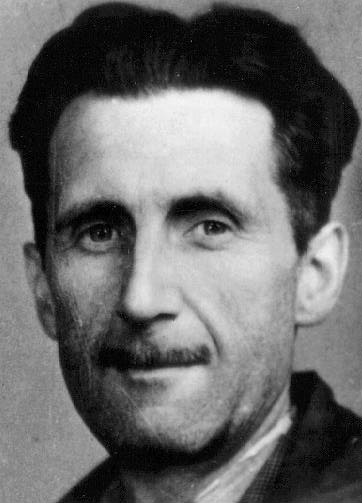
Orwell’s press card portrait, 1943


I see that the railings are returning — only wooden ones, it is true, but still railings — in one London square after another. So the lawful denizens of the squares can make use of their treasured keys again, and the children of the poor can be kept out.

When the railings round the parks and squares were removed, the object was partly to accumulate scrap-iron, but the removal was also felt to be a democratic gesture. Many more green spaces were now open to the public, and you could stay in the parks till all hours instead of being hounded out at closing times by grim-faced keepers. It was also discovered that these railings were not only unnecessary but hideously ugly. The parks were improved out of recognition by being laid open, acquiring a friendly, almost rural look that they had never had before. And had the railings vanished permanently, another improvement would probably have followed. The dreary shrubberies of laurel and privet — plants not suited to England and always dusty, at any rate in London — would probably have been grubbed up and replaced by flower beds. Like the railings, they were merely put there to keep the populace out. However, the higher-ups managed to avert this reform, like so many others, and everywhere the wooden palisades are going up, regardless of the wastage of labour and timber.

George Orwell, “As I Please” Tribune, 1944-08-04.

September 1, 2019

366 Days of Crushed Hopes, Suffering and Death – WW2 – 053 – August 31 1940

Filed under: Britain, China, Germany, History, Japan, Military, WW2 — Tags: , , , , — Nicholas @ 04:00

World War Two
Published on 31 Aug 2019

As the war turns one year old, there seems to be no end in sight. The Luftwaffe starts targeting civilian areas of London, the peoples of Eastern Europe switch country without moving houses, in occupied territory the population continues to be terrorized, and an end to the Chinese war that has been raging on for years now seems ever further away.

Join us on Patreon: https://www.patreon.com/TimeGhostHistory
Or join The TimeGhost Army directly at: https://timeghost.tv

Follow WW2 day by day on Instagram @World_war_two_realtime https://www.instagram.com/world_war_t…
Join our Discord Server: https://discord.gg/D6D2aYN.
Between 2 Wars: https://www.youtube.com/playlist?list…
Source list: http://bit.ly/WW2sources

Written and Hosted by: Indy Neidell
Produced and Directed by: Spartacus Olsson and Astrid Deinhard
Executive Producers: Bodo Rittenauer, Astrid Deinhard, Indy Neidell, Spartacus Olsson
Creative Producer: Joram Appel
Research by: Indy Neidell
Edited by: Karolina Dołęga
Map animations: Eastory

Colorisations by Norman Stewart and Julius Jääskeläinen https://www.facebook.com/JJcolorization/

Sources:
Soviet occupation of Bessarabia and Northern Bukovina. Military parade in Kishinev on the 4th of July 1940, ANRM, Fototeca, 24950 from http://anr.infoideea.ro/basarabia1940…

Eastory’s channel: https://www.youtube.com/channel/UCEly…
Archive by Screenocean/Reuters https://www.screenocean.com.

A TimeGhost chronological documentary produced by OnLion Entertainment GmbH.

From the comments:

World War Two
6 days ago (edited)
Tomorrow, the war turns one year old, just like our channel. It doesn’t feel like a year, but when you think about what has happened all over the world since the Germans invaded Poland, it feels like a lifetime. Since then, our project has grown significantly, with new editors, community managers, and other people that help us out to make this series the best that it could be. We owe that to each and every one of you who stuck around and watched, shared, and engaged with our channel. We’re especially grateful to our supporters on Patreon and the TimeGhost website. It’s your support that makes this show possible and helps us to keep improving our quality. Our next goal is to raise enough money to go abroad and film on location, so that we can give you a real look of what it was like, and get in-depth knowledge from local historians. So please, support us on Patreon at https://www.patreon.com/TimeGhostHistory or at our website at https://timeghost.tv.

A big virtual hug from all of us,
The TimeGhost Team

August 31, 2019

Young Recruits, French Planes, and Graf Spee – WW2 – OOTF 003

Filed under: Britain, France, Germany, History, Military, WW2 — Tags: , , , — Nicholas @ 06:00

World War Two
Published on 30 Aug 2019

How young were British soldiers? Could Graf Spee have gotten away? What was the French air force like? Questions, questions, questions – from you no less! With answers from us Out of the Foxholes.

Join us on Patreon: https://www.patreon.com/TimeGhostHistory
Or join The TimeGhost Army directly at: https://timeghost.tv

Follow WW2 day by day on Instagram @World_war_two_realtime https://www.instagram.com/world_war_t…
Join our Discord Server: https://discord.gg/D6D2aYN.
Between 2 Wars: https://www.youtube.com/playlist?list…
Source list: http://bit.ly/WW2sources

Image sources:
Drawing Morane-Saulnier M.S.406 C1 and Dewoitine D.520 fighters : Kaboldy

Written and Hosted by: Indy Neidell and Nicholas Moran
Produced and Directed by: Spartacus Olsson and Astrid Deinhard
Executive Producers: Bodo Rittenauer, Astrid Deinhard, Indy Neidell, Spartacus Olsson
Creative Producer: Joram Appel
Research by: Indy Neidell, Nicholas Moran, and Joram Appel
Edited by: Wieke Kapteijns

Eastory’s channel: https://www.youtube.com/channel/UCEly…
Archive by Screenocean/Reuters https://www.screenocean.com.

A TimeGhost chronological documentary produced by OnLion Entertainment GmbH.

From the comments:

World War Two
39 minutes ago
One day before the war has being going on for a whole year, we look back at some stuff from 1939 and 1940. And once again Nicholas Moran, the Chieftain https://www.youtube.com/user/TheChieftainWoT joins us to answer your questions. This time he leaves his main turf (tanks) to dive into his other area of expertise; naval battles. Please remember that we can’t field questions from the comments so if you want submit a new question do it here: https://community.timeghost.tv/c/Out-of-the-Foxholes-Qs

Coming out with Out of the Foxholes has been a bit of a challenge as we try to master the crazy amount of stuff going on in our main episodes. But thanks to the fantastic collaboration of the TimeGhost Army on https://www.patreon.com/TimeGhostHistory and https://timeghost.tv we are constantly expanding our capacity and we hope to come out with these a bit more often now! For now, enjoy and remember that tomorrow our first anniversary episode comes out!

History Summarized: French Empire (Ft. Armchair Historian!)

Overly Sarcastic Productions
Published on 30 Aug 2019

Check out the Armchair Historian channel for more on French Vietnam and the battle of Dien Bien Phu: https://youtu.be/IJ051WyUsW8

Dubious morality, drawn out timescales, intricate royal politics, worldwide stages — Colonialism be like that sometimes. And by “Like That” I mean impenetrably complicated. I did my best, I’ll say that, but oh man is history a mess in the 15-1900s. This stuff is the reason I had so much trouble with history for so long. It’s just so DENSE.

ANYWAY, join Blue and Griffin the Armchair Historian for a look into the history of the multiple successive French Empires. Listen carefully as Blue makes imperceptibly subtle commentary about his extremely non-biased opinions on this chapter in history, and laugh together as we analyze the historical significance of Napoleon Bonaparte’s anime hair.

NOTE on 6:14 — I say Napoleon became Emperor in 1802. That’s a mistake. In 1802, the constitution of France was amended to make the position of Consul permanent, but Napoleon did not become the Emperor until 1804, when he declared the French Empire. That’s my bad.

NOTE on 11:25 — French Guiana, on the northeast coast of South America, remained part of France following the decolonization of Africa. That’s a mapping mix-up.

DISCORD: https://discord.gg/sS5K4R3

PATREON: https://www.Patreon.com/OSP

August 30, 2019

“Stalingrad” – World War Two – Sabaton History 030 [Official]

Filed under: Germany, History, Media, Military, Russia, WW2 — Tags: , , , , — Nicholas @ 04:00

Sabaton History
Published on 29 Aug 2019

The Sabaton song “Stalingrad” is about the devastating battle of the Russian city of Stalingrad, which lasted for 5 months from August 1942 till February 1943. The battle is infamous for its brutal street fighting and high casualties on both sides.

Support Sabaton History on Patreon: https://www.patreon.com/sabatonhistory

Listen to Primo Victoria (where “Stalingrad” is featured):
CD: http://bit.ly/PrimoVictoriaStore
Spotify: http://bit.ly/PrimoVictoriaSpotify
Apple Music: http://bit.ly/PrimoVictoriaAppleMusic
iTunes: http://bit.ly/PrimoVictoriaiTunes
Amazon: http://bit.ly/PrimoVictoriaAmzn
Google Play: http://bit.ly/PrimoVictoriaGooglePlay

Hosted by: Indy Neidell
Written by: Markus Linke and Indy Neidell
Directed by: Astrid Deinhard and Wieke Kapteijns
Produced by: Pär Sundström, Astrid Deinhard and Spartacus Olsson
Creative Producer: Joram Appel
Executive Producers: Pär Sundström, Joakim Broden, Tomas Sunmo, Indy Neidell, Astrid Deinhard, and Spartacus Olsson
Maps by: Eastory
Edited by: Iryna Dulka
Sound Editing by: Marek Kaminski

Eastory YouTube Channel: https://www.youtube.com/channel/UCElybFZ60Hk1NSjgCf7I2sg
Archive by: Reuters/Screenocean https://www.screenocean.com
Music by Sabaton.

Sources:
– Photo of Stalingrad field hospital – Natalia Bode
– Photo of the Soviet loudspeaker by Arkady Shaikhet
– Colorization by Klimbim: German soldier in Stalingrad, Soviet machine gunners
– IWM: TR 153

An OnLion Entertainment GmbH and Raging Beaver Publishing AB co-Production.

© Raging Beaver Publishing AB, 2019 – all rights reserved.

Is The Roman Gladius (Sword) Really That Good?

Filed under: Europe, History, Military, Weapons — Tags: , , , — Nicholas @ 02:00

scholagladiatoria
Published on 15 Jul 2019

Is The Roman Gladius (Sword) Really That Good?

QotD: Racism in London during WW2

Filed under: Britain, France, History, Quotations, USA, WW2 — Tags: , , , , — Nicholas @ 01:00

Orwell’s press card portrait, 1943


A few days ago a West African wrote to inform us that a certain London dance hall had recently erected a “colour bar”, presumably in order to please the American soldiers who formed an important part of its clientele. Telephone conversations with the management of the dance hall brought us the answers: (a) that the “colour bar” had been cancelled, and (b) that it had never been imposed in the first place; but I think one can take it that our informant’s charge had some kind of basis. There have been other similar incidents recently. For instance, I during last week a case in a magistrate’s court brought out the fact that a West Indian Negro working in this country had been refused admission to a place of entertainment when he was wearing Home Guard uniform. And there have been many instances of Indians, Negroes and others being turned away from hotels on the ground that “we don’t take coloured people”.

It is immensely important to be vigilant against this kind of thing, and to make as much public fuss as possible whenever it happens. For this is one of those matters in which making a fuss can achieve something. There is no kind of legal disability against coloured people in this country, and, what is more, there is very little popular colour feeling. (This is not due to any inherent virtue in the British people, as our behaviour in India shows. It is due to the fact that in Britain itself there is no colour problem.)

The trouble always arises in the same way. A hotel, restaurant or what-not is frequented by people who have money to spend who object to mixing with Indians or Negroes. They tell the proprietor that unless he imposes a colour bar they will go elsewhere. They may be a very small minority, and the proprietor may not be in agreement with them, but it is difficult for him to lose good customers; so he imposes the colour bar. This kind of thing cannot happen when public opinion is on the alert and disagreeable publicity is given to any establishment where coloured people are insulted. Anyone who knows of a provable instance of colour discrimination ought always to expose it. Otherwise the tiny percentage of colour-snobs who exist among us can make endless mischief, and the British people are given a bad name which, as a whole, they do not deserve.

In the nineteen-twenties, when American tourists were as much a part of the scenery of Paris as tobacco kiosks and tin urinals, the beginnings of a colour bar began to appear even in France. The Americans spend money like water, and restaurant proprietors and the like could not afford to disregard them. One evening, at a dance in a very well-known cafe some Americans objected to the presence of a Negro who was there with an Egyptian woman. After making some feeble protests, the proprietor gave in, and the Negro was turned out.

Next morning there was a terrible hullabaloo and the cafe proprietor was hauled up before a Minister of the Government and threatened with prosecution. It had turned out that the offended Negro was the Ambassador of Haiti. People of that kind can usually get satisfaction, but most of us do not have the good fortune to be ambassadors, and the ordinary Indian, Negro or Chinese can only be protected against petty insult if other ordinary people are willing to exert themselves on his behalf.

George Orwell, “As I Please” Tribune, 1944-08-11.

August 27, 2019

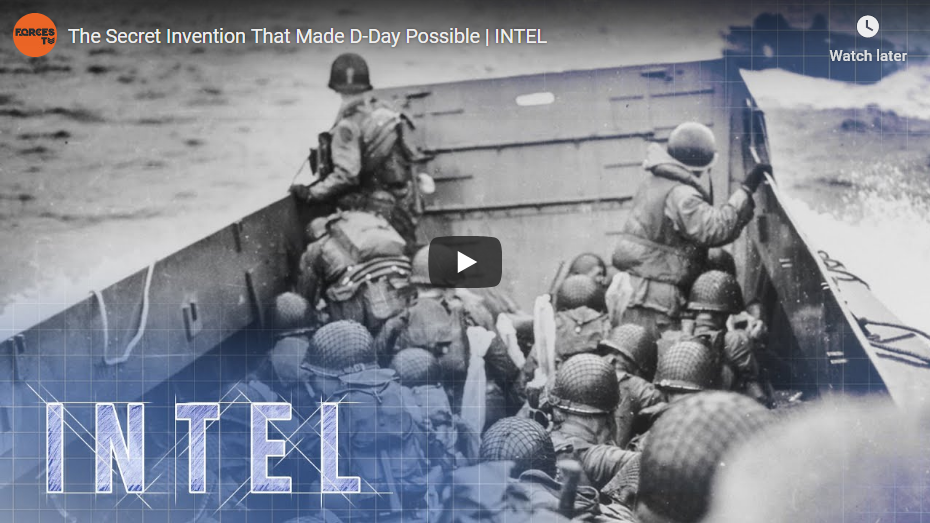
The Secret Invention That Made D-Day Possible | INTEL

Filed under: Britain, France, History, Military, Technology, USA, WW2 — Tags: , , , — Nicholas @ 04:00

Forces TV
Published on 7 Jun 2019

As much as the success of D-Day was down to the bravery of soldiers … it was made possible by inventions and new machines. These Mulberry Harbours were a real World War 2 engineering victory.

More Mulberry: https://www.forces.net/d-day/mulberry-harbours-how-allies-floated-concrete-win-d-day
Forces Net D-Day Hub: http://forces.net/dday

QotD: Salvador Dali and the “benefit of clergy”

Filed under: Books, Europe, History, Quotations — Tags: , , , , — Nicholas @ 01:00

Orwell’s press card portrait, 1943

Now, if you showed this book, with its illustrations, to Lord Elton, to Mr. Alfred Noyes, to The Times leader writers who exult over the “eclipse of the highbrow” — in fact, to any “sensible” art-hating English person — it is easy to imagine what kind of response you would get. They would flatly refuse to see any merit in Dali whatever. Such people are not only unable to admit that what is morally degraded can be aesthetically right, but their real demand of every artist is that he shall pat them on the back and tell them that thought is unnecessary. And they can be especially dangerous at a time like the present, when the Ministry of Information and the British Council put power into their hands. For their impulse is not only to crush every new talent as it appears, but to castrate the past as well. Witness the renewed highbrow-baiting that is now going on in this country and America, with its outcry not only against Joyce, Proust and Lawrence, but even against T. S. Eliot.

But if you talk to the kind of person who can see Dali’s merits, the response that you get is not as a rule very much better. If you say that Dali, though a brilliant draughtsman, is a dirty little scoundrel, you are looked upon as a savage. If you say that you don’t like rotting corpses, and that people who do like rotting corpses are mentally diseased, it is assumed that you lack the aesthetic sense. Since Mannequin rotting in a taxicab is a good composition. And between these two fallacies there is no middle position, but we seldom hear much about it. On the one side Kulturbolschevismus: on the other (though the phrase itself is out of fashion) “Art for Art’s sake.” Obscenity is a very difficult question to discuss honestly. People are too frightened either of seeming to be shocked or of seeming not to be shocked, to be able to define the relationship between art and morals.

It will be seen that what the defenders of Dali are claiming is a kind of benefit of clergy. The artist is to be exempt from the moral laws that are binding on ordinary people. Just pronounce the magic word “Art”, and everything is O.K.: kicking little girls in the head is O.K.; even a film like L’Age d’Or* is O.K. It is also O.K. that Dali should batten on France for years and then scuttle off like rat as soon as France is in danger. So long as you can paint well enough to pass the test, all shall be forgiven you.

One can see how false this is if one extends it to cover ordinary crime. In an age like our own, when the artist is an altogether exceptional person, he must be allowed a certain amount of irresponsibility, just as a pregnant woman is. Still, no one would say that a pregnant woman should be allowed to commit murder, nor would anyone make such a claim for the artist, however gifted. If Shakespeare returned to the earth to-morrow, and if it were found that his favourite recreation was raping little girls in railway carriages, we should not tell him to go ahead with it on the ground that he might write another King Lear. And, after all, the worst crimes are not always the punishable ones. By encouraging necrophilic reveries one probably does quite as much harm as by, say, picking pockets at the races. One ought to be able to hold in one’s head simultaneously the two facts that Dali is a good draughtsman and a disgusting human being. The one does not invalidate or, in a sense, affect the other. The first thing that we demand of a wall is that it shall stand up. If it stands up, it is a good wall, and the question of what purpose it serves is separable from that. And yet even the best wall in the world deserves to be pulled down if it surrounds a concentration camp. In the same way it should be possible to say, “This is a good book or a good picture, and it ought to be burned by the public hangman.” Unless one can say that, at least in imagination, one is shirking the implications of the fact that an artist is also a citizen and a human being.

* Dali mentions L’Age d’Or and adds that its first public showing was broken up by hooligans, but he does not say in detail what it was about. According to Henry Miller’s account of it, it showed among other things some fairly detailed shots of a woman defecating.

George Orwell, “Benefit of Clergy: Some Notes on Salvador Dali”, Saturday Book for 1944, 1944.

« Newer PostsOlder Posts »

Powered by WordPress