
World War Two
Published 7 Sep 2021World War Two gave birth to a new American centralised intelligence agency: The OSS (Office of Strategic Services). Led by “Wild Bill” Donovan, it is the cradle of many outrageous plans, spy stories, and gadgets.
(more…)
September 8, 2021
Making Hitler Transgender? – Early Operations of the CIA – WW2 – Spies & Ties 08
Comments Off on Making Hitler Transgender? – Early Operations of the CIA – WW2 – Spies & Ties 08
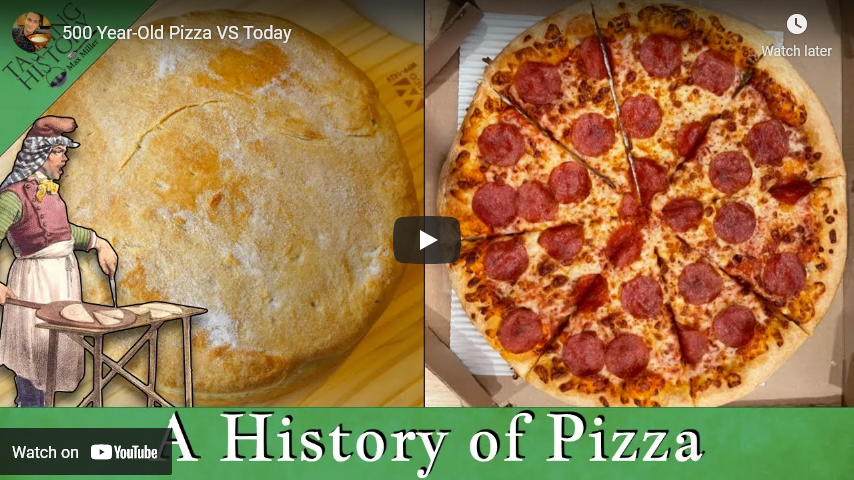
500 Year-Old Pizza VS Today
Tasting History with Max Miller
Published 25 May 2021Help Support the Channel with Patreon: https://www.patreon.com/tastinghistory
Tasting History Merchandise: crowdmade.com/collections/tastinghistoryFollow Tasting History here:
Instagram: https://www.instagram.com/tastinghist…
Twitter: https://twitter.com/TastingHistory1
Tiktok: TastingHistory
Reddit: r/TastingHistory
Discord: https://discord.gg/d7nbEpyTasting History’s Amazon Wish List: https://amzn.to/3i0mwGt
LINKS TO INGREDIENTS & EQUIPMENT**
Sony Alpha 7C Camera: https://amzn.to/2MQbNTK
Sigma 24-70mm f/2.8 Lens: https://amzn.to/35tjyoW
10 inch removable bottom pan: https://amzn.to/3f8ZZI0
Rose Water: https://amzn.to/3oL0xqILINKS TO SOURCES**
Scappi Video: https://www.youtube.com/watch?v=o4Ymv…
Tomato Video: https://www.youtube.com/watch?v=beBQg…
Pizza – A Global History by Carol Helstosky: https://amzn.to/3bHFPCQ**Some of the links and other products that appear on this video are from companies which Tasting History will earn an affiliate commission or referral bonus. Each purchase made from these links will help to support this channel with no additional cost to you. The content in this video is accurate as of the posting date. Some of the offers mentioned may no longer be available.
Subtitles: Jose Mendoza
PHOTO CREDITS
Stuffed pizza from Giordano’s: By TNVWBOY – https://www.flickr.com/photos/tnvwboy…, CC BY 2.0, https://commons.wikimedia.org/w/index…
Lombardi’s Pizza: By Beyond My Ken – Own work, CC BY-SA 4.0, https://commons.wikimedia.org/w/index…
Sushi Pizza: Quinn Dombrowski from Berkeley, USA, CC BY-SA 2.0 https://creativecommons.org/licenses/…, via Wikimedia Commons
Pizza Bagels: Mike Mozart https://www.flickr.com/photos/jeepers…MUSIC CREDITS
“Bushwick Tarentella” – Thatched Villagers by Kevin MacLeod is licensed under a Creative Commons Attribution 4.0 license. https://creativecommons.org/licenses/…
Source: http://incompetech.com/music/royalty-…
Artist: http://incompetech.com/#tastinghistory #pizza
Comments Off on 500 Year-Old Pizza VS Today
September 7, 2021
Early Rome, Part II: Dionysius of Halicarnassus and the Greek Tradition of Early Rome
Thersites the Historian
Published 4 Sep 2021In this video, I provide an analysis of the opening sections of Dionysius of Halicarnassus’ History of Rome, discussing where his place in the historiographical tradition and the goal of his work.
Patreon link: https://www.patreon.com/thersites
PayPal link: paypal.me/thersites
Discord: https://discord.gg/QCaXXFr
Brave Browser: https://brave.com/noa557
Twitter link: https://twitter.com/ThersitesAthens
Minds.com link: https://www.minds.com/ThersitestheHis…
Steemit/dtube link: https://steemit.com/@thersites/feed
BitChute: https://www.bitchute.com/channel/jbyg…

Comments Off on Early Rome, Part II: Dionysius of Halicarnassus and the Greek Tradition of Early Rome
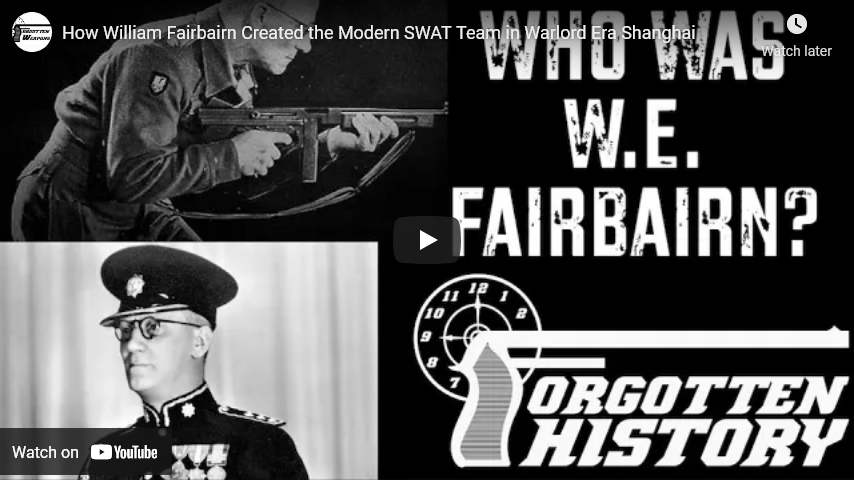
How William Fairbairn Created the Modern SWAT Team in Warlord Era Shanghai
Forgotten Weapons
Published 1 Jun 2021William E. Fairbairn is best known for his work with Eric Sykes and their “Commando” knife design during World War Two. However, Fairbairn spent some 33 years in the Shanghai Municipal Police, working his way up from a beat constable to Assistant Commissioner. There he was responsible for the SMPD adopting truly forward-thinking fighting methods, and he essentially invented the modern SWAT team (the “Reserve Unit”, which Fairbairn led for 10 years). He combined expertise in formal marksmanship, instinctive practical shooting, and hand-to-hand combat schools (including jiu-jitsu and judo) into a comprehensive training program like no other on earth at the time.
Book references:
The World’s First SWAT Team, by Leroy Thompson:
https://amzn.to/2TrYiNvGentleman & Warrior, by Peter Robins:
https://amzn.to/3vuODn9http://www.patreon.com/ForgottenWeapons
https://www.floatplane.com/channel/Fo…
Cool Forgotten Weapons merch! http://shop.forgottenweapons.com
Contact:
Forgotten Weapons
6281 N. Oracle 36270
Tucson, AZ 85740
Comments Off on How William Fairbairn Created the Modern SWAT Team in Warlord Era Shanghai
September 6, 2021
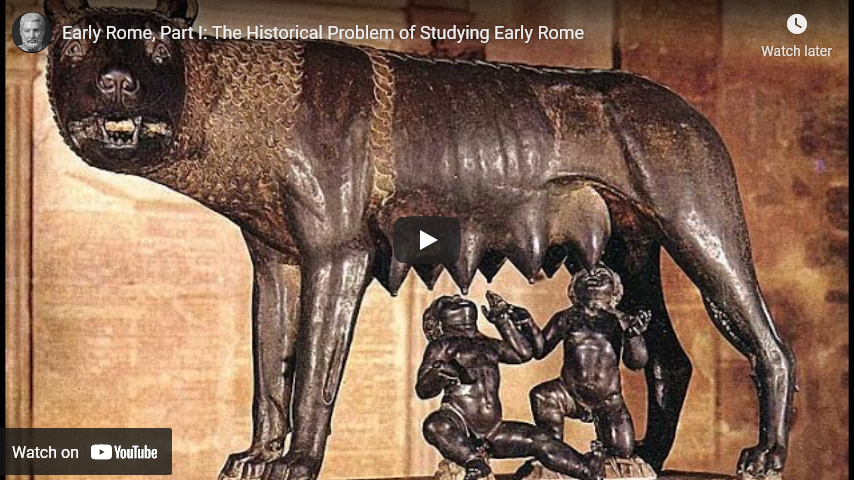
Early Rome, Part I: The Historical Problem of Studying Early Rome
Thersites the Historian
Published 2 Sep 2021In this video, I discuss why early Rome is difficult to study and preview the upcoming episodes in this series.
Patreon link: https://www.patreon.com/thersites
PayPal link: paypal.me/thersites
Discord: https://discord.gg/QCaXXFr
Brave Browser: https://brave.com/noa557
Twitter link: https://twitter.com/ThersitesAthens
Minds.com link: https://www.minds.com/ThersitestheHis…
Steemit/dtube link: https://steemit.com/@thersites/feed
BitChute: https://www.bitchute.com/channel/jbyg…
Comments Off on Early Rome, Part I: The Historical Problem of Studying Early Rome
Why the British Rail Modernisation Plan Failed
Ruairidh MacVeigh
Published 27 Feb 2021Hello again! 😀
Back to trains, and for this week we discuss one of Britain’s most audacious but ultimately futile projects to revitalise the network in the wake of World War II. However, rather than undertaking a comprehensive rebuild of the network, British Railways was short-changed time and again, ultimately resulting in a facelifted but largely unchanged system that dated back to the Victorian era, though it was much smaller and crippled by far more debt than ever before.
This video was actually a suggestion from an American viewer, who was curious as to why British Rail had such a vast array of diesel locomotives during its early years. 🙂
All video content and images in this production have been provided with permission wherever possible. While I endeavour to ensure that all accreditations properly name the original creator, some of my sources do not list them as they are usually provided by other, unrelated YouTubers. Therefore, if I have mistakenly put the accreditation of “Unknown”, and you are aware of the original creator, please send me a personal message at my Gmail (this is more effective than comments as I am often unable to read all of them): rorymacveigh@gmail.com
The views and opinions expressed in this video are my personal appraisal and are not the views and opinions of any of these individuals or bodies who have kindly supplied me with footage and images.
If you enjoyed this video, why not leave a like, and consider subscribing for more great content coming soon.
Thanks again, everyone, and enjoy! 😀
References:
– Railways Archive (and their respective sources)
– RMWeb (and their respective sources)
– Wikipedia (and its respective references)
Comments Off on Why the British Rail Modernisation Plan Failed
September 5, 2021
This War is Three Years Old – WW2 – 158 – September 4, 1942
World War Two
Published 4 Sep 2021As the war turns three there is is no slacking in the fighting. Erwin Rommel launches another Axis attack in North Africa, but it is foiled in only days, though the Axis are advancing in the Caucasus as well as on Stalingrad, where the fight for the suburbs is now beginning. They’re also advancing in the South Pacific, as the Japanese fight their way along the Kokoda Trail.
(more…)
Comments Off on This War is Three Years Old – WW2 – 158 – September 4, 1942
September 4, 2021
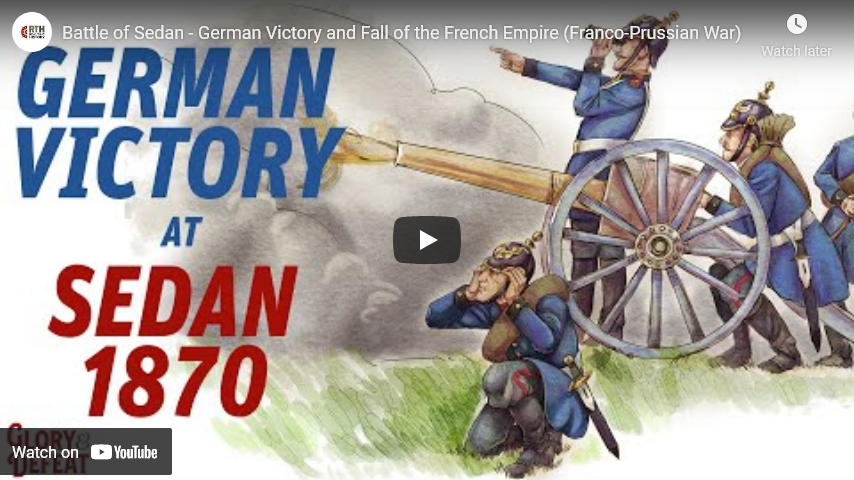
Battle of Sedan – German Victory and Fall of the French Empire (Franco-Prussian War)
realtimehistory
Published 2 Sep 2021The Battle of Sedan was one of the pivotal moments in the 19th century. The French 2nd Empire’s defeat at Sedan (and the capture of Emperor Napoleon III) unleashed social tensions in Paris and a new French republic was proclaimed. And while the victory of the German Armies was resounding, the cost at places like Bazeilles was also high.
» THANK YOU TO OUR CO-PRODUCERS
John Ozment
James Darcangelo
Jacob Carter Landt
Thomas Brendan» OUR PODCAST
https://realtimehistory.net/podcast – interviews with historians and background info for the show.» LITERATURE
Arand, Tobias: 1870/71. Die Geschichte des Deutsch-Französischen Krieges erzählt in Einzelschicksalen. Hamburg 2018Barry, Quintin: The Franco-Prussian War 1870-1871. Vol 1: the Campaign of Sedan. Solihull 2006
Bourguinat, Nicolas/Vogt, Gilles: La guerre franco-allemande de 1870. Une histoire globale. Paris 2020
Gouttman, Alain: La grande défaite de 1870-1871. Paris 2015
Howard, Michael: The Franco-Prussian War. London 1961
Herre, Franz: Eugénie. Kaiserin der Franzosen. Stuttgart, München 2000
Milza, Pierre: L’année terrible. Paris 2009
» SOURCES
Chuquet, Arthur. La Guerre 1870-71. Paris 1895Fontane, Theodor: Der Krieg gegen Frankreich. Bd. Berlin 1874
Kühnhauser, Florian: Kriegs-Erinnerungen eines Soldaten des königlich bayerischen Infanterie-Leib-Regiments. Patenkirchen 1898
N.N. (Hrsg.): Bismarcks Briefe an seine Gattin aus dem Kriege 1870-71. Stuttgart, Berlin 1903
Sheridan, Philip H.: Von Gravelotte nach Paris. Erinnerungen aus dem deutsch-französischen Kriege. Leipzig 1889
» OUR STORE
Website: https://realtimehistory.net»CREDITS
Presented by: Jesse Alexander
Written by: Cathérine Pfauth, Prof. Dr. Tobias Arand, Jesse Alexander
Director: Toni Steller & Florian Wittig
Director of Photography: Toni Steller
Sound: Above Zero
Editing: Toni Steller
Motion Design: Philipp Appelt
Mixing, Mastering & Sound Design: http://above-zero.com
Maps: Battlefield Design
Research by: Cathérine Pfauth, Prof. Dr. Tobias Arand
Fact checking: Cathérine Pfauth, Prof. Dr. Tobias ArandChannel Design: Battlefield Design
Contains licensed material by getty images
All rights reserved – Real Time History GmbH 2021
Comments Off on Battle of Sedan – German Victory and Fall of the French Empire (Franco-Prussian War)
Recreating the original India Pale Ale
In The Critic, Henry Jeffreys discusses the rebirth of the original IPA:
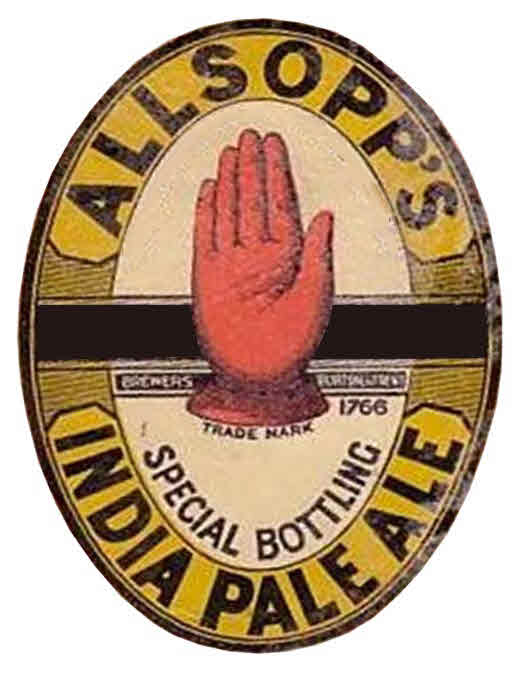
From an early age Jamie Allsopp had wanted to bring back the beer that made his family name. It was his ancestor Samuel Allsopp who made the very first Burton IPA, and created a style that is now a global phenomenon. Hell, there are even brewers in Germany making IPA these days.
Though IPA is most associated with Burton-on-Trent, it was originally brewed in London by Hodgson’s, the nearest brewery to East India Dock. Here East India Company servants would buy beer to sell at a vast profit in India. The beer of choice was a strong, heavily-hopped ale designed to last through the winter months. On the six-month voyage through the tropics, it was found to have matured splendidly, rather like wine from Madeira did. Shipped in the early-nineteenth century, this was the first India Pale Ale, though it wasn’t known as such.
Frederick Hodgson then got greedy and tried to cut out the East India Company by shipping directly. So, Campbell Majoribanks, a director at the Company, approached Burton brewer Samuel Allsopp to make a rival beer. Allsopp brewed a sample in a teapot which met with approval and the beer was shipped to India from 1823.
Burton-on-Trent had an advantage over London in that the water contained gypsum, calcium sulphate, which made the beer brighter and clearer with a pronounced acidic bite. It suited a pale crisp beer, made possible by the recent invention of pale malt, very different to the heavy dark porter that London was famed for.
Other Burton brewers such as Bass & Ratcliff got in on the act. This new beer wasn’t just a hit in India; it became all the rage back in Britain. Railways meant that Burton beer could be sent to London cheaply, and the porter that had dominated the capital began to die out, displaced by this new refreshing beer. Some time in the 1830s the name IPA began to be used.
It was the drink of the aspirant middle class. It would have sold for twice as much as ordinary beer. So popular were Burton beers that by 1877 the Bass brewery was the largest in the world. Bass had the red triangle trademark whereas Allsopp’s symbol was the red hand.
The Allsopp family, like many of the great brewing families, moved into politics. Samuel’s son Henry was elevated to the peerage as 1st Baron Hindlip. In fact, so great was the political influence of brewing families that they were known as “the beerage”. Gladstone attributed the liberal defeat in the 1874 election to this powerful faction: “We have been borne down in a torrent of gin and beer”, he wrote.
But the Allsopp’s brewing heyday did not last long. According to Jamie Allsopp, in 1897, the family “built a big lager brewery and nobody wanted lager and it finished the company”. They were pushed out in 1911 when the firm went into receivership. It soldiered on before merging with another Burton brewer, Ind Coope, in 1934. Following waves of mergers and acquisitions, the name and the famous red hand disappeared in 1959.
Comments Off on Recreating the original India Pale Ale
The Mauser Train: High Adventure in the Last Days of WWII
Forgotten Weapons
Published 18 May 2021http://www.patreon.com/ForgottenWeapons
https://www.floatplane.com/channel/Fo…
Cool Forgotten Weapons merch! http://shop.forgottenweapons.com
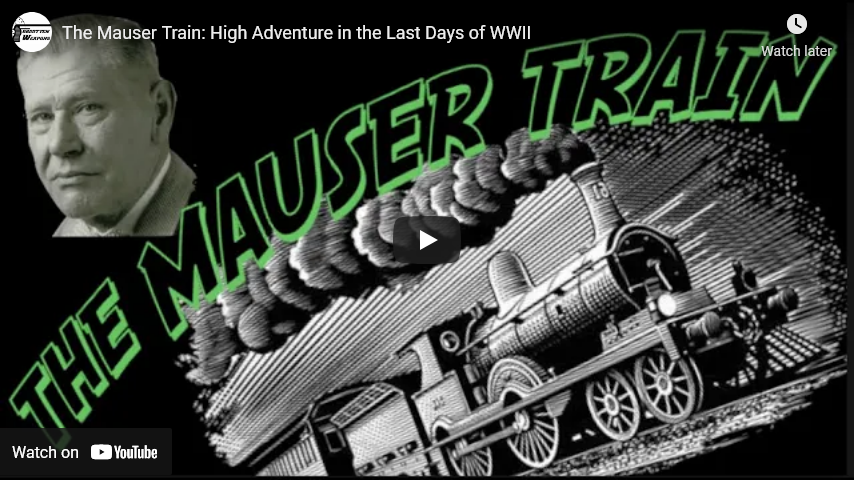
Only days ahead of the French Army in April 1945, Ott-Helmuth von Lossnitzer and about 250 Mauser engineers and technicians fled Oberndorf with the core of Mauser’s new projects. They had the drawings, components, and gages for guns like the new StG-45 assault rifle, MK214 aircraft cannon, and Volkspistol and they were headed for an impregnable series of tunnels in the Austrian Alps to carry on the war. In a story that is absolutely worthy of film adaptation they scrounged a series of locomotives, dodged P47 Thunderbolt attacks, and went careening through the Alps with about 2 dozen boxcars of the most important prototype guns in the German arsenal.
Of course, the idea of continued resistance was a complete fantasy. When it did finally arrive in Ötztal, the Mauser refugees found all the tunnels already occupied by other groups with the very same idea. So they basically made camp and waited for American forces to arrive. The train was found by a British-American CIOS (Combined Intelligence Objective Subcommittee) party, the engineers were all questioned, and the train contents packed up for shipment to the UK and US. Ott-Helmuth von Lossnitzer himself emigrated to the US as part of Operation Paperclip, where he worked for Springfield Arsenal for many years until retiring in 1968 and then living in Wisconsin until his passing in 1989.
For anyone interested in this story, I highly recommend Lossnitzer’s oral recollections compiled into book form by Leslie Field and Bas Martens – ISBN 9789081737807. It is out of print now, but you may be able to find it on the secondary market.
Much more accessible is the reprinting of the original CIOS report on Mauser published by Peter Dallhammer (whom you may recall from his Textbook of Pistol Technology and Design). This is a 360-page treasure trove of details on Mauser’s ongoing R&D in 1945, and it is available on Amazon:
https://amzn.to/2RrnNgTContact:
Forgotten Weapons
6281 N. Oracle 36270
Tucson, AZ 85740
Comments Off on The Mauser Train: High Adventure in the Last Days of WWII
September 3, 2021
Why Don’t the French Resist? – WAH 041 – August 1942, pt. 2
World War Two
Published 2 Sep 2021Citizens in Stalingrad face German bombs as Soviet officials refuse to evacuate. The German counter-insurgency effort increases, but people continue to resist against all odds. The Treblinka camp breaks down under the ambitions of its commandant, Irmfried Eberl.
(more…)
Comments Off on Why Don’t the French Resist? – WAH 041 – August 1942, pt. 2
Anti-Slavery Patrols – The West Africa Squadron
Drachinifel
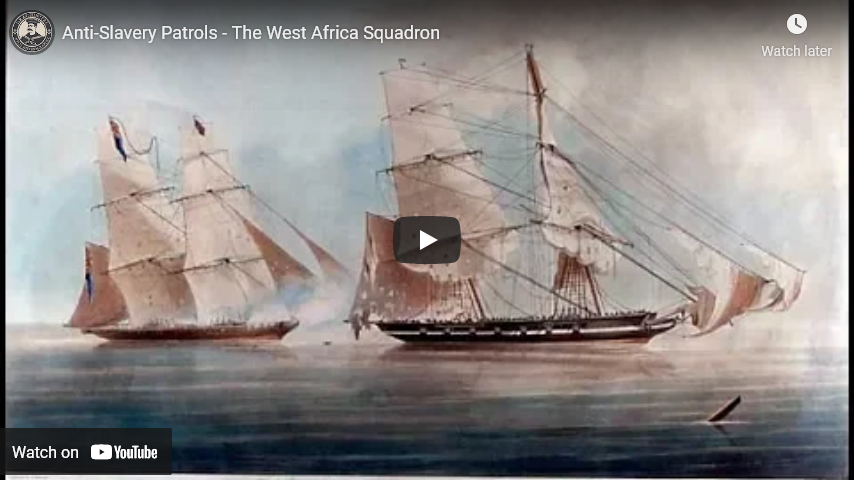
Published 1 Dec 2018Title says it all really, we look at something that was definitely worth doing, which really should have been done much sooner.
Comments Off on Anti-Slavery Patrols – The West Africa Squadron
September 2, 2021
Road to WWII: A Basic Causal Analysis
Thersites the Historian
Published 19 Nov 2019This video is a primer for undergraduates in broad history survey courses that will hopefully help make sense of the interwar years between World War I and World War II.
Patreon link: https://www.patreon.com/thersites
PayPal link: paypal.me/thersites
Twitter link: https://twitter.com/ThersitesAthens
Minds.com link: https://www.minds.com/ThersitestheHis…
Steemit/dtube link: https://steemit.com/@thersites/feed
BitChute: https://www.bitchute.com/channel/jbyg…
Backup Channel: https://www.youtube.com/channel/UCUrD…
Comments Off on Road to WWII: A Basic Causal Analysis
QotD: The Boer War
The last event in Queen Victoria’s reign was the Borewore, or, more correctly, Boerwoer (Dutch), which was fought against a very tiresome Dutch tribe called the Bores, because they were left over from all previous wars.
The War was not a very successful one at first, and was quite unfair because the Boers could shoot much further than the English, and also because they were rather despicable in wearing veldt hats and using PomPom bullets.
Numerous battles were fought against the Bore leaders (such as Bother, Kopje, and Stellenbosch) at Nek’s Creek, Creek’s Nek, Knock’s Knee, etc., and much assistance was given to the British cause by Strathcoma’s memorable horse (patriotically lent by Lord Strathcoma for the occasion) and by the C.I.D., who fought very bravely and were awarded a tremendous welcome on their return to London after the war.
Finally, the people at home took upon themselves the direction of the War and won it in a single night in London by a new and bracing method of warfare known as Mafeking. Thus the English were once more victorious. Memorable Results The Barwar was obviously a Good Thing in the end because it was the cause of Boy Scouts and of their memorable Chief Scout, General Baden Powell (known affectionately as ‘the B.O.P.’), and also because it gave rise to a number of very manly books, such as 40 Years Beating About The Bush, 50 Years Before The Mast, 60 Years Behind The Times, etc.
Death of Queen Victoria
Meanwhile Queen Victoria had celebrated another Jamboree, called the Diamond Jamboree (on account of the discovery of Diamond mines at Camberley during the Borewore) and after dying of a surfeit of Jamborees, Jokes, Gladstone, etc., had been succeeded by her son, Edward VII.
W.C. Sellar & R.J. Yeatman, 1066 And All That, 1930.
Comments Off on QotD: The Boer War


