
Forgotten Weapons
Published 14 Jul 2025When France was looking to replace the MAS 49/56 rifle for military service in the 1970s, it tested all of the major rifle options available. These included the Colt M16, FN CAL, and HK33. The HK required some modification to meet French military requirements, specifically the capability to launch rifle grenades. The model 33F was developed specifically to meet these requirements — first as a modified standard HK33, and later as a factory production run. The modifications made include a reinforced magazine well, 4-position fire control gourd (including 3-round burst), a reinforced stock attachment, grenade range rings on the barrel, and a mounting bracket for a rifle grenade sight.
Apparently the HK33F performed very well in trials, but it was ultimately deemed politically unacceptable to adopt a German rifle for the French Army (a policy which has changed now, 50 years later …). Instead, the domestic FAMAS was chosen, along with the SIG-Manurhin 540 purchased in limited numbers for the Foreign Legion.
A second type of 33F came about from the program, however. Berlin police wanted HK33 rifles, but treaty prohibited West German arms from entering Berlin in East Germany. The loophole found was to send the parts to MAS in France, where they were assembled and marked HK33F, thus making them French origin gun which could be sent to Berlin. These rifles had none of the French grenade launching adaptations, and were completely standard HK33s except for the use of heavy barrels. MAS eventually added the G3, HK33, and MP5 to its export catalog in the late 1970s and sold quantities to a number of small countries in the French sphere of influence (including Haiti, Burkina Faso, Lebanon, and others).
Many thanks to the IRCGN (Institut de Recherche Criminelle de la Gendarmerie Nationale) for allowing me access to film these rather rare HK variants for you!
(more…)
November 25, 2025
Roller Delay in France: The H&K 33F (Trials & Export Models)
November 23, 2025
North Africa Ep. 9: Rommel tightens the Noose around Cyrenaica
World War Two
Published 22 Nov 2025April 1941, North Africa. The British forward line at Mersa Brega has collapsed, 2nd Armoured Division is in retreat, and Erwin Rommel’s Afrika Korps is on the move. What was supposed to be a cautious blocking force has turned into a fast-moving desert offensive threatening Benghazi, Mechili, and all of Cyrenaica.
In this episode of our WW2 in Real Time – North Africa miniseries, we follow:
- Rommel as he ignores Hitler’s orders and pushes east after Mersa Brega
- The chaotic British retreat and fuel-starved tanks abandoning the desert
- The fall of Benghazi without a fight
- Wavell’s misjudgements and late reactions from Middle East Command
- The race for Mechili, a vital crossroads and supply dump
- The brutal reality of desert logistics – where sand and distance destroy more vehicles than enemy shells
While Rommel drives his reconnaissance units toward Benghazi and Mechili, British commanders try to trade ground for time and avoid encirclement. At the same time, Italian commanders warn Rommel about overstretch, and German divisional leaders complain about fuel and breakdowns – warnings he largely ignores.
By the end of this week in 1941, the Desert Fox is deep inside Cyrenaica, the British are burning their own supply dumps, and both sides are racing for the next key position. A clash at Mechili is imminent – and so is a showdown at the Er Regima pass with the “Devil’s Own” Australians waiting in ambush.
This is Episode 9 of our North Africa 1941 miniseries – part of our larger effort to cover WW2 week by week, in real time.
If you want to support this work and get deeper into the war in the desert and beyond, join the TimeGhost Army at timeghost.tv or patreon.com.
Excelsior!
Battle for the Mediterranean, 1940
Real Time History
Published 4 Jul 2025In the summer of 1940, the British Empire faces German attacks against the home islands a new Italian adversary in the Mediterranean Sea, the lifeline to its colonies around the globe. In a series of campaigns the British beat back the Italians and eliminate parts of the French fleet. But the service of its overseas subjects won’t come for free.
(more…)
November 22, 2025
Why did the US Enter WW1?
The Great War
Published 11 Jul 2025In early 1917, the United States was still neutral in the First World War. Meanwhile, German leaders were getting desperate — if they couldn’t find a way to break the war of attrition on the Western Front, the Allies would probably defeat them. The result was multiple gambles that staked everything on a quick victory with the risk of drawing the US into the war.
(more…)
November 16, 2025
North Africa Ep. 8: The Forgotten Battle of Mersa El Brega
World War Two
Published 15 Nov 2025At Mersa Brega a thin British screen, one reinforced battalion with guns, holds a superb defensive choke point until Stukas, artillery, and Panzer Regiment 5 grind it down. Cemetery Hill falls under bombardment, counterattacks stall, and a northern flank probe finally forces a retreat: Rommel’s first major victory in the desert, bought against strong ground and stubborn infantry.
(more…)
November 15, 2025
QotD: The innovation of infiltration tactics in trench warfare
One way to respond to a novel tactical problem is with novel tactics. And the impetus for this kind of thinking is fairly clear: if your own artillery is the problem digging you into a hole, then find a way to use less of it.
The mature form of this tactical framework is often called “Hutier” tactics, after German general Oskar Emil von Hutier, though he was hardly the sole or even chief inventor of the method. In its mature form, the technique went thusly: instead of attacking with large waves of infantry which cleared each objective in sequential order, attacks ought to be proceeded by smaller units, carefully trained with the layout of the enemy positions. Those units, rather than having a very rigid plan of attack, would be given those general objectives and left to figure for themselves how to accomplish them (“mission tactics” or Auftragstaktik)1, giving them more freedom to make decisions based on local conditions and the ground.
These elite spearhead units, called Stoßtruppen or “Stormtroopers” were well equipped (in particular with a higher amount of automatic firearms and hand grenades, along with flamethrowers). Importantly, they were directed to bypass enemy strong-points and keep moving forward to meet their objectives. The idea here was that the follow-up waves of normal infantry could do the slow work of clearing out points where enemy resistance was strong, but the stormtroopers should aim to push as deeply as possible as rapidly as possible to disorient the defenders and rapidly envelop what defenses remained.2
These sets of infantry tactics were in turn combined with the hurricane barrage, a style of artillery use which focused on much shorter but more intense artillery barrages, particularly associated with Colonel Georg “Breakthrough” Bruchmüller. Rather than attempting to pulverize defenses out of existence, the hurricane barrage was designed merely to force enemies into their dugouts and disorient the defenders; much of the fire was directed at longer ranges to disrupt roads and artillery in the enemy rear. The short barrage left the ground relatively more intact. Meanwhile, those elite infiltration units could be trained to follow the creeping barrage very closely (being instructed, for instance, to run into the shell explosions, since as the barrage advantages, no gun should ever strike the same spot twice; a fresh shell-hole was, in theory, safe). Attentive readers will recognize the basic foundations of the “move fast, disorient the enemy” methods of the “modern system” here.
So did infiltration tactics break the trench stalemate? No.
First, it is necessary to note that while infiltration tactics were perhaps most fully developed by the Germans, they were not unique to them. The French were experimenting with many of the same ideas at the same time. For instance, basic principles of infiltration were being published by the French General Headquarters as early as April, 1915. André Laffargue, a French infantry captain, actually published a pamphlet, which was fairly widely distributed in both the French and British armies by the end of 1915 and in the American army in 1916, on exactly this sort of method. In many cases, like at the Second Battle of Artois, these French tactics bore significant fruit with big advances, but ran into the problem that the gains were almost invariably lost in the face of German counter-attacks. The Russians, particularly under Aleksei Brusilov, also started using some of these techniques, although Brusilov was as much making a virtue of necessity as the Russians just didn’t have that much artillery or shells and had to make do with less and Russian commanders (including Brusilov!) seem to have only unevenly taken the lessons of his successes.
The problem here is speed: infiltration tactics could absolutely more efficiently overrun the front enemy lines and even potentially defeat multiple layers of a defense-in-depth. But after that was done and the shock of the initial push wore off, you were still facing the same calculus: the attacker’s reinforcements, shells, artillery and supplies had to cross broken ground to reach the new front lines, while the defender’s counter-attack could ride railways, move over undamaged roads and then through prepared communications trenches. In the race between leg infantry and trains, the trains always won. On the Eastern Front or against the Italians fighting under the Worst General In History at Caporetto (1917), the already badly weakened enemy might simply collapse, producing massive gains (but even at Caporetto, no breakthrough – shoving the enemy is not a breakthrough, to qualify as a breakthrough, you need to get to the “green fields beyond” that is open ground undefended by the enemy), but against a determined foe, as with the 1918 Spring Offensives, these tactics, absent any other factor, simply knocked big salients3 in the line. Salients which were, in the event, harder to defend and brought the Germans no closer to victory. Eventually – often quite rapidly – the front stabilized again and the deadlock reasserted itself. Restoring maneuver, the actual end-goal of these tactics, remained out of reach.
None of this is to say that infiltration tactics were useless. They represented a real improvement on pre-war infantry tactics and continue to serve as the basis for modern infantry tactics. But they could not break the trench stalemate or restore maneuver.
Bret Devereaux, “Collections: No Man’s Land, Part II: Breaking the Stalemate”, A Collection of Unmitigated Pedantry, 2021-09-24.
- Because it doesn’t fit anywhere else, I want to make a rather long note here. There is an odd tendency which I find quite frustrating, in which military concepts, unit designations and terminology from other languages are all translated into English when used, except for German terms. I suspect this has to do with the high reputation German military thinking holds in among the general public and some military practitioners. I do not share this view; both the German Imperial Army and the Nazi Wehrmacht (another term we never translated yet we feel no need to call the French army l’armée de terre) managed to lose the only major wars they were in, leading to the end of the states they served. Both armies were capable at some things and failed at others; their record certainly does not make German some sort of Holy Language of War. Nevertheless, where German technical terms are notable, I will include them so that the reader will know, should they encounter them elsewhere, that this is a term they are already familiar with, albeit in translation.
- It should be noted that the emphasis here remained on envelopment and destruction rather than on disorientation. The latter is a feature of subsequent systems based on German maneuver warfare, but was not a goal of the doctrine itself initially.
- A salient is a bulge in the line such that your position is bordered by the enemy on three sides. Such positions are very vulnerable, since they can be attacked from multiple directions and potentially “pinched off” at the base.
November 14, 2025
Why didn’t the Allies Attack Germany in 1939? (The Phoney War)
Real Time History
Published 20 Jun 2025On September 1, 1939, Germany invades Poland, setting off the Second World War. Two days later, Britain and France declare war on Germany. As the German army races towards Warsaw, many German generals are worried the French might simply walk into western Germany, and there’s not much the Wehrmacht can do about if they do. But instead of a powerful Allied counteroffensive, the French and British mostly sit back and wait during the so-called Phoney War – so why didn’t the Allies attack Germany in 1939?
(more…)
November 12, 2025
Volksturm VG-5, aka VK-98
Forgotten Weapons
Published 15 Sept 2015By the beginning of 1945, the Nazi government in Germany was looking to find cheaper ways to equip the Volksturm, and solicited bids and designs from several major arms manufacturers. The Steyr company created a crude but effective version of the Mauser 98 which was dubbed the VK-98 or VG-5. Mechanically it is identical to a K98k, but has much less attention paid to aesthetic finish and many simplified parts.
In total, 10,000 of these Steyr rifles were made. Despite commonly held notions of them having totally random parts, there are actually a relatively small number of discreet variations in the production sequence and the rifles have definitely class characteristics — which I will examine in the video.
QotD: Horror Victorianorum and the anti-Wilhelminites
Which is fine, if you’re an art student (or in that most unemployable of majors, Art History). But we need to know what “mainstream” art looked like under Wilhelm II, and for all intents and purposes it was Biedermeier.
Everyone with me? I’m oversimplifying, but not too much, when I say that you can make a pretty good case that the ultimate cause of World War One was “tradition”. At least, the people who were there sure as hell thought so. If you’re not familiar with Wilhelmine culture — and I am very, very far from Expert — consider the analogous case in Great Britain. Horror Victorianorum has its own Wiki entry, and isn’t that odd? It’s great to see David Stove getting some of the credit he deserves, but if he hadn’t coined it, somebody would’ve, because the shift in English culture was so massive, so in-your-face, that you can see the 20th century being born, in whatever medium you choose: art, architecture, literature, music, interior design, whatever, it’s all stupendously, tremendously, egregiously anti-Victorian.
Imagine “Victorian culture” is Donald Trump. That’s how against it they were. By the end of Edward VII’s brief reign, anything and everything Victorian was not just wrong, not just outdated or silly or whatever, but THE WORST THING EVER. If the Victorians liked it, Edwardians hated it, for any and all values of it; if they’d discovered that any of the guys in Eminent Victorians had really enjoyed metabolizing oxygen, the entire Edwardian Smart Set would’ve asphyxiated themselves on principle.
At that point, Modernism was inevitable, because Modernism was all there could be.
Severian, “PoMo, P-O-M-O PoMo …”, Founding Questions, 2025-08-07.
November 11, 2025
Four battles of the Canadian Corps
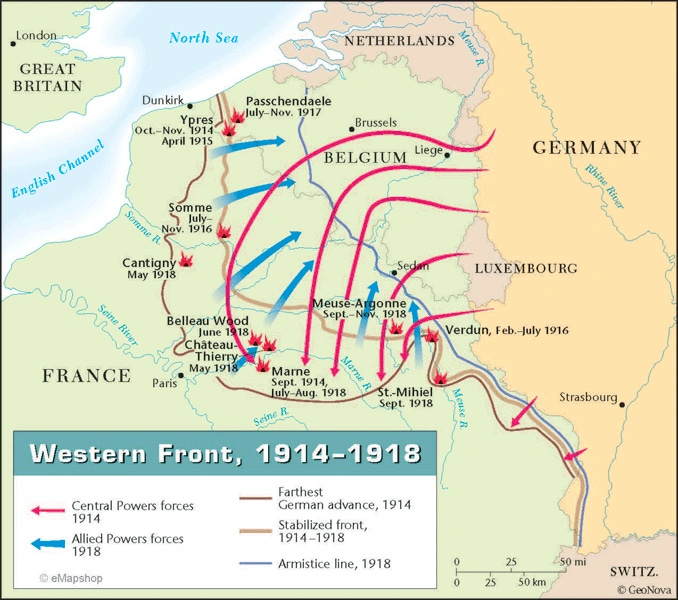
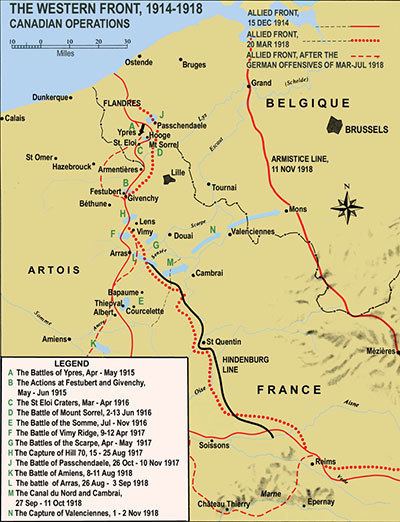
Following on from part one (excerpted here), The Black Horse outlines four major battles that the Canadians fought on the western front during the First World War:
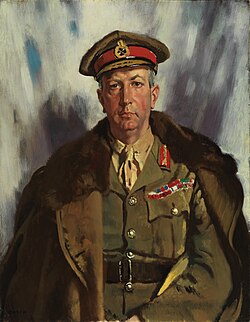
Sir Arthur Currie
Portrait by William Orpen, 1919.
The first part of the series was a political biography of Currie; the second part attempts to tell the story of the Canadian Corps at war through somewhat detailed account of four important battles. The piece is only partly biographical, it partly tells the story of Currie’s war, and partly tells the story the Canadian men who fought for the British Empire in the Great War. It’s a story of incredible martial prowess, but the careful reader will also observe a story of warring duties placed upon the leader of a colonial army; duty to his men, duty to the political leadership of his colonial people and the future of that nation, duty to the objectives of the imperial power on whose behalf he fought, and finally duty to glorious Victory. Currie ended his life understood by those with eyes to see as a great warrior and a military genius; but disliked by his men and hated by the leadership of his people because he prioritized the needs to the Empire and of Victory; but after the war the Empire was of limited service to Currie and to the Canadian people. I leave to the reader, to history, and to God, to decide the value of Victory.
[…]
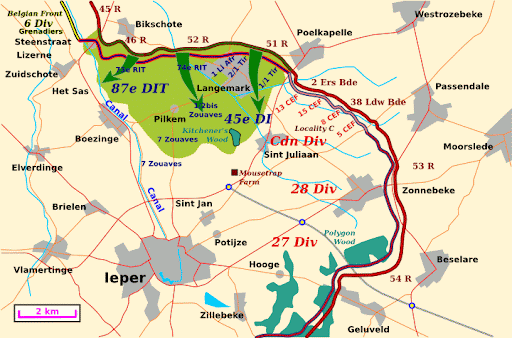
2nd Battle of Ypres
In the spring of 1915 the early dynamic advances of the German army were a distant memory faded behind the great defeat at the First Battle of the Marne. Through the winter both sides had dug in; and many German troops were redeployed to the Russian front. German chemists Walther Nernst and Fritz Haber brought forward the idea of using heavier-than-air Chlorine gas, carried on the wind, to overcome the mathematical impossibility of conventional attack. On April 22, 1915, Albrecht of Württemberg led 7 German divisions to attack 8 Allied divisions, including the 1st Canadian Division under the command of Sir Edwin Alfred Hervey Alderson. The attack began with the release of 168 tons of chlorine gas at about 1700h along a 4 mile stretch of the front around Langemark.
[…]
Vimy Ridge
For a year and a half after Ypres, Currie & the Canadian Corps continued to fight desperate engagements along the Western front with no clear strategic conclusion. After heavy losses and a lot of hard-learned lessons at the Somme from Sept 1915-Sept 1916, the Canadian Corps and Currie with them had become both hardened by bitter experience, and desperate to find better ways to prosecute the war. In September 1915 he was recorded to have said “I did not care what happened to me, but to my men, to their wives, their mothers, their children and to Canada I owed a duty which I wanted to fulfill to the very best of my ability”. Later that year as the division struggled with desertion, he ordered the execution of a deserter despite a three hour plea for clemency by the divisional cleric. The decision restored discipline, but haunted Currie’s dreams long afterwards.
In May 1916 Julian Byng took command of the Canadian Corps, replacing Sir Edwin Alderson. In the fall of that year, after heavy losses in a series of engagements at the Somme, Byng was given the opportunity to reorganize and refit the Canadian Corps; he looked to Currie as a key partner in the effort. They replaced the ineffective Ross Rifle with the Lee Enfield, reorganized the platoon structure to include heavy weapons within each platoon [machine guns, mortars, etc.], and implemented new training and tactics like rehearsals for advances, and the “creeping barrage”, carefully coordinated intended to keep artillery shells landing slightly ahead of advancing men.
[…]
Hill 70
After Vimy, Julian Byng was promoted. Currie was promoted in turn to lead the Canadian Corps. He would lead the Corps that he and Byng had made into one of the most effective fighting forces on any side of the conflict and lead it to bloody victory again and again. There is perhaps no better example of the mastery of the Canadian Corps, from top to bottom, than the battle of Hill 70. “Hill 70 was as close to a perfect battle as was ever fought on the Western Front” wrote historian Tim Cook.
[…]
The Hundred Days Offensive & the Pursuit to Mons
As the winter of 1917-18 passed, a new set of highly political decisions concerning whether and how to reorganize the Canadian Corps for the next round of fighting were taken. As noted in part one, Currie opted to split up the newly formed 5th division to reinforce the four divisions of the Canadian Corps and triple the size of the field engineering element. The decision optimized the Canadian Corps as an attacking force; and when they returned to the front that’s exactly how they would be used. Between August 8th and November 11th, 1918, the Canadian Corps fought nine major battles advancing 86 miles, and suffering 45,835 casualties [The force that began the offensive was ~100,000]. By comparison, the substantially larger American Expeditionary Force, over this same period, advanced only 34 miles while capturing only half the number of prisoners, suffering roughly twice the casualties per German division defeated.
Vimy Ridge: Canada’s Finest Hour | History Traveler Episode 386
The History Underground
Published 20 Oct 2024Battle of Arras: Part 2
When it comes to the legendary actions of the Canadian soldiers in WWI, Vimy Ridge looms large above all of the others. This is where the four division of the Canadian Corps would fight side by side for the first time in The Great War. In this episode, we’re walking the ground on the left flank of the Canadian line, looking at the memorial and showing a few things that typically get overlooked in the Vimy Ridge area.
For more on the Battle of Arras, check out The Old Front Line Podcast with Paul Reed & his YouTube channel, @OldFrontLine.
This episode was produced in partnership with The Gettysburg Museum of History. See how you can support history education & artifact preservation by visiting their website & store at https://www.gettysburgmuseumofhistory…
Map animations by @SandervkHistory
QotD: Moltke the Younger and the Schlieffen Plan
Moltke therefore proved an ideal scapegoat for the “Schlieffen School”. For the Schlieffen School (mostly officers trained by Schlieffen), the Schlieffen Plan was a true recipe for victory bungled by incompetent execution. However, recent scholarship has shown a more nuanced picture. While Schlieffen did not fully approve of his successor, Moltke was a faithful student of Schlieffen’s concepts. The modifications he made to the plan were not because of a difference in opinion, but of circumstance. Following Schlieffen’s retirement, the French army became more aggressive, necessitating a stronger defense of the Rhine. Likewise, Russian strength and mobilization speed increased, necessitating a greater force allocated to the East. Moltke was also more realistic about the logistical limitations of the all-important right wing of the German offensive. While Schlieffen (allegedly with his dying breath) insisted “keep the right wing strong”, there were simply only so many divisions that could practically advance there. Moltke did his best to adapt the Schlieffen Plan to these changing circumstances, though with mounting fear that the strength of the Entente had placed victory beyond Germany’s strength.
Despite awareness of the long odds, officers continued to press for preventative war in succeeding European crises.3 The term “preventative war” did not mean “preempting the attack of hostile powers” but rather to initiate a war while the strategic balance was most favorable for Germany. While, as mentioned, they had their doubts about the surety of victory, they believed the odds would only get worse. The Schlieffen Plan had been designed for a one-front war against France (in 1905, the year of Schlieffen’s retirement, Russia was in the throes of revolution). Though adapted in later years, the plan remained tenable only so long as Germany had the chance to defeat France before Russian mobilization was completed. As the Russian army expanded and its rail system modernized, the General Staff saw the Schlieffen Plan nearing its expiration date.
The General Staff saw no alternative to Schlieffen’s concept because of its axiomatic focus on total victory. The kind of limited victory that the Elder Moltke had settled for in his later war plans had never entered the vocabulary of the General Staff. As such, the General Staff pressed strongly for war (which it believed was inevitable) to break out before the balance of power swung further against Germany.
The only alternative to this would have been to frankly state the perilous situation in which Germany stood militarily and admit that total military victory was out of reach and German diplomacy would need to be reoriented around this fact. Not only would this course of action been antithetical to the proud traditions of the officer corps, but it would also have been viewed as unacceptably political. What’s more, the Kaiser would have likely viewed such behavior as cowardly if not outright insubordinate. Once again, the Kaiser’s power over personnel decisions meant uncomfortable topics were not broached for fear of instant dismissal.
It is not entirely unjust to accuse German leaders of cowardice or careerism in avoiding these conversations. However, they — like so many who serve under capricious or incompetent heads of state — justified their silence and continued service under the logic of harm reduction. If they resigned (or clashed with the Kaiser leading to their dismissal) they knew they would be replaced by someone more compliant. The Kaiser’s power over personnel meant they understood clearly that they had no leverage.
The Chiefs of the General Staff, for all their influence, were incentivized to focus on the areas of their exclusive responsibility. Nevertheless, the younger Moltke was not passive in his efforts for war. He resumed contact with the Austro-Hungarian General Staff, assuring it of German support should Austria choose war in a crisis. As aforementioned, when crises came to Europe (some instigated by the German foreign ministry) he pressed the chancellor and Kaiser for a preventative war. Both, to their credit, while willing to risk war, would not choose it.
Perhaps most decisively, Moltke and his deputy, Erich von Ludendorff,4 made the decision to hinge the operational plan on an attack on the Belgian city of Liège (hosting a critical rail juncture) before the neutral country could mobilize.5 This modification was made because Moltke desired to avoid violating Dutch neutrality (as Schlieffen had called for). He wisely understood Germany could afford no more enemies and that invading the Netherlands would mean increasing the distance the German right wing would have to cover to gain the French flank, decreasing the odds of success. What’s more, Moltke hoped that Dutch neutrality would allow it to act as a “windpipe” in the event of a long war and a British blockade. However, avoiding Dutch territory complicated German logistics, necessitating the swift seizure of Liège to allow the offensive to meet its strict timetables.
This was a strictly operational decision, made on technical grounds. As such, neither the chancellor nor the Kaiser were informed of this detail of the plan (operational plans were kept strictly secret, with the prior year’s being systematically burned). However, as perceptive readers may have noticed, the need for a coup de main against a neutral country before it mobilized severely limited German strategic flexibility. There was only one deployment plan for war in the West (and only one at all after 1913). In a crisis, Germany was therefore bound to attack before the Belgians manned Liège’s fortifications. Yet this all-important point-of-no-return was unknown to the Kaiser, chancellor, and foreign minister. The General Staff had effectively stripped the Kaiser and civilian leaders of their “right to be wrong”.
Thus, the General Staff had drastically increased the likelihood of war in that the point-of-no-return was kept obscured from those who would be responsible for bring Germany to the brink. As would occur in 1914 during the July Crisis, the Kaiser and his minister could not understand why Moltke was pressing so strongly for war. As historian Annika Mombauer puts it, “Only Moltke knew that every hour counted”.6 The General Staff had — intentionally or not — engineered a situation in which political leadership would have to choose war or abandon its only operational plan. While political leadership was reticent to take this step (especially without the details of the plan) contributing to Moltke’s nervous breakdown, the General Staff ultimately got the war it so desired at the next crisis Germany found itself in. If the coup de main on Liège had been devised as a ploy to force political leadership to engage in a preventative war, it had succeeded.
Ultimately, the predominance of the military over German policy — both foreign and domestic — created an environment in which civilian leaders like Bethmann Hollweg were sidelined, and aggressive military strategies took precedence. This imbalance of prestige, coupled with the narrow, fatalistic worldview of military leaders, contributed to Germany’s march toward war, with little room to acknowledge alternative diplomatic or strategic approaches.
Kiran Pfitzner and Secretary of Defense Rock, “The Kaiser and His Men: Civil-Military Relations in Wilhelmine Germany”, Dead Carl and You, 2024-10-02.
- Helmuth von Moltke the Elder was his uncle.
- Mombauer, Moltke, 109.
- Better known for other work.
- Mombauer, 96.
- Mombauer, 219.
- Rosinski, “Scharnhorst to Schlieffen”, 99.
November 9, 2025
North Africa Ep. 7: Hitler says No! Rommel doesn’t care!
World War Two
Published 8 Nov 2025Rommel is called to Berlin, where he’s told to wait until May and settle for Benghazi, but he rejects that plan and decides to strike sooner. In Cairo, Wavell reads ULTRA decrypts and realizes the Luftwaffe is preparing something, while admitting he has almost nothing left to hold Cyrenaica. On the ground, the Australians storm Giarabub in a sandstorm, El Agheila is snatched after a botched British ambush, and Rommel orders preparations to hit Mersa Brega before the British can dig in.
(more…)
November 6, 2025
Lines of Fire: Operation Market Garden Part 1 of 2 – WW2 in Animated Maps
TimeGhost Cartographic
Published 5 Nov, 2025September, 1944. Soviet forces push ever westwards, slicing their way through Poland en route to Berlin. In the west, the Allies have made great strides after the invasion of Normandy, but now face a winter of relative stagnation as supply issues threaten to undercut their momentum. At this time, British Field Marshal Bernard Montgomery believes has a plan to carve a corridor through occupied Netherlands and get his forces into Germany within days, striking at the heart of the German war economy, and maybe, just maybe, ending this war before 1945 dawns. In Part 1 of 2, we look over the plan, the forces involved, and the colossal effort required to make Monty’s vision a reality.
00:00 Intro
01:12 Background
04:40 Planning
07:07 Disposition of Forces
09:05 Geographic Overview
11:30 Conclusion
(more…)
November 4, 2025
The Bear Who Beat the Nazis | Wojtek
The Rest Is History
Published 29 Jun 2025The story of Wojtek — the bear who took on the Nazis — amidst the death and devastation of the Second World War, and more specifically Poland’s heroic resistance, is a flicker of redemption amidst an otherwise deeply depressing period of history. His is a life that exemplifies not only Poland’s struggle in microcosm, but also the global nature of the war overall. Discovered by a young boy as a tiny cub, his mother dead, he was sold to Polish officers travelling to Palestine in the hills outside Tehran. The soldiers nursed and fed the young bear with milk from a vodka bottle, treating him like one of their own. Later, he was even purported to keep them warm at night, drink beer, delight in wrestling and showers, and both march and salute. When the Polish forces were finally deployed to Europe, “Wojtek” as he had been named, went with them; a mascot and morale booster to the men. There he was given military rank, and actively participated in the Italian campaign, carrying ammunition and artillery crates. But with death and destruction on all sides, what would be his fate?
Join Tom and Dominic as they discuss Wojtek, one of history’s most extraordinary animals, and his life in the army — an emblem of hope and resilience in the face of the horrors of the Second World War.
(more…)


