
World War Two
Published 28 May 2021German Grand Admiral Karl Dönitz orders the U-Boats to leave the Atlantic this week; the losses lately have just been too great for their patrols to continue there. There is active fighting in China, the Aleutians, and the Kuban, and there are special weapons tests in the skies over Germany.
(more…)
May 29, 2022
Black May, Nazi Subs Defeated – WW2 – 196 – May 28, 1943
Comments Off on Black May, Nazi Subs Defeated – WW2 – 196 – May 28, 1943
May 28, 2022
QotD: Breaking the trench stalemate with tactical air power
The first function aircraft were put to in WWI was reconnaissance. In 1914, that might mean locating the enemy in a fast-moving battlefield, but as soon as the trench stalemate set in, reconnaissance mostly meant identifying enemy buildups along the line and – still more importantly – serving as spotters for artillery. It wasn’t a huge cognitive leap to go from having aircraft which identified targets for the artillery to thinking that the aircraft could be the artillery. But as with tanks, the technical limitations of the platforms in use meant that actually meaningful close air support was still two decades away when the war ended. The rapid development of aircraft in these early days means that there is a truly bewildering array of aircraft designs in use during the war, but the Farman F.50 is a good sample for what the most advanced bombers in common use looked like towards the war’s end. It carried a maximum of eight 44kg (totalling 352kg) bombs under the wings, which were dropped unguided. With a maximum speed of less than 100mph and a service ceiling under 5000m, it was also an extremely vulnerable platform: fragile, slow and with a relatively low flight ceiling. The French mainly used bombers at night for this reason.
But how much airpower does it take to really move a division out of position? In 1944, at the start of Operation Cobra as part of the Normandy breakout, it was necessary for US forces to move the powerful armored division Panzer Lehr out of its prepared positions outside of St. Lo. Over the course of an hour and a half, the U.S. Eighth Air Force hit Panzer Lehr with approximately three thousand aircraft, including 1,800 heavy bombers (each of which might have had bomb-loads of c. 2-3,500kg; the attack would have been the equivalent of about 13,000 Farman F.50s (of which only a hundred or so were built!)). By this point, even medium bombers carried bomb loads in the thousands of pounds, like the B-25 Mitchell medium bomber, with a bomb load of 3000lbs (1360kg). This was followed by a hurricane artillery barrage! Despite this almost absurdly awesome amount of firepower (which, to be clear, inflicted tremendous damage; by the end of Operation Cobra, Panzer Lehr – the heaviest and most powerful Panzer division in the west – had effectively ceased to exist), Panzer Lehr, badly weakened was still very capable of resisting and had to be pushed out of position by ground attack over the next three days.
Needless to say, nothing on offer in 1918 or for a decade or more after, was prepared to offer that kind of offensive potential from the air. That kind of assault would have required many thousands of aircraft with capabilities far exceeding what even the best late-war WWI bombers could do. Once again, while close air support doctrine was developed with one eye on the trench stalemate and the role airpower could play in facilitating a breakthrough and restoring maneuver (either by blasting the breakthrough or – as in Soviet Deep Battle doctrine – engaging enemy rear echelon units to bog down reinforcements). But the technology wasn’t anywhere near the decisive point by 1918. Instead, the most important thing aircraft could do was spot for the artillery, which is mostly what aircraft continued to do, even in late 1918.
Bret Devereaux, “Collections: No Man’s Land, Part II: Breaking the Stalemate”, A Collection of Unmitigated Pedantry, 2021-09-24.
Comments Off on QotD: Breaking the trench stalemate with tactical air power
May 24, 2022
QotD: Portuguese art and creative genius
Then the economy recovered, they got jobs, a lot of them connected to or linked to government and all of that stopped. And of course with the EU there are no illegal stalls. I mean Papiere, bitte and all that.
And somehow, perhaps because the new generation knows they have all sorts of “benefits” and “support” coming to them and have never felt the bite of chaos, the crafts and arts in the stores are either startlingly mundane or bizarre. I’m still rather puzzled by entire “scenes from life” (including one that was an operating room) sculpted with penises instead of humans. I mean … who even buys that? Okay. We know who buys that. But do the German tourists and their nostalgie de la boue think they’re tapping into something uniquely “uninhibited and free”, some kind of wild Portuguese sexuality? Raises eyebrow. The Portuguese have been civilized land long before the Germans traded their furs for a place as Roman soldiers. And sure, the Romans could be startlingly and inappropriately sexual (I call to mind a mural, not out of place in a Roman middle class home that had monkeys copulating with children) but it didn’t mean that the culture was “free”, rather that they had different rules. Frankly, the sixties attempt to erase history has corrupted real art and … well, everything else.
Which is kind of the college student thing. Chaos and free time allows you to be very creative, but then you’re not organized enough to parlay that into a career. (I mean, if they’re destined to be the touristic “warm port” of Europe, perhaps they should consider letting real art flourish. Or even encouraging it. Grants for small businesses and young people. It beats the jobs that don’t exist. Just demand they be actually creative and accomplished, instead of giving grants for art that my kids could do at age two and about as interesting.
Sarah Hoyt, “The Ancient Enemy”, According to Hoyt, 2019-04-05.
Comments Off on QotD: Portuguese art and creative genius
May 23, 2022
Drowning Germans, Burning Jews – WAH 061 – May 22, 1943
World War Two
Published 22 May 2022When Air Marshal Arthur Harris and Reichspropagandaminister Joseph Goebbels agree that a lot of death and destruction is not enough death and destruction, the world is in trouble.
(more…)
Comments Off on Drowning Germans, Burning Jews – WAH 061 – May 22, 1943
May 22, 2022
Axis Prisoners Face French Wrath – WW2 – 195 – May 21 1943
World War Two
Published 21 May 2022The Allies have won the battle for Africa, but now they have nearly 250,000 POWs to care for, and do not have the facilities to do so. The Trident Conference continues in Washington to try and decide the direction of the Allied war effort, but they launch the Dambuster Raids this week in Germany to try and cripple German water power — and thus, industry — with a new type of bomb.
(more…)
Comments Off on Axis Prisoners Face French Wrath – WW2 – 195 – May 21 1943
May 20, 2022
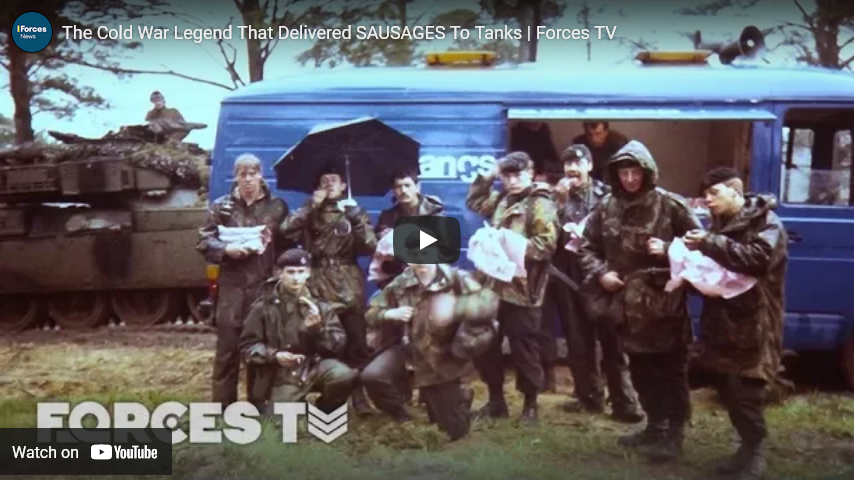
The Cold War Legend That Delivered SAUSAGES To Tanks | Forces TV
Forces News
Published 26 Apr 2018To British troops based in north Germany in the last two decades of the Cold War, he was a legend. But this was no commando or member of the special forces.
Check out our website: http://forces.net
Twitter: https://twitter.com/ForcesNews
Comments Off on The Cold War Legend That Delivered SAUSAGES To Tanks | Forces TV
May 16, 2022
Heaviest Air Raid in Human History – WAH 060 – May 15, 1943
World War Two
Published 15 May 2022As the Warsaw Ghetto Uprising is being quashed, there are renewed Japanese atrocities in China, and the RAF sets a world record by bombing German civilians.
(more…)
Comments Off on Heaviest Air Raid in Human History – WAH 060 – May 15, 1943
May 15, 2022
The End of the War in Africa – WW2 – 194 – May 14, 1943
World War Two
Published 14 May 2022With the end of the Tunisian Campaign, the Allies have won the war for the African Continent. What next? They meet at the Trident Conference in Washington DC to try and figure that out. Meanwhile, the fight in the field continues — in Burma, the Aleutians, China, and the Kuban.
(more…)
Comments Off on The End of the War in Africa – WW2 – 194 – May 14, 1943
May 14, 2022
Operation Chariot, the “Greatest Raid of All”
The raid on the French port of St. Nazaire in March 1942, codenamed “Operation Chariot” by the British, was one of the most daring and successful special forces operation of the Second World War. In The Critic, Richard Hopton reviews a new history of this operation by Giles Whittell:
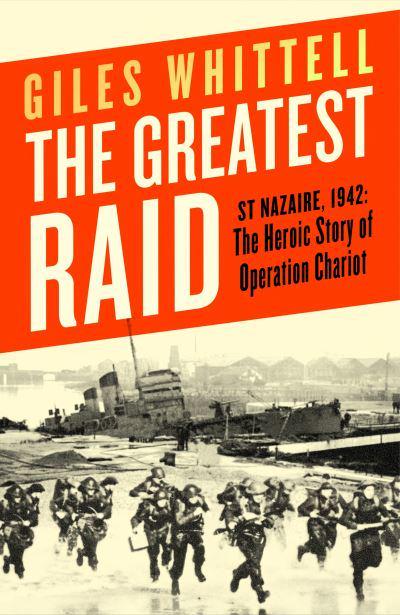
Operation Chariot, the Raid on St Nazaire, has long been known as “The Greatest Raid of All”. The audacity of the plan, the lethal danger of the operation, the inadequacy of the equipment provided, the astonishing courage of the participants and the spectacular success of its primary object have ensured its place in the annals of British martial heroism.
In the early hours of 28 March 1942, a force of 623 commandos and naval personnel stole up the Loire estuary to attack the port of St Nazaire. Leading the force was HMS Campbeltown, a superannuated destroyer acquired from the Americans, which had been converted into a floating bomb by the addition of four tons of high explosive secreted in her bows.
The plan was that she would ram the steel gate of the port’s immense dry dock where the charge would explode, demolishing the dock gate. The commandos would then swarm ashore to attack the dockyard installations, particularly the pumps and winding mechanisms which operated the dry dock. With the dock out of action, Hitler would not risk his battleship Tirpitz in the Atlantic where she could wreak havoc among the convoys supporting the war effort in Britain. This was the immediate, supposed object of the raid.
Giles Whittell’s new book is not the first full-length history of the event. C.E. Lucas-Phillips’s account, The Greatest Raid of All, was published in 1958 followed 40 years later by James Dorrian’s Storming St Nazaire, which remains the most detailed, authoritative account of the operation. In 2013 Robert Lyman published Into The Jaws of Death which told the story of the raid anew, with a greater concentration on the genesis and planning of the operation.
In 2007 Jeremy Clarkson took time away from messing around with cars to make a documentary for the BBC about the raid. The result was an “affectionate and enthralling” piece of television which brought the exploits of the Charioteers — as the men who took part in the raid have always been known — to a wider audience.
Although the ostensible object of the raid was to discourage the Germans from risking the Tirpitz in the Atlantic, it is now known that, by the spring of 1942, the German high command had already decided to keep the battleship moored safely in a distant Norwegian fjord. Accordingly, destroying the dry dock at St Nazaire was, strategically, a futile gesture.
Comments Off on Operation Chariot, the “Greatest Raid of All”
May 11, 2022
Operation Mincemeat – The True Story – WW2 – Spies & Ties 16
World War Two
Published 10 May 2022We’ve encountered plenty of different secret agents. Men, women, Allied, Axis, Partisans. They all fight for different reasons: patriotism, vengeance, or cold hard cash. But they’ve all had one thing in common. They’ve been alive. We’ve never had a dead secret agent. Yet …
(more…)
Comments Off on Operation Mincemeat – The True Story – WW2 – Spies & Ties 16
May 9, 2022
Barbie and the Trail of Blood – WAH 059 – May 8, 1943
World War Two
Published 8 May 2022Europe is burning and it seems there is little that will end the suffering except victory over Naziism.
(more…)
Comments Off on Barbie and the Trail of Blood – WAH 059 – May 8, 1943
May 8, 2022
Kilroy was Here! The fall of Tunis – WW2 – 193 – May 7, 1943
World War Two
Published 7 May 2022Tunis falls to the Allies, but the Axis are still fighting back from their little corner of Tunisia. There is more of the seemingly endless fighting in the Kuban in the Caucasus, and the Chinese Theater comes to life with a new Japanese offensive.
(more…)
Comments Off on Kilroy was Here! The fall of Tunis – WW2 – 193 – May 7, 1943
May 5, 2022
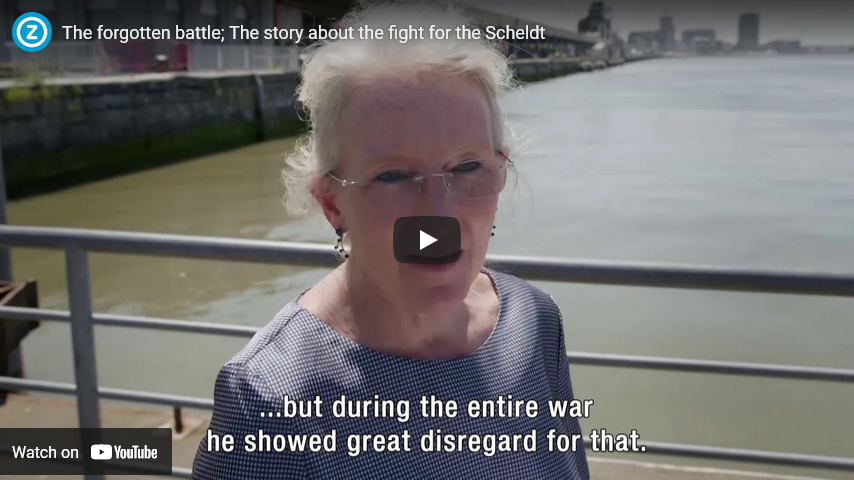
The Forgotten Battle: The story of the Battle for the Scheldt
Omroep Zeeland
Published 18 Mar 2020Documentary directed by Margot Schotel Omroep Zeeland (2019) about the battle of the Scheldt. An large and important battle in the autumn of 1944, which was crucial for the liberation of the Netherlands and Europe
After D-Day (6 June, 1944), the Allied Forces quickly conquered the north of France and Belgium. Already on 4 September they took Antwerp, a strategically vital harbor. However, the river Scheldt, the harbor’s supply route, was still in German hands. Montgomery was ordered by Eisenhower to secure both sides of the Scheldt, the larger part of which is located in the Netherlands, but Montogomery decided otherwise and started Operation Market Garden. He left the conquest of the Scheldt to the Canadians and the Polish Armies who then had to fight a much stronger enemy that was ordered by Hitler himself to keep its position at all costs. Even though Market Garden eventually failed, it received an almost mythological status in the narrative about the World War II, while the successful battle for the Scheldt was never really acknowledged by history.
With the cooperation of Tobias van Gent, Ingrid Baraitre, Carla Rus, Johan van Doorn ea.
Blijf op de hoogte van het laatste Zeeuwse nieuws:
Volg ons via:
Instagram: https://www.instagram.com/omroepzeeland/
Twitter: https://twitter.com/omroepzeeland
Youtube: https://www.youtube.com/c/omroepzeeland
Comments Off on The Forgotten Battle: The story of the Battle for the Scheldt
May 4, 2022
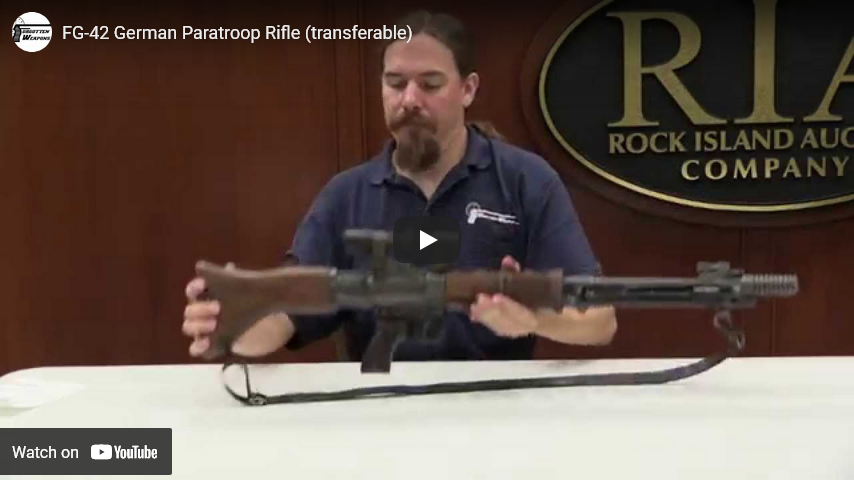
FG-42 German Paratroop Rifle
Forgotten Weapons
Published 24 Aug 2014Cool Forgotten Weapons Merch! http://shop.bbtv.com/collections/forg…
Only a few dozen of these are in private hands in the US, and they are an extremely advanced design for WWII.
Theme music by Dylan Benson – http://dbproductioncompany.webs.com
Comments Off on FG-42 German Paratroop Rifle
May 2, 2022
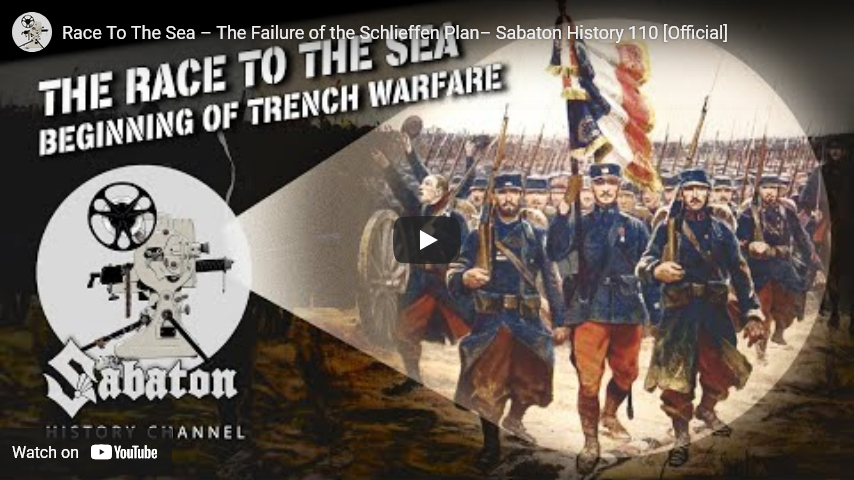
“Race To The Sea” – The Failure of the Schlieffen Plan– Sabaton History 110 [Official]
Sabaton History
Published 1 May 2022In the fall of 1914, the initial mobile stage of the war on the Western Front came to an end outside of Paris and trench warfare set in. As the trench lines stretched from the Swiss border to northern France and Belgium, both sides realized that if they could head north quickly enough, they could turn the enemy’s flank and win the war NOW.
Support Sabaton History on Patreon: https://www.patreon.com/sabatonhistory
Listen to “Race To The Sea” on the album The War To End All Wars: https://music.sabaton.net/TheWarToEnd…
Watch the Official Music Video of “Race To The Sea” here: https://www.youtube.com/watch?v=m-yrj…
Listen to Sabaton on Spotify: http://smarturl.it/SabatonSpotify
Official Sabaton Merchandise Shop: http://bit.ly/SabatonOfficialShopHosted by: Indy Neidell
Written by: Markus Linke and Indy Neidell
Directed by: Rickard Eri
Comments Off on “Race To The Sea” – The Failure of the Schlieffen Plan– Sabaton History 110 [Official]


