
seangabb
Published 19 Feb 2021The Crusades are the defining event of the Middle Ages. They brought the very different civilisations of Western Europe, Byzantium and Islam into an extended period of both conflict and peaceful co-existence. Between January and March 2021, Sean Gabb explored this long encounter with his students. Here is one of his lectures. All student contributions have been removed.
(more…)
May 14, 2022
The Crusades: Part 5 – The Role of Women
Comments Off on The Crusades: Part 5 – The Role of Women
May 6, 2022
QotD: “… the Spartiates were quite possibly the least productive people to ever exist”
I think it is worth stressing just how extreme the division of labor was [in ancient Sparta]. Helots did all of the labor, because the Spartiates were quite possibly the least productive people to ever exist (the perioikoi presumably also produced a lot of goods for the spartiates, but being free, one imagines they had to be compensated for that out of the only economic resource the spartiates possessed: the produce of helot labor). The spartiates were forbidden from taking up any kind of productive activity at all (Plut. Lyc. 24.2). Lysander is shocked that the Persian prince Cyrus gardens as a hobby (Xen. Oec. 4.20-5), because why sully your hands with labor if you don’t have to? Given the normal divisions of household labor (textile production in the Greek household was typically done by women), it is equally striking that not one of Plutarch’s “Sayings of Spartan Women” in the Moralia concerns weaving, save for one – where a Spartan woman shames an Ionian one for being proud of her skill in it (Plut. Mor. 241d). Xenophon confirms that spartiate women did not weave, but relied on helot labor for that too (Xen. Lac. 1.4).
Bret Devereaux, “Collections: This. Isn’t. Sparta. Part II: Spartan Equality”, A Collection of Unmitigated Pedantry, 2019-08-23.
Comments Off on QotD: “… the Spartiates were quite possibly the least productive people to ever exist”
April 25, 2022
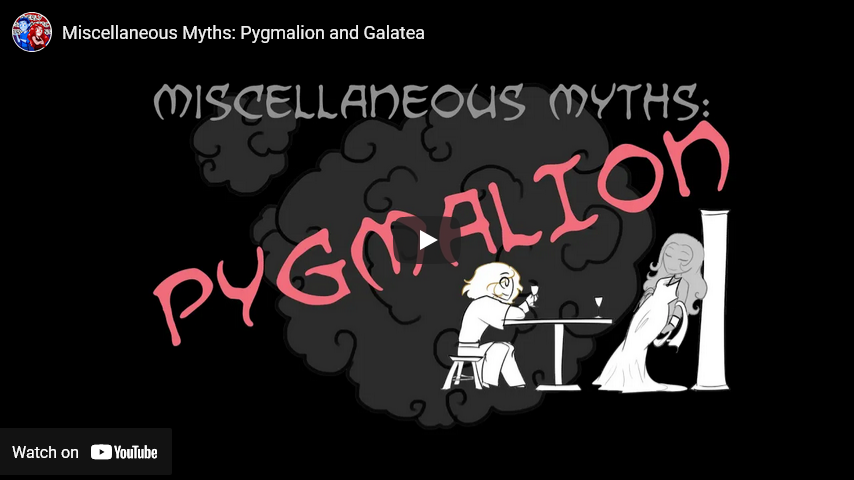
Miscellaneous Myths: Pygmalion and Galatea
Overly Sarcastic Productions
Published 7 Jul 2016Hey, any of you ever wanted a girlfriend? Statistically speaking, more than half of you just thought “yes”, and a non-trivial percentage probably even went so far as to think “HECK yes.” Well, this is the story of one brave pioneer who, rather than waiting for Miss Right to find him, decided to speed up the process by MAKING her! Don’t go getting any ideas, though — I’m afraid our boy didn’t quite think this through in advance.
MERCH LINKS:
Shirts – https://overlysarcasticproducts.threa…
All the other stuff – http://www.cafepress.com/OverlySarcas…
Comments Off on Miscellaneous Myths: Pygmalion and Galatea
April 24, 2022
QotD: Love in an age of Instagram
I really like the girl I’m dating, except for one thing. On every date, she asks me to take photos of her for Instagram. Afterward, she consults me repeatedly on which will “get the most likes.” I’m starting to get really annoyed, and I find it cuts into my enjoyment of our time together. She even did this on my birthday! — Irritated
Psychologist Erich Fromm wrote, “Mature love says: ‘I need you because I love you.'” He died in 1980, 30-some years before Instagram-infused love: “I need you, love, because my telescoping selfie stick won’t fit in my cute purse.”
This girl’s far from alone in turning every occasion short of stints on the toilet into a photo op. Social media (and Instagram especially) transformed fishing for compliments into a business model. #admirationvampires
Some young women — especially 20-somethings with a still-murky sense of identity — might feel they don’t exist in any meaningful way if they don’t post pix and videos of themselves to score likes and gain followers. #KeepingUpWithTheInstadashians
There’s also the lure of easy money for those who can rack up an audience: potentially making big “influencer” bucks just by showing up to events in some pop-up shop’s dress and striking a bunch of poses they copied off Beyonce.
Amy Alkon, “The Camera Sutra”, Advice Goddess, 2021-12-25.
Comments Off on QotD: Love in an age of Instagram
April 3, 2022
QotD: Life in the Imperial outposts
That’s what all the Old Hands said in the 19th century, and if you think about it for a second, it’s obvious. Going East of Suez was more or less a life sentence. Retiring to a nice country house back in dear old Blighty was the standard-issue dream, but it almost never came true — and everyone knew it. You went to India knowing you’d die there — You went, so your brothers wouldn’t have to. Life in those circumstances, surrounded by like-minded men, is a blast. Ask anyone who has spent time in a war zone.
But, of course, the Raj wasn’t a war zone for long. The Mutiny took care of that, so much so that guys actually started coming home at the end of their tours. Word leaked out about how the Ruling Caste lived over there, and all of a sudden Calcutta harbor was home to “the fishing fleet”, the boatloads of single girls that arrived each spring determined to snag themselves a husband. Think about that for a second — take the kind of girl who doesn’t have the looks or connections to get married back home, then plop her down in a situation where she’s the only White woman in a thousand miles. Give her an army of servants, a basically unlimited budget, and the whole power of the State enforcing her whims. Is it any wonder social relations got so awful so quickly? The burra memsahib was a staple of Imperial fiction for a reason.
Severian, “If there is Hope, It Lies in the PUAs”, Rotten Chestnuts, 2019-02-27.
Comments Off on QotD: Life in the Imperial outposts
March 31, 2022
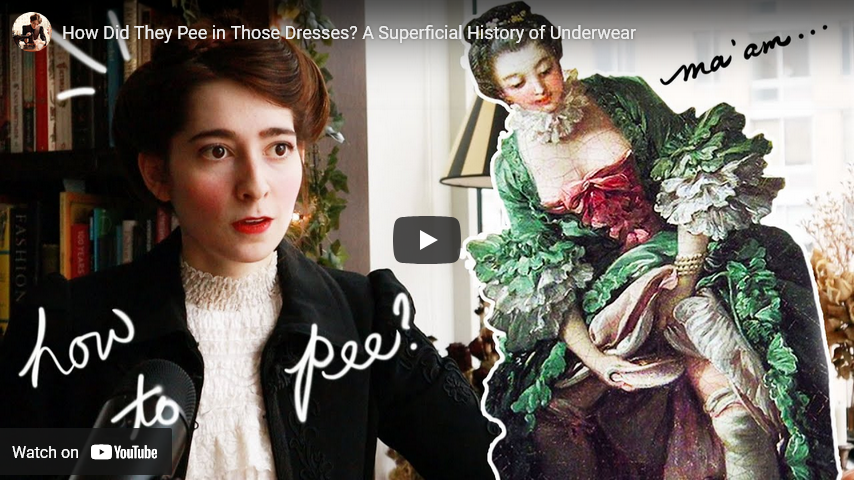
How Did They Pee in Those Dresses? A Superficial History of Underwear
Bernadette Banner
Published 28 Nov 2020*[2:19] In the English-written sources I’ve found so far. Unfortunately I can’t presently speak for primary accounts written in other languages.
FURTHER READING:
Portraits of ladies not wearing underwear but that I couldn’t include in the video for Proprietary Reasons, lol
Mid-18th century: https://commons.wikimedia.org/wiki/Fi…
Mid-18th c, “La Jupe Relevée” Francois Boucher https://p6.storage.canalblog.com/68/0…
Full analysis of the 15th century Lengberg Castle finds: https://www.academia.edu/27335143/The…
Extra special thanks to Izabela at Prior Attire for permission to use her demonstration video! She has also just put out a video discussing how Victorians dealt with needing to pee: https://www.youtube.com/watch?v=ED-wK…
Abby Cox on 18th Century periods: https://www.youtube.com/watch?v=iV2Tg…
Karolina Żebrowska on Victorian periods: https://www.youtube.com/watch?v=2d_QP…Footnotes and image credits can be found at: http://www.bernadettebanner.co.uk/how…
Want to get started with hand sewing?
🧵
🕯Check out my Skillshare original course, “Hand Sewing Basics: Working Wonders with Fabric, Needle & Thread”. To sign up for a free trial and take the class, visit https://skl.sh/bernadettebanner1This channel is made possible through the generous support of Patreon members. To become a patron, visit https://www.patreon.com/bernadettebanner (although videos will remain free for you here regardless).
Beyond YouTube:
IG @bernadettebanner http://www.instagram.com/bernadetteba…
Management contact for business enquiries:
bernadette@helmtalentgroup.com
Comments Off on How Did They Pee in Those Dresses? A Superficial History of Underwear
February 20, 2022
QotD: The male animal
David Warren, “Manliness”, davidwarrenonline.com, 2006-03-26.
Comments Off on QotD: The male animal
February 18, 2022
QotD: Historical legal context of marriage
John Stuart Mill, The Subjection of Women, 1869.
Comments Off on QotD: Historical legal context of marriage
January 26, 2022
Nazi Breeding Farms – Lebensborn – On the Homefront 014
World War Two
Published 25 Jan 2022With high losses of German soldiers and low birth rates, the Nazis worry about who will inherit the Nazi paradise they are fighting to build. One of their ideas to breed a new Aryan generation is the Lebensborn association.
(more…)
Comments Off on Nazi Breeding Farms – Lebensborn – On the Homefront 014
January 24, 2022
“Men and woman exist”, opens What Do Men Want?, “Occasionally, we even like each other”
Jarryd Bartle reviews What Do Men Want? by Nina Power:
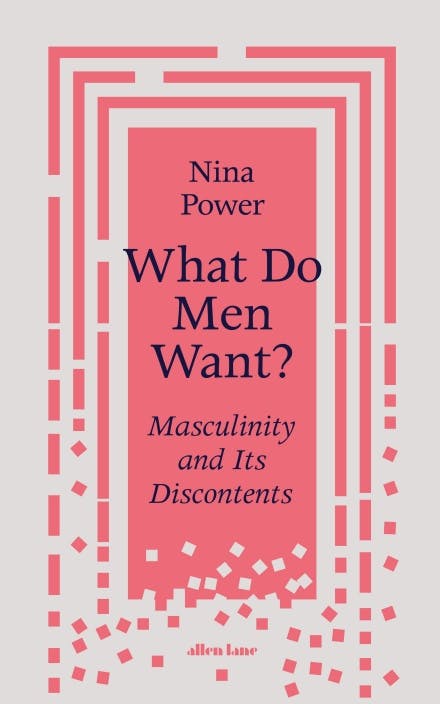
“Most men are, like most women, a mixture of good and bad, but they are not, as a rule, irredeemable,” Power notes.
Indeed, if there is ever to be a reconciliation between men and women, it may require considering the interests, needs and desires of good men, rather than a laser focus on the bad.
What then, do men want?
When Power asked her male friends this incredibly leading question, the responses ranged from “To be left alone” to “Pussy” to “Beer”. However, the real answer seems to be: something to do.
Power writes, “It is hard to imagine how the role [of men] today could be any more evacuated of meaning or status.”
The old-fashioned role of the Patriarch has been dead for at least one full generation now, and we haven’t really found an adequate replacement. The result is that men are adrift in a state of nihilism. In pop culture men seem to play the role of the “horny jester” to the self-serious goals of feminine social change. But men aren’t just interested in sex and frivolity; they also want a life of meaning.
The consequences of this listlessness are all too evident. Men are vastly overrepresented in statistics on suicide, unemployment, drug overdoses and crime.
Most men aren’t violent, but they are far more violent than women. Women are sometimes the target of this violence, but far more often men take out their pent-up aggression and sadism on other men. Often, we are told to blame these pathologies on “toxic masculinity” — that men need to be liberated from their preferences and to embrace the feminine ideals of tenderness, openness and sociability.
This solution sees sex difference as an irrelevancy, merely a reified founding myth of hegemonic masculinity, perfectly capable of tinkering. For Power, this approach is exceedingly cruel, failing to accept men as embodied creatures with a distinct way of experiencing the world:
To describe masculinity as “toxic” is to suggest that not only have men been poisoned, but that they are extending their poison to the rest of society.
This recent call to feminise men also didn’t occur in a vacuum.
There has been a significant decline in the needs for physical labour in Western countries since the turn of the century. Our increasingly service-oriented, tech-mediated economy requires very different temperaments, often drawing on the feminine virtues of empathic communication.
For Power, these broader structural changes have meant “certain kinds of behaviour come to be rewarded over others”.
Whilst we can’t turn back the clock, this re-evaluation of the role of men in society should be done in a manner which respects the dignity of men as different from woman.
Comments Off on “Men and woman exist”, opens What Do Men Want?, “Occasionally, we even like each other”
January 8, 2022
“We are a sexually dimorphic species, and men and women are different”
A statement like that on Twitter or other social media platforms might run you the risk of denunciation, cancellation, and a plethora of accusations of transphobia, but it isn’t the intent of Robert King to troll the hypersensitive online:
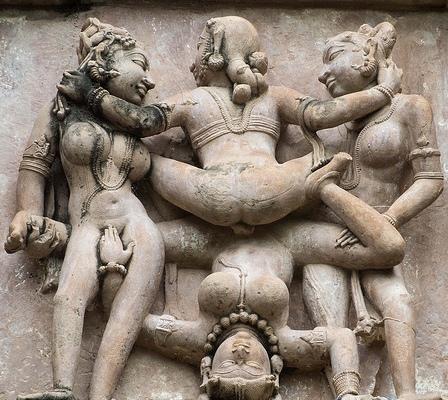
No, this carving isn’t directly related to the article … but it is eyecatching.
We are a sexually dimorphic species, and men and women are different. Evolution has designed us to be different. Realising that we evolved through slow steps, rather than just popping into being in an act of creation, has implications. For one thing, it means that men and women have their own separate evolutionary histories, as a result of differing (although not wholly different, of course) selection pressures. Resisting this truth — pretending that men and women are a sort of silly putty, totally moulded by social forces — has already had serious consequences in medical science, and it also has implications for my field of study.
I study the nature and function of the female orgasm. It might surprise people that there is even a set of questions about this phenomenon, but it is one of the most vexed fields in evolutionary biology. I do not claim that we have solved the puzzle of it. However, I do claim that we know a lot more about female orgasm than we used to. For example, female orgasm is multi-faceted in nature (unlike male orgasm) and is associated with a host of complex, fertility-related, functions. Male orgasm has but one (and a pretty-well understood one at that) fertility related function: reinforcing sexual behaviour. How is it that these stark differences between the sexes have been missed?
A major reason is that sex researchers, in some cases even self-described feminists, have often persisted in treating female orgasm as a mere adjunct to male orgasm. On this view — the by-product view — only male orgasms have a function. Female ones exist as a sort of afterthought of nature. Thus, clitorises have been routinely compared to (functionless) male nipples by, among others, the influential palaeontologist, Stephen Jay Gould. However, this comparison does not stand up to scrutiny. Clitorises are not substandard penises. For starters, they are large, four inches in length, on average. They are highly complex, but their structure — including muscular, erectile, and sensitive tissue — is mostly internal.
The external part — the glans — is highly sensitive, but so is the rest of it, when appropriately aroused. Clitorises connect to their own dedicated area of brain (the somatosensory cortex) utterly distinct from the male version. To see some of this for yourself you could read any number of excellent works by, for example, the brilliant anatomist Helen O’Connell.
If the structure that generates female orgasm is at least as, if not more, complex than the male counterpart, then it makes little sense to assume that the female version depends on the male one. This is doubly true of the event of orgasm itself, prompting the eminent biologist Robert Trivers to quip of female orgasms that “One has to wonder how often Steve [Gould] has been near to that blessed event to regard it as a by-product.” That may be a tad unkind — but it raises a rather important point. If we restrict ourselves to studying female orgasm, or human sexual behaviour generally, in the laboratory alone, then we run a very real risk of missing out on crucial aspects.
Let me make this point more concrete. Over the last couple of years, zoos and wildlife parks across the planet have seen a huge upswing in births, among species previously thought to be sexually frigid — like Pandas. Why? Simple. No humans were about. The animals had some privacy from prying eyes. Does it really stretch imagination to appreciate that the full range of human sexual responses might be also muted when under laboratory conditions? Inefficiency is a hallmark of good sex, and humans use the privacy of the boudoir to do more than make each orgasm as rapidly as possible. We use this space to find out about one another.
Comments Off on “We are a sexually dimorphic species, and men and women are different”
January 2, 2022
QotD: Female preference for dominant males
The first reason for this is the value of male dominance in competition with other males. Specifically, if a man exhibits dominance during courtship and copulation, he is signalling his ability to successfully compete with other men for social status in male hierarchies. Women are attracted to high-status men because such men are either genetically superior, have the resources necessary to invest in a woman and her children, or both. Although some degree of sexual conflict between men and women is expected, a man’s non-coercive dominance during courtship and copulation may say something about his ability to stand his ground in interactions with other men.
The second reason that women prefer dominant men is the fact that other women prefer dominant men. This is not a tautology. My high school American History teacher, Ms. Gibbs, once told us an anecdote about Benjamin Franklin. It was said that old kite-flying Ben would surround himself with average looking women at dinner parties so as to grab the attention of the more attractive ones. Whether true or not, Ben Franklin’s supposed exploits are supported by research on what makes men attractive. Specifically, women are attracted to men whom other women — especially physically attractive women — find attractive. So, if other women find dominant men attractive, it would benefit a woman to mate with a dominant man because any son born of such a union would inherit his father’s dominance and thereby help to spread his mother’s genes. This hypothesis — the so-called sexy-son hypothesis — suggests that whatever other benefits a man might accrue through his dominance, it is simply enough for women to consider it “sexy” for it to be sexually selected into the male line of our species.
Most of the time, however, traits that are preferred by members of the opposite sex communicate something important about the bearer of those traits in addition to sexiness per se. As I will elaborate in my discussion of sexual subordination, sexually selected traits are often selected by prospective sex partners because they are honest, costly signals of an individual’s genetic status. So, for example, a man who is capable of exhibiting dominance, while curbing it just enough to not come off as coercive, may be communicating something important about his physical and psychological state. Specifically, if a man is able to toe the fine line of sexual dominance (and even exhibit a certain amount of passionate aggression) without veering over into the danger-zone of coercion, he may be a good catch, indeed. The subtlety, tact, and finesse required to accomplish this should not be dismissed. As it happens, being a successful “dom” (i.e., a sexually dominant or sadistic individual in the BDSM scene) requires such subtlety, tact, and finesse. As Philip Miller and Molly Devon write in Screw the Roses, Send Me the Thorns:
The ideal [dominant] controls himself, so that he might control his submissive. He will, as a stern dominant, cause tears to flow, and as lover, kiss them away … He understands that to own a woman, one must court the mind with intelligence and humor; win the spirit with compassion and warmth; and take the body with determined strength … He is the honorable sadist who uses pain to extend the bounds of pleasure, vigilant that no harm comes of the hurt.
Understanding the evolution of consensual sexual dominance is half the battle. As BDSM practitioners are never tired of saying, the “sub” (i.e., the submissive or masochistic individual in a BDSM interaction) is just as active a participant as the dom. Some further assert that the sub actually controls the scene and that it is the dom who has to read or intuit the needs, desires, fears, discomforts, and pleasures of the sub.
Gregory Gorelik, “What Sadomasochism Can Teach Us About Human Sexuality”, Quillette, 2017-04-04.
Comments Off on QotD: Female preference for dominant males
December 30, 2021
QotD: Richard Feynman discovers (to his shock) that females can understand analytic geometry
I listened to a conversation between two girls, and one was explaining that if you want to make a straight line, you see, you go over a certain number to the right for each row you go up – that is, if you go over each time the same amount when you go up a row, you make a straight line – a deep principle of analytic geometry! It went on. I was rather amazed. I didn’t realize the female mind was capable of understanding analytic geometry.
She went on and said, “Suppose you have another line coming in from the other side, and you want to figure out where they are going to intersect. Suppose on one line you go over two to the right for every one you go up, and the other line goes over three to the right for every one that it goes up, and they start twenty steps apart,” etc. – I was flabbergasted. She figured out where the intersection was. It turned out that one girl was explaining to the other how to knit argyle socks. I, therefore, did learn a lesson: The female mind is capable of understanding analytic geometry. Those people who have for years been insisting (in the face of all obvious evidence to the contrary) that the male and female are equally capable of rational thought may have something. The difficulty may just be that we have never yet discovered a way to communicate with the female mind. If it is done in the right way, you may be able to get something out of it.
Richard Feynman, “What is Science?”, Richard Feynman [presented at the fifteenth annual meeting of the National Science Teachers Association, 1966 in New York City, and reprinted from The Physics Teacher Vol. 7, issue 6, 1969].
Comments Off on QotD: Richard Feynman discovers (to his shock) that females can understand analytic geometry
December 3, 2021
Australian-American War of 1942 – The Battle of Brisbane
World War Two
Published 2 Dec 2021America shares a language and large parts of its culture with Britain and Australia. But when tens of thousands of US troops arrive in 1942, things will be far from smooth. While the alliance remains firm, their soldiers will spend almost as much time fighting each other as they do the Axis.
(more…)
Comments Off on Australian-American War of 1942 – The Battle of Brisbane
November 19, 2021
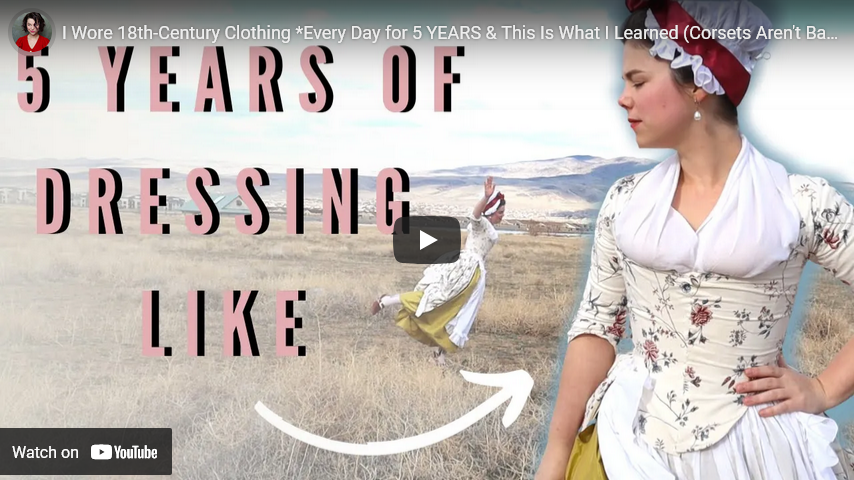
I Wore 18th-Century Clothing *Every Day for 5 YEARS & This Is What I Learned (Corsets Aren’t Bad!)
Abby Cox
Published 10 May 2020I wore 18th-century women’s clothing, all day, 5 days a week, for 5 years of my life. Over those 5 years, I learned *a lot* about my body, fashion in the 1700s — the good and the not so good, and how we can take these lessons and improve modern fashion.
***Trigger Warning: I do talk about body image in this video (as a reflection of my own, long, long journey with my own body & how wearing historical clothing has given me a different perspective on body image) which may or may not be upsetting for some. ***
*Ok, so not “every day” but you get the idea…😉
💌Business Inquiries *ONLY* abbycox@semaphorebrands.com
(This email goes directly to my management and not to me.)More Videos:
🎉🎉 Answering YOUR FAQs from THIS Video: https://youtu.be/SN3agbKZVP0
“Becoming an 18th-Century MEME LORD” https://youtu.be/a0pRE3uXWu8
“Historical Costumers and Their Hogwarts Houses” https://youtu.be/vxmRsc9Qj8M
Rachel Maksy – “Born in the Wrong Era” – https://www.youtube.com/watch?v=r5GAJ…A lot of these photos of me were taken by the lovely Fred Blystone. You can see more of his photography here: https://www.facebook.com/groups/13664…
Also, @Edwardian Tailor (https://www.youtube.com/channel/UCBSf…)
We like to assume that the people in the past are “stupid” (it’s normal human behavior), and one of the ways that we, as a modern society, do this is by judging the past for their fashion trends and practices. We’ve been taught to demonize corsetry (or in this case, stays) for being restrictive and a tool of oppression towards women, and take pride in our culture of diet and exercise, without considering the issues that can be found in our body-obsessed culture. We praise jeans and a t-shirt, as being “comfortable” but the insecurities that so many of us have about our bodies are put on display in our 21st-century uniforms. We take for granted our modern homes, and how that has made us lazy in dressing for the seasons, resulting (in part) the loss of various types of textiles and weaving technology. I learned a lot over those 5 years, including how to indulge in an Indian Buffet while wearing my 18th-century stays, and I’m excited to share my insights with you. Also, can we just discuss how stupid modern underwear is?? 😉
Images Used:
*Summer Dresses, 1783, Object Number – J,5.139, Asset Number – 79588001 © The Trustees of the British Museum. https://www.britishmuseum.org/collect…
*Sheer Cottton Mull Italian Gown, 1780s, The Metropolitan Museum of Art, 17.107.6a, b, https://www.metmuseum.org/art/collect…
*Kofta, 1760s-90s, Nordiska Museet, NM.0186311, https://digitaltmuseum.se/01102369100…
*Women 1790-1799, Plate 052, Fashion Plate from August 1796, The Metropolitan Museum of Art Library Costume Institute Fashion Plate Collection, https://libmma.contentdm.oclc.org/dig…
*Robe a l’anglais c. 1780, The Metropolitan Museum of Art, 1982.291a, b, https://www.metmuseum.org/art/collect…
*Attributed to Isaac Cruikshank, Cestina Warehouse or Belly Piece Shop
April 16, 1793, The Metropolitan Museum of Art, 59.533.475 https://www.metmuseum.org/art/collect…*Stays, The Metropolitan Museum of Art,
2009.300.3330a–d
https://www.metmuseum.org/art/collect…*The Bum Shop, Attributed to R. Rushworth (British, active 1785–86), July 11 1785, The Metropolitan Museum of Art, 1970.541.12, https://www.metmuseum.org/art/collect…
*Chemise, 1780-1800s, The Metropolitan Museum of Art, 2005.368 https://www.metmuseum.org/art/collect…
*Corset, 1880s, The Metropolitan Museum of Art, 2009.300.3497a–c
https://www.metmuseum.org/art/collect…——-
Music from Epidemic Sound:
“Gold Among the Sand”- Trevor Kowalski
“To Clarity” – Airae
“The Path to Innovation” – Airae
“Caffeinated and Motivated” – Airae
“Alice is on her Way” – Airae
“Cafe Laurent” – Medite
“In a Jiffy” – Moins Le Quartet
“Moonlight Night” – Gabriel Lucas———
Instagrams: https://www.instagram.com/abbyelyn
From the comments:
Abby Cox
1 year ago (edited)Hey Everyone! 👋🏻
Thank you all so much for taking the time to watch this video about my experience! I’ve noticed a lot of the same questions in the comments, so I want to take a minute to answer them here –
🎉UPDATE (Sept 27, 2020) – I’ve answered your questions about menstruation here: https://www.youtube.com/watch?v=iV2TgwjjhOE
🎉UPDATE (June 7, 2020) – I’ve taken the most commonly asked questions from the comments and have done a video to answer them! You can watch it here: https://youtu.be/SN3agbKZVP0– My stays (18th-century term for a corset) are from https://redthreaded.com/ – they’re a fantastic historical corset company that I adore. (and for the couple of you trying to call me out – my 100% hand-sewn, me-made, reproduction stays are so worn out that they’re in retirement, and just because I can make stays by hand doesn’t mean I have the time. I’d also rather support a small business that I believe in.❤️Finally, the gown I’m wearing in this video was cut to go over those stays, but if you’d like to see my hand-sewn reproduction stays in action you can buy the book I co-wrote here: https://www.american-duchess.com/book/american-duchess-guide) ☺️
– While I haven’t gone down the menstruation research rabbit hole (cause it is its own subject of study) I am going to do my best with limited access to primary source documentation (which is what I really need to be able to answer this question) to produce a video about what 18th-century women would do. I don’t know when this will be, but I will do my absolute best to answer this question, and if I can do some experimental archeology in the process, I will. 😎 (ravenclaws gotta ravenclaw…)
– Thigh chafing – so I think that varies from person to person. I never really had a lot of issues with it (and my narrow hips mean that I will never have a thigh gap) because my linen shift would always kind of end up between my leg and absorb the sweat. However, I know a lot of costumers who will wear split-crotched drawers because they find it more comfortable, even though drawers weren’t a thing in the 18th-century.
Ok! I hope this helps answer some of your questions! Thank you all so much for watching and engaging in this video. I really can’t tell you all how much I appreciate it! ❤️
Comments Off on I Wore 18th-Century Clothing *Every Day for 5 YEARS & This Is What I Learned (Corsets Aren’t Bad!)


