
When we as academics avoid those uncomfortable questions, we unwittingly invite others to answer them for us. When activists try to suppress rather than debate speech they find loathsome, they should know they are adding to its mystique.
Forbidden ideas have an appeal that orthodoxy never does — just ask Martin Luther. In fact, the parallels between the rise of the alt-right and the Reformation are interesting. In Luther’s world the printing press had recently created new and difficult to control ways for people to share subversive ideas. Early forms of capitalism led to the rise of new social classes and fueled resentment against traditional elites and traditional forms of authority. There were even early forms of the meme. Long before Pepe the Frog was co-opted by the alt-right, drawing donkey ears on images of priests was a way of provoking the powerful.
It’s surely the case that some of the speech that activists and university administrators seek to suppress poses a much more direct threat to real people than does a debate about supply side economics or evolution, but it’s worth remembering that to the Church, the Lutheran heresy was a real threat too. It posed a mortal danger to the eternal souls of people who were deceived by its falsehoods and rejected orthodoxy. I doubt that the Inquisitors felt any more qualms about deplatforming Lutheran heretics than did the activists at Middlebury.
As the Church learned, simply suppressing heresy cannot guarantee that it will go away. If anything, meeting heretical speech with violence or disruption just adds to its allure, confirming in the minds of the already convinced that they are right and leading the fence sitters to take another, perhaps more sympathetic, look. Dismissing heretical speech because it falls into a category that is rejected by the orthodox is not that much more effective a strategy.
We can do a lot to keep things from getting to the sort of highly contentious encounters like the ones at Middlebury and Berkeley, just by addressing uncomfortable issues with evidence rather than just categorization in our courses. Next time you are tempted to sidestep contentious issues in your class or to dismiss a student’s question because it falls into a forbidden category, don’t.
In the long run we can’t win an argument by avoiding it.
Erik Gilbert, “Liberal Orthodoxy and the New Heresy”, Quillette, 2019-02-04.
February 25, 2022
QotD: The lure of the forbidden knowledge
February 13, 2022
QotD: Marx’s labour theory of value gets tenure
At last, we know the answer to the question almost no one was asking: What happens when Karl Marx’s labor theory of value gets tenure?
The labor theory of value is very popular on the Left, probably because it makes no sense. Marx — who never labored once in his entire life — proposed that “labor” has inherent value, that “if we disregard the use-value of commodities, they have only one property left, that of being products of labor.”
I assure you it sounds even stupider in the original German.
The short version is that “labor” determines a product’s value, not the competitive marketplace.
It’s a crackpot theory, easily demolished.
Take the example of a skilled pastry chef and … me.
Give a few dollars worth of flour, sugar, butter, etc., to that chef and after a couple of hours of his labors, he can sell you a gorgeous and tasty cake that you would be happy to pay a lot of money to buy.
I don’t bake and have no interest in baking. Let me labor on those same ingredients for the same two hours, and you’ll get a hot mess worth less than the value of the ingredients that went into it.
(Apologies: This is not my example, but I can’t find an online resource listing the original author. [I first encountered this in a Robert Heinlein novel, but he may have been paraphrasing someone else])
It’s not the “labor,” it’s the results.
Now we’re supposed to apply this same thinking to grading English papers.
We’re supposed to accept that one student’s craptaculently-written essay has the same value as another student’s beautifully written paper because they both put the same amount of labor into writing them.
What Inoue wants college instructors to do is apply crackpot Marxist theory to those who will be disadvantaged the most if they aren’t taught proper English.
Stephen Green, “Fight ‘White Language Supremacy,’ Prof Will Grade on ‘Labor’ Not Results”, Vodkapundity, 2021-11-10.
February 5, 2022
Why great NFL players rarely make good coaches
In his (mostly) weekly mailbag post, Severian at Founding Questions considers the latest NFL scandal and some of the insane requirements to be a really great NFL quarterback and how few can both play and coach at that high level. First, the Romney Rule scandal:

I see that some black coach has sued the NFL for racial discrimination, and I must say I hope he takes them for every cent they’ve got. From the very little I’ve seen, his case is airtight, because of the NFL’s astounding stupidity. For those who don’t know, the NFL has been using what’s called the “Rooney Rule” for at least two decades now. This states that whenever a head coaching job comes up, the team must interview at least one (and I think two are mandatory now) black candidate.
Since there’s a serious dearth of black coaches at all levels of organized football (we’ll psircle back to that in a minute), this means that the same three or four guys go through the same pro forma interviews every time. As far as I understand it, then (which is not very, admittedly), this particular coach was actually told to his face that this interview with whatever team was just pro forma compliance with the Rooney Rule; we’ve already got our guy, so just fly out here, we’ll buy you lunch, have a nice chat, and put you back on the plane lickety split.
That’s one part of his airtight case. The other is that whatever team he interviewed with also has a Diversity and Inclusion Officer — because of course they do — and the DIE Officer is on record as saying all kinds of typical sanctimonious virtue-signaling shit, e.g. “We are a systemically racist organization and have to do better,” blah blah blah. Put those together, and what else can you conclude except that this coach got screwed out of a job because of explicit racial animus?
But as to why there are so few black NFL coaches, part of it is due to the way young quarterbacks are trained — he discussed this in detail here — which very frequently diverts talented young black quarterbacks away from learning the skillset they would need to make it in the NFL. The other thing is that the skills you need to be a good coach don’t often appear in a person who has the physical ability to be a good player:
If you haven’t met any high-caliber pro athletes, think of professors. The third-rate knockoff cow college I went to had a pretty big league chemist on staff; if he hadn’t won the Nobel he was at least in the conversation, something like that. This guy was a terrible teacher, because he just couldn’t grok that other people couldn’t follow him. Your brain couldn’t fire fast enough to keep up with his, and he couldn’t slow his down enough to let you catch up. The best chemistry teacher was still pretty smart — no dummies in Chem PhD programs, at least not back then — but because he was nowhere near the top guy’s level, he was so much better at explaining the nuts and bolts.
You could ask the low-end guy “What do I need to do to get better at chemistry?” and he could give you some solid, practical advice (I know, because with his help I squeaked out a C-). You asked that of the high end guy, and he’d reply “Be smarter”. (Not really, he was actually pretty cool, personally, but nonetheless that’s really all he could say).
Sports works the same way. While I was there, this same college also hired a former NBA player to coach basketball. Not a Hall of Famer, but a Hall of the Pretty Good-er; if you know basketball from the late 70s, you’ve heard of him. They thought having this guy as a coach would boost recruiting and ticket sales (he was a local notable, too), and it did … for a time, but under his stewardship the team got much worse, and for the same reason the Nobel-candidate chem wiz was the worst teacher. Billy Bigshot would tell his guys “Just go out there and do this and that” … but his guys couldn’t do this and that. Billy could, which is why he was a very good player at the highest professional level; but he couldn’t grok that not everyone could do the same genetic freak shit on the court he could, because they weren’t genetic freaks like him.
Psircling back to the NFL, if you want a race-neutral entry point for discussing this stuff, there you go. Good players are generally terrible coaches, because pretty much by definition good players are genetic freaks who have no idea how they do the things they do; they just do them. Good coaches, on the other hand, tend to be nerdlingers with people skills … another fairly rare combo, it must be said, but nowhere near as rare as a 6’4″ chess master with a big arm. If pro teams really wanted to start thinking outside the box, they’d start recruiting potential coaching candidates at video game tournaments … or straight from high school, where guys have to do much more with much, much less.
January 30, 2022
Fighting progressive illiberalism with populist illiberalism
In the free-to-non-paying-subscribers segment of this week’s Weekly Dish, Andrew Sullivan laments the ratcheting illiberal tactics of both the opponents and supporters of Critical Race Theory in American schools:
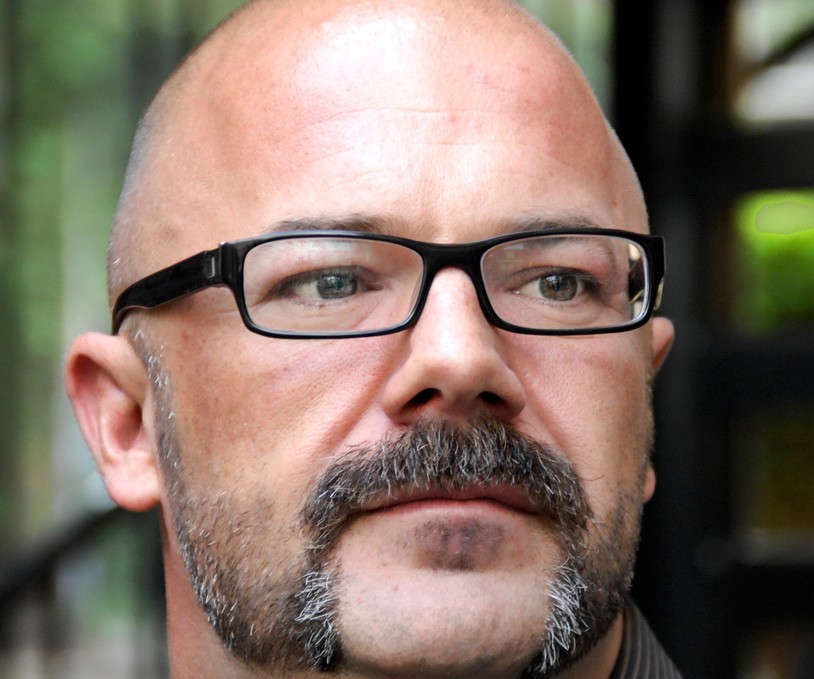
I’ve spent a lot of time these past few years concerned with left illiberalism, especially the replacement of liberalism with critical theory as the guiding principle of our republic. But at the same time, of course, right illiberalism has gone into overdrive, in a polarizing vortex. Being a conservative liberal, or a liberal conservative, is becoming close to impossible. And this week, as I pored over a mass of bills to ban the praxis, pedagogy and content of critical theory in public high schools, I felt as if I were being tossed between the blue devil to my left and the deep red sea to my right.
One core point: the illiberalism is real on both sides. Not always in equal measure, now or in the past, but definitely on both, feeding off each other. And in public education, once again a battleground in the culture war, it seems quite obvious to me that the left bears the burden of responsibility for the conflict.
Critical theory’s long march through the institutions reached its peak some time ago in higher education — and has gone on to capture media, corporate America, medicine, the federal government, tech, science, and every cultural institution. Over $14 billion have been spent on philanthropic “equity” initiatives since the summer of 2020 alone. Of course children’s education would be affected. What hasn’t been? And of course critical theorists aim directly at children. The woke, like the Jesuits, understand the value of instilling certain concepts at a very young age. How else to transform the world?
That’s why Ibram Kendi has bequeathed the world not just one but two books on how to rear “antiracist babies”. The publisher says the new one, Goodnight Racism, “gives children the language to dream of a better world and is the perfect book to add to their social justice toolkit.” My italics. Another recent book, Woke Baby, instructs toddlers to be “a good revolutionary”, and another one explains how “activism begins in the cradle”.
You truly think that in school districts where teachers are saturated in equity training, whose unions invite Kendi to be their keynote speaker, that this is all being made up? Just peruse through all the “equity” conferences, courses, syllabi, lesson plans and curricula that now dominate public ed. Many parents found out only because they overheard what their kids were being taught online during the pandemic. Or you can just surf the web as the woke dismantle schools for the gifted, abolish SATs, describe merit as racist, and lay waste to excellent schools merely because too many Asian-American kids are succeeding in them.
What we’re seeing now is the reaction to this left-wing power grab. And — guess what? — it’s a right-wing power grab. If the left has stealthily changed public education from above, the right has now used the only power they have to fight back — political clout in state legislatures. 122 separate bills have been introduced since January 2021, 71 in the last three weeks alone. They all regulate speech by teachers in public schools, but many are now also reaching into higher education — a much more fraught area — and outright book banning. The bills are rushed; some appear well-intentioned; others are nuts; many are very vague, inviting lawsuits to clarify what they can mean in practice. In most cases, if passed, they will surely chill debate of race and sex and history — and increasingly of gender, sex and homosexuality — in high schools. And that’s a bad thing for liberal education.
January 15, 2022
The futility of “ethical” divestment agitation
In C2C Journal, William McNally explains why activists are demanding that university investments be moved away from fossil fuel companies in favour of “green” investment, and why it won’t work the way they expect:

A recent press release announced that 100 faculty and other staff at three Ontario postsecondary institutions have petitioned the University Pension Plan (UPP) to divest from the fossil fuel sector. The UPP manages the pension funds for over 30,000 employees at the University of Toronto, Queen’s and Guelph. The press release was issued by Shift Action, an organization that helps activist pension members agitate for divestment from what it calls “high-carbon, high-risk fossil fuel investments” such as oil producers and pipeline companies, and shift investments to a “decarbonized” portfolio focused on climate solutions.
I highlighted the UPP petition to draw attention to its activist source, but it is not unique, as it reflects a broader trend of politically driven or, as proponents prefer, “ethical” investing. The motivating claim for divestment in the Shift press release is that we are experiencing a “worsening climate crisis”. That too is a common sentiment nowadays. Because it is a crisis, we have a moral duty to mitigate the threat. The underlying reasoning is that divestment will starve fossil fuel companies of capital and less capital means less production which, in turn, means less CO2 emitted and ultimately slower climate change.
All campaigns of this sort trigger some immediate questions, such as, why choose a strategy as indirect as divestment? Why not reduce fossil fuel use in one’s own backyard, in this case the universities? Looking more broadly, Shift’s argument is more wishful thinking than sound economic analysis. Investors should feel free to hold any portfolio they want, but they should do so without illusions. In particular, they shouldn’t expect divestment to influence climate change by starving oil and natural gas companies of capital.
The first thing wrong is the underlying motivation: there is no climate crisis. As well-known author Bjorn Lomborg states in his most recent book, False Alarm: How Climate Change Panic Costs Us Trillions, Hurts the Poor, and Fails to Fix the Planet: “Climate change is real, but it’s not the apocalyptic threat that we’ve been told it is.” One of the clearest ways to see this is through climate economics. Scenarios set out by the Intergovernmental Panel on Climate Change (IPCC) forecast that over the next 80 years worldwide GDP per capita will likely increase to 450 percent of today’s level.
Lomborg estimates that climate damages will reduce this anticipated increase to 434 percent. Climate change is a problem. Accepting all of the assumptions that went into this modelling, climate change is likely to leave us somewhat less well off than we otherwise would be, by modestly slowing humanity’s overall progress. But judging by these figures, it is not a crisis.
H/T to Robert at SDA for the link.
Merely to be accused of transphobia is enough proof for condemnation
Jean Hatchet on the plight of Staffordshire University professor James Treadwell, who has been anonymously accused of “transphobia” … and therefore must be punished:

Yesterday evening Professor James Treadwell, a criminologist at Staffordshire University, announced his dismay on Twitter at being accused of “transphobia”. The details are vague, even to him. He has not been presented with evidence and he doesn’t and may never know who has accused him.
He wrote: “Ok to hell with it. I have been told by my employer @StaffsUni albeit only verbally that I am being investigated for Transphobia after formal and official complaints about my Twitter conduct. Read my tweets. Go figure.”
Go figure indeed. It is completely baffling. The issue is Professor Treadwell’s tweeting in favour of the right of female inmates to a single-sex prison estate. In a series of tweets on 27 December 2021, Professor Treadwell outlined his experience of the manipulative behaviour of violent sex offenders who will use loopholes to “game” the criminal justice system. He was clear that his tweets were not directed at the transgender community. He wrote:
“The idea that sex offenders are manipulative individuals who would exploit systems and laws could only be unreal to those who do not know how manipulative sexual offenders can be. All groom, seek to exploit and control.”
And he made very clear that his tweets weren’t attacking the transgender community:
“It isn’t about trans people, it’s about bad people who will exploit the law from self interest and work within a legal framework (that could protect women’s spaces) to do as they want and get what they want. You think that won’t happen, you don’t know how many sex offenders act.”
Who would be better placed to discuss this issue than a leading criminologist who has worked with some of the worst sex offenders in the country? The polite and well-informed tweets hit the nerve of public opinion on the topic of trans-identified men incarcerated in the female prison estate and were widely, mostly supportively, distributed.
Today, Professor Treadwell is in the awful position of fearing for his job; for a few tweets about a subject that he is specifically qualified to speak on. Meanwhile an effective message is simultaneously sent to his academic colleagues nationwide, that they could be targeted next. He is not the first and he won’t be the last. Many criminologists are choosing to look the other way. Professor Treadwell felt that he could no longer do so. His professional integrity appears to be exactly what he is being persecuted for.
January 14, 2022
QotD: The stagnant field of theoretical physics
The manufacture of a large caste of such boobs has made any real progress in physics impossible without killing off a few generations of them. The vast, looming, important questions of physics; the kinds that a once in a lifetime physicist might answer — those haven’t budged since the early 60s. John Horgan wrote a book observing that science (physics in particular) has pretty much ended any observable forward progress since the time of cow collitches. He also noticed that instead of making progress down fruitful lanes or improving detailed knowledge of important areas, most develop enthusiasms for the latest non-experimental wank fest; complexity theory, network theory, noodle theory. He thinks it’s because it’s too difficult to make further progress. I think it’s because the craft is now overrun with corrupt welfare queens who are play-acting cargo cultists.
Physicists worthy of the name are freebooters; Vikings of the Mind, intellectual adventurers who torture nature into giving up its secrets and risk their reputation in the real world. Modern physicists are … careerist ding dongs who grub out a meagre living sucking on the government teat, working their social networks, giving their friends reach arounds and doing PR to make themselves look like they’re working on something important. It is terrible and sad what happened to the king of sciences. While there are honest and productive physicists, the mainstream of it is lost, possibly forever to a caste of grifters and apple polishing dingbats.
Scott Locklin, “Quantum computing as a field is obvious bullshit”, Locklin on Science, 2019-01-15.
January 5, 2022
QotD: Measurement hack that lives on
The hack was too good to let fade away, so every now and then the fraternity makes its pledges repaint the markings. You might think this isn’t the sort of vandalism the police would tolerate, but they do. The smoot markings soon became convenient in recording the exact location of traffic accidents, so (as the story goes) when the bridge walkways needed to be repaved in 1987, the Massachusetts Department of Public Works directed the construction company to lay out the concrete slabs on the walkway not in the customary six-foot lengths but in shorter smoot units. Fifty years after the original hack, the smoot markers have become part of civic tradition: the City of Cambridge declared 4 October 2008 “Smoot Day”. MIT students ran up a commemorative plaque on a precision milling machine and created an aluminium Smoot Stick which they deposited in the university’s museum as a durable reference standard: the unit-smoot is now detached from the person-Smoot. Through the legions of MIT graduates driving global high-tech culture, the smoot has travelled the world. If you use Google Earth, you can elect the units of length in which you’d like distances measured: miles, kilometres, yards, feet – and smoots.
Robert Crease, The Historic Quest for an Absolute System of Measurement, 2011.
December 30, 2021
QotD: Richard Feynman discovers (to his shock) that females can understand analytic geometry
I listened to a conversation between two girls, and one was explaining that if you want to make a straight line, you see, you go over a certain number to the right for each row you go up – that is, if you go over each time the same amount when you go up a row, you make a straight line – a deep principle of analytic geometry! It went on. I was rather amazed. I didn’t realize the female mind was capable of understanding analytic geometry.
She went on and said, “Suppose you have another line coming in from the other side, and you want to figure out where they are going to intersect. Suppose on one line you go over two to the right for every one you go up, and the other line goes over three to the right for every one that it goes up, and they start twenty steps apart,” etc. – I was flabbergasted. She figured out where the intersection was. It turned out that one girl was explaining to the other how to knit argyle socks. I, therefore, did learn a lesson: The female mind is capable of understanding analytic geometry. Those people who have for years been insisting (in the face of all obvious evidence to the contrary) that the male and female are equally capable of rational thought may have something. The difficulty may just be that we have never yet discovered a way to communicate with the female mind. If it is done in the right way, you may be able to get something out of it.
Richard Feynman, “What is Science?”, Richard Feynman [presented at the fifteenth annual meeting of the National Science Teachers Association, 1966 in New York City, and reprinted from The Physics Teacher Vol. 7, issue 6, 1969].
December 15, 2021
QotD: Suppressing intellectual heresy
The young people at Middlebury who shouted down Charles Murray and assaulted a faculty member who had tried to engage him in civil debate were, in effect, suppressing the ideas of a heretic. After all, a heretic’s ideas are too dangerous to be heard.
Dangerous ideas are, of course, interesting ideas, especially to young people. When we fail to address dangerous ideas in our courses, we add to their mystique. When activists shout down or assault heretical speakers they send two messages. The first and intended message is a display of righteous disapproval. The other, unintended message, is that there is something so menacing about the idea being expressed that it cannot simply be laughed off or even argued with, rather it cannot be allowed to be spoken.
Consider how that looks to someone who is starting to question the premises of the liberal orthodoxy on race, gender, diversity and so on. Why, our alt-right curious person might wonder, are there some ideas that are so laughably false that one need not even mount a counter argument (a flat earth or the financial benefits of college athletics), some ideas that are considered contentious but still open to debate (supply-side economics), and some ideas that are so outré that they can only be met with back turning, shouting, or by punches to the face?
Might it be, our waverer must wonder, that these people don’t want me to hear this idea because they don’t have a good answer to it?
Erik Gilbert, “Liberal Orthodoxy and the New Heresy”, Quillette, 2019-02-04.
December 11, 2021
Pretendians in Canadian academia may resemble “those legendary Klan gatherings where everyone is an uncover FBI agent”
After recounting the rise and fall of Carrie Bourassa, Ed West looks at other examples of white people deliberately passing themselves off as members of First Nations groups and other disadvantaged groups:

Carrie Bourassa with media.
Lead photo in Geoff Leo’s article for the CBC – https://www.cbc.ca/newsinteractives/features/carrie-bourassa-indigenous
… then some serious allegations came to light casting doubt on Morning Star Bear’s fitness for office: Bourassa, it turned out, was white. Her forebears were all Russian, Czech and Polish farmers, who while the Metis struggled with the arrival of the Europeans were back in Tsarist Russia, living lives of unbridled white privilege as agricultural workers.
The response was merciless anger. Bourassa’s colleague Winona Wheeler, an associate professor of Indigenous Studies at the University of Saskatchewan, told the Canadian Broadcasting Corporation that what she did was “abuse” and “theft”, “colonialism in its worst form and it’s a gross form of white privilege.”
Another called her “the modern-day Grey Owl” in reference to the famous early 20th century English conservationist who had managed to convince the world he was Native American, rather than being Archibald from Hastings.
Bourassa’s outing was followed last weekend by that of Jessica Bardill, an “indigenous” language speaker at Montreal University who was reportedly suspended because of doubts about her race. And who could have suspected she was white?
Bourassa and Bardill are hardly exceptional: the past two years have seen at least half a dozen similar racial unmaskings, almost all female academics. Is this the result of the strange racial spoils system created by affirmative action, or does it reflect the cultural emptiness felt by some North Americans, the unbearableness whiteness of being?
Among them is Suzy Kies, an indigenous “expert” in – yet again – Canada, on whose advice a Catholic school district burned 30 library books about indigenous people, removing another 4,700. Kies had become quite a prominent figure on all matters indigenous; again, how could they have possibly noticed?
One suspects that a conference of Canada’s indigenous educators would turn out like those legendary Klan gatherings where everyone is an uncover FBI agent, or that meeting of Holocaust survivor memoir writers where both were fake.
Many of these “indigenous” experts had risen far by telling white liberals what they wanted to hear, confirming their worldview. The same was true of @Sciencing_Bi, who enthralled Twitter last spring with her powerful denunciations of sexual misconduct in higher education. The mysterious young woman had grown up in Alabama, a member of the Hopi tribe, but had “fled the south because of their oppression of queer folk”. Sadly, Sciencing Bi contracted Covid in April 2020, having been forced by her cruel university to do in-person teaching just at the point when that issue was becoming a culture war hot topic, and died, quite unusually for someone so young.
December 4, 2021
QotD: Still making dystopia
Curl’s critique of the theory and practice of modernism demolished the economical-ethical-political arguments put forward for decades that justified forcing people to live in inhuman environments. It was all a power-play, to drive humane architecture and its practitioners into the ground so that a new group of not very competent architects and academics could take over.
Alas, after three years, the situation is much the same as it was before 2018. Whoever practised humane architecture continues to do so today. Practitioners who have always applied Curl’s philosophy include Classical and Traditional architects, and followers of Christopher Alexander (who do not necessarily use a Classical style, but reject the modernist design straightjacket so as to create a more living structure). Those who produced image-based inhumane architecture have not changed tack or been influenced in any perceivable way.
Curl’s book covers human-scale developments that were allowed at the margins of the profession during several decades, as long as they didn’t threaten the core where the spotlight shines. Practitioners the world over, most often working in isolation, produce excellent and humane buildings. That work is hardly ever seen in the media, certainly never in the architecture journals. I’m sure that those architects now feel vindicated. It is possible that Curl’s book provides a rallying point for those who desire a new, humane architecture.
Nikos A. Salingaros, “Still making dystopia”, The Critic, 2021-08-30.
December 2, 2021
QotD: The quickening pace of change
But nobody would mistake 1790 for 1890, let alone 1990. A Roman of the late Republic (100 BC) could still get around ok if you time-warped him into the late Empire (300 AD). Time warp a guy from 1790 into 1890, though, and he’d think he was on Mars. (Zap him into 1990, and he’d think he’d died and gone to Hell). The pace of change accelerated exponentially starting in about 1400; by the Industrial Era it was a blur.
Which is why I’m terrified right now. We feel like change is happening at light speed. As a Historian, I can promise you — it’s at least Warp 6, and the dilithium crystals are nowhere near to overloading.
Severian, “Faster and Faster”, Rotten Chestnuts, 2019-02-01.
November 28, 2021
Cambridge University “uncancels” Jordan Peterson
Arif Ahmed explains why Cambridge originally “cancelled” Jordan Peterson and recently how that cancellation was overcome:
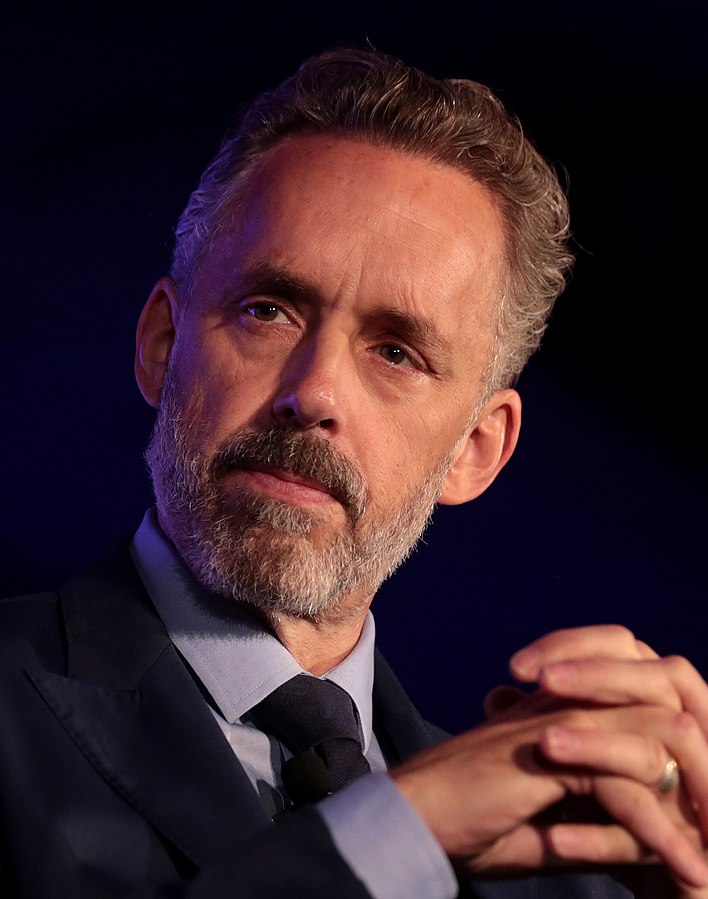
Jordan Peterson speaking at an event in Dallas, Texas on 15 June, 2018.
Detail of a photo by Gage Skidmore via Wikimedia Commons.
The Peterson cancellation was one of several troubling events at that time which spurred some of us at Cambridge to fight back. Not only because we wanted Peterson to be able to visit Cambridge, but also because we wanted anyone whom any academic saw fit to invite to be able to visit. It should never have been up to the university authorities to dictate what academics can discuss or whom we can discuss it with.
And so we began a long and at first lonely campaign to realign this ancient and great institution with freedom of speech, freedom of conscience and freedom of thought.
Our battle has borne fruit. In late 2020 Cambridge adopted a new, liberal free-speech policy that protected our right to invite speakers of our choosing, and prevented the university from cancelling an invitation that had been accepted. In May this year, the vice-chancellor took prompt and decisive action to remove a policy aimed at policing “microaggressions”. And then in the autumn, Jordan Peterson announced that he was planning to visit the university, at the invitation of Dr James Orr at the Faculty of Divinity.
That visit has now occurred. And thanks principally to the courage and energy of Dr Orr it has been a tremendous success.
I saw Peterson speak twice on his Cambridge visit. He spoke passionately, at length and without notes, to rapt audiences. He engaged the crowd with care and warmth. His seminars were a model of academic engagement. There was a lively, disputatious and often rigorous battle of ideas that ranged from the neuroscience of perception via William Empson and 17th-century counterpoint to Mesopotamian creation myths.It seemed that everywhere Peterson went in Cambridge there were students who wanted to learn from him, to argue with him and sometimes to be photographed next to him (I advised him to check their t-shirts before posing). There were no protests, unless you count one silly but brave student popping up in a lecture wearing a lobster outfit.
One striking thing about Peterson’s lectures is the contrast between the forcefulness of his speech and the moderateness of the content. He espouses a moderate conservatism focused on self-discipline, on seeing the value in yourself and in others, and on finding meaning in life. And he connects religion with all of these things. He is no right-wing firebrand.
At his lecture on Tuesday night it became clear how much the tide has turned. In Cambridge’s largest lecture hall, before a sold-out audience, the first people to speak were the university proctors. The proctors hold an 800-year-old office whose principal duty is to uphold free speech in the university – as they reminded us in their speech. Their presence was the clearest possible signal that, this time around, the university fully supported Peterson’s invitation and his right to speak. The contrast with his cancellation just two years ago could hardly have been greater.
Free speech has won another victory at Cambridge.
November 23, 2021
QotD: Generation X and the 1990s
I’m referring, of course, to Gen X’s patented brand of “irony”. We’ve talked about this before, but here’s a quick recap: Every middle-class kid born after about 1965 was raised to believe that Authenticity was the thing, the only thing. Just do what you feel. Question authority. Don’t listen to The Man!
The problem, of course, is that we were told this by The Man.
It had a weird, telescoping effect. On campus, you were surrounded by people who actually were hippies, plus a whole bunch of wild-eyed fanatics who were sure they would’ve made truly excellent hippies if they hadn’t been in elementary school at the time, plus a bunch of kids — these would be your classmates — who thought of “Woodstock” as a brand name, a kind of backpacking-through-Europe, taking-a-year-off-to-find-myself experience that everyone has as a matter of course before settling down to the serious business of making partner at the law firm.
In short: Our parents were stuck in adolescence, and, being adolescents ourselves, we didn’t understand that “Rebellion” wasn’t something the hippies invented. We wanted to experience sex, drugs, and rock’n’roll, too, but since the Baby Boomers treated those as their exclusive property instead of what they actually are — i.e. the natural impulses of teenagers in all times and places — we had to be all, like, you know, whatever about it. […]
That was the 1990s. Faced with a paradox that everything your parents say, do, and believe is lame — according to your parents! — the only safe way is to make sure nobody can figure out exactly what your attitude is at any given instant. You might end up working 90 hour weeks at the office to pay the nut on the McMansion and the Volvo the same way they did, but at least you’d be, you know, ironic about it. The ketman of the suburbs.
See what happens when you listen to your elders, kids?
Severian, “The Virtue of Hypocrisy”, Rotten Chestnuts, 2019-01-19.


