
Sabaton History
Published 6 Apr 2023By the middle of the Great War, several nations had begun to experiment with shock troops, and Germany was one of them. The Sturmtruppen were a revolution on the battlefield, for sure, but what did they actually do? What equipment did they carry and use? What were the men actually like? Today we’ll look at all that.
(more…)
April 7, 2023
Stormtroopers – The German Elite of WW1 – Sabaton History 119
Comments Off on Stormtroopers – The German Elite of WW1 – Sabaton History 119
March 28, 2023
Computers and music, from 1961 to 2001
Ted Gioia explains the deep history behind the scene in the movie 2001: A Space Odyssey where H.A.L. sings a song:

Not many people could afford an IBM 7094 computer back in the early 1960s — a typical installation cost $3 million. That’s the equivalent of around $20 million in purchasing power today. Over the course of the decade, fewer than 300 were built.
You didn’t get much computing power for that hefty price tag, at least by current-day standards. But if you wanted a machine that did complex or rapid math, you had few other options. The 7094 could handle 250,000 additions or subtractions in just one second. A whole room of accountants couldn’t keep up with it.
But addition and subtraction aren’t very sexy. So someone got the bright idea of teaching the IBM 7094 to sing. That’s why John L. Kelly Jr., Carol Lockbaum, and Lou Gerstman of Bell Labs, in Murray Hill, New Jersey, began working in 1961 on this pioneering computer music project.
Digital music wasn’t an entirely new development, even in those distant days, but singing presented completely different challenges, requiring breakthroughs in speech synthesis. But Bell Labs — then the in-house research arm of AT&T (it’s now part of Nokia) — had more expertise in that area than any other organization in the world.
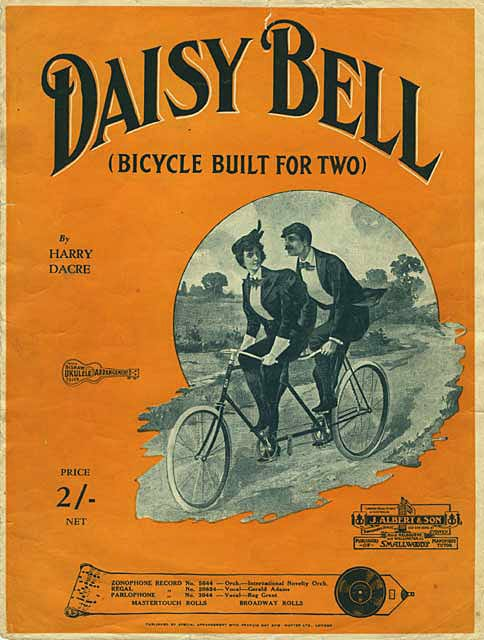
The Bell Labs team needed a song for their experiment. They decided on “Daisy Bell” — also known as “Bicycle Built for Two” — composed by British tunesmith Harry Dacre in 1892.
The idea for the song came to Dacre when he visited the US and found, to his surprise, that the customs officials had imposed a tariff on his bicycle. A friend quipped that he was lucky it wasn’t a bicycle with two seats, or the duty might have been double. The end result was Dacre’s most successful song ever.
[…]
Even back in the early 1960s, this tune didn’t have much hipness potential. But at least the melody was simple, well-known, and no longer protected by copyright. (That said, I would love to watch a jury in 1961 debate computer music rights.)
For the instrumental parts of the song, the Bell Labs team relied on contributions from Max Matthews, who had created a breakthrough sound-generating program called MUSIC back in 1957. In those ancient analog days, he had hooked up his violin to an IBM 704, and was thus the first performer in history to transfer live music to a computer for synthesis and playback.
Comments Off on Computers and music, from 1961 to 2001
Miles Davis – “Concierto de Aranjuez: Adagio”
Miles Davis
Published 23 Mar 2021“Concierto de Aranjuez: Adagio” by Miles Davis
(more…)
Comments Off on Miles Davis – “Concierto de Aranjuez: Adagio”
March 26, 2023
Billy Joel – “The Downeaster Alexa“
Billy Joel
Published 3 Oct 2009In 1989, Billy Joel released his album Storm Front, a successful album that hit #1 on the Billboard 200 charts and went quadruple platinum. Watch the official music video for “The Downeaster Alexa“, about the hard lives of Long Island fishermen.
(more…)
Comments Off on Billy Joel – “The Downeaster Alexa“
QotD: Bing Crosby meets the modern jazz musicians
The story involves Bing Crosby in the final years of his life. He was invited to sing at an event, probably for a charity or cause, and the host enlisted some young progressive jazz musicians to accompany the famous singer. The band members weren’t impressed by this aging star, who had made his reputation back in the 1920s, and decided to throw Crosby off his game.
When Bing showed up, he greeted them in his typical laidback manner, and told them he would sing some familiar old songs. But when the performance started, these young jazz players threw in every arcane substitute chord change and rhythmic displacement they could think of, further spicing up their accompaniment with Coltrane modal fills and bits of polytonality.
Much to their frustration, nothing they did that evening disrupted Bing in the least. This old, balding pop singer navigated effortlessly through every one of their advanced harmonies, never faltering or showing the slightest degree of discomfort. Even more infuriating, Bing maintained the relaxed and unflappable delivery that was a Crosby trademark. As far as the audience could tell, he was just as happy-go-lucky as ever, and maybe he was — after all, Crosby had learned the ropes as a young man alongside Bix Beiderbecke, who was as unconventional and unpredictable as any musician from the early 20th century.
When the performance was all done, the musicians expected to get chewed out by Crosby backstage. Instead, Bing shook their hands, and thanked them with great warmth. He said how “cool it was to play with these young cats,” and expressed his sincere desire that they might do so again in the future.
Ted Gioia, “Four Perspectives on Bing Crosby”, The Honest Broker, 2022-12-23.
Comments Off on QotD: Bing Crosby meets the modern jazz musicians
March 21, 2023
The musical anomaly that was 2022 – when classical music suddenly became much more popular
Ted Gioia looks at some surprising numbers for the music industry showing that of all genres, classical music suddenly became much more popular in 2022:
Last year, I went viral with an article about the rising popularity of old music. But I focused on old rock songs. Many of these songs are 40 or 50 years old. And in the world of pop culture, that’s like ancient history.
But if you really want old music, you can dig back 200 or 300 years — or even more, if you want. But does anybody really do that?
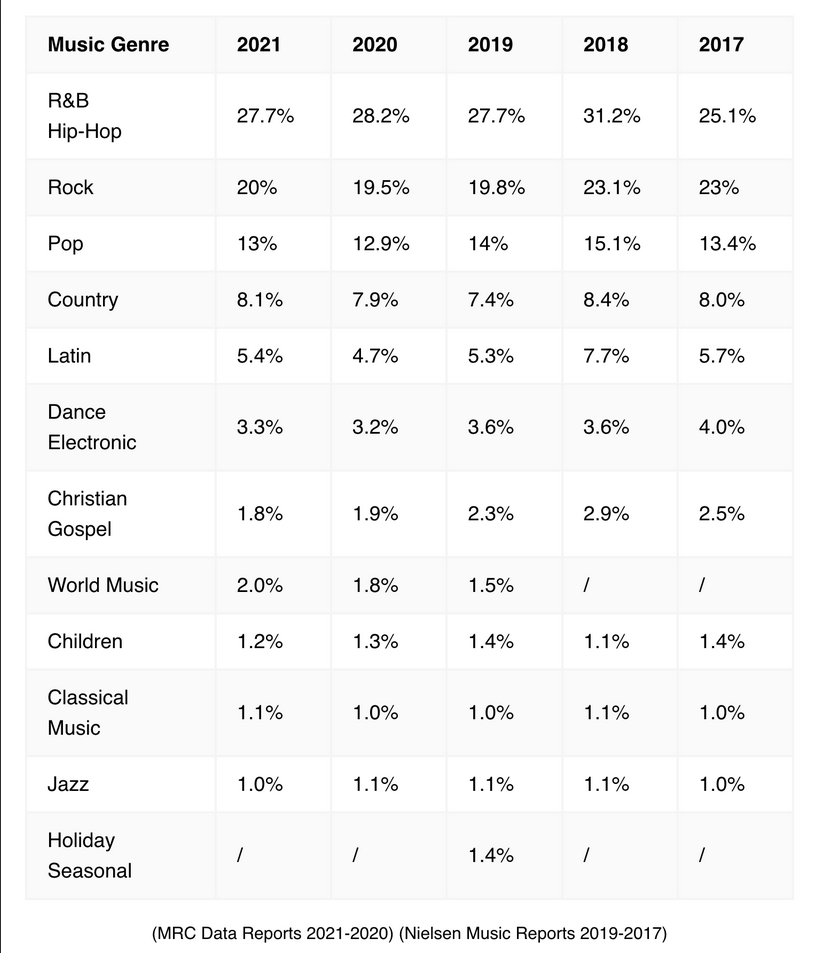
Conventional wisdom tells us that only around 1% of the public cares about classical music. And it doesn’t change much from year to year.
For proof, just take a look at this chart:
If you love concerts at the philharmonic, you read these figures with much weeping and gnashing of teeth. If classical music were any smaller, it would be a rounding error. Or — even sadder — it would be like jazz.
But that data only covers the period up to 2021. And 2022 was different.
In fact, it was remarkably different.
Over the last 12 months, I’ve started to see surprising signs of a larger audience turning to classical music. Last year, I wrote about the amazing saga of WDAV, the first classical music radio station in US history to take the top spot in its city.
I analyzed the numbers, and tried to get to the bottom of this unexpected success story. At the time, I wrote:
Women are the key drivers here. The station boasts a double-digit share in the female 35-44 category. But this probably is tilted heavily toward mothers, at least if we factor in the next bit of evidence — which reveals that WDAV has a mind-boggling 38% share among young children.
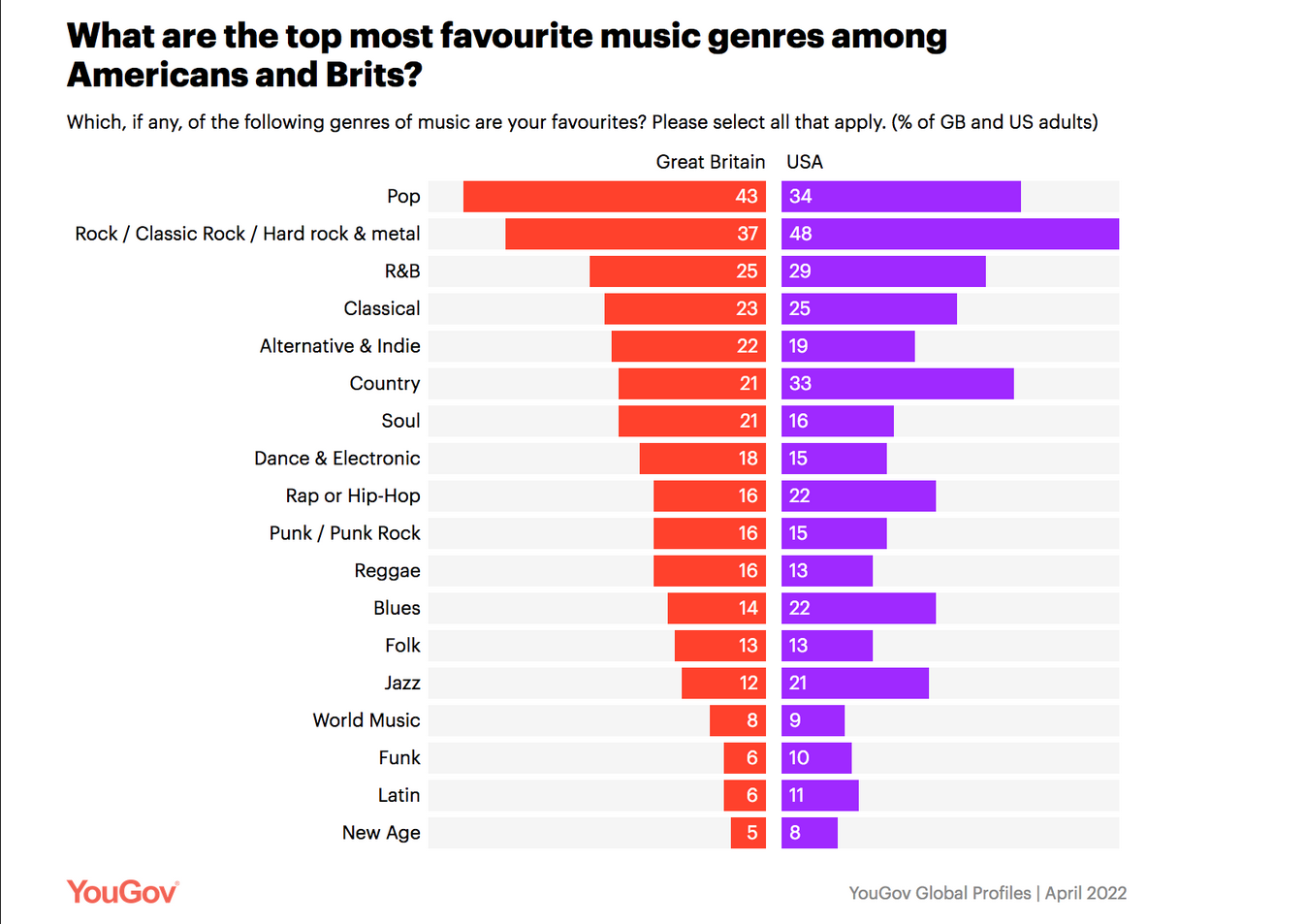
But then a few weeks later, this research report was issued:
I need to point out that respondents were allowed to mention multiple genres — but even given that loophole, who would expect classical music to rank ahead of country music, hip-hop, or folk?
This can’t be true. The numbers must be wrong. Or, maybe, people are lying to pollsters.
But then a survey of holiday listening trends in the UK revealed the unprecedented popularity of orchestral music — especially among younger listeners.
Comments Off on The musical anomaly that was 2022 – when classical music suddenly became much more popular
March 7, 2023
“The First Soldier” – Albert Séverin Roche – Sabaton History 118
Sabaton History
Published 6 Mar 2023This song is the story of Albert Roche, who is very much forgotten today, but after the First World War was THE hero of France. He was hotheaded and tempestuous, but above all he was GOOD. His service — and his legend from that war — is just remarkable, and today we share the war stories of the First Soldier of France.
(more…)
Comments Off on “The First Soldier” – Albert Séverin Roche – Sabaton History 118
March 5, 2023
“Natural Woman” – classic hit song or hate crime in progress?
Janice Fiamengo on the hoax “cancellation” attempt on the late Aretha Franklin’s hit song:
For at least a few hours, it looked as if the 1960s soul classic “(You Make Me Feel Like a) Natural Woman“, memorably performed by Aretha Franklin, was imperiled by woke attack. Various conservative and right-wing media reported in late January that a trans awareness group was demanding via Twitter that the song be canceled because of its exclusionary emphasis on “natural” womanhood. It was dutifully noted that this was the latest salvo in the trans “assault on women”, and a women’s activist was reported as saying, “I don’t think many women really know how much we’re hated”.
It turned out that the complaint about “Natural Woman”, which received well over one million views and provoked thousands of responses, had been made by a parody account. Aretha Franklin was safe — at least for now. But commentary on the song has a surprising history, as we’ll see, that complicates the standard claims about the trans erasure of women.
The Twitter account at the center of the faux controversy was TCMA, the Trans Cultural Mindfulness Alliance, which began tweeting in January of 2023 to highlight the lunatic fringe of trans advocacy. Many of the tweets by TCMA exaggerate actual trans activist positions so adroitly that even on a second or third reading, they seem plausible. On January 20, for example, TCMA tweeted that “Many children learn gender from their pets”, and advised parents that “Just because you bring home a ‘gendered’ pet, allow your child to choose the gender of the pet — don’t assign it one ‘at will’.”
A day later, TCMA tweeted that it would be petitioning the Norwegian government “to no longer include gender on birth certificates” and it condemned media, in another tweet, for emphasizing child abuse by same-sex couples while failing to cover the “wonton abuse” (steamed or deep fried?!) in the church.
The purpose of the account seems fairly clear: to show how dogmatic statements by activists are often hard to tell apart from parodies of the same. Something strange is going on when people in positions of cultural power not infrequently express themselves in a manner indistinguishable from parody.

Comments Off on “Natural Woman” – classic hit song or hate crime in progress?
March 3, 2023
Miles Davis – “So What” (Official Video)
Miles Davis
Published 19 Oct 2010Official music video for “So What” by Miles Davis
Listen to Miles Davis: https://MilesDavis.lnk.to/listenYD[Come for Miles Davis, stay for the John Coltrane solo]
(more…)
Comments Off on Miles Davis – “So What” (Official Video)
February 27, 2023
February 10, 2023
Hitler’s Jazz Band – WW2 Documentary Special
World War Two
Published 9 Feb 2023Does Adolf Hitler like Duke Ellington? No, and nor do many National Socialists. But the story of the music in the Third Reich is more complicated than you might think. What if we told you that Joseph Goebbels has tried to create a Nazi-approved swing band tasked with bringing the Jazz War to the Allies?
(more…)
Comments Off on Hitler’s Jazz Band – WW2 Documentary Special
February 4, 2023
“Ghost Riders In The Sky”
Audio Saurus
Published 30 Oct 2015Neil LeVang in 1961 on The Lawrence Welk Show.
Comments Off on “Ghost Riders In The Sky”
February 3, 2023
“Lady of The Dark” – Milunka Savić – Sabaton History 117
Sabaton History
Published 2 Feb 2023One of the most badass and decorated soldiers of the Great War was a woman. Serving first in the Balkan Wars, this Serbian war heroin became a celebrity when she won the Karađorđe’s Star — the highest Serbian decoration — in 1914 and 1916. Those weren’t her only decorations either — watch to find out more.
(more…)
Comments Off on “Lady of The Dark” – Milunka Savić – Sabaton History 117
February 2, 2023
Gerry Rafferty’s “Baker Street” lyrics
When I first subscribed to Ted Gioia’s Honest Broker substack, I figured I’d find one or two posts a month that I found interesting enough to share on the blog … I have to be careful not to link to several of his posts every week. He writes a lot about the music industry, so when this popped up in my inbox, I assumed it was Ted and got to the point of scheduling it before I realized it was Jon Miltimore instead:
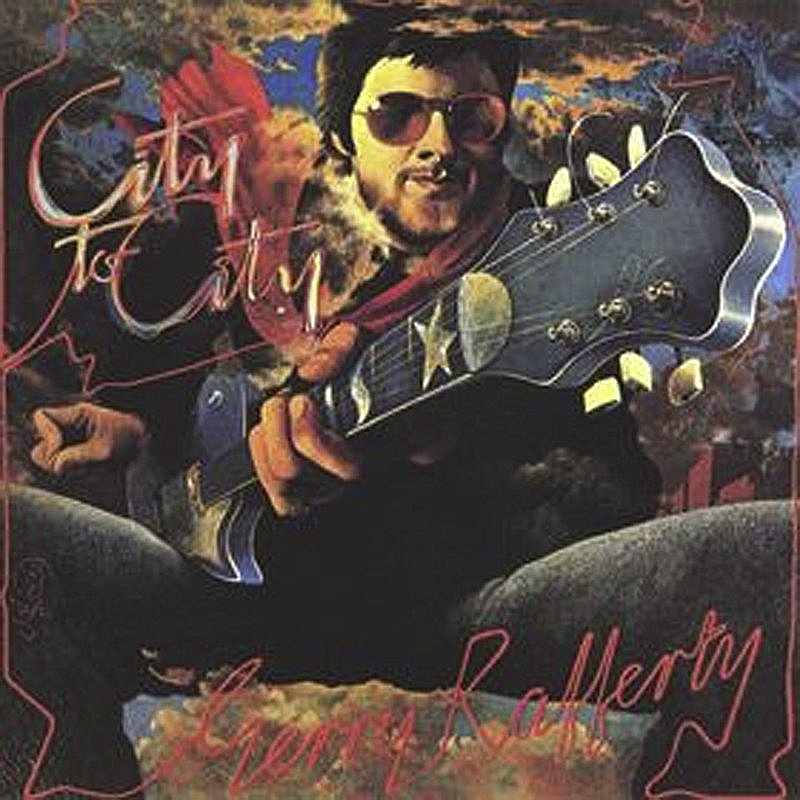
I was recently in a bar having dinner with a friend when Gerry Rafferty’s hit 1978 song “Baker Street” came on. When my friend mentioned that he loved the song, I agreed and noted the song’s powerful lyrics.
“Really?” he responded. “I never paid much attention to the lyrics.”
Most people, of course, remember “Baker Street” for its wailing saxophone, and my friend was no different. Nor was I, for many years. But at some point—I don’t know when—I began to pay attention to the song’s lyrics. They go like this:
Winding your way down on Baker Street
Light in your head and dead on your feet
Well, another crazy day
You’ll drink the night away
And forget about everythingThis city desert makes you feel so cold
It’s got so many people, but it’s got no soul
And it’s taken you so long
To find out you were wrong
When you thought it held everythingYou used to think that it was so easy
You used to say that it was so easy
But you’re trying, you’re trying now
Another year and then you’d be happy
Just one more year and then you’d be happy
But you’re crying, you’re crying nowWay down the street there’s a light in his place
He opens the door, he’s got that look on his face
And he asks you where you’ve been
You tell him who you’ve seen
And you talk about anythingHe’s got this dream about buying some land
He’s gonna give up the booze and the one-night stands
And then he’ll settle down
In some quiet little town
And forget about everythingBut you know he’ll always keep moving
You know he’s never gonna stop moving
‘Cause he’s rolling, he’s the rolling stone
And when you wake up, it’s a new morning
The sun is shining, it’s a new morning
And you’re going, you’re going homeThe lyrics — in contrast to the seductive sax and upbeat strings and keyboard — are rather dark. It’s not your typical rock/pop song about finding or losing love.
I’ve never heard “Baker Street” explained, but my take on the song is this: It’s about two lonely people in a city. They find comfort in booze, chemicals, and (occasionally) each other. The relationship is probably dysfunctional, but they are struggling to change. Struggling to grow. Struggling to find meaning.
“Baker Street” peaked at #3 in the UK and held the #2 spot in the U.S. for six consecutive weeks. I think part of the reason the song was such a success is because the lyrics touched on something a little deeper than most rock tunes, something that resonated with audiences. And though the song is 40 years old now, I have a hunch it resonates even more now than it did then.
February 1, 2023
It’s the job of the music critic to be loudly and confidently wrong as often as possible
Ted Gioia points out that a lot of musical criticism does not pass the test of time … and sometimes it’s shown to be wrong before the ink is dry:
When I was in my twenties, I embarked on writing an in-depth history of West Coast jazz. At that juncture in my life, it was the biggest project I’d ever tackled. Just gathering the research materials took several years.
There was no Internet back then, and so I had to spend weeks and months in various libraries going through old newspapers and magazines — sometimes on microfilm (a cursed format I hope has disappeared from the face of the earth), and occasionally with physical copies.
At one juncture, I went page-by-page through hundreds of old issues of Downbeat magazine, the leading American jazz periodical founded back in 1934. And I couldn’t believe what I was reading. Again and again, the most important jazz recordings — cherished classics nowadays — were savagely attacked or smugly dismissed at the time of their initial release.
The opinions not only were wrong-headed, but they repeatedly served up exactly the opposite opinion of posterity.
Back in my twenties, I was dumbfounded by this.
I considered music critics as experts, and hoped to learn from them. But now I saw how often they got things wrong — and not just by a wee bit. They were completely off the mark.
Nowadays, this doesn’t surprise me at all. I’m painfully aware of all the compromised agendas at work in reviews — writers trying to please an editor, or impress other critics, or take a fashionable pose, or curry favor with the tenure committee, or whatever. But there is also something deeper at play in these huge historical mistakes in critical judgments, and I want to get to the bottom of it.
Let’s consider the case of the Beatles.
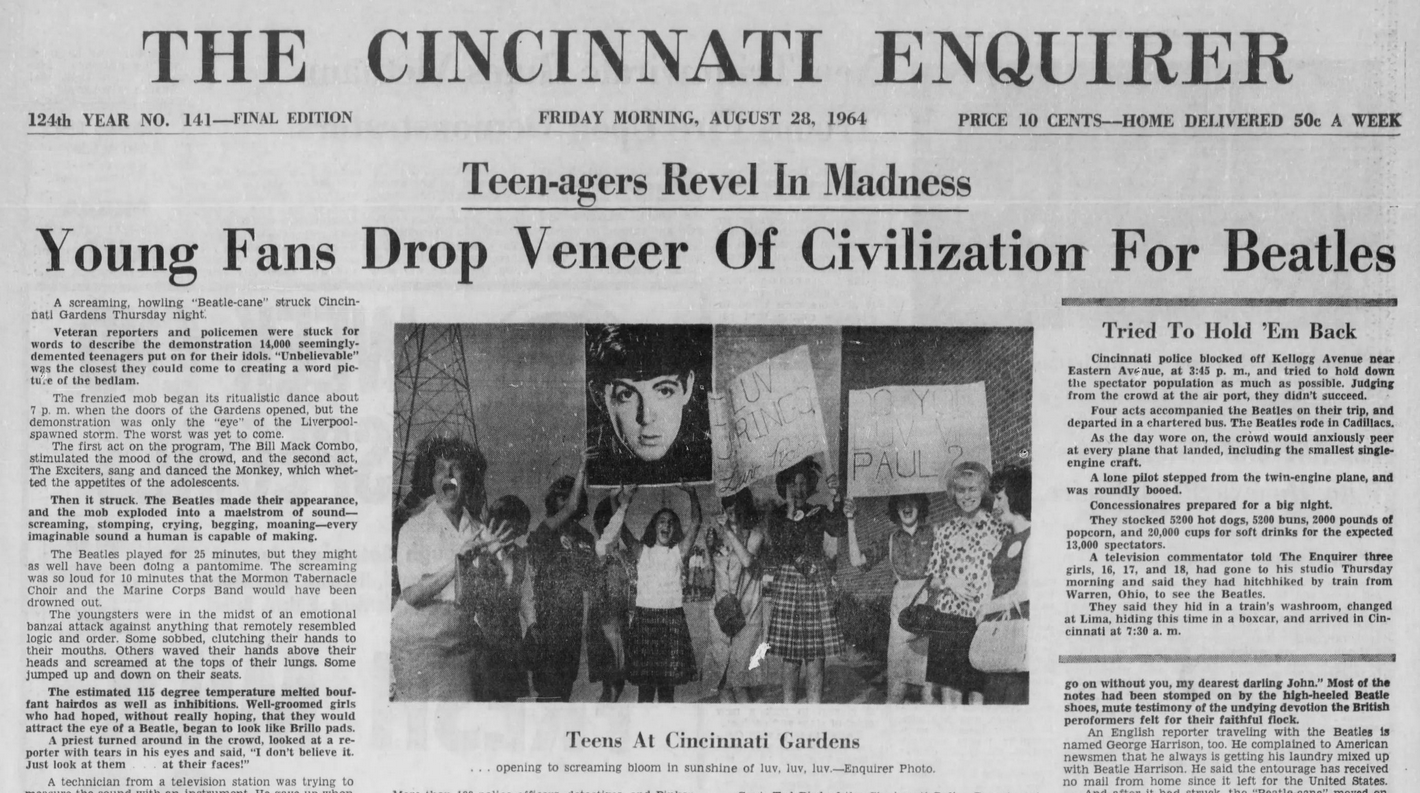
When the Beatles went on the road, stories like this followed them everywhere
On the 50th anniversary of Sgt. Pepper’s Lonely Hearts Club Band, the New York Times bravely reprinted the original review that ran in the newspaper on June 18, 1967. I commend the courage of the decision-makers who were willing to make Gray Lady look so silly. But it was a wise move — if only because readers deserve a reminder of how wrong critics can be.
“Like an over-attended child, ‘Sergeant Pepper’ is spoiled,” critic Richard Goldstein announced. And he had a long list of complaints. The album was just a pastiche, and “reeks of horns and harps, harmonica quartets, assorted animal noises and a 91-piece orchestra”. He mocks the lyrics as “dismal and dull”. Above all the album fails due to an “obsession with production, coupled with a surprising shoddiness in composition”. This flaw doesn’t just destroy the occasional song, but “permeates the entire album”.
Goldstein has many other criticisms — he gripes about dissonance, reverb, echo, electronic meandering, etc. He concludes by branding the entire record as an “undistinguished collection of work”, and even attacks the famous Sgt. Pepper’s cover — lauded today as one of the most creative album designs of all time — as “busy, hip, and cluttered”.
The bottom line, according to the newspaper of record: “There is nothing beautiful on ‘Sergeant Pepper’. Nothing is real and there is nothing to get hung about.”
How could he get it so wrong?
Comments Off on It’s the job of the music critic to be loudly and confidently wrong as often as possible


