
Algal the Bard
Published 11 Jun 2022Lyrics:
I close my eyes
Only for a moment, and the moment’s gone
All my dreams
Pass before my eyes, a curiosityDust in the wind
All they are is dust in the windSame old song
Just a drop of water in an endless sea
All we do
Crumbles to the ground, though we refuse to seeDust in the wind
We are naught but dust in the windDon’t linger on
Nothing lasts forever but the earth and sky
It slips away
And all your riches won’t another minute buyDust in the wind
We are naught but dust in the wind
Dust in the wind
Everything is dust in the wind
(more…)
October 19, 2022
October 5, 2022
The Amusing Inspiration Behind Dire Straits Classic 70s Hit | Professor of Rock
Professor of Rock
Published 16 Jun 2021The story of the 1979 classic “Sultans of Swing” by Dire Straits. Mark Knopfler was inspired to write the song after witnessing a band playing Dixieland Jazz in a dive bar.
Hey music junkies and vinyl junkies Professor of Rock always here to celebrate the greatest artists and the greatest 70s vinyl songs of all time for the music community and vinyl community.
If you’ve ever owned records, cassettes and CD’s at different times in you life or still do this is your place Subscribe below right now to be a part of our daily celebration of the rock era with exclusive stories from straight from the artists and click on our patreon link in the description to see our brand new show there.
Mark Knopfler was performing in London’s pub scene in the mid 70s, living on next to nothing in a flat with aspiring bassist John Illsley. Knopfler’s younger brother, David, introduced him to Illsley, following the dissolution of Mark’s first marriage. Mark, John, and David teamed up with “Pick” Withers, another London area musician, to form a group they aptly named Dire Straits.
The 4 members all had day jobs, but they lived a “hand to mouth” existence — struggling to pay their utilities bill. One rainy evening, Mark & a few friends decided to go to a nearby pub for a couple of pints in a dilapidated (dih-lap-ih-dated) section of South London. The pub was nearly empty, except for a couple of guys playing pool. In a corner of the bar, a band was playing — seemingly unaffected by the lack of an audience.
The band was “blowing Dixie — double-four time” as Knopfler would later transcribe. “Dixie double” is a performance style that was popularized by Django (jang-go) Reinhardt (rain-hart), and in the early days of Les Paul — where the guitar, bass, and drums are played harmoniously at a very fast pace.
If you’re playing “Dixie double-four time” as Knopfler describes in “Sultans of Swing”, you are playing twice the speed of the normal 4/4 time, and the drummer is working extra hard to keep up with the tempo. Knopfler remembered asking the hapless Dixie outfit to play “Creole Love Call” or “Muskrat Ramble”, much to the band’s delight, because they were undoubtedly shocked that someone in the pub actually knew some of the songs in their repertoire.
At the end of the band’s performance, the leader announced triumphantly to the 3-4 people in attendance … “We are the Sultans of Swing!”, as if they were playing in front of a packed house of ardent fans. Mark found the irony of the scene very amusing; a frumpy looking band playing a hole in the wall pub in a dodgy part of town, declaring themselves “the sultans of swing”.
To be a “sultan” would be to rule over a country, or hold a dynasty over people. The term originated from the Arabic language meaning to have “authority” or “rulership” over others. The true “Sultans of Swing” would’ve been the “swing” genre’s originator Fletcher “Smack” Henderson in the late 20s & 30s, or one of his revered disciples, Duke Ellington & Benny Goodman.
Babe Ruth and the Yankees legendary murderers row of the 20s if you’re talking baseball.
(more…)
Comments Off on The Amusing Inspiration Behind Dire Straits Classic 70s Hit | Professor of Rock
October 4, 2022
“On the cover of the Rolling Stone“
Ted Gioia discusses the oddly nostalgic turn modern music writing has taken:
The first thing you notice is the sheer abundance of music magazines on display. We must truly be living in a golden age of music writing if it can support so many periodicals.
I was very happy to see this — at least at first glance.
But at second glance, I started to notice the cover stories.
Lavish attention is devoted here to artists who built their audience in the last century — Miles Davis, David Bowie, Buddy Holly, Blondie, Led Zeppelin, Björk, Motorhead, The Cure, etc. That’s an impressive roster of artists (well, most of them), but they don’t really need the publicity nowadays — they were legends before many of us were born.
Even the magazine names reveal a tilt toward nostalgia. I can’t make out the titles in their entirety, but I see the words Retro, Vintage, and Classic. Publishers are shrewd people, and they don’t put these words in large font unless the audience responds to them.
Maybe print media is nostalgic by definition — if, as we’re repeatedly told, young people don’t read things on paper. (I’m skeptical of that claim, but I hear it all the time.) Yet when I visit the websites, I see the same backward glance. You can’t click on Rolling Stone‘s homepage or Twitter feed without finding some massive list article — touting the “100 Best Songs of 1982” or “The 100 Greatest Country Albums of All Time“. You will find similar retro celebrations at almost every other music media website with a large crossover readership.
Editors love lists nowadays, especially of all-time greats. If I pitch an article like that, the whole editorial team starts salivating — you can even feel the moisture over Zoom — in sharp contrast to any proposed article on a young, unproven musician. Those pitches get pitched right back in your face. You might conclude that we have now arrived at the end of history, with all greatness residing in the past. The editors, at least, must think so.
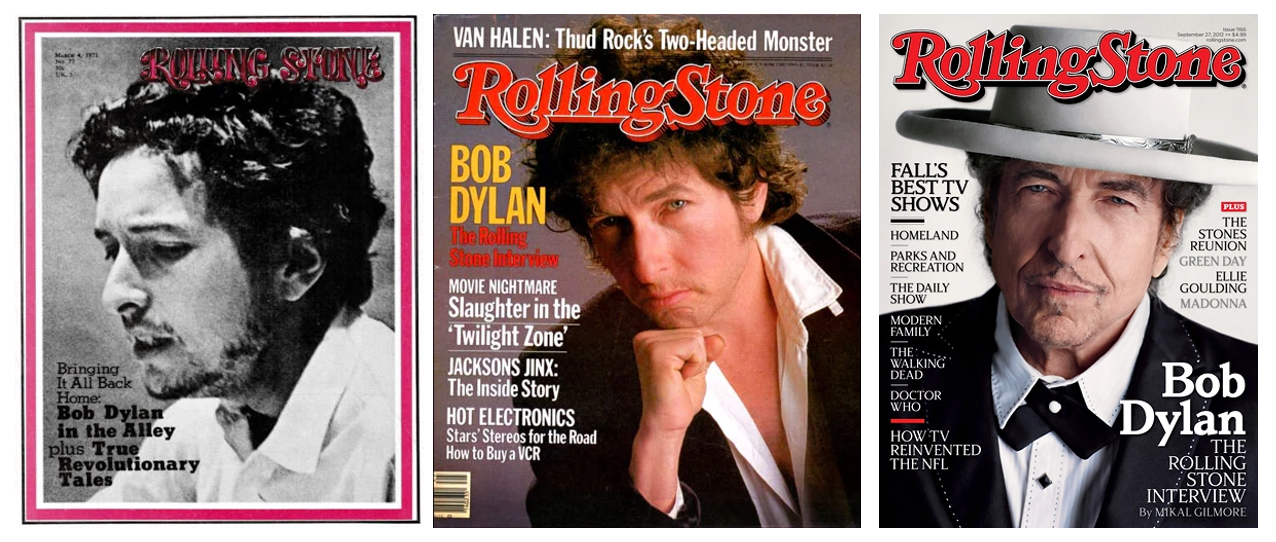
Things weren’t always like this. Go back and look at old issues of Rolling Stone or Downbeat or some other music magazine — there were years in which every cover story was about a living person and usually someone young with something new to say.
Those days are gone. But here’s the most ironic fact of all — the actual cover stories haven’t changed.
On the cover of the Rolling Stone — 1971, 1984 and 2012
By the way, I’d like to know when Rolling Stone published its first “all-time greats” list — that was the moment when nostalgia first entered the rock bloodstream, a vital force previously resistant to sentimental yearnings for the past.
Comments Off on “On the cover of the Rolling Stone“
October 1, 2022
“Father” – Fritz Haber – Sabaton History 113 [Official]
Sabaton History
Published 29 Sept 2022Fritz Haber is a controversial historical figure. He was responsible for scientific advances that fed billions, yet he created weapons of mass destruction that filled millions with terror. This is his story.
(more…)
Comments Off on “Father” – Fritz Haber – Sabaton History 113 [Official]
August 27, 2022
Ex Dissed Him Publicly … Turned BRUTAL Insult Into An 80s Classic | Professor of Rock
Professor of Rock
Published 8 Apr 2022One of the most heart wrenching love songs of the 80s steeped in a happy go lucky feel. “Romeo and Juliet” by Dire Straits is a bit of conundrum. Find out what this riddle of a song means from their 1980 classic album Making Movies and how Mark Knopfler took a breakup and made it an all-time standard next on Professor of Rock.
Hey music junkies and vinyl junkies Professor of Rock always here to celebrate the greatest artists and the greatest 80s songs of all time for the music community and vinyl community with music history video essay’s including today’s Dire Straits story of “Romeo and Juliet” and Dire Straits reaction. If you’ve ever owned records, cassettes and CD’s at different times in your life or still do this is your place. Subscribe below right now to be a part of our daily celebration of the rock era with exclusive stories from straight from the artists and click on our Patreon link in the description to become an Honorary Producer.
The British rock band Dire Straits formed in London in 1977. Their original line-up consisted of Mark Knopfler on lead vocals and lead guitar, his brother David on rhythm guitar, John Illsley on bass and Pick Withers on drums. In 1978 they released their self-titled debut which included the singles “Water of Love” and “Sultans of Swing”.
In 1979, they released their follow-up Communique, putting out the singles “Lady Writer” and “Once Upon a Time in the West”. For their third album, Dire Straits traveled to New York, and set up shop at a studio called the Power Station. They got to work on June 20, 1980. The album, called Making Movies was co-produced by Mark Knopfler and Jimmy Iovine, who had been the engineer and mixer on Bruce Springsteen’s Born to Run. Due to this connection, Iovine was able to secure E Street Band keyboardist Roy Bittan for the sessions.
It was the first time the band had ever fully worked a keyboardist into its lineup, but Knopfler’s arrangements were expanding musically and getting more complex. And Bittan was just the man for the job. Going into the studio, Mark had written a lineup of several great songs, “Tunnel of Love”, “Skateaway”, “Expresso Love”, “Romeo and Juliet” … And there was a sense within the group that this album was going to be something very special.
But for all the promise on the horizon, Dire Straits’ increasing success had exhausted one of its members. Dave Knopfler, more than anyone else in the band was struggling. And if the intense march to fame and fortune wasn’t hard enough, Dave also had the distinct challenge of living in shadow of his brother Mark … who was the undisputed leader of the band.
Through the first few weeks of recording Dave’s dissatisfaction felt like a dark cloud. And it followed him wherever he went. With eyes averted to the floor, he and Mark had all but stopped talking. And the resentment and gloom were dragging everyone down. It all came to a head one day when Dave showed up to the studio empty-handed. Responsible for a fairly simple guitar part on “Romeo & Juliet”, Dave just hadn’t bothered to practice it. So, Iovine told him to go away and learn it.
(more…)
Comments Off on Ex Dissed Him Publicly … Turned BRUTAL Insult Into An 80s Classic | Professor of Rock
July 2, 2022
Versailles – “It will be what you make of it” – Sabaton History 111 [Official]
Sabaton History
Published 1 Jul 2022There are a great many myths and misconceptions about the Treaty of Versailles, and it has been used and even weaponized many times over the years. Today, Indy goes over the nuts and bolts of what it actually was and what it actually did.
Support Sabaton History on Patreon: https://www.patreon.com/sabatonhistory
Listen to “Versailles” on the album The War To End All Wars: https://music.sabaton.net/TheWarToEnd…
Listen to Sabaton on Spotify: http://smarturl.it/SabatonSpotify
Official Sabaton Merchandise Shop: http://bit.ly/SabatonOfficialShopHosted by: Indy Neidell
Written by: Markus Linke and Indy Neidell
Directed by: Rickard Erixon and Indy Neidell
Produced by: Pär Sundström, Astrid Deinhard and Spartacus Olsson
Creative Producer: Rickard Erixon, Indy Neidell
Set Design: Daniel Eriksson, Rickard Erixon,
Executive Producers: Pär Sundström, Joakim Brodén, Tomas Sunmo, Indy Neidell, Astrid Deinhard, and Spartacus Olsson
Post-Production Director: Marek Kamiński
Editor: Iryna Dulka
Sound Editor: Marek Kamiński
Archive: Reuters/Screenocean – https://www.screenocean.com
Colorizations by: Olga Shirnina, a.k.a. Klimbim – https://klimbim2014.wordpress.com/Sources:
IWM: 130-09+10, IWM 130-01
Auckland Libraries Heritage Collections 5-1276
Médiathèque de l’architecture et du patrimoine
hpebley3 from freesond.org
All music by: SabatonAn OnLion Entertainment GmbH and Stuffed Beaver LTD co-Production.
© Stuffed Beaver LTD, 2019 – all rights reserved.
Comments Off on Versailles – “It will be what you make of it” – Sabaton History 111 [Official]
June 21, 2022
“Maybe black people generally prefer black music because it’s far superior to the standard ‘landfill indie’ that ‘Glasto’ is mired in?”
At Spiked, Julie Burchill wonders what happened to Lenny Henry:
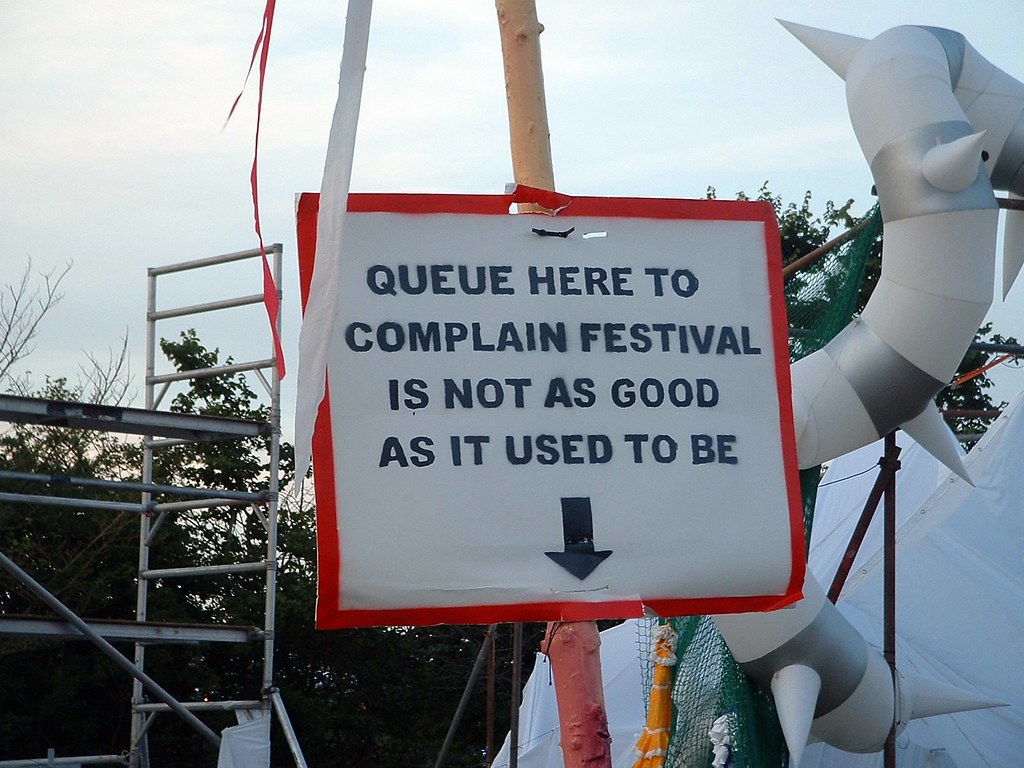
“Sign of the times @ Glastonbury Festival” by timparkinson is licensed under CC BY 2.0 
 .
.
Spare a thought for Sir Lenworth George Henry, Commander of the Order of the British Empire and knight of the realm. He works without interruption or unemployment at a job he loves (and in his spare time makes television commercials for Premier Inn hotels – megabucks payday ahoy!) and has done so from the age of 16. He is now 63 and, unusually, is becoming more attractive as he ages. He has sailed a trimaran from Plymouth to Antigua, performed on a record alongside Kate Bush and Prince, and escaped from marriage to Dawn French. Whereas some comedians become sad shadows of themselves – capering clowns who are laughed at, not with – in middle age he became a serious actor. His radio documentary, Lenny and Will, sent him “in search of the magic of Shakespeare”, whose plays he has since performed in to great acclaim. Not only is he very rich, he has also helped raise millions of pounds for charity as co-founder of Comic Relief.
But despite all of this wonderful success, Henry has in recent years taken to griping about things which really aren’t worth bothering about. Sir Len, where did it all go wrong? Well, I’d wager that it went wrong when Henry realised that if he identified as happy people might start thinking that he chose showbiz as a way to show off and get handsomely rewarded for it. And where would that leave him in the Victimhood Olympics? Nowhere near the podium.
His latest gripe is about Glastonbury. “It’s interesting to watch Glastonbury and look at the audience and not see any black people there. I’m always surprised by the lack of black and brown faces at festivals. I think, ‘Wow, that’s still very much a dominant culture thing'”, he told the Radio Times this week.
Here’s a thought. Maybe black people generally prefer black music because it’s far superior to the standard “landfill indie” that “Glasto” is mired in? And maybe they’re keener on personal hygiene than a bunch of scruffy, middle-class students roughing it on their gap year before going home to a cushy billet arranged by a friend of their father? You won’t find many white working-class people at festivals, either, for the same reasons.
I speak from personal experience. As a teenage reporter at the New Musical Express I got sent to a festival – Reading – as punishment for one of my many juvenile misdemeanours. The moment my stilettos sunk into the mud, I turned back to the station, thus facing a further trouncing from the editor. Every night, after an evening watching some rubbish punk band, I would go home and dance around the room to the sweet soul licks of the Isley Brothers until the awful white racket was forgotten.
I prefer more foreign things than I do indigenous things – from curry to gospel music – but I’m not some self-loathing idiot who believes that this country was worthless when it was white; if diversity is so great, does that mean that India and China and Africa were uninteresting before the West barged in? And don’t bother trying to make the countryside “more accessible” – I’ve never wanted to go on a ramble in my life. Why should I and my fellow mud-dodging citizens of various ethnic heritage be bussed into the racist countryside from the cities we built and love?
Comments Off on “Maybe black people generally prefer black music because it’s far superior to the standard ‘landfill indie’ that ‘Glasto’ is mired in?”
May 30, 2022
Kitaro – “Caravansary” (live)
Kitaro
Published 17 Feb 2022Listen at Spotify: https://spoti.fi/2Q2T9qx
Listen at Apple Music: https://apple.co/2Iyx1QC
Listen at Amazon: https://amzn.to/2Q0opGp
for more info, visit: https://bit.ly/2W6CQMo#Kitaro #DomoMusicGroup

Comments Off on Kitaro – “Caravansary” (live)
May 26, 2022
QotD: They don’t make good music any more
The Lindy effect, recently popularised by Nassim Nicholas Taleb in Skin in the Game, tries to explain the “Test of Time”, or granny’s wisdom. It’s a heuristic to streamline decisionmaking over the long term, and it has predictive qualities. For example, if a business is only a year old, the most likely scenario is that it will last one year more. However, if it does last two years, then the likelihood that it will last an additional two years increases.
To state the hypothesis as it applies to music: If a song or an album has been remembered for 20 years, then it’s more likely to be remembered for another 20 years. If it’s been remembered for 50 years, then it’s probably pretty damn good. If it’s been remembered for centuries, then it’s probably better than you can understand.
If this is true, then it might explain why anyone who has been listening to music for more than a decade has the sense that music was simply better back in the day. It’s not that music is necessarily worse now, on average – we’re in the moment, and it’s difficult to sort the wheat from the chaff.
What we hear in the daily soundtrack of life, when you’re getting your hair cut, out shopping, something coming from someone’s phone at the other end of the bus, is noise. The quality of this music is going to vary wildly because what is popular doesn’t necessarily correlate to what is good. The signal is the true state of music, which fluctuates, and can come from anywhere from the top of the pop charts to underground niche movements.
What we think of as “good older music” is not representative of the general state of music back then. It might be the case those songs that are remembered, and still played on the radio, TV and movies, happen to be the exceptional outliers. The Lindy effect is about filtering: Time has sifted out the mediocre songs that were popular for arbitrary or non-universal reasons, or were just faddish. If you’re going to go to the trouble of looking back to the 1980s now, what you bring back for us better be good.
And what is considered as great music from decades ago wasn’t necessarily chart material. But in the long term, they have been rediscovered by subsequent generations.
James Smith, “The myth of ‘bad’ modern music”, Being Libertarian, 2019-02-25.
May 13, 2022
Womp-womp – “Probably you didn’t watch the debate. Probably you read that last paragraph and thought, well, Wells has finally lost his mind, it had to happen eventually.”
Paul Wells watched the most recent Conservative leadership debate so none of the rest of us had to. Let’s take a bit of time to appreciate the sacrifice Mr. Wells made on our undeserving behalf:

Well, that was a national disgrace.
What is it about the last two years that made the Conservative Party of Canada’s Leadership Election Organizing Committee decide Canadians are yearning for shorter conversations about sillier questions?
Who came out of last week’s thoughtful debate at the Canada Strong and Free conference — at least, the questions and the format permitted thoughtfulness, although candidates varied in their ability or willingness to deliver it — thinking there weren’t enough questions about TV viewing habits?
Who surveyed the issue landscape that will face Justin Trudeau on Thursday and would face his successor — war in Europe, inflation, labour shortages, stark conflict between climate targets and natural-resource export imperatives, long-cheated and still-difficult Indigenous reconciliation, exiting from COVID — and thought, “Keep the answers short. We want time to hear them out on what’s on their playlists”?
As a mechanism for allowing Canadians to weigh the judgment of six people, one of whom might, after all, be the next prime minister, the evening was a write-off. We learned that Leslyn Lewis likes “Coltrane” and was eager not to be asked to name a second musician, that Jean Charest likes Charles Aznavour and doesn’t know how to pronounce Pat Metheny, that moderator Tom Clark isn’t sure how to pronounce Roman Baber, and that Charest and Scott Aitchison were reckless enough to trigger the dreaded sad-trombone sound effect for the sin of mentioning the prime minister of Canada by name during a political debate.
Probably you didn’t watch the debate. Probably you read that last paragraph and thought, well, Wells has finally lost his mind, it had to happen eventually. But no, this is a faithful record of … of … of whatever that was that just happened in Edmonton. Sorry, I’m stuck with the material. There is no way I could make this stuff up. If I were making something up, it would be funnier.
Clearly the organizers fell prey to two of the most fashionable current temptations in debate design: “Keep it snappy” and “Let’s get to know these candidates as people.” As though the decline of modern government were caused by excessive reflection and insufficient attention to our leaders’ public image.
Comments Off on Womp-womp – “Probably you didn’t watch the debate. Probably you read that last paragraph and thought, well, Wells has finally lost his mind, it had to happen eventually.”
May 3, 2022
Is all of social media just a “giant domestic surveillance operation”?
Severian posted this last week, but I’m only just getting caught up now:

I was wrong about Musk buying Twitter. Lot of that going around — the Z Man got a whole podcast on “avoiding error” from his misread of the situation. It’s well worth a listen. I, too, had a “hot take” on Musk’s offer — not that it was particularly hot, as most folks on this side were saying it, but I too thought it was a stunt. After all, Musk, like Bezos and all the other “new commerce” billionaires, don’t exist without massive government support. I figured his “offer” was stoyak — he’s got something in the works in the Imperial Capital and needed to play hardball with somebody.
But I was also working off my longstanding assumption that Twitter, Faceborg, and all the rest are essentially CIA / NSA fronts. When I first heard about Facebook, my first thought was “Wait, don’t we already have Friendster? What does this bring to the table?” My second thought was the first one I’d had about Friendster: “That’s clever, I guess, but how on earth is this going to make money? Even if they saturate it with ads, to the point where it’s unusable — which will happen in about two weeks — they can’t monetize your personal data any farther. People are pretty set in their habits — once the algorithm figures out you’re the kind of guy who likes anime and New Wave music, any further data is useless.”
Being a much more naive, trusting sort back then, I figured it was just stupidity. You know, Pets.com level stupidity. The VC boys were trying to get another dotcom bubble inflated, because if the first one proved anything, it’s that people are dumb and will keep falling for the same obvious scam over and over. I could hear them in the board rooms: “This time, instead of sticking ‘cyber’ in front of everything, we’ll call it ‘Web 2.0.’ Cha-ching!”
Obviously that didn’t happen. So I went with the common explanation that was floating around in those days, that “social media” sites made their money by selling your data to advertisers. But that doesn’t pass the smell test either. For one thing, as I said above, your habits don’t change very much. For another, as anyone who has any experience with them knows, those algorithms really suck. The other day, for instance, I was listening to some old music one of the streaming music sites. And I mean really old. Nothing I’d played the whole morning had been composed after the 17th century, but the service’s algorithm was convinced that what I’d really like to listen to next was some rapper.
Indeed, the whole point of the ads on Pandora, Spotify, whatever seems to be: To annoy you to the point where you pay for their premium service. Pandora, for instance, either really really really believes I want a Surface Pro 8 and some Taco Bell, or they’re just playing those ads every two songs to annoy me into buying the premium service (which is every ad that isn’t Surface Pro or Taco Bell). Which is just bizarre, because I haven’t had Taco Bell since college — which was 30 years ago, and I paid cash — and this essay right here is the first time I have ever even typed the words “Surface Pro 8”, much less looked at the product.
I really wouldn’t be surprised that the “algorithm” is reading itself. Hey, this guy sure has seen a lot of ads for Taco Bell and Surface Pro! He must really want some!
But the algorithm for companies whose entire business model is e-commerce is no better. Amazon seems to have gone to a “push” model — they must be selling their suppliers on the idea that they can push you stuff, which is why they always pimp the same four or five items in the “Amazon’s Choice” recommendations, no matter what you’re searching for. And these again are laughably wrong — the only things I get off Amazon are used history and philosophy books, and stuff for my dog. Based on this, they have concluded that what I’m really looking for are chick lit and beach gear.
Given all that, I came to the conclusion that “social media” (and Amazon too, probably) really only have one customer, who really does have a use for your data, and that customer’s initials are CIA. It’s a giant domestic surveillance operation.
And why wouldn’t it be? The Regime has had a legitimacy problem for a long time, and a “feedback loop” problem for longer than that. Even if we assume no ulterior motives whatsoever — fat chance, but let’s stipulate — the fact remains that public opinion polling, however you want to define it, has a similar problem as psychological studies. Since the vast majority of study participants are college undergrads, what you get is WEIRD — that’s Western, educated, industrialized, rich and democratic, and also in a very narrow age range. Psych studies that purport to be universal are, at their very best, snapshots inside the head of the BCG.
If you haven’t encountered the Basic College Girl, he provided a thumbnail sketch here.
Comments Off on Is all of social media just a “giant domestic surveillance operation”?
May 2, 2022
“Race To The Sea” – The Failure of the Schlieffen Plan– Sabaton History 110 [Official]
Sabaton History
Published 1 May 2022In the fall of 1914, the initial mobile stage of the war on the Western Front came to an end outside of Paris and trench warfare set in. As the trench lines stretched from the Swiss border to northern France and Belgium, both sides realized that if they could head north quickly enough, they could turn the enemy’s flank and win the war NOW.
Support Sabaton History on Patreon: https://www.patreon.com/sabatonhistory
Listen to “Race To The Sea” on the album The War To End All Wars: https://music.sabaton.net/TheWarToEnd…
Watch the Official Music Video of “Race To The Sea” here: https://www.youtube.com/watch?v=m-yrj…
Listen to Sabaton on Spotify: http://smarturl.it/SabatonSpotify
Official Sabaton Merchandise Shop: http://bit.ly/SabatonOfficialShopHosted by: Indy Neidell
Written by: Markus Linke and Indy Neidell
Directed by: Rickard Eri

Comments Off on “Race To The Sea” – The Failure of the Schlieffen Plan– Sabaton History 110 [Official]
March 22, 2022
“The Unkillable Soldier” – Adrian Carton de Wiart – Sabaton History 109 [Official]
Sabaton History
Published 21 Mar 2022Adrian Carton de Wiart fought in a variety of wars over more than forty years, and he was wounded … again and again and again, and yet he always came back for more. This episode is his sometimes ridiculous but always interesting and incredible story.
Support Sabaton History on Patreon: https://www.patreon.com/sabatonhistory
Listen to “The Unkillable Soldier” on the album The War To End All Wars: https://music.sabaton.net/TheWarToEnd…
Watch the Official Music Video of “The Unkillable Soldier” here: https://www.youtube.com/watch?v=b4vj_…
Watch more videos on the Sabaton YouTube channel: https://www.youtube.com/user/Sabaton
Listen to Sabaton on Spotify: https://sabat.one/Spotify
Official Sabaton Merchandise Shop: http://bit.ly/SabatonOfficialShopHosted by: Indy Neidell
Written by: Markus Linke and Indy Neidell
Directed by: Astrid Deinhard and Wieke Kapteijns
Produced by: Pär Sundström, Astrid Deinhard and Spartacus Olsson
Creative Producer: Maria Kyhle
Executive Producers: Pär Sundström, Joakim Brodén, Tomas Sunmo, Indy Neidell, Astrid Deinhard, and Spartacus Olsson
Community Manager: Maria Kyhle
Post-Production Director: Marek Kaminski
Editor: Iryna Dulka
Sound Editor: Marek Kaminski
Archive: Reuters/Screenocean – https://www.screenocean.com
Colorization:
– Julius Jääskeläinen – https://www.facebook.com/JJcolorization/Sources:
National Army Museum, London
IWM HU 94459, Q 4511, Q 7105, Q 3140, IWM 32, IWM 162, IWM Q 68300, IWM 130-09+10
National Library of Scotland
All music by: SabatonAn OnLion Entertainment GmbH and Raging Beaver Publishing AB co-Production.
© Raging Beaver Publishing AB, 2019 – all rights reserved.

Comments Off on “The Unkillable Soldier” – Adrian Carton de Wiart – Sabaton History 109 [Official]
March 16, 2022
Al Stewart – “Josephine Baker” – LIVE
James Bone
Published 7 Mar 2021A live performance from Al Stewart’s Last Days Of The Century album, featuring Al’s 1988 band of Peter White on accordion, with Stephen Recker, Robin Lamble, Dave Camp, and Steve Chapman. One of Al Stewart’s historical topics, this time on 1920s sensation, American Josephine Baker, who became quite the talk of Paris. Recorded at the Bottom Line in New York City in 1988.

Comments Off on Al Stewart – “Josephine Baker” – LIVE
March 8, 2022
QotD: Modern pop music
James Lileks, “Turning into an old crunker”, Star-Tribune, 2005-05-29.
Comments Off on QotD: Modern pop music


