History Buffs
Published 20 Oct 2017SUPPORT HISTORY BUFFS ON PATREON
https://www.patreon.com/HistoryBuffs
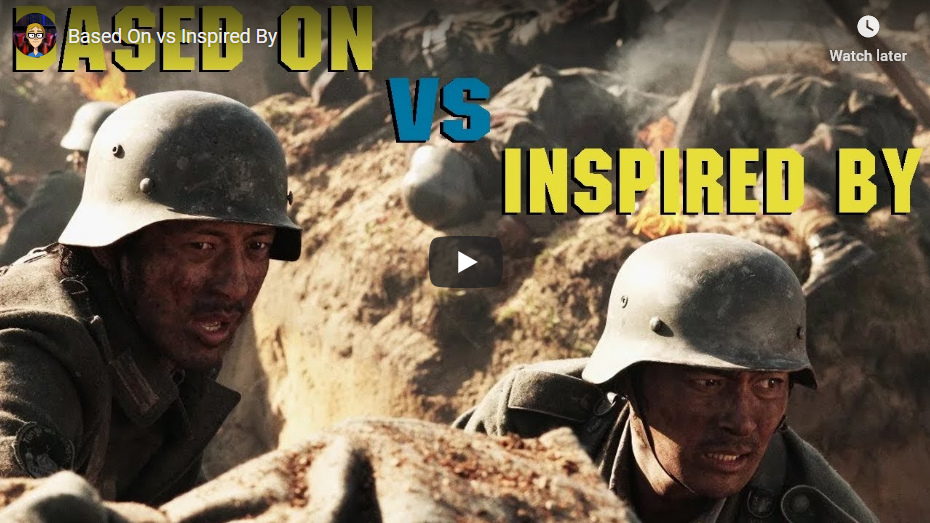

History Buffs
Published 20 Oct 2017SUPPORT HISTORY BUFFS ON PATREON
https://www.patreon.com/HistoryBuffs
TimeGhost History
Published 27 Dec 2019Did you go to the cinema this holiday? Or binge a bit of streaming? D’you feel modern about it? You’d be wrong… Holiday movies is a tradition that goes back almost 125 years!
Join us on Patreon: https://www.patreon.com/TimeGhostHistory
Hosted by: Indy Neidell
Written by: Spartacus Olsson
Directed by: Spartacus Olsson and Astrid Deinhard
Executive Producers: Bodo Rittenauer, Astrid Deinhard, Indy Neidell, Spartacus Olsson
Creative Producer: Joram Appel
Post-Production Director: Wieke Kapteijns
Research by: Spartacus Olsson
Edited by: Mikołaj Cackowski
Sound design: Marek KamińskiSources:
Mark Doliner https://flic.kr/p/oV46FY
Portrait of the Actress Carrie Fisher member of the jury in the 70 Edition of Venice International Film Festival 2013 by Riccardo GhilardiSoundtracks from Epidemic Sound:
Howard Harper-Barnes – “A Sleigh Ride Into Town”
Howard Harper-Barnes – “My Only Wish Is Love”
Mike Franklyn – “Christmas Bliss”
The Snowy Hill Singers – “It Was On A Christmas Night” (Instrumental Version)A TimeGhost chronological documentary produced by OnLion Entertainment GmbH.

Overly Sarcastic Productions
Published 24 Dec 2019Happy holidays, one and all – even those of us from fictional universes where Christmas isn’t celebrated! Let’s celebrate by comparing twelve fictional Definitely Not Christmases and ranking them from lamest to best!
Our content is intended for teenage audiences and up.
PATREON: https://www.Patreon.com/OSP
MERCH LINKS: https://www.redbubble.com/people/OSPY…
OUR WEBSITE: https://www.OverlySarcasticProductions.com
Find us on Twitter https://www.Twitter.com/OSPYouTube
Find us on Reddit https://www.Reddit.com/r/OSP/

Overly Sarcastic Productions
Published 21 Dec 2018Have a holly, jolly christmas! Spend time with your family, eat tons of good food, and don’t forget to ponder the looming specter of your mortality and the worth of how you’ve spent your fleeting existence!
PATREON: https://www.patreon.com/user?u=4664797
MERCH LINKS:
Shirts – https://overlysarcasticproducts.threa…
All the other stuff – http://www.cafepress.com/OverlySarcas…Find us on Twitter @OSPYouTube!

Lindybeige
Published 5 Jun 2015Support me on Patreon: https://www.patreon.com/Lindybeige
The things that people valued and fought over in the past were not as they are now. You might not guess the tremendous significance of one tiny island off the coast of Gozo.
NEWS FLASH (March 8th 2017): the Azure Window, featured in this video, has collapsed into the sea.
More videos from Malta to follow.
Lindybeige: a channel of archaeology, ancient and medieval warfare, rants, swing dance, travelogues, evolution, and whatever else occurs to me to make.
▼ Follow me…
Twitter: https://twitter.com/Lindybeige I may have some drivel to contribute to the Twittersphere, plus you get notice of uploads.
website: http://www.LloydianAspects.co.uk
Fungus rock – the great placebo treasure

He’s trying fairly hard not to turn into one or another of the stock characters he’s played over the years:
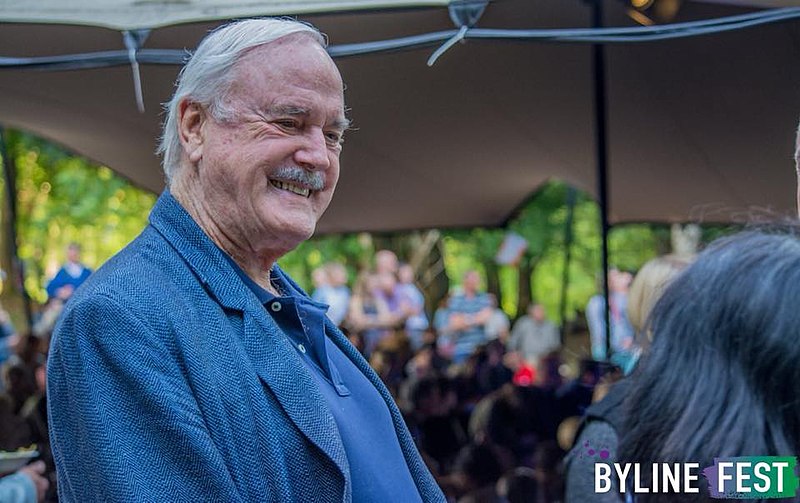
John Cleese at the Byline Festival, 2017.
Photo by Raphael Moran via Wikimedia Commons.
“John was a boy that kept to himself,” recalled Mrs Hicks, Reg and Muriel Cleese’s next-door neighbor in Totnes in Devon, deploying the formulation traditionally reserved for the landladies of suburban serial killers. “I suppose he was all right with his Cambridge people, but us being country folk he wouldn’t say very much. At one time I looked after John for a couple of days and did his bedroom when his parents were away. He was writing something on his desk at the time. Course I didn’t look at it, but it was sarcastic sort of stuff about Churchill. I do often wonder what happened to him.”
Listening to Mrs Hicks, you appreciate the particular challenge of comedy writing – for who could ever improve on that? Nonetheless, she’s not the only one to wonder what’s happened to John Cleese. He turned eighty a couple of weeks back, and the jubilations were more muted than one might once have expected. My local PBS station still shows Fawlty Towers as part of its Britcom lineup, but Sadiq Khan, Mayor of London, bemoans that Cleese has now turned into Basil Fawlty lui-même. Younger “comics” regret that the a great comedic talent is now the pub bore he played in his youth.
And why would that be? Well, after supporting Brexit, he moved to Nevis in the British West Indies and announced that the imperial metropolis was “not really an English city anymore”. Mayor Khan replied that “Londoners know that our diversity is our greatest strength” – although, strong as it is, it doesn’t seem much use during a knife attack. During the ensuing Twitterstorm, an opposing Tweeter declared that “I can’t stand Englishness”, and Cleese wistfully responded:
I suspect I should apologise for my affection for the Englishness of my upbringing. But in some ways I found it calmer, more polite, more humorous, less tabloid, and less money-oriented than the one that is replacing it.
The Two-Minutes Tweet-Hate rampaged on, and Cleese retreated to the charms of his post-colonial backwater:
Nevis has excellent race relations, a very well educated population, no sign of political correctness… conscientious lawyers, a relaxed and humorous life style, a deep love of cricket, and a complete lack of knife crime …and the icing on the cake is that Nevis is not the world centre for Russian dirty money laundering…
I think it’s legitimate to prefer one culture to another. For example, I prefer cultures that do not tolerate female genital mutilation. Will this be considered racist by all those who hover, eagerly hoping that someone will offend them?
Is this the room for an argument? Not anymore. There are just things you’re not meant to bring up, lest the hoverers pounce.
As it happens, I agree with almost all of the above. But then I always have. It’s odder to hear it from Cleese. In essence, he misses the England of Mrs Hicks, of couples called Reg and Muriel, of saloon-bar majors, bowler-hatted civil servants, Church of England vicars, socially insecure lower-middle-class hoteliers and all the other stock types of a now vanished Albion he mocked at the height of his celebrity. The counterculture triumphed so totally that there is no longer a culture to counter, and the void of “diversity” makes London feel, even overlooking the stabbings and clitoridectomies, just like a large version of every other cookie-cutter multiculti western city.
“I know they were very disappointed with John,” Mrs Hicks told Cleese’s biographer Jonathan Margolis. “Muriel was so excited when she came in here and said John had passed his exams at Cambridge. They thought he was going to be a solicitor, and then he fell in with David Frost and that was it.”
Overly Sarcastic Productions
Published 12 April 2014Here it is! The Scottish Play. The bloodiest of the bloody. An epic tale of magic, madness and stabbing. It’s so gory, even Tarantino thinks it’s over the top.
Making it funny was pretty tough. 😀

One of the key elements aiding Hitler and the NSDAP to take power and stay in power in Germany in the 1930s was the constant, ongoing propaganda campaign orchestrated by Joseph Goebbels. Hitler and the Nazi party were lauded as the perfect Germanic solution to every problem and Jews, socialists, homosexuals, and other undesireable elements were belittled and used as targets of hate. A big part of Goebbels’ propaganda revolved around one idea, the “Big Lie”:
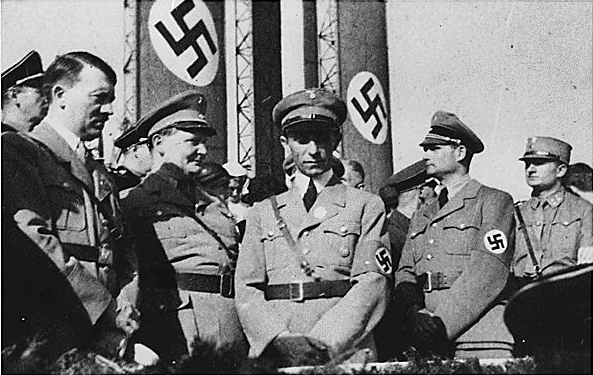
Hitler, Göring, Goebbels and Hess.
Photo via Wikimedia Commons.
If you tell a lie big enough and keep repeating it, people will eventually come to believe it. The lie can be maintained only for such time as the State can shield the people from the political, economic and/or military consequences of the lie. It thus becomes vitally important for the State to use all of its powers to repress dissent, for the truth is the mortal enemy of the lie, and thus by extension, the truth is the greatest enemy of the State.
By suppressing competing voices and having all the methods of reaching the people repeating the same story, the Nazis solidified their control on power in Germany that lasted until 1945, and was only demolished by massive military effort by the United States, the Soviet Union, and the British Commonwealth. Propaganda is a very powerful tool that works distressingly well to implant and nurture evil ideas in a subject population.
Modern propagandists in the west generally don’t have the power of the state aiding them, but if they get enough of the channels of communication — especially the entertainment channels — to co-ordinate the message, the effects can be very strong:
… I perfectly understand the legitimacy of feminist concerns regarding the portrayal of women in the media as consistently demure, retiring, and subservient to men. I grant that, in most of the action/adventure movies that I saw growing up, women would typically twist an ankle or get captured and then require rescuing by the swashbuckling male hero — and I realize how galling this must have been to generations of women. And therefore, a certain correction was undoubtedly in order. But what is problematic now is the Nietzschean quality of the reaction, by which I mean, the insistence that female power has to be asserted over and against males, that there is an either/or, zero-sum conflict between men and women. It is not enough, in a word, to show women as intelligent, savvy, and good; you have to portray men as stupid, witless, and irresponsible. That this savage contrast is having an effect especially on younger men is becoming increasingly apparent.
In the midst of a “you-go-girl” feminist culture, many boys and young men feel adrift, afraid that any expression of their own good qualities will be construed as aggressive or insensitive. If you want concrete proof of this, take a look at the statistics contrasting female and male success at the university level. And you can see the phenomenon in films such as Fight Club and The Intern. In the former, the Brad Pitt character turns to his friend and laments, “we’re thirty year old boys;” and in the latter, Robert De Niro’s classic male type tries to whip into shape a number of twenty-something male colleagues who are rumpled, unsure of themselves, without ambition — and of course under the dominance of an all conquering female.
It might be the case that, in regard to money, power, and honor, a zero-sum dynamic obtains, but it decidedly does not obtain in regard to real virtue. The truly courageous person is not threatened by another person’s courage; the truly temperate man is not intimidated by the temperance of someone else; the truly just person is not put off by the justice of a countryman; and authentic love positively rejoices in the love shown by another. And therefore, it should be altogether possible to hold up the virtue of a woman without denying virtue to a man. In point of fact, if we consult the “all conquering female” characters in films and TV, we see that they often exemplify the very worst of the traditional male qualities: aggression, suspicion, hyper-sensitivity, cruelty, etc. This is what happens when a Nietzschean framework has replaced a classical one.
My point is that it is altogether possible — and eminently desirable — to say “you go boy” with as much vigor as “you go girl.” And both the boys and the girls will be better for it.
Overly Sarcastic Productions
Published 1 Dec 2013Here we go again! It’s only taken me several months…
Sarcastified Shakespeare returns, this time with a look at that historical tragedy we all love to write essays about, Julius Caesar!
I think the real main character here was Brutus’s crippling self-esteem issues…
Overly Sarcastic Productions
Published 13 April 2013Well, this one is longer than the last one, but in fairness it’s 2000% shorter than the actual movie.
Continuing the trend, this video summarizes THE TRAGEDIE OF HAMLET PRINCE OF DENMARK, commonly known as Hamlet.
Goodness, he really is a whiner, isn’t he? And he’s supposed to be the sympathetic character!
Note: This is the second version of Hamlet Summarized, because I made the mistake of using a copyrighted song in the last one. Oops.

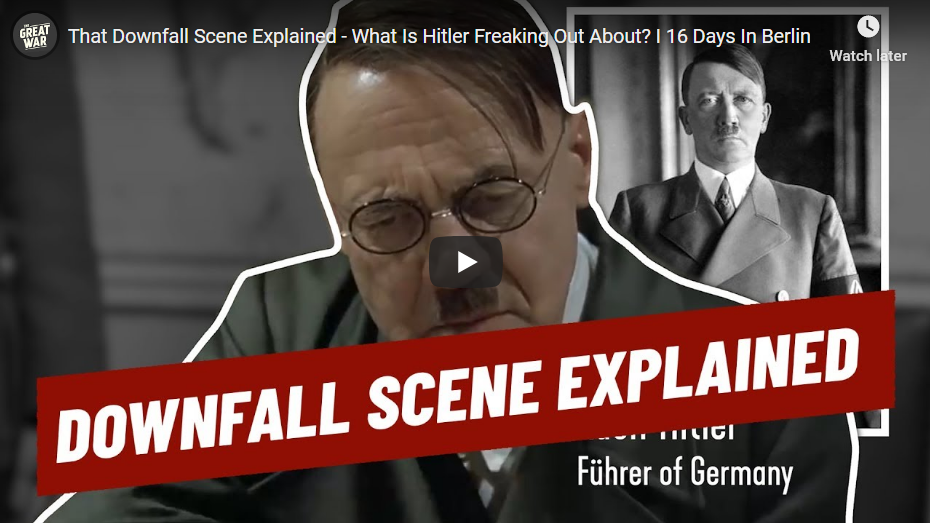
The Great War
Published on 1 Oct 2019Thank you for your support for 16 Days in Berlin: https://realtimehistory.net/indiegogo
» SUPPORT THE CHANNEL
Patreon: https://www.patreon.com/thegreatwar
Merchandise: https://shop.spreadshirt.de/thegreatwar/»CREDITS
Presented by: Jesse Alexander
Written by: Jesse Alexander
Director: Toni Steller & Florian Wittig
Director of Photography: Toni Steller
Sound: Toni Steller
Editing: Toni Steller
Mixing, Mastering & Sound Design: http://above-zero.com
Maps: Daniel Kogosov (https://www.patreon.com/Zalezsky)
Research by: Jesse Alexander
Fact checking: Florian WittigChannel Design: Alexander Clark
Original Logo: David van StepholdA Mediakraft Networks Original Channel
Contains licensed material by getty images
All rights reserved – Real Time History GmbH 2019
Although the movie [Gandhi] sneers at this reasoning as being the flimsiest of pretexts, I cannot imagine an impartial person studying the subject without concluding that concern for Indian religious minorities was one of the principal reasons Britain stayed in India as long as it did. When it finally withdrew, blood-maddened mobs surged through the streets from one end of India to the other, the majority group in each area, Hindu or Muslim, slaughtering the defenseless minority without mercy in one of the most hideous periods of carnage of modern history.
A comparison is in order. At the famous Amritsar massacre of 1919, shot in elaborate and loving detail in the present movie and treated by post-independence Indian historians as if it were Auschwitz, Gurkha troops under the command of a British officer, General Dyer, fired into an unarmed crowd of Indians defying a ban and demonstrating for Indian independence. The crowd contained women and children; 379 persons died; it was all quite horrible. Dyer was court-martialed and cashiered, but the incident lay heavily on British consciences for the next three decades, producing a severe inhibiting effect. Never again would the British empire commit another Amritsar, anywhere.
As soon as the oppressive British were gone, however, the Indians — gentle, tolerant people that they are — gave themselves over to an orgy of bloodletting. Trained troops did not pick off targets at a distance with Enfield rifles. Blood-crazed Hindus, or Muslims, ran through the streets with knives, beheading babies, stabbing women, old people. Interestingly, our movie shows none of this on camera (the oldest way of stacking the deck in Hollywood). All we see is the aged Gandhi, grieving, and of course fasting, at these terrible reports of riots. And, naturally, the film doesn’t whisper a clue as to the total number of dead, which might spoil the mood somehow. The fact is that we will never know how many Indians were murdered by other Indians during the country’s Independence Massacres, but almost all serious studies place the figure over a million, and some, such as Payne’s sources, go to 4 million. So, for those who like round numbers, the British killed some 400 seditious colonials at Amritsar and the name Amritsar lives in infamy, while Indians may have killed some 4 million of their own countrymen for no other reason than that they were of a different religious faith and people think their great leader would make an inspirational subject for a movie. Ahimsa, as can be seen, then, had an absolutely tremendous moral effect when used against Britain, but not only would it not have worked against Nazi Germany (the most obvious reproach, and of course quite true), but, the crowning irony, it had virtually no effect whatever when Gandhi tried to bring it into play against violent Indians.
Despite this at best patchy record, the film-makers have gone to great lengths to imply that this same principle of ahimsa — presented in the movie as the purest form of pacifism — is universally effective, yesterday, today, here, there, everywhere. We hear no talk from Gandhi of war sometimes being a “necessary evil,” but only him announcing — and more than once — “An eye for an eye makes the whole world blind.” In a scene very near the end of the movie, we hear Gandhi say, as if after deep reflection: “Tyrants and murderers can seem invincible at the time, but in the end they always fall. Think of it. Always.” During the last scene of the movie, following the assassination, Margaret Bourke-White is keening over the death of the Great Soul with an English admiral’s daughter named Madeleine Slade, in whose bowel movements Gandhi took the deepest interest (see their correspondence), and Miss Slade remarks incredulously that Gandhi felt that he had failed. They are then both incredulous for a moment, after which Miss Slade observes mournfully, “When we most needed it [presumably meaning during World War II], he offered the world a way out of madness. But the world didn’t see it.” Then we hear once again the assassin’s shots, Gandhi’s “Oh, God,” and last, in case we missed them the first time, Gandhi’s words (over the shimmering waters of the Ganges?): “Tyrants and murderers can seem invincible at the time, but in the end they always fall. Think of it. Always.” This is the end of the picture.
Richard Grenier, “The Gandhi Nobody Knows”, Commentary, 1983-03-01.
Julie Burchill, “The Princess generation needs to grow up”, The Spectator, 2017-07-18.
Overly Sarcastic Productions
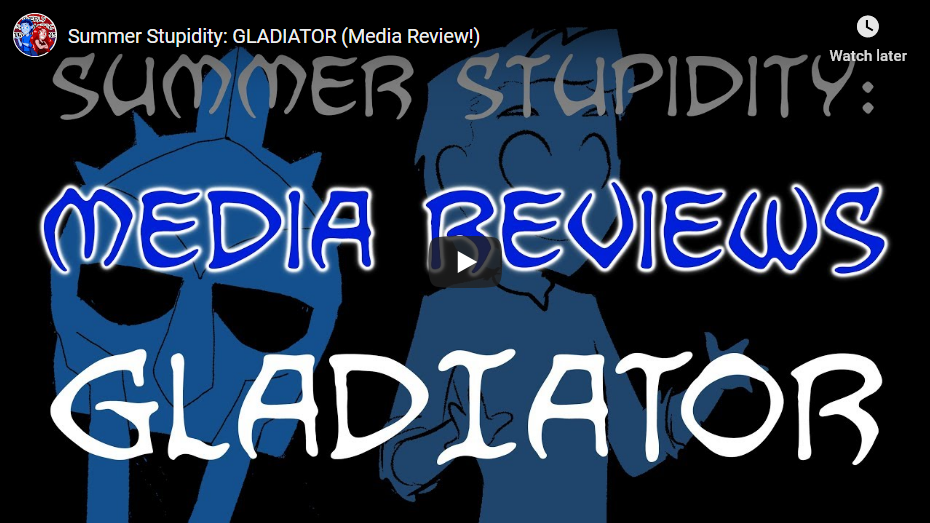
Published on 20 Aug 2019The first time I saw Gladiator (2000) was in Latin class, and I have maintained since that first viewing that this movie rules.
Just pretend it’s historical fiction and the emperors are named literally anything else, and you’re set.
PATREON: https://www.Patreon.com/OSP
DISCORD: https://discord.gg/sS5K4R3
MERCH LINKS: https://www.redbubble.com/people/OSPY…
OUR WEBSITE: https://www.OverlySarcasticProductions.com
Find us on Twitter https://www.Twitter.com/OSPYouTube
Find us on Reddit https://www.Reddit.com/r/OSP/
Overly Sarcastic Productions
Published on 13 Aug 2019“I’ve seen The Rock act before and he’s really fun and charismatic! Surely this movie starring him will be a Good Time!” I thought, foolishly.
PATREON: https://www.Patreon.com/OSP
MERCH LINKS: https://www.redbubble.com/people/OSPY…
OUR WEBSITE: https://www.OverlySarcasticProductions.com
Find us on Twitter https://www.Twitter.com/OSPYouTube
Find us on Reddit https://www.Reddit.com/r/OSP/




Powered by WordPress