
TimeGhost History
Published 30 Jun 2021Wilson won the Nobel Peace Prize for crafting the League of Nations at Versailles, but even he couldn’t bring America out of its isolationism. This season he pours out his disappointment in his first-ever radio address. Optimism still reigns in the world of popular culture though, this season the Charleston is born.
(more…)
July 1, 2021
Woodrow Wilson, Isolationism, and the Birth of the Charleston | B2W:ZEITGEIST! I E.20 Harvest 1923
Comments Off on Woodrow Wilson, Isolationism, and the Birth of the Charleston | B2W:ZEITGEIST! I E.20 Harvest 1923
June 24, 2021
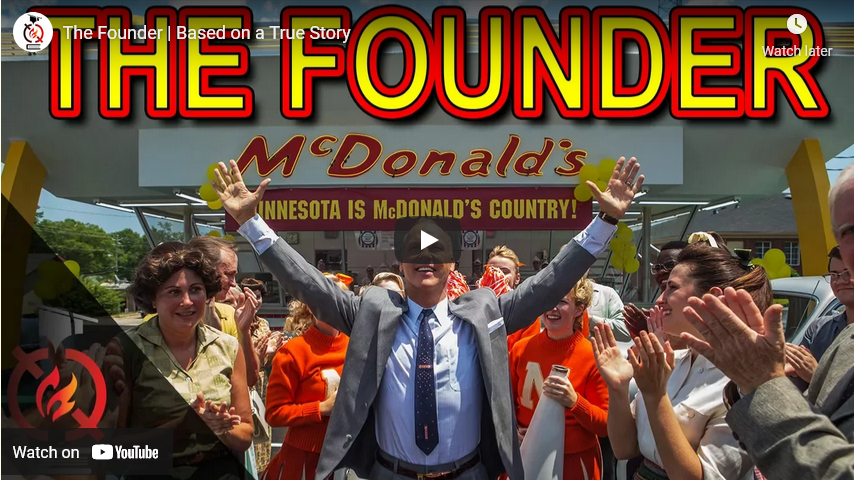
The Founder | Based on a True Story
The Cynical Historian
Published 27 Jul 2017This one is a contender for best historical film of 2016. The Founder is an amazing movie about the beginning of the McDonald’s food chain. Seriously, more films should take cues from this.
————————————————————
references:
http://www.historyvshollywood.com/ree…http://time.com/money/4602541/the-fou…
http://content.time.com/time/magazine…
https://www.bustle.com/p/how-accurate…
https://www.washingtonpost.com/entert…
https://www.theatlantic.com/entertain…
https://www.nytimes.com/2016/05/20/bu…
http://www.abc.net.au/news/2016-11-24…
http://www.cbsnews.com/news/the-real-…
https://en.wikipedia.org/wiki/Ray_Kroc
https://en.wikipedia.org/wiki/Richard…
————————————————————
contribute to my Patreon:
https://www.patreon.com/CynicalHistorianLET’S CONNECT:
https://twitter.com/Cynical_History
————————————————————
Wiki:
The Founder is a 2016 American biographical drama film directed by John Lee Hancock and written by Robert Siegel. The film stars Michael Keaton as businessman Ray Kroc, and portrays the story of his creation of the McDonald’s fast food chain. Nick Offerman and John Carroll Lynch co-star as McDonald’s founders Richard and Maurice McDonald.The film premiered at Arclight Hollywood on December 7, 2016 and was released in the United States on January 20, 2017, by The Weinstein Company. It grossed $23 million worldwide and received generally positive reviews from critics, with praise for Keaton’s performance.
————————————————————
Hashtags: #History #TheFounder #McDonalds #Review #BasedOnATrueStory #RayKroc
Comments Off on The Founder | Based on a True Story
June 14, 2021
Movies based on “classic literature”
Severian considers the relative glut of movies more-or-less based on the classics of literature from his formative years:
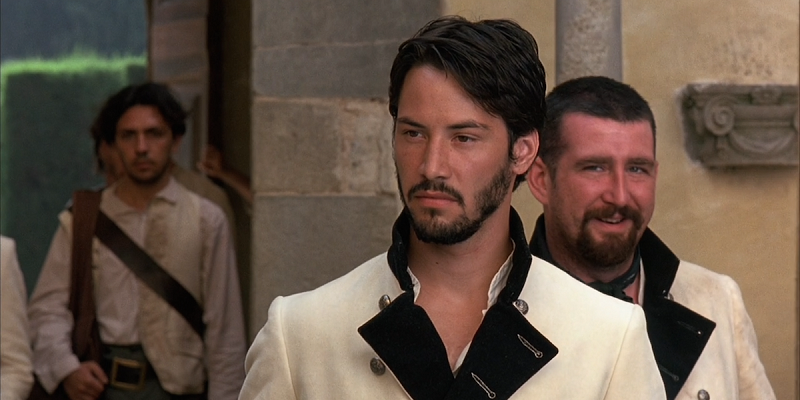
When I was a young buck, there was a fad for making movies out of “classic literature”. Scads of chick flicks, of course — Jane Austen’s complete works, the Brontës, and so on — but they also took a stab at Shakespeare. Mostly they stuck to the comedies — and trust me, watching Keanu Reeves trying to handle Much Ado About Nothing is hilarious, in all the wrong ways — but they’d occasionally give the tragedies a shot. Kenneth Branagh’s Hamlet is pretty good despite all the distracting cameos, his Othello is at least sincere (ye gods, imagine trying to make that today!), I think I’m forgetting a few. Mel Gibson gave Hamlet a go back in the early 1990s, and so on. Again, I’m pretty sure I’m forgetting a few.
It always struck me as odd. Unless they timed the theatrical releases to midterm and finals week, hoping to hoover up the dollars of desperate sophomores who didn’t do the homework, it didn’t make much sense, marketing-wise. We were a much more culturally literate people once, it’s true*, but there’s just not much of an audience for the Bard anymore. Nor was it a case of SJWs trying to destroy something good just on general principles. I’m sure Gwyneth Paltrow was bad as Emma, but the idea of retconning every single female in the Western Canon into a Strong, Confident Woman(TM) was still in its infancy. My only other guess was that, since college enrollments were skyrocketing, maybe the parents of all those first-gen college kids were feeling mal-educated and trying to catch up …? Lame, I know, but it was the best I could do.
Looking back on it now, I see my problem: I was looking at it from the demand side. Silly and naive as I was, I assumed that Hollywood’s primary concern was making money, so they went out and found what the people wanted to see, then gave it to them. For instance, I thought Titanic was going to be a huge flop. I mean, the boat sinks. We know that. How do you squeeze any dramatic tension out of it? I should’ve realized they’d be playing it as a doomed-lovers tragedy — girls love that shit, what with the big flouncy costumes and all. Once I realized that, I thought I had it all figured out — every girl I, personally, knew found the works of Jane Austen tedious, but that’s because (I reasoned) you have to supply the images for yourself. Put Hunky McBeef up there in breeches and a peruke, Waify Beecup in a Regency dress, and it’s chick crack …
Or so I thought. Looking back on it now, that’s as dumb as my opinion that Titanic would bomb. Hollywood doesn’t care what you want. I doubt if Hollywood has ever cared what you want, but if they ever did, that time probably ended in tandem with Clara Bow’s career. Hollywood wants what they want, and so will you, because whaddaya gonna do, not watch it? The reason they made all those “classic literature” films in the 1990s, then, wasn’t because they thought we wanted (or needed) some cultural uplift.
No, the reason was: By the 1990s, the last of the old guard in Hollywood was dying off, replaced by the new guard, the Baby Boomers. As we know, it’s not enough for Boomers to control everything while making a shitload of money. No no, for them everything has to be deep and meaningful. They thought of themselves as artistes, not entertainers, so they had to put out a bunch of highbrow stuff, and we had to watch it. This is the sole reason goofy-looking Kenneth Branagh and his horse-faced wife (at the time) were a big cultural force. They made Shakespeare sexy, by which I mean, they allowed the studio heads to think of themselves as the arbiters of culture, not the carny trash they were and are. That some decent movies got made because of it, is entirely incidental.**
*Last summer, during the worst of lockdown mania, I introduced my little nephews to Bugs Bunny. The real ones, from the 40s and 50s, not the crap they put out ten, twenty years ago. I am an educated man by modern standards, but a lot of that stuff flew over my head … and they used to show these in front of popular movies, on military bases, etc.! There’s the classic Wagner one, of course — kill da wabbit!! — but another one involves The Barber of Seville, which I haven’t seen performed and had to look up. Even the “throwaway” music was classical — they could assume, in other words, that your average workaday guy or GI had a fairly large repertoire of classical pieces in his head, enough to recognize bits from Strauss, Chopin, Schumann, etc.
**I do kinda regret bashing Sir Kenneth, as wiki tells me he now is. I enjoyed Hamlet (again, despite the annoying cameos), and some of his other work was pretty entertaining, even, in a limited way, visionary — a quirky little picture like Dead Again didn’t do much in 1991, but it would clean up now (a PoMo costume drama!). I’m one of the few people who liked Mary Shelley’s Frankenstein, which again despite terrible casting (Robert De Niro? Seriously?) was loads of fun. Shelley’s novel as written is ludicrous, therefore unfilmable, but Branagh admirably captured the spirit of it. It’s as Goth as can be, in the original sense of “Gothic”. Wonderful stuff.
Comments Off on Movies based on “classic literature”
June 4, 2021
QotD: Handguns in the “Wild West”
For starters, dispel the myth of the Old West being someplace where people walked around all the time with spurs a-jingle-jangle-jinglin’ and the big iron on their hip. While it wasn’t the network of strict gun control laws that revisionists try to paint it, nor either was it the open-carry paradise of Hollywood myth.
In mid-late 19th Century America, walking around a town or city setting with a full-size horse pistol stuffed in your belt would be seen as eccentric as it would in similar surroundings today. Perhaps more so, since 19th Century Americans didn’t grow up watching old John Wayne and Clint Eastwood movies on cable. On the other hand, guns were everywhere.
“But wait, Tam!” you say, “I thought you just said people mostly didn’t walk around with the big iron on their hip!”
Well, generally they didn’t. First, a Colt’s M1873, the Peacemaker of Hollywood lore, went for around twenty bucks over most of the time period of the Old West. They made about 175,000 of them, including military contract guns, over that period. (Smith & Wesson, by comparison, made almost twice that many of the big No.3 top-breaks, for what it’s worth.)
Twenty bucks was a lot of dough, relatively speaking. About a tenth the cost of a good saddle horse and the equivalent of a pretty nice AR-15 these days. Since cowboys and miners around the various cowtowns and mining boomtowns were overwhelmingly young, single men with fairly low-overhead lifestyles, it wouldn’t be amiss to think of the Colt Peacemaker and well-saddled Quarter Horse in 1870s Dodge City as the equivalent of a Daniel Defense carbine and Ford Raptor in 2010s Midland-Odessa. I have no idea what the 19th Century equivalent of truck nuts was, and considering that male working horses are almost uniformly geldings, I’m not sure I want to.
Meanwhile, there were literal millions of .22, .32, .38, and .41 pocket guns, rimfires and centerfires, sold over the same period. Human nature hasn’t changed much over the years, and I didn’t see no metal detectors at that saloon in Tombstone. Most every person had a gun for pocket, purse, or nightstand and, probably like most gun owners today, carried it if they felt like they were “going someplace they might need it.”
Tamara Keel, “Mouseguns, Then and Now”, View From The Porch, 2021-02-21.
Comments Off on QotD: Handguns in the “Wild West”
June 3, 2021
The Supernatural Adventures of Arthur Conan Doyle | B2W:ZEITGEIST! I E.19 Spring – 1923
TimeGhost History
Published 2 Jun 2021Being the creator of the legendary Sherlock Holmes has made Arthur Conan Doyle famous for his scientific rationality. But Doyle also has a deeply held belief in the existence of the spirit universe. In a world still reeling from the shock of the Great War, he is not alone.
(more…)
Comments Off on The Supernatural Adventures of Arthur Conan Doyle | B2W:ZEITGEIST! I E.19 Spring – 1923
May 29, 2021
History Buffs: Midway Part Two
History Buffs
Published 28 May 2021As promised here is Part Two of my Midway review. Hope you guys enjoy it 🙂
You can join Nebula today and get Curiosity Stream at 26% off for a year! Click on the link below
http://curiositystream.com/historybuffs
Part Two of this review will be out next Friday on the 28th of May!● Follow us on Twitter: https://twitter.com/HistoryBuffs_
Comments Off on History Buffs: Midway Part Two
May 24, 2021
History Buffs: Midway Part One
History Buffs
Published 21 May 2021Thank you guys so much for your patience. Quarantine has made somethings difficult and I know its been a while but it’s finally here! I hope you enjoy it!
You can join Nebula today and get Curiosity Stream at 26% off for a year! Click on the link below
http://curiositystream.com/historybuffs
Part Two of this review will be out next Friday on the 28th of May!● Follow us on Twitter: https://twitter.com/HistoryBuffs_
Comments Off on History Buffs: Midway Part One
May 22, 2021
Guns in the Movies – like this S&W Model 29
Forgotten Weapons
Published 10 Feb 2017Today we have not so much an examination of a specific firearms, but rather a look at how Clint Eastwood’s film portrayal of Dirty Harry Callahan drove a huge wave of popularity of the Smith & Wesson Model 29 — “the most powerful handgun in the world.”
http://www.patreon.com/ForgottenWeapons
Cool Forgotten Weapons merch! http://shop.bbtv.com/collections/forg…
If you enjoy Forgotten Weapons, check out its sister channel, InRangeTV! http://www.youtube.com/InRangeTVShow

Comments Off on Guns in the Movies – like this S&W Model 29
May 18, 2021
QotD: The imaginary problem of having “too much” choice
A famous scene in the film Moscow on the Hudson has Robin Williams as a Soviet immigrant collapsing at the sight of an American coffee aisle, circa 1984. Imagine what would happen in Starbucks.
A free economy multiplies variety, the better to serve buyers with different tastes and different needs and to give people the chance to experience different goods at different times. Arguing that this plenitude is inefficient went out decades ago. The problem with markets, the detractors now say, is that all these choices make us unhappy.
Virginia Postrel, “I’m Pro-Choice”, Forbes, 2005-03-28.
Comments Off on QotD: The imaginary problem of having “too much” choice
May 11, 2021
QotD: The (disappointing) sex lives of the rich and famous
Severian, “Junkies”, Rotten Chestnuts, 2021-01-18.
Comments Off on QotD: The (disappointing) sex lives of the rich and famous
April 30, 2021
Period drama costume designers these days
Karolina Żebrowska
Published 15 Aug 2019Piero Tosi died last week and it made me really sad. he was one of the first to understand how staying close to history can actually make the film costumes fascinating, not boring. sadly, I’m beginning to think he was also one of the last — today’s mainstream cinema is all about “making things relatable for the modern viewer”.
________
My Instagram: https://bit.ly/2Qo9rrI
My nudes: https://bit.ly/2KypPpn
My merch: bit.ly/2CCq5jE
Comments Off on Period drama costume designers these days
April 8, 2021
Vladimir Lenin and the Communist War On Religion | B2W: ZEITGEIST! I E.15 – Spring 1922
TimeGhost History
Published 7 Apr 2021Vladimir Lenin founded the Bolshevik Party, orchestrated the October Revolution, and led the world’s first communist state to victory in the Russian Civil War. He is now gravely ill and close to death, but he still has one more enemy he wants to crush.
Join us on Patreon: https://www.patreon.com/TimeGhostHistory
Hosted by: Indy Neidell
Written by: Francis van Berkel
Director: Astrid Deinhard
Producers: Astrid Deinhard and Spartacus Olsson
Executive Producers: Astrid Deinhard, Indy Neidell, Spartacus Olsson, Bodo Rittenauer
Creative Producer: Maria Kyhle
Post-Production Director: Wieke Kapteijns
Research by: Francis van Berkel and Lewis Braithwaite
Image Research by: Daniel Weiss
Edited by: Daniel Weiss
Sound design: Marek KamińskiColorizations:
Daniel Weiss – https://www.facebook.com/TheYankeeCol…Sources:
Painting of Tikhon by Moskvitin Philip
Photos from Color by Klimbim
Bundesarchiv_Bild – 183-R14433 (Vertrag von Rapallo)Soundtracks from Epidemic Sound
– “One More for the Road” – Golden Age Radio
– “Not Safe Yet” – Gunnar Johnsen
– “Dark Shadow” – Etienne Roussel
– “Explaining Gravity” – Silver Maple
– “Far Far Far” – Hector Posser
– “Dawn Of Civilization” – Jo Wandrini
– “Ominous” – Philip Ayers
– “Walk With Legends” – Bonnie Grace
– “What Now” – Golden Age Radio
– “Weapon of Choice” – Fabien TellArchive by Screenocean/Reuters https://www.screenocean.com.
A TimeGhost chronological documentary produced by OnLion Entertainment GmbH.
From the comments:
TimeGhost History
2 days ago (edited)
The Russian Orthodox Church was once an all-mighty institution throughout what was the Russian Empire. But now in a matter of years, it has been completely swept aside by the new Soviet government in the name of progress and reason. This is just one — particularly violent — example of what has been a common theme of this era: the conflict between religion and modernity.It has already come a few times in the series and will continue to do so, but it’s not always a story of retreating faith like it is in this episode. As you will see in later episodes, organized religion often fights back against modernity and even sometimes tries to accommodate it. You’ll have to stay tuned to find out exactly why.
Comments Off on Vladimir Lenin and the Communist War On Religion | B2W: ZEITGEIST! I E.15 – Spring 1922
March 25, 2021
Modern Artists: The Original Shitposters! | B2W: ZEITGEIST! I E.14 – Winter 1922
TimeGhost History
Published 24 Mar 2021The interwar era has seen an explosion of art movements all vying to offer the most revolutionary response to modern society. The competition is intense and, as we shall see, often spills over into open conflict.
Join us on Patreon: https://www.patreon.com/TimeGhostHistory
Hosted by: Indy Neidell
Written by: Francis van Berkel
Director: Astrid Deinhard
Producers: Astrid Deinhard and Spartacus Olsson
Executive Producers: Astrid Deinhard, Indy Neidell, Spartacus Olsson, Bodo Rittenauer
Creative Producer: Maria Kyhle
Post-Production Director: Wieke Kapteijns
Research by: Francis van Berkel
Edited by: Michał Zbojna
Sound design: Marek KamińskiColorizations:
Daniel Weiss – https://www.facebook.com/TheYankeeCol…Sources:
Some images from the Library of CongressSoundtracks from Epidemic Sound:
“Epic Adventure Theme 3” – Håkan Eriksson
“Crimp” – Hysics
“Substage” – Jay Varton
“Appeased Soundscape 01” – August Wilhelmsson
“Stranger Days” – Alexandra Woodward
“Superior” – Silver Maple
“Rememberance” – Fabien Tell
“Ghost Dungeons” – Ethan Sloan
“Ancient Discoveries” – Gabriel LewisArchive by Screenocean/Reuters https://www.screenocean.com.
A TimeGhost chronological documentary produced by OnLion Entertainment GmbH.
From the comments:
TimeGhost History
2 days ago (edited)
The original idea for this episode came from me (Francis here, hello) stumbling across a passing reference to the 1922 trial of André Breton buried deep in a Wikipedia article. It led me down a huge rabbit hole on the history of the chaotic artists milling around in Paris, New York, Zurich, and beyond.Considering that it also takes place in the same season as the publication of Ulysses, the release of Nosferatu, the birth of Brazillian Modernism, and more, I realized that it was the perfect opportunity to dedicate an entire episode to the weird and wonderful artistic movements of the modern era. If this kind is new to you then consider this episode your introduction to the topic. Indy talks about the Cubist revolution, then Dadaism, Expressionism, and more.
In case all that seems a bit too niche for your liking then look at it this way: if you want to understand how people processed the horrors of the Great War, the rise of mass production, and modern geopolitical machinations, then diving into the art of the time is a great place to start.
Watch the video to find out why.

Comments Off on Modern Artists: The Original Shitposters! | B2W: ZEITGEIST! I E.14 – Winter 1922
March 6, 2021
Vaccinations and Communist Famine | B2W: ZEITGEIST! I E.12 – Summer1921
TimeGhost History
Published 5 Mar 2021This season there is a major breakthrough in combatting one of humanity’s oldest diseases, but a deadly famine also strikes Soviet Russia. Will the international community come to the fledgling state’s aid?
Join us on Patreon: https://www.patreon.com/TimeGhostHistory
Hosted by: Indy Neidell
Written by: Francis van Berkel
Director: Astrid Deinhard
Producers: Astrid Deinhard and Spartacus Olsson
Executive Producers: Astrid Deinhard, Indy Neidell, Spartacus Olsson, Bodo Rittenauer
Creative Producer: Maria Kyhle
Post-Production Director: Wieke Kapteijns
Research by: Francis van Berkel
Image Research by: Daniel Weiss
Edited by: Daniel Weiss
Sound design: Marek KamińskiColorizations:
– Daniel Weiss – https://www.facebook.com/TheYankeeCol…Sources:
Some images from the Library of Congress
Albert Calmette. Photograph, 1930. Credit: Wellcome Collection
World health : the magazine of the World Health Organization Credit: Wellcome Collection Hannokarlhuber https://www.hanno-karlhuber.at/galeri…
https://wellcomeimages.org/indexplus/…
art of Atlit-Yam from Hanay
Photo by J P Davidson https://flickr.com/photos/50616401@N0…From the Noun Project:
– people by Gregor Cresnar
– Earth by RF_Design
– sick By Adrien Coquet, FR
– Man by Milinda CoureySoundtracks from Epidemic Sound and ODJB
– “One More for the Road” – Golden Age Radio
– “Not Safe Yet” – Gunnar Johnsen
– “The Inspector 4” – Johannes Bornlöf
– “Guilty Shadows 4” – Andreas Jamsheree
– “Dark Shadow” – Etienne Roussel
– “Brighter Days Will Come” – Oakwood Station
– “Just Like Old Times” – Jackie MartinArchive by Screenocean/Reuters https://www.screenocean.com.
A TimeGhost chronological documentary produced by OnLion Entertainment GmbH.
From the comments:
TimeGhost History
3 days ago
As usual this episode sees the balance of dark and light that is so typical of the interwar period. Famine in Russia and the first fast-food chain in America; the turning of the tide against TB and tragic Hollywood scandal.So a mixture of serious and fun. Regular viewers will know that our comment section is the same, running from intense debate to long-running memes. In this episode Indy mentions the first ice-cream candy bar, so to encourage things to stay on the light-hearted side why don’t you comment below telling us what’s your favourite candy bar or fast-food joint?
Comments Off on Vaccinations and Communist Famine | B2W: ZEITGEIST! I E.12 – Summer1921
February 26, 2021
QotD: “What have the Romans ever done for us?”
LORETTA: And from our fathers’ fathers’ fathers.
REG: Yeah.
LORETTA: And from our fathers’ fathers’ fathers’ fathers.
REG: Yeah. All right, Stan. Don’t labour the point. And what have they ever given us in return?!
XERXES: The aqueduct?
REG: What?
XERXES: The aqueduct.
REG: Oh. Yeah, yeah. They did give us that. Uh, that’s true. Yeah.
COMMANDO #3: And the sanitation.
LORETTA: Oh, yeah, the sanitation, Reg. Remember what the city used to be like?
REG: Yeah. All right. I’ll grant you the aqueduct and the sanitation are two things that the Romans have done.
MATTHIAS: And the roads.
REG: Well, yeah. Obviously the roads. I mean, the roads go without saying, don’t they? But apart from the sanitation, the aqueduct, and the roads–
COMMANDO: Irrigation.
XERXES: Medicine.
COMMANDOS: Huh? Heh? Huh…
COMMANDO #2: Education.
COMMANDOS: Ohh…
REG: Yeah, yeah. All right. Fair enough.
COMMANDO #1: And the wine.
COMMANDOS: Oh, yes. Yeah…
FRANCIS: Yeah. Yeah, that’s something we’d really miss, Reg, if the Romans left. Huh.
COMMANDO: Public baths.
LORETTA: And it’s safe to walk in the streets at night now, Reg.
FRANCIS: Yeah, they certainly know how to keep order. Let’s face it. They’re the only ones who could in a place like this.
COMMANDOS: Hehh, heh. Heh heh heh heh heh heh heh.
REG: All right, but apart from the sanitation, the medicine, education, wine, public order, irrigation, roads, a fresh water system, and public health, what have the Romans ever done for us?
XERXES: Brought peace.
REG: Oh. Peace? Shut up!
Monty Python’s Life of Brian, 1979.
Comments Off on QotD: “What have the Romans ever done for us?”


