Quotulatiousness

July 19, 2020

In some mature countries, politicians resign when caught in ethics violations … but this is Canada (by definition, an immature country)

Filed under: Australia, Britain, Cancon, Media, Politics — Tags: , , , , — Nicholas @ 03:00

Chris Selley lists some of the ethical mire the Trudeau Liberals are wading through, and points out that other countries wouldn’t put up with corrupt sh!t like Canadians do:

Other countries’ prime ministers occasionally have to work at keeping their jobs. Not so much Canada’s. We look down our noses at Australia’s “leadership spills” as unconscionably chaotic, though they have ushered in a new prime minister a grand total of three times in 30 years. If only we had such chaos, PMs might at least be reminded occasionally they aren’t elected emperor in non-negotiable four-year chunks. Instead many of us blanch even at the idea of minority governance. So unstable!

Other countries’ ministers sometimes stand on points of principle, too, and not just over epochal events like the Iraq War or Brexit. Sajid Javid resigned as Britain’s chancellor of the exchequer last year after Prime Minister Boris Johnson insisted on appointing Javid’s senior staff. “No self-respecting minister would accept those terms,” he said. Every Trudeau minister accepts those terms.

There is simply no culture of accountability in Ottawa — not for big stuff and not for small. When Trudeau headed off to Harrington Lake while advising everyone else to hide under the bed, it was considered gauche to complain. The National Post reported this week that Health Minister Patty Hajdu took four round trips in a government jet between Ottawa and Thunder Bay during the lockdown, and Treasury Board President Jean-Yves Duclos was chauffeured six times to and from Quebec City. Ho hum. Another nothingburger.

OK, many conclude, so let’s at least give the Conflict of Interest Act some teeth! Some legislative dentures might be worth a try — though they’re by no means universally appreciated. When the Access to Information, Privacy and Ethics Committee reviewed the Conflict of Interest Act in 2014, some witnesses argued for doing away with financial penalties altogether, on the theory “the strongest sanctions the Commissioner has at her disposal are her moral authority and the power of condemnation.” The current maximum fine of $500 may well be the worst of both worlds: Not only does it offer no deterrent, it brings the law itself into disrepute.

[…]

On Thursday, Deputy Prime Minister Chrystia Freeland said she was “really sorry” about the WE debacle. But she expressed her “full confidence” in the prime minister. In other countries, it might be seen as ominous that she felt it necessary. Here, however, it’s safe to take it at face value. None of us expect much of our politicians, and that’s exactly what we get.

July 17, 2020

Justin Trudeau IS the Liberal Party and he’s not planning to go away

Filed under: Cancon, Government, Politics — Tags: , , , — Nicholas @ 03:00

The government is doing what it can to ride out the storm of yet another ethics investigation into the Trudeau family entanglements with WE, and no rational person expects Justin Trudeau to be even a bit chastened by the experience — he genuinely has no idea what the fuss is all about, and he has no inclination to step aside from his patrimony. Even if he did … the Liberals have nobody who could credibly step up:

Some, however, are wondering whether it’s time for the Liberals to start thinking about life after Justin Trudeau. It would be understandable if his leadership were in jeopardy. The ethics commissioner is commencing his office’s third official investigation into events that could have been avoided had the prime minister simply not done unnecessary things: vacationed on the Aga Khan’s island; inserted himself in the prosecutorial chain of command to “save” 9,000 jobs at SNC-Lavalin that were not in jeopardy; sole-sourced a giant jobs program to his buddies Craig and Marc. This theory holds that Chrystia Freeland is ready and willing and able to take over. And then everything would be, somehow, better.

There doesn’t seem to be much to hang it on. Exactly one MP, Toronto backbencher Nathaniel Erskine-Smith, appears willing to put his name to complaints about the Trudeau Gang’s latest easily-avoided snafu, and he’s not being impolite about it. Polling shows little sign that the scandal is leaving a mark on Liberal voting intentions: Canadians seem very grateful for the federal government’s terrible-to-middling performance during the pandemic. “Snap election, Trudeau super-majority” remains a competing Ottawa narrative.

But it’s an intriguing thought: The Justin Trudeau Liberals, without Justin Trudeau — intriguing because it’s basically a black hole. Way back in the Michael Ignatieff era there was this idea that the Liberals would assemble the best minds of various generations and turn themselves into a party that believed in things and behaved as such in government. There was to be a conference in Montreal, modelled on Lester Pearson’s 1960 think-fest in Kingston, Ont., which spawned various useful ideas including the Canada Pension Plan.

No one remembers much about the 2010 think-fest, which was, coincidentally enough, titled “Canada 150,” because all this “ideas” mumbo jumbo soon became a moot point. Justin finally agreed to run for leader, and he might as well have been unopposed, and it turned out he was really good at doing what Liberals have always believed in: winning.

Get rid of the Trudeau brand, warts and all, and what do you have? Freeland is an impressive person, though she’s also deputy prime minister and was presumably in the cabinet room as this WE disaster was conceived and implemented. You have a couple of very useful and competent veteran ministers in Carolyn Bennett and Marc Garneau. You have some greener ministers who might shine in a less top-down power structure. But mostly you have a flaky centre-left operation that doesn’t know how to do anything better than spend money and broadcast its own self-styled virtue.

Trudeau is damn good at that. Everything suggests he would walk away with an election held next week. Surely it’s unlikely he’s going anywhere he doesn’t want to.

June 27, 2020

Canada’s “Gang of 19” urges abject surrender and hostage exchange with China

Filed under: Cancon, China, Government, Law, Politics — Tags: , , , , — Nicholas @ 03:00

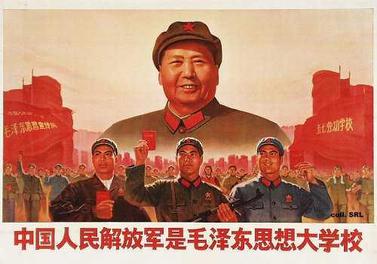
As Canadian political life continues to revolve more and more around the Chinese model, we now have our very own political “gang”, just like China did!

“The Chinese People’s Liberation Army is the great school of Mao Zedong Thought”, 1969.
A poster from the Cultural Revolution, featuring an image of Chairman Mao.
Image via Wikimedia Commons.

A former leader of the New Democratic Party of Canada. A former Conservative foreign minister. Two former Liberal foreign ministers. Four former Canadian ambassadors to the United Nations, under Liberal and Tory governments. Two former Canadian ambassadors to the United States, under Liberal and Tory governments. A former Supreme Court justice. A former Liberal justice minister. A former Conservative senator. A flock of name-brand diplomats. Former CBC host Don Newman, for some reason.

This is the panoply of 19 elite opinion-makers that gathered in the Laurentian Boardroom at an online hotel and drafted a letter, released Wednesday, calling on Prime Minister Justin Trudeau to intervene in the extradition process, set Huawei CFO Meng Wangzhou free, and thereby secure the release of Canadians Michael Kovrig and Michael Spavor.

China, last seen denying the two men’s detention had anything to do with Meng, had changed its tune just hours earlier on Wednesday: Freeing her might “open up space for resolution to the situation of the two Canadians,” foreign ministry spokesman Zhao Lijian said.

And who stands in the way? A prime minister who was perfectly happy to stick his thumb on the scales of justice to save a cherished member of Quebec Inc. from the indignity of prosecution for rather flamboyant alleged corporate malfeasance in and concerning Gaddafi-era Libya (or to “save jobs,” if you prefer, although it emerged no one in Justin Trudeau’s government had bothered to inquire how many jobs might actually be lost if SNC-Lavalin were convicted).

You can hardly blame China for noting the precedent. And it’s sorely fitting that the Gang of 19 addressed their letter to Trudeau rather than to the fellow who would actually have to give the order: Justice Minister David Lametti. We all know who calls the shots in that particular relationship. Perhaps it’s best we just admit it.

Colby Cosh also finds the advice proffered to the Prime Minister to be … less than admirable:

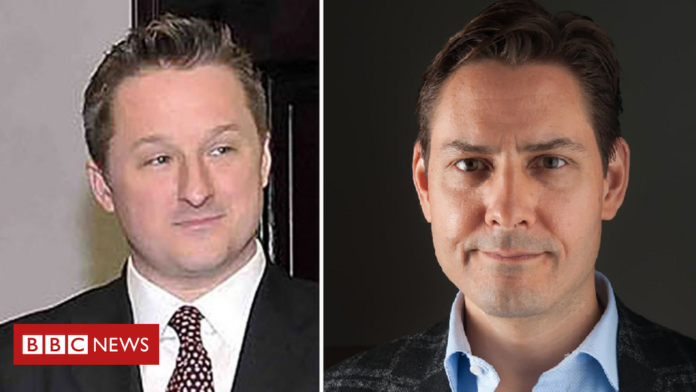
Screen capture of a BBC News report on Canadians Michael Kovrig and Michael Spavor facing espionage charges in China.

I wanted to discuss the letter written by the 19 geriatric Canadian worthies who encouraged the Prime Minister to trade Huawei executive Meng Wanzhou, in Canadian custody fighting extradition to the U.S., for the “two (Canadian) Michaels” detained on ill-defined espionage charges in China. Colleague Chris Selley has gone over the ground, but that’s show biz for you. Selley concluded his overview by pointing out that the letter argues perversely for “surrender, then victory.” With the Meng-Michaels standoff out of the way, the various ex-diplomats and superannuated politicians argued, Canada could use the opportunity for a fresh foreign-policy start, deciding what “tough steps” ought to be taken against China. If any.

The letter, part of a campaign on the two Michaels’ behalf led by ex-Supreme Court Justice Louise Arbour and ex-justice minister Allan Rock, is self-refuting in parts. Yielding “to bullying or blackmail” is “repugnant,” the authors admit, while advising just that. But “resisting China’s pressure is no guarantee that it will never be applied again in the future … China might well decide that next time it will need to escalate by detaining more than two Canadians.”

The implication, if this argument is to have any force, is that actively rewarding China’s abduction of our citizens is a jim-dandy way of making sure it never happens again. The problem with this reasoning is obvious, but the authors are also careful not to define victory too precisely. They say that letting Meng go and getting Michael Kovrig and Michael Spavor back would permit Canada to “declare its position on Huawei’s involvement in the deployment of 5G technology in Canada,” a decision “that has been postponed time and again.”

Sooo … the authors think we should slam the door on Huawei, whose CEO is Meng’s father? They don’t say so! They only say that settling this quarrel would make it easier for us to decide. And they are only slightly clearer on issues of human rights in China and Hong Kong, which our current government and foreign service are allegedly being shy about “so as not to make the situation worse for the Canadian prisoners.”

June 24, 2020

Trudeau government wants to introduce an Internet “link tax”

Filed under: Business, Cancon, Government, Technology — Tags: , , , — Nicholas @ 03:00

Michael Geist on the Trudeau government’s latest indications of support for a tax grab to benefit certain favoured groups and organizations:

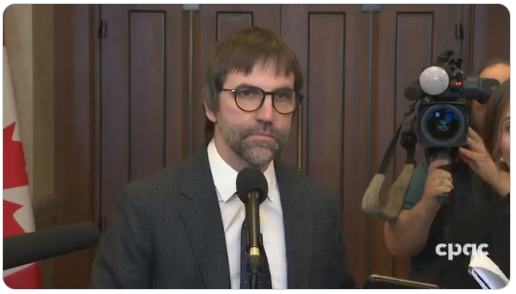
Canadian Heritage Minister Steven Guilbeault, 3 February 2020.
Screencapure from CPAC video.

Last week, Canadian Heritage Minister Steven Guilbeault called into question his own government’s policies on supporting news media, suggesting that those programs should be replaced by copyright rules that would open the door to payments from internet companies such as Google and Facebook. Mr. Guilbeault indicated that a legislative package was being prepared for the fall that would include new powers for Canada’s communications regulator and what are commonly referred to as Netflix taxes and internet linking taxes.

My Globe and Mail op-ed notes the government’s support for new internet taxes should not come as a surprise. There were strong signals that the spring budget – postponed indefinitely due to the current public health crisis – was going to include expanding sales taxes to capture digital sales such as Netflix or Spotify subscriptions.

[…]

It is Mr. Guilbeault’s plans for a link tax that should spark the most concern, however. The government has long promoted its policies designed to support the Canadian media sector, including direct funding for local journalism as well as labour and subscription tax credits. The taxpayer cost runs into the hundreds of millions of dollars, but is justified on the grounds that journalism is an essential service that requires public support.

Yet Mr. Guilbeault now says that government should not be funding media, characterizing the policies as short term measures aimed at mitigating a media emergency. Instead, Mr. Guilbeault supports a controversial copyright reform measure that would establish a news publisher’s right to demand payment for services that link to their content.

This payment – effectively a tax on linking – raises a host of concerns, not the least of which is that the proposal was not recommended by the government’s own copyright review last year. Copyright reform in Canada is always complicated, particularly given that responsibility for it is shared with Innovation, Science and Economic Development Minister Navdeep Bains, but delving into reforms that sparked protests in Europe could be politically risky for a minority government.

News organizations already benefit from large platforms linking to their content since the links generate visitors that increase advertising revenues and paying subscribers. Organizations that do not want the links can easily opt-out of appearing in services such as Google News or Facebook. In fact, after Google shut down its Google News service in Spain, studies found publisher website traffic dropped by 10 per cent.

June 15, 2020

Canada’s ongoing experiment with Justin Trudeau’s “basic dictatorship”

Filed under: Cancon, Government, Health, History, Liberty, Politics — Tags: , , , — Nicholas @ 03:00

Ted Campbell outlines the development of the concept of “rights” from Saxon England through Magna Carta and how a bad king finally triggered a rebellion that forced him to grant the Great Charter which still acts as a foundation for British (and Canadian) law. Justin Trudeau may be the modern day version of the bad king:

A few hundred years later, one of liberalism‘s and democracy’s greatest voices told us that we have three absolutely fundamental, natural rights: to life, to liberty and to property. These rights were not and still are not unlimited. There were and are ways to lawfully and properly deprive a person of his property and his liberty and, in some countries, even his life. A few centuries after John Locke another philosopher wanted to do away with the right to property: “From each according to his ability, to each according to his need,” Karl Marx wrote, and many, far too many, believed. The only real problem with Marx’s notion is that it requires that humans are perfect … and most of us know how rare that is. Here in Canada, especially since the early years of the 20th century, we have had far too much Marx and far too little Locke.

Now, in 2020, we even have a new version of King John: a vain and foolish prime minister who seems to believe that he has been sent to rule over us. Justin Trudeau is profoundly ignorant about both liberalism and democracy. He is, actually, more of a puppet than a ruler but it is less easy than it should be to determine just who is pulling on which strings. He does not appear to have the mental capacity to pull more than a couple of ideas together at any one time.

Because we have been panicked by the coronavirus pandemic we have decided accepted that more government is the best least bad answer. To give us more and more government, Justin Trudeau’s handlers suspended parliament until September … they wanted to have that “basic dictatorship” thing.

Democracy is in peril in Canada … it’s not because Justin Trudeau is an evil dictator, it’s because we, as a people, are too complacent. We have come to believe that democracy is, somehow, automatic, that it is natural. It’s not. It needed to be carefully built, brick-by-brick, over many centuries. We needed to fight for democracy: we needed to win it and then defend it, too. It doesn’t renew itself, it is not the natural order of things, and, In Canada, in 2020, it is in peril. Parliament needs to be recalled, soon, before September. Parliament needs to tend to its ancient rights, duties and powers. The Trudeau regime needs to be called to account and then replaced by a new, better, government.

June 4, 2020

Trudeauvian “performative sanctimony” on display … again

Filed under: Cancon, Government, Media, Politics — Tags: , , , , — Nicholas @ 03:00

Chris Selley on the Prime Minstrel’s latest attempt to virtue signal on racial issues:

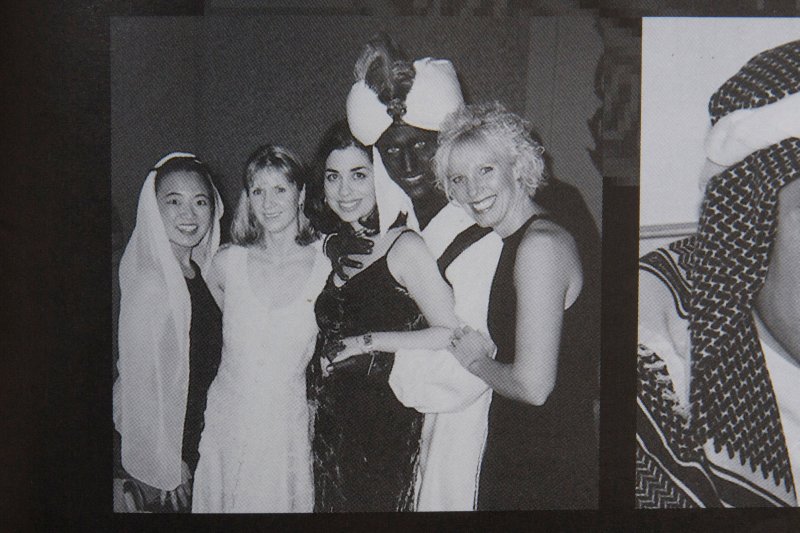
Justin Trudeau with dark makeup on his face, neck and hands at a 2001 “Arabian Nights”-themed party at the West Point Grey Academy, the private school where he taught.
Photo from the West Point Grey Academy yearbook, via Time

In agonizing for 21 seconds before answering a question about President Donald Trump’s threat to send the military after civilian protesters in American cities, Prime Minister Justin Trudeau likely risked causing as much trouble as he was hoping to avoid. Those who would like to see him denounce the president in full throat might be as annoyed as those who think he should accept there’s nothing Canada can really do to help and look out for our own best interests while the socio-political nightmare plays out.

Trudeau’s response wasn’t anything inspiring or novel or revolutionary. “It is a time for us as Canadians to recognize that we too have our challenges — that black Canadians and racialized Canadians face discrimination as a lived reality every single day,” he said. “There is systemic discrimination in Canada, which means our systems treat Canadians of colour, Canadians who are racialized, differently than they do others.”

He continued: “We need to see that, not just as a government and take action, but we need to see that as Canadians. We need to be allies in the fight against discrimination. We need to listen, we need to learn and we need to work hard to figure out how we can be part of the solution on fixing things.”

But here, at least, he was getting to the nub of the issue: To the extent the federal government can make things better for marginalized Canadians, Trudeau is the guy driving the boat. To read some of his ministers’ pensées, you would think they were just regular folks.

[…]

In the meantime, however, you can bet the farm we will soon learn that the Liberals’ changes to impaired driving laws — allowing police to stop and breathalyze drivers without any suspicion of impairment — have disproportionately affected black and Indigenous drivers in particular. Literally everybody saw it coming except Trudeau and his ministers.

OK, I’m kidding — they saw it coming too. They might want to log off, dial down the performative sanctimony and think on that a while.

May 24, 2020

Justin Trudeau explains why Canada is still ferociously invested in getting that temporary UN Security Council seat

Filed under: Cancon, Government, Politics — Tags: , , , — Nicholas @ 03:00

Chris Selley strives manfully to avoid directly calling the Prime Minstrel of Canada an utter moron:

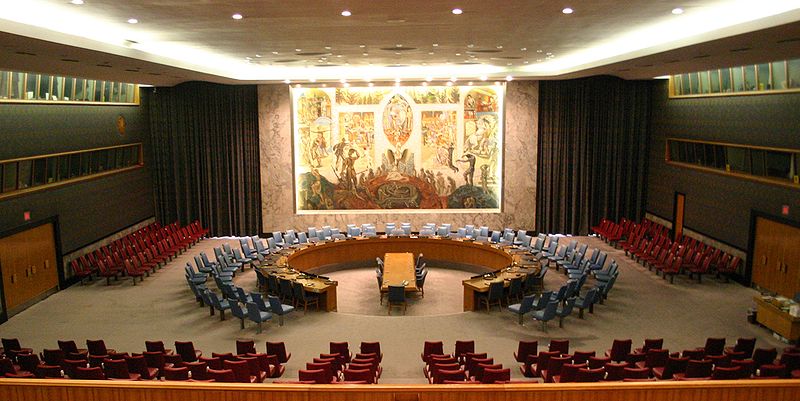
The United Nations Security Council Chamber in New York, also known as the Norwegian Room.
Photo by Patrick Gruban via Wikimedia Commons.

“We are doing well managing the economy in the COVID era while keeping to the principles and values that we hold dear,” said Trudeau.

There are times when the prime minister opens his mouth and I genuinely wonder how he doesn’t burst into flame. This was one of those times.

Which principles and values exactly?

Not our international obligations to asylum-seekers, certainly. Until very recently the Liberals would shift into maximum dudgeon at the very suggestion that tens of thousands of people crossing the border “irregularly” — let no one say “illegally”! — at Roxham Road constituted any sort of problem.

“FACT: Providing asylum claimants due process is not a choice. It is the law,” then Immigration Minister Ahmed Hussen tweeted in July 2018. Trudeau was dispatched to Queen’s Park to educate Premier Doug Ford, who wasn’t being welcoming enough. “It didn’t seem to me that the premier was quite as aware of our international obligations to the UN convention on refugees, as he might have been,” Trudeau faux-lamented. “So I spent a little time explaining.”

And then in March, it all got chucked into the incinerator. Try to cross the border illegally — we can say it now! — and you’ll get turned back into American custody.

Plus the sardonic amusement that Canada, whose educational and cultural organizations make such a big deal about our critical role in UN peacekeeping over the years, currently has a massive force deployed on such missions … thirty five in total … that’s not 35 missions, that’s 35 people.

May 13, 2020

“Why are you so upset at the gun ban? You don’t even have handguns or assault rifles”

Filed under: Cancon, Law, Liberty, Weapons — Tags: , , , — Nicholas @ 03:00

In BC Outdoors Magazine, Steve Hamilton explains why he’s so upset about the Trudeau government’s rush to punish law-abiding gun owners for the actions of criminals:

There are a few reasons – some that should upset non-gun owners, and some that should upset Canadians as a whole. Let us take a walk, shall we?

First, it is directed at the wrong people. Gun owners know that this will not address the real issues. There is a lack of severe punishment for criminals, and an unfortunate mental health crisis. We need to fix those first and foremost – direct the money there. No more revolving door. Lock repeat criminals up and throw away the key and dramatically increase programs and support mechanisms to help those affected with mental illness.

Multiple premiers and police chiefs have said the same thing. This ban will do nothing to lower gun crime. Gun owners know the statistics and that criminals will continue to run rampant. Criminals will not turn in their guns, we know that. This new law means nothing to them.

This ban will not take illegal guns off the street, just legal ones out of the hands of lawful owners. The sound bite of, “No one needs an AR-15 to take down a deer,” is truthful. However, the part they left out is that it has been illegal to do so in Canada since 1977 when the AR became restricted class, which means it is only allowed on approved ranges. Strictly to and from, and for nothing except target shooting. It was designed as a deer rifle in the 1960s and has never been used in a military application in its current configuration, as it was found unsuitable.

[…]

“Assault rifle.” That very term makes me cringe. Select-fire and military capable is the definition of assault rifle. To have a rifle approved for sale and imported, it needs to be verified by the RCMP, who confirms that converting it to select fire or automatic is impossible. So, by definition, every single one in Canada is not capable by any means of being turned into the class of firearm they have banned.

Let us toss the firearm argument aside for a second. Every Canadian citizen should be outraged at how this was done. It was pushed through on the heels of a tragedy. The very foundation of our government is supposed to be about democratic debate and input. There was none. Your opposition had zero say against this, and no matter if you are for or against the ban, when your side cannot be heard, that goes against what we should stand for as Canadians. They also used an Order in Council to change the class of a firearm, something that is normally used to change ministerial appointments or expenses. This should not have been done without debate in the House.

Now on to how it is written. That is what is scary about this “assault rifle” situation. There is so much ambiguous wording in this order. Clearly it was rushed through and poorly considered. It is very unclear to the point multiple firearms expert lawyers have said that some shotguns are banned. Minister Blair issued a statement saying that was not the intent; however, the law is written already. A defense in court of, “The minister said on social media that this wasn’t the intent,” will obviously not stand up. Good luck if you try that. Please let us know how that goes.

May 10, 2020

Justin Trudeau’s allergy to scary black fully semi-automatic “military style” rifles gets even less coherent

Filed under: Cancon, Government, Law, Liberty, Weapons — Tags: , , , — Nicholas @ 05:00

Chris Selley on the federal government’s purely virtue signalling gun ban:

In a recent column, I questioned whether the Liberals’ new “ban” on certain kinds of semiautomatic rifles — “ban” in quotation marks, inasmuch as current owners can keep them — constituted the sort of good public-health policy we’re demanding nowadays in the face of COVID-19. I concluded it did not. Even if you support the idea of banning such weapons, you can’t really support this endeavour except in the way a starving man might welcome his least favourite meal. Indeed, gun control advocates are nearly as annoyed by it as gun rights advocates, and rightly so.

The Liberal “ban” targets certain semiautomatic rifles falling under the undefined term “military-style,” while leaving other semi-automatics alone. It focuses on rifles, which collectively are the least lethal form of previously legal weapons, while leaving handguns — which are used in 65 per cent of firearm homicides — alone. “You don’t need an AR-15 to bring down a deer,” Prime Minister Justin Trudeau says, yet the “ban” exempts current owners of these weapons who use them to hunt for the purposes of sustenance.” Upon its unveiling, it was very nearly perfectly incoherent. And it’s nearer still now.

In recent days the Liberals have touted the “ban” as a way of protecting women and girls in particular. “These guns make it easier to commit mass murder,” Trudeau added. “And the culture around their fetishization makes our country inherently more dangerous for the people most vulnerable. And that is women and girls.” Trudeau cited reports about increasing domestic violence during the pandemic, and grim statistics about the number of Canadians killed by their spouses.

There is very little evidence to support this case for the “ban.” And when you go looking for it, you wind up only with more questions.

To be fair, there is very little evidence to support any position on gun control. Nobody comprehensively keeps track of how many Canadians are killed using currently restricted weapons, or by the weapons the Liberals are “banning,” or even by rifles as opposed to shotguns — so we certainly don’t know how many men and women are killed by these various kinds of firearms.

April 5, 2020

Ontario premier Doug Ford surprises many observers – “Wasn’t this guy supposed to be Canada’s Donald Trump?”

Filed under: Cancon, Government, Media, Politics — Tags: , , , , , — Nicholas @ 03:00

Chris Selley on the surprisingly solid performance of Ontario premier Doug Ford during the Wuhan Coronavirus epidemic response:

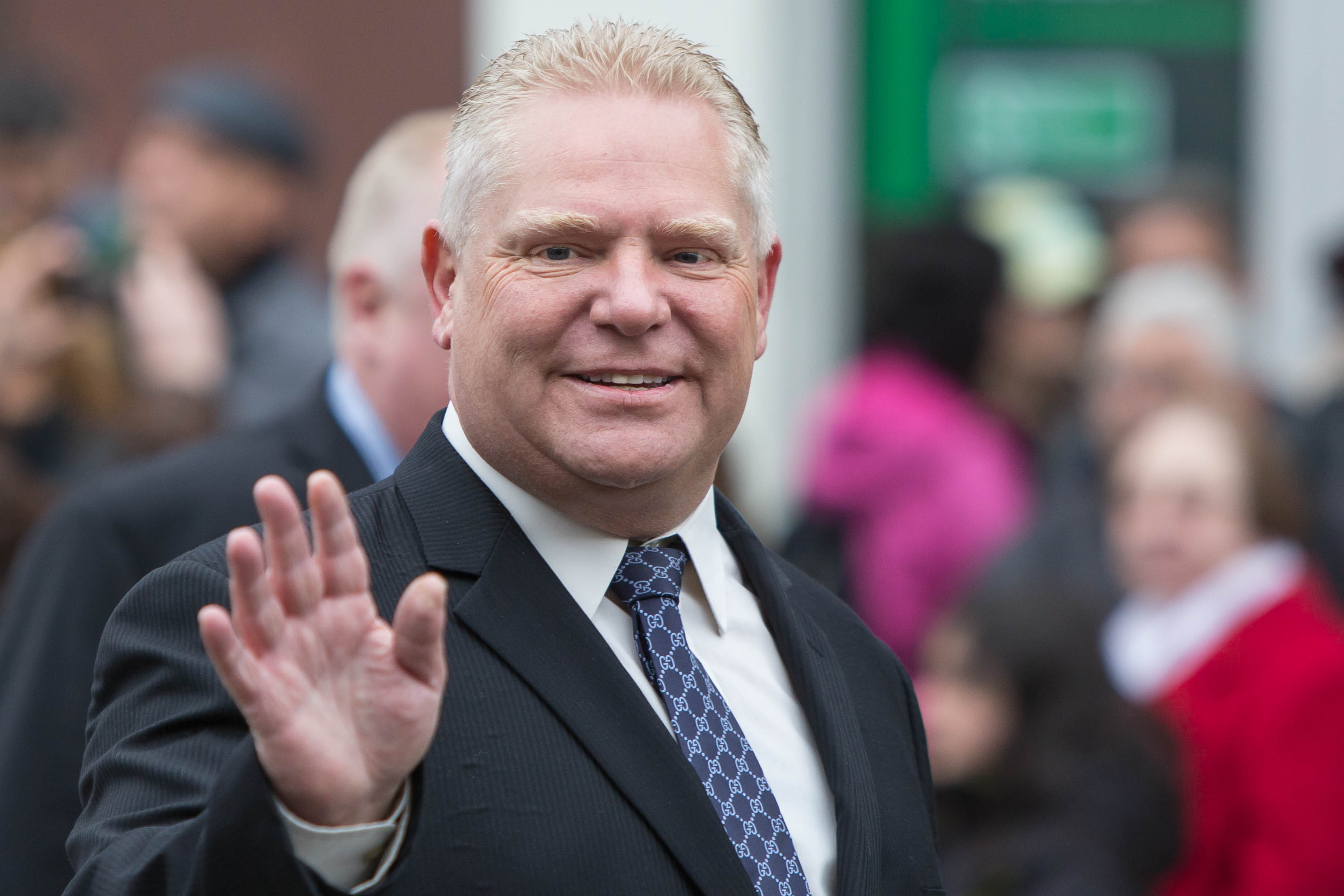
Ontario premier Doug Ford as new Progressive Conservative leader at the 2014 Good Friday procession in East York, Canada.
Photo via Wikimedia.

The premier has attracted much praise for his performance during this crisis, and it is deserved. His last misstep was advising families to head off on March Break as planned, viruses be damned, but that might as well have been 100 years ago. We were all clutching at optimism. Former premier Kathleen Wynne, who clearly understands Ford, graciously said she heard a man “trying to calm the waters … out of the goodness of his heart.”

Since then Ford has struck the right tone: often visibly alarmed, but calm, scripted and plain of speech. He has been gracious to everyone on the right side of the fight, from doctors and nurses to supermarket clerks and frantic, unemployed people stuck at home, to Prime Minister Justin Trudeau, to his fellow premiers of all political stripes, and even to journalists. And he has been galvanizingly withering to those on the wrong side, most notably a few price-gouging businesses who have been helpful enough to offer themselves up as common enemies.

More than a few people have remarked: “Wasn’t this guy supposed to be Canada’s Donald Trump?”

Indeed, once upon a time, those comparisons flew thick and fast. But they were always absurd — a toxic by-product of the Canadian media’s mortifying obsession with all things American. No First World politician is remotely like Donald Trump. I have filed many thousands of words over the past decade on what I view as Doug Ford’s inadequacies as a politician, and it would never have occurred to me to compare him to such a transparently awful president.

Ford, too, has levelled many vastly over-the-top accusations against his opponents. But he has basically set them all aside now. While federal Conservatives continue battling federal Liberals on the carbon tax file, Ford has refused to discuss it and happily applauds the feds’ anti-coronavirus efforts. Where once Ford railed at his media critics, now he praises their efforts covering the crisis and informing Ontarians. His relatively plain talk is noticeably more reassuring than the messaging some other Canadian heads of government, who fancy themselves far more polished, are dishing out — Trudeau in particular.

April 3, 2020

QotD: Canadian senators

Filed under: Cancon, Politics, Quotations — Tags: , , , , — Nicholas @ 01:00

When I heard that Sen. Tommy Banks had died of leukemia at age 81, I thought maybe the newspaper notices ought to be left to the people who knew him better — and in Edmonton that number comes to thousands upon thousands of people. I interviewed Banks a few times as a young political reporter. I think every such person has learned the procrastinator’s trade secret that if you’re doing an issues story, senators are easier to get hold of on a short deadline than elected MPs, and a lot easier than cabinet ministers, especially if you’re an unknown lightweight.

This, at least, used to be the case. I am not sure whether it applies to the Brave New Senate that now exists after the somewhat cynical appointments of Stephen Harper and the experimental renovations of Justin Trudeau. But if you have ever wondered why political beat writers and old codger columnists often have surprisingly positive sentiments about the Senate, which nine-tenths of the people reading these words despise, this is probably one reason: a senator might call you back soon enough to be of some use.

And there’s another, related reason. In phoning a senator to chat about issues because you can’t get a “real” politician to return your inquiry, you would (or, anyway, I would) sometimes find surprisingly strong evidence that the Senate quietly lives up to its original constitutional promise. Spared the effort of endless electioneering and toilsome constituent service, senators do have time for deep study of projects and problems, and some freedom to develop independent opinions. I do not say that most of them use the time and the freedom, but it was, and I’m sure it still is, fairly easy to avoid the duds.

Colby Cosh, “R.I.P. Senator Tommy Banks, a figure from Edmonton’s pantheon”, National Post, 2018-01-26.

March 6, 2020

“[A] decision of such absolutely mind-boggling stupidity and irresponsibility that it could only have come from Justin Trudeau, himself”

Filed under: Cancon, Government, Law, Politics, Railways — Tags: , , , — Nicholas @ 05:00

Ted Campbell on the Trudeau government’s apparent abject surrender to the Wet’suwet’en hereditary chiefs (“apparent” because we still don’t have any details of the “deal”):

The Wet’suwet’en hereditary chiefs’ agenda seems simple enough to me. They don’t like the notion that the Wet’suwet’en people can elect band councils that might act for the good of the people and < quelle horreur > the people might even disagree with the hereditary chiefs. Some (male) hereditary chiefs seem to have managed to strip some other (female) chiefs of their titles because they, the female chiefs, sided with the elected councils. This is, in 21st century British Columbia, something of a replay of 17th century Europe and the end of the divine right of kings, except that the Wet’suwet’en hereditary chiefs might succeed where Charles I and Louis XVI failed because they have the dimwits in the Trudeau cabinet on their side.

To make matters worse, as John Morris of the Canadian Press points out in an article published in the Globe and Mail, the government negotiated with the hereditary chiefs, only ~ with the people who broke the law; and they ignored the elected leaders ~ the people who played by the rules.

How typically Trudeau: he surrenders, cravenly, to the reactionary, anti-democratic lawbreakers and, simultaneously, shuts out the elected representatives of the Wet’suwet’en peoples. Is that the Canada in which we all want to live? Is that the sort of “leadership” for which millions of Canadians voted in 2019? I think not. Justin Trudeau is both a fool and a coward and his party, the Liberal Party of Canada, has a duty to Canada: throw the bum out!

But, not to worry, the Trudeau regime’s propagandists press agents will tell us that it’s all good, we “won,” something or other … didn’t we? And who cares if we lost something nebulous like honour and responsibility? It’s all about reconciliation, isn’t it? What do trivialities like democracy and the national interest matter when really important things, like preserving the power of hereditary chiefs over elected councils, are at stake? But that reactionary system seems to have been strengthened, and so “It was a famous victory.”

February 29, 2020

“And then, somewhat astonishingly, the Ontario Provincial Police actually upheld the law”

Filed under: Cancon, Government, Law, Politics, Railways — Tags: , , , — Nicholas @ 05:00

Chris Selley calls for some answers in the still-not-fully resolved railway disruptions by First Nations and climate activists and the calling-it-spineless-is-a-compliment reactions of various levels of government to widespread contempt for the law:

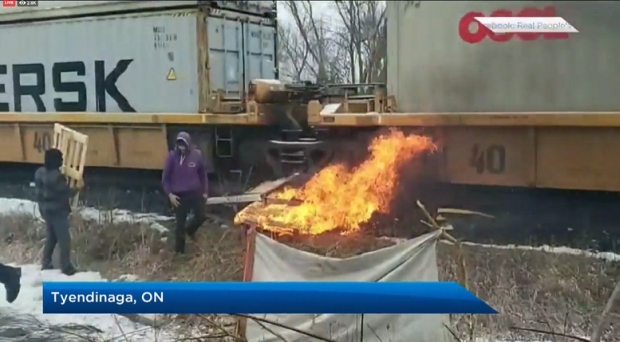
Screencap from a TV report on Mohawk Warriors attempting to set a freight car on fire along the Canadian National mainline through Tyendinaga near Belleville, Ontario.

When Canada’s ongoing spate of rail blockades finally peters out, this country has some work to do. A parliamentary committee might be up to the job, but even a full-on independent inquiry might not be excessive. A small group of Mohawks in Tyendinaga, Ont., in solidarity with an even smaller group of hereditary Wet’suwet’en chiefs, managed to blockade the Canadian National Railway for two weeks, not just holding hostage a chunk of the country’s economy, productivity and mobility, but demanding as ransom the cancellation of a liquefied natural gas pipelines that all First Nations affected by it, and it seems a comfortable majority of their residents, support.

It’s not a national disaster or anything. But as Prime Minister Justin Trudeau belatedly realized, it’s simply not an acceptable outcome in a democracy operating under the rule of law. And there is every reason to believe it could happen again — especially because we don’t really know how or why it ended when it did.

Operating at peak obnoxiousness, Trudeau had scolded those who demanded enforcement of a court order against the Tyendinaga blockade as boors, violence-mongers and idiots: “We are not the kind of country where politicians get to tell the police what to do,” he huffed. And then, frustrated by a lack of Sunny Ways among the federal government’s negotiating partners, he suddenly told the police what to do — or at the very least what he thought should happen.

[…]

The relatively undramatic end to the Tyendinaga blockade, after two weeks of dire warnings about Oka and Ipperwash reruns, raises another key question: Is there any reason we should believe it was safer to enforce the injunction on Day 14, as opposed to Day One or Two or Six?

Attempting negotiations was a perfectly sensible approach, even though it was very difficult to discern any room for compromise when one of the blockaders’ demands was so simple, blunt and inconceivable: shutting down the Coastal GasLink pipeline project. But the government is likely to face similarly unbending demands from future blockaders: Shutting down the Trans Mountain pipeline project, for example. Surely we can’t establish “two weeks of futility and then enforcement” as a policy moving forward. (Some might argue it was already established by a 13-day blockade of CN tracks near Sarnia, Ont., in 2013 — but that wasn’t nearly as crippling a blow to the railway’s operations.)

Police in Quebec were perfectly happy to enforce an injunction against a blockade on Montreal’s South Shore, which ended swiftly and without incident. Another on Mohawk territory in Kahnawake remains in place, and Premier François Legault has been excoriated for suggesting police face a heavily armed populace there — but at least it’s an attempt at an explanation. When it comes to the OPP’s inaction, we have none. For that matter, we probably deserve some insight into how protesters were able to set a roaring bonfire next to a moving train in Tyendinaga, wholly unmolested, just a couple of days after the blockade came down.

February 25, 2020

“Canada is no longer a viable political construct. It is a dead country walking”

Filed under: Cancon, Economics, Government, Politics, Railways — Tags: , , , , — Nicholas @ 03:00

David Solway outlines some of the serious issues Canada needs to tackle … but many of which are issues that the current federal government is striving to avoid tackling:

Canada is presently in the throes of social and political disintegration. A left-leaning electorate has once again empowered a socialist government promoting all the lunatic ideological shibboleths of the day: global warming or “climate change,” radical feminism, indigenous sovereignty, expansionary government, environmental strangulation of energy production, and the presumed efficiency of totalitarian legislation. Industry and manufacturing are abandoning the country in droves and heading south.

Canada is now reaping the whirlwind. The Red-Green Axis consisting of social justice warriors, hereditary band chiefs, renewable energy cronies, cultural Marxists, and their political and media enablers have effectively shut down the country. The economy is at a standstill, legislatures and City Halls have been barricaded, blockades dot the landscape, roads and bridges have been sabotaged, trains have been derailed (three crude-by-rail spillages in the last two months), goods are rotting in warehouses, heating supplies remain undelivered, violent protests and demonstrations continue to wreak havoc — and the hapless Prime Minister, who spent a weak swanning around Africa as the crisis unfolded, is clearly out of his depth and has no idea how to control the mayhem. No surprise here. A wock pupper politico in thrall to the Marxist project and corporate financial interests, Justin Trudeau is generally baffed out when it comes to any serious or demanding concerns involving the welfare of the people and the economic vitality of the nation. Little is to be expected of him in the current emergency apart from boilerplate clichés and vague exhalations of roseate sentiment.

Still, Trudeau may have been right about one thing when he told The New York Times that Canada had no core identity — although this is not what a Prime Minister should say in public. Canada was always two “nations,” based on two founding peoples, the French and the English, which novelist Hugh MacLennan famously described as “two solitudes” in his book of that title. But it may be closer to the truth to portray Canada as an imaginary nation which comprises three territories and ten provinces, two of which, Quebec and Newfoundland, cherish a near-majoritarian conception of themselves as independent countries in their own right. Newfoundland narrowly joined Confederation only in 1949 and Quebec held two successive sovereignty referenda that came a hair’s breadth from breaking up the country.

Quebec separatists don’t need to do much more than sit back, put their feet up, crack a few beers, and watch Justin Trudeau drive the country toward dissolution. Their job is so much easier now…

It is often noted that America is a nation evenly divided between progressivist and conservative populations, a civil dilemma not easily resolved. But Canada is divided approximately 65-35 by these constituencies, and if one considers that the federal Conservative Party in its present manifestation can fairly be described as Liberal Lite, the breakdown is more like 95-5. This means there is no chance of reconciliation between our political disparities, such as they are, and Canada is doomed to plummet down the esker of every failed socialist experiment that preceded it and, indeed, that is presently on display in various foundering nations around the globe — North Korea, Cuba, Venezuela, and counting.

Trudeau père invoked the War Measures Act in 1970 to quell the Quebec separatist movement, the Front de Libération du Québec (FLQ), after a series of bombings and murders. It is obvious that the son has neither the political smarts nor the strength of character to act decisively against those who are busy reducing an already patchwork country into a heap of shards and rubble. And there we find the proof that, whatever Canada may once have been and whatever the talking heads may incessantly proclaim, Canada is no longer a viable political construct. It is a dead country walking.

H/T to Blazing Cat Fur for the link.

February 24, 2020

Bidding farewell to the rule of law in Canada?

Filed under: Cancon, Government, Law, Politics, Railways — Tags: , , , — Nicholas @ 03:00

John Carpay on the importance of the rule of law in civil society and why we’re at risk of losing it here in Canada:

The rule of law is one of the most important legal principles on which Canada is based. Along with the supremacy of God, it is mentioned in the very first words of the Canadian Charter of Rights and Freedoms: “Whereas Canada is founded upon principles that recognize the supremacy of God and the rule of law.”

The rule of law means that we are ruled by laws, not by the whims of a King, or the clamouring of a mob. The rule of law also means that the law applies to everyone, even the King; there can be no exemptions for the King or his favourites.

Countries which practice and uphold the rule of law tend to thrive economically, socially, politically and culturally. Countries which uphold the rule of law become wealthy because people can work, buy, sell and trade in the knowledge that their property and their person are protected by law. Economies thrive when people know that the law will be enforced, and that the law will be applied to everyone, even to the King and his favourites. The rule of law provides investors, foreign and domestic, with confidence to invest their money in business projects.

Conversely, when a country condones law-breaking, investors will put their money elsewhere, and quickly. The world’s poorest and most violent countries are those where politicians are above the law, and the law is not applied equally to all.

The decisions of Canada’s politicians and police to condone – for three weeks or longer – the blockading of railway lines by aggrieved protesters violate the rule of law in at least two ways.

First, our politicians are effectively stating that individuals with strongly held political opinions are entitled to engage in illegal activities, in this case shutting down railway lines. Second, law-breaking is permitted because Prime Minister Justin Trudeau and other politicians sympathize with the protesters’ ideology and demands: the law does not apply to the King’s favourites.

« Newer PostsOlder Posts »

Powered by WordPress