Quotulatiousness

February 23, 2020

Justin’s hidden victory – “… in the fight against global warming, this has to have been Canada’s best two weeks EVER”

As Rex Murphy points out, the nattering nabobs of negativity (okay, he didn’t call ’em that) miss the key benefits of Justin Trudeau’s tour de force of ingenious diplomacy and inaction:

It was at the very heart of Justin Trudeau’s triumph in his first election, that having vanquished the Mordor orcs of Harperland, that the country was going to be served by new thinking and fresh approaches, that anger and conflict would be no more. In an era marked by respectful thinking, exquisitely careful language, above all by the ability to listen, protests would be no more. Concord would reign, all would be sweetness and light.

What few and feeble disputes that might emerge would be defused with a waving of the diversity wand, and a choir drawn from the Liberal backbenches intoning solemnly “this is not who we are as Canadians” before the Centennial Flame on Parliament Hill.

As an ultimate fillip every month a kitten and a ball of wool would be sent to every Canadian household (and Lo, a zen-like tranquillity would settle over the land). To be clear, these would be very progressive kittens, and the wood fair-trade down to the last twisted fibre.

[…]

Looked at in the cool light of reason, in the fight against global warming, this has to have been Canada’s best two weeks EVER. Keep it up and Canada, the whole wide, cold country, can soon declare itself one half-a-continent carbon-emission-free zone. Apocalypse deferred.

How do you spell Hallelujah? Greta Thunberg — Canada has heard you. Find a bamboo raft and come visit us again.

February 21, 2020

Justin Trudeau, Prime Empathizer of Canada

Filed under: Cancon, Government, Law, Politics, Railways — Tags: , , , , , , — Nicholas @ 03:00

The Prime Minstrel channels his inner Bill Clinton, although he just manages to avoid saying that he “feels our pain”:

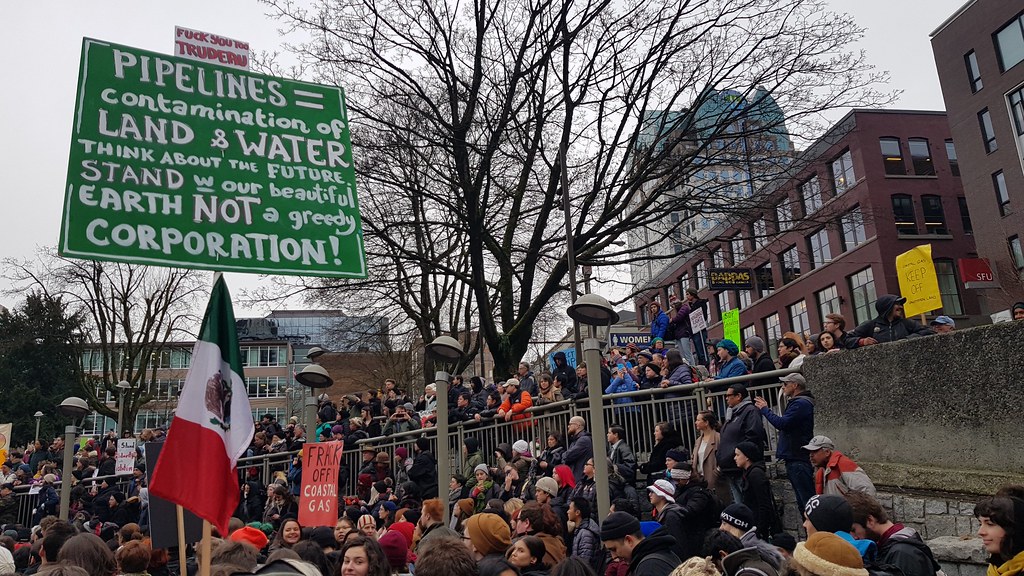
A strange thing happened Tuesday morning. That strange thing was … an important and interesting exchange on the floor of the House of Commons. It happened during routine proceedings, and not in the Punch-and-Judy exchange of question period. The leaders of the various parties in the House stood and outlined positions on the rail blockades being conducted around the country in support of Wet’suwet’en opponents of B.C.’s Coastal GasLink pipeline.

First came the prime minister. “People are troubled by what they have been witnessing this past week,” he said. Our empathizer-in-chief, the emotional mascot of Confederation, was about to go to work. “Young, old, Indigenous and newcomers are asking themselves what is happening in the country … On all sides, people are upset and frustrated.”

The next three words out of his mouth were: “I get it.” Huh. Is that the sort of thing you say when you’ve actually gotten it? If a friend called you up in a shattered emotional state because he had just lost his job, as people are starting to lose jobs to the Wet’suwet’en solidarity protests, would you say “I get it”?

Beyond this tin-eared reassurance, Trudeau did not have much specific to say, and what there was seemed to contradict itself. “Our government’s priority is to resolve this situation peacefully, but also to protect the rule of law in our country,” he promised. “That is a principle we will always stand up for.” One would have thought the role of a prime minister was to apply the law rather than to “stand up for” it. He gave his usual spiel about the myriad of ways in which the federal government has failed First Nations, again speaking as though someone else were in charge. Certainly very little of it is his own fault: the government he leads has “invested more than any other … to right historic wrongs.”

Trudeau worried aloud that Canada might become “a country where people think they can tamper with rail lines and endanger lives,” but he seemingly renounced the use of force (it’s not “helpful”) against protesters who openly discuss sabotage. What the prime minister means when he talks of the “rule” of something called “law” has been left imperfectly clear.

Chris Selley suggests the government’s fecklessness will continue to prevent any solutions being implemented:

The stupefying weightlessness of Justin Trudeau’s government has never been more evident than in recent days, as it tries to arrange an end to the Mohawk blockade of CN’s main line near Belleville, Ont. At times it seems as if it might just float away, like an improperly tethered bouncy castle in a thunderstorm.

This week has been particularly windy.

[…]

The situation is ludicrous: Because Ontario’s independent provincial police won’t enforce a court injunction, the federal public safety minister seems to be in discussions with B.C.’s solicitor general about whether B.C.’s independent provincial police might back off enforcing a different injunction.

And the worst part of this absurdist theatre festival is how difficult it is to imagine a better alternative. Conservatives continue to call on Trudeau to somehow fix the problem, but the way Canada is set up, it’s really not a federal issue. The RCMP might have some jurisdiction over the railway as federally regulated infrastructure, said University of Toronto law professor Kent Roach, but that hasn’t happened in past cases. It wouldn’t even be up to Trudeau to send in troops: under the Emergencies Act, Roach said, a provincial solicitor-general has to request it.

These are structural issues that any PM will face. Indeed, the biggest difference between the Liberals’ approach to this blockade and the Conservatives’ approach to the 2013 Idle No More protests, which included a 13-day blockade of a CN line in southwestern Ontario, has been one of rhetoric and engagement. The Conservatives talked tougher, but Aboriginal Affairs rebuffed CN’s request to intervene. (Those protesters eventually obeyed a court injunction and left.) The Liberals needlessly tie themselves in knots and insult our intelligence — they know no other way — but they clearly believe it’s their job to broker some kind of resolution.

It’s tough to say which approach is likelier to work. At this point odds seem to favour “neither.” If you have a better, workable idea to get the trains moving, for God’s sake get on the horn to Ottawa.

February 17, 2020

Justin Trudeau and the UN Security Council

Filed under: Cancon, Government, Politics — Tags: , , , — Nicholas @ 05:00

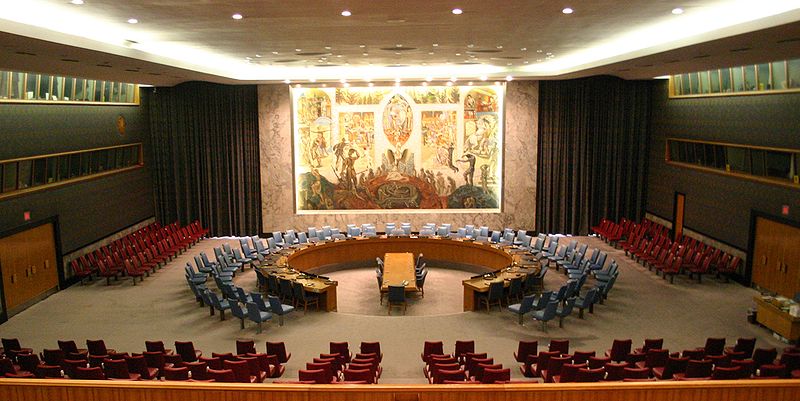
Although I’m much less a fan of the United Nations than Ted Campbell is, I agree that Prime Minister Trudeau’s grip-and-grin-and-bribe world tour in support of Canada’s bid for a temporary seat on the UN Security Council is probably doomed to failure:

The United Nations Security Council Chamber in New York, also known as the Norwegian Room.
Photo by Patrick Gruban via Wikimedia Commons.

He has seemed oblivious to the fact that he’s bragging about Canada’s “human rights” and “equality” to politicians who are happy to have laws that criminalize homosexual behaviour and that he’s willing to enter a “partnership” in Africa’s oils and gas sectors even as his cabinet tries to shut down Western Canada’s energy industries and as his own country is in a political and economic crisis over pipelines. And then he bowed and scraped to the foreign minister of the mass-murdering Iranian regime, only a month after it shot down a civilian airliner, killing 57 Canadians.

This is all in pursuit of the ambitions of a few Laurential Elite insiders who are still campaigning against Stephen Harper. They remember that Prime Minister Harper’s government’s bid for a UNSC seat was rejected (2010) largely because Canada was perceived to be too close to Israel and because Prime Minister Harper was perceived to be too different from superstar US President Barack Obama, and not serious enough about climate change. Team Trudeau is hell-bent on proving that it is “better” than Team Harper by winning that seat (the other contestants are Ireland and Norway).

My guess is that Canada will fail again because the few hundred million dollars in bribes aid it has promised to spread around Africa is not going to make much of a dent in the anti-Canada campaign that I suspect China is waging to continue to punish us for the Meng affair, amongst other things. China is, I believe, using Canada as a bit of a whipping boy to send a message to the rest of the world about the benefits and costs of dealing with China … on its terms.

In fact, I rather hope Canada loses. Not because I enjoy seeing my country rejected. Not even because I would enjoy seeing Justin Trudeau humiliated, but I admit that would be nice. I think that losing the bid for the worthless, second class Security Councils seat might persuade our diplomats that we need to rethink our role in the UN.

The United Nations is a marvellous idea and it’s an important institution. But it is also a deeply troubled organization. It is corrupt. It is badly managed. It is poorly led. It is badly organized. It is in dire need of reform.

The bad leadership and poor organization begin at the Security Council.

“The rails to hell are laid with good intentions”

In the National Post, Jonathan Kay explains how Canadian governments find themselves in the situation where the basic laws of the land can be flouted at will by a small extremist faction and the police are unwilling to do more than bare peacekeeping duties:

“Vancouver Solidarity with Wet’suwet’en” by jencastrotakespictures is licensed under CC BY-NC-SA 2.0

If you find yourself astounded by the current situation in Canada, whereby protesters have been allowed to shut down a rail network that remains a backbone of passenger travel and industrial transport (and whose coast-to-coast completion in 1885 became a symbol of national unity), it’s useful to revisit the accumulation of symbolic gestures that have steadily destroyed the moral authority of our governments to push back at any assertion of Indigenous rights and grievances. For years, our leaders offered reflexive acquiescence to increasingly expansive claims that Canada remains a white supremacist dystopia, culminating in last year’s campaign to convince us not only that modern Canada is a “genocide” state, but that even the act of expressing disagreement with this description makes you a sort of metaphorical train conductor on the rails to Canadian Dachau. Having publicly tattooed their guilty settler souls with every imaginable hashtag, our leaders now apparently find themselves stopped from restoring the rule of law.

The rails to hell are laid with good intentions. And there is nothing that now signals goodness in Canadian public life more than the land acknowledgment. Certainly, no one can argue with the historical truth that Indigenous peoples populated Canada for thousands of years before the arrival of Europeans. But words have meaning. And the well-understood meaning of these acknowledgments is that Indigenous peoples exercise a sort of broad, vaguely defined moral sovereignty over lands “owned” by Canadian governments, corporations and private citizens — including the lands on which we have constructed roads, rails, ports and legislatures. And since this sovereignty apparently now may be asserted at any time, for pretty much any reason, we have effectively lost the ability to enforce the systematic organization of property rights on which every functional society, Indigenous or non-Indigenous, depends.

The push to recognize Indigenous sovereignty over ancestral lands stretches back generations, an effort rooted in very real constitutional and treaty rights. But what I am describing here is not this formally bounded legal campaign, but rather the more general insistence that the entire country remains stained by original sin, and so must be purified by an open-ended, quasi-spiritual process of “decolonization.” This project began in earnest in 2017 as a counter-reaction to the perceived jingoism of the Canada 150 celebrations. Within the rarified corners of the literary and arts milieus (in which I found myself embedded at the time), decolonization quickly became a sort of state religion, complete with decolonization-themed sensitivity training and confession rituals.

[…]

The people doing the protesting are led by dissidents within one of the affected Indigenous communities, amplified by a critical mass of white environmentalists who are perfectly happy to cherry-pick Indigenous causes based on how well they line up with their own Anti-Racism/Critical Studies term-project requirements. Indeed, there is a certain type of very self-satisfied white Canadian leftist who sees himself as a real-life Lorax. Drawing on antiquated noble-savage stereotypes from the past, these decolonization super-allies cast Indigenous people as their little bar-ba-loot bears. And it just ruins their day when Indigenous leaders refuse to grab their tummies, moan for the CBC cameras, or read their bar-ba-loot scripts.

There is a larger hypocrisy at play here, too. Justin Trudeau and his entourage — currently on world tour, hoping to convince African and Caribbean leaders to hand him the shiny trophy of a UN Security Council seat — don’t take the train much. They fly. So, too, do the provincial politicians passing the buck in equal measure, not to mention the national broadcast journalists offering maudlin profiles of the demonstrators. Forcing ordinary travellers to bear the burden of upholding officially sanctioned upper-middle-class social-justice pieties isn’t “progressive.” It’s reactionary, snobbish elitism with a progressive façade.

February 5, 2020

“On this issue, Canada’s two solitudes could hardly be more starkly apparent”

Filed under: Cancon, Government, Liberty, Media — Tags: , , , , , — Nicholas @ 03:00

Chris Selley on the vastly different reaction from Quebec media to the Trudeau government’s notion to turn the country’s news organizations into a modern version of Joseph Goebbels’ propaganda apparatus, pumping out approved-by-the-Liberals story lines:

On Sunday, when CTV’s Evan Solomon pushed Heritage Minister Steven Guilbeault on the issue of issuing journalism licences to foreign media outlets, Guilbeault eventually just shrugged: “I’m not sure I see what the big deal is.”

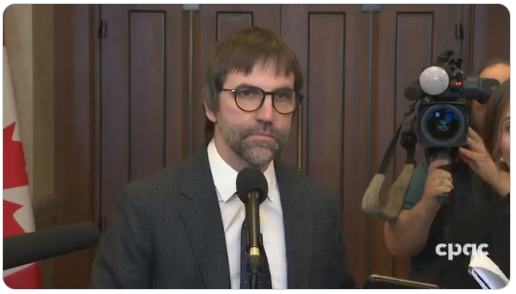
Canadian Heritage Minister Steven Guilbeault, 3 February 2020.
Screencapture from CPAC video.

The minister tried to walk it back on Monday, but the fact is many of his fellow Quebecers will also struggle to discern a big deal. There is simply much more tolerance of this sort of cultural gatekeeping among francophone Quebecers than in the Rest of Canada, and the tolerance extends well into the realm of journalism.

“In reading the (report’s) 260 pages and 97 recommendations, one word comes to mind” Sunday’s editorial in La Presse gushed: “Finally!”

Opposition to government regulation of journalism is firmly entrenched not just in anglophone Canada, but across the anglosphere. When the 2011 Leveson Inquiry proposed the British government create a powerful new press regulator, nearly every major outlet rejected the idea. Fraser Nelson, editor of The Spectator, famously vowed the magazine “will not attend its meetings, pay its fines nor heed its menaces.”

The same year, Laval University professor Dominique Payette’s report into Quebec’s struggling news media recommended the government legislate a “professional journalist” designation. The province’s largest journalists’ trade organization and the Quebec Press Council happily sat down with the government to bash out a power-sharing agreement on deciding who’s a proper journalist and who isn’t.

The English-language Montreal Gazette was dead-set against the idea, but Le Devoir called it a “logical outcome.” (The power-sharing discussions eventually fell apart, and the idea died a merciful death.)

February 4, 2020

“Who could oppose such an obviously sound idea?”

A few pithy comments from Twitter on the Trudeau government’s apparent surprise that a few Canadians don’t think their regulate-the-internet plan is brilliant:

Fellow Rush fan Matt Gurney finds the perfect lyrics for the occasion:

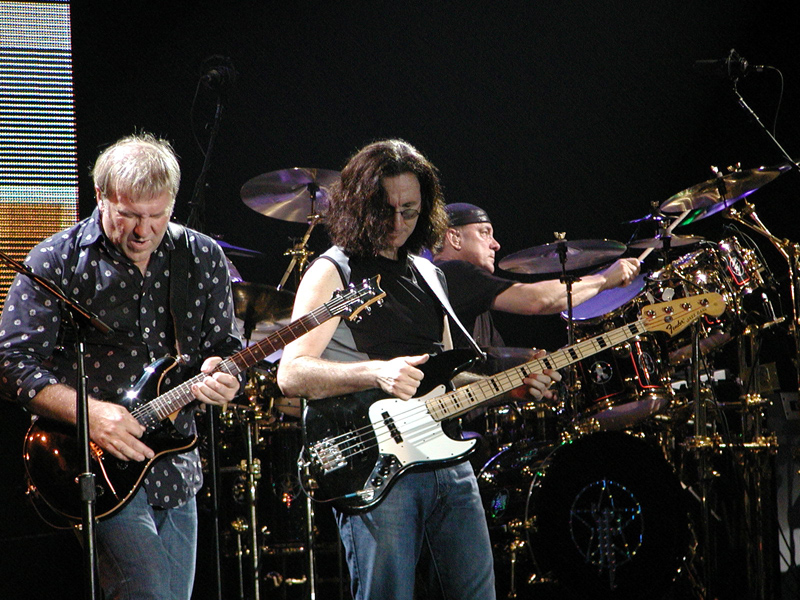
Rush in concert, Milan 2004.
Photo by Enrico Frangi, via Wikimedia Commons

CRTC regulating the internet – “Nobody elsewhere is proposing anything like it, and for good reason: because it’s insane”

Ted Campbell suggests that the Canadian government most recent brainfart is a “Tea Party moment” for Canadians:

One commentator on social media dubbed this […] the moment when Heritage Minister Steven Guilbeault said that the Trudeau regime plans to license news websites as a “Boston Tea Pary moment.”

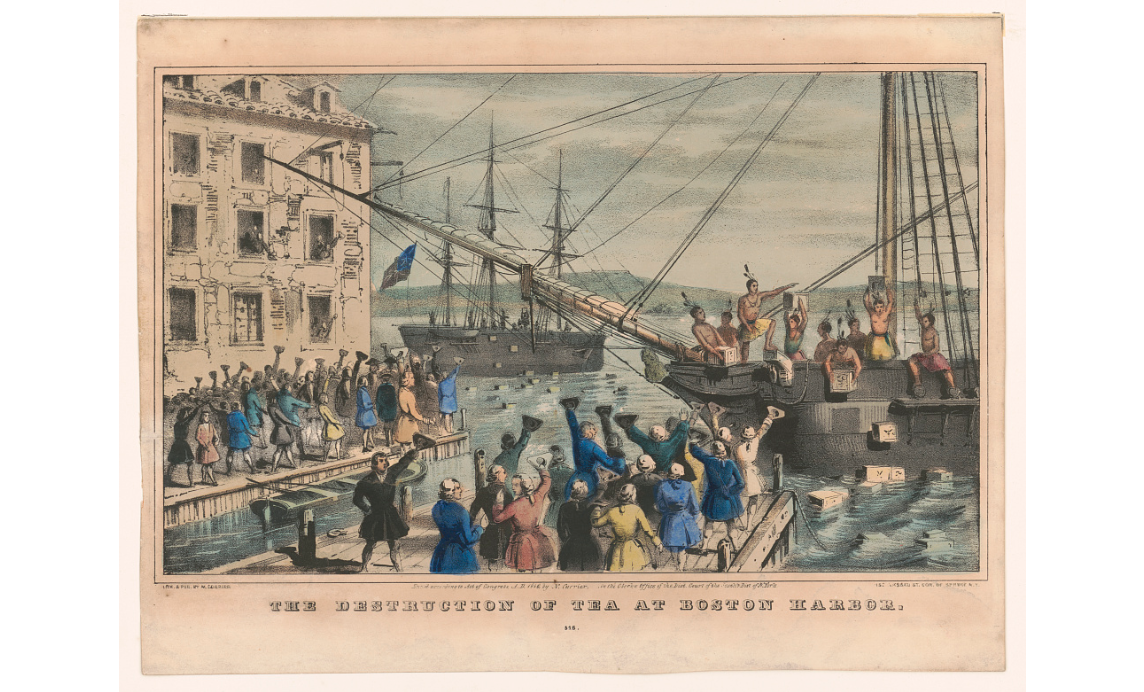
N. Currier. Destruction of tea at Boston Harbor, 1846. [New York: N. Currier]
Retrieved from the Library of Congress – https://www.loc.gov/item/91795889/

She was referring to the protest, in December of 1773, when angry American colonists (many dressed as Native Americans to try and hide their true identities) dumped several hundred chests of tea, imported by the East India Company, into Boston harbour to protest the taxes, on almost everything, that had been imposed, by Westminster to pay for the Seven Years War. Westminster felt it was only fair to tax the colonists equally, along with the people of the British Isles, because much of the war, called the French-Indian War, now, by Americans, was fought to protect them and their vital commercial interests. The American colonists disagreed, many on the principle that they should not be taxed without being represented in parliament. We know where it all ended.

It’s a good question. Most commentators seem to agree with me that the Trudeau regime has seriously overreached in supporting the Broadcasting and Telecommunications Legislative Review Panel’s recommendations that, somehow, the distribution of “news” should be regulated by the government. That is a far, far greater intrusion into the liberty of free Canadian citizens than a tax on staples was to Americans in 1773.

Andrew Coyne, writing in the Globe and Mail, opines that “The whole thing is just breathtaking – a regulatory power grab without precedent, either in Canada or the democratic world. Nobody elsewhere is proposing anything like it, and for good reason: because it’s insane. This kind of bureaucratic micromanagement, with its obsession with ‘cultural sovereignty’ and ‘telling ourselves our own stories,’ would have been hopelessly outdated in 1990. In 2020, it’s just embarrassing.” He’s right to use the word “insane,” ~ the proposal is quite possibly unconstitutional, just for a start, it is, certainly based on a deeply mistaken idea of what the internet actually is ~ and he’s equally right to say that every Canadian who doesn’t, actively, protest against this must be embarrassed because each is, for no good reason at all that I can see, supporting a proposal that makes Canada less, far less, of a liberal democracy and more like Ethiopia and Senegal (both with scores below 6.0, the threshold for a Flawed Democracy in the well regarded Economist Intelligence Unit’s latest democracy index) where he will visit this week … perhaps to learn from the leaders of authoritarian regimes what his next steps should be to embarrass Canada further.

Michael Geist on the jaw-dropping performance of Trudeau’s Canadian Heritage Minister last weekend:

In June 2017, the Standing Committee on Canadian Heritage committee recommended implementing tax on Internet services in a report on media. Within minutes, Prime Minister Justin Trudeau was asked about the proposal at a press conference in Montreal. Trudeau’s answer – which literally came as committee chair Hedy Fry was holding a press conference on the report – was unequivocal: No. The government was not going to raise costs of Internet services with an ISP tax. The committee recommendation was minutes old and the government wasted absolutely no time in killing the proposal.

Last week, the Broadcasting and Telecommunications Legislative Review Panel proposed a far broader regulatory vision for the Internet. Indeed, it is difficult to give the full breadth of this plan its due. I will be posting this week on some of the most harmful aspects of the plan, including regulating media organizations around the world with penalties in the hundreds of thousands of dollars for failing to obtain licences, regulating streaming companies despite their massive investment in Canada, regulating everything from app stores to operating systems, creating liability for harmful content that violates Canada’s commitments in the USMCA, undermining net neutrality, and increasing the costs of Internet-based services for Canadian consumers.

Over the weekend, Canadian Heritage Minister Steven Guilbeault was asked about the proposal. In particular, he was asked about the proposal to licence foreign news sites (the example used was Breitbart but it could just as easily have been the New York Times, BBC, CNN, Fox or MSNBC). The answer should have been easy: no.

Instead of “no”, Minister Guilbeault’s response was that it was “no big deal.”

On Monday morning, the minister appears to have reconsidered being quite so blatant in indulging his inner authoritarian control freak:

Guilbeault walked back the comments on Monday, stating that the government had “no intention to impose licensing requirements on news organizations,” nor will the government “regulate news content.”

“… Our focus will be and always has been that Canadians have diversity to high-quality news sources,” said Guilbeault to reporters in Ottawa.

This announcement comes after deep criticism of a previous announcement by the Liberal government, where they said they would force news organizations to apply for a licence.

Guilbeault’s announcement faced intense scrutiny from across the political spectrum with some commentators suggesting that it would be a dangerous attack on the freedom of the press.

February 1, 2020

Trudeau government’s unwillingness to define what they mean by “middle class”

Filed under: Bureaucracy, Cancon, Government — Tags: , , — Nicholas @ 03:00

The phrase has taken on almost an Alice in Wonderland quality for Justin Trudeau and his recently created “Minister of Middle Class Prosperity”:

    “When I use a word,” Humpty Dumpty said in rather a scornful tone, “it means just what I choose it to mean — neither more nor less.”

    “The question is,” said Alice, “whether you can make words mean so many different things.”

    “The question is,” said Humpty Dumpty, “which is to be master — that’s all.”

It could be addressed, says Chris Selley … and really should be:

In the meantime, the Liberals have another problem. It is far less important than Iran or China, but it’s also far more embarrassing than either, because it is entirely of their own making and so easily fixed. It is as follows: Trudeau has given Ottawa MP Mona Fortier the new cabinet title of “Minister of Middle Class Prosperity,” but no one in the government has yet bothered to define “middle class.” And everyone is laughing at them.

Mona Fortier, Minister of Middle Class Prosperity and Associate Minister of Finance.
© HOC-CDC. Photo by Christian Diotte, House of Commons Photo Services, November 2019.

Fortier has tried to explain herself. “We have to make sure we represent the realities in a rural, remote or even urban setting, (and) regional differences,” she told CTV upon her appointment. “The income required to attain a middle-class lifestyle can vary greatly based on Canadians’ specific situation,” she told the same network this week.

She’s right! Pack up your middle-class lifestyle in Small Town A, and you might well not recognize it when you unpack in Big City B. The thing is, though, statisticians — including scores of them in the federal government’s employ — are across this. They know very well that a Canadian dollar does not purchase the same quantity of goods and services in every part of the country, and they have all sorts of ingenious ways to compensate.

If it were true that “middle class” can’t be defined because it connotes different things in different places, then the same would go for “poverty.” But Canada has never had any problem defining poverty on a relative basis. And in 2018, this very Liberal government adopted an absolute measure of poverty as well: the Market Basket Measure, which estimates the cost of “a modest standard of living” in any given place, and calculates how many of us can’t afford it.

So the “poverty line” in Small Town A is not the same as it is in Big City B, and … sorry, this very simple concept doesn’t need to be explained to National Post readers any further. The point is, defining poverty was a good thing. Defining the middle class obviously doesn’t matter as much, but since this government seems utterly obsessed with it — and with evidence-based policy! — there is no good reason for it not to do likewise.

January 26, 2020

Trudeau’s illogical gun ban will do nothing to reduce violent crime

Filed under: Cancon, Government, Law, Liberty, Weapons — Tags: , , , , — Nicholas @ 05:00

It will, on the other hand, infringe the rights of law-abiding Canadians and encourage otherwise law-abiding people to disobey the law. It won’t take a single lethal weapon out of the hands of criminals — because they’re already violating the laws that are in force today and won’t be deterred by yet another token rule they won’t obey. At the Post Millennial, D.J. Sumanik explains why the proposed ban is wrong:

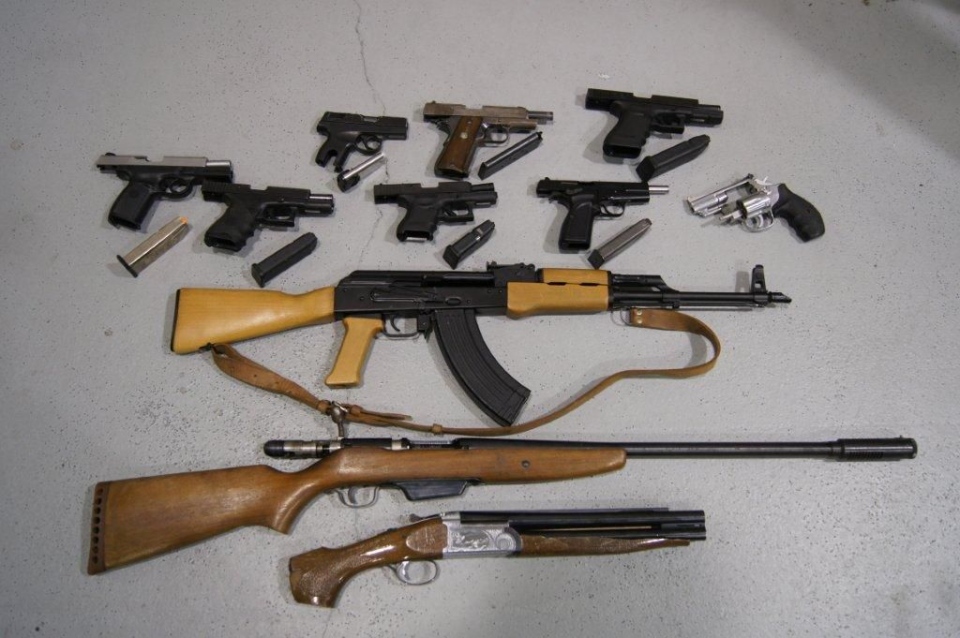
Restricted and prohibited weapons seized by Toronto police in a 2012 operation. None of the people from whom these weapons were taken was legally allowed to possess them.
Screen capture from a CTV News report.

I chose the AR-15 for that video because it is the singular most demonized firearm on the planet. The rifle is used to scare uninformed citizens daily. Yet the same rifle has never been used for murder by a legal gun owner in Canada.

In fact, it’s only been used for murder one time in our country over the last 50 years by a gang. A far cry from the narrative that “assault weapons” are lurking in every corner of Canadian society waiting to murder our children.

Justin Trudeau is claiming this firearm and others like it are so deadly, so dangerous, and so extreme that they must be confiscated from every licensed Canadian gun owner across the country. But with only one murder in 50 years, and the gun almost certainly still being the murderer’s hand regardless if there was a ban, the numbers simply don’t add up. In fact they barely register. Semi-auto rifles are extremely rare for use in Canadian gun homicide […] handguns are the firearm of choice for most shootings. Semi-autos only make up a small percentage of rifles and shotguns in our country. So how does this add up to a federal ban costing $600 million in taxpayer money?

Short answer: It doesn’t.

Canada has roughly 2.2 million licensed gun owners who are monitored DAILY by RCMP for red flags. Most people don’t know that. It’s called continuous eligibility screening. If you step out of the line with the law, the cops show up and take your guns.

Some further thoughts.

If only 5 percent of Canadian gun owners were out there shooting up the streets, we’d have 110,000 deaths on our hands annually. According to StatsCan, 2018 left Canada with 249 tragic gun murders. The vast majority were by gangs fighting over drugs in urban centers. Even if you were to incorrectly assume every one of those shootings was a legal gun owner and not a gang member (yeah right) it means 99.9998868% of us pose no threat to society. Can you think of another demographic with that kind of track record? I certainly can’t.

Now, the lives lost in those incidents are valuable. 249 Canadian families are feeling daily pain. Something needs to change. Gang warfare can’t go unchecked. But to punish millions of innocent Canadians who hold such an excellent track record will not help. There’s a very simple truth in all of this: Taking my firearms away in the Yukon will not prevent gang homicide in Toronto.

Furthermore, we as Canadians don’t discriminate against entire groups of people based on the actions of a few bad eggs. For instance, we don’t blame all Muslims in Canada for the actions of 9/11. How is it acceptable for Justin Trudeau to punish gun owners across Canada for gang violence?

January 25, 2020

Petition against the Trudeau government’s proposed “military-style assault rifle” ban goes over 100,000 signatures

Filed under: Cancon, Law, Liberty, Politics, Weapons — Tags: , , , — Nicholas @ 05:00

There may be little point in protesting, as the Trudeau government has a track record of ignoring what Canadians want to do what it intends regardless, but you can still sign the petition here (if you do sign, remember to click the confirmation link in the email you’ll receive after signing the petition). In the Post Millennial, Sam McGriskin reports that the petition has enough confirmed signatures to be the second-largest in Canadian history:

E-petitions can be open for 30, 60, 90 or 120 days for signature based on what the petitioner prefers. The petitions get a government response within 45 days of their opening. Public Safety Minister Bill Blair is overseeing the “buyback program” which Blair estimates could cost anywhere from $400 to $600 million.

Blair’s office did not respond to request for comment from The Post Millennial. His office was asked what the minister’s response is to over 100,000 Canadians calling on the government to drop what many experts see as a completely ineffectual action to curb gun violence. Blair was also asked about fellow Liberal MP Marcus Powlowsk’s letter addressed to him that opposed the gun ban (Powlowsk has since retracted the letter) and Winnipeg Police constable calling the ban “nonsense”.

“When we seize handguns, the handguns are always almost 100% in the possession of people who have no legal right to possess them. They’re almost always stolen or illegally obtained,” said Const. Rob Carver. “I simply don’t see how as a 27-year-old veteran, how adding another layer of law will make any difference, anywhere in this country.”

In Powlowski’s letter to Blair he wrote, “Over the course of the past three months, I have heard a wide variety of views on this proposed ban. I believe it is my role to ensure that these views are brought to your attention for consideration.”

“Given that there is currently no legal definition for a ‘military-style assault rifle’ in Canada, some community members I have spoken with are skeptical that a ban based on this term would make sense as a coherent firearm policy,” the letter continued.

In a CBC interview in the summer of 2018, Blair said that most of the gun crime is committed by illegal handguns smuggled in from the U.S. and he was skeptical of a gun ban being effective in combating gun crime. His position changed drastically once he was appointed by Prime Minister Justin Trudeau as the public safety minister.

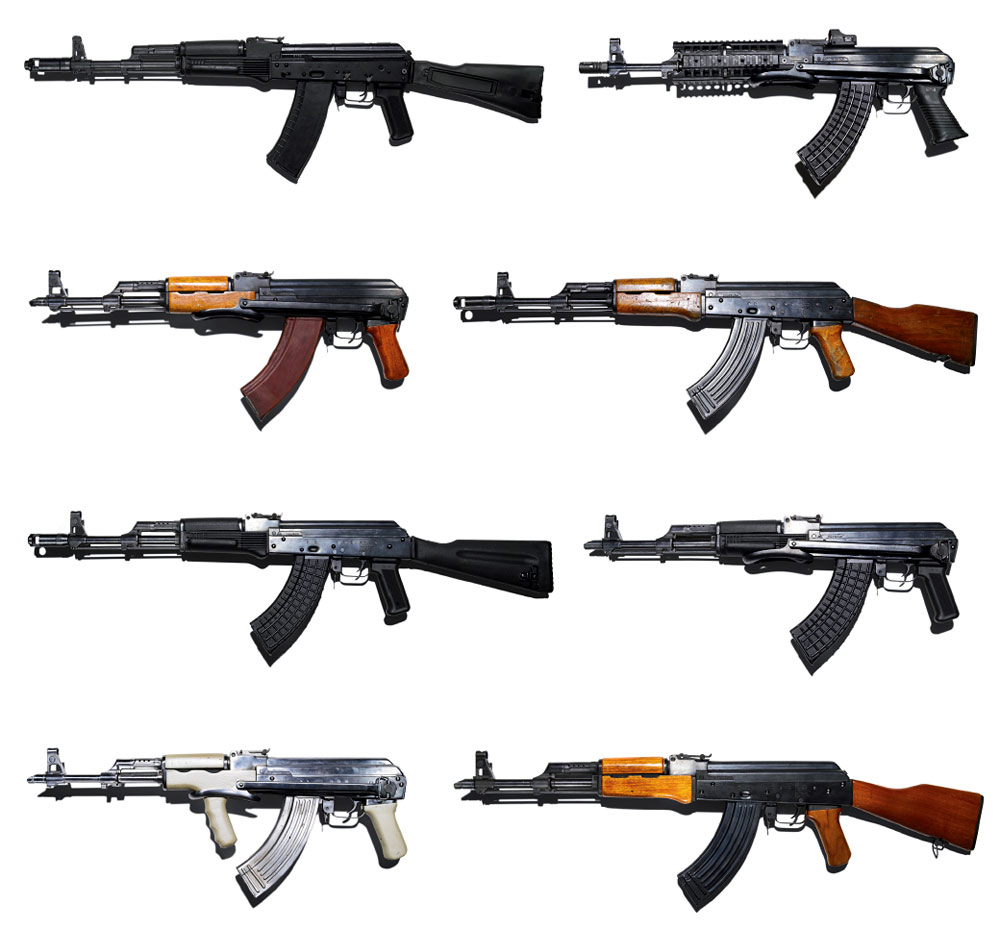
Variants of the AK-47

The Liberal voters in downtown Toronto and other major cities want the government to “do something” about gun crimes, but nothing the government can do is going to make much of a difference for people who are already violating multiple laws, so all they can do is make things worse for those who are already obeying the laws as they stand. In the real world, this makes no sense, but in the fantasy world of electoral politics, the government needs to be seen to be “doing something” … and this, stupid as it may be, counts as “something”.

January 24, 2020

From a Canadian perspective, “NORAD … is more important than NATO”

Filed under: Americas, Cancon, History, Military, Space, USA — Tags: , , , , , , — Nicholas @ 05:00

The American government has once again expressed a strong desire to update the 1957 North American Air Defence Commmand arrangement between the US and Canada for defence of the North American continent. It’s a Cold War relic to some (particularly some in the Prime Minister’s Office and cabinet), but it has a very real value to Canada, as Ted Campbell explains:

In 1957 Canada and the USA agreed to create the North American Air Defense Command. It is a “combined” command, American and Canadian people, civilian and military, work together, in combined headquarters, to conduct an active aerospace defence effort over the continent we share. Americans and Canadians work side-by-side managing the airspace, detecting intruders and identifying and intercepting them and so on.

NORAD, I would argue, is more important than NATO.

First, it is about defending our own homeland.

Second, it is about defending the US strategic deterrent, which has, arguably, done more to keep global peace than all the efforts of the United Nations, combined.

NORAD modernization and expansion should be at the top of Canada’s defence policy agenda. Specifically:

  • First, billions of dollars, likely tens of billions of dollars are going to be needed to upgrade the surveillance and warning system. We need new radars, terrestrial and space-based, and upgraded control systems to do the job properly;
  • Second, Canada needs to buy enough (85+ is just the very barest of bare minimums) of the right new fighter jet; and
  • Third, Canada needs to join the American ballistic missile defence system.

I believe that this issue: the shared defence of our, shared, continent and, therefore, the defence of the American heartland and of America’s strategic deterrent is a key, perhaps even the key element in our most important foreign relationship. […] The knowledge that Canada is doing a full and fair share of defending our shared continent, of defending America, is not lost on admirals and generals, diplomats and senior civil servants, representatives and senators in the US Congress, pundits and political leaders in waiting in the think-tanks and senior staff in the White House, even if Donald J Trump is not impressed … IF we are doing a full and fair share.

Right now, we are not.

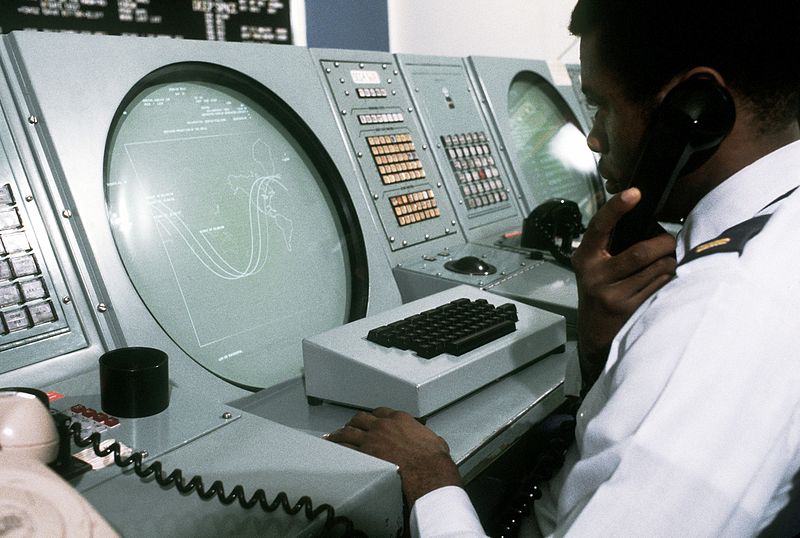
An orbital analyst tracks the Kosmos 1402 spy satellite in orbit in the Space Defense Operations Computation Center, North American Aerospace Defense Command (NORAD) on 18 February, 1983.
NORAD photo by Master Sergeant Hiyashi via Wikimedia Commons.

January 10, 2020

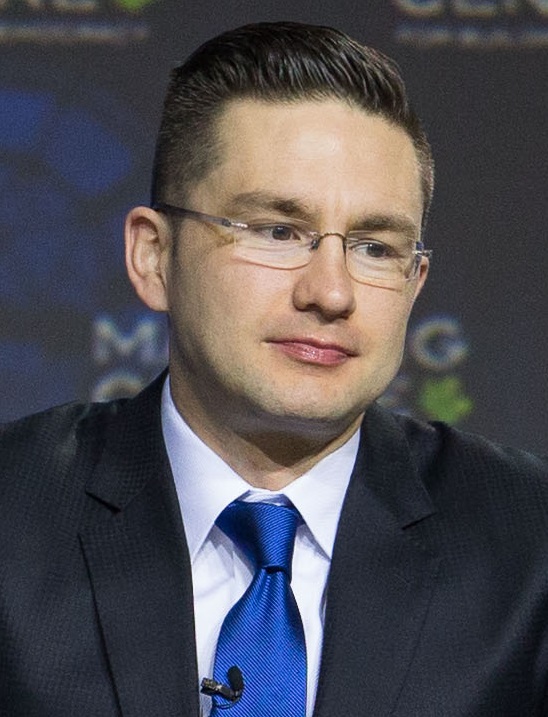
Pierre Poilievre’s bid for federal Conservative leader

Chris Selley on the varying reactions to the notion of Pierre Poilievre as Andrew Scheer’s replacement:

Glee is spreading among Liberal partisans at the thought of Pierre Poilievre succeeding Andrew Scheer as Conservative leader. The theory is he is so pugnacious, so obnoxious, so poisonously, sneeringly partisan as to be literally unelectable.

Conservative MP Pierre Poilievre at a Manning Centre event, 1 March 2014.
Manning Centre photo via Wikimedia Commons.

It is true that the man longtime Conservative cabinet minister John Baird nicknamed “Skippy,” in tribute to his enthusiastic Question Period performances, does not suffer from an excess of gravitas — though Poilievre’s reported support for his leadership bid from Baird and Jenni Byrne, a former senior adviser to Stephen Harper, lend him some within party ranks. His candidacy hasn’t made any measurable dent thus far in public opinion polls. And the opposition war rooms would certainly have fun unpacking his baggage.

Never mind Poilievre questioning the value-for-money proposition of compensating residential school victims (for which he apologized), or his use of the term “tar baby” in the House of Commons (for which he did not, and nor should he have, because it was a perfectly apt and inoffensive analogy in the context he used it), or the dreaded Green Light from the Campaign Life Coalition. Having been Harper’s parliamentary secretary, Liberals will blame him for every supposed atrocity of the Harper era.

All that said, the notion that people widely viewed as pugnacious, obnoxious and partisan-to-a-fault can’t win in Canadian politics is belied by reality. A quick glance around the federation brings Jason Kenney, Doug Ford and Justin Trudeau immediately to mind.

That’s not to say they won because of those character traits: Kenney’s and Ford’s leadership opponents would likely have fared just as well. Trudeau hoodwinked many with his Sunny Ways fraud, but he might well have won as the classic born-to-rule Liberal he turned out to be. If his government continues venting credibility at the rate it established late in its first mandate, the next Conservative leader could well become prime minister no matter who he is.

After recounting the dismal tale of Sheer’s “leadership”, Selley recounts a favourite story about Boris Johnson which contrasts strongly with the Milk Dud’s occupancy of the job.

Again, that degree of swagger and eloquence is far too much to ask of Canadian politicians. But it shouldn’t be too much to ask a party leader to have enough confidence in his party, his members, his movement and his ideas to arouse him to at least some degree of annoyance when they’re unfairly deprecated. If Conservative members aren’t excited by the prospect of a Poilievre leadership, they shouldn’t be half as mortified as Liberals think they should be.

January 9, 2020

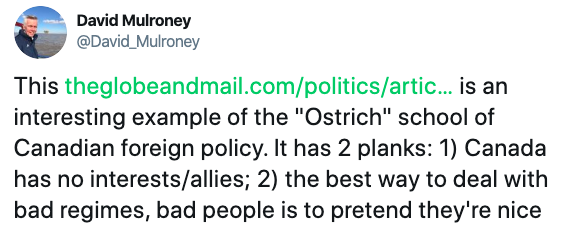
The “Ostrich” school of Canadian foreign policy

Filed under: Cancon, Government, Politics — Tags: , , , , — Nicholas @ 03:00

Ted Campbell on what former Canadian diplomat David Mulroney calls the “Ostrich” school:

John Ibitson, writing in the Globe and Mail, suggests that Justin Trudeau might want to try what former diplomat, national strategic planner in the Privy Council Office, and commentator David Mulroney refers to (on social media) as …

… “the ‘Ostrich’ school of Canadian foreign policy.” It has, he says, two pillars:

    First, “Canada has no interests/allies“; and

    Second, “The best way to deal with bad regimes, bad people is to pretend they’re nice.”

Mr Ibbitson himself says that it may be impossible to work “with European and Asian allies, including Japan, to forge a coherent response that provokes neither the Americans nor the Iranians.”

The situation in the Middle East is, as I have explained several times, hideously complex. President Trump may have made it worse … although it’s hard for me to see how any added complications really matter all that much. The socio-cultural and religious hatreds that bedevil the region are likely beyond making “worse.”

In fact, there may be an argument that a nice, all-out, albeit contained, Middle East war might be useful. Perhaps the Iranians and Saudis and Iraqis and Syrians and Yemenis and so on need to sort one another out in the way that tends to produce lasting results: on a bloody battlefield … it worked for Europe, more than once, in 1648, in 1815 and again in 1945.

John Ibbitson says that “Iran’s rage over the U.S. assassination of Qassem Soleimani risks dragging Canada and the rest of the Western alliance into a new confrontation in the Middle East, courtesy of Donald Trump … [that true, as far as it goes, and he adds] … Most Canadians would want no part of such a conflict, especially since the U.S. President might simply be seeking to distract attention from his impending impeachment trial in the Senate … [and that, the first part about Canadians wanting no part of any conflict, is also true, but President Trump’s motives are irrelvant]. The fact is that he has ignored many Iranian provocations while he attempts, vainly, in my opinion, to disengage America from the wider world. The attack on a US embassy seems to have crossed a “red line.”

[…]

But, John Ibbitson says, “Mr. Trump’s high stakes gamble – that killing one of the most senior figures in the Iranian regime will deter rather than provoke further acts of aggression from Iran – could lead to some kind of asymmetrical war, with the U.S. military attacking Iranian targets, and Iran responding through militias and proxies in Iraq and possibly in North America and Europe … [true enough, and he asks] … What would Mr. Trump expect from Canada in such a conflict?” That’s the key question.

My guesstimate is that President Trump will ask little or nothing, militarily, because his military chiefs of staff will not even have mentioned Canada when they proffer lists of nations that might help or hinder US efforts. Canada is not on any of their lists of countries that matter. Diplomatically, however, I think we do matter to the USA and I would not be surprised if the phone lines have been busy all weekend as US officials tell (rather than ask) Canadian officials to get our government “onside” with the USA. The Americans hold ALL the high cards in the game of power.

I’m sure that Prime Minister Trudeau will follow John Ibbitson’s advice and adopt the “Ostrich” strategy … head buried in the sand, pretending that Canada has neither interests nor allies and pretending that evil people are good.

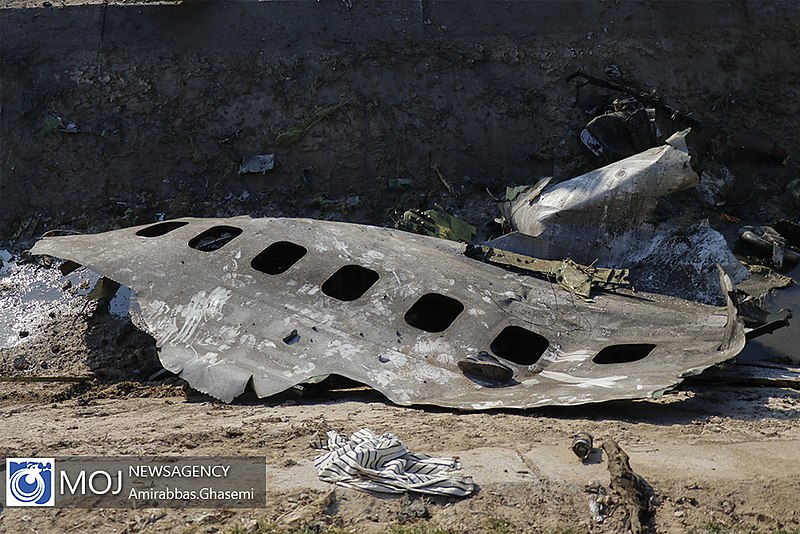
Perhaps co-incidentally with the “revenge” Iranian missile attacks on Iraqi airbases known to have US troops in the area, a Ukraine International Airlines Boeing 737-800 passenger jet crashed shortly after take-off from Tehran airport. Officially, the Iranian authorities are saying it was due to catastrophic mechanical breakdown, but they have refused to hand over the aircraft’s “black box” flight recorders for analysis. All of the 176 passengers and crew died in the crash, including 63 Canadians. It has been suggested by many that the timing was not a co-incidence and that the plane was likely hit by an Iranian surface-to-air missile due to the heightened state of tension in Iranian airspace during and after the missile launches against Iraq. Colby Cosh has more:

Some of the wreckage of Ukraine International flight 752 near Tehran, Iran.
Photo from MOJ Newsagency via Wikimedia Commons.

I am writing these words at a strange moment Wednesday morning. The president of the United States has just been on television, reassuring the American public that the crisis inspired by the assassination of Iranian general Qassem Soleimani has reached a satisfactory equilibrium. Iran made a demonstrative show of force against U.S. installations in the Middle East that killed nobody. Honour has been satisfied. Relief, among American observers, is general.

Meanwhile, Canada is mourning the deaths of dozens of its citizens in a passenger jet crash on Iranian soil. Perhaps it is a terrible coincidence. Stranger things have happened. But if you are old enough to remember the shooting down of Iran Air Flight 655 by the U.S. Navy missile cruiser USS Vincennes in 1988, you are old enough to doubt it.

The Vincennes incident is part of the historical litany that has made news consumers innately distrustful of the first draft of history. The ship was in the Persian Gulf, which at the time was swarming with Iranian gunboats trying to squeeze off the supply of arms to its enemy Iraq. The U.S. Navy had rushed to the area to keep one of the world’s economic arteries open to neutrals. But this had foreseeable consequences — plenty of confusing penny-ante firefights, and some notable accidents, including a puzzling Iraqi attack with air-launched Exocet missiles on an American frigate, USS Stark.

December 9, 2019

Nikki Haley, 2024?

Filed under: Cancon, Politics, USA — Tags: , , , — Nicholas @ 03:00

Ted Campbell looks at the US political scene and wonders if Nikki Haley will be the President after the 2024 federal election:

President Donald Trump and Ambassador Nikki Haley at the United Nations Headquarters in New York City, 24 September, 2018.
Official White House photograph by Shealah Craighead via Wikimedia Commons.

Following on from my previous post, I suspect that former Governor (South Carolina) and US Ambassador (to the United Nations) Nikki Haley might be President-elect of the United States five years from now. She is, right now, I think, the wholly unofficial but very clear voice of the post-Trump Republicans. She shares many of the Trumpian aims but she will campaign with a much different mixture of grit and grace, as the title of her recent book (campaign manifesto?) suggests.

It also seems pretty obvious to me, and to some other observers, that Justin Trudeau and the Liberal Party of Canada have decided that they can win a majority in (probably) 2021 by appealing even more strongly to the Laurentian Elites and thereby securing a half dozen more seats in each of Greater Vancouver and in urban Quebec and another dozen in (mainly) South-Western Ontario.

[…]

I think that Ambassador Haley’s comments are a shot across Canada’s bows made on behalf of the American establishment, not just Donald Trump. I suspect her remarks were very carefully crafted and even blessed by influential leaders in government, academe and in the huge array of think tanks in which America’s “government in waiting” resides. She is not speaking for Donald Trump; he can (likely will) speak for himself in his own, inimitable, bullying style. She is speaking for a larger, more permanent establishment, the “deep” administrative state that guards America’s permanent, vital interests.

Canadians need to pay attention. Nikki Haley matters; she (or someone very like her) is the future and she (or that similar someone) is the future to which we must accommodate ourselves for the 2020s and into the 2030s. We must remain a steadfast, trusted member of the US-led West. We, under Mackenzie-King and Louis St Laurent and John Diefenbaker, helped to build the US-led West, we even helped to lead it. Pierre Trudeau wanted to change Canada; he did, but not as much as he wished. His own Liberal ministers would not follow him all the way. Justin Trudeau is following in his father’s deeply flawed strategic footsteps which aim to make Canada irrelevant. He has a much tamer (weaker) cabinet allowing him and Chrystia Freeland to push Canada towards a strategic place where our country will be politically isolated, largely friendless and poor.

Liberals, by which, in the 2020s, I mean Conservatives, must speak out and offer Canadians a better, principled strategic vision which aims to secure our sovereignty, our prosperity and a respectable, responsible, leadership role ~ what Paul Martin called a role of pride and influence ~ in the world. Otherwise, Canada’s very sovereignty is in peril. If, as I expect, Donald Trump is re-elected next year and is then followed in 2024 by another, albeit “kinder, gentler” Trumpian, (which I believe is very likely because I think the Democratic Party in the USA will shatter after the 2020 election and will not be a real force again for a decade or more) then Canada must adapt. The importance of our bilateral relationship with America is to all other things as ten is to one.

December 6, 2019

“‘The world needs more Canada’, some of us love to boast. Just not if it costs money”

Filed under: Cancon, Military, Politics, USA — Tags: , , , — Nicholas @ 03:00

In hindsight, President Trump let Justin Trudeau off rather lightly for his blatant disrespect on the world stage. Trump has all the cards in our bilateral trade relationship, and the Canadian economy isn’t in a healthy state at the moment. It’s not a risk any Canadian PM should be running when we are so “delinquent” on our NATO commitments, as Chris Selley points out:

Canadian soldiers set a perimeter position after disembarking a U.S. Navy landing craft during a simulated amphibious landing, 24 April 2009. The training exercise was part of the 50th iteration of UNITAS, a multi-national exercise intended to increase interoperability among participating navies. Other participating nations include Brazil, Peru, Mexico, Germany, Ecuador, Argentina and Chile.
U.S. Coast Guard photo by Petty Officer Seth Johnson via Wikimedia Commons.

The unfortunate thing is that the precipitating event for this little spat could have been useful: An American president publicly calling out Canada, in effect, as a deadbeat brother. At their media availability-cum-fireside chat, Trump accused Canada — again in remarkably diplomatic language, by his standards — of being “slightly delinquent” when it comes to military spending, particularly as it relates to our NATO obligations. The unofficial target for NATO countries is two per cent of GDP. In 2018, the World Bank pegged Canada at 1.25.

This is far from a unique state of affairs. “The world needs more Canada,” some of us love to boast. Just not if it costs money. As a percentage of gross national income, Canada’s foreign aid spending is 0.26 per cent — below the OECD average of 0.31 and a pale shadow of countries like Sweden and Norway, which spend quadruple that. During the last election campaign, no doubt having extensively focus grouped the idea, the Conservatives promised to cut aid spending by 25 per cent.

Canada routinely lobbies for a seat on the UN Security Council for reasons no one can quite articulate — I suspect because it’s a relatively inexpensive thing that we can then boast about. Trudeau’s Liberals orated furiously about Canada’s alleged peacekeeping imperative during the 2015 election, dithered for an eon about how to fulfil it, sent 200 soldiers and eight helicopters to Mali for a year, and then brought them home. Peace kept! Conservatives spent the previous decade talking up Canada’s hard-power credentials even as military spending fell, as a percentage of GDP, for five out of the nine years Stephen Harper was prime minister.

No Canadian government of any stripe can procure a new fighter jet, icebreaker or frigate to save its life — because at the end of the day, we can’t use them to save our lives. If things really go pear-shaped we’re basically begging at Uncle Sam’s feet anyway, so military procurement has become about buying votes and very little else. Military spending has risen under Trudeau’s Liberals, but it’s still less than the 2009 high point under Harper — 1.4 per cent of GDP, in 2009. It was above two per cent as recently as 1987.

Justin Trudeau meets with President Donald Trump at the White House, 13 February, 2017.
Photo from the Office of the President of the United States via Wikimedia Commons.

« Newer PostsOlder Posts »

Powered by WordPress