
The Tank Museum
Published 9 Jul 2021Curator David Willey discusses the German Cold War tank destroyer the Kanonenjagdpanzer or Jpz 4-5 for short.
(more…)
November 10, 2021
Tank Chats #131 | Kanonenjagdpanzer | The Tank Museum
Comments Off on Tank Chats #131 | Kanonenjagdpanzer | The Tank Museum
October 30, 2021
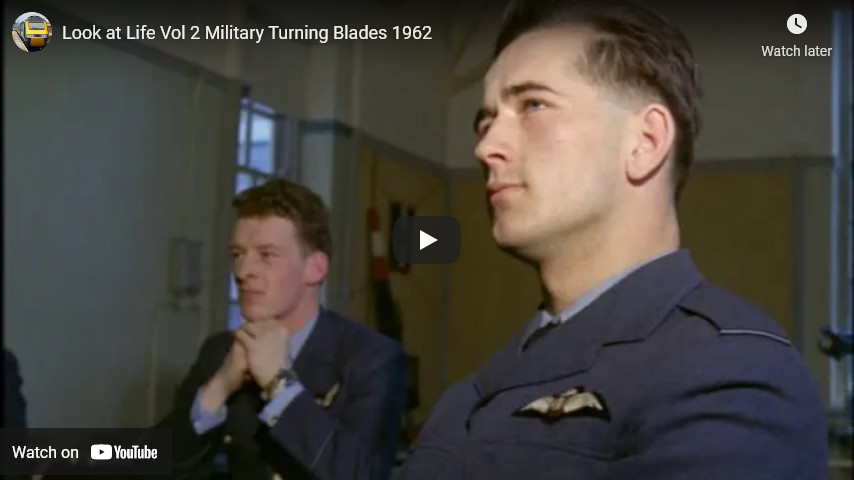
Look at Life — Turning Blades (1962)
PauliosVids
Published 20 Nov 2018The world of the helicopter in 1962; from the Belvedere to the experimental Rotodyne VTOL craft.
Comments Off on Look at Life — Turning Blades (1962)
October 27, 2021
Alouette and The Ionospheric Satellites; A Beginners Guide To The Early Canadian Space Program
Polyus Studios
Published 22 Aug 2109Don’t forget to like the video and subscribe to my channel!
Support me on Patreon – https://www.patreon.com/polyusstudiosIn the early 1960s Canada was among the early pioneers of space technology and research. Scientists and engineers took advantage of then cutting edge technologies like the transistor and solar panels, to produce the Alouette and ISIS series of satellites. It was an immense engineering challenge that represented the high water mark of a tradition of ionospheric research that began back before the establishment of Canada as a nation. The Alouette and ISIS series of satellites produced more than 1200 research papers exploring all aspects of the Earth’s ionosphere, the aurora, and other phenomena. They also demonstrated to the world that Canada was a world leader in peaceful space technology.
0:00 Intro
0:29 Arctic exploration and early magnetic field research
2:40 New technologies promote new questions
5:35 Birth of the Canadian Space Program
9:25 Testing and Launch of Alouette
13:04 ISIS series of satellites
17:12 Legacy and ConclusionMusic:
“Denmark” – Portland Cello ProjectResearch sources:
https://nssdc.gsfc.nasa.gov/nmc/space…
https://space.skyrocket.de/doc_sdat/i…
http://www.friendsofcrc.ca/Projects/I…
https://www.ieee.ca/millennium/alouet…
https://www.ieee.ca/millennium/isis/i…
http://www.asc-csa.gc.ca/eng/satellit…
http://friendsofcrc.ca/Projects/ISIS/…
https://nssdc.gsfc.nasa.gov/nmc/space…
http://acuriousguy.blogspot.com/2017/…
https://photostories.ca/explore/photo…
http://www.ieee.dreamhosters.com/digl…
https://www.ieee.ca/millennium/alouet…#Spacecraft #PolyusStudios #CanadianAerospace

Comments Off on Alouette and The Ionospheric Satellites; A Beginners Guide To The Early Canadian Space Program
October 18, 2021
Look at Life — The Rocket Age Lancers (1961)
PauliosVids
Published 20 Nov 2018Looking to the future with the 9th Queen’s Royal Lancers.
Comments Off on Look at Life — The Rocket Age Lancers (1961)
October 14, 2021
Canada’s carrier-borne fighters onboard HMCS Bonaventure; the story of the McDonnell F2H-3 Banshee
Polyus Studios
Published 2 Apr 2021Don’t forget to like the video and subscribe to my channel!
Support me on Patreon – https://www.patreon.com/polyusstudiosUp until the late 1960s the Canadian Navy operated a modern aircraft carrier. It had an angled flight deck, steam catapults, and fighter jets. The jets were comparable to land-based aircraft like the CF-100 but could pack a vicious air-to-air punch with their Sidewinder missiles. They saw a brief service aboard HMCS Bonaventure before being retired without replacement. It was the McDonnell F2H Banshee, Canada’s premiere sea-based jet fighter.
0:00 Introduction
0:29 Canadian Navy aircraft carriers 1945 to 1957
2:13 New Fighter Selection
3:34 Specifications
5:07 Comparison to the CF-100
5:50 Operational Service
8:23 Accidents and RetirementMusic:
Denmark – Portland Cello ProjectResearch Sources:
CASM-Aircraft Histories – HMCS Bonaventure CVL-22 by Robert T. Murray
McDonnell Banshee – Royal Canadian Air Force – http://www.rcaf-arc.forces.gc.ca/en/a…
Magnificent Moments by Vintage Wings of Canada – http://www.vintagewings.ca/VintageNew…
McDonnell Banshee – Shearwater Aviation Museum – http://www.shearwateraviationmuseum.n…
HMCS Bonaventure: Canada’s Last Aircraft Carrier by Kevin Patterson – http://www.sevenyearproject.com/canad…Footage Sources:
HMCS Magnificent (CVL 21) – Majestic Class Light Aircraft Carrier – Camildoc – https://youtu.be/_Zvnz06-MRc
HMCS Bonaventure (CVL 22) – Majestic Class Aircraft Carrier – Camildoc – https://youtu.be/QmFD5bijrok#Banshee #CanadianAerospace #PolyusStudios

Comments Off on Canada’s carrier-borne fighters onboard HMCS Bonaventure; the story of the McDonnell F2H-3 Banshee
October 3, 2021
The Triumph Spitfire Story
Big Car old account
Published 8 Mar 2019To help me continue producing great content, please consider supporting me: https://www.patreon.com/bigcar
Help support my channel through these Amazon US affiliate links:
Triumph Spitfire t-shirt: https://amzn.to/2KdY33m
Triumph Spitfire baseball cap: https://amzn.to/2U1SrZF
Triumph sweatshirt: https://amzn.to/2KgGIXq
Triumph Spitfire model car: https://amzn.to/2U4gnvo
Triumph keyfob: https://amzn.to/2YTeKV4
Triumph Spitfire metal sign: https://amzn.to/2U2u4ejThe Spitfire is a beautiful automobile, a thing of wonder penned by an Italian genius, but it almost never happened. If not for a chance find in the dusty corner of a factory it would have remained merely a “could have been”. But Triumph produced a car that still inspires new creations today and has a strong and loyal fan base around the world, nearly sixty years since it burst on the scene.
#TriumphSpitfire

Comments Off on The Triumph Spitfire Story
September 15, 2021
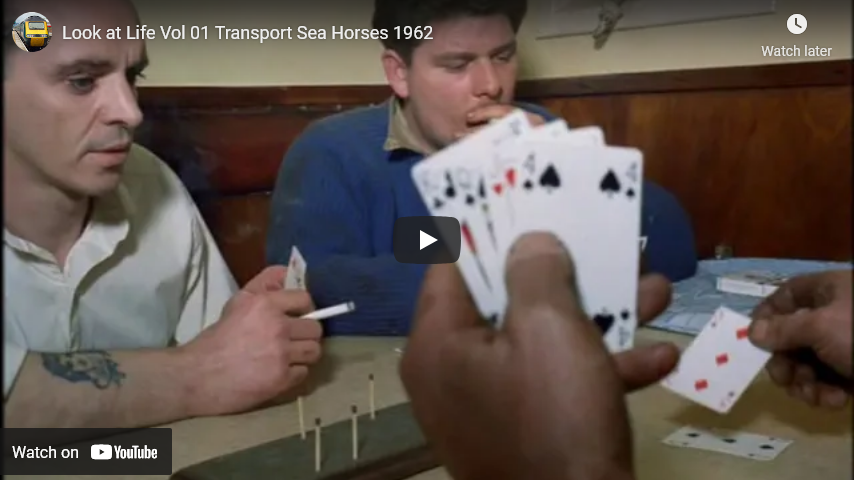
Look at Life – Sea Horses – Tugboats from the 1960s
PauliosVids
Published 24 Nov 2018[The version of this film I originally scheduled has been taken down, but included a much more informative description, which I’m retaining below:]
capspread
Published 11 Oct 2020#LookatLife #Tugboats #MerchantNavy #QueenMary #QueenElizabeth
Look at Life – Sea Horses – Tugboats from the 1960sThe video is the latest Look at Life, Volume One – Transport called Sea Horses – Little Tugs, without which any big port would come to a standstill, are featured made in May 1962.
Several Tugs are featured in the video along with several ships, including Ocean Liners. Those with names that are recognisable are below. There are others which are not shown below because their names are not known.
Tugboats
William Ryan
Built 1908 – Re-engined 1956 – Sold in 2000 for £1 as a “non-commercial worker”. In 2005, spotted at Hoo Marina converted to a houseboat. In 2009 for sale priced £33k In 2010 – Engine Removed.Sun.X
Built in 1920 in Selby in Yorkshire. 196grt. Disposed 1969 and scrapped in 1969.Effleton Hall
Paddlewheel Tugboat built in 1914. In service until 1967 where she was sold to shipbreakers for scrap. She was left sitting on a mudbank in Dunston. As part of the scrapping process her wooden afterdeck and interior were destroyed by fire prior to being broken up. The tug remained there for 2 years, deck frames warped, wood burned or rotted, hull part flooded and engines rusty but intact. But she was bought by an American and rebuilt on the River Tyne during 1969, modified to enable her to cross the Atlantic Ocean under her own steam, requiring fitting of modern navigational aids, radio, an enclosed wheelhouse and conversion from coal to diesel oil firing. She set sail on 18 September 1969 and arrived late March 1970 at San Francisco. She was donated to the National Park Service in 1979 and is now berthed at Hyde Street Pier, San Francisco. She has been restored to resemble her condition post-War 1946. 166grt – Length – 100 feet; Beam 21 feet; Depth of hold 10.8 feet.Gladstone – Registered at Liverpool
Formby – Built 1951 Registered at Liverpool – 237grt Steam Engine
Canada – Registered at Liverpool
Marinia – Ocean going Tugboat
Poolzee – Dutch Smit Tug – Built 1942
Hestor – Could be Dutch
Ocean Liners
Queen Mary – 81,000 grt
In service between 1936 and 1967. She is now permanently moored as a tourist attraction, hotel, museum and event facility in Long Beach California.Queen Elizabeth – Largest Ocean Liner at the time at 83,000 grt. In service between 1939 and 1968. Caught fire in Hong Kong in 1972 and completely destroyed.
Cargo Ships
Northern Clipper – No info
Toula – Built in 1937 as Westralia as a passenger-cargo ship. Renamed Toula in 1959 and in 1970 broken up in Shanghai.
Allegrity – Built 1945 as a coastal tanker. In 1946 renamed Sobat. In 1951 renamed Allegrity and purchased by FT Everard. On 22 December 1961 she capsized after grounding near Falmouth. She was a total loss
798grt Length – 183 feet; Breadth – 28 feet; Depth – 13 feet
Speed – 9 knots.
Comments Off on Look at Life – Sea Horses – Tugboats from the 1960s
September 6, 2021
Why the British Rail Modernisation Plan Failed
Ruairidh MacVeigh
Published 27 Feb 2021Hello again! 😀
Back to trains, and for this week we discuss one of Britain’s most audacious but ultimately futile projects to revitalise the network in the wake of World War II. However, rather than undertaking a comprehensive rebuild of the network, British Railways was short-changed time and again, ultimately resulting in a facelifted but largely unchanged system that dated back to the Victorian era, though it was much smaller and crippled by far more debt than ever before.
This video was actually a suggestion from an American viewer, who was curious as to why British Rail had such a vast array of diesel locomotives during its early years. 🙂
All video content and images in this production have been provided with permission wherever possible. While I endeavour to ensure that all accreditations properly name the original creator, some of my sources do not list them as they are usually provided by other, unrelated YouTubers. Therefore, if I have mistakenly put the accreditation of “Unknown”, and you are aware of the original creator, please send me a personal message at my Gmail (this is more effective than comments as I am often unable to read all of them): rorymacveigh@gmail.com
The views and opinions expressed in this video are my personal appraisal and are not the views and opinions of any of these individuals or bodies who have kindly supplied me with footage and images.
If you enjoyed this video, why not leave a like, and consider subscribing for more great content coming soon.
Thanks again, everyone, and enjoy! 😀
References:
– Railways Archive (and their respective sources)
– RMWeb (and their respective sources)
– Wikipedia (and its respective references)

Comments Off on Why the British Rail Modernisation Plan Failed
August 16, 2021
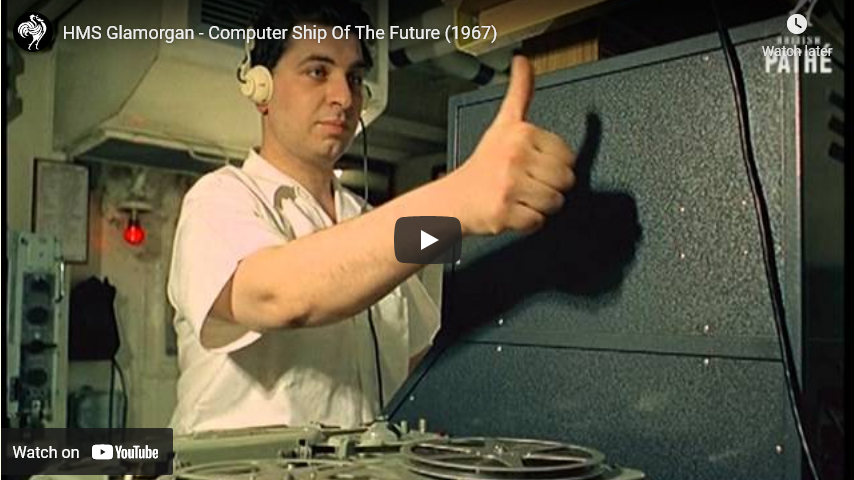
HMS Glamorgan – Computer Ship Of The Future (1967)
British Pathé
Published 13 Apr 2014English Channel.
Top shots of the guided missile destroyer
battleshipHMS Glamorgan at sea. In the control/computer room a man pulls out old-fashioned computer records [circuit packs, I believe] from a large control cupboard; officers on the bridge look at dials and through binoculars. Various shots in steering, control and engine rooms as the ship moves along. On the flight deck sailors play hockey while others watch and cheer them on. A navigator on deck looks through a sextant while another officer makes notes. A helicopter is moved from a hanger out onto the deck and prepared for takeoff; firemen in asbestos suits and helmets stand by with a hose; the chopper takes off.Three young men play guitars and banjos before a television camera in a tiny studio; we hear that the ship has its own closed circuit TV station; good shots of the filming; tape recording machines going round; picture being adjusted. Men in a mess room watch the performance on the television while they have a pint. Several shots of the sailors getting their rum rations. Various shots in the kitchens show food being prepared and served into the sailors mess tins; good canteen and catering shots (most of the food looks pretty unappetising) [the person writing the description clearly has no idea just how unappetizing British food could be in the 1960s … this looks well above average for the time]. In the sick bay a sailor gets a shot in the arm from the Medical Officer.
Several shots of the radar antennae on the ship and the men looking at the radar scanner screens in the control room. Men in protective gloves and hoods load shells in the gun turret; M/Ss of the main guns on the ship being fired. Several shots show the countdown for Seaslug missiles to be fired; men at control panels look at dials and radar screens; an officer counts down into a microphone (mute). Complicated boards of buttons show the location of the missiles, intercut with shots of the missiles moving into position by electronic instruction. The missiles move into the launchers on deck and are fired; men watch their progress on a radar screen. Another launcher moves into position; L/S of the ship as the missiles are fired.
Note: on file is correspondence and information about HMS Glamorgan. Cuts exist – see separate record. FILM ID:419.04
A VIDEO FROM BRITISH PATHÉ. EXPLORE OUR ONLINE CHANNEL, BRITISH PATHÉ TV. IT’S FULL OF GREAT DOCUMENTARIES, FASCINATING INTERVIEWS, AND CLASSIC MOVIES. http://www.britishpathe.tv/
FOR LICENSING ENQUIRIES VISIT http://www.britishpathe.com/
British Pathé also represents the Reuters historical collection, which includes more than 136,000 items from the news agencies Gaumont Graphic (1910-1932), Empire News Bulletin (1926-1930), British Paramount (1931-1957), and Gaumont British (1934-1959), as well as Visnews content from 1957 to the end of 1984. All footage can be viewed on the British Pathé website. https://www.britishpathe.com/
Comments Off on HMS Glamorgan – Computer Ship Of The Future (1967)
August 6, 2021
Avro Canada CF-100 Canuck: Canada’s only domestically produced all-weather interceptor
Polyus Studios
Published 3 Oct 2017Support me on Patreon – https://www.patreon.com/polyusstudios
**I realize a few of you are having trouble with the way I talk and how I’ve done the sound mixing. Please note that this was my first video and I tried to get everything right as I learned to do it. That said, I obviously made some mistakes. I am just one guy making these things and I’m learning as I go. Feel free to check out my more recent videos where I have tried to correct the sound issues.**
The CF-100 is Canada’s only domestically designed jet fighter to reach service and to be built directly to RCAF specifications. In its day it was a competitive all-weather interceptor. The Canuck protected Canadian airspace from the threat of nuclear armed Soviet bombers for over a decade. This is the story of its development and deployment.
Aircraft mentioned:
Vampire F.3
CL-13 Sabre
CF-100 Canuck
CF-101 Voodoo
CF-105 ArrowResearch sources:
http://www.cmp-cpm.forces.gc.ca/dhh-d…
https://www.bombercommandmuseum.ca/aircraft/cf-100/
http://www.canadianflight.org/content/avro-canada-cf-100-canuck
http://www.avroland.ca/al-cf100.html
http://www.aviastar.org/air/canada/canada_canuck.php
http://www.rwrwalker.ca/caf_canucks.html
http://image-bank.techno-science.ca/d…
NORAD and the Soviet Nuclear Threat: Canada’s Secret Electronic Air War By Gordon A.A. Wilson0:00 Introduction
1:08 Initial Development
2:38 CF-100 Mk 1 and Mk 2
4:26 CF-100 Mk 3
6:51 CF-103 and Transonic Speeds
7:36 CF-100 Mk 4
11:33 CF-100 Mk 5
13:14 Velvet Glove and Future Proposals
14:28 Operational History
20:02 Conclusion#CF100 #CanadianAerospace #PolyusStudios

Comments Off on Avro Canada CF-100 Canuck: Canada’s only domestically produced all-weather interceptor
July 10, 2021
The early growth of “Dianetics”, later known as Scientology
In Quillette, David S. Wills outlines the early years of L. Ron Hubbard’s quasi-religion that eventually turned into a full-fledged cult:

In the 21st century, Scientology has become a synonym for “cult”. Thanks to an array of investigative exposés and testimony from former members, few people in the Western world are unaware of at least some of the Church’s fantastical beliefs and more alarming behaviours. Sixty years ago, however, it was viewed quite differently. Scientology — or dianetics, as it was originally known — was an appealing idea to many intellectuals and creatives at a time when the world was rapidly changing and notions that had once been taken for granted were suddenly being tossed out of the window. In science, art, and philosophy, accepted norms were being turned on their heads, and in the 1950s and ’60s, L. Ron Hubbard’s ideas — peddled as an alternative to psychiatry — fit quite nicely among the emerging doctrines dreamed up by his contemporary thinkers.
Indeed, the original concepts that launched Hubbard’s movement were not as outrageous as those that define it today. Among these, the idea of “engrams” and the “reactive mind” were perhaps the most appealing. Hubbard theorised that humans are marked by unconscious traumas that essentially pre-determine “aberrant” behaviour. Naturally, he claimed that his organisation held the key to removing these traumas and freeing people from a great deal of suffering. Stripped down to its fundamentals, dianetics seemed to be no more implausible than the strange new ideas espoused by Freud and Jung, or even those previously espoused by Nietzsche.
Of course, there were always oddball beliefs bundled in as well, and as the years went by, these became more prominent. Hubbard — a science fiction author prior to his metamorphosis into quasi-religious guru — enjoyed adding new elements of fantasy to his central theories, layering sci-fi storylines on top of one another until his movement had become an extravagant sort of space opera. The more obvious cult-like elements would emerge in due course: charging adherents for advancement in the organisation; trapping them with manipulation and blackmail; the development of esoteric jargon known as “Scientologese” that made it almost impossible for real communication to take place between members and outsiders; and shocking campaigns of harassment against critics and apostates.
In the early days, however, none of this was particularly obvious. Hard as it is to believe now, many intelligent people were once drawn to Scientology out of an overabundance of curiosity, and its absurdities were generally perceived as harmless, affable eccentricities. Among those lured into the fold of this mysterious new organisation were two of the most important authors of the 20th century: Aldous Huxley and William S. Burroughs. Although Hubbard’s own novels elicit little more than derision from critics, his ideas wormed their way into some very influential books and left an indelible mark on American literature.
When people first hear about Huxley’s and Burroughs’s interest in Scientology, they typically express some degree of shock and/or scepticism. These men were highly intelligent thinkers famous for their insightful criticisms of the dominant culture. And both wrote extensively on the topic of coercion — Huxley was keenly aware of how humans could be manipulated into subservience by technodictators, and Burroughs was fascinated by the idea that language could be employed for the purposes of mind control. How then could they have fallen for the very thing they critiqued?
Comments Off on The early growth of “Dianetics”, later known as Scientology
July 7, 2021
QotD: Bad language from Down Under
Barry McKenzie, Australian at Large, made his debut in the 10 July 1964 issue of Private Eye. He was the creation of the comedian Barry Humphries, then, like a number of other creative Aussie expats, resident in London. Hero of a new strip cartoon, illustrations by Nicholas Garland, Bazza, as he would become known, was identified in this first outing as “a strapping young specimen of Australian manhood” and self-described as “an ordinary honest working-class bloke”. His first words “Excuse I, what’s gone flaming wrong?” informed readers that they were in the presence of an antipodean Candide, the classic hick, come to the big city and ready to surf on a tide of Foster’s lager into what within a year would be apostrophised as “Swinging London”.
Naive he surely was — and while over his nine-year career at the Eye he might increasingly turn the tables on the Brits, that innocence never wholly disappeared — in one respect he was omnipotent. His slang-laden, all-Australian language burst into the Eye reader’s consciousness fully-formed and quite astounding. By 1968 Bazza was offering freckle puncher, smell like an Abo’s armpit, bang like a shithouse door, dry as a nun’s nasty, point Percy at the porcelain, siphon the python and perhaps the most celebrated, the Technicolour yawn (aka the liquid laugh or the big spit).
[…]
It was also resolutely carnal: in its concentration on defecation and urination, drinking (and the seemingly inevitable vomiting it induced) and copulation (even if Bazza remains the eternal virgin), Humphries either created or collated a vocabulary that would not be rivalled until Viz magazine’s “swearing dictionary” Roger’s Profanisaurus began appearing in 1997.
Rooted, from Amanda Laugesen, director of the Australian National Dictionary Centre at the Australian National University and chief editor of the Australian National Dictionary, focuses on this side of the Australian vocabulary. Rooted comes from root, a euphemism for fuck, both literally, in the context of sex, and figuratively, as in harm, destroy, and so on. It falls into what Laugesen is happy to term “bad language”, even if one might suspect that with her formidable knowledge it is a term she knows perfectly well is a construct of tabloid moralising and empty religiosity. (Perhaps I am hardened by proximity, but I find it sad she feels the need to warn readers they will encounter the language that is the subject of her work.)
Jonathon Green, “Fair dinkum dictionary”, The Critic, 2021-04-08.
Comments Off on QotD: Bad language from Down Under
June 25, 2021
L4: The Bren in 7.62mm NATO
Forgotten Weapons
Published 10 Mar 2021http://www.patreon.com/ForgottenWeapons
https://www.floatplane.com/channel/Fo…
Cool Forgotten Weapons merch! http://shop.bbtv.com/collections/forg…
When the British military transitioned from the .303 British cartridge to 7.62mm NATO in the 1950s, it replaced the Enfield rifles with the new L1A1 SLR (the FAL) but retained the Bren gun as a support weapon. The Bren was updated to use 7.62mm, in a process more complicated than most people would think. Ultimately, only a few thousand L4 series Brens were made, as they were rather quickly supplanted by the FN MAG as a belt-fed support weapon.
The four different patterns of L4 are:
L4A1 – the initial pattern, without magazine supports
L4A2 – the Bren MkIII in 7.62mm with magazine supports
L4A3 – the Bren MkII in 7.62mm with magazine supports
L4A4 – the A2 and A3 patterns with chrome-lined barrelsContact:
Forgotten Weapons
6281 N. Oracle 36270
Tucson, AZ 85740

Comments Off on L4: The Bren in 7.62mm NATO
June 24, 2021
The Founder | Based on a True Story
The Cynical Historian
Published 27 Jul 2017This one is a contender for best historical film of 2016. The Founder is an amazing movie about the beginning of the McDonald’s food chain. Seriously, more films should take cues from this.
————————————————————
references:
http://www.historyvshollywood.com/ree…http://time.com/money/4602541/the-fou…
http://content.time.com/time/magazine…
https://www.bustle.com/p/how-accurate…
https://www.washingtonpost.com/entert…
https://www.theatlantic.com/entertain…
https://www.nytimes.com/2016/05/20/bu…
http://www.abc.net.au/news/2016-11-24…
http://www.cbsnews.com/news/the-real-…
https://en.wikipedia.org/wiki/Ray_Kroc
https://en.wikipedia.org/wiki/Richard…
————————————————————
contribute to my Patreon:
https://www.patreon.com/CynicalHistorianLET’S CONNECT:
https://twitter.com/Cynical_History
————————————————————
Wiki:
The Founder is a 2016 American biographical drama film directed by John Lee Hancock and written by Robert Siegel. The film stars Michael Keaton as businessman Ray Kroc, and portrays the story of his creation of the McDonald’s fast food chain. Nick Offerman and John Carroll Lynch co-star as McDonald’s founders Richard and Maurice McDonald.The film premiered at Arclight Hollywood on December 7, 2016 and was released in the United States on January 20, 2017, by The Weinstein Company. It grossed $23 million worldwide and received generally positive reviews from critics, with praise for Keaton’s performance.
————————————————————
Hashtags: #History #TheFounder #McDonalds #Review #BasedOnATrueStory #RayKroc

Comments Off on The Founder | Based on a True Story
June 19, 2021
Airfix Catalogue 1962 Page by Page — The Very First Catalogue
MOS6510 Models
Published 29 May 2020Airfix Catalogue 1962 Page by Page — The Very First Catalogue
We turn back time and go through the very first Airfix Model kit Catalogue one page at a time. 1962 was the year of the first edition Catalogue of Airfix Constant Scale Construction Kits. Filled with 135 kits — planes, trains and automobiles the norm, with figures trackside OO/HO constant scale. There is lots in here to look at and enjoy.
As you flip through the pages of this Airfix Catalogue, you will see details of over 135 constant scale plastic construction kits. From the photographs and brief descriptions you will get an idea of the look and size of the finished models. Not until you begin to build them, however, will you feel the excitement and satisfaction of creating miniature exact scale models of famous fighter planes, tanks and ships. So put this video on HD 1080p and make it full screen … sit back and enjoy this catalogue page by page
If you liked the video you can buy me a coffee here
https://www.buymeacoffee.com/mos6510Music credit : Music by @ikson -alive https://youtube.com/ikson
Find me on
Twitter : https://twitter.com/MOS6510YT
instagram : https://www.instagram.com/mos6510yt/
Reddit : https://www.reddit.com/r/Scalemodelclub/
Discord : https://discord.gg/e8dp3SGInformation on kits was researched using https://www.scalemates.com plus other websites and forums found on the internet
Links below are affiliated and i will get a small commission which help keep the channel in models
Buy Airfix kits here https://www.tagserve.com/clickServlet…
Tools….
Hardcastle 9 Drawer Red Lockable Topchest Tool Box https://amzn.to/32BjwJ2TaoTronics LED Desk Lamp, 5 Lighting Modes with 7 Brightness Levels, Touch Control, USB Charging Port, https://amzn.to/2Ts3D3k
Smart Weigh SWS600 Elite Pocket Sized Digital Scale https://amzn.to/2vgD5uc
Buy The Humbrol Workstation Bundle here https://amzn.to/2o0aLIr
I get all my Tamiya supplies from http://elementgames.co.uk/?d=10388
Small Acrylic Caddie For Paints, Glues Brushes https://ebay.us/60PFMj
Tweezers I use are https://amzn.to/37B7UXQ
Sprue Cutters
Tamiya 74035 – https://amzn.to/36wqhfP
Plato Model 170 – https://amzn.to/37th0pTHobbyZone Paint Stand / Rack 36mm They fit Tamiya Paints and other paints under 36mm diameter. https://amzn.to/38JgEw7
26mm version https://amzn.to/2NhMIQL
41mm version https://amzn.to/2I1naTC
Other Racks Here https://amzn.to/2Q2qK6g0:01 Airfix Catalogue 1962
0:05 Airfix catalog 1962,
0:10 first edition airfix catalogue,
0:31 Vintage airfix catalog,
0:32 vintage airfix catalogue,
0:33 the very first airfix catalog,
the very first airfix catalogue,
constant scale plastic construction kits,
airfix first edition 1962,
catalogue design of airfix constant scale construction kits,
Airfix aircraft series 2,
Airfix scale model kits catalogue,
1:00 airfix first ever catalogue,
1:15 airfix catalog,
1:20 airfix catalogue
2:20 airfix old catalogue

Comments Off on Airfix Catalogue 1962 Page by Page — The Very First Catalogue


