
Train of Thought
Published 22 Oct 2021In this video, we take a look at how a British holiday camp managed to help save some very rare express engines, possibly by accident …
This video falls under the fair use act of 1976
January 28, 2022
How a holiday camp accidentally helped save eight steam engines – Butlin’s Steam Engines
Comments Off on How a holiday camp accidentally helped save eight steam engines – Butlin’s Steam Engines
January 20, 2022
“McLuhan came to be regarded by the Baby Boomer generation as a guru and prophet; a visionary who had discovered something profound, not merely about the media, but about life and the universe”
In Quillette, Graham Majin looks at the life and works of Marshall McLuhan:
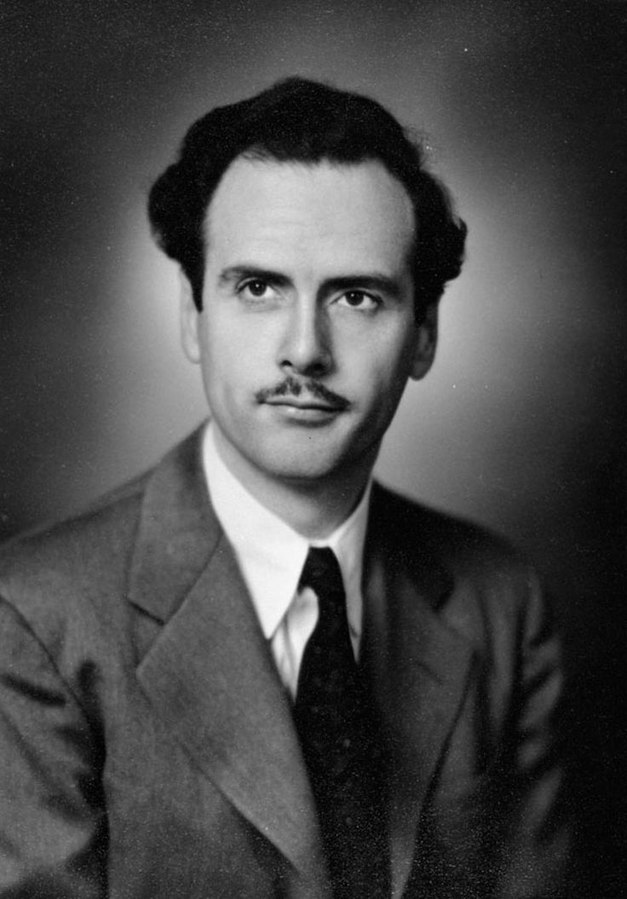
Marshall McLuhan, 1945.
Library and Archives Canada reference number PA-172791 via Wikimedia Commons.
The media ecosystem of the early 21st century is marked by a collapse of trust in journalism. How did we get here? As we look back, like a detective searching for clues, one moment stands out as significant; the publication on March 1st, 1962, of The Gutenberg Galaxy, written by a then-obscure Canadian academic named Marshall McLuhan. This book set in motion a line of falling dominoes, the consequences of which continue to affect us profoundly today.
McLuhan came to be regarded by the Baby Boomer generation as a guru and prophet; a visionary who had discovered something profound, not merely about the media, but about life and the universe. During the 1960s, he became a major celebrity, especially in the US. He featured on the cover of Newsweek magazine, was frequently interviewed on TV, and made a cameo appearance in Woody Allen’s 1977 movie Annie Hall. There was even a prog rock band named in his honor. The American media historian Aniko Bodroghkozy writes that “no other figure who was not of the movement itself received so much positive notice in the alternative newspapers that served dissident youth communities.” In 1965, the celebrity journalist Tom Wolfe asked breathlessly, “Suppose he is what he sounds like, the most important thinker since Newton, Darwin, Freud, Einstein, Pavlov?” Wolfe described McLuhan as an almost Christ-like figure:
A lot of McLuhanites have started speaking of him as a prophet. It is only partly his visions of the future. It is more his extraordinary attitude, his demeanor, his qualities of monomania, of mission. He doesn’t debate other scholars, much less TV executives. He is not competing for status; he is alone on a vast unseen terrain, the walker through walls, the X-ray eye.
Writing in 1967, John Quirk agreed that McLuhan was a “savant and prophet” and explained that, “McLuhanites hold that the new technologies will lend men the awareness and instruments necessary to solve contemporary problems and inaugurate a bright new era.” McLuhan was a master of the catchy one-liner and the original source of Timothy Leary’s famous counterculture catchphrase, “Turn on, tune in, drop out.”
McLuhan’s division of media into two types was certainly influential although that influence wasn’t particularly useful:
In The Gutenberg Galaxy, McLuhan observed that the decline of Catholicism, the rise of Protestantism, and the drift towards secularism all coincided with the development of printing. He hypothesized that the invention of printing had produced the European Enlightenment and Victorian liberal democracy. It was not what was printed, but printing itself that was responsible. McLuhan classified all media into two types: “hot” and “cool”. Printed books and newspapers, he suggested, were “hot” because they were bursting with information. Pre-Renaissance forms of communication, on the other hand, like the spoken Catholic Mass, were “cool”. This was because the Mass was spoken in Latin and hence contained little or no information that ordinary people could understand. Handwritten books were also categorized as “cool”.
Baby Boomers were quite receptive to McLuhan’s message, as it told them very much the sort of thing they wanted to hear:
He had produced a Boomer-friendly, sanitized version of his thesis in which magic and fantasy replaced religion. He also took care to flatter his Boomer audience by telling them that they were uniquely in tune with a deeper reality their parents could not see or understand. “We of the TV age,” he wrote, “are cool. The waltz was a hot, fast mechanical dance suited to the industrial time in its moods of pomp and circumstance. In contrast, the Twist is a cool, involved and chatty form of improvised gesture.”
McLuhan told the Boomers that they might appear irrational to their parents, but this was simply because the old generation was raised on obsolete “hot” media. As a result, he said, they had lost touch with their emotional side and become unnaturally rational and impartial: “Phonetic culture endows men with the means of repressing their feelings and emotions when engaged in action. To act without reacting, without involvement, is the peculiar advantage of Western literate man.”
McLuhan was a key influence on the Boomers, but his ideas failed when logically analyzed:
Trying to deconstruct McLuhan’s arguments reveals glaring absurdities. For example, it is self-defeating to claim that the content of a message is unimportant. On the contrary, all messages must convey information which corresponds with, or claims to correspond with, some state of affairs in the real world if they are to be useful. A news article without news, a weather forecast that does not mention the weather, or a traffic report lacking information about traffic might all be deliciously McLuhanesque, but they are not helpful. Even the Bible, revered by McLuhan, would be meaningless if it were merely a book of random words and blank pages. As Finklestein summarized, McLuhan’s argument is “absurd, when analyzed.”
McLuhan might well be the patron saint of fake news.
Comments Off on “McLuhan came to be regarded by the Baby Boomer generation as a guru and prophet; a visionary who had discovered something profound, not merely about the media, but about life and the universe”
January 15, 2022
Vietnam Mk18 Mod0 Hand-Crank Grenade Launcher
Forgotten Weapons
Published 20 Dec 2017http://www.patreon.com/ForgottenWeapons
The Mk18 Mod0 grenade launchers was developed by the Honeywell corporation in 1962, and was the first weapon in what would became a category of high volume grenade launchers used by the US military. The modern iterations are all self-loading, but this first example was fired by a manual crank handle, like a Gatling gun. The Mk18 used the same 40x46mm grenade cartridge as the single shot M79 launcher, and this round’s low pressure allowed the Mk18 to use a rather unusual breech mechanism.
Unlike most belt-fed weapons, the cartridges in the Mk18 never left the belt. Instead, the breech consisted of two rotating spindles which would form the top and bottom halves of the chamber, closing around each shell as the handle was cranked. As a result, a loaded belt of grenades fed into the weapon, and a belt of empty cases came out the other side. Another effect of the low pressure cartridge was a rather short effective range, which limited adoption of the weapon to the US Navy, which bought 1200 and used them primarily on riverine patrol boats. In this application, the short effective range was not much of a hindrance, and the volume of high explosive firepower was a significant asset.
Armament Research Services (ARES) is a specialist technical intelligence consultancy, offering expertise and analysis to a range of government and non-government entities in the arms and munitions field. For detailed photos of this very cool early grenade launcher, don’t miss the ARES companion blog post:
Cool Forgotten Weapons merch! http://shop.bbtv.com/collections/forg…

Comments Off on Vietnam Mk18 Mod0 Hand-Crank Grenade Launcher
January 4, 2022
Jim Morrison’s surprisingly long cultural shadow
In City Journal, Ian Penman considers the paradox of Jim Morrison’s brief period of musical and cultural stardom yet seemingly endless echoes in popular culture:

Jim Morrison’s bright spotlight time with The Doors lasted not quite five years: the band’s debut album arrived in January 1967, and L.A. Woman, the final work to feature the singer, was released the week of his death, aged 27, on July 3, 1971.
It’s now a half century since Morrison died in Paris in opaquely squalid circumstances, due to — take your pick — some mixture of alcohol, heroin, a small respiratory infection, and a general (not to say studied) carelessness. “When the music’s over / turn out the lights,” he sang in 1967, on The Doors’ second album, Strange Days. “Cancel my subscription / to the Resurrection.” Yet his revenant career as all-purpose Dionysian icon seems inexhaustible. From the posthumous album An American Prayer (1978) and The Doors’ soundtrack appearance on Francis Ford Coppola’s Apocalypse Now (1979), to the serial publication of various “lost” Morrison writings and the lamentable Oliver Stone biopic The Doors (1991), there’s no medium that Morrison’s shade hasn’t found a way to inhabit. More recently, hip L.A. chanteuse Lana del Rey sang: “Living like Jim Morrison / Heading for a fucked-up holiday.” And now we have a figuratively and literally heavy 600-page tome, like a chic designer sarcophagus, with Harper’s publication of The Collected Works of Jim Morrison. Not designed for casual riffling, it should really come with its own lectern or pulpit. It’s hard to know whom this kind of swanky item is aimed at, but it’s a palpable attempt (in the current lingo) to secure Morrison’s legacy: to fix him as more than just this crazy dude who had a few glorious hits and looked sensational in leather pants.
What accounts for such a thriving afterlife? Why is there still such a halo around Morrison’s shaggy head when a cursory examination might suggest a fatally date-stamped cultural figure? How does this Nietzsche-quoting white bluesman and would-be shaman fit into today’s culturally disputatious landscape? A memory is being conjured, but is everything as straightforward as it looks?
Born in December 1943, the young James Douglas Morrison was the son of a career Navy man who bequeathed his firstborn son a middle name honoring no less a figure than General Douglas MacArthur. Constantly on the move from base to base with his family, with no real hometown or settled circle of friends, young James turned to books and music to forge a sense of self-possession. Pursuing the then-prevalent ethos of pop existentialism (via Camus, Nietzsche, and Genet) allowed Morrison to view his own deracinated life as a Sisyphean trial. Unlike many such adolescents, however, Morrison seems actually to have read all the key texts — and a lot more besides. He was particularly taken with doomed poets, demonology, and Greek myth.
This was a cultural moment between the declamatory Beats and rock and roll proper, with European authors all the rage in cheap, widely available paperbacks. The shy, pudgy, bookish James slowly became charismatic Jim in waiting, splicing together a wild strain of Rimbaud and Baudelaire, American blues and Native American shamanism. Such borrowings are likely to be chided these days for over-easy appropriation of other cultures; but at the time, it may have had less to do with privilege than a tentative questing for something larger than the self — less to do with the cliché of rebelling against conformity than a way of locating something to worship in a time and place that was big on prosperity but had little sense of the sacred. Morrison found it in American blues and European literature, and what eventually appeared was his own kind of two-headed soul music: The Doors’ debut album made space for covers of both Howlin’ Wolf’s “Back Door Man” and Brecht/Weill’s “Alabama Song”. Morrison opened a door onto a threshold space that he would call his “bright midnight”: a sublime European Romanticism transplanted to a very American plain of cars, bars, deserts, and beaches — The Golden Bough on the Billboard chart.
The founding myth of Morrison’s short, intense life occurred when he was only a child. In 1947, the four-year-old Morrison was on a family road trip somewhere in the desert between Albuquerque and Santa Fe, and they passed the scene of a horrific traffic accident, involving a truckload of Indian workers. He claimed that he felt the spirit of one of the dead Indians enter him and take up residence as storm clouds unfurled overhead: “Indians scattered on dawn’s hi-way bleeding / Ghosts crowd the young child’s fragile egg-shell mind.” This scene contains all the elements that he would later obsessively return to in song, poetry, and film. A car in motion. Blood, sand, and death. Ghost whispers and gigantic skies. Here is a liminal scene more real than the polite society he’s being raised in. Nothing quite so full of life for these young inquiring eyes as this moment of messy extinction. A primal landscape, with the figure of the bewildered but awakened man-child set against it: enormous horizons outside, the child’s intently fascinated gaze within. “It was the first time I discovered death.”
Comments Off on Jim Morrison’s surprisingly long cultural shadow
January 3, 2022
Testing Gyrojet ROCKET GUNS – Why were they a commercial failure?
TAOFLEDERMAUS
Published 10 Jun 2018We were able to make the impossible happen: test out two rare Gyrojet rocket guns. Remarkably, instead of just taking one or two shots, we were able to take 4 shots. We were able to learn a lot with these limited test still.
Check out Sean’s Youtube channel:
https://www.youtube.com/c/ReallyGreatGearIf you want to own an amazing book about the MBA Gyrojets:
http://www.gyrojet.net/Special thanks for our Patreon supporters. We could not have done this without you.
https://www.patreon.com/taofledermausMusic:
https://www.youtube.com/watch?v=CRli8…
https://www.youtube.com/watch?v=cKPUn…

Comments Off on Testing Gyrojet ROCKET GUNS – Why were they a commercial failure?
December 30, 2021
QotD: Richard Feynman discovers (to his shock) that females can understand analytic geometry
I would like to report other evidence that mathematics is only patterns. When I was at Cornell, I was rather fascinated by the student body, which seems to me was a dilute mixture of some sensible people in a big mass of dumb people studying home economics, etc. including lots of girls. I used to sit in the cafeteria with the students and eat and try to overhear their conversations and see if there was one intelligent word coming out. You can imagine my surprise when I discovered a tremendous thing, it seemed to me.
I listened to a conversation between two girls, and one was explaining that if you want to make a straight line, you see, you go over a certain number to the right for each row you go up – that is, if you go over each time the same amount when you go up a row, you make a straight line – a deep principle of analytic geometry! It went on. I was rather amazed. I didn’t realize the female mind was capable of understanding analytic geometry.
She went on and said, “Suppose you have another line coming in from the other side, and you want to figure out where they are going to intersect. Suppose on one line you go over two to the right for every one you go up, and the other line goes over three to the right for every one that it goes up, and they start twenty steps apart,” etc. – I was flabbergasted. She figured out where the intersection was. It turned out that one girl was explaining to the other how to knit argyle socks. I, therefore, did learn a lesson: The female mind is capable of understanding analytic geometry. Those people who have for years been insisting (in the face of all obvious evidence to the contrary) that the male and female are equally capable of rational thought may have something. The difficulty may just be that we have never yet discovered a way to communicate with the female mind. If it is done in the right way, you may be able to get something out of it.
Richard Feynman, “What is Science?”, Richard Feynman [presented at the fifteenth annual meeting of the National Science Teachers Association, 1966 in New York City, and reprinted from The Physics Teacher Vol. 7, issue 6, 1969].
Comments Off on QotD: Richard Feynman discovers (to his shock) that females can understand analytic geometry
December 24, 2021
Repost – The Monkees – “Riu Chiu”
Uploaded on 15 Dec 2015
The Monkees perform “Riu Chiu” from Episode 47, “The Monkees’ Christmas Show”.
H/T to Kathy Shaidle for the link.

Comments Off on Repost – The Monkees – “Riu Chiu”
December 18, 2021
QotD: The Game of Life
Life, as it is often called, was conceived as a modern take on a board game designed in 1860 … called the Checkered Game of Life …
By 1960, the Checkered Game of Life had disappeared from most American game tables. It had been replaced by such as entrants as Monopoly, which rewarded winners with riches, punished losers with penury and became one of the top-selling board games in the United States during the Depression. Mr. Klamer’s task, as assigned by the Milton Bradley Co., was to create a game to mark the company’s 100th anniversary … With the assistance of colleagues … Mr. Klamer updated [the Checkered Game of Life] for the aspirations of contemporary players. For instance, players of the new version would choose between a “business” route, which afforded an immediate salary, and “college”, which promised a larger but delayed one … To board game enthusiasts, the Game of Life was a beauty: a marvel of topography with raised roads that players traversed in their station-wagon game pieces. According to the volume Timeless Toys: Classic Toys and the Playmakers Who Created Them, by Tim Walsh, Life was “the first three-dimensional game board using plastic.” … Destinations in the 1960 version included “Millionaire Acres” — or the “Poor Farm”.
From “Reuben Klamer, toy inventor who created the Game of Life, dies at 99” (WaPo).
I played that game when it was new in the 1960s, and I guess those 3-dimensional aspects and the built-in spinner were pretty exciting. But what a drag it made life seem! You’re a peg in a car and you gather family members to fill the hole in the car and keep driving till you get to the end. At least the end wasn’t called Death.
And it seems that this is where we Baby Boomers learned we’d better go to college. The game had determined the income difference. But you didn’t even have any fun in college or learn anything deep. You just upped your earning potential, and the point of life/Life was to make the most money. What an awful game!
Ann Althouse, “Life as it is often called, was conceived as a modern take on a board game designed in 1860 … called the Checkered Game of Life“, Althouse, 2021-09-17.
Comments Off on QotD: The Game of Life
December 14, 2021
Michael Nesmith, RIP
In Monday’s NP Platformed newsletter, Colby Cosh paid tribute to the late Michael Nesmith:

Michael Nesmith, the Monkees’ toqued Texan, died on Friday at the age of 78. It’s probably fitting that Nesmith died at a moment when the Beatles are back in the forefront of public consciousness: being hired as a fake Beatle for a television show was the beginning, for him, of an epic American life. It’s a sequence of events that defies belief in retrospect.
The Monkees were a corporate creation — four guys pulled together in order to be vaguely Beatles-like and serve as the public face of a series of glorious hit singles written (and largely played) by others. They had a period of truly enormous stardom, but they began to attract criticism when word of their sham-like nature filtered out into a world of increasing concern with authenticity. Meanwhile, they were themselves revolting against the Monkees machine and its Svengali, Don Kirshner — a revolt of which the sharply intelligent Nesmith was the acknowledged leader.
The Monkees got control of their performing lives — and began to make distinctly inferior records. There is a reason “Last Train to Clarksville” went to number 1 on the charts, and “I’m a Believer” (written by Neil Diamond) went to number 1, and “Daydream Believer” went to number 1, and Nesmith’s “Listen to the Band” went to number 63. Nobody really had much use for authentic Monkees. By all rights they ought to have ended up as Milli Vanilli.
Yet Nesmith had one rock-‘n’-roll standard, one bright gemlike classic, in him. This was “Different Drum”, a record Nesmith had written in 1964 before anyone had invented the Monkees. He couldn’t get Kirshner and his hired tastemakers and arrangers to turn it into an actual Monkees record. It did appear on an episode of the show in 1966, but in an astonishingly humiliating way: Nesmith’s character, “Mike Nesmith”, plays a few bars of it very haltingly while pretending to be an inept country-folk singer, “Billy Roy Hodstetter”.
A country-folk singer was, of course, what Nesmith actually was when not in front of the cameras. The result is a media puzzle worthy of the brainpower of a dozen French deconstructionists. Nesmith, in this handful of seconds, is a real musician in a fake TV band pretending to be a real TV musician on a fake show-within-a-show, mangling his own genuine material.
Comments Off on Michael Nesmith, RIP
December 9, 2021
Tank Chat #135 | Marder | The Tank Museum
The Tank Museum
Published 27 Aug 2021In this latest episode of Tank Chats, Curator David Willey details the German Marder. A post-war Infantry Fighting vehicle.
(more…)
Comments Off on Tank Chat #135 | Marder | The Tank Museum
December 2, 2021
XM-148: Colt’s Vietnam Grenade Launcher
Forgotten Weapons
Published 11 Dec 2019http://www.patreon.com/ForgottenWeapons
Cool Forgotten Weapons merch! http://shop.bbtv.com/collections/forg…
While the Special Purpose Infantry Weapon (SPIW) program failed to produce any successful rifles, it did become clear that the area-effect aspect of its requirements did have merit. This was spun off as its own program to develop a 40mm under-barrel grenade launcher for the M16 rifle. Of the initial entrants, (Philco/Ford, AAI, and Colt), Colt’s CGL-4 was the most promising. It was moved quickly through development and 10,500 were ordered in January 1966 as the XM-148. Field reports quickly turned sour, though, and in May of 1967 the XM-148 was ordered out of combat use, to be replaced with the M79 grenade launcher. The idea was sound, but the execution needed improvement — which would come in the form of the M203 launcher instead.
Many thanks to Movie Armaments Group in Toronto for the opportunity to showcase this grenade launcher for you! Check them out on Instagram to see many of the guns in their extensive collection:
https://instagram.com/moviearmamentsg…
Contact:
Forgotten Weapons
6281 N. Oracle #36270
Tucson, AZ 85704

Comments Off on XM-148: Colt’s Vietnam Grenade Launcher
November 26, 2021
Look at Life — Air Umbrella (1961)
PauliosVids
Published 20 Nov 2018A look at NATO’s international squadrons, with footage of the F104 Starfighter.

Comments Off on Look at Life — Air Umbrella (1961)
November 23, 2021
Conquering the Arctic: HMCS Labrador and her air wing, the Piasecki HUP-3 Retriever and Bell HTL-4
Polyus Studios
Published 10 Nov 2021Support me on Patreon – https://www.patreon.com/polyusstudios
In 1954 the Canadian military deployed its first and only icebreaker. With it they would help to secure sovereignty over the Arctic and map the fabled Northwest passage. It was the first deep-draught ship to transit the Northwest Passage and the second vessel ever to accomplish the feat in one season.
HMCS Labrador‘s contributions to opening up sea navigation in Canada’s Arctic were monumental. In four years of operating in dangerous and uncharted waters she never ran aground or was seriously damaged in any way. She explored and charted thousands of kilometres of coastline in some of the least hospitable places in the world. Its faithful helicopters pushed the limits of what was possible with a ship at sea.
While almost forgotten today, HMCS Labrador and her Peasecki HUP-3, and Bell HTL-4 helicopters helped to shape Canadian sovereignty to this day.
0:00 Introduction
0:31 Quest to secure Canadian arctic sovereignty
3:05 HMCS Labrador is built to assert sovereignty over the Arctic
5:19 Bell HTL-4
5:58 Piasecki HUP-3 Retriever
7:12 Deployment history
12:59 HMCS Labrador retired from RCN
13:57 Retirement of HUPs and other uses
14:51 Retirement of HLTs, and other uses
15:17 ConclusionMusic:
Denmark – Portland Cello ProjectResearch Sources:
Footage Sources:
BOLD JOURNEY ROYAL CANADIAN NAVY LABRADOR THROUGH NW PASSAGE – https://youtu.be/B7wOv5s0-F4#Arctic #CanadianAerospace #PolyusStudios

Comments Off on Conquering the Arctic: HMCS Labrador and her air wing, the Piasecki HUP-3 Retriever and Bell HTL-4
November 16, 2021
Bettie Page: The Queen of Pinup
Biographics
Published 4 Mar 2019Visit our companion website for more: http://biographics.org
Credits:
Host – Simon Whistler
Author – Shannon Quinn
Producer – Jennifer Da Silva
Executive Producer – Shell HarrisBusiness inquiries to biographics.email@gmail.com
Source/Further reading:
https://www.youtube.com/watch?v=MJhop…
https://www.pbs.org/video/history-det…
https://nces.ed.gov/pubs93/93442.pdf
http://news.bbc.co.uk/2/hi/americas/7…
https://www.biography.com/news/bettie…
https://www.celebritynetworth.com/ric…
https://www.forbes.com/sites/zackomal…Secondary Sources/Photos/Videos:
(Hey guys- You technically can’t see any of her private parts in these videos, so it’s not really porn, but I still would not call this safe for work. Your wives, co-workers, or people on public transportation may give you really dirty looks if they see these over your shoulder. You have been warned.)
https://en.wikipedia.org/wiki/Bettie_…Dancing video
https://www.youtube.com/watch?v=_Pndr…
The “Striporama” scenes with Bettie Page
https://youtu.be/ZDypKx8c1TM

Comments Off on Bettie Page: The Queen of Pinup
November 12, 2021
Britain’s Highly Unusual Crescent-Wing Victor Bomber
Dark Skies
Published 2 Nov 2021The V force was a legendary team of bombers built to serve during the post-war crisis. However, they would not carry ordinary bombs, but nuclear weapons.
As World War II ended, the division between the West and the East became a significant threat to world peace, and shortly before the Cold War began, Britain started working on a modern jet bomber force that could rival any other on the planet.
The Handley Page Victor featured a one-of-kind wing, making it the largest aircraft to break the sound barrier up to that point.
As the British mastered the atomic bomb by the mid-1950s with the exceptional V force and the Victor to deliver it, Britain’s stature among the world’s superpowers significantly solidified.
—
Join Dark Skies as we explore the world of aviation with cinematic short documentaries featuring the biggest and fastest airplanes ever built, top-secret military projects, and classified missions with hidden untold true stories. Including US, German, and Soviet warplanes, along with aircraft developments that took place during World War I, World War 2, the Korean War, the Vietnam War, the Cold War, the Gulf War, and special operations missions in between.
As images and footage of actual events are not always available, Dark Skies sometimes utilizes similar historical images and footage for dramatic effect and soundtracks for emotional impact. We do our best to keep it as visually accurate as possible.
All content on Dark Skies is researched, produced, and presented in historical context for educational purposes. We are history enthusiasts and are not always experts in some areas, so please don’t hesitate to reach out to us with corrections, additional information, or new ideas.

Comments Off on Britain’s Highly Unusual Crescent-Wing Victor Bomber


