Quotulatiousness

August 17, 2019

The British Empire in retrospect

Filed under: Books, Britain, History, India — Tags: , , , — Nicholas @ 03:00

It’s been fashionable to dismiss the British Empire as a positive force in history for about 100 years (partly in reaction to the losses during the First World War), but Casey Chalk reviews a recent book that counter-cherry-picks the facts to show it wasn’t all an authoritarian dystopia and cultural wasteland:

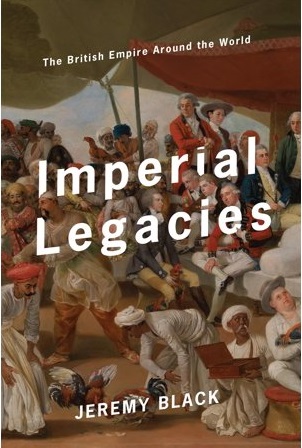
… the central argument of University of Exeter professor of history Jeremy Black’s new book Imperial Legacies: The British Empire Around the World, which, according to the book jacket, is a “wide-ranging and vigorous assault on political correctness, its language, misuse of the past, and grasping of both present and future.” The imperial legacy of Great Britain is also, in a way, an instructional lesson for the United States, which, much like the British Empire of the early to mid-20th century, is experiencing a slow decline in influence.

As a former history teacher who has visited many former British colonies in Africa and Asia, I’ve been well catechized in how British imperialism is interpreted. The British, so we are told, were violent aggressors and expert political manipulators. Using their technological superiority and command of the seas, they subjugated cultures across the globe, applied the “divide and rule” policy to set ethnic and linguistic groups against one another, extracted resources for profit, and stole cultural artifacts that now collect dust in their museums. Thus, so the story goes, blame for many of the world’s current problems lies squarely at the feet of the British Empire, for which she should still be paying reparations.

Yet, Black notes, “there is sometimes a failure to appreciate the extent to which Britain generally was not the conqueror of native peoples ruling themselves in a democratic fashion, but, instead, overcame other imperial systems, and that the latter themselves rested on conquest.” Take, for example, the Indian subcontinent, which was a disparate collection of kingdoms and competing empires — including Mughals, Sikhs, Afghan Durranis — during the early centuries of British intervention. All of these were plenty brutal and intolerant towards those they subjugated. Moreover, Hinduism promoted not only the oppressive caste system, but also sati, or the ritual of widow burning, in which widows were either volitionally or forcibly placed upon the funeral pyres of their deceased husbands. It was the British who stopped this practice, and others, with such legislation as the Hindu Widows’ Remarriage Act of 1856, the Female Infanticide Prevention Act of 1870, and the Age of Consent Act of 1891.

Nor has India been able to escape the same imperialist tendencies as the British. Just ask the Sikhs, whose demands to “free Khalistan” have gone unheeded by New Delhi, and who in 1984 suffered great atrocities at the hands of the Indian military and civilian mobs. Or ask Indian Muslims, of whom more than 1,000 died in the 2002 Gujarat riots and who suffer increasing persecution under the ruling Hindu nationalist party BJP. There’s also not a few folks in Kashmir who happen to call the Indians imperialists. One might note here that many of the problems in former European colonies are not solely, or even largely the result of European imperialism, but can be attributed to many other causes, population increase, modernization, and globalization among them. Corruption in some former colonies, including India, is almost certainly higher than it was during British rule.

India is only one such example where the modern narrative ignores both historical and contemporary realities, including, one might add, the fact that India as it now exists is largely a creation of British colonial efforts. It was Britain that united a disparate group of people into a single cohesive unit with a national identity. Indeed, as Black rightly notes, “modern concepts of nationality have generally been employed misleadingly to interpret the policies and politics of the past.”

This is further complicated by the fact that in many places, especially India, “alongside hostility, opposition and conflict,” between the imperialists and the colonized, “there was inter-marriage, intermixing, compromise, co-existence, and the process of negotiation that is sometimes referred to as the ‘middle-ground.'” One need look no further than the First and Second World Wars, in which more than 1.5 million and approximately 2.5 million Indians, respectively, fought willingly and bravely in the service of the British crown.

How Diablo was completely Reverse Engineered without Source Code | MVG

Filed under: Gaming, Technology — Tags: , — Nicholas @ 02:00

Modern Vintage Gamer
Published on Jul 1, 2019

In 1996 Blizzard Entertainment released Diablo, an Action RPG that sold over 2.5 million copies and defined a genre. In 2018 a developer known as GalaXyHaXz almost completely reverse engineered the code in 4 months and released it as open source. How was this accomplished? Find out in this episode!

► Consider supporting me – https://www.patreon.com/ModernVintage…

Links

DevilutionX (Open Source Diablo) https://github.com/diasurgical/devilu…
► My Nintendo Switch Port – https://github.com/lantus/devilution-nx

QotD: Bridal traditions

Filed under: Business, Europe, Humour, Italy — Tags: , , — Nicholas @ 01:00

The soap bottle had another claim. “Blue Lavender Essence Lore: Brides in Italy perfumed their wedding clothes with lavender in order to calm their prenuptial jitters”

Left unspoken: Didn’t do jack. You’d think the Brides in Italy would have figured this out in short order, eh? “Here, my child. Soak your dress in lavender. It will calm your nerves.” Did it work for you, mama? “No, I spent the morning sobbing and throwing up in rank terror, since I had only met your father the previous night, and he had the breath of cheese far gone with mold. But this is what we do, for we are superstitious peasants whose worldview is derived not from empirical observation of the world, but sage wisdom Grandmama got from her great-grandmama. Now put these grape stems up your nose so your first-born will be a boy.”

James Lileks, Star Tribune, 2004-05-24.

August 16, 2019

Rule Britannia, Britannia Rules the Salt | BETWEEN 2 WARS I 1930 Part 1 of 1

Filed under: Britain, History, India — Tags: , , , , , , , — Nicholas @ 06:00

TimeGhost History
Published on 15 Aug 2019

After the Great War, the British empire is at its peak in terms of population and size. However, resistance against colonialism is starting to brew in the British colonies and dominions.

Join us on Patreon: https://www.patreon.com/TimeGhostHistory

Hosted by: Indy Neidell
Written by: Spartacus Olsson and Francis van Berkel
Directed by: Spartacus Olsson and Astrid Deinhard
Executive Producers: Bodo Rittenauer, Astrid Deinhard, Indy Neidell, Spartacus Olsson
Creative Producer: Joram Appel
Post-Production Director: Wieke Kapteijns
Research by: Francis van Berkel
Edited by: Wieke Kapteijns
Sound design: Iryna Dulka

Portrait Colorizations by Daniel Weiss.

Sources: National Portrait Gallery, Library and Archives Canada, Jenny Scott

A TimeGhost chronological documentary produced by OnLion Entertainment GmbH.

“White Death” – Finnish Sniper Simo Häyhä – Sabaton History 028 [Official]

Filed under: Europe, History, Media, Military, Russia, WW2 — Tags: , , , , , — Nicholas @ 04:00

Sabaton History
Published on 15 Aug 2019

One of the deadliest snipers ever to roam the face of the earth was Simo Häyhä, who fought on the Finnish side during the Winter War in 1939 and 1940. He was also known as White Death, as he killed an estimated 500 Russians in the cold snowy winter.

Support Sabaton History on Patreon: https://www.patreon.com/sabatonhistory

Watch our episode on “Talvisota” here: https://youtu.be/6grVeu3EWis

Listen to Coat of Arms (where “White Death” is featured):

CD: http://bit.ly/CoatOfArmsStore
Spotify: http://bit.ly/CoatOfArmsSpotify
Apple Music: http://bit.ly/CoatOfArmsAppleMusic
iTunes: http://bit.ly/CoatOfArmsiTunes
Amazon: http://bit.ly/CoatOfArmsAmzn
Google Play: http://bit.ly/CoatOfArmsGooglePlay

Hosted by: Indy Neidell
Written by: Markus Linke and Indy Neidell
Directed by: Astrid Deinhard and Wieke Kapteijns
Produced by: Pär Sundström, Astrid Deinhard and Spartacus Olsson
Creative Producer: Joram Appel
Executive Producers: Pär Sundström, Joakim Broden, Tomas Sunmo, Indy Neidell, Astrid Deinhard, and Spartacus Olsson
Maps by: Eastory
Edited by: Iryna Dulka
Sound Editing by: Marek Kaminski

Eastory YouTube Channel: https://www.youtube.com/channel/UCEly…
Archive by: Reuters/Screenocean https://www.screenocean.com
Music by Sabaton.

Sources: SA-Kuva, Finish wartime archive.

An OnLion Entertainment GmbH and Raging Beaver Publishing AB co-Production.

© Raging Beaver Publishing AB, 2019 – all rights reserved.

From the comments:

Sabaton History
2 days ago (edited)
This episode is one of the most frequently requested songs for Sabaton History. And while the story of Simo Häyhä is a compelling story, the Winter War was about much more than the deadliest sniper of World War Two. We have made an earlier episode about the Winter War, based on the Sabaton Song “Talvisota”, which is Finnish for Winter War. You can watch that right here: https://youtu.be/6grVeu3EWis. If after that, you’re keen to dive even deeper into the history of the Winter War, I suggest you check out Indy’s World War Two channel, where he covered the Winter War (and everything before and after that) week by week. You can check that out right here: https://www.youtube.com/c/worldwartwo

The CO2-reduced future the elites want for the rest of us

Arthur Chrenkoff outlines the self-imposed hardship of a new Swedish MEP as he struggles to make his 24-hour weekly commute between Stockholm and Strasbourg (because he’s pretending that there are no flights between those two locations) and explains that it’s emblematic of the kind of future “our” leaders want all of us peasants to be living in the future:

Greta Thunberg at the EU Parliament, 16 April, 2019.
European Parliament photo via Wikimedia Commons.

Listen, I’m all for it; if people want to go back in time as a result of their own free choice that’s wonderful. At least these martyrs for Gaia are putting their money where their mouth is – on train as opposed to plane tickets. They are not being hypocrites, unlike the two hundred celebrities who came on 114 private jets and numerous superyachts to Google’s climate change summit in Sicily the other week. Even St Greta herself, the teenage idiot savant of the green movement, will be eschewing plane travel and going to the UN Climate Action Summit in New York in September on a zero-emission yacht. Want to suffer 24-hour Strasbourg-Stockholm regular commutes or a few weeks at sea between Europe and America so as not to sin again the planet, knock yourself out. My problem starts as soon as the environmental flagellanti decide it’s not enough that simply they care and want to start imposing their totalitarian solutions on everyone else.

[…]

This indeed seems to be the vision of an ecommunist utopia now increasingly on offer from its vocal and influential supporters:

  • As Thunberg herself declares in her musical collaboration with the Brit pop band The 1975 released last month (all proceeds to the pests of Extinction Rebellion who have a tendency to glue themselves to busy intersections): it’s “time to rebel” and for “civil disobedience” … “We have to acknowledge that the older generations have failed, all political movements in their current form have failed, but Homo sapiens have not yet failed … Now is not the time for speaking politely. Now is the time to speak clearly.”
  • David Runciman, politics professor at Cambridge University: “If electoral democracy is inadequate to the task of addressing climate change, and the task is the most urgent one humanity faces, then other kinds of politics are urgently needed … Channeling more energy into these other forms of democracy — into citizens’ assemblies and civil disobedience, rather than elections and party-building — will change our politics drastically. But it may be the only way to ensure our planet does not change beyond recognition.”
  • Greenpeace: “We’re not advocating that everyone adopt a ‘meatless’ diet tomorrow. But we all must develop “meat consciousness” and reduce the level of meat in our diets. Shifting to more plant-based foods is essential to combatting climate change, soil, air and water pollution, ocean dead zones, and myriad other problems caused by industrial livestock production.” Sentiments echoed this week by UN’s Intergovernmental Panel on Climate Change.
  • And don’t even mention Alexandria Ocasio-Cortez’s Green New Deal.

This is the future according to eco-warriors: anti-democratic, anti-growth and prosperity, with your options on everything from how (and if) you travel to what you eat restricted by your moral betters.

As my more favourite Scandinavian, Bjorn Lomborg, wrote recently:

    This year, the world will spend $US162 billion ($230bn) subsidising renewable energy, propping up inefficient industries and supporting middle-class homeowners to erect solar panels, according to the International Energy Agency. In addition, the Paris Agreement on climate change will cost the world from $US1 trillion to $US2 trillion a year by 2030. Astonishingly, neither of these hugely expensive policies will have any measurable impact on temperatures by the end of the century …

    Global warming is a real, man-made problem — but it is just one of many challenges facing humanity. We shouldn’t base our policy decisions on Hollywood movies or on scare scenarios but on the facts. According to the UN Intergovernmental Panel on Climate Change, even if we did absolutely nothing to respond to global warming, the total impact by the 2070s will be the equivalent to a 0.2 per cent to 2 per cent loss in average income. That’s a challenge that requires our attention — but it’s far from the end of the world …

    Despite costing a fortune, the Paris Agreement will have virtually no impact on global temperatures. The UN Framework Convention on Climate Change has estimated that even if every country makes every single carbon cut suggested in the Paris treaty to the fullest extent, CO2 emissions would be cut by only 1 per cent of what would be needed to keep temperature rises under 2C. Incurring an annual $US1 trillion cost while failing to rein in temperature rises is a very poor idea.

Acrylic for woodworkers (Using the tools you own now!)

Filed under: Tools, Woodworking — Tags: , — Nicholas @ 02:00

Rex Krueger
Published on 24 Jun 2017

More videos and exclusive content: http://www.patreon.com/rexkrueger

Acrylic Adhesive: http://amzn.to/2HciXud (affiliate link)

You might need a transparent component in your next project, or you might need a material that slides or bends better than wood. May I suggest acrylic? It’s clearer than glass, is impervious to humidity, and it’s flexible. It’s also cheap, so it might make a good addition to your next project. Now, you can buy a bunch of fancy new tools for working with acrylic, or you can learn how to use standard woodworking tools to cut and shape acrylic sheet. In this video, I’ll show you how to do just that.

QotD: It’s not really accurate to call the French “cheese-eating surrender monkeys”

Filed under: Europe, France, Germany, History, Military, Quotations, WW2 — Tags: , , — Nicholas @ 01:00

It is a truth universally acknowledged that, en masse if not individually, E2 has a slight nagging tendency towards anti-French sentiment. For the Brits it’s sort of traditional/historic, dating back to the Hundred Years War and all that (in which the English gloriously won, as they will be sure to note, at Crecy and Agincourt; strangely, at the end of it all, the French owned all of France, including the bits that the English had owned previously) and quite a lot of subsequent ones, mainly fought in Belgium, while for the Americans it seems to be something to do with the fact that they needed French help to run a revolution properly, along with the proximity of uppity Quebeckers and the fact that the French are marginally less prepared than the rest of the world to roll over and be McDisneyfied™; not being one I can’t say definitively. But I digress.

When it comes to military history, this particular bias mostly comes out in references to three weeks in May 1940, and specifically one piece of particularly crap judgement by General Gamelin and one bypassed fortress line. The fact that that the allied participants — France, Britain, the Netherlands and Belgium — have spent most of the time since blaming each other and trying to work out who sold out whom has been allowed to mask the fact that this particular campaign was successful beyond all reasonable expectations for the Germans, and that when the French actually had troops in the right places, they were perfectly capable of fighting the advancing Panzers to a standstill at a tactical or operational level. Visitors to Paris may wish to note that the big — rather bigger than you think until you actually see it in the flesh — structure at one end of the Champs Elysées is called the Arc de Triomphe, and not the Arc de Defaite; it bears an admittedly tedious and tasteless, but indubitably long, list of battles at which the French did rather well. The fact that your school history lessons may have taught you rather more about Paul Revere or Clive of India than about Charles Martel is not relevant in the greater scheme of things.

Albert Herring, “Why neither the French nor the Italians are the worst military nation”, Everything2, 2002-01-07.

August 15, 2019

Cutting The Dovetail Sockets | Dovetail Box Project #5 | Free Online Woodworking School

Filed under: Tools, Woodworking — Tags: , , — Nicholas @ 06:00

Matt Estlea
Published on 14 Aug 2019

In this video, I show you exactly how to cut out the sockets all the way from saw placement on the initial cuts. to refining the internal walls for a precise fit.

To get access to all the supporting content for this lesson, watch it on my online school: https://www.mattestlea.com/post/cutti…
______________________________________________________________________________________________
Support what I do by becoming a Patron! This will help fund new tools, equipment and cover my overheads. Meaning I can continue to bring you regular, high quality, free content. Thank you so much for your support! https://www.patreon.com/mattestlea

Don’t want to commit to a monthly direct debit but still want to help out? That’s fine!
You can make a one time donation here: https://www.paypal.me/MattEstlea
You can donate us biscuits here: https://amzn.to/2WOl1UR
______________________________________________________________________________________________
BUY THE WOODWORKING BIBLE HERE:
– UK: https://goo.gl/X8ZzSF
– US: https://goo.gl/UDqWf3
– CA: https://goo.gl/31jBxj
______________________________________________________________________________________________

See what tools I use here: https://kit.com/MattEstlea
My Website: http://www.mattestlea.com
______________________________________________________________________________________________

My name is Matt Estlea, I’m a 23 year old Woodworker from Basingstoke in England and my aim is to make your woodworking less s***.

I come from 5 years tuition at Rycotewood Furniture Centre with a further 1 year working as an Artist in Residence at the Sylva Foundation. I now teach City and Guilds Furniture Making at Rycotewood as of September 2018.

I also had 5 years of experience working at Axminster Tools and Machinery where I helped customers with purchasing tools, demonstrated in stores and events, and gained extensive knowledge about a variety of tools and brands.

During the week, I film woodworking projects, tutorials, reviews and a viewer favourite ‘Tool Duel’ where I compare two competitive manufacturers tools against one another to find out which is best.

I like to have a laugh and my videos are quite fast paced BUT you will learn a lot, I assure you.

Lets go make a mess.

Slavery in the American colonies

Filed under: Americas, Britain, History, USA — Tags: , , — Nicholas @ 05:00

Tim Worstall outlines the history of slavery in the area under British rule that eventually became the United States:

This is so well known, what did in fact happen, that even Wikipedia has it unencumbered by wokeness.

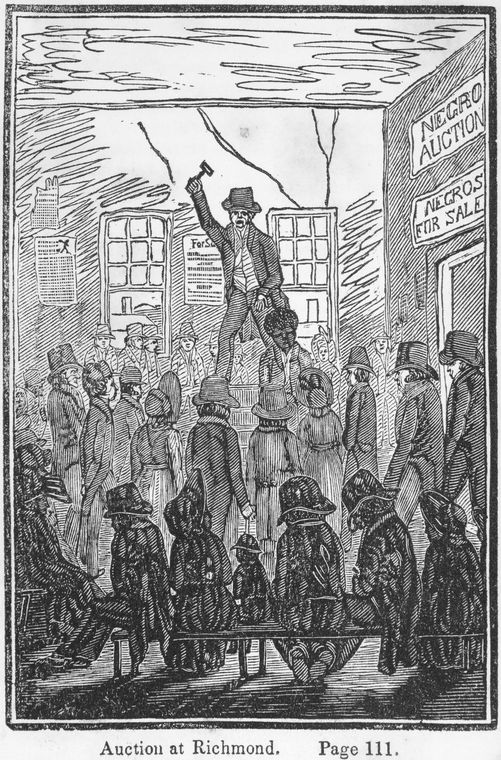
Auction at Richmond. (1834)
“Five hundred thousand strokes for freedom; a series of anti-slavery tracts, of which half a million are now first issued by the friends of the Negro.” by Armistead, Wilson, 1819?-1868 and “Picture of slavery in the United States of America” by Bourne, George, 1780-1845
New York Public Library via Wikimedia Commons.

    The first 19 or so Africans to reach the English colonies arrived in Jamestown, Virginia, in 1619, brought by English privateers who had seized them from a captured Portuguese slave ship. Slaves were usually baptized in Africa before embarking. As English custom then considered baptized Christians exempt from slavery, colonists treated these Africans as indentured servants, and they joined about 1,000 English indentured servants already in the colony. The Africans were freed after a prescribed period and given the use of land and supplies by their former masters. The historian Ira Berlin noted that what he called the “charter generation” in the colonies was sometimes made up of mixed-race men (Atlantic Creoles) who were indentured servants, and whose ancestry was African and Iberian. They were descendants of African women and Portuguese or Spanish men who worked in African ports as traders or facilitators in the slave trade. For example, Anthony Johnson arrived in Virginia in 1621 from Angola as an indentured servant; he became free and a property owner, eventually buying and owning slaves himself. The transformation of the social status of Africans, from indentured servitude to slaves in a racial caste which they could not leave or escape, happened gradually.

    There were no laws regarding slavery early in Virginia’s history. But, in 1640, a Virginia court sentenced John Punch, an African, to slavery after he attempted to flee his service. The two whites with whom he fled were sentenced only to an additional year of their indenture, and three years’ service to the colony. This marked the first legal sanctioning of slavery in the English colonies and was one of the first legal distinctions made between Europeans and Africans.

That’s the 1640 start, if you prefer that. When the distinction was made between black and white runaways from that indenture.

Worth noting that there was nothing unusual about indenture. Very similar indeed to the idea and practice of apprenticeship at the time. In effect, a time limited ownership of the labor – not the person – in return for certain benefits such as transport, sustenance, training and so on. This was actually the manner in which anyone at all entered the skilled working class. Sure, it all sounds a bit feudal but then that’s because it was rather the overhang of that feudal system. And it really did apply to people irrespective of skin colour or racial – even national – background.

England hadn’t had chattel slavery since the Anglo Saxons – Scotland and certain miners being evidence that all of Britain wasn’t so lucky – and it was rather more the Moors, Ottomans, Arabs, various places below the Olive Line, who still had full on slavery.

This then full changed in the colonies. And Anthony Johnson, that arrival from Angola in 1621, who makes the history here:

    When Anthony Johnson was released from servitude, he was legally recognized as a “free Negro.” He became a successful farmer. In 1651 he owned 250 acres (100 ha), and the services of five indentured servants (four white and one black). In 1653, John Casor, a black indentured servant whose contract Johnson appeared to have bought in the early 1640s, approached Captain Goldsmith, claiming his indenture had expired seven years earlier and that he was being held illegally by Johnson. A neighbor, Robert Parker, intervened and persuaded Johnson to free Casor.

    Parker offered Casor work, and he signed a term of indenture to the planter. Johnson sued Parker in the Northampton Court in 1654 for the return of Casor. The court initially found in favor of Parker, but Johnson appealed. In 1655, the court reversed its ruling. Finding that Anthony Johnson still “owned” John Casor, the court ordered that he be returned with the court dues paid by Robert Parker.

    This was the first instance of a judicial determination in the Thirteen Colonies holding that a person who had committed no crime could be held in servitude for life. Though Casor was the first person declared a slave in a civil case, there were both black and white indentured servants sentenced to lifetime servitude before him.

That first instance of that full on chattel slavery in the colonies that became the US was firstly in 1655 – we even know the date, March 8 – and it was of a black owning a black. Oh, and free blacks owning slaves themselves was something that never did entirely disappear from American life, not until slavery itself did in the 1860s.

This all is more than mere pendantry too. Because slavery was not simply the invention of white Europeans to oppress black Africans. A few places in NW Europe – see England above – didn’t have slavery for several hundred years before the Atlantic trade. The rest of the world carried on, quite gaily, having it. To the point that the very word “Slav” is cognate with slave. The Mamluks who ruled Egypt were a caste of mercenaries composed of slaves. The Ottoman Sultan took as his tribute from the Balkans and elsewhere male children who were then sent to Egypt to enlist. Their own children could not join that ruling caste and army. It was a non-hereditary ruling army of slaves, weird as it may seem. Africa itself was awash with slavery and the Arab slave trade up into North Africa and the Mediterranean was a trade in something already happening.

Amazing Indian Hand-Planes

Filed under: Tools, Woodworking — Tags: , , — Nicholas @ 04:00

Rex Krueger
Premiered 94 minutes ago

More video and exclusive content: http://www.patreon.com/rexkrueger
(more…)

Amtrak is considering reviving at least one Chicago-Toronto passenger train

Filed under: Cancon, Railways, USA — Tags: , , , — Nicholas @ 03:00

Lauren O’Neill reports on an Amtrak service extension proposal:

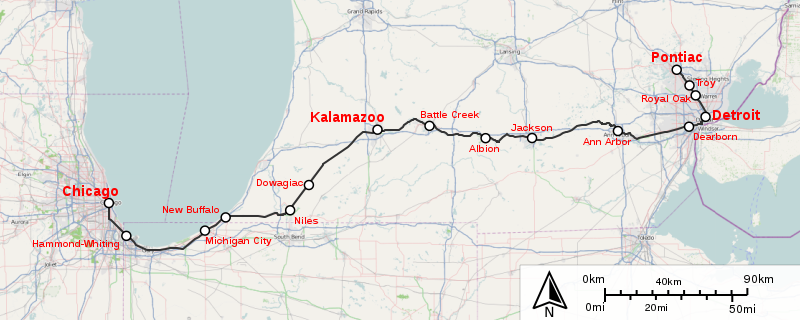
Amtrak P42DC locomotive #29 with a Blue Water or Wolverine train waits on a siding for a train in the opposite direction to pass in Comstock, Michigan.

The largest passenger railroad service in U.S. is considering a proposal that, if approved, would see trains running directly from Chicago to Toronto and back.

As discussed at the Michigan Rail Conference in East Lansing last week, Amtrak wants to extend its Wolverine line — which currently sees trains moving back and forth between Pontiac, MI, and Chicago, IL, three times per day — all the way up to Canada’s largest city.

A presentation slide shared by an official Michigan Department of Transportation Twitter account on Thursday shows that Amtrak wants to extend “at least one” Wolverine train into Ontario, “where it could continue as a VIA Rail Canada corridor service from Windsor/Walkerville to Toronto.”

It won’t happen overnight, and there’s plenty of work to be done in order for the train service to work, including the construction of a new border processing facility.

How Does it Work: Stoner’s AR System

Filed under: Technology, USA, Weapons — Tags: , , — Nicholas @ 02:00

Forgotten Weapons
Published on 18 Jun 2019

http://www.patreon.com/ForgottenWeapons

Cool Forgotten Weapons merch! http://shop.bbtv.com/collections/forg…

Eugene Stoner’s AR-10 and AR-15 use an operating mechanism that is often called “gas impingement,” but which is actually a cleverly structured gas piston located within the bolt carrier. Gas is tapped from the barrel and moved all the way back to just behind the chamber, where it enters the bolt carrier. There the carrier and bolt act as the two parts of a sealed piston, and when the bolt carrier moves rearward the cam pin forces the bolt head to rotate and unlock. The expanding gas is then vented out through holes in the side of the bolt carrier. By locating the piston on the same axis as the barrel, the harmonics are improved and the overall weight of the gun can be reduced by using the gas piston elements as mass in the bolt carrier assembly. Contrary to the old adage “it shits where it eats,” the operating gasses are not vented into the magazine or chamber, and the system has proven to be very reliable.

Contact:
Forgotten Weapons
PO Box 87647
Tucson, AZ 85754

QotD: Strong female characters in fiction

Filed under: Books, Quotations — Tags: , , , , — Nicholas @ 01:00

If you’d asked me at twelve, I’d have told you I had no idea why the story charmed me as it did. I only knew I liked re-reading it and it became one of my favorite books. It felt good and somehow “right” in a way that fairytales and romances didn’t.

Today, when I telling the kids about it, I realized why. It was because the character was a strong woman. Born with the ultimate disadvantage, the ultimate lack of support, she doesn’t – like fairytale princesses – either get rescued by a strong knight nor even by fate that reveals her to be a hidden princess. Also, she never complains; she never repines – she takes the situation she finds herself in and makes the best out of it, all the while looking out for those who are weaker or in more need than her. This last characteristic nets her the all-important recipe book (supposedly created by a medieval convent, which rings true for Portugal, and lost for centuries.) When her romance doesn’t work because her very conventional suitor wants a girl of suitable family, she doesn’t go into a decline, she just goes on with life.

She is, in fact, what editors so often say they want “a strong woman heroine, self sufficient, a good role model for growing girls.” Only, from my observation and reading, by this they usually mean mouthy, aggressive, foolhardy and complains a lot about men till one wonders if said character has an issue with being born female. There are exceptions, of course, but complaining about fate and men and being bitter seems to be obligatory.

And yet, it is true that this type of character is not only a great role model for young women, she is the type of role model we do need. Earth needs women (yes, and men, but we’re talking women here) who take care of the weak and helpless. Earth needs women who don’t whine. Earth needs women who cheerfully shoulder the burden of what needs to be done.

Earth does not need women who complain about men all the while neurotically obsessing on clothes and jewelry to attract said men and pursuing the highest-status males they can possibly get. There is nothing wrong with these activities, in moderation, but when they become the focus of existence they create a generation of infantile harpies. Now, I don’t think any women in real life are as bad as that, but almost all women characters in books and movies are just like that.

Young women who read/watch these characters end up feeling they must APPEAR like them or they’ll be thought weak. And this is wrong. Strength in women – and men – can be defined not as throwing weight around but in doing what must be done for oneself and those who depend on one.

Earth needs grown up women.

I very much hate to tell people what to do, much less what to be, but I wish we could set about writing – and living – role models for the women Earth needs.

Sarah Hoyt, “Earth Needs Women a blast from the past of November 2010”, According to Hoyt, 2017-07-13.

August 14, 2019

Summer Stupidity: Hercules 2014 (Media Review!)

Filed under: Europe, Greece, History, Humour, Media — Tags: , , , — Nicholas @ 04:00

Overly Sarcastic Productions
Published on 13 Aug 2019

“I’ve seen The Rock act before and he’s really fun and charismatic! Surely this movie starring him will be a Good Time!” I thought, foolishly.

PATREON: https://www.Patreon.com/OSP

MERCH LINKS: https://www.redbubble.com/people/OSPY…

OUR WEBSITE: https://www.OverlySarcasticProductions.com
Find us on Twitter https://www.Twitter.com/OSPYouTube
Find us on Reddit https://www.Reddit.com/r/OSP/

« Newer PostsOlder Posts »

Powered by WordPress