Quotulatiousness

April 24, 2020

Mauser-Norris Prototype: Origins of the Mauser Legacy

Filed under: Business, Europe, France, Germany, History, Military, Weapons — Tags: , , , , — Nicholas @ 02:00

Forgotten Weapons
Published 10 Jan 2020

http://www.patreon.com/ForgottenWeapons

https://www.floatplane.com/channel/Fo…

Cool Forgotten Weapons merch! http://shop.bbtv.com/collections/forg…

Today we are looking at one of the rarest and earliest rifles built by Paul and Wilhelm Mauser, a design which would set in motion all the events that led to the Mauser company becoming one of the great world leaders in small arms. The Mauser brothers were born in Oberndorf am Necker in the Kingdom of Württemberg, sons of a gunsmith. They would take up their father’s trade and were creative and intelligent boys, but opportunities were limited in the small, rural town of Oberndorf. In 1865 they presented a rifle to the Austrian Army in Vienna for trials, where it was rejected. However, it was noticed by an American sales rep for the Remington Company, a man named Samuel Norris. Norris saw the potential in the Mauser brothers’ design to convert needlefire rifles to metallic cartridges, and he signed a deal with the brothers to further develop the system.

The Mausers moved to Liege Belgium to do their work, and within just a few years they were making rifles for Norris. This example is based on a Chassepot, as Norris hoped to sell the conversion system to the French Army. That deal was rejected, however (the French were happy sticking with paper cartridges as of 1868), and Norris’ plans began to unravel when the Remington company discovered that he was making dealings in his own name instead of for them. The Mauser brothers ended up walking away from the deal with ownership of the patents they had filed with Norris, and when they submitted the design to the Prussians a process began which would result in the Mauser Model 1871 being adopted. From there, their talents would lead to the whole line of Mauser repeating rifles culminating in the Model 1898, arguably the pinnacle of the bolt action military rifle.

Thanks to the Liege Arms Museum for access to film this for you! If you are in Belgium, definitely plan to stop into the museum, part of the Grand Curtius. They have a very good selection of interesting and unusual arms on display. Further thanks to the Paul Mauser Archive for helping to arrange this filming!

https://www.grandcurtius.be

http://www.paul-mauser-archive.com

Contact:
Forgotten Weapons
6281 N. Oracle #36270
Tucson, AZ 85740

QotD: The best way to see Toronto (aka “Greater Parkdale”)

Filed under: Architecture, Cancon, Humour, Quotations — Tags: , — Nicholas @ 01:00

Asked by a visitor what is the best way to see Greater Parkdale, I replied, on your back in an ambulance. I was serious, of course. At street level, transient franchise shopfronts bear no architectural relation to the older buildings they have been stuck on. But from a reclining position, only the unmodified upper storeys can be seen, yet nothing above the second or third (thus deleting most of the appalling highrises). The city thus retains something of its fine and fusty Edwardian provincial order. Prone in this way, one might drive for miles through repulsively glitzy shopping districts, without seeing what’s been added since the Great War.

David Warren, “The scandal of interiors”, Essays in Idleness, 2018-01-25.

April 23, 2020

Make a saw vice from scrap-wood

Filed under: Tools, Woodworking — Tags: , , — Nicholas @ 06:00

Rex Krueger
Published 22 Apr 2020

Build a quick-release saw-vise from wood and common hardware.

More video and exclusive content: http://www.patreon.com/rexkrueger
Get the plans: https://www.rexkrueger.com/store/plan…
(more…)

1945: Japan Joins the Allies | The Indonesian War of Independence Part 1

Filed under: Asia, Britain, Europe, History, Japan, Military, WW2 — Tags: , , , , , — Nicholas @ 04:00

TimeGhost History
Published 22 Apr 2020

In Indonesia, following the end of the Second World War catalyses the end of brutal Japanese rule. Their exit prompts the Dutch to begin restoring their prewar colonial status over the archipelago. But nationalist spirits are brewing, their opportunity to proclaim Indonesian independence is transpiring.

Join us on Patreon: https://www.patreon.com/TimeGhostHistory

Watch the Prologue to the Indonesian War of Independence series right here: https://youtu.be/IkKJSRaeOik

Hosted by: Indy Neidell
Written by: Isabel Wilson and Joram Appel
Director: Astrid Deinhard
Producers: Astrid Deinhard and Spartacus Olsson
Executive Producers: Astrid Deinhard, Indy Neidell, Spartacus Olsson, Bodo Rittenauer
Creative Producer: Joram Appel
Post-Production Director: Wieke Kapteijns
Research by: Isabel Wilson and Joram Appel
Edited by: Karolina Dołęga
Sound design: Marek Kaminski

Colorizations:
Dememorabilia – https://www.instagram.com/dememorabilia/
Jaris Almazani (Artistic Man) – https://instagram.com/artistic.man?ig…

Sources:
Archive by Screenocean/Reuters https://www.screenocean.com.
Tropenmuseum, part of the National Museum of World Cultures
Imperial War Museum Arts: Ronald Searle, SE5895 , SE-5865, SE5663, SE5724
Rijksmuseum

Music:
“Deviation In Time” – Johannes Bornlof
“Last Point of Safe Return” – Fabien Tell
“Deflection” – Reynard Seidel
“Disciples of Sun Tzu” – Christian Andersen
“Split Decision” – Rannar Sillard
“Other Sides of Glory” – Fabien Tell
“Last Man Standing 3” – Johannes Bornlöf
“Magnificent March 3” – Johannes Bornlöf
“Deviation In Time” – Johannes Bornlof

A TimeGhost chronological documentary produced by OnLion Entertainment GmbH.

From the comments:

TimeGhost History
1 day ago (edited)
For the last decades, writing colonial histories on events such as the Indonesian War of Independence has been a difficult task. Due to the incriminating nature of the events, records were either never made or have been regularly “lost” since. Political interest in the events was minimal in both The Netherlands and Indonesia, but times are changing. In recent years, a lot more research power has been allocated to this topic by Dutch and Indonesian Universities and Research collectives. Finding colonial truths is a huge focus of academia right now and their work has allowed us to get real with colonialism in this series. We’re sure that even more sources and stories will surface in the coming years, allowing for more books and documentary such as ours to be made. We’re interested to hear what you think about this episode! Make sure to let us know in the comments!

Cheers,
Izzy

Trial by jury

Filed under: Britain, History, Law, Liberty — Tags: , , , , — Nicholas @ 03:00

Peter Hitchens recounts the essential role of the jury system in the evolution of the English (and, by inheritance, the Australian, Canadian, and even American) constitutional rights of the individual, which today seems to be in peril:
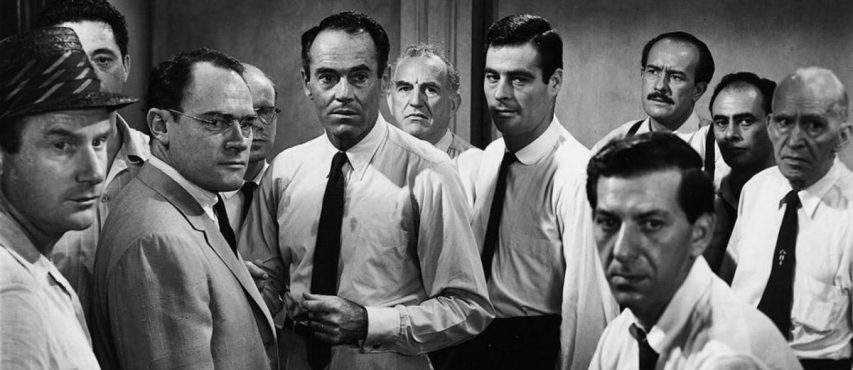
A still from the 1957 movie Twelve Angry Men, directed by Sidney Lumet, starring Henry Fonda, Lee J. Cobb, and Martin Balsam.

Am I going to have to fall out of love with juries? For decades I have defended these curious committees, which can ruin a man’s life in an afternoon. It has been a romance as much as it has been a reasoned position. Most people get their best lesson in jury trials from the 1957 movie Twelve Angry Men. In that version, a single determined juror, played by Henry Fonda, gradually wins the rest of the panel round to an acquittal, at great cost in emotion and patience. But what really won my heart was Thomas Macaulay’s account of the Trial of the Seven Bishops, in which a London jury defied the wishes of the would-be autocrat King James II in 1688. It was an astonishing event, a monarch’s authority challenged by — of all unlikely things — a collection of Anglican prelates. Their acquittal, perhaps more than anything else, led to James’s fall a few months later. It was the beginning of true constitutional monarchy in Europe, the genesis of the English Bill of Rights and the forerunner of the very similar American document of the same name. It could not have happened without a jury.

For without a jury, any trial is simply a process by which the state reassures itself that it has got the right man. A group of state employees, none of them especially distinguished, are asked to confirm the views of other state employees. With a jury, the government cannot know the outcome and must prove its case. And so the faint, phantasmal ideal of the presumption of innocence takes on actual flesh and bones and stands in the path of power. Juries grew up in England almost entirely by happy accident, and no government would nowadays willingly create them where they do not already operate. A brief fashion for them in 19th-century Europe was swiftly stamped out by governments that understood all too well how much they limited their power. I believe the last true Continental juries, sitting in the absence of a judge, were abolished in France in 1940 by the German occupation authorities. People in Anglosphere countries, unaware that true independent juries rarely exist outside the English-speaking world, have no idea what a precious possession they are.

I remember actually pounding the arm of my chair with delight as I read Macaulay’s account of the response of the bishops’ attorney, Francis Pemberton, when threatened by the chief Crown prosecutor, the solicitor general: “Record what you will. I am not afraid of you, Mister Solicitor!” So this was England after all, and even the majesty of the Stuart Crown could not overawe the defense. This was wholly thanks to the fact that the trial took place before a jury — which duly acquitted the bishops of “seditious libel,” the ludicrous charge by which James had hoped to crush opposition to his plans to reverse the Reformation. Without a jury, the king would of course have won his case, and England would have gone down the road to absolutism (already followed in France, Prussia, Russia, and the Habsburg dominions) with incalculable consequences for the whole world. Instead we had what came to be called the Glorious (or Bloodless) Revolution.

And my blood still runs faster when I recall this and other moments at which the mere existence of juries has made us all more free. Yet I also have terrible doubts. Is the independence of juries possible in the modern world, in which the English Bill of Rights is all but forgotten and a new dispensation reigns? All too often, I read reports of trials in my own country that fill me with doubt. I did my fair share of court reporting as an apprentice journalist many years ago, and I have a good understanding of how these things used to work and ought to work. Something has changed. There is a worrying number of sex cases now coming before the courts in which clear forensic proof of guilt is often unobtainable.

The alleged crimes themselves are repulsive, and the mere accusation is enough to nurture prejudice. The defendants have often been arrested in the scorching light of total publicity, in spectacular dawn raids totally unjustified by any immediate danger they present. Pre-trial media reporting has further undermined the presumption of innocence. In England there is still officially a strong rule against the media taking sides before the jury delivers its verdict. But this is not enforced as it once was. The prosecutions are frequently as emotional as they are unforensic, the opposite of the proper arrangement. Yet the defendants are often convicted even so (sometimes by majority verdicts, which in my view violate the whole jury principle). The state seems somehow to have turned the jury — often swayed by emotion — into its own weapon. And it is worse than the alternative. A wrongfully-convicted defendant, pronounced culpable by a jury of his peers, must feel a far deeper despair than one cast into prison by a mere panel of judges.


Quintinshill, the Worst Railway Disaster in British History

Filed under: Britain, History, Military, Railways, WW1 — Tags: , , , — Nicholas @ 02:00

The History Guy: History Deserves to Be Remembered
Published 15 Sep 2018

Railroads played a critical role for the United Kingdom in the Great War. But the increased burden on the nation’s railways had its cost. In the early morning hours of May 22, 1915, a crowded schedule resulted in the 1915 Quintinshill Rail Disaster, the worst railway disaster in British history. Its victims, mostly men of the 1/7 Royal Scots regiment, deserve to be remembered.

The History Guy uses media that are in the public domain. As photographs of actual events are sometimes not available, photographs of similar objects and events are used for illustration.

The episode includes historical photos involving the Great War and a 1915 railway disaster. Those photos are provided in context of the historical events. No graphic violence is shown.

Patreon: https://www.patreon.com/TheHistoryGuy

The History Guy: History Deserves to Be Remembered is the place to find short snippets of forgotten history from five to fifteen minutes long. If you like history too, this is the channel for you.

Awesome The History Guy merchandise is available at:
https://teespring.com/stores/the-hist…

The episode is intended for educational purposes. All events are portrayed in historical context.

#quintinshill #wwi #thehistoryguy

QotD: Idiotarianism

Filed under: Politics, Quotations, USA — Tags: , — Nicholas @ 01:00

Way back when the term “idiotarian” was coined, it was quite explicitly aimed at the idiots of the Left and Right equally. The idiots of the Right have been somewhat quieter lately, but they’re no less idiots for that.

Glenn Reynolds, Instapundit, 2005-01-31.

April 22, 2020

Tanks of the Early North Africa Campaigns, by The Chieftain – WW2 Special

Filed under: Africa, Britain, Germany, History, Italy, Military, Weapons, WW2 — Tags: , , — Nicholas @ 06:00

World War Two
Published 21 Apr 2020

The Chieftain takes us to North Africa, where he talks us through the tanks that were used during the first months of the Battles in North Africa between the Italians and Germans on the one side and British and Commonwealth forces on the other.

Check out The Chieftains channel: https://www.youtube.com/channel/UCp4j…

Join us on Patreon: https://www.patreon.com/TimeGhostHistory
Or join The TimeGhost Army directly at: https://timeghost.tv

Follow WW2 day by day on Instagram @World_war_two_realtime https://www.instagram.com/world_war_t…
Between 2 Wars: https://www.youtube.com/playlist?list…
Source list: http://bit.ly/WW2sources

Written and Hosted by: The Chieftain
Director: Astrid Deinhard
Producers: Astrid Deinhard and Spartacus Olsson
Executive Producers: Astrid Deinhard, Indy Neidell, Spartacus Olsson, Bodo Rittenauer
Creative Producer: Joram Appel
Post-Production Director: Wieke Kapteijns
Research by: The Chieftain
Edited by: Mikołaj Cackowski
Sound design: Marek Kamiński
Map animations: Eastory (https://www.youtube.com/c/eastory)

Colorizations by:
Carlos Ortega Pereira,
BlauColorizations, https://www.instagram.com/blaucoloriz…
Adrien Fillon – https://www.instagram.com/adrien.colo…

Sources:
Bundesarchiv
IWM KID 502, H 20697, E 443, H 1148, E380, KID346, E 1002, E 5366, E676, F 4594, E 1416, E 6605, E 15182, O 747, E 5559, E 142, F 2919, E 5036, F 2441, E 1772, E 9562, NA 2304, E 7304, E 2138
Noun Project: company soldiers by Andrei Yushchenko, Radio by Pravin Unagar, gearbox by Baboons, Shield by Nikita Kozin, Weight by Vadim Solomakhin, Game by Ecem Afacan, Target by RITASYA

Soundtracks from the Epidemic Sound:
Reynard Seidel – “Deflection”
Johannes Bornlof – “Deviation In Time”
Johan Hynynen – “Dark Beginning”
Max Anson – “Ancient Saga”
Rannar Sillard – “Split Decision”
Fabien Tell – “Last Point of Safe Return”
Johannes Bornlof – “The Inspector 4”
Rannar Sillard – “Easy Target”
Philip Ayers – “Trapped in a Maze”
Phoenix Tails – “At the Front”

Archive by Screenocean/Reuters https://www.screenocean.com.

A TimeGhost chronological documentary produced by OnLion Entertainment GmbH.

The REAL Heroes of the M1 Carbine – not “Carbine” Williams

Filed under: History, Military, USA, Weapons, WW2 — Tags: , , , — Nicholas @ 04:00

Forgotten Weapons
Published 21 Apr 2020

http://www.patreon.com/ForgottenWeapons

https://www.floatplane.com/channel/Fo…

Cool Forgotten Weapons merch! http://shop.bbtv.com/collections/forg…

The Hollywood-spawned mythos of the M1 Carbine is that it was created by David Marshall “Carbine” Williams. The reality is far different. In real life, Williams was talented, but short-tempered, stubborn, and unable to work effectively as part of a team — and a cohesive, cooperative team is what the M1 Carbine required.

While Williams was off sulking about how the work was being done wrong, a team of Winchester machinists and engineers including William Roemer and Fred Humiston were actually making it happen.

The most impressive anecdote of the whole story, to me, is from when the solitary Winchester prototype broke its bolt in the middle of the final testing. Fred Humiston was representing Winchester at the trials, and he was told that if he could provide a new bolt within 24 hours the gun could continue the trials — but he could not take the gun off the testing ground. So Humiston went back to the Winchester shop and made a new bolt from memory (no drawings yet existed for the gun) and without being able to test-fit it in the gun. When he returned the next day, his new bolt dropped in perfectly, and the gun went on to win the trials. That is an epic feat of skill, and it is really a shame that he does not get more recognition for it.

Contact:
Forgotten Weapons
6281 N. Oracle #36270
Tucson, AZ 85740

Can We Build A Space Elevator? | Earth Lab

Filed under: Economics, Science, Space, Technology — Tags: , , , — Nicholas @ 02:00

BBC Earth Lab
Published 5 Aug 2013

Getting to space in a rocket is expensive! One of the most popular alternative ideas is the space elevator, but is it really possible?

Here at BBC Earth Lab we answer all your curious questions about science in the world around you. If there’s a question you have that we haven’t yet answered or an experiment you’d like us to try let us know in the comments on any of our videos and it could be answered by one of our Earth Lab experts.

QotD: Actors

Filed under: Humour, Media, Quotations, USA — Tags: , , — Nicholas @ 01:00

Why waste a whole evening, once or twice a week, in a stuffy and over-red theater, breathing zymotic air, sniffing discordant perfumery, looking at idiotic scenery, listening to the bleeding English of ignorant and preposterous actors? Have you ever, in all your life, seen five leading men who actually looked like civilized gentlemen, or even like the authentic valets, head clerks or unburied corpses of civilized gentlemen? Have you ever sat through a whole performance without wishing it were possible to take at least one of the actors out into the alley, there to do execution of the lex non scripta upon him? Eheu, Postume, what all of us have suffered at the hands of such strutting mummers and mountebanks! How we have writhed and squirmed beneath their astounding outrages upon the vulgate! What is worse than an actor? Two actors? Three actors? A whole stage full of actors! An endless succession of actors! … How we have leaped and squealed under their broad a‘s, their fearful renderings of proper names, their obscene attempts at boarding school French! How our paws have itched to grab them by the collars of their advanced coats, and to strangle them with their futurist shirts, and to anatomize them with the razor edges of their superbly ironed pantaloons! …

There are, of course, such things as good actors. Let us be just and admit it. I have seen and known a few myself, and have heard of a few more. There are half a dozen in England and as many in France. In Germany, I dare say, the police have the names of twenty. (One memorable night, in that strange land, I saw two on the stage at once!) But is the good actor, either at home or abroad, the normal actor, the average actor? Of course he is not. He is the rare actor, the miraculous actor, almost the fabulous actor. Examine a hundred bartenders and you will find that fully sixty of them actually know how to tend bar: they can mix a cocktail that, whatever its faults, is at least fit to drink, and they have the craft needed to draw a Seidel of Pilsner and to beat the cash register. But in the allied art of acting there is no such general dispersion of talent. A handful of outstanding super-actors have it all. The rest of them not only don’t know how to act, but they don’t know that they don’t know.

H.L. Mencken, “Getting Rid of the Actor”, The Smart Set, 1913-09.

April 21, 2020

Scissor Sharpening | Paul Sellers

Filed under: Tools, Woodworking — Tags: , , — Nicholas @ 06:00

Paul Sellers
Published 28 Mar 2014

In this video Paul Sellers shows you the simplicity of sharpening any type of scissors to take them to their optimal cutting performance.

To find out more about Paul Sellers and the projects he is involved with visit http://paulsellers.com

Homeschooling is bad and should be tightly regulated or banned, says Harvard Professor of Karenism

An article in Harvard Magazine draws heavy fire from people who do not automatically demand to speak to the manager:

Illustration from Harvard Magazine via Twitter.

Harvard Magazine decided that this moment was the PERFECT time to take a gigantic shit on homeschooling parents. Author Erin O’Donnell decided write a piece on Elizabeth Bartholet, a “professor” who knows the best way to handle child education, and that is to turn them over to the State, immediately. Her rationale? Parents are simply too stupid to educate children without the state looking over their shoulder.

    Yet Elizabeth Bartholet, Wasserstein public interest professor of law and faculty director of the Law School’s Child Advocacy Program, sees risks for children — and society — in homeschooling, and recommends a presumptive ban on the practice. Homeschooling, she says, not only violates children’s right to a “meaningful education” and their right to be protected from potential child abuse, but may keep them from contributing positively to a democratic society.”

    “We have an essentially unregulated regime in the area of homeschooling,” Bartholet asserts. All 50 states have laws that make education compulsory, and state constitutions ensure a right to education, “but if you look at the legal regime governing homeschooling, there are very few requirements that parents do anything.” Even apparent requirements such as submitting curricula, or providing evidence that teaching and learning are taking place, she says, aren’t necessarily enforced. Only about a dozen states have rules about the level of education needed by parents who homeschool, she adds. “That means, effectively, that people can homeschool who’ve never gone to school themselves, who don’t read or write themselves.” In another handful of states, parents are not required to register their children as homeschooled; they can simply keep their kids at home.”

    This practice, Bartholet says, can isolate children. She argues that one benefit of sending children to school at age four or five is that teachers are “mandated reporters,” required to alert authorities to evidence of child abuse or neglect. “Teachers and other school personnel constitute the largest percentage of people who report to Child Protective Services,” she explains, whereas not one of the 50 states requires that homeschooling parents be checked for prior reports of child abuse. Even those convicted of child abuse, she adds, could “still just decide, ‘I’m going to take my kids out of school and keep them at home.'”

Bartholet goes on to cite an example of one woman, who was raised by “Idaho survivalists” and was working in the family business instead of getting an education. Conveniently, while lauding “teachers and other school personnel” as mandated reporters, Bartholet fails to cite or even acknowledge that there is plenty of child abuse that happens on school property, by school employees, and maybe there are just evil people who do evil things to children because they have the opportunity to do so. Giving someone the title of “mandated reporter” does not magically make them into an upstanding citizen and defender of children.

Bartholet – and by extension, O’Donnell – makes no rational argument against homeschooling. It’s only her gut feeling that if the nanny state isn’t over the shoulder, trying to mold “young skulls full of mush” (as Rush Limbaugh has said more than once) into educated and functional adults, then there could be shenanigans afoot! Why, these children might end up RELIGIOUS. *GASP!*

Shruti Rajagopalan noted that the original illustration (which appears to have been corrected since the image at the top of this post was published) included the word “ARITHMATIC” on the spine of one of the books.

The Curator at Home | Film Review: Kelly’s Heroes | The Tank Museum

Filed under: Europe, Germany, History, Italy, Media, Military, USA, WW2 — Tags: , , , — Nicholas @ 04:00

The Tank Museum
Published 19 Apr 2020

Join Curator David Willey at Home, as he reviews the classic film: Kelly’s Heroes.
https://tankmuseumshop.org/products/k…

Support the work of The Tank Museum on Patreon: ► https://www.patreon.com/tankmuseum
Visit The Tank Museum SHOP & become a Friend: ► https://tankmuseumshop.org/

Twitter: ► https://twitter.com/TankMuseum
Instagram: ► https://www.instagram.com/tankmuseum/
Tiger Tank Blog: ► http://blog.tiger-tank.com/
Tank 100 First World War Centenary Blog: ► http://tank100.com/

One of the few good things happening during the Wuhan Coronavirus epidemic – deregulation

Filed under: Bureaucracy, Government, Health, USA — Tags: , , , , — Nicholas @ 03:00

Patrick McLaughlin, Matthew D. Mitchell, and Adam Thierer on the benefits of suspending many existing regulations during the ongoing epidemic:

As the COVID-19 crisis intensified, policymakers at the federal, state, and local levels started suspending or rescinding laws and regulations that hindered sensible, speedy responses to the pandemic. These “rule departures” raised many questions. Were the paused rules undermining public health and welfare even before the crisis? Even if the rules were well intentioned or once possibly served a compelling interest, had they grown unnecessary or counterproductive? If so, why did they persist? How will the suspended rules be dealt with after the crisis? Are there other rules on the books that might transform from merely unnecessary to actively harmful in future crises?

In many cases, rule departures or partial deregulations undertaken during the crisis are tantamount to an admission by policymakers that some policies that were intended to serve the public interest fail to do so. “The explanation for many of these problems is that outdated 20th-century rules stymie 21st-century innovation,” noted former Florida Governor Jeb Bush in a recent Wall Street Journal editorial. “In an emergency, many of those rules can be waived by executive order. After the crisis, there will be momentum to challenge the stale rules that hindered our response. This is likely to go well beyond dealing with pandemics,” he argued. Similarly, lawyer and commentator Philip K. Howard has asserted that “the same kind of energy and resourcefulness will be needed to get America’s schools, businesses, government agencies and nonprofits up and running again” and has suggested the need for a “temporary Recovery Authority with a broad mandate to identify and waive unnecessary bureaucratic hurdles to recovery.” In addition, Wall Street Journal columnist and Brookings Institution Senior Fellow William A. Galston has called for a “Coronavirus 9/11 Commission” to study the governance failures witnessed during the crisis, arguing that “the immediate effects of Covid-19 are bad enough. Failing to learn from it would be criminal negligence for which future generations won’t forgive us.”

The crisis has been a stress test for American institutions. It has laid bare the outdated, overlapping, and often contradictory morass of rules that make it difficult for public and private organizations to respond to changing circumstances. In many cases, these rules persist not because they protect the public from danger but because they protect organized interest groups from new competition. Rules also persist because agencies rarely prioritize retrospective reviews aimed at eliminating unnecessary or potentially harmful rules. On the contrary, agencies typically have a vested interest in maintaining regulations that often took years to generate. Agency employees who have developed expertise in those rules, just like their counterparts in the private sector, have a financial interest in preserving these rules. In this way, “Agencies are stakeholders with respect to their own regulations.”

Once the COVID-19 crisis subsides, there is likely to be considerable momentum to review the rules that have slowed down the response. Some of those rules should probably be permanently repealed and others amended to allow for more flexible responses in the future.

« Newer PostsOlder Posts »

Powered by WordPress