Quotulatiousness

April 26, 2020

Another Last Stand at Thermopylae – The Battle of Greece – WW2 – 087 – April 25, 1941

Filed under: Africa, Britain, Europe, Germany, Greece, History, Italy, Military, WW2 — Tags: , , , , , , — Nicholas @ 06:00

World War Two
Published 25 Apr 2020

The Battle of Greece continues as forces clash once more at the historic site of Thermopylae.

Join us on Patreon: https://www.patreon.com/TimeGhostHistory
Or join The TimeGhost Army directly at: https://timeghost.tv

Follow WW2 day by day on Instagram @World_war_two_realtime https://www.instagram.com/world_war_t…
Between 2 Wars: https://www.youtube.com/playlist?list…
Source list: http://bit.ly/WW2sources

Written and Hosted by: Indy Neidell
Director: Astrid Deinhard
Producers: Astrid Deinhard and Spartacus Olsson
Executive Producers: Astrid Deinhard, Indy Neidell, Spartacus Olsson, Bodo Rittenauer
Creative Producer: Joram Appel
Post-Production Director: Wieke Kapteijns
Edited by: Iryna Dulka
Sound design: Marek Kamiński
Map animations: Eastory (https://www.youtube.com/c/eastory)

Colorizations by:
– Norman Stewart – https://oldtimesincolor.blogspot.com/
– Jaris Almazani (Artistic Man), https://instagram.com/artistic.man?ig…
– Julius Jääskeläinen – https://www.facebook.com/JJcolorization/
– Dememorabilia – https://www.instagram.com/dememorabilia

Sources:
– Bundesarchiv, CC-BY-SA 3.0, Bild 101I-163-0318-09/Bauer, Bild 101I-163-0319-03A/Bauer
– Edo leitner from Wikimedia
– Imperial War Museum: E 3830, TR 1762, IWM ART LD 3355, E 676, E 3182, E 3187, E 3178, E 3183, E 2363
– Roll by rivercon from the Noun Project
– Grains by Gan Khoon Lay from the Noun Project

Archive by Screenocean/Reuters https://www.screenocean.com.

A TimeGhost chronological documentary produced by OnLion Entertainment GmbH.

From the comments:

World War Two
2 days ago (edited)
The war keeps on growing, and were doing our best to keep up with it. As you notice the episodes are often longer these days, but there are still many details we just can’t cover in the weekly episodes for time reasons. That’s why we do our specials and also why we have our Instagram and Facebook feed with headlines of the war day by day. For instance, while we cover the Allied retreat at Thermopylae, Indy just didn’t have space to go into the details about how Australian and New Zealand forces hold back the Wehrmacht while the others retreat. That will instead be the topic of our post on Instagram / Facebook on April 24 here: https://www.instagram.com/world_war_two_realtime/ and on the TimeGhost facebook page. We also dedicated the thumb to that event by featuring a soldier of the 28th (Māori) Battalion of the NZ forces, photographed in North Africa somewhat later in 1941 while doing the Haka. His unit was part of the rear guard at Thermopylae.

And on that note we would like to acknowledge that we would never be able to do this massive endeavor without the TimeGhost Army and their financial contribution. Valantis who supported this episode by dedicating it to the Cypriots fighting for the Allies in the war is not only a member of the TG Army, he’s also a valuable contributor in our comment sections and volunteers his time to help us sift through and read every comment posted under any of our videos. So, in this place we would like to once again thank Valantis and the entire TimeGhost Army for keeping us in kit, supplies, and manpower to continue the good fight for remembrance and education, especially in these trying times. You can join our forces here https://www.patreon.com/TimeGhostHistory or here https://timeghost.tv

Spartacus on behalf of the entire TimeGhost team.

Minnesota Vikings 2020 draft – day three, rounds 4-7

Filed under: Football — Tags: , , — Nicholas @ 05:00

Over the first two days of the draft, Vikings General Manager Rick Spielman addressed some of the most urgent needs of the team without needing to give up additional draft capital to move up for any given player. Having lost the top three cornerbacks from 2019, two rookie corners (Jeff Gladney from TCU, and Cameron Dantzler from Mississippi State) were drafted to potentially fill those roles. Having traded one of the top wide receivers to Buffalo, the team picked up Justin Jefferson from LSU who will be given every opportunity to compete for a starting role. The offensive line was shored up with the second round pick Ezra Cleveland from Boise State, which should allow some improvements to be made over the 2019 line. The Daily Norseman‘s Ted Glover did a draft-day edition of his Stock Market Report for days one and two.

At the end of the third round on Friday, Spielman took a great offer from the New Orleans Saints, swapping the Vikings’ 105th pick for the Saints’ 130th, 169th, 203rd, and 244th picks. This left the Vikings with a final day sheaf of thirteen draft picks to use in the last four rounds of the draft (3 in the 4th round, 3 in the 5th round, 3 in the 6th round, and 4 in the 7th round). “Trader Rick” was expected to spend the whole day engaged in his all-time favourite activity … swapping draft picks.

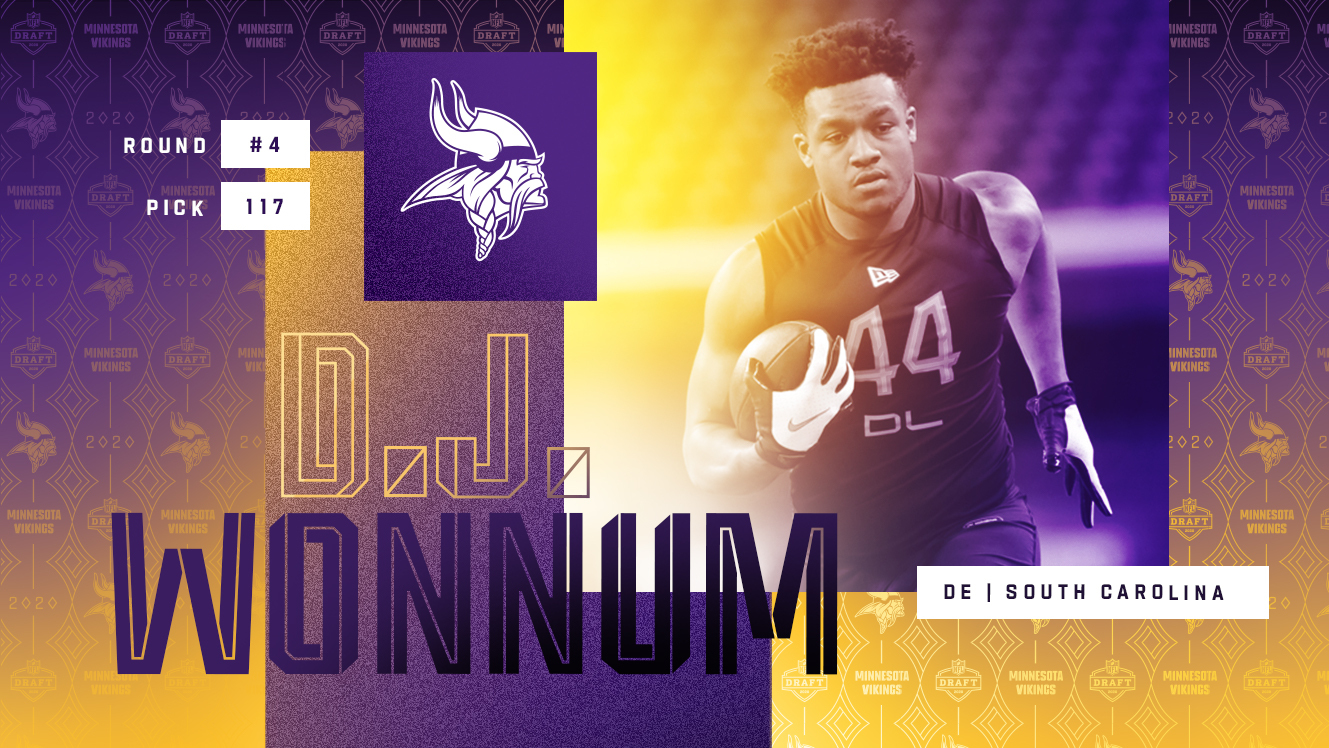
  • Round 4 (117th overall) — received from San Francisco — South Carolina DE D.J. Wonnum. In Rick Spielman’s mini-video after the pick, he said “He’s a long, athletic defensive end. He ran 4.6 at the combine … I know the success we have had and Coach Andre Patterson has had with these long athletic defensive ends and I know our coaches can’t wait to get their hands on him.” Courtney Cronin said “Wonnum has long been a target of Minnesota’s throughout this draft process. At 6-foot-5, 258 pounds, Wonnum looks like a physical carbon copy of Danielle Hunter when he was coming out of LSU five years ago. […] With Ifeadi Odenigbo primed to take on some of Griffen’s duties, the Vikings needed to address depth at defensive end and may be able to use Wonnum as a rotational edge rusher as a rookie. The Georgia native had 30 starts for the Gamecoks with 137 tackles, 29.5 tackles for loss and 14.0 sacks”. Daniel House said “He has impressive testing metrics, including high percentiles in the vertical jump, 40-yard dash and broad jump”. Arif Hasan, on the other hand thinks Wonnum was overdrafted: “I don’t really see much upside. Reasonably athletic run defender who adds competition. High motor but needs technical development. 180th on the consensus board, so a reach by that valuation”
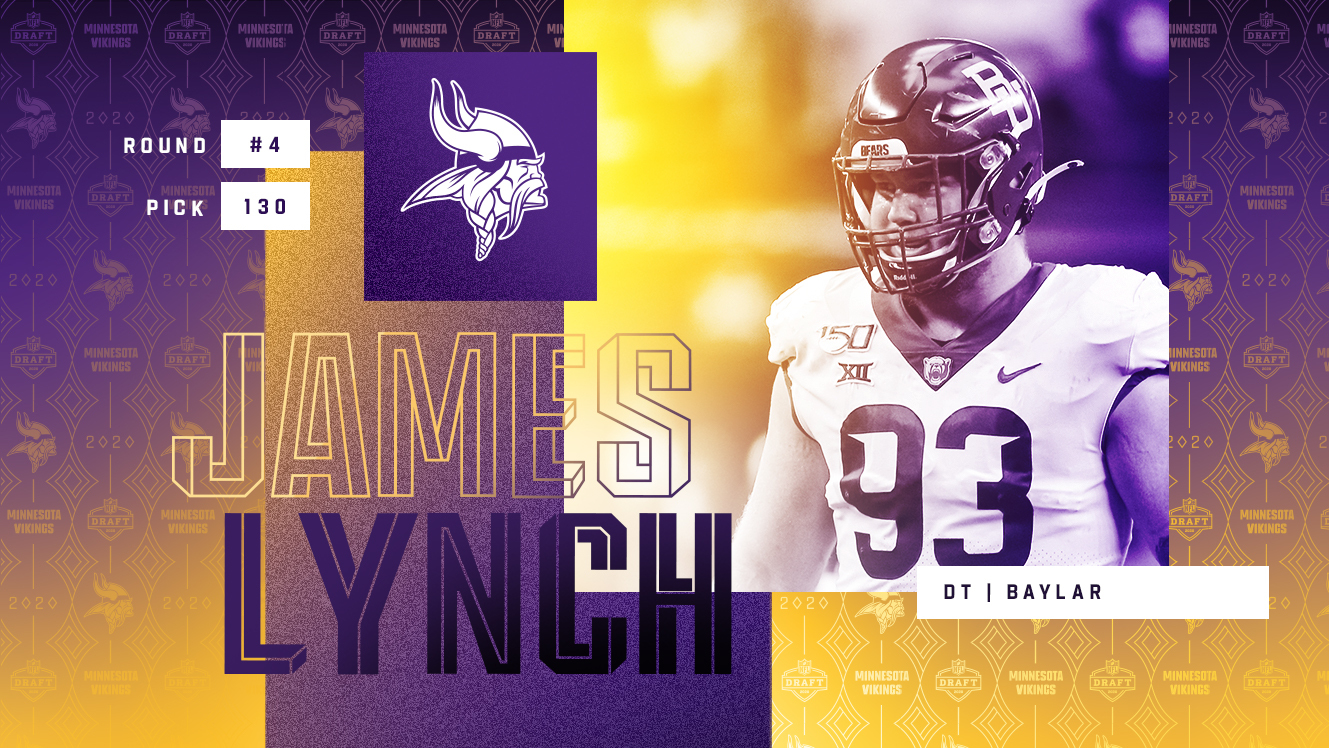
  • Round 4 (130th overall) — received from New Orleans — Baylor DT James Lynch. Rick Spielman said “Had a great interview with us at the combine, and just another great addition, not only from a football standpoint but from a high-character, high-quality standpoint as well.” Courtney Cronin said “Minnesota drafted Baylor’s all-time career leader in sacks (22.0) when they took Lynch. Lynch is a versatile, powerful pass rusher who could give the Vikings a boost with their interior pass rush from the three-technique spot after he notched 13.5 sacks and 19.5 tackles for loss last season. A unanimous All-American, effort is the first thing that jumps out to evaluators when looking at his college film. His sack numbers are one thing, but the amount of pressure Lynch generates on quarterbacks makes him a constant disruption in the backfield.” Chris Tomasson quotes Dane Brugler: “Lynch doesn’t have ideal length, which might limit his ideal scheme fit, but he competes with balance and power to hold up inside with the dependable football character that will endear himself to coaches.”
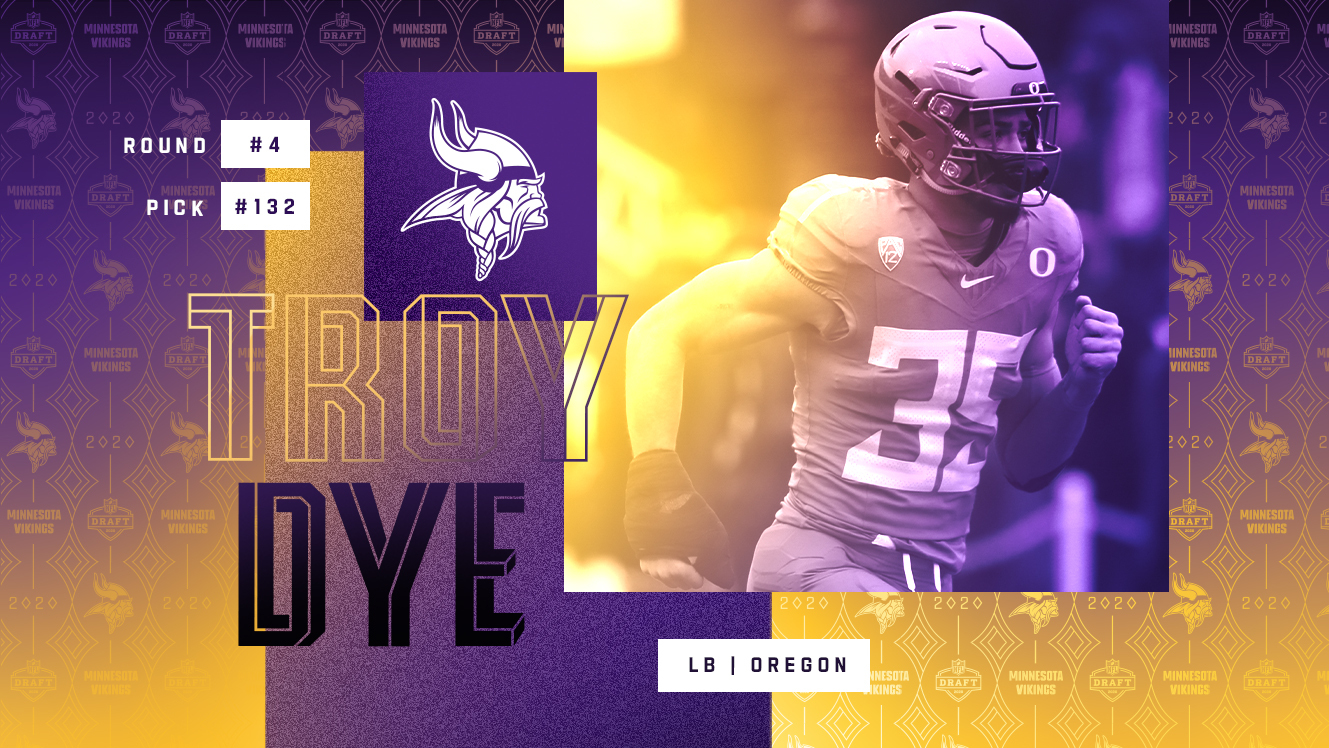
  • Round 4 (132nd overall) — Oregon LB Troy Dye. Chris Tomasson quotes Dane Brugler’s analysis: “Dye looks like a modern-day linebacker with his length and athleticism, but he plays more like a safety with questions about his functional strength and scheme fit in the NFL projecting as an immediate backup and special teamer”. Courtney Cronin said “The 6-foot-3, 231-pound Dye had been a difference maker at Oregon since his freshman year and led the Ducks in tackles for four straight seasons. He has good pedigree, too, as his brothers all played college football as did his dad. His size could be a concern, although his build is similar to Eric Kendricks and Cameron Smith.” Geoff Schwartz: “Troy Dye will be a fantastic pro. He’s just a playmaker on defense. He will be awesome on special teams. He played a game this season with a cast on his hand. The cast broke and he kept playing.”
  • Round 5 (155th overall) — received from Buffalo for Stefon Diggs — Traded to Chicago for a 2021 fourth-round pick.
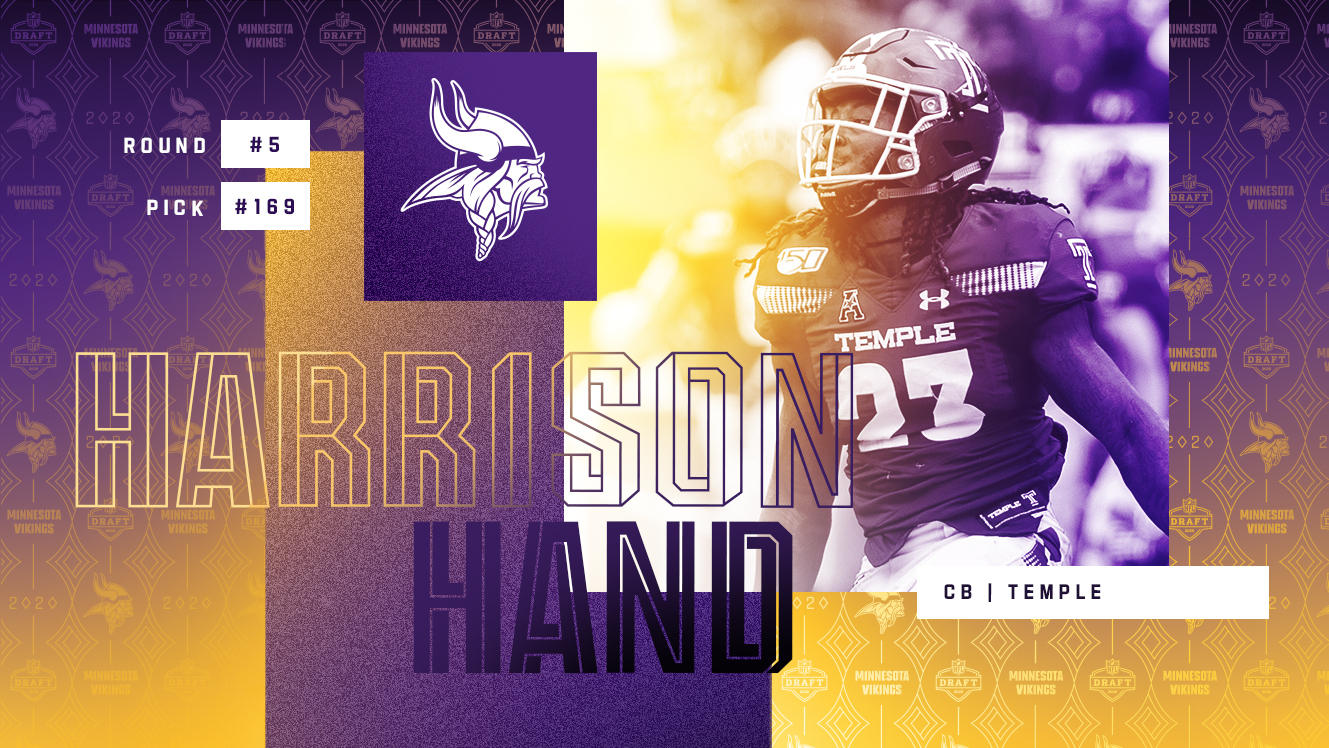
  • Round 5 (169th overall) — received from New Orleans — Temple CB Harrison Hand. Daniel House: “Hand posted a 41-inch vertical at the NFL Scouting Combine. He also ranked in the 96th percentile of the broad jump, per MockDraftable. Zimmer is loading up on defensive back talent in this draft. Gladney, Dantzler and Hand.” Courtney Cronin: “Hand’s physicality makes him a good tackler, and he prides himself on using his length to cover. It’s unclear how the Vikings’ see him fitting given several scouting reports project him best as a Cover 3 fit who can provide support against the run and play in the box. He might become a cornerback used in specific schemes or could transition to safety in the NFL.”
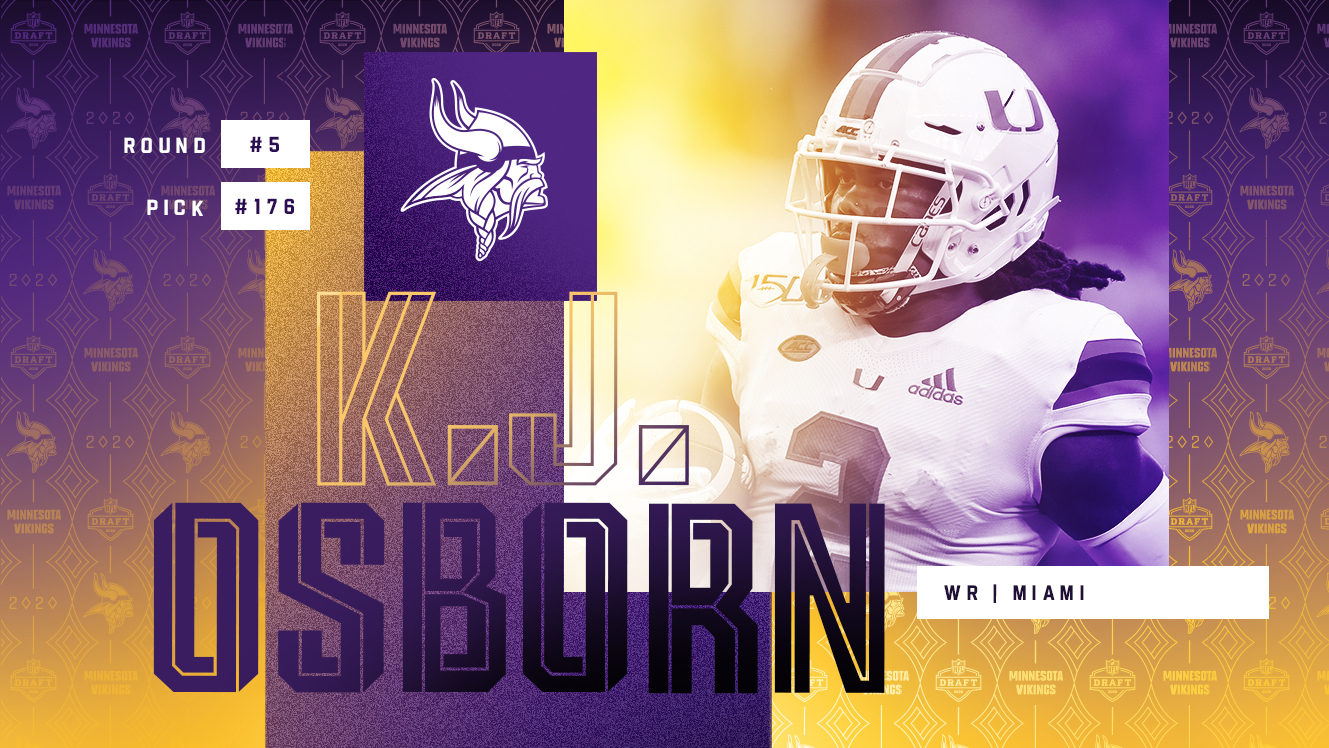
  • Round 5 (176th overall) — received from San Francisco — Miami WR K.J. Osborn. Courtney Cronin: “At the University of Buffalo, Obsorn played primarily in the slot. After he transferred to Miami following the 2018 season, he started all 13 games as a senior where he found a home on the outside. Osborn’s stats don’t jump off the page, though he led the Hurricanes in receiving (50 catches, 547 yards, 5 TDs), but his contributions as a return specialist made him a well-rounded player. In fact, the Vikings are intrigued by his abilities as a punt returner (15.9 yards per return at Miami) and could consider him for that role as Mike Hughes’ responsibilities in the secondary are expected to increase this season.” Chris Tomasson: “Osborn had 50 catches for 547 yards for Miami. Draft analyst Dane Brugler: ‘Doesn’t explode out of his breaks to separate upon command, but he is instinctive and dependable with the ‘make-it’ attitude that will help him compete for a reserve/special teams role.'”
  • Round 6 (201st overall) — received from New Orleans — Traded to Baltimore for pick 225 in the seventh round and a 2021 fifth round pick.
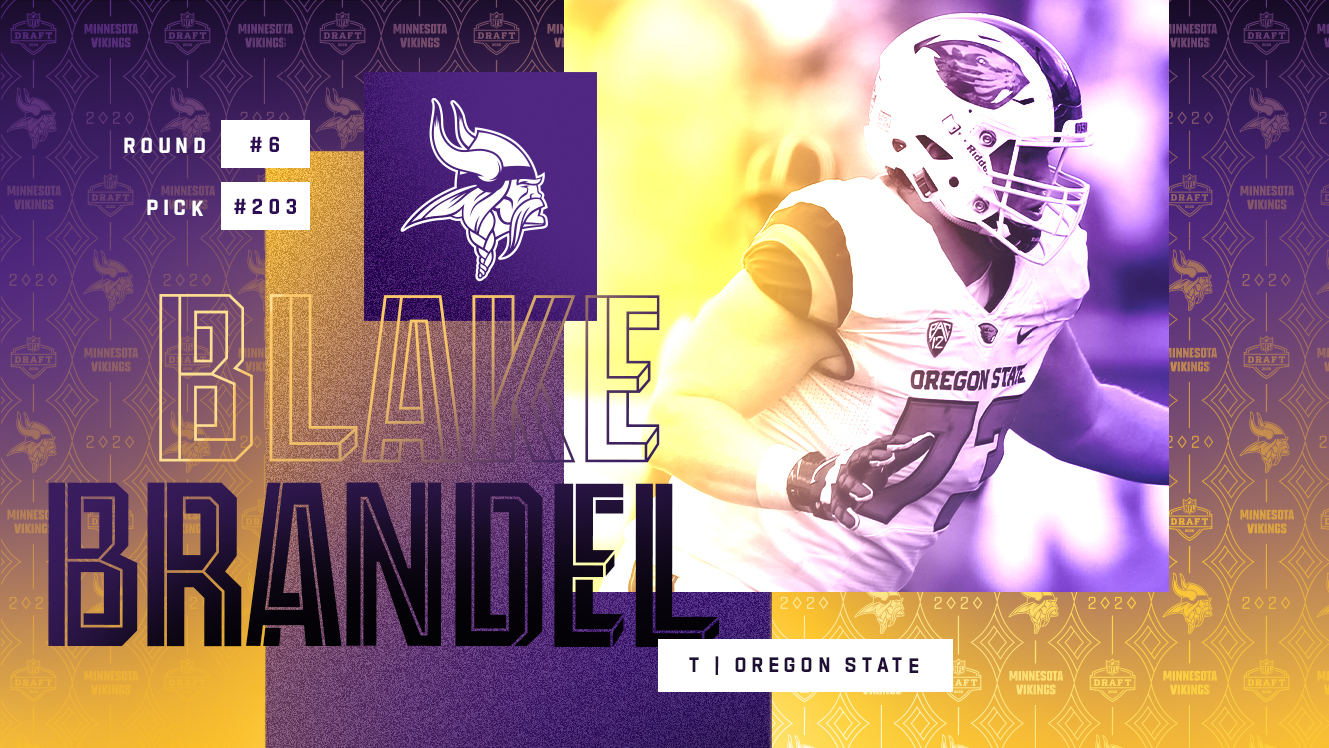
  • Round 6 (205th overall) — Oregon State OL Blake Brandel. Christopher Gates: “Brandel had a very good college career with the Beavers, starting 48 consecutive games for them over the course of his career. With the Vikings needing depth on the offensive line, he’s going to have an opportunity to compete for a spot as the swing tackle on the roster. He may need some time to develop, but the Vikings obviously see something in him that they like.” Chris Tomasson: “Draft analyst Dane Brugler on new #Vikings tackle Blake Brandel: ‘Brandel has athletic limitations, but he moves with composed feet and patient hands to strike-and-anchor, projecting as a possible NFL swing backup.'”
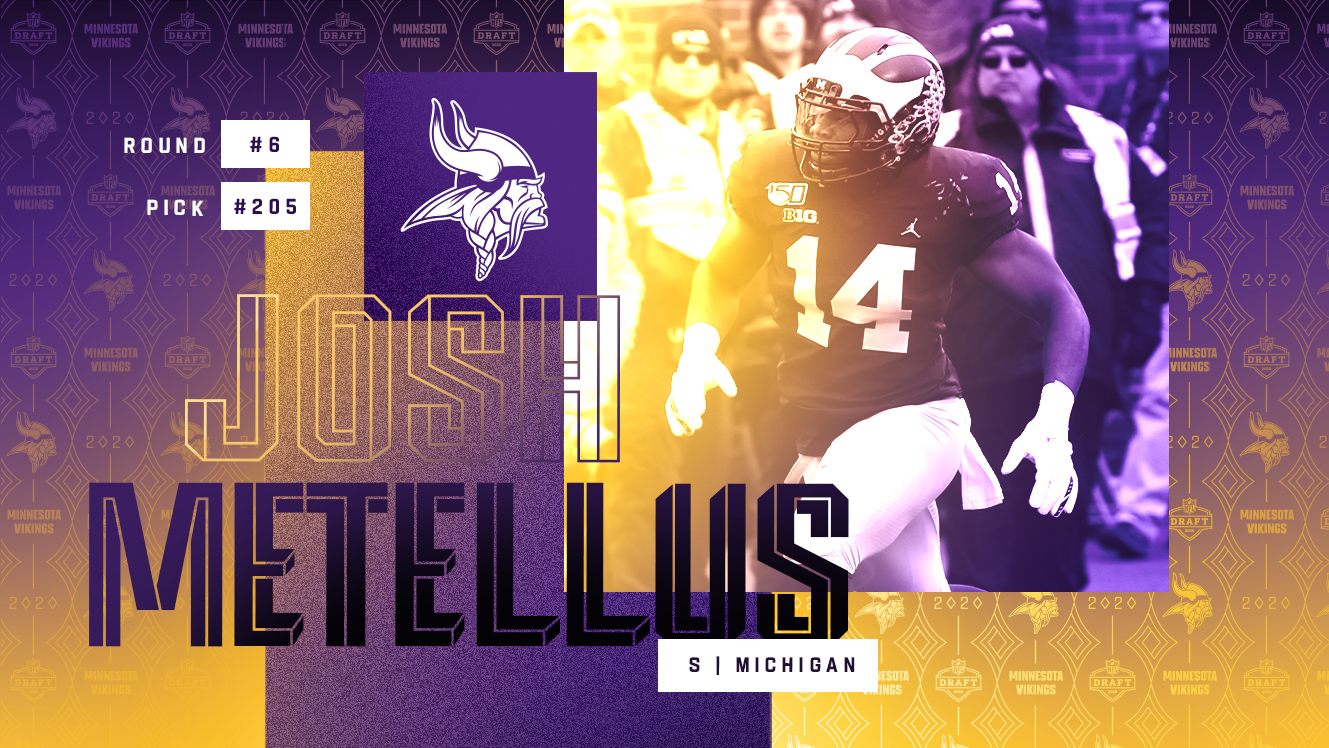
  • Round 6 (207th overall) — received from Buffalo for Stefon Diggs — Michigan S Josh Metellus. Chad Graff says “The Vikings drafted S Josh Metellus from Michigan with the No. 205 overall pick (sixth round). They had only two safeties on the roster. @dpbrugler is a big fan. He wrote: Metellus may not win a job in camp, ‘but if he gets into an NFL game, he might not give the job back.'” At SKOR North, Matthew Coller said “At the Senior Bowl [Metellus] took some snaps as a cornerback to demonstrate that he could handle one-on-one matchups with wide receivers. According to PFF, he allowed only 50% of his targets to be caught and gave up a QB rating against of 68.1 while playing over 600 snaps three years in a row. PFF also noted his success with the Wolverines as a blitzer. The Vikings’ safety room is more or less empty with the exit of Andrew Sendejo and Jayron Kearse in free agency. Now they have a player to develop with the possibility of contributing quickly in a big nickel situation if he proves trustworthy right away.”
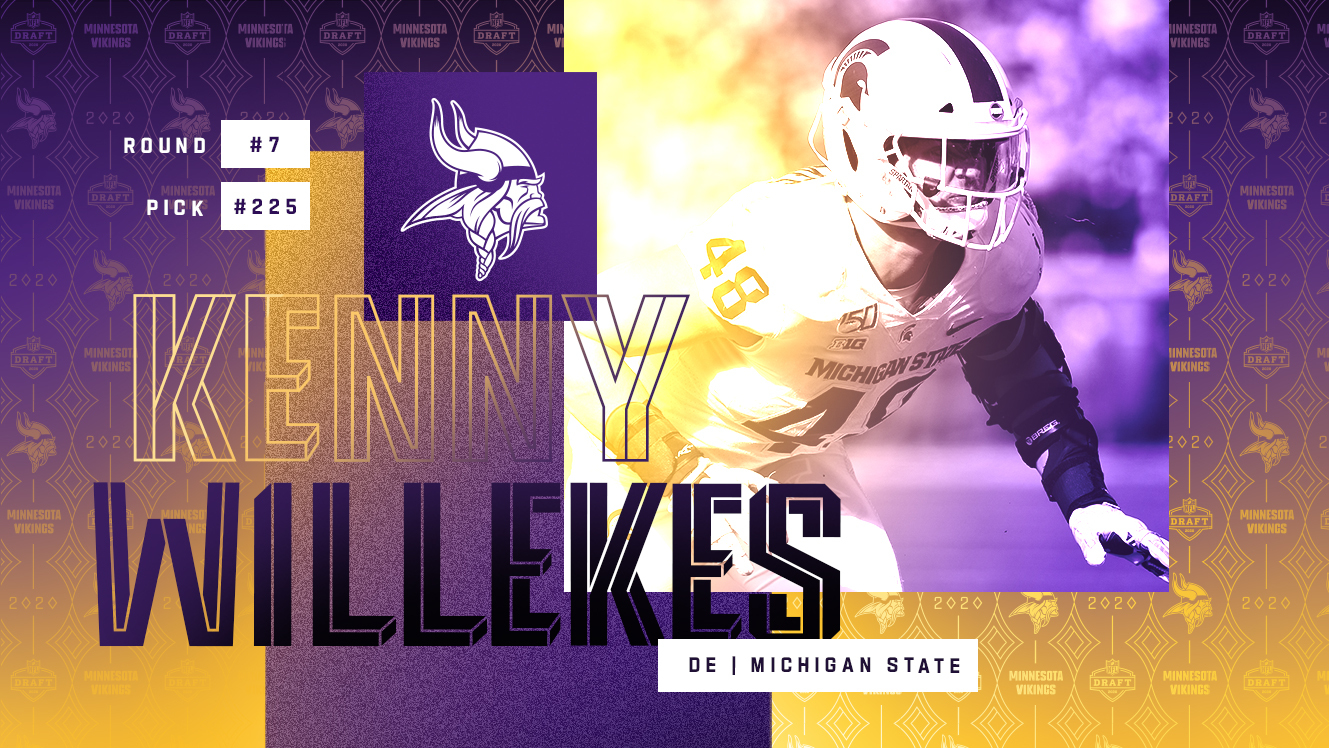
  • Round 7 (225th overall) — received from Baltimore — Michigan State DE Kenny Willekes. Chris Tomasson said “Draft analyst Dane Brugler had Kenny Willekes as a potential fifth rounder so that could be good value for #Vikings.” and “Willekes lacks the anchor and length to be a consistent edge-setter vs NFL offensive tackles but his resilient mentality and competitive motor translate to production, which should land him in a defensive line rotation”. Chad Graff: “A line from @dpbrugler’s scouting report on Vikings seventh-round pick Kenny Willekes: ‘Plays pissed off and competes like the other team peed in his Cheerios.'” I’ve got to admit, this is pretty impressive. Matthew Coller said “Willekes was a terrific run defender in college, grading over 80 in every year by PFF’s system and developed as a pass rusher, going from zero to nine sacks in his final year at Michigan State and adding 39 pressures. This is one of the Vikings’ best value selections. By PFF he was graded as a third-round pick but his lack of NFL-caliber athleticism likely hurt his grade by teams. He only ran a 4.87 40-yard dash at the Combine and is undersized at 6-foot-3 but Willekes already overcame being a walk-on at Michigan State and has an opportunity to do so again in Minnesota.”
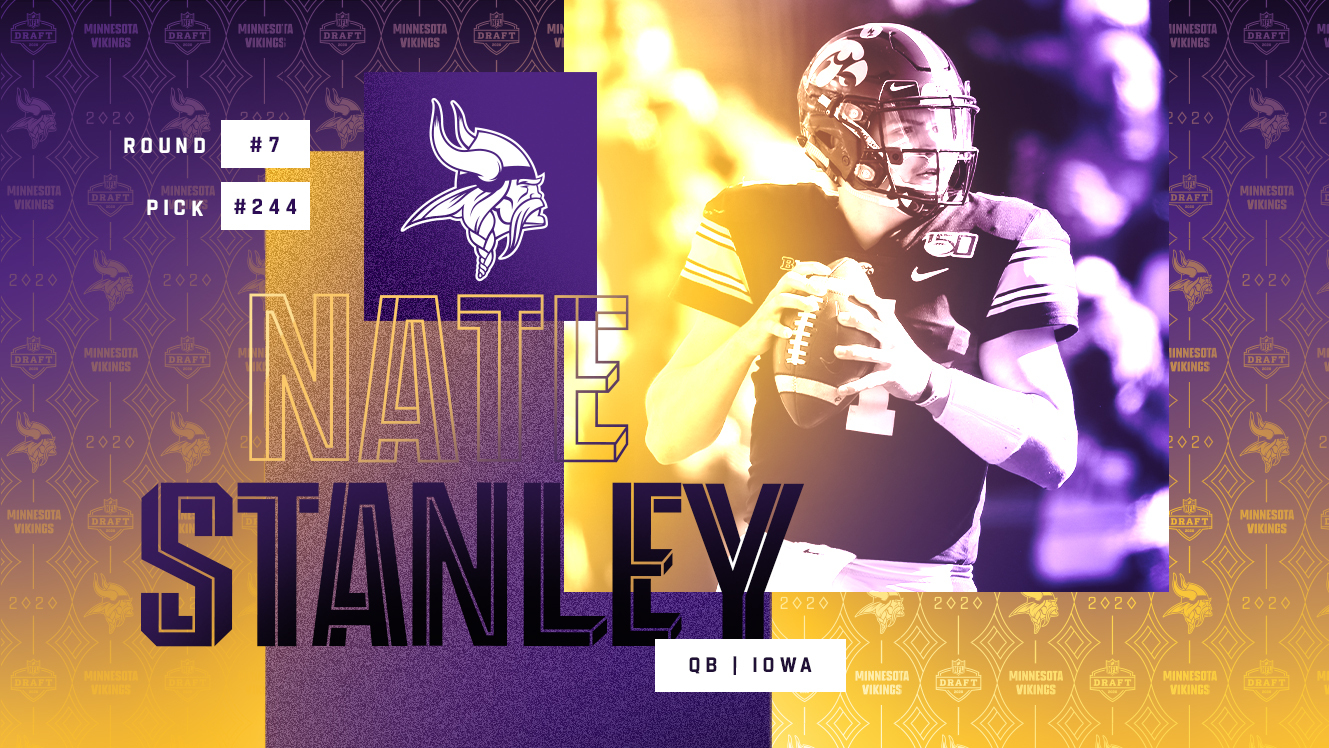
  • Round 7 (244th overall) — received from New Orleans — Iowa QB Nate Stanley. Courtney Cronin said, “Here’s where the Vikings strategy of not having to bid for college free agents might be coming into play. Stanley was projected as late draft pick/priority FA. Minnesota now has him on a rookie deal and doesn’t have to bid with other teams like they did w Jake Browning last yr”. Vikings Corner said “He is a big-armed QB with experience in a zone running/bootleg heavy offense. Last year, Stanley completed 59% of his passes for 2,951 yards. He tossed 16 touchdowns and seven interceptions.”
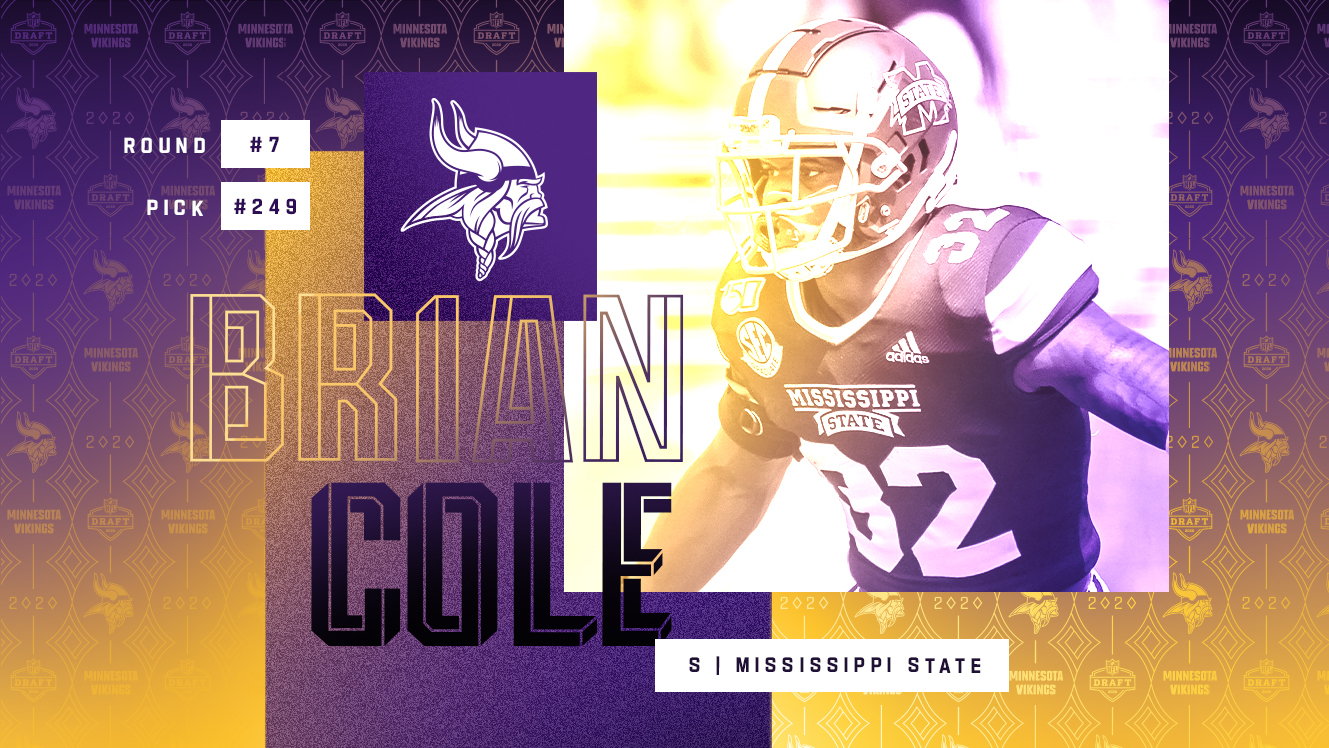
  • Round 7 (249th overall) — compensatory pick for losing Trevor Siemian in free agency — Mississippi State S Brian Cole II. Jack Day said “Cole is another safety that isn’t the greatest when it comes to attacking the ball when it’s in the air, which is weird considering he is a former wide receiver. He is another physical prospect that needs some work in pass coverage, but is more than willing to deliver the big hits.
    He is able to bump down and cover running backs and tight ends in the slot and he has the size to match up well with bigger tight ends. Cole stands at 6-2, 213 pounds and runs a 4.52 40-yard dash. In his 2019 season, Cole was a captain at Mississippi State. He registered 65 tackles, 7.5 tackles for loss, two sacks and an interception in his final collegiate season.”
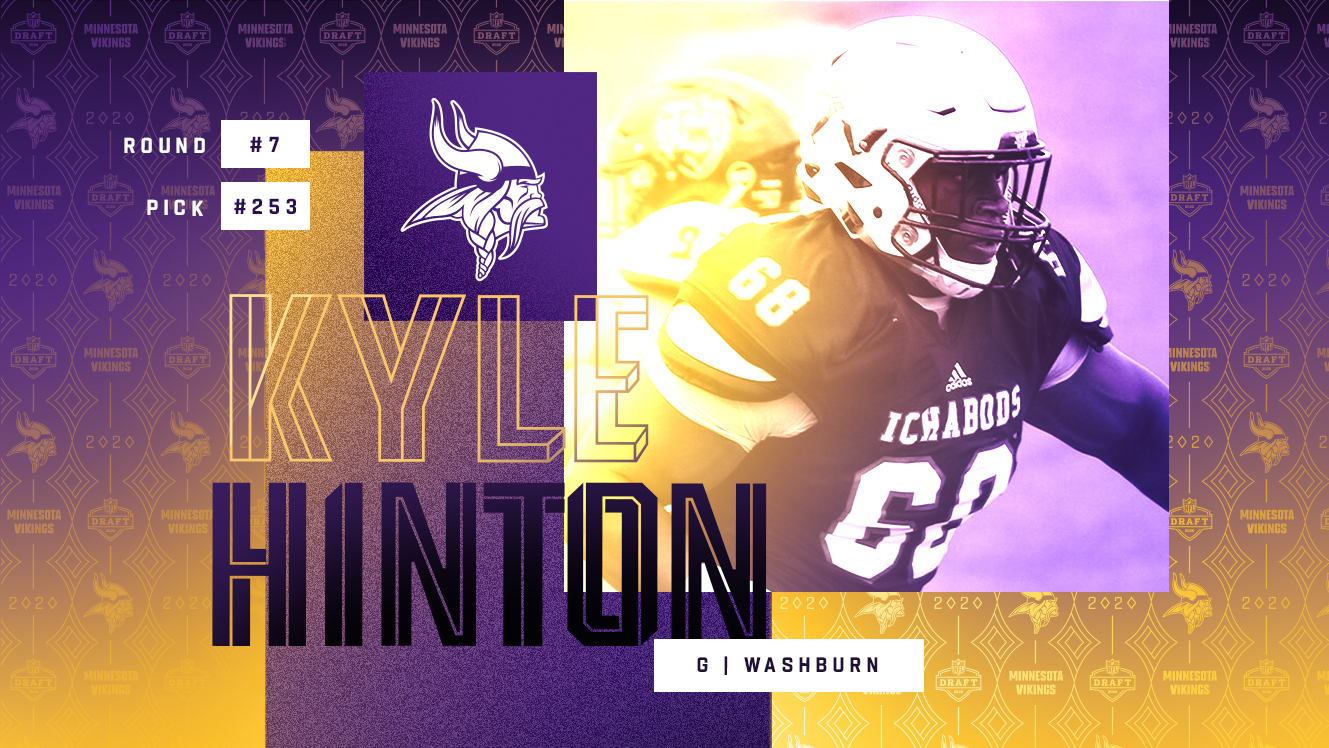
  • Round 7 (253rd overall) — compensatory pick for losing Tom Compton in free agency — Washburn G Kyle Hinton. Chris Tomasson said “Draft analyst Dane Brugler on Kyle Hinton: ‘Faces a position switch and a sizeable jump in competition at the next level, but his athletic traits and intelligence are exciting foundation traits for a team willing to be patient, projecting as a low risk, high reward guard/center.'” Courtney Cronin said “Hinton played left tackle in college at 6-foot-2, 295 pounds. His size is why he’ll need to move inside to guard or center if he has any shot of making an NFL roster. But that’s not the point. After not being able to come to an agreement with Washington in a trade for Trent Williams, the only upgrade the Vikings made on the O-line in 2020 was drafting Boise State’s Ezra Cleveland in the second round. That’s not enough to fix an entire unit, so the Vikings will now have to address how they want to move forward, and who they’ll want to move around and try out at different positions, as they continue through an unprecedented offseason.”

And there we have it, at fifteen picks it’s the largest draft class for any NFL team in the seven-round draft era.

“Soldier of Three Armies” Pt. 1 – Winter War – Sabaton History 064 [Official]

Filed under: Europe, Germany, History, Media, Military, Russia, WW2 — Tags: , , , , — Nicholas @ 04:00

Sabaton History
Published 25 Apr 2020

Started out as a reserve, soon promoted well deserved, and the legend has begun. Lauri Allan Törni, the soldier of three armies. Born and raised in Viipuri in Finnish Karelia, Lauri Törni grew up into a world of tensions, of class-consciousness and conflicting ideologies. Boxed in between the Soviet Union and Germany, Finland was preparing for war of survival. The Winter War would be the first place for Lauri Törni to see battle and begin his legacy as a born soldier.

Support Sabaton History on Patreon: https://www.patreon.com/sabatonhistory

Listen to “Soldier of Three Armies” on the album Heroes:
CD: http://bit.ly/HeroesStore
Spotify: http://bit.ly/HeroesSpotify
Apple Music: http://bit.ly/HeroesAppleMusic
iTunes: http://bit.ly/HeroesiTunes
Amazon: http://bit.ly/HeroesAmz
Google Play: http://bit.ly/HeroesGoogleP

Check out the trailer for Sabaton’s new album The Great War right here: https://www.youtube.com/watch?v=HCZP1…

Listen to Sabaton on Spotify: http://smarturl.it/SabatonSpotify
Official Sabaton Merchandise Shop: http://bit.ly/SabatonOfficialShop

Hosted by: Indy Neidell
Written by: Markus Linke and Indy Neidell
Directed by: Astrid Deinhard and Wieke Kapteijns
Produced by: Pär Sundström, Astrid Deinhard and Spartacus Olsson
Creative Producer: Joram Appel
Executive Producers: Pär Sundström, Joakim Broden, Tomas Sunmo, Indy Neidell, Astrid Deinhard, and Spartacus Olsson
Post-Production Director: Wieke Kapteijns
Edited by: Iryna Dulka
Sound Editing by: Marek Kaminski
Maps by: Eastory – https://www.youtube.com/c/eastory

Archive by: Reuters/Screenocean https://www.screenocean.com
Music by Sabaton.

Sources:
– Lauri Törni Perinnekilta
– Helsinki City Museum
– Finnish Heritage Agency
– sa-kuva.fi

An OnLion Entertainment GmbH and Raging Beaver Publishing AB co-Production.

© Raging Beaver Publishing AB, 2019 – all rights reserved.

From the comments:

Sabaton History
2 days ago
Hello everyone! We hope you all stay safe and healthy! Due to the current situation, the interview part had to be recorded via webcam and the quality is sadly not the best. We apologize for that. Still we try to keep to our weekly schedule and bring you exciting new episodes of Sabaton History!

“If it saves just one life…”

Filed under: Economics, Government, Health, Liberty — Tags: , , , , — Nicholas @ 03:00

Hector Drummond illustrates the moral failure of falling back on the “if it saves just one life” trope as a justification for any and all restrictions on free people:

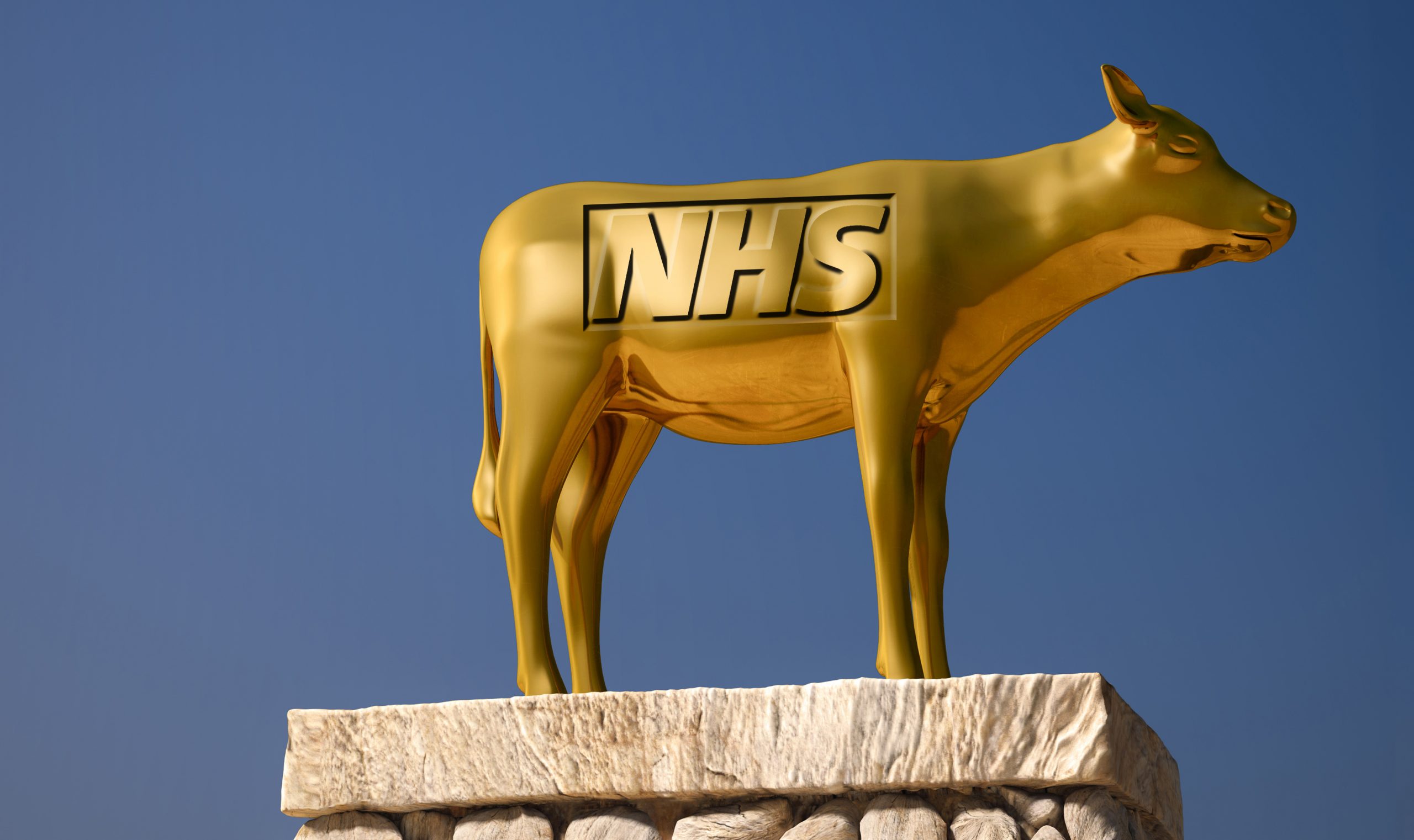
Not actually the official symbol of Britain’s National Health Services … probably.

Let me ask you a question. Would you give up your job, your savings, your kids’ economic future, your pension, your parents’ current pension, your house, and your mental health, if I told you that doing so may possibly extend my old, sick grandfather’s life by a year or two? I don’t suppose you’d be too keen, would you? In fact, even the most mild-mannered of people is likely to get angry at the sheer effrontery of such a request.

What if I told the world the same thing? What if I told the world that if everyone in every country gave up their wordly possessions, and spent the rest of their lives in grinding poverty, then it’s possible that my grandfather might get to see Christmas? And suppose that there was some bare plausibility to this, based on a computer model developed by scientists at Imperial College. What do you think the world is likely to say to me? The polite response would be, “Sorry to hear about your grandfather, but we’re not going to do this”. The less polite response would be more like … well, just incredulous laughter, and slammed doors.

The reason I bring up these hypothetical scenarios, though, is that all over social media we are hearing about the Covid-19 lockdown being “worth it if it saves just one life”. But would the people saying this really be willing to give up, say, their own house, car and possessions and teenage daughter to someone who is suicidally depressed over their lack of prospects in life? No. Would they be prepared to serve ten years in jail if it saved the life of someone at risk of being killed by gangsters? No. Would they be happy with having the government forcibly remove a kidney from them to extend the life of someone with failing kidneys? No. Economic ruin and loss of liberty is not something we generally regard as a fair trade for a stranger’s life. Generally even the bleeding hearts among us will say, and rightfully so, “I’m sorry for this person, but they are not entitled to this, and I will not damage my life to any great extent for them”. Charitable donations are one thing. So is volunteer service. But that’s it.

Another thing I am seeing is people who say, “Anything is worth it if it saves lives”. Anything? Really? Shall we ban alcohol then? Because some people die from alcohol. Cars? Paracetamol? Steak knives? Shall we ban mobile phones, because terrorists might use them to communicate with? Shall we lock up for life anyone convicted of a minor juvenile crime, in case they turn out to be a killer? The whole idea is too ridiculous for words, yet all over the world there are fearful people hiding in their homes and posting such thoughts. It is one thing to feel sorry for them, but their stupid ideas shouldn’t pass unchallenged.

Where have all the airships gone? | James May’s Q&A (Ep 8) | Head Squeeze

Filed under: Britain, Germany, History, Military, Technology, WW1 — Tags: , — Nicholas @ 02:00

BBC Earth Lab
Published 21 Feb 2013

James May talks us through the rise and fall of airships.

James May’s Q&A:
With his own unique spin, James May asks and answers the oddball questions we’ve all wondered about from “What Exactly Is One Second?” to “Is Invisibility Possible?”

QotD: Bio-engineering

Filed under: Humour, Quotations, Science — Tags: , — Nicholas @ 01:00

In any case I don’t think we’re really going to have strange new hybrid species; it’s more likely people will seek some sort of body modification that will make today’s tongue studs look as tame as Hello Kitty temporary tattoos. I’m guessing that young guys will go for the elk horns, which at least would make bar fights more interesting. Young women would opt for a Bambi tail. Gastronomes would shyly ask their doctor if they could get some cow genes — multiple stomach chambers, one for each course! — and geeks would request those agile monkey toes that come in handy when you’re up all night writing viruses. We’ll be shocked at first; they’ll be ostracized. In 2064 a presidential candidate will be forced to withdraw when someone digs up college pictures that show him sporting a scaly tail. Hey, all the kids had them. It fell off. I have no idea where it is now. But by 2096 we’ll not only be used to it, we’ll have a governor with a unicorn horn.

Unless we stop now. And I know what you’re saying: Oh, it’s easy for you to say, Mr. Stop-the-progress-of-science-for-some-ridiculous-ethical-reason. Actually, no, it’s not easy for me to say. This forked tongue I got from the snake gene implant is not exactly working out. On the other hand, I don’t have to change clothes; I just molt twice a year. On the other, my wife hates finding that thing in the hamper.

James Lileks “In the genes department”, Star Tribune, 2005-02-06.

April 25, 2020

Minnesota Vikings 2020 draft – day two, rounds 2 and 3

Filed under: Football — Tags: , , — Nicholas @ 05:00

The Minnesota Vikings entered the second day of the NFL’s first online draft holding twelve draft picks in total, with identified needs at offensive guard, offensive tackle, defensive end, defensive tackle, cornerback, wide receiver, and (potentially) safety. With such a long shopping list, it was widely expected that the team would be eager to move up to improve on the three day two picks:

  • Round 2 (58th overall) — OT Ezra Cleveland, Boise State. The Vikings don’t absolutely need to replace Riley Rieff at left tackle, but if Cleveland shows he’s up to the job, it gives the team a lot of flexibility on the left side of the offensive line. There was reportedly some discussion last season to shifting Rieff inside to take the left guard position, replacing Pat Elflein, and that now appears to be a stronger option for the 2020 season. Alternatively, Cleveland could be given a season at guard (although he doesn’t have the ideal body for working on the interior OL) with an eye to replacing Rieff in 2021.
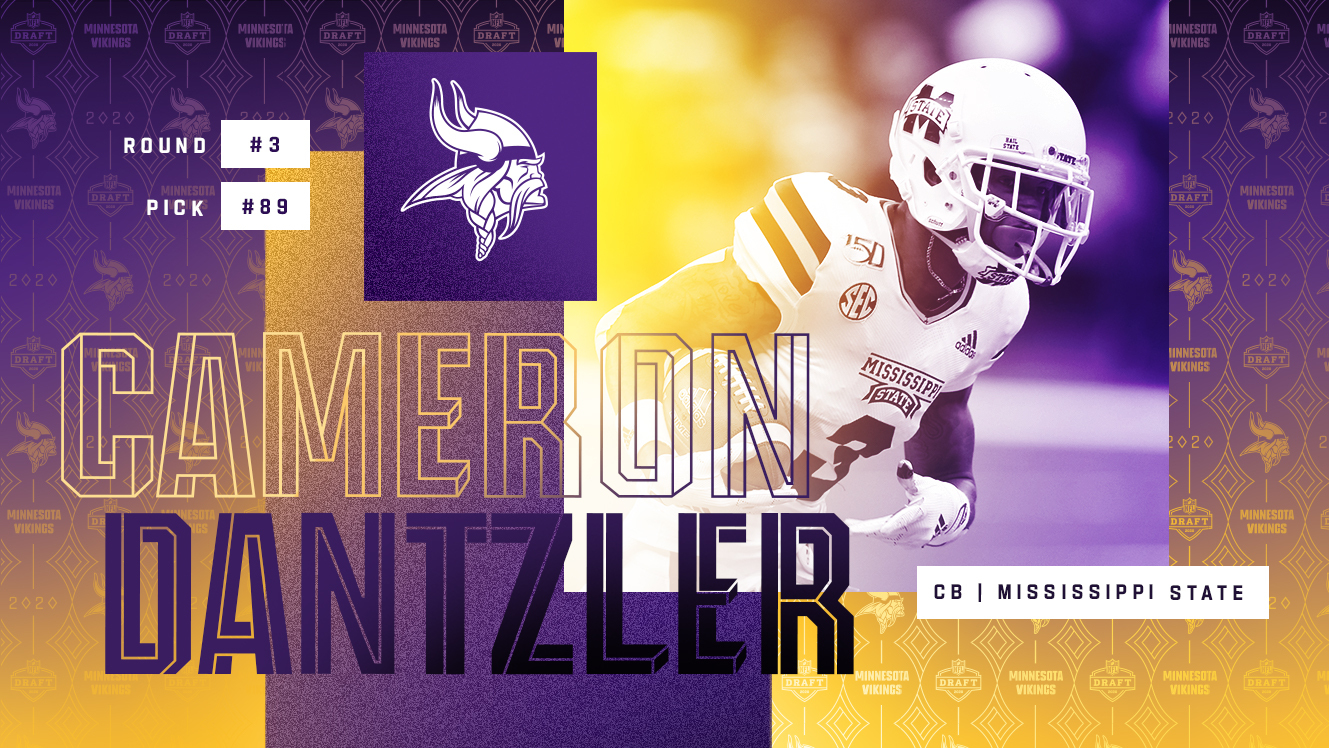
  • Round 3 (89th overall) — CB Cameron Dantzler, Mississippi State. The Vikings needed at least one more cornerback and Dantzler was one of the higher-ranked day two corners on a lot of big boards. His draft stock took a hit with a slower-than-expected sprint time at the NFL combine.
  • By this point, NFL Commissioner Roger Goodell was starting to show the fatigue:

  • Round 3 (105th overall — compensatory pick for losing Sheldon Richardson in 2019) — traded to New Orleans for the 130th (4th round), 169th (5th round), 203rd (6th round), and 244th picks (7th round).

History-Makers: Shakespeare

Overly Sarcastic Productions
Published 24 Apr 2020

“The Bard” is not only an essential class in any D&D party, but a byword for England’s most famous writer. We’ve covered a bit of Shakespeare before on OSP — just a bit, really, nothing major, only a dozen — but today we’ll look at how William got to Bard-ing, and how he accidentally became England’s biggest Historian.

SOURCES and Further Reading: The Introduction and play-texts of the Folger Shakespeare Library (The best way to read Shakespeare), “Shakespeare: A Very Short Introduction” by Wells

This video was edited by Sophia Ricciardi AKA “Indigo”. https://www.sophiakricci.com/
Our content is intended for teenage audiences and up.

PATREON: https://www.Patreon.com/OSP

DISCORD: https://discord.gg/h3AqJPe

MERCH LINKS: https://www.redbubble.com/people/OSPY…

OUR WEBSITE: https://www.OverlySarcasticProductions.com
Find us on Twitter https://www.Twitter.com/OSPYouTube
Find us on Reddit https://www.Reddit.com/r/OSP/

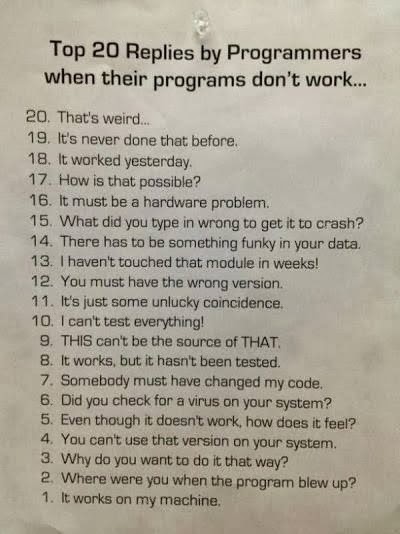
Professor Neil Ferguson – “I wrote the code (thousands of lines of undocumented C) 13+ years ago to model flu pandemics…”

Filed under: Britain, Government, Health — Tags: , , , — Nicholas @ 03:00

An anonymous guest post at Hector Drummond’s blog pivots on the disturbing quote in the headline from one of the key advisors to the British government on the Wuhan Coronavirus epidemic:

To say I was gobsmacked at his admission is an understatement. He’s one of the experts advising the government about the Covid-19 pandemic, and was consulted in previous health crises such as Foot & Mouth disease. Like the approach to combating that, we’re seeing a kind of scorched earth approach to containing another transmissible disease.

Even though the “C” programming language that Ferguson used is nearly 50 years old, the language chosen isn’t the problem. Undocumented means that modules and other code fragments are not commented, so their purpose may be unclear to someone unfamiliar with the code. In the worst case it means that modules and variables don’t have self-documenting names. For example, an accounting program could have the variables BalanceBroughtForward and BalanceCarriedForward, but a sloppy programmer might call them B1 and B2 instead – a sure recipe for confusion.

The “C” language is good to work with but has some inherent issues which can lead to subtle bugs affecting the output without causing an error. A common problem is the conditional which uses two equals signs rather than one.

To compare variables A and B for equality you would write this: if (A == B). However, it’s easy to accidentally write this: if (A = B). The latter always returns true and assigns the value of variable B to A. I have no idea whether Ferguson’s code contains any bugs, this is just one minor example of the need for strict testing.

The reason for commenting code extensively and properly is so that the programmer himself, and anyone else who maintains it, can understand what it does and how it works, reduce the chance of mistakes and avoid unnecessary effort. During my IT career I would have terminated the contract of any contractor working for me who wrote thousands of lines of undocumented code. Not only is such code a nightmare for others to work on, it can be difficult for the original programmer to maintain if coming back to it after a long time. Sloppiness in the coding raises the worry of a concomitant lack of rigour in testing, although that’s not to assert Ferguson’s code isn’t working as intended and/or wasn’t tested.

The convertible plane: smoother and scrub in ONE

Filed under: Tools, Woodworking — Tags: , , — Nicholas @ 02:00

Rex Krueger
Published 3 Apr 2019

More video and exclusive content: http://www.patreon.com/rexkrueger
Get the FREE Tip Sheet: https://www.rexkrueger.com/articles/2…
(more…)

QotD: The entitlement mindset of intellectuals

Filed under: Education, Politics, Quotations — Tags: , , — Nicholas @ 01:00

The intellectual wants the whole society to be a school writ large, to be like the environment where he did so well and was so well appreciated. By incorporating standards of reward that are different from the wider society, the schools guarantee that some will experience downward mobility later. Those at the top of the school’s hierarchy will feel entitled to a top position, not only in that micro-society but in the wider one, a society whose system they will resent when it fails to treat them according to their self-prescribed wants and entitlements. The school system thereby produces anti-capitalist feeling among intellectuals. Rather, it produces anti-capitalist feeling among verbal intellectuals. Why do the numbersmiths not develop the same attitudes as these wordsmiths? I conjecture that these quantitatively bright children, although they get good grades on the relevant examinations, do not receive the same face-to-face attention and approval from the teachers as do the verbally bright children. It is the verbal skills that bring these personal rewards from the teacher, and apparently it is these rewards that especially shape the sense of entitlement.

Robert Nozick, “Why Do Intellectuals Oppose Capitalism?”, Cato Policy Report, 1998-01-01.

April 24, 2020

How Sharp is your Plane? | Paul Sellers

Filed under: Tools, Woodworking — Tags: , , , — Nicholas @ 06:00

Paul Sellers
Published 23 Apr 2020

So you think you can sharpen your plane every few days. I wanted to dispel that mystery.

Planes need sharpening according to how much energy you need to make it cut. Experience has shown me that most woodworkers push their planes to the very limits of dullness. It’s a pure uneconomic waste of energy. I put this together to say Sharpen Up!

To find out more about sharpening a plane, see our video on Woodworking Masterclasses: https://bit.ly/2yGhyfq or for a beginner friendly guide, see Common Woodworking: https://bit.ly/2x6xeIM
——————–

Want to learn more about woodworking?

Go to Woodworking Masterclasses for weekly project episodes: http://bit.ly/2JeH3a9

Go to Common Woodworking for step-by-step beginner guides and courses: http://bit.ly/35VQV2o

http://bit.ly/2BXmuei for Paul’s latest ventures on his blog

From the comments:

Paul Sellers
4 hours ago (edited)
Oh my! I forgot to mention that I’m planing Texas MESQUITE! Almost two times harder and more densely grained than oak!

Minnesota Vikings 2020 draft — day one, first round

Filed under: Football — Tags: , , — Nicholas @ 05:00

The 2020 NFL draft is the first time that a draft has been conducted under lockdown, so the “big event” the NFL has hyped-up for the last few decades is now a virtual event hosted at ESPN’s studio in Connecticut. Each team has their own isolated General Manager, electronically in contact with key members of their coaching and scouting staffs, effectively conducting a mock draft for real from their respective basements. The possibilities for disruptions, errors, and unintentional gaffes are at an all-time high. It might even have been worth everyone’s time to follow on TV or online, just for that comic potential.

Coming into the first round of the draft, the Minnesota Vikings had their own pick at 25 and Buffalo’s pick at 22 obtained as part of the Stefon Diggs trade. Vikings General Manager Rick Spielman, known affectionately as “Trader Rick” for his long-standing habit of swapping draft picks during the draft, was expected to be his usual huckster self and few expected the Vikings to end up with both of their first round picks by the end of the day.

After the 2019 season, the Vikings had parted ways with some key players and had identified other needs on both sides of the ball that could be addressed in the draft. The priority of those needs can be debated, so this is not in canonical order by anyone’s standards:

  • Cornerback — Starting corners Xavier Rhodes and Trae Waynes along with nickel Mackenzie Alexander will all be wearing different uniforms for the 2020 season, leaving the Vikings very short-staffed at this position. At least one of the first five picks should be a corner. Some players that might be available in the first round include Trevon Diggs (who I think we can be pretty sure won’t be the Vikings’ pick, for reasons), Jaylon Johnson, Noah Igbinoghene, Kristian Fulton, and Jeff Gladney.
  • Wide Receiver — The surprising trade with Buffalo that netted the Vikings extra picks in the draft in exchange for the services of Stefon Diggs means that Minnesota has a vacancy opposite Adam Thielen. This is widely declared to be potentially the best draft for wide receivers in many years, so this is a need that should be relatively easy to address. Potentially available players include CeeDee Lamb, Henry Ruggs III, Justin Jefferson, Denzel Mimms, Tee Higgins, and Jalen Reagor.
  • Guard — The Vikings parted company this offseason with right guard Josh Kline which was unexpected as he had been a solid performer for the team in 2019. Pat Elflein was the most easily identified weak spot on the offensive line and at the very least needs to be challenged for his starting spot (many fans would say he should be cut, not just “challenged”). The team may consider Dru Samia ready to step in for Kline, but it’s not clear if Oli Udoh, Brett Jones, or Dakota Dozier can be seen as starting-level replacements. This isn’t seen as a strong draft for interior offensive linemen, so guards Robert Hunt, Damien Lewis, and Jonah Jackson are expected to still be available well into the second round. Centres Cesar Ruiz, Lloyd Cushenberry, Matt Hennessy, and Tyler Biadasz may also be still on the board on day two.
  • Defensive End — Everson Griffin exercised his option to void the remaining years of his contract and backup Stephen Weatherly left in free agency, which means the team may be looking to draft an edge rusher to shore up the defensive line. Ifeadi Odenigbo played very well in relief last season and could be ready to step into the starting role, but as with cornerbacks, you can never have too many talented pass rushers. K’Lavon Chaisson, Zack Baun, Yetur Gross-Matos, Terrell Lewis, and Julian Okwara are potential picks in the range the Vikings will be picking.
  • Tackle — Both Minnesota’s offensive tackles are under contract for this year, but left tackle Riley Rieff might be looking over his shoulder if the team decides to trade for Washington’s Trent Williams or draft one of the top college tackles to replace him. Most mock drafts show the top four or five tackles going off the board early in the first round, but one or two may drop into the mid-twenties: Mekhi Becton, Tristan Wirfs, Josh Jones, or Austin Jackson might be there by 22.
  • Defensive Tackle — The team cut Linval Joseph at nose tackle for salary cap reasons, and brought in Michael Pierce to replace him. Shamar Stephen is still available at the 3-tech, but the team may be considering trying to upgrade their interior pass rush capabilities with a rookie DT. A.J. Epenesa, Ross Blacklock, Justin Madabuike, Marlon Davidson, and Neville Gallimore might be available past the first twenty picks.
  • Safety — This may not be a dire need, but with Anthony Harris potentially playing on the franchise tag (if the team doesn’t trade him during the draft), and having lost backups Andrew Sendejo and Jayron Kearse to free agency, some long-term concerns exist in the backfield. Expected to still be available when the Vikings are on the clock: Xavier McKinney, Grant Delpit, hometown favourite Antoine Winfield Jr., Ashtyn Davis, and Jeremy Chinn.

All of the above was written before the draft began … I probably should have posted that on Thursday.

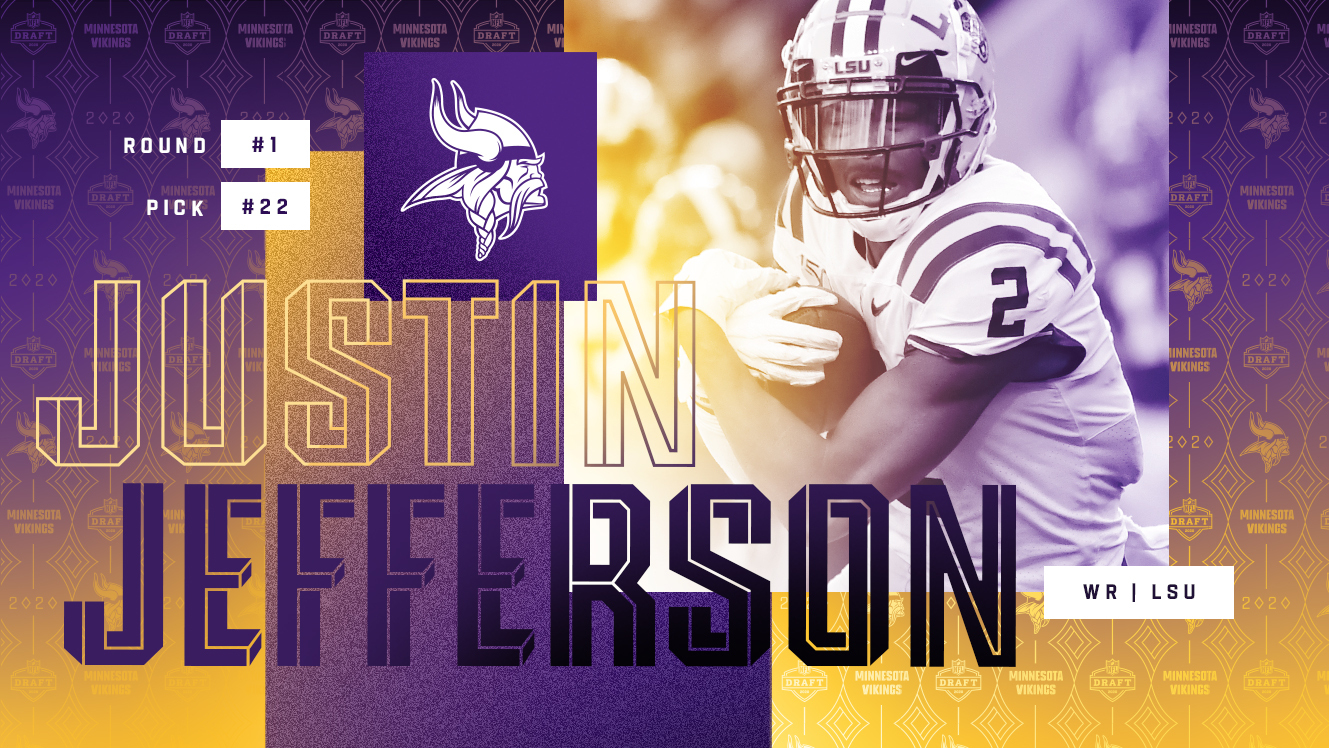
With the Vikings on the clock for the 22nd pick (originally Buffalo’s traded as part of the Stefon Diggs deal), Minnesota selected LSU wide receiver Justin Jefferson.
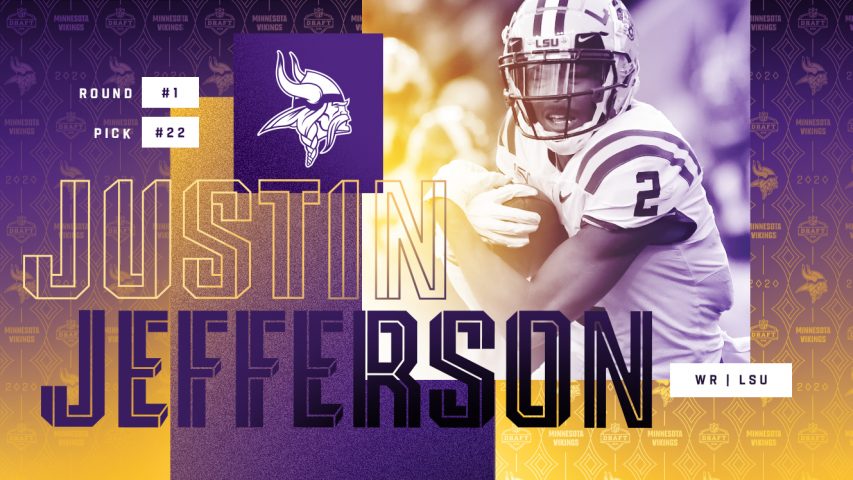
Jefferson had an absolutely monstrous season for the Tigers in their National Championship season. He caught 111 passes on the year, which was the most in the country, accounting for 1,540 yards (third in the country) and 18 touchdowns (second in the country). I’m not sure how that only managed to get him on the All-SEC Second Team, but whatever. He had a huge performance in the Peach Bowl as well, catching 14 passes for 227 yards and four touchdowns. After that performance, it’s no surprise he decided to skip his senior season in Baton Rouge and enter the NFL Draft.

Jordan Reid of The Draft Network has Jefferson as his #4 wide receiver and the #18 player overall on the Big Board in his Draft Guide. Here is his evaluation of Jefferson.

    A former two-star recruit, but Justin Jefferson always had a high-star work ethic. Being that he was legacy and had brothers who suited up successfully for the Tigers, playing in Baton Rouge had a deeper meaning behind it. Since stepping on campus, many mentioned how hungry he was to succeed from the beginning. His quickness and smarts help him overcome what he lacks from a stature standpoint. After a successful year, he went on to top those totals and become the top slot option for a record setting offense. Scouts are enamored with Jefferson because of his football acumen, love for the game, and value that he brings. Because of questions about his in-game play strength, he may be limited to a slot only role where he won’t be challenged as frequently. Jefferson projects as first-round selection that will be an option to play early on as a rookie because of how mature his game is, plus his consistency as a catcher will enable him to take on a heavy workload in his first year and beyond.

Jefferson should become the immediate starter for the Vikings across from Thielen, and should be able to make a significant contribution to the Vikings’ offense immediately.

The Vikings were on the clock again with the 25th pick, but traded it to San Francisco, moving back to the 31st pick and getting the 49ers’ 117th in the 4th round and 176th in the fifth round.

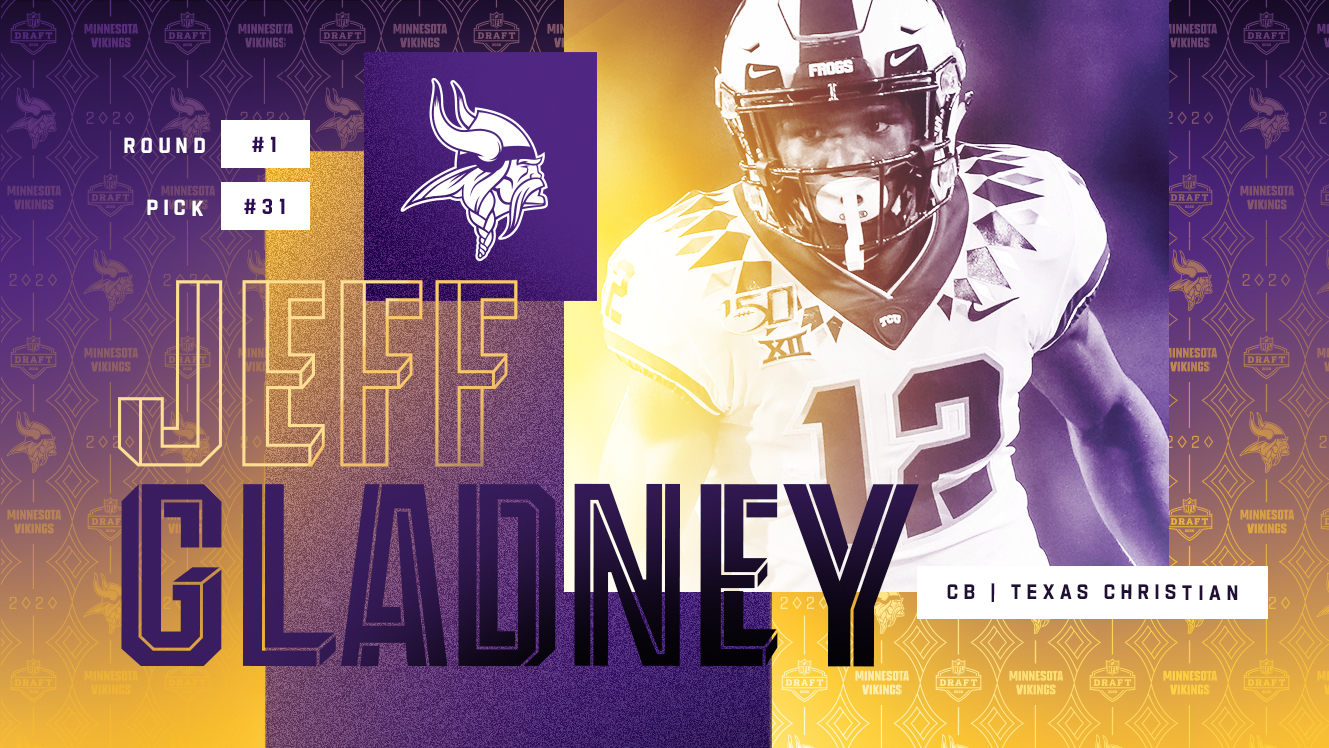
With the 31st pick, the Vikings selected TCU cornerback Jeff Gladney.
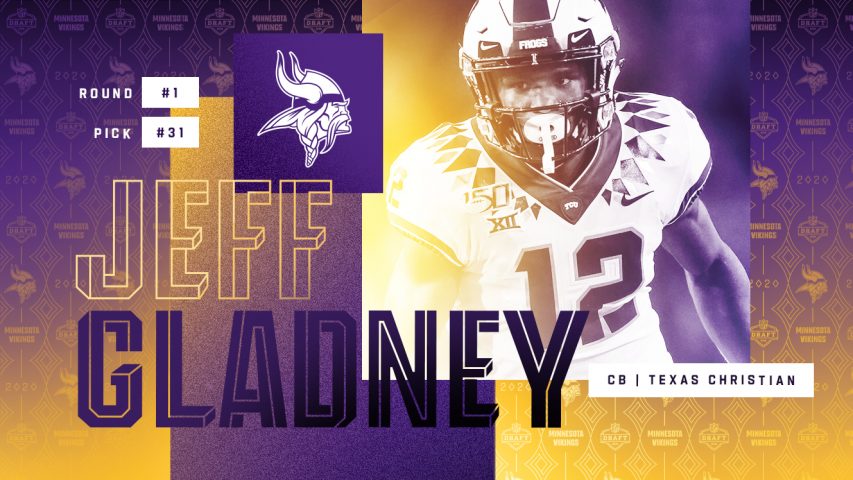
Gladney may not have racked up a lot of interceptions during his time in Fort Worth, only picking off one pass. However, he’s certainly been around the football, having collected 15 pass breakups in each of the past two seasons while starting all 27 games for the Horned Frogs. After this year’s Scouting Combine, he had surgery to repair a meniscus injury that he played through as a senior, but he should be ready to go by the time Training Camp comes around.

Jordan Reid of The Draft Network has Gladney as his #3 cornerback and #24 overall on his Big Board in his Draft Guide. Here is his evaluation of Gladney.

    Starting since he stepped foot on campus, Gladney is one of the most competitive cornerback prospects that you will see in this class. Not just in coverage, but also as a run defender. He’s scrappy, tough, and physical. Projecting best in a press man scheme, Gladney has the physical attributes and vertical speed necessary to quickly become a starter. Possessing high-end athleticism and recovery skills, Gladney could prove to be one of the better defensive backs of this entire crop. There’s not much to dislike about his game overall and he has the talent to become a top-40 pick.


Field Rations, Foreign Legion, and French Anti-Semitism – WW2 – OOTF 010

Filed under: Europe, France, Germany, History, Italy, Military, WW2 — Tags: , , , , — Nicholas @ 04:00

World War Two
Published 23 Apr 2020

What did soldiers eat on the frontlines? What happened to the French Foreign Legion? And how is the legacy of Alfred Dreyfus handled in the anti-semitic Vichy France? Find out in this exciting episode of Out of the Foxholes!

Submit your own question for Out of the Foxholes: https://community.timeghost.tv/c/Out-…

Join us on Patreon: https://www.patreon.com/TimeGhostHistory
Or join The TimeGhost Army directly at: https://timeghost.tv

Follow WW2 day by day on Instagram @World_war_two_realtime https://www.instagram.com/world_war_t…
Between 2 Wars: https://www.youtube.com/playlist?list…
Source list: http://bit.ly/WW2sources

Hosted by: Indy Neidell
Written by: Rune Væver Hartvig
Director: Astrid Deinhard
Producers: Astrid Deinhard and Spartacus Olsson
Executive Producers: Astrid Deinhard, Indy Neidell, Spartacus Olsson, Bodo Rittenauer
Creative Producer: Joram Appel
Post-Production Director: Wieke Kapteijns
Research by: Rune Væver Hartvig
Edited by: Mikołaj Cackowski
Sound design: Marek Kamiński
Map animations: Eastory (https://www.youtube.com/c/eastory)

Colorizations by:
Norman Stewart – https://oldtimesincolor.blogspot.com/

Sources:
Bundesarchiv
German soldiers eating (courtesy Josef Gierse)
Narodowe Archiwum Cyfrowe
IWM E 3799
From the Noun Project: Spam by Jay Adams, Biscuits by Xela Ub, can by Anniken & Andreas, Bread by Vallone Design, Jam by Vichanon Chaimsuk, honey by Marta Ambrosetti, Coffee by Larea, stew by Smalllike, Soup by Ben Davis

Soundtracks from the Epidemic Sound:
Trabant 33 – “When in Bavaria”
Rannar Sillard – “March Of The Brave 4”
Johannes Bornlof – “Deviation In Time”

Archive by Screenocean/Reuters https://www.screenocean.com.

A TimeGhost chronological documentary produced by OnLion Entertainment GmbH.

Prizes, patents, and the Society of the Encouragement of Arts, Manufactures and Commerce

In the most recent Age of Invention newsletter, Anton Howes explains why the Society of the Encouragement of Arts, Manufactures and Commerce (now the Royal Society of Arts) wasn’t a fan of the British patent system and preferred to award prizes in areas that were unlikely to generate monopoly situations:

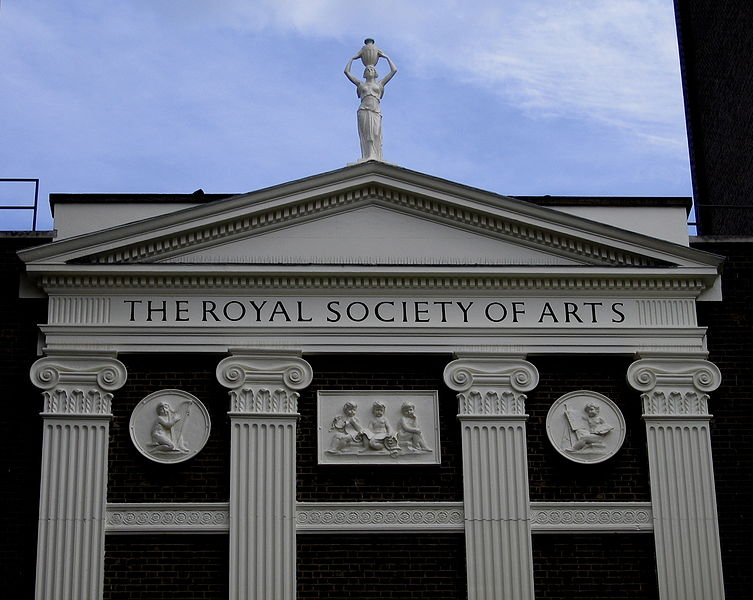
The back of the Royal Society of Arts building in London, 25 August 2005.
Photo by C.G.P. Grey (www.CGPGrey.com) via Wikimedia Commons.

… the Society’s early members had an aversion to monopolies, and patents are, after all, temporary monopolies. But there was actually a more practical reason to not give rewards to patented inventions. In fact, quite a few active members of the Society were themselves patentees, and patents for inventions were not generally lumped together for condemnation with practices like forestalling and engrossing. The practical reason for banning patents was that there was no point giving a prize for something that people were already doing anyway. Patents were expensive in the eighteenth century — depending on how you account for inflation, it could cost about £300,000 in modern terms to obtain one — so the fact that there was a patent for a process was a clear indication that it might be profitable. The Society, by contrast, was supposed to encourage things that would not otherwise have been done.

Thus, when a patent had already been granted for a process the Society had been considering giving a premium for, it purposefully backed down — not because the prize would infringe on the patent, but because its encouragement was no longer necessary. And so the effect of the ban on patented inventions was that the Society received, even unsolicited, exactly the kinds of inventions that there was less monetary incentive to invent. Occasionally, this meant trivial improvements — minor tweaks, here and there, to existing processes. An engineer might patent one invention, but not see it worth their time patenting another — through the Society’s prizes, they might at least get a bit of cash for it, or some recognition. The improvement would also be promoted through the Society’s publications. Or, the Society received inventions that were far from trivial, like the scandiscope for cleaning chimneys [here], but which were not all that profitable: inventions that saved lives, or had other beneficial effects on the health and wellbeing of workers and consumers. And finally, the Society received innovations that could not be patented, such as agricultural practices and the opening of new import trades. In the early nineteenth century the Society awarded its prizes to a whole host of naval officers, including an admiral, who came up with flag-based signalling systems between ships — early forms of semaphore.

Another effect of the ban on patents was that the Society also attracted submissions from different demographics. Many of its submissions came from people who were too poor to afford patents, as well as from those who were too rich — wealthy aristocrats for whom commercial considerations might seem vulgar. The poor would generally go for the cash prizes, and the aristocrats for the honorary medals. And the prizes were used by people who might otherwise be socially excluded from invention. In 1758, for example, the Society instructed its members in the American colonies to accept submissions from Native Americans. It also allowed women to claim premiums (just as it allowed them to be members). My favourite example is Ann Williams, postmistress at Gravesend, in Kent, who won twenty guineas from the Society in 1778 for her observations on the feeding and rearing of silk-worms. She kept them in one of the post-office pigeon-holes, referring to them affectionately as “my little family” of “innocent reptiles”. Unlike other elements of society, the Society of Arts accepted, as she put it to them, that “curiosity is inherent to all the daughters of Eve.”

The Society thus encouraged the kinds of inventions that might not otherwise have been created, and catered to the kinds of inventors who might not otherwise have been recognised. Rather than competing with the patent system, it complemented it, filling in the gaps that it left. The Society operated at the margins, and only at the margins, to the better completion of the whole. It found its niche, to the benefit of innovation overall.

« Newer PostsOlder Posts »

Powered by WordPress