Quotulatiousness

August 27, 2020

How to Make a Poor Man’s Hand Router | Paul Sellers

Filed under: Tools, Woodworking — Tags: , , — Nicholas @ 02:00

Paul Sellers
Published 10 Dec 2012

Paul Sellers shows how to make a “Poor Man’s Router”. This is a hand router that helps with cutting housings, dados, tenons and other recesses. It helps guarantee a consistent depth of cut. A useful hand tool for any woodworker!

To read more about the router plane, visit: https://commonwoodworking.com/router-plane-guide/

To find out more about Paul Sellers visit: http://paulsellers.com and for more project videos visit: https://woodworkingmasterclasses.com/video-library/

QotD: Racism and the minimum wage

Filed under: Australia, Business, Cancon, Economics, Quotations, USA — Tags: , , , , , , — Nicholas @ 01:00

Minimum-wage laws can even affect the level of racial discrimination. In an earlier era, when racial discrimination was both legally and socially accepted, minimum-wage laws were often used openly to price minorities out of the job market.

In 1925, a minimum-wage law was passed in the Canadian province of British Columbia, with the intent and effect of pricing Japanese immigrants out of jobs in the lumbering industry.

A Harvard professor of that era referred approvingly to Australia’s minimum wage law as a means to “protect the white Australian’s standard of living from the invidious competition of the colored races, particularly of the Chinese” who were willing to work for less.

In South Africa during the era of apartheid, white labor unions urged that a minimum-wage law be applied to all races, to keep black workers from taking jobs away from white unionized workers by working for less than the union pay scale.

Some supporters of the first federal minimum-wage law in the United States — the Davis-Bacon Act of 1931 — used exactly the same rationale, citing the fact that Southern construction companies, using non-union black workers, were able to come north and underbid construction companies using unionized white labor.

These supporters of minimum-wage laws understood long ago something that today’s supporters of such laws seem not to have bothered to think through. People whose wages are raised by law do not necessarily benefit, because they are often less likely to be hired at the imposed minimum-wage rate.

Thomas Sowell, “Why racists love the minimum wage laws”, New York Post, 2013-09-17.

August 26, 2020

For British liberals, it’s somehow different when it happens in another country

Filed under: Britain, Europe, Liberty, Politics — Tags: , , , — Nicholas @ 05:00

At Spiked, Brendan O’Neill emphasizes the hypocrisy of some of the people lionizing the Belarussian democrats who also spent the last few years demonizing the democratic process that led to Brexit:

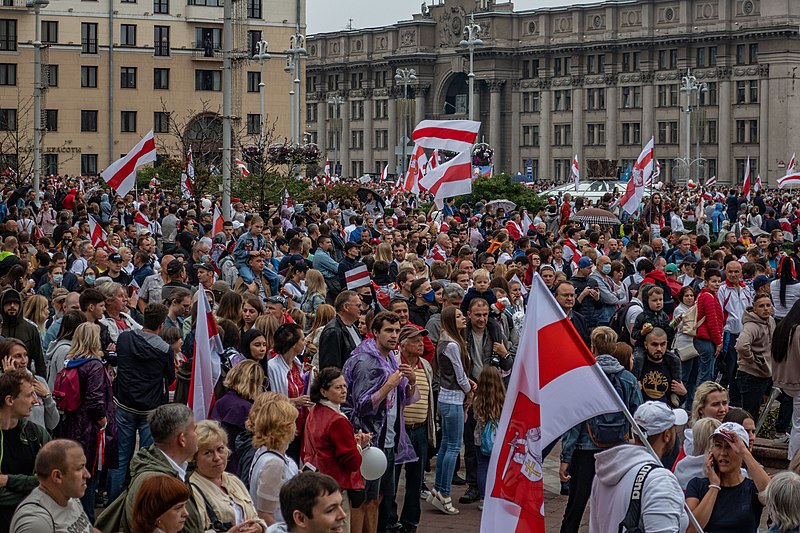
Protest in Minsk against Belarussian President Lukashenko, 23 August 2020.
Photo by Homoatrox via Wikimedia Commons.

British liberals are cheering on the tens of thousands of brave Belarusians who have taken to the streets to demand the enactment of their democratic vote. Which is odd, to say the least, given that the last time British liberals themselves marched in the streets, often in their tens of thousands, it was to demand the crushing of a democratic vote. It was to call upon the state to refuse to enact the democratic wishes of 17.4 million people, the largest democratic bloc in the history of the UK. The hypocrisy is staggering: the British chattering classes celebrate democracy abroad and wage war on it at home.

Belarusians are fighting tooth and nail for their democratic rights. They are marching in the streets in vast numbers – in defiance of the government’s authoritarian clampdown on public gatherings – and workers are going on strike. They are furious with the rigged outcome of the election two weeks ago, which gave their authoritarian president, Alexander Lukashenko, who has been in power for 26 years, yet another term. Lukashenko’s regime claims he won more than 80 per cent of the vote in the election on 9 August while the opposition won around 10 per cent. No one believes this. And they are right not to believe it: Lukashenko has a history of anti-democratic, tyrannical behaviour.

The Belarusians rising up against Lukashenko and demanding the meaningful right to determine who governs their country are an inspiration to democrats everywhere. They are taking enormous risks. They are breaking illiberal laws by taking to the streets of Minsk. At least four people have been killed in the protests. Some demonstrators claim they were tortured by security forces after being arrested. It is testament to people’s yearning for democratic power, for a real say in the future of their country, that so many are flooding the streets of Belarus or downing their tools at work in order to force the regime to listen to their voices. This is democracy in action.

And yet, there is something nauseating in the British chattering classes’ attempt to cosy up to the Belarusian uprising for democracy. For these are the same people who spent the past four years trying to do in the UK what Lukashenko is currently doing in Belarus – that is, silence people’s democratic cry and write off their democratic votes. Lukashenko does it with batons and torture, while our far more polite elites tried to do it with court cases, parliamentary intrigue and a relentless campaign of Project Fear. But the motive was the same: to prevent the supposedly problematic little people from having their say and screwing up political life.

[…]

The British columnists and politicos celebrating the Belarusian uprising have to face up to this fact: they have nothing in common with these brave warriors for democracy. On the contrary, their marches over the past four years were singularly devoted to stopping democracy. Who can forget those huge “People’s Vote” gatherings in which armies of middle-class Remainers would gather in London to sneer at ordinary voters, plead with the government to ignore their votes, and demand that big constitutional questions be taken out of the hands of the dangerous, reckless “low-information” masses. Guess who probably feels similarly to this? Yes, Alexander Lukashenko.

“Your Strict Thesis is not Correct!” – WW2 – Reading Comments

Filed under: Europe, Germany, History, Military, Russia, Weapons, WW2 — Tags: , , , , , — Nicholas @ 04:00

World War Two
Published 25 Aug 2020

Indy and Sparty are back again for “Across the Airwaves”, where we look at interesting and unique comments from our videos and forums. In this episode, we will look at foreign volunteers in the SS, and the Polish experience in World War Two.

Join us on Patreon: https://www.patreon.com/TimeGhostHistory
Or join The TimeGhost Army directly at: https://timeghost.tv

Follow WW2 day by day on Instagram @World_war_two_realtime https://www.instagram.com/world_war_two_realtime
Between 2 Wars: https://www.youtube.com/playlist?list…
Source list: http://bit.ly/WW2sources

Hosted by: Indy Neidell & Spartacus Olsson
Director: Astrid Deinhard
Producers: Astrid Deinhard and Spartacus Olsson
Executive Producers: Astrid Deinhard, Indy Neidell, Spartacus Olsson, Bodo Rittenauer
Creative Producer: Joram Appel
Post-Production Director: Wieke Kapteijns
Research by: Francis van Berkel
Edited by: Karolina Dołęga
Sound design: Marek Kamiński
Maps: Eastory (https://www.youtube.com/c/eastory) & Karolina Dołęga

Colorizations by:
Jaris Almazani (Artistic Man), https://instagram.com/artistic.man?ig…

Visual Sources:
Imperial War Museums: KID1265, STT 4459, 009752., D26726, D26731
Bundesarchive
Auschwitz Memorial and Museum
Icons from The Noun Project by: Icon Lauk, iconixar, Evgeni Moryakov, Panzano, Adrien Coquet, Eucalyp, Eris Natansa, Gan Khoon Lay, sumirna, priyanka & Danishicon

Music:
“The Inspector 4” – Johannes Bornlöf
“Remembrance” – Fabien Tell
“Superior” – Silver Maple
“Rush of Blood” – Reynard Seidel
“London” – Howard Harper-Barnes
“Never Forget” – Fabien Tell
“Guilty Shadows 4” – Andreas Jamsheree

Archive by Screenocean/Reuters https://www.screenocean.com.

A TimeGhost chronological documentary produced by OnLion Entertainment GmbH.

Sir Anthony Blunt, the “Fourth Man”

Filed under: Britain, History, Military, Russia, WW2 — Tags: , , , , , — Nicholas @ 03:00

In The Critic, David Herman reviews a new book on the unmasking of Soviet spy … and close associate of the Royal family, Sir Anthony Blunt by Prime Minister Margaret Thatcher in 1979:

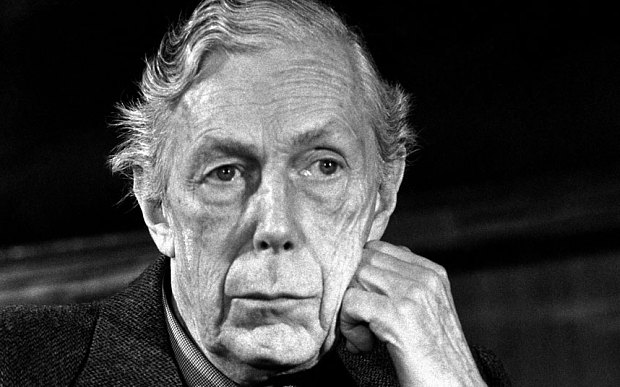
Anthony Blunt (1907-1983), was the “Fourth Man” in the Cambridge spy ring that supplied the Soviets with secret documents from within Britain’s WW2 intelligence services.

In November 1979, the newly elected Prime Minister, Margaret Thatcher, named Professor Sir Anthony Blunt, one of the most distinguished art historians in post-war Britain, as the “Fourth Man”, one of the traitors known as the “Cambridge Spies”, a group of spies working for the Soviet Union from the 1930s to at least the early 1950s. Mrs. Thatcher did not pull her punches. She regarded Blunt’s behaviour as “contemptible and repugnant”, and she was appalled by the evidence of treason and treachery at the heart of the British establishment.

What set Blunt apart from the others – Guy Burgess, Donald Maclean and Kim Philby – was his distinguished academic career. Blunt was professor of art history at the University of London, director of the Courtauld Institute of Art and Surveyor of the Queen’s Pictures. He was related to the Queen Mother. His students included such famous figures as Anita Brookner, Sir Nicholas Serota, Sir Neil Macgregor and Sir Alan Bowness. He also passed 1,771 documents to his Soviet spymasters during the war while working for MI5. For some of this time, the Soviet Union was a foreign enemy, allied to Nazi Germany.

The mix of homosexuality, 1930s Cambridge and treason, the scholar and the spy, made a compelling story and Blunt has been the subject of a famous essay in The New Yorker by George Steiner (“The Cleric of Treason”, 8 December, 1980), plays by Dennis Potter (Blade on the Feather, 1980), Alan Bennett (A Question of Attribution, 1988) and a novel by John Banville (The Untouchable, 1997). More recently, he has turned up in the third season of The Crown (2019), played by Samuel West. Had Alex Jennings not already played the Duke of Windsor in earlier series of The Crown, he would have been perfect casting.

After Mrs. Thatcher’s revelations in the House of Commons, Blunt was immediately stripped of his knighthood and he was subsequently forced to resign his Honorary Fellowship at Trinity College, Cambridge. The University of London, however, did not take away his Emeritus Professorship and the French government did not strip him of his Legion of Honour. There could be no criminal proceedings against Blunt because in 1964 he had only admitted his guilt in exchange for guaranteed immunity for any subsequent prosecution for the rest of his life.

The question then arose how should the British Academy respond? Blunt had been a Fellow for almost twenty years. He had served as a Vice-President and was talked of as a possible future President.

Almost immediately lines were drawn and leading figures like the historians John H. Plumb and A.J.P. Taylor threatened to resign from the Academy. It was a spectacular bunfight and the press had a wonderful time.

London-Made Lorenzonis Repeating Flintlocks

Filed under: Britain, History, Weapons — Tags: , , , — Nicholas @ 02:00

Forgotten Weapons
Published 26 Aug 2016

Sold for $28,750 (for the pair).

A 7-shot repeating handgun before cartridges had been invented? Yep, long before. These two pistols are London-made examples of the Lorenzoni system, in which a gun was made with internal magazines of powder and projectiles and a rotating central loading spindle like a modern reloading powder throw. By rotating a lever on the left side of pistol 180 degrees and back, a shooter could load a ball into the chamber, load powder behind it, recock the action, prime the pan, and close the frizzen all in one automated sequence.

This system originated with a German gunsmith named Kalthoff in the mid 1600s, but it was an Italian by the name of Lorenzoni who made it more practical and began building pistols of the type. Lorenzoni is the name that has been generally applied to the system as a result. These two were made by a gunsmith named Glass in London in the mid 1700s — in those days of hand-made firearms, ideas and systems like this would slowly spread and be adopted by craftsmen who were capable of producing them and thought they could find an interested market for them.

The Lorenzoni system offered unmatched repeating firepower for its time, but was hampered by its complexity. Only a very skilled gunsmith could build a reliable and safe pistol of the type, and this made them very expensive.

http://www.patreon.com/ForgottenWeapons

QotD: The U.S. Supreme Court

Filed under: Government, Politics, Quotations, USA — Tags: , , — Nicholas @ 01:00

During almost every Supreme Court nomination battle, I try to make the same point: These fights wouldn’t be nearly so ugly if we didn’t invest so much power in the Supreme Court it shouldn’t have in the first place.

Until the Robert Bork nomination in 1987, Supreme Court fights were remarkably staid affairs. But by the late ’80s, the court had become a bulwark for all sorts of policies and laws that should rightly be in the portfolio of the legislative or executive branch, or, better, left to the various states. As a result, on any number of issues — most conspicuously abortion policy — the court became more important than the presidency or Congress. No wonder fights over Supreme Court appointments started to look more and more like political campaigns than debates over the finer points of judicial philosophy.

Jonah Goldberg, “Concentrated Power Inevitably Leads to Political Backlash”, Townhall.com, 2018-05-11.

August 25, 2020

The Russian Revolution 1917

Filed under: Government, History, Military, Russia, WW1 — Tags: , , , , , , — Nicholas @ 06:00

Epic History TV
Published 4 Aug 2016

Everything you need to know about the Russian Revolution in a 13 min video. Produced in partnership with Bridgeman Images http://www.bridgemanimages.com/en-GB/

We explain all the major events of Russia’s TWO revolutions of 1917 – the February Revolution that ended Tsarist rule in Russia, and the October Revolution, that brought the Bolsheviks to power. We explain the causes of Tsar Nicholas II’s growing unpopularity – the role of the mysterious Siberian mystic Rasputin, Russia’s disastrous involvement in World War One, and the events on the streets of Petrograd that led to the Tsar’s abdication. That summer Russia lurched from crisis to crisis, with a Provisional Government that faced riots (the July Days), military revolt (the Kornilov Affair), economic chaos, and constantly dwindling support. Socialist Prime Minister Alexander Kerensky, once hailed as Russia’s great hope, was unable to restore order, or, in October, prevent the Bolsheviks from launching a coup, organised by Leon Trotsky and led by Vladimir Lenin, that overthrow the Provisional Government and brought the Bolsheviks to power. A brutal civil war followed, leading to the death of more than 10 million Russians – amongst them Tsar Nicholas II and his family, executed by Bolsheviks at Yekaterinburg in July 1918. From the wreckage emerged the Soviet Union, formed in 1922, and destined to be one of the 20th century’s two superpowers.

Please help me make more history videos by supporting me at Patreon: https://www.patreon.com/epichistorytv

#EpicHistoryTV #HistoryofRussia #RussianRevolution

Recommended books on the Russian Revolution (as an Amazon Associate I earn from qualifying purchases):
S. A. Smith, The Russian Revolution: A Very Short Introduction http://geni.us/RzOAk2U
Orlando Figes, A People’s Tragedy: The Russian Revolution http://geni.us/UIxyirj
Robert Service, The Last of the Tsars: Nicholas II and the Russian Revolution http://geni.us/A89T
Neil Faulkner, A People’s History of the Russian Revolution http://geni.us/bME0unl

Berlin’s experiment with rent control has already made huge changes in the housing market

Filed under: Business, Economics, Germany — Tags: , , , — Nicholas @ 05:00

Sadly, for advocates of rent control in other cities, the changes are not positive for renters or landlords:

In the beginning of this year, the city government of Berlin brought in a rent freeze, a particularly crude form of rent control. Predictably, this led to calls from certain quarters for introducing similar measures here in London. I had several discussions about this, making the standard economic case against rent controls, but to no avail. I was told that I was blinded by neoliberal dogma, that the world is not as simple as my Econ 101 textbook, and that this was a brilliant and necessary measure to rein in the power of greedy landlords and speculators.

The first results are already in now, and they can be interpreted as the revenge of Econ 101. In Berlin, the supply of new rental properties coming on the market has fallen by a quarter compared to last year. No, this is not because of the virus: in other big cities such as Hamburg, Munich and Cologne, supply has increased by a third over the same period.

In fact, the one subsector of Berlin’s rental market which is exempt from the rent cap, namely new-built properties, is not that different from the rental markets of other big cities. In this subsector, the number of new rental properties coming on the market has increased by a quarter. Yet in the main market, where the cap does apply, supply has fallen by almost half – a drastic reduction, which more than cancels out any gains made elsewhere.

There has also been an increase in the number of properties that are up for sale, rather than rent, because while rents have been capped, sales prices have not.

So whether you compare the rent-capped part of Berlin’s rental property market to its counterpart in other cities, to its cap-exempt counterpart in Berlin itself, or to the owner-occupier sector – the result is always the same. The rent cap clearly is having a negative impact on supply, and this is happening astonishingly quickly: even I was not expecting to see any impact in this year, or the next.

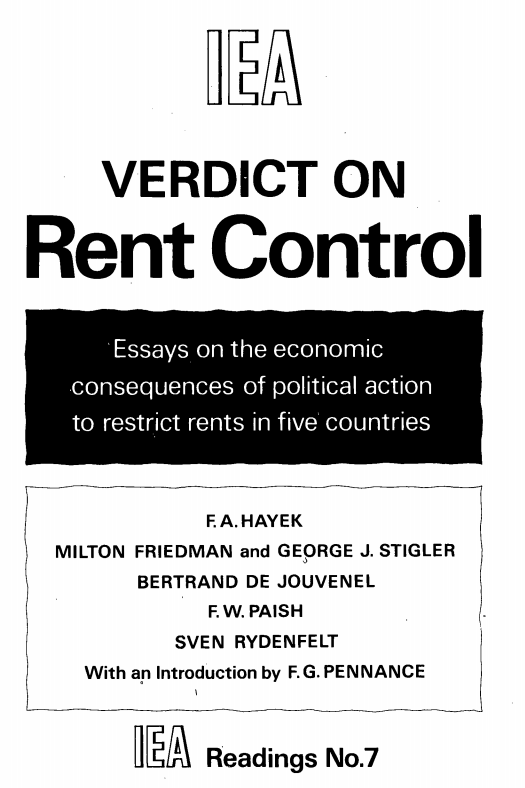
None of the arguments against rent controls are new. You can already find them all in Verdict on Rent Control, a book which the IEA published in 1972. The book is actually a collection of papers on the subject, some of which are much older than that. It contains one paper by Milton Friedman and George Stigler on wartime rent controls in the US, which were still lingering after the war had ended. It was first published in 1946, but they were already having the same arguments then that we are still having today.

The Bronze Age Changes with Archeological Evidence

Filed under: Architecture, History, Middle East, Science, Technology — Tags: , , , , — Nicholas @ 04:00

The Cynical Historian
Published 22 Feb 2019

Check out the full collaboration playlist here: https://www.youtube.com/playlist?list…

Up until the 19th century, the Bronze Age was merely a time of legends, where the Bible and Iliad told fantastic tales of brutality and triumph. But archeology changed that, and that’s what I want to talk about today, how the Bronze Age was rescued from legend.
————————————————————
references:
Stephen L. Dyson, “Archaeology and Ancient History,” in A Companion to Ancient History, edited by Andrew Erskine (Malden, Mass.: Blackwell Publishers, 2002), 59-66. https://amzn.to/2PCf04X

Marie-Henriette Gates, “Archeology and the Ancient Near East: Methods and Limits,” in A Companion to the Ancient Near East, edited by Daniel C. Snell (Malden, Mass.: Blackwell Publishers, 2005), 65-79. https://amzn.to/2BrsBqO

Alan B. Lloyd, “Chronology,” in A Companion to Ancient Egypt, vol. 1, edited by Alan B. Lloyd (Malden, Mass.: Blackwell Publishers, 2010), xxxii-xliii. https://amzn.to/2LqGZnM

John Marincola, “Historiography,” in A Companion to Ancient History, edited by Andrew Erskine (Malden, Mass.: Blackwell Publishers, 2002), 13-22. https://amzn.to/2PCf04X

John Van Seters, “Historiography in Ancient Israel,” in A Companion to Western Historical Thought, edited by Lloyd Kramer and Sarah Maza (Malden, Mass.: Blackwell Publishers, 2002), 15-34. https://amzn.to/2PAC5Vz

Tim Whitmarsh, “Ancient History through Ancient Literature,” in A Companion to Ancient History, edited by Andrew Erskine (Malden, Mass.: Blackwell Publishers, 2002), 77-86. https://amzn.to/2PCf04X
————————————————————
Support the channel through PATREON:
https://www.patreon.com/CynicalHistorian
or pick up some merchandise at SpreadShirt:
https://shop.spreadshirt.com/cynicalh…

LET’S CONNECT:
Discord: https://discord.gg/Ukthk4U
Twitter: https://twitter.com/Cynical_History
————————————————————
Wiki: The Bronze Age is a historical period characterized by the use of bronze, and in some areas proto-writing, and other early features of urban civilization. The Bronze Age is the second principal period of the three-age Stone-Bronze-Iron system, as proposed in modern times by Christian Jürgensen Thomsen, for classifying and studying ancient societies.

An ancient civilization is defined to be in the Bronze Age either by producing bronze by smelting its own copper and alloying with tin, arsenic, or other metals, or by trading for bronze from production areas elsewhere. Bronze itself is harder and more durable than other metals available at the time, allowing Bronze Age civilizations to gain a technological advantage.

Copper-tin ores are rare, as reflected in the fact that there were no tin bronzes in Western Asia before trading in bronze began in the third millennium BC. Worldwide, the Bronze Age generally followed the Neolithic period, with the Chalcolithic serving as a transition. Although the Iron Age generally followed the Bronze Age, in some areas (such as Sub-Saharan Africa), the Iron Age intruded directly on the Neolithic.

Bronze Age cultures differed in their development of the first writing. According to archaeological evidence, cultures in Mesopotamia (cuneiform script) and Egypt (hieroglyphs) developed the earliest viable writing systems
————————————————————
Hashtags: #history #TheBronzeAge #archeology #BronzeBonanza


How we used to “dine out” (and someday might be able to again)

Filed under: Books, Britain, Business, Europe, Food, France, History — Tags: , , , , , — Nicholas @ 03:00

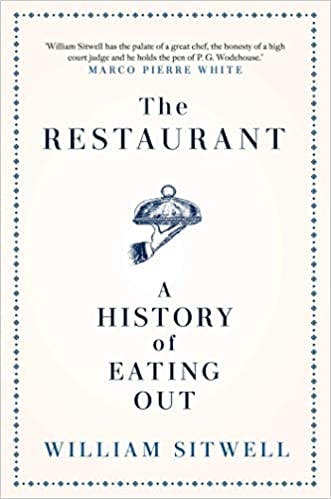
In The Critic, Alexander Larman reviews The Restaurant: A history of eating out by William Sitwell:

The recent enforced lockdown closure was a potential death blow to the entire [restaurant] industry. Which makes William Sitwell’s luxurious book both a celebration and an unintentional requiem for what may be a bygone time.

His central thesis is clear: the history of dining out is also a social history of evolving cultures and tastes. This means that the subjects he writes about range from ancient Pompeii to the growth of the sushi conveyor belt restaurant, encompassing everything from medieval taverns and the French Revolution to the rise of Anglo-Indian cuisine.

It is a broad and impressive spectrum, but perhaps Sitwell has, like some of the less fortunate people he describes, bitten off more than he can chew. His opening chapter about Pompeii is rich in surprising detail (graffiti uncovered outside one tavern when it was excavated ranged from the poetic — “Lovers are like bees in that they lead a honeyed life” — to the crude — “I screwed the barmaid”) and an insightful evocation of the dining culture in Ancient Rome.

He is then, unfortunately, faced with the insurmountable difficulty that the restaurant, as we know it today, did not exist until the late eighteenth century, meaning that his definition of “eating out” has to do some extremely heavy lifting.

There is as much padding in the early chapters as there is around some of his subjects’ waistlines. Much of what he writes is very interesting and often amusing, such as the way in which coffee, first drunk in London around the time of the Restoration, became associated both with health-giving properties and reportedly making men impotent, withered “cock-sparrows”. Yet there are also lengthy sections that have little or nothing to do with restaurants, such as a potted history of the Industrial Revolution.

Nevertheless, when Sitwell finally gets into his stride and begins to write about eateries proper, his authority and enthusiasm are palpable. He describes the dawn of fine dining in Paris in the nineteenth century evocatively. London lagged behind, although gentlemen’s clubs such as the Athenaeum and Reform offered some delights for the wealthy thanks to chefs (French, naturally) such as Alexis Soyer who implemented what one biographer called “the most famous and influential working kitchen in Europe” in 1841, complete with gas-fired stoves, butcher’s rooms and a fireplace devoted to the roasting of game and poultry.

Forging a Sword – part two: fuller, bevels, straightening

Filed under: Technology, Tools, Weapons — Tags: , , , , , — Nicholas @ 02:00

Lindybeige
Published 28 May 2018

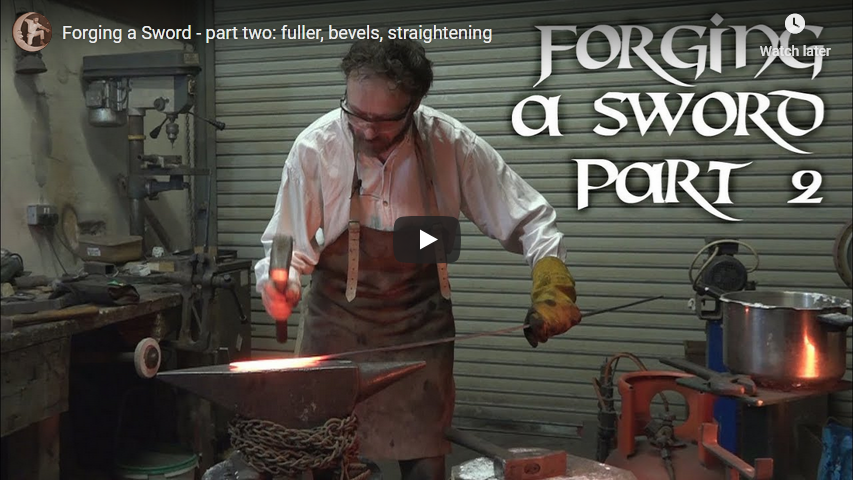
Sword-smithing again at the Cut And Thrust Collective, working on Arnander, my type 18 bastard sword. Lots of hammering.

Support me on Patreon: https://www.patreon.com/Lindybeige

Part one of forging a sword: https://youtu.be/KYydVZRbl6M

My tutor: Thom Leworthy.

Music used in this video: “Siegfried’s Funeral March” by Wagner.

Buy the music – the music played at the end of my videos is now available here: https://lindybeige.bandcamp.com/track…

Lindybeige: a channel of archaeology, ancient and medieval warfare, rants, swing dance, travelogues, evolution, and whatever else occurs to me to make.

▼ Follow me…

Twitter: https://twitter.com/Lindybeige I may have some drivel to contribute to the Twittersphere, plus you get notice of uploads.

website: http://www.LloydianAspects.co.uk

QotD: Collective punishment

We used to take calls for collective punishment much more seriously. In the 1949 Geneva Convention it was determined that: “No protected person may be punished for an offense he or she has not personally committed.” Collective punishment was seen as a tactic designed to intimidate and subdue an entire population. The drafters of the Geneva Convention clearly had in mind the atrocities committed in WWI and WWII where entire villages and communities suffered mass retribution for the resistance activities of a few. In their commentary on the outlawing of collective punishment the International Red Cross stated: “A great step forward has been taken. Responsibility is personal and it will no longer be possible to inflict penalties on persons who have themselves not committed the acts complained of.”

In times of peace, collective punishment may come in the form of social media dust-ups over sombrero hats or Chinese dresses. Gradual softening on the taboo of collective punishment does not bode well for the health of liberal democracies. Which is also why it is important for us all to remember that social-justice activists who complain about cultural appropriation only represent themselves, and not the minority groups to which they belong.

Claire Lehmann, “The Evils of Cultural Appropriation”, Tablet, 2018-06-11.

August 24, 2020

Why the British Army was so effective in 1914 – Learning lessons from the Boer War

Filed under: Africa, Britain, Germany, History, Military, Weapons, WW1 — Tags: , , , , , — Nicholas @ 06:00

History West Midlands
Published 10 Oct 2014

When Britain despatched an Expeditionary Force (the BEF) to the Continent in August 1914, the German Kaiser issued an order of the day to his generals to “walk over General French’s contemptible little army”.

But despite being heavily outnumbered, this small force, including many men from the West Midlands, played a vital role in stopping the seemingly overwhelming German advance across Belgium and into France.

Small in size compared with the much larger armies of France and Germany, the BEF was highly effective. This was in stark contrast to the disasters that the British Army had experienced a few years earlier at the start of the Second Boer War (1899-1902) in South Africa.

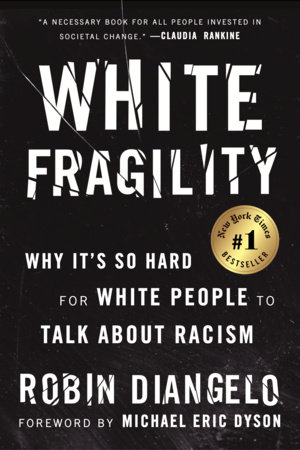
Theodore Dalrymple reviews White Fragility by Robin DiAngelo and How to Be an Antiracist by Ibram X. Kendi

Filed under: Books, Media, Politics, USA — Tags: , , — Nicholas @ 05:00

The two books share many characteristics, says the good doctor (in his “Anthony Daniels” guise), and the most noteworthy is a shared hectoring tone:

DiAngelo’s book displays a curious admixture of influences: the Chinese Cultural Revolution, Jimmy Swaggart, Freudian psychoanalysis, and Uriah Heep, the four of them being present in approximately equal proportion.

DiAngelo has apparently made a career of anti-racist struggle sessions in which ordinary employees of various organizations must confess publicly to their racism however hidden it might be, as university professors, primary school teachers, doctors working in slums, etc., had once in China to confess to bourgeois propensities and counter-revolutionary ideas. They may never have uttered a racist sentiment, they may never have been rude to a person of another race, let alone violent towards one, they may have friends of other races or even be married to a person of another race, but they carry racism deep within them like Original Sin, with this difference: there can be no redemption from it even after having read DiAngelo’s book and attended her struggle sessions. Personally, I should not be at all surprised if the end result of all her efforts, at least among the men she has “trained” (which is to say tried to indoctrinate), was to have acted as a recruitment officer for the Ku Klux Klan.

After thirty years of constant work of supposedly anti-racist training, she confesses — like the tearful Jimmy Swaggart — to being still guilty of racism herself, promising to reform, although reform is ex hypothesi impossible because racism is in her society’s DNA, as it were. One is reminded of the type of psychoanalysis which after thirty years of hourly sessions four times a week fails to get to the root of the analysand’s problem, let alone solve it, because it doesn’t even know what the problem is. But failure is also an opportunity, because, like psychoanalysis, the more anti-racist training fails, the more it is needed. DiAngelo, all credit to her, has found an economic niche for herself for the rest of her life. One has a sneaking admiration for such entrepreneurs. They are the asset-strippers of the soul.

As for Uriah Heep, DiAngelo has obviously heard, read, marked, learned, and inwardly digested (as my teachers used to demand of me) David Copperfield. Her oleaginous approach to all “people of color,” as she coyly calls them, makes Uriah Heep seem positively blunt and straight-talking. DiAngelo regards all nonwhite people, ex officio, as being incapable of exaggeration or unjustified self-pity, let alone of lying. As well as being sycophantic, this is, to coin a word, racist, for one of the most important manifestations of free will, and therefore of humanity itself, is the capacity to lie. In effect, then, she regards “people of color” as infra-human truth-uttering mechanisms: they speak, therefore what they say is true. No critical faculties need be applied to what they say.

[…]

DiAngelo is a tremendous moral narcissist. This is shown by her use of the term “people of color.” Until page 31, I thought that it meant black, but on that page I learned that it meant non-white. She shows no interest in the question of whether the Japanese, Chinese, Indians, Burmese, Vietnamese, Cambodians, Austronesians, Amerindians, and Africans, et al., would all be delighted to be put in the same category, let alone interest in their many cultures. On page 33, we read:

    White supremacy is more than the idea that whites are superior to people of color; it is the deeper premise that supports the idea — the definition of whites as the norm or standard of human, and people of color as a deviation from that norm.

Lumping non-white people together as “people of color” is precisely an instance of what she criticizes: this is what happens when moral rhetoric far outruns intelligence.

« Newer PostsOlder Posts »

Powered by WordPress