Drachinifel
Published 1 Dec 2018Title says it all really, we look at something that was definitely worth doing, which really should have been done much sooner.
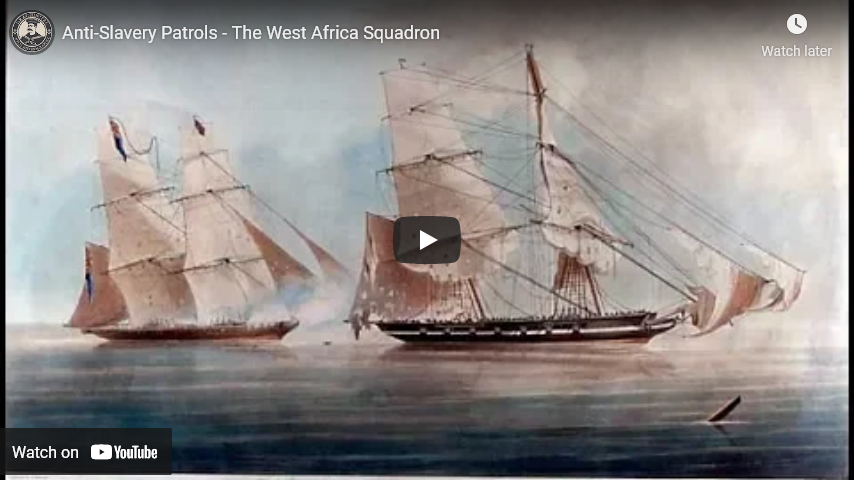

Drachinifel
Published 1 Dec 2018Title says it all really, we look at something that was definitely worth doing, which really should have been done much sooner.
There is one thing that 99 percent of all critics share with one another: they are failures. I don’t mean failures as critics — my God, that’s understood. I don’t even mean they are failures as people; I mean something more painful by far: These people are failures in life.
It’s a second-rate job, folks. Being a drama critic on Broadway wouldn’t keep a decent mind occupied 10% of the time. So you don’t even get second-raters. You get the dregs, the stage-struck but untalented neurotic who eventually drifts into criticism as a means of clinging peripherally to the arts. And most of your cruel critics come this way: they are getting their own back.
William Goldman, The Season: A Candid Look at Broadway, 1969.
Thersites the Historian
Published 19 Nov 2019This video is a primer for undergraduates in broad history survey courses that will hopefully help make sense of the interwar years between World War I and World War II.
Patreon link: https://www.patreon.com/thersites
PayPal link: paypal.me/thersites
Twitter link: https://twitter.com/ThersitesAthens
Minds.com link: https://www.minds.com/ThersitestheHis…
Steemit/dtube link: https://steemit.com/@thersites/feed
BitChute: https://www.bitchute.com/channel/jbyg…
Backup Channel: https://www.youtube.com/channel/UCUrD…

Charles Stross isn’t exactly a fan of Musk’s, but he outlines why he thinks Musk is on a potentially multi-trillion dollar path:
Elon Musk at the 2015 Tesla Motors annual meeting.
Photo by Steve Jurvetson via Wikimedia Commons.
So, I’m going to talk about Elon Musk again, everybody’s least favourite eccentric billionaire asshole and poster child for the Thomas Edison effect — get out in front of a bunch of faceless, hard-working engineers and wave that orchestra conductor’s baton, while providing direction. Because I think he may be on course to become a multi-trillionaire — and it has nothing to do with cryptocurrency, NFTs, or colonizing Mars.
This we know: Musk has goals (some of them risible, some of them much more pragmatic), and within the limits of his world-view — I’m pretty sure he grew up reading the same right-wing near-future American SF yarns as me — he’s fairly predictable. Reportedly he sat down some time around 2000 and made a list of the challenges facing humanity within his anticipated lifetime: roll out solar power, get cars off gasoline, colonize Mars, it’s all there. Emperor of Mars is merely his most-publicized, most outrageous end goal. Everything then feeds into achieving the means to get there. But there are lots of sunk costs to pay for: getting to Mars ain’t cheap, and he can’t count on a government paying his bills (well, not every time). So each step needs to cover its costs.
What will pay for Starship, the mammoth actually-getting-ready-to-fly vehicle that was originally called the “Mars Colony Transporter”?
Starship is gargantuan. Fully fuelled on the pad it will weigh 5000 tons. In fully reusable mode it can put 100-150 tons of cargo into orbit — significantly more than a Saturn V or an Energiya, previously the largest launchers ever built. In expendable mode it can lift 250 tons, more than half the mass of the ISS, which was assembled over 20 years from a seemingly endless series of launches of 10-20 ton modules.
Seemingly even crazier, the Starship system is designed for one hour flight turnaround times, comparable to a refueling stop for a long-haul airliner. The mechazilla tower designed to catch descending stages in the last moments of flight and re-stack them on the pad is quite without precedent in the space sector, and yet they’re prototyping the thing. Why would you even do that? Well, it makes no sense if you’re still thinking of this in traditional space launch terms, so let’s stop doing that. Instead it seems to me that SpaceX are trying to achieve something unprecedented with Starship. If it works …
There are no commercial payloads that require a launcher in the 100 ton class, and precious few science missions. Currently the only clear-cut mission is Starship HLS, which NASA are drooling for — a derivative of Starship optimized for transporting cargo and crew to the Moon. (It loses the aerodynamic fins and the heat shield, because it’s not coming back to Earth: it gets other modifications to turn it into a Moon truck with a payload in the 100-200 ton range, which is what you need if you’re serious about running a Moon base on the scale of McMurdo station.)
Musk has trailed using early Starship flights to lift Starlink clusters — upgrading from the 60 satellites a Falcon 9 can deliver to something over 200 in one shot. But that’s a very limited market
As they say, read the whole thing.
The Tank Museum
Published 9 Apr 2021The Tank Museum’s Historian David Fletcher presents a Tank Chat on the only M4 variant of Sherman in The Tank Museum’s collection. This particular example is armed with the 105mm millimetre howitzer, designed for firing High Explosive in a close support role. Join David to find out more.
(more…)
The War was not a very successful one at first, and was quite unfair because the Boers could shoot much further than the English, and also because they were rather despicable in wearing veldt hats and using PomPom bullets.
Numerous battles were fought against the Bore leaders (such as Bother, Kopje, and Stellenbosch) at Nek’s Creek, Creek’s Nek, Knock’s Knee, etc., and much assistance was given to the British cause by Strathcoma’s memorable horse (patriotically lent by Lord Strathcoma for the occasion) and by the C.I.D., who fought very bravely and were awarded a tremendous welcome on their return to London after the war.
Finally, the people at home took upon themselves the direction of the War and won it in a single night in London by a new and bracing method of warfare known as Mafeking. Thus the English were once more victorious. Memorable Results The Barwar was obviously a Good Thing in the end because it was the cause of Boy Scouts and of their memorable Chief Scout, General Baden Powell (known affectionately as ‘the B.O.P.’), and also because it gave rise to a number of very manly books, such as 40 Years Beating About The Bush, 50 Years Before The Mast, 60 Years Behind The Times, etc.
Death of Queen Victoria
Meanwhile Queen Victoria had celebrated another Jamboree, called the Diamond Jamboree (on account of the discovery of Diamond mines at Camberley during the Borewore) and after dying of a surfeit of Jamborees, Jokes, Gladstone, etc., had been succeeded by her son, Edward VII.
W.C. Sellar & R.J. Yeatman, 1066 And All That, 1930.
In City Journal, Heather Mac Donald looks at the recent hysterical attacks on gubernatorial hopeful Larry Elder based on the notion that he is somehow a kind of stalking horse for white supremacists:
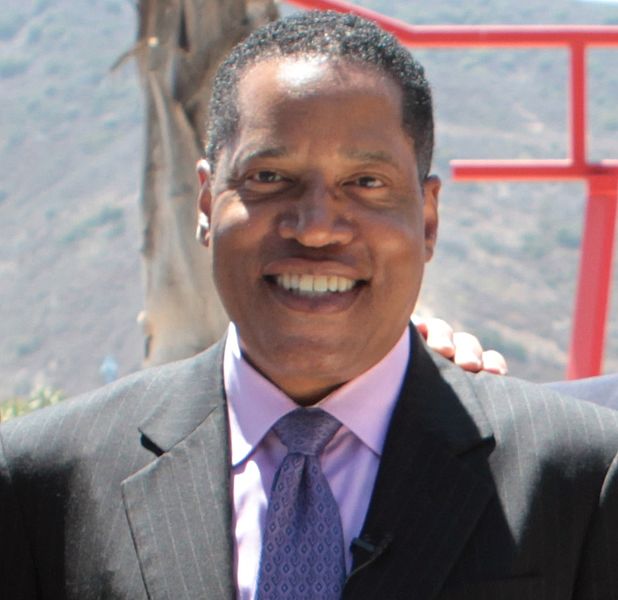
Larry Elder at Camp Pendleton for the ceremony presenting the Congressional Gold Medal posthumously to his father, Staff Sergeant Randolph Elder, U.S.M.C., 16 August, 2013.
US Government photo in the public domain via Wikimedia Commons.
The possibility that Larry Elder may win California’s recall election against Governor Gavin Newsom is generating acute anxiety in the mainstream media and among the activist Left. Elder’s foes are responding with their favored means of destruction: by playing the race card. Never mind that the nationally syndicated talk show host is black. A series of opinion columns and editorials have accused him of being a white supremacist, or at the very least a shill for other white supremacists. Elect Elder and California will reinstate Jim Crow, state senator Sydney Kamlager, a Democrat from Los Angeles, has warned.
The media have focused particularly on Elder’s views about crime and policing. The self-described “Sage from South-Central” maintains that criminals, not the police, are the biggest threat in the black community. According to Elder, the false narrative about lethal police racism has only led to more black homicide deaths. “When you reduce the possibility of a bad guy getting caught, getting convicted and getting incarcerated, guess what? Crime goes up,” he said recently at a campaign event in Orange County.
Elder also rejects the charge that white civilians are gunning down blacks, as LeBron James maintained in a tweet during the George Floyd riots: “We are literally hunted everyday, every time we step outside the comfort of our homes.” Elder has a different take. If a “young black man is eight times more likely to be killed by another young black man than [by] a young white man,” Elder told the Orange County Republicans, then “systemic racism is not the problem.”
Such statements are anathema to the establishment Left, deeply invested as it is in the idea that blacks have little agency in the face of ubiquitous white racism. Few subjects are more taboo in elite discourse than the elevated rate of crime among blacks, as it suggests cultural pathologies that — at the very least — complicate the victim narrative. To the Left, black crime is little more than a racist fiction. Los Angeles Times columnist Jean Guerrero claims that the crime statistics Elder has cited “over the decades to support his views and policy proposals are misleading, if not outright false, casting Black people as unusually crime-prone.” Black people are not “more inclined toward violent crimes,” nor do blacks “disproportionately victimize whites,” Guerrero wrote, citing Columbia law professor Jeffrey Fagan and other criminal experts. (Fagan was the plaintiff’s expert in a trilogy of lawsuits against the New York Police Department in the 2010s.) Fellow Times columnist Erika Smith sneered that Elder “keeps trotting out statistics that purport to show that Black people are particularly prone to murdering one another.”
Unfortunately for Elder’s critics, the statistics showing vastly disproportionate rates of black crime and victimization come from some of the Left’s favorite sources. CDC data show that in 2015, for example, the homicide victimization rate for blacks aged 10–34 (37.5 per 100,000) was 13 times the rate for whites (2.9 per 100,000). That disparity is undoubtedly much greater now, given the record-breaking increase in homicides since the George Floyd riots — an increase disproportionately affecting blacks.
Those black victims of homicide are not being killed by cops or whites. They are being killed by other blacks. In Los Angeles, blacks this year have committed 46 percent of homicides whose offender is known, even though they are just 9 percent of the Los Angeles population. Whites make up 28 percent of the Los Angeles population but have committed 4 percent of homicides, mostly involving domestic violence. These data, reported by the Los Angeles Times, mean that a black Angeleno is 35 times more likely to commit a homicide than a white Angeleno. Homicide data are the gold standard for crime statistics. Alas for Jeffrey Fagan and the Los Angeles Times‘s other experts, the statistical conclusion that blacks are “more inclined toward violent crimes” is indisputable.
Forgotten Weapons
Published 17 May 2021http://www.patreon.com/ForgottenWeapons
https://www.floatplane.com/channel/Fo…
Cool Forgotten Weapons merch! http://shop.forgottenweapons.com
Once Lee-Metford rifle production was in place, the British began working on a carbine version of the same action for their cavalry. In 1893 a trial run of 100 carbines were made, and today we are looking at serial number 32 of that batch. These carbines are different in several ways from the ultimately adopted pattern. They had exposed muzzles like the Martini carbines, instead of the heavy snub-nose muzzle that would be adopted (similar to the muzzle of most early Mauser carbines). These trials carbines also had no safety, no sling attachments, and no barrel band. The did have the bent bolt handle of the final pattern (albeit not flattened down) and the short 6-round magazine.
Contact:
Forgotten Weapons
6281 N. Oracle 36270
Tucson, AZ 85740

They do not feel any enmity against me as an individual, nor I against them. They are “only doing their duty”, as the saying goes. Most of them, I have no doubt, are kind-hearted law-abiding men who would never dream of committing murder in private life. On the other hand, if one of them succeeds in blowing me to pieces with a well-placed bomb, he will never sleep any the worse for it. He is serving his country, which has the power to absolve him from evil.
One cannot see the modern world as it is unless one recognizes the overwhelming strength of patriotism, national loyalty. In certain circumstances it can break down, at certain levels of civilization it does not exist, but as a positive force there is nothing to set beside it. Christianity and international Socialism are as weak as straw in comparison with it. Hitler and Mussolini rose to power in their own countries very largely because they could grasp this fact and their opponents could not.
George Orwell, “The Lion And The Unicorn: Socialism and the English Genius”, 1941-02-19.
The Cold War
Published 3 Aug 2019Our series on the history of the Cold War period continues with a documentary on Gouzenko affair — a spy thriller that provoked the beginning of the Cold War.
Consider supporting us on Patreon: https://www.patreon.com/thecoldwar

Yes, it’s time to publish some of the silliest political bullshit our “leaders” and their parties are slinging around in the federal “she-lection”:
Let’s start with an interesting one.
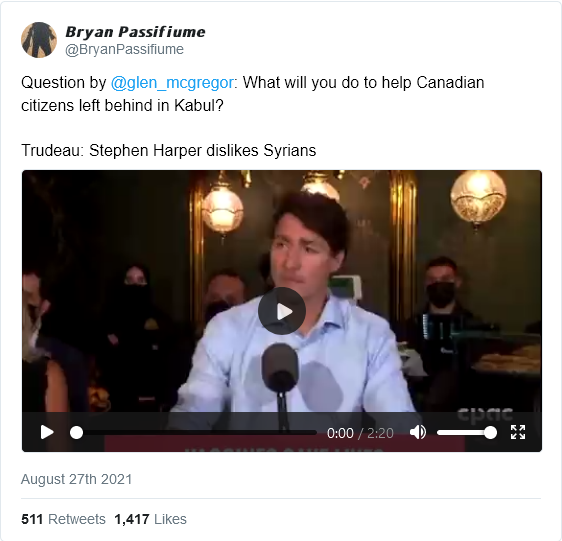
We’d recommend watching the whole clip (and we’d also note that there’s a second video clip further down in the thread; technical limitations broke one long clip into two shorter ones). But there’s two piles of dung here, and it’s worth breaking them out separately.
The first is, of course, the patented non-answer to a direct question. Glen McGregor asked Trudeau about our people in Afghanistan who were in that very moment in immediate danger. Trudeau talked about something nice he did in 2015. We understand that this is a campaign, but imagine you or someone you love is stuck Afghanistan in now, and the leader of the country is asked about you/them, and that’s the answer? Really?
The second pile of scat is more nuanced. Check out the part of the clip starting at 1:25. Trudeau says that O’Toole and the Conservatives are “promising to end the very program that brought in tens of thousands of Syrian refugees, the very program we’re using to bring in tens of thousands of Afghans fleeing to [safety] in Canada. That doesn’t make sense.”
Well, we mean … it doesn’t make sense because it’s not true.
The Tories are proposing changes to how Canada accepts refugees. Specifically, they want to shift to more heavily rely on privately sponsored refugees, citing research that shows these refugees more easily and more quickly settle into Canada. There would be both government-sponsored and private-sponsored refugees under what the CPC is calling a “joint model” model. This is broken out in the CPC’s campaign platform on page 129.
This seems … pretty reasonable? The Tories are not only promising to maintain current funding levels and numbers of accepted refugees, they just want to structure it differently. Not even very differently, at that: of the 62,000 Syrian refugees that Canada has resettled since Trudeau came to office, half were privately sponsored. The CPC platform also very specifically notes that this wouldn’t apply in “cases of emergency”, which the fall of Afghanistan clearly is. You can criticize that as policy, or even doubt they’ll follow through. Just saying they’ll cancel the program, though, is nonsense.
Of course, Trudeau isn’t the only bullshitter on the campaign trail, so RTWT for the rest of the antics that The Line felt were bullshitty enough to register this week.
Biographics
Published 23 Mar 2020Check out Brilliant: https://brilliant.org/biographics
Check out Business Blaze: https://www.youtube.com/channel/UCYY5…
This video is #sponsored by Brilliant.
TopTenz Properties
Our companion website for more: http://biographics.org
Our sister channel TopTenz: https://www.youtube.com/channel/UCQ-h…
Our Newest Channel about Interesting Places: https://studio.youtube.com/channel/UC…Credits:
Host – Simon Whistler
Author – Morris M.
Producer – Jennifer Da Silva
Executive Producer – Shell HarrisBusiness inquiries to biographics.email@gmail.com
Source/Further reading:
Oxford National Dictionary of Biography: https://www.oxforddnb.com/view/10.109…
Interesting podcast on his life: https://www.bbc.co.uk/programmes/b04n…
Britannica: https://www.britannica.com/biography/…
History Today: https://www.historytoday.com/archive/…
The Thames Tunnel: https://www.smithsonianmag.com/histor…
The atmospheric railway: https://www.theguardian.com/science/t…
SS Great Britain accident: https://www.ssgreatbritain.org/about-…

“Yeah, I watched [Tucker Carlson/Rachel Maddow].”
Except that’s not the news. That’s an editorial program where a person gets performatively angry about their opinion of selected bits of news so that you get angry about it along with them … righteously angry enough to sit through an hour’s worth of commercials.
It’s not news, it’s irritainment.
Tamara Keel, “It makes me so mad!”, View From The Porch, 2021-05-25.
Invicta
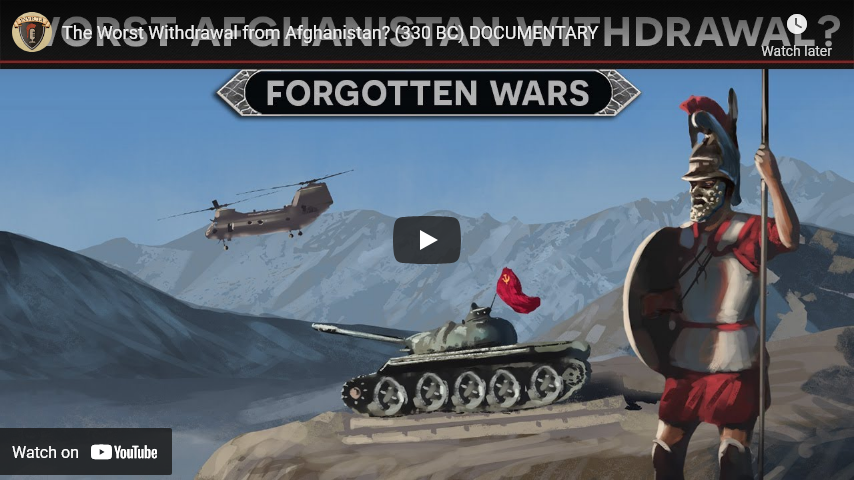
Published 28 Aug 2021Afghanistan has a long history of foreign invasions and withdrawals. Today we explore the first of these chapters with the campaigns of Alexander the Great. Signup for your FREE trial to Wondrium here: http://ow.ly/C3xs30rNLaU
As the last chapter of the US war in Afghanistan appears to draw to a close, the world watches armed and civilian forces alike conduct their final evacuations. However in these moments we hear echoes of the past. The history of the so-called “Graveyard of Empires” is filled with many chapters that tell of yet another major power that has been forced to withdraw after years of spilled blood and treasure. The most well-known instances have occurred in recent memory. However the pages of Afghan history go back thousands of years. Today I wanted to take a look at one of these first major military withdrawals that may just be the most FUBAR one on record; The evacuation of Alexander the Great’s Macedonian army from Afghanistan.
In order to contextualize this conflict we first begin with a quick overview of the history of Afghanistan. No country existed by that name or with those borders in antiquity and it was instead made up of a variety of tribal coalitions and minor kingdoms for much of its early history. However it would first see foreigners begin to claim its lands with the rise of the Median Empire and the succeeding Achaemenid Empire. The lands of modern Afghanistan would now be carved into a series of Satrapies such as Bactria, Gandara, Arakhosia, Drangaian, and Areia.
Following the Ionian Revolt and the Greco Persian Wars, the Kingdom of Macedon would rise to power and take on this ancestral conflict as a way to unify the Hellenic world behind its rule. Phillip II first began to plan and invasion of the Achaemenid Empire but it would be Alexander the Great who carried out this vision. He would campaign for several years through Anatolia, the Levant, Egypt, and Mesopotamia, consuming vast swaths of the enemy’s domains. However King Darius would escape to the east. Alexander initially pursued the Great King but when he was killed by his own Lieutenant, Bessus, Alexander set off against this traitor.
In this chase, Alexander the Great would be sucked into a multi-year war to subdue the eastern satrapies that made up modern Afghanistan. We cover the most significant events of this campaign, the establishment of occupying forces, and the eventual withdrawal of the army following the death of Alexander the Great. The ensuing settler revolt would make it (in my eyes) one of the most FUBAR Afghanistan withdrawals in history that would certainly be worthy of a Vice news documentary had it existed.
The Campaigns of Alexander the Great by Arrian
In the Footsteps of Alexander the Great by Michael Wood
Alexander the Great and Bactria: The Formation of a Greek Frontier in Central Asia by Frank Holt
The Greeks in Bactria and India by W. W. Tarn
On the revolt of the Greek settlers by DiodorusCredits:
Research: Invicta
Script: Invicta
Narration: Invicta
Artwork: Penta Limited#History
#Afghanistan
#Documentary



Powered by WordPress